ETHNICTY

Roth shows acculturation is both an opportunity and danger in “The Plot Against America”.

Books of Interest
 Website: chetyarbrough.blog

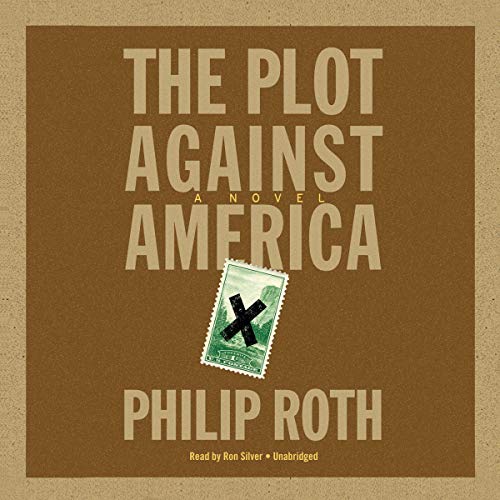
The Plot Against America

Author: Philip Roth

Narration by: Ron Silver

PHILLIP ROTH (WINNER OF THE PULITZER PRIZE FOR FICTION, MAN BOOKER INTERNATIONAL PRIZE AND MORE)

Roth’s “The Human Stain”, and “The Plot Against America” are troubling fictional stories of American society. Roth’s imagination seems somewhat out of control in “The Plot…” but his point is that American democracy, like all forms of government, is flawed by the nature of human beings. Popular election is no guarantee of government probity because the public is as easily led by lies as the truth; i.e., something we see in today’s American government. “The Plot Against America” creates a fictional story of the advance of a racist to the Presidency of the United States at the time of Hitler’s government putsch in Germany.

Charles Lindbergh (Famous aviator who expressed suspicion of Jews and is characterized as a supporter of Hitler.)

America had several famous supporters of Hitler’s ascension in Germany; i.e., not only Charles Lindbergh, but Henry Ford, Father Charles Coughlin, and Jospph P. Kennedy Sr., to name a few. Lindbergh believes in white supremacy but excludes those of Jewish ethnicity because he believes Jews are not a part of the American or Western racial community. He believes Jews are a separate people with separate loyalties. This conforms to Hitler’s view of German society as superior to all others. Added to Lindbergh’s racism is his belief that communism threatens individual liberty, a foundational democratic belief. Lindbergh is vociferously anti-communist even though Russia is led by white rulers. Lindbergh believes centralized state control, state suppression of dissent, and forced conformity are anti-American. This is an ironic view because Hitler insists on state control, suppression of dissent, and a forced conformity; i.e., beliefs Lindbergh infers he abhors.

Roth writes a story suggesting Lindbergh run against Franklin Roosevelt for President. Lindbergh wins in this fictional story. In truth, Lindbergh never runs for President. History actually shows the Republican party approaches Lindbergh in the late 1930s to run against Roosevelt because of his celebrity, anti-war message, and isolationist beliefs. However, Lindbergh turns the Republicans down.

Wendell Lewis Wilkie becomes the nominee for President by the Republicans in 1940. (1892-1944, an American lawyer.)

Wendell Willkie is the Republican Party’s choice for President. What makes Roth’s story interesting is his concern for loss of Jewish ethnic identity from the influence of Americanization. Two fundamental points are made in the title of the book. There is the obvious “…Plot Against America” with Lindbergh as an America candidate for President who supports Hitler. A less obvious point is Roth’s more subtle “…Plot…” by American society to diminish ethnicity. In Roth’s story, Lindbergh is elected as President of the United States.

Drawing the line between cultural disintegration and acculturation is different in an autocracy than in a democracy. A perfect democracy allows ethnicity to flourish within the boundaries of common societal norms while an autocracy demands conformity to specific societal norms that, in some autocratic countries, become demands. Roth’s point in “The Plot Against America” is that ethnic identity is a fundamental right of human beings that should not be denied by any government. This is not to say that ethnic identity is not influenced by society, but that ethnicity should only be a natural, not governmentally enforced influence. Roth’s story shows a fine line that is crossed by America in influencing Jewish culture to become less ethnic. He tells the story of a government endorsed program to offer Jewish children the opportunity to become laborers on American farms. That experience leads to a Jewish child’s exposure to eating pork which is explicitly forbidden by the Torah because it is considered unclean. Roth shows “old world” ethnic’ cautions are sometimes abandoned because of life experiences that diminsh ethnic taboos.

Discrimination based on ethnicity, race, or sex diminishes democracy.

Roth shows acculturation is both an opportunity and danger in “The Plot Against America”. One may read into Roth’s story that he regrets the Americanization of Jewish ethnicity. To the extent that the discipline of education may be harmed by acculturation, one is inclined to agree with Roth. On the other hand, ethnic identification has led to unequal opportunity based on ethnicity, race, or sex which should have nothing to do with innate capability.

A WRITER’S JUDGEMENT

“There is Simply Too Much to Think About” is a time-consuming read with a depth of understanding about writing that gives one “…Too Much to Think About” because of its author’s humbling intelligence. The fundamental point Bellow makes is that art is as important as science for the advance of society.

Books of Interest
 Website: chetyarbrough.blog

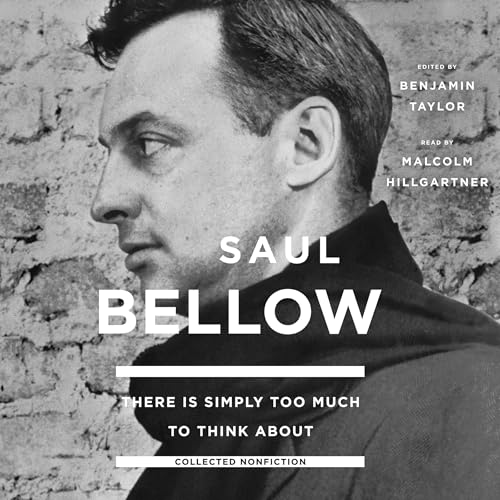
There Is Simply too Much to Think About (Collected Nonfiction) 

Author: Saul Bellow

Narration by: Malcolm Hillgartner

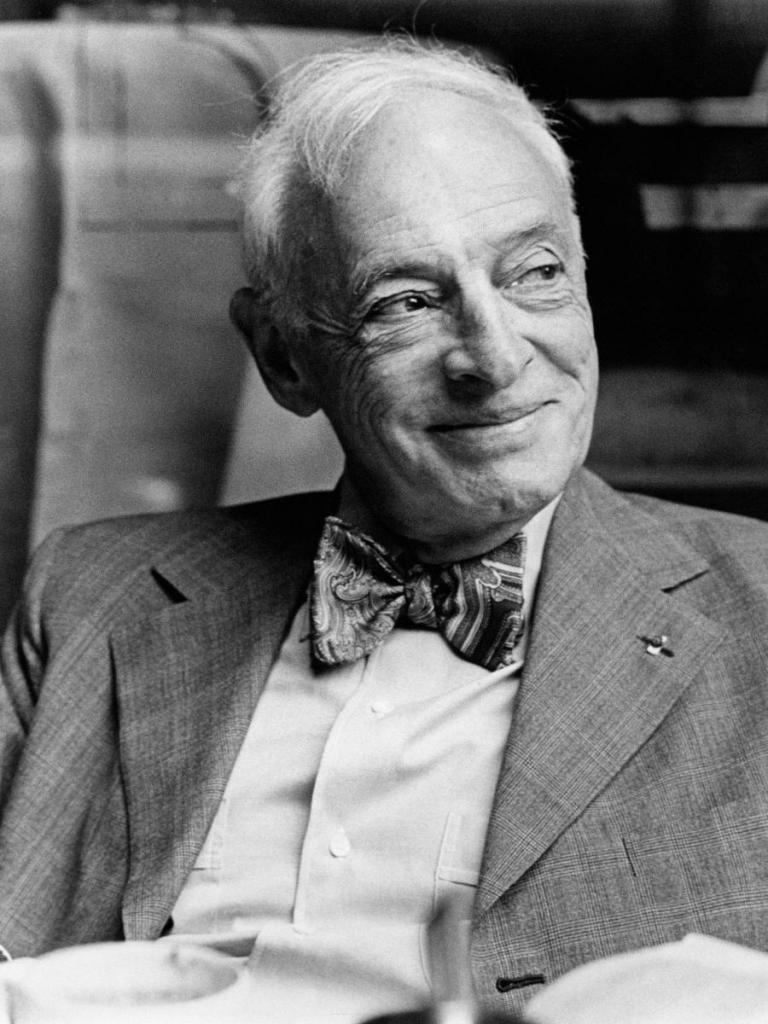
Saul Bellow (Author, Canadian-American novelist who has been awarded the Nobel Prize in Literature, and the Pulitzer Prize.)

This is a daunting book by an accomplished novelist who explains what makes reading fiction and nonfiction worth one’s time and attention. The range of subjects Bellow covers is immense. He not only writes about literature but politics, philosophy, Jewish identity, American culture, history, and other subjects that overwhelm a reader/listener. Bellow suggests good nonfiction and fiction are about characters who write about life that makes them important enough to have meaning to readers and purpose for writers. A writer creates an understanding of characters in the context of a society in which they live. A good writer’s attention is given to the contradictions and complexity of living life. What Bellow means by nonfiction writers is those who witness life unfolding and relate that understanding from a perspective which may or may not resonate or at least be understood by a reader.

Though Bellow mentions few female authors, he shows strong opinions about famous male authors.

Bellow offers a tour of twentieth century writers he believes are examples of good nonfiction writers. He notes Ralph Ellison, Phillip Roth, and J.D. Salinger as examples of great nonfiction writers. At the same time, Bellow explains how deeply his life feeds into his writing. He reveals his own strengths and weaknesses. He acknowledges being drawn into trendy ideas of others that gloss over truth and mislead readers with contradictions. Like all human beings, Bellow can be misled by second-hand assertions about historic events and characters that lack verifiable truth. The result may be misrepresentation and sometimes cruel judgements about private lives and the history of humanity. Written misrepresentations reveal as much about the writer as the subject.

Ralph Ellison (Author of “Invisible Man”)

Bellow offers some warnings to readers of both good and bad writers. He suggests a reader should be careful about reading too much into writer’s characters or experience in a story. One thinks of Ellison’s “Invisible Man” and how it reshaped many readers understanding of race and identity. Ellison is not writing a protest novel. It is about social invisibility, Black identity, politics, and the meaning of life. Phillip Roth’s Colman Silk is accused of racism and forced to retire but he is not a racist. He is obviously falsely accused because he is secretly African American passing as white. Truth of a story is revealed in detail created by good writing.

Though not having personally read Bellow’s books, he notes that his writing is largely based on episodes from his own life.

Being born in a Montreal Jewish slum and raised as an immigrant in Chicago he experiences discrimination as a baby born in a Montreal slum and as an immigrant on Chicago streets. The working-class environment of Chicago streets gave Bellow a level of freedom and exposure to life as just another young boy finding his way in life. He could measure himself against more diverse life experiences in Chicago without losing his Jewish identity. As an immigrant, it added to his identity and broadened his understanding of life as a human being. He became streetwise in responding to the world.

The experience of life.

Bellow clearly illustrates a personal belief and understanding about life. He is an obvious master of American language. His intellect and curiosity are overwhelming. There is an emotional and moral seriousness that is sometimes funny and at others quite confrontational. He masterfully turns lived experience into art. There is a level of overconfidence in his judgement and personal contradictions crop up in his writing. On the one hand he distrusts ideology but writes a highly ideological view of writing. He defends the importance of art but criticizes culture. He lauds intellectual independence while insisting on his own beliefs. He is a bit combative toward academics, critics, and seems somewhat dismissive or impatient with those who struggle with his opinions. The title of Bellow’s book says it all–“There is Simply Too Much to Think About”.

Bellow believes the arts are the essential ingredient of what Martin Luther King’s quote depends upon.

Bellow is very judgmental about the writers he reviews in his “…Much to Think About” book. His greatest praise goes to Ralph Ellison, Phillip Roth, James Joyce, and Franz Kafka. His sharpest criticism is of Updike, Hemmingway, T.S. Eliot, Salinger, and James Baldwin. Updike is called too polished, Hemingway too emotionally shallow, Eliot too culturally conservative, Salinger too mystical, and Baldwin too damaged by ethnic prejudice. Despite his criticism, Bellow finds their works have power and meaning implying they are worth reading. Most who recognize or have read some or all of these authors will likely find them worth the time and effort to read them and come to their own conclusions.

“There is Simply Too Much to Think About” is a time-consuming read with a depth of understanding about writing that gives one “…Too Much to Think About” because of its author’s humbling intelligence. The fundamental point Bellow makes is that art is as important as science for the advance of society.

CONSCIOUSNESS & AI

A.I. is a tool of human beings and will always be a tool. If Pollan is right that human thought originates with emotion, A.I. regulation, and transparency must be aligned with human values of truth, right conduct, peace, and non-violence. If A.I. is used for military or authoritarian advantage, it may lead to the Armageddon of biblical prediction.

Books of Interest
 Website: chetyarbrough.blog

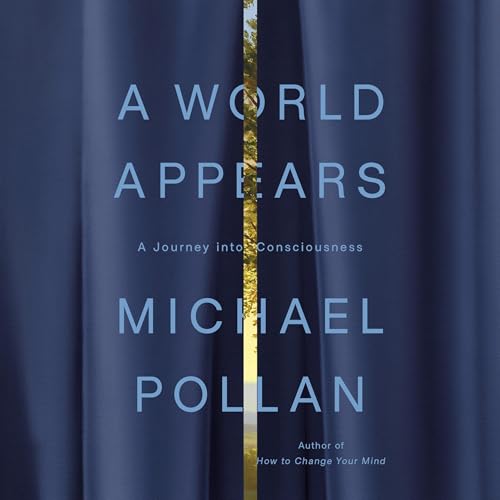
A World Appears (A Journey into Consciousness)

Author: Michael Pollan

Narration by: Michael Pollan

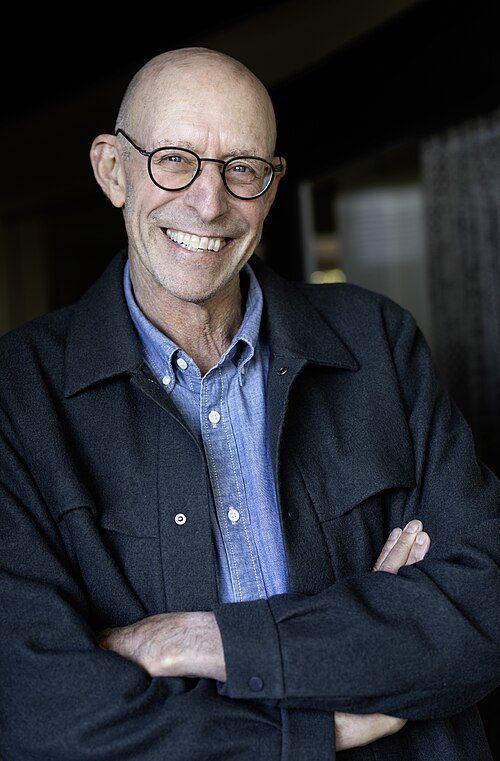
Michael Pollan (American journalist, author, Lecturer at Harvard University, co-founded the UC Berkeley Graduate School of Journalism, received an M.A. in English from Columbia.)

Pollan is not a scientist, but he is a writer who has an opinion about consciousness based on detailed interviews with scientists and consciousness researchers. He defines consciousness as the subjective experience of being alive. Pollan interviews mainstream and recognized researchers like Roland Griffiths, and Robin Carhart-Harris while avoiding fringe theorists. He interviews scientists who are empirically grounded by experimental testing.

Pollan also reads the works of Tononi, a neuroscientist who investigates “Integrated Information Theory”, Dahaene, a neuroscientist who researched “Global Neuronal Workspace Theory, and Thomas Nagel, a philosopher who coined the phrase “hard problem of consciousness”. He attacks the subject from multiple angles with experimental research done by plant and animal neurobiologists, AI researchers, and psychologists. What Pollan concludes from his interviews is that consciousness is the felt experience of being alive. This broad conception takes in all life based on interviews Pollan has with many science experts and philosophers who work in broad fields of human, plant, and animal life.

Stefano Mancuso (Italian botanist and writer, a professor at the University of Florence and the director of the International Laboratory of Plant Neurobiology.)

Stefano Mancuso explains vineyard-like plants exhibit consciousness in their drive for growth and survival with roots that behave with “swarm intelligence” to detect a pole nearby. A vinery’s root tips communicate with each other and make a collective decision to grow in a particular direction. Though this process is slower than in the animal kingdom, Mancuso’s experiments show vines preternaturally use their root systems to reach out to a planted pole to improve their growth through photosynthesis. The point of Pollan’s observation about plants is that a brain and neurons may not be required to show and sustain life, but plants appear to exhibit intelligence and sentience without a brain or animal-like nervous system. Plants seem to live without thought or emotion.

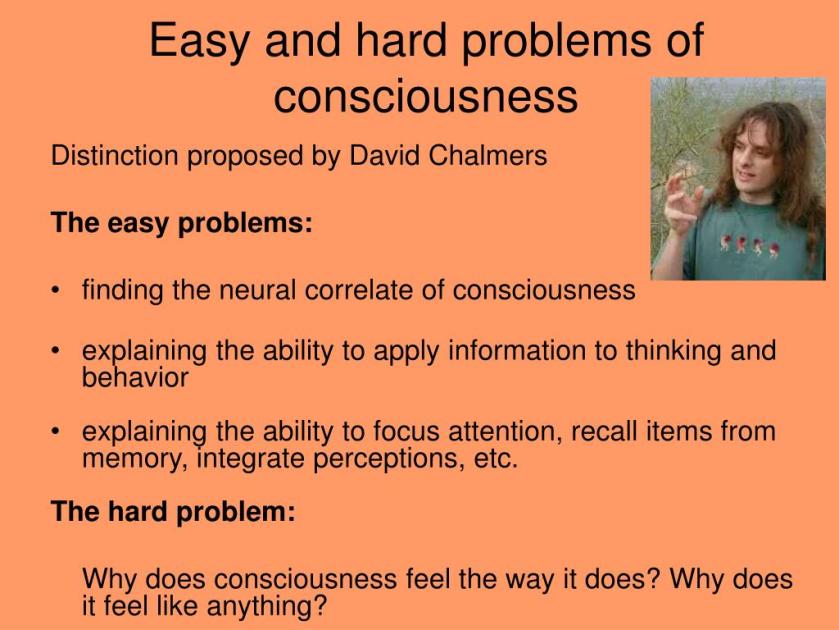
The easy part of consciousness is observed cause and effect. The hard part is knowing where cause comes from and why it arises in the first place.

Based on Pollan’s interviews of scientists and philosophers, he develops a central argument that animal/human consciousness comes from life’s need to maintain stability. However, his argument is that sentience does not come from initiated thoughts but from emotions that generate conscious thought. The implications of that belief are frightening because it may explain why consciousness leads to futile war. If thought process is a follower of emotion, reason plays second fiddle to action. Current events in the world show Pollan may be right. Fear of nuclear annihilation may be the cause of America’s futile war with Iran. Russia’s fear of becoming a lesser hegemonic power may be the cause of Ukraine’s territorial theft. If Pollan is correct, the futility of war will never end with emotion as precursor to thought and action.

Pollan’s interviews with representatives of the science and philosophical communities strongly implies human thought is as likely irrational as rational and may or may not be concerned about survival. The threat of A.I. is that it is used to reinforce the irrationality of emotion as a precursor to thought and action.

What comes to mind is that A.I. might be able to assuage irrational decisions but A.I. is of no help if human thought is initially driven by emotions. A.I. only amplifies the harmful potential of irrational human decisions with thoughts only initiated by emotions. One comes away from Pollan’s book with fear.

Pollan ends “A World Appears” with a journey through philosophy that is interesting but unique to him. Some may become distracted by his personal journey, but his view of consciousness is enlightening and frightening.

A.I. is a tool of human beings and will always be a tool. If Pollan is right that human thought originates with emotion, A.I. regulation, and transparency must be aligned with human values of truth, right conduct, peace, and non-violence. If A.I. is used for military or authoritarian advantage, it may lead to the Armageddon of biblical prediction.

Decisions We Make

Our decisions, when faced with good and bad events, make us who we are in life.

Books of Interest
 Website: chetyarbrough.blog

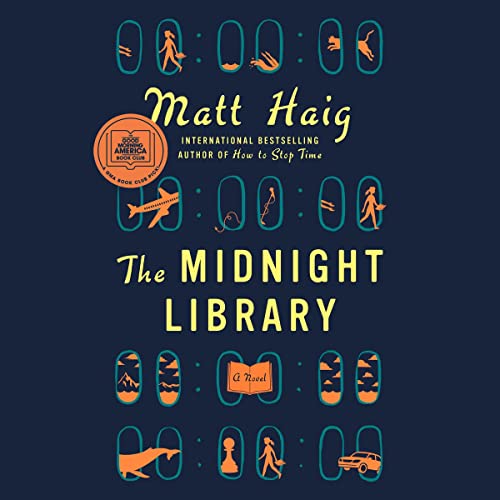
The Midnight Library (A Novel)

Author: Matt Haig

Narration by: Carey Muligan

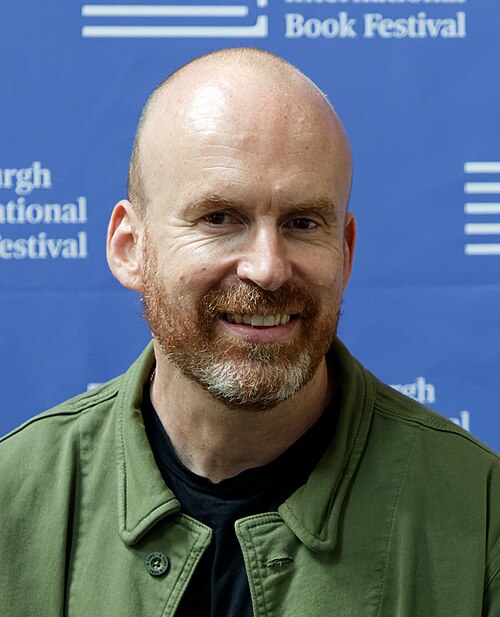
Matt Haig (Author, English journalist.)

Looking back at one’s life one wonders what our lives may have been if we chose differently. “The Midnight Library” cleverly explores that idea with a character named Nora. Nora decides to commit suicide by overdosing. With the effect of whatever drugs Nora has chosen, she enters a state between life and death. The reader/listener and Nora enter a surreal library filled with books about Nora’s many lives. It is called “The Midnight Library”. It is a library of books about an infinity of lives that Nora has lived and different decisions she has made when faced with good and bad events in her life.

The decisions we make as we grow older change our lives in an infinite number of ways. Every book in “The Midnight Library” is based on different lives Nora has lived. Her age and experience in each book differ based on decisions she has made during each life she has lived. Her decisions and their consequences are recorded in the books of her “…Midnight Library”.

Nora enters an in-between world managed by a librarian named Mrs. Elm. Elm is a guide or gatekeeper of Nora’s many lives based on decisions she has made in each singular life. Mrs. Elm is a re-creation of Nora’s school librarian who had given her attention, advice, and care as a schoolgirl. Mrs. Elm becomes Nora’s guide in “The Midnight Library”. The library is filled with books of an infinite number of Nora’s lives based on different personal decisions she has made in her nuclear family, i.e., in each library book, Nora is a daughter with the same mother, father, and brother.

History of one person’s life with many different outcomes.

One’s life experience has consequences.

Mrs. Elm appears to be the embodiment of Nora’s will to live and would undoubtedly disappear if Nora dies from her attempt at suicide. It seems Elm is trying to show Nora life’ opportunities are infinite based on the smallest and biggest decisions she makes in her life. Of course, this is meant to suggest a truth about all lives. However, one wonders how human beings can know their future based on decisions they have made in their life. Knowing that one will either regret, despair, or benefit from big and small decisions seems dependent on too many variables for our intelligence or nature to know or predict.

The author argues every decision we make has a consequence in our lives.

A midnight library illustrates the value of knowing the results of our decisions in life, but it tells little about the cumulative impact of regrets that accompany those decisions. Making decisions in life may end with regret because of unexpected consequences to ourselves or those close to us. The result of decisions we make in our lives unfold slowly. In that unfolding, we change our minds, we adapt to new circumstances that were unforeseen. There are too many things that happen in the course of one’s life to assure any end result we seek. Perfect understanding of the consequences of decisions we make is impossible to know. What Haig infers is that life and living are imperfect, often filled with pain, and unanticipated consequences. It is how we deal with good and bad events in our life that make us who we become.

Nora risks her life to enter “The Midnight Library”. The consequence of overdose can be incapacity, brain damage, or death.

One continues to listen to Haig’s story and wonders if Nora survives her overdose. One may think this is a novel about a “many worlds” hypothesis created by Hugh Everett III in 1957, but it is not a story about alternative universes. It is a story about human beings on earth with a point of view about human decision making and its consequence in our lives. One comes away from “The Midnight Library” knowing no life is perfect. Just being alive and learning how to cope with what is good and bad in life is all that counts.

All humans make decisions based on incomplete information. Our ability to cope, our curiosity, and participation in life keeps us connected with society. Haig implies being connected to our humanity is the best we can do as human beings. Our decisions, when faced with good and bad events, make us who we are in life.

HUMAN INTROSPECTION

Brianna Weist philosophical book is worth listening to as a guide but not as an authority of how one should live their life.

Books of Interest
 Website: chetyarbrough.blog

101 Essays That Will Change the Way You Think 

AuthorBrianna Wiest

Narration by: Abby Craden

Brianna Wiest (Author, earned a BA in English and received an Honorary Doctorate in Literature from Elizabethtown College.

This is an odd book because it is written by someone who is not a psychologist, psychiatrist or therapist but presumes to know how one can understand themselves, think differently and become a more psychologically heathy human being. “101 Essays…” has become a popularly read and listened to book by the public. Of course, one can take her observations like one would take the meaning of many non-fiction authors who have a point of view about life and living. They are called philosophers.

One finds Wiest’s essays make sense, but her formal education makes one uncomfortable with her expressed beliefs.

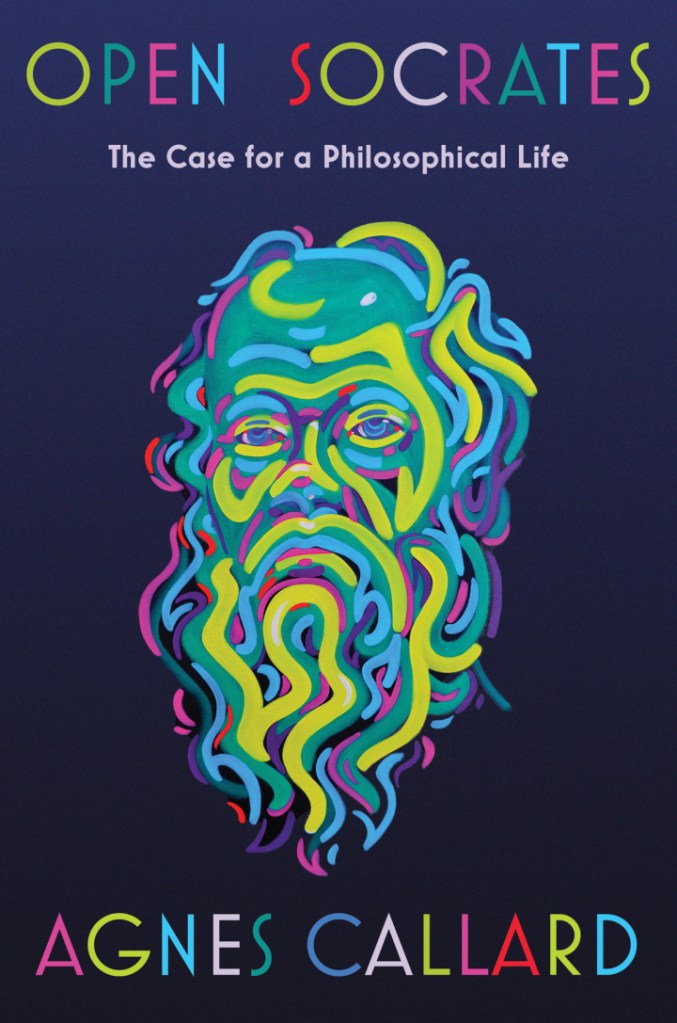
On the other hand, what formal education was there for Socrates? (A. I. generated image of Socrates as a young man.)

a youthful Socrates in ancient Athens, standing in a sunlit agora, wearing simple Greek robes, with thoughtful expression and strong features, classical style portrait

Weist is straight forward in her opinions, and she taps into a human wish for one to be psychologically and physically as good as they can be. Changing “…the Way You Think” is no easy task but the idea of consciously understanding ourselves is an oxymoron that limits one’s ability to change. We are as likely to lie to ourselves about who we are or what we believe as to have a true understanding of ourselves.

Daniel Kahneman is a renowned psychologist and Nobel laureate.  He is an American citizen that served in the Israeli military and used his education, research, and experience to write “Thinking Fast and Slow”.  His observations explore many aspects of human decision-making.

Weist logically argues one can become a better human being by changing the way they think. She is not acting as a clinical psychologist but as a philosopher of life and how one may make the most of it. If one understands Weist from that perspective, she is like Marcus Aurelius, Soren Kierkegaard, or Simone de Beauvoir. She has a philosophical point of view but not necessarily a happier or more fulfilling life.

The meaning of experience on one’s life is often too opaque for one’s understanding without the help of others.

Weist writes we should see what hurts others and ourselves and quit doing those hurtful things by changing our mind. This seems a good idea but denies the subjectivity and the unique experiences in one’s life. Many people are unable to understand the impact of experience on their lives. They are unable to change the way they think because they are unable to understand how or why an experience has affected their lives. Only with the help of a qualified psychologist, psychiatrist, or trained therapist can most people objectively understand themselves to constructively change their mind.

Nevertheless, Weist philosophical book is worth listening to as a guide but not an authority on how one should live their life. Most human beings are not introspective enough to find their way through life without the help of a person trained to elicit what we do not know about ourselves. On the other hand, it appears Weist has a genius beyond her years of life.

LIFE’S MEANING

The story of McCandless’s life is that meaning in life comes from people and nature, not one or the other but both.


Books of Interest
 Website: chetyarbrough.blog

Into the Wild

AuthorJon Krakauer

Narration by: Philip Franklin

John Krakauer (Author, mountaineer, raised in Corvallis, Oregon.)

The main character in “Into the Wild”, tuned in and dropped out. His “tune in” is not to drugs but a wish to understand the meaning of life. Christopher Johnson McCandless chose, after graduating from Atlanta, Georgia’s Emory University, to live off the grid of society, i.e. particularly capitalist society. His degree is a BA in history and anthropology. McCandless chooses to drive around the country, working at dead-end jobs to sustain himself until he finds a place to live in a natural habitat, without the aid of society which he believes keeps him from understanding the meaning of life. He began a “walk about” from Georgia with a plan to explore survival in the frigid wilds of Alaska. McCandless kept a journal of his search for life’s meaning. His journal became the guiding source for Jon Krakauer’s book about McCandless’s brief life.

Christopher Johnson McCandless (1967-1992, died at the age of 24.)

The McCandless family picture with Christopher either before or after enrollment at Emory University.

McCandless came from a solidly middleclass family but rejected capitalism defined by the desire for money, power, and/or prestige. He obviously loved the outdoors and wished to explore the possibility of living off the land with whatever nature had to offer. McCandless rebels against capitalist beliefs when graduating from college. He begins a search for the meaning of life beyond the principles of a capitalist society. He sought understanding by experiencing the attractions and dangers of the American wilderness. McCandless wishes to be free of materialism, his familial relationships, and the conventions of a middleclass capitalist life.

(One wonders if McCandless’s story is part of today’s rising homelessness with people living in tents, sleeping in business doorways and on sidewalks of American cities? Are Americans becoming disillusioned with capitalism because the gap between rich and poor is rising and pushing the middleclass into poverty? Some argue the cost of living is climbing faster than the wages of employment.)

McCandless graduation form Emory University in Atlanta Georgia.

With a BA in history and anthropology, McCandless graduates from Emory in 1990 and leaves Atlanta, heading west. Rather than look for a job or extending his education, he donates his savings to charity, cuts off communication with his family, and journeys to the west in a 1982, B210, Datsun. He heads southwest, traveling to Alabama, Mississippi, Louisiana, Texas, and New Mexico. He spends some time in Arizona with odd jobs and becomes stranded when his Datsun is disabled by a flood. He hitchhikes to California via Las Vegas, goes through South Dakota with his determined destination being Alaska in 1992. Nearly two years have passed since graduating from Emory.

Map showing McCandless’s two years of travel from the East to the West, mid-West, and on to Alaska.

McCandless kept a journal of his travels. The author, John Krakauer, interviews some of the people McCandless meets and/or works for that are noted in his journey. All say he was a nice person and hard worker who dependably showed up for work. However, one employer noted he had to be told to take a shower and wear socks when he came to work at their fast-food restaurant. McCandless was obviously homeless and had no shower facilities in which to bathe. He reluctantly complied as best he could but soon left to find his way to Alaska.

Sample of McCandless’s journal when he called himself Alex Supertramp.

McCandless arrives in southern California. He meets an older (80 something) American named Ronald Franz, a leatherworker, who tries to convince McCandless to give up his wandering life. They become friends but McCandless leaves Franz without saying goodbye as he heads north. The importance of their relationship is shown in a letter sent to Franz by McCandless that explains his inner conflicts. McCandless explains his need for independence and the freedom it gives him to personally connect with himself. By abandoning materialism, wealth, and social expectations, McCandless believes it makes him free. The tension created by McCandless’s belief in social isolation versus human relationship is expressed in his letter to Franz. Being alone is no answer to the conflict one feels toward their family or those who are part of society. Part of one’s identity, belief in who they are, and belief in oneself is reinforced by other people, not in wilderness isolation. This is a lesson of life that McCandless refuses to see or understand. The well-known poet, John Donne, recognizes “No man is an island”. All humans are interconnected which is a truth McCandless refuses to see.

McCandless dies in a Fairbanks city Transit bus he used as a shelter in Alaska. John Krakauer speculates on the cause of death being inadvertent poisoning from eating potato seeds because of McCandless’s hunger, emaciation, and lack of nourishment. If there is meaning in life, McCandless search and isolation is in vain. The story of McCandless’s life is that meaning in life comes from people and nature, not one or the other but both.

LIVING LIFE

Aristotle’s belief was that the goal of life is living well, Sartre suggests there is no inherent meaning to life, Bentham said the goal of life is happiness. What does Gladwell believe?

Books of Interest
 Website: chetyarbrough.blog

OUTLIERS 

Author: Malcolm Gladwell

Narration by: Malcolm Gladwell

Malcolm Gladwell (Author, Canadian journalist, and public speaker.)

“Outliers” makes several points, some of which are insightful while others are debatable. As with all observations of life and discovery, correlation of what we see, hear, and understand does not prove causation. Gladwell shows the advance of civilization and great successes in life are from luck, timing, and hard work more than I.Q.

Gladwell offers examples of chance and the circumstances of an era that advance society.

Gladwell explains intelligence alone does not make a person successful. He offers a brief biography of a high IQ person who did not achieve success despite his intelligence. He notes intelligence and one’s culture must be accompanied by individual hard work, interest, and commitment as well as the luck of being born at the right time. Gladwell’s examples of success are Bill Gates, the Beatles, sports’ stars, retail clothiers, and lawyers. Each of his examples are a result of being in the right place at the right time with an innate wish to work hard that makes “Outliers” personally and/or financially successful.

The founders of Microsoft, Paul Allen (L) and Bill Gates.

Gladwell argues his case about “Outliers” by offering several examples. The founders of Microsoft were born at a time when computers were first being discovered. The Beatles lived in a culture that idolizes musicianship and entertainment. A quirk in society that artificially determines children born in certain months are presumed by some to make good to great sports stars which results in higher-order support of children born in particular months of the year. That birth-month’ choice garnered extraordinary support of parents and coaches according to Gladwell. Those children became sports stars as a result of that early parental and coaching support of their sports careers. Gladwell goes on to suggest observation and experience of immigrating Jewish clothes-makers arrived in America and became wealthy merchants at a time of America’s economic growth. And finally, Gladwell notes lawyers began creating elite legal firms to support growing litigation between growing mid-twentieth century American corporations. Gladwell’s common denominators were relative intelligence, a burning interest in cultural change, and a commitment to hard work. The circumstances of the time (new invention and social change) and hard work, rather than high I.Q., were the primary causes of individual success.

Cultural backgrounds.

Gladwell suggests cultural backgrounds prepared some to seize opportunities that were overlooked by the general population. He suggests some Jewish immigrants who migrated from discriminative cultures, were liberated by the freedom available in America. Gladwell notes the creation of the garment industry in New York and the rise of successful Jewish legal firms are examples of seized opportunities missed by many in the 20th century. The common denominators were hard work, social change, and culture.

The criticism one may have of Gladwell’s book is in the examples he chooses to make his arguments.

Gladwell’s examples are chosen to support his argument, but they narrow the reality of the complex life lived by most humans. He oversimplifies success because it seems narrowly defined as wealth and/or fame rather than happiness or contentment. He defines success as something that requires a “10,000” hour commitment of research and practice, i.e. an arbitrary criterion that has no basis in fact. People make their own choices in life whether it is as a nerd, a famous musician, a high-powered lawyer, or one who loves to read and spends time listening/reading and reviewing books.

Determinism vs. free will.

Gladwell seems to say life is deterministic, but many choose to adapt rather than be driven by the circumstances of life. This generation’s great change will be in the implementation of A.I. Massive investment is being made in A.I. today with momentous change coming to the world of employment.

Aristotle’s belief was that the goal of life is living well, Sartre suggests there is no inherent meaning to life, Bentham said the goal of life is happiness. What does Gladwell believe?

GENDER INEQUALITY

“Betraying Big Brother” is not wrong about gender inequality but the author’s anger and personal choices cloud the author’s message. Gender inequality is real everywhere in the world. Education is a beginning, but practice is the end.

Books of Interest
 Website: chetyarbrough.blog

Betraying Big Brother (The Feminist Awakening in China)

AuthorLeta Hong Fincher

Narrated By: Emily Woo Zeller

Leta Hong Fincher (Author, American journalist, feminist and writer, first American to receive a Ph.D from Tsinghua University’s Department of Sociology in Bejing., graduated from Harvard with a BA and a master’s degree in East Asian Studies from Stanford.)

The education and experience of Leta Hong Fincher is somewhat betrayed by her anger in “Betraying Big Brother”. Misogyny is an international reality that defies the truth of human equality. This reviewer’s prejudice, like the author’s biases are suspect because of their respective life experiences. This book reviewer was raised by a single parent mother who worked to keep two sons with a roof over their head and food on the table. How women survive inequality is made of the same stuff as that which plagues minorities around the world. The difference is that women are not a minority.

She writes of being a 15-year-old girl who is physically and emotionally abused by two boys who are friends of an older male friend that takes her to a get together of young acquaintances. That event burns a memory into Fincher’s mind that sets her on a journey thru life. One reading/listening to “Betraying Big Brother” recognizes the truth of what the author writes is reinforced by her life experiences. Of course, that is true of all human beings, but anger diminishes the impact of what Fincher says and writes.

Leadership?

Whether living in a democracy or autocracy, sexual inequality is present. Gender discrimination is universal. America and China talk the talk but fail to walk the walk. Fincher writes of Mao’s saying that “women hold up half the sky” implying he believed in gender equality. Mao spoke of marriage reform and labor participation but patriarchal norms were adhered to with women workers not being paid the same as men nor offered similar positions of power.

Xi speaks of gender equality, but no women are on the 24-member Politburo.

Xi also speaks of gender equality, but no women are on the 24-member Politburo while pay and promotions lag behind men. Fincher writes of Big Brother censorship, surveillance, and detention of women in China. (One presumes that is also true of everyone in China.) Like Trump, Xi promotes women’s roles in domestic stability, and their childbearing responsibilities. America has yet to elect a woman as President. Equal pay for equal work is improving in America, but a gap still exists with lower starting salaries, performance evaluation biases, and fewer high-profile assignments or promotions.

“Betraying Big Brother” is not wrong about gender inequality but the author’s anger and personal choices cloud the author’s message. Gender inequality is real everywhere in the world. Education is a beginning, but practice is the end.

THE WEST

Though Mahbubani’s book is quite provocative, it is short and interesting. “How the West Lost It” is certainly worth reading/listening to, but few Presidents of the United States have reversed the admittedly slow improvement of “equality of opportunity” in America.

Books of Interest
 Website: chetyarbrough.blog

How the West Lost It (A Provocation)

AuthorKishore Mahbubani

Narrated By: Jonathan Keeble

Kishore Mahbubani (Author, Singaporean diplomat and geopolitical consultant, former Fellow at Harvard University’s Center for International Relations, formally served as the United Nations Security Council President.)

Mr. Mahbubani’s short book suggests the highly provocative belief that the West’s dominance of the world is giving way to Asia, particularly China and India. To mitigate the West’s decline, Mahbubani argues–the West needs to develop a more “coherent and competitive global strategy”. Paul Kennedy of Yale University praises Mahbubani’s assessment. The public commentator Fareed Zakaria endorses Mahbubani’s belief, and Hilton Root of “The Independent Review” acknowledges Mahbubani’s inference that “the West’s overperformance was a historical aberration and the East’s rise reflects a rebalancing of history”. Despite Root’s measured support of Mahbubani’s book, his analysis is nuanced. Root argues the decline of the West is oversimplified and that Mahbubani underestimates the resilience of Western economies.

Mahbubani argues Great Britain’s Brexit and Trump’s re-election are reactions to the West’s economic decline.

Edwad Luce argues Western liberalism needs to be reinvented by investment in a technological revolution for all Americans, not just those who have benefited from the industrial revolution. However, China seems to have read the future better than the West by building up their reserves of rare metals needed for advanced computer chips. In contrast, President Trump chooses to antagonize allies as well as competitors with a foolish trade war.
Root believes the innovative capacity and adaptability of the West will make adjustments to remain competitive, if not the dominant economic power of the world. Trump’s trade war suggests otherwise. Trump’s attitude is to ignore the years of built-up trust with Western allies and attack the world with destructive economic tariffs meant to right wrongs that are figments of real-politic’ imagination. However, some believe Mahbubani discounts political freedom and the drive of both the West and East to improve citizens’ living standards. That seems somewhat plausible, but Trump is attacking Americas most highly regarded universities with specious concerns with what he considers overactive recruitment of immigrants and minorities. The truth is American education for immigrants aids the strength and influence of Democracy in the world.

Yale University (American education for immigrants aids the strength and influence of Democracy in the world.)

The long cultural, educational, and technological influence of the West may be diminished by some of today’s political leaders but the trend over the last 200 years is unlikely to be reversed by Trump’s misguided authoritarianism. Trump’s significant risks are partially mitigated by publicly ingrained western democratic values. Though democracy is messy, it has demonstrated long-term stability and innovation that equals or exceeds the worst of what Trump’s authoritarianism is doing to the American economy and its institutions. Three more years of Trump’s presidency will not erase America’s legacy or destroy its future.

Though Mahbubani’s book is quite provocative, it is short, impactful, and interesting. “How the West Lost It” is certainly worth reading/listening to, but few Presidents of the United States have reversed the admittedly slow improvement of “equality of opportunity” in America. Mahbubani argues for a more diplomatic American policy with rising nations in the East because he believes China will ultimately replace America as the leading economy in the world.

The interpretation of the Constitution has changed over the last 200 years, but it stands for continuity for America’s present and future.

The direction of American society remains true to the fundamental beliefs of liberty, equality, sovereignty, rule of law, separation of powers, federalism, checks and balances, and individual rights. Trump is challenging some of those rights, but balance of power and term limits will ultimately rescue America from his misbegotten domestic and international blunders. These rights have been challenged at different times in America’s history but never permanently reversed.

BALANCE

It is ironic that Trump has suffered so much from America’s legal system and is unable to see NIMBY mentality and a return to the past will not “Make America Great”.

Books of Interest
 Website: chetyarbrough.blog

Breakneck (China’s Quest to Engineer the Future)

AuthorDan Wang

Narrated By:  Jonathan Yen

Feng Chen Wang aka Dan Wang (Author, Canadian technology analyst and writer, visiting scholar at Yale Law School.)

Dan Wang is a highly credible author of the 21st century economies of China and the United States. Mr. Wang’s mother and father were born in China when the one child policy was the law of the land. Mr. Wang was born in Canada in either 1991 or 1992. Though Mr. Wang may be an only child, his parents advised him that living in China was challenging because of its state control and family planning that restricted their human rights.

Dan Wang has lived in Canada, America, and China.

From 2017 to 2023 he worked as a technology analyst in Hong Kong, Beijing, and Shanghai. As a young man, Wang bicycled across China with young friends. Having been educated in Canada and the United States, growing up in Toronto and Ottawa and going to high school in Philadelphia, he has a broad understanding of the economies of all three nations. Of course, his specialty is technology which gives him a unique understanding of what is happening in America and China today. He graduated from the University of Rochester in 2014, studying philosophy and economics.

Trump’s apparent view of Xi.

After listening to Wang’s book, one begins to understand why President Trump’s perspective is that the world, with emphasis on China, has taken advantage of America’s economic wealth by eviscerating its industrial industries with less expensive product made in other countries. Wang presumes as a person who has an economics education that Adam Smith (the Father of Economics) and Donald Trump are right when they argue tariffs are justified in areas of national defense, or for retaliation. On the other hand, Adam Smith, noted “It is the maxim of every prudent master of a family, never to attempt to make at home what it will cost him more to make than to buy.”
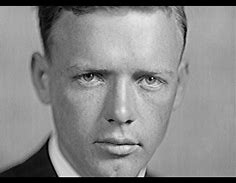
Adam Smith (Father of Economic Theory)

Smith argued if another nation can provide the same product for less cost, a prudent buyer should buy the cheaper product and use money saved to produce a different product. Wang and Trump disagree with Smith because the revenue producer that America turns to is the service industry rather than product development. What is missed by Wang and Trump is that America is the third largest agricultural producer in the world with China and India being the largest. Of course, the difference is that America has 1/3rd the population of China and India, respectively. Lower population and high agricultural production in the United States hugely benefits its economy. More significantly, food, like water, is an essential need of life. The point is that non-food product production is not necessary for living life.

Loss of industrial production to China.

Wang’s and Trump’s argument is that America’s loss of industrial production has made it too dependent on other countries. They either infer or say Americans are forgetting how to manufacture product. They argue American industries are closing because of America’s inability to compete with other nations because of labor and material cost differences. History shows America fails to expand its industries because production of things is provided by other nations at a lower cost. And as Adam Smith noted, “It is the maxim of every prudent master of a family, never to attempt to make at home what it will cost him more to make than to buy.”

Wang decries America’s movement toward a service industry as the basis for economic growth.

America is the richest country in the world, but America has failed to eliminate poverty, house the homeless, feed the malnourished, and provide for the infrastructure needed to improve America lives. One may ask oneself-what is wrong with becoming a service industry nation? Why does America have to return to its past. As Adam Smith noted: “It is the maxim of every prudent master of a family, never to attempt to make at home what it will cost him more to make than to buy.” The future is about being healthy, being housed, fed, and clothed. It should not be about being the richest and fattest minority in the world, particularly when there is an inordinate gap between the rich and poor.

Wang argues America’s economy is diminished, not by reduced industrialization, but by its growth of legalism that reinforces nimby (not in my backyard) litigation.
Delays in public improvements in America are restrained by lawsuits that protect the rich and victimize the poor. An example is the long delays in mass transportation improvements which become more costly with every year that passes before completion. The delays are caused by litigation. When China can build rapid transit in 3 years while it takes 15 or more years in America, one wonders why. The huge investments China has made in massive infrastructure improvements have vastly improved their economy. In contrast, America wastes investment resources litigating mass transportation improvements in California, Washington, and other states by increasing costs from delays caused by litigation. It is like throwing the baby out with the bath water because the number of people who benefit from infrastructure improvement are largely discounted or ignored. Equally appalling is homelessness in America because of NIMBY’ objection to low-cost multifamily housing that could get the homeless off the street. Cost benefit analysis should prevail, not litigation based on interest group objection. In Wang’s terms, American infrastructure decisions should be based on science and engineering like, what he argues, China bases their infrastructure decisions upon.

The fundamental point is that America has lost sight of the importance of a balance between benefit to the public and individual rights. Equality of opportunity is split between the rich and poor with the middle class being too complacent while the rich reap unconscionable reward. Where are the Eisenhower-like Presidents who promoted an Interstate Highway System that created a 421,000-mile interstate highway system?

Trump is no Eisenhower because he wishes to return America to a past rather than look to its future. It is ironic that Trump has suffered so much from America’s legal system and is unable to see NIMBY mentality and a return to the past will not “Make America Great”. Wang’s book explains how China has succeeded in improving their economy while America’s economy is failing.