
Books of Interest
Website: chetyarbrough.blog
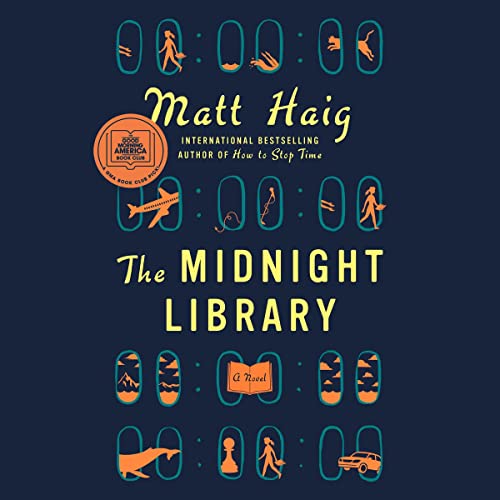
The Midnight Library (A Novel)
Author: Matt Haig
Narration by: Carey Muligan
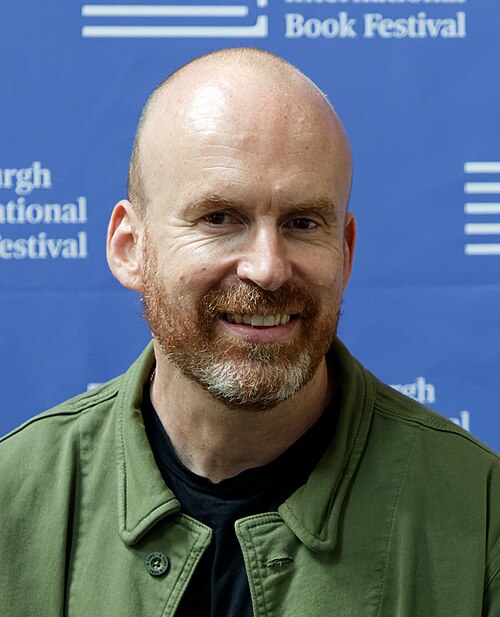
Matt Haig (Author, English journalist.)
Looking back at one’s life one wonders what our lives may have been if we chose differently. “The Midnight Library” cleverly explores that idea with a character named Nora. Nora decides to commit suicide by overdosing. With the effect of whatever drugs Nora has chosen, she enters a state between life and death. The reader/listener and Nora enter a surreal library filled with books about Nora’s many lives. It is called “The Midnight Library”. It is a library of books about an infinity of lives that Nora has lived and different decisions she has made when faced with good and bad events in her life.
The decisions we make as we grow older change our lives in an infinite number of ways. Every book in “The Midnight Library” is based on different lives Nora has lived. Her age and experience in each book differ based on decisions she has made during each life she has lived. Her decisions and their consequences are recorded in the books of her “…Midnight Library”.
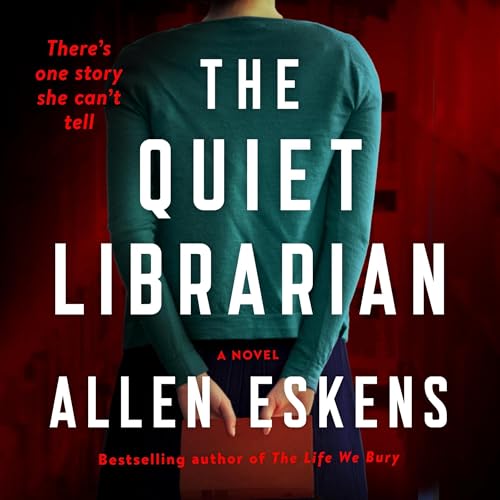
Nora enters an in-between world managed by a librarian named Mrs. Elm. Elm is a guide or gatekeeper of Nora’s many lives based on decisions she has made in each singular life. Mrs. Elm is a re-creation of Nora’s school librarian who had given her attention, advice, and care as a schoolgirl. Mrs. Elm becomes Nora’s guide in “The Midnight Library”. The library is filled with books of an infinite number of Nora’s lives based on different personal decisions she has made in her nuclear family, i.e., in each library book, Nora is a daughter with the same mother, father, and brother.
History of one person’s life with many different outcomes.
Mrs. Elm appears to be the embodiment of Nora’s will to live and would undoubtedly disappear if Nora dies from her attempt at suicide. It seems Elm is trying to show Nora life’ opportunities are infinite based on the smallest and biggest decisions she makes in her life. Of course, this is meant to suggest a truth about all lives. However, one wonders how human beings can know their future based on decisions they have made in their life. Knowing that one will either regret, despair, or benefit from big and small decisions seems dependent on too many variables for our intelligence or nature to know or predict.

The author argues every decision we make has a consequence in our lives.
A midnight library illustrates the value of knowing the results of our decisions in life, but it tells little about the cumulative impact of regrets that accompany those decisions. Making decisions in life may end with regret because of unexpected consequences to ourselves or those close to us. The result of decisions we make in our lives unfold slowly. In that unfolding, we change our minds, we adapt to new circumstances that were unforeseen. There are too many things that happen in the course of one’s life to assure any end result we seek. Perfect understanding of the consequences of decisions we make is impossible to know. What Haig infers is that life and living are imperfect, often filled with pain, and unanticipated consequences. It is how we deal with good and bad events in our life that make us who we become.
Nora risks her life to enter “The Midnight Library”. The consequence of overdose can be incapacity, brain damage, or death.
One continues to listen to Haig’s story and wonders if Nora survives her overdose. One may think this is a novel about a “many worlds” hypothesis created by Hugh Everett III in 1957, but it is not a story about alternative universes. It is a story about human beings on earth with a point of view about human decision making and its consequence in our lives. One comes away from “The Midnight Library” knowing no life is perfect. Just being alive and learning how to cope with what is good and bad in life is all that counts.
All humans make decisions based on incomplete information. Our ability to cope, our curiosity, and participation in life keeps us connected with society. Haig implies being connected to our humanity is the best we can do as human beings. Our decisions, when faced with good and bad events, make us who we are in life.

