LOVE

True love is made of many parts; none of which make us better than what we are, i.e., love can be unconditional, but it can also be a path to self-destruction.

Books of Interest
 Website: chetyarbrough.blog

The Idiot 

Author: Fyodor Dostoyevsky

Narration by: Various Actors

Fyodor Dostoyevsky (Russian author.)

This L.A. Theater representation of Fyodor Dostoyevsky’s “The Idiot” is less entertaining than the book because it is incomplete. However, it gives one a sense of the author’s characterization of human relationship. The main character of “The Idiot” is Prince Myshkin, a recovering epileptic who has just been released from a treatment center in Russia. In some ways, the dramatization gives structure to what is a difficult book to follow. However, it diminishes the beauty and clarification of Dostoyevsky’s writing.

Compassion.

The main character, Prince Myshkin, is a vulnerable and compassionate young Russian who has inherited wealth from his family. He is released from an asylum meant to cure his ills. One of the first people he meets on a train as he leaves the asylum is Rogozhin, a passionate Russian who can become unruly and violent toward those around him. Rogozhin represents a divided soul; not unlike that which exists in Myshkin but in different and significant ways. Myshkin shows compassion, humility, and spiritual benevolence while Rogozhin is passionate, confrontational, and driven by emotion. They are kindred spirits with one who has reserved emotions and actions while the other fully expresses emotions and often acts in their fulfillment.

Eve Babitz as an example of a beauty like Natasya or Aglaya.

Myshkin meets a Russian beauty named Natasya Filippovna whom he loves in a self-sacrificial way. That acquaintance leads to a tragedy. The tragedy comes from the love he feels for Aglaya Yapanchina, an equally beautiful young woman. The irony is that Myshkin’s emotions attach him to Nastasya out of compassion. That compassion keeps him from expressing his underlying feelings for Aglaya. He cannot abandon Nastasya because of his compassion, even though a more fulfilling love appears likely with Aglaya.

Characteristics of outsiders.

Both Myshkin and Rogozhin are social outsiders. Myshkin because of his epilepsy and social isolation. Rogozhin because of his poverty and emotional instability. Both love Nastasya but in different ways and for different reasons. Myshkin loves Nastasya out of compassion and self-sacrifice while Rogozhin is obsessed with her beauty and sees her as his possession. Both are in love with Nastasya in different but committed ways. Myshkin loves out of goodness while Rogozhin loves out of passion.

Believing in yourself.

Nastasya is drawn to both men but feels she is not good enough for Myshkin. Rogzhin’s attention and love of Nastasya is based on being the object of one’s desire, i.e. a feeling she has felt from all men she has met in her life. The tragedy of Dostoevsky’s story is that Rogozhin murders Nastasya. Rogozhin is sent to prison and Myshkin collapses from the soul crushing murder. Myshkin returns to the asylum as a broken man. Dostoevsky is showing that pure goodness in life is a fiction. True love is made of many parts; none of which make us better than what we are, i.e., love can be unconditional, but it can also be a path to self-destruction.

CONSCIOUSNESS & AI

A.I. is a tool of human beings and will always be a tool. If Pollan is right that human thought originates with emotion, A.I. regulation, and transparency must be aligned with human values of truth, right conduct, peace, and non-violence. If A.I. is used for military or authoritarian advantage, it may lead to the Armageddon of biblical prediction.

Books of Interest
 Website: chetyarbrough.blog

A World Appears (A Journey into Consciousness)

Author: Michael Pollan

Narration by: Michael Pollan

Michael Pollan (American journalist, author, Lecturer at Harvard University, co-founded the UC Berkeley Graduate School of Journalism, received an M.A. in English from Columbia.)

Pollan is not a scientist, but he is a writer who has an opinion about consciousness based on detailed interviews with scientists and consciousness researchers. He defines consciousness as the subjective experience of being alive. Pollan interviews mainstream and recognized researchers like Roland Griffiths, and Robin Carhart-Harris while avoiding fringe theorists. He interviews scientists who are empirically grounded by experimental testing.

Pollan also reads the works of Tononi, a neuroscientist who investigates “Integrated Information Theory”, Dahaene, a neuroscientist who researched “Global Neuronal Workspace Theory, and Thomas Nagel, a philosopher who coined the phrase “hard problem of consciousness”. He attacks the subject from multiple angles with experimental research done by plant and animal neurobiologists, AI researchers, and psychologists. What Pollan concludes from his interviews is that consciousness is the felt experience of being alive. This broad conception takes in all life based on interviews Pollan has with many science experts and philosophers who work in broad fields of human, plant, and animal life.

Stefano Mancuso (Italian botanist and writer, a professor at the University of Florence and the director of the International Laboratory of Plant Neurobiology.)

Stefano Mancuso explains vineyard-like plants exhibit consciousness in their drive for growth and survival with roots that behave with “swarm intelligence” to detect a pole nearby. A vinery’s root tips communicate with each other and make a collective decision to grow in a particular direction. Though this process is slower than in the animal kingdom, Mancuso’s experiments show vines preternaturally use their root systems to reach out to a planted pole to improve their growth through photosynthesis. The point of Pollan’s observation about plants is that a brain and neurons may not be required to show and sustain life, but plants appear to exhibit intelligence and sentience without a brain or animal-like nervous system. Plants seem to live without thought or emotion.

The easy part of consciousness is observed cause and effect. The hard part is knowing where cause comes from and why it arises in the first place.

Based on Pollan’s interviews of scientists and philosophers, he develops a central argument that animal/human consciousness comes from life’s need to maintain stability. However, his argument is that sentience does not come from initiated thoughts but from emotions that generate conscious thought. The implications of that belief are frightening because it may explain why consciousness leads to futile war. If thought process is a follower of emotion, reason plays second fiddle to action. Current events in the world show Pollan may be right. Fear of nuclear annihilation may be the cause of America’s futile war with Iran. Russia’s fear of becoming a lesser hegemonic power may be the cause of Ukraine’s territorial theft. If Pollan is correct, the futility of war will never end with emotion as precursor to thought and action.

Pollan’s interviews with representatives of the science and philosophical communities strongly implies human thought is as likely irrational as rational and may or may not be concerned about survival. The threat of A.I. is that it is used to reinforce the irrationality of emotion as a precursor to thought and action.

What comes to mind is that A.I. might be able to assuage irrational decisions but A.I. is of no help if human thought is initially driven by emotions. A.I. only amplifies the harmful potential of irrational human decisions with thoughts only initiated by emotions. One comes away from Pollan’s book with fear.

Pollan ends “A World Appears” with a journey through philosophy that is interesting but unique to him. Some may become distracted by his personal journey, but his view of consciousness is enlightening and frightening.

A.I. is a tool of human beings and will always be a tool. If Pollan is right that human thought originates with emotion, A.I. regulation, and transparency must be aligned with human values of truth, right conduct, peace, and non-violence. If A.I. is used for military or authoritarian advantage, it may lead to the Armageddon of biblical prediction.

ART

Wallace’s brief history of Michelangelo and Titian make one see each artist through different lenses. Michelangelo was a multifaceted artist who could sculpt, draw, and paint the human body with perfection. Titian could paint with a vibrancy of color that reveals emotion.

Books of Interest
 Website: chetyarbrough.blog

Michelangelo & Titian (A Tale of Rivalry and Genius)

Author: William E. Wallace 

Narration by: Mack Sanderson

William E. Wallace (Author, internationally recognized authority on Michelangelo, Professor in the Dept. of Art History and Archaeology at Washington University.)

At the beginning of “Michelangelo & Titian”, one may be skeptical of a comparison of Michelangelo with Titian but by the end of Wallace’s history, one begins to understand and appreciate the Professor’s vignette of these famous artists. Michelangelo considers himself a sculptor who knows how to draw and learns how to paint. Titian is a colorist and painter who influences Michelangelo without becoming his equal. Titian is ten years younger than Michelangelo and lives some years after Michelangelo’s death. Though Michelangelo is judged to be more versatile and accomplished than Titian, Wallace shows both made great contributions to the world of art.

Italy’s republics.

Titian is born in Venice, Michelangelo in Florence. Both live into their 80s but Titian is 10 years younger. Wallace suggests these two men knew each other’s work but may have personally met only twice. Once in Venice around 1529 and a second time in Rome around 1546. In 1529, Michelangelo had fled Florence to seek refuge in Venice because of political turmoil in his home Republic. He had become a favorite of the Medici family but changes sides when the Medicis are overthrown by Emperor Charle V and Pope Clement VII in 1527.

Michelangelo is impressed by Titian’s work in Venice because of his use of color. Wallace alludes to Michelangelo’s praise of Titian in a letter written sometime in the 16th century. Wallace argues they were well aware of each other’s talents which created an unspoken rivalry that influenced their work as artists.

Wallace argues these two artists brief acquaintance undervalues the influence each has on the other’s art. An example alluded to is the way they depicted Adam and Eve in their paintings. Michelangelo’s painting is based on his drawing skill and intimate knowledge of muscular/anatomical features of the human body. (When learning to become a sculptor, Michelangelo dissected cadavers to improve his understanding of the body.) Though Titian did not have the experience of dissecting cadavers, he uses color to give emotional immediacy to his painted images. In the Sistine Chaple painting, Michelangelo envisions the gravity of what Adam and Eve represent while Titian incorporates the sensuality of humanities fall from grace. Each artist influences the other but remain distinct in their ways of representing the world through art.

The representation of Adam and Eve on the Sistine Chapel ceiling by Michelangelo is perfectly anatomical but only shows Adam’s image above Eve who is looking away from God. (One wonders what message is sent to humanity by that detail.) In contrast, though the painting is less anatomically pleasing, the Titian painting shows the emotions of two people with Eve being restrained by Adam. (Another subtle message about the inequality of the sexes?) Wallace implies the anatomical correctness, and the creation story of Michelangelo is what makes the Sistine Chapel painting great art. For Titian, it is the emotional message he offers with the use of color and expression that make his painting remarkable. These two geniuses had complementary skills. Michelangelo’s superior understanding of the body offers body idealization, and Titian’s use of color gives sensuality and emotion to his art. Both artists tell a similar story but in complementary ways.

Wallace’s brief history of Michelangelo and Titian make one see each artist through different lenses. Michelangelo was a multifaceted artist who could sculpt, draw, and paint the human body with perfection. Titian could paint with a vibrancy of color that reveals emotion.

A VIEW OF GENIUS

Like all world changing inventions and discoveries, iPhone came with costs ranging from children’ and adults’ addiction, to rare minerals depletion, to environmental pollution. The long-term effect of iPhones has changed the world with unexpected, often unforeseen, consequences.

Books of Interest
 Website: chetyarbrough.blog

The One Device (The Secret History of the iPhone)

AuthorBrian Merchant

Narration by: Tristan Morris

Brian Merchant (Author, American technology journalist, writes for The New York Times, Wired, Slate, The Atlantic, and the Guardian.)

Brian Merchant works around the tech world but never quite in it. His understanding of today’s technology has made him a popular writer for national news outlets. Never having been employed by a tech company, his analysis of iPhone history, the role of Jobs, and the history of its development is as an outsider to the process of invention. As a writer about technology, there is a level of objectivity but also reservation about an outsider’s details. Merchant reports what others tell of iPhone’s history rather than as a person being there as a part of its development.

Merchant’s investigation explains the iPhone’s creation is a messy human process entailing the dangers of mining, involvement of other companies and individuals, patent questions, and labor struggles. The impact of the iPhone’s invention is world changing. In a fundamental way, Merchant discounts the mythology of iPhone’s invention by one person or company. There were decades of prior invention before the iPhone became more than an idea, let alone a world changing device.

The scope of manufacturing iPhones made Foxconn the leading international labor subcontractor in the world. Foxconn is estimated to employ 800,000 employees in China alone. Many have been contracted by Apple for iPhone product assembly.

The mining industry and assembly line development were in place before the raw material and labor that would be needed for iPhone development. Merchant suggests Apple became the central orchestrator rather than singular inventor of the iPhone. Merchant argues the iPhone is a synthesis of decades of technological improvement, unnamed engineers, labor and organizations of miners and factory workers, and innovations needed to produce Apple’s revolutionary product.

Genius and invention go hand in hand. However, Merchant explains in the early 20th century, much of the technology that became a part of the iPhone’s foundation were already invented. He notes touchscreens, voice recognition tools, motion tracking, and early iterations of what became Artificial Intelligence had already been discovered. Merchant’s intent is not to diminish the genius of Apple, Jobs, or its employees but to show the public that every extraordinary human invention has precursors and essential earlier discoveries. It took Apple’s leadership and employees to integrate the many technologies that had been discovered earlier to create what has become a handheld window to the world. Merchant explains no great inventions are created out of thin air. He suggests every invention of the present is dependent on thought, labor, experience, and invention of the past.

Merchant discounts the idea of the “lone genius” because every genius depends on insight and events of the past to correlate what she/he invents in the present. The iPhone unifies decades of technological progress. The iPhones’ invention reorganizes global behavior, creates a new economic and industrial model, and gives the world a pocket supercomputer. The geniuses of Apple earned their reputations, but they relied on discoveries of the past.

Thinking of Curie, Einstein, Newton, and other giants of science, one wonders how Merchant’s belief about genius is valid. He would argue the brilliance of Curie, Einstein, and Newton are built on prior knowledge, their predecessors, and the tools of their time. Their genius is in connecting past knowledge and discovery of others with the present. Their genius is dependent on predecessors. Merchant is not diminishing Jobs’ or Apple’s genius, but their breakthroughs could only come from groundwork established by others.

Like all world changing inventions and discoveries, iPhone came with costs ranging from children’ and adults’ addiction, to rare minerals depletion, to environmental pollution. The long-term effect of iPhones has changed the world with unexpected, often unforeseen, consequences.

CAPITALISM’S HISTORY

A surveillance society is a choice that can be made with careful deliberation or by helter-skelter judgement to return manufacturing to America without clearly understanding its impact on American society. That is the underlying importance of Beckert’s history of capitalism.

Books of Interest
 Website: chetyarbrough.blog

Capitalism (A Global History)

AuthorSven Beckert

Narration by: Soneela Nankani & 3 more

Sven Beckert (Author, Professor of History at Harvard, graduated from Columbia with a PhD in History.)

Professor Beckert defines capitalism as an economic form of privately owned capital reinvested in an effort to produce more capital. In defining capitalism in that way, Beckert suggests capitalism reaches back to 1000 CE, long before some who argue it came into being in 18th century England. Beckert argues the Italian city-states, like Venice, Genoa, and Florence, are the origin of capitalism. That is when accumulated wealth is invested in long-distance trade networks, early banks, and trade by wealthy Italian families. Beckert’s point is that England simply expanded what had begun hundreds of years earlier with trade investment by wealthy Italian families.

Economic theories.

Becker briefly compares many economic theories like capitalism, Marxism, Keynesianism, and Polanyian theories which he calls institutional economics. All bare the flaws of human nature. His economic history is about the addition of slavery to capitalism in the late 15th through 18th centuries. Beckert notes Portugal, Spain, Britain, France, and the Netherlands strengthened their capitalist economies. They were able to secure cheap, controllable labor, expand production, and increase profits with slavery.

Beckert explains the monumental changes and expansion that occurs with England’s adoption of early capitalism. As early as the 17th century, Beckert notes England revolutionizes capitalism in good and morally corrupt ways. Nation-state power combines with private capital to create a massive capitalist influencer around the world. With the dominance of British naval power, colonialism expands, slavery becomes part of international trade, and capitalist monopolies grow to dominate economies. England’s industrial revolution with mechanized production, factory labor, and capital accumulation is able to expand market influence and hugely improve their countries infrastructure and legal protections. Creating patent laws raises potential for monopolization of some market goods.

For several reasons, slavery declines during the later years of industrialization. However, Beckert notes its immorality is not the primary reason.

Free labor became more efficient for capital accumulation. The enslaved became discontented with their role as cheap labor. By the 19th century, slavery became politically and legally incompatible with capitalism. Capitalists began to understand how they could gain more wealth by indenturing rather than enslaving workers, offering sharecropping, or leasing convicts. Capitalists found they could get cheaper labor through contracts with prisons, or sharing of income than slave ownership by being more flexible with the political and physical environment in which labor worked. Slavery faded because capitalists found new ways to reduce costs of labor. At the same time, slave revolts were escalating, the U.S. Civil War is being fought, policing of slavery became too expensive, and investors felt their investments would be at risk in company’s dependent on slave labor. Morality had little to do with abolishing slavery in Beckert’s opinion.

Beckert shows how capitalism systematically expands investment of private capital. Capital is put to work rather than hoarded and consumed by a singular family, political entity, or economic system. Capitalism provides a potential for moving beyond slave-based economies, though racial discrimination remains a work in progress. Beckert notes capitalism is different from other economic systems because it invests private capital that theoretically moderates the need for nation-state’ capital investment in the health, and welfare of a nation’s citizens.

The interesting judgement made by Beckert is that capitalism’s foundation was initially based on slavery, colonialism, and state violence.

The violence of which he writes is based on several factors, i.e., historical slavery, territorial seizure, nation-backed monopolies, worker mistreatment or suppression, and global coercion with military backing. Beckert seems to admit no major historical economic system is free of violence. It seems every economic system is imperfect. Violence appears a fundamental part of human nature in all presently known economic systems.

In the mid to late twentieth century, Beckert notes how manufacturing becomes a global rather than local capitalist activity.

This reorganization creates global inequalities that America is late to understand and adjust to in their capitalist economy. The financial and investment industry of America benefited by becoming world investors, but the local economy fails to remain competitive with the production capabilities of other countries. To become competitive seems an unreasonable expectation for America because of the cost of labor. Trump’s belief appears to be that the solution is to force a return of manufacturing to America. To do that, the rich seem to ignore the fact that to be competitive manufacturing has to have its costs reduced. Where will that reduction come from? Reducing labor costs creates a downward spiral in the families dependent on income from labor. Can America capture a larger part of raw materials for manufacturing to offset higher costs of labor? That is conceivable but it will require a more focused American investment in raw materials that other nations are equally interested in capturing.

AI is a tool of human beings and will be misused by some leaders in the same way atom bombs, starvation, disease, climate, and other maladies have harmed the sentient world.

A capitalist’ economy’s violence has multiple drivers but A.I. has the potential of early detection of conflict hotspots, better predictive policing, more efficient allocation of material resources, and improved mental-health triage and intervention. A.I. is not a perfect answer to human nature’s flaws or the reestablishment of manufacturing in America. There is the downside of the surveillance society pictured by George Orwell.

A surveillance society is a choice that can be made with careful deliberation or by helter-skelter judgement to return manufacturing to America without clearly understanding its impact on American society. That is the underlying importance of Beckert’s history of capitalism.

HUMAN INTROSPECTION

Brianna Weist philosophical book is worth listening to as a guide but not as an authority of how one should live their life.

Books of Interest
 Website: chetyarbrough.blog

101 Essays That Will Change the Way You Think 

AuthorBrianna Wiest

Narration by: Abby Craden

Brianna Wiest (Author, earned a BA in English and received an Honorary Doctorate in Literature from Elizabethtown College.

This is an odd book because it is written by someone who is not a psychologist, psychiatrist or therapist but presumes to know how one can understand themselves, think differently and become a more psychologically heathy human being. “101 Essays…” has become a popularly read and listened to book by the public. Of course, one can take her observations like one would take the meaning of many non-fiction authors who have a point of view about life and living. They are called philosophers.

One finds Wiest’s essays make sense, but her formal education makes one uncomfortable with her expressed beliefs.

On the other hand, what formal education was there for Socrates? (A. I. generated image of Socrates as a young man.)

a youthful Socrates in ancient Athens, standing in a sunlit agora, wearing simple Greek robes, with thoughtful expression and strong features, classical style portrait

Weist is straight forward in her opinions, and she taps into a human wish for one to be psychologically and physically as good as they can be. Changing “…the Way You Think” is no easy task but the idea of consciously understanding ourselves is an oxymoron that limits one’s ability to change. We are as likely to lie to ourselves about who we are or what we believe as to have a true understanding of ourselves.

Daniel Kahneman is a renowned psychologist and Nobel laureate.  He is an American citizen that served in the Israeli military and used his education, research, and experience to write “Thinking Fast and Slow”.  His observations explore many aspects of human decision-making.

Weist logically argues one can become a better human being by changing the way they think. She is not acting as a clinical psychologist but as a philosopher of life and how one may make the most of it. If one understands Weist from that perspective, she is like Marcus Aurelius, Soren Kierkegaard, or Simone de Beauvoir. She has a philosophical point of view but not necessarily a happier or more fulfilling life.

The meaning of experience on one’s life is often too opaque for one’s understanding without the help of others.

Weist writes we should see what hurts others and ourselves and quit doing those hurtful things by changing our mind. This seems a good idea but denies the subjectivity and the unique experiences in one’s life. Many people are unable to understand the impact of experience on their lives. They are unable to change the way they think because they are unable to understand how or why an experience has affected their lives. Only with the help of a qualified psychologist, psychiatrist, or trained therapist can most people objectively understand themselves to constructively change their mind.

Nevertheless, Weist philosophical book is worth listening to as a guide but not an authority on how one should live their life. Most human beings are not introspective enough to find their way through life without the help of a person trained to elicit what we do not know about ourselves. On the other hand, it appears Weist has a genius beyond her years of life.

Orwell & A.I.

In the pre-A.I. age, democratic socialism is unachievable, but A.I. may resurrect its potential. However, as Orwell noted, the risk is a “Brave New World” rather than a hoped-for democratic socialism.

GEORGE ORWELL (Author, 1903-1950)

In Norm Chomsky’ ‘s and Nathan Schneider’s book, “On Anarchy”, George Orwell’s book “Homage to Catalonia” is called one of Chomsky’s favorite books. “On Anarchy” infers Orwell believed in anarchy because of his role in the war (1936-1939) against the Franco government. Though Orwell’s risk of life in Spain’s war is inconceivable to me, it seems prudent to listen to his story and point to the significant difference between what Chomsky and Schneider infer about Orwell’s belief in “…Anarchism” and what Orwell really wrote and believed. Though Orwell takes anarchism seriously as a political working-class movement, he believes it is impractical and that democratic socialism (with “1984” reservations) is what he believes could be the best form of government. The idea of abolishing all forms of coercive authority and hierarchy with a government anarchy is impractical because of the nature of human beings.

Francisco Franco with his soldiers in 1936.

Because of Orwell’s belief in democracy and equality he chooses to join the fight against Franco’s fascism. He joins the resistance at the age of 33 because of his belief in democratic socialism. He felt he needed to join the ideological struggle against Franco’s regime. It is a remarkable decision considering he is married, and relatively unknown. He is oddly driven by his moral belief in democracy and equality. Presumably, he entered the war to understand what it means to fight a war against a government he felt was immoral and totalitarian. Orwell served for approximately six months beginning in December 1936. He was shot in the throat and nearly died.

Anarchy and human nature.

It seems inconceivable that anarchism is a reasonable way of governing human nature. It is interesting to contrast what Orwell believes and what anarchists argue. This is particularly relevant in the 21st century because of the inevitable change in society that is occurring with artificial intelligence. A.I. has an immense potential for creating Huxley’s “Brave New World”. However, his writings reject the ideal of “Anarchy” espoused by Chomsky and Schneider because of its impracticality. Huxley shows that human nature contains both heroism and weakness tied to the material world. Even though human nature is basically decent, it is easily corrupted. That corruption makes humans hope and fear human decisions designed by consensus. It is not to say democratic socialism would be infallible, but it offers a structure for regulation of different governments at chosen intervals of time.
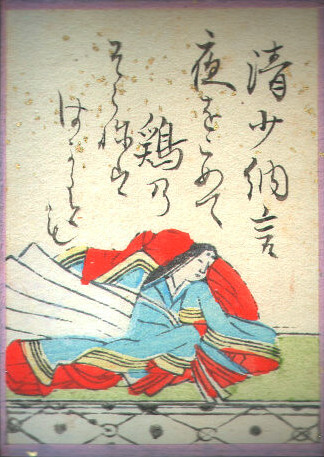
Human nature will not change. Human nature is a set of relatively stable psychological, biological, and social tendencies that are shared by all human beings. These tendencies shape how humans think, feel, and act even as culture and governance changes. Artificial intelligence will only intensify the strengths and weaknesses of human nature. The principles of anarchy in an A.I. world is frightening:

  • No centralized government, police, or standing armies.
  • Society organized through federations of communes, cooperatives, or councils.
  • Emphasis on direct democracy, mutual aid, and local autonomy.
  • Suspicion of any coercive authority — even democratic majorities.
  • Change often imagined as revolutionary, not incremental.

A more rational alternative to Anarchy is Democratic Socialism believed by Orwell and espoused by MLK.

  • The state remains, but becomes more egalitarian and accountable.
  • Markets may still exist, but are regulated or supplemented by public ownership.
  • Political parties and electoral competition are central.
  • Emphasis on universal programs: healthcare, education, housing, worker protections.
  • Change is gradual, through reforms, not revolution.

Differences of opinion.

There are obvious differences between Chomsky’s and Orwell’s beliefs. Both have social weaknesses. Human nature gets in the way of both forms of governance. Orwell seems to have recognized the weaknesses of his belief in democratic socialism in his writing of “Brave New World”. In contrast, Chomsky’s and Schneider’s pollyannish view of anarchy as “…a better form of government where power is decentralized and citizens can and should collectively manage their own affairs through direct democracy and cooperative organizations” is absurd. The difference is that Huxley foresees the dangers of his idea in “Brave New World” which anticipates something like A.I. that has the potential for society’s destruction. “On Anarchy” ignores the truth of human nature, “Brave New World” does not.

Franciso Franco (1936-1975, died in office.)

Orwell’s decision to join opposition to Franco’s dictatorship fails. Their right-wing beliefs in authoritarianism, anti-communism, and pro-Catholicism prevails. Spain’s 1930s opposition leaders (Manuel Azaña, Largo Caballero, and Juan Negrín) were pro-democracy with anti-fascist, socialists, communists, anarchists, trade unions, urban workers, and peasants who Orwell joined to support democratic socialism, not anarchy.

In the pre-A.I. age, democratic socialism is unachievable, but A.I. may resurrect its potential. However, it is the risk of a “Brave New World” or “1984” rather than a hoped-for democratic socialism.

LIVING LIFE

Aristotle’s belief was that the goal of life is living well, Sartre suggests there is no inherent meaning to life, Bentham said the goal of life is happiness. What does Gladwell believe?

Books of Interest
 Website: chetyarbrough.blog

OUTLIERS 

Author: Malcolm Gladwell

Narration by: Malcolm Gladwell

Malcolm Gladwell (Author, Canadian journalist, and public speaker.)

“Outliers” makes several points, some of which are insightful while others are debatable. As with all observations of life and discovery, correlation of what we see, hear, and understand does not prove causation. Gladwell shows the advance of civilization and great successes in life are from luck, timing, and hard work more than I.Q.

Gladwell offers examples of chance and the circumstances of an era that advance society.

Gladwell explains intelligence alone does not make a person successful. He offers a brief biography of a high IQ person who did not achieve success despite his intelligence. He notes intelligence and one’s culture must be accompanied by individual hard work, interest, and commitment as well as the luck of being born at the right time. Gladwell’s examples of success are Bill Gates, the Beatles, sports’ stars, retail clothiers, and lawyers. Each of his examples are a result of being in the right place at the right time with an innate wish to work hard that makes “Outliers” personally and/or financially successful.

The founders of Microsoft, Paul Allen (L) and Bill Gates.

Gladwell argues his case about “Outliers” by offering several examples. The founders of Microsoft were born at a time when computers were first being discovered. The Beatles lived in a culture that idolizes musicianship and entertainment. A quirk in society that artificially determines children born in certain months are presumed by some to make good to great sports stars which results in higher-order support of children born in particular months of the year. That birth-month’ choice garnered extraordinary support of parents and coaches according to Gladwell. Those children became sports stars as a result of that early parental and coaching support of their sports careers. Gladwell goes on to suggest observation and experience of immigrating Jewish clothes-makers arrived in America and became wealthy merchants at a time of America’s economic growth. And finally, Gladwell notes lawyers began creating elite legal firms to support growing litigation between growing mid-twentieth century American corporations. Gladwell’s common denominators were relative intelligence, a burning interest in cultural change, and a commitment to hard work. The circumstances of the time (new invention and social change) and hard work, rather than high I.Q., were the primary causes of individual success.

Cultural backgrounds.

Gladwell suggests cultural backgrounds prepared some to seize opportunities that were overlooked by the general population. He suggests some Jewish immigrants who migrated from discriminative cultures, were liberated by the freedom available in America. Gladwell notes the creation of the garment industry in New York and the rise of successful Jewish legal firms are examples of seized opportunities missed by many in the 20th century. The common denominators were hard work, social change, and culture.

The criticism one may have of Gladwell’s book is in the examples he chooses to make his arguments.

Gladwell’s examples are chosen to support his argument, but they narrow the reality of the complex life lived by most humans. He oversimplifies success because it seems narrowly defined as wealth and/or fame rather than happiness or contentment. He defines success as something that requires a “10,000” hour commitment of research and practice, i.e. an arbitrary criterion that has no basis in fact. People make their own choices in life whether it is as a nerd, a famous musician, a high-powered lawyer, or one who loves to read and spends time listening/reading and reviewing books.

Determinism vs. free will.

Gladwell seems to say life is deterministic, but many choose to adapt rather than be driven by the circumstances of life. This generation’s great change will be in the implementation of A.I. Massive investment is being made in A.I. today with momentous change coming to the world of employment.

Aristotle’s belief was that the goal of life is living well, Sartre suggests there is no inherent meaning to life, Bentham said the goal of life is happiness. What does Gladwell believe?

A.I. TOMOROW

A.I.s’ contribution to society is similar to the history of nuclear power, it will be constructively or destructively used by human beings. On balance, “Burn-In” concludes A.I. will mirror societies values. As has been noted in earlier book reviews, A.I. is a tool, not a controller of humanity.

Books of Interest
 Website: chetyarbrough.blog

BURN-IN (A Novel of the Real Robotic Revolution)

Author: P. W. Singer, August Cole

Narration by: Mia Barron

Peter Warren Singer (on the left) is an American political scientist who is described by the WSJ as “the premier futurist in the national security environment”. August Cole is a co-author who is also a futurist and regular speaker before US and allied government audiences.

As an interested person in Artificial Intelligence, I started, stopped, and started again to listen to “Burn-In”.

The subject of the book is about human adaptation to robotics and A.I. It shows how humans, institutions, and societies may be able to better serve society on the one hand and destroy it on the other. Some chapters were discouraging and boring to this listener because of tedious explanations of robot use in the future. The initial test is in the FBI, an interesting choice in view of the FBI’s history which has been rightfully criticized but also acclaimed by American society.

Starting, stopping, and restarting is a result of the author’s unnecessary diversion to a virtual reality game being played by inconsequential characters.

In an early chapter several gamers are engaged in VR that distracts listeners from the theme of the book. It is an unnecessary distraction from the subject of Artificial Intelligence. Later chapters suffer the same defect. However, there are some surprising revelations about A.I.’s future.
The danger in societies future remains in the power of knowledge. The authors note the truth is that A.I.’s lack of knowledge is what has really become power. Presumably, that means technology needs to be controlled by algorithms created by humans that limit knowledge of A.I.’ systems that may harm society.

That integration has massive implications for military, industrial, economic, and societal roles of human beings. The principles of human work, social relations, capitalist/socialist economies and their governance are changed by the advance of machine learning based on Artificial Intelligence. Machine learning may cross thresholds between safety and freedom to become systems of control with potential for human societies destruction. At one extreme is China’s surveillance state; on the other is western societies belief in relative privacy.
Robot evolution.

Questions of accountability become blurred when self-learning machines gain understanding beyond human capabilities. Do humans choose to trust their instincts or a machines’ more comprehensive understanding of facts? Who adapts to whom in the age of Artificial Intelligence? These are the questions raised by the authors’ story.

The main character of Singer’s and Cole’s story is Lara Keegan, a female FBI agent. She is a seasoned investigator with an assigned “state of the art” police robot. The relationship between human beings and A.I. robots is explored. What trust can a human have of a robotic partner? What control is exercised by a human partner of an A.I.’ robot? What autonomy does the robot have that is assigned to a human partner? Human and robot partnership in policing society are explored in “Burn-In”. The judgement of the author’s story is nuanced.

In “Burn-In” a flood threatens Washington D.C., the city in which Keegan and the robot work.

The Robot’s aid to Keegan saves the life of a woman threatened by the flood as water fills an underground subway. Keegan hears the woman calling for help and asks the robot to rescue the frightened woman. The robot submerges itself in the subway’ flood waters, saves the woman and returns to receive direction from Keegan to begin building a barrier to protect other citizens near the capitol. The Robot moves heavy sacks filled with sand and dirt, with surrounding citizens help in loading more sacks. The robot tirelessly builds the barrier with strength and efficiency that could not have been accomplished by the people alone. The obvious point being the cooperation of robot and human benefits society.

The other side of that positive assessment is that a robot cannot be held responsible for work that may inadvertently harm humans.

Whatever human is assigned an A.I robot loses their privacy because of robot’ programing that knows the controller’s background, analyzes his/her behavior, and understands its assigned controller from that behavior and background knowledge. Once an assignment is made, the robot is directed by a human that may or may not perfectly respond in the best interest of society. Action is exclusively directed by the robot’s human companion. A robot is unlikely to have intuition, empathy, or moral judgement in carrying out the direction of its assigned human partner. There is also the economic effect of lost human employment as a result of automation and the creation of robot’ partners and laborers.

A.I.s’ contribution to society is similar to the history of nuclear power, it will be constructively or destructively used by human beings. On balance, “Burn-In” concludes A.I. will mirror societies values. As has been noted in earlier book reviews, A.I. is a tool, not a controller of humanity.

RISK/REWARD

“IF ANYONE BUILDS IT, EVERYONE DIES” is an alarmist, and unnecessarily pessimistic view of the underlying value of Artificial Intelligence. This is not to suggest there are no risks in A.I. but its potential outweighs its risks.
Books of Interest
 Website: chetyarbrough.blog

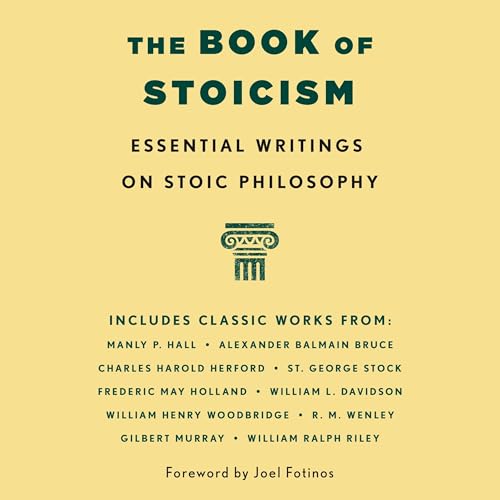
IF ANYONE BUILDS IT, EVERYONE DIES

Author: Eliezer Yudkowsky, and Nate Soares

Narrated By: Rae Beckley

Eliezer Yudkowsky is a self-taught A.I. researcher without a formal education. As an A.I. researcher, Yudkowsky founded the Machine Intelligence Research Institute (MIRI). Nate Soares received an undergraduate degree from George Washington University and became President of MIRI. Soares had worked as an engineer for Google and Microsoft. Soares also worked for the National Institute of Standards and Technology and the U.S. Dept. of Defense.

“IF ANYONE BUILDS IT, EVERYONE DIES” is difficult to follow because it’s convoluted examples and arguments are unclear. The fundamental concern the writers have is that A.I. will self-improve to the point of being a threat to humanity. They argue that A.I. will grow to be more interested in self-preservation than an aid to human thought and existence. The irony of their position is that humanity is already a threat to itself from environmental degradation, let alone nuclear annihilation. The truth is humanity needs the potential of A.I. to better understand life and what can be done to preserve it.

To this listener/reader environmental degradation is a greater risk than the author’s purported threats of A.I.

Pessimism is justified in the same way one can criticize capitalism.

The authors have a point of view that is too pessimistic about A.I. and its negative potential without recognizing how poorly society is structured for war and killing itself without Artificial Intelligence. The advance of A.I. unquestionably has risks just as today’s threat of mutual nuclear annihilation but A.I.s’ potential for changing the course of civilization for the better exceeds the agricultural and industrial revolutions of the past.
The nature and intelligence of human beings is underestimated by Yudkowsky and Soares.

There have been a number of amazing human discoveries that have accelerated since the beginning of civilization in Mesopotamia. Humans like Einstein and their insight to the universe will be aided, not controlled, by the potential of A.I. Artificial Intelligence is no more a danger to humanity than the loss of craftsman during the industrial revolution. Civilization will either adapt to revelations coming from A.I. or environmental degradation or human stupidity will overtake humanity.

“IF ANYONE BUILDS IT, EVERYONE DIES” is an alarmist, and unnecessarily pessimistic view of the underlying value of Artificial Intelligence. This is not to suggest there are no risks in A.I. but its potential outweighs its risks.