AMERICA

Bret Baier highlights civic ideals, recalls history that reveals American continuity, and encourages listener/readers to be grateful for what they have, or achieved in American life. There remain many structural injustices that have not been overcome by past or current American Presidents.

Books of Interest
 Website: chetyarbrough.blog

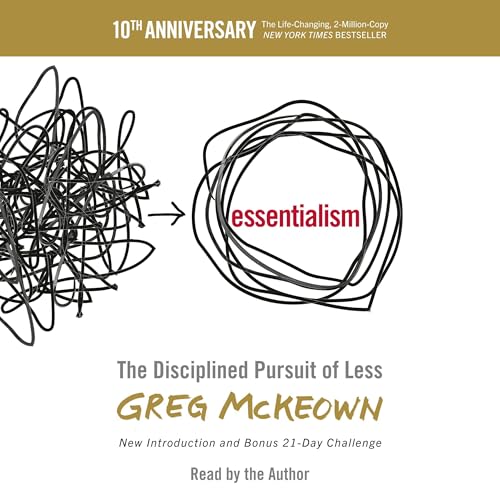
The Case for America (An Argument on Behalf of our Nation) 

Author: Bret Baier

Narration by: Bret Baier

Bret Baier (Author, American journalist, political anchor for Fox News.)

Patriotism is devotion to one’s country with a willingness to uphold its principles. Bret Baier’s “The Case for America” is a teacher and conservative newscaster’s expression of his personal American patriotism. As a white American male, he recalls the national ideals created by the founding fathers of the Declaration of Independence and Constitution. He clearly identifies the national ideals of America’s founders and their historical sacrifice. To some who listen to his book, one feels he glosses over many of the historical truths of discrimination, slavery, and unequal treatment in America.

Martin Luther King and the civil rights movement in America.

American unity is not a moral imperative. American unity is a political project in the process of perfecting human equality and economic opportunity. It is far from achieving that goal, but America’s leadership and philosophy is as Martin Luther King advised, an “…arc bending toward justice.” Americans, like all human beings, are flawed but the founding fathers created a basis upon which equality of all citizens may be achieved.

Most Americans, regardless of their circumstance in life, support the ideals of freedom, respect for all human beings, and are willing to defend an American way of life. Americans vote for what they believe in, many are willing to take responsibility for civic involvement, and a free press informs the public of the state of American affairs. Baier’s history is measured to reinforce the positives of American history. However, his historical framing is selective in ways that underrepresent American inequality and the failure of institutions to protect all citizens equally.

American protest.

Baier argues unity is a moral duty rather than a political challenge. Divisions in America are unclearly defined. There are real conflicts of interest, immense power differences, and historical traumas that make unity less appealing. Those truths are minimalized or unspoken by Baier. They create today’s unresolvable divisions. Baier’s expression of patriotism is not enough to assuage many Americans’ discontent. The role of dissent in America has changed the course of its history. Baier fails to identify many of those dissents by emphasizing unity, stability, and institutional continuity. He seems to ignore the value of protest movements, whistleblowers, and radical reformers when they have been essential to American progress.

American Presidents.

Baier focuses on Presidential leadership, their decision-making process, and character rather than the complexity of American political life. To identify President Reagan in the league of Washington, Jefferson, Lincoln, Franklin Roosevelt, or Truman is a betrayal of Baier’s political objectivity. Reagan like Biden are patriots of America but they aged to a level of incompetence in their terms of office. There are differences of opinion about American history. Not all believe, understand, or agree on what America stands for. Ideological, racial, economic, and informational differences are glossed over by Baier.

Nevertheless, Baier highlights civic ideals, recalls history that reveals American continuity, and encourages listener/readers to be grateful for what they have, or achieved in American life. Despite the errors of being human and growing old, all Presidents of America have contributed to the progress of Democracy’s ideals. There remain many structural injustices that have not been overcome by past or current American Presidents.

GUILT

A company and its employees can be convicted for insider trading and be sentenced to prison but a company’ owner can walk away with a fine and no criminal penalty or prison time.

Books of Interest
 Website: chetyarbrough.blog

Black Edge (Inside Information, Dirty Money, and the Quest to Bring Down the Most Wanted Man on Wallstreet) 

Author: Sheelah Kohatkar

Narration by: Kaleo Griffith

Sheelah Kohatkar (Author, staff writer for the New Yorker.)

“Black Edge” is about insider information that will give an advantage to a stock market’ investor. There is an elusive line crossed when an investor solicits information from an informed source that is not available to all investors. The line seems blurred by how the question is asked and whether the information given is available to everyone that is interested. Because the solicitation of information is not publicly provided information, the law defines it as illegal advantage to a singular investor rather than the general public. What makes this difficult to grasp is a diligent investor might do more research than the general public before investing in a stock. Is diligence a crime? Who is the criminal–the investor, the person who reveals proprietary company information, or the information pursuer? “Black Edge” implies all three are guilty but only one is criminally chargeable.

Steven A. Cohen (Former owner of SAC Capital.)

Sheelah Kohatkar researches the rise of Steven A. Cohen and SAC Capital to explain how complicated and difficult it is to prosecute an investor or his/her company for insider trading based on “Black Edge” information. One might argue Steven Cohen simply created an investment company focused on researching possible stock investments or sales based on the best information that can be found by diligent research on a company’s activities. Cohen gambled on that information by making large investments short sales or divestments of a subject company’s stock. SAC Capital became extraordinarily successful in buying, shorting, or selling publicly held stock based on that research. Kohatkar shows how those actions became criminal because of employee’ researchers that fed information to SAC Capital that is not readily available to the public. This became a violation of the law because Cohen’s company bet on what is classified as “insider information” found by SAC employees. Of course, that information may have been acquired by any investor who is willing to create an organization designed to research a target companies’ product before making a decision to invest in, short, or sell its stock.

SAC Capital is fined $1.8 billion dollars and is dismantled when found guilty of insider trading.

Cohen is never found personally guilty of insider trading, but SAC Capital is fined $1.8 billion dollars and is dismantled as part of a plea. The firm is found guilty with Cohen forbidden the right to manage outside money for two years with a payment of a $90 million dollar penalty. After expiration of the ban, he starts a new company, Point72 Asset Management, that manages billions of dollars for himself and his investors.

Cohen is never imprisoned for his investment activities but two of his employees were found guilty, fined, and imprisoned.

Cohen is never imprisoned for his investment activities but some of his employees were found guilty, imprisoned, and taken from their families. Cohen insulated himself from researchers in his firm and avoided direct communication with publicly held’ companies in which he chose to invest, short, or sell stock in. Cohen paid a penalty but served no time in prison for insider trading. In contrast, people he employed to get insider information went to prison, were fined, and endured family hardship caused by that imprisonment.

Kafka’s hell exists in today’s world just as it did when it was published in 1925.

Cohen’s attorneys manage to show prosecutors that he never knowingly participated in the collection of insider information. However, Mathew Martoma and Michael Steinberg, two of Cohen’s employees, were convicted because they were proven to have directly obtained non-public information, traded on it and personally profited from insider information. These two employees gathered (from personal conversations and private reports of publicly held companies) information not available to the general public. Their personal trades on non-public information made them guilty of “insider information” crime. In contrast, Cohen is not criminally prosecuted because he could not be affirmatively proven to have instructed his employees to gather insider information. Cohen is found to have failed to supervise his employees but that is only a civil, not criminal act.

This is a troubling history. “Black Edge” shows that an investment company’s structure can be set up to pressure employees to break the law without being held criminally liable for the use of insider information.

Even though an owner creates a company designed to solicit insider information, they shield themselves from criminal liability. The employees who actually gather insider information are guilty but the owner of a company who profits from their work is not guilty of the same crime. A company and its employees can be convicted for insider trading and be sentenced to prison but a company’ owner may walk away with a fine and no criminal penalty or prison time. As Lord Acton noted in 1887, “Power tends to corrupt, and absolute power corrupts absolutely”.

URBANIZATION

The point of Larson’s history of the Chicago World Fair is that urbanization is two edged. One edge improves societies’ economic, cultural, and technological values. The other amplifies inequality based on citizen’ power, wealth, race, gender, and ethnicity rather than innate human value.

Books of Interest
 Website: chetyarbrough.blog

Devil in the White City (Murder, Magic, and Madness at the Fair That Changed America) 

Author: Eric Larson

Narration by: Scott Brick

Eric Larson (Author, American journalist, graduate of University of Pennsylvania summa cum laude in 1976.)

Eric Larson’s “Devil in the White City” is a well written history of the famous Chicago World’s fair in 1893. Chicago became an international big city competitor with the creation of the World Columbian Exposition. At the same time, he writes of an evil human being born in America. Larson contrasts good and evil in middle America that reflects on the extremes of human nature that exist not only in America but everywhere in the world.

Daniel H. Burnham is a famous Chicago architect who is asked to be Director of Works for the World Columbian Exposition. His partner, John Wellborn Root, is the visionary who designs an original conceptual and aesthetic model of a neighborhood in a prosperous city. However, Root dies in 1891, two years before the beginning of construction. As the design concept takes form, Frederick Law Olmsted, the famous designer of Central Park in New York City, is recruited by Burnham to become a part of the development. These three designers create what Larson identifies as the “White City”, a tribute to the architectural appearance and fame of the eleventh World’s Fair, 7 miles from the second largest city in America, Chicago, Illinois.

Larson juxtaposes this remarkable Chicago accomplishment with the fraud, deception, and predation of H. H. Holmes (aka Herman Mudgett), a handsome, charismatic murderer who moves to Chicago to begin a career in the medical profession. The idealism and success of Chicago’s world fair is a prime example of American urbanization with people who move to the city from small town America.

H. H. Holmes aka Herman Webster Mudgett (1861-1896, is the “Devil in the White City”.)

Holmes is a poster child for the dark side of urbanism. Urbanism is the congregation of people in self-perpetuating communities that grow with rising populations. Holmes move to the Chicago area leads to the murders of Benjamin Pitezel and his three children. Holmes urbane good looks and powers of persuasion set the table for a scheme to commit insurance fraud. Before their murder, Holmes conducts real estate boondoggles, pharmacy scams, forgery, bigamy, theft, and embezzlement. Though not legally proven, it is strongly suspected he killed five or more women for reasons ranging from theft to pure venality. Though living in an urban environment is not a cause of evil, it is a petri dish for human behavior that can be good or evil.

Education, like money, is only a tool of human beings, not a measure of human value.

Holmes early education is in Gilmanton, New Hampshire where he gains early interest in medicine and human anatomy. He enrolls at the University of Vermont in 1879 but leaves to enroll in the University of Michigan Medical School. He graduates from U of M with a medical degree in 1884. It is interesting to note that Holmes is formally educated just as the architects who gathered for the building designs of the 1893 Chicago world’s fair. Larson shows Holmes is motivated to exploit society in any way that only serves his self-interests. The world’s fair’ architects equally wish to serve their self-interest but within the boundaries of societal norms, i.e., not by bilking the public or murdering citizens.

Frederick Law Olmsted (1822-1903, American landscape architect, journalist, social critic, and public administrator.)

The three main characters in this story of American urbanization are Daniel Burnham, Frederick Olmstead, and H. H. Holmes. Burnham and Olmstead are exemplars of success that make a contribution to America while Holmes is a villain of self-interest and evil. All three symbols of the power, value, and risk of urbanization. Burnham and the older Olmstead represent the best in American life with their skills and ability as visionaries and managers who get things done through others that benefit society. Holmes represents the worst of human nature as a singularly self-interested fraudster and murderer who cares nothing about others.

Six hundred acres of swampy, undeveloped land is turned into the Chicago World’s Fair in the 19th century. Fourteen major buildings, canals, and lagoons are built into a neoclassical “city”. The Chicago World’s Fair is 7 miles south of the downtown Chicago Loop. The site is called Jackson Park, bordered by Hyde Park and Woodlawn neighborhoods. Despite labor strikes, Chicago weather, political infighting, and the death of its visionary (John Root), Burnham manages the development of 200 low-rise (1 to 3 stories) buildings designed by famous east coast architects and the largest operating Ferris wheel in the world to complete the “…White City” in 26 months.

The City of Chicago today.

The point of Larson’s history of the Chicago World Fair is that urbanization is two edged. One edge improves societies’ economic, cultural, and technological values. The other amplifies inequality based on citizen’ power, wealth, race, gender, and ethnicity rather than innate human value. Contrasting the great accomplishments of Burnham, Root, and Olmstead with the evil of Holmes is an exemplar of human nature that can either benefit or destroy societies.

Holmes is convicted and sentenced to death. He is hung on May 7, 1896, at the age of 34. Burnham goes on to build his reputation with Union Station in Washington D.C., the Flatiron Building in New York, and what became the Museum of Science and Industry in “The White City” of Chicago. Burnham dies in 1912 at age 65. Olmsted dies in 1903 at age 81.

HISTORY LESSON

There is an irony in Higginbotham’s “Midnight in Chernobyl”. It is ironic to see what is happening in the 21st century with the revisionism of Presidents Trump and Putin. Their ideas of openness (glasnost) and system reform (perestroika) are a return to the past rather than the future.

Books of Interest
 Website: chetyarbrough.blog

Midnight in Chernobyl (The Story of the World’s Greatest Nuclear Disaster)

Author: Adam Higginbotham

Narration by: Jacques Roy

Adam Higginbotham (Author, British journalist, contributing writer for The New Yorker, Wired, and The New York Times.)

Adam Higginbotham reminds reader/listeners of the terrifying consequences of nuclear power mistakes in “Midnight in Chernobyl”. Over 400,000 people are evacuated from the area of Pripyat, a carefully planned Soviet city of 50,000 people, near four nuclear reactors. One of four reactors explodes on April 26, 1986, at 1.23 A.M. There were actually two explosions. The first was a massive steam explosion while a second explosion blew a 1,000-ton concrete lid into the air. The core of the reactor is destroyed. The building surrounding the reactor blew apart and radioactive fuel and graphite filled the early morning night sky. Fires were ignited on the roof and surrounding structures.

Higginbotham explains the explosion occurs because of a safety test that is botched by the operators of the plant. The nuclear reactor is set into a low-power state that disables an automatic shutdown system. By setting the reactor into a low-power state, control rods lowered into the reactor cause cooling water displacement and a spike in radioactive activity. This is noted as a design flaw that Higgenbotham argues is known by Soviet leaders before the disaster. In less than a second, the reactor surges to more than 100 times its normal power level. This massive energy surge generates runaway fission that destroys the reactor in two explosions. Chernobyl becomes a highly radioactive death trap for workers and residents of the surrounding area.

The total number of people affected by the Chernobyl accident may never be known because of Soviet obfuscation and historical indeterminacies, but Higgenbotham suggests it reaches 5 to 8.4 million people living in Belarus, Ukraine, and Russia. According to archival records, all residents of Pripyat are evacuated and an additional 300,000 are resettled. Twenty-eight people die within three months of the accident, 134 develop acute radiation syndrome. The estimate of cleanup workers is 600,000 made up of firefighters, soldiers, engineers, and volunteers.

As Higgenbotham ends his history, he notes a Russian worker’s death in the 21st century from leukemia. Was his death a consequence of the Chernobyl disaster in 1986? Who knows? The point is representative of the consequence of uncountable deaths that may be related to erasure of truth in any country.

The Chernobyl accident reaches 5 to 8.4 million people living in Belarus, Ukraine, and Russia.

Higginbotham argues Chernobyl is a proximate cause of the unraveling of the Soviet Union. He suggests it accelerates the collapse of Soviet authority. This is an interesting supposition. He argues that Soviet leadership believes their system of government had a level of technological and administrative capability that illustrates a level of competence and achievement that is superior to all other forms of governance. The Chernobyl disaster challenges that self-perception. Hierarchal state control fails to train and manage the complicated nuclear industry. A rigid managerial hierarchy hides incompetence. It also breeds corruption and bureaucratic paralysis with top-down management because of information obfuscation and concealment at lower management levels. Fear of criticism by leadership leads to distortion of the truth at lower levels of government. Higgenbotham’s interviews of Russian investigators of the disaster reveals the incompetent training of lower-level employees who operated the facility. Their inclination is to cover-up mistakes rather than reveal them to their direct reports.

The economic cost of the Chernobyl disaster exposes the USSR’s Communist Party’s failure as a system of government.

Presidents Gorbachev and Reagan signing the nuclear non-proliferation agreement.

Higgenbotham notes environmental movements, and Russian anti-nuclear activists grew to express anger with Moscow and its leaders. The disaster undermined Soviet scientific and technological belief in Russia’s superiority. In 1986 and 1987 speeches Gorbachev notes in a Politburo address that the Chernobyl meltdown is a harbinger of the Soviet Union’s need to change. In a 2006 speech Gorbachev speaks of the need for apparatchiks to tell truth to power, to reduce soviet secrecy, and accept glasnost and perestroika as solutions for improvement of Russian leadership.

There is an irony in Higginbotham’s “Midnight in Chernobyl”. It is ironic to see what is happening in the 21st century with the revisionism of Presidents Trump and Putin. Their ideas of openness (glasnost) and system reform (perestroika) are a return to the past rather than the future.

WHO’S CHOKING

Economic chokepoints illustrated by Fishman are real, but their effectiveness is problematic.

Books of Interest
 Website: chetyarbrough.blog

Chokepoints (American Power in the Age of Economic Warfare)

Author: Edward Fishman

Narration by: Robert Petkoff

Edward Fishman (American author, international relations scholar, former diplomat at the Council on Foreign Relations, professor of Public Affairs at Columbia, University.)

Edward Fishman offers a detailed history of economic “Chokepoints” that have become a tool of war between nation-states. He reminds readers of Trump’s first term as President of the United States. Trump did not change from policies he believed in his first term. He only became more effective in carrying out his beliefs in his second term.

Trump’s beliefs.

Fishman shows how Trump combines the tactics of warfare with economic chokepoints to decimate Iranian cities while starving its citizens of their right to believe and live. Trump is convinced of the potential of Iran’s current leadership to use weapons of nuclear war to destroy civilization because of religious belief. Trump chooses to bomb Iran while expanding economic policies instituted by both Democratic and Republican administrations to choke petroleum revenues from a country that provides 20% of the world’s oil needs.

Trump is waging a war on the singular belief that he can force Iran to abandon research for a nuclear bomb. The consequence is to embroil America in a war of attrition and destruction based on Trump’s belief that Iran’s leadership is willing to use nuclear war to end life on earth for a place in heaven. Trump’s actions are deluded idea of a “bully in a school yard”. Denying nuclear bomb development by force is a fool’s errand. North Korea, Russia, China, and America are as likely to instigate a nuclear war as Iran. Religious belief is Trump’s excuse; not a cause for war.

Iranian citizen protest.

It is the citizens of Iran that bare the consequence of America’s chokepoint decisions.

Fishman explains how economic chokepoints have becomes as devastating as war. The Iranian people have been impoverished by American allies’ cooperation in restricting their economy. It may be, like the physical war against Germany and Japan in WWII, economic chokepoints will make Iran bend its knee. On the other hand, it may continue a “forever war” that only diminishes humanity. Chokepoints are a war by other means that offer compromise, or dictatorship. Chokepoint effects are poverty, death, or compromise. Religion, like political belief, is a personal choice that cannot be eradicated by force.

Effects of human descent.

Economic chokepoints illustrated by Fishman are real, but their effectiveness is problematic. First, one must identify the economic target that is affective. Second, there must be unity and credibility among nations that can enforce a chokepoint. Even with a chosen chokepoint, the target may make citizens willing to sacrifice everything for belief in sovereignty.

AMERICAN AMBITION

Keefe shows Arthur Sackler raised himself in America through grit and determination, i.e., little seems handed to him on a silver plate. This is not to suggest the drug industry or the Sackler’s of the world carry no responsibility for addiction but opportunity and a way to succeed in an American life is a choice.

Books of Interest
 Website: chetyarbrough.blog

Empire of Pain (The Secret History of the Sackler Dynasty)

Author: Patrick Radden Keefe

Narration by: Patrick Radden Keefe

Patrick Radden Keefe (Author, investigative journalist, staff writer for The New Yorker.)

Patrick Radden Keefe’s book is a detailed examination of the Sackler family, and more specifically, the dynasty that grew after the life and death of Arthur Mitchell Sackler who died in 1987. Arthur Sackler was a trained physician who specialized in biological psychiatry. Through hard work, he built a family fortune with a company specializing in medical advertising and pharmaceutical marketing. With wealth created by advertising, the Sackler patriarch acquired interests in specific drugs that added to the wealth of the Sackler empire. One of those investments is made by the sons of Arthur Sackler. It became known as OxyContin which became a huge revenue producer controlled by Arthur’s heirs. Dr. Paul Goldenheim and Dr. Robert Kaico were the scientists who invented OxyContin while working for Purdue Pharma, a company owned by Arthur’s brothers. Arthur Sackler is characterized by Keefe as secretive about his ownership interests while becoming a very rich man. The structure of his business interests and its conflicts of interest are passed on to his heirs.

Arthur M. Sackler (American psychiatrist and marketer of pharmaceuticals.)

Arthur dies nine years before OxyContin exists. Despite the difficult life Arthur Sadler had with the bankruptcy of his father, he works his way through school, becomes a licensed physician and starts a pharmaceutical advertising company. He worked as a physician, a medical researcher, and owner of a company that advertised his and other medically researched and discovered drugs. This opened the door to profiteering from drug promotions and conflicts of interest in groundbreaking and potentially harmful drugs. As a physician, it put Arthur and other research physicians in position to market drugs and influence prescriptions for drugs that may or may not be safe or effective. As an advertiser of a physician/scientists’ own drugs, they could skirt independent judgement of their effectiveness or possible side effects. The FDA is created to avoid that possibility, but Keefe illustrates how that roadblock is compromised. Keefe recounts how a leader of the FDA is compromised by his relationship with the drug industry.

The Family That Built an Empire of Pain - Strength and Hope

Arthur’s wealth and investment interests are inherited by his divorced wife, his new wife, and his brothers, i.e., Ramond, Mortimer, and Richard who led the company after Arthur’s death. The brothers sell their patent on OxyContin to Purdue Pharma. The brothers start two branches of their business, one of which retains control of OxyContin’s manufacture, marketing, sale, and profit. Patent law is a legal ownership “smoke” screen that protects company owners from liability for harm from patents a company holds. A company may own a patent independently, without recourse to its company’s owners. Purdue Pharma grows and uses its wealth to influence politicians, government officials and doctors to endorse drugs like OxyContin.

OxyContin dosages.

As is known by many Americans, OxyContin has had a catastrophic impact on America. It its launch in 1996, OxyContin is considered by some to be a gateway to addictive drugs like heroin and fentanyl. In 2026, it is estimated that 200 deaths per day were happening from fentanyl overdoses. What Keefe argues is that when the structural conflicts of interest were introduced by the Sackler family (especially with the creation of Purdue Pharma) the lines between drug efficacy and profits were breached by the medical profession.

What Keefe reveals in his research is that pharmaceutical-physician relationships cross the line of conflicts of interest.

Doctors receiving “speaker fees”, continuing-education events, consulting positions, and industry-funded clinical guidelines are being lured into prescribing drugs that may or may not be safe or effective. Funding for medical research frequently comes from companies more interested in profit then drug efficacy. Government regulators are influence by lobbyist for a drug industry that is mired in potential conflicts of interest. Keefe notes there is a revolving door between the FDA and pharma employment. Keefe notes marketing has become a part of medical education. He infers philanthropy by the drug industry may be a bribe to influence public acceptance of drug treatments that are not effective.

Coming away from Keefe’s analysis of the drug industry, one is troubled by its corruption vulnerabilities in a society that prides itself on freedom and rule-of-law.

In one sense, Arthur Sackler is a tribute to how America became one of the wealthiest and most powerful countries in the world. One doubts that the Sackler family planned to create a drug that would addict and kill so many Americans. The Sackler family played a role but how many Americans have made mistakes in their drive for success. Keefe shows Arthur Sackler raised himself in America through grit and determination, i.e., little seems handed to him on a silver plate. This is not to suggest the drug industry or the Sackler’s of the world carry no responsibility for addiction but opportunity and a way to succeed in an American life is a choice.

AMERICA’S JOURNEY

Today, it seems America has taken a step backward from human equality, but every 4 years gives America another opportunity to step forward. That step forward welcomes equality of opportunity for all who choose to become American.

America has come a long way since 1776, but it is far from the goals that it set for itself in the Constitution.

Books of Interest
 Website: chetyarbrough.blog

American Grammer (Race, Education, and the Building of a Nation)

Author: Jarvis R. Givens

Narration by: Bill Andrew Quinn

Jarvis Givens (Professor and scholar of Education at Harvard)

“American Grammar” is a reminder of America’s past which shows the hard truths of what really made America great. In the 19th and 20th centuries, American government attempts to erase the cultural heritage of tribal nations. At the same time, America disingenuously encourages human slavery based on false claims of racial and gender inequality. This history lives on in America today with faltering efforts to compensate tribes for their cultural and economic losses, and its failure to provide equal opportunity for all.

Too many people fail to read or understand history. Not knowing history makes repeating it a likelihood.

America has become one of the most powerful nations in the world. Beyond the natural abundance of its land, Jarvis Givens explains the decision of America’s leadership to create an educational system to ensure white America’s political and economic success.

An educational system is a key to the door of American political and economic success.

Common education, focused on grammar, melds disparate cultures, races, and genders into one nation. The title of Givens’ book “American Grammar” is a testament to the method America uses to create an independent nation. Educational institutions became indoctrination centers designed to teach citizens a common language and the importance of conforming to a primarily white male system of governance.

American inequality.

All people, as implied by the American Constitution, deserve to have equal opportunity based on their innate ability, I.e., regardless of ethnicity, race, or gender. Givens shows how the wealth of native lands that were stolen, support of slavery, and gender inequality became culturally acceptable in America with an education system designed to indoctrinate the public. Givens’ history reminds listeners that building a great nation is a work in progress for every country. America’s Constitution recognizes the importance of human equality, and its leaders have made some progress toward that goal. However, America is far from the goal of equal opportunity for all.

America steps back and forward toward the goal of equality of opportunity in every political election.

Today, it seems America has taken a step backward from human equality, but every 4 years gives America another opportunity to step forward. That step forward welcomes equality of opportunity for all who choose to become American.

THE U.S. & CHINA

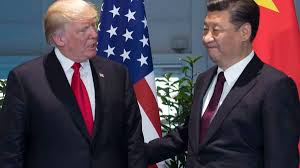
Both America and China need to change. Both are making authoritarian errors that are unnecessarily threatening world comity, human progress, and the potential for peaceful coexistence. This seems simple on its face but hard in reality.

Books of Interest
 Website: chetyarbrough.blog

THE THIRD REVOLUTION (Xi Jinping and the New Chinese State)

BREAKNECK (China’s Quest to Engineer the Future)

Authors: Elizabeth C. Economy, Dan Wang

Narration by: Anna Perrin, Jonathan Yen

These two authors were listened to because of their similarities and differences about America’s and China’s political/economic systems. They show some similarity that reinforces their arguments about America’s and China’s economies. Ms. Economy was born in America while Wang was born in Canada. Wang’s parents fled China just before he was born. Ms. Economy is an American political scientist, foreign policy analyst, and noted expert on China’s politics and foreign policy. Wang, as a son of Chinese parents, is a Canadian technology analyst and writer. Ms. Economy is a co-chair of a program on the US, China economic/political studies at the Hoover Institution. Wang is a visiting scholar and a research fellow at the Hoover Institution.

America/China-Worlds Apart?

These authors analytic approach to the political economy of America and China are viewed from different perspectives. Ms. Economy approaches the Chinese economy from a governance and global strategy perspective, while Mr. Wang views America’s and China’s economies from a technological and manufacturing perspective.

Ms. Economy explains how Xi has centralized power that is reshaping China’s institutions and extending China’s global influence. Xi recognizes a level of greed and corruption that infected communist functionaries and began firing many of the party leaders to restore his vision of the ideals of communism. In contrast, Wang focuses on an engineering mentality of Chinese governance and its strategy to make China the most powerful nation in the world.

Example of China’s largest production automobile, the BYD.

Ms. Economy shows strategy is not enough to make China, or for that matter, America great. She notes great advances China has made but criticizes the quality of China’s industrial production, i.e., particularly an auto industry that has become the largest in the world but with many product features that fail its buyers. There are safety, quality, durability, and reliability criticisms of China’s cars. BYD is one of China’s strongest brands. As an example, China recalled an estimated 110,000 electric vehicles due to battery defects. In 2024, 32 million vehicles have been produced in China. Its closest competitor is America which only produced an estimated 10.5 million vehicles.

Both authors agree that China is a deeply state-driven economy. However, Ms. Economy suggests China’s strengths and weaknesses are based on political ideology while Wang argues it is because of China’s focus on engineering and technology. This seems a “Potato-Pototo” argument that leaves a reader feeling there is little difference, i.e., China’s power and growth is limited by its system of governance with technology being only a part of its strength and weakness. The same is true of all forms of government, including democracy.

Ms. Economy notes the fragility of China’s authoritarian political power that refuses to allow openness to citizen opinion about new projects or ideas that change their lives. In contrast, Wang notes America’s failure to capitalize on engineering and the capitalist capabilities of America’s economy because of too many lawyers. Wang explains America’s resistance to economic growth is constrained by a lawyer mentality of “not in my backyard”. In contrast China’s economic growth ignores human impact of projects (like dams) that displace millions of Chinese citizens without political voice. Both authors seem correct with the implication of a solution that is within the capabilities of both systems of government, i.e., China should become more concerned about its citizens welfare and America should invest in public works that benefit all Americans.

The two authors see different solutions for America’s and China’s quest for world influence. Ms. Economy argues America needs to compete with China’s global ambitions by using some of the same financial and political investments that demonstrate the value of capitalism over authoritarianism. Wang agues engineering, manufacturing, and industrial capacity must be reinvented in the U.S. Some may argue that is what Trump is trying to do but many would argue he fails to make a distinction between technological growth and polluting industrialization. Both America and China need to change. Both are making authoritarian errors that are unnecessarily threatening world comity, human progress, and the potential for peaceful coexistence. This seems simple on its face but hard in reality.

VERIFIABLE TRUTH

Schweizer presents a book that has little substantiated proof about immigration in America. His book has become popular. “The Invisible Coup” has improved his economic well-being at the expense of knowledge based on verifiable fact.

Books of Interest
 Website: chetyarbrough.blog

The Invisible Coup (How American Elites and Foreign Powers Use Immigration as a Weapon)

Author: Peter Schweizer

Narration by: Charles Constant

Peter Franz Schweizer (American political consultant and writer. Editor-at-large for far-right media organization Breitbart News. Former fellow of the Hoover Institution.)

“The Invisible Coup” is a popular book that explains why world peace is a pipe dream in today’s world. Schweizer shows why Donald Trump has a popular following that continues to support his Presidency despite ICE tactics to identify immigrants based on the color of their skin, and his attack on Iran without authorization from Congress or cooperation from America’s allies.

Schweizer has written a paranoid polemic on the causes and purpose of immigration to the United States by non-white immigrants.

Schweizer argues immigration is a coordinated “weapon” of foreign governments and American power brokers to influence and ultimately overthrow America’s way of life. He refuses to note people come to America to create a better life for themselves and their families. This is not to suggest there is no effort by immigrants to sneak into the U.S. or to game the American welfare system but to realize abuse of welfare is a problem whether American citizens or immigrants abuse the system. This is an American welfare management problem, not an immigrant issue.

America is founded on immigration.

Schweizer argues immigrants from China, Venezuela, Cuba, Mexico, and Brazil are gaming America’s welfare system and undermining the national purpose of a democratic government at the direction of foreign government leaders. He suggests the purpose of these foreign government’s leaders is to weaken the national character of America and destabilize its government. Schweizer writes of anonymous U.S. intelligence officials that say China encourages Chinese nationals with military intelligence to cross into America to gather intelligence. He offers no documentary evidence, no named officials, or verifiable data. He cites anonymous sources for all these countries to make his arguments totally unverifiable
Immigrants are seeking a better life in America.

To believe there is a coordinated foreign attack on American democracy by foreign governments through the use of illegal immigration is a distortion of a primary truth, i.e., immigrants are seeking a better life. Conspiracy to destroy American democracy through illegal immigration is absurd on its face. This is not to say some foreign governments would like to see America fail but for reasons of money, power, and world domination which have nothing to do with emigration. Schweizer generalizes real incidents of immigrant criminals to make the absurd argument that a cabal of foreign governments are using illegal immigration to undermine American institutions. His arguments are based on confidential documents and unnamed sources. He writes of “leaked intelligence” or “internal government documents” that are classified and cannot be produced to prove his point. Anonymous intelligence and law-enforcement officials are frequently used to substantiate his claims. Schweizer makes evidence-free assertions with political points that have no basis in verifiable fact.
Immigrant crime rates.

The history of immigration in America has improved economic growth. America is a nation of immigrants. The truth is immigrants commit crime at lower rates than native-born Americans. There is no denying the U.S. immigration system is flawed. Cartels do exploit illegal immigration to make money and some governments pressure America by increasing migration from their countries to the United States. Immigration is a regulatory problem but viewing it as foreign nation-states’ geopolitical attack is ridiculous on its face. The troubling part of Schweizer’s view is that world peace is an ideal that may never be achieved because of the nature of human beings. Mistakes are made when people correlate undocumented facts with causes. Truth has little value without independent verification of facts.

Schweizer presents a book that has little substantiated proof about immigration in America. His book has become popular. “The Invisible Coup” has improved his economic well-being at the expense of knowledge based on verifiable fact.

TESTING DEMOCRACY

Does American Democracy have the resilience to adjust to a massive change in its economy from Artificial Intelligence? That is the essence of Turley’s concern about “The Unfinished Story of the American Revolution”.

Books of Interest
 Website: chetyarbrough.blog

Rage and the Republic (The Unfinished Story of the American Revolution)

Author: Jonathan Turley

Narration by: Jonathan Turley

Jonathan Turley (Author, American attorney, legal scholar, commentator, professor at George Washington University Law School.)

As George Santayana wrote in “The Life of Reason” in 1905, “Those who cannot remember the past are condemned to repeat it.” Jonathan Turley served on the board that judged whether Clinton and Trump should be impeached. His history in “Rage and the Republic” is a scholarly assessment of America’s struggle with democracy and “rule of the many” rather than the “One”. Turley reviews the histories of the American and French revolutions to show how they were fundamentally different and what that difference shows in the present and implies for the future.

President Trump is testing the limits of democracy.

Trump is not the first nor the last President who has taken liberties with the ideals of Democracy. President Franklin Roosevelt was heavily criticized for his public works decisions during the depression just as President Trump is heavily criticized for his imperial actions on immigration and the bombing of Iran. As one listens/reads to Turley’s “Rage and the Republic”, one is comforted by the history of America’s struggle with the framework of democracy as it is defined by the Declaration of Independence and Constitution. Democracy has been challenged by many in the history of its establishment but has managed to right itself from the trials it presents for belief in liberty and equality for all.

An inherent difficulty of Democracy is in balancing freedom with authority.

Turley reminds listener/readers of the early days of American independence and men (because they were mostly men) like Thomas Paine who railed against abuse of power by Governors of independent States like Pennsylvania, and the government of the early American states. Paine’s history is of a flawed human being who rose to be an American patriot. Paine reinforced belief in Democracy with his political actions and beliefs reported in his publication of “Common Sense”. Paine railed against the Governor of Pennsylvania for profiting from his role as a head of state just as many criticize Trump today for doing the same as President of the United States.

Despite Paine’s “Rights of Man”, every President, Republican or Democrat, has sided with corporate interests. Some Presidents undoubtedly benefited from those interests.

Turley explains Paine’s imprisonment in France during the French revolution. The irony of Paine’s imprisonment in France is America’s neglect of his predicament, and the rage of the French Revolution which may be harbingers of a future for American citizens. Just as “Trump’s induced” riot of January 6, 2021, and today’s public reactions to ICE’ immigration and Iran’s bombing, public reactions may be warnings of America’s future.

One hopes America’s rage does not devolve into anything like the French revolution.

America remains a land of immigrants. In today’s world, Turley notes it is common for Americans to have more than one citizenship. He notes a French citizen who becomes an American farmer in the United States. Despite being a French citizen, he adapts to a different way of life and grows to identify himself as an American. That adaptation will be greater for all Americans in the 21st century.

Turley’s interesting history of public rage is a warning about the massive transition governments will have to make because of Artificial Intelligence and its impact on employment. Does American Democracy have the resilience to adjust to a massive change in its economy from Artificial Intelligence? That is the essence of Turley’s concern about “The Unfinished Story of the American Revolution”.