HUMAN FLAW

“Gilead” is a difficult story to listen to or read because one begins with attachment to its main character but ends with recognition that we are all human which by definition makes us flawed.

Books of Interest
 Website: chetyarbrough.blog

Gilead (A Novel)

Author: Marilynne Robinson

Narration by: Jim Jerome

Marilynne Robinson (Author, born in 1943, winner of the Pulitzer Prize for Fiction in 2005. Time magazine lists her among 100 of the most influential people in America.)

As one grows older, Marilynne Robinson’s Gilead reflects on what it is like to be nearer the end than the beginning of life. Some thought is obviously given to Robinson’s title for her book. Considering the fame of Robinson’s writing, one might look up the word Gilead and find it has a biblical meaning as a place of healing and a place of iniquity. Robinson’s point seems that we live in a world of profound moral wrongdoing that is always in the process of healing. One looks back on life and presumes they know Robinson’s reason for writing “Gilead” as a picture of one who tries to be a healer of humanity for our imperfect, sin-burdened lives.

Being a preacher who is also a father, husband, and fellow human being.

“Gilead” is a story of an older husband and father who is heir to generations of preachers in a small mid-western town. The author’s subject is a preacher who is nearing the end of his life. It is about a preacher who lives among people who live in a town populated with educated atheists and deeply serious believers in God and heaven. Putting aside its argument about the value of belief in existence beyond death, it is an entertaining story of a preacher in his 70s. Whether one believes in God or not, Robinson’s story of old age is a reminder of our imperfect lives.
The preacher falls in love twice in his life. His first wife dies in childbirth. The preacher marries a second time, and his new wife bares a son. He loves his life and hopes to raise a son who he hopes will carry on the tradition of a preachers’ life. However, his son seems disinterested in becoming a preacher. The pains of an older life are detailed and show how even a believer in God and good will toward others does not protect one from the faults of human judgement and society.

At this point in the story, one sees the preacher as a good man with a family history that shows his grandfather served in the civil war as a union soldier that fought for the freedom of enslaved Americans. In returning to civilian life, he is guardedly received by his adult son (also a preacher) for his role in the war. One actively served in the Union army while his son polished his credentials as a town preacher. This town preacher appears to disagree with his Preacher father’s decision to fight for racial justice; presumably because of reservations about killing fellow Americans for the cause of racial justice. A tension between the son and the returning father is evident in the way the town preacher buries his father’s gun and disposes of his father’s presumed clothing from the Union army. The town preacher shows a level of judgementalism that hints at unspoken prejudice and an emotional reserve that hides a human flaw; i.e. namely, disbelief in the equality of all human beings.
The remainder of “Gilead” addresses the town preacher’s son who becomes a preacher and is the main character of the book.

The catalyst of the story is a returning son of the preacher’s closest friend of 40 years who is also a preacher in this small Iowa town. The prodigal son is viewed as a “good for nothing” highly intelligent young man who broke many rules in his life in Gilead. He left town in disgrace for having impregnated a local girl without marrying her. In his life away from Iowa, he has a son from an interracial relationship that is revealed to the primary preacher of the author’s story. The prodigal son asks the preacher for his blessing. At first the preacher seems reluctant but eventually offers God’s blessing to the now 40 something man who is leaving town. His initial reservation of offering a blessing shows the limits of the preacher’s character. In the end, the preacher shows the boundlessness of his belief in God and heaven with his compassion for what he seems to view as a lost “boy-man”.

“Gilead” is a difficult story to listen to or read because one begins with attachment to its main character but ends with recognition that we are all human which by definition makes us flawed.

WEALTH IN AMERICA

American democracy is like a giant ship at sea. It takes time to turn a giant ship impeded by brief storms until the return of calmer seas. America is weathering a Trumpian storm today but there is reason to believe there is another Lincolnesque or Rooseveltian leader in America’s future.

Books of Interest
 Website: chetyarbrough.blog

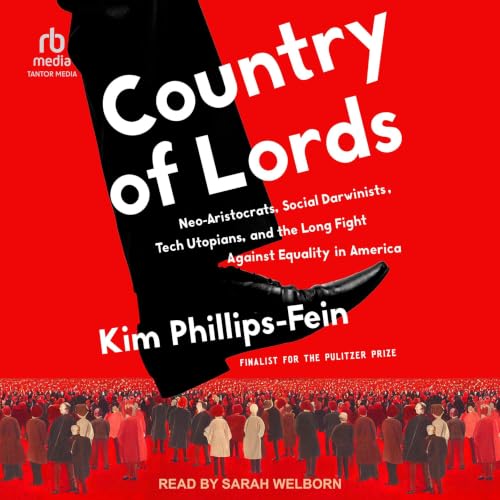
Country of Lords (Neo-Aristocrats, Social Darwinists, Tech Utopians, and the Long Fight against Equality in America.) 

Author: Kim Phillips-Fein

Narration by: Sarah Welborn

Kim Phillips-Fein (Author, American historian, Professor of History at Columbia University.)

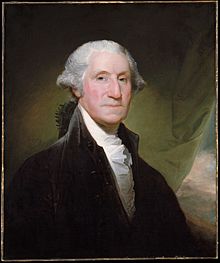
Kim Phillips-Fein argues the widening gap between the ultra-rich and everyone else in America is because of American culture’s anti-egalitarian beliefs and tradition. Beginning with the Founding Fathers of America; i.e., John Adams, Alexander Hamiliton, and Thomas Jefferson, Phillips-Fein’s argues these 3 men set the table for America to become anti-egalitarian. In part, she has a point because these three were elitists with university educations. However, she neglects to mention that George Washington was largely self-educated and seems unlikely to have been anti-egalitarian. However, despite Washington’s limited education and his role as a military leader, he is unlikely to have disagreed with Adams, Hamilton, or Jefferson.

As the author points out Adams, Hamilton, and Jefferson believed in a “natural aristocracy” that would improve society. Of course, this idea comes from white American Founders that gave little weight to non-white races, believed in slavery, and white male superiority. Phillips-Fein explains these foundational beliefs held great influence in American society. The growth of industry labor biases is magnified by intellectual distortions of Darwinian evolution. The author goes on to explain influential Americans like Willam Sumner (an influential American social theorist in the 19th century) opposed welfare because of belief in Darwin’s discovery of natural selection and the concept of “survival of the fittest”. American economic growth and the rise of personal white male wealth diminish the status of laborers, women, and non-white Americans.

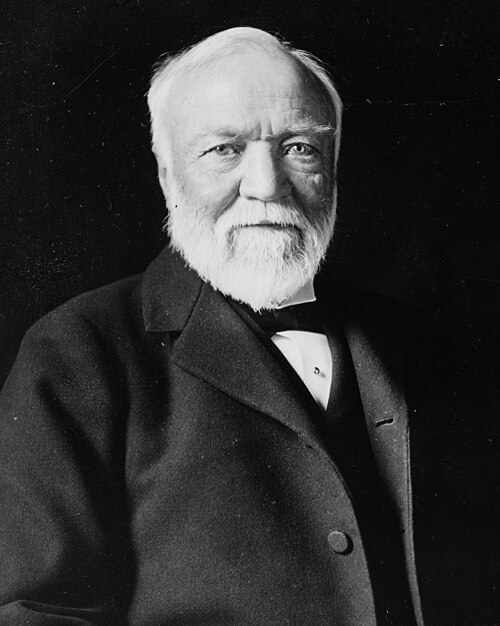
Andrew Carnegie (Scottish American, industrialist, and philanthropist 1835-1919.)

Andrew Carnegie (a steel magnate who created America’s first billion-dollar corporation) writes an essay titled “The Gospel of Wealth” in 1889 which argues the rich should rule because their wealth came from their natural superiority. Henry Ford creates his fortune in the automobile industry with a rigid hierarchy based on paternalistic control of workers’ labor and domestic lives. The outgrowth of industrial success in America leads authors like Madison Grant to racialize society with a belief that the white race is biologically superior. People like Charles Davenport (an American biologist who died in 1944) espoused a eugenics movement with a belief that poverty and crime are based on heredity which reinforces illogical beliefs of leaders like Adolph Hitler.

The author explains distortions of science and the advance of IQ testing have led to the rise of technocrats and corporate hierarchies based on preferential promotion and ascension of mostly white American men. Corporations grew to become quasi-governments that reinforced anti-egalitarianism. A meritocracy grows with sociologically biased IQ testing as a way to reinforce inequality based on cognitive difference rather than experience, proven, and/or innate ability.

Consequence of inequality of opportunity. Octavia Butler (a highly regarded American writer who died in 2006) shows an evolution of cities into silos of cultural difference rather than communities of common interest.

The irony of Phillips-Fein’s history of American thinkers and elites is that because people are not equal, they should not have equal opportunities. She notes people like John Adams believed too much egalitarianism is dangerous because it would empower the wrong people; i.e. presumably poorly educated Americans (ironically people like George Washington). The growth of racism and belief in eugenics by people like Lothrop Stoddard (a Harvard educated historian who died in 1950) argue that equal opportunity is foolish because laborers and particularly non-whites are less educated and equal to people who have acquired great wealth. The effects of that belief reinforce the false belief that wealth is a measure of human worth. That false belief becomes a self-fulfilling prophesy that creates a perennial underclass that is denied an equal opportunity to improve their lives.

Charles Darwin (1809-1882) FOUNDER OF THE THEORY OF THE ORIGIN OF SPECIES.

After this depressing history, Phillips-Fein suggests anti-egalitarianism in not a permanent, unchangeable characteristic of American democracy. Social Darwinism is collapsing as its distortions of evolution are better understood. The proof of Jewish contribution to society will never offset the horror of Adolph Hitler’s holocaust but few rational human beings can fail to see how important Jewish culture has been to science and the advance of civilization. The movements of abolitionists, labor, civil rights, feminists, immigrant and disability rights in the 20th and 21st centuries encourage egalitarian beliefs.

American democracy is like a giant ship at sea. It takes time to turn a giant ship impeded by brief storms until the return of calmer seas. America is weathering a Trumpian storm today but there is reason to believe there is another Lincolnesque or Rooseveltian leader in America’s future.

AMERICA

Bret Baier highlights civic ideals, recalls history that reveals American continuity, and encourages listener/readers to be grateful for what they have, or achieved in American life. There remain many structural injustices that have not been overcome by past or current American Presidents.

Books of Interest
 Website: chetyarbrough.blog

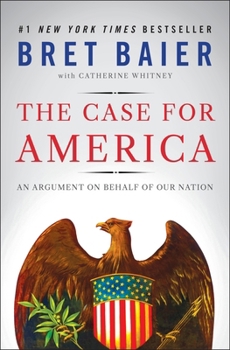
The Case for America (An Argument on Behalf of our Nation) 

Author: Bret Baier

Narration by: Bret Baier

Bret Baier (Author, American journalist, political anchor for Fox News.)

Patriotism is devotion to one’s country with a willingness to uphold its principles. Bret Baier’s “The Case for America” is a teacher and conservative newscaster’s expression of his personal American patriotism. As a white American male, he recalls the national ideals created by the founding fathers of the Declaration of Independence and Constitution. He clearly identifies the national ideals of America’s founders and their historical sacrifice. To some who listen to his book, one feels he glosses over many of the historical truths of discrimination, slavery, and unequal treatment in America.

Martin Luther King and the civil rights movement in America.

American unity is not a moral imperative. American unity is a political project in the process of perfecting human equality and economic opportunity. It is far from achieving that goal, but America’s leadership and philosophy is as Martin Luther King advised, an “…arc bending toward justice.” Americans, like all human beings, are flawed but the founding fathers created a basis upon which equality of all citizens may be achieved.

Most Americans, regardless of their circumstance in life, support the ideals of freedom, respect for all human beings, and are willing to defend an American way of life. Americans vote for what they believe in, many are willing to take responsibility for civic involvement, and a free press informs the public of the state of American affairs. Baier’s history is measured to reinforce the positives of American history. However, his historical framing is selective in ways that underrepresent American inequality and the failure of institutions to protect all citizens equally.

American protest.

Baier argues unity is a moral duty rather than a political challenge. Divisions in America are unclearly defined. There are real conflicts of interest, immense power differences, and historical traumas that make unity less appealing. Those truths are minimalized or unspoken by Baier. They create today’s unresolvable divisions. Baier’s expression of patriotism is not enough to assuage many Americans’ discontent. The role of dissent in America has changed the course of its history. Baier fails to identify many of those dissents by emphasizing unity, stability, and institutional continuity. He seems to ignore the value of protest movements, whistleblowers, and radical reformers when they have been essential to American progress.

American Presidents.

Baier focuses on Presidential leadership, their decision-making process, and character rather than the complexity of American political life. To identify President Reagan in the league of Washington, Jefferson, Lincoln, Franklin Roosevelt, or Truman is a betrayal of Baier’s political objectivity. Reagan like Biden are patriots of America but they aged to a level of incompetence in their terms of office. There are differences of opinion about American history. Not all believe, understand, or agree on what America stands for. Ideological, racial, economic, and informational differences are glossed over by Baier.

Nevertheless, Baier highlights civic ideals, recalls history that reveals American continuity, and encourages listener/readers to be grateful for what they have, or achieved in American life. Despite the errors of being human and growing old, all Presidents of America have contributed to the progress of Democracy’s ideals. There remain many structural injustices that have not been overcome by past or current American Presidents.

WHAT’S NEW?

Belief in God is a work in progress for every human being. The proof of God will be peace on earth, a human accomplishment that may only be possible with a belief in something greater than us.

Books of Interest
 Website: chetyarbrough.blog

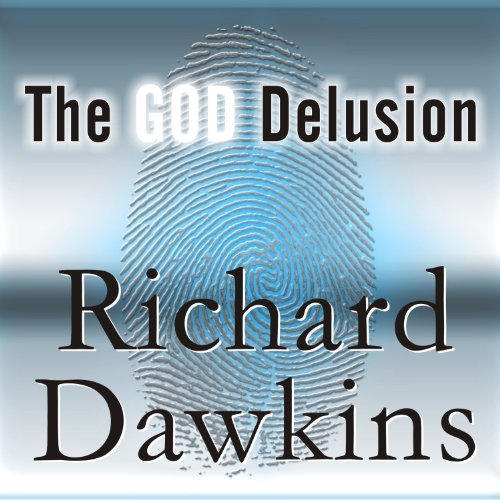
The God Delusion 

Author: Richard Dawkins

Narration by: Richard Dawkins & Sara Jill “Lalla” Ward

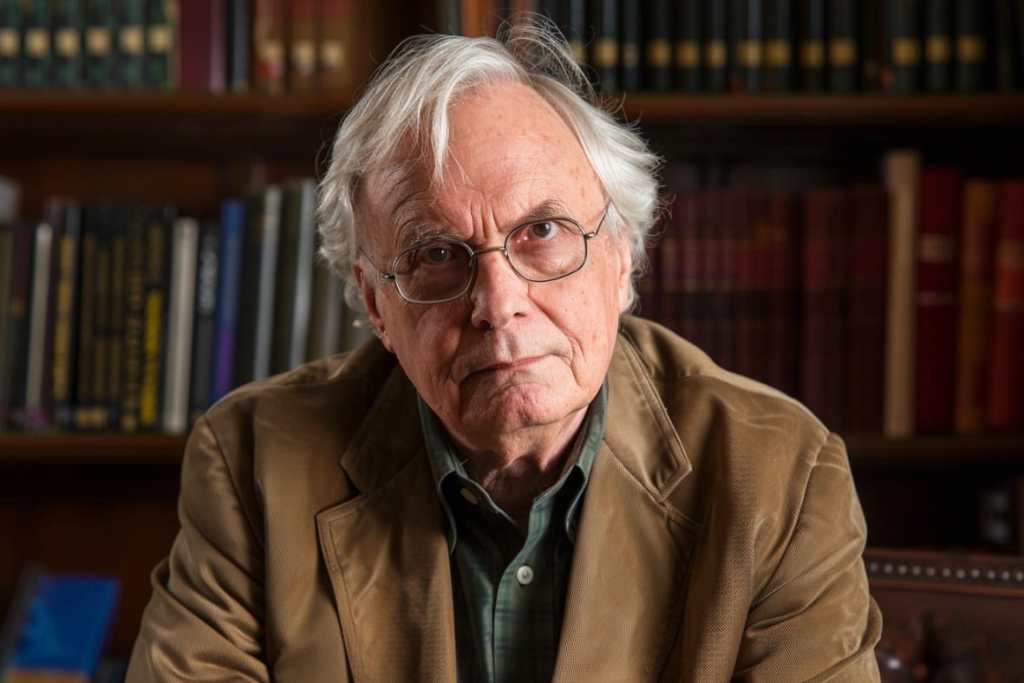
Richard Dawkins on the left is a British author, evolutionary biologist, ethologist, and science communicator. Sarah Jill “Lalla” Ward is an English actress, voice author, and actor on the former TV series “Doctor Who”. (A woman’s narration seems solely to represent a non-gender based argument for God as a “…Delusion.”)

Richard Dawkins is a formally educated Zoology and Philosophy graduate from the University of Oxford. He became the first Simonyi Professor for the Public Understanding of Science at Oxford University. “The God Delusion” is a daunting book that argues God is a fiction created by authoritarian faiths. In light of the history of human violence in the name of different God’ beliefs, Dawkins offers a compelling argument for God as a delusion.

Religion and Science.

Religious belief has rarely, if ever, been the primary cause of war in history but millions of deaths from The Crusades to the Holocaust to the present day have fueled wars in the name of different concepts of God. Judaism preaches that there is one, indivisible God. Christianity believes one God exists in three forms; i.e. God the Father, Jesus Christ, and the Holy Spirit”. Islam believes in the oneness of God with no partners, no intermediaries, no incarnation, and no images. Hinduism believes in many gods, one God, or God beyond form, depending on respective sects of the Hindu faith. Buddhism is non-theistic and believes there is no creator, or divine judge. Buddhists believe understanding reality is the source of enlightenment. Sikhism believes in one God that is formless, without gender, and beyond religion. Sikhs blend belief in one God with emphasis on equality. The Chinese traditions of Taoism, Confucianism believe in a natural order of the universe based on ethical behavior and social harmony.

The point is God means something “other” in different cultures. That difference in belief has caused an uncountable number of deaths. To a believer and non-believer in God, those deaths are an appalling loss to humanity. Is a different belief in God, worth a human’s death? Dawkins argues God is a delusion because He or It cannot be proven. The weakness of that argument is there are many discoveries that have been found to be wrong with further scientific exploration. Science progress cuts both ways; i.e. it proves and disproves what seems right but turns out to be wrong as further experiments prove.

The patent differences in religious beliefs in God shows that dogmatism replaces further exploration for God’s existence. There are religious scholars who have challenged dogmatic arguments for God’s existence. At the very least, Dawkins makes one think about the horrible consequence of authoritarian beliefs in God and the slaughter of innocents from those beliefs. We are seeing that slaughter today in Iran and Lebanon from attacks by America and Israel. Of course, there are reasons beyond religion for those attacks but is murder of innocents an answer or just collateral death and destruction for desired results?

Belief in God is a work in progress for every human being. The proof of God will be peace on earth, a human accomplishment that may only be possible with a belief in something greater than us.

Mother Emanuel

Dylan Roof is not South Carolina, and neither are the preachers who believe in the divinity and eternity of God. All people of the world are subject to the sins of living life.

Books of Interest
 Website: chetyarbrough.blog

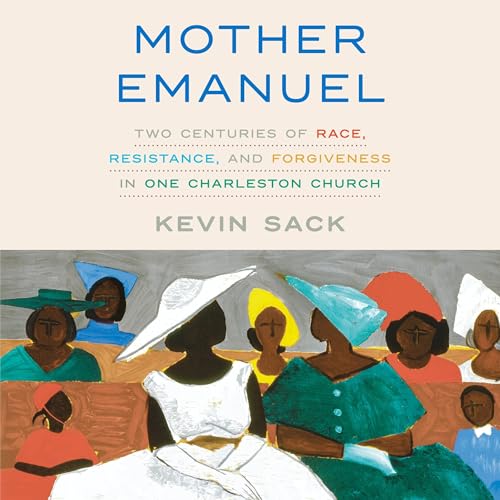
Mother Emanuel (Two Centuries of Race, Resistance, and Forgiveness in One Charleston Church)

AuthorKevin Sack

Narration by: William DeMeritt

Kevin Sack (Author, American journalist, senior reporter for The New York Times who shared a Pulitzer Prize for National Reporting in 2001.)

South Carolina is the underlying subject of Mother Emanuel. It focuses on a State that shows the very best and worst of what it can mean to be born in America. South Carolina is the home of Americans who fought on the side of the confederacy in the Civil War. The confederates of the south did not believe in human equality but in the superiority of the white race and the rightness of slavery.

Mother Emanuel is an African Methodist Episcopal Church located at 110 Calhoun Street in Charleston, South Carolina.

Mother Emanuel was built in 1891 and has capacity to seat 2,500 congregates. The church is considered a symbol of Black autonomy and resistance to some South Carolinians. On June 17, 2015, the senior pastor of the church and 8 African American parishioners were shot by a white 21-year-old American name Dylann Storm Roof. Roof, when he came to the church service, is invited into a Bible study group. He sits in the study group for nearly an hour before drawing a 45-caliber Glock handgun to murder 9 people, including the pastor of the church. The author and journalist Kevin Sack explains Dylann Roof was not a dumb white American but a person of above average intelligence who believed Black Americans were an imminent danger to white Americans’ way of life. Roof intended to motivate a Black American uprising that could be crushed by an American white majority.

Dylan Roof (At the time of his trial.)

A listener/reader is unlikely to believe Sack is writing this book to suggest all white Americans, let alone South Carolinians, are like Dylann Roof. Sack is not suggesting all humans have equal capabilities but that all people are influenced by the environment in which they live, their genetic inheritance, and their psychological development. What the author shows is that one’s intelligence can as easily lead to horrific acts of violence, dishonesty, theft, and social hate as belief in the truth of human equality.

Reverend Eric Manning navigated multiple difficulties when he became the pastor of the church after the massacre.

As a church, Mother Emanuel has existed for well over 100 years. It has had many pastors who are subject to the same strengths and weaknesses of all human beings. Sack infers some pastors in Mother Emanuel’s long life have been seduced by the money, power, and prestige of their office while preaching belief in God. Sack infers every human being, including pastors, can be led astray in life. A few, like Dylan Roof, become corrupted by life for reasons that are incomprehensible to one who believes in something greater than themselves, whether that something is the moral, communal, or cosmic reality of human life, or a fervent belief in God and redemption.

Dylan Roof’s verdict for execution is appealed to the U.S. Supreme Court but is rejected. He remains on federal death row.

Dylan Roof is not South Carolina, and neither are the preachers who believe in the divinity and eternity of God. All people of the world are subject to the sins of living life. Roof is shown by Sack to be an unremorseful murderer of human beings for little other reason than the color of their skin. A lesson of life that the murders explain is that forgiveness is not for the sake of Roof’s peace of mind but a mindful reconciliation for those who lost their loved ones.

As of the writing of this book, Dylan roof remains in prison, without personal remorse and a remaining verdict that warrants execution.

CIVILIZATION

Will Durant’s “…Story of Civilization…” is a fascinating view of history, but not a true measure of Western civilization’s origin.

Books of Interest
 Website: chetyarbrough.blog

Our Oriental Heritage: The Story of Civilization, Volume 1 

AuthorWill Durant

Narrated By: Robin Field

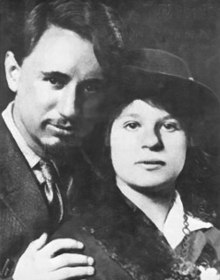
WILLIAM AND ARIEL DURANT (Historians, researchers and writers of philosophy. William is born in 1885, graduated from Columbia University with a PhD in philosophy and humanities in 1917, dies in 1981. Ariel is born in 1898, also dies in 1981 but aided William Durant with research and editing.

This 40 plus hour audiobook about the origin of civilization is a daunting undertaking but an interesting perspective. Will Durant was not an anthropologist, but he was an erudite historian, philosopher, and engaging writer with a wife that helped him research, edit, and organize his work. His story telling and philosophical beliefs are certainly challengeable because of the speculative nature of ancient artifacts and cultural interpretations of ancient civilizations. Durant cleverly interprets the political and sociological history of civilizations and their historical and religious beliefs. With the aid of his wife, Durant assigns meaning to those beliefs which are plausible but, at times, he either confuses correlations with causes or stretches one’s imagination too far.

The oversimplification of history.

Professor Goldin has written a history of migration that reminds one of the well-known phrases attributed to Socrates: “I know that I know nothing”.

Anthropologists suggest the Durants oversimplify the complex multi-generation development of human societies. Some agree that an Afro-Asiatic language evolved into other languages, but linguists suggest there are many sources of language that have little to do with a singular origin of language. In the same vein, there is skepticism about their analysis of religious beliefs coming from the East because their presumptions are too deterministic for Eastern beliefs’ correlation with Greek rationalism and Christianity. Like David Hume and Karl Popper advise, “correlation does not imply causation”. Some anthropologists argue the Durants romanticize ancient wisdom and ignore political and brutal realities brought by internecine and external wars. Further, unique societal events and discoveries change civilizations as readily as past knowledge and experience, e.g., like the classical physics of Newton, relativity of Einstein, and quantum mechanics of today.

Eastern civilization’s influence on the West is the subject of the Durants’ expansive story.

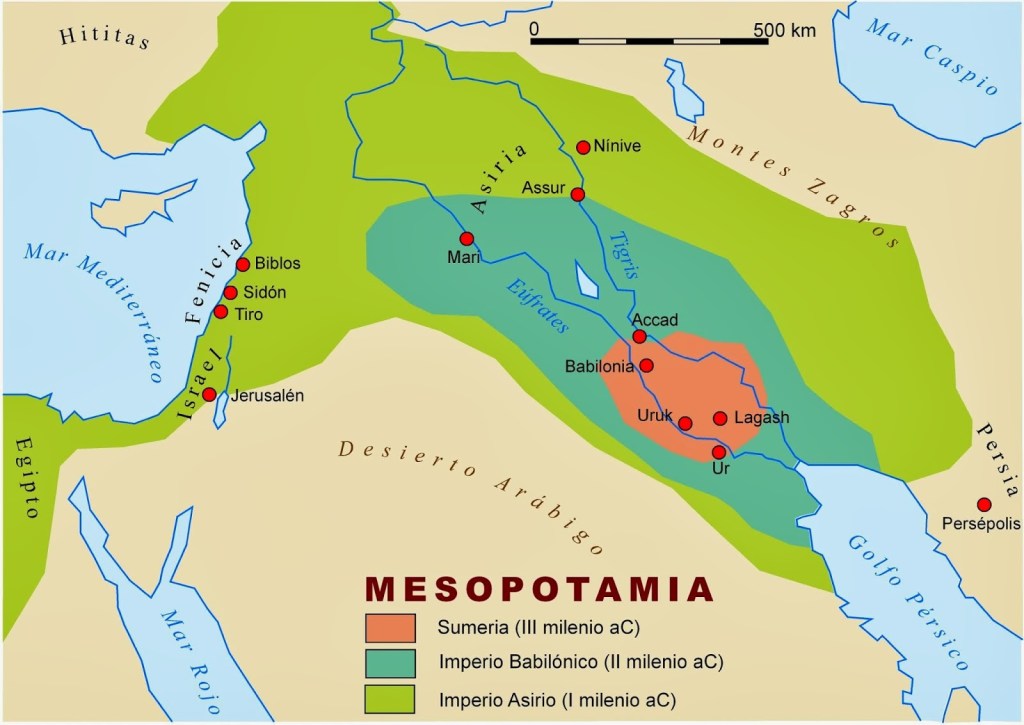
It is interesting that Durant chooses Eastern civilizations as a precursor of Western society. That seems plausible based on early humans moving from Africa to eastern shores. He presumes the purpose, goal, and end results of Western society originated in Eastern cultures. Some anthropologists question belief that Western cultural beliefs evolved from Eastern cultures, but Durant argues foundational cultural, intellectual, and technological advance originated in Mesopotamia, Egypt, India, and China; long before the West is populated.

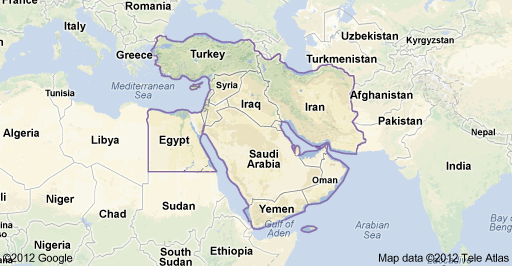
The Red Sea and a Peninsula that connects Africa to the East.

With the origin of human life in Africa, Durant suggests human beings crossed the Red Sea or the peninsula to the continent of Asia to settle the fertile lands of Mesopotamia. The Durants argue early humans developed the Afro-Asiatic Semitic language that evolved into Arabic, Aramaic, Amharic, and Hebrew dialects for Akkadian, Arab, Aramean, Israelites, Phoenician, Moabite, and Ethiopian peoples. Mesopotamia became known as “The Fertile Cresent” and the “Cradle of Civilization”.

Mesopotamia contains the future nation-states of Iraq, Syria, Lebanon, Israel, Palestine, Jordan, Egypt, southeastern Turkey and western Iran.

Durant is criticized for human life’s romanticization, generalization and simplification. His critics argue civilizations’ complexity and societal conflicts are not adequately supported by his opinions and research. Some suggest too much of his opinion is based on secondary sources rather than field work. These are reasonable criticisms, but they do not diminish one’s fascination with his interpretations of others’ field work and opinions. Durant offers an interesting and entertaining story of civilization, but his opinions are only partly right.

The fundamental argument of Durant’s view of civilization is that intellectual, religious, and technological innovations of Eastern societies are foundational beliefs of Western society.

The Durants argue that writing systems, legal codes, mathematics, and religious thought in the West came from the East, i.e. to Durant, the roots of Western thought, governance, philosophical belief, and culture had Eastern origins. Durant’s threads of connection between East and West are not wrong but misleading. Correlation is not proof of causation. If one sees ice cream sales are up and drowning incidents are down, one is obviously wrong to conclude eating ice cream would reduce one’s chance of drowning.

One can believe Eastern culture developed before Western culture because of proximity. To Africa. However, the advance of civilization is not linear. It seems a stretch to believe the East’s civilization laid the foundational beliefs of the West because they are distinctly different because of independent experiences. An African human is not an Asian person just as an Asian person is not a Greek, German, Frenchman, or American. Philosophical, political, and artistic innovations are arguably derivative, but genius offers origination and revolutionary changes in civilizations. Agriculture may have begun in Asia but to infer industrialization is a furtherance of Eastern civilization is as wrong as saying Quantum theory is the furtherance of Western civilization. Civilization is too complex to be characterized as a linear process.

Will Durant’s “…Story of Civilization…” is a fascinating view of history, but not a true measure of Western civilization’s origin.

RELIGION

As a mirror and catalyst for change and hope, Professor Mark Bergson offers an excellent review of the world’s religions.

Books of Interest
 Website: chetyarbrough.blog

Cultural Literacy for Religion (Everything a Well-Educated Person Should Know)

Lecturer: Mark Berkson

By:  The Great Courses

Mark Berkson (Professor and Chair in the Department pf Religion at Hamline University)

Professor Berkson provides an excellent overview of the most important religions in the world in his lectures. Though this reviewer is not a person who follows any religion, Professor Berkson offers a broad understanding of religious beliefs and their differences in his lecture series.

CHRISTIAN, ISLAMIC, AND HINDUIST RELIGIONS HAVE THE MOST FOLLOWERS

The three religions with the greatest number of followers are Christian, Islamic, and Hinduist which are categorized as a transcendent group of religions. In broad terms, their beliefs are in salvation, divine revelation, moral law, and a soul’s journey toward a divine being as the ultimate truth and value of life. These religions reflect on both the first and second categories of religion because they transcend the self to either a divine or a more centered understanding of oneself.

A third category would be followers of a sect of Buddhists adherents, Jainists, or Confucianists which believe in enlightenment, discipline, meditation, and moral cultivation of oneself in relation to nature, the cosmos, and everyday life. This third category is not centered around a divine being but around self-effort to create ethical harmony among human beings that will offer peace to all.

Thích Nhất Hạnh was a most famous Vietnamese Thiền Buddhist monk who believed and taught self-effort to create ethical harmony in oneself. (Died at age 95 in 2022.)

Berkson notes Daoist’s, Shinto’s, and some Buddhists (like Thích Nhất Hạnh) believe in the balance, flow, and interconnectedness of living in accordance with nature. He categorizes these religions as “religions of immanence”.

Tenzin Gyatso (the 14th Tibetan Dalai Lama, exiled in India from his native land in China, represents the Buddhist idea of self-transcendence.)

Berkson explains religion became important to civilization because they made living life more important than just survival. Religion gave meaning to life. Religion also provided social and moral order to life. Religion gave comfort in time of grief, fear, and uncertainty. Religion inspired societies to be creative to build cities, and create art. Religion provided a belief in something greater than oneself and the possibility of transcendence beyond earthly existence.

As one listens to Berkson’s lectures, one wonders whether religion has been more positive than negative in civilization’s development.

Berkson tries to sit on a fence between two extreme opinions. One is the positive contributions of religion to human moral and ethical belief. On the other, religion has aggravated social comity by creating differences. Different religious beliefs have murdered or demeaned millions of human beings who believe only their religion is important. If you defile the truth of my religious belief, you are not one of us. On the one hand, religion brings people together and grows cultural and artistic beliefs. On the other hand, religious belief creates silos that suppress inquiry, reinforce prejudices, and delegitimize political authority. Belief in a religion can advance understanding of human nature but at the same time suppress any inquiry into faith or science.

One will better understand specific religious beliefs as a result of Bergson’s lectures.

Bergson notes tensions between religious beliefs are the basis upon which many social and human atrocities have occurred. Christianity notes that no one comes to God except through Chistian belief while Hinduism believes there are many paths to the divine. Exclusivity in religion may not cause a war, but it certainly creates tension. The core beliefs of Judaism, Christianity, and Islam have led to millions of deaths because of distinctions made between the word of God in the Hebrew Bible, Christian old and new testaments, and the Qur’an.

As a mirror and catalyst for change and hope, Bergson offers an excellent review of the world’s religions.

However, in the history of yesterday and today, the Jewish holocaust of WWII and slaughter of Palestinians in Gaza rend one’s heart. To quote Rodney King amid the Los Angeles riots, “Can we all get along?”– apparently not.

UNITED

Many of Gibbon’s noted reasons for the Roman Empire’s decline are mitigated by the brilliance of the founders of the American Constitution and the “balance of power” principle that created three branches of government. With a balance of power, neither a President, a Congress, or a Court is likely to endorse dictatorship.

Books of Interest
 Website: chetyarbrough.blog

The History of the Decline and Fall of the Roman Empire (Volume 1)

Author: Edward Gibbon

Narrated By:  Bernard Mayes

Edward Gibbon (Author, 1737-1794, Englishman who received degrees from the Universities of Cambridge and Oxford.)

Gibbon has an interesting background that seemed suited to admittance to the clergy when he became a symbol of militant agnosticism, even though he was more sophist than militant. This first volume of “The…Decline and Fall of the Roman Empire” made him famous.

Volume 1 of Gibbon’s history of the Roman Empire is interesting for its relevance to modern day nation-state leadership.

One is inclined to compare the tumultuous leadership of the Roman Empire to the history of one’s own country. There are parallels between good and bad leaders of the Roman Empire and the potential for collapse of today’s nation-states. Thinking of America, even a non-historian knows of leaders like Washington, Lincoln, and the Roosevelts who are considered by most historians and political scientists as great leaders. They managed American crises and had greater overall impact on America’s future than most other Presidents. Of course, America has also had its duds which can only be considered long after their tenure by historians who mitigate subjectivity.

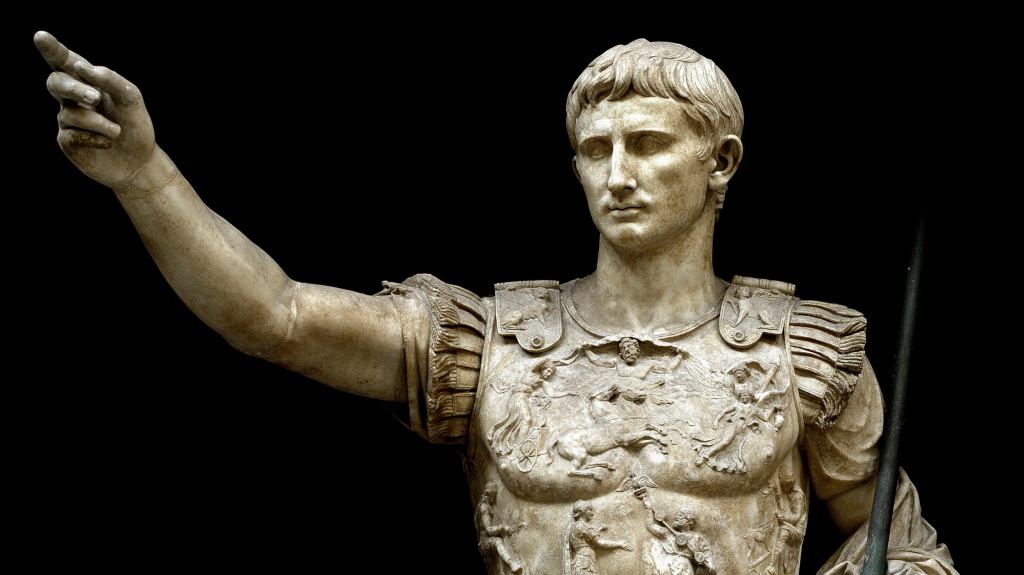
America’s President Washington might be favorably compared to Rome’s first emperor, Augustus. Both exemplified leadership that could bring together disparate interests with a vision of what their nations could achieve in the world in which they lived. Of course, Augustus ruled for over 40 years while Washington led America for only 8. Augustus established an empire while Washington established a singular nation-state. However, both created a period of peace and stability during their terms of leadership.

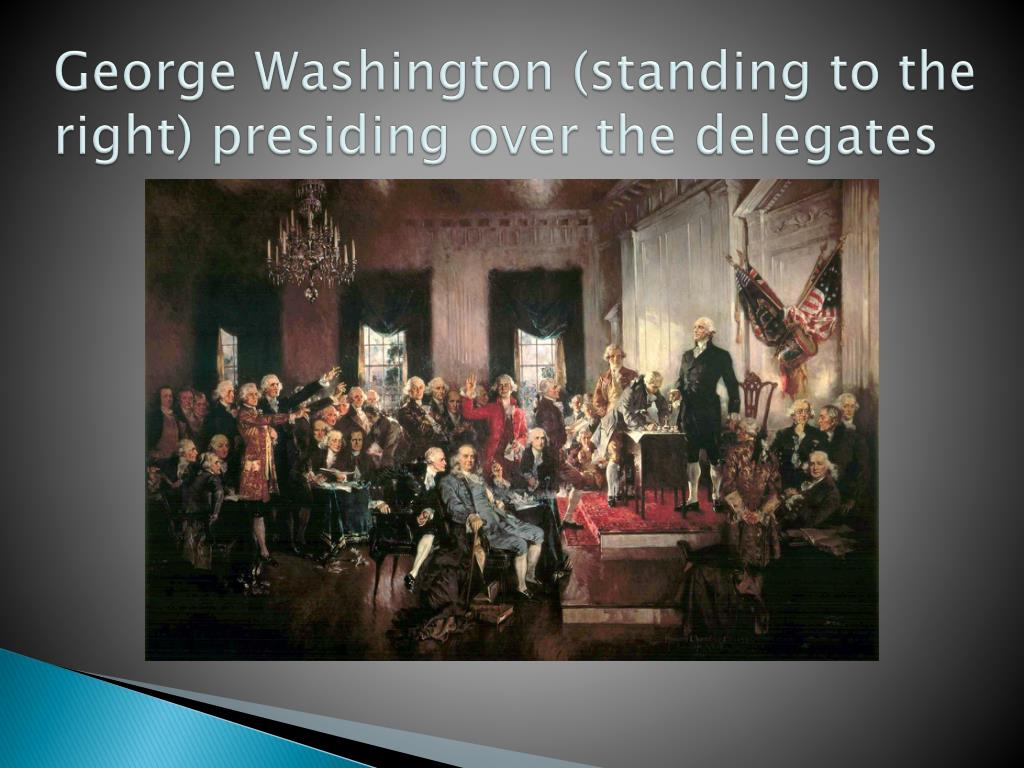
Augustus transitioned Rome from a Republic to an Empire while Washington helped establish the U.S. government by presiding over debates on a constitution that defined the presidency and a system of government’ checks and balances.

Augustus stabilized Rome during years of civil war while Washington led the U.S. through the post-Revolutionary War with Great Britain. Both Augustus and Washington commanded militaries that assured peace within their countries. Washington took command of the Continental Army throughout the war with Great Britain. He organized and trained the troops who had little formal military training. He retreated when necessary and took calculated risks while forging foreign alliances to win American independence from the British. Both Augustus and Washington influenced the economics of taxation to support the administration of government. Though their tenures were quite different, each warranted a system for leadership succession.

Like the great achievements of Augustus in forging an empire, many of Washington’s methods for establishing an independent government have been modified by future leaders. American leadership changes every four to eight years. Surprisingly, despite some long reigning emperors of Rome like Augustus, the average reign is only 5 to 7 years. America’s new Presidents, like Rome’s often acted in ways that would not have been acceptable to their predecessors. Gibbon explains how different emperors shaped the Roman empire through inheritance, military coups, and political maneuvering. Some emperors were assassinated within months of their ascension. American Presidents have been assassinated but inheritance of leadership came from elections, not the power of the military or a leader’s wealth.

The power of a Roman emperor could ignore the Roman Senate and its citizens with the military might at their beckon call.

Successive Roman emperors and American presidents changed the way their governments functioned. The power of a Roman emperor could ignore the Roman Senate and its citizens with the power of the military. In contrast an American President’s government policy changes require a level of cooperation from congress, the judiciary, and the will of the people to make fundamental changes in governance. Gibbon’s history shows Roman emperors handled crises with the power of their position but the same may be argued for America if one considers Lincoln’s actions to preserve the Union with a Civil War. Both emperors and presidents used propaganda, public display, and association with religion to preserve their public image and legitimacy.

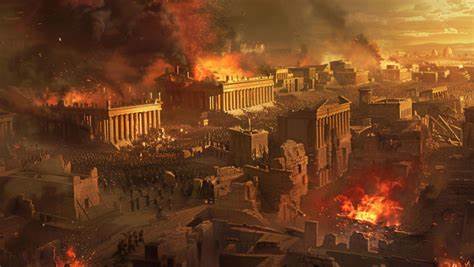
The Roman Empire and the destruction of Carthage.

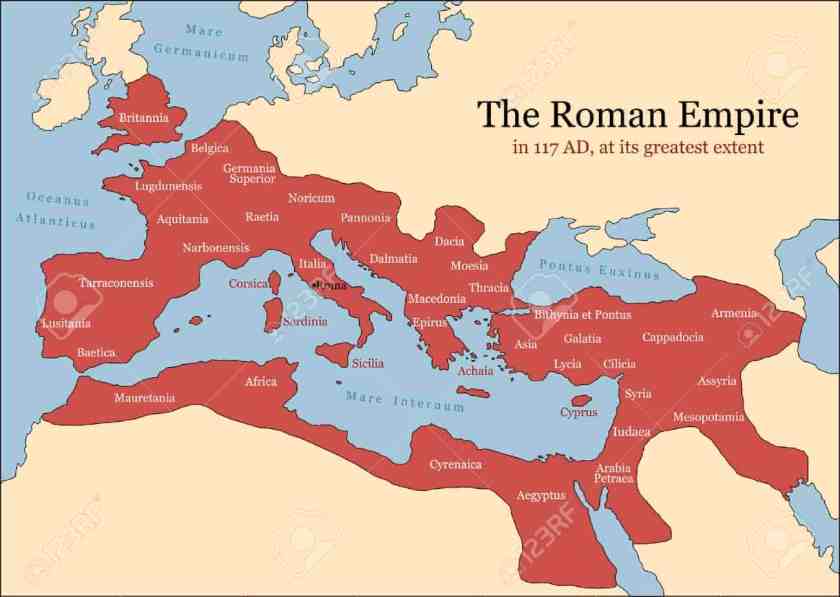
Gibbon’s history of the Roman Empire in Volume 1 contrasts the good and bad that occur during the growth and survival of the Empire. There are numerous examples of horrific times for the Empire’s citizens. However, the Roman Empire lasted for 1,500 years despite what he called the loss of civic virtue, the rise of religion, military decay, economic strain, and barbarian invasion. Many of Gibbon’s noted reasons for the Roman Empire’s decline are mitigated by the brilliance of the founders of the American Constitution and the “balance of power” principle that created three branches of government. With a balance of power, neither a President, a Congress, or a Court is likely to endorse dictatorship.

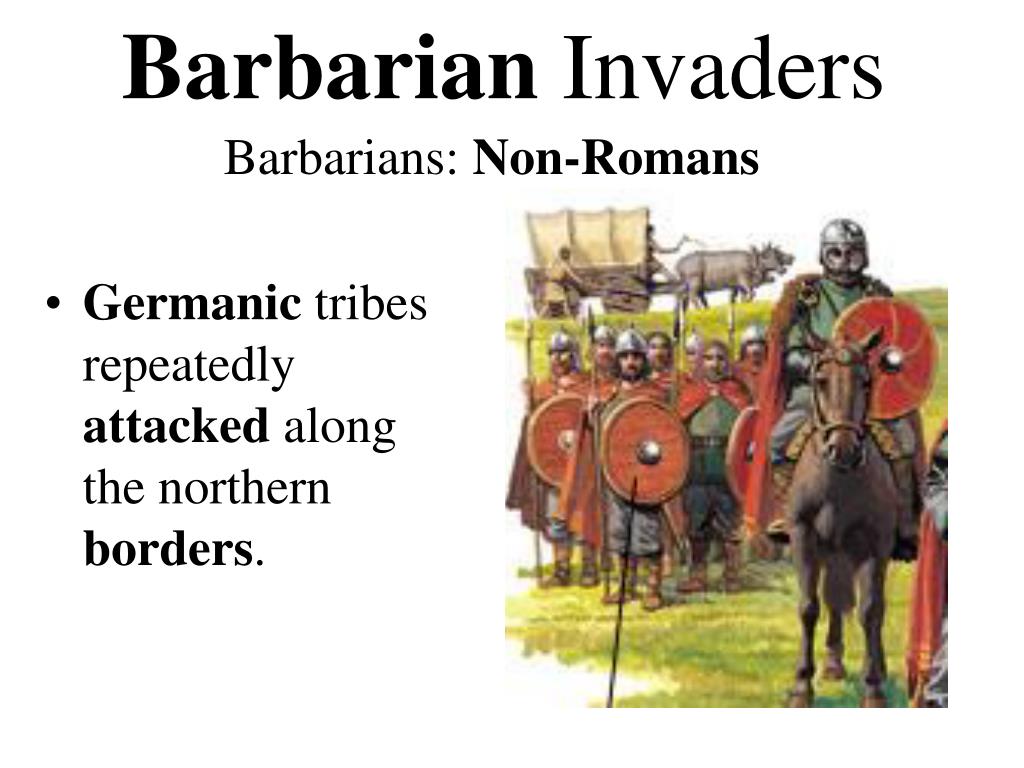
A part of Gibbon’s first volume addresses the conflict between the Roman legions and what are loosely described as the barbarians. Barbarians were the non-Romans of that time.

They were the Germanic tribes of Goths, Vandals, Franks, and Alemanni. There were the Celts of Gaul and Britain, the Huns of Central Asia, the Parthians and Sassanids of the Persian empires, and the Slaves and Bulgars that arrived at the end of the Roman Empire. The distinction between a Roman soldier and a Barbarian is somewhat obscure. Though the Romans were more highly trained and operated within a structured military hierarchy, they exhibited some of the unruliness of the Barbarians who fought in loose tribal warbands. Roman’ equipment and armor were more standardized than the weapons of the Barbarians. Though some might argue the Romans had citizenship and status, they succumbed to mercenary actions just as the Barbarians often did in their tribal communities. A significant difference between the Roman soldier and Barbarians was discipline in battle. Roman soldiers fought in tight formations while the Barbarians fought with hit-and-run tactics. The interesting thought one has about that difference is the mistakes of America in Vietnam and what many consider a defeat by Ho Chi Minh’s hit-and-run tactics.

Map of the United States of America with state names.

America declared independence in 1776 which means it has lasted for 249 years. There seems little reason to believe America cannot survive more years, i.e. presuming global warming, nuclear war, virus creation, or some other unimagined catastrophic event destroys human life.

PAST & PRESENT

Only with education and understanding of the past can society or the individual change their future.

Books of Interest
 Website: chetyarbrough.blog

Cowboy Apocalypse (Religion and the Myth of the Vigilante Messiah)

By: Rachel Wagner

Narrated by: Dina Pearlman

Rachel Wagner (Author, professor of religion and philosophy at Ithaca College in Ithaca New York.)

Rachel Wagner has written a highly personal book about American gun culture that will resonate with some and appall others. As an academic philosopher and professor of religion, Wagner analyzes gun violence and sexism and how belief in “might makes right” is deeply ingrained in American character.

There are so many stories of death and injury from gun violence in America that one becomes numbed by Wagner’s apocalyptic story.

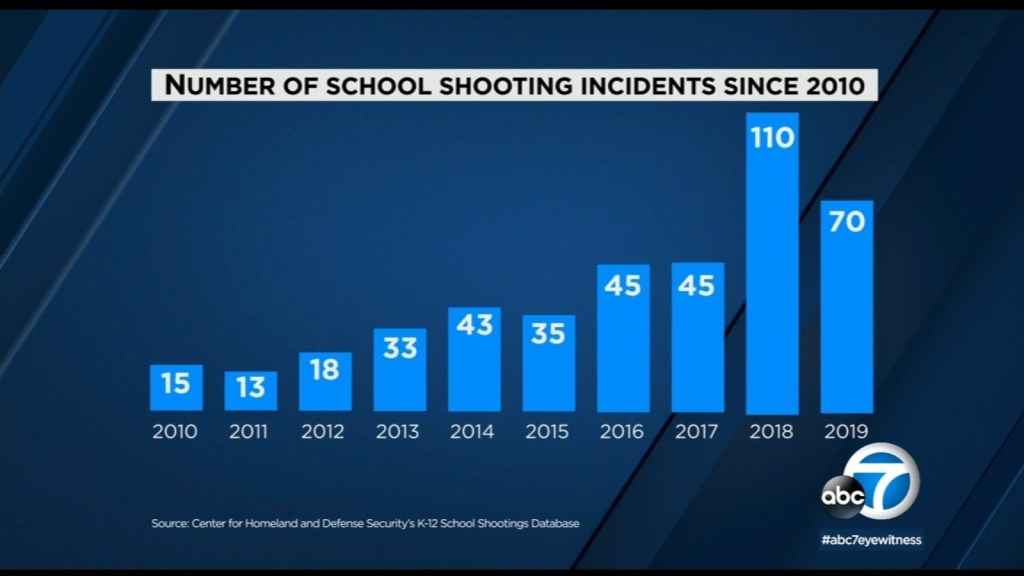
We were living in Las Vegas when 59 people were killed, and 527 were injured by one gunman in a hotel room less than 3 miles from our home. When one looks at statistics of children murdered in school rooms since 2010, a solution for gun violence should be urgent, but it appears not.

Rise in school shootings between 2010 and 2o19.

Wagner argues gun violence in the U.S. is viewed by much of the public as a belief in the myth of the “good guy with a gun” that is embedded in the history of America and reinforced by fictional stories, books, television, and the movies. She argues detective fiction like “The Big Sleep”, TV series like “Have Gun Will Travel”, and movies like “Die Hard” have lone heroes who defeat dastardly villains.

Think Alan Ladd in “Shane” or John Wayne in any of his westerns, and one believes gun-toting man-gods keep the world safe.

Wagner shows how malleable society is and why the gun lobby is rewarded and sustained by the myth of the “good guy with a gun”. Wagner argues gun-toting Americans have become gods in their own mind. What they really are is examples to potential killers of school children and unsuspecting tourists.

Wagner believes American gun obsession has wheedled its way into a religious narrative based on Christian apocalypticism and romanticization of American history. She notes the myths of armed vigilantes who are seen as saviors who can reset society when it goes astray. This myth seeps into American cultural shibboleths of white supremacy and patriarchal dominance that pervade video games, movies, and novels.

Wagner argues sexual and racial inequality are exacerbated by America’s gun culture. Wagner notes an experience in her personal life and her education in religion show how “might makes right” has been, and still is, a danger to society.

Wagner argues America needs to look in the mirror and quit glorifying firearms and vigilante justice. She suggests the January 6th attack on the capitol shows how widespread belief in vigilante justice is in America.

January 6, 2021, insurrection when a mob of supporters of then-President Trump stormed the U.S. Capitol.

The philosophical and religious beliefs of the author are made clear in her final chapters. Only with education and understanding of the past can society or the individual change their future.

ERASMUS

George Faludy suggests the most popular books written by Erasmus were “The Praise of Folly” and “Colloquies” which are similar in that they offer humorous and insightful stories of the human condition. One leaves Faludy’s biography of “Erasmus” with the thought that these two should be read, particularly because of the time in which we live today.

Books of Interest
 Website: chetyarbrough.blog

ERASMUS

By: George Faludy

György Bernát József Leimdörfer aka George Faludy (1910-2006) Author, Hungarian poet and translator.

George Faludy’s biography of Erasmus was published in 1970. A few years ago, I purchased a paperback edition of Faludy’s book because of an interest in a 16th century “man of the cloth” (an ordained Catholic priest) who became a devotee of Francesco Petraca (better known as Petrarch who is considered the father of humanism). Erasmus was born in 1466 and died in 1536. He believed in the value, dignity, and potential of human beings. Petrarch had been dead for a hundred years when Erasmus became a proponent of humanism at a time when Catholic’ Indulgences were challenged by Martin Luther. Luther’s Ninety-Five Theses led to a schism in the church leading to the establishment of Protestantism.

Martin Luther (1483-1546)

Luther’s Ninety-Five Theses led to a schism in the church leading to the establishment of Protestantism.

It is hard to imagine how Erasmus managed to become a leader in reforming the Catholic Church with his humanist beliefs. Erasmus walks a fine line between the schism fomented by Martin Luther and his belief in reform. Erasmus wrote the famous work “The Praise of Folly” that was a satirical critique of societal and ecclesiastical practices of the Catholic church without joining the movement started by Luther. On the one hand, Erasmus agreed with Luther on the importance of faith and the perfidy of “indulgences” sold by the Church. Indulgences were to raise money with alleged religious guaranties for a Catholic’s admittance to heaven. On the other, Erasmus insisted on faith in God and reform, not abandonment of the Catholic church. Erasmus’s academic and scholarly review and interpretation of religious texts convinced him that the Church only needed reform, not schism.

Faludy carefully explains the tumultuous relationship between Erasmus and Luther that at times seemed to break but survived their fundamental disagreement on reform versus schism.

Erasmus acknowledged many misrepresentations of religious text with an unwavering belief in the divinity of their origin. As one who is skeptical about the divinity of religious texts, it is encouraging to read of this highly respected scholar’s belief in their truth. Faludy’s biography of Erasmus may not change an agnostic’s mind about God, but it will give one pause because of Erasmus’s reported research of original religious works in Greek, Latin, and other languages, i.e., a skill beyond most peoples’ capabilities.

Faludy does not write of Erasmus as a saintly person but as a well-educated and diligent scholar.

A surprising note by Faludy is that Erasmus suffered from syphilis which suggests something less than perfection in Erasmus’s character. However, Faludy’s note is not corroborated by any other information known to this reviewer.

Faludy suggested the most popular books written by Erasmus were “The Praise of Folly” and “Colloquies” which are similar in that they offer humorous and insightful stories of the human condition. One leaves Faludy’s biography of “Erasmus” with the thought that these two should be read, particularly because of the time in which we live today.