TOO LATE

Van der Kolk outlines some of today’s psychiatric breakthroughs. New psychiatric discoveries have helped reveal childhood abuse memories and war’s traumatic events to give survivors some peace of mind.

Books of Interest
 Website: chetyarbrough.blog

The Body Keeps the Score (Brain, Mind, and Body in the Healing of) 

Author: Bessel van der Kolk M.D.

Narration by: Sean Pratt

Bessel van der Kolk (Author, Boston-based Dutch American psychiatrist.)

As a parent, “The Body Keeps the Score” is a difficult book to read or listen to because of fear about mistakes a parent may have made in raising their children. The trauma of war is well documented as a cause of psychological imbalance and the truth of “The Body Keeps the Score”. What makes van der Kolk’s book even more concerning is the realization that our behavior as parents can leave scars on our children’s minds. It is not just because of an abhorrent parent or priest who has molested or seriously distorted a child’s view of the world but on more subtle missteps by parents that may have had lasting effects on their children’s growth to adulthood. Every family has differences. Some have one parent who is absent from the day to day lives of their children because of their job. Another parent may fail to show enough respect or affection for their child’s accomplishments. Some parents (usually women) are left by their husbands or mates to raise children on their own. In single parent families, a parent is faced with having to make a living while caring for a child who has no idea of how stressful life can be when their mother is on her own. On the other side of a child care spectrum, there is the doting mother and father who overwhelms their children with meaningless praise and falsely grandiloquent appreciation of their behavior. Van der Kolk’s point is the mistakes parents make in raising their children can have lasting effects on their children as they grow into adulthood.

Child abuse is an abhorrent reality in America and other cultures.

The events that Dr. Kolk addresses are serious and harmful adult actions toward their children, but the concern any reader/listener may have is in the responsibility they have in raising their children to be decent emotionally centered human beings. Americans live in a society that highly regards wealth, physical and emotional maturity as important characteristics of adulthood. The pressure of making a living often interferes with the attention husbands, wives, or caregivers provide for children’s healthy emotional and physical growth. Kolk’s focus is on abusive or neglectful people who interact with children in ways that leave psychological scars that cause behavioral dysfunction. What is troubling to reader/listeners of “The Body Keeps the Score” is the pressure and trauma that American parents feel in their lives that affects the social and psychological health of their children.
Employment.

On the one hand, van der Kolk explains how parents may inadvertently distress their children by verbal or physical behaviors that are related to the pressures and expectations of a working life. Those pressures can cause parental meltdowns between parents and children. The consequences can have an emotional and consequential impact on the lives of the children for which adults are responsible. The effect on family members can range from a rageful response to a child’s moodiness to fear or lasting resentment that may create emotional scars that affect a child’s later behavior. A parent’s meltdown can become an indelible scar on a child’s mind. Van der Kolk calls them the injuries of American culture; not because it is only in America, but that it occurs in all cultures.

Social inequality in American culture.

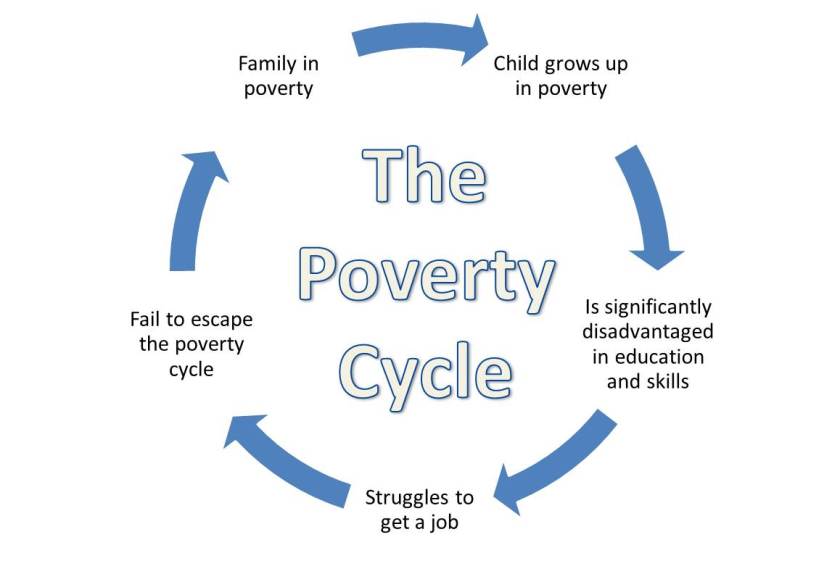
A reality in American life is that it is fed by wealth, poverty, and unequal opportunity. Inequality of opportunity creates pockets of poverty reinforced by racism, family instability, and societal breakdown. All of these social impacts bare down on the development of children and future generations. Working families often do not have time or inclination to take care of their children because of their jobs. These are fundamental issues that have broader consequence to children than the horrendous stories of child abuse that van der Kolk recounts. Of course, it is appalling to know of priests that molest children or fathers who rape their daughters, but it is the general observation that adult behavior toward children can negatively affect children’s lives. Horrendous acts like child molestation undoubtedly have immense impact on the future of those who bare them. However, the realization that day to day experiences of parents’ lives can also have negative consequences in their child’s lives. What is of more concern is a culture riven with poverty, sexual infidelity, and divorce that sets a table for future generations of broken lives.

“The Body Keeps the Score” infers much about the weaknesses of American capitalism. It recognizes suffering in American society and shows how trauma in one generation passes on to the next. Bad behavior has consequences beyond the perpetrator and victim. It offers some solutions to the mistakes parent’s and society make in raising their children.
Van der Kolk outlines some of today’s psychiatric breakthroughs. New psychiatric discoveries have helped reveal childhood abuse memories and war’s traumatic events to give survivors some peace of mind. Trauma is a neurobiological event that can come from the violence of war or parental upbringing. It affects human behavior because trauma changes brain structure, hormonal regulation, and human feelings. Traumatic events become encoded in memory and affect humans’ future. Van der Kolk explains how psychiatric science has evolved to treat the consequences of life’s experience of traumatic events.


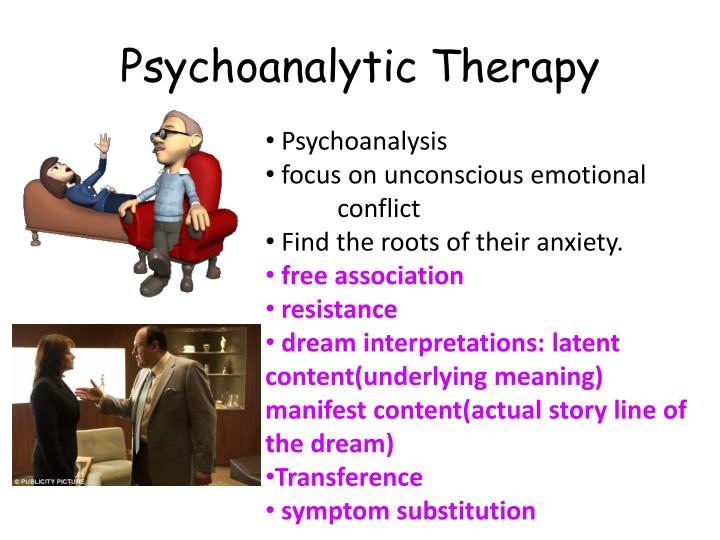
PSYCHOANALYTIC THERAPY

There is a risk of pathologizing social skills if one comes away from Clayton’s book thinking that fawning is only a negative characteristic of society.

Books of Interest
 Website: chetyarbrough.blog

Fawning (Why the Need to Please Makes Us Lose Ourselves–and How to Find Our Way Back)

Author: Ingrid Clayton

Narration by: Ingrid Clayton

Ingrid Clayton (Author, clinical psychologist, trauma therapist)

“Fawning” as described by psychologist Ingrid Clayton can cause an unconscious trauma when a person appeases, pleases, or over-accommodates others to feel safe. Clayton explains it is a survival strategy for one who deals with another person who is physically or emotionally abusive. Clayton recalls her life as a child with a stepfather who is grooming her for an intimate relationship when she is 13 years old. Clayton manages to avoid that relationship but explains the long-term psychological impact in her life is similar to PTSD.

Post-traumatic-stress disorder is a mental health condition caused by experiences, witnesses, or traumatic events that make one feel fear, stress, or danger. Clayton notes that her life when leaving home at 17 had those symptoms. She pursues a college education, graduates, continues her education to receive a PhD and finds employment as a therapist.

Pedophilia.

At the age of 13, her male stepfather created a grooming environment that created a long-term psychological impact on her life. She matured to feel fear, stress, and danger in developing relationships with others. She wrote “Fawning” as an educated PhD clinical psychologist to explain how a child growing to an adult can “…lose themselves…” with a form of PTSD. She believes she has found a pathway back to relationship’ normality after years of broken relationships. The irony of her realization is that all human beings are “fawners”.

Some will be inclined to put Clayton’s book down as an exaggeration of relationship reality but as she tells of her personal experience and therapy of others, both men and women, her beliefs become disturbingly credible. As one examines their own life (if they have lived as long as this book reviewer) know every human being is raised in their own familial circumstances. Children raised with 1, 2, or no parent families, develop behavior toward themselves and others that can lead to abuse of others which diminish their and other’s humanity. What Clayton shows is how her stepfather grooms her and how she responds based on her own grooming ability. She rejects his advances, a grooming behavior that a parent-child relationship allows with the risk of physical sexual abuse.

There is truth in Clayton’s explanation of “Fawning” as a universal relationship modifier, but it is not always linked to either grooming or abuse. People-pleasing behavior is a universal characteristic of society.

There can be good reasons as well as bad reasons for fawning. Looking at grooming as the only lens one views fawning diminishes its social value. That is certainly not Clayton’s intent but one may come away from her book seeing pedophilia as the primary consequence of fawning. The reality is that rigid family dynamics, cultural hierarchy, and high-pressure workplaces are common examples of fawning. Social cohesion and disruption are a general consequence of human nature influenced by fawning.

Clayton outlines a pathway back from PTSD. Prevention of trauma is of course the best solution. However, if one is a child, prevention becomes more problematic.

Clayton argues it is important to recognize fawning is not a people-pleasing choice but a survival strategy. Rather than feeling fear from what appears to be happening, clearly remind yourself of who you are and what you believe to be right. Recognize other’s motives. Respond appropriately by speaking up if your personal boundaries are being violated. Reflect on who you are and interrupt any motives of others that conflict with what you believe about yourself. The weakness of this pathway seems problematic for younger children. The pathway back for a child seems likely to be after the fact.

There is a risk of pathologizing social skills if one comes away from Clayton’s book thinking that fawning is only a negative characteristic of society. Pedophilia is a terrible societal malady, but society cannot function or improve without fawning.

BRAIN TRAUMA

Schwartz’s book implies the NFL’s prevention and protocols for brain trauma are a cost of doing business. Sadly, this seems similar to the American public’s misinterpretation of the “right to bear arms” and its resistance to gun control.

Books of Interest
 Website: chetyarbrough.blog

Gray Matters (A Biography of Brain Surgery)

By: Theodore H. Schwartz

Narrated By: Sean Pratt

Theodore H. Schwartz (Author, American medical scientist, academic physician and neurosurgeon.)

“Gray Matters” feeds a curiosity for those interested in the human brain. Written by a brain surgeon, it offers a clearer understanding of brain function while offering insight to the causes and consequences of brain trauma. The author has treated many patients with brain infections and trauma and offers analysis of athletic, gun-related, and accident injuries of people who have died from or survived brain trauma.

Schwartz explains the arduous education for one to become a brain surgeon and how physicians surgically treat brain disease and trauma.

He explains how long hours as an intern are required after spending years to become an academically qualified physician, let alone surgeon. Not only are the hours long but acceptance into an internship is highly competitive and difficult to achieve. That seems counterintuitive in view of the public’s need for qualified medical help. One suspects the fundamental cause is the cost to the hiring hospital and the staffing required to teach new physicians.

The brain is protected by a skull, three layers of membrane, cerebral spinal fluid, a blood barrier, skin, and a scalp.

These structures, cells, and tissues protect the brain from physical damage and infections so the brain can provide organic function, thought, and action. Physical or infectious damage to the brain can affect any one of these natural human’ functions.

Schwartz reviews incidents of gun-shot brain trauma of famous figures like Abraham Lincoln, John F. Kennedy, Robert Kennedy, James Brady, and Gabrielle Giffords. He notes the differences in the bullets used as well as the power of the weapons to explain the damage done. He argues John Kennedy had no chance of survival while suggesting Lincoln, because of a lower power weapon, might have survived with today’s advances in treatment. However, he suggests Lincoln would have lost much of his skill as an orator and political theorist because of damage to a particular part of his brain from Booth’s attack. Schwartz believes Robert Kennedy might have lived with more rapid and qualified treatment but would have been physically and mentally disabled. James Brady, Ronald Reagan’s press secretary, lost speech clarity and physical mobility because of his brain trauma. Similar consequences occurred with Gabriell Giffords’ injuries, but she relearned how to walk, talk, and perform basic tasks. Schwartz notes the only positive political accomplishment to come out of these violent acts was the Brady Handgun Violence Reform Act.

Schwartz goes on to explain non-traumatic brain injury from infection and stroke to traumatic brain injury from Shaken Baby Syndrome (SBS) to Chronic Traumatic Encephalopathy (CTE) with Second-Impact Syndrome often seen in athletes. Diagnosis of SBS from a shaken baby’s head has changed to include the shaking accompanied by impact with a hard surface.

Diagnosis of CTE and Second-Impact Syndrome in sports are still being defined. The return of football players to the field of play is a judgement call by a sideline physician which raises questions about qualifications, let alone judgement.

The NFL initially objected to the brain trauma threat of their sport based on improved protective equipment.

However, Schwartz writes they have increased their protocol for injured players and have paid over a billion dollars to former athletes suffering from symptoms of brain trauma. Some big names in football like Junior Seau, Frank Gifford, Ken Stabler, and Tommy Nobis were autopsied after their death to show they suffered from CTE.

The lure of fame and money are unlikely to change elite athletes desire to compete despite the threat of brain injury. Schwartz’s book implies the NFL’s prevention and protocols for brain trauma are a cost of doing business. Sadly, this seems similar to the American public’s misinterpretation of the “right to bear arms” and its resistance to gun control.