AMERICAN AMBITION

Keefe shows Arthur Sackler raised himself in America through grit and determination, i.e., little seems handed to him on a silver plate. This is not to suggest the drug industry or the Sackler’s of the world carry no responsibility for addiction but opportunity and a way to succeed in an American life is a choice.

Books of Interest
 Website: chetyarbrough.blog

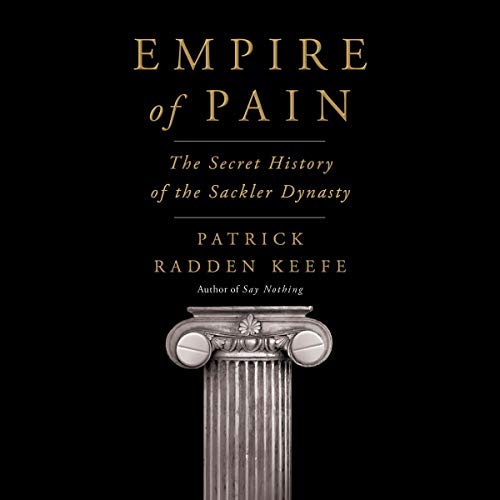
Empire of Pain (The Secret History of the Sackler Dynasty)

Author: Patrick Radden Keefe

Narration by: Patrick Radden Keefe
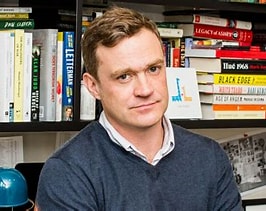
Patrick Radden Keefe (Author, investigative journalist, staff writer for The New Yorker.)

Patrick Radden Keefe’s book is a detailed examination of the Sackler family, and more specifically, the dynasty that grew after the life and death of Arthur Mitchell Sackler who died in 1987. Arthur Sackler was a trained physician who specialized in biological psychiatry. Through hard work, he built a family fortune with a company specializing in medical advertising and pharmaceutical marketing. With wealth created by advertising, the Sackler patriarch acquired interests in specific drugs that added to the wealth of the Sackler empire. One of those investments is made by the sons of Arthur Sackler. It became known as OxyContin which became a huge revenue producer controlled by Arthur’s heirs. Dr. Paul Goldenheim and Dr. Robert Kaico were the scientists who invented OxyContin while working for Purdue Pharma, a company owned by Arthur’s brothers. Arthur Sackler is characterized by Keefe as secretive about his ownership interests while becoming a very rich man. The structure of his business interests and its conflicts of interest are passed on to his heirs.

Arthur M. Sackler (American psychiatrist and marketer of pharmaceuticals.)
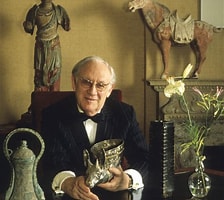
Arthur dies nine years before OxyContin exists. Despite the difficult life Arthur Sadler had with the bankruptcy of his father, he works his way through school, becomes a licensed physician and starts a pharmaceutical advertising company. He worked as a physician, a medical researcher, and owner of a company that advertised his and other medically researched and discovered drugs. This opened the door to profiteering from drug promotions and conflicts of interest in groundbreaking and potentially harmful drugs. As a physician, it put Arthur and other research physicians in position to market drugs and influence prescriptions for drugs that may or may not be safe or effective. As an advertiser of a physician/scientists’ own drugs, they could skirt independent judgement of their effectiveness or possible side effects. The FDA is created to avoid that possibility, but Keefe illustrates how that roadblock is compromised. Keefe recounts how a leader of the FDA is compromised by his relationship with the drug industry.
The Family That Built an Empire of Pain - Strength and Hope

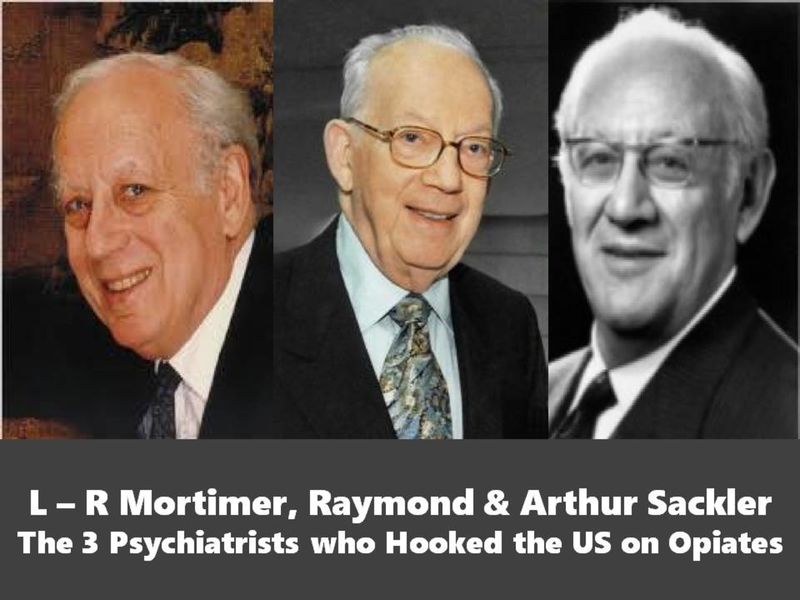
Arthur’s wealth and investment interests are inherited by his divorced wife, his new wife, and his brothers, i.e., Ramond, Mortimer, and Richard who led the company after Arthur’s death. The brothers sell their patent on OxyContin to Purdue Pharma. The brothers start two branches of their business, one of which retains control of OxyContin’s manufacture, marketing, sale, and profit. Patent law is a legal ownership “smoke” screen that protects company owners from liability for harm from patents a company holds. A company may own a patent independently, without recourse to its company’s owners. Purdue Pharma grows and uses its wealth to influence politicians, government officials and doctors to endorse drugs like OxyContin.

OxyContin dosages.

As is known by many Americans, OxyContin has had a catastrophic impact on America. It its launch in 1996, OxyContin is considered by some to be a gateway to addictive drugs like heroin and fentanyl. In 2026, it is estimated that 200 deaths per day were happening from fentanyl overdoses. What Keefe argues is that when the structural conflicts of interest were introduced by the Sackler family (especially with the creation of Purdue Pharma) the lines between drug efficacy and profits were breached by the medical profession.

What Keefe reveals in his research is that pharmaceutical-physician relationships cross the line of conflicts of interest.

Doctors receiving “speaker fees”, continuing-education events, consulting positions, and industry-funded clinical guidelines are being lured into prescribing drugs that may or may not be safe or effective. Funding for medical research frequently comes from companies more interested in profit then drug efficacy. Government regulators are influence by lobbyist for a drug industry that is mired in potential conflicts of interest. Keefe notes there is a revolving door between the FDA and pharma employment. Keefe notes marketing has become a part of medical education. He infers philanthropy by the drug industry may be a bribe to influence public acceptance of drug treatments that are not effective.

Coming away from Keefe’s analysis of the drug industry, one is troubled by its corruption vulnerabilities in a society that prides itself on freedom and rule-of-law.
In one sense, Arthur Sackler is a tribute to how America became one of the wealthiest and most powerful countries in the world. One doubts that the Sackler family planned to create a drug that would addict and kill so many Americans. The Sackler family played a role but how many Americans have made mistakes in their drive for success. Keefe shows Arthur Sackler raised himself in America through grit and determination, i.e., little seems handed to him on a silver plate. This is not to suggest the drug industry or the Sackler’s of the world carry no responsibility for addiction but opportunity and a way to succeed in an American life is a choice.

CURING DISEASE

Green questions the profit motive of drug companies that ignore the benefits of drugs that poor societies cannot afford that would cure tuberculosis. At the same time, Green implies the political will of all nations fail to provide known curative drugs for tuberculosis.

Books of Interest
 Website: chetyarbrough.blog

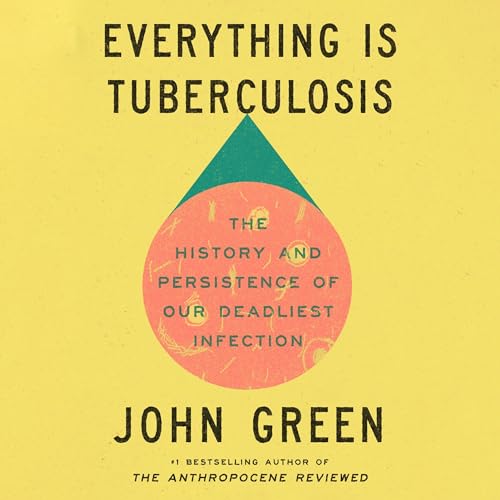
Everything is Tuberculosis (The History and Persistence of Our Deadliest Infection)

Author: John Green

Narration by: John Green

John Green (Author, YouTuber, and philanthropist.)

“Everything is Tuberculosis” is an apt title for John Green’s book but unlikely to attract many listener/readers. However, those who have read John Green’s books are attracted to his story because of the humor and insight he offers to living life. Green offers an interesting human perspective about a disease that kills hundreds of thousands of people every year and is both preventable and curable. Recognizing this critic’s own biases, “Everything is Tuberculosis” is a belief that there are only two important issues for human species’ survival, i.e., world peace and personal health. “Everything is Tuberculosis” deals with the principal of health while others write about world peace.

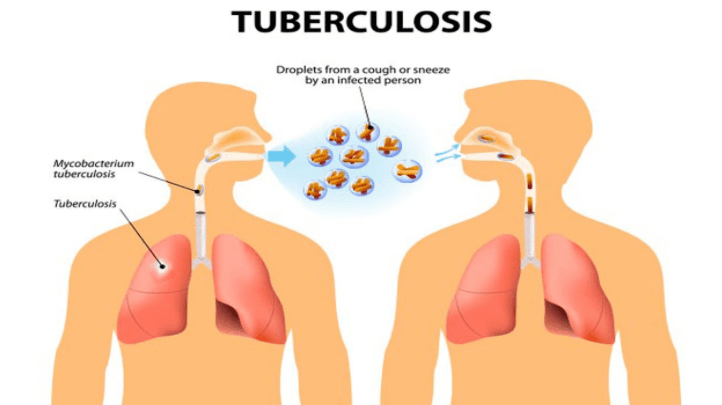
Tuberculosis transmission.

Peace is only indirectly addressed in “Everything is Tuberculosis” while health is the primary focus of Green’s book. Today, approximately 1.23 million people die from tuberculosis every year. Surprisingly, it remains the deadliest curable infectious disease in the world. An estimated 10.7 million people are presently diagnosed with tuberculosis. This high infection rate is for a disease that is curable and preventable. Green explains in countries with high rates of poverty, undernutrition, overcrowding, high HIV infections, and poor medical services tuberculosis becomes a greater killer of human beings than any other infectious disease.

The fear and anxiety of Covid mimics the fear of tuberculosis.

Green personalizes his story by being its main character. He writes in the first person and uses his personal anxiety driven thoughts to explain tuberculosis’ illness and vulnerability. As a child, Green recalls his own illnesses and anxieties that required hospitalization. He contrasts his life of economic security with the lives of many people in the world that have little to no economic security. He views tuberculosis, not as a scientist or patient, but as an observer of poverty in Sierra Leone and the personal life of a young boy with the disease.

The cost of medication.

The young boy’s recovery experience is on-again/off-again, in part because of his father’s skepticism about the effectiveness of drugs and his belief in God, but also because of a failure of experimental drug treatments from other tuberculosis patients that die. There is a happy ending when a new drug cure is found and started; the boy recovers, resulting in eradication of the infection. He finishes high school and goes on to college. Other stories of the disease in Sierra Leone show distances patients have to travel, the cost of treatments, and different economically challenged families who are discouraged by continued treatment. Those patients that do not continue the medical treatment often see regrowth of the Tuberculosis bacteria which ends their sons, daughters, fathers, or mother’s lives.

Green’s point is that human beings are dying from tuberculosis, a curable disease that kills; not because it is often fatal, but because of a human-systems’ failure.

TB deaths are a predictable outcome of poverty, undernutrition, overcrowding, political neglect, and global indifference. Green gets at the heart of the problem of societal indifference. The indifference is both political and economic. The political indifference comes from every government that is only concerned about their country’s health and welfare. The economic difference is similar but more pronounced in capitalist countries that focus on profit more than societal benefit. Political difference is in nation-state’ leadership whether countries are democratic or other.

Green questions the profit motive of drug companies that ignore the benefits of drugs that poor societies cannot afford that would cure tuberculosis. At the same time, Green implies the political will of all nations fail to provide known curative drugs for tuberculosis.

MURDOCH

Capitalism, communism, and socialism are flawed in different ways. Most Americans believe Capitalism is the best of the three. “Bonfire of the Murdochs” reveals the flaws of capitalism.

Books of Interest
 Website: chetyarbrough.blog

Bonfire of the Murdochs (How the Epic Fight to Control the Last Great Media Dynasty Broke a Family)

AuthorGabriel Sherman 

Narration by: Cassandra Medcalf

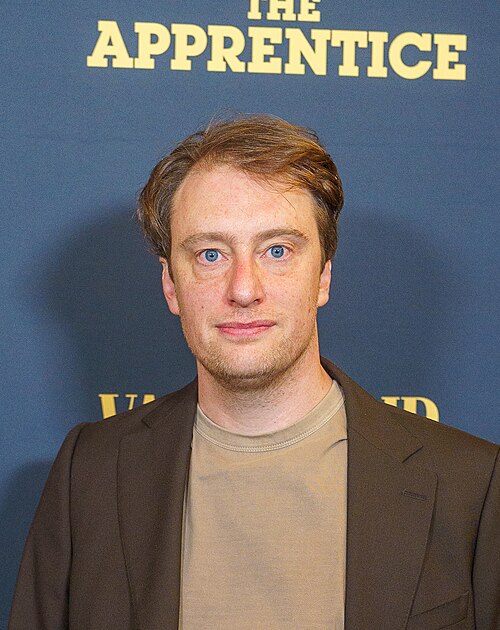
Gabriel Sherman (Author, American journalist, screenwriter for The Apprentice, and biographer of Roger Ailes.)

The positive face of capitalism offers economic and political freedom to pursue economic well-being through personal effort. There is also a negative face. “Bonfire of the Murdochs” seems to show that face.

Gabriel Sherman explains how Rupert Murdoch and his family are scarred by capitalism which makes them immensely rich but morally bankrupt.

Keith Rupert Murdoch (Australian American business mogul.)

The patriarch of the Murdoch family is Rupert whose family founded two media conglomerates, i.e., News Corp and Fox Corporation. News Corp combines The Wall Street Journal, The Times, and The Australian newspapers. Fox Corporation is made of Fox News, Fox Sports, and Fox TV network. Rupert is the principal creator of these conglomerates, but his children were integral parts of the management and administration of their success.

Rupert Murdoch married five times and had 6 children. He was married for 11 years to Patricia Booker. Their only child was Prudence, born in 1958. Murdoch married his second wife Anna de Peyster in 1967 (the same year of his divorce from Patricia). His second marriage results in the birth of Elisabeth, Lachlan, and James. Anna de Peyster and Rupert Murdoch were married for over 30 years. His third wife, Wendi Deng added two more children for a total of six from his first three wives. His last two marriages were to Jerry Hall and his present wife, Elena Zhukova. The story of Rupert Murdoch’s treatment of his six children is the core of the harm that may come from capitalism’s singular focus on wealth.

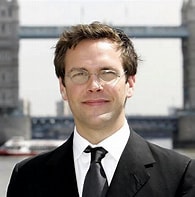
Rupert remains alive at 94 years of age. Lachlan Murdoch, took over Fox and News Corp in 2023 with Prudence, Elisabeth, and James taking over one billion dollars each to withdraw from Murdoch holdings without voting rights in its operations. Lachlan becomes the sole manager of the remaining media conglomerate. The author explains how Lachlan is the chosen heir apparent. Lachlan’s conservative views and willingness to distort news’ objectivity are purported reasons for Rupert’s choice of Lachlan as his heir. James and his siblings are characterized as critics of the political leanings and news distortions of Rupert’s empire. All but Lachlan leave the news combine with a billion-plus dollar buyout with no voting shares in the future of Rupert Murdoch’s holdings.

Sherman’s inference is that Lachian is the best choice to continue Rupert Murdoch’ version of capitalism.

Whether one believes Rupert Murdoch’s children are politically different from their father or not is a question one may have in listening to Sherman’s book. It appears the first four Rupert children have a desire for wealth more than capitalist probity. Murdoch and his oldest children seem primarily motivated by individual power, and the socio/political benefit of wealth. The four children, at least those before Grace and Chloe, appear to sacrifice capitalism’s ideals for wealth. Wealth is a lure offered by capitalism for good or ill as members of a capitalist society.

One may come away from “Bonfire of the Murdochs” with a bad opinion of Rupert Murdoch and his children but to the non-judgmental, the book only shows a side of capitalism that has made America Great for Americans like Trump and societally flawed for the poor. Capitalism, communism, and socialism are flawed in different ways. Most Americans believe Capitalism is the best of the three. “Bonfire of the Murdochs” reveals the flaws of capitalism.

BREATHING LIFE

Nestor’s book, “Breath” is worth a reader/listener’s time. Breathing exercises are not a cure-all for sleeplessness, snoring, or regulating blood pressure, but Nestor’s experience and Dr. Nayak’s research encourage reader/listeners to change the way they breath.

Books of Interest
 Website: chetyarbrough.blog

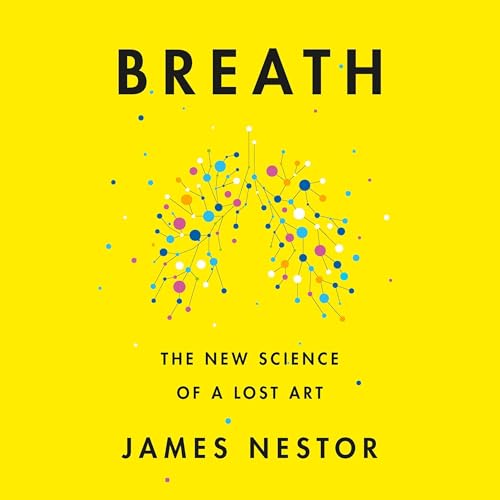
Breath (The New Science of the Lost Art)

AuthorJames Nestor

Narration by: James Nestor

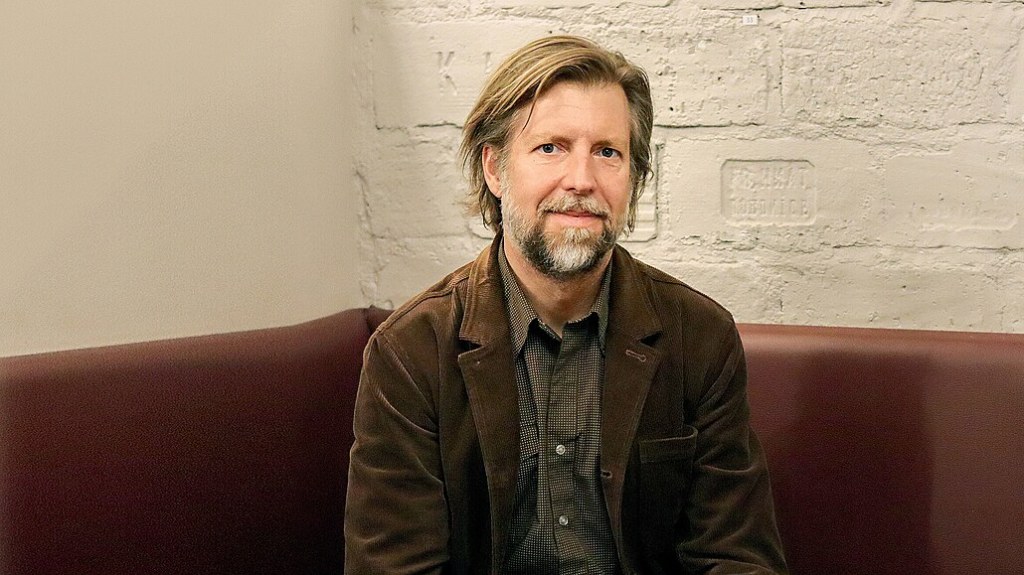
James Nestor (Author, American science journalist.)

“Breath” is a surprising best-selling book about breathing through one’s nose rather than one’s mouth. Nestor’s participation in a 10-day Stanford experiment shows several negative medical symptoms associated with how we breath. Nestor experiences sleep apnea, raised blood pressure, high stress levels, and increased anxiety because of the way he breaths earth’s air. Nextor’s participation in a Stanford University experiment suggests nose breathing is a biological superpower because nasal passages filter and humidify the air we breathe. Exhalation from the way we breath releases nitric oxide and improves oxygen absorption.

Experiment shows slow breathing for 5.5 seconds-in, and 5.5 seconds-out improves blood pressure, and heart rate variability that enhances calmness. Surprisingly, slow breathing increases carbon dioxide tolerance while aiding body absorption of oxygen. The consequence of breathing too fast surprisingly impairs oxygen delivery to our system. Oxygen deprivation is one of the causes of anxiety, fatigue, and poor physical performance. Practicing good breathing habits can help reduce anxiety and fatigue to improve physical performance. It is hard to believe changing our breathing habits can have so great an impact on our lives.

Changing how we breathe is not as easy as one might think.

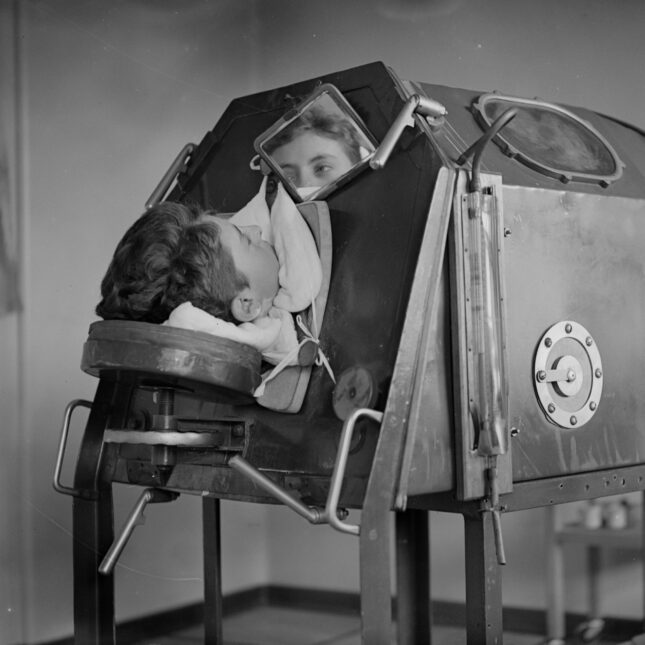
In the past, when one could not breath on their own, they were placed in an iron tube to replace their natural lung function.

Not breathing through one’s mouth seems an easy change to make in one’s life but a 5.5 second inhale and exhale rule takes practice. The recommendation is to train yourself for 5-to-ten-minute periods until it becomes a learned goal, if not habit. Another suggestion is to alternate nostril breathing by covering one nostril and practicing the 5.5 second inhale/exhale cycle. One can alternate nostrils with breathing in with one nostril and out with the other. Nestor suggests a 4-7-8 technique of breathing. Using only your nose, inhale 4 seconds, hold for 7 seconds, exhale for 8 seconds. He believes it will help one fall asleep if they are having difficulty sleeping. In general, Nestor suggests one should become more aware of how they are breathing during the day.

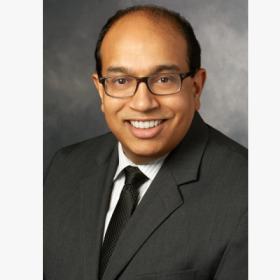
Dr. Jayakar Nayak (MD, PhD, conducted the breathing experiment as a Professor of Otolaryngology at Stanford University.)

Nestor refers to Dr. Jayakar Nayak’s 10-day Stanford experiment in which Nestor participated. He wrote this book as evidence for the harm he was doing to himself and how mouth breathing for oxygen can be corrected by breathing through one’s nose. Patients, like Nestor, were trained in nose breathing exercises that show marked improvements from the symptoms of sleep apnea, sleep fragmentation, heavy snoring, and stress. Results of the experiment showed sleep apnea and snoring ceased, systolic blood pressure dropped, and heart rate variability improved in most patients who participated in the Stanford experiment.

Nestor’s recommendations are based on nasal breathing, slower breathing, and breath exercises supported by Dr. Nayak’s research. Nestor’s book, “Breath” is worth a reader/listener’s time. Breathing exercises are not a cure-all for sleeplessness, snoring, or regulating blood pressure, but Nestor’s experience and Dr. Nayak’s research encourage reader/listeners to change the way they breath.

LIVING LIFE

Human nature is universal, but it is also particular. In that particularity, “Ikigai” may or may not work for you or me. That is not to say the philosophy of “Ikigai” cannot lead one to a better life but only you can decide.

Books of Interest
 Website: chetyarbrough.blog

Ikigai (Japan’s Secrets to a Long and Happy Life)

Author: Hector Garcia, Fransec Miralles

Narrated By:  Oscar López Avila

In planning a trip to Japan in September 2025, “Ikigai” is a recommended book by our Japanese guide. Surprisingly, the authors are born in Spain.

“Ikigai” is a Japanese philosophy about life and its value.

As understood by Garcia and Miralles, “Ikigai” is a guide to a meaningful and fulfilling life. As a philosophy, “Ikigai” is not about life’s destination. “Ikigai” is a compass to give one direction for a meaningful and fulfilling life. The principles of “Ikigai” revolve around a healthy diet, high quality health care, community ties that limit one’s isolation, physical routines, mindfulness, and stress reduction. Those who practice the philosophy of “Ikigai” in Garcia’s and Miralles’s opinion will live happier, healthier, and more fulfilling lives.

Life’s value.

Garcia and Miralles suggest the demographics of Japan are proof of the value of “Ikigai”. The highest number of citizens over 100 years of age live in Japan. The average life span of men and women in Japan is 85; for Americans, the average is 79.61. The authors suggest longer lives of Japanese is because of their practice of following the principles of “Ikigai”. Of course, the length of one’s life is not the point, but the quality of one’s life is everything.

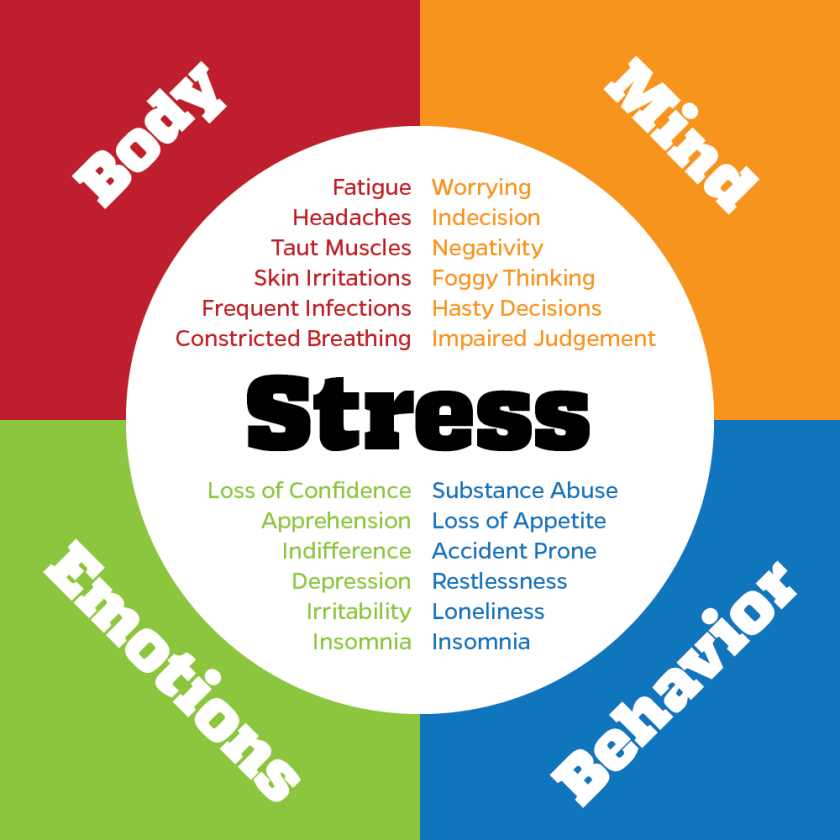
Diet, healthcare, sociability, and daily routines reduce stress. These are guidelines for an “Ikigai” way of life.

There are no surprises in these guidelines. Diet is to consume fruits, vegetables, fish, limited red meat, with few sweets containing processed sugars like white, brown, powdered, or high-fructose corn syrups. Healthcare should be provided through universal coverage. Sociability is encouraged to avoid isolation. Daily walking, stretching, moving around, and being mindful of one’s activity should be a part of a person’s lifestyle. Find what reduces your stress and practice those activities. These are familiar guidelines but not often practiced because of the stresses of the culture in which people live. Many try to escape the stress of their cultures with bad eating habits, poor physical routines, and social isolation. Some fail to follow these guidelines because they are too poor to care.

Human frailties like hearing loss, vision loss, or physical deterioration.

There are a number of difficulties with the guidelines noted by Garcia and Miralles. Finding a way of life that fulfills the ideals of “Ikigai” discounts the nature of human beings. It is impossible to ignore the personal instincts, drives, physical maladies, and cognitive abilities of different human beings. One size does not fit all because of these differences. Human nature may be universal, but it is not the same because human history, physical limitation, culture, and individual experiences are different. If the cultures in which you live do not offer universal health care, one is on their own. A capitalist culture operates in a different way than a socialist culture. Poverty, levels of education, and government influence exist in every culture and by nature distort what use can be made of “Ikigai” guidelines.

Human nature is universal, but it is also particular. In that particularity, “Ikigai” may or may not work for you or me. That is not to say the philosophy of “Ikigai” cannot lead one to a better life but only you can decide.

GENERIC DRUGS

Katherine Eban believes generic drugs are important for global health because of affordability and accessibility. One wonders if anyone who reads or listens to “Bottle of Lies” will take generic drugs if they can afford the original FDA approved product.

Books of Interest
 Website: chetyarbrough.blog

Bottle of Lies (The Inside Story of the Generic Drug Boom)

Author: Katherine Eban

Narrated By: Katherine Eban

Katherine Eban (Author, American Rhodes scholar with a MPhil from University of Oxford.)

“Bottle of Lies” is a history of duplicity and dishonesty in the generic drug industry. It is a damning dissection of the lure of money at the expense of human life. On the one hand, affordability, healthcare savings, global health, and the value of regulation are made clear in “Bottle of Lies”. On the other, Katherine Eban shows how the lure of capitalism and greed creates an incentive to evade regulation and kill innocent people seeking drug treatment for their illnesses.

Katherine Eban reveals the history of an India drug company named Ranbaxy that was founded by two brothers, Ranbir Singh and Gurbax Singh.

In 1937, these two entrepreneurs recognized the economic opportunity of creating a drug manufacturing operation with lower labor costs in India to capture the market in drugs nearing their patent expiration dates. They were focused more on organizational cost cutting and the money that could be made than the efficacy of the drugs they could produce. The company was sold in 1952 to their cousin Bhai Mohan Singh. This cousin transformed Ranbaxy to a pharmaceutical giant, but his experience was in construction and finance, not pharmaceuticals. However, his son Parvinder Singh joined the company in 1967 and was a graduate from Washington State University and the University of Michigan with a master’s degree and PhD in pharmacy.

Parvinder Singh (1944-1999, became the leader of Ranbaxy in 1967.)

Eban argues Parvinder Singh looked at his father’s business as a scientist with a pharmaceutical understanding and a desire to produce lower cost drugs for the world for more than a source of wealth. Parvinder appeared to value quality, transparency, drug efficacy, and long-term credibility for Ranbaxy. Parvinder recruited talent who believed in lowering costs and maintaining the efficacy of drugs the company manufactured. However, Parvinder dies in 1999 and the executives who took over the company focused on maximizing profit rather than the efficacy of the drugs being produced. Parvinder’s leadership is succeeded by Brian Tempest who expands the company by navigating the regulatory restrictions on generic drug manufacture. Tempest tries to balance profitability with global health efficacy of generic drugs. Parvinder’s son, Malvinder Singh eventually becomes the CEO of the company. He returned control to the Singh family. The corporate culture changed to what its original founders created, i.e., a drug producer driven by profit. Malvinder was not a scientist.

Malvinder Singh (Born in 1973, Grandson of Bhai Mohan Singh and son of Dr. Parvinder Singh.)

Under Malvinder, Eban shows the company turns from science to economic strategy to increase revenues of Ranbaxy. Internal checks on the efficacy and testing of their drugs is eroded. Criticism from regulators and whistleblowers are either ignored or sidelined by company management. Peter Baker Tucker’s role in exposing Ranbaxy is detailed in Eban’s history. With the help of Dinesh Thakur, an employee of Ranbaxy, Tucker bravely exposed the company’s fraud. (Thakur received $48 million compensation as a whistleblower award.) Tucker is an FDA investigator who reviewed Ranbaxy’s internal documents that revealed their fabricated data about their drug manufacturing process.

Peter Baker Tucker (aka Peter Baker, former FDA investigator.)

Ranbaxy is sold to a Japanese company called Daiichi Sankyo in 2008. Eban explains that Malvinder concealed critical information about FDA investigations and data fraud in the company’s sale. Malvinder and his brother, Shivinder Singh, are arrested in 2019 and remain in custody in 2021, facing multiple fraud accusations.

Sun Pharma acquires the remnants of the Ranbaxy-Sankyo’ sale.

Though Eban does not focus on what happens after the sale to the Japanese company, it is sold at a loss to Sun Pharmaceutical Industries and Singh family’s ownership is sued by Sankyo for hiding regulatory issues of the company. Daiichi received a $500 million settlement but effectively lost money on their investment. Eban, in “Bottle of Lies” offers a nuanced indictment of generic drug manufacturer and sale.

Eban believes generic drugs are important for global health because of affordability and accessibility.

Quality and drug efficacy must be insured through international regulation. Eban endorses unannounced inspections, routine testing of the drugs, and strict legal enforcement against poor manufacturing systems. Without transparency and oversight of all drug manufacturing, human lives are put at risk.

This is quite an expose, but it ends with criticism of inspections of China’s drug manufacturing capabilities.

The inspections of foreign companies that manufacture generic drugs, like those she refers to in her book, are conducted by similar inspectors who do not know the culture or language of the countries in which generic drugs are being produced. The FDA was paying their inspector in India $40,000 per year at the time of Ranbaxy’s investigation. It is by instinct, not interrogation, that malfeasance is detected. Too much is missed when one cannot talk to and clearly understand employees of manufacturing companies.

It seems America has two choices: one is to increase the salaries of FDA inspectors and require that they know the language of the countries in which they are working and two, set up a system of random reverse engineering of generic drugs allowed in the United States. This not to suggest all other FDA regulations would not be enforced when a generic drug is proposed but that site reviews would be more professionally conducted. One wonders if anyone who reads or listens to “Bottle of Lies” will take generic drugs if they can afford the original FDA approved product.

INTELLIGENCE

Viskontas believes technology is a boon, not bane, of human intelligence. Information recall is food for brains that advances civilization. She argues information recall, with the use of the internet of things, broadens recall to complement human intelligence and improve creativity.

Books of Interest
 Website: chetyarbrough.blog

Brain Myths Exploded (Lessons from Neuroscience)

Lecturer: Indre Viskontas

By:  The Great Courses

Indre Viskontas (Ph.D. in cognitive neuroscience from UCLA, performed at Cafe Royal Opera in San Francisco, studies neural basis of memory and creativity, Lecturer at USF.)

There is a great deal to unpack in Indre Viskontas lectures about the brain and intelligence. This review is an extension of a previous look at her “…Great Courses” lectures on “Brain Myths…”.

Viskontas argues sociability plays an important role in the development of intelligence. As a less social person one wonders what potential may be lost by introversion. Every human being is a mixture of extroversion and introversion. History suggests Benjamin Franklin, Margaret Thatcher, and John F. Kennedy were outgoing extroverts. In contrast, Abrahma Lincoln, Albert Einstein, and Rosa Parks were characterized as less outgoing and more introverted. All were insightful, intelligent leaders that had great impact on the history of the world. Sociability seems of little consequence for one’s intelligence or predictable role in history.

Viskontas explains how important sleep is for mental health.

The effect of sleep deprivation is a form of torture.

During sleep, Viskontas notes the brain is quite active, characterized by different brain wave patterns. Based on periods of sleep, our dreams are like house cleaners clearing the debris accumulated from days past. Some remember their dreams, others do not. That we all dream can be seen with REM, rapid eye movements, that can be seen as eyelid movements when one is sleeping. Viskontas suggests these dreams have hidden meanings that reflect emotions that the brain is actively processing while we sleep. Memories are reconstructed, often distorted, and can cause one to awaken because of their bizarre content. Our brains reconstruct stories in sleep, just as they do when we are awake in that they complete stories of our life whether the facts are true or false. The REM stories are a clearing house for adherent behaviors that may be good or bad.

Viscontas notes low activity in the temporoparietal junction (TPJ) and medial prefrontal cortex (MPFC) causes one to not remember their dreams.

Viskontas explains some do not remember their dreams because of lower activity in a part of the brain that is normally active when dreams are being recalled. She suggests those who wish to remember their dreams can keep a journal of what they do remember when they wake up. This journal can help one understand a little more about why they are dreaming and what their dream may mean by consulting a psychologist or psychiatrist.

A concern that Viskontas raises is that those who do not get enough sleep impair their memory and learning capabilities.

With a lack of sleep the prefrontal cortex functions poorly with poor judgment and impulsive behavior. Further, Viskontas notes the immune system is weakened by not getting enough sleep–with increased risk of anxiety, depression, and mood instability. When deprived of sleep, people become less social and are more driven by emotions than intellect. Viskontas recommends 7-9 hours sleep per night for optimal brain function. A continuous sleep cycle is important for deep sleep and REM that have distinct roles in information processing and a mind’s creativity for healthy living. Though Viskontas does not say anything about napping during the day, some research shows 20-to-30-minute naps can improve memory, alertness, and mood.

Viskontas explains intelligence is not a fixed characteristic but can be shaped by neuroplasticity, environment, genetic inheritance and social interaction.

Humans can rewire their brain through learning and experience. Intelligence rests within every person’s grasp but its improvement is based on genetic inheritance, experience, and effort. Science, with reproducible experiment, has proven intelligence exists throughout the Animal Kingdom.

“Quants” created collateralized mortgages in 2008.

Viskontas believes, on balance, technology is a boon, not bane, of human intelligence.

Information recall is food for brains that advances civilization. She argues information recall, with the use of the internet of things, broadens recall to complement human intelligence and improve creativity. Of course, that food can be poisoned just as the Quants who created collateralized mortgages that nearly collapsed the world economy.

AI & HEALTH

Like Climate Change, AI seems an inevitable change that will collate, spindle, and mutilate life whether we want it to or not. The best humans can do is adopt and adapt to the change AI will make in human life. It is not a choice but an inevitability.

Books of Interest
 Website: chetyarbrough.blog

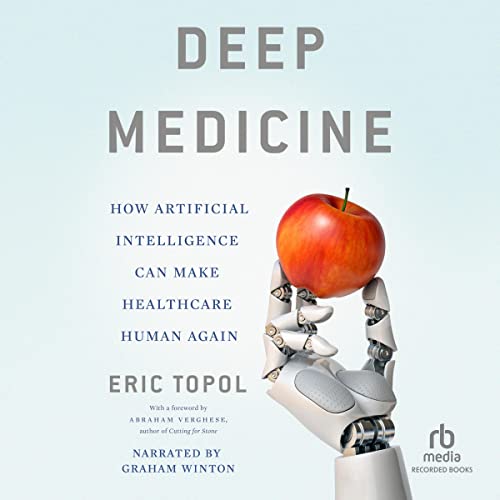
Deep Medicine (How Artificial Intelligence Can Make Healthcare Human Again)

Author: Eric Topol

Narrated By:  Graham Winton

Eric Topol (Author, American cardiologist, scientist, founder of Scripps Research Translational Institute.)

Eric Topol is what most patients want to see in a Doctor of Medicine. “Deep Medicine” should be required reading for students wishing to become physicians. One suspects Topol’s view of medicine is as empathetic as it is because of his personal chronic illness. His personal experience as a patient and physician give him an insightful understanding of medical diagnosis, patient care, and treatment.

Topol explains how increasingly valuable and important Artificial Intelligence is in the diagnosis and treatment of illness and health for human beings.

AI opens the door for improved diagnosis and treatment of patients. A monumental caveat to A.I.s potential is its exposure of personal history not only to physicians but to governments and businesses. Governments and businesses preternaturally have agendas that may be in conflict with one’s personal health and welfare.

Topol notes China is ahead of America in cataloging citizens’ health because of their data collection and AI’s capabilities.

Theoretically, every visit to a doctor can be precisely documented with an AI system. The good of that system would improve continuity of medical diagnosis and treatment of patients. The risk of that system is that it can be exploited by governments and businesses wishing to control or influence a person’s life. One is left with a concern about being able to protect oneself from a government or business that may have access to citizen information. In the case of government, it is the power exercised over freedom. Both government and businesses can use AI information to influence human choice. With detailed information about what one wants, needs, or is undecided upon can be manipulated with personal knowledge accumulated by AI.

Putting loss of privacy and “Brave New World” negatives aside, Topol explains the potential of AI to immensely improve human health and wellness.

Cradle to grave information on human health would aid in research and treatment of illnesses and cures for present and future patients. Topol gives the example of collection of information on biometric health of human beings that can reveal secrets of perfect diets that would aid better health during one’s life. Topol explains how every person has a unique biometric system that processes food in different ways. Some foods may be harmful to some and not others because of the way their body metabolizes what they choose to eat. Topol explains, every person has their own biometric system that processes foods in different ways. It is possible to design diets to meet the specifications of one’s unique digestive system to improve health and avoid foods that are not healthily metabolized by one’s body. An AI could be devised to analyze individual biometrics and recommend more healthful diets and more effective medicines for users of an AI system.

In addition to improvements in medical imaging and diagnosis with AI, Topal explains how medicine and treatments can be personalized to patients based on biometric analysis that shows how medications can be optimized to treat specific patients in a customized way. Every patient is unique in the way they metabolize food and drugs. AI offers the potential for customization to maximize recovery from illness, infection, or disease.

Another growing AI metric is measurement of an individual’s physical well-being. Monitoring one’s vital signs is becoming common with Apple watches and information accumulation that can be monitored and controlled for healthful living. One can begin to improve one’s health and life with more information about a user’s pulse and blood pressure measurements. Instantaneous reports may warn people of risks with an accumulated record of healthful levels of exercise and an exerciser’s recovery times.

Marie Curie (Scientist, chemist, and physicist who played a crucial role in developing x-ray technology, received 2 Nobel Prizes, died at the age of 66.)

Topol offers a number of circumstances where AI has improved medical diagnosis and treatment. He notes how AI analysis of radiological imaging improves diagnosis of body’ abnormality because of its relentless process of reviewing past imaging that is beyond the knowledge or memory of experienced radiologists. Topol notes a number of studies that show AI reads radiological images better than experienced radiologists.

One wonders if AI is a Hobson’s choice or a societal revolution.

One wonders if AI is a Hobson’s choice or a societal revolution greater than the discovery of agriculture (10000 BCE), the rise of civilization (3000 BCE), the Scientific Revolution (16th to 17th century), the Industrial Revolution (18th to 19th century), the Digital Revolution (20th to 21st century), or Climate Change in the 21st century. Like Climate Change, AI seems an inevitable change that will collate, spindle, and mutilate life whether we want it to or not. The best humans can do is adopt and adapt to the change AI will make in human life. It is not a choice but an inevitability.

HUMAN LIFE

What we see today is not reality, but our minds’ interpretation of the material world. It seems that everything in the world is process, e.g., gravity, or time relativity, or quantum unpredictability.

Books of Interest
 Website: chetyarbrough.blog

Brain Myths Exploded (Lessons from Neuroscience)

Lecturer: Indre Viskontas

By:  The Great Courses

Indre Viskontas (Ph.D. in cognitive neuroscience from UCLA, performed at Cafe Royal Opera in San Francisco, studies neural basis of memory and creativity, Lecturer at USF.)

Dr. Indre Viskontas offers interesting facts and theories about the brain in her Great Courses lectures. Her educational and musical accomplishments are remarkable examples of brain’ flexibility, human intelligence, and life-long potential. Her lectures show cognitive improvement may occur throughout one’s life while recalling incidents of brain damage and discoveries of science experiments that reveal how the brain works.

Viskontas suggests the belief that humans use only 10% of their brain is a myth.

The brain is made of eight distinctive structures which are interconnected and work together for our thoughts, feelings, and movements. A network of neurons sends electrical and chemical signals between parts of the brain that generate human thought and action; some of which are automatic and others cognitively reasoned. Viskontas explains how interconnections allow continued mental and physical functioning even when a part of the brain is damaged. Experiment and human accident have proven that the brain can adapt to loss of normal thought and action by retraining healthy parts of the brain. Retraining the brain can improve lost function. This may not return the perfect function of an undamaged brain, but it will improve function.

Viskontas explains human memory is a reconstructive process with varying degrees of accuracy.

There are people who have nearly perfect recall of their past. However, experiment has shown that even those few who can recall their personal history in detail are affected by emotion that distorts its accuracy. Furthermore, Viskontas explains personal history’ memory is limited to personal experience rather than any measurement of IQ. Of course, there are a few people who are said to have eidetic memories that can recall images with precision. They have so-called “photographic memories”, but IQ is based on problem-solving abilities that, at best, would be enhanced by a photographic memory. It is the application of recalled information to problem solving abilities that make one a genius like John von Neumann and Nikol Tesla who were alleged to have eidetic memories.

The risk is that “eyewitness” accounts can be influenced and totally wrong.

Scientific experiment has proven memory is a reconstructive process. With DNA analysis, a number of convicted murderers have been found innocent despite many eyewitnesses that identified them at scenes of crime. One is reminded of the gorilla experiment where eyewitnesses are distracted when a gorilla is sitting in a chair just as a human action scene is created in the same room. They do not see the gorilla and are surprised when it is pointed out to them later.

In the era of quantum computing, the concept of reality is evolving at a rate that boggles the mind.

The idea of a probabilistic rather than concrete reality reminds one of the differences between the science of Newton and Einstein. Newton thought of things as concrete reality. Einstein takes steps toward relativity with less emphasis on the concreteness of reality. What we see today is not reality, but our minds’ interpretation of the material world. It seems that everything in the world is process, e.g., gravity, or time relativity, or quantum unpredictability. Life and human beings may only be a pile of atoms in an atomic process of birth, life, death, and whatever comes after death.

As human beings grow older, new things take longer to learn but Viskontas explains it is commitment that makes a difference in learning something new.

Taking piano lessons as an older adult, deciding to become an opera singer after graduating from college as a neuroscientist, or reading/listening to books about science when you are not educated as a scientist takes more time as you get older, slower, and less inquisitive. Dr. Viskcontas’ lectures infer it is never too late to learn something new. It just takes longer for it to become a part of who you are.

INTELLIGENCE

After two or three chapters of Huston’s book, reader/listeners will likely complete it. The difficulty, as with all good advice, is following it.

Books of Interest
 Website: chetyarbrough.blog

SHARP (Simple Ways to Improve Your Life with Brain Science)

By: Therese Huston PhD

Narrated By:  Theresa Bakken

Therese Huston (Author, earned an MS and PhD in Cognitive Psychology from Carnegie Mellon University.)

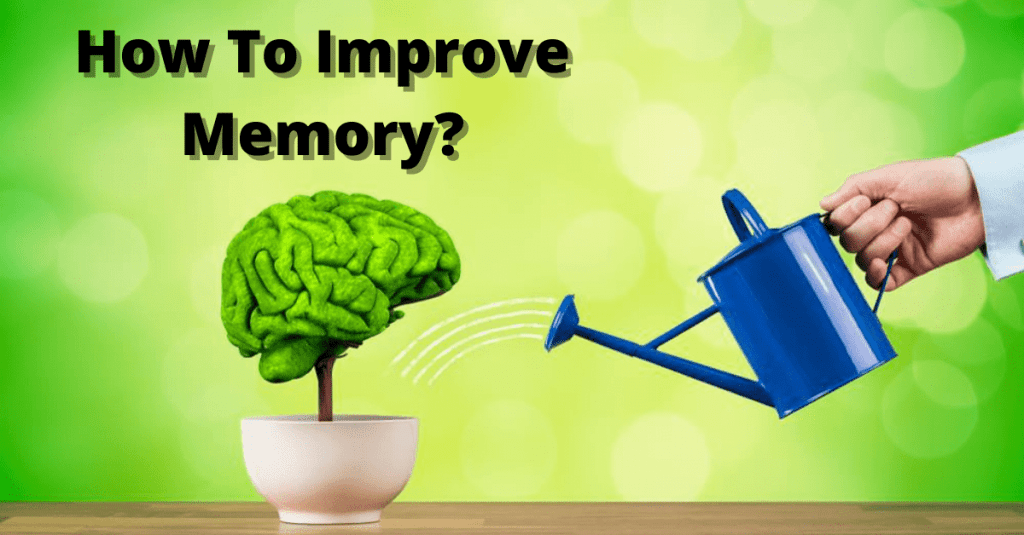
Therese Huston is a well-known public speaker who has written a book that has appeal for those who wish to know what they can do to improve their memory and cognitive abilities. This is not a book some will be interested in either listening to or reading. Many presume they have a proscribed intelligence and memory largely determined by genetic inheritance. Huston infers there is some science-based truth in that opinion but that one’s memory, cognitive ability, and psychological health can be treated, if not improved, at any age.

Huston’s prescription for improved memory and cognitive ability requires effort.

Undoubtedly, we inherit much of our innate cognitive ability but whatever one’s genetic inheritance and age may be Huston argues cognition and memory can be improved. Huston discusses areas of the brain that are the base from which cognition and memory originate, are stored, and then called upon.

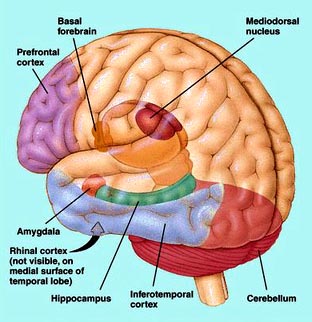
Huston notes the hippocampus, amygdala, prefrontal cortex, neocortex, cerebellum, and basal ganglia are key brain areas involved in cognition and memory.

The hippocampus is the primary location of memories, but the other five areas interact with one’s personal experiences in ways ranging from emotion, individual understanding, decision-making, reasoning, skill development, and formed habits. As we age, the way we process, store, and retrieve information deteriorates. We lose some memories, process information more slowly, and find it more difficult to process new information in the context of past experience.

What Huston explains is that exercise, visual, and tactical experience can improve memory and cognition at every age.

Staying active, experiencing the world in ways that stimulate the production of dopamine, and exercising effort to learn and do new things improves cognitive ability and memory. Dopamine is a neurotransmitter in the human body that regulates mood, focus and behavior. It is released by the body when it is stimulated by exercise, engaging experience, and learning new things. Huston offers advice on how one at any age can improve their mental health and care for themselves and others when they are troubled by various common and extraordinary events in life. Life’s events stimulate the release of dopamine which can illicit rage and bad behavior but also provide focus and beneficial behavior.

Huston suggests 14 generally simple ways of helping oneself and others cope with the stresses of life.

Many of her solutions are commonly understood, others less so. Not surprisingly, she notes exercise, proper nutrition, quality sleep, and deep breathing are important for maintenance and improvement of brain function and memory. Some more difficult and less understood aids to brain health and memory are 1) importance of social engagement, 2) learning new things from personal and other’s recorded experience, and 3) practicing ways of reducing the stresses of life in yourself and others you care about.

One who reads or listens to “Sharp” will recognize the value of Huston’s advice for improving memory and cognitive ability.

After two or three chapters, reader/listeners will likely complete her book. The difficulty, as with all good advice, is following it.