MANAGERS

Every human being has the potential of choosing their way of dealing with life. Whatever one’s role may be, the best one can hope for is to choose what makes them the best they can be.

Books of Interest
 Website: chetyarbrough.blog

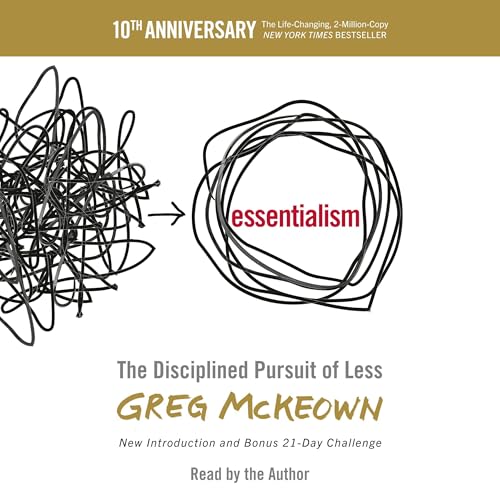
“essentialism” (The Disciplined Pursuit of Less)

Author: Greg McKeown

Narration by: Greg McKeown

Greg McKeown (English author, public speaker, leadership and business strategist.)

McKeown earned an MBA from Stanford University after receiving a BA in communications and journalism at BYU. He reflects on the trials and tribulations of being a manager of events in the modern world where one is faced with psychological overload. Management is the skill of being who you are and getting things done through other people. McKeown explains how to become a more effective and productive manager. It begins with a clear understanding of what self-management is and what may get in the way of that accomplishment.

As a manager of someone else’s business, the job is simpler because the goals are determined by ownership but as a manager of one’s own time it is complicated by poor personal management skill. The idea of “essentialism” is in clearly understanding the goal to be achieved and to understand oneself well enough not to be distracted by what is to be achieved and how to organize and motivate the people who are to accomplish desired results. Once the goal is clearly understood, the end must be what ownership and oneself chooses. If the goal is to manufacture widgets, the steps of manufacturing are labor to produce a product, neither more nor less than what ownership directs. A good manager is not to focus on “more is better” but on the steps of manufacturing with an eye to trade-offs that are a consequence of labor organization and productivity.

The problem from a personal perspective is that company goals are easier to understand because they are determined by others.

Clearly understanding oneself is harder because of self-interest blind spots from being both the observer and observed; not to mention– knowing what actions are required to feel fulfilled as a human being.

The best choice in life is to be who you are, not who you wish to be.

As a manager of others to accomplish a goal, there are times when the response to a worker’s idea is no. This should never be meant to diminish the worker but to keep a worker’s eye on the goals of ownership. A good manager is respectful of a worker who offers ideas but always keeps the goal of ownership in the minds of workers to make it clear that a “no” is not to discourage a worker’s labor or idea for improvement. That which does not focus on achievement of the goal should be eliminated with a “no” but with praise and protection of those who are employed to accomplish ownership’ objectives. With clear understanding of the goal and those actions that benefit its accomplishment, a good manager offers focus to labor and reduces decision fatigue for both manager and worker.

Has capitalism lost its way in America?

There is room for criticism in McKeown’s book from the perspective of labor. As an individual working for a manager, one generally does not have the authority to decline meetings called by a manager. As a worker, one is hired to do a job or task, not to work on their own schedule, or to drop what they are doing at their own discretion. A good manager listens and learns from labor but always keeps in mind the goals of ownership. A good manager looks to labor as seeds for future managers by encouraging self-actualization and promotion but without sacrifice of ownership’s specified goals. Institutional realities cannot be ignored by laborers. McKeown implies everyone is a manager when in fact, from a business enterprise’s perspective, that is not true. Some who think they are managers, are not managers and it is important for a good manager to judge others based on achieving the goals of ownership. A good manager will rise from labor based on doing what they were hired to do, not what they think they are capable of doing. This is not to discourage labor’s advancement but to encourage it through performance in accordance with ownership goals.

Peter Drucker. (A consultant who clearly understood the role, importance, and value of competent managers.)

Peter Drucker is often quoted in this book which is a tribute to McKeown’s management judgement. McKeown also mentions Warren Buffett and the principles that made him a multimillionaire. There is a great deal of good advice in “essentialism” for those who aspire to be managers. As McKeown notes, a manager can fail when he/she becomes overloaded with workplace expectations, poor labor management, ignorance of the digital age, poor organization design, or an organizational culture that demands too much from its employees. Every human being has the potential of choosing their way of dealing with life. Whatever one’s role may be, the best one can hope for is to choose what makes them the best they can be.

WARNING

“The Fire Next Time” signals a political and prophetic warning to America. The continued existence of Baldwin’s observations about racial inequality are compounded by the rising gap between rich and poor and gender inequality in the 21st century.

Books of Interest
 Website: chetyarbrough.blog

The Fire Next Time

Author: James Baldwin

Narration by: Lawrence Fishburne

JAMES BALDWIN (1924-1987 AMERICAN NOVELIST, SOCIAL CRITIC)

“The Fire Next Time” is written when James Baldwin is only 38 years old. He lives for 25 more years before his death in 1987. His book about life as a Black American is an emotional journey into the struggle of Black Americans that exposes the venality of white suppression and inequality in American history. The intensity of his writing is a brutal exposure of the consequence of discrimination that overwhelms a reader or listener. In many ways, his book is professorial but his view of life as a minority in white America is appalling.

Baldwin exposes the hypocrisy of American democracy, the moral bankruptcy of racial hierarchy, and the failure of American institutions to live up to the values expressed in the American Constitution. The founders argue “all men are created equal” while history shows human equality has never been achieved in America. Baldwin clearly explains America’s failures but is decidedly vague on how those failures can be corrected. He clearly disagrees with the Nation of Islam’s belief in Black self-determination through separation of the races but is ambiguous about organized movements to correct discrimination.

Racist rally in America.

Baldwin explains how white liberals are too complacent, conservatives too cruel, Black separatists to fatalistic, and American institutions too dishonest to forthrightly deal with human inequality. His foundational belief is that a fight for civil rights, and continued arguments for equality are essential requirements for America to achieve the goals that are stated and implied by the Constitution.

“The Fire Next Time” signals a warning to America.

“The Fire Next Time” signals a political and prophetic warning. The continued existence of Baldwin’s observations about racial inequality are compounded by the rising gap between rich and poor and gender inequality in the 21st century. If America refuses to confront inequality, there will be a national reckoning that will be violent and unavoidable.

TOO LATE

Van der Kolk outlines some of today’s psychiatric breakthroughs. New psychiatric discoveries have helped reveal childhood abuse memories and war’s traumatic events to give survivors some peace of mind.

Books of Interest
 Website: chetyarbrough.blog

The Body Keeps the Score (Brain, Mind, and Body in the Healing of) 

Author: Bessel van der Kolk M.D.

Narration by: Sean Pratt

Bessel van der Kolk (Author, Boston-based Dutch American psychiatrist.)

As a parent, “The Body Keeps the Score” is a difficult book to read or listen to because of fear about mistakes a parent may have made in raising their children. The trauma of war is well documented as a cause of psychological imbalance and the truth of “The Body Keeps the Score”. What makes van der Kolk’s book even more concerning is the realization that our behavior as parents can leave scars on our children’s minds. It is not just because of an abhorrent parent or priest who has molested or seriously distorted a child’s view of the world but on more subtle missteps by parents that may have had lasting effects on their children’s growth to adulthood. Every family has differences. Some have one parent who is absent from the day to day lives of their children because of their job. Another parent may fail to show enough respect or affection for their child’s accomplishments. Some parents (usually women) are left by their husbands or mates to raise children on their own. In single parent families, a parent is faced with having to make a living while caring for a child who has no idea of how stressful life can be when their mother is on her own. On the other side of a child care spectrum, there is the doting mother and father who overwhelms their children with meaningless praise and falsely grandiloquent appreciation of their behavior. Van der Kolk’s point is the mistakes parents make in raising their children can have lasting effects on their children as they grow into adulthood.

Child abuse is an abhorrent reality in America and other cultures.

The events that Dr. Kolk addresses are serious and harmful adult actions toward their children, but the concern any reader/listener may have is in the responsibility they have in raising their children to be decent emotionally centered human beings. Americans live in a society that highly regards wealth, physical and emotional maturity as important characteristics of adulthood. The pressure of making a living often interferes with the attention husbands, wives, or caregivers provide for children’s healthy emotional and physical growth. Kolk’s focus is on abusive or neglectful people who interact with children in ways that leave psychological scars that cause behavioral dysfunction. What is troubling to reader/listeners of “The Body Keeps the Score” is the pressure and trauma that American parents feel in their lives that affects the social and psychological health of their children.

Employment.

On the one hand, van der Kolk explains how parents may inadvertently distress their children by verbal or physical behaviors that are related to the pressures and expectations of a working life. Those pressures can cause parental meltdowns between parents and children. The consequences can have an emotional and consequential impact on the lives of the children for which adults are responsible. The effect on family members can range from a rageful response to a child’s moodiness to fear or lasting resentment that may create emotional scars that affect a child’s later behavior. A parent’s meltdown can become an indelible scar on a child’s mind. Van der Kolk calls them the injuries of American culture; not because it is only in America, but that it occurs in all cultures.

Social inequality in American culture.

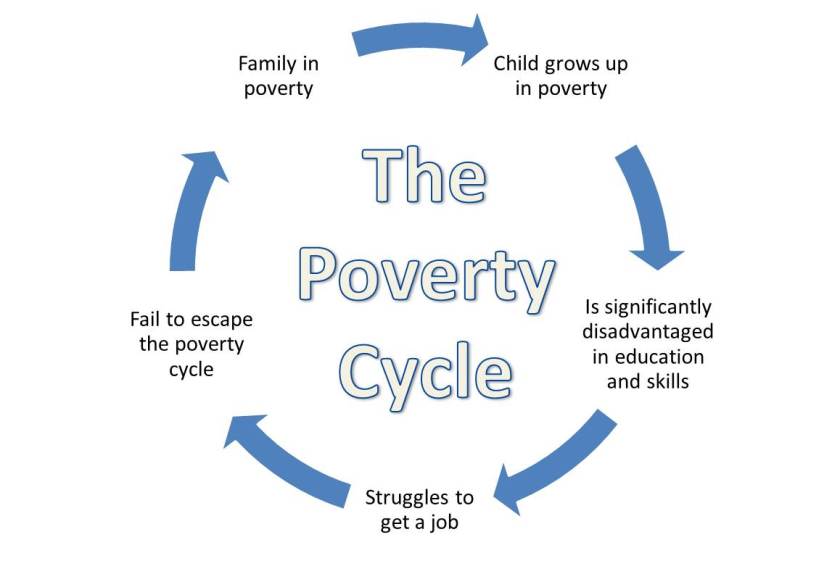
A reality in American life is that it is fed by wealth, poverty, and unequal opportunity. Inequality of opportunity creates pockets of poverty reinforced by racism, family instability, and societal breakdown. All of these social impacts bare down on the development of children and future generations. Working families often do not have time or inclination to take care of their children because of their jobs. These are fundamental issues that have broader consequence to children than the horrendous stories of child abuse that van der Kolk recounts. Of course, it is appalling to know of priests that molest children or fathers who rape their daughters, but it is the general observation that adult behavior toward children can negatively affect children’s lives. Horrendous acts like child molestation undoubtedly have immense impact on the future of those who bare them. However, the realization that day to day experiences of parents’ lives can also have negative consequences in their child’s lives. What is of more concern is a culture riven with poverty, sexual infidelity, and divorce that sets a table for future generations of broken lives.

“The Body Keeps the Score” infers much about the weaknesses of American capitalism. It recognizes suffering in American society and shows how trauma in one generation passes on to the next. Bad behavior has consequences beyond the perpetrator and victim. It offers some solutions to the mistakes parent’s and society make in raising their children.

Van der Kolk outlines some of today’s psychiatric breakthroughs. New psychiatric discoveries have helped reveal childhood abuse memories and war’s traumatic events to give survivors some peace of mind. Trauma is a neurobiological event that can come from the violence of war or parental upbringing. It affects human behavior because trauma changes brain structure, hormonal regulation, and human feelings. Traumatic events become encoded in memory and affect humans’ future. Van der Kolk explains how psychiatric science has evolved to treat the consequences of life’s experience of traumatic events.