

Audio-book Review
By Chet Yarbrough
(Blog:awalkingdelight)
Website: chetyarbrough.blog
Cannery Row (A Novel)
By: John Steinbeck
Narrated by: Jarry Farden
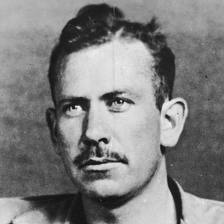
John Steinbeck (1902-1968, author, Nobel prize winner who wrote 25 novels.)
John Steinbeck’s ability to vivify the lives of the middle and lower classes make stories like “Cannery Row” clear and poignant visions of America. Though published in 1945, “Cannery Row” focuses on a segment of working-class people in Monterey, California, a community about 120 miles south of San Francisco. It is located in an industrial waterfront area lined with boat docks and fish canneries.
Cannery Row as it was in the 1940s.

As a community of people who are mostly manual laborers with immigrants and a few professionals, Steinbeck paints a picture of America that resonates with the 21st century; i.e., at least before the current government administration. The sardine industry, like ocean harvesting today, is teetering on collapse in the late 1940s because of overfishing and environmental change. However, Steinbeck shows the human truth of how an industry grows out of the value of immigrants and the middle class in capitalist America. He offers a historical snapshot of the importance of both immigrant and born-in-America citizens that demonstrate the best of what capitalism offers working families.

Working in America.
Working families in the era of midcentury America came from all over the world. Steinbeck paints a picture of a Chinese immigrant who measures the worth of human beings and makes the best of what they offer by recognizing “no” is often the wrong answer to those who try to take advantage of others. This Chinese American opens a grocery store and measures his success by working within the limits of Americans’ ability to pay for what they need to survive. He offers credit, with limits, to his customers and works with them to maintain his livelihood and invest in other properties when opportunities present themselves. He is approached by homeless laborers about living in a warehouse property that has been vacant for some time. He has purchased the property as an investment. They offer no payment for the shelter, but he reasons if he says no, they will take what they are not given, damage his building, and ruin its potential value. On the other hand, if he says yes, they will occupy the building, be customers of his store, improve his income, and take care of his property that will increase in value over time.
Community leaders.

A highlight of Steinbeck’s insightful story is a doctor who is the center of the community’s stability who exemplifies the best of what American life offers. The doctor is a highly respected, vociferous reader of books and a music lover, who cares for the health of those who live in Cannery row. Whether a woman who is working in a house of prostitution, a delinquent who breaks the law, or a fisherman who brings his crew to stir up a fight, the doctor is the glue that holds the community together.

America is and always should be a melting pot if one takes Steinbeck’s view of America as relevant.
Steinbeck’s stories show what makes capitalist America a melting pot of the world. Whether an immigrant, working person, delinquent juvenile, or community leader, every human being has value. Life in America is not easy, but it is worth everything that a sense of community can offer.


