
Audio-book Review
By Chet Yarbrough
(Blog:awalkingdelight)
Website: chetyarbrough.blog
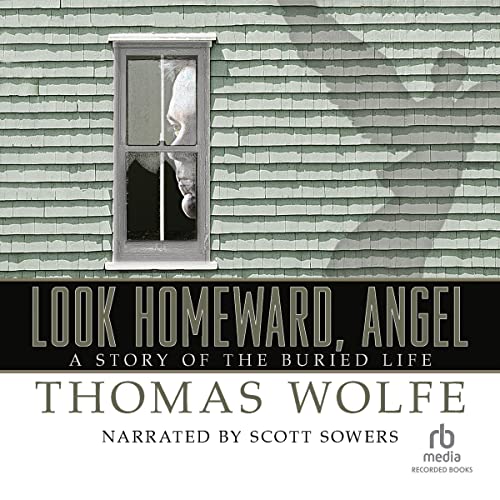
Look Homeword Angel
Author: Thomas Wolfe
Narrated by: Scott Sowers
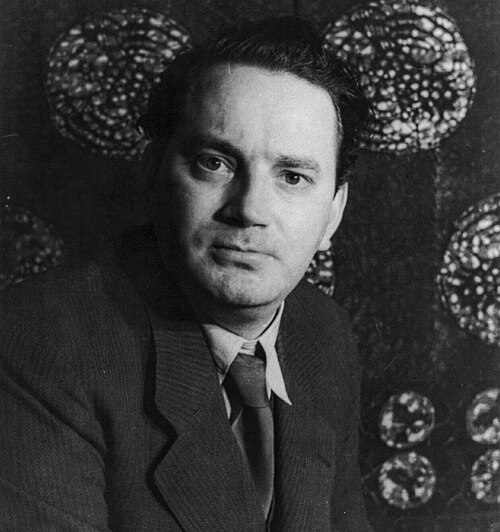
Thomas Clayton Wolfe (1900-1938, American novelist and short story writer. North Carolina’s most famous writer.)
“Look Homeward Angel” is a tribute to the history of America in the early 20th century. What makes it a classic is that it reminds one of life in the 21st Century. In Wolfe’s short life, he captures a picture of America that is as reminiscent of today as yesterday. He tells the story of the Gant family as recalled by the book’s main character, Eugene Gant. Much of what is written seems like an experienced life of its author, Thomas Wolfe.
“Identity” is lost among Americans who do not have jobs or are grossly underpaid for the work they do.
Wolfe notes life is a search for identity filled with experiences of happiness, sadness, love, and loss. Our memories remind us of who we are, and how we became the person we think we are, despite the truth seen by others. Wolfe shows how humans are launched into life with experiences that make them something greater or smaller than their parents. As a child grows to adulthood, they become the sum of their personal life experience and inherited qualities of their parents.
S. J. Watson reminds reader/listeners of the nature and development of human beings.
The main character of “Look Homeward Angel” is Eugene Gant. Eugene’s story is about growing up in early 20th century America. Eugene is born into a big family, some of which die early in life. He is not the first born. The relationship between his father and mother show the trials of life between a husband, wife, and their children. William Gant, the father, drinks too much and seems to be in search of himself for a place in the world. He seems adrift with a self-destructive personality, an incoherent and somewhat peripatetic existence. He eventually settles into singular home life, but with scars from family separation and a wife who kept the home fires burning.

Can one be guilty of events for which they have no control over, or responsibility.
As in all families, every human being struggles to define themselves. Even though Eugene, his father, mother, and siblings have their own memories and history of life, Wolfe focuses on the growth and maturity of one son who grows to adulthood as a college graduate and an accomplished writer. It is the aspiration and self-discovery of Eugene and Wolfe’s engaging writing that keeps one engrossed in “Look Homeward Angel”. Wolfe is an extraordinarily gifted writer who paints imaginative, detailed, and believable pictures of an American family in the early 20th century. He portrays the vividness of life from the early 1900s through WWI and makes one think this is Thomas Wolfe’s life story.

Life’s journey.
Every child in a family has different expectations and experiences in life. Life is a singular journey for every human being. All of the Gant family members represent different aspects of life. Eugene’s mother is the anchor of the family. His father is a lesser light because of his lack of discipline, and employment instability. His sister, Helen, seems to understand Eugene as the aspirational child of the family. Eugene’s older brother and closest sibling, Ben, is a realist about the family’s instability and acts as protector of Eugene during the family’s hard times. Ben dies in the course of the story which gives reader/listeners a sense of the hardship in early 20th century America. Of course, the identified hardships of the Gant family remain in America today. That is what makes Wolfe’s story a literary classic.

Some Americans succeed in life; others fail. One sibling chooses to go to college while another chooses a different path. Each has an opportunity to succeed or fail. Education is no guarantee of a better life. However, doors are opened while others are closed without education. A minority of people become great, happy, and semi-contented while others fall into a cycle of poverty, unhappiness, and ever-present discontent. There is no clear path to success in life. One out of five of the Gant family presumably achieved fame and fortune. The other four seem to have lived a life of limited success in quiet desperation, insecurity, and struggle. “Look Homeward Angel” is as much a story of today as it is about early 20th century America.

Wolfe shows that one can never fully go home again. Eugene has grown beyond his attachment to home because the past is only a memory and his future lays before him. Time changes everything. Wolfe shows the differences in how one becomes who they are; i.e., the family we come from shapes us in great and small ways. How and by whom we are raised is always with us. It does not mean we are not different from our parents. Thomas Wolfe shows how we become adults. He implies adulthood is a function of genetic inheritance, personal experience, and acceptance or rejection of our parents’ life experience.


