H.G. Well’s interesting message is that human beings may not be able to save themselves from a technologically superior foreign invasion, but established societies and culture are more enduring than technological superiority. Wells is suggesting an invasion by a technologically superior force does not eradicate a society but changes it.
Books of Interest Website: chetyarbrough.blog
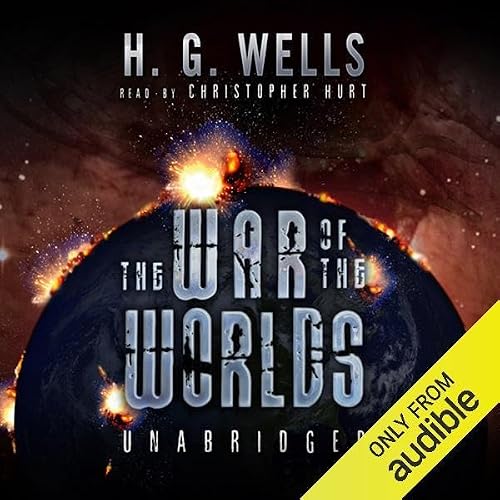
“The War of the Worlds”
Author: H. G. Wells
Narration by: Christopher Hurt
H. G. Wells (1866-1946, English novelist, journalist, sociologist, and historian.)
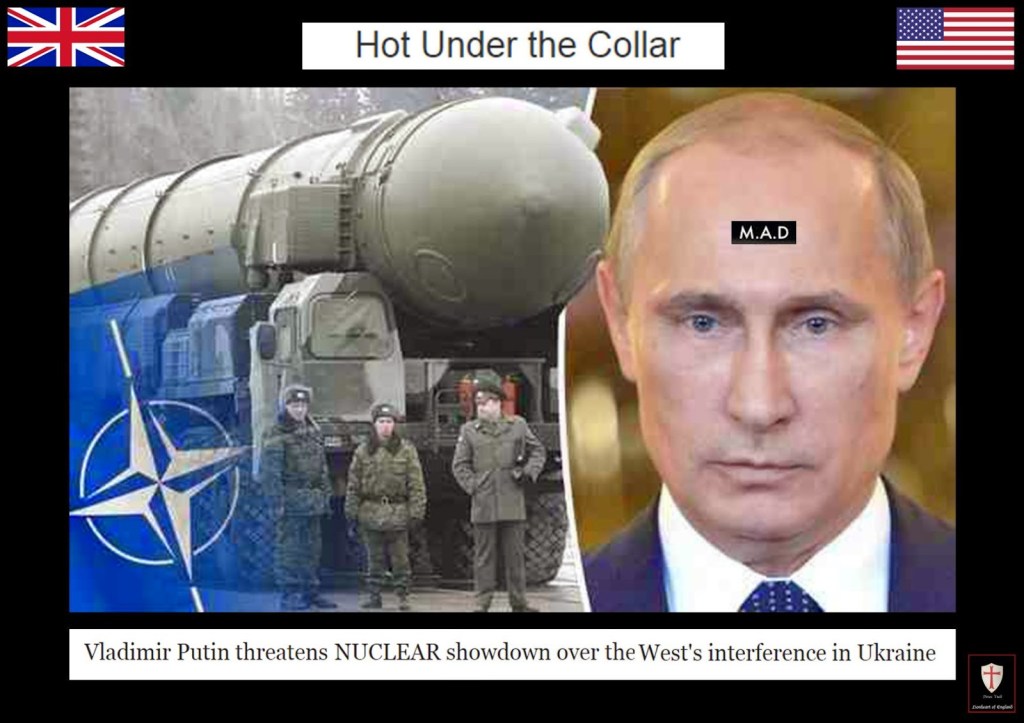
“The War of the Worlds” is an odd book. Published in 1898 when the British Empire was near the height of its global power and prestige. It shakes the foundations of world hegemonic ambition. Listening to the book in the 21st century, it has relevance but in today’s hearing it seems too long and melodramatic. Giant fighting machines, heat rays, black smoke chemical weapons, city panic, and refugee flight are too familiar in today’s world. The shock value of a Martian invasion is lost. However, in the reality of a horrific war by Russia on the Ukrainian people, America’s bombing of Iran’s citizens, and Iran’s brutalization and torture of its people make “The War of the Worlds” as important and relevant today as when it was written.
H.G. Well’s Martian Invasion
Most of Wells’ book appears to say an invasion by technologically superior Martians will dominate the earth. What Wells shows is that technological superiority is not enough to conquer the world. As the British army and its weaponry fail to defeat the Martians, Earth’s natural pathogens and environment is shown to seriously challenge Martian’ survival. Technological superiority is not enough to win a war. A combination of nature’s pathogens and human resistance are challenges that suggest, despite technological superiority, singular societies ultimately prevail. History shows that eternal domination of an independent distinct society is unlikely to prevail. A distinct society may change from the influence of an invasion, but it does not disappear, it adapts. Glasnost is evidence of that truth when the former nations that were part of the U.S.S.R. reestablish themselves as independent societies that do not entirely abandon the influence of Russian domination. Native tribes that lived in what became the United States retain much of their social identity despite America’s English occupiers.
H.G. Well’s interesting message is that human beings may not be able to save themselves from a technologically superior foreign invasion, but established societies and culture are more enduring than technological superiority. Wells is suggesting an invasion by a technologically superior force does not eradicate a society but changes it.
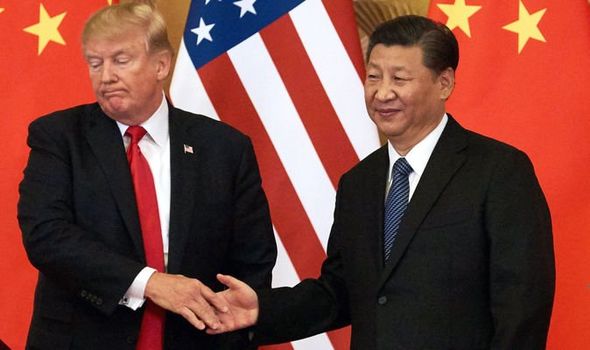
There is an ongoing hybridization of American capitalism and Chinese communism. Is Trump’s authoritarianism becoming more like Xi’s communism or Xi’s authoritarianism becoming more like Trump’s capitalism? One wonders–are we growing closer together or farther apart?
Books of Interest Website: chetyarbrough.blog
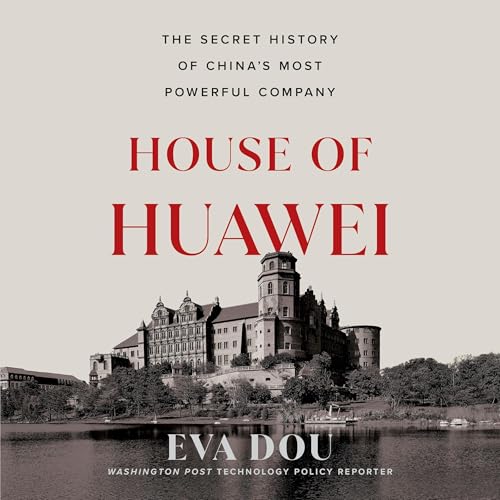
House of Huawei (The Secret History of China’s Most Powerful Company)
Author: Eva Dou
Narration by: Nancy Wu
Eva Dou (Author, American journalist who reports on technology for The Washington Post.)
“House of Huawei” is a complex history of the growth and development of what became a Chinese multinational technology company that builds smartphones, laptops, smartwatches, and most importantly, telecom infrastructure for cloud services around the world. It is China’s version of Amazon that becomes a massive seller of tech equipment, internet use, and communication.
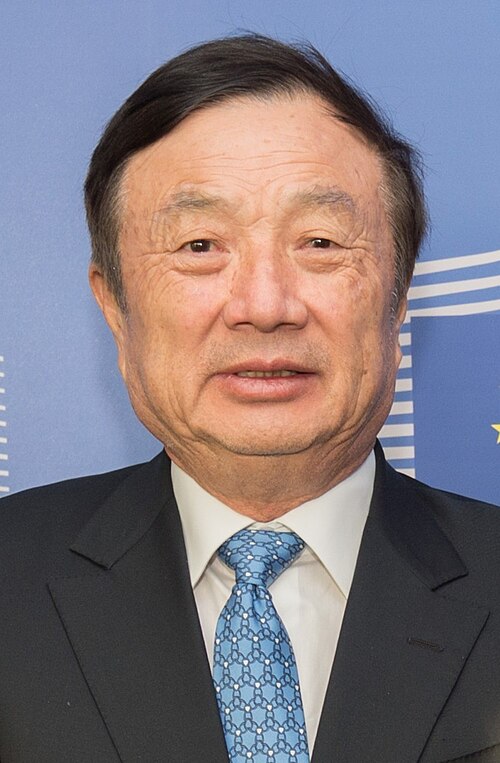
Ren Zhengfei (Chinese entrepreneur and engineer, founder of Huawei Technologies.)
There are many names of Huawei business leaders that are largely unknown to most Americans. Ren Zhengfei is the founder and most important person in Dou’s story. He is born in 1944 to schoolteacher parents during the Cultural Revolution. He served in the Chinese armies engineering corps that shaped his management style. He worked through famine, political purges, and the strict discipline of military service. He became the founder of Huawei in 1987.
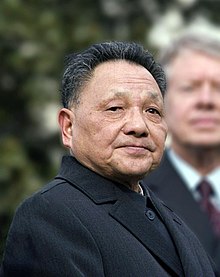
Deng Xiaoping (China’s Chairman of the Central Advisory Commission of the Chinese Communist Party, 1982-1987)
The advance of Deng Xioping opens a capitalist door to the world for Huawei. Beginning in 1978 through 1989 Deng reforms the communist party and encourages a limited form of capitalism in China. When Xi takes over, Huawei becomes more directly subject to communist party oversight. As a company, Huawei is pulled closer to China’s government control. The Huawei network is classified as a national-security asset. Though Huawei may or may not have sought closer association with the CCP, it became entangled with state strategy.
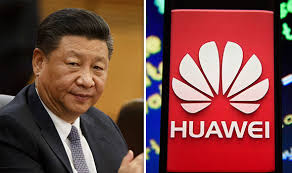
Xi makes Huawei a national champion of innovation and semiconductor technology. It becomes a symbol of China’s technology ambitions while being a target of U.S. sanctions. Dou shows Huawei becomes a battleground for tech strategy between China and the Untied States
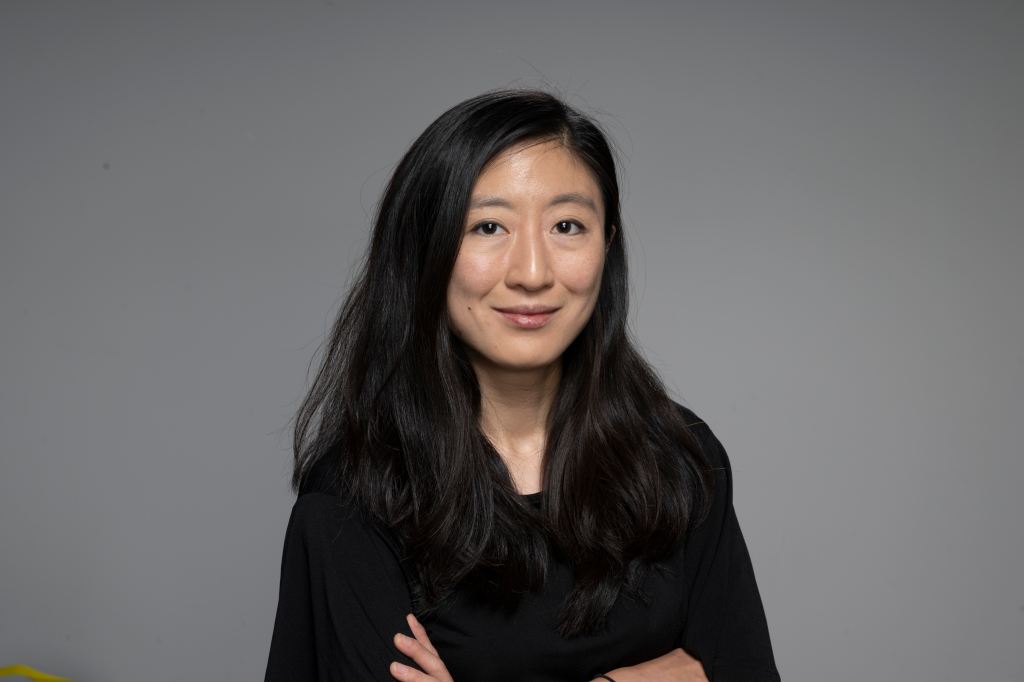
Sun Yafang (Chinese engineer and Chairwoman of Huawei, 1999-2018.)
Sun Yafang is a former chairwoman of Huawei. Her ties to Chinese intelligence services are viewed as a recurring controversy with Huawei’s involvement with America. Her relationship with China’s state power structure creates concern on the part of the U.S. with Huawei’s data collection as a part of Huawei’s practices in America.
Meng Wanzhou (aka Cathy Meng or Sabrina Meng, Deputy Chairwoman and CFO of Huawei.)
Ren’s daughter, Meng Wanzhou, becomes the Chief Financial Officer of Huawei. Wanzhou became known to the world when she is detained in Canada in 2018 at the request of the United States. Her arrest ironically leads to more familiarity with Huawei and its expansion in the world. The primary concern the author reveals is how dependent Huawei may be on the Chinese government for information about America’s technology services.
The fundamental concern of America, Germany, and Japan is Huawei’s use of data collection in their countries.
In the end, these countries decide to ban or restrict the use of Huawei’s equipment because of their ties to the Chinese Communist Party, government, and military. Beginning in 2019 the U.S. banned some of Huawei’s services and global chip supplies. By 2026, Huawei is banned from American federal networks, and telecom infrastructure services. Germany and Japan take similar actions between 2018 and 2026.
Dou explains Huawei’s history exposes deep contradictions with China’s government-directed economic growth.
The authoritarian and state-directed economic and political structure of China is a challenging contradiction to the idealism of communism. China’s communism is compelled to change ideologically from Marxism-Leninism to a state-directed form of capitalism. Huawei becomes a telecom giant euphemistically called socialism with Chinese characteristics. In truth, Huawei is structured to be more capitalist than communist with interventionist potential by the state if it conflicts with centralized control of the party.
Communist captitalism.
Dou explains how Party committees are created within Huawei’s management system. These committees exercise ideological control over Huawei’s executives. Huawei’s objectives are required to conform to national priorities. The development of 5G and telecom infrastructure becomes a national, not private asset of the company. This generates fear in the U.S. about security liabilities and foreign influence of China on U.S.’ and allied countries’ political and/or economic affairs. Dou notes China’s leadership insists on enforcing its security laws, data practices, and CCP’s rules of the road for Huawei’s operations.
Huawei discipline.
Dou notes that Xi’s anti-corruption campaign pressures Huawei to tighten internal governance. Executives of Huawei were disciplined for being too extravagant. The CCP organized ideological training for company employees to more fully align them with the Party. China’s government interference in Huawei’s management leads to U.S. sanctions and an arrest of Meng Wanzhou’s in Canada. The United States has effectively banned Huawei telecom and surveillance equipment. Federal agencies cannot use Huawei devices. American internet companies in the U.S. that receive federal funds must remove Huawei equipment. Though Huawei phones and laptops are not banned in the U.S., they are not sold by major U.S. carriers or retailers. The UK, Germany, France, Japan, Australia, and Canada have taken similar actions against Huawei services. Huawei product like laptops and mobile phones are not universally banned but many Western countries have barred telecom infrastructure because of national security concerns.
What is striking about Dou’s book is the history of Huawei shows both confluence and separation between Communism and Capitalism.
Both use the capitalist tools of competition, private enterprise, and global markets. Both are involved in the private sector and provide preferential treatment, political protection, and financing. Nationalism is a greater force than Marxism for both China and the U.S. American corporate discipline is similar to communist party discipline. Further, economic and political strategies of America and China have similarities. However, the two cultures conflict with each other over globalization and levels of interference or control of private companies. America leans toward transparency, partnership, open markets, and international trust. China opts for secrecy, political reliability, ideological conformity, and oversight to ensure national security. Furthermore, America thrives on risk-taking, experimentation, a free market and decentralized decision making while China emphasizes political correctness, Party control, ideological discipline, and insistence on corruption elimination.
In sum, it seems there is an ongoing hybridization of both American capitalism and Chinese communism. Is Trump’s authoritarianism becoming more like Xi’s communism or Xi’s authoritarianism becoming more like Trump’s capitalism? One wonders–are we growing closer together or farther apart?
Roth shows acculturation is both an opportunity and danger in “The Plot Against America”.
Books of Interest Website: chetyarbrough.blog
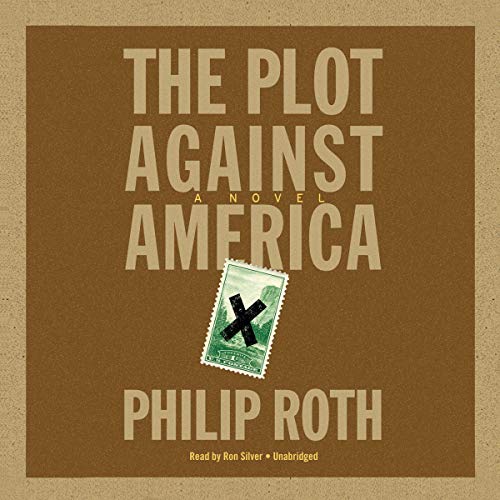
The Plot Against America
Author: Philip Roth
Narration by: Ron Silver
PHILLIP ROTH (WINNER OF THE PULITZER PRIZE FOR FICTION, MAN BOOKER INTERNATIONAL PRIZE AND MORE)
Roth’s “The Human Stain”, and “The Plot Against America” are troubling fictional stories of American society. Roth’s imagination seems somewhat out of control in “The Plot…” but his point is that American democracy, like all forms of government, is flawed by the nature of human beings. Popular election is no guarantee of government probity because the public is as easily led by lies as the truth; i.e., something we see in today’s American government. “The Plot Against America” creates a fictional story of the advance of a racist to the Presidency of the United States at the time of Hitler’s government putsch in Germany.
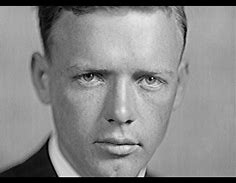
Charles Lindbergh (Famous aviator who expressed suspicion of Jews and is characterized as a supporter of Hitler.)
America had several famous supporters of Hitler’s ascension in Germany; i.e., not only Charles Lindbergh, but Henry Ford, Father Charles Coughlin, and Jospph P. Kennedy Sr., to name a few. Lindbergh believes in white supremacy but excludes those of Jewish ethnicity because he believes Jews are not a part of the American or Western racial community. He believes Jews are a separate people with separate loyalties. This conforms to Hitler’s view of German society as superior to all others. Added to Lindbergh’s racism is his belief that communism threatens individual liberty, a foundational democratic belief. Lindbergh is vociferously anti-communist even though Russia is led by white rulers. Lindbergh believes centralized state control, state suppression of dissent, and forced conformity are anti-American. This is an ironic view because Hitler insists on state control, suppression of dissent, and a forced conformity; i.e., beliefs Lindbergh infers he abhors.
Roth writes a story suggesting Lindbergh run against Franklin Roosevelt for President. Lindbergh wins in this fictional story. In truth, Lindbergh never runs for President. History actually shows the Republican party approaches Lindbergh in the late 1930s to run against Roosevelt because of his celebrity, anti-war message, and isolationist beliefs. However, Lindbergh turns the Republicans down.
Wendell Lewis Wilkie becomes the nominee for President by the Republicans in 1940. (1892-1944, an American lawyer.)
Wendell Willkie is the Republican Party’s choice for President. What makes Roth’s story interesting is his concern for loss of Jewish ethnic identity from the influence of Americanization. Two fundamental points are made in the title of the book. There is the obvious “…Plot Against America” with Lindbergh as an America candidate for President who supports Hitler. A less obvious point is Roth’s more subtle “…Plot…” by American society to diminish ethnicity. In Roth’s story, Lindbergh is elected as President of the United States.
Drawing the line between cultural disintegration and acculturation is different in an autocracy than in a democracy. A perfect democracy allows ethnicity to flourish within the boundaries of common societal norms while an autocracy demands conformity to specific societal norms that, in some autocratic countries, become demands. Roth’s point in “The Plot Against America” is that ethnic identity is a fundamental right of human beings that should not be denied by any government. This is not to say that ethnic identity is not influenced by society, but that ethnicity should only be a natural, not governmentally enforced influence. Roth’s story shows a fine line that is crossed by America in influencing Jewish culture to become less ethnic. He tells the story of a government endorsed program to offer Jewish children the opportunity to become laborers on American farms. That experience leads to a Jewish child’s exposure to eating pork which is explicitly forbidden by the Torah because it is considered unclean. Roth shows “old world” ethnic’ cautions are sometimes abandoned because of life experiences that diminsh ethnic taboos.
Discrimination based on ethnicity, race, or sex diminishes democracy.
Roth shows acculturation is both an opportunity and danger in “The Plot Against America”. One may read into Roth’s story that he regrets the Americanization of Jewish ethnicity. To the extent that the discipline of education may be harmed by acculturation, one is inclined to agree with Roth. On the other hand, ethnic identification has led to unequal opportunity based on ethnicity, race, or sex which should have nothing to do with innate capability.
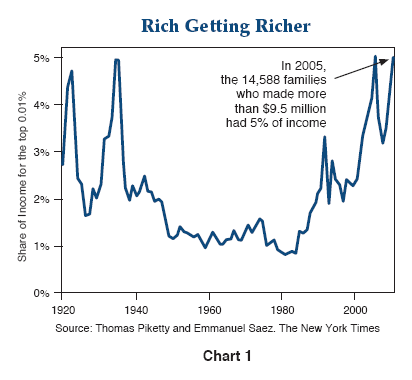
To this book reviewer, the flaw in American democracy is the rising gap between rich and poor. Dychtwald implies the flaw in China is its reliance on a singular leader’s actions to improve the daily lives of its citizens.
Books of Interest Website: chetyarbrough.blog
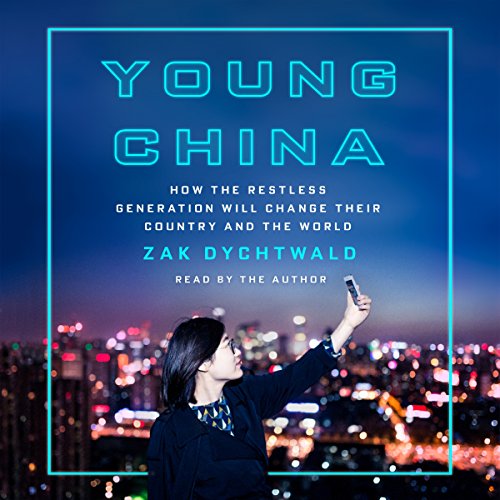
Young China (How the Restless Generation Will Change Their Country and the World)
Author: Zak Dychtwald
Narration by: Zak Dychtwald
Zak Dychtwald (Author, public speaker, fluent Mandarin speaker, world traveler, graduate of Columbia University who moved to China and spent 4 years interviewing local Chinese.)
“Young China” is a fascinating comparison of a world traveler’s perception of the difference between young Americans and Chinese youths. A reservation one has in listening to Dychtwald’s explanation of Chinese youth is whether a 4-year immersion in a foreign culture constitutes a society’s truth or just a topical view of an intelligent observer who gravitates to students of similar ambition.
America’s Achilles heel.
Not knowing the author’s life experience, one assumes he has not lived the life of most American college students of his generation. As a graduate of Columbia, his decision to learn Mandarin Chinese, and choice to travel to China for a four year stay suggests he is not a typical American youth. Further, as the meaning of the saying “Birds of a feather flock together”, one presumes his choice of interviewees is not likely to be typical Chinese college students but those who excel in intelligence and academic pursuit.
Contrast of lives in China.
The main Chinese youths whom the author interviews and becomes acquainted with are Ben, Vivian, Chen, Liu, and Mei. Ben–who is a striver who has a rural background. Vivian is a young professional woman who speaks English and comes from the middle class. Chen is a university student who embraces nationalist beliefs of young Chinese. Liu is a young teenager who experiences the meritocratic pressure of academic achievement in China. And finally, Mei is a young Chinese college student dealing with job aspirations, dating, marriage pressure, and career ambitions.
Education is the great strength of China.
In some sense, these characters have American student similarities. One can find similar Americans in each of the broad categories of these five Chinese students. However, Dychtwald sees Chinese students as “dreamers and strivers” while his experience is that American students are skeptical about the value of education and their future. Dychtwald finds Chinese college students take their performance on college exams more seriously than American college students. High academic achievement is a critical goal to a Chinese student while to an American graduating with a degree is the primary goal and finding a career is more important than achieving high scores on college exams. Chinese youths see themselves as a part of a national achievement for China while Americans see themselves as cogs in a capitalist machine that may or may not turn into successful careers.
College is a pressure cooker for Chinese students while it’s more of a cultural experience and stage of life for most American students.
Finally, Dychtwald notes Chinese students are globally curious, Western influenced, while being confident in the superiority of their own country. In contrast, American students care less about other countries, know few languages beyond English, and see their country as just one of many cultures in the world. Dychwald is an outlier in that he does not view China as a threat to American hegemony, but a country focusing on improving the lives of their citizens.
The risks of singular leadership.
Admittedly, this review is a narrow interpretation of Dychtwald’s fascinating book. Only an extraordinary intellect would move to China after graduating from college and learn fluent Mandarin during a 4 year stay in China. It makes we who are old wish we had the privilege of Dychtwald’s intelligence to live life over again.
To this book reviewer, the flaw in American democracy is the rising gap between rich and poor. Dychtwald implies the flaw in China is its reliance on a singular leader’s actions to improve the daily lives of its citizens. America has the advantage of 4-year democratic change in leadership while China is dependent on an authoritarian’s health and judgement as a singular leader.
A reader/listener of “Battleground Ukraine” infers Putin will fail because of Russia’s flagging economy and weakening military. The Ukraine war may go on for many more months, but its economic devastation and human deaths will end with Ukraine as a sovereign country, and presumably, a Russia with a different President.
Books of Interest Website: chetyarbrough.blog
Battleground Ukraine (From Independence to the War with Russia)
Author: Adrian Karatnycky
Narration by: Daniel Henning
Adrian Karatnycky (Author, Ukrainian American political analyst.)
“Battleground Ukraine” is an important history of the transition of Ukraine from being part of the U.S.S.R. to an independent nation-state. The author offers a chronological political history of Ukraine’s drive for independence after glasnost. Karatnycky outlines the achievements and setbacks of three decades and six leadership changes in Ukraine’s Government. He shows nation-building is no easy task for a country that is split between desire for independence and a history of Soviet Union domination.
In researching the qualification of Adrian Karatnycky, one finds he is considered a leading analyst who has written about Ukraine in publications like Foreign Policy, The Wall Street Journal, Foreign Affairs, The Atlantic, and National Review.
Adrian Karatnycky is characterized as a Ukrainian American political analyst, and a democracy advocate for Ukraine. He is a managing partner of a consulting firm representing clients with interests in Ukraine. He co-founded a cultural initiative to promote positive relations between Ukrainians and Jews and has studied Russian Ukrainian’ relations, written a number of articles about Ukrainian human rights, political freedoms, and its development as a civil society. He understands and speaks English and Ukrainian, and presumably Russian.
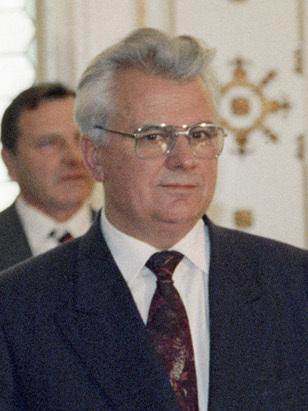
Leonid Kraychuk (1991-1994, First President of Ukraine)
His book is informative but complicated because of unfamiliarity with most of the six leaders of Ukraine after its separation from the U.S.S.R. The first president of independent Ukraine is Leonid Kravchuk (1991-1994). Kravchuk presided over the breakup and helped establish the independent nation of Ukraine. According to this history, Kravchuk seems reluctant to create a decisive break with the Soviet-era experience. The authoritarian habits of administration led to the blossoming of oligarchic networks in Ukraine that resemble the oligarchs who control the Russian economy under Putin today. The growth of Ukraine as a relatively free capitalist country is sidelined by Kravchuk’s rule. Nevertheless, Kravchuk’s administration appears to have accomplished the break from the U.S.S.R. without civil war.
Leonid Kuchma (1994-2004, Second President of Ukraine.)
The second leader of Ukraine is Leonid Kuchma (1994-2004). The author notes Kuchma accepted the growth and corruption of oligarchs in Ukraine. In some sense, the economy stabilized under Kuchma’s rule while improving ties with Russia and even the West. However, authoritarianism is reinforced by a cadre of oligarchs that corrupt Ukrainian society and enrich themselves while reinforcing attachment to Russia.
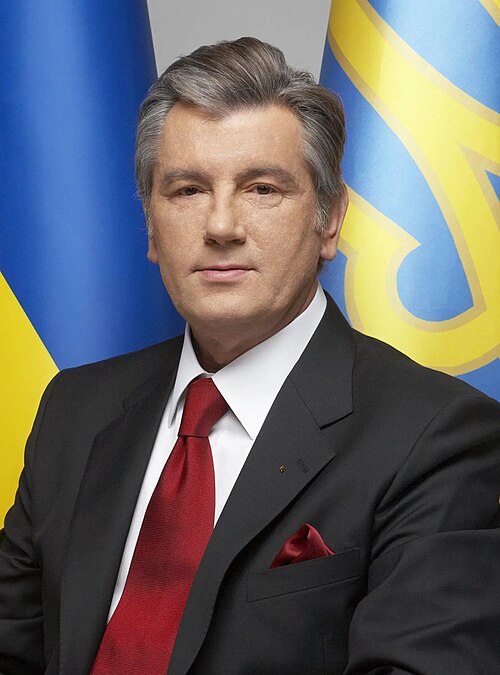
Viktor Yushchenko (2005-2010, Third President of Ukraine.)
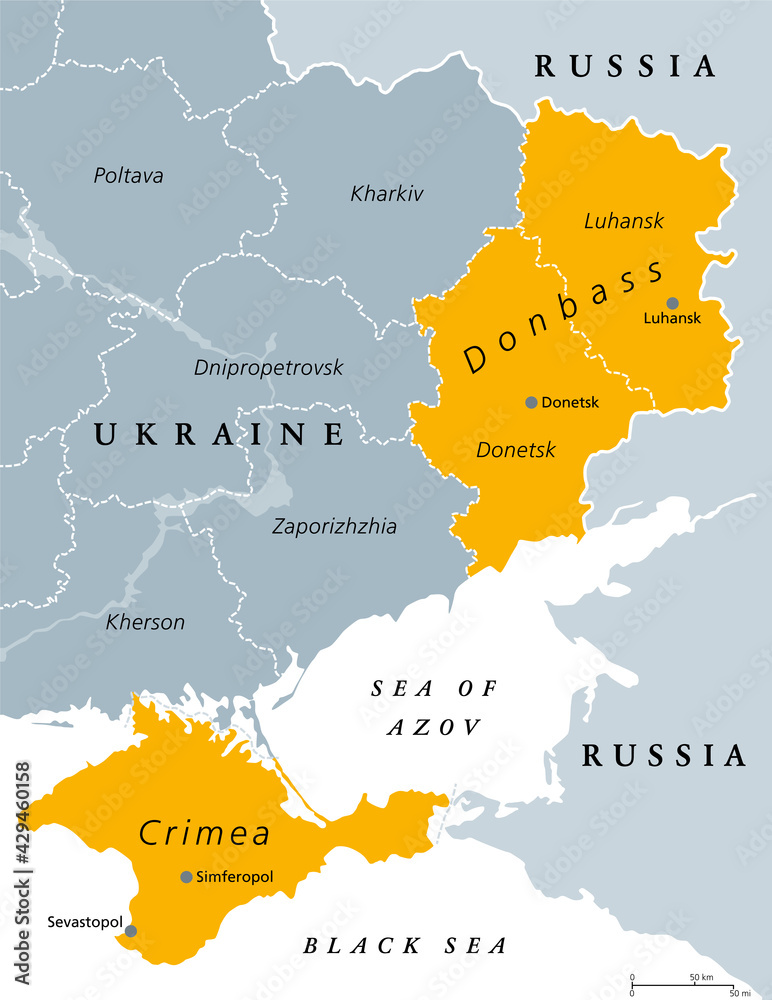
The third leader is Viktor Yushchenko (2005-2010). In 2004, the Orange Revolution begins in Ukraine with nationwide protests, civil disobedience, and political mobilization against oligarchic rule in Ukraine. Kuchma is replaced by Yushchenko as a result of a Ukrainian Supreme Court ruling that demands a new vote. That vote results in the election of Yushchenko. Yushchenko is characterized by Karatnycky as a pro-Western democrat. He allows Ukraine media to remain free by not repressing its citizens. However, Yushchenko is characterized as a political failure who, at best, creates space for the growth of democracy in Ukraine. Though Crimea is not lost during Yushchenko’s rule because he resisted Russian military expansion, he fails to move his country toward democracy.
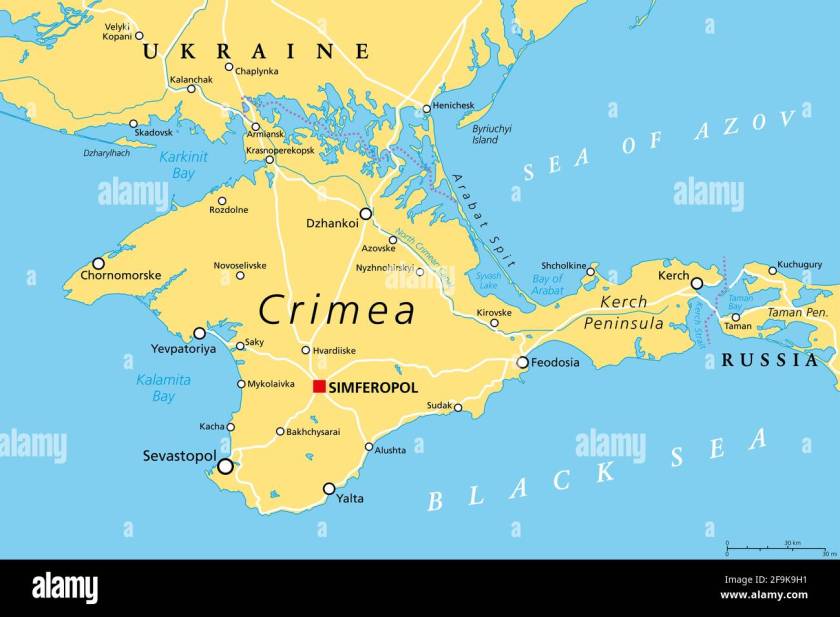
Crimea’s annexation by Russia in March 2014.
Russia had a base in Crimea but its role in the invasion and confiscation of Crimean territory expanded with the next Ukrainian President’s administration. At worst, Yushchenko’s political ineptness and weak governance paved the way for a more kleptocratic Ukrainian President named Viktor Yanukovych (2010-2014). As Yushchenko leaves office, Russia lays plans for the invasion of Donbas in 2014.
Viktor Yanukovych (2010-2014, Fourth President of Ukraine.)
Karatnycky views Yanukovych as the latest pro-Russian ruler of Ukraine. Yanukovych uses his position as President to enrich his family and allow Russian intelligence service to infiltrate the Ukrainian government. In the author’s opinion, Yanukovych opened the door to Russian aggression which led Russia to surreptitiously invade Donbas and annex Crimea. Karatnycky infers Putin launches the Donbas incursion as a result of a power vacuum created by Yanukovych who flees Kyiv on February 22, 2014. Crimea is annexed by Russia on February 23, 2014. The Donbas incursion begins in April 2014.
Ukrainian corruption during the Yanukovych presidency.
By a slim margin of 3.5% Yanukovych won the Ukrainian presidency in 2010. He escapes to Russia in February 2014 after ordering a violent crackdown on Ukrainian protesters. Karatnycky’s assessment of Yanukovych is highly negative. He argues Yanukovych centralized Presidential power, weakened independent institutions, persecuted political opponents, and drew the government closer to Putin’s Russia. He defeated Uylia Tymoshenko, a pro-Western leader, who is imprisoned in 2011 during the Orange Revolution in Ukraine. Yanukovych remains in Russia today and is convicted in absentia for treason in aiding Russia during his term in office.
Petro Poroshenko (2014-2019, Fifth President of Ukraine.)
After Russia’s incursion in Donbas, Ukraine elects Petro Poroshenko (2014-2019). Karatnycky suggests Poroshenko recognizes Ukraine’s military has to be rebuilt because of Yanukovych’s neglect. Poroshenko turns to the West for support in the battles occurring in Donbas. His appeal is answered with U.S. and EU backing that secures sanctions against Russia. Ukraine increases NATO cooperation to make Ukraine a frontline for democracy. As a delaying tactic, in Karatnycky’s opinion, ceasefires were agreed to by Poroshenko in order to give Ukraine more time to rebuild its military. In the author’s opinion, Porshenko did not break Ukraine’s oligarchic power, but he secured Western support of Ukraine and rebuilt the army which strengthens Ukraine’s national identity. Karatnycky characterizes Poroshenko’s rule as a true beginning transition of Ukraine from authoritarian to democratic government. However, Kartnycky notes the judicial system and established oligarch’ influence continues to obstruct democratic ideals. Further, Russia’s Donbas battles with Ukraine continue through his administration.
Russia’s Donbas battles with Ukraine continue through Poroshenko’s administration.
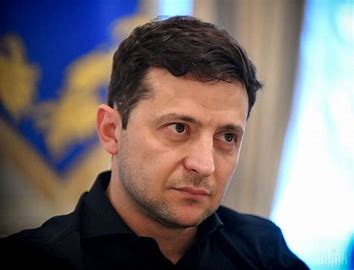
Finally, we get to the election of Volodymry Zelensky in 2019. Karatnycky sees Zelensky as a pre-war and wartime President. Zelensky’s successful election is shocking considering the author’s assessment of Poroshenko’s successes in transitioning Ukraine to a world recognized democratic rather than authoritarian government. Zelensky, a comic actor, soundly defeats Poroshenko in the election of 2019. Zelensky appears completely out of his element in becoming President of Ukraine. He struggles with political reform and shows an ineptitude in dealing with political infighting. Karatnycky describes Zelensky as “…well-intentioned but inexperienced naïve in his first two years as President. However, as Russia chooses to invade Ukraine, the wartime Zelensky becomes a unifying national leader. His experience as an actor/comedian makes him a master communicator. Zelensky becomes a wartime decision maker that gathers Western support for the defense of his country. Zelensky overcomes his political shortcomings in the face of Russia’s invasion of Ukraine. Zelensky manages to unite Ukraine against a much larger enemy despite the economic stagnation of the Ukrainian economy.
Volodymry Zelensky (President of Ukraine 2019-?)
It Karatnycky’s opinion, Ukraine will survive Russia’s invasion and will remain a sovereign country. A reader/listener of “Battleground Ukraine” infers Putin will fail because of Russia’s flagging economy and weakening military. The Ukraine war may go on for many more months, but its economic devastation and human deaths will end with Ukraine as a sovereign country, and presumably, a Russia with a different President.
As a tourist to Turkey, one does not see an authoritarian’s impact on their society. Hansen lives in Istanbul for ten years to offer her insight to Erdoğan’s reorganization of Turkish society. Her experience reminds one of Trump’s authoritarianisms and its potential reaction to public discontent.
Books of Interest Website: chetyarbrough.blog
From Life Itself (Turkey, Istanbul, and a Neighborhood in the Age of Erdoğan)
Author: Suzy Hansen
Narration by: Suzy Hansen
Suzy Hansen (American journalist and author.)
Suzy Hansen was born in New Jersey and earned a B.A. from the University of Pennsylvania. She became a journalist and moved to Istanbul in 2007 for ten years. The move is motivated by receiving a fellowship from the Institute of Current World Affairs. She is offered the fellowship to study and write about a two-year cultural immersion in a foreign society. “From Life Itself” is a compilation of her research and experiences in Istanbul that enlighten those who have visited Turkey but only as a tourist, not as an educated journalist.
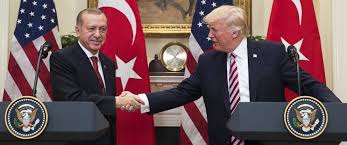
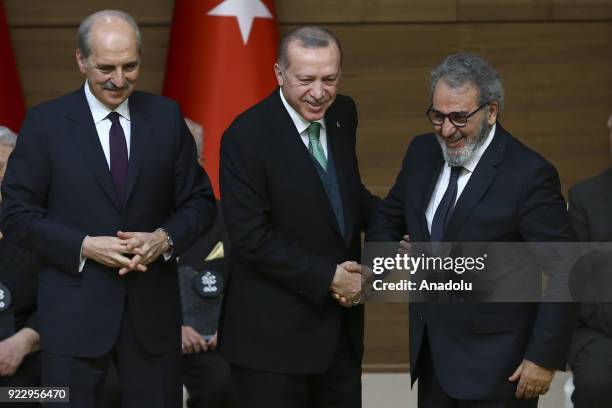
President Recep Tayyip Erdoğan of Turkey.
Hansen’s book is revelatory in explaining Turkey’s more recent history and the rise of its Prime Minister and current President Recep Tayyip Erdoğan who has been in office since 2003. The growth and reconstruction of Istanbul is part of Hansen’s history of Turkey. She interestingly explains her view of Erdogan’s rise to power and how the political system of Turkey’s capital has been shaped by history and the rise of Erdoğan.
President Recep Tayyip Erdoğan and Donald Trump are authoritarians.
Erdoğan is characterized by Hansen as a powerful authoritarian. That authority, in Hansen’s opinion, has led to corruption, questionable elections, and a reshaping of public institutions, public life, and the personal lives of Turkish citizens. Hansen suggests Erdoğan’s rule fits within the long history of Turkish autocracy. She reflects on Turkey’s political history of discrimination against non-Turkish residents from different cultures like Syria and other middle eastern countries.
Muhtar influence by President Recep Tayyip Erdoğan.
Hansen notes how village leaders, called muhtars, become sources of both cohesion and disruption of Turkish communities. They are elected by local villages or urban neighborhoods. These muhtars are information sources for newly arrived immigrants who transform communities. Muhtars aid newcomers to understand differences from their cultures and historic Turkish traditions. As immigration increases, tensions rise, immigrants are rounded up, abused, sometimes murdered, and forced to move to other neighborhoods or countries. Erdoğan’s authoritarianism reinforces a kind of fascism that rises from local Turkish citizens. Hansen argues local leadership corruption, questionable elections, and institutional leadership change are methods used by Erdoğan in his authoritarian rule.
Authoritarinism.
Reflecting on Turkey’s history, its Ottoman Empire precursors, and world history Hansen argues Erdoğan fits in with Turkey’s long experience of autocracy. The broader point made by Hansen is that authoritarianism is growing around the world. What Turkey’s citizens are experiencing today are happening in many parts of the world; i.e., including the United States. Her observations carry weight in light of changing immigration policy in America and the election of Donald Trump. Everyday life is changing in Turkey, just as it is in America. Democracy seems to be waning in the face of authoritarianism.
Public Health Agencies in America.
Hansen explains how local service organizations in Turkey are being politized or shut down by elimination or placement of government loyalists that control government and non-government institutions. (This seems similar to President Trump’s appointments at OAS, NSB, Dept. of Defense, Dept. of Education and various public health agency organizations in America.) These new appointments and reorganizations exacerbate social division. Newly appointed leaders by an authoritarian change original institutional purpose. Hansen argues Erdoğan is demographically reengineering Turkish society. Democracy is undermined by authoritarianism. Life becomes less free.
Hansen notes an attempted coup in Turkey in 2016 and the reaction of Erdoğan. Her experience reminds a life-long resident of America of Trump’s authoritarianism and its potential reaction to citizen discontent.
As a tourist to Turkey, one does not see an authoritarian’s impact on their society. Hansen lives in Istanbul for ten years to offer her insight to Erdoğan’s reorganization of Turkish society. Her experience reminds one of Trump’s authoritarianisms and its potential reaction in public discontent.
Both America and China need to change. Both are making authoritarian errors that are unnecessarily threatening world comity, human progress, and the potential for peaceful coexistence. This seems simple on its face but hard in reality.
Books of Interest Website: chetyarbrough.blog
THE THIRD REVOLUTION (Xi Jinping and the New Chinese State)
BREAKNECK (China’s Quest to Engineer the Future)
Authors: Elizabeth C. Economy, Dan Wang
Narration by: Anna Perrin, Jonathan Yen
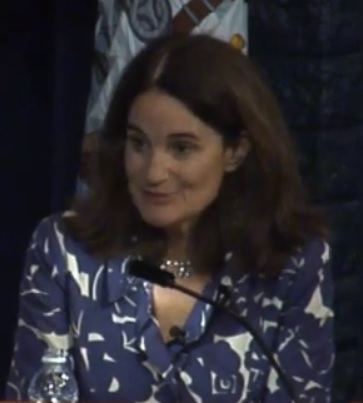
Elizabeth EconomyDan Wang
These two authors were listened to because of their similarities and differences about America’s and China’s political/economic systems. They show some similarity that reinforces their arguments about America’s and China’s economies. Ms. Economy was born in America while Wang was born in Canada. Wang’s parents fled China just before he was born. Ms. Economy is an American political scientist, foreign policy analyst, and noted expert on China’s politics and foreign policy. Wang, as a son of Chinese parents, is a Canadian technology analyst and writer. Ms. Economy is a co-chair of a program on the US, China economic/political studies at the Hoover Institution. Wang is a visiting scholar and a research fellow at the Hoover Institution.
America/China-Worlds Apart?
These authors analytic approach to the political economy of America and China are viewed from different perspectives. Ms. Economy approaches the Chinese economy from a governance and global strategy perspective, while Mr. Wang views America’s and China’s economies from a technological and manufacturing perspective.
Ms. Economy explains how Xi has centralized power that is reshaping China’s institutions and extending China’s global influence. Xi recognizes a level of greed and corruption that infected communist functionaries and began firing many of the party leaders to restore his vision of the ideals of communism. In contrast, Wang focuses on an engineering mentality of Chinese governance and its strategy to make China the most powerful nation in the world.
Example of China’s largest production automobile, the BYD.
Ms. Economy shows strategy is not enough to make China, or for that matter, America great. She notes great advances China has made but criticizes the quality of China’s industrial production, i.e., particularly an auto industry that has become the largest in the world but with many product features that fail its buyers. There are safety, quality, durability, and reliability criticisms of China’s cars. BYD is one of China’s strongest brands. As an example, China recalled an estimated 110,000 electric vehicles due to battery defects. In 2024, 32 million vehicles have been produced in China. Its closest competitor is America which only produced an estimated 10.5 million vehicles.
Both authors agree that China is a deeply state-driven economy. However, Ms. Economy suggests China’s strengths and weaknesses are based on political ideology while Wang argues it is because of China’s focus on engineering and technology. This seems a “Potato-Pototo” argument that leaves a reader feeling there is little difference, i.e., China’s power and growth is limited by its system of governance with technology being only a part of its strength and weakness. The same is true of all forms of government, including democracy.
Ms. Economy notes the fragility of China’s authoritarian political power that refuses to allow openness to citizen opinion about new projects or ideas that change their lives. In contrast, Wang notes America’s failure to capitalize on engineering and the capitalist capabilities of America’s economy because of too many lawyers. Wang explains America’s resistance to economic growth is constrained by a lawyer mentality of “not in my backyard”. In contrast China’s economic growth ignores human impact of projects (like dams) that displace millions of Chinese citizens without political voice. Both authors seem correct with the implication of a solution that is within the capabilities of both systems of government, i.e., China should become more concerned about its citizens welfare and America should invest in public works that benefit all Americans.
The two authors see different solutions for America’s and China’s quest for world influence. Ms. Economy argues America needs to compete with China’s global ambitions by using some of the same financial and political investments that demonstrate the value of capitalism over authoritarianism. Wang agues engineering, manufacturing, and industrial capacity must be reinvented in the U.S. Some may argue that is what Trump is trying to do but many would argue he fails to make a distinction between technological growth and polluting industrialization. Both America and China need to change. Both are making authoritarian errors that are unnecessarily threatening world comity, human progress, and the potential for peaceful coexistence. This seems simple on its face but hard in reality.
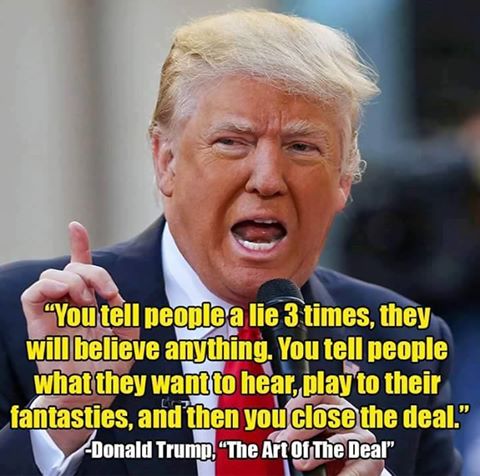
“Power tends to corrupt, and absolute power corrupts absolutely”. President Trump exemplifies that truth.
Books of Interest Website: chetyarbrough.blog
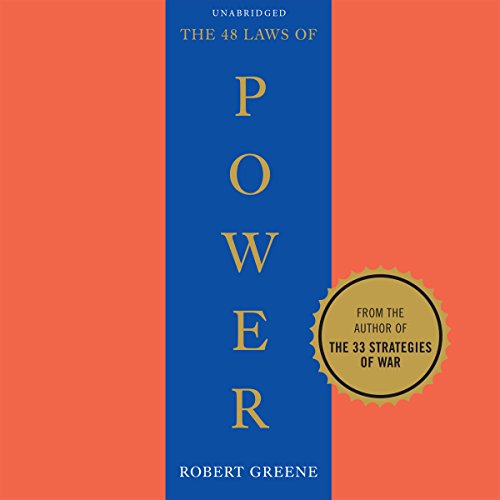
48 Laws of Power
Author: Robert Greene
Narration by: Richard Poe
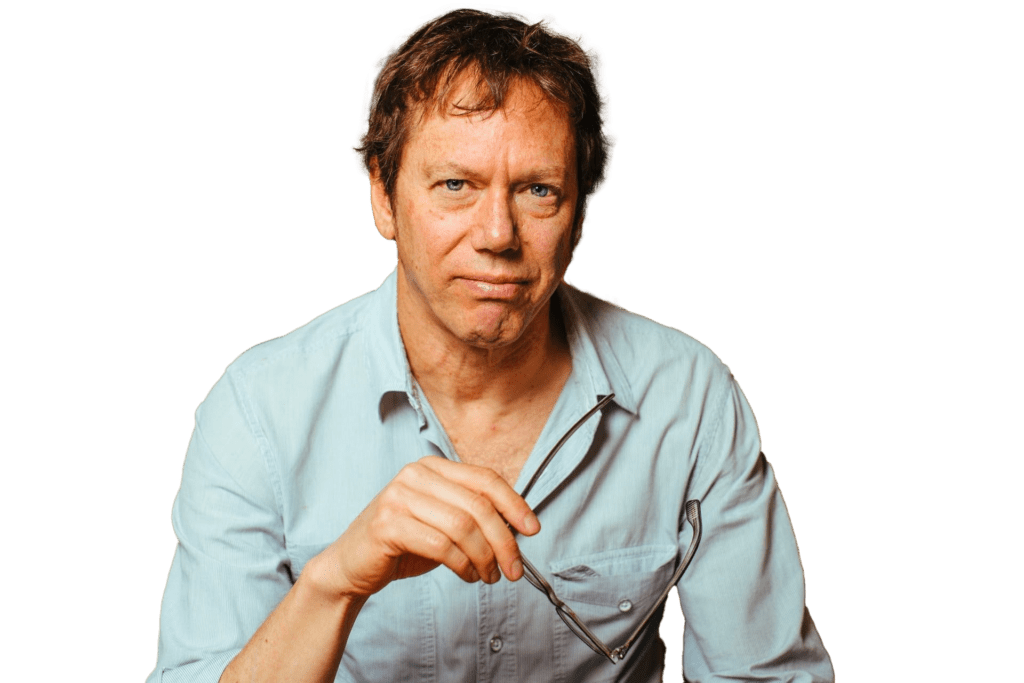
Robert Greene (American author, wrote seven international bestsellers, received his degree from University of Wisconsin-Madison in classical studies.)
This is a long book that shows a breadth of understanding about the history of power. How power and influence is acquired and wielded by human beings. Power and influence ranges from idealism to pragmatism to nihilism. In some sense, the “48 Laws of Power” is a study of emperors, courtiers, generals, con artists, and others who acquired power over others in history. What Greene reflects on is the social and human art of gaining and wielding power over other human beings. Whether one is low or high in the hierarchy of humanity, the general key to having power according to Greene is “never outshine superiors” but “always court attention that gains either respect, influence, or control of others”.
STALIN MAO ZEDONG (1893-1976)ING FATHER OF PEOPLE’S REPUBLIC OF CHINA)Kim Jong-un (CURRENT -DEAR LEADER-OF NORTH KOREA)
Greene brilliantly summarizes many characteristics of leaders in history to support his fundamental beliefs about power. He suggests all humans are primarily self-interested. One may disagree with that belief as a universal truth because there are many examples of social cooperation to achieve a common good or a stable system of governance. However, there is always a prime mover, a powerful person behind the scenes who drives the effort to succeed or fail.
Greene argues power is the result of interpersonal relationships. There is a great deal of truth in Greene’s analysis of power but from an institutional or organizational point of view, power is spread among departments’ leaders who report to a single leader. This is not to contradict Greene’s examples of interpersonal power but to temper belief that all power rests with one wielder of power. There is a great deal more to power than individual human manipulation. Organizations of the modern world are built around individual departments with singular powers beyond singular organizational leaders.
American Capital.
To give an example: regardless of who is President of the United States, there are Constitutional and legal systems that constrain his/her power. The bureaucracy of governance operates within rules set by law and precedent. In the case of business enterprise, shareholders, boards, and regulatory frameworks diminish the power of its executives. Further, even in the marketplace of business, capital limitation, supply chains, national platforms like Google, Amazon, and credit card companies have major influences on power exercised by any singular entity. Power in every human organization is also influenced by religions, social myths, and societal norms.
In this increasingly interconnected world, power has become impersonal, sometimes structural and emergent in ways that are non-intentional but significantly more powerful than one individual.
The weakness of the “48 Laws of Power” is that it fails to address institutionalized power that multiplies the power of individuals. A leader of a government or corporation works within a framework of historically developed departments that have their own powers and influences on public and private functions. The dynamics of power Greene explains apply within departments of government and corporations that go beyond the power of one leader.
This often leads to unintended consequences. ICE and Trump’s power are a current example of unintended consequence because of the murder of two Minneapolis American citizens who demonstrated against the President’s immigration policy. One doubts that the President of the United States wishes for the murder of American citizens who disagree with his immigration policies. However, power of the individual still matters as is demonstrated by today’s American President. Greene precisely explains how one person gains power over another despite a modern world that complicates individual power.
ICE murder of American citizens in Minneapolis who are protesting Trump immigration policy.
President Trump demonstrates his power over education, government employment, health and human services, birth control, and immigration policy. However, both good and bad government policy is magnified by Departments of Government that report to the President, i.e., bad policy coming from a President’s power is only made worse through implementation by subordinates who create their own power structures.
It is not that Greene’s analysis of power is wrong but that it applies to individual relationships without addressing distortions of power exercised by departments of business and government that have developed their own hierarchies of power.
One doubts any President of the United States who orders elimination of illegal immigration wishes to have ICE agents murder American citizens. This is not to absolve President Trump but to suggest the ICE employees on the ground bare the weight of two unjustified murders in Minneapolis.
Greene’s explanation of power is spot on, but it is about every person’s rise to power, not the reality of one leader’s power. Organizations are made up of many other managers using the same laws of power as their presumed superior. The end result is a level of unintended consequence. Or as Lord Acton noted: “Power tends to corrupt, and absolute power corrupts absolutely”. President Trump exemplifies that truth.
Though Mahbubani’s book is quite provocative, it is short and interesting. “How the West Lost It” is certainly worth reading/listening to, but few Presidents of the United States have reversed the admittedly slow improvement of “equality of opportunity” in America.
Books of Interest Website: chetyarbrough.blog
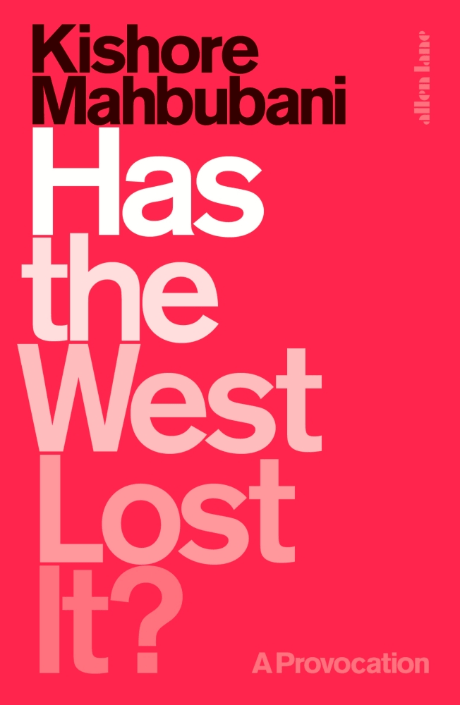
How the West Lost It (A Provocation)
Author: Kishore Mahbubani
NarratedBy: Jonathan Keeble
Kishore Mahbubani (Author, Singaporean diplomat and geopolitical consultant, former Fellow at Harvard University’s Center for International Relations, formally served as the United Nations Security Council President.)
Mr. Mahbubani’s short book suggests the highly provocative belief that the West’s dominance of the world is giving way to Asia, particularly China and India. To mitigate the West’s decline, Mahbubani argues–the West needs to develop a more “coherent and competitive global strategy”. Paul Kennedy of Yale University praises Mahbubani’s assessment. The public commentator Fareed Zakaria endorses Mahbubani’s belief, and Hilton Root of “The Independent Review” acknowledges Mahbubani’s inference that “the West’s overperformance was a historical aberration and the East’s rise reflects a rebalancing of history”. Despite Root’s measured support of Mahbubani’s book, his analysis is nuanced. Root argues the decline of the West is oversimplified and that Mahbubani underestimates the resilience of Western economies.
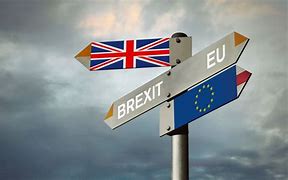
Mahbubani argues Great Britain’s Brexit and Trump’s re-election are reactions to the West’s economic decline.
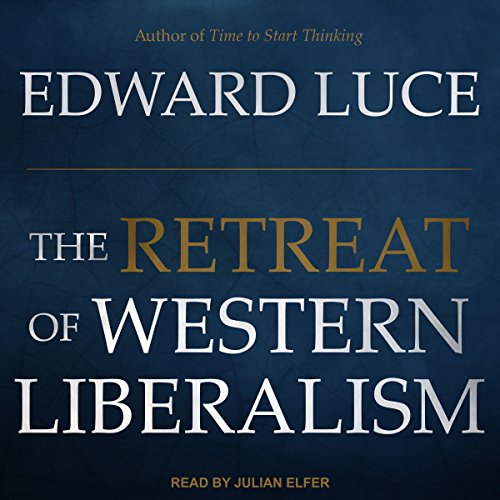
Edwad Luce argues Western liberalism needs to be reinvented by investment in a technological revolution for all Americans, not just those who have benefited from the industrial revolution. However, China seems to have read the future better than the West by building up their reserves of rare metals needed for advanced computer chips. In contrast, President Trump chooses to antagonize allies as well as competitors with a foolish trade war.
Root believes the innovative capacity and adaptability of the West will make adjustments to remain competitive, if not the dominant economic power of the world. Trump’s trade war suggests otherwise. Trump’s attitude is to ignore the years of built-up trust with Western allies and attack the world with destructive economic tariffs meant to right wrongs that are figments of real-politic’ imagination. However, some believe Mahbubani discounts political freedom and the drive of both the West and East to improve citizens’ living standards. That seems somewhat plausible, but Trump is attacking Americas most highly regarded universities with specious concerns with what he considers overactive recruitment of immigrants and minorities. The truth is American education for immigrants aids the strength and influence of Democracy in the world.
Yale University (American education for immigrants aids the strength and influence of Democracy in the world.)
The long cultural, educational, and technological influence of the West may be diminished by some of today’s political leaders but the trend over the last 200 years is unlikely to be reversed by Trump’s misguided authoritarianism. Trump’s significant risks are partially mitigated by publicly ingrained western democratic values. Though democracy is messy, it has demonstrated long-term stability and innovation that equals or exceeds the worst of what Trump’s authoritarianism is doing to the American economy and its institutions. Three more years of Trump’s presidency will not erase America’s legacy or destroy its future.
Though Mahbubani’s book is quite provocative, it is short, impactful, and interesting. “How the West Lost It” is certainly worth reading/listening to, but few Presidents of the United States have reversed the admittedly slow improvement of “equality of opportunity” in America. Mahbubani argues for a more diplomatic American policy with rising nations in the East because he believes China will ultimately replace America as the leading economy in the world.
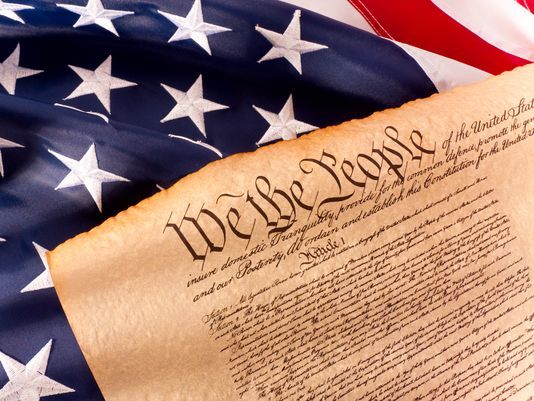
The interpretation of the Constitution has changed over the last 200 years, but it stands for continuity for America’s present and future.
The direction of American society remains true to the fundamental beliefs of liberty, equality, sovereignty, rule of law, separation of powers, federalism, checks and balances, and individual rights. Trump is challenging some of those rights, but balance of power and term limits will ultimately rescue America from his misbegotten domestic and international blunders. These rights have been challenged at different times in America’s history but never permanently reversed.
It is ironic that Trump has suffered so much from America’s legal system and is unable to see NIMBY mentality and a return to the past will not “Make America Great”.
Books of Interest Website: chetyarbrough.blog
Breakneck (China’s Quest to Engineer the Future)
Author: Dan Wang
NarratedBy: Jonathan Yen
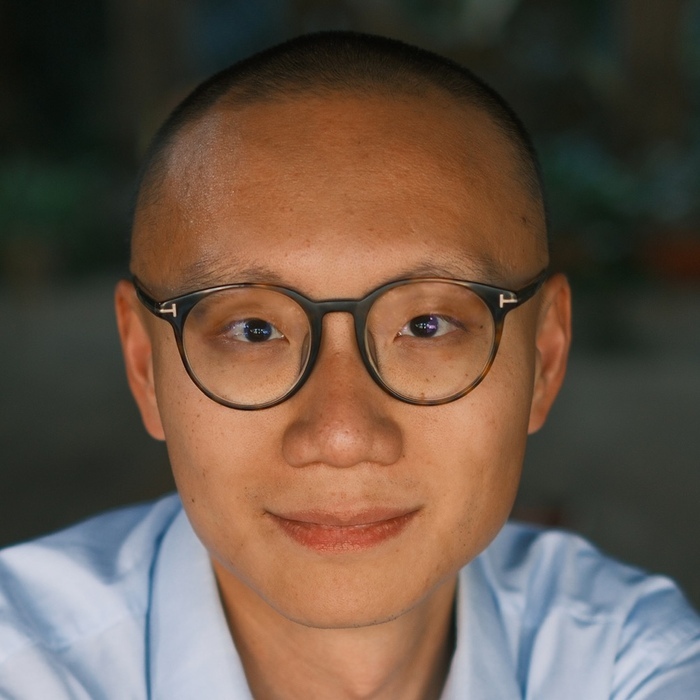
Feng Chen Wang aka Dan Wang (Author, Canadian technology analyst and writer, visiting scholar at Yale Law School.)
Dan Wang is a highly credible author of the 21st century economies of China and the United States. Mr. Wang’s mother and father were born in China when the one child policy was the law of the land. Mr. Wang was born in Canada in either 1991 or 1992. Though Mr. Wang may be an only child, his parents advised him that living in China was challenging because of its state control and family planning that restricted their human rights.
Dan Wang has lived in Canada, America, and China.
From 2017 to 2023 he worked as a technology analyst in Hong Kong, Beijing, and Shanghai. As a young man, Wang bicycled across China with young friends. Having been educated in Canada and the United States, growing up in Toronto and Ottawa and going to high school in Philadelphia, he has a broad understanding of the economies of all three nations. Of course, his specialty is technology which gives him a unique understanding of what is happening in America and China today. He graduated from the University of Rochester in 2014, studying philosophy and economics.
Trump’s apparent view of Xi.
After listening to Wang’s book, one begins to understand why President Trump’s perspective is that the world, with emphasis on China, has taken advantage of America’s economic wealth by eviscerating its industrial industries with less expensive product made in other countries. Wang presumes as a person who has an economics education that Adam Smith (the Father of Economics) and Donald Trump are right when they argue tariffs are justified in areas of national defense, or for retaliation. On the other hand, Adam Smith, noted “It is the maxim of every prudent master of a family, never to attempt to make at home what it will cost him more to make than to buy.”
Adam Smith (Father of Economic Theory)
Smith argued if another nation can provide the same product for less cost, a prudent buyer should buy the cheaper product and use money saved to produce a different product. Wang and Trump disagree with Smith because the revenue producer that America turns to is the service industry rather than product development. What is missed by Wang and Trump is that America is the third largest agricultural producer in the world with China and India being the largest. Of course, the difference is that America has 1/3rd the population of China and India, respectively. Lower population and high agricultural production in the United States hugely benefits its economy. More significantly, food, like water, is an essential need of life. The point is that non-food product production is not necessary for living life.
Loss of industrial production to China.
Wang’s and Trump’s argument is that America’s loss of industrial production has made it too dependent on other countries. They either infer or say Americans are forgetting how to manufacture product. They argue American industries are closing because of America’s inability to compete with other nations because of labor and material cost differences. History shows America fails to expand its industries because production of things is provided by other nations at a lower cost. And as Adam Smith noted, “It is the maxim of every prudent master of a family, never to attempt to make at home what it will cost him more to make than to buy.”
Wang decries America’s movement toward a service industry as the basis for economic growth.
America is the richest country in the world, but America has failed to eliminate poverty, house the homeless, feed the malnourished, and provide for the infrastructure needed to improve America lives. One may ask oneself-what is wrong with becoming a service industry nation? Why does America have to return to its past. As Adam Smith noted: “It is the maxim of every prudent master of a family, never to attempt to make at home what it will cost him more to make than to buy.” The future is about being healthy, being housed, fed, and clothed. It should not be about being the richest and fattest minority in the world, particularly when there is an inordinate gap between the rich and poor.
Wang argues America’s economy is diminished, not by reduced industrialization, but by its growth of legalism that reinforces nimby (not in my backyard) litigation.
Delays in public improvements in America are restrained by lawsuits that protect the rich and victimize the poor. An example is the long delays in mass transportation improvements which become more costly with every year that passes before completion. The delays are caused by litigation. When China can build rapid transit in 3 years while it takes 15 or more years in America, one wonders why. The huge investments China has made in massive infrastructure improvements have vastly improved their economy. In contrast, America wastes investment resources litigating mass transportation improvements in California, Washington, and other states by increasing costs from delays caused by litigation. It is like throwing the baby out with the bath water because the number of people who benefit from infrastructure improvement are largely discounted or ignored. Equally appalling is homelessness in America because of NIMBY’ objection to low-cost multifamily housing that could get the homeless off the street. Cost benefit analysis should prevail, not litigation based on interest group objection. In Wang’s terms, American infrastructure decisions should be based on science and engineering like, what he argues, China bases their infrastructure decisions upon.
The fundamental point is that America has lost sight of the importance of a balance between benefit to the public and individual rights. Equality of opportunity is split between the rich and poor with the middle class being too complacent while the rich reap unconscionable reward. Where are the Eisenhower-like Presidents who promoted an Interstate Highway System that created a 421,000-mile interstate highway system?
Trump is no Eisenhower because he wishes to return America to a past rather than look to its future. It is ironic that Trump has suffered so much from America’s legal system and is unable to see NIMBY mentality and a return to the past will not “Make America Great”. Wang’s book explains how China has succeeded in improving their economy while America’s economy is failing.