Men and women are different just as races and cultures are different. The key to human progress is equality of opportunity, regardless of gender, race, or culture.
Angela Saini (Author, British science journalist, reporter for the BBC, written articles for The Guardian, New Scientist, and Wired UK.)
Angela Saini’s book challenges while clarifying the argument that male dominance is grounded in the history of human society. She illustrates how cultures varied in their belief and practice of sexual hierarchy but generally were more patriarchal than matriarchal. Archeological evidence suggests gender relations varied. The fact that such evidence is based on fragmentary archeological evidence and the vagueness of interpretation weaken arguments of either sexes’ superiority. Nevertheless, Saini’s research shows most societies have patriarchal tendencies rather than either equal or matriarchal societies. Her history is well documented, but it is a bit tiresome. Because of her research, and the length of her book, one gets the feeling she narrows her thinking to evidence that only supports a preconceived opinion.
Saini notes cultures in northeast India, an area of China, and the North American’ Iroquois and Shoshone seem to show patriarchy takes a backseat to women’s preeminent role in society. She also notes evidence of bonobo primates that are female that show dominance of their species despite strength differences between the genders. This is credible research that suggests gender strength is not the determinate factor in superiority.
Women were found as capable of tending to the farm as men during the agricultural revolution; particularly as mechanization became the hallmark of production. In general, Saini’s book fails to recognize belief in superiority is not the cause of gender discrimination. Power structures in communities and nations whether capitalist or communist are not determined by gender differences. Male or female superiority is not a matter of gender equality, but opportunity inequality. Even though male superiority is obviously false, opportunity inequality shows most societies make it appear true.
Male and female are complementary sexes that are different in their own ways. Both sexes have the capability of being either workers or leaders or whatever a nation needs as long as each has an equal opportunity to be what they choose to be.
Equality of opportunity, whether it is about race or gender, is the gold standard of human equality and achievement. Historians who identify the ills of society based on gender miss the fundamental point of life which is, as the U.S. Army’ slogan once said, “Be All That You Can Be”. Social organizations that get in the way of that goal diminishes human value and interferes with human progress. Men and women are different just as races and cultures are different. The key to human progress is equality of opportunity, regardless of gender, race, or culture.
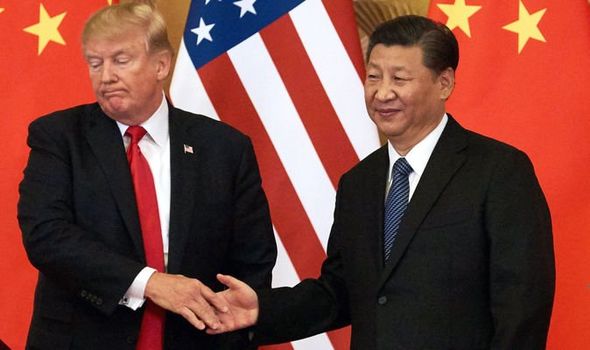
There is an ongoing hybridization of American capitalism and Chinese communism. Is Trump’s authoritarianism becoming more like Xi’s communism or Xi’s authoritarianism becoming more like Trump’s capitalism? One wonders–are we growing closer together or farther apart?
Books of Interest Website: chetyarbrough.blog
House of Huawei (The Secret History of China’s Most Powerful Company)
Author: Eva Dou
Narration by: Nancy Wu
Eva Dou (Author, American journalist who reports on technology for The Washington Post.)
“House of Huawei” is a complex history of the growth and development of what became a Chinese multinational technology company that builds smartphones, laptops, smartwatches, and most importantly, telecom infrastructure for cloud services around the world. It is China’s version of Amazon that becomes a massive seller of tech equipment, internet use, and communication.
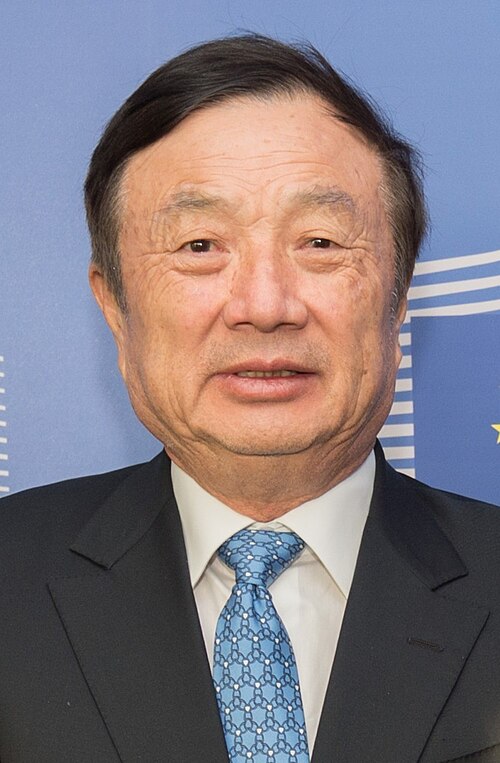
Ren Zhengfei (Chinese entrepreneur and engineer, founder of Huawei Technologies.)
There are many names of Huawei business leaders that are largely unknown to most Americans. Ren Zhengfei is the founder and most important person in Dou’s story. He is born in 1944 to schoolteacher parents during the Cultural Revolution. He served in the Chinese armies engineering corps that shaped his management style. He worked through famine, political purges, and the strict discipline of military service. He became the founder of Huawei in 1987.
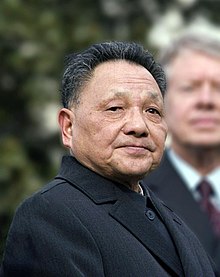
Deng Xiaoping (China’s Chairman of the Central Advisory Commission of the Chinese Communist Party, 1982-1987)
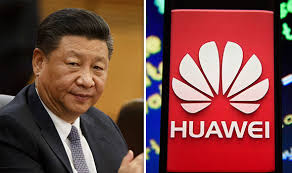
The advance of Deng Xioping opens a capitalist door to the world for Huawei. Beginning in 1978 through 1989 Deng reforms the communist party and encourages a limited form of capitalism in China. When Xi takes over, Huawei becomes more directly subject to communist party oversight. As a company, Huawei is pulled closer to China’s government control. The Huawei network is classified as a national-security asset. Though Huawei may or may not have sought closer association with the CCP, it became entangled with state strategy.
Xi makes Huawei a national champion of innovation and semiconductor technology. It becomes a symbol of China’s technology ambitions while being a target of U.S. sanctions. Dou shows Huawei becomes a battleground for tech strategy between China and the Untied States
Sun Yafang (Chinese engineer and Chairwoman of Huawei, 1999-2018.)
Sun Yafang is a former chairwoman of Huawei. Her ties to Chinese intelligence services are viewed as a recurring controversy with Huawei’s involvement with America. Her relationship with China’s state power structure creates concern on the part of the U.S. with Huawei’s data collection as a part of Huawei’s practices in America.
Meng Wanzhou (aka Cathy Meng or Sabrina Meng, Deputy Chairwoman and CFO of Huawei.)
Ren’s daughter, Meng Wanzhou, becomes the Chief Financial Officer of Huawei. Wanzhou became known to the world when she is detained in Canada in 2018 at the request of the United States. Her arrest ironically leads to more familiarity with Huawei and its expansion in the world. The primary concern the author reveals is how dependent Huawei may be on the Chinese government for information about America’s technology services.
The fundamental concern of America, Germany, and Japan is Huawei’s use of data collection in their countries.
In the end, these countries decide to ban or restrict the use of Huawei’s equipment because of their ties to the Chinese Communist Party, government, and military. Beginning in 2019 the U.S. banned some of Huawei’s services and global chip supplies. By 2026, Huawei is banned from American federal networks, and telecom infrastructure services. Germany and Japan take similar actions between 2018 and 2026.
Dou explains Huawei’s history exposes deep contradictions with China’s government-directed economic growth.
The authoritarian and state-directed economic and political structure of China is a challenging contradiction to the idealism of communism. China’s communism is compelled to change ideologically from Marxism-Leninism to a state-directed form of capitalism. Huawei becomes a telecom giant euphemistically called socialism with Chinese characteristics. In truth, Huawei is structured to be more capitalist than communist with interventionist potential by the state if it conflicts with centralized control of the party.
Communist captitalism.
Dou explains how Party committees are created within Huawei’s management system. These committees exercise ideological control over Huawei’s executives. Huawei’s objectives are required to conform to national priorities. The development of 5G and telecom infrastructure becomes a national, not private asset of the company. This generates fear in the U.S. about security liabilities and foreign influence of China on U.S.’ and allied countries’ political and/or economic affairs. Dou notes China’s leadership insists on enforcing its security laws, data practices, and CCP’s rules of the road for Huawei’s operations.
Huawei discipline.
Dou notes that Xi’s anti-corruption campaign pressures Huawei to tighten internal governance. Executives of Huawei were disciplined for being too extravagant. The CCP organized ideological training for company employees to more fully align them with the Party. China’s government interference in Huawei’s management leads to U.S. sanctions and an arrest of Meng Wanzhou’s in Canada. The United States has effectively banned Huawei telecom and surveillance equipment. Federal agencies cannot use Huawei devices. American internet companies in the U.S. that receive federal funds must remove Huawei equipment. Though Huawei phones and laptops are not banned in the U.S., they are not sold by major U.S. carriers or retailers. The UK, Germany, France, Japan, Australia, and Canada have taken similar actions against Huawei services. Huawei product like laptops and mobile phones are not universally banned but many Western countries have barred telecom infrastructure because of national security concerns.
What is striking about Dou’s book is the history of Huawei shows both confluence and separation between Communism and Capitalism.
Both use the capitalist tools of competition, private enterprise, and global markets. Both are involved in the private sector and provide preferential treatment, political protection, and financing. Nationalism is a greater force than Marxism for both China and the U.S. American corporate discipline is similar to communist party discipline. Further, economic and political strategies of America and China have similarities. However, the two cultures conflict with each other over globalization and levels of interference or control of private companies. America leans toward transparency, partnership, open markets, and international trust. China opts for secrecy, political reliability, ideological conformity, and oversight to ensure national security. Furthermore, America thrives on risk-taking, experimentation, a free market and decentralized decision making while China emphasizes political correctness, Party control, ideological discipline, and insistence on corruption elimination.
In sum, it seems there is an ongoing hybridization of both American capitalism and Chinese communism. Is Trump’s authoritarianism becoming more like Xi’s communism or Xi’s authoritarianism becoming more like Trump’s capitalism? One wonders–are we growing closer together or farther apart?
Like American capitalism, Chinese communism has its faults. One big difference is American capitalism offers a higher level of individual freedom with legal rights to defend oneself in a court of law (that is, of course, if you are not an immigrant).
Books of Interest Website: chetyarbrough.blog
Red Roulette (An Insider’s Story of Wealth, Power, and Vengeance in Today’s China.)
Author: Desmond Shum
Narration by: Tim Chiou
Desmond Shum (Author, born in Shanghai in 1968, former Hong Kong businessman who lives in the UK. with a son born in the U.S.)
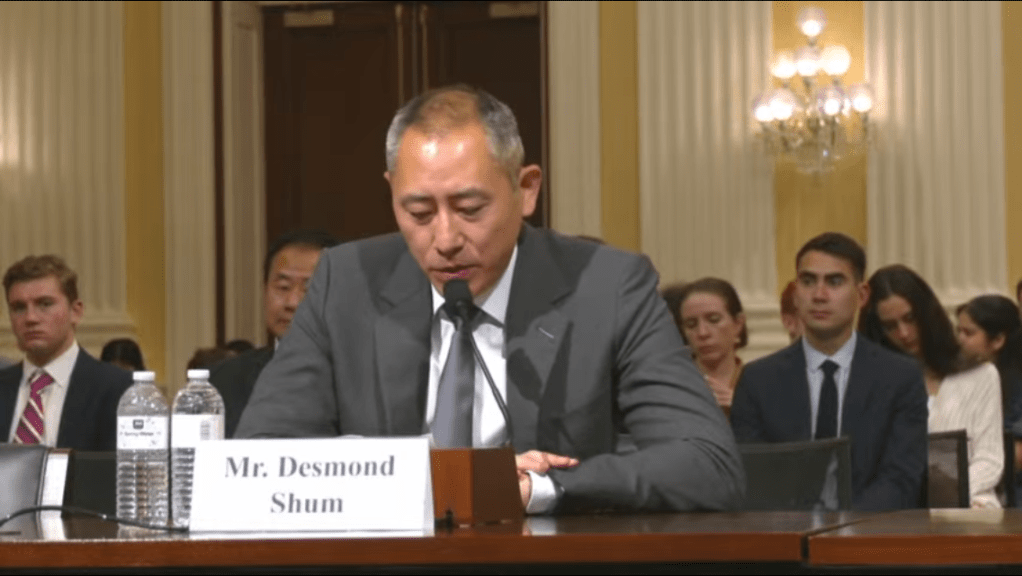
“Red Roulette” is an amazing personal story of a former Chinese citizen who marries a successful Chinese woman, Whitney Duan. She is disappeared by the Xi government in 2017. Shum and Duan were married from 2004 to 2015. His wife’s fate is unknown to Shum as he writes this book. Amazingly, Ms. Duan calls Shum four years after she is disappeared by China to ask him to not publish his book. Shum believes this is the first public contact by Duan since her disappearance in 2017.
Ms. Duan had chosen to capitalize on a system of doing business in China the way it had been done for many years. That system is riven with a kind of societal corruption revealed in “Red Roulette” that has grown with communism in China.
Desmond Shum reveals surprises to many Americans about China’s culture. Despite a presumption of many non-Chinese, Shum explains power is personal, not institutional in China. One might presume that CCP’s control of wealth and power in China comes from the party and its leaders. However, wealth in China is only influenced by the communist government through a social network of beliefs. Shum explains personal relationships and connections are built on favors, gifts, and mutual obligations that are debts that carry the reality of power in China. This explains the title of the book “Red Roulette” in the sense that success in Chinese society is a game of chance based on bets placed on the value of favors, and gifts that CCP members believe have worth.
Debt for favors and gifts is in the eye of the beholder which makes fair payment a mysterious and chance driven calculation. Adding to that complexity is the power of a CCP leader to erase a citizen socially, legally, and economically. By erasure, Shum explains citizens may be detained, prevented from family contact, denied legal representation, arrested, impoverished, and isolated from any social contact. Shum explains his ex-wife, Whitney Duan, vanished for years with no charges, no trial, and no record of her disappearance.
Xi Jinping (Leader of the CCP in China.)
The CCP elite govern China through relationships among themselves, not by official meetings or party leadership orders that are necessarily based on definable communist dogma. Everything happens behind the scenes. Official meetings, if there are any, are strictly “for show”. Shum’s admits in his personal story that he and his ex-wife became wealthy through a corrupt relationship with Zhang Beili, one of the CCP apparatchiks and power brokers. One may argue the CCP is similar to the Congress of the United States. Wealthy capitalists, like CCP apparatchiks, game the stock market and society through political connection with elected government officials
Deng Xiaoping launched an initial shift away from Maoist central planning despite ordering the crackdown on Tiananmen Square in 1989.
As somewhat of a realist, one understands governance is based on leaders presumed power, wealth, and political influence. Shum argues China’s economic modernization and capitalism began with Deng Xiaoping who rose to power after Tiananmen with Hu Jintao continuing China’s economic boom. Shum argues today’s Xi is increasing control of the CCP and the economy with the traditions of Chinese society. In the author’s opinion, China is reinstituting a Mao-style autocracy that is spreading fear across the country.
In fairness to Shum’s assessment of China, there is evidence of America’s slip into autocracy in today’s economy.
Shum believes Xi Jinping’s CCP anti-corruption campaign is only a pretext for power consolidation. In Shum’s opinion, Xi’s targeted removal of CCP apparatchiks is not because of their corruption but because they rival his power over the party. Xi’s campaign on corruption increases fear among CCP members and influencers that reinforce traditions of China’s rule by personal relationship and connection. Xi’s goal is to increase personal loyalty to himself which is part and parcel of the history of Chinese social norms. Shum’s evidence of corruption is the increase in disappearances, secret detentions, arrests of businesspeople without charges, and insistence on what is characterized as party discipline.
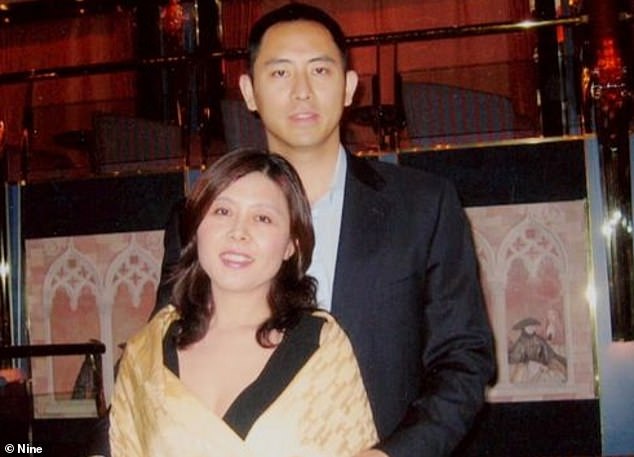
Whitney Duan and Shum when they were married.
Whitney Duan’s disappearance is Shum’s primary example of Xi’s Chinese governance. Duan is characterized as ambitious, brilliant, and determined. Her rise to power in Chinas is from close relationships she develops with people who have influence in the communist party. She befriends Zhang Beili, the wife of the Vice Premier of the CCP, Wen Jiabao. Because of that association, Duan has privileged access to information about land deals and major real-estate projects in China. She uses that information to make deals with advanced knowledge that result in great economic wealth for her and her former husband. Shum marries Duan and they both capitalize on insider information they gain from Duan’s relationships. One presumes the marriage ends because of the stresses and political dangers involved in their common business interests.
The quality of Kafka’s story in “The Trial” is the human desire for freedom that is not extinguished even in the darkest times of a country’s repression. This is a hope one presumes for both China and America, but human nature gets in the way.
In 2017, two years after the author’s divorce, Whitney Duan disappears. There are no charges, no trial, no public disclosure, and she is unable to contact any of her family including the son she has with Shum. No one knows if she is dead or alive. The state refuses to say she has been detained. One presumes, she is arrested because of Xi Jinping’s anti-corruption campaign and his purge of some party members like Wen Jiabao. Interestingly, just before the book is to be published, Whitney Duan calls Shum to ask him not to publish. Obviously, she is alive.
One big difference between American capitalism and Chinese communism is a higher level of individual freedom with legal rights to defend oneself in a court of law (that is, of course, if you are not an immigrant). That is a significant difference between China and America. However, both countries are impacted by bad actors that game the system based on personal relationship and influence with political leaders.
On the one hand, this story reinforces belief that Xi is trying to reform the CCP. On the other, the methodology of autocracy offers no defense against the injustice of being condemned without trial.
One concludes Whitney Duan lost in the game of Chinese Roulette by being part of a relationship that gave her inside information from the CCP. Her disappearance is proof of the theme of Shun’s book about the importance of relationships and connections to gain power and financial success in Chinese society. Like American capitalism, Chinese communism has its faults.
Roth shows acculturation is both an opportunity and danger in “The Plot Against America”.
Books of Interest Website: chetyarbrough.blog
The Plot Against America
Author: Philip Roth
Narration by: Ron Silver
PHILLIP ROTH (WINNER OF THE PULITZER PRIZE FOR FICTION, MAN BOOKER INTERNATIONAL PRIZE AND MORE)
Roth’s “The Human Stain”, and “The Plot Against America” are troubling fictional stories of American society. Roth’s imagination seems somewhat out of control in “The Plot…” but his point is that American democracy, like all forms of government, is flawed by the nature of human beings. Popular election is no guarantee of government probity because the public is as easily led by lies as the truth; i.e., something we see in today’s American government. “The Plot Against America” creates a fictional story of the advance of a racist to the Presidency of the United States at the time of Hitler’s government putsch in Germany.
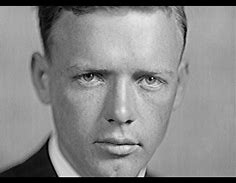
Charles Lindbergh (Famous aviator who expressed suspicion of Jews and is characterized as a supporter of Hitler.)
America had several famous supporters of Hitler’s ascension in Germany; i.e., not only Charles Lindbergh, but Henry Ford, Father Charles Coughlin, and Jospph P. Kennedy Sr., to name a few. Lindbergh believes in white supremacy but excludes those of Jewish ethnicity because he believes Jews are not a part of the American or Western racial community. He believes Jews are a separate people with separate loyalties. This conforms to Hitler’s view of German society as superior to all others. Added to Lindbergh’s racism is his belief that communism threatens individual liberty, a foundational democratic belief. Lindbergh is vociferously anti-communist even though Russia is led by white rulers. Lindbergh believes centralized state control, state suppression of dissent, and forced conformity are anti-American. This is an ironic view because Hitler insists on state control, suppression of dissent, and a forced conformity; i.e., beliefs Lindbergh infers he abhors.
Roth writes a story suggesting Lindbergh run against Franklin Roosevelt for President. Lindbergh wins in this fictional story. In truth, Lindbergh never runs for President. History actually shows the Republican party approaches Lindbergh in the late 1930s to run against Roosevelt because of his celebrity, anti-war message, and isolationist beliefs. However, Lindbergh turns the Republicans down.
Wendell Lewis Wilkie becomes the nominee for President by the Republicans in 1940. (1892-1944, an American lawyer.)
Wendell Willkie is the Republican Party’s choice for President. What makes Roth’s story interesting is his concern for loss of Jewish ethnic identity from the influence of Americanization. Two fundamental points are made in the title of the book. There is the obvious “…Plot Against America” with Lindbergh as an America candidate for President who supports Hitler. A less obvious point is Roth’s more subtle “…Plot…” by American society to diminish ethnicity. In Roth’s story, Lindbergh is elected as President of the United States.
Drawing the line between cultural disintegration and acculturation is different in an autocracy than in a democracy. A perfect democracy allows ethnicity to flourish within the boundaries of common societal norms while an autocracy demands conformity to specific societal norms that, in some autocratic countries, become demands. Roth’s point in “The Plot Against America” is that ethnic identity is a fundamental right of human beings that should not be denied by any government. This is not to say that ethnic identity is not influenced by society, but that ethnicity should only be a natural, not governmentally enforced influence. Roth’s story shows a fine line that is crossed by America in influencing Jewish culture to become less ethnic. He tells the story of a government endorsed program to offer Jewish children the opportunity to become laborers on American farms. That experience leads to a Jewish child’s exposure to eating pork which is explicitly forbidden by the Torah because it is considered unclean. Roth shows “old world” ethnic’ cautions are sometimes abandoned because of life experiences that diminsh ethnic taboos.
Discrimination based on ethnicity, race, or sex diminishes democracy.
Roth shows acculturation is both an opportunity and danger in “The Plot Against America”. One may read into Roth’s story that he regrets the Americanization of Jewish ethnicity. To the extent that the discipline of education may be harmed by acculturation, one is inclined to agree with Roth. On the other hand, ethnic identification has led to unequal opportunity based on ethnicity, race, or sex which should have nothing to do with innate capability.
This is a powerful story that shows the strength and importance of women in Iran despite their harsh and unequal treatment.
Books of Interest Website: chetyarbrough.blog
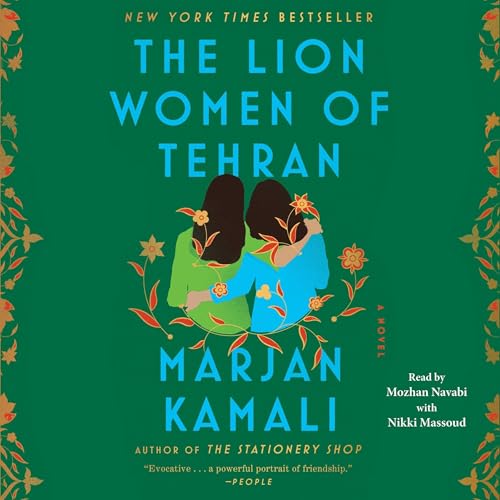
The Lion Women of Tehran
Author: Marjan Kamali
Narration by: Mozhan Navabi & 1 more
Marjan Kamali (Author, Iranian-American novelist, born in Turkey to Iranian parents, lived in Kenya and Iran before moving to the U.S. in 1982, received a BA in English literature from U. of California, an MBA from Columbia, and MFA from NY University.)
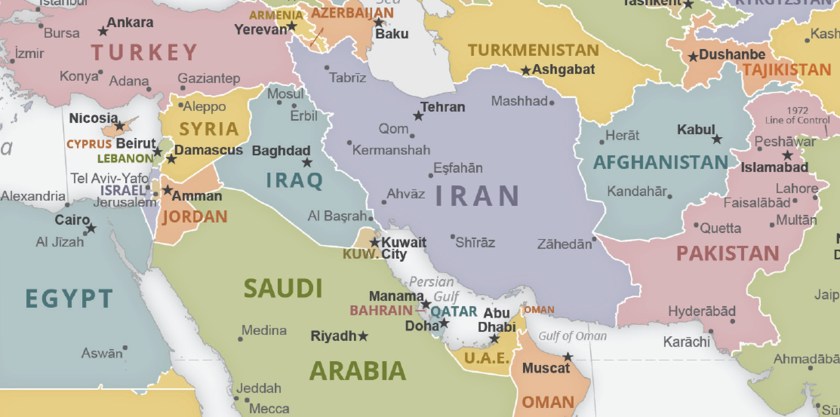
Marjan Kamali’s book is an informed fictional view of Iran in its transition from monarchy to Islamic Republic to an unknown future, i.e., a future made more complicated by America’s invasion. Its two main characters are Ellie and Homa, two pre-school children that grow to adulthood in Tehran. It is written by an author with Iranian parents that gives some credibility to her story about women in Iran during rule by a former Shah and today’s ayatollahs.
Kamali describes an upper-class Iranian family that experiences a fall from wealth and a return to the upper middle-class during the Shah’s reign. Ellie’s mother loses her husband to tuberculosis and has to leave their upper-class home because of his death. They move to a home in a lower-class neighborhood near the beginning of Ellie’s grade-school years. Ellie’s mother is crest-fallen by her move but appears to make the best of what she seems to believe is a temporary circumstance. In their fall from wealth, Ellie meets a precocious young girl of the same age. Her name is Homa.
The ideals of communism is a preferred alternative to royal leadership by some Iranians.
Homa becomes Ellie’s friend and gives one an idea of the difference between families in the 1950s that have no wealth who might challenge monarchy for a different form of government. Homa’s father believes in communism and is imprisoned by the shah for his activity.
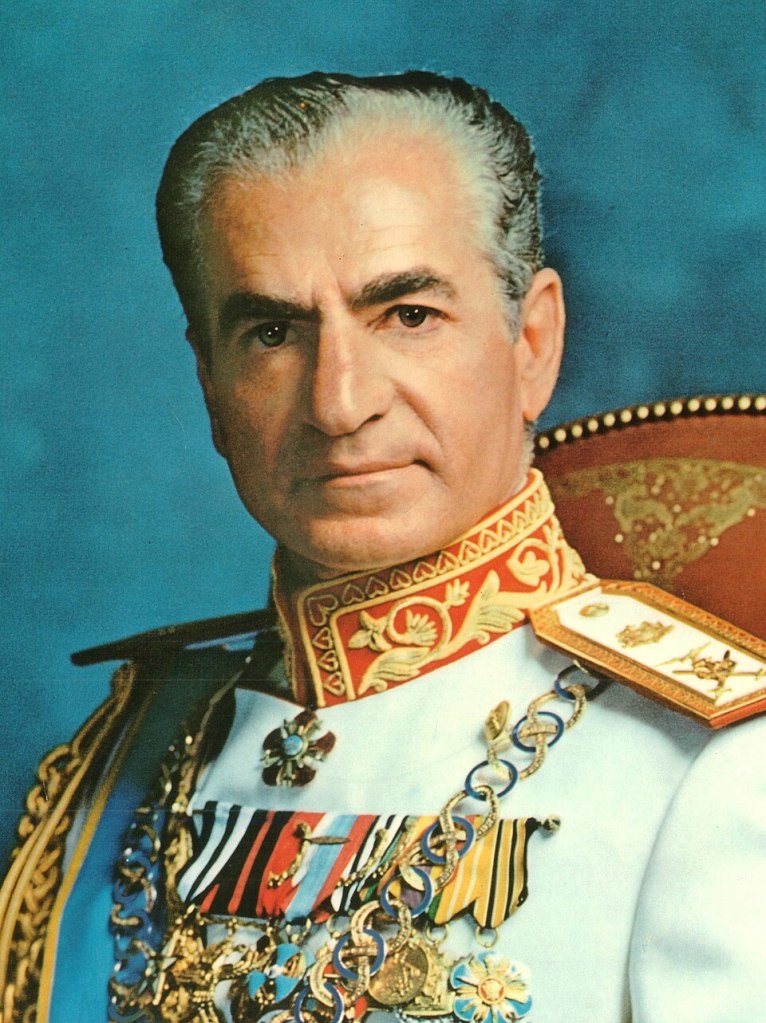
MOHAMMAD REZA SHA PAHLAVI (The deposed shah of Iran in 1979.)
Ellie, because of her upper-class upbringing, is initially reluctant to engage Homa but is lured into her orbit by her exuberant personality and Homa’s family’s friendliness. They become close friends despite their different economic backgrounds. What one gathers from Kamali’s story is an historical view of the circumstances of Iran before the revolution. Homa believes communism is a better form of government than rule by a King and chooses to follow her father’s beliefs. Homa is eventually imprisoned. However, her sentence includes being raped by her imprisoner. A daughter is born from that rape when she is eventually released. Iran of the 1950s is a country of the rich and poor with growing discontent with a monarchal government that seems to care little about the circumstances of the poor. An attempted coup in 1953 illustrates the rising dissent of the Iranian people.
Ellie’s mother remarries and returns to an upper-class life and Ellie loses touch with Homa. In the 1960s, Ellie pursues higher education and re-connects with Homa at a school that Homa attends because of her intelligence, her earned income from part time work, and help from her family that supports her interest in becoming well-educated. The renewed friendship becomes a focus of great changes that eventually lead to the 1979 revolution.
Kamali cleverly tells a story of three generations of women from Tehran who survive the 1979 revolution and the repression of the Ayatollahs in Iran. Ellie and Homa are the principal characters of “The Lion Women of Iran” but two girl descendants of Homa are meant to show the strength and continuity of Iran’s people. Whether Kamali’s fictional characters are real or not, the author’s point is that many Iranians are determined to have a country that is ruled better than by either a Shah or Ayatollah.
This is a powerful story that shows the strength and importance of women in Iran despite their harsh and unequal treatment.
One asks oneself, what leaders in the world today have remorse for the incarcerations, torture, and killings for which they are responsible? What remorse is there in Putin’s, Ayatollah Ali Khamenei’s, Prime Minister Netanyahu’s, and even our American President’s thoughts?
Books of Interest Website: chetyarbrough.blog
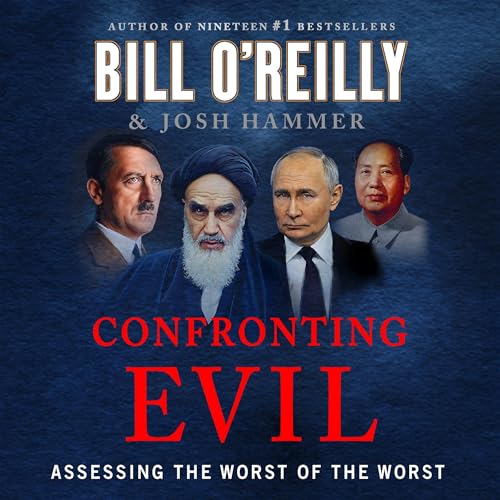
CONFRONTING EVIL (Assessing the Worst of the Worst)
Author: Bill O’Reilly, Josh Hammer
NarratedBy: Robert Petkoff
Bill O’Reilly, American conservative commentator, journalist, author, and television host. Josh Hammer, American conservative commentator, attorney, co-author, and columnist.
History taken out of the context of its time often distorts the reality of the past.
“Confronting Evil” is an interesting if not nuanced history of the most notorious leaders in the world. They were responsible for the torture, incarceration, and death of millions. As is true of most if not all histories of famous and infamous leaders, historians and pundits choose facts that reinforce their view of world’ history. Even the best historian is influenced by the time in which they write and their choice of facts.
Nathan Bedford Forest (1821-1877, General in the Confederate States of America during the Civil War.)
One is appalled by the truth of Nathan Bedford Forest’s view of slavery during America’s Civil War. Forest directed the slaughter of people based on the color of their skin. Forest condoned the murder of all who believed in equality of human beings. Forest is considered a hero to some but with the passage of time and a growing belief in human equality, Forest is recognized as a despicable human being by those who know the history of his life and profession. The evidence of science and human accomplishment show that the color of one’s skin is no measure of intelligence or capability. Forest’s mistreatment of slaves and the wealth he created from trading in slaves is reported in this history. By many measures, Forest is shown as an evil person by O’Reilly and Hammer.
The rule of Genghis Kahn is said to have caused the death of 40 million people, an estimated 11% of the global population at his time in history.
Presumed image of Genghis Kahn (1162-1227, Founder and first Khan of the Mongol Empire.)
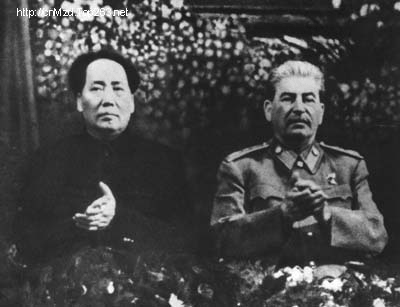
By some measures, Mao doubled that 40 million number with his “Great Leap Forward”, the “Cultural Revolution”, his labor camp creations, and political purges. Hitler is estimated to have caused the death of 17 million with his genocidal policies while casualties from WWII are estimated at 85 million. Hitler’s antisemitism is born of the same stupidity exhibited by Nathan Bedford Forest in America’s Civil War. The contribution of Jewish society to the world is incalculable.
Mao Zedong (1893-1976) Father of the Peoples Republic of China)
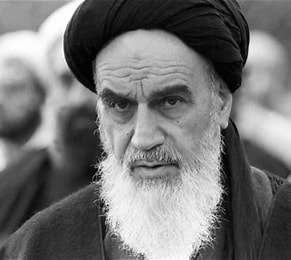
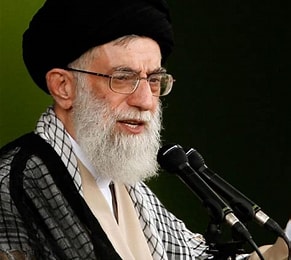
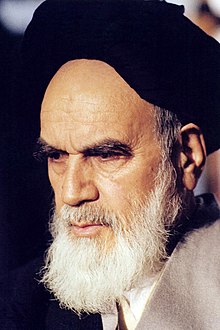
There are many other evil characters in “Confronting Evil”. In the mind of westerners, the current leaders of Iran and Russia are evil. The leader of Iran, Ruhollah Khomeini is estimated to have ordered deaths of Iranians that exceed 250,000 since his takeover in 1979. Though he has passed, the succession of Ayatollah Ali Khamenei has carried on with tens of thousands who have died in Iran’s involvement with Hamas in Palestine, Syria, Iraq, Yemen, and Lebanon. The predecessor of the religious leaders of Iran was Mohammad Reza Shah Pahlavi who reigned from 1941-1970. Pahlavi is estimated to have murdered 3,000 to 20,000 during his reign. These leaders ruled over an impoverished state but incomes per capita fell from $34,660 during the Shah’s reign to $3,150 under Khomeini’s rule. An irony is that income inequality hugely increased in Iran during Khomeini’s rule. Nuanced reality is that poverty and victimization of Iranians is more widely spread under Khomeini than under the former Shah. On an economic scale it appears Khomeini’s evil as a leader exceeds the Shah’s rule. Added to the economic difference is the religious zealotry of Khomeini which widened the gap of sexual inequality in Iran.
Ruhollah Khomeini (1st Supreme Leader of Iran, 1979-1989)
Ayatollah Ali Khamenei (Current leader of Iran.)
The authors address the illicit drug industry and the evil of Pablo Escobar in Columbia and “El Chapo” Guzmán in Mexico. Escobar was killed in 1993 when pursued by drug enforcement officers while Guzmán is serving a life sentence in the U.S. The drug industry continues to thrive despite the harm it is doing to America and the world. The leaders of the criminal drug industry care nothing for the consequence of their actions because of the wealth and power the illicit trade offers.
Pablo Escobar (now deceased) noted on the left with “El Chapo”(arrested and imprisoned in America) on the right.
The last two chapters of “Confronting Evil” offer a pithy definition of evil. Evil is defined as doing harm without remorse. One doubts any of the leaders noted by the authors have or had any remorse for the atrocities they have committed. Whether they rationalize their behavior for the good of their people, their religion, or their country—they are evil by O’Reilly and Hammer’s definition. One doubts any of the leaders noted in “Confronting Evil” are remorseful.
One asks oneself, what leaders in the world today have remorse for the incarcerations, torture, and killings for which they are responsible? What remorse is there in Putin’s, Ayatollah Ali Khamenei’s, Prime Minister Netanyahu’s, and even our American President’s thoughts?
Though Mahbubani’s book is quite provocative, it is short and interesting. “How the West Lost It” is certainly worth reading/listening to, but few Presidents of the United States have reversed the admittedly slow improvement of “equality of opportunity” in America.
Books of Interest Website: chetyarbrough.blog
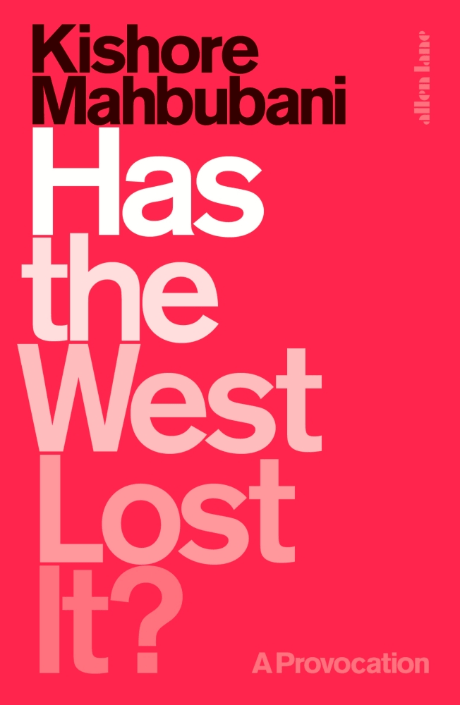
How the West Lost It (A Provocation)
Author: Kishore Mahbubani
NarratedBy: Jonathan Keeble
Kishore Mahbubani (Author, Singaporean diplomat and geopolitical consultant, former Fellow at Harvard University’s Center for International Relations, formally served as the United Nations Security Council President.)
Mr. Mahbubani’s short book suggests the highly provocative belief that the West’s dominance of the world is giving way to Asia, particularly China and India. To mitigate the West’s decline, Mahbubani argues–the West needs to develop a more “coherent and competitive global strategy”. Paul Kennedy of Yale University praises Mahbubani’s assessment. The public commentator Fareed Zakaria endorses Mahbubani’s belief, and Hilton Root of “The Independent Review” acknowledges Mahbubani’s inference that “the West’s overperformance was a historical aberration and the East’s rise reflects a rebalancing of history”. Despite Root’s measured support of Mahbubani’s book, his analysis is nuanced. Root argues the decline of the West is oversimplified and that Mahbubani underestimates the resilience of Western economies.
Mahbubani argues Great Britain’s Brexit and Trump’s re-election are reactions to the West’s economic decline.
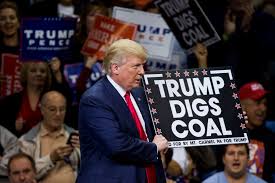
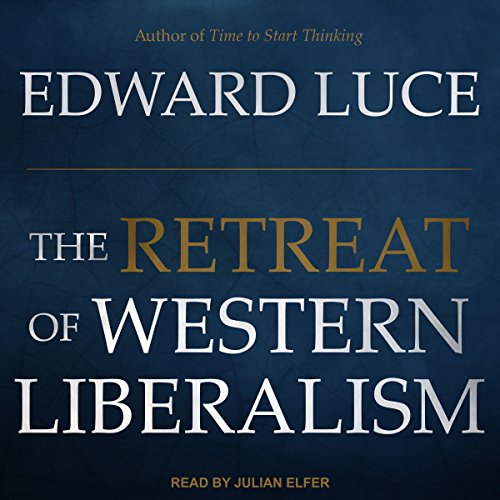
Edwad Luce argues Western liberalism needs to be reinvented by investment in a technological revolution for all Americans, not just those who have benefited from the industrial revolution. However, China seems to have read the future better than the West by building up their reserves of rare metals needed for advanced computer chips. In contrast, President Trump chooses to antagonize allies as well as competitors with a foolish trade war.
Root believes the innovative capacity and adaptability of the West will make adjustments to remain competitive, if not the dominant economic power of the world. Trump’s trade war suggests otherwise. Trump’s attitude is to ignore the years of built-up trust with Western allies and attack the world with destructive economic tariffs meant to right wrongs that are figments of real-politic’ imagination. However, some believe Mahbubani discounts political freedom and the drive of both the West and East to improve citizens’ living standards. That seems somewhat plausible, but Trump is attacking Americas most highly regarded universities with specious concerns with what he considers overactive recruitment of immigrants and minorities. The truth is American education for immigrants aids the strength and influence of Democracy in the world.
Yale University (American education for immigrants aids the strength and influence of Democracy in the world.)
The long cultural, educational, and technological influence of the West may be diminished by some of today’s political leaders but the trend over the last 200 years is unlikely to be reversed by Trump’s misguided authoritarianism. Trump’s significant risks are partially mitigated by publicly ingrained western democratic values. Though democracy is messy, it has demonstrated long-term stability and innovation that equals or exceeds the worst of what Trump’s authoritarianism is doing to the American economy and its institutions. Three more years of Trump’s presidency will not erase America’s legacy or destroy its future.
Though Mahbubani’s book is quite provocative, it is short, impactful, and interesting. “How the West Lost It” is certainly worth reading/listening to, but few Presidents of the United States have reversed the admittedly slow improvement of “equality of opportunity” in America. Mahbubani argues for a more diplomatic American policy with rising nations in the East because he believes China will ultimately replace America as the leading economy in the world.
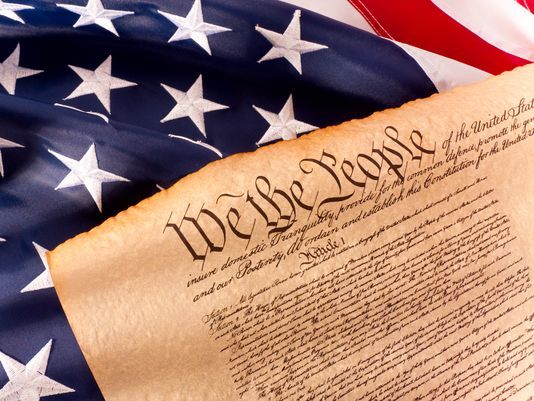
The interpretation of the Constitution has changed over the last 200 years, but it stands for continuity for America’s present and future.
The direction of American society remains true to the fundamental beliefs of liberty, equality, sovereignty, rule of law, separation of powers, federalism, checks and balances, and individual rights. Trump is challenging some of those rights, but balance of power and term limits will ultimately rescue America from his misbegotten domestic and international blunders. These rights have been challenged at different times in America’s history but never permanently reversed.
Karoline Kan’s story is very personal, but it offers insight to China that is more informative than many history and political polemics that fail to show what it is to be a Chinese citizen in the 21st century.
Books of Interest Website: chetyarbrough.blog
Under Red Skies (Three Generations of Life, Loss, and Hope in China)
Author: Karoline Kan
NarratedBy: Allison Hiroto
Karoline Kan (Author, reporter at Bloomberg, has published in the New York Times, and worked in radio broadcasting, studied at Beijing International Studies University focusing on journalism and writing.)
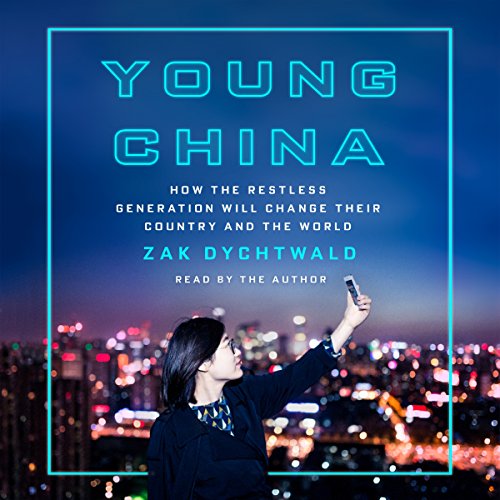
“Under Red Skies” is a story about Karoline Kan and her life from childhood to adulthood in China. She is based in Beijing, China. Kan writes about life in China before her birth and the change in China after Mao’s death. She provides a rewarding view of China from Mao’s to Deng’s to Xi’s leadership. In ways her story makes one somewhat fearful for her life and freedom, as well as China’s economic miracle and growth as the second most powerful nation in the world. The story of her life presents the puzzle of China’s changing relationship with America and the world. She is subtlety critical of Mao’s rule of China while a beneficiary of the changes wrought by Deng and now Xi in the growing power, economic improvement, and influence of her homeland. She appears to view America positively while being proud of her heritage and particularly appreciative of her mother’s role in her family during great changes in China. She reflects on societal change in respect to the life she lives and what her perceptions are of changes in political leadership wrought by Mao, Deng, and Xi.
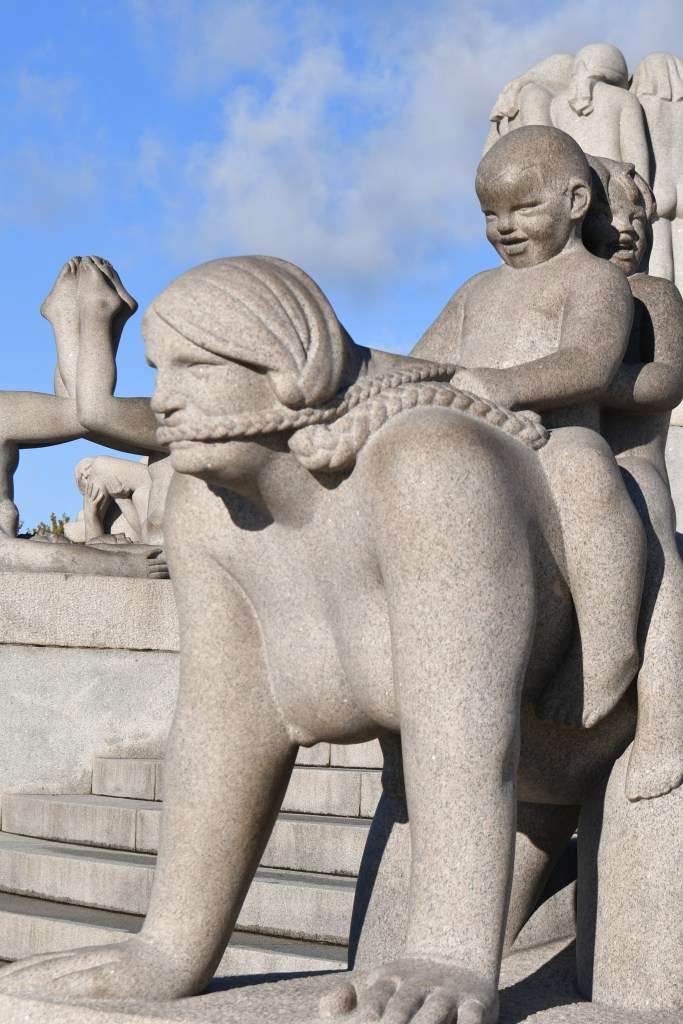
The power and importance of mothers is exhibited by a presentation of this “Circle of Life” exhibit in Norway. To this observer, the statue illustrates the great importance of women in nurturing and educating the world’s future generations. The author’s story reinforces that belief.
Ms. Kan’s mother appears to be a formidable objector to some of Mao’s cutural beliefs by being unwilling to kowtow to government policies that conflict with her personal beliefs. Kan’s mother is the driving force behind the move from rural China to a larger community to improve her family’s lives. Karoline is born when the one child policy is enforced in the early 1980s to the 2000s. Karoline is the second child born to her mother. Her mother faced the financial penalties for having a second child and resisted forced sterilization that became the law of the land during her child-baring years. Karoline Kan’s mother appears a force to be reckoned with by traditional male standards in China and a patriarchal bias that exists in most of the world. By that measure “Under Red Skies” seems like an encomium to Karoline’s mother and a tribute to Kan’s bravery in writing a history of her early life and experience as a Chinese citizen.
Our Chinese guide for a 2o18′ tour of China is noted in the essay titled “70% Leadership“. This young guide reminds me of the author, Karoline Kan.
Kan reflects on ambivalent feelings some Chinese citizens have toward America. She expresses surprise that there seems more dislike by China of America than China should have for Japan. History shows conflicts were much greater with Japan than America. Chinese hate of Japan would presumably be more visceral because of deaths from wars and invasions of China by Japan, i.e., the first in the 1894-1895 Sino-Japanese war; then the invasion by Japan in Manchuria in 1931, a second Sino-Japanese war in 1937-1945, and the Nanjing Massacre that killed an estimated 200,000 to 300,000 imprisoned Chinese citizens. The estimate of Chinese casualties from Japan in these conflicts is 15-22 million. Of course, America fought the Chinese in the Korean war in the 1950s but the casualties were 400,000, with the possibility of as many as a million who died from injury, disease, and exposure. More likely, the hate of America is from the context of China’s ambition to be “second to none” in power and influence in the world. In the end, “ambivalence” is not the same as hate. Having traveled to China just after Xi’s rise to power, my wife and I felt very welcome by most Chinese citizens and businesses.
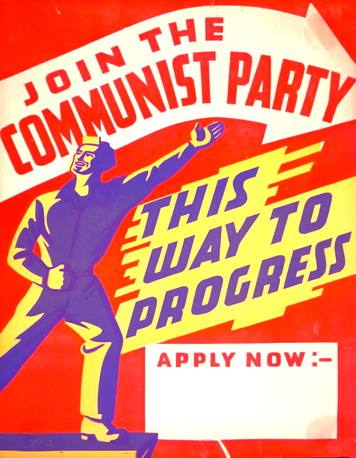
Communism is a political system that does not believe in God. Of course, neither do Buddhist or Taoist traditions which are the human practices and belief in personal truthfulness, compassion, and forbearance, i.e., spiritual beliefs about living life on earth because that’s all there is to life. There is no after life or heaven to a Buddhist or Taoist. These two spiritual beliefs are practiced widely in Japan and some places in China, like Tibet. Falun Gong, a Buddhist-like religion, arose in 1990s’ China. In the beginning, China accepted its practice, but the Communist Party eventually fought against its growth and labeled it a “heretical organization”. The Party obviously felt Falun Gong interfered with communist ideals. Additionally, there is the ongoing conflict between the Dali Llama and Tibetan belief (a branch of Buddhism) that is also reviled by China’s political leadership. The point is that communism demands fealty to belief in a classless, stateless society, not controlled or influenced by any social or economic belief other than those of the communist’ party. (One cannot help but reflect on Lord Acton’s phrase about “power” that is at the heart of all forms of government in history.)
Kan’s best friend, who finishes high school at the same time as Kan takes a different path, i.e., either because of her work in school, the poverty of her family, or the “bump” that changes her life.
The last chapters of Kan’s story are the personal journey of women in China. Kan is accepted at a University in Bejing. Marriage has evolved in China but still has many of the same matrimonial customs. Marriages of the past were highly arranged and had little to do with love or attraction. In modern China, marriages have become less determined by family arrangement but more by circumstances of a child’s experience. Like children around the world, parents influence but have limited control over a child’s libidinal impulses. The author’s closest friend becomes pregnant from the son of a poor family that is unable to compensate the daughter’s family in a way that some arranged marriages would provide. The lower dowry implies Kan’s friend is destined to live a life of poverty. Kan shows her to become a factory worker to supplement the family’s income. Her work is hard and highly repetitive but the income from both parents working helps them live better lives. With a husband, wife, and one child, her friend decides to have an abortion because another child would be too expensive for them to live a decent life.
Beijing International Studies University is the school Kan attends and receives a degree.
In contrast to Kan’s friend’s life, Kan goes to college where she is housed with women she does not know but are of her age. Kan’s family is presumably able to help her with expenses, and she goes on to become a journalist and writer. Interestingly, all women (and presumably men) are obligated to serve 2 to 4 weeks of military service before beginning a career-related’ education. The implication of this type of regimentation for all college students implies China has wider international ambitions.
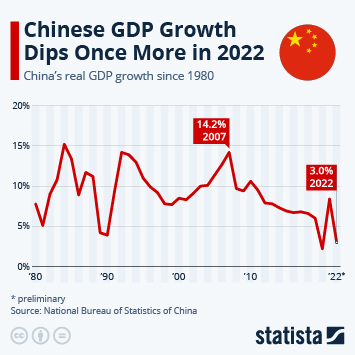
The change in China’s culture with the leadership of Deng and Xi is revealed in Kan’s story. It shows the strengths and weaknesses of capitalism and communism. China’s dramatic economic growth is a result of the endorsement of capitalism with a communist autocratic influence. Interestingly, Kan shows that China seems on a road to become more American while America seems to become more Chinese.
Kan’s story is very personal, but it offers insight to China that is more informative than many history and political polemics that fail to show what it is to be a Chinese citizen in the 21st century. Kan shows how both China and America have less than perfect systems of government.