RUSSIA

Books of Interest
 Website: chetyarbrough.blog

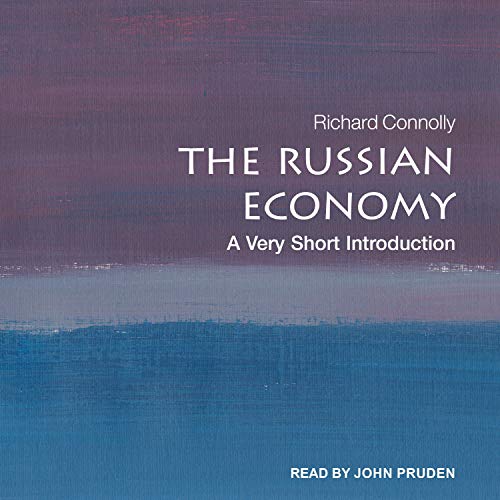
THE RUSSIAN ECONOMY (A Very Short Introduction)

Author: Richard Connolly

Narration by: John Pruden

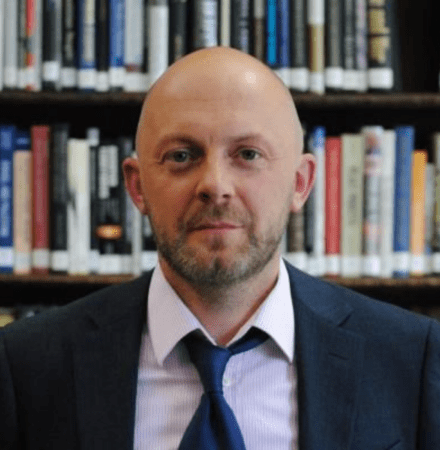
Richard Connolly (British author, Associate fellow at the Centre for New American Security (CNAS) in Washington D.C., former director of the Centre for Russian, European and Eurasian Studies at the University of Birmingham.)

Richard Connolly offers a brief and informative overview of Russia’s economic growth from the days of Stalin through today. He explains Russia’s economy has grown into a blend of state control and market demand that became the 20th century’s USSR. The common objective of every Russian leader since the 1917 revolution is stabilization of the country and any territory they rule. From the early days of Lenin and Stalin there is the goal of transitioning Russia from an agrarian lifestyle to an industrial power that could compete with other nations. In the process of that decision and from the spoils of WWII Russia became the USSR.

The goal of industrializing Russia for what became the U.S.S.R. is to create a powerful nation-state, by any means necessary, to compete with and/or dominate other nations. The shortest road for an agrarian nation to become an industrial power is dictatorship which fit the personality of Lenin’s successor, Joseph Stalin.

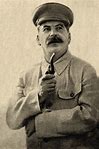
Joseph Stalin (1878-1953, General Secretary of the Communist Party 1922-1952.)

Stalin is a born martinet. He views Russia’s agrarian workers without concern for human or economic cost to turn their labor to industry with the intent of creating a military/industrial power. He redirects Russia’s people to work for the betterment of the state. At the same time, Stalin transitions farm laborers to industrial workers managed by government apparatchiks. Five-year plans are created by the government. Those who fail to achieve five-year plan goals are punished. Agriculture is forcibly collectivized and controlled by the government. The methodology Stalin uses to industrialize Russia is repeated in countries Russia claims after World War II.

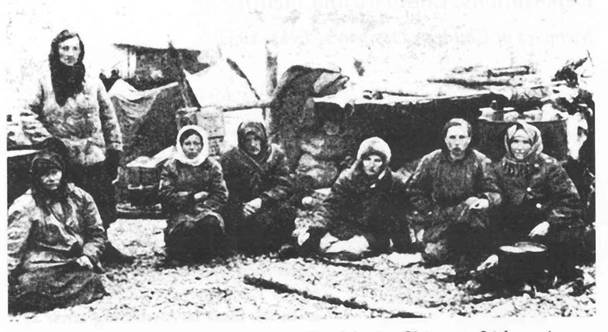
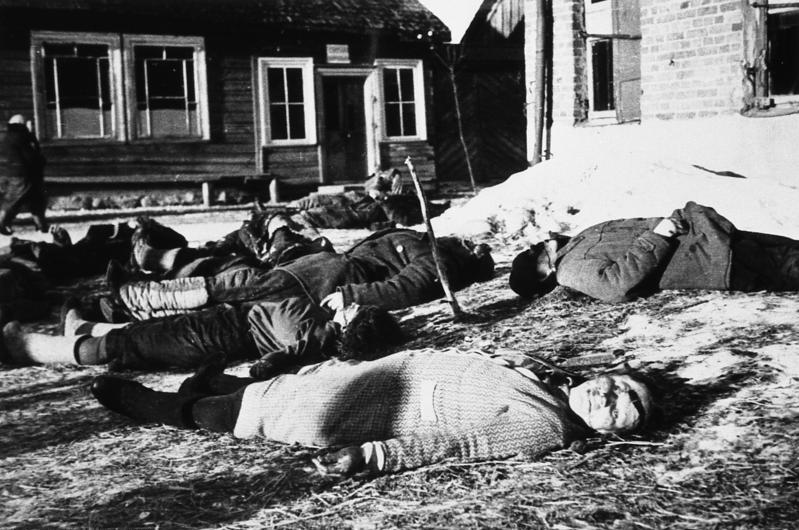
The hardship one hears in traveling to Poland and the Baltics opens one’s eyes to the terrible experience their citizens endure from Stalin’s rule. The revenue from agricultural and mineral production goes to the State for purchase of machinery to industrialize Russia and newly acquired territories after the defeat of Nazi Germany in WWII. Thousands die of starvation because of Stalin’s ambition. Economic independence is not tolerated, either in agriculture or industry. Stalin focuses on steel, coal, and machinery to transform the economy. Living standards of workers is of no concern with goals that must be met. Profitability, consumer needs, and human life are sacrificed with the singular goal of maximizing industrial production.

The Soviet economy advanced because of Stalin’s political goals. Stalin’s goals are state security and survival. Human cost is no concern. Those who opposed Stalin’s goals were either suppressed, tortured, or killed as enemies of the State. Stalin rules for 29 years, from 1924 until his death in 1953. Stalin achieves enormous strategic economic gains by building a heavy-industrial, militarized economy that gave Russia, then the USSR, great-power status. Despite his methodology and the duplicity of Stalin’s early support of Hitler in WWII, Russia became a critical world power with the defeat of Nazi Germany. For that success, the world owes some measure of gratitude for an amoral and inhumane tyrant.

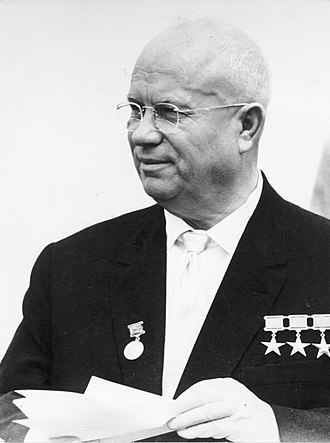
Nikita Khrushchev (1894-1971, Secy. of the communist party 1953-1964)

When Khrushchev came to power after Stalin’s death, he shifts Stalin’s model of governance to a more sustainable, technologically oriented system for Russia to remain a superpower. Khrushchev rebalances the Soviet economy in a way that keeps Russia militarily competitive and capable of global engagement. He shifted the economy toward science, technology, and space exploration. One is reminded of Russia’s Sputnik moment. Technology became a core component of economic power. Khrushchev moves Russia toward consumer welfare to illustrate his belief in the superiority of socialism. Connolly suggests Khrushchev began raising the living standards of the Russian people. The Soviet Union became more of an international partner by aiding other countries, selling arms to other countries, and using trade and technical assistance as a geopolitical influencer. Brezhnev solidified the vision of socialism as a stable and predictive governmental system. However, the Russia economy became less dynamic in the modernizing world. In the 1980s, the Russian economy falters.

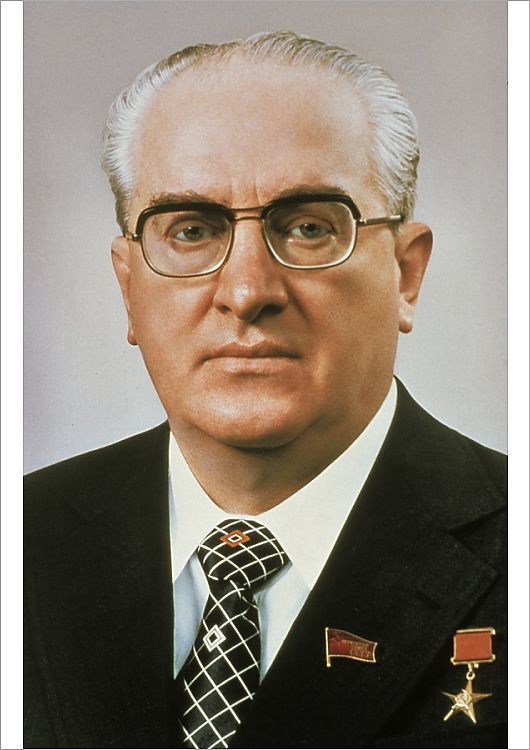
Yuri Andropov (1982-1984 General Secretary of the Central Committee of the Communist Party, born in 1914-died in 1984.)

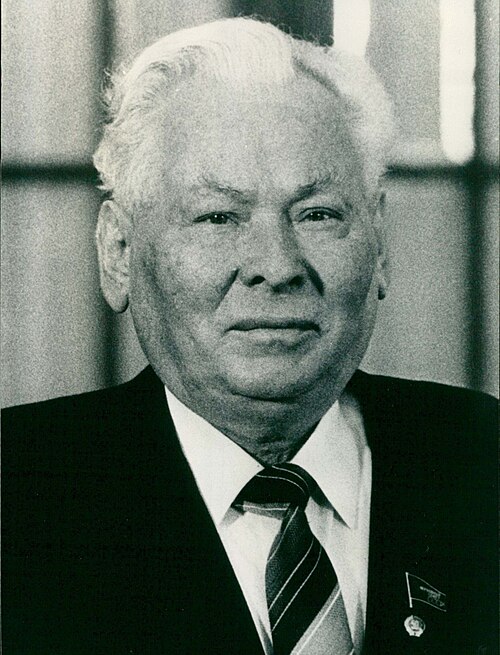
When Brezhnev dies in 1982, Yuri Andropov becomes the General Secretary of the Communist Party. In his short tenure, he revives discipline in governance of Russia by fighting corruption and trying to improve Russia’s economy. Andropov’s tenure is short, approximately 15 months. Andropov wished Mikhail Gorbachev to succeed him, but the Politburo chose Chernenko who only served for 13 months.

Konstantin Chernenko (General Secretary of the Communist Party 1984-1984, born in 1911-died in 1985.)

Chernenko’s successor is Mikhail Gorbachev. Gorbachev transformed the USSR. He ended the Cold War and reduced hostility toward the West. He received the Nobel Peace Prize in 1990. On the one hand he democratized Soviet politics but on the other he unintentionally triggered the collapse of the U.S.S.R. Gorbachev’s replacement is Boris Yeltsin who effectively dismantled Russia’s planned economy and opens Russia to global markets. His short tenure is chaotic, but it creates a foundation that leads to Putin’s reign.

“The Russian Economy” is written before Putin invades Ukraine. Putin reasserts the Russian government’s control over the economy.

Energy, defense, and finance are state controlled. In a sense, Putin returns to something like the rule of Stalin. Putin chooses to reorient Russia toward Asia rather than the United States. Putin rebuilt Russia’s wartime military capabilities. However, Connolly argues Putin fails to diversify or modernize Russia’s economy. He has successfully created a durable, state-centered model of government with geopolitical power, but economic prosperity seems, at best, a faltering work in progress. Connolly believes Russia will be able to withstand pressure from the West with its nuclear capability and economic power. Connolly believes Russia will survive its present semi-isolation. Connolly believes the State will remain the central actor in Russia’s future with (at least a near term) orientation toward Asia rather than the West.

POLITICAL EVOLUTION

Karoline Kan’s story is very personal, but it offers insight to China that is more informative than many history and political polemics that fail to show what it is to be a Chinese citizen in the 21st century.

Books of Interest
 Website: chetyarbrough.blog

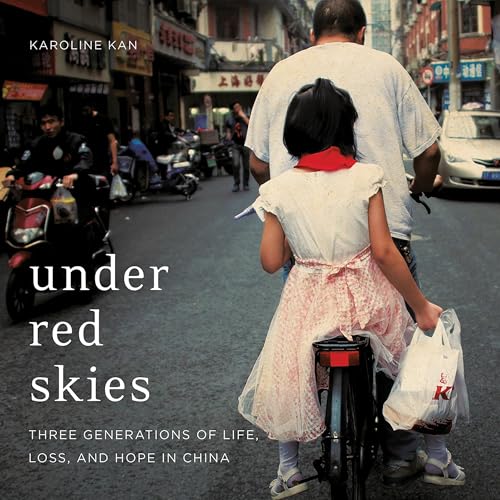
Under Red Skies (Three Generations of Life, Loss, and Hope in China)

AuthorKaroline Kan

Narrated By: Allison Hiroto

Karoline Kan (Author, reporter at Bloomberg, has published in the New York Times, and worked in radio broadcasting, studied at Beijing International Studies University focusing on journalism and writing.)

“Under Red Skies” is a story about Karoline Kan and her life from childhood to adulthood in China. She is based in Beijing, China. Kan writes about life in China before her birth and the change in China after Mao’s death. She provides a rewarding view of China from Mao’s to Deng’s to Xi’s leadership. In ways her story makes one somewhat fearful for her life and freedom, as well as China’s economic miracle and growth as the second most powerful nation in the world. The story of her life presents the puzzle of China’s changing relationship with America and the world. She is subtlety critical of Mao’s rule of China while a beneficiary of the changes wrought by Deng and now Xi in the growing power, economic improvement, and influence of her homeland. She appears to view America positively while being proud of her heritage and particularly appreciative of her mother’s role in her family during great changes in China. She reflects on societal change in respect to the life she lives and what her perceptions are of changes in political leadership wrought by Mao, Deng, and Xi.

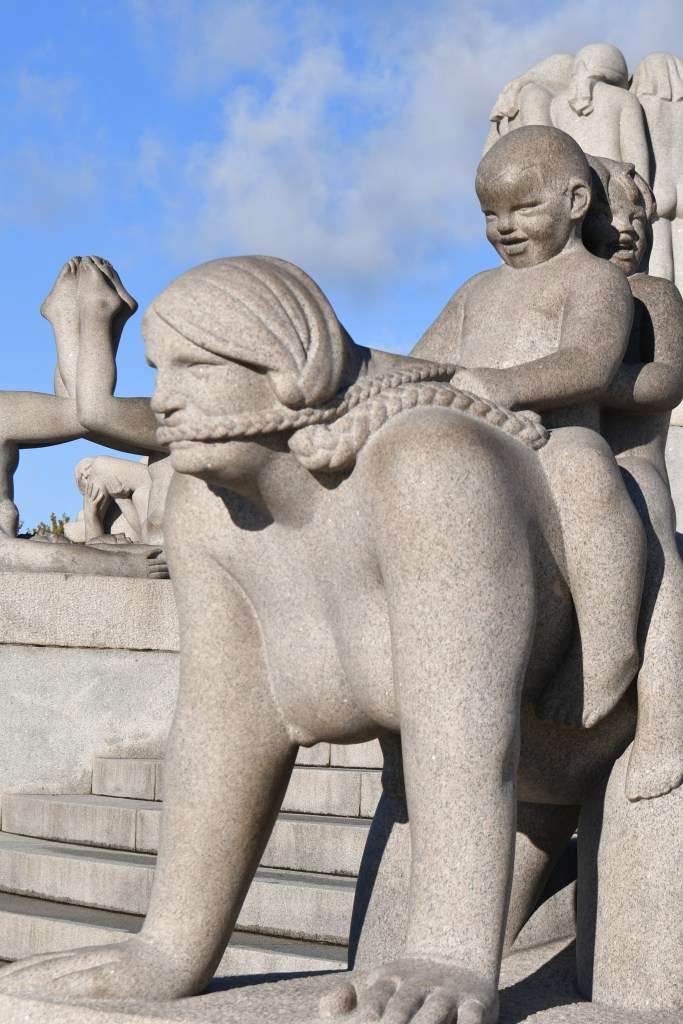
The power and importance of mothers is exhibited by a presentation of this “Circle of Life” exhibit in Norway. To this observer, the statue illustrates the great importance of women in nurturing and educating the world’s future generations. The author’s story reinforces that belief.

Ms. Kan’s mother appears to be a formidable objector to some of Mao’s cutural beliefs by being unwilling to kowtow to government policies that conflict with her personal beliefs. Kan’s mother is the driving force behind the move from rural China to a larger community to improve her family’s lives. Karoline is born when the one child policy is enforced in the early 1980s to the 2000s. Karoline is the second child born to her mother. Her mother faced the financial penalties for having a second child and resisted forced sterilization that became the law of the land during her child-baring years. Karoline Kan’s mother appears a force to be reckoned with by traditional male standards in China and a patriarchal bias that exists in most of the world. By that measure “Under Red Skies” seems like an encomium to Karoline’s mother and a tribute to Kan’s bravery in writing a history of her early life and experience as a Chinese citizen.

Our Chinese guide for a 2o18′ tour of China is noted in the essay titled “70% Leadership“. This young guide reminds me of the author, Karoline Kan.

Kan reflects on ambivalent feelings some Chinese citizens have toward America. She expresses surprise that there seems more dislike by China of America than China should have for Japan. History shows conflicts were much greater with Japan than America. Chinese hate of Japan would presumably be more visceral because of deaths from wars and invasions of China by Japan, i.e., the first in the 1894-1895 Sino-Japanese war; then the invasion by Japan in Manchuria in 1931, a second Sino-Japanese war in 1937-1945, and the Nanjing Massacre that killed an estimated 200,000 to 300,000 imprisoned Chinese citizens. The estimate of Chinese casualties from Japan in these conflicts is 15-22 million. Of course, America fought the Chinese in the Korean war in the 1950s but the casualties were 400,000, with the possibility of as many as a million who died from injury, disease, and exposure. More likely, the hate of America is from the context of China’s ambition to be “second to none” in power and influence in the world. In the end, “ambivalence” is not the same as hate. Having traveled to China just after Xi’s rise to power, my wife and I felt very welcome by most Chinese citizens and businesses.

Communism is a political system that does not believe in God. Of course, neither do Buddhist or Taoist traditions which are the human practices and belief in personal truthfulness, compassion, and forbearance, i.e., spiritual beliefs about living life on earth because that’s all there is to life. There is no after life or heaven to a Buddhist or Taoist. These two spiritual beliefs are practiced widely in Japan and some places in China, like Tibet. Falun Gong, a Buddhist-like religion, arose in 1990s’ China. In the beginning, China accepted its practice, but the Communist Party eventually fought against its growth and labeled it a “heretical organization”. The Party obviously felt Falun Gong interfered with communist ideals. Additionally, there is the ongoing conflict between the Dali Llama and Tibetan belief (a branch of Buddhism) that is also reviled by China’s political leadership. The point is that communism demands fealty to belief in a classless, stateless society, not controlled or influenced by any social or economic belief other than those of the communist’ party. (One cannot help but reflect on Lord Acton’s phrase about “power” that is at the heart of all forms of government in history.)

Kan’s best friend, who finishes high school at the same time as Kan takes a different path, i.e., either because of her work in school, the poverty of her family, or the “bump” that changes her life.

The last chapters of Kan’s story are the personal journey of women in China. Kan is accepted at a University in Bejing. Marriage has evolved in China but still has many of the same matrimonial customs. Marriages of the past were highly arranged and had little to do with love or attraction. In modern China, marriages have become less determined by family arrangement but more by circumstances of a child’s experience. Like children around the world, parents influence but have limited control over a child’s libidinal impulses. The author’s closest friend becomes pregnant from the son of a poor family that is unable to compensate the daughter’s family in a way that some arranged marriages would provide. The lower dowry implies Kan’s friend is destined to live a life of poverty. Kan shows her to become a factory worker to supplement the family’s income. Her work is hard and highly repetitive but the income from both parents working helps them live better lives. With a husband, wife, and one child, her friend decides to have an abortion because another child would be too expensive for them to live a decent life.

Beijing International Studies University is the school Kan attends and receives a degree.

In contrast to Kan’s friend’s life, Kan goes to college where she is housed with women she does not know but are of her age. Kan’s family is presumably able to help her with expenses, and she goes on to become a journalist and writer. Interestingly, all women (and presumably men) are obligated to serve 2 to 4 weeks of military service before beginning a career-related’ education. The implication of this type of regimentation for all college students implies China has wider international ambitions.

The change in China’s culture with the leadership of Deng and Xi is revealed in Kan’s story. It shows the strengths and weaknesses of capitalism and communism. China’s dramatic economic growth is a result of the endorsement of capitalism with a communist autocratic influence. Interestingly, Kan shows China seems on a road to become more American while America seems to become more Chinese.

Kan’s story is very personal, but it offers insight to China that is more informative than many history and political polemics that fail to show what it is to be a Chinese citizen in the 21st century. Kan shows how both China and America have less than perfect systems of government.

AUTHORITARIANISM

Whether an idealist or humanist, the historical truth is that rising authoritarians believe power is all that matters. Today, the world seems at the threshold of authoritarianism.

Books of Interest
 Website: chetyarbrough.blog

Bronshtein in the Bronx 

By: Robert Littell

Narrated By: Adam Grupper

Image result for robert littell

Robert Littell (American author, former journalist in France.)

Robert Littell researches and imagines the 10 days of Leon Trotsky’s visit to New York City in 1917, just before the Russian revolution. His story offers humanizing and demeaning aspects of Trotsky’s personal and political life as a revolutionary.

Lev Davidovich Bronstein aka Leon Trotsky (1879-1940, Russian revolutionary, politician, political theorist, revolutionary military leader.)

Image result for leon trotsky

Littell explains Trotsky travels with his two young sons and a female companion (the mother of their two boys) to New York. His first wife is exiled in Siberia for helping him spread leaflets about terrible factory conditions in Czarist Russia. Trotsky escaped to England while leaving his first wife and their two young girls in Siberia. (Trotsky divorces his first wife and marries the woman that Littel calls his airplane companion, either before or after the trip to New York. This is not made clear in Littell’s story.)

Trotsky in New York, 1917 | Kenneth Ackerman

Littell explains Trotsky is a kind of celebrity in New York because of his association with socialist beliefs and his involvement in the failed 1905 Russian Revolution.

Trotsky is in his early twenties when he arrives in New York. Littell characterizes Trotsky as a libertine by introducing a female reporter in New York who becomes his lover. Littell reinforces that libertinism at the end of his story by suggesting Trotsky and Frida Kahlo had an affair while his second wife and he were exiled in Mexico.

Aside from Trotsky’s picadilloes, Littell shows how committed Trotsky was to his belief in Marxism and the plight of the working poor.

Trotsky gave several speeches that appealed to New York laborers and their families. An interesting sidelight is appended to Littell’s story when a Jewish industrialist meets with Trotsky after the 1917 revolution in Russia. Naturally, Trotsky is anxious to return to support Lenin and the Bolsheviks in the revolution. However, Trotsky is broke and doesn’t have the money to return to Russia. The industrialist offers an envelope with the money needed for the trip. Neither the industrialist nor Trotsky are believers in the Jewish faith but believe in the power of socialism and its benefit to society.

The political point being made by Littell is that the ideal of communism supersedes religious beliefs.

Trotsky is Jewish but not a believer in God. He is a political idealist. Littell notes Trotsky becomes a military leader in the communist movement. Littell infers Trotsky’s idealism gets in the way of humanism when he orders one in ten prisoners be shot for their opposition to the communist revolution. This is undoubtedly an apocryphal story but a way of explaining how a committed idealist can become a murderous tyrant.

Littell ends his story with a brief and somewhat inaccurate history of the Trotsky’ children. The two girls with his first wife died before they were 30. Zinada had mental health issues and died by suicide in 1933. Nina died at age 26 without any detailed information about her cause of death.

Rather than two boys noted in Littell’s story of the trip to New York, one was a girl named Zinaida. Zinaida, like her half-sister, died by suicide at age 32. Lev, born in 1906, is believed to have been poisoned by Stalinist agents in 1938. As some know, Trotsky was murdered by Stalin’s agents in Mexico City. In contrast to his children, Trotsky, the political idealist, is murdered as an exile at the age of 60. All-in-all, a tragic family history.

Whether an idealist or humanist, the historical truth is that rising authoritarians believe power is all that matters. Today, the world seems at the threshold of authoritarianism.