
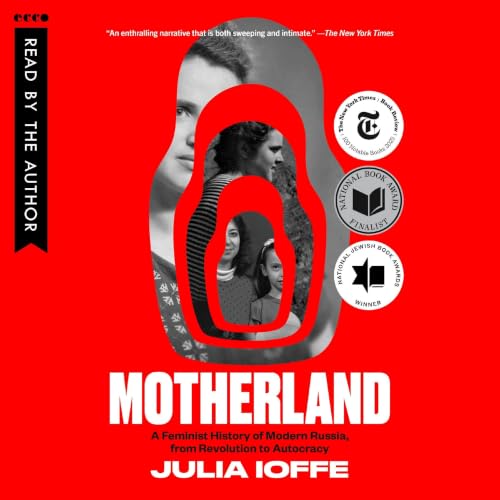
Audio-book Review
By Chet Yarbrough
(Blog:awalkingdelight)
Website: chetyarbrough.blog
Motherland (A Feminist History of Modern Russia, from Revolution to Autocracy)
Author: Julia Ioffe
Narrated by: Julia Ioffe

Julia Ioffe (Soviet-born American journalist, author who has written for The New Yorker, Foreign Policy, The New Republic, Politico, and the Atlantic.)
Julia Ioffe has written a fascinating history of women in the “…History of Modern Russia…” She clearly seems to have researched women’s labor, family life, reproductive rights, and war service in Russia before and after the Leninist revolution. She brings the truth of women’s equality to men while recognizing real equality is unrealized in Russia, America, and undoubtedly, the world.

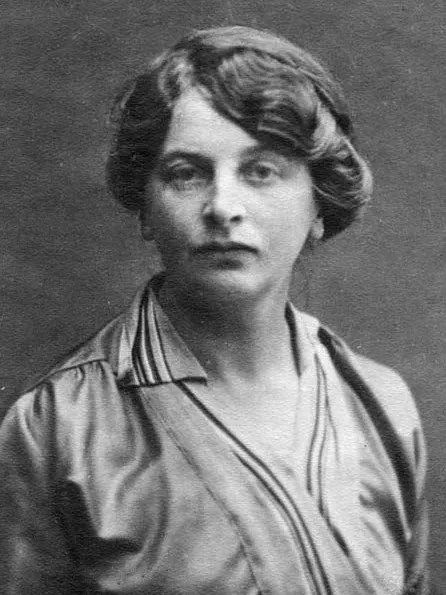

A reader/listener may be surprised by Ioffe’s recognition of three women who aided Lenin in successfully creating Russia’s communist revolution. Nadezhda Krupskaya, Lenin’s wife, who is an important organizer of the communist movement. Inessa Armad, Lenin’s lover, is a feminist revolutionary. Alexandra Kollontai is a social reformer who influences Lenin’s ideas on marriage, childcare, labor, divorce, and women’s aspirational desire for independence.
Kollontai arguably shapes Lenin’s view of women in society despite inequality that prevails.

Alexandra Kollontai raised women’s issues a part of Lenin’s revolutionary agenda. One wonders how true that is in view of the evidence in Ioffe’s history of Russia. Women are shown to have been dominated by Russia’s patriarchal leadership. The treatment of women as sexual objects is evident in many examples of Russian leaders’ abuse of women. From Stalin’s domination of his daughter to leaders like Lavrentiy Beria who personified arbitrary power in the Stalinist state and the way he treated women and what were alleged enemies of Stalin’s rule. Ioffe notes Beria’s reputation for abducting and sexually assaulting women.
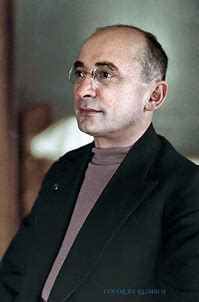
Lavrentiy Beria (Soviet Secret Police Chief during Stalin’s reign.)
None of the examples Ioffe details of the treatment of women is a surprise because one hears and observes it in all countries of the world. Despite the role women played as Russian soldiers in WWII, Ioffe notes how poorly Stalin treated his wives and daughter. Stalin expected women to birth and bare the future of Russia’s diminished population while working at jobs to rebuild its devastated economy. Women were expected to work in Russian factories to rebuild the economy while raising their children. Certainly, some responsibility for childcare is undoubtedly taken by men but childbearing, family care, and economic employment were all assumed responsibilities of Russian women.

Soviet women pilots in WWII.
Ioffe tells the story of Svetlana Alliuyeva’s, Stalin’s daughter, which shows how women in Russia were treated. As a child, Svetlana is privileged but imprisoned by the life she lived under the shadow of her father. Her mother committed suicide which shows how marital relationship, even in a privileged economic circumstance, is no guarantee of women’s equal treatment. Stalin’s wife chose to end her own life with a self-inflicted bullet through her heart. The character of Stalin is well documented in the history of gulags and mass murders instituted by the government during his rule.
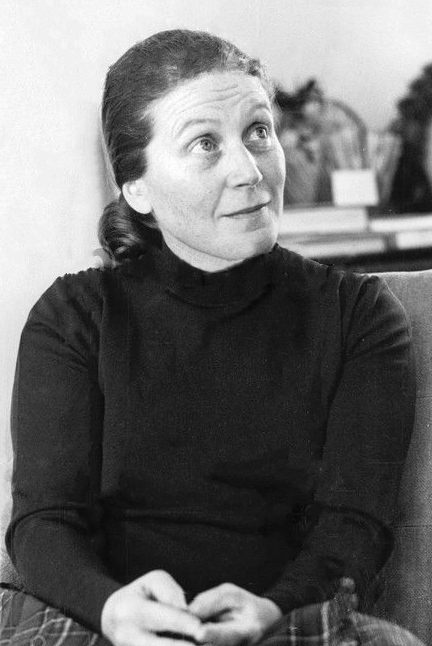
Svetlana Alliluyeva (1970, daughter of Joseph Stalin.)
It is surprising to find a resurgence of antisemitism policies in Russia during Gorbachev’s reforms. After the revelations of Germany’s murder of 6,000,000 Jews and the world’s recognition of its horror, one can hardly believe there would be a continuation of antisemitism in the world. Boris Yeltsin officially dismantled antisemitic policies in Russia, but antisemitism remains.
The Ioffe Jewish family emigrates to America, but the qualifications of the author’s mother are not recognized in the U.S. One hears from Ioffe of their immigration status as a great hardship for the family. Ioffe shows in her 3 year return to Russia the male dominance over women which seems a backhanded way of suggesting things are better in America. To one born and raised in America, sexual inequality remains an issue in society.
Putin’s decision to invade Ukraine.

None of the post WWII Russian president’s exhibit the same level of cruelty as Stalin; i.e., at least until the reincarnation of some of Stalin’s aggression by Vladimir Putin. Putin chooses to take back the Crimean Peninsula and invades Ukraine in what is a campaign that is slaughtering its civilian and military citizens.

To many, Ioffe’s history of Russia will be surprising.
“Motherland” shows Ioffe’s deep research of Russian history and the personal experience of the writer’s life in America and today’s Russia. On the other hand, it seems some of Ioffe’s objectivity is lost. The fact that women were enlisted to fight in war and encouraged to become well educated suggests some recognition of women’s rights, if not their equality in Russia.
“Motherland” cannot escape the author’s personal views and experience of unequal treatment. Much of what she uncovers in Russia’s history is enlightening and rings true to those who believe in the equality of all human beings. Antisemitism, sexual, and racial discrimination seem like human conditions that cannot be eliminated in the world.


