
Books of Interest
Website: chetyarbrough.blog
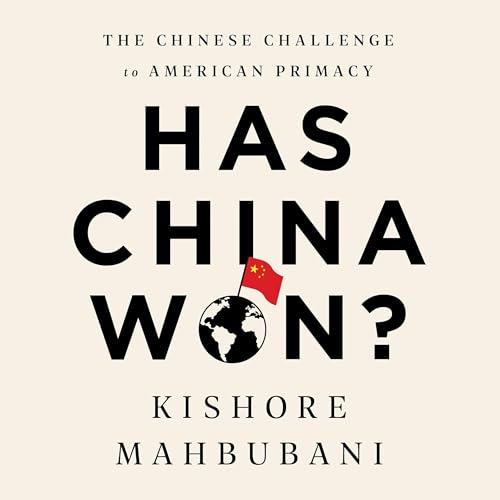
Has China Won? (The Chinese Challenge to American Primacy)
Author: Kishore Mahbubani
Narration by: Aaron Abano. P.J Ochlan
Kishore Mahbubani (Author, Singaporean diplomat, and academic who is a permanent representative to the UN.)
“Has China Won” is a controversial political opinion that suggests America is grossly underestimating the growing strength of China that will continue to grow in influence and power in the world. Some may argue Mahbubani overstates China’s strengths and understates its weaknesses. Mahbubani does not deny America’s strengths, its resilience, and peaceful world strategy. However, his underlying inference is that peaceful socialist doctrine will replace democratic capitalism as the “sine quo non” of the future.
There are three general categories of governance in the world. One is communist socialism, two is democratic capitalism, and three is authoritarian despotism. By the end of “Has China Won?”, one is inclined to believe China will grow to be a competitor to America as a socialist communist success just as America has become a democratic capitalist success. Authoritarian despotism will disappear as a system of governance as human education improves. China may surpass America as a superpower in the sense of population but not necessarily as a world influencer. Both systems have discriminatory flaws. China is neither better nor worse as a political entity than America; i.e. both are destined to compete for socio/political influence in the world. Socialist communism will likely grow to be equally influential as democratic capitalism for nation-state governments. Socialist communism is an ideological competitor; i.e., it is as likely to be adopted or rejected as democratic capitalism. In my personal opinion, socialist communism and democratic capitalist governance will survive in some form until their equal or superior is discovered.

American democratic capitalism has made its mistakes.
America cannot deny its international intervention mistakes. Vietnam, Iraq, and Afghanistan are overreaches of America’s belief in democratic capitalism. America fails to understand deep-rooted cultural beliefs, the nationalism of other countries, and the appeal of socialist communist or authoritarian doctrine. In an effort to support national dissidents; America has invaded several countries and chose to abandon their citizens which allowed authoritarians to retake control of their countries. Vietnam remains a socialist communist country. Afghanistan returns to rule by the Taliban. Iraq is a weakened economic nation led by a fragile, technocratic, non-aligned political novice named Aliall-Zaldi.
America’s latest mistake is the bombing of Iran. (A water plant destruction.)
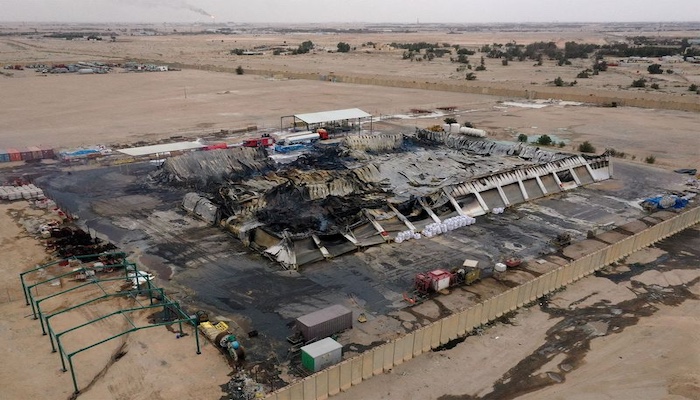
President Trump chooses to bomb Iran and expects Iranians to rally around American democratic capitalism when all that is accomplished is a hardening of authoritarian Iranian Leadership’ beliefs. Many Americans believe Iranian authoritarian leadership will fail. Whether socialist communism or democratic capitalism will replace authoritarianism may only be a matter of time. President Trump’s ham-fisted actions are unlikely to endear democratic capitalism to Iranian citizens. Iran’s future cannot be predicted in the short term, but Iranian authoritarianism seems likely to fail.
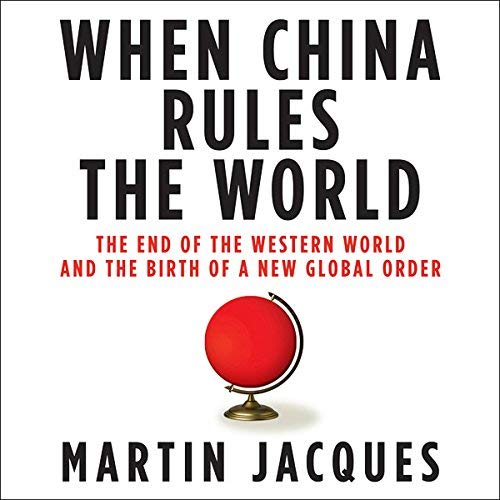
The answer to “Has China Won” seems a “no” for the present but Mahbubani makes a credible argument for its continuing growth, prosperity, and success. It depends on China’s history of long-term domestic stability and growing prosperity. Will Xi and his successors continue to improve the economic well-being of the millions of Chinese poor? Can China avoid military conflict with the U.S.? No one knows but many speculate. Will the U.S. finally understand China’s government and what it means to its people. Xi is not America’s enemy; neither is he an ally.


