
Books of Interest
Website: chetyarbrough.blog
A Short History of Russia (How the World’s Largest Country Invented Itself, from the Pagans to Putin)
Author: Mark Galeotti
Narration by: Mark Galeatti
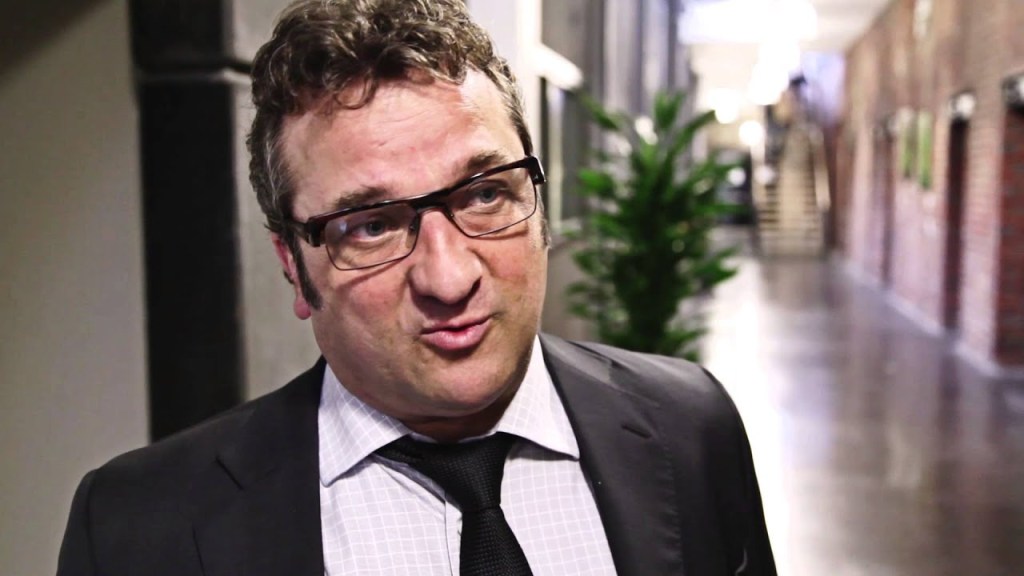
Mark Galeotti (Author, British historian, writer, honorary professor at UCL’s School of East European Studies.)
“A Short History of Russia” notes that Russia has historically felt insecure about its identity as a part of the European community. Galeotti notes Russia has no natural borders and no single ethnic core. Reaching back in history, the author notes the royal history of Russia’s Tsars (men and women who have descended from royalty). The 1917 Russian revolution turned Russia’s monarchy into a communist autocracy that leads to the eventual ascension of Putin. Putin becomes leader of a reconstituted Russia that reminds one of Russia’s Tsars. Galeatti argues Putin’s Russia considers itself part of the European continent despite its Mongol history that profoundly reshaped Russia’s political culture.
Mongols are an East Asian ethnic group which originated in Mongolia and China.
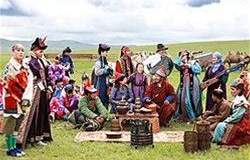
Galeotti argues Russia has always aspired to be a major influence and power in Europe. Their history of centralized authority and territorial expansion is characteristic of Russia’s desire to be a dominant part of European culture. Despite Russia’s cultural intent to be part of Europe, it drives to have its own identity as a continental influencer rather than conforming culture. The rise of communism, and much later, Putin is founded on Russia’s history of hierarchal leadership and cultural belief.
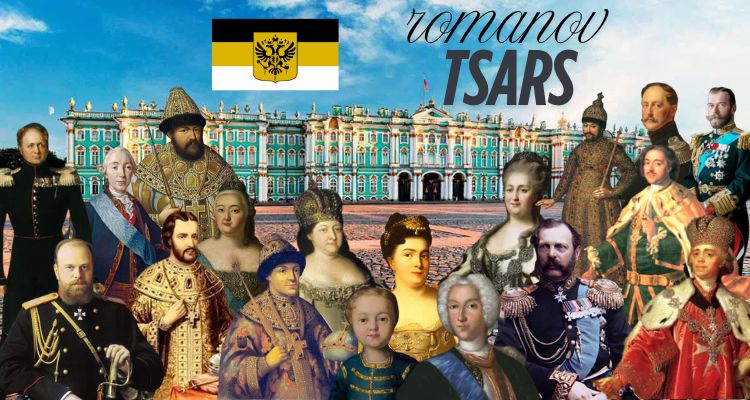
Tsarist Russia.
Galeotti paints a picture of Tsarist Russia that becomes a model for the rise of autocratic communism. Russian Tsars emphasized centralized control of the country. The Tsars were suspicious of citizen influence or control of the country. They set the table for rule from above because of the lack of any civil organization. Russia had a cultural background for the creation of an autocratic state. The effect of that background set the table for Stalin and today’s Vladmir Putin. Stalin establishes his rule through the use of a secret service to assure loyalty to its leader, Joseph Stalin. Stalin uses that secret service to eliminate rivals to his power. In the interregnum between Stalin and Putin, Mikhail Gorbachev attempts to reform the communist party to an openness for change through his personal effort and a home-fore initiative from party leaders, workers, and managers. Gorbachev fails for many reasons; not the least of which is the terrorist and murderous experience of Stalin’s leadership. But, Gorbachov’s is also because of his failure to gain party support and the consequent departure of many states that chose to leave the U.S.S.R.

Gorbachev takes control of the Russian government with the intent of restructuring weaknesses that had grown in the directionless vacuum created by the death of Stalin. Boris Yeltsin interferes with Gorbachev’s effort when he becomes President of the Russian Federation in 1991. Yelsin complicated Gorbachev’s reform by looking to a young KGB officer named Vladimir Putin to join the administration. Yeltsin’s alcoholism compounded growing disorganization of the Russian government. Gorbachev loses control of the communist party and the balance of personal interests between factions of the U.S.S.R., in part, because of Yeltsin’s interference and mismanagement.

Chernobyl nuclear disaster in Ukraine.
Chernobyl becomes a symbol of what is going wrong with centralized government control. Putin’s steely determination reminds Russians of a leader who could stabilize what remained of the Russian empire after the Baltic states and Ukraine left the Union. The ideas of perestroika and glasnost interfered with the U.S.S.R.’s imperialist system of government. However, public discontent with Gorbchev’s rule renewed public interest in Tsarist style control of government like that which is implied, if not recommended by former KBG agent, Vladimir Putin.
Boris Yeltsin (1931-2007, President of Russia 1990-1991.)
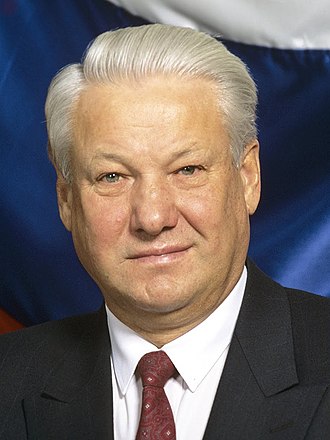
Galeotti believes Gorbachev’s perestroika and glasnost recommendations reveal deep structural weaknesses that are magnified by Boris Yeltsin’s incompetence. However, Galeotti argues Putin is not a master strategist nor a villain. Putin is characterized as an opportunist who takes control of Russia in ways that were experienced during Tsarist and later Stalinist rule. He reinstitutes personal networks of government control by rewarding those who comply with his rule while hollowing out leaders and institutions that interfere with his power. Putin makes himself a modern Tsar by governing with a circle of loyalists. Loyalty to Putin is the cornerstone of his governance. Putin manipulates the fragility of Russian bureaucracies meant to improve the lives of Russian citizens while endorsing the greed of the wealthy. Control and loyalty become more important than effectiveness or efficiency. Loyalty to Putin is the mark of value in his administration.
Putin clearly takes the side of autocratic rulers because of his belief in control of circumstances and belief in loyalty to those in charge.
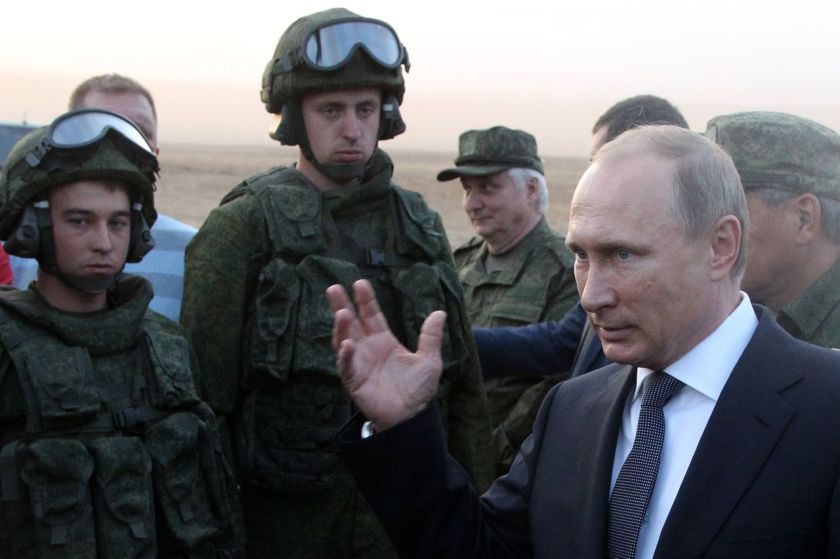
Putin in Syria supports its dictator, Bashar al-Assad, who flees to Russia when deposed.

Bashar al-Assad (Rose to power in Syria in 2000 having inherited his position as Syria’s ruler from his father. As a fellow autocrat, he is fully supported by Putin.)
Galeotti notes Putin is not omnipotent but is a leader whom Russians are familiar with from past history. Centralization of power has been a hallmark of Russia’s growth with a desire for Russia to be identified as a powerful and important part of Europe. To the author, Putin is a pragmatic ruler who reminds Russians of their history of Tsarist control and leadership. Time will tell whether Russia’s citizens become discontented with Putin’s aggression, the Ukrainian war, war’s lost lives, and its victims (many of which are Russian Ukrainians).


