DIVORCE

Burden clearly explains the emotional impact of divorce in America, but her wealth diminishes the scope and reality of divorce to the majority of women who have children and are left by their partners.

Books of Interest
 Website: chetyarbrough.blog

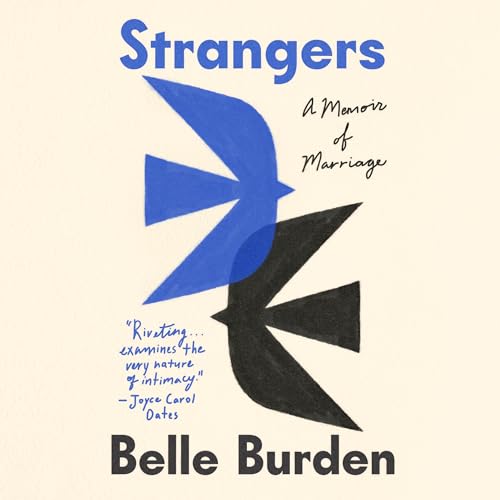
Strangers (A Memoir of Marriage)

Author: Belle Burden

Narration by: Belle Burden

Belle Burden (Author, former attorney, urban planner, socilite, and descendant of the Vanderbilts.)

In some respects, “Strangers” is an unrelatable example of the trauma of divorce. In other ways, it is a testament to divorces’ hardship for women and societies’ inequality. The unrelatable parts are in the difference between divorce for those who are wealthy and those who are not. What is brilliantly revealed is the trauma of divorce and its disproportionate effect on wives and mothers.

Having been married for 20 years and facing divorce is a traumatic experience whether one is rich or poor.
However, women who are not rich face a different experience when their husbands leave a marriage. In most cases, the burden of coping with divorce is more impactful for children and a wife than a husband. Often, as in the case of Belle Burden, a mother faces having to return to a work environment that discriminates against women in ways that diminish their value in society. Women often retire from the workforce when they become pregnant because of the consuming responsibility of raising a child.
As a woman, regardless of wealth, job prospects are challenged by sexual discrimination.

It is worse for women who are poor and less educated than Ms. Burden. The point that Burden makes clear (regardless of her wealth and education) is women sacrifice much of their lives raising their children while husbands are freer to explore economic success. The wealth of Ms. Burden and her education exempt her from the trials of most women in the world. Burden clearly explains the emotional impact of divorce whether one is wealthy or not. Her wealth does little to reduce feelings of betrayal and failure.

Belle Burden exemplifies the emotional toll of divorce.

Twenty years of marriage creates a bond never completely broken. For husbands the reliance they have on a wife’s care of children makes it difficult to offer the care and understanding that children need from both parents. Husbands are often inadequately prepared for relationship building that a mother has with their children. The consequence is a father’s failure to understand how to help their children deal with their parent’s separation. Those who share raising their children are less likely to have that problem, but social convention leaves most American men in the dark about how to take parental responsibility.
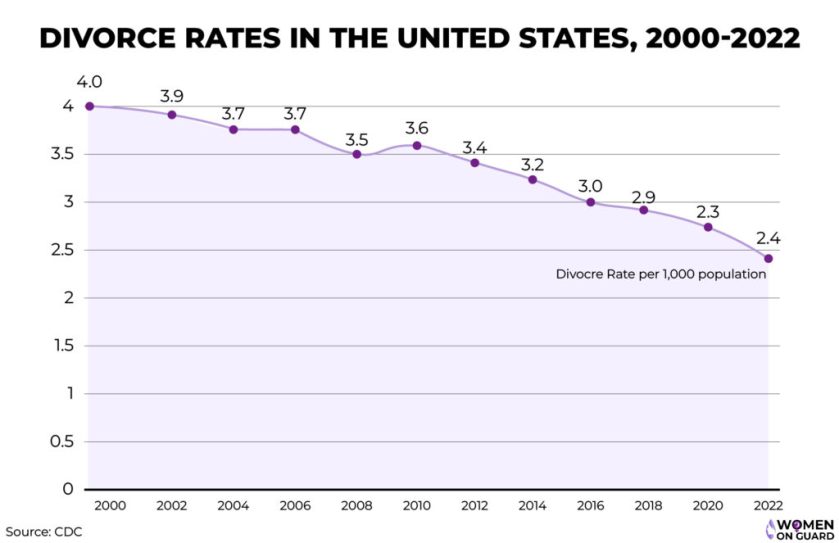
Divorce rates in America may be in decline but the emotional impact on parents and their children is the same.

Burden clearly explains the emotional impact of divorce in America, but her wealth diminishes the scope and reality of divorce to the majority of women who have children and are left by their partners. That is not a criticism of Burden’s book but of sexual inequality that exists in most countries of the world.

HUMAN INTROSPECTION

Brianna Weist philosophical book is worth listening to as a guide but not as an authority of how one should live their life.

Books of Interest
 Website: chetyarbrough.blog

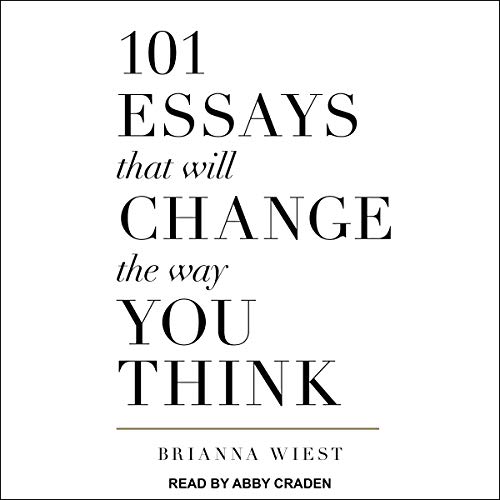
101 Essays That Will Change the Way You Think 

AuthorBrianna Wiest

Narration by: Abby Craden

Brianna Wiest (Author, earned a BA in English and received an Honorary Doctorate in Literature from Elizabethtown College.

This is an odd book because it is written by someone who is not a psychologist, psychiatrist or therapist but presumes to know how one can understand themselves, think differently and become a more psychologically heathy human being. “101 Essays…” has become a popularly read and listened to book by the public. Of course, one can take her observations like one would take the meaning of many non-fiction authors who have a point of view about life and living. They are called philosophers.

One finds Wiest’s essays make sense, but her formal education makes one uncomfortable with her expressed beliefs.

On the other hand, what formal education was there for Socrates? (A. I. generated image of Socrates as a young man.)

a youthful Socrates in ancient Athens, standing in a sunlit agora, wearing simple Greek robes, with thoughtful expression and strong features, classical style portrait

Weist is straight forward in her opinions, and she taps into a human wish for one to be psychologically and physically as good as they can be. Changing “…the Way You Think” is no easy task but the idea of consciously understanding ourselves is an oxymoron that limits one’s ability to change. We are as likely to lie to ourselves about who we are or what we believe as to have a true understanding of ourselves.

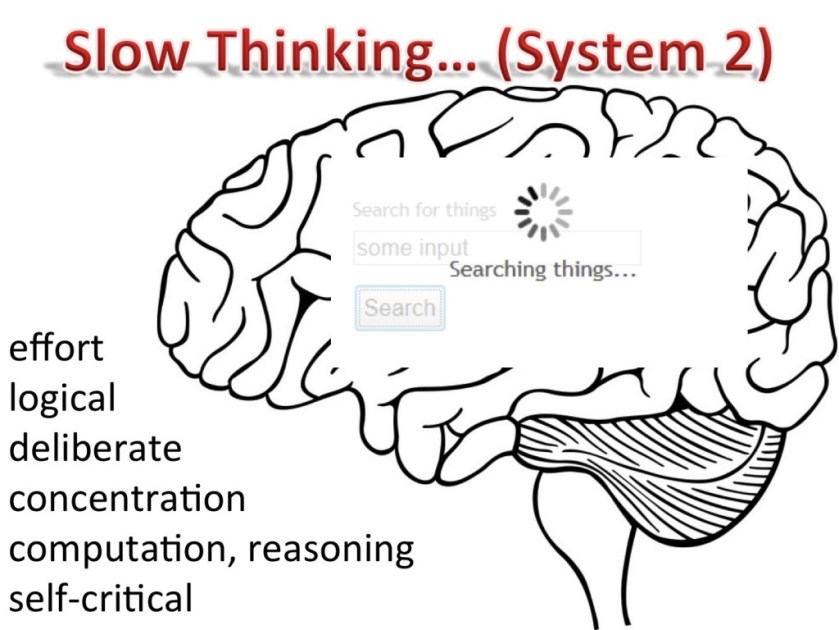
Daniel Kahneman is a renowned psychologist and Nobel laureate.  He is an American citizen that served in the Israeli military and used his education, research, and experience to write “Thinking Fast and Slow”.  His observations explore many aspects of human decision-making.

Weist logically argues one can become a better human being by changing the way they think. She is not acting as a clinical psychologist but as a philosopher of life and how one may make the most of it. If one understands Weist from that perspective, she is like Marcus Aurelius, Soren Kierkegaard, or Simone de Beauvoir. She has a philosophical point of view but not necessarily a happier or more fulfilling life.

The meaning of experience on one’s life is often too opaque for one’s understanding without the help of others.

Weist writes we should see what hurts others and ourselves and quit doing those hurtful things by changing our mind. This seems a good idea but denies the subjectivity and the unique experiences in one’s life. Many people are unable to understand the impact of experience on their lives. They are unable to change the way they think because they are unable to understand how or why an experience has affected their lives. Only with the help of a qualified psychologist, psychiatrist, or trained therapist can most people objectively understand themselves to constructively change their mind.

Nevertheless, Weist philosophical book is worth listening to as a guide but not an authority on how one should live their life. Most human beings are not introspective enough to find their way through life without the help of a person trained to elicit what we do not know about ourselves. On the other hand, it appears Weist has a genius beyond her years of life.

WITTGENSTEIN

Wittgenstein’s philosophical belief is that words matter. To Wittenstein, words are not just sounds and symbols–they are the scaffolding of humanity’s shared reality and continuing search for truth.

Books of Interest
 Website: chetyarbrough.blog

Wittgenstein 

Author: Hans Sluga

Narrated By: Ken Maxon

Hans Sluga (Author, Professor Emeritus of Philosophy at U of C.)

Ludwig Wittgenstein (1889-1951, considered by some as one of the greatest philosophers of the twentieth century)

This is a difficult introduction to the philosophy of Ludwig Wittgenstein. One is unsure of whether it is difficult because of the author’s explanation or the abstruse nature of Wittgenstein’s writing. Sluga notes there is an early Wittgenstein philosophy and a later Wittgenstein philosophy. There is the 1921 “Tractatus Logico-Philosophicus” published in 1921 and a later “Philosophical Investigations” published in 1953.

In both publications, Wittgenstein’s philosophy is about language and its use to explain reality. The 1921 publication argues what can be said clearly can be said by all and when it cannot be said clearly the speaker should be silent. In 1953, Wittgenstein argues reality only has meaning as language is used to describe it.

The difficulty of grasping Wittgenstein’s later philosophy is knowing whether what one says about reality is true or false.

Wittgenstein notes problems arise when language is pushed beyond its utility for understanding. Wittgenstein implies there are realities that cannot be meaningfully described by language. He is redefining philosophy as a matter of understanding how language works rather than understanding some objectively understood reality.

If language is the source of reality, how can one know what is true or false based on how one’s language explains it?

The argument is that Wittgenstein is saying there is no reality except that which one can identify through language. Reality and truth exist but it is defined by public, practical, and embedded use of one’s common language. Truth is based on precise language broadly accepted by those who use language to explain reality. The difficulty of that idea is in fundamental science that changes because of newly discovered knowledge.

This later philosophical belief of Wittgenstein’s means truth is no longer absolute but contextual based on words used to describe it through science, law, and ethics of the time in which it is explained.

Wittgenstein’s philosophy is troubling. What is to keep humans from one country creating language that suggests they are a superior species and can destroy cultures other than their own? Wittgenstein’s answer is that languages are not hierarchical so words of another culture or nation have equal weight. His meaning is that reality is based on all public languages, not a private nationalist language. He writes “Philosophy is a battle against the bewitchment of our intelligence by means of language”. Further, he notes a singular culture cannot weaponize words because words are a universal medium for understanding reality.

Wittgenstein’s philosophical belief is that words matter. To Wittenstein, words are not just sounds and symbols–they are the scaffolding of humanity’s shared reality and continuing search for truth.