
Books of Interest
Website: chetyarbrough.blog
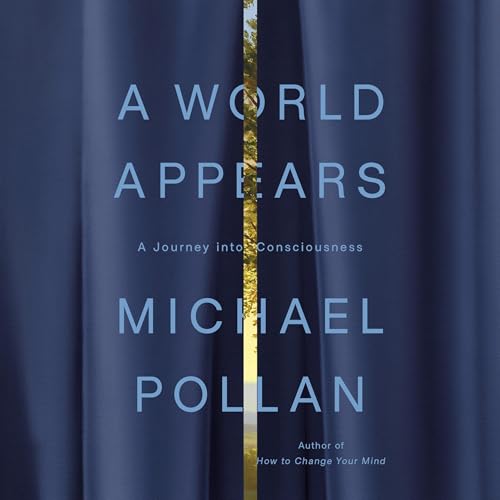
A World Appears (A Journey into Consciousness)
Author: Michael Pollan
Narration by: Michael Pollan
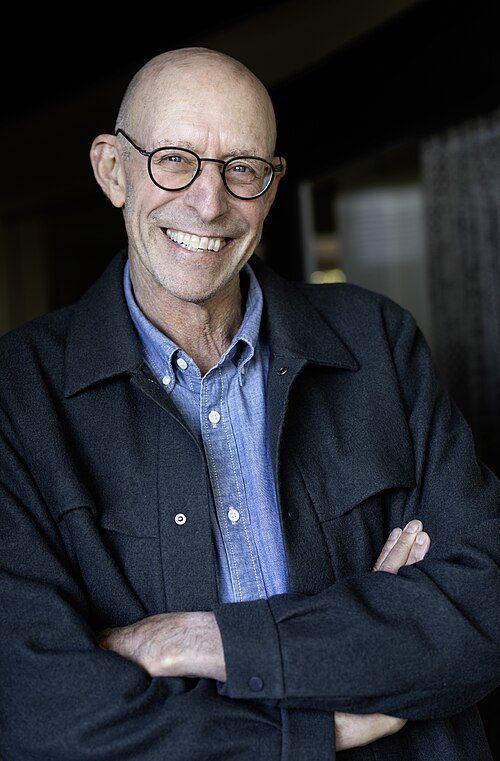
Michael Pollan (American journalist, author, Lecturer at Harvard University, co-founded the UC Berkeley Graduate School of Journalism, received an M.A. in English from Columbia.)
Pollan is not a scientist, but he is a writer who has an opinion about consciousness based on detailed interviews with scientists and consciousness researchers. He defines consciousness as the subjective experience of being alive. Pollan interviews mainstream and recognized researchers like Roland Griffiths, and Robin Carhart-Harris while avoiding fringe theorists. He interviews scientists who are empirically grounded by experimental testing.

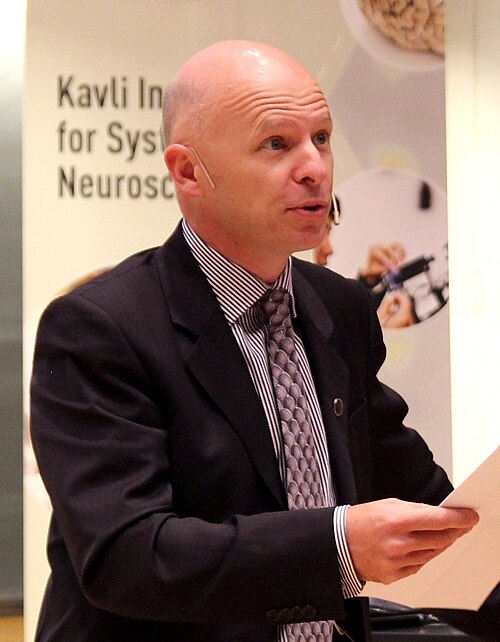
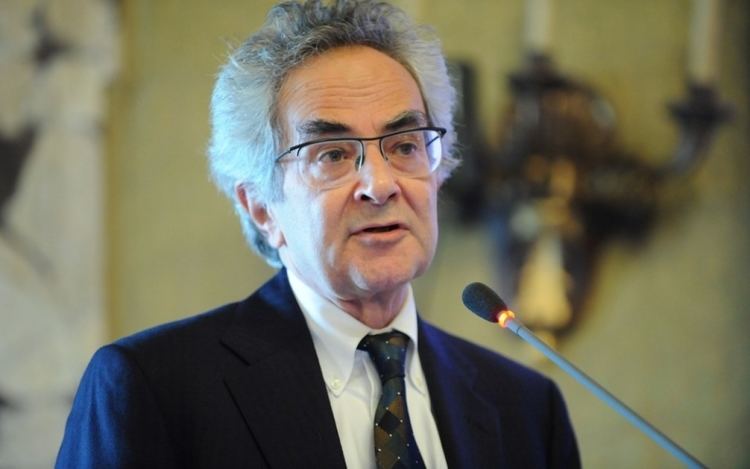
Pollan also reads the works of Tononi, a neuroscientist who investigates “Integrated Information Theory”, Dahaene, a neuroscientist who researched “Global Neuronal Workspace Theory, and Thomas Nagel, a philosopher who coined the phrase “hard problem of consciousness”. He attacks the subject from multiple angles with experimental research done by plant and animal neurobiologists, AI researchers, and psychologists. What Pollan concludes from his interviews is that consciousness is the felt experience of being alive. This broad conception takes in all life based on interviews Pollan has with many science experts and philosophers who work in broad fields of human, plant, and animal life.
Stefano Mancuso (Italian botanist and writer, a professor at the University of Florence and the director of the International Laboratory of Plant Neurobiology.)
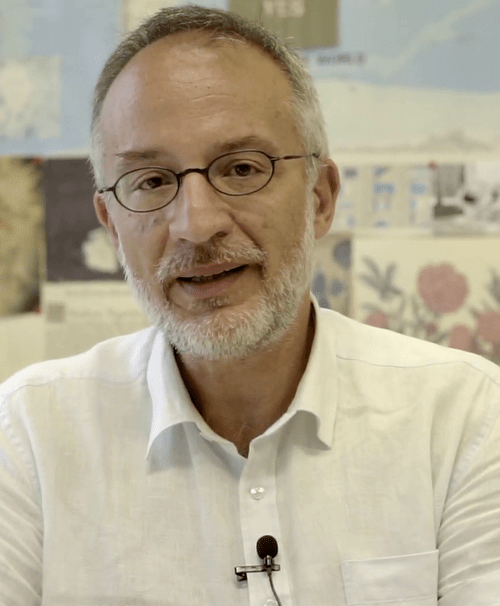
Stefano Mancuso explains vineyard-like plants exhibit consciousness in their drive for growth and survival with roots that behave with “swarm intelligence” to detect a pole nearby. A vinery’s root tips communicate with each other and make a collective decision to grow in a particular direction. Though this process is slower than in the animal kingdom, Mancuso’s experiments show vines preternaturally use their root systems to reach out to a planted pole to improve their growth through photosynthesis. The point of Pollan’s observation about plants is that a brain and neurons may not be required to show and sustain life, but plants appear to exhibit intelligence and sentience without a brain or animal-like nervous system. Plants seem to live without thought or emotion.
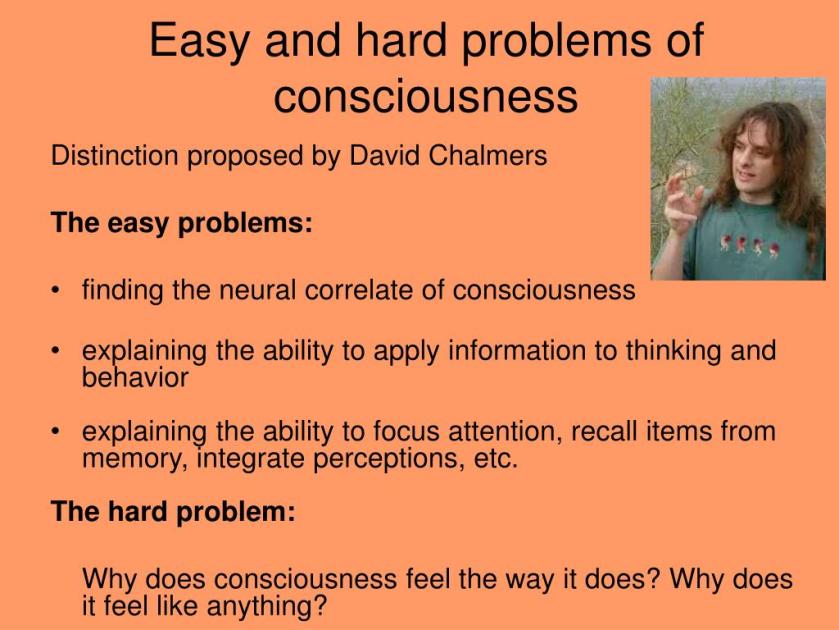
The easy part of consciousness is observed cause and effect. The hard part is knowing where cause comes from and why it arises in the first place.
Based on Pollan’s interviews of scientists and philosophers, he develops a central argument that animal/human consciousness comes from life’s need to maintain stability. However, his argument is that sentience does not come from initiated thoughts but from emotions that generate conscious thought. The implications of that belief are frightening because it may explain why consciousness leads to futile war. If thought process is a follower of emotion, reason plays second fiddle to action. Current events in the world show Pollan may be right. Fear of nuclear annihilation may be the cause of America’s futile war with Iran. Russia’s fear of becoming a lesser hegemonic power may be the cause of Ukraine’s territorial theft. If Pollan is correct, the futility of war will never end with emotion as precursor to thought and action.
Pollan’s interviews with representatives of the science and philosophical communities strongly implies human thought is as likely irrational as rational and may or may not be concerned about survival. The threat of A.I. is that it is used to reinforce the irrationality of emotion as a precursor to thought and action.
What comes to mind is that A.I. might be able to assuage irrational decisions but A.I. is of no help if human thought is initially driven by emotions. A.I. only amplifies the harmful potential of irrational human decisions with thoughts only initiated by emotions. One comes away from Pollan’s book with fear.
Pollan ends “A World Appears” with a journey through philosophy that is interesting but unique to him. Some may become distracted by his personal journey, but his view of consciousness is enlightening and frightening.
A.I. is a tool of human beings and will always be a tool. If Pollan is right that human thought originates with emotion, A.I. regulation, and transparency must be aligned with human values of truth, right conduct, peace, and non-violence. If A.I. is used for military or authoritarian advantage, it may lead to the Armageddon of biblical prediction.


It’s becoming clear that with all the brain and consciousness theories out there, the proof will be in the pudding. By this I mean, can any particular theory be used to create a human adult level conscious machine. My bet is on the late Gerald Edelman’s Extended Theory of Neuronal Group Selection. The lead group in robotics based on this theory is the Neurorobotics Lab at UC at Irvine. Dr. Edelman distinguished between primary consciousness, which came first in evolution, and that humans share with other conscious animals, and higher order consciousness, which came to only humans with the acquisition of language. A machine with only primary consciousness will probably have to come first. What I find special about the TNGS is the Darwin series of automata created at the Neurosciences Institute by Dr. Edelman and his colleagues in the 1990’s and 2000’s. These machines perform in the real world, not in a restricted simulated world, and display convincing physical behavior indicative of higher psychological functions necessary for consciousness, such as perceptual categorization, memory, and learning. They are based on realistic models of the parts of the biological brain that the theory claims subserve these functions. The extended TNGS allows for the emergence of consciousness based only on further evolutionary development of the brain areas responsible for these functions, in a parsimonious way. No other research I’ve encountered is anywhere near as convincing. I post because on almost every video and article about the brain and consciousness that I encounter, the attitude seems to be that we still know next to nothing about how the brain and consciousness work; that there’s lots of data but no unifying theory. I believe the extended TNGS is that theory. My motivation is to keep that theory in front of the public. And obviously, I consider it the route to a truly conscious machine, primary and higher-order. My advice to people who want to create a conscious machine is to seriously ground themselves in the extended TNGS and the Darwin automata first, and proceed from there, by applying to Jeff Krichmar’s lab at UC Irvine, possibly. Dr. Edelman’s roadmap to a conscious machine is at https://arxiv.org/abs/2105.10461, and here is a video of Jeff Krichmar talking about some of the Darwin automata, https://www.youtube.com/watch?v=J7Uh9phc1Ow
LikeLiked by 1 person