CIVILIZATION

Will Durant’s “…Story of Civilization…” is a fascinating view of history, but not a true measure of Western civilization’s origin.

Books of Interest
 Website: chetyarbrough.blog

Our Oriental Heritage: The Story of Civilization, Volume 1 

AuthorWill Durant

Narrated By: Robin Field

WILLIAM AND ARIEL DURANT (Historians, researchers and writers of philosophy. William is born in 1885, graduated from Columbia University with a PhD in philosophy and humanities in 1917, dies in 1981. Ariel is born in 1898, also dies in 1981 but aided William Durant with research and editing.

This 40 plus hour audiobook about the origin of civilization is a daunting undertaking but an interesting perspective. Will Durant was not an anthropologist, but he was an erudite historian, philosopher, and engaging writer with a wife that helped him research, edit, and organize his work. His story telling and philosophical beliefs are certainly challengeable because of the speculative nature of ancient artifacts and cultural interpretations of ancient civilizations. Durant cleverly interprets the political and sociological history of civilizations and their historical and religious beliefs. With the aid of his wife, Durant assigns meaning to those beliefs which are plausible but, at times, he either confuses correlations with causes or stretches one’s imagination too far.

The oversimplification of history.

Professor Goldin has written a history of migration that reminds one of the well-known phrases attributed to Socrates: “I know that I know nothing”.

Anthropologists suggest the Durants oversimplify the complex multi-generation development of human societies. Some agree that an Afro-Asiatic language evolved into other languages, but linguists suggest there are many sources of language that have little to do with a singular origin of language. In the same vein, there is skepticism about their analysis of religious beliefs coming from the East because their presumptions are too deterministic for Eastern beliefs’ correlation with Greek rationalism and Christianity. Like David Hume and Karl Popper advise, “correlation does not imply causation”. Some anthropologists argue the Durants romanticize ancient wisdom and ignore political and brutal realities brought by internecine and external wars. Further, unique societal events and discoveries change civilizations as readily as past knowledge and experience, e.g., like the classical physics of Newton, relativity of Einstein, and quantum mechanics of today.

Eastern civilization’s influence on the West is the subject of the Durants’ expansive story.

It is interesting that Durant chooses Eastern civilizations as a precursor of Western society. That seems plausible based on early humans moving from Africa to eastern shores. He presumes the purpose, goal, and end results of Western society originated in Eastern cultures. Some anthropologists question belief that Western cultural beliefs evolved from Eastern cultures, but Durant argues foundational cultural, intellectual, and technological advance originated in Mesopotamia, Egypt, India, and China; long before the West is populated.

The Red Sea and a Peninsula that connects Africa to the East.

With the origin of human life in Africa, Durant suggests human beings crossed the Red Sea or the peninsula to the continent of Asia to settle the fertile lands of Mesopotamia. The Durants argue early humans developed the Afro-Asiatic Semitic language that evolved into Arabic, Aramaic, Amharic, and Hebrew dialects for Akkadian, Arab, Aramean, Israelites, Phoenician, Moabite, and Ethiopian peoples. Mesopotamia became known as “The Fertile Cresent” and the “Cradle of Civilization”.

Mesopotamia contains the future nation-states of Iraq, Syria, Lebanon, Israel, Palestine, Jordan, Egypt, southeastern Turkey and western Iran.

Durant is criticized for human life’s romanticization, generalization and simplification. His critics argue civilizations’ complexity and societal conflicts are not adequately supported by his opinions and research. Some suggest too much of his opinion is based on secondary sources rather than field work. These are reasonable criticisms, but they do not diminish one’s fascination with his interpretations of others’ field work and opinions. Durant offers an interesting and entertaining story of civilization, but his opinions are only partly right.

The fundamental argument of Durant’s view of civilization is that intellectual, religious, and technological innovations of Eastern societies are foundational beliefs of Western society.

The Durants argue that writing systems, legal codes, mathematics, and religious thought in the West came from the East, i.e. to Durant, the roots of Western thought, governance, philosophical belief, and culture had Eastern origins. Durant’s threads of connection between East and West are not wrong but misleading. Correlation is not proof of causation. If one sees ice cream sales are up and drowning incidents are down, one is obviously wrong to conclude eating ice cream would reduce one’s chance of drowning.

One can believe Eastern culture developed before Western culture because of proximity. To Africa. However, the advance of civilization is not linear. It seems a stretch to believe the East’s civilization laid the foundational beliefs of the West because they are distinctly different because of independent experiences. An African human is not an Asian person just as an Asian person is not a Greek, German, Frenchman, or American. Philosophical, political, and artistic innovations are arguably derivative, but genius offers origination and revolutionary changes in civilizations. Agriculture may have begun in Asia but to infer industrialization is a furtherance of Eastern civilization is as wrong as saying Quantum theory is the furtherance of Western civilization. Civilization is too complex to be characterized as a linear process.

Will Durant’s “…Story of Civilization…” is a fascinating view of history, but not a true measure of Western civilization’s origin.

POLITICAL EVOLUTION

Karoline Kan’s story is very personal, but it offers insight to China that is more informative than many history and political polemics that fail to show what it is to be a Chinese citizen in the 21st century.

Books of Interest
 Website: chetyarbrough.blog

Under Red Skies (Three Generations of Life, Loss, and Hope in China)

AuthorKaroline Kan

Narrated By: Allison Hiroto

Karoline Kan (Author, reporter at Bloomberg, has published in the New York Times, and worked in radio broadcasting, studied at Beijing International Studies University focusing on journalism and writing.)

“Under Red Skies” is a story about Karoline Kan and her life from childhood to adulthood in China. She is based in Beijing, China. Kan writes about life in China before her birth and the change in China after Mao’s death. She provides a rewarding view of China from Mao’s to Deng’s to Xi’s leadership. In ways her story makes one somewhat fearful for her life and freedom, as well as China’s economic miracle and growth as the second most powerful nation in the world. The story of her life presents the puzzle of China’s changing relationship with America and the world. She is subtlety critical of Mao’s rule of China while a beneficiary of the changes wrought by Deng and now Xi in the growing power, economic improvement, and influence of her homeland. She appears to view America positively while being proud of her heritage and particularly appreciative of her mother’s role in her family during great changes in China. She reflects on societal change in respect to the life she lives and what her perceptions are of changes in political leadership wrought by Mao, Deng, and Xi.

The power and importance of mothers is exhibited by a presentation of this “Circle of Life” exhibit in Norway. To this observer, the statue illustrates the great importance of women in nurturing and educating the world’s future generations. The author’s story reinforces that belief.

Ms. Kan’s mother appears to be a formidable objector to some of Mao’s cutural beliefs by being unwilling to kowtow to government policies that conflict with her personal beliefs. Kan’s mother is the driving force behind the move from rural China to a larger community to improve her family’s lives. Karoline is born when the one child policy is enforced in the early 1980s to the 2000s. Karoline is the second child born to her mother. Her mother faced the financial penalties for having a second child and resisted forced sterilization that became the law of the land during her child-baring years. Karoline Kan’s mother appears a force to be reckoned with by traditional male standards in China and a patriarchal bias that exists in most of the world. By that measure “Under Red Skies” seems like an encomium to Karoline’s mother and a tribute to Kan’s bravery in writing a history of her early life and experience as a Chinese citizen.

Our Chinese guide for a 2o18′ tour of China is noted in the essay titled “70% Leadership“. This young guide reminds me of the author, Karoline Kan.

Kan reflects on ambivalent feelings some Chinese citizens have toward America. She expresses surprise that there seems more dislike by China of America than China should have for Japan. History shows conflicts were much greater with Japan than America. Chinese hate of Japan would presumably be more visceral because of deaths from wars and invasions of China by Japan, i.e., the first in the 1894-1895 Sino-Japanese war; then the invasion by Japan in Manchuria in 1931, a second Sino-Japanese war in 1937-1945, and the Nanjing Massacre that killed an estimated 200,000 to 300,000 imprisoned Chinese citizens. The estimate of Chinese casualties from Japan in these conflicts is 15-22 million. Of course, America fought the Chinese in the Korean war in the 1950s but the casualties were 400,000, with the possibility of as many as a million who died from injury, disease, and exposure. More likely, the hate of America is from the context of China’s ambition to be “second to none” in power and influence in the world. In the end, “ambivalence” is not the same as hate. Having traveled to China just after Xi’s rise to power, my wife and I felt very welcome by most Chinese citizens and businesses.

Communism is a political system that does not believe in God. Of course, neither do Buddhist or Taoist traditions which are the human practices and belief in personal truthfulness, compassion, and forbearance, i.e., spiritual beliefs about living life on earth because that’s all there is to life. There is no after life or heaven to a Buddhist or Taoist. These two spiritual beliefs are practiced widely in Japan and some places in China, like Tibet. Falun Gong, a Buddhist-like religion, arose in 1990s’ China. In the beginning, China accepted its practice, but the Communist Party eventually fought against its growth and labeled it a “heretical organization”. The Party obviously felt Falun Gong interfered with communist ideals. Additionally, there is the ongoing conflict between the Dali Llama and Tibetan belief (a branch of Buddhism) that is also reviled by China’s political leadership. The point is that communism demands fealty to belief in a classless, stateless society, not controlled or influenced by any social or economic belief other than those of the communist’ party. (One cannot help but reflect on Lord Acton’s phrase about “power” that is at the heart of all forms of government in history.)

Kan’s best friend, who finishes high school at the same time as Kan takes a different path, i.e., either because of her work in school, the poverty of her family, or the “bump” that changes her life.

The last chapters of Kan’s story are the personal journey of women in China. Kan is accepted at a University in Bejing. Marriage has evolved in China but still has many of the same matrimonial customs. Marriages of the past were highly arranged and had little to do with love or attraction. In modern China, marriages have become less determined by family arrangement but more by circumstances of a child’s experience. Like children around the world, parents influence but have limited control over a child’s libidinal impulses. The author’s closest friend becomes pregnant from the son of a poor family that is unable to compensate the daughter’s family in a way that some arranged marriages would provide. The lower dowry implies Kan’s friend is destined to live a life of poverty. Kan shows her to become a factory worker to supplement the family’s income. Her work is hard and highly repetitive but the income from both parents working helps them live better lives. With a husband, wife, and one child, her friend decides to have an abortion because another child would be too expensive for them to live a decent life.

Beijing International Studies University is the school Kan attends and receives a degree.

In contrast to Kan’s friend’s life, Kan goes to college where she is housed with women she does not know but are of her age. Kan’s family is presumably able to help her with expenses, and she goes on to become a journalist and writer. Interestingly, all women (and presumably men) are obligated to serve 2 to 4 weeks of military service before beginning a career-related’ education. The implication of this type of regimentation for all college students implies China has wider international ambitions.

The change in China’s culture with the leadership of Deng and Xi is revealed in Kan’s story. It shows the strengths and weaknesses of capitalism and communism. China’s dramatic economic growth is a result of the endorsement of capitalism with a communist autocratic influence. Interestingly, Kan shows China seems on a road to become more American while America seems to become more Chinese.

Kan’s story is very personal, but it offers insight to China that is more informative than many history and political polemics that fail to show what it is to be a Chinese citizen in the 21st century. Kan shows how both China and America have less than perfect systems of government.

PHYSICS

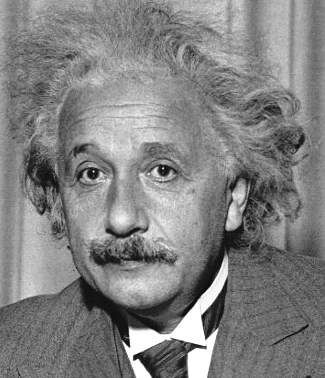
Becker does not tell listener/readers anything new about reality in his book, but he outlines the difficulty Physics is having in trying to discover “What is Real”. For this reviewer, Einstein remains the sun around which Physics’ scientists revolve.

Books of Interest
 Website: chetyarbrough.blog

What is Real (The Unfinished Quest for the Meaning of Quantum Physics)

AuthorAdam Becker

Narrated By:  Greg Tremblay

Adam Becker (Author, science writer with a PhD in astrophysics from the University of Michigan and a BA in philosophy and physics from Cornell.)

This is an excellent story about the meaning of quantum physics even though the answer remains elusive. Becker does a great job of revealing the personalities of great physicists of the twentieth century, i.e. Niels Bohr, Albert Einstein, Erwin Schrödinger, David Bohm, Werner Heisenberg, John von Neumann, Hugh Everett III, John Bell, and to a lesser extent, Paul Dirac, and Grete Hermann.

Bohr is shown to be a brilliant person who gathers the luminaries of physics around him like a queen bee to a beehive. Surprisingly, Becker notes Bohr’s abstruse and convoluted verbal and written explanations of physics cloud his brilliance but fascinate and inform young scientists. In contrast, Einstein appears like a sun that physics’ luminaries revolve around. Einstein never accepts the idea of quantum physics that implies we live in a probabilistic world. David Bohm is a brilliant physicist exiled for his political beliefs but importantly theorizes the Pilot-wave theory for quantum physics that suggests wave collapse is immeasurable and therefore meaningless. If true, the “cause and effect” world insisted upon by Einstein is correct. Surprisingly, Einstein demurred but the theory is being resurrected by Logical Positivist today.

Though Heisenberg creates the idea of Quantum theory that argues for a probability world, he becomes a Nazi science leader who fortunately fumbles the mathematics that could have created an atom bomb for Germany during WWII.

As a protege of Bohr, the theory of a Quantum world takes hold of scientists. John von Neumann is shown as a mathematical genius who challenges Bohm’s Pilot-wave theory because quantum mechanics appears to work and is proven by experimentation. Bohm argues, like Einstein, that the universe is fundamentally knowable and deterministic, not probabilistic. Hugh Everett III is taken under the wing of John Wheeler who is Everett’s PhD advisor at Princeton. Everett is characterized as a brilliant student who takes the idea of the disappearance of a collapsed quantum particle not as a collapse but an entry into another world, another dimension of reality.

Having read and partly understood many books about physics, Becker’s history is most entertaining because of added information about physicists’ personalities and disagreements, along with their personal trials and tribulations.

An added benefit is a little more understanding of physics that is offered to dilatants of science like this science ignoramus.

Pilot Wave Theory suggests the collapsing wave shown by quantum experiments is of no concern and that it should be ignored as a factor for non-predictability.

Putting aside collapsing waves in theoretical physics, the pilot wave theory, also known as Bohmian mechanics, was the first known example of a hidden-variable theory, presented by Louis de Broglie in 1927. Its more modern version, the de Broglie–Bohm theory, interprets quantum mechanics as a deterministic theory, and avoids issues such as wave function collapse, and the paradox of Schrödinger’s cat by being inherently nonlocal. This nonlocal experimental proof violates Einstein’s physics beliefs.

The surprising reveal in Becker’s history is the growing belief in Logical positivism which suggests the argument for quantum mechanics is flawed.

As one goes back to Bohm’s Pilot-theory. The surprising reveal in Becker’s history is the growing belief in Logical positivism which suggests the argument for quantum mechanics is flawed. The inability to measure both position and momentum is not proof of the theory because it is not an observable phenomenon. In a backward sense it implies Einstein is still the sun around which physics scientists orbit. An irony is that Becker believes Einstein would not want to be considered a Logical Positivist.

John Stewart Bell (1928–1990) was a Northern Irish physicist whose work reshaped the foundations of quantum mechanics.

Bell is best known for formulating Bell’s Theorem, a landmark result that showed how quantum mechanics predicts correlations between entangled particles that no local hidden-variable theory can explain. In one sense, that theory suggests as Einstein believed, that there is an undiscovered theory that will return physics to a cause-and-effect world. However, belief in non-locality is something Einstein could not accept. He refused to believe in “spooky action at a distance”. Bell was born in Northern Ireland. His fascination with science led him to CERN in Geneva where he worked on foundational questions in quantum theory.

Bell’s work laid the groundwork for quantum information science, including quantum computing and cryptography.

Bell came from a modest background and rose to prominence through sheer intellectual brilliance. He worked at CERN in Geneva, where he pursued foundational questions in quantum theory as a kind of “hobby” alongside his main work in particle physics. His 1981 paper “Bertlmann’s Socks and the Nature of Reality” used a quirky analogy to explain quantum entanglement and the Einstein–Podolsky–Rosen paradox.

LHC MAP SHOWING CERN SITE

Bell wasn’t just a theorist—he was a philosopher of physics in the deepest sense, asking what quantum mechanics tells us about the nature of reality itself. Bell derived mathematical inequalities—called Bell inequalities. He believed that any local hidden-variable theory must obey these inequalities. However, quantum mechanics predicts violations of these inequalities under certain conditions. Bell is reintroducing the belief that quantum particles are fundamentally probabilistic and interconnected in ways that defy classical intuition. The universe doesn’t follow the rules of local realism. Quantum mechanics is correct, but it’s weird—deeply weird and challenges Einstein’s belief that physics are a local phenomenon that will be predictable based on an undiscovered truth.

Logical positivism and Bell’s Theorem intersect in a fascinating way. Bell’s Theorem challenges some of the foundational assumptions that logical positivists held about science, meaning, and reality. Because of “spooky action at a distance”, his theory defies Einstein’s belief in locality and reintroduces the concept of unpredictability which Einstein refuses to believe.

As a philosopher, Hermann (19o1-1984) had a particular interest in the foundations of physics. In 1934, she argues for a conception of causality with a revised view of quantum mechanics. Her work reinforces Einstein by returning Quantum Physics to predictability and causality. Hermann concludes–despite experiments that showing quantum mechanics are probabilistic, the theory is wrong because of a misunderstanding of nature. This seems like a cop-out supporting Einstein’s belief that there are some undiscovered laws of physics.

Becker does not tell listener/readers anything new about reality in his book, but he outlines the difficulty Physics is having in trying to discover “What is Real”. For this reviewer, Einstein remains the sun around which Physics’ scientists revolve.

RELIGION

As a mirror and catalyst for change and hope, Professor Mark Bergson offers an excellent review of the world’s religions.

Books of Interest
 Website: chetyarbrough.blog

Cultural Literacy for Religion (Everything a Well-Educated Person Should Know)

Lecturer: Mark Berkson

By:  The Great Courses

Mark Berkson (Professor and Chair in the Department pf Religion at Hamline University)

Professor Berkson provides an excellent overview of the most important religions in the world in his lectures. Though this reviewer is not a person who follows any religion, Professor Berkson offers a broad understanding of religious beliefs and their differences in his lecture series.

CHRISTIAN, ISLAMIC, AND HINDUIST RELIGIONS HAVE THE MOST FOLLOWERS

The three religions with the greatest number of followers are Christian, Islamic, and Hinduist which are categorized as a transcendent group of religions. In broad terms, their beliefs are in salvation, divine revelation, moral law, and a soul’s journey toward a divine being as the ultimate truth and value of life. These religions reflect on both the first and second categories of religion because they transcend the self to either a divine or a more centered understanding of oneself.

A third category would be followers of a sect of Buddhists adherents, Jainists, or Confucianists which believe in enlightenment, discipline, meditation, and moral cultivation of oneself in relation to nature, the cosmos, and everyday life. This third category is not centered around a divine being but around self-effort to create ethical harmony among human beings that will offer peace to all.

Thích Nhất Hạnh was a most famous Vietnamese Thiền Buddhist monk who believed and taught self-effort to create ethical harmony in oneself. (Died at age 95 in 2022.)

Berkson notes Daoist’s, Shinto’s, and some Buddhists (like Thích Nhất Hạnh) believe in the balance, flow, and interconnectedness of living in accordance with nature. He categorizes these religions as “religions of immanence”.

Tenzin Gyatso (the 14th Tibetan Dalai Lama, exiled in India from his native land in China, represents the Buddhist idea of self-transcendence.)

Berkson explains religion became important to civilization because they made living life more important than just survival. Religion gave meaning to life. Religion also provided social and moral order to life. Religion gave comfort in time of grief, fear, and uncertainty. Religion inspired societies to be creative to build cities, and create art. Religion provided a belief in something greater than oneself and the possibility of transcendence beyond earthly existence.

As one listens to Berkson’s lectures, one wonders whether religion has been more positive than negative in civilization’s development.

Berkson tries to sit on a fence between two extreme opinions. One is the positive contributions of religion to human moral and ethical belief. On the other, religion has aggravated social comity by creating differences. Different religious beliefs have murdered or demeaned millions of human beings who believe only their religion is important. If you defile the truth of my religious belief, you are not one of us. On the one hand, religion brings people together and grows cultural and artistic beliefs. On the other hand, religious belief creates silos that suppress inquiry, reinforce prejudices, and delegitimize political authority. Belief in a religion can advance understanding of human nature but at the same time suppress any inquiry into faith or science.

One will better understand specific religious beliefs as a result of Bergson’s lectures.

Bergson notes tensions between religious beliefs are the basis upon which many social and human atrocities have occurred. Christianity notes that no one comes to God except through Chistian belief while Hinduism believes there are many paths to the divine. Exclusivity in religion may not cause a war, but it certainly creates tension. The core beliefs of Judaism, Christianity, and Islam have led to millions of deaths because of distinctions made between the word of God in the Hebrew Bible, Christian old and new testaments, and the Qur’an.

As a mirror and catalyst for change and hope, Bergson offers an excellent review of the world’s religions.

However, in the history of yesterday and today, the Jewish holocaust of WWII and slaughter of Palestinians in Gaza rend one’s heart. To quote Rodney King amid the Los Angeles riots, “Can we all get along?”– apparently not.

LIFE IS LIQUID

Miodownik explains liquids are everywhere and influence every aspect of life on earth. As a scientist, Miodownik explains understanding liquids is understanding life.

Books of Interest
 Website: chetyarbrough.blog

Liquid Rules: The Delightful and Dangerous Substances That Flow Through Our Lives

Author: Mark Miodownik

Narrated By:  Michael Page

Mark Miodownik (Author, British materials scientist.)

Mark Miodownik offers some interesting information about liquids in “Liquid Rules”. It seems Miodownik had some spare time on a long plane trip. Though many know some of what the author explains, it is interesting for listener/readers who don’t think about the importance of liquids in our lives. For example, Miodownik notes how and why Kerosene is the fuel that powers jets.

The qualities of kerosene make it an optimum choice for jet propulsion.

Kerosene is safer to handle because high temperatures are required for ignition which makes it safer than gasoline. It has a low freezing point that allows high-altitude flight where sub-zero temperatures exist. Its viscosity allows it to flow in cold or hot conditions which reduces risk for fuel line’ clogging. Kerosene carries high energy production per unit of volume for longer flights. It is cheaper to refine than other fuels. And most importantly, it is chemically stable which reduces risks of vapor lock or premature combustion.

As Miodownik wings his way across the earth, he casually mentions Susan is a passenger on the same transatlantic flight who is offered a glass of wine.

She suggests wine testing is really a performance art. Her remark is an introduction to Miodownik’s more scientific examination of the sensory and symbolic dimensions of wine tasting. Miodownik explains the role of tannins, taste, and the rituals around drinking a glass of wine. He explains a connoisseur’s way of swirling a glass of wine before his/her nose to sense the bouquet of the libation. One imagines Susan looking askance at Miodownik’s academic review of her off-the-cuff remark. Who is this guy? Is he hitting on me?

Presumably, Miodownik sits back and contemplates the creation of a book about liquids.

Miodownik seems slightly discomfited by his seatmate’s look at him. Does he regret his forwardness in addressing her comment like a nerd? There is a sense of humor and a touch of irony in Miodownik’s choice of subject. One wonders what a woman’s response might be to a person she does not know explaining what she intended when she spoke of wine tasting as an art. In any case, Miodownik has introduced his subject.

As Miodownik’s thoughts move on about a book about liquids, he recalls the invention of ink.

Here is an invention with purpose. He notes the creation of ink that is made to flow predictably, dry quickly, and remain legible for years. The idea of a liquid that makes history, science, and art for the ages, i.e., an eternal gold mine for future generations. Ink reaches back to the caliphs of the Maghreb, rulers of Islamic caliphates in 7th century, northwest Africa. Ink connects with the evolution of the colors of red, green, and blue. From fountain pen writings to pointillist art the creation of ink plays a critical role in modernization of the world.

Water is the foundation of life.

Most know water is an essential need for life as we know it. What is often less thought of is that water is a universal substance that underlies world climate and biological life. Miodownik notes that water is a universal substance that underpins life and the climate systems of the world. It is the vehicle of human metabolism, emotional expression of fear, pain, happiness, and the world’s climate.

Production sweat shops.

Humans produce sweat and a quart of saliva per day. Saliva aide’s digestion, hygiene, health, and emotional expression like crying, anger, or embarrassment. Sweat regulates the bodies temperature. Water plays a role in the advance of technology with the creation of liquid crystal displays (LCDs) and OLEDs that power modern screens in phones and aircraft panels. Digital watches, cell phones, movies and general entertainment are a result of liquid’s existence. The irony of water as a liquid is that it can nurture as well as destroy. It refreshes life through cleaning, and food production, but also floods land, drowns life, and erodes soil upon which life depends. Water is an agent of comfort as well as chaos.

Miodownik explains liquids are everywhere and influence every aspect of life on earth. As a scientist, Miodownik explains understanding liquids is understanding life.

Aside from global warming, Miodownik notes the growing issue of plastics pollution and potable water availability will plague humanity. He argues humanity needs to come to grips with earth’s need for natural sustainability. Roads, houses, food, and potable water need to be designed to renew themselves without introduction of new materials or resources.

LIVING LIFE

Human nature is universal, but it is also particular. In that particularity, “Ikigai” may or may not work for you or me. That is not to say the philosophy of “Ikigai” cannot lead one to a better life but only you can decide.

Books of Interest
 Website: chetyarbrough.blog

Ikigai (Japan’s Secrets to a Long and Happy Life)

Author: Hector Garcia, Fransec Miralles

Narrated By:  Oscar López Avila

In planning a trip to Japan in September 2025, “Ikigai” is a recommended book by our Japanese guide. Surprisingly, the authors are born in Spain.

“Ikigai” is a Japanese philosophy about life and its value.

As understood by Garcia and Miralles, “Ikigai” is a guide to a meaningful and fulfilling life. As a philosophy, “Ikigai” is not about life’s destination. “Ikigai” is a compass to give one direction for a meaningful and fulfilling life. The principles of “Ikigai” revolve around a healthy diet, high quality health care, community ties that limit one’s isolation, physical routines, mindfulness, and stress reduction. Those who practice the philosophy of “Ikigai” in Garcia’s and Miralles’s opinion will live happier, healthier, and more fulfilling lives.

Life’s value.

Garcia and Miralles suggest the demographics of Japan are proof of the value of “Ikigai”. The highest number of citizens over 100 years of age live in Japan. The average life span of men and women in Japan is 85; for Americans, the average is 79.61. The authors suggest longer lives of Japanese is because of their practice of following the principles of “Ikigai”. Of course, the length of one’s life is not the point, but the quality of one’s life is everything.

Diet, healthcare, sociability, and daily routines reduce stress. These are guidelines for an “Ikigai” way of life.

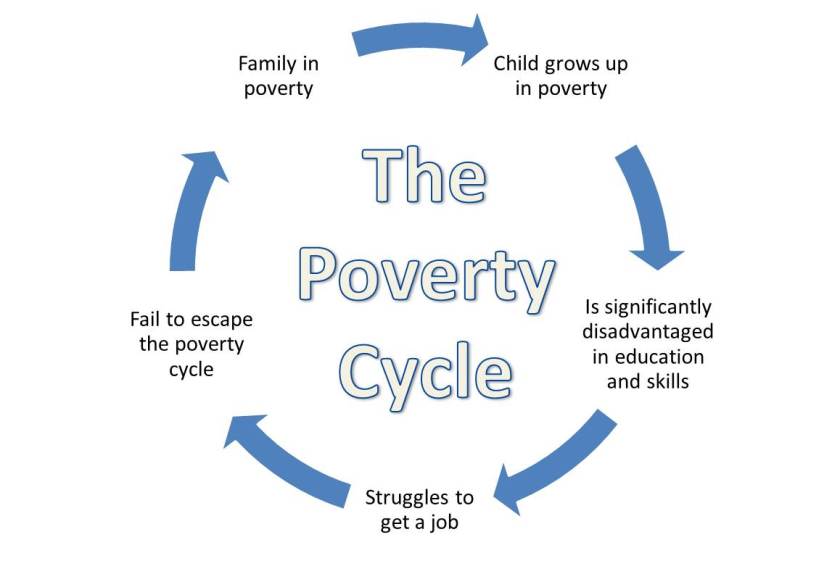
There are no surprises in these guidelines. Diet is to consume fruits, vegetables, fish, limited red meat, with few sweets containing processed sugars like white, brown, powdered, or high-fructose corn syrups. Healthcare should be provided through universal coverage. Sociability is encouraged to avoid isolation. Daily walking, stretching, moving around, and being mindful of one’s activity should be a part of a person’s lifestyle. Find what reduces your stress and practice those activities. These are familiar guidelines but not often practiced because of the stresses of the culture in which people live. Many try to escape the stress of their cultures with bad eating habits, poor physical routines, and social isolation. Some fail to follow these guidelines because they are too poor to care.

Human frailties like hearing loss, vision loss, or physical deterioration.

There are a number of difficulties with the guidelines noted by Garcia and Miralles. Finding a way of life that fulfills the ideals of “Ikigai” discounts the nature of human beings. It is impossible to ignore the personal instincts, drives, physical maladies, and cognitive abilities of different human beings. One size does not fit all because of these differences. Human nature may be universal, but it is not the same because human history, physical limitation, culture, and individual experiences are different. If the cultures in which you live do not offer universal health care, one is on their own. A capitalist culture operates in a different way than a socialist culture. Poverty, levels of education, and government influence exist in every culture and by nature distort what use can be made of “Ikigai” guidelines.

Human nature is universal, but it is also particular. In that particularity, “Ikigai” may or may not work for you or me. That is not to say the philosophy of “Ikigai” cannot lead one to a better life but only you can decide.

FARMLAND

Historically, collectivization of land has failed even when those who are part of the collective are better off than they were when they had no land.

Books of Interest
 Website: chetyarbrough.blog

Land Power (Who Has It, Who Doesn’t, and How that Determines the Fate of Societies)

Author: Michael Albertus

Narrated By: Braden Wright

Michael Albertus (Author, professor at the University of Chicago in the Department of Political Science.)

Michael Albertus develops a powerful argument for “Land Power”. Much of history and current events in relatively undeveloped countries are identified as proof of Albertus’s belief that “Land Power” is key not only to economic growth but to social improvement. He reflects on the history of Great Britain, France, and the United States while noting current affairs in developing countries like Peru, Columbia, and Bolivia support his argument.

The unfortunate truth of history is that indigenous populations, particularly in America and Great Britain, were displaced in order for “Land Power” to be the engine for economic prosperity and social change. In the case of America of course, it is the displacement of North American natives by English settlers who became Americans. In contrast Great Britain’s “Land Power” comes from a landed aristocracy and their subjugation of foreign cultures with autocratic control and rule of Asian and European countries. In France, Kings and an aristocratic government’s rejection by commoners in 1789 seem the motive force behind “Land Power” ascension.

For Peru, Columbia, and Bolivia Albertus infers examples of Britain, America, and France set a table for “Land Power” change by their governments. In my opinion, the age of technology has diminished “Land Power” importance in America, Great Britain, and France.

“Land Power” still carries weight in America, Great Britain, and France but in the tech age it seems the power of accumulated wealth has become more powerful than land. However, Albertus’s “Land Power” argument in regard to South American countries like Peru, Colombia, and Bolivia are compelling in regard to their economic and social improvement. Albertus notes private land ownership and recognition of women’s rights to own property, show that “Land Power” is a source of economic and social improvement in South America. He suggests countries like Mexico are being challenged by their failure to reform land ownership policies but today’s leaders in Peru, Columbia, and Bolivia have made significant land reform changes.

Albertus explains the major reform movement between 1969-1980 made by General Alvarado in Peru.

General Alvarado ordered nearly half of all private agricultural land be redistributed among Peruvian citizens. He dismantled large estates to empower peasant cooperatives. It has not been a perfect solution because it created an insurgent group called the Shining Path that pressed for a Maoist collective land reform for the redistributed Peruvian estates. Just as collective farms failed in China, they failed in Peru because common gains in collectives did not fairly reward performance. Collective farms distort the needs and results when a collective rather than a singular leader is responsible for performance of the collective. Nevertheless, the steps taken to dismantle half of private agricultural land, is considered by Albertus a step in the right direction because it incentivized many Peruvians who were living in poverty.

In Colombia, in 1966 through 1970 President Restrepo redistributed agricultural land to former agricultural laborers.

FARC (Revolutionary Armed Forces of Colombia) is organized in 1964 to offer peasant self-defense for actions soon to be taken by President Restrepo to reduce land ownership inequality. Between 2010 and 2018, President Santos negotiated with FARC to settle disputes between former landowners, and new farmers that benefited from land redistribution. There is still conflict because of FARC’s false belief in collective farming which has been proven a failure in other countries, but President Santos and his successors have created a path, though no solution, for reform through the hope for understanding and compromise. Albertus infers land reform is a work in progress, not a perfect solution.

Land reform in Bolivia spans 1953 and the early 2000s.

Presidents Estenssoro (1952-1956) and Evo Morales (2006-2019) worked on land reform along the same lines as Peru and Colombia. Large estates were broken up in 1953 and redistributed to peasants. Morales clarifies indigenous land rights but formalized communal ownership of redistributed land. This is another example of a work in progress because collectivization may be a step in redistributed land, but it has not proven to be a long-range benefit to a country’s citizens. It becomes too divisive and unrewarding for optimum performance and fair rewards for those who excel.

One who read/listens to Albertus’s insight to land reform believes his story has merit but his history is too optimistic when a little additional research shows land reform is a losing proposition when not fully supported by institutions that had implemented change.

History shows land collectivization when large landowners lose their land is a fool’s errand because it fails to reward those who excel as part owners of redistributed land. Human nature gets in the way. Those who work harder than others expect to have proportionate reward. Collective farming disincentivizes personal high performance. Historically, collectivization of land has failed even when those who are part of the collective are better off than they were when they had no land.

CAPITALIST DEMOCRACY

America’s current government may not be the criminal enterprise of Drew Hayes’ “Forging Hephaestus”, but it reflects on the worst characteristics of capitalist democracies.

Books of Interest
 Website: chetyarbrough.blog

Forging Hephaestus: Villains’ Code Series, Book 1 

Author: Drew Hayes

Narrated By: Amy Landon

Drew Hayes (Author, humorist writer who earned a BA in English from Texas Tech University.)

“Forging Hephaestus” is the beginning of a series of books that this critic is unlikely to complete. The first book, “Forging Hephaestus” sets the table for some interesting points about systems of power, identity, and morality that reminds one of government control and influence. However, Hayes is creating a secret guild of criminals’ intent on ruling the world of crime.

Drew’s story begins with the creation of a young woman that embodies the force of fire.

She is like the mythological god of fire though not appearing as someone who is male or has, as the Greek myth goes, any physical imperfection. One presumes the author is challenging the patriarchal truth of history that shows power, aggression, and ambition are not only masculine. Additionally, the choice of Hephestus as a woman makes one think about a person who exemplifies both creation and destruction, i.e., the birth and death of humanity.

If one thinks of Hayes’ story as a cynical allegory of government, rather than a criminal enterprise, it becomes more interesting to this reviewer.

What Drew describes as a Villains’ Guild is like a government elected by people who believe they are voting for someone who represents their interests. In reality, voters are voting for self-interested people who may or may not govern in voter’s best interest. At best, governments try to serve the public but are not gods of infallible understanding that can legislate what is always in the best interest of its citizens. Generally, governments control through compliance, not morality. Order is prized over justice and equity. That desire for order changes elected officials’ loyalty to those who are elected as much as to people who voted for them.

The guild that Hayes creates audits and enforces their criminal objectives with state surveillance and internal security.

State surveillance and internal security are the same tools used by government which are even more effective today than in the past because of technology. (A past trip to China after Xi had taken power shows how internet searches are restricted when one is in a Bejing’ hotel.) The paradox of surveillance and internal security is that no one is truly free whether they are a part of those who govern or are the governed. Human nature exploits the weak, the ethnic, and ill-informed. Government representatives are no more virtuous or venal than the citizens who elected them. That is why citizens become skeptical about the legitimacy of their government’s concern about common good.

Trump’s world view.

Listening/reading “Forging Hephaestus” is an apocryphal story to some who feel President Trump is the quintessential example of one who is more interested in himself and his family’s wealth than the people who voted for him. America’s current government may not be the criminal enterprise of Drew Hayes’ “Forging Hephaestus”, but it reflects on the worst characteristics of capitalist democracies.

WHO ARE YOU?

Greene explains self-awareness of introversion or extroversion is key to understanding one’s social limitations and blind spots in being a constructive part of society.

Books of Interest
 Website: chetyarbrough.blog

The Laws of Human Nature

Author: Robert Greene

Narrated By: Paul Michael & 1 more

Robert Greene (Author, with several NYT’s bestsellers addressing human nature, graduated with a degree in classical studies.)

“The Laws of Human Nature” is a tour deforce of what one learns in life about being a good manager. The difference between a technically excellent employee and a manager is that the first has skill in doing things while the second has skill in managing those who do things. Occasionally, one can be both, but as the complexity of life increases, the likelihood becomes rarer. Human nature revolves around behavior and one’s psychological characteristics. Greene argues there are fundamental laws of human nature that can enlighten listener/readers about themselves and others.

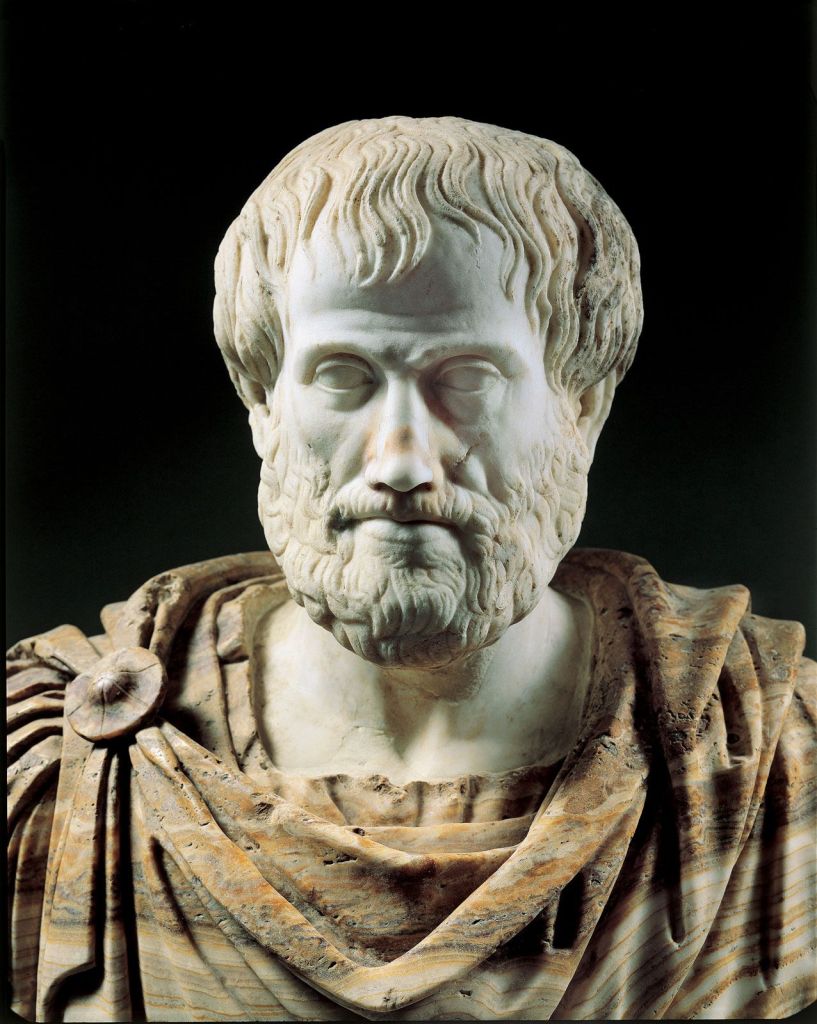
Aristotle’s, Hobbes’, Rousseau’s, and Darwin’s views of human nature have different perspectives. Aristotle believes human nature is teleological with a belief that we all have purpose that is revealed by reason and virtue. Hobbes believes humans are innately self-interested and capable of both good and bad behavior. Rousseau believes humans are inherently good but corrupted by society. Darwin believes humans evolve through natural selection and will do whatever is necessary to survive. Of the four perspectives, Aristotle seems the most idealistic while the other three account for human nature’s irrationality.

Greene suggests humans can be irrational, narcissistic, misleading, and sometimes repressive.

What one can draw from his book is how those characteristics exhibit and what one can do about it. The potential of irrationality exists in everyone. It can cause fear, envy, insecurity, and desire. Bias is at the heart of these emotions. He turns to ancient history to give the example of the war between Spartans and Greeks that may have been avoided if heightened emotions had not been aggravated by a plague in Greece and the death of Pericles who had a rational plan to avoid war. Greene suggests Augustus defeats Anthony to become ruler of Rome because of Anthony’s neglect of his duty as leader of Rome for the desire of the Egyptian Queen, Cleopatra. Greene notes irrationality is a universal characteristic of humanity. The anecdote is to calm one’s emotions, clearly understand what it is that you fear, and to mirror back that clear understanding to yourself and change your behavior.

One can see narcissism in themselves or others when one seeks admiration, overreacts to criticism, has no interest in others perspective, or manipulates others by ignoring or emotionally withdrawing attention.

Married people often do this with their significant other. Greene explains self-awareness, seeing others through their eyes, redirecting your energy to something more important, and being more disciplined can abate narcissism. He notes narcissism is not a flaw but a force that can be turned to good. The history of Oppenheimer, considered by some to be narcissistic, is noted as an example of someone who saw the big picture of life and the consequence of war. He came to understand something bigger than himself and successfully manages other scientists to create the first nuclear bomb. The contrary of a narcissist who could not see the big picture is the story of Howard Hughes who could not manage his father’s company or his entry into the film industry because he could not get things done through other people. He believed only he could handle the complexity of a film production and plane manufacturing company. No one could work under him because of his uncontrolled narcissism that interfered with others he hired to help him manage businesses bigger than one mind could control. His managers resigned because he would not allow them to do the job they were hired to do. Hughes failed as a movie producer and plane manufacturer because of his narcissism.

Bernie Madoff (Born 1938, died in Federal Medical Center in 2021)

History is festooned with misleading information by people who distort the truth in order to achieve their personal goals. Greene recalls the history of swindlers like Bernie Madoff that lied to his investors about investments that were Ponzi schemes that fed his investment company’s growth, not from honest investment in publicly traded stocks or business enterprises.

Stalin in Russia, is the penultimate example of a psychological characteristic of repression. One suspects the same is true of Putin. Even America’s President Trump could be characterized as a narcissist. He used federal power to investigate and punish political opponents. Trump politicized the civil service by conducting mass firings to replace employees that were loyal to his agenda. Justice Department’ independence has similarly been restructured. Trump suppresses dissent and free expression by cracking down on student protests, detained and deported not only illegal immigrants but U.S. citizens. He ended asylum protections and militarized crackdowns with the use of the National Guard and U.S. marines to aid ICE in deporting undocumented immigrants and quelling public opposition. All of these actions are examples of an increasingly repressive American President. There were similar arguments about Franklin Roosevelt in his early actions to rescue America from the pre-WWII’ depression.

Greene goes on to explore personality types that are a combination of extroversion and introversion characteristics.

He notes both characteristics have strengths and weaknesses. Extroverts generally have more social fluency, have a more charismatic presence and higher social visibility. They can also become subjects of envy or derision because of their high profile. Greene suggests they are more vulnerable to manipulation because their habits reveal too much about themselves. They become more susceptible to groupthink rather than individual judgement. On the other hand, introversion has equivalent but different strengths and weaknesses. Introverts have more control over themselves because they reveal less of themselves to others. They are naturally less likely to succumb to groupthink. On the other hand, they tend to misread socially valuable influences because of their isolated view of the world. They fail to offer their opinion because of fear of self-exposure and ridicule which diminishes their understanding of beneficial social norms.

Greene explains self-awareness of introversion or extroversion is key to understanding one’s social limitations and blind spots in being a constructive part of society. However, his analysis of “The Laws…” of human nature becomes tedious because it offers too many examples and views of biases and their anecdotes for most listener/readers to be patient enough to complete his book. Nevertheless, Greene’s first chapters are enlightening and worth one’s time.

ANARCHY

In reading/listening to Chomsky some will conclude he is wrong about there ever being a nation-state that will be successfully governed as an Anarchy because of the nature of human beings.

Books of Interest
 Website: chetyarbrough.blog

On Anarchisn 

Author: Noam Chomsky, Nathan Schneider

Narrated By: Eric Jason Martin

When one thinks of a political system called Anarchism, the first thing that comes to mind is a vision of rampant disorganization where there is no sense of direction or social cohesion.

Noam Chomsky is a polarizing figure who is admired as an anti-capitalist and anti-imperialist who fiercely criticizes U.S. and Israeli foreign policy. He views Israel as a client state of the U.S. that relies on authoritarianism to manage their countries roles in the world. He notes America’s interventions in Vietnam, Central America, Iraq, and Afghanistan as evidence of America’s failure as a democracy. He views Israeli foreign policy in regard to Gaza as infected with hypocrisy and violence with a narrow view of territorial expansion. He feels both America and Israel are driven by strategic and economic interests, not by the idealism of democracy.

Chomsky is a fierce critic of capitalism and imperialism because both marginalize citizens’ freedom of thought and action.

Chomsky’s view is that anarcho-syndicalism is a better form of government where power is decentralized and citizens can and should collectively manage their own affairs through direct democracy and cooperative organizations. He argues for participatory democracy by voluntary associations that are freely formed into cooperative communities. There should be no centralized authority with all workplaces and production controlled by the workers themselves. He believes in libertarian socialism because he sees it as the most humane and rational extension of Enlightenment ideals in society. Any authority exercised by a government entity in a libertarian socialist country, in Chomsky’s opinion, is the most humane and rational extension of the ideals of the Enlightenment.

The Age of Enlightenment or sometimes called the Age of Reason was a movement in the late 17th century that extended into the 19th century.
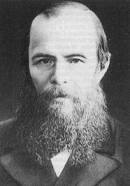
It emphasized the power of reason, science, and individual liberty as the tools for the reform of society. The tools of reason, science, and liberty were believed to be the natural rights of humanity, and the possibility of improving society through education and reform based on science.
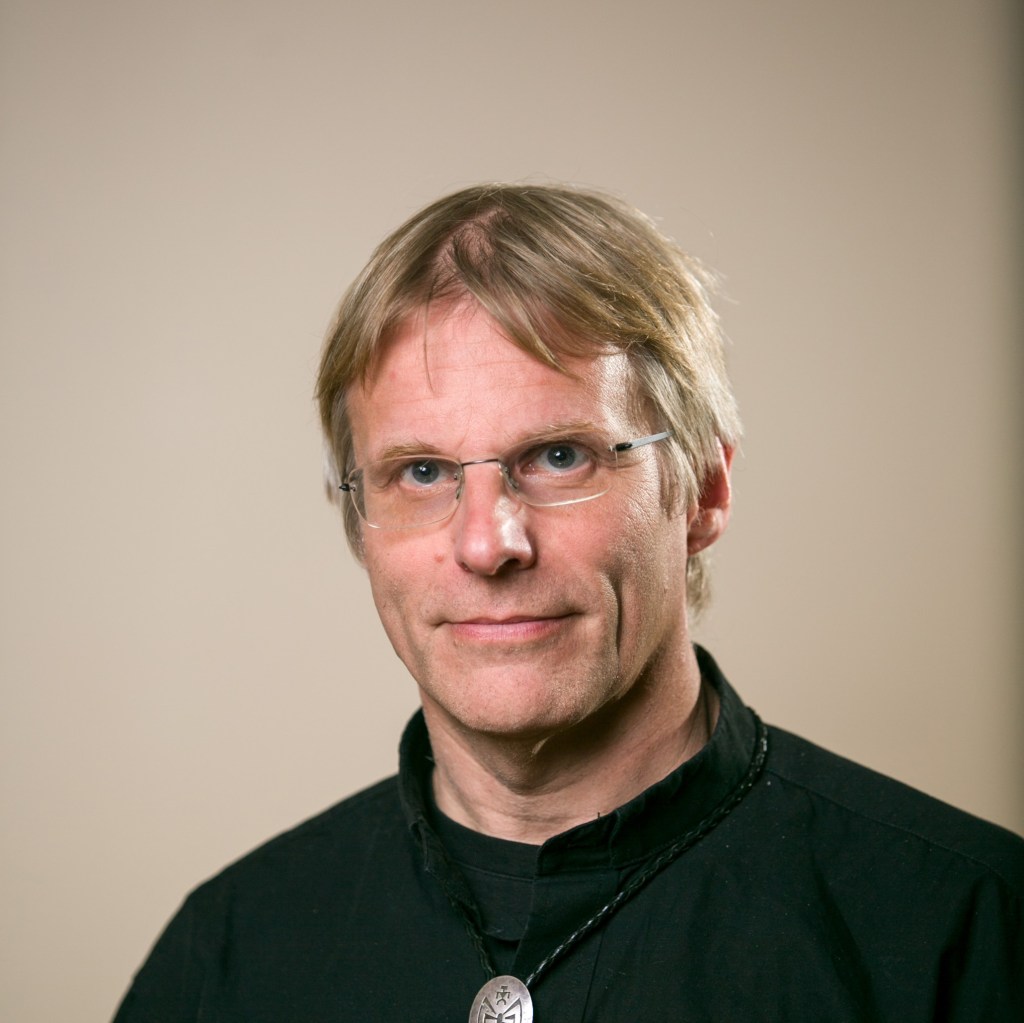

Francisco Franco (Spain’s dictator 1939-1975.)

Chomsky argues those tools were engaged by Spanish revolutionaries during Franco’s dictatorship in Spain. Chomsky notes workers took control of factories and farms in Catalonia and Aragon that were run collectively and democratically by workers. He believes voluntary cooperation thrived. He believes the anarchist movement grew through three generations based on education and considered organization of Spanish interest groups. However, Franco’s forces with the help of England, Germany, and Italy defeated the movement.

Republican factions fought against Franco’s government in the 1930s.

Chomsky believes revolutionaries against Franco were practical visionaries that showed how anarchy could be a legitimate and superior way of governing a nation.

Surprisingly, there are several examples besides Spain’s revolution that were collectivist organizations that could be classified as anarchies. From 1918-1921, the free territory of Ukraine was led by Nestor Makhno during Russia’s Civil War. It was ended by Russian communism after its ascension in 1917. Modern communes were set up in Mexico’s Zapatista territories with autonomous zones that had collective farming and indigenous self-rule. Of course, in ancient times there were hunter-gatherer societies that shared norms, and governance through consensus decision-making and resource sharing. However, there is a history of atrocity, failure, and disruption by governing bodies that have tried Anarchy. Spain’s effort fell apart in 1939. Freetown Christiania in Denmark, in a neighborhood in Copenhagen has struggled with Anarchy since 1971. A number of legal battles have been fought over commercial ownership and control. By some measures, the kibbutz movement in Israel has been successful. However, even Chomsky notes friction comes within kibbutz communities over disagreement with elected leaders. Research shows that some kibbutzim are privatizing and paying differential wages for communal services. Collectivism is becoming harder to maintain.

Chomsky is considered by some to be the most important intellectual alive today. He is highly respected for theories on the understanding of language based on modern cognitive science.

Chomsky has shaped how we think of human capabilities. He is famous for his dissents which are naturally about government control and media manipulation. He was against the Vietnam war and opposed Israeli occupation because of his libertarian socialism, a form of anarchy or a collective that is purely democratically determined. He is reported to be an excellent lecturer and capable of going toe to toe with experts in linguistics, philosophy, political science, and education. His opinions have global reach with translations in many languages.

In reading/listening to Chomsky some will conclude he is wrong about there ever being a nation-state that will be successfully governed as an Anarchy because of the nature of human beings. Whether one believes in Hobbes’ view of selfish humans, Rousseau’s belief in people being corrupted by society, Kant’s belief in rationality, or Sartre’s belief in human choices and actions, there will always be dominant personalities who will victimize those whom they commune. Human nature as defined by Hobbes, Rousseau, Kant, Sartre, and other brilliant philosophers infer there will always be miscreate leaders that will destroy egalitarianism, the foundational principle of anarchy. Human nature, as it exists today, is unlikely to change.