BALANCE

It is ironic that Trump has suffered so much from America’s legal system and is unable to see NIMBY mentality and a return to the past will not “Make America Great”.

Books of Interest
 Website: chetyarbrough.blog

Breakneck (China’s Quest to Engineer the Future)

AuthorDan Wang

Narrated By:  Jonathan Yen

Feng Chen Wang aka Dan Wang (Author, Canadian technology analyst and writer, visiting scholar at Yale Law School.)

Dan Wang is a highly credible author of the 21st century economies of China and the United States. Mr. Wang’s mother and father were born in China when the one child policy was the law of the land. Mr. Wang was born in Canada in either 1991 or 1992. Though Mr. Wang may be an only child, his parents advised him that living in China was challenging because of its state control and family planning that restricted their human rights.

Dan Wang has lived in Canada, America, and China.

From 2017 to 2023 he worked as a technology analyst in Hong Kong, Beijing, and Shanghai. As a young man, Wang bicycled across China with young friends. Having been educated in Canada and the United States, growing up in Toronto and Ottawa and going to high school in Philadelphia, he has a broad understanding of the economies of all three nations. Of course, his specialty is technology which gives him a unique understanding of what is happening in America and China today. He graduated from the University of Rochester in 2014, studying philosophy and economics.

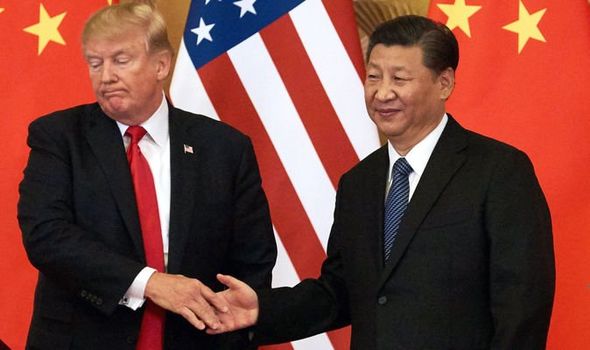
Trump’s apparent view of Xi.

After listening to Wang’s book, one begins to understand why President Trump’s perspective is that the world, with emphasis on China, has taken advantage of America’s economic wealth by eviscerating its industrial industries with less expensive product made in other countries. Wang presumes as a person who has an economics education that Adam Smith (the Father of Economics) and Donald Trump are right when they argue tariffs are justified in areas of national defense, or for retaliation. On the other hand, Adam Smith, noted “It is the maxim of every prudent master of a family, never to attempt to make at home what it will cost him more to make than to buy.”

Adam Smith (Father of Economic Theory)

Smith argued if another nation can provide the same product for less cost, a prudent buyer should buy the cheaper product and use money saved to produce a different product. Wang and Trump disagree with Smith because the revenue producer that America turns to is the service industry rather than product development. What is missed by Wang and Trump is that America is the third largest agricultural producer in the world with China and India being the largest. Of course, the difference is that America has 1/3rd the population of China and India, respectively. Lower population and high agricultural production in the United States hugely benefits its economy. More significantly, food, like water, is an essential need of life. The point is that non-food product production is not necessary for living life.

Loss of industrial production to China.

Wang’s and Trump’s argument is that America’s loss of industrial production has made it too dependent on other countries. They either infer or say Americans are forgetting how to manufacture product. They argue American industries are closing because of America’s inability to compete with other nations because of labor and material cost differences. History shows America fails to expand its industries because production of things is provided by other nations at a lower cost. And as Adam Smith noted, “It is the maxim of every prudent master of a family, never to attempt to make at home what it will cost him more to make than to buy.”

Wang decries America’s movement toward a service industry as the basis for economic growth.

America is the richest country in the world, but America has failed to eliminate poverty, house the homeless, feed the malnourished, and provide for the infrastructure needed to improve America lives. One may ask oneself-what is wrong with becoming a service industry nation? Why does America have to return to its past. As Adam Smith noted: “It is the maxim of every prudent master of a family, never to attempt to make at home what it will cost him more to make than to buy.” The future is about being healthy, being housed, fed, and clothed. It should not be about being the richest and fattest minority in the world, particularly when there is an inordinate gap between the rich and poor.

Wang argues America’s economy is diminished, not by reduced industrialization, but by its growth of legalism that reinforces nimby (not in my backyard) litigation.

Delays in public improvements in America are restrained by lawsuits that protect the rich and victimize the poor. An example is the long delays in mass transportation improvements which become more costly with every year that passes before completion. The delays are caused by litigation. When China can build rapid transit in 3 years while it takes 15 or more years in America, one wonders why. The huge investments China has made in massive infrastructure improvements have vastly improved their economy. In contrast, America wastes investment resources litigating mass transportation improvements in California, Washington, and other states by increasing costs from delays caused by litigation. It is like throwing the baby out with the bath water because the number of people who benefit from infrastructure improvement are largely discounted or ignored. Equally appalling is homelessness in America because of NIMBY’ objection to low-cost multifamily housing that could get the homeless off the street. Cost benefit analysis should prevail, not litigation based on interest group objection. In Wang’s terms, American infrastructure decisions should be based on science and engineering like, what he argues, China bases their infrastructure decisions upon.

The fundamental point is that America has lost sight of the importance of a balance between benefit to the public and individual rights. Equality of opportunity is split between the rich and poor with the middle class being too complacent while the rich reap unconscionable reward. Where are the Eisenhower-like Presidents who promoted an Interstate Highway System that created a 421,000-mile interstate highway system?

Trump is no Eisenhower because he wishes to return America to a past rather than look to its future. It is ironic that Trump has suffered so much from America’s legal system and is unable to see NIMBY mentality and a return to the past will not “Make America Great”. Wang’s book explains how China has succeeded in improving their economy while America’s economy is failing.

FARMLAND

Historically, collectivization of land has failed even when those who are part of the collective are better off than they were when they had no land.

Books of Interest
 Website: chetyarbrough.blog

Land Power (Who Has It, Who Doesn’t, and How that Determines the Fate of Societies)

Author: Michael Albertus

Narrated By: Braden Wright

Michael Albertus (Author, professor at the University of Chicago in the Department of Political Science.)

Michael Albertus develops a powerful argument for “Land Power”. Much of history and current events in relatively undeveloped countries are identified as proof of Albertus’s belief that “Land Power” is key not only to economic growth but to social improvement. He reflects on the history of Great Britain, France, and the United States while noting current affairs in developing countries like Peru, Columbia, and Bolivia support his argument.

The unfortunate truth of history is that indigenous populations, particularly in America and Great Britain, were displaced in order for “Land Power” to be the engine for economic prosperity and social change. In the case of America of course, it is the displacement of North American natives by English settlers who became Americans. In contrast Great Britain’s “Land Power” comes from a landed aristocracy and their subjugation of foreign cultures with autocratic control and rule of Asian and European countries. In France, Kings and an aristocratic government’s rejection by commoners in 1789 seem the motive force behind “Land Power” ascension.

For Peru, Columbia, and Bolivia Albertus infers examples of Britain, America, and France set a table for “Land Power” change by their governments. In my opinion, the age of technology has diminished “Land Power” importance in America, Great Britain, and France.

“Land Power” still carries weight in America, Great Britain, and France but in the tech age it seems the power of accumulated wealth has become more powerful than land. However, Albertus’s “Land Power” argument in regard to South American countries like Peru, Colombia, and Bolivia are compelling in regard to their economic and social improvement. Albertus notes private land ownership and recognition of women’s rights to own property, show that “Land Power” is a source of economic and social improvement in South America. He suggests countries like Mexico are being challenged by their failure to reform land ownership policies but today’s leaders in Peru, Columbia, and Bolivia have made significant land reform changes.

Albertus explains the major reform movement between 1969-1980 made by General Alvarado in Peru.

General Alvarado ordered nearly half of all private agricultural land be redistributed among Peruvian citizens. He dismantled large estates to empower peasant cooperatives. It has not been a perfect solution because it created an insurgent group called the Shining Path that pressed for a Maoist collective land reform for the redistributed Peruvian estates. Just as collective farms failed in China, they failed in Peru because common gains in collectives did not fairly reward performance. Collective farms distort the needs and results when a collective rather than a singular leader is responsible for performance of the collective. Nevertheless, the steps taken to dismantle half of private agricultural land, is considered by Albertus a step in the right direction because it incentivized many Peruvians who were living in poverty.

In Colombia, in 1966 through 1970 President Restrepo redistributed agricultural land to former agricultural laborers.

FARC (Revolutionary Armed Forces of Colombia) is organized in 1964 to offer peasant self-defense for actions soon to be taken by President Restrepo to reduce land ownership inequality. Between 2010 and 2018, President Santos negotiated with FARC to settle disputes between former landowners, and new farmers that benefited from land redistribution. There is still conflict because of FARC’s false belief in collective farming which has been proven a failure in other countries, but President Santos and his successors have created a path, though no solution, for reform through the hope for understanding and compromise. Albertus infers land reform is a work in progress, not a perfect solution.

Land reform in Bolivia spans 1953 and the early 2000s.

Presidents Estenssoro (1952-1956) and Evo Morales (2006-2019) worked on land reform along the same lines as Peru and Colombia. Large estates were broken up in 1953 and redistributed to peasants. Morales clarifies indigenous land rights but formalized communal ownership of redistributed land. This is another example of a work in progress because collectivization may be a step in redistributed land, but it has not proven to be a long-range benefit to a country’s citizens. It becomes too divisive and unrewarding for optimum performance and fair rewards for those who excel.

One who read/listens to Albertus’s insight to land reform believes his story has merit but his history is too optimistic when a little additional research shows land reform is a losing proposition when not fully supported by institutions that had implemented change.

History shows land collectivization when large landowners lose their land is a fool’s errand because it fails to reward those who excel as part owners of redistributed land. Human nature gets in the way. Those who work harder than others expect to have proportionate reward. Collective farming disincentivizes personal high performance. Historically, collectivization of land has failed even when those who are part of the collective are better off than they were when they had no land.

RESPONSIBILITY

Adults need to be present, honest, and emotionally available to children under their care. It is a big job for which most of us fail, but children are the world’s future.

Books of Interest
 Website: chetyarbrough.blog

A Beautiful Family (A Novel)

Author: Jennifer Trevelyan 

Narrated By: Ruby Hansen

Jennifer Trevelyan (Author, lives in Wellington, New Zealand.)

Set in the beautiful island nation of New Zealand, Jennifer Trevelyan writes a coming-of-age story of a ten-year-old girl named Alix. Through Alix’s eyes, a listener/reader is reminded of their youth and the many events in childhood that show the truth of human nature. What we see and interpret when we are young is clouded by our ignorance and struggle to appreciate life as it is rather than what we think it should be. Ignorance is usually dispelled as we grow older, lose our innocence, and begin to understand life’s struggles are universal.

Humans are animals with advanced abilities to think and communicate.

Humans cooperate, compete, and adapt to their environment to survive. Our imperfections are legion beginning in childhood and multiplying throughout our lives. As a child, we see the world and interpret what we see with innocent eyes. Whether raised by an institution, two parents or one, a child sees through inexperienced eyes which are only interpretations of a real world that only time and maturity will reveal. Trevelyan shows how a child sees more than adults realize but often interpret what they see incorrectly. Eventually a child loses his/her innocence as they mature and reinterpret past experiences, but the fog of memory often interferes with truth.

Trevelyan’s main character, Alix is you, me, and every child raised in a world of married and unmarried parents or institutions.

Trevelyan offers concrete examples of the fragility and complexity of caring for children of the future. Many examples are given of Alix’s seeing life happen with interpretations that are as often wrong as right. Alix has had explanations of the difference between right and wrong but sees her sister steal make-up from a store, get drunk as a teenager, and befriend others who encourage bad behavior. She sees her mother at a distance who appears to be amorously kissing a stranger. Her mother and father are often confrontational with each other. Her mother takes long solitary walks, and her father shows passive detachment from the family.

Alix is on a vacation with her family at a New Zealand’ beach resort. She is an excellent swimmer who often swims alone.

The risk of swimming in the sea introduces the reality of danger in the world even when the environment is beautiful. One thinks about the many shark incidents on the coasts of the world and Malcolm-Jamal Warner’s death from a riptide while swimming in Costa Rica.

Trevelyan offers many lessons for adults who are raising children in this world. Children see more than adults realize and they interpret what they see in ways that can be as easily wrong as right. They incorporate what they see into their perception of the world. Parents are models of who children become as adults. As parents, or institutions that influence and raise children, it is important to be emotionally available, not just present to children. Keeping secrets or being silent about something is human. However, what a child sees or hears can be harmful when not discussed with a parent or guardian. Parents and institutions need to provide age-appropriate transparency to build trust with children. Those children with siblings should have sibling relationships nurtured by responsible adults. Adults need to take responsibility for the environment in which children are raised.

Being on vacation in an idyllic setting does not mean there are no dangers.

Trevelyan story explains why raising children is important. Adults need to be present, honest, and emotionally available to children under their care. It is a big job for which most of us fail, but children are the world’s future.

DAMNED & FORGOTTEN

Allen Esken’s story is too tedious and drawn out to be a great work of fiction. However, it reminds one of the injustices of life for those who get away with murder.

Books of Interest
 Website: chetyarbrough.blog

The Quiet Librarian (A Novel)

Author: Allen Eskens

Narrated By: Livana Muratovic

Allen Eskens (Author, former defense attorney who lives in Minnesota.)

Allen Eskens has written a story of revenge and war without giving it context which diminishes its value. Having visited the former Yugoslavia which is split into 6 ethnic territories, the war that occurred between Bosnian and Serbian people can still be seen in pock marked buildings that were evidence of the war. Our guide for the trip reflects on America and NATO’s failure to aid a peaceful resolution while the conflict killed many people that may have been saved by international intervention. Eskens makes a passing comment about that feeling in his book, but the truth of that conflict is as real today as the people who lived through it.

Josip Broz Tito (Yugoslavian ruler 1953-1980, died in May of 1980.)

When Tito died in 1980, Slobodan Milošević, a nationalist Serbian leader promoted the idea of a “Greater Serbia” without accommodation to ethnic differences of the former Yugoslavian people. Milošević capitalized on the historic conflict between Serb’ and Bosnian’ ethnic and religious beliefs to acquire and hold power. Serbian Christian beliefs were used as a tool to incite support of Milošević’s rule of Bosnians who are generally Muslim believers. Many Bosnians and Serbians die as a result of Milošević. Slobodan Milošević retained power for 13 years but is removed in October of 2000 when Vojislav Koštunica won the presidency. Though Milošević supporters try to protest the election results, they fail.

Slobodan Milošević (President of Serbia 1989-1997, died in 2006 of a heart attack.)

Milošević is arrested in 2001, extradited to The Hague, and tried for war crimes, genocide, and crimes against humanity. He is the first former head of state to be tried by the Hague court. The trial lasted for four years. Milošević is found dead in his prison cell. He was 64. Autopsy shows it to be a heart attack. No verdict is reached, leaving no closure to the victims of his perfidy.

The division of Yugoslavia after Tito’s death.

This history does not change Eskens’ story, but it offers context that helps one understand why a Bosnian emigree to America pursued a former Serbian nationalist who brutally raped her mother and murdered her family in front of her during the Bosnian/Serbian war. It is credible fiction of the consequence of war whether in Bosnia or anywhere in the world where the guilty go unpunished. The question becomes, is intent to murder a criminal by one who has firsthand knowledge of another’s heinous act equally guilty of murder? The question is not asked or answered by Esken’s story; probably because it is unanswerable.

The heroine of Eskens story is Hana Babić who emigrates to Minnesota to earn a living as a librarian.

She has adopted the grandson of a close friend who is murdered in the Bosnian/Serbian war. That adoption and her personal experience drives her to find and murder the man who destroyed her life in Bosnia. She has to choose between committing murder in America or letting a murderer go free when she finds her nemesis. However, protecting her adopted boy by letting a guilty person escape vigilante justice is what drives the author’s story. If one sticks with the story, they find her answer.

One wonders about lives of Ukrainians if a tentative settlement proposed by Putin in August 2025 is accepted by Ukraine. Territories under siege in Ukraine would be given to Russia in return for ending the war.

How many Ukrainians will leave their homeland to seek a new life? How many will stay, and secretly fight on? How many will reluctantly accept their homeland’s loss? These were decisions made by Bosnians in former Yugoslavia.

Allen Esken’s story is too tedious and drawn out to be a great work of fiction. However, it reminds one of the injustices of life for those who get away with murder.

EMIGREE

“The Sun is Also a Star” is a nicely written book that will keep reader/listeners interested in knowing what happens to two young lovers. One is left in suspense until its last chapters.

Books of Interest
 Website: chetyarbrough.blog

The Sun is Also a Star 

Author: Nicola Yoon

Narrated By: Bahni Turpin & 2 more

Nicola Yoon (Author, Jamaican American, NYT’s bestselling author, National Book Award finalist, electrical engineering undergraduate at Cornell, graduated from Emerson College with a Master of Creative Writing.)

Nicolo Yoon, the author, worked as a programmer in investment management for 20 years before publishing her first book, “Everything Everything”. It became a best seller. “The Sun is Also a Star” is her second published book which also became a best seller. Interestingly, the Jamaican born writer’s husband is a Korean American graphic designer. One presumes her book partly reveals her life experience in America. The credibility of her love story lies in the truth of the saying that “birds of a feather flock together”, an apocryphal Biblical saying that reaches back to the “Book of Ecclesiasticus” in the first century. Her hero and heroine are highly intelligent teenagers of immigrant parents who are influenced by their parent’s native cultures. Being children of immigrants, highly intelligent, high performers in academics, and living in America are why one thinks of the “birds of a feather…” analogy.

JAMAICA, SOUTH OF CUBA, OFF OF THE FLORIDA COAST.

“The Sun is Also a Star” is about a Jamaican girl, a South Korean boy, and the girl’s parents who are being deported because of their illegal immigration status. The heroine’s father comes to America illegally to pursue a career. His wife and daughter follow later in presumably the same illegal way. The girl’s father struggles as an unsuccessful aspiring actor. He and the girl’s mother work at menial jobs for the families’ survival. They are within a day of being deported by the American government. Their daughter loves her mother and is ambivalent about her father. She is a bright high school student nearing graduation. The daughter is seeking help from an immigration attorney to delay and hopefully stop their deportation. On her way to an immigration lawyer’s office, she meets a handsome South Korean boy near her age who is interviewing with an Ivy League school in the same building in which the lawyer practices his profession. They serendipitously meet and their lives become intertwined.

Over 200,000 immigrant arrests in America have been made as of August of 2025.

This is a fairy tale story that offers a truth about the iniquity of arbitrary enforcement and forced ejection of purported illegal immigrants in America. The second term of the Trump’ presidency shows how wrong it is to deport alleged illegal immigrants without judicial review. Obviously, if a legal review shows an immigrant is a criminal there is justification for immediate deportation. If the legal review shows an immigrant has always been a productive and law-abiding citizen of America, some may reasonably argue they should be directed to a program that allows them to eventually become legal residents of the United States.

Without legal review, a valuable source of American productivity is unnecessarily lost. To argue that loss is justified by jobs that will be filled by citizens of the United States is weak because many of the jobs taken are not taken by American citizens because the wages are too low, the physical demands too high, and the hospitality needs of much of America are unmet. It is true that many in America are unemployed because they have chosen to not get a good education and choose to remain unemployed by being unwilling to work for low wages. Their unemployment is not because of illegal immigrants but because of the choices they have made in their lives. Construction, agriculture, hospitality, retail, healthcare, and small businesses have been negatively impacted by the deportation of immigrant labor. In some industries, up to 40% of the workforce has been impacted by deportation.

Yoon’s story is a fairy tale of young love between an illegal and legal immigrant living in America.

Nicolo Yoon explains how love between two people occurs when they have similar life experiences and relate to those experiences with shared intelligence. The young girl and boy have similar life experiences in America. Both choose to educate themselves. The two young teenagers have parents that love them who have their own prejudices and life experiences in ways that influence their children to be ambivalent about the love they have for each parent.

Most parent’s, regardless of their culture, want a better life for their children.

Yoon illustrates the motivations and consequences of people who decide to emigrate. Whether emigrating legally or illegally, emigrees are faced with the difficulty of adjusting to a different culture that conflicts in good and bad ways with the culture they have left. Emigree’ parents wish well for their children but many fail to grasp the freedom offered by American culture to choose their own path in life. Even though life choices are influenced by one’s intellect, emotions, and (in America) a white majorities’ discrimination, most young people are able to choose their own path in life.

“The Sun is Also a Star” is a nicely written book that will keep reader/listeners interested in knowing what happens to two young lovers. One is left in suspense until its last chapters.

DICTATORSHIP

The importance of freedom in book publication and for those who read them is the message Charlie English gives the public in “The CIA Book Club”. It is too bad America’s current President chooses not to read because this book reminds one of how important books are in the world.

Books of Interest
 Website: chetyarbrough.blog

The CIA Book Club (The Secret Mission to Win the Cold War with Forbidden Literature)

Author: Charlie English

Narrated By: Michael David Axtell

Charlie English (Author, British non-fiction author, former head of international news at the Guardian.)

“The CIA Book Club” is a reminder of the former USSR and today’s Russian invasion of Ukraine and what is at stake for Ukraine’s citizens that may, once again, come under the repressive return of a dictatorial leader. Putin has adopted many of the same characteristics of Joseph Stalin, a leader who believed in dictatorial control over the media, and isolating or murdering anyone who challenges his leadership. The scale of Putin’s use of gulags, and mass executions is much smaller than Stalin’s but his cultivation of a cadre of followers, rewarded by the power of association and lure of wealth, create a similar dictatorship.

Poland-Europe’s crossroad.

What Charlie English reminds listener/readers of is how Poland suffered under Stalin and what it will mean to Ukrainians when much of their land is taken to settle the Ukrainian war.

Without solid opposition of all Western powers, concession of Ukrainian land seems inevitable. Trump’s waffling opposition to Putin and the fear of nuclear confrontation reduce the likelihood of Russia’s peaceful withdrawal from Ukraine.

Like the repressive actions of the USSR in the Baltics, English explains how brutal Hitler, Stalin, and Stalin’s successors were to Poland even after Stalin’s death.

Strick control over publishing continued after Stalin’s death. Orwell, Koestler, and Solzhenitsyn were banned, and western books were blocked at the border. Polish citizens like Miroslaw Chojecki risked imprisonment for smuggling and/or re-printing forbidden works. The KGB monitored dissidents, writers, and students. English notes that phones were tapped and homes raided. However, a CIA program continued to provide copies of banned books to Polish dissidents. Polish citizens became partners in covert activities to smuggle and re-print books for their countrymen and women. A Solidarity movement against censorship and discrimination is formed by Polish patriots. This reminds one of the resistances one hears when visiting today’s Baltic countries and stories of citizens whose families were jailed, tortured, and sometimes killed during Stalin’s occupation.

Poland, a spectacularly beautiful country.

Poland is an important trade and agricultural producer at the crossroad of Europe. It has no natural land barriers between itself and the great powers on their borders. Its strategic value to European aggressors has made it a victim of a history of foreign occupation. In the 13th, 17th, 18th, and 20th centuries Poland was occupied by Mongols, Prussians, Germans, and Russians. Poland’s diverse population seems to have been unable to create a strong centralized authority that could successfully resist their powerful neighbors who confiscated their riches and occupied their land. Charlie English’s book reminds reader/listeners of what makes Poland a great nation. It is its diversity and its pursuit of intellectual development. Sadly, its geographic location has threatened its existence for millenniums. America is blessed by its geographic location and shows how it could survive as a free democratic nation. Through clandestine operations and support by the CIA, Polish patriots were able to reproduce banned books during the cold war that aided the intellectual growth of Poland despite Stalin’s repression.

America’s current President impedes the influence of freedom in Europe by dismantling surveillance oversight, undermining the EU-U.S. Data privacy framework, and by shutting down the GEC (Global Engagement Center) which is designed to counter foreign disinformation.

Trump’s intent is to save money. The author notes the same thing nearly happened with the CIA book publishing support of Poland when some of America’s leaders tried to cut its funding. The CIA prevailed and the financial support continued.

The importance of freedom in book publication and for those who read them is the message Charlie English gives the public in “The CIA Book Club”. It is too bad America’s current President chooses not to read because this book reminds one of how important books are in the world.

MUSICAL CLASSICS

Pleasure in a classical performance can appeal to one who is familiar with the technical aspects of a production and to another for its emotional impact. Both Greenberg and Plotkin offer valuable insights to the relevance and reason for attending classical music performances in this ever-changing world.

Books of Interest
 Website: chetyarbrough.blog

Classical Music 101 (A Complete Guide to Learning and Loving Classical Music.)

Author: Fred Plotkin

Narrated By: Fred Plotkin

Fred Plotkin (Author, speaker, consultant on food, opera, and Italian culture.)

This is an informative overview of classical music but would have been better if some of the music referred to had been included in an audio version of Plotkin’s book. It is an interesting contrast to Professor Greenberg’s “Great Courses” lectures about classical music. Both writers offer insight to a non-musician’s interest in classical music. Both address Western classical music. They offer sketches of major figures like Bach, Mozart, Beethoven, and others. Greenberg introduces more information about musical grammar to offer a vocabulary of understanding while Plotkin focuses on how to listen and how modern renditions of the classics can be different from their original performances. The added dimension offered by Plotkin is the emotive qualities of particular musical instruments in a musical production.

Plotkin’s book is a more intuitive introduction to classical music productions than Greenberg’s lectures.

Plotkin’s music review is about the sensual message that classical music offers listeners. Greenberg, though equally insightful, offers a technical explanation of a classical’ composers or performers production. It would have been helpful to hear the difference between an original classical production and a modern interpretation, but Plotkin chooses not to use that audio tool. Plotkin’s high praise for Beethoven’s ninth symphony would have been a welcome audio addition to his insightful book.

Greenberg’s lectures are historical and chronological while Plotkin’s story is more about musical interpretation by different instruments in classical music productions.

Music, Opera, and History

Plotkin delves into the change in performances based on newly invented music instruments and different interpretations by performers of classic pieces. A piano began as a harpsichord in the 1700s which plucked strings like those on a tightly drawn bow. This evolves into an escapement that has hammers striking taught strings evolving into today’s pianos. The range of sounds grows with the addition of foot pedals and framed strings evolve from wooden infrastructure to cast iron frames that allow tighter strings and richer sound. (See the review of “Chopin’s Piano“) The number of keys is standardized at 88 by the late 19th century. From these earlier changes, digital pianos are created in the late 1900s and soon hybrid pianos are made with both acoustic and digital features. Musical instrument evolution explains why Plotkin suggests listeners compare an original classical piece of music in a modern format. It may become emotively different from older recordings because of instrument focus in the music or change in the instrument of presentation. Plotkin notes there are experiential and interpretive differences in modern performances of the classics. Here is where an audio example would have been helpful.

Plotkin notes that difference in musical performances go beyond changes in musical instruments. He notes interpretations of the classics change. He explains artists like Emanuel Ax and Marilyn Horne use tempo, and phrasings dynamics that offer different experiences to a listener. (Another example of why it would have been easier to understand if there was an audio example.) Plotkin endorses listening to recordings of musical productions because they offer clarity and access to a wider audience. However, Plotkin notes that a live performance offers more spontaneity and emotional immediacy than a recording.

It is feelings of a modern audience that excites Plotkin’s imagination

Plotkin makes the point that an historical original may or may not be the best that a composers’ creation offers to a modern audience. However, it is feelings of a modern audience that excites Plotkin’s imagination. In Plotkin’s opinion, a classics’ meaning is not to be cast in stone because times change, and yesterday’s history may not resonate with today’s events. What Plotkin is driving for is the cultivation of expert listeners who can appreciate yesterday’s classics because they resonate with today’s events, though composed in a different era, they offer new perspective to modern events.

One who has listened to both Greenberg’s lectures and Plotkin’s book recognize both want to reach an audience of non-specialists to nurture their interest in classical music.

Both believe classical music is an interpretive exercise based on an orchestra’s performance. They are peas in a pod when it comes to wanting to see emotional transformation in a person listening to a classic’s performance. Both Greenberg and Plotkin believe the classics are meant to be a sensual experience. Greenberg educates his audience on the structure and historical complexity of classical music. Plotkin focuses on classical musical instruments and performances that remain classics because of their emotive relevance to the present as well as the past.

Different points of view about classical music.

One presumes Greenberg’s and Plotkin’s two views of classical music may come into conflict in the changes from the original intent of great composers who have created what Greenberg may argue is a timeless masterpiece. Greenberg’s technical understanding of composition may seem more important than a transitory emotional response from a less knowledgeable audience. Here is where a detailed presentation of Beethoven’s ninth could have clarified the values of the classics noted in Plotkin’s excellent book. One wonders how a modern performance of Beethoven’s ninth might be different from an earlier version.

Value of musical classics.

Both Greenberg and Plotkin offer equal enlightenment on the value of musical classics. Audiences will always have different understandings of classical performances. The goal of a great classical performance is to please its audience. Pleasure in a classical performance can appeal to one who is familiar with the technical aspects of a production and to another for its emotional impact. Both Greenberg and Plotkin offer valuable insights to the relevance and reason for attending classical music performances in this ever-changing world.

WEALTH

What is wrong about Housel’s investment recommendations is that his life experience sets a table that is not the same table as those who have much less to eat.

Books of Interest
 Website: chetyarbrough.blog

The Psychology of Money (Timeless Lessons on Wealth, Greed, and Happiness)

Author: Morgan Housel

Narrated By: Chris Hill

Morgan Housel (Author, two-time winner of the Best in Business Award from the Society of American Business Editors and Writers.)

“The Psychology of Money” is a plain-spoken examination of the value of wealth, how it is attained, retained or lost, and why its’ real value is independence. A superior perception of reality would certainly be ideal, but Housel implies no such thing exists, and that the presumption is too theoretical to be useful. Every human being becomes a product of their life experience. Unquestionably, all human beings have genetic inheritance, but Housel suggests personal life experience molds that genetic inheritance. All true, but it helps if your parents are upper middleclass and have a mindset for saving rather than spending their income.

Housel argues high intelligence is no guarantee of success in achieving wealth.

To achieve wealth, Housel argues one needs to be a consistent saver, a long-term thinker, an index fund investor in the stock market, and one who resists impulsive decisions to sell investments or use savings during financial instability. These guidelines are based on a wealth-seeker’s “margin of error” calculation of financial need during market weakness. One’s objective is to maintain one’s independence and freedom to live as they wish without risking that freedom by buying luxuries from short-term gains to only appear wealthier than others.

Cutting through the lessons that are listed by Housel’s suggestions is the ancient Greek recognition of the importance of “knowing thyself”.

Are you a crazy risk taker, do you think about the value of wealth, are you more interested in what others think of you than who you are to yourself, are you goal oriented or a “go along to get along” kind of person? These are clues to who you are and whether you should change to assure a life of freedom to live as you wish.

Janitor Ronald Read Leaves Behind $8,000,000 Fortune at his death

Housel gives the example of the janitor millionaire from Vermont who had no formal financial education. Ronald Read worked as a janitor and gas station attendant during his working life. He lived frugally while investing in blue-chip stocks that he held until his death. He amasses a fortune because of small savings and investments while never having high income but investing unneeded cash based on the way he chose to live. By being patient and disciplined over the course of his life, Read died in 2014 at the age of 92, donating $4.8 million to Brattleboro Memorial Hospital, $1.2 million to Brooks Memorial Library, and $2 million to his stepchildren, caregivers, and friends. Like Ben Franklin, Read lived a long life, accumulated great wealth while living the life he wanted. Just like Franklin, Read lived his life as he wanted and contributed his savings to eleemosynary institutions and people who were important to him during his lifetime.

Warren Buffett (The Oracle of Omaha.)

Warren Buffett is another example offered by Housel to explain that time and compounded returns on investment are key to one’s independence and success for living as one chooses. Buffet’s genius is not in just choosing the right stocks, but in staying with investments over the long term. Housel notes 96% of Buffett’s immense wealth came after his 65th birthday.

The discipline outlined by Housel is difficult for a young person to accept because of the tendency of human nature to impress others with their success.

When young, image is important for reasons ranging from attracting desirable partners to impressing others with one’s success by driving expensive cars, wearing elegant clothes, and living in luxurious homes. Many people believe image is as important as substance and fail to realize its folly when they are too old to do much about it. Freedom to live as we choose is a mixed blessing. Being disciplined about money and investment when one is young is an important lesson but hard to follow, particularly in a free society.

Piketty argues that the income gap widens after World War II.  He estimates 60% of 2010’s wealth is held by less than 1% of the population.

Housel comes from a family of savers who appear to have followed the path he recommends in his book. Though what he recommends makes sense, his starting point seems better than most middleclass or poor families in America. He chooses a very conservative investment strategy because of his life experience. He only invests in index funds and lives in a house without a mortgage. His story is not a typical American middleclass family story. What works for him is based on his personal life experience. What is wrong about Housel’s investment recommendations is that his life experience sets a table that is not the same table as those who have much less to eat. This is not to say Housel’s advice is wrong in recommending living within one’s means, investing for the long term, and letting wealth accumulate over time. It is good advice but where one starts in life makes a difference because your life experiences mold a large part of who you become and how you choose to save or spend your money.

UNINTENDED CONSEQUENCE

Technology is a key to social need which has not been well served in the past or present and could become worse without pragmatic accommodation.

Books of Interest
 Website: chetyarbrough.blog

Daughters of the Baboo Grove (From Chian to America, a True Story of Abduction, Adoption, and Separated Twins)

Author: Barbara Demick

Narrated By: Joy Osmanski

Barbara Demick (Author, American journalist, former Beijing bureau chief for the Los Angeles Times.)

This is a brief and fascinating historical glimpse of a government policy gone awry. Like America’s mistaken policies on immigration, Barbara Demick’s story of China’s one-child policy traces the effects of government overreach. Demick tells the story of a rural Chinese family who births twin sisters during the time of China’s unjust enforcement of their one-child policy. One sister is abducted by Chinese government officials, and is adopted by a family in Texas. The ethics of an inhumane Chinese government policy and the perfidy of free enterprise are exposed in Demick’s true story of two children’s lives.

The territorial size of China in respect to continental America.

China’s one-child policy leads to a Chinese criminal enterprise to capitalize on kidnapping and selling children born to families that could not afford the fines for having more children than the law allows. Undoubtedly, most children born were cherished by their parents, but the hardship of life and human greed leads to unconscionable human trafficking. Kidnapping became a part of a legal and criminal enterprise in China. Government policy allowed bureaucrats and scofflaws to confiscate children from their parents and effectively deliver or sell children to orphanages or people wanting to adopt a child. Demick recounts stories of grieving parents and grandparents that cannot get their children back once they have been taken.

Child trafficking, broken families, loss of personal identity, human shame, and the immoral implication of other countries interest in adopting children are unintended consequences of a poorly thought out and implemented government policy.

Demick becomes interested in this story because of a message she receives from a stepbrother of an adopted Chinese sister that has a twin that lives in China. Because of Demick’s long experience in visiting and reporting on China, she had a network of people she could call. Using adoption records, Demick is able to find the Texas stepsister who had been kidnapped when she was 22 months old. She was trafficked to an orphanage in the Hunan Province of China. Years later, through messaging apps, the twins communicated with each other and shared their photographs. They eventually meet in China in 2019.

One is hesitant to argue a government policy is a unique act of China when every government makes policy decisions that have unintended consequences.

America’s policy decisions on immigration are a present-day fiasco that is as wrong as the one-child policy in China’s history. The one-child policy is eventually rejected by the Chinese’ government but Demick’s book shows how bad government policy has consequences that live on even when they are changed by future governments. America’s policy on immigration will be eventually reversed but its damage will live on.

Getting back to the story, Demick is instrumental in having the mother of Esther (aka E) and the twins meet in China.

One is hesitant to argue a government policy is a unique act of China when every government makes policy decisions that have unintended consequences. The twins are initially reticent but warm to each other in a way that bridges the cultural and language divide between the sisters. The two mothers see their respective roles in their daughter’s lives. E and her identical twin, Shuangjie, are reserved when they meet because of the cultural distance that was created by E’s adoption.

E. appears more confident than Shuangjie who is more reserved and less assured.

However, Demick suggests they seem to mirror each other in subsequent meetings. One feels a mix of emotions listening to this audiobook version of “Daughter’s of the Bamboo Grove”. They have grown up in different environments but seem to have been raised in similar economic circumstances, though the two economies are vastly different in income per household, the two appear to be raised in similar economic classes.

Every person who reads/listens to “Daughter’s of the Bamboo Grove” can view the story from different perspectives.

There is the perspective of identical twins raised in different families, cultures, and histories. How are identical twins different when they are raised by different parents and in different cultures? Another perspective is that Xi and Trump have had dramatic effects on the societies their policies have created. The Twin’s meeting in 2019 is one year after my wife and I had visited China. Xi had become President after his predecessor began opening China’s economic opportunities. Two incidents on the trip when Xi had become President come to mind. The first is the feeling one has of being monitored everywhere and the internet restrictions when used to ask questions. The second was an incident in a crowded Chinese market when I was approached by a beefy citizen who raised his arms and seemed to be angrily talking to me in Chinese which I sadly did not understand. The distinct impression is that I was not welcome. This was a singular incident that did not repeat in our 21-day tour, but it seemed like an expression of hostility toward America.

This listener/reader thinks of the unintended consequences of Trump’s treatment of alleged illegal immigrants.

Trump’s immigration policy is similar to China’s earlier mistake with the one-child policy. America’s, China’s, and Japan’s economies are highly dependent on youth which is diminished in two fundamental ways. One is by public policy that restricts birth, and the other is immigration. Freedom of choice is a foundational belief in democracy while considered a threat in autocracy. In America today, it seems there is little difference between America, Japan, or China in regard to government policy that threatens the future. All have an aging population that can only be aided by younger generations. Even though manufacturing may become less labor intensive, public need in the service industry will grow. Technology is a key to social need which has not been well served in the past or present and could become worse without pragmatic accommodation.

JAPAN

Ravina’s history is helpful in preparing for a trip to Japan because it offers some basis for comparison and understanding.

Books of Interest
 Website: chetyarbrough.blog

Understanding Japan (A Cultural History)

Lecturer: Mark J. Ravine

By:  The Great Courses: Civilization & Culture

Mark J. Ravina (Professor of History at Emory University with an M.A. and Ph.D. from Stanford.)

In preparation for a trip to Japan this fall, it seems prudent to hear from someone who knows something about Japan’s culture and history. Professor Ravina specializes in Japanese history with focus on 18th and 19th century Japanese politics; however, these lectures go farther back and forward than his specialty. There is so much detail in these lectures, one is unable to fairly summarize what Ravina reveals.

Japan is an archipelago made up of 14,125 islands with 260 of which are occupied. The four main islands are Honshu (the home of Tokyo, Kyoto, and Osaka), Hokkaido to the north, Kyushu to the south, and the smallest Shikoku (between Honshu and Kyushu).

Like the history of any nation that has existed since the 4th century CE, Japan’s culture has evolved based on influences that came from within and outside its borders. From indigenous beliefs to exposure to areas outside its territory, Japan has changed its traditions and culture. The rule of Japan has ranged from imperium to a battle-hardened warrior class to a popularly elected intellectual class influenced by internal and external societal and political events. At times, each social class has offered both stability and conflict. In the 20th century, of course, Japan’s attack on Pearl Harbor dramatically changed its economy and influenced its society.

Japanese Emperor.

In Japan’s early centuries, an imperial and aristocratic class rose to rule Japan. The Asuka, Nara, Helan emperors during the Fujiwara era (538-1185) were respected and revered but the rise of the samurai class turned emperors into influencers more than exercisers of power. Power becomes centralized in a society that is highly stratified with nobility, Buddhist clergy, samurai, farmers, and artisans. Before 1185, territorial regents developed their own armies by relying on feudal lords who had their own warrior clans that became the fierce samurai of legend and reality.

As regents of Japan gained power and influence, emperors became symbols of culture more than centers of power. Rule and administration of territories became reliant on the power of a samurai class that at first supported the regents but soon became the true rulers of Japan.

Loyalty, honor, and focus on victory or death changed the management class and encouraged society to revere a Zen aesthetic, a belief in simplicity, naturalness, imperfection, and quiet depth. The samurai became a power behind the thrown in the 12th century and eventually the de facto rulers of Japan with emperors becoming more ceremonial. Leading samurai became Shoguns, hereditary military rulers of Japan. Emperors were revered, but their power diminished with growing influence of Shoguns that held power for nearly 700 years from 1185 to 1868.

Samurai leadership unified Japanese society.

Ravina explains the samurai period of Japan matured in the 12th century which evolved into rule by the strongest. Samurai influence shaped the political, social and philosophical identify of the people. In what is called the Edo period of the samurai from 1603 to 1868, there were long periods of peace and prosperity like that of the Tokugawa shogunate in the modern-day Tokyo area of Japan. The Edo period lasted for 250 years. Literacy grew during this period and was tied to governance, law, and moral instruction. Religious practices became more ritualized with meditation and subtlety different spiritual beliefs. A merchant class is formed during this period and the arts, like calligraphy and theatre performances, became more widely practiced. Kabuki theatre becomes an entertainment with a reputation ranging from the ethereal to debauched.

Ravina explains samurai values are not abandoned but are recast to focus on industrialization of Japan in the 19th century.

By the end of the ninetieth century, 95% of the citizens had been educated in schools, compared with just 3% in 1853. The samurai became leaders in modern institutions and businesses. They followed a samurai code called Bushido with core values of rectitude, courage, benevolence, respect, honesty, honor, loyalty, and self-control. Emphasis is put on living with purpose, discipline, and moral clarity.

A Japanese garden.

Ravina notes Japanese culture is exemplified by garden creations that represent the religious and philosophical ideals of its residents. The Japanese take great pride in their tea gardens, rock gardens, strolling gardens, some of which have become UNESCO heritage sites. The Japanese revere nature because it represents the Zen principles of simplicity, naturalness, imperfection, and the depth of a quiet life. Gardens are considered spiritual and moral spaces for quiet contemplation.

Ravina suggests Japan, like America and most nations of the world, has not abandoned its past but has adapted to the present based on what has happened in its past. Ravina’s history is helpful in preparing for a trip to Japan because it offers some basis for comparison and understanding.