SOCIETY

The broad theme of Flournoy’s story implies being an identifiable minority means navigating social discrimination, gender difference, and physical violence in America.

Books of Interest
 Website: chetyarbrough.blog

THE WILDERNESS (A Novel)

Author: Angela Flournoy

Narration by: Angela Flournoy & 2 more

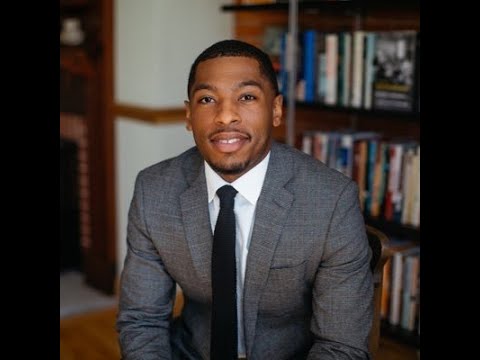
Angela Flournoy (Author, American writer won the First Novelist Award for “The Turner House” in 2015 and was shortlisted for the National Book Award for fiction.)

As a white person, “The Wilderness” offers a glimpse of what it is like to be a Black American woman in the prime of her life in today’s America. Flournoy creates a story of five adult Black women in their twenties in the years from 2000 though 2022. She reflects on their irreverent and tumultuous lives that show how friendships grow and fall apart between young Black Americans who are underestimated and face societal inequality. The friendships of these five women are a kind of bulwark against the experience of living in America as a racial minority.

American life.

Everyone faces challenges living in America, but friendship seems less important to white Americans because they are a majority of the population with assumed privilege that depends less on friendship than on economic opportunity. White American economic opportunity is taken for granted. A white listener/reader’s interest may make Flournoy’s story less interesting because it is singularly based on a minority. One might make the mistake of returning Flournoy’s story, rather than sticking with it, because it is different from its reader/listener’s life. Flournoy offers a view of life seen through the eyes of a person who lives as a minority in a white majority.

Friendship of women.

Desiree’s, Danielle’s, Monique’s, Nakia’s, and January’s stories are of 5 twenty something, well educated, Black American women and their lives through 20 years of friendship. Their friendship is a bulwark against the harshness of American life. Friendship is characterized as it is, i.e. not as smooth and unchanging but on again, off again, and renewable based on common experiences of being Black in America. Flournoy shows how these five friends balance their ambitions and relationships in a society that often gets in the way of their drive for economic success and/or happiness. When faced with discrimination, their friendships becomes an island of consolation. This island is not necessarily peaceful because of their different lives and personal circumstances, but it is a refuge from American discrimination.

Added to American police discrimination toward minorities is gender violence which is a problem for both white and Black American women.

Violence is endemic in America, but racism and inequality underlie greater vulnerability for Black Americans. Too many assumptions are made by police who racially profile Black Americans without justification. That profiling leads to unjustified police brutality based on the color of one’s skin. Sexual relationships may seem “ok” to an outside observer, but Flournoy shows it sometimes hides the reality of physical or psychological abuse between mated partners. January’s story is an example of coercion, instability, and harm that can occur in an intimate relationship.

The depth and horror of discrimination in American history.

The broad theme of Flournoy’s story implies being an identifiable minority means navigating social discrimination, gender difference, and physical violence in America. Flournoy’s opinion is that friendship is the bulwark upon which Black women protect themselves. The reality of Flournoy’s story is that social discrimination, gender difference, and violence exist in every country of the world. The way people deal with discrimination, gender difference, and violence ranges from adaptation, reluctant acceptance, or revolt. Her point is important, but her story is too long.

CAPITALISM’S REFORM

Like abolition, women’s suffrage, labor, civil rights, LGBTQ, and MeToo movements of the distant and near past, capitalism’s reform is due.

Books of Interest
 Website: chetyarbrough.blog

SAVING CAPITALISM (For the Many, Not the Few)

Author: Robert B. Reich

Narration by: Robert B. Reich

Robert Reich (Author, American professor, lawyer and political commentator that worked in the Geral Ford and Jimmy Carter administrations, and served as th secretary of labor in Bill Clinton’s administration.)

Robert Reich, as an advisor to Presidents of the United States is recognized by Time Magazine as one of the Ten Best Cabinet Members of the 21st Century and by the Wall Street Journal as one of the most influential business thinkers in 2008. In “Saving Capitalism” Reich criticizes corporate America for unethical and unfair capitalist practices that make a mockery of capitalist equality.

U.S. Rising Income Disparity.

Economic class warfare in America is a time worn argument by many economists in the 20th and 21st century. Reich’s topical analysis has some truth, but his analysis of wealth and markets oversimplifies the complexity of American capitalism. One cannot deny the harm that capitalist greed has done to increase wealth of the rich and decrease wealth of the poor in America. The political system is rigged by the influence of wealth over political policy and economic equality.

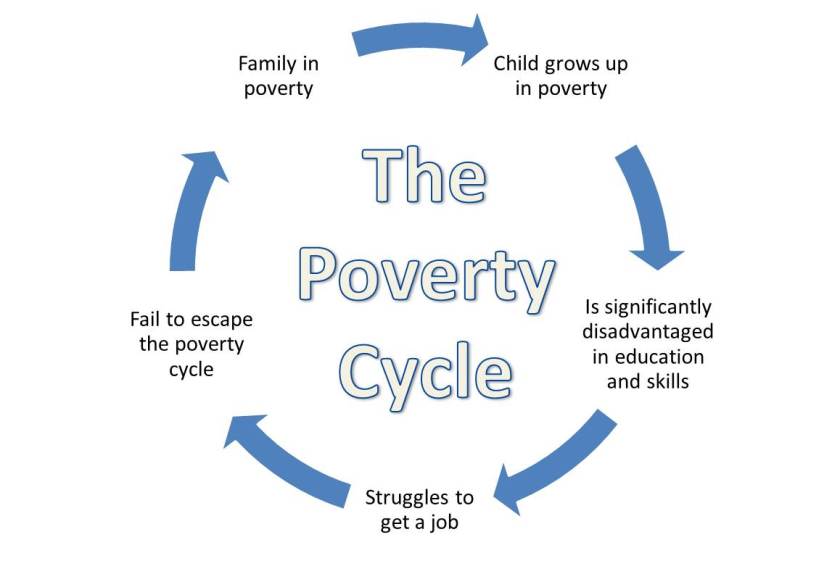
American capitalism’s rigging begins at birth, carries through public education, and ends in low-income opportunities for the poor.

The power of wealth feeds American capitalist Democracy’s circle of life. Money of the wealthy is spent to birth and educate their children with the best medical care and schools in America. The corporations and super rich of America hire and fund lobbyists who promote corporate agendas to support government representatives’ campaigns for office. The aspiring representatives are people who owe their allegiance to corporations and the rich who helped get them elected. That circle is biased toward making the rich richer.

Equality of opportunity is rigged in ever-larger corporations that reap super profits and pay CEO’s millions of dollars per year while low wage earners are left to fend for themselves. Mega corporations should be broken up like the oil industry dismantling in 1911. Like Standard Oil, today’s conglomerates have too much power over consumer purchasing, advertising, social media, medical industries, and (most importantly) the election process of America. The rigging begins with healthy birthing of children of the rich, extending to less qualified schooling for the poor, and ending with low-wage family’s children having unequal economic opportunity.

One cannot deny that Reich’s book and this biased review are an ideological belief that distorts and oversimplifies reality, but it carries an element of truth that cannot be denied. How can one person be worth a potential trillion-dollar net worth for service as CEO of one company that makes electric cars. Corporations like Amazon, Google, Facebook, UnitedHealth Group, and Cencora control markets through their size to capture disproportionate shares of advertising, social media, retail sales, and medication industries without competition to moderate their power, and influence. Add billionaires like Elon Musk, Larry Ellison, Mark Zukerberg, Larry Page, Steve Ballmer, Warren Buffett, and Michael Dell and others of great wealth–one is inclined to believe American capitalism is rigged.

As brilliant as Musk shows himself to be, his fragile ego diminishes his genius.

There is an unfairness in criticizing the wealthy for their success in America. They are not wealthy because of luck but because of their innate abilities, risk taking, and hard work but influence should not come from the power of their wealth to change government policies that focus on enriching themselves. Just as the robber barons had their influence curbed by antitrust legislation, the same should be done today. The influence of lobbyists and their support should be more publicly disclosed. The federal government should play more of a financial role in improving public education. Cries of inequality should be exposed, critiqued, and adjudicated fairly.

Capitalism remains the best economic system in the world, but it has its weaknesses. The best prescription for that weakness is equality of opportunity in the arena of employment competition. It begins with fair and equal access to medical care and access to a good education.

Like abolition, women’s suffrage, labor, civil rights, LGBTQ, and MeToo movements of the distant and near past, capitalism’s reform is due.
JUSTICE?

Putin has been indicted by the International Criminal Court for war crimes, unlawful deportation and transfer of Ukrainian children but has not yet faced trial. One suspects President Putin faces the same “slap of the hand” as Pinochet and will die of natural causes without being convicted for his crimes.

Books of Interest
 Website: chetyarbrough.blog

38 LONDRES STREET (on Impunity, Pinochet in England, and a Nazi in Patagonia)

Author: Phillip Sands

Narration by: Phillip Sands

Peter Sands (Author, Executive Director of the Global Fund to Fight Aids, Tuberculosis and Malaria, former CEO of Standard Chartered, known as a British Banker.)

Peter Sands book is interesting and a compelling history that would have been clearer if, at the beginning of his book, he had more precisely identified Augusto José Ramón Pinochet Ugarte’s atrocities in Chile. Those atrocities are detailed after one is nearly halfway through the book.

“38 Londres Street” is the address at which torture, illegal detentions and assassinations took place under the leadership of Pinochet. Sands explains 40,000 people were detained or tortured under Pinochet’s regime. 3,000 people were killed or disappeared during Pinochet’s reign. He ruled Chile for 17 years before being arrested in London when a Spanish judge issued a warrant for his arrest for genocide and terrorism. This was the first time a former head of state was charged for a crime by a universal jurisdiction.

Augusto Pinochet (born in 1915-died in 2006. As a military officer and politician, he instituted a military coup to become dictator of Chile from 1978 to 1990.)

Pinochet became Dictator of Chile when he overthrew President Salvador Allende in 1973.

Because of mining and trade interests in Chile by American and British corporations, along with distrust of Allende’s Socialist Party and Marxist beliefs, Allende was considered an enemy of America’s and Great Britain’s leadership. Allende was often labeled as a Communist because of nationalizing Chile’s copper mines, redistributing land, and increasing wages for less wealthy Chileans.

In truth, Allende rejected the idea of a one-party communist state while believing Chile should gradually become a Democracy. Both America and Great Britain supported Pinochet’s revolution because of their economic interest in trade with Chile and their opposition to his socialist beliefs. Declassified records show the CIA funded opposition parties to destabilize Allende’s government. Because Britain was a close ally of America and had economic interests in Chile, both Nixon and Edward Heath, the Prime Minister of Great Britain, supported Pinochet’s military junta. When Margaret Thatcher became Prime Minister, she also supported Pinochet’s government. In the atmosphere of the cold war, Pinochet’s rebellion seemed in the best interest of America’s and England’s leadership.

Walter Rauff was a Nazi commander during WWII who escaped justice for exterminating an estimated 100,000 people in gas vans. Rauff designed the vans for Hitler’s occupation of Poland, Russia, and Ukraine. The picture to the right is Rauff as he appeared in Chile as an employee of Pinochet’s government.

The reason for the Chilean coup is not what Phillip Sands is primarily interested in but, as an author and lawyer, he explains the significant change in jurisdictional law with Pinochet’s indictment. It set a precedent for a foreign country’s right to indict another country’s leadership that tortures, disappears, and kills its own citizens.

The most troubling part of his argument for the change in international law is that it seems ineffective when only viewed from the indictment of Pinochet. To find a leader chargeable for genocide is important, but Chile’s protection of death camp SS officers like Walther Rauff reminds one of Putin’s atrocities as President of Russia. Rauff was protected by Pinochet’ government despite his role in Nazi Germany. Sands notes that Rauff assisted Pinochet in Chile’s repressive activities at 38 Londres Street.

Rauff’s disguised ambulances used to gas Jewish citizens and others.

The last half of Sands’ book is about the extensive interviews and research he did on Rauff’s past life. Like Pinochet, Rauff escapes justice and dies of natural causes. However, Jewish Nazi hunters did track down Rauff with the intent of killing him. Sands explains they were unsuccessful despite having knocked on his door before being denied access by a woman who answered the knock.

Magistrate Baltasar Garzón (Former judge of Spain’s central criminal court that set the precedent for universal jurisdiction.)

The world owes Spain gratitude for embracing universal jurisdiction despite its failure to successfully hold Pinochet for his crimes against humanity. That precedent gives weight to the principle of international justice. Magistrate Baltasar Garzón used the Pinochet case to set the precedent that sovereignty does not shield perpetrators of torture and genocide to be free of indictment and its potential for punishment. Adolf Eichmann is brought to justice in 1961 and the survivors of the 2003 massacre in Bolivia were awarded $10 million in damages.

One’s thoughts go to Putin’s incarceration of Navalny, his ordered slaughter of Chechens and his aggressive war against Ukraine. Navalny exposed Putin’s corruption in state-owned companies owned by Kremlin elites, i.e. the same elites that support the war in Ukraine.

Will Putin escape the long arm of the law?

As a professor of international law, Sands gives listener/readers a view of the important precedent of universal jurisdiction with the successful arrest of Pinochet for crimes against humanity. The irony of Sands history of this precedent is that Pinochet is not convicted and returns to Chile in 2000. Pinochet dies in 2006 at age 91. Putin has been indicted by the International Criminal Court for war crimes, unlawful deportation and transfer of Ukrainian children but has not yet faced trial. One suspects President Putin faces the same “slap of the hand” as Pinochet and will die of natural causes without being convicted for his crimes.

U.S. WEALTH GAP

Capitalism should be designed to ameliorate the wealth gap, not exaggerate it to the point of people going hungry in one of the richest countries in the world. Capitalism is the greatest economic system in the world, but equality of opportunity remains a work in progress that is made worse by poor government policies and the inherent faults of human nature.

Books of Interest
 Website: chetyarbrough.blog

This Time is Different (Eight Centuries of Financial Folly)

Author: Carmen Reinhart, Kenneth Rogoff

Narration by: Sean Pratt

Carmen Reinhart (on the left) is a Cuban American economist and Professor of the International Financial System at Harvard Kennedy School of Business. She has a Ph.D. from Columbia University. Kenneth Rogoff is an American economist and chess Grandmaster who received a B.A. and M.A. from Yale and a PhD in Economics from MIT.

Two well educated academics try to explain why world economies are not unique by arguing the patterns of financial crises are similar, if not identical.

They argue heavy borrowing, inflated optimism, bank collapses, high inflation and currency devaluations are common characteristics of nation-state financial crises. These nation-state government actions and reactions are a result of innate human behaviors. They argue recurrent financial crises feed off of each other to spread economic chaos that creates panic among economic movers and shakers of national economies.

Our American government.

The importance of Reinhart’s and Rogoff’s observation is particularly interesting in light of the economic disruptions of the current American government. History shows America is not exempt from economic crises. In 2008’s economic crises America carries a large responsibility for itself and other nations near collapse. The 2008 economic crisis shows how domestic debt can threaten the world, let alone one country.

Maybe American government is not above the law, but a President shows he is capable of bending it.

In light of Donald Trump’s directed tariff war and his “…Big Beautiful Bill Act” that eliminates federal income taxes on Social Security, tips, and overtime pay, America’s national debt is likely to balloon. He is gambling American citizens’ future on belief that tax reductions will be offset by economic gains from improved industrial development. This is at a time when industrial development is being impacted by arbitrary firing of government employees, AI innovations that reduce employment, and industry employees retiring or transitioning to a service economy that pays less livable wages.

Trump’s tax policy will continue its top tax rate at 37% despite the government’s earlier intent to have it revert to 39.6%.

The effect of these tax policy changes is expected to reduce tax revenues by 4 to 5 trillion dollars at a time when America’s debt has never been higher. It is estimated at $38 Trillion dollars today. America’s interest rate on that debt is 3.393%, more than double the rate of five years ago. The increasing rate is related to the believed risk of U.S. default which will most likely rise with Trump’s tax breaks. U.S. debt has never been higher. Interest at its present rate will consume 14% of the federal government’s outlay in 2028. That 14% could help pay for the Affordable Care Act that is opposed by the Republican majority. The Trump tax policy implies continued heavy borrowing, an inflated optimism that threatens bank collapses, high inflation, and currency devaluations. Though the authors are not writing that America is on the verge of economic collapse, their observations infer a crisis is nearing, if not inevitable.

Capitalism should be designed to ameliorate the wealth gap, not exaggerate it to the point of people going hungry in one of the richest countries in the world. Capitalism is the greatest economic system in the world, but equality of opportunity remains a work in progress that is made worse by poor government policies and the inherent faults of human nature.

EVIL’S PERSONIFICATION

One asks oneself, what leaders in the world today have remorse for the incarcerations, torture, and killings for which they are responsible? What remorse is there in Putin’s, Ayatollah Ali Khamenei’s, Prime Minister Netanyahu’s, and even our American President’s thoughts?

Books of Interest
 Website: chetyarbrough.blog

CONFRONTING EVIL (Assessing the Worst of the Worst)

Author: Bill O’Reilly, Josh Hammer

Narrated By: Robert Petkoff

Bill O’Reilly, American conservative commentator, journalist, author, and television host. Josh Hammer, American conservative commentator, attorney, co-author, and columnist.

History taken out of the context of its time often distorts the reality of the past.

“Confronting Evil” is an interesting if not nuanced history of the most notorious leaders in the world. They were responsible for the torture, incarceration, and death of millions. As is true of most if not all histories of famous and infamous leaders, historians and pundits choose facts that reinforce their view of world’ history. Even the best historian is influenced by the time in which they write and their choice of facts.

Nathan Bedford Forest (1821-1877, General in the Confederate States of America during the Civil War.)

One is appalled by the truth of Nathan Bedford Forest’s view of slavery during America’s Civil War. Forest directed the slaughter of people based on the color of their skin. Forest condoned the murder of all who believed in equality of human beings. Forest is considered a hero to some but with the passage of time and a growing belief in human equality, Forest is recognized as a despicable human being by those who know the history of his life and profession. The evidence of science and human accomplishment show that the color of one’s skin is no measure of intelligence or capability. Forest’s mistreatment of slaves and the wealth he created from trading in slaves is reported in this history. By many measures, Forest is shown as an evil person by O’Reilly and Hammer.

The rule of Genghis Kahn is said to have caused the death of 40 million people, an estimated 11% of the global population at his time in history.

Presumed image of Genghis Kahn (1162-1227, Founder and first Khan of the Mongol Empire.)

By some measures, Mao doubled that 40 million number with his “Great Leap Forward”, the “Cultural Revolution”, his labor camp creations, and political purges. Hitler is estimated to have caused the death of 17 million with his genocidal policies while casualties from WWII are estimated at 85 million. Hitler’s antisemitism is born of the same stupidity exhibited by Nathan Bedford Forest in America’s Civil War. The contribution of Jewish society to the world is incalculable.

Mao Zedong (1893-1976) Father of the Peoples Republic of China)

Mao’s great leap forward is estimated to have caused the death of 35 to 45 million citizens. The rule of Stalin is estimated to have caused the death of 20 to 60 million U.S.S.R.’ citizens. Stalin’s takeover of Poland, and the Baltics after WWII and his cruelty is remembered by survivors of his rule.

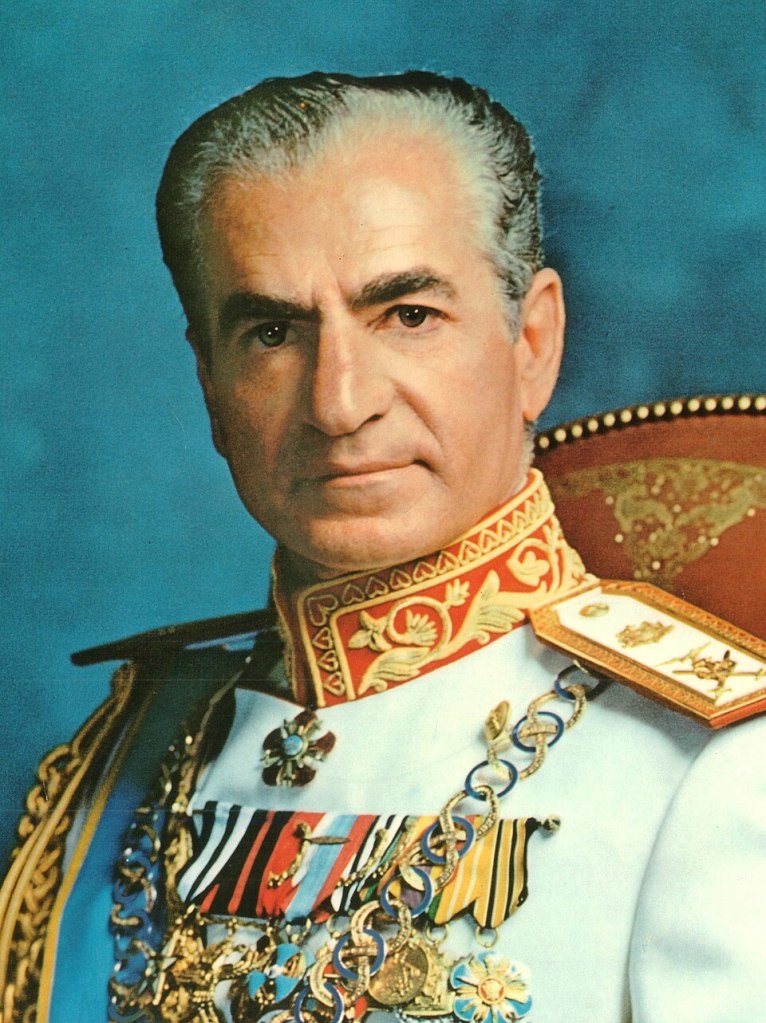
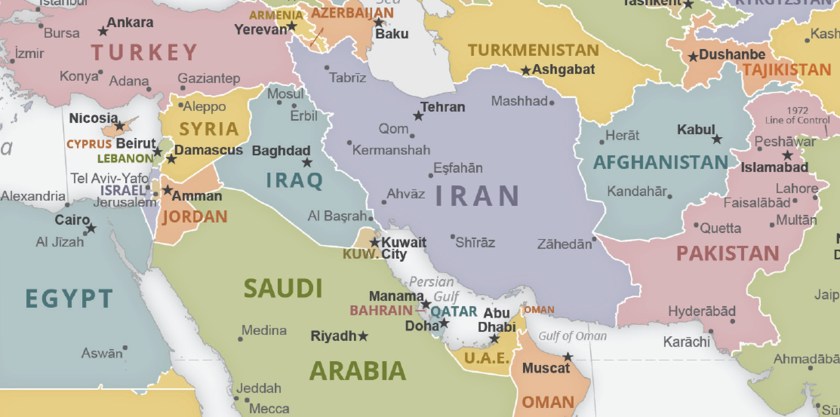
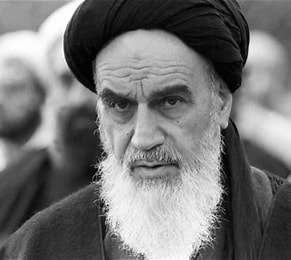
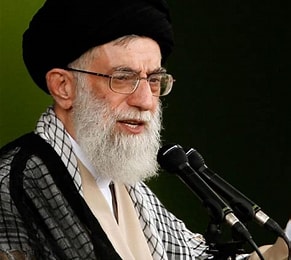
There are many other evil characters in “Confronting Evil”. In the mind of westerners, the current leaders of Iran and Russia are evil. The leader of Iran, Ruhollah Khomeini is estimated to have ordered deaths of Iranians that exceed 250,000 since his takeover in 1979. Though he has passed, the succession of Ayatollah Ali Khamenei has carried on with tens of thousands who have died in Iran’s involvement with Hamas in Palestine, Syria, Iraq, Yemen, and Lebanon. The predecessor of the religious leaders of Iran was Mohammad Reza Shah Pahlavi who reigned from 1941-1970. Pahlavi is estimated to have murdered 3,000 to 20,000 during his reign. These leaders ruled over an impoverished state but incomes per capita fell from $34,660 during the Shah’s reign to $3,150 under Khomeini’s rule. An irony is that income inequality hugely increased in Iran during Khomeini’s rule. Nuanced reality is that poverty and victimization of Iranians is more widely spread under Khomeini than under the former Shah. On an economic scale it appears Khomeini’s evil as a leader exceeds the Shah’s rule. Added to the economic difference is the religious zealotry of Khomeini which widened the gap of sexual inequality in Iran.

Ruhollah Khomeini (1st Supreme Leader of Iran, 1979-1989)

Ayatollah Ali Khamenei (Current leader of Iran.)

The authors address the illicit drug industry and the evil of Pablo Escobar in Columbia and “El Chapo” Guzmán in Mexico. Escobar was killed in 1993 when pursued by drug enforcement officers while Guzmán is serving a life sentence in the U.S. The drug industry continues to thrive despite the harm it is doing to America and the world. The leaders of the criminal drug industry care nothing for the consequence of their actions because of the wealth and power the illicit trade offers.

Pablo Escobar (now deceased) noted on the left with “El Chapo”(arrested and imprisoned in America) on the right.

The last two chapters of “Confronting Evil” offer a pithy definition of evil. Evil is defined as doing harm without remorse. One doubts any of the leaders noted by the authors have or had any remorse for the atrocities they have committed. Whether they rationalize their behavior for the good of their people, their religion, or their country—they are evil by O’Reilly and Hammer’s definition. One doubts any of the leaders noted in “Confronting Evil” are remorseful.

One asks oneself, what leaders in the world today have remorse for the incarcerations, torture, and killings for which they are responsible? What remorse is there in Putin’s, Ayatollah Ali Khamenei’s, Prime Minister Netanyahu’s, and even our American President’s thoughts?

TYRANNY

Arresting people based on their appearance without judicial review puts America on the slippery slope of authoritarian tyranny.

Opinion Page
 Website: chetyarbrough.blog

Chet Yarbrough

Today, the idea of Aryan endorses the absurd belief in white, Anglo-Saxon supremacy. Research shows a French aristocrat (de Gobineau), and a British-German philosopher named Chamberlain, defined Aryans as a superior white race.

However, there are many ideas and speculations revealed by the Durants’ history of civilization.

In the Durrants’ research, the word Aryan was originally used as a descriptive word for the Brahmin class in ancient India. The Durants noted the word Aryan in their history of civilization meant “noble” or “distinguished”. The criteria of India’s Brahmin class are reprehensible to one who believes in “equality of opportunity” professed by America but not practiced by Americans.

Class identity in ancient India does deny the truth of equal opportunity but not based on the color of one’s skin, but on ritual status, occupation, and social custom.

ICE’s accosting citizens because of the difference in the color of their skin is reprehensible. Of course, that has been the criteria for American Blacks before and after the Civil War.

Emigrant injustice is compounded by the failure to adjudicate immigration status before deportation.

The Administration’s use of force is a reminder of Nazi Germany when Jewish German citizens were being rounded up for believed difference and/or opposition to the government.

This is a picture of the beginning of Jewish discrimination in Nazi Germany with broken windows of businesses owned by Jews.

ICE arrests in America based on his non-white appearance.

Being able to easily identify difference based on physical appearance amplifies the probability of discrimination.

THREE ASIAN AMERICANS BRUTALLIZED IN 2025 BY AMERICAN RACISTS.

What has happened to the principle of “separation of powers” meant to provide a system of checks and balances on the Legislative and Executive branches of the American government? Have we abandoned Separation of Powers, Checks and Balances, power sharing between federal and state governments, the Bill of Rights, Judicial Review, and Electoral Safeguards? The idea of our Constitution is to stop a single branch of the government from dominating our system of government. Have we become a third world country? Today’s “NO KINGS” turn-out offers hope that others agree with the sentiment of this disappointed supporter of American Democracy.

Where is the Supreme Court in this injustice?

Arresting people based on their appearance without judicial review puts America on the slippery slope of authoritarian tyranny.

GENDER INEQUALITY

“Betraying Big Brother” is not wrong about gender inequality but the author’s anger and personal choices cloud the author’s message. Gender inequality is real everywhere in the world. Education is a beginning, but practice is the end.

Books of Interest
 Website: chetyarbrough.blog

Betraying Big Brother (The Feminist Awakening in China)

AuthorLeta Hong Fincher

Narrated By: Emily Woo Zeller

Leta Hong Fincher (Author, American journalist, feminist and writer, first American to receive a Ph.D from Tsinghua University’s Department of Sociology in Bejing., graduated from Harvard with a BA and a master’s degree in East Asian Studies from Stanford.)

The education and experience of Leta Hong Fincher is somewhat betrayed by her anger in “Betraying Big Brother”. Misogyny is an international reality that defies the truth of human equality. This reviewer’s prejudice, like the author’s biases are suspect because of their respective life experiences. This book reviewer was raised by a single parent mother who worked to keep two sons with a roof over their head and food on the table. How women survive inequality is made of the same stuff as that which plagues minorities around the world. The difference is that women are not a minority.

She writes of being a 15-year-old girl who is physically and emotionally abused by two boys who are friends of an older male friend that takes her to a get together of young acquaintances. That event burns a memory into Fincher’s mind that sets her on a journey thru life. One reading/listening to “Betraying Big Brother” recognizes the truth of what the author writes is reinforced by her life experiences. Of course, that is true of all human beings, but anger diminishes the impact of what Fincher says and writes.

Leadership?

Whether living in a democracy or autocracy, sexual inequality is present. Gender discrimination is universal. America and China talk the talk but fail to walk the walk. Fincher writes of Mao’s saying that “women hold up half the sky” implying he believed in gender equality. Mao spoke of marriage reform and labor participation but patriarchal norms were adhered to with women workers not being paid the same as men nor offered similar positions of power.

Xi speaks of gender equality, but no women are on the 24-member Politburo.

Xi also speaks of gender equality, but no women are on the 24-member Politburo while pay and promotions lag behind men. Fincher writes of Big Brother censorship, surveillance, and detention of women in China. (One presumes that is also true of everyone in China.) Like Trump, Xi promotes women’s roles in domestic stability, and their childbearing responsibilities. America has yet to elect a woman as President. Equal pay for equal work is improving in America, but a gap still exists with lower starting salaries, performance evaluation biases, and fewer high-profile assignments or promotions.

“Betraying Big Brother” is not wrong about gender inequality but the author’s anger and personal choices cloud the author’s message. Gender inequality is real everywhere in the world. Education is a beginning, but practice is the end.

HOUSING

Didion reminds one of Yeats Poem to warn society of civilization’s collapse. Yeats wrote “The Second Coming” after WWI and the Spanish Flu. Seems similar to today’s political war and the Covid pandemic.

Books of Interest
 Website: chetyarbrough.blog

Slouching Toward Bethlehem 

AuthorJoan Didion

Narrated By: Diane Keaton

Joan Didion (Author, American writer and journalist, published in The Saturday Evening Post, National Review, Life, Esquire, and The New Yorker. She also wrote screenplays for “The Panic in Needle Park”, “A Star is Born”, and “Upclose and Personal” as well as receiving a National Book Critics Circle Award and a Pulitzer. 1934-2021.)

Diane Keaton (Actor, Academy Award winner, BAFTA recipient, two-time Golden Globe, and Tony Award winner. 1946-2025.)

Diane Keaton died yesterday.

Several years ago, I purchased “Slouching Toward Bethlehem” without reading it until Keaton had done an audiobook’ narration of it. “Slouching Toward Bethlehem” illustrates Didion’s skill as an essayist and writer while Keaton’s many acclaimed movies show how accomplished both women have been in their lives.

“Slouching Toward Bethlehem” is interesting because it offers an interpretation of why homelessness is so much more obvious in America than other countries.

Having lived in different areas of the United States, the appearance of homelessness in the big cities of America is disgraceful. Visiting the Baltics, Norway, Finland, China, and Japan in the last few years illustrates how badly America is handling homelessness. With the exception of Norway, per capita incomes in the United States are more than twice the incomes of the aforementioned countries. Norway’s per capita income is $87,925 while America’s is $82,769. China’s per capita income is $13,122 but walking through major Chinese cities, there are no people sleeping on the streets. The Baltics per capita incomes range from $22,000 to a little more than $30,000. There is poverty in all these countries, but their leaders and societies have found a way to keep their citizens housed. This is not to argue their poor are not faced with hardship but to show how poorly American society is treating its homeless.

There seems a generational divide in Didion’s “Slouching Toward Bethlehem”.

The beat generation of the 1960s for which Timothy Leary coined the phrase “Turn on, tune in, drop out” alluded to in Didion’s essays may offer a partial explanation. Many of us experimented with drugs in the 60s but there has to be more than that to explain what has happened to big cities in America. Part of the answer is the change in income for the middle-class. In the 1960s middle-class incomes were strong and broadly shared. In the 21st century, middle class incomes have stagnated. CEO’s income in the ’60s made 20 times middle class earners but in the 21st century the ratio rose to 300-1. The rich got richer and the middleclass got poorer. Power shifted from a voting middle class to a richer upper-class that accelerated income gaps that changed election results with an income class bias.

Housing costs accelerated to new highs in the 21st century. The 1960s price-to-income ratios were 2:1 while today they are 5:1 or higher. The effort during the Obama administration to weaken standards for home buyer qualification exacerbated the greed of mortgage companies which led to a near economic collapse of the finance industry. Instead of bailing out homebuyers that could not pay their mortgages, the Obama administration bailed out mortgage companies and their owners while endorsing eviction of buyers who could not afford their mortgage payments.

“Slouching Toward Bethlehem” writes of famous successful people like John Wayne, Howard Hughes, Joan Baez, and herself as symbols of the 1960s. She is effectively glorifying them and herself while showing how they mythologized success to a generation of young people who were turning on, tuning in, and dropping out. Image became more important than substance. Working to be great at acting, becoming wealthy by investing wisely, singing about peace, justice and non-violence to make money, and writing about societal dysfunction were money makers. Capitalizing on dysfunction of society did nothing to ameliorate it. John Wayne is only a symbol of justice in the movies and Howard Hughes inherited his wealth that allowed him to invest, sometimes unwisely and with poor personal management skills. He began investing in Las Vegas because management could be left to others. To be fair, Didion and Baez try to return something to society for their success but their efforts pale in comparison to America’s decline. Artists report facts of life but rarely offer solutions.

William Butler Yeats (1865-1939, Irish poet, dramatist, writer and literary critic.

W. B. Yeats Poem summarizes and exemplifies what Didion alludes to in her book.

Turning and turning in the widening gyre  
The falcon cannot hear the falconer;  
Things fall apart; the centre cannot hold;  
Mere anarchy is loosed upon the world,  
The blood-dimmed tide is loosed, and everywhere  
The ceremony of innocence is drowned;  
The best lack all conviction, while the worst  
Are full of passionate intensity.  

Surely some revelation is at hand;  
Surely the Second Coming is at hand.  
The Second Coming! Hardly are those words out  
When a vast image out of Spiritus Mundi  
Troubles my sight: somewhere in sands of the desert  
A shape with lion body and the head of a man,  
A gaze blank and pitiless as the sun,  
Is moving its slow thighs, while all about it  
Reel shadows of the indignant desert birds.  

The darkness drops again; but now I know  
That twenty centuries of stony sleep  
Were vexed to nightmare by a rocking cradle,  
And what rough beast, its hour come round at last,  
Slouches towards Bethlehem to be born?

Didion reminds one of Yeats Poem to warn society of civilization’s collapse. Yeats wrote “The Second Coming” after WWI and the Spanish Flu. Seems similar to today’s political war and the Covid pandemic.

THE WEST

Though Mahbubani’s book is quite provocative, it is short and interesting. “How the West Lost It” is certainly worth reading/listening to, but few Presidents of the United States have reversed the admittedly slow improvement of “equality of opportunity” in America.

Books of Interest
 Website: chetyarbrough.blog

How the West Lost It (A Provocation)

AuthorKishore Mahbubani

Narrated By: Jonathan Keeble

Kishore Mahbubani (Author, Singaporean diplomat and geopolitical consultant, former Fellow at Harvard University’s Center for International Relations, formally served as the United Nations Security Council President.)

Mr. Mahbubani’s short book suggests the highly provocative belief that the West’s dominance of the world is giving way to Asia, particularly China and India. To mitigate the West’s decline, Mahbubani argues–the West needs to develop a more “coherent and competitive global strategy”. Paul Kennedy of Yale University praises Mahbubani’s assessment. The public commentator Fareed Zakaria endorses Mahbubani’s belief, and Hilton Root of “The Independent Review” acknowledges Mahbubani’s inference that “the West’s overperformance was a historical aberration and the East’s rise reflects a rebalancing of history”. Despite Root’s measured support of Mahbubani’s book, his analysis is nuanced. Root argues the decline of the West is oversimplified and that Mahbubani underestimates the resilience of Western economies.

Mahbubani argues Great Britain’s Brexit and Trump’s re-election are reactions to the West’s economic decline.

Edwad Luce argues Western liberalism needs to be reinvented by investment in a technological revolution for all Americans, not just those who have benefited from the industrial revolution. However, China seems to have read the future better than the West by building up their reserves of rare metals needed for advanced computer chips. In contrast, President Trump chooses to antagonize allies as well as competitors with a foolish trade war.

Root believes the innovative capacity and adaptability of the West will make adjustments to remain competitive, if not the dominant economic power of the world. Trump’s trade war suggests otherwise. Trump’s attitude is to ignore the years of built-up trust with Western allies and attack the world with destructive economic tariffs meant to right wrongs that are figments of real-politic’ imagination. However, some believe Mahbubani discounts political freedom and the drive of both the West and East to improve citizens’ living standards. That seems somewhat plausible, but Trump is attacking Americas most highly regarded universities with specious concerns with what he considers overactive recruitment of immigrants and minorities. The truth is American education for immigrants aids the strength and influence of Democracy in the world.

Yale University (American education for immigrants aids the strength and influence of Democracy in the world.)

The long cultural, educational, and technological influence of the West may be diminished by some of today’s political leaders but the trend over the last 200 years is unlikely to be reversed by Trump’s misguided authoritarianism. Trump’s significant risks are partially mitigated by publicly ingrained western democratic values. Though democracy is messy, it has demonstrated long-term stability and innovation that equals or exceeds the worst of what Trump’s authoritarianism is doing to the American economy and its institutions. Three more years of Trump’s presidency will not erase America’s legacy or destroy its future.

Though Mahbubani’s book is quite provocative, it is short, impactful, and interesting. “How the West Lost It” is certainly worth reading/listening to, but few Presidents of the United States have reversed the admittedly slow improvement of “equality of opportunity” in America. Mahbubani argues for a more diplomatic American policy with rising nations in the East because he believes China will ultimately replace America as the leading economy in the world.

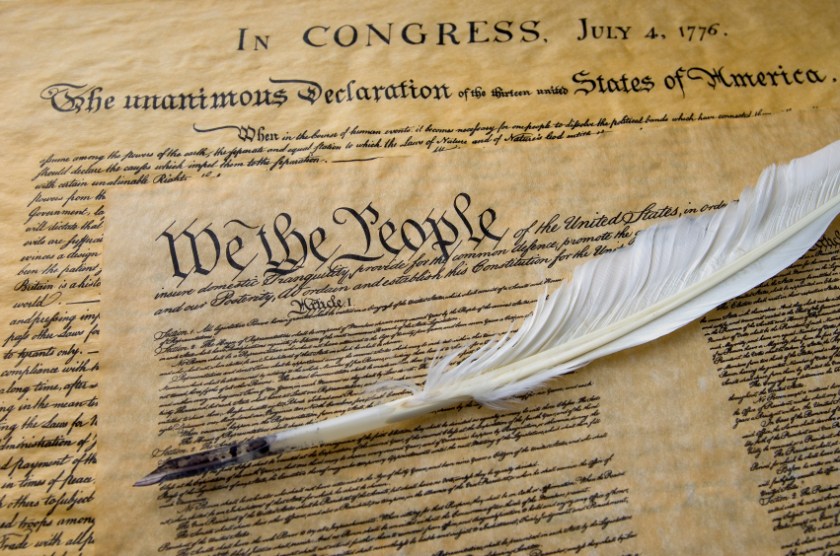
The interpretation of the Constitution has changed over the last 200 years, but it stands for continuity for America’s present and future.

The direction of American society remains true to the fundamental beliefs of liberty, equality, sovereignty, rule of law, separation of powers, federalism, checks and balances, and individual rights. Trump is challenging some of those rights, but balance of power and term limits will ultimately rescue America from his misbegotten domestic and international blunders. These rights have been challenged at different times in America’s history but never permanently reversed.

POLITICAL EVOLUTION

Karoline Kan’s story is very personal, but it offers insight to China that is more informative than many history and political polemics that fail to show what it is to be a Chinese citizen in the 21st century.

Books of Interest
 Website: chetyarbrough.blog

Under Red Skies (Three Generations of Life, Loss, and Hope in China)

AuthorKaroline Kan

Narrated By: Allison Hiroto

Karoline Kan (Author, reporter at Bloomberg, has published in the New York Times, and worked in radio broadcasting, studied at Beijing International Studies University focusing on journalism and writing.)

“Under Red Skies” is a story about Karoline Kan and her life from childhood to adulthood in China. She is based in Beijing, China. Kan writes about life in China before her birth and the change in China after Mao’s death. She provides a rewarding view of China from Mao’s to Deng’s to Xi’s leadership. In ways her story makes one somewhat fearful for her life and freedom, as well as China’s economic miracle and growth as the second most powerful nation in the world. The story of her life presents the puzzle of China’s changing relationship with America and the world. She is subtlety critical of Mao’s rule of China while a beneficiary of the changes wrought by Deng and now Xi in the growing power, economic improvement, and influence of her homeland. She appears to view America positively while being proud of her heritage and particularly appreciative of her mother’s role in her family during great changes in China. She reflects on societal change in respect to the life she lives and what her perceptions are of changes in political leadership wrought by Mao, Deng, and Xi.

The power and importance of mothers is exhibited by a presentation of this “Circle of Life” exhibit in Norway. To this observer, the statue illustrates the great importance of women in nurturing and educating the world’s future generations. The author’s story reinforces that belief.

Ms. Kan’s mother appears to be a formidable objector to some of Mao’s cutural beliefs by being unwilling to kowtow to government policies that conflict with her personal beliefs. Kan’s mother is the driving force behind the move from rural China to a larger community to improve her family’s lives. Karoline is born when the one child policy is enforced in the early 1980s to the 2000s. Karoline is the second child born to her mother. Her mother faced the financial penalties for having a second child and resisted forced sterilization that became the law of the land during her child-baring years. Karoline Kan’s mother appears a force to be reckoned with by traditional male standards in China and a patriarchal bias that exists in most of the world. By that measure “Under Red Skies” seems like an encomium to Karoline’s mother and a tribute to Kan’s bravery in writing a history of her early life and experience as a Chinese citizen.

Our Chinese guide for a 2o18′ tour of China is noted in the essay titled “70% Leadership“. This young guide reminds me of the author, Karoline Kan.

Kan reflects on ambivalent feelings some Chinese citizens have toward America. She expresses surprise that there seems more dislike by China of America than China should have for Japan. History shows conflicts were much greater with Japan than America. Chinese hate of Japan would presumably be more visceral because of deaths from wars and invasions of China by Japan, i.e., the first in the 1894-1895 Sino-Japanese war; then the invasion by Japan in Manchuria in 1931, a second Sino-Japanese war in 1937-1945, and the Nanjing Massacre that killed an estimated 200,000 to 300,000 imprisoned Chinese citizens. The estimate of Chinese casualties from Japan in these conflicts is 15-22 million. Of course, America fought the Chinese in the Korean war in the 1950s but the casualties were 400,000, with the possibility of as many as a million who died from injury, disease, and exposure. More likely, the hate of America is from the context of China’s ambition to be “second to none” in power and influence in the world. In the end, “ambivalence” is not the same as hate. Having traveled to China just after Xi’s rise to power, my wife and I felt very welcome by most Chinese citizens and businesses.

Communism is a political system that does not believe in God. Of course, neither do Buddhist or Taoist traditions which are the human practices and belief in personal truthfulness, compassion, and forbearance, i.e., spiritual beliefs about living life on earth because that’s all there is to life. There is no after life or heaven to a Buddhist or Taoist. These two spiritual beliefs are practiced widely in Japan and some places in China, like Tibet. Falun Gong, a Buddhist-like religion, arose in 1990s’ China. In the beginning, China accepted its practice, but the Communist Party eventually fought against its growth and labeled it a “heretical organization”. The Party obviously felt Falun Gong interfered with communist ideals. Additionally, there is the ongoing conflict between the Dali Llama and Tibetan belief (a branch of Buddhism) that is also reviled by China’s political leadership. The point is that communism demands fealty to belief in a classless, stateless society, not controlled or influenced by any social or economic belief other than those of the communist’ party. (One cannot help but reflect on Lord Acton’s phrase about “power” that is at the heart of all forms of government in history.)

Kan’s best friend, who finishes high school at the same time as Kan takes a different path, i.e., either because of her work in school, the poverty of her family, or the “bump” that changes her life.

The last chapters of Kan’s story are the personal journey of women in China. Kan is accepted at a University in Bejing. Marriage has evolved in China but still has many of the same matrimonial customs. Marriages of the past were highly arranged and had little to do with love or attraction. In modern China, marriages have become less determined by family arrangement but more by circumstances of a child’s experience. Like children around the world, parents influence but have limited control over a child’s libidinal impulses. The author’s closest friend becomes pregnant from the son of a poor family that is unable to compensate the daughter’s family in a way that some arranged marriages would provide. The lower dowry implies Kan’s friend is destined to live a life of poverty. Kan shows her to become a factory worker to supplement the family’s income. Her work is hard and highly repetitive but the income from both parents working helps them live better lives. With a husband, wife, and one child, her friend decides to have an abortion because another child would be too expensive for them to live a decent life.

Beijing International Studies University is the school Kan attends and receives a degree.

In contrast to Kan’s friend’s life, Kan goes to college where she is housed with women she does not know but are of her age. Kan’s family is presumably able to help her with expenses, and she goes on to become a journalist and writer. Interestingly, all women (and presumably men) are obligated to serve 2 to 4 weeks of military service before beginning a career-related’ education. The implication of this type of regimentation for all college students implies China has wider international ambitions.

The change in China’s culture with the leadership of Deng and Xi is revealed in Kan’s story. It shows the strengths and weaknesses of capitalism and communism. China’s dramatic economic growth is a result of the endorsement of capitalism with a communist autocratic influence. Interestingly, Kan shows China seems on a road to become more American while America seems to become more Chinese.

Kan’s story is very personal, but it offers insight to China that is more informative than many history and political polemics that fail to show what it is to be a Chinese citizen in the 21st century. Kan shows how both China and America have less than perfect systems of government.