SCHIZOPHRENIA REDUX

The boon and bane of a brilliant mind is that it can correlate facts with causes to reveal the mysteries of the universe but also the demons of false correlation and belief.

Books of Interest
 Website: chetyarbrough.blog

The Best Minds (A Story of Friendship, Madness, and the Tragedy of Good Intentions)

AuthorJonathan Rosen

Narration by: Jonathan Rosen

Jonathan Rosen (Author, Yale graduate, writes for The Jewish Daily Forward, and the Free Press.)

As a person who has lived through the same generation as Jonathan Rosen, his story is interesting partly because it tells what it is like to be born a Jew in America. In many ways, one finds life as a Jew is no different than it is for any American. Most Americans are born into a family that cares for them and influences who they become as adults. Children are born with innate abilities that are either cultivated or ignored by their parents. Some parents are too busy with their own lives to offer care a child may benefit from with more attention. It appears Jonathan Rosen is born into a family that cultivates his abilities despite their busy lives. One wonders if that is a matter of ethnic tradition or inherent nature. One suspects it is a little of both.

In “The Best Minds”, an important part of being raised a Jew is education that encourages and reinforces Jewish identity through rituals like the bar mitzva.

The bar mitzva and bat mitzva (for girls) is a coming-of-age ceremony at age 13 (sometimes 12 for girls) where a Jewish child memorizes and recites passages from the Torah. On the one hand it reinforces one’s identity with a particular ethnicity. On the other, it is one of many exercises of memory that reinforces one’s ability to succeed academically. Much of one’s success as an accomplished adult is recall of information whether a doctor, lawyer, or merchant chief. From a young age, memorization is an important skill for Jewish children. One wonders how much tradition has to do with the brilliance of Einstein, Oppenheimer, Salk and so many other Jews of the world. This is not to suggest being raised in a Jewish family is not as traumatic and unpredictable as any child born but to recognize ethnic customs make a difference in children’s lives. The great contributions to science and art by Jews makes one wish they might live life over again with more positively ritualized cultivation.

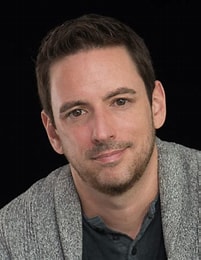
Michael Laudor (Yale graduate, subject of “The Best Minds)

However, there is much more to Rosen’s story. His life is intertwined with the life of Michael Laudor, a close childhood friend who is raised in a similar environment and recognized as a prodigy. However, Lauder succumbs to schizophrenia. This is not to suggest Jews or any ethnicity is prone to psychological imbalance. Psychiatric imbalance is not defined by ethnicity but exists as a potential for every human being. One doubts there is any defense against psychological abnormality whether Jew, gentile, or other.

Laudor and Rosen as childhood friends.

Laudor and Rosen were close friends. Rosen recognizes his friend has a superior mind, i.e., one of “The Best Minds” of Rosen’s high school’ years. Rosen struggles to understand what happened to his childhood friend. Both Rosen and Laudor are accepted at Yale. Laudor chooses law as his course of study. Rosen goes on to California to get a PhD in literature. Their dual biographies make Rosen’s story impactful. Rosen explains how intelligence, ambition, and success can be destroyed by mental illness.

Yale University in New Haven, Connecticut.
Laudor is a wunderkind who performs at a level far beyond his age group. He graduates from Yale and decides wealth is a goal to be achieved. He is hired by an investment consulting firm which offers him an opportunity to become super-rich. Rosen infers Laudor succeeds. From the outside, Laudor appears to be highly successful, but he becomes dissatisfied with his life and quits the firm that hired him. Rosen stays in touch with Laudor and writes “The Best Minds” to reveal what he thinks he knows about what happened to his childhood friend. The beginning of Laudor’s imbalance appears to Rosen when Laudor explains he is being followed, monitored and targeted by unknown malefactors. Before that conversation, the erratic behavior of Rosen’s friend seemed like a matter of burnout from his high-flying experience as an investment consultant. The intensity of Laudor’s paranoia makes Rosen believe something more serious is at the root of his friend’s behavior.
Rosen stays in touch with Laudor–talking to him about what is going on in his life. He tries to get Laudor to see the falseness of his delusions without triggering defensiveness. Rosen avoids contradicting Laudor by trying to be supportive and encouraging him to seek help. On the one hand one wonders what more could Rosen do. How else could he intervene in Laudor’s spiral into what is later diagnosed as schizophrenia? A reader/listener wonders what they would or could have done.

Michael Laudor murders his fiancée, Carrie Costello, in 1998. She is pregnant at the time of her death.

Laudor had grown to believe his girlfriend had become a part of a conspiracy to harm him and that he needed to defend himself despite her trying to care for him. His brilliant mind manufactured a false reality. His delusion leads to the fatal stabbing of Ms. Costello. After the homicide, Laudor calls 911. He is arrested and transferred to a psychiatric facility and later found guilty by reason of insanity. He died in 2022 at the age of 56 in a New York State psychiatric hospital, never recovering from severe schizophrenia.

“The Best Minds” is Rosen’s effort to understand how genius and madness can be intertwined. The boon and bane of a brilliant mind is that it can correlate facts with causes to reveal the mysteries of the universe but also the demons of false correlation and belief. Correlation is not causation without objective and repeatable experimental proof.

The question one asks oneself after finishing Rosen’s book is what one can do differently to keep someone from losing their way in life whether he/she is a genius or not?

American Leadership

Without a competent Chief of Staff, democracies are subject to authoritarian tyranny.

Books of Interest
 Website: chetyarbrough.blog

The Gatekeepers (How the White House Chiefs of Staff Define Every Presidency)

AuthorChris Whipple

Narration by: Mark Bramhall

Chris Whipple (Author, political analyst, documentary film maker, journalist.)

Democratic government is complicated and messy, but decisions are made based on an understanding of the interests of many as opposed to the dictate and judgement of one.

“The Gatekeepers” may be viewed by most as an historical account of White House Chiefs of Staff based on many interviews of former government officials. However, one is inclined to see this history as a chronical of American government effectiveness. The facts and incidents reported give reader/listeners a view of America’s government function. Whipple details a series of relatively prudent and sometimes bad decisions made by late twentieth and twenty-first century presidents. Whipple’s history suggests the decision-maker for pursuit of government policy is America’s elected President. However, the road to policy approval or rejection is paved by White House’ Chiefs of Staff.

Whipple covers Nixon’s, Ford’s, Carter’s, Reagan’s, both Bush’s, Clinton’s, Obama’s, and Trump’s first administration. It does not address Biden’s Presidency or the Chief of Staff for Trump’s second term. The many interviews Whipple bases his history on offer a credible and enlightening history of American government. It is H. R. Haldeman, Cheney, Rumsfeld, Baker, Panetta, Card, and Rahm Emanuel that are the most prominent examples of effective and consequential Chiefs of Staff in Nixon’s, Ford’s, Reagan’s, Clinton’s, first and second Bush’s, and Obama’s administrations. The definition of effective is their ability to achieve a desired result whether good or bad for America. This is where one’s personal political beliefs come into question. It is always easy to see the errors of the past retrospectively. Whipple is careful to report facts and results without much judgement about their consequences.

H.R. Halderman (1926-1993, former Chief of Staff for President Nixon.)

Haldeman was Nixon’s Chief of Staff. There is no evidence that he had anything to do with the planned or ordered Watergate break-in, but Whipple shows he participated in a Watergate cover-up. Though Haldeman’s actions after the Watergate scandal are reprehensible, the point made by Whipple is that Haldeman set the table for what an effective Chief of Staff should be for a President. Haldeman acts as a consummate gatekeeper. One can criticize Haldeman’s bad decision to try and coverup Watergate, but he defined the role of a President’s Chief of Staff. Whipple shows Haldeman manages access to the President, understands where the power of government lies, has a good understanding of staff members surrounding the President, protects the President’s time, and balances a President’s policies with the politics of his party.

Donald Rumsfeld (1932-2021, Secretary of Defense and former Chief of Staff for President Ford.)

President Ford’s Chief of Staff is Donald Rumsfeld with Dick Cheney as Deputy Chief of Staff. Rumsfeld is characterized as a mentor to Cheney. They had a close relationship according to Whipple. Ford’s political decision to give a full pardon to Nixon and clemency for Vietnam draft dodgers were hot potato issues that were abetted (if not endorsed) by Rumsfeld and Cheney. Most significantly Ford ended America’s war in Vietnam. Ford endorses tax increases to reduce inflation while supporting tax cuts to stimulate the economy. Ford increases congress’s role in foreign policy.

Dick Cheney (1921-2025, second Chief of Staff for President Ford.)

In a cabinet reorganization Cheney becomes the Chief of Staff and Rumsfeld switches to Secretary of Defense. Rumsfeld and Cheney, in their roles as Chiefs of Staff, control access to President Ford, coordinate policy actions, shape internal decision-making, and advise Ford on strategy to influence people who accomplish these acts. The two Chiefs influenced Ford to replace Kissinger as National Security Advisor, promote George Bush as CIA Director, and prepare Ford for the next election which is ultimately lost to Jimmy Carter.

Hamilton Jordan (1944-2008, Chief of Staff of President Carter.)

When elected, President Carter felt he did not need a Chief of Staff. However, he relented in 1979, when he found the job was needed. Carter hired Hamilton Jordan who had been his campaign strategist when he ran for President. Whipple notes that appointment became a mistake because of Jordan’s lack of discipline. Though the Ford administration fought the idea of promoting Reagan for President, the public felt otherwise.

James Baker (1930-, Chief of Staff for President George H.W. Bush.)

After Carter, when Reagan is elected, he chooses James Baker as his Chief of Staff. Whipple suggests Baker is the quintessential model of a great Chief of Staff which all could be measured against. Baker is characterized by Whipple as an expert at managing the White House, the press, and Capitol Hill. Baker understood the process, the politics, communication, and presidential management requirements of the job. He never confused himself with the power of the President. He became manager of what is called the Reagan Revolution. The political and social movement revolves around ideas of smaller government, deregulation, cutting taxes, and endorsement of free enterprise. Whipple infers the success of the Reagan Revolution is largely due to the skill of James Baker.

Leon Panetta (1938-, Chief of Staff for President Clinton.)

One may argue Reagan caused America’s 1990-91 recession. Unemployment had risen to 7.8%. This set the table for a Democratic President named Bill Clinton. The initial Chief of Staff for Clinton is John Podesta who served from 1998-2001 and is replaced by Leon Panetta who, in the author’s opinion, rivals James Baker as a great Chief of Staff. Whipple infers that, without Panetta, Clinton would not have been reelected after the Monica Lewinsky affair. Panetta brought discipline and structure to the Clinton White House. Panetta could say “no” to the President, at least, in private. Panetta gained a reputation for being an honest broker as a negotiator for the President.

Andrew Card on the left. Joshua Bolten on the right.

George W. Bush, the next President, is noted to have two Chief’s of Staff during his two terms as President. It appears both Andrew Card and Joshua Bolten were more soldiers than Chiefs of Staff for George W. Bush. The policy decider is certainly George W. Bush but the influence of Dick Cheney as Bush’s V.P. seem a major influence on George W.’s decisions. Bush’s two Chief’s of Staff may have been effective as screeners but not as Chiefs of Staff that could say no to a President influenced by his cabinet and personal opinions. The entry to the wars in Afghanistan and Iraq suggests Card and Bolten were unduly influenced by others in the administration.

No one seems inclined to say no to President Bush in private. In retrospect, President Bush seems let down by his Chief’s of Staff and the research and judgement of his Department Heads. Both Afghanistan’s and Iraq’s invasions by the American military are retrospectively shown by most (if not all) histories as American mistakes, if not tragedies.

Rahm Emanuel (1959-, Chief of Staff for President Obama.)

The final chapters address Chief’s of Staff for Obama and Trump. Obama became President when the American economy is in an economic crisis that threatens the financial industry, the general economy, and the mortgage market for many American homeowners. He asks Rahm Emanuel to become his Chief of Staff. Emanuel is a tough Chicago politician who recognizes the pressure of the office and has some level of fear about the future of the American economy. He understood the gravity of the job he is being asked to take. However, his reputation as a tart tongued fighter for what he believed as right made him the best Chief of Staff that could be found. His role as gatekeeper gave Obama the support needed to pass the Obama Health Care plan and work through the economic crisis that nearly bankrupted America.

Reince Priebus (1972-, Chief of Staff for President Trump.)

Trump’s choice of Reince Priebus as his first Chief of Staff is short lived and lasts for less than 8 months. His short tenure is not evaluated, and history shows he is replaced three times in the remaining years of Trump’s first term. A pro-Trump person will have one opinion about those facts while an anti-Trump person will have another.

Whipple convinces reader/listeners that a competent Chief of Staff is critically important for any organization that approaches the complexity of a nation-state government. Without a competent Chief of Staff, democracies are subject to authoritarian tyranny.

ECONOMIC CRISES

Sorkin’s “1929” makes one think about 20th and 21st century American Presidents who may have set a table for a second economic crisis. As the Turkish proverb says “…fish stinks first at the head.”

Books of Interest
 Website: chetyarbrough.blog

1929 (Inside the Greatest Crash in Wall Street History–and How It Shattered a Nation)

AuthorAndrew Ross Sorkin

Narration by: Andrew Ross Sorkin

Andrew Sorkin (American author, journalist, and columnist for The New York Times.)

“1929” is a history of the build-up to the stock market crash and the advent of the depression with opinions about how today’s economy compares and what should be done to keep it from happening again. Though Sorkin is not an economist, he has written an interesting history of the build-up to the 1929 depression.

Faltering economies.

There is a sense of danger being felt by some today when reading/listening to Sorkin’s history of the 1920s. Few seem to have a clear understanding of world market forces and whether we are heading for an economic catastrophe or a mere hiccup in the growth of the economy. Neither bankers, regulators, nor politicians in the 1920s (or for that matter now) seem to have a clue about the economy’s trouble and what can be done to ameliorate risks. Like 1929, today’s insiders, power brokers, and rich have more options to protect themselves than most of the world’s population.

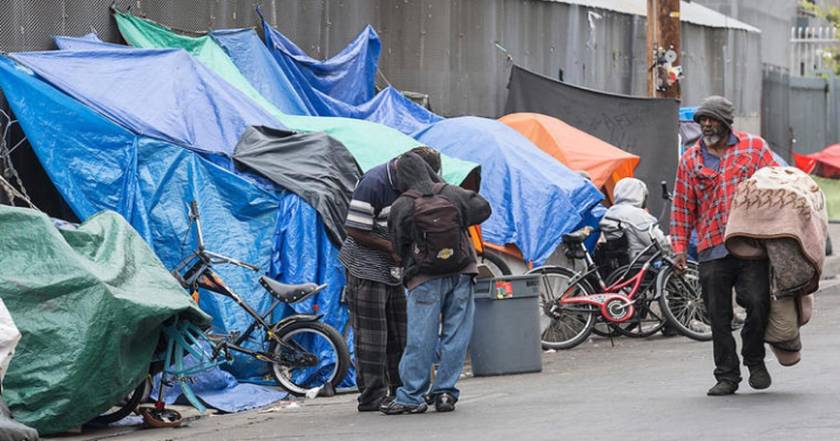
Increasing homelessness in America.

In America, it seems those in power have no concern about the rising gap between rich and poor or the immense increase in homelessness. Without a plan by those in power, there seems little concern about reducing inequality, the common denominator for the wealth gap and homelessness. Sorkin’s book outlines the reality of 1929 that gives reader/listeners a feel of history that may repeat itself.

Sorkin’s history seems credible as he notes human nature does not change.

Today’s leaders are like yesterday’s leaders. Not because they are venal but, like most if not all human beings, leaders in power are concerned about themselves and what there is in life that serves their personal needs and wants. Of course, the difference is that leaders that are power brokers affect others that do not have the same influence or options to protect themselves. We all have blinders that keep us from seeing the world as it is because human nature is to ask what is in it for me, i.e., whatever “it” is. The 1920s had a merger bubble in manufacturing and communication that is fed by the industrial revolution. Today, we have a merger bubble with mega-corporations like Tesla, Apple, Amazon and others that are mega-corporations capitalizing on a new revolution coming with A.I., the equivalent of the Industrial Revolution. Some critics argue mega-corporations, like what happened with the oil industry could be broken up to increase competition which is the hallmark of improved production, cost reduction, and lower consumer prices.

Charles E. Mitchell (American banker, led the First Nation City Bank which became Citibank.)

What makes this history interesting is Sorkin’s identification of the most responsible power brokers who bore responsibility for the stock market crash. Charles Mitchell of Nation City Bank is identified as the central driver of the stock market bubble. Mitchell denied the reality of the financial systems fragility. His ambition and unfounded optimism magnified the systemic risk of the financial crises. He openly defied the Federal Reserve’s warning to curb margin lending that risked other people’s money and their financial stability. He continued to promote purchase of stocks on credit that were fueling the stock market bubble. Mitchell appears to have misled the public in order to increase his power and protect his personal wealth by creating the illusion of market stability and his bank’s profitability. Though Mitchell is not the sole villain, he became the most powerful banker in the nation while breaking the financial backs of many Americans. In general, it is the self-interest of those who listened to him that have responsibility for their financial collapse, but it is always hard to know who is lying to you. Part of the blame is the hesitation of the Federal Reserve Board to act because the people in charge could not agree but that was more a matter of omission than commission which Mitchell was charged with but not convicted. Of course, the political leaders of that time also failed but hindsight is a lot easier than foresight.

Artificial Intelligence is today’s equivalent of the Industrial Revolution of the twentieth century.

Similar to the corporate mergers and investment from growing industrialization of the 1920s, today’s mania is mega corporation’ investment in Artificial Intelligence. Sorkin notes the ease of trading stocks, expectations of crypto investments, and A.I. hype may well move the market beyond its value. He argues for stronger guardrails on speculative investments, more limits on margin lending, and transparency on high-risk investments. He cautions easier credit as seen this Christmas season with buying based on delayed payment incentives and increasing credit card availability, card balance increases, and more liberal repayment terms. In general, Sorkin wants to see more, and better government oversight and regulation of credit offers. He believes too many lenders are overly optimistic about the future with the gap between rich and poor widening and trending to get worse. That inequality threatens the success of capitalism as a driver for shared prosperity, and economic growth.

Herbert Hoover (President 1929-1933, though characterized as the primary villain for the depression, Sorkin identifies his role as one of omission rather than commission.)

The Presidents shown below carry some responsibility for where the American economy is today but that would be another book.

Clinton, the first Bush, the second Bush, Obama, Biden, Trump.

Sorkin’s “1929” makes one think about 20th and 21st century American Presidents who may have set a table for a second economic crisis. As the Turkish proverb says “…fish stinks first at the head.”

Orwell & A.I.

In the pre-A.I. age, democratic socialism is unachievable, but A.I. may resurrect its potential. However, as Orwell noted, the risk is a “Brave New World” rather than a hoped-for democratic socialism.

GEORGE ORWELL (Author, 1903-1950)

In Norm Chomsky’ ‘s and Nathan Schneider’s book, “On Anarchy”, George Orwell’s book “Homage to Catalonia” is called one of Chomsky’s favorite books. “On Anarchy” infers Orwell believed in anarchy because of his role in the war (1936-1939) against the Franco government. Though Orwell’s risk of life in Spain’s war is inconceivable to me, it seems prudent to listen to his story and point to the significant difference between what Chomsky and Schneider infer about Orwell’s belief in “…Anarchism” and what Orwell really wrote and believed. Though Orwell takes anarchism seriously as a political working-class movement, he believes it is impractical and that democratic socialism (with “1984” reservations) is what he believes could be the best form of government. The idea of abolishing all forms of coercive authority and hierarchy with a government anarchy is impractical because of the nature of human beings.

Francisco Franco with his soldiers in 1936.

Because of Orwell’s belief in democracy and equality he chooses to join the fight against Franco’s fascism. He joins the resistance at the age of 33 because of his belief in democratic socialism. He felt he needed to join the ideological struggle against Franco’s regime. It is a remarkable decision considering he is married, and relatively unknown. He is oddly driven by his moral belief in democracy and equality. Presumably, he entered the war to understand what it means to fight a war against a government he felt was immoral and totalitarian. Orwell served for approximately six months beginning in December 1936. He was shot in the throat and nearly died.

Anarchy and human nature.

It seems inconceivable that anarchism is a reasonable way of governing human nature. It is interesting to contrast what Orwell believes and what anarchists argue. This is particularly relevant in the 21st century because of the inevitable change in society that is occurring with artificial intelligence. A.I. has an immense potential for creating Huxley’s “Brave New World”. However, his writings reject the ideal of “Anarchy” espoused by Chomsky and Schneider because of its impracticality. Huxley shows that human nature contains both heroism and weakness tied to the material world. Even though human nature is basically decent, it is easily corrupted. That corruption makes humans hope and fear human decisions designed by consensus. It is not to say democratic socialism would be infallible, but it offers a structure for regulation of different governments at chosen intervals of time.

Human nature will not change. Human nature is a set of relatively stable psychological, biological, and social tendencies that are shared by all human beings. These tendencies shape how humans think, feel, and act even as culture and governance changes. Artificial intelligence will only intensify the strengths and weaknesses of human nature. The principles of anarchy in an A.I. world is frightening:

  • No centralized government, police, or standing armies.
  • Society organized through federations of communes, cooperatives, or councils.
  • Emphasis on direct democracy, mutual aid, and local autonomy.
  • Suspicion of any coercive authority — even democratic majorities.
  • Change often imagined as revolutionary, not incremental.

A more rational alternative to Anarchy is Democratic Socialism believed by Orwell and espoused by MLK.

  • The state remains, but becomes more egalitarian and accountable.
  • Markets may still exist, but are regulated or supplemented by public ownership.
  • Political parties and electoral competition are central.
  • Emphasis on universal programs: healthcare, education, housing, worker protections.
  • Change is gradual, through reforms, not revolution.

Differences of opinion.

There are obvious differences between Chomsky’s and Orwell’s beliefs. Both have social weaknesses. Human nature gets in the way of both forms of governance. Orwell seems to have recognized the weaknesses of his belief in democratic socialism in his writing of “Brave New World”. In contrast, Chomsky’s and Schneider’s pollyannish view of anarchy as “…a better form of government where power is decentralized and citizens can and should collectively manage their own affairs through direct democracy and cooperative organizations” is absurd. The difference is that Huxley foresees the dangers of his idea in “Brave New World” which anticipates something like A.I. that has the potential for society’s destruction. “On Anarchy” ignores the truth of human nature, “Brave New World” does not.

Franciso Franco (1936-1975, died in office.)

Orwell’s decision to join opposition to Franco’s dictatorship fails. Their right-wing beliefs in authoritarianism, anti-communism, and pro-Catholicism prevails. Spain’s 1930s opposition leaders (Manuel Azaña, Largo Caballero, and Juan Negrín) were pro-democracy with anti-fascist, socialists, communists, anarchists, trade unions, urban workers, and peasants who Orwell joined to support democratic socialism, not anarchy.

In the pre-A.I. age, democratic socialism is unachievable, but A.I. may resurrect its potential. However, it is the risk of a “Brave New World” or “1984” rather than a hoped-for democratic socialism.

PEACE IN ISRAEL

Like America’s Civil War and the issues of slavery and independence, peace will only come to Israel with a political and territorial agreement based on human equality.

Books of Interest
 Website: chetyarbrough.blog

BEING JEWISH AFTER THE DESTRUCTION OF GAZA (A Reckoning)

AuthorPeter Beinart

Narration by: Malcolm Gladwell

Peter Beinart (Author, journalist, political commentator, professor, former editor of the New Republic, born in Cambridge, Mass. to Jewish immigrants from S. Africa.)

This is a surprising Jewish author’s analysis of Israel’s response to the horror of Hamas’ murders/rapes of 1200 people and the taking of 251 Jewish hostages on October 7, 2023. Peter Beinart appears to be a devout Jew and journalist who criticizes Israel’s response to Hamas’s brutal attack and hostage taking. He believes, as current news reports confirm, Hamas will return to control and influence Gaza and West Bank Palestinians after Israel’s brutal response to the Hamas’ atrocity.

NYT’s Picture of Grief over the Hamas attack on October 7th, 2023.

Without reservation, Beinart condemns Hamas for their war crime on October 7th. However, his book equally condemns Netanyahu’s response. Beinart points to the Israeli government’s destruction, murder, and starvation of thousands of Palestinian men, women, and children who had nothing to do with the planning or execution of the Hamas horror of October 7th. The author argues Israel must focus on a political, non-military solution to Palestinian human rights. He believes Netanyahu’s actions only perpetuate a cycle of violence in Israel which will not achieve security for either the Israeli or Palestinian people.

One wonders how unpopular Beinart’s opinion may be among Israel’s Jewish population. As a blogger who received written comments from a devout Jewish person who supports Trump and Netanyahu’s actions in Israel, it is surprising to hear Beinart’s analysis of the Gaza war and his criticism of Israel’s actions. As the reviewer of this book who admittedly has little respect for religion and its history of atrocities, it is encouraging to hear from one who believes in their religion and condemns those who have no empathy for other religions. God is a universal concept with religions that worship His existence in different ways. Beinart makes one wonder why there is so little room for a “let it be” attitude toward different religious beliefs.

Empathy.

Beinart argues for Jewish empathy toward Palestinians while condemning Hamas’ actions in Israel. He believes long-term peace requires political compromise and a recognition of Palestinian rights. Military actions only guarantee rather than deter future violence and injustice. Beinart’s plan is to end Israeli’ occupation of Gaza and expand the rights of Palestinians to control Gaza and the West Bank. He argues it can be either a one-state or two-state solution. Beinart argues ground invasion by Israel in Gaza must stop. He recommends forthrightly engaging the humanitarian crises in Gaza by providing aid and rebuilding what has been destroyed.

Pursuit of peace is not easy.

None of this is easy because of the enmity that remains. The complications of political opposition, and security are ongoing concerns for Israelites and Palestinians, but Beinart believes the risks of a negotiated political, religious, and territorial settlement is worth it. Human equality is a work in progress for all nations in the world. Beinart persuasively argues a political and territorial agreement between Palestinians and Israelites is the only possible path to peace. Like America’s Civil War and the issues of slavery and independence, peace will only come to Israel with a political and territorial agreement based on human equality. Of course, the drive for equality remains a work in progress for America. That will be true in Israel for generations to come, but peace can be restored with pursuit of equality for Palestinians and Jews.

POLITICAL REPRESENTATION

Despite John Kennedy’s anti-liberal leaning and conservative populism, his autobiography will make one pay more attention to what he says as a Senator of the United States.

Books of Interest
 Website: chetyarbrough.blog

HOW TO TEST NEGATIVE FOR STUPID (And Why Washington Never Will)

AuthorJohn Kennedy

Narration by: John Kennedy

Senator John Kennedy of Louisiana

“How to Test Negative for Stupid” is an excellent autobiography of Senator John Kennedy. Not the John Kennedy who became President of the United States but a southerner who represents the great state of Louisiana. Having worked and lived for a couple years in New Orleans, experience reminds me of the extraordinary people I met who were as friendly as any strangers I have met around the world. Celebrating a Mardi Gras, seeing Elizabeth Taylor in a local theatre performance, and listening to Al Hirt live at a local bar were experiences one could not forget.

In my mind, Louisiana is an unusual State for Kennedy to represent as a Senator because of its colorful and diverse history.

In the 17th century it was claimed by France but ceded to the Spanish in the 18th century after the Seven Years’ War. France never really left Louisiana with some settling in New Orleans which became a vital port and, at least in my mind, a cultural representative of the State.

Half the state is enslaved by 1860. It joins the Confederacy at the beginning of the Civil War. After the Civil War, Louisiana endures Reconstruction and military occupation, while endorsing Jim Crow Laws that represent legalized segregation. This history is not to vilify or disrespect John Kennedy, but to give some context to the complex society John Kennedy ably represents in Congress.

Louisiana Emancipation Proclamation in 1863 declares the Confederate states “forever free”.

John Kennedy shows himself to be a well-educated, intelligent academic, and honest forthright politician. He is an erudite representative of the Louisiana’ Republican Party. This autobiography is a pleasure to listen to with one great reservation which is his defense of Donald Trump. Trump, like Senator Kennedy, represents a diverse constituency but, to this voter, President Trump is a risk to the health and welfare of America.

Trump’s anti-immigration policies are being enforced in legally suspect ways that should be and are being challenged by the judiciary.

Kennedy is reluctant to criticize Trump because of his belief that when one is elected to office in the United States, the position should be respected because of the election process. The absurdity of that belief is that Kennedy writes of the dishonesty and crookedness of some Louisiana Governors that got away with their corruption like it was just part of life in Louisiana.

Unfair political campaigning.

Kennedy is right about the Democratic Party unfairly vilifying Trump with false stories about Russian interference with electoral process and false reports of sexual activity (the Steele report) in Russia for which he could be blackmailed. False accusations have always been a part of the American election process. Every election for President has had true and false accusations made by opposing parties. None of these accusations kept Trump from being elected.

Presidents of the U.S.

Trump will be our President for the next three years of his second term. He is not the first or last President to abuse the office of the Presidency. His conflicts of interest are in his bond buying spree in 2025, his links to cryptocurrency, his appointments of cabinet members and advisors that have corporate ties, his use of the Presidency for personal branding, his gifts received like a $400 million plane from Qatar as Air Force One, and his personal empire building while being President of the United States.

Trump is not the first President to be accused of conflicts of interest.

George Washington had vast land holdings as the western parts of America that were being acquired by the government. Jefferson supported agriculture while being a large plantation owner dependent on slave labor. Bill and Hilliary Clinton were invested in the Whitewater real estate collapse in Arkansas, meant to sell vacation homes to the public. It went bankrupt and cost taxpayers an estimated $73 million. George Bush’s ties to the oil industry and his V.P.s recommendation to use Cheney’s former employer, Halliburton, to contract for work in Iraq seem questionable.

Migration is the movement of people to new areas of the world for work, better living conditions, and safety. In that process the world economy and American industry are arguably strengthened, not damaged.

Trump’s unadjudicated arrests and deportation of alleged immigrants is appalling. Trump’s anti-immigration policies are being enforced in legally suspect ways that should be and are being challenged by the judiciary. He is not the only President to have instituted policies that are contrary to the interests of America’s citizens. Many opposed Franklin Roosevelt’s New Deal with history vindicating many of those decisions as appropriate for the circumstances of that time. Like Roosevelt, Trump tests the limits of his authority. What is appalling about Trump’s supported policies are issues like denying subsidized health care for the poor while maintaining tax reduction for the rich. Of course, history will be the final arbiter of Trump’s presidency.

Despite disagreeing with Kennedy’s support of Trump, the story of John Kennedy’s life is entertaining and enlightening. One comes away with admiration for a person who speaks his mind and who acts in the interests of his constituency and the country with honesty about what he believes to be right or wrong.

Despite John Kennedy’s anti-liberal leaning and conservative populism, his autobiography will make one pay more attention to what he says as a Senator of the United States.

HARD TIMES

America’s next President needs to forcefully change the economic direction of America in the same way Timothy Egan shows Franklin Roosevelt and the Secretary of Agriculture, Henry Wallace, did during the Dust Bowl and Depression era.

Books of Interest
 Website: chetyarbrough.blog

THE WORST HARD TIME (The Untold
Story of Those Who Survived the Great American Dust Bowl)

Author: Timothy Egan

Narration by: Jacob York

Timothy Egan (Author, American journalist, former op-ed columnist for The New York Times, won the National Book Award in 2006 for “The Worst Hard Time”.)

Timothy Egan wrote an interesting history of America during the dust bowl years that resulted in the Great Depression that lasted from 1929 to the early 40s. “The Worst Hard Time” has concerning parallels to today’s economy. Timothy Egan notes the Dust Bowl is caused by climate change, water scarcity, and energy transition, i.e. all conditions of the year 2025.

Contrary to Trump’s belief that global warming is a cycle of nature, most scientists argue the earth is warming because of the world’s burning of fossil fuels.

Clean potable water is a growing threat to a rising world population.

American Oil Refineries.

Transition from fossil to renewable energy sources is being delayed by the Trump administration.

Agricultural markets dramatically rose and fell in the 1920s and 30s. Wealth and greed created by wheat farming blinded farmers to the harm they were doing to the Nebraska, Oklahoma, and Texas panhandle plains of middle America. With the scarification of soil and seasonal planting and harvesting of wheat, millions of acres of grass land were left barren between crop seasons.

Trump is a sad reminder of the political blindness of Herbert Hoover.

Herbert Hoover (31st President of the United States.)

Tariffs and anti-immigration policies were instituted by the Hoover administration as a response to declining prosperity caused by excessive wheat farming cultivation. This is reminiscent of President Trump’s response today with tariffs, militant immigration policies, and his rejection of science that warns of the impact of global warming.

Trump’s modus vivendi.

Artificial Intelligence in today’s economy has increased investment of billions of dollars in today’s money like that spent to grow and harvest wheat in the 1920s. Investment in farmland skyrocketed in the 1920s with farming as a way to increase wealth with cultivation of land that was nearly free in Nebraska, Oklahoma, and the Texas panhandle. Today, massive investments in A.I. are being made by wealthy tech company owners. Without pragmatic and careful implementation of A.I. to America’s economy, tech company’ investments may have the same consequence to its investors as the farming collapse had to the wheat farmers.

A.I. will become the engine of American economic improvement just as Industrial Revolution changed agricultural production.

Today, A.I., rather than industrialized agriculture, has become the great economic engine of America. Today’s massive investments are in A.I. rather than wheat harvesting. The collapse of wheat prices because of oversupply disrupted the American economy because workers were not needed. A.I. will have a similar impact on all industries which may lead to the next world-wide depression.

1933 Depression bread lines.

Trump’s idea of Making America Great Again is a twentieth century idea that may lead to economic collapse rather than economic prosperity. His tariff policies set a table for damaging the world economy in the same way they did when Hoover became President. America needs to embrace the inevitable decline of human manufacturing and focus on transitioning America to a service economy. America needs more doctors, nurses, social workers, educators, house builders, scientists, and ecologically minded politicians rather than investors and manufacturers of disposable conveniences. At the same time, regressive tax policies that penalize the poor and enrich the wealthy need to be changed. Tax revenue needs to be focused on America’s economic transition from a disposable manufacturing economy to service and ecological preservation industries.

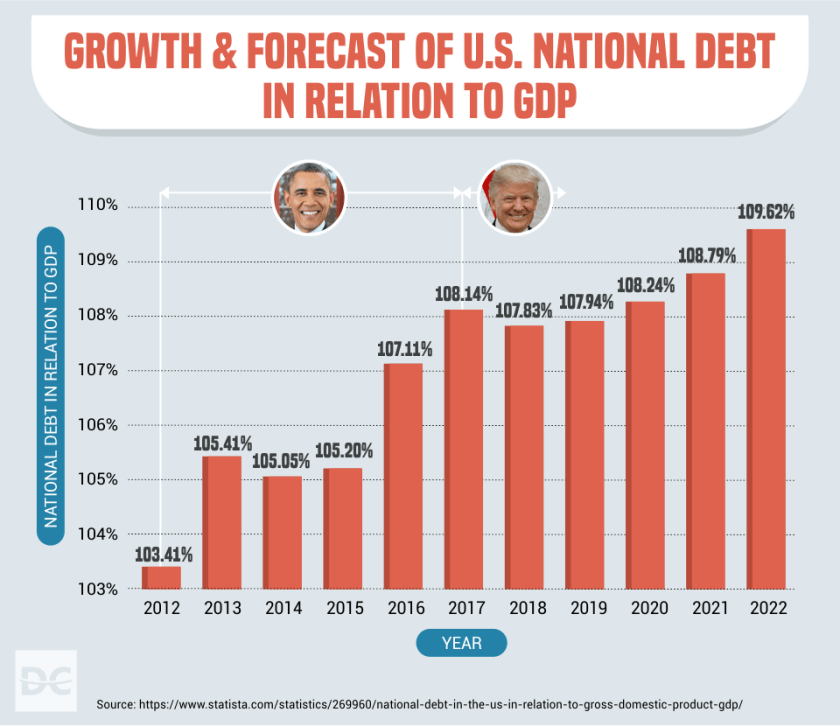
The hope for GDP growth in America’s future depends on a change in economic direction.

America’s next President needs to forcefully change the economic direction of America in the same way Timothy Egan shows Franklin Roosevelt and the Secretary of Agriculture, Henry Wallace, did during the Dust Bowl and Depression era. The reversal of Trump’s mistakes will take more than one four-year-term for correction, but the next election needs to set a different course for the American economy.

VICE PRESIDENTS

Harris’s tough mindedness and potential are well illustrated in “107 Days”. America is ready for a woman to be President, but Ms. Harris may have too much baggage to be a successful candidate for President in 2028.

Books of Interest
 Website: chetyarbrough.blog

107 DAYS

Author: Kamala Harris

Narration by: Kamala Harris

Kamala Harris (Author, former V.P. of the United States and former California attorney general.)

The obvious message of Kamala Harris’s book “107 Days” is that the Democratic Party lost the presidency because of the compressed time for Harris to mount her campaign. There are many reasons noted for Harris’s failure to get elected as President of the United States. She notes Biden’s weak candidacy, party disorganization, misinformation and disinformation, foreign policy controversies and protests, polarization and turnout problems, and cultural/generational messaging gaps. “107 Days” is a well written and narrated story of the difficulties that Harris had in her political race against Donald Trump. Her book is a compelling argument. However, it seems her most likely cause of defeat is time.

Donald Trump (President of the U.S., politician, media personality, born into a wealthy New York City family, has a B.A. in Economics from University of Pennsylvania.)

Retrospectively, Harris’s story makes many think she would have been a better President than Donald Trump. The story of her book reinforces that belief. However, that is misleading in the sense that Harris is faced with two burdens that are difficult, if not impossible, to overcome. One, America has never had a woman President and two, Harris is too closely associated with the administrations cover-up of Biden’s intellectual decline. There are many causes one can give to understand why Harris is defeated but time to know who she is seems the most crucial.

Vice President Harry Truman became President with the death of Franklin Roosevelt.

It seems most Vice Presidents of the United States are viewed as figure heads or pawns to increase votes for the person who is running for President. The duties of a Vice President today seem more like “gopher” jobs that give little visibility to the character of the person chosen to be Vice President. Only when that person becomes President, does the world find out who the Vice President is and what capabilities he (before Harris, they were all men) brings to the office. (For example, Trump’s successor, if it was his V.P., is unknown and unpredictable.) Harry Truman, retrospectively, is one of the great Presidents of the United States but no one thought a part owner and proprietor of a grocery store could be a competent President of the United States.

Five V.P.’s in history became Presidents of the United States.

Though there have been several Vice Presidents (John Adams, Thomas Jefferson, Martin Van Buren, Richard Nixon, and Biden) who have successfully become Presidents of the United States their election was determined by campaigning. Regardless of whether time was the determining factor in Harris’s loss of the Presidency, her book shows she has the intelligence and ability to be America’s President. What that means to her and the future of America is unknown. One presumes Harris will consider running for President, but one suspects the burden of her loss to Trump is likely to diminish her chance of getting enough political support for her candidacy.

Presidents of the United States.

Harris’s tough mindedness and potential are well illustrated in “107 Days”. America is ready for a woman to be President, but Ms. Harris may have too much baggage to be a successful candidate for President in 2028.

SOCIETY

The broad theme of Flournoy’s story implies being an identifiable minority means navigating social discrimination, gender difference, and physical violence in America.

Books of Interest
 Website: chetyarbrough.blog

THE WILDERNESS (A Novel)

Author: Angela Flournoy

Narration by: Angela Flournoy & 2 more

Angela Flournoy (Author, American writer won the First Novelist Award for “The Turner House” in 2015 and was shortlisted for the National Book Award for fiction.)

As a white person, “The Wilderness” offers a glimpse of what it is like to be a Black American woman in the prime of her life in today’s America. Flournoy creates a story of five adult Black women in their twenties in the years from 2000 though 2022. She reflects on their irreverent and tumultuous lives that show how friendships grow and fall apart between young Black Americans who are underestimated and face societal inequality. The friendships of these five women are a kind of bulwark against the experience of living in America as a racial minority.

American life.

Everyone faces challenges living in America, but friendship seems less important to white Americans because they are a majority of the population with assumed privilege that depends less on friendship than on economic opportunity. White American economic opportunity is taken for granted. A white listener/reader’s interest may make Flournoy’s story less interesting because it is singularly based on a minority. One might make the mistake of returning Flournoy’s story, rather than sticking with it, because it is different from its reader/listener’s life. Flournoy offers a view of life seen through the eyes of a person who lives as a minority in a white majority.

Friendship of women.

Desiree’s, Danielle’s, Monique’s, Nakia’s, and January’s stories are of 5 twenty something, well educated, Black American women and their lives through 20 years of friendship. Their friendship is a bulwark against the harshness of American life. Friendship is characterized as it is, i.e. not as smooth and unchanging but on again, off again, and renewable based on common experiences of being Black in America. Flournoy shows how these five friends balance their ambitions and relationships in a society that often gets in the way of their drive for economic success and/or happiness. When faced with discrimination, their friendships becomes an island of consolation. This island is not necessarily peaceful because of their different lives and personal circumstances, but it is a refuge from American discrimination.

Added to American police discrimination toward minorities is gender violence which is a problem for both white and Black American women.

Violence is endemic in America, but racism and inequality underlie greater vulnerability for Black Americans. Too many assumptions are made by police who racially profile Black Americans without justification. That profiling leads to unjustified police brutality based on the color of one’s skin. Sexual relationships may seem “ok” to an outside observer, but Flournoy shows it sometimes hides the reality of physical or psychological abuse between mated partners. January’s story is an example of coercion, instability, and harm that can occur in an intimate relationship.

The depth and horror of discrimination in American history.

The broad theme of Flournoy’s story implies being an identifiable minority means navigating social discrimination, gender difference, and physical violence in America. Flournoy’s opinion is that friendship is the bulwark upon which Black women protect themselves. The reality of Flournoy’s story is that social discrimination, gender difference, and violence exist in every country of the world. The way people deal with discrimination, gender difference, and violence ranges from adaptation, reluctant acceptance, or revolt. Her point is important, but her story is too long.

CAPITALISM’S REFORM

Like abolition, women’s suffrage, labor, civil rights, LGBTQ, and MeToo movements of the distant and near past, capitalism’s reform is due.

Books of Interest
 Website: chetyarbrough.blog

SAVING CAPITALISM (For the Many, Not the Few)

Author: Robert B. Reich

Narration by: Robert B. Reich

Robert Reich (Author, American professor, lawyer and political commentator that worked in the Geral Ford and Jimmy Carter administrations, and served as th secretary of labor in Bill Clinton’s administration.)

Robert Reich, as an advisor to Presidents of the United States is recognized by Time Magazine as one of the Ten Best Cabinet Members of the 21st Century and by the Wall Street Journal as one of the most influential business thinkers in 2008. In “Saving Capitalism” Reich criticizes corporate America for unethical and unfair capitalist practices that make a mockery of capitalist equality.

U.S. Rising Income Disparity.

Economic class warfare in America is a time worn argument by many economists in the 20th and 21st century. Reich’s topical analysis has some truth, but his analysis of wealth and markets oversimplifies the complexity of American capitalism. One cannot deny the harm that capitalist greed has done to increase wealth of the rich and decrease wealth of the poor in America. The political system is rigged by the influence of wealth over political policy and economic equality.

American capitalism’s rigging begins at birth, carries through public education, and ends in low-income opportunities for the poor.

The power of wealth feeds American capitalist Democracy’s circle of life. Money of the wealthy is spent to birth and educate their children with the best medical care and schools in America. The corporations and super rich of America hire and fund lobbyists who promote corporate agendas to support government representatives’ campaigns for office. The aspiring representatives are people who owe their allegiance to corporations and the rich who helped get them elected. That circle is biased toward making the rich richer.

Equality of opportunity is rigged in ever-larger corporations that reap super profits and pay CEO’s millions of dollars per year while low wage earners are left to fend for themselves. Mega corporations should be broken up like the oil industry dismantling in 1911. Like Standard Oil, today’s conglomerates have too much power over consumer purchasing, advertising, social media, medical industries, and (most importantly) the election process of America. The rigging begins with healthy birthing of children of the rich, extending to less qualified schooling for the poor, and ending with low-wage family’s children having unequal economic opportunity.

One cannot deny that Reich’s book and this biased review are an ideological belief that distorts and oversimplifies reality, but it carries an element of truth that cannot be denied. How can one person be worth a potential trillion-dollar net worth for service as CEO of one company that makes electric cars. Corporations like Amazon, Google, Facebook, UnitedHealth Group, and Cencora control markets through their size to capture disproportionate shares of advertising, social media, retail sales, and medication industries without competition to moderate their power, and influence. Add billionaires like Elon Musk, Larry Ellison, Mark Zukerberg, Larry Page, Steve Ballmer, Warren Buffett, and Michael Dell and others of great wealth–one is inclined to believe American capitalism is rigged.

As brilliant as Musk shows himself to be, his fragile ego diminishes his genius.

There is an unfairness in criticizing the wealthy for their success in America. They are not wealthy because of luck but because of their innate abilities, risk taking, and hard work but influence should not come from the power of their wealth to change government policies that focus on enriching themselves. Just as the robber barons had their influence curbed by antitrust legislation, the same should be done today. The influence of lobbyists and their support should be more publicly disclosed. The federal government should play more of a financial role in improving public education. Cries of inequality should be exposed, critiqued, and adjudicated fairly.

Capitalism remains the best economic system in the world, but it has its weaknesses. The best prescription for that weakness is equality of opportunity in the arena of employment competition. It begins with fair and equal access to medical care and access to a good education.

Like abolition, women’s suffrage, labor, civil rights, LGBTQ, and MeToo movements of the distant and near past, capitalism’s reform is due.