HISTORIES’ RELEVENCE

One cannot deny the relevance of Lowen’s recognition of histories’ distortions, but to infer they are not being corrected by modern times and today’s education is misleading.

Books of Interest
 Website: chetyarbrough.blog

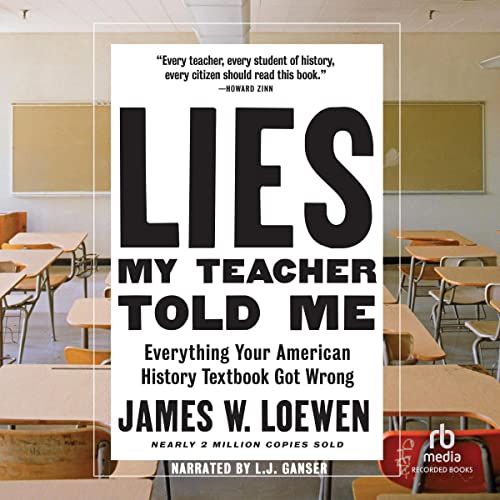
Lies My Teacher Told Me, 2nd Edition

Author: Dr. James Loewen

Narration by: L. J. Ganser
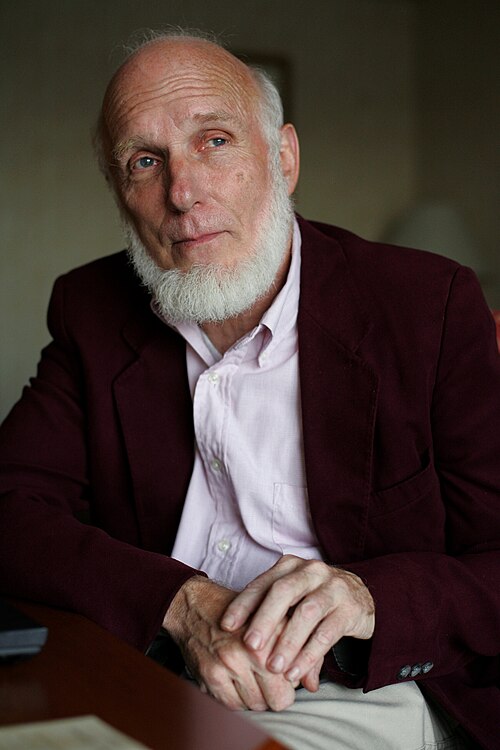
James William Loewen (1942-2021, died at age 79, American sociologist, historian, and author.)

Revisiting “Lies My Teacher Told Me” in a second edition is interesting but not as rewarding as when it was first published. Contrary to James Loewen’s opinion in this second edition, the history of famous people and important events have significantly improved. Lowen did a great service to the public when he first wrote “Lies…” because history is written with more objectivity today than in 1995 when his original book is published. He lampoons the education industry by revealing the human fault of textbook historians making people and events of the past imprecise, sometimes wrong, and culturally misleading.

The truth of history is explained by many authors who more deeply invest their time in the history of people, times, and places than textbook summarizations.
Loewen reviewed several published pre-college history books that were being used before 1995 that distorted the importance of major historical events and people. Narrowing the discovery of a new continent to Christopher Columbus and distorting his contribution to exploration in the 15th century is unquestionably exaggerated and misleading. On the other hand, Columbus represents many mariners that risked their lives in sailing thousands of miles away from their known lands to explore the wonders of the earth and sea. The many distortions of the trials of native Americans and sanitized narratives of slavery are an appalling truth of early history books. Pre-college students should be educated on the truth of American Indian trials and the appalling history of slavery. However, even the worst history books in today’s schools show the displacement of native Indians and a Civil War that is about more than States Rights. The details may not be revealed but general events and people are disclosed so that further education can fill in blanks of misleading characterizations.
As one raised in the 1960s, the distortions of which Loewen writes have largely been corrected by revisionist histories. Anyone who has learned to read cannot help but recognize inaccurate information they received in their school days. Maybe today’s schoolbooks are still inaccurate and incomplete, but no one can escape the evidence offered by the media of modern times. The lies told in history books are revealed by our living in the 21st century. Today’s pre-college textbooks may still sanitize, simplify, and distort the truth of history, but education never stops as we get older. There are many Martin Luther King believers today that are spreading the truth of American slavery’s history and white America’s continued discrimination based on the color of one’s skin.

Believing men and women are equal is a work in process despite the distorted inequality illustrated in school textbooks. The evidence is in the growing importance of women in business and politics in America. Misinformation is still causing societal polarization but every successful woman and person of color in modern times shows that change is coming and it is inevitable. As the Declaration of Independence noted “all men are created equal” despite the existence of slavery and unequal treatment of women in America.
There is little solace for people of color and women that continue to be discriminated against, but hope remains for tomorrow. There are setbacks but, as Martin Luther King said, “The arc of the moral universe is long, but it bends toward justice.”


SLAVERY

The Seminole Indian leaders, Osceola and Abraham, formed an alliance for multiracial freedom that remains the goal of all rational human beings. They failed and only became free in death.

Books of Interest
 Website: chetyarbrough.blog

The Free and the Dead

AuthorJamie Holmes (The Untold Story of the Black Seminole Chief, the Indigenous Rebel, and America’s Forgotten War.)

Narration by: David Sadzin & 1 more

Jamie Holmes (Author, writer for the NYT, The New Yorker, The Atlantic, and Slate. Served in the Peace Corps after receiving a degree from New York University and went on to Columbia to receive a Master of International Affairs.)

“The Free and the Dead” is a book that shows how little this reader/listener knows about slavery and Black history. “The Free and the Dead” is a history of Black slaves in Florida who were descendants of Spanish Florida that became a refuge for enslaved Africans fleeing the English colonies between the 1600s and 1700s. Spain offers asylum and freedom to runaways who could reach Florida in the early days of America.

Some former slaves joined the Seminole Indian confederation to become leaders and translators of Indian languages for early settlers of what became American territory. Holmes reveals some of the cultural blending between Seminole and African descendants who had escaped colonial slavery. Separate villages of these culturally blended descendants gained relative freedom in the U.S. South by becoming fierce fighters for Seminole Indian freedom in the Seminole Wars between 1817 and 1858.

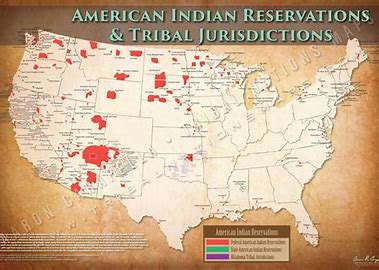
Today’s Indian Reservations.

As most Americans know, the Indian wars were lost and the Seminoles like all Indian tribes were moved around the country to reservations that changed with subsequent Presidents’ and American military’ orders. Holmes reveals some of this early history in “The Free and the Dead”. The most famous Black Seminole leader was Abraham who became a co-leader with Osceola, an indigenous Seminole Indian who resisted U.S. policies.

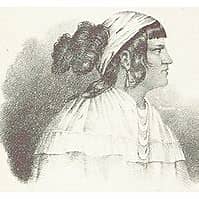
Abraham (A prominent Black Seminole leader in the 19th century.)

Abraham became a Black Seminole chief. He was a former slave who became an influential military leader of the Seminoles. He spoke English, Spanish, and the Creek Indian languages which made him an important intermediary in negotiating with white settlers. Abraham worked with major Seminole war leaders in negotiating agreements between white settlers and Seminole tribes. This twist in the history of American slavery and Osceola’s and Abraham’s alliance make Holmes’ story insightful.

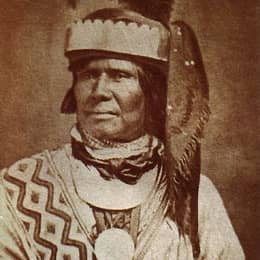
Osceola, leader of the Seminole Indians in Florida in the Second Seminole War.

The point of “The Free and the Dead” seems the only way one becomes free is when they are dead.

Slavery today seems as prevalent as it was years ago. America’s Declaration of Independence says, “all men are created equal”. Ironically, it seems neither men nor women seem to qualify.

The Seminole Indian leaders, Osceola and Abraham, formed an alliance for multiracial freedom that remains the goal of all rational human beings. They failed and only became free in death. Abraham seems to have died in old age while Osceola is captured and dies in prison.

PROGRAMMED

Every human being has their own story. Are we free if we choose to be free or are we all just programmed?

Books of Interest
 Website: chetyarbrough.blog

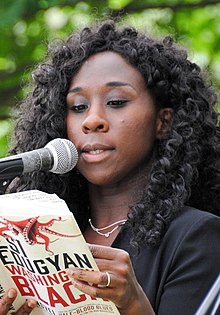
Washinton Black (A Novel) 

By: Esi Edugyan

Narrated By: Dion Graham

Esi Edugyan (Canadian novelist, two-time winner of the Giller Prize for “Half-Blood Blues” and “Washington Black”, the Giller Prize is a Canadian literary award of $100,000 for the winner.)

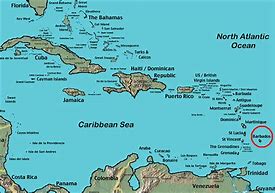
“Washington Black” is about a young slave growing to adulthood in the 19th century. It begins on a Barbados sugar plantation and ends in England and Morrocco after a journey that stretches one’s imagination to its limits.

“Washington Black” is an imaginative journey but it steps a bit too far when the author writes of a steerable airship carrying its two passengers into an Atlantic Ocean storm that luckily lands on a slave trader’s vessel instead of plunging into the ocean.

Despite Edugyan’s implausible rescue of Washington Black and his white English protector, there is enough interest in the main characters to keep listeners listening and readers reading. At five years of age, Washington Black who is called Wash, is rescued by a tall black slave named “Big Kit”. None of the slaves on the Barbados sugar plantation mess with Big Kit. Only the “big boss”, the manager of the plantation is powerful enough to bloody her nose without being intimidated. Big Kit becomes Wash’s protector. Wash has no idea who His real mother is, but Big Kit becomes his early guide through life.

When Wash reaches the age of 10 or 11, the plantation is visited by Christopher “Titch” Wilde who is the brother of Erasmus Wilde, both of which are the sons of John Wilde, a famous explorer-scientist who travels the world. “Titch is somewhat of a scientist himself. He meets with Wash and decides it would be good to have Wash as his aide while he pursues his scientific research.

Erasmus Wilde has responsibility for running the plantation which he dislikes but is ordered to because it supports the Wilde wealth for their father’s research. Erasmus and Titch have an older brother named Phillip that comes to the plantation to see his brothers. Phillip kills himself in front of Wash, presumably so Wash can show the brothers where his body can be found. Wash is devastated by the suicide and brings “Titch” to the site where it occurred. “Titch” realizes Wash will be accused of murdering the brother. “Titch” has found Wash to be a natural artist and can produce documentation for some of his science research. He does not want Erasmus to take Wash away and makes plans to escape. The escape is in the dirigible mentioned earlier.

The adventures of Wash accelerate from here.

As “Titch” had expected, Erasmus accuses Wash of murdering their older brother.

Both Wash and “Titch” become fugitives. The suicide of Phillip is a “red flag” that suggests the Wilde family is, at the very least, psychologically troubled. Those troubles revisit the Wilde family with events of the father, mother, Erasmus and “Titch”.

Titch’s father is declared dead because of a mistaken belief that a storm in Alaska killed him. He was not dead but chose to stay in Alaska despite the public reports of his death.

The father makes no effort to correct the mistake of his reported death. “Titch” finds that out and travels with Wash to find his father. His father is glad to see his son but is not inclined to return to civilization because of a comfort he feels in his new environment. “Titch” is pushed over the edge by his father’s lack of concern about others, including “Titch”, his mother, and remaining brother. “Titch” abandons Wash just like his father abandoned everyone in the family. “Titch” disappears in a storm and presumably dies. The father actually dies while Wash is there. Wash chooses to return to civilization and becomes a free man or at least a man who is free of slavery.

More surprises come toward the end of Edugyan’s story as Wash grows to manhood, but the author stretches one’s imagination a little too far for those who will be entertained by her creativity but disappointed by its implausibility.

Edugyan makes one wonder if anyone is truly free. Are we only programed by genetics and our experiences in life?

Every human being has their own story. Are we free if we choose to be free or are we simply programmed?

EQUALITY

The Craft’s story is an inspiration for the anti-slavery movement before and after the civil war. Their story reinforces the principle of equality of opportunity for all.

Books of Interest
 Website: chetyarbrough.blog

“Master, Slave, Husband, Wife

By: Ilyon Woo

Narrated by: Janina Edwards & Leon Nixon

Ilyon Woo (American author, Received BA in Humanities from Yale College and has a PhD in English from Columbia University.)

“Master, Slave, Husband, Wife” will disabuse any listener who may think the American Civil War was not about slavery. Ilyon Woo’s detailed research of Ellen and William Craft reveals the many reasons why no one can deny the fundamental cause of the Civil War in America, i.e. it was slavery.

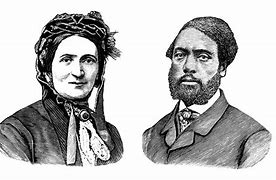
Ellen and William Craft

Ellen and William Craft were slaves until escape from their slave master in 1848. William was enslaved by a white land holder named Robert Collins who held a half interest in Craft’s ownership with another southerner. Ellen was the child of a white owner and black slave that gave her a fair-skinned white racial appearance. However, Ellen was classified as a slave because of her mixed racial parentage. Her mother was a slave to a white slaveholder who was her putative father. At the age of eleven, Ellen was gifted as a valued piece of property to a sister who later became Collin’s wife.

Ellen missed her birth mother but only after years of being on the run, did she manage to re-unite with her mother, Maria Smith.

In 1846, Ellen reached the age of 20 and agreed to marry William who was a skilled cabinet maker.

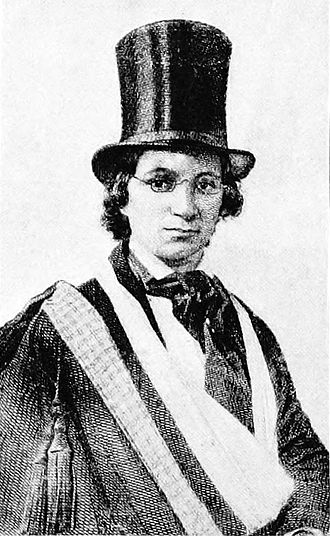
William was allowed to work for a portion of his wages in return for a cut of his income to be paid to his owners. In 1848, with the money William saved from his outside work, the married slaves planned an escape from Collin’s household. The plan was for Ellen to dress herself as a white man with William as her slave on a journey to Philadelphia, Boston, and possibly Canada.

Ellen Craft dressed as a white man with an accompanying slave who is actually her husband.

The fugitives succeed in their escape, but their success is challenged. The challenge came from the morally misguided attempt by the American government to avoid a war between the North and South by passing the “Fugitive Slave Act of 1850”.

That act would allow capture and return of runaway slaves to their putative owners. The Act was a compromise between the north and south, supported by President Millard Fillmore, who was willing to sacrifice black Americans to slavery in order to preserve the Union. Storied and respected leaders of America like Daniel Webster, who had freed his slaves, supported the “Fugitive Slave Act”. Webster believed, like the majority of a white Congress, that union was more important than human equality.

Woo’s detailed research reveals how Ellen and William had both black and white supporters who recognized the iniquity of slavery and helped them escape bounty hunters hired by Robert Collins to return the Crafts to slavery. Ellen and William were in Boston. They were helped to escape by Boston’s anti-slavery Americans of conscience.

The anti-slavery movement extended into some of the city of Boston’s government officials. Some local government officials refused to cooperate with bounty hunters trying to fulfill the legal requirements for recovery of escaped slaves. Woo infers Boston boiled with demonstrations against the “Fugitive Slave Act”.

The danger of recapture remained palpable because some officials were concerned more about preservation of the union than the iniquity of slavery. Ellen and William chose to flee to England. Their escape is aided by Quakers and the support of famous black Americans like Fredrick Douglass and William Wells Brown. Douglas publicized the story of the Crafts. William Wells Brown, an equally famous slave escapee, supported the Crafts by using them in traveling presentations that spoke of the iniquity of slavery and how they escaped its clutches. Ellen and William remained in England for 18 years. With the support of Lady Byron and Harriet Martineau, the Crafts learned how to read and write.

The Crafts spent three years at Ockham School in Surrey, England where they taught handicrafts and carpentry.

The Crafts respected each other in ways that defy simple explanation. Though they strongly supported each other, they were often separated for long periods of time. William and Ellen became self-educated writers and teachers who started schools. William traveled to Africa on his own and started a school without his wife. He was gone for months at a time but never broke with his wife who stayed in England.

After 18 years, Ellen and William return to the U.S. The civil war was over. They had five children together with two who remained in England. The Crafts started Woodville Cooperative Farm School in Bryan County, Georgia. The school failed but they continued to farm and wrote a book about their lives titled “Running a Thousand Miles for Freedom…” which became popular in both England and the U.S.

The Craft family’s story of their flight to freedom.

Ellen Craft died in 1891. She was buried in Bryan County, Georgia. William Craft died in 1900 but was denied burial in Bryan County next to his wife. William was buried in Charleston, South Carolina. Though separated in death, they seem as tied to each other as they were in life. The Craft’s story is an inspiration for the anti-slavery movement before and after the civil war. Their story reinforces the principle of equality of opportunity for all.