CAPITALISM’S DEATH?

Democratic capitalism is the most likely form of government to assuage our worry and find a rational solution for our right to privacy.

Books of Interest
 Website: chetyarbrough.blog

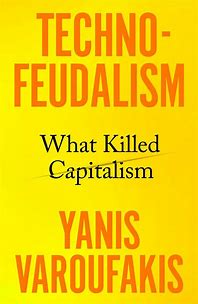
“TECHNO-FEUDALISM” (What Killed Capitalism)

By: Yanis Varoufakis

Narrated by: Yanis Varoufakis
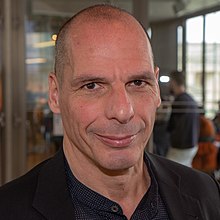
Yanis Varoufakis (Author, Greek economist and politician, Minister of Finance of Greece for 7 months in 2015, launched Diem25, the “Democracy in Europe Movement 2025” in February 2016.)

Yanis Varoufakis’s “Techno-Feudalism” argues the advance of technology is killing capitalism. Varoufakis’s argument is that democratic capitalism is either dying or dead. He suggests a survival plan in the last chapter of his book. This misguided book reminds one of Mark Twain’s response to news of his illness, i.e., “The reports of my death are greatly exaggerated”.

Varoufakis argues the advance of technology and its intrusion into private lives of citizens will destroy freedom of the individual and result in a government ruled by authoritarian, undemocratic, feudal oligarchs.

Varoufakis infers technology is the cause of the rise of new robber barons that have struck it rich in the internet era. He largely disparages the great wealth accumulation by the founders of Amazon, Google, Microsoft, Apple, and other tech leaders in the 21st century. His argument is based on belief that these new robber barons became rich without the hard work of laborers like those during the industrial revolution. The error in his argument is that labor is adjusting from work with one’s hands to work with one’s mind.

Freedom is the keystone of democracy.

Freedom and democracy have been limited and abused over the centuries but have ultimately led to the wealthiest countries in the world. When freedom is overregulated by democratic leadership, economic progress is diminished. Democracy has historically mitigated mistakes of overregulation with human nature’s desire for freedom. There is no reason to believe human nature will change.

In one sense, Varoufakis’s argument is correct. There is a greater risk of loss of freedom with the advance of technology, i.e., particularly with the rise of artificial intelligence. The evidence of that risk is seen in China and North Korea’s surveillance capabilities today.

As inferred by Varoufakis, authoritarian risk is greater in the 21st century because of surveillance technology and the predictive power of artificial intelligence. Surveillance does not change the nature of humankind. Democratic government only becomes more important. The juggernaut of technology will not be stopped, and our lives will be more intimately understood by strangers than ever before. That truth only means democracy, freedom of choice, and equal opportunity are made more consciously recognized as important.

All forms of government have winners and losers. What democracy does is level the playing field. It is a raucous governing system that leaves some out of success, but it beats any known alternative for broader human opportunity. Democracy will always be a work in progress. America needs better health care for all citizens. America needs improvement in equal rights and opportunity for all citizens. No Americans should be homeless or hungry. Few countries, if any, have adequate health care, equal rights, and opportunities for all its citizens. Most realize, America must do better.

The resurgence of labor unions in America is a good sign for American peace and prosperity.

Varoufakis suggests democracy can be saved by bringing it down to an individual level within companies that generate wealth for the country. In one sense, he is right but his idea of giving one vote to every employee in determining wages, and the direction of a company are a step too far. Labor is a critical part of yesterday’s, today’s, and tomorrow’s economic prosperity. Owners and managers of companies need to include union representation in their corporate decisions. Neither labor nor management have all the answers, but all have money, commitment, and labor in the game. Each should have their say. That is a part of Democracy’s success in the world.

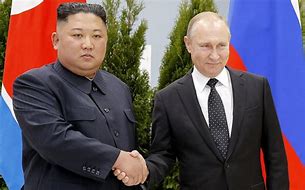
The intimate knowledge of personal behavior is a valid concern in the modern world. In the hands of authoritarians, the risks of surveillance technology are multiplied. In democracy, risks are not eliminated but can be judiciously regulated. Democracy has the best chance of determining how a surveillance economy needs to be handled. Democracy will continue to make mistakes, but historically, its successes outweigh its failures.

Citizens should worry about what others know about their personal lives, but the advance of technology will not be stopped. Democratic capitalism is the most likely form of government to assuage our worry and find a rational solution for our right to privacy. Varoufakis’s “Techno-Feudalism” is more wrong than right, but he makes one think about our future.
GODLESS

Sartre seemed right when he wrote “hell is other people” in “No Exit”. Neither belief in humanism nor God seem to hold an answer for humanity’s future.

Books of Interest
 Website: chetyarbrough.blog

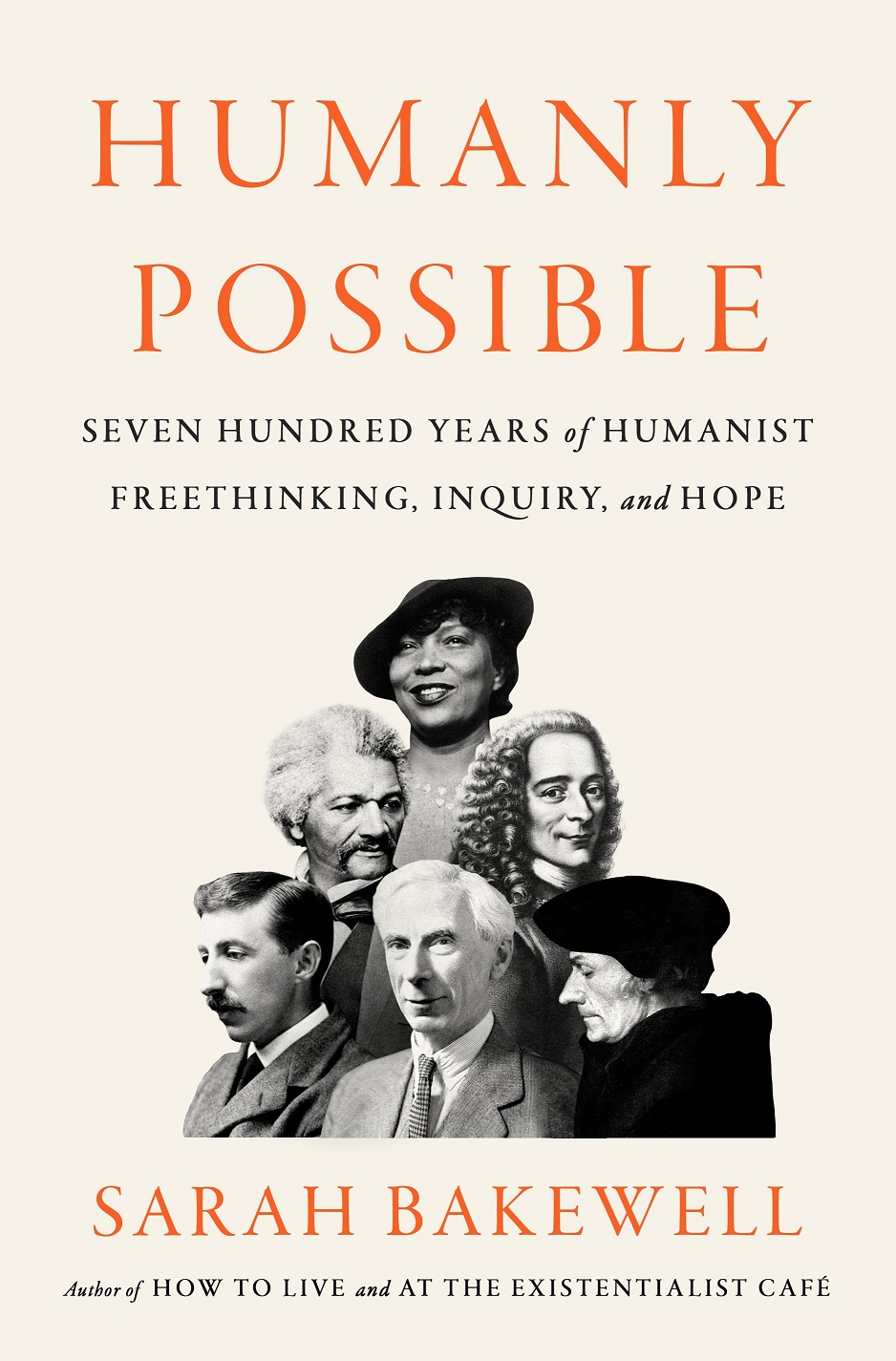
“Humanly Possible” (Seven Hundred Years of Humanist Freethinking, Inquiry, and Optimism)

By: Sarah Bakewell

Narrated by: Antonia Beamish

Sarah Bakewell (British author and professor, received the Windham-Campbell Literature Prize for non-fiction in 2018.

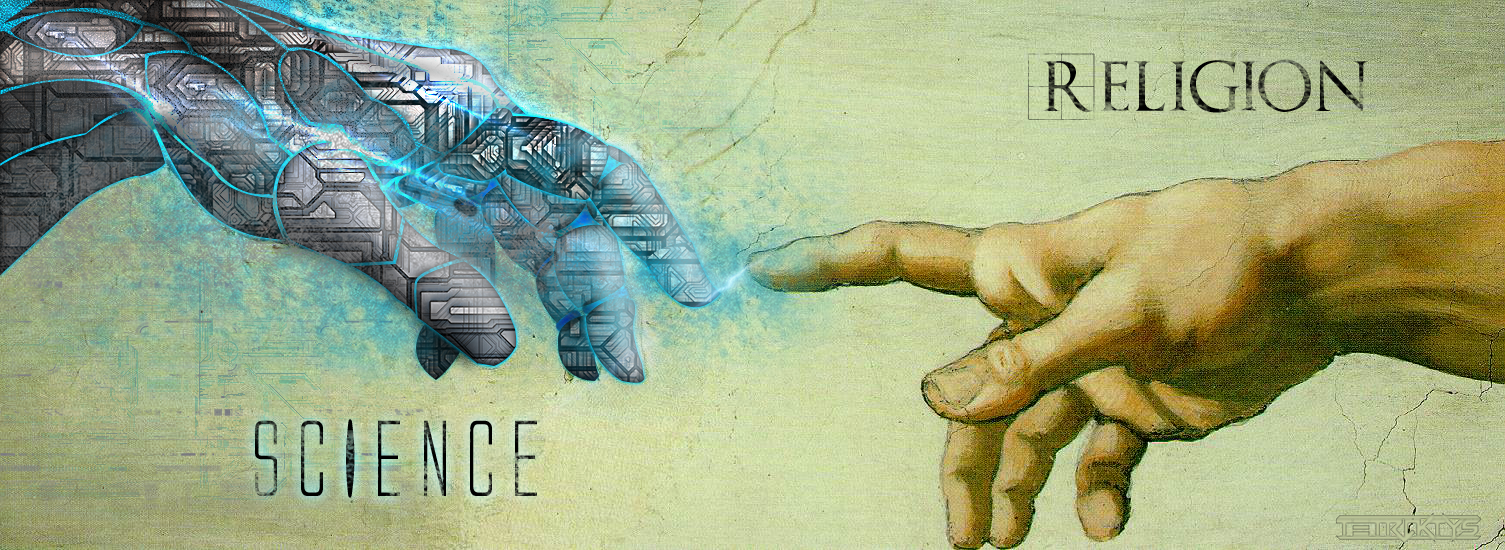
Sarah Bakewell provides a detailed history of humanism. To many, Bakewell’s story is a history of society falling away from God. Bakewell puts religion aside while explaining why and how humanists challenge religious belief and lean toward science as an explanation of life.

Bakewell notes humanism reaches back to the 5th century BCE with the Greek philosopher Protagoras. He was a teacher identified by Plato in a dialogue titled “Protagoras”. Through Plato’s dialogue, one finds Protagoras taught the importance of literature, and art that infers a set of moral principles to guide human behavior. Several centuries later, Diogenes Laertius writes “Lives of the Philosophers” that adds to history’s knowledge of Protagoras’s beliefs. Protagoras taught public speaking, poetry criticism, citizenship, and grammar.

Protagoras (490-420 BCE, Bakewell suggests Protagoras set the foundation for the humanist movement.)

Francesco Petrarch (1304-1374) takes up the humanist movement during the Italian Renaissance. Petrarch became internationally known as a humanist. He traveled extensively, looking for Classical manuscripts and ancient texts to recover the knowledge of Greek and Roman writers. He discovered letters that told of Cicero’s personal life–what it was like in the late Roman Republic (106-43 BCE). Cicero’s observations showed the importance of human character in the way one lives life.

Francesco Petracco (1304-1374, Italian scholar and poet and one of the earliest students and promoters of humanism.)

Collection of ancient manuscripts by Petrarch and Coluccio Salutati (1331-1406) of Florence expanded the humanist movement. Giovanni Boccaccio writes “The Decameron”, a collection of short stories that reinforces the principles of human worth and dignity, belief in reason and human ethics, and the value of critical thinking, i.e., humanist ideals.

The humanist mantle is picked up in England and the wider part of continental Europe after the early 15th century. Erasmus, Sir Thomas More, and William Shakespeare, reinforce the movement. Desiderius Erasmus is a Dutch humanist. He attacks the excessive powers of the papacy. He values human liberty more than orthodoxy. He inspires the Protestant Reformation and the Catholic Counter-Reformation. He emphasizes the study of classics over medieval tradition. Erasmus has great impact on the Renaissance and its religious and intellectual climate with an eye for life on earth, more than an afterlife. He wrote “The Praise of Folly”, satirizing religious practices based on superstition and impiety. Though he hoped for divine mercy, Erasmus emphasized faith and good deeds in life, humanist ideals.

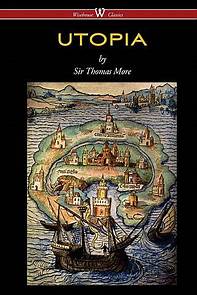
Bakewell notes Sir Thomas More writes “Utopia”, published in 1516, that describes an ideal society that addresses penology, state-controlled education, religious pluralism, divorce, euthanasia, and surprisingly, women’s rights.

Shakespeare’s plays introduce psychological realism and depth to human thought and action. Much of what he writes is secular rather than religious. Shakespeare implies life on earth is more than preparation for an afterlife.

Shakespeare suggests life on earth is more than preparation for an afterlife. Death is viewed as final, a humanist view of life and death.

Bakewell goes on to write of Denis Diderot, David Hume, Kant, Adam Smith, and Voltaire. They become leaders of humanism in the 17th and 18th centuries. Diderot emphasizes critical thinking, education, and secular values. Hume writes “A Treatise of Human Nature” to explain human morality. Adam Smith’s “Wealth of Nations” reflects on national economic growth and how the principle of “raising all boats” comes from free enterprise and free trade, humanity in action.

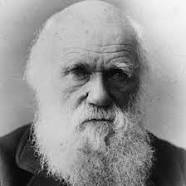
The idea of humanism is rocketed into American thought by Charles Darwin’s “Origin of Species”.

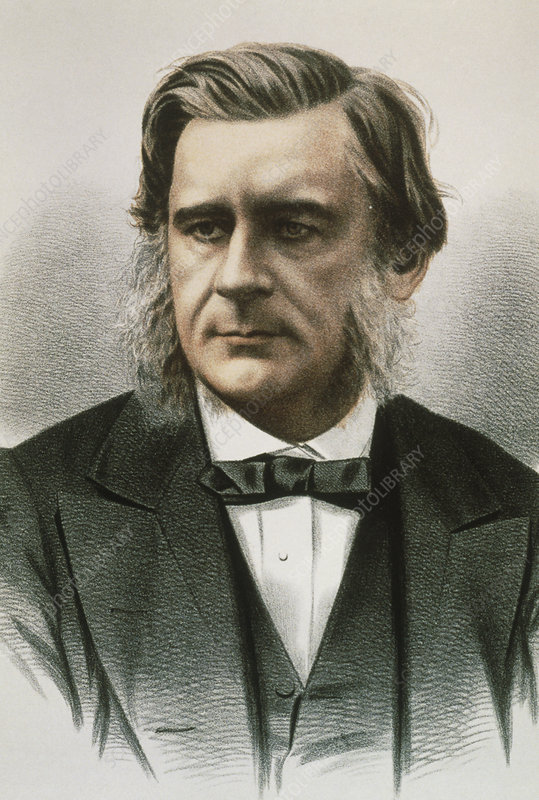
Natural selection became a science-based explanation for the origin of species, including human beings. Its impact is evident in the personal transition of Darwin (the son of a medical doctor and grandson of a botanist), who planned to join the clergy, but became a person who identifies himself as an agnostic. Thomas Henry Huxley publicly endorses Darwin’s theory and coins the term “agnosticism” in 1869. Many of the scientific community joined that endorsement during Darwin’s life.

As Bakewell advances her history into the twentieth century, Thomas Mann and Bertrand Rusell carry the torch of humanism. The interesting point made about humanism by Mann is that a humanist must guard against the tendency to reason too much. The rise of Nazism in Mann’s home country and the repressiveness of Stalin’s (and now Putin’s) communism are examples of what concerned Mann. On the one hand, Mann recognizes the “unbearable pity for the sufferings of mankind” but also the danger of accepting authoritarian leaders who preach nationalist socialism or communism while promoting nationalist hegemony, forced labor, racial discrimination, ethnic cleansing, and gender inequality. The rise of Nazism and Putin’s invasion of Ukraine show how authoritarian reasoning can magnify the sufferings of humanity.

Bertrand Russell, a British philosopher, mathematician, logician, historian, and humanist activist, warned against superstition and preached the importance of education. Both Mann and Russell advance the ideals of humanism. One still reserves judgement about humanist’ rejection of God when both religion and science have a mixed history for humanity.

Bakewell does not end with just a history of humanism. She speculates on where humanism may go from here.

She acknowledges her own beliefs as a humanist. She notes humanism has been noted in the past as a fragile vessel for transporting humanity into a future. The vessel’s fragility is in the nature of human beings.

Few can doubt we are self-interested animals that have to come to grips with what is ultimately in our self-interest.

Human self-interest must change from greed for money and/or power for humanism to work. If self-interest rests anywhere, it needs to be in the prestige that is earned by being engaged with the welfare of humanity. In light of history, human pursuit of societal welfare seems only to appear when annihilation is nigh. The war in Ukraine and human history are evidence of humanity’s failures. When perceived threats to peace and happiness disappear, humanity returns to the destructive self-interest of money and power.

Sartre seemed right when he wrote “hell is other people” in “No Exit”. Neither belief in humanism nor God seem to hold an answer for humanity’s future.

AMERICAN PRESIDENTS

“Confront and Conceal” is a depressing examination of the American Presidency.

Books of Interest
 Website: chetyarbrough.blog

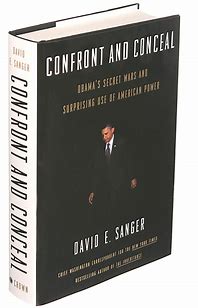
“Confront and Conceal“

By: David Sanger

David Sanger (Author, American journalist for the New York Times, Harvard graduate. Co-winner of 3 Pulitzer Prizes.)

David Sanger offers a journalist eye view of the first four years of the Obama Administration in “Confront and Conceal”. The most impactful impression a reader gets of a U.S. presidential office is that it is a difficult and complex job. Sanger’s observations imply the best a voter can hope for in electing a President is that he/she is a good student of the politics of life and government. Sanger shows Obama has the skill of both while the President who follows only understands the first and cares nothing about the second. This is not to suggest Sanger shows Obama as a perfect President but that his skill in governing far exceeds his successor.

Obama eschewed American intervention in foreign governments but inherited American presence in Iraq and Afghanistan.

At the same time, the American economy was in free fall. A mortgage crisis was born from the greed of human nature. The cure for the mortgage crisis is initiated by the Bush administration. However, like many Presidents before, American foreign government intervention plagues Obama throughout his tenure.

The horrible consequence and resolution of the mortgage crises fell largely on the poor in America.

The rich generally escaped its devastating impact because they had the resources to cash out debts carrying rising interest rates. An estimated 861,664 families lost their homes to foreclosure. The lending institution’ managers who approved loans to the poor on false pretenses were largely forgiven for their greed. Obama’s administration succeeded in stabilizing the American economy, but the fairness of the process is grossly inequitable.
With the exception of the first Bush’s invasion of Iraq, American military intervention in foreign governments has been a failure in every circumstance since WWII.

One might argue this is less true in the case of Korea but the continued belligerence of North Korea and foreign relations conflicts with China and Russia are a direct result of past American military interventions. Obama attempts to improve relations with China but is unsuccessful. Sanger shows that lack of success is because of suspicion of America’s past history and because of a belief that Obama is simply trying to isolate China’s influence in the world. Russia’s invasion of Ukraine speaks for itself. It will ultimately fail but at the consequence of many lost Russian and Ukrainian lives.

“Confront and Conceal” is no pean to the Obama administration. It is a revealing examination of a well-educated and prudent President who wishes to do what is best for America but is trapped by history and human nature.

Obama, like all 21st century Presidents, has the power to kill individual human beings by remote control and direct covert actions that can and do have unintended consequences. Obama is the first President to wheel the power of drone death to eliminate enemy combatants. Even though Obama martials western powers to participate in the overthrow of the Libyan government, Quaddaffi is not given a trial but murdered by rebel Libyan forces. Libya remains a failed government in search of stability. The idea of an incompetent and revengeful elected President of the United States with the power of drone murder is frightening.

“Confront and Conceal” is a depressing examination of the American Presidency because it shows a decent and intelligent President is only slightly better than an incompetent, dishonest, and poorly educated human being like Donald Trump. President Obama’s biggest contribution to America is in providing better health care for the poor but even that is being challenged by his successors.

UNITY IN SEPARATION?

Civil wars are a lesson to the world.

Books of Interest
 Website: chetyarbrough.blog

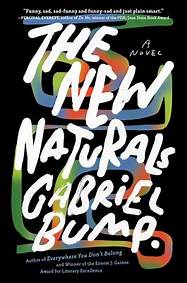
“The New Naturals”, A Novel

By: Gabriel Bump

Narrated by: Robin Miles

Gabriel Bump (Author, MFA in fiction from the University of Massachusetts, grew up in Chicago, Asst. Professor U of M.)

In “The New Naturals” Gabriel Bump shows why societal unity with racial separation is unlikely to be achieved. Without the power and influence of money, leadership is not enough. Bump’s story reminds one of Hamas in Palestine and their deluded belief that they can unify the Palestinian people by creating an underground movement to unify Palestine. Hamas fools themselves just as the leaders of “The New Naturals” show unity fails when the influence and power of money is lost. Of course, the two issues are different because Middle Eastern religion is an element of the fundamental difference between Palestine and Israel. However, money’s influence and power are a major contributor to the Middle East’s conflict.

Bump writes of a Black American movement to create an independent society financed by a donor with great wealth. The donor finances the vision of two Black academics who choose a mountain in Massachusetts to create a literal underground community for Black American citizens. The dream of “The New Naturals” disappears when the financial backer quits her support of the movement. As the donor’s financing disappears, a “smash and grab” mentality infects the movement’s leadership. Loss of financing criminalizes the movement. What could not be achieved with the influence and power of money, led to “smash and grab” criminalization of the movement.

The vision of “The New Naturals” founders is a hope to educate and establish a group of like-minded Black Americans, independent of America’s white dominated culture.

Like the waste of money in building the Hamas’ tunnels in Palestine, these Black separatists choose to use their financial support for tunnels and rooms bored into a mountain. The Black movement is peopled with relatively well-educated Black families wishing for a better life. It devolves with its loss of funding into a group of thugs who insist on separation.

In America, the political choice has been made, i.e., regardless of race, religion, or ethnicity, all who have citizenship in America are Americans.

America has been one nation since 1776. American unity among its citizens is sorely challenged during America’s civil war but it remains the law of the land. Bump’s story explains why, despite continued American inequality, all who have citizenship are Americans. Equality in America is a work in progress. What informs our future is that American identity is a socially and legally enforceable fact.

As noted in 1954 by the U. S. Supreme Court in “Brown v. Board of Education”, the idea of “separate but equal” perpetuates injustice and inequality.

Palestine is considered the birthplace of Ancient Egypt, Israel and the Persian Empire. Though Palestine’s independence was not recognized until 1988, Israel only became a nation-state in 1948. Both societies have a long history as nationalist movements with their own beliefs. Israel and Palestine have earned a right to their own identity. The holocaust was a turning point for the right of a Jewish nation to be created. The current slaughter of innocents in Palestine may be the turning point for Palestine’s right to nationhood.

Civil wars are a lesson to the world. One hopes both Israel and Palestine come to an agreement to either create two nations or one; with unity as separated or as one unified nation-state.

WHO’S LAUGHING

Appelbaum infers no American President has found the magic formula for balancing the needs of its citizens with the concept of Adam Smith’s free enterprise.

Books of Interest
 Website: chetyarbrough.blog

“The Economists’ Hour: False Prophets, Free Markets, and the Fracture of Society“

By: Binyamin Appelbaum

Narrated by: Dan Bittner

Binyamin Appelbaum (Author, winner of a George Polk Award and a finalist for the 2008 Pulitzer Prize, lead writer on economics and business for The New York Times Editorial Board)

Binyamin Appelbaum has written an interesting summary of a difficult but immensely important subject. Economic policy and theory are boring, but they touch every aspect of life. Appelbaum shows economic policy magnifies or diminishes the welfare of every American, let alone every economy in the world.

Adam Smith’s foundational theory of economics.

Though only briefly mentioned by Appelbaum, American economic policy begins with Adam Smith (1723-1790), the Scottish philosopher who wrote “The Wealth of Nations”. Smith advocated free trade and argued against parochial maximization of exports and imports that is manipulated by strict governmental regulation meant only to accumulate gold and silver.

Appelbaum illustrates how American policy violated the entrepreneurial freedom that Adam Smith advocated. In contrast to Smith, John Maynard Keynes (1883-1946) advocates government intervention whenever there is an economic downturn. Equally interventionist is Milton Freidman’s (1912-2006) belief that government should increase or decrease the money supply for national economic stability. The point seems to be that every economist thinks they have a magic bullet that will cure the ills of a faltering economy.

To be fair, Friedman did believe in free enterprise in regard to nation-state currencies. He argued for a floating currency rate that ultimately led to President Nixon’s abandonment of the gold standard. However, the nature of human beings led to speculation and manipulation of nation-state’ currencies that exacerbated trade tariffs and defeated the policy’s free-enterprise objective.

One concludes from “The Economists’ Hour…”, there is no magic solution for an economy in crises. Neither Franklin Roosevelt, George W. Bush, Barack Obama, or any American President cured what ails an American economy that succumbs to economic crises. Adam Smith would argue an economic crisis is caused by a governments’ interference with free enterprise.

Applebaum explains how every 20th and 21st century President of the United States placed their faith in economists’ economic assessments of their day. All Presidents have found intervention by the government has unintended consequences.

President Nixon adopted Freidman’s monetary policy by imposing a freeze on prices and wages that squeezed the life out of the business economy and beggared the wage-earning public with job loss.

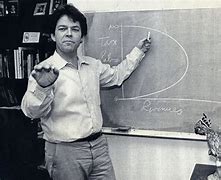
A decade of stagflation (high inflation and slow growth) followed Nixon’s administration. Stagflation is attacked by the Reagan administration with mixed results. A myth from economists like Arthur Laffer grew in 1974. Laffer believes taxation is either too high or too low for any benefit to society. Laffer argued zero tax and maximum taxation are equally harmful and produce economic stagnation and/or collapse.

ARTHUR LAFFER (American economist and author, served on President Reagan’s Economic Policy Advisory Board 1981-1989, Here illustrating the “Laffer Curve”.)

Laffer argued every government that reduces tax revenue decreases the stimulative effect of government spending. On the other hand, he suggested every tax cut increases income for taxpayers that will stimulate business and increase employment while encouraging higher production. He laughably created the “Laffer curve” to imply there is an optimum balance of tax reduction that would stimulate economic growth with proportionate increases in government revenue to provide for better government services. That balance has never been found. President Ronald Reagan experimented with Laffer’s idea, but it fails from unintended consequences. The principal consequence is to increase the gap between rich and poor.

BENEFIT OF TAX REDUCTION

Reagan accelerated a movement for government tax reduction that ultimately reduced income taxes from 70% to 28%. The result of government tax reduction during the Reagan years increased the U.S. budget deficit from $78.9 billion to $1.412 trillion. The benefit of that tax reduction went to the wealthy while school lunches were cut, subsidized housing declined by 8%, and poor families lost $64 a month in welfare payments. In 2023, the budget deficit stood at $1.70 trillion, an imbalance that shows why the “Laffer curve” is sardonically laughable.

President Reagan’s administration (1981-1989) was influenced by Laffer’s curve.

The joke is “There is no perfect balance on the curve because of the nature of human beings.”

Roosevelt, George W. Bush, and Obama choose to follow Keynesian policy. Roosevelt bloated government employment. All three increased the government deficit.

Some suggest the idea of
“Cost benefit analysis” (CBA) is recommended to the federal government by two law professors, Michael Livermore and Richard Revesz during the George H. Bush administration but Reagan initiated it with an Executive Order in 1981.

Appelbaum notes that “cost benefit analysis” for government is first used during the administration of Ronald Reagan. However, Bill Clinton reifies its use with an Executive Order in 1993 that required covered agencies to do a CBA on “economically significant” government regulations. Ironically, Clinton was the first President in the post 19th century to balance the budget. Andrew Jackson manages to do it in his term between 1829 and 1837.

An irony of using “cost benefit analysis” is that it required a determination of of a human life’s value. Presidents Nixon, Ford, Carter, and future Presidents use value per statistical life during their administrations. High-income earners were worth $10 million to $15 million, middle-income earners $1 million to $2 million, and low-income earners $100,00 to $200,000. Of course, these values were always litigable. The point is that CBA became a tool for government to regulate the costs of government policies, ranging from military expense to the health, safety, and welfare of American citizens.

The remainder of Appelbaum’s book reflects on the experience of America, Chile, and Taiwan in the 20th century. The implication of his review of economic policy is that those countries that align with the free enterprise beliefs of Adam Smith have made mistakes. However, America’s, Chile’s, and Taiwan’s economic policies seem to have had more economic success when following Smith’s beliefs.

Along with CBA, Appelbaum notes the ongoing controversy is about regulation by government when it tries to balance American health, education, and welfare with Adam Smith’s concept of free enterprise. Appelbaum infers no American President has found the magic formula for balancing the needs of its citizens with the concept of Adam Smith’s free enterprise.