JAPAN

Ravina’s history is helpful in preparing for a trip to Japan because it offers some basis for comparison and understanding.

Books of Interest
 Website: chetyarbrough.blog

Understanding Japan (A Cultural History)

Lecturer: Mark J. Ravine

By:  The Great Courses: Civilization & Culture

Mark J. Ravina (Professor of History at Emory University with an M.A. and Ph.D. from Stanford.)

In preparation for a trip to Japan this fall, it seems prudent to hear from someone who knows something about Japan’s culture and history. Professor Ravina specializes in Japanese history with focus on 18th and 19th century Japanese politics; however, these lectures go farther back and forward than his specialty. There is so much detail in these lectures, one is unable to fairly summarize what Ravina reveals.

Japan is an archipelago made up of 14,125 islands with 260 of which are occupied. The four main islands are Honshu (the home of Tokyo, Kyoto, and Osaka), Hokkaido to the north, Kyushu to the south, and the smallest Shikoku (between Honshu and Kyushu).

Like the history of any nation that has existed since the 4th century CE, Japan’s culture has evolved based on influences that came from within and outside its borders. From indigenous beliefs to exposure to areas outside its territory, Japan has changed its traditions and culture. The rule of Japan has ranged from imperium to a battle-hardened warrior class to a popularly elected intellectual class influenced by internal and external societal and political events. At times, each social class has offered both stability and conflict. In the 20th century, of course, Japan’s attack on Pearl Harbor dramatically changed its economy and influenced its society.

Japanese Emperor.

In Japan’s early centuries, an imperial and aristocratic class rose to rule Japan. The Asuka, Nara, Helan emperors during the Fujiwara era (538-1185) were respected and revered but the rise of the samurai class turned emperors into influencers more than exercisers of power. Power becomes centralized in a society that is highly stratified with nobility, Buddhist clergy, samurai, farmers, and artisans. Before 1185, territorial regents developed their own armies by relying on feudal lords who had their own warrior clans that became the fierce samurai of legend and reality.

As regents of Japan gained power and influence, emperors became symbols of culture more than centers of power. Rule and administration of territories became reliant on the power of a samurai class that at first supported the regents but soon became the true rulers of Japan.

Loyalty, honor, and focus on victory or death changed the management class and encouraged society to revere a Zen aesthetic, a belief in simplicity, naturalness, imperfection, and quiet depth. The samurai became a power behind the thrown in the 12th century and eventually the de facto rulers of Japan with emperors becoming more ceremonial. Leading samurai became Shoguns, hereditary military rulers of Japan. Emperors were revered, but their power diminished with growing influence of Shoguns that held power for nearly 700 years from 1185 to 1868.

Samurai leadership unified Japanese society.

Ravina explains the samurai period of Japan matured in the 12th century which evolved into rule by the strongest. Samurai influence shaped the political, social and philosophical identify of the people. In what is called the Edo period of the samurai from 1603 to 1868, there were long periods of peace and prosperity like that of the Tokugawa shogunate in the modern-day Tokyo area of Japan. The Edo period lasted for 250 years. Literacy grew during this period and was tied to governance, law, and moral instruction. Religious practices became more ritualized with meditation and subtlety different spiritual beliefs. A merchant class is formed during this period and the arts, like calligraphy and theatre performances, became more widely practiced. Kabuki theatre becomes an entertainment with a reputation ranging from the ethereal to debauched.

Ravina explains samurai values are not abandoned but are recast to focus on industrialization of Japan in the 19th century.

By the end of the ninetieth century, 95% of the citizens had been educated in schools, compared with just 3% in 1853. The samurai became leaders in modern institutions and businesses. They followed a samurai code called Bushido with core values of rectitude, courage, benevolence, respect, honesty, honor, loyalty, and self-control. Emphasis is put on living with purpose, discipline, and moral clarity.

A Japanese garden.

Ravina notes Japanese culture is exemplified by garden creations that represent the religious and philosophical ideals of its residents. The Japanese take great pride in their tea gardens, rock gardens, strolling gardens, some of which have become UNESCO heritage sites. The Japanese revere nature because it represents the Zen principles of simplicity, naturalness, imperfection, and the depth of a quiet life. Gardens are considered spiritual and moral spaces for quiet contemplation.

Ravina suggests Japan, like America and most nations of the world, has not abandoned its past but has adapted to the present based on what has happened in its past. Ravina’s history is helpful in preparing for a trip to Japan because it offers some basis for comparison and understanding.

BECOMING god-LIKE

Before the invention and advance of science, Fry’s reminders of mythological beliefs level up to the brilliance of science in the world. One leans on the hope left in Pandora’s jar to arrive at a time when all human beings are treated equally.

Books of Interest
 Website: chetyarbrough.blog

Mythos (The Greek Myths Reimagined.)

Author: Stephen Fry

Narrated By: Stephen Fry

Stephen Fry (Author, British actor and comedian.)

Most reader/listeners are familiar with the Greek gods associated with Zeus and some with his domicile on the island of Crete. It seems odd that Crete would be his chosen home unless one has been there and seen the beautiful island, walked the hills. and felt the warm breeze from the Mediterranean Sea. Stephen Fry fascinates his audience with cultural tales of Greece that meld the myths of gods before and after the birth of Zeus. His writing and narration are like a dramatic, terrifying, unfolding movie in one’s mind.

The origin of life myth is that earth and sky are married in human forms named Gaia (earth) and a father, born of Gaia, named Uranus (sky). They are the calm and storm of human life that is yet to be created. Gaia, the source of life, prophesizes the loss of power by Uranus at the hands of one of his children. To avoid the prophesy, when two of their offspring are ferocious beasts, Uranus forces them back into Gaia’s body to keep himself safe. Gaia is outraged by his cruelty and forges a sharpened sickle and chooses Cronus, a later son, to use it to kill Uranus. Cronus accepts Gaia’s order and attacks Uranus who defends himself but is castrated rather than killed by the first swing of the weapon. That castration severs Uranus’ rule of the cosmos with the dispersal of his privates and sperm that become today’s universe. He no longer rules the cosmos.

Cronus, the son of Gaia is the God of Time in Greek Mythology.

Cronus now becomes ruler of the universe but is also prophesized to fall at the hands of his offspring. Cronus marries Rhea, the sister of Gaia. Cronus knows of the prophesy and chooses to eat every child born by Rhea to avoid his fate. Rhea secretly wraps a stone in a blanket when she births Zeus and Cronus swallows the stone thinking another who might kill him is gone. Of course, Rhea is angry because of her lost children in Cronus’s stomach. Zeus plans to have Cronus drink a specially prepared potion that will cause Cronus to vomit up the siblings he has swallowed. Zeus imprisons Cronus after the freed siblings are returned to life. This begins the rise of the Olympian’ gods with Zeus as their leader.

One of the many gods of Zeus’s time is Athena, the goddess of wisdom and power. Athena’s father was the Titan of wisdom. Zeus had swallowed Athena’s father because of a fear that a child would be born that would surpass him as the all-powerful leader of the gods. There is a story of Athena’s birth from a blow to Zeus’s head because of a headache that would not go away. Athena bursts full grown out of Zeus’s head.

Fry explains Zeus is now becoming bored with his all-powerful life. He and Prometheus, another child of the gods, discuss creating mortal human life as a way of providing a new source of adventure and entertainment for the gods. These created humans become toys of the gods. Zeus and Prometheus search for the best source of clay to create humanity. Prometheus explains Zeus must provide some spit to create these new forms of life. So, humanity is formed from the spit of Zeus and the clay of earth. Prometheus is an artist who is described as a god of forethought and crafty counsel.

Prometheus and the Vulture.

However, Prometheus exceeds his authority by giving fire from the gods to man. Zeus is incensed and punishes Prometheus by chaining him to a rock. An eagle is initially planned to tear Prometheus apart every day to feast on his liver, but Zeus decides an eagle is too majestic for the task and turns the fowl to a buzzard. This occurs every night because of Prometheus’s immortality. Zeus treats people as toys for his amusement because he is incensed by their arrogance for having a power that only gods were to have. At this point, there are no female humans. With the creation of women, Zeus becomes threatened by humankind from increased procreation and capabilities that might grow to compete with the power of the gods.

Zeus (Leader of the Olympus gods.)

Zeus asks other gods to create woman, in part to complicate human life, which is a myth one could argue sets the table for gender inequality. The first woman is Pandora. This newly created woman is given a jar by Zeus and told not to open it for any reason without telling her what is inside the jar. She marries Prometheus’s brother and buries the jar under a sundial. However, her curiosity which is a “gift” given to her by Hermes, overturns the sundial, digs up the jar, opens it and releases the evils of life on the world. The only thing remaining in the jar is hope.

Before the invention and advance of science, Fry’s reminders of mythological beliefs level up to the brilliance of science in the world. One doubts life will ever be fully explained by science. One leans on the hope left in Pandora’s jar to arrive at a time when all human beings are treated equally.

THE PATRIOT

Benjamin Franklin was no saint. He was a pragmatic, diplomatic, and intelligent politician who believed in improving himself, being honest in his relations with others, and determinately set on leaving a legacy of diplomatic accomplishments that (unlike our current government leaders) was intent on truly making America great.

Books of Interest
 Website: chetyarbrough.blog

The Completed Biography of Benjamin Franklin

Author: Mark Skousen

Narrated By: Richard Ferrone

Mark Amdrew Skousen (Author, economic analyst for the CIA from 1972-1977, is considered a political conservative, a distant descendant of Benjamin Franklin.)

Though the history of Benjamin Franklin is “well plowed” ground, Mark Skousen assembles Franklin’s original papers on his intended biography to give a fascinating portrait of perhaps the greatest American patriot in our history. Franklin’s role in America’s independence from Great Britain is perfectly explained in Skousen’s review of Franklin’s intended autobiography. The many offices that Franklin assumed in pre- and post-revolutionary times are evidence of his patriotism and importance.

Benjamin Franklin (1706-1790, died at the age of 84.)

Franklin served as a member of the Continental Congress from 1775 to 1776. He was the President of Pennsylvania from 1785 to 1788. His diplomatic roles were as Commissioner to France from 1776-1778, Minister Plenipotentiary to France from 1779 to 1785, and Peace Commissioner who negotiated the Treaty of Paris ending the Revolutionary War and establishing American independence. These formal posts fail to mention his great role in representing America to the British throne while sailing to England before the revolution.

Thomas Penn (1702-1775)

It is ironic that Franklin became the President of Pennsylvania in 1785 when he had challenged the Penn family’s proprietary control over Pennsylvania territory given to the Penn family by the King of England.

The Penns refused to allow taxation of their estates in the colonies. Franklin met with Thomas Penn and wrote a paper saying the Penns prevented governors from using discretion in the management of the Pennsylvania colony, refused colonists right to raise funds, and would not accept taxation on their properties. Though Franklin did not legally represent the colonies, he galvanized opposition and created groundwork for colonial autonomy. He became known as the “defender of colonial rights”.

Franklin’s biography explains how he became widely known in England, France, and the colonies.

In 1773, two Massachusetts’s colonial government letters were published at the direction of Franklin that exposed British officials’ promotion of restrictions on the colonies’ liberties. Franklin had been appointed Postmaster General in America, authorized by England, but was discharged for having published those inflammatory letters. Franklin wrote several satires mocking British colonial policies. He opposed the Stamp Act while becoming a representative of Pennsylvania, Massachusetts, Georgia, and New Jersey in London.

Benjamin Franklin’s experiment.

Despite Franklin’s opposition to England’s infringement on colonial rights, he was celebrated in England’s scientific community. He received the Copley Medal for his experiments with electricity and a fellowship in the Royal Society. William Strahan, one of England’s printers who was an MP, and the famous William Pitt sympathized with Franklin’s explanation of the colony’s grievances. On the other hand, growing anger from England’s parliamentarians required Franklin to escape arrest in England in 1775.

Benjamin and William Franklin

To show how torn colonist’ families are about the colony’s declaration of independence, Franklin’s son, “Billy”, actually William Franklin, is noted in his father’s diary and writings to have chosen to take the British side of the conflict. William had served as the Royalist’s Governor of New Jersey. He was appointed with the help of his father’s influence in London. William refused to join the Patriot cause and was imprisoned from 1776 to 1778, and later, exiled to Britain where he lived until the end of his life. It appears Benjamin and William never reconciled and never saw each other again. Benjamin Franklin dies at the age of 84 in 1790 while his son Willaim passes at the age of 83 in 1813.

Symbol of the Colonys’ fight for independence.

Some interesting notes are in Franklin’s diary about symbols of the war of independence. In 1754, Franklin published the cartoon of a snake emblazoned with 13 skin segments with a message “Join or Die” It was originally designed for the French and Indian War but became a symbol of the colonies fight for independence from Britain. In contrast, Franklin opposed the eagle as a national emblem and preferred the turkey. To Franklin, the eagle was a bird of bad moral character while the turkey, in his opinion, represented “a more respectable bird”. This is a surprise to many who revere the eagle as America’s symbol of independence, strength, and elegance today.

Franklin is considered wealthy at the time of his death.

In today’s dollars, Franklin’s wealth may be estimated at 10 to 90 million dollars. He had created a printing empire with “The Pennsylvania Gazette” and “Poor Richard’s Almanack” and used his presses to print books, pamphlets, and even currency. He licensed lighting rods to minimize building destruction from lightning strikes and provided heat to colonist’s homes with the Franklin stoves. He had rental properties in Philadelphia and speculated on western land purchases. He received compensation for his diplomatic and government service as Postmaster General. Franklin showed himself to be frugal putting money aside to receive compounding interest on its principle. He preached and practiced the adage, “A penny saved is a penny earned”.

Deborah (Read) Franklin, Benjamin Franklin’s wife.

Benjamin Franklin notes his wife’s name is Deborah Read. She dies in 1774 at the age of 66 from a series of strokes. Her health declined as Franklin’s diplomatic service in England and France took him away from home. When she suffered from a series of strokes, his voyages to Europe kept him from returning immediately. He returned in 1775, and Franklin was buried beside her in 1790.

Franklin’s self-written biography shows him to be charming and flirtatious with an appreciation of women.

Franklin’s flirtations with Brillon and Helvétius connected Franklin to influential French society, helping him secure support for the American cause. Ms. Brillon is in her 30s while Franklin is in his 70s. Another French lady is Madam Helvétius is in her mid-60s. Franklin proposes marriage to which she declines. It seems there is more smoke than fire in regard to Franklin’s illicit liaisons in France. However, he does admit to some youthful indiscretions with women of challenged reputations when he is younger.

Benjamin Franklin was no saint. He was a pragmatic, diplomatic, and intelligent politician who believed in improving himself, being honest in his relations with others, and determinately set on leaving a legacy of diplomatic accomplishments that (unlike our current government leaders) was intent on truly making America great.

LIFE’S JOURNEY

Millman’s Socratic story is about human patience and knowledge. He addresses knowledge as something of the greatest value that can keep one from resorting to violence. This is a message that resonates with those who are appalled by today’s international and domestic conflicts.

Books of Interest
 Website: chetyarbrough.blog

The Journeys of Socrates

Author: Dan Millman

Narrated By: Sam Tsoutsouvas

Dan Millman (Author, world champion athlete, martial arts instructor, and college professor.)

Dan Millman’s reasons for the title of his book “The Journeys of Socrates” is difficult to understand. The known facts of Socrates life do not seem remotely related to the life of a Jewish immigrant who lived in 19th century Russia. The story is almost too horrific to believe because of the tragic life of its hero Sergei Ivanov, a Jew in Tsarist Russia being raised in a camp of Cossack warriors. The only parallels one may make is that Socrates is characterized in ancient writings as a man who sought virtue and wisdom in his journey through life.

Socrates was known as a warrior in the Peloponnesian War between Athens and Sparta (431-404 BCE). He is better known as a teacher and student of the philosophy of life.

Socrates had gained a reputation for bravery, endurance, and moral fortitude in war, while a mentor of young men like Alcibiades who wanders through life with little self-understanding. (It is the ancient writings of Plato, Xenophon, and Aristophanes that reveal some of what is told of Socrates life.) This seems a slender thread of association with the title of Millman’s book. The story of Sergei Ivanov is of a man who introspectively examines the meaning of life after experiencing horrific violence. This is a Socratic interrogation of a Jew’s life in pre-1917, revolutionary Russia and Ukraine.

Hiding one’s identity as a Jew has been told many times by many authors. Ethnicity and religious belief, like the color of one’s skin, marks one as different.

Ethnicity is a marker of human beings as the “other”, i.e., someone different than themselves. Unlike the color of one’s skin, ethnicity is easier to hide. Sergei Ivanov becomes known as a Jew in a Cossack training camp. He decides to escape that life but is followed by a fellow trainee who catches him. They fight and Sergi’s antagonist is knocked unconscious and appears dead. Sergi escapes and plans to find what he believes is a treasure buried by his grandfather that will give him enough money to get passage to America from his grandfather’s Ukranian homeland.

Buried treasure.

Sergi finds the treasure that had been buried by his grandfather, but it was only a clock and five gold pieces, not enough for passage to America. However, there is an address on the clock that leads him to his grandfather’s house. What he finds is an aunt that he thought was dead. She has a daughter for whom he falls in love and asks for her hand in marriage. They are married and Sergi’s plan is to take his now pregnant wife to America when he has earned enough money for passage. However, fate intervenes.

The man Sergi thought he had killed when he escaped the training camp was alive and had become a leader of a Cossack gang that terrorized the country with a special hatred for Jews.

The gang comes across Sergi and his pregnant wife when they are out for a walk before their planned trip to America. His former enemy and his followers murder Sergi’s wife, rip the baby out of her womb and leave her husband unconscious on the ground after trying to defend his pregnant wife. The gang leader chooses to leave Sergi alive to remember the grief he would have for his wife and baby’s loss of life because he could not save them. Sergi recovers and prepares himself for revenge on his former training camp antagonist.

Deaths inevitability.

At this point, one presumes this is to remind listeners of Socrates reported bravery, endurance, and moral belief despite hardship in life and one’s inevitable death. However, this is only a small part of the author’s intent. What one draws from the story is how ethnic or racial discrimination exists in every nation in the world. Human nature is often brutish and violent despite a rational person’s search for truth and peaceful coexistence. One asks oneself why humans wage war, why we murder innocents, and why does revenge only begat more death.

Sergi recovers from his injuries and is counseled and educated by a believer of a different faith.

As one finishes Millman’s story, listener/readers realize Sergi’s teacher is educating him about human patience, ethnic understanding, and knowledge that can break the repeating cycle of discrimination and violence caused by racial, gender, and ethnic difference. It requires patience, preparation, and knowledge. Sergi spends many years with his teacher and gains great strength to prepare him for what is to happen next in his life. Knowledge of what happened when he was struck down after his wife was murdered is not clear to him. As the story develops, one finds his wife had two children in her womb and only one died in the confrontation. What happens when Sergi meets his wife’s murderer is the denouement and fundamental meaning of Millman’s story.

Millman’s Socratic story is about human patience and knowledge. He addresses knowledge as something of the greatest value that can keep one from resorting to violence. This is a message that resonates with those who are appalled by today’s international and domestic conflicts.

CULTURAL CONFLICT

How could America expect to occupy Iraq for a mere 8 years and 8 months and resolve cultural differences? It could not and did not.

Books of Interest
 Website: chetyarbrough.blog

The Iraq War 

Author: John Keegan

Narrated By: Simon Vance

John Keegan (Author, 1934-2012, English historian, lecturer, and journalist died at age 78. A recognized authority on warfare.)

John Keegan reflects on the history of Iraq with an analysis of the rise and fall of Saddam Hussein. With the collapse of the Ottoman Empire in 1922, British control of Baghdad, Basra, and Mosul led to the formation of Iraq by the League of Nations under the supervision of the British. Great Britain offered nation-state independence to Iraq in 1932. Keegan explains early Iraqi leaders failed to centralize control of the newly formed country of Iraq. He argues that failure allowed an authoritarian, unscrupulous, and brutal leader named Saddam Hussein to take control of the country from Ahmed Hassan al-Baker in 1979. Saddam used fear, violence, and murder to eliminate rivals to create a cult of personality that made him look strong and defiant in the eyes of his countrymen and the world.

Saddam Hussein (1937-2006)

Keegan argues Saddam instinctively combined his brutality with the pragmatism of “might makes right” to take control of Iraq’s fragmented leadership. Not since Hitler, Keegan suggests, has a leader managed to combine tyranny with fear to take command of a nation. Saddam magnified regional instability and created international disorder with ruthless brutality, reinforced by a military that chose to follow him out of fear and reward that is gathered from rapine.

Iraq death statistics.

Keegan explains Saddam maintains his position through force but ultimately loses it because of his brutal rule, lies, and poor judgement. Saddam dramatically murders or tortures political rivals to create fear among Iraqi citizens and military henchmen who fear his rath. He initiates a war with Iran in 1980 with the intent of toppling the Shah because he viewed him as a threat to his regime. His plan was to install the Ayatollah Khomeini which seems counter intuitive in view of Khomeini’s religious zealotry; particular considering Saddam’s earlier offer to assassinate him while he lived as an exile in Iraq. Keegan implies Saddam’s decision to support Khomeini as Iran’s leader is similar to the lie Saddam creates about Kuwait slant-drilling into Iraqi oil fields to steal billions in oil. One doubts he ever intended to promote Khomeini to rule Iran. As history shows, the majority of the international community did not believe Saddam’s lie about oil theft and were opposed to Iraq’s invasion of Kuwait. A disastrous and unresolved eight-year war was fought with Iran and eventually Saddam lost any significant support for occupation of Kuwait.

Saddam rules Iraq for nearly 24 years. One wonders how he ruled as long as he did, just as many Americans wonder how Trump could be re-elected by a majority of American voters.

Considering Saddam’s poor judgement in regard to Khomeini’s power and his belief that Iraq could take over another country without international opposition shows how deluded a dictator can be. Keegan suggests Saddam made too many miscalculations. First among them is the weaknesses he created by presuming that fear of him among his own military force would maintain support of Iraq’s 400,000 soldiers. Saddam is essentially abandoned by his military leaders when Iraq is confronted by an international force to oppose Iraq’s invasion of Kuwait (73% were American soldiers but 34 other countries participated). Not surprisingly, bridges were not destroyed by Saddam’s military as they retreated, and Saddam’s military leaders abandoned their posts.

Keegan explains Saddam’s fall came from a collapse of the illusions, fears, and myths that surrounding his rise to power.

One wonders if the same may happen in Iran in the 21st century. It seems dependent on Iranian people deciding on whether the governance Khomeini insists upon is illusory and the fear Khomeini’s ordered murders, incarcerations, and beliefs have alienated enough Iranian citizens. Because Iran’s governance may be more about religious belief and integrity rather than arbitrary rule, one becomes skeptical. Iran may remain as it is but with a new religious ruler.

Keegan tries to explain America’s mistakes in Iraq without being too partisan.

Keegan offers a clear understanding of Saddam’s rule of Iraq. America made many mistakes because of not understanding the culture of Iraq and presumed their culture would accept Americanization. Tribalism scented with religion exists in Iraq. Without engaging that reality, America could not constructively influence change. The dismantling of Iraq’s military negatively impacted a critical infrastructure that understood the indigenous culture and may have aided American influence in Iraq. By ignoring the dignity of the Iraqi people and the importance of tribe loyalties and religious beliefs, America stubbled through years of destructive occupation. Other authors have noted how tribalism influenced how Iraqi informers had their own agendas for accusing Iraqi tribes of fomenting conflict. Iraq unraveled into insurgency and chaos from which it is still trying to recover.

It has taken nearly a quarter of a century for American government to begin healing the relationship between Indians and 1776 settlers of this country. The possibility of changing Iraqi society in a less than 10 years seems unlikely and, for that matter, inappropriate. Cultural difference is not a disease.

Change is difficult and nearly impossible when cultural differences are not clearly understood and taken into account when a foreign country occupies a native country’s territory. How could America expect to occupy Iraq for a mere 8 years and 8 months and resolve cultural differences? It could not and did not.

VANISHING WORLD

Murata’s satire infers obsession with sex for pleasure, child rearing collectivization, gender dysphoria, and pregnancy equalization are pathways to societal destruction.

Books of Interest
 Website: chetyarbrough.blog

Vanishing World (A Novel) 

Author: Sayaka Murata

Narrated By: Nancy Wu

Sayaka Murata (Author, Japanese novelist.)

Sayaka Murata’s subject is clearly revealed in its title, “Vanishing World”. “Vanishing World” is a provocative assessment of how sexual relationship and sex education has changed. Murata satirically reveals how human reproduction, objectification of life, motherhood, and technology may dehumanize society.

Murata’s fictional story is highly informative in regard to sexual difference and similarity between men and women.

In one sense, Murata’s fictional story is highly informative in regard to sexual difference and similarity between men and women. As a reader/listener, Murata offers a detailed description of the physical difference between the sexes. Many who think they know something about sexual difference will find the author’s candor enlightening. However, her depiction of social relationship is off-putting with a satirical exaggeration of socio/sexual objectification.

Murata writes about a single parent family with a young daughter who lives with her mother and is nearing the age of puberty.

(Though not mentioned in Murata’s story, single family homes in America have grown by nearly 30% in the 21st century.) The main character’s name is Amane and Murata’s story is about Amane’s sexual awakening and how she views social relationship. Amane is infatuated with an animated male character on television. She imagines being married to this character before puberty but holds this character in her mind throughout childhood and later life.

Murata suggests reproduction may evolve into a preferential desire for artificial insemination rather than sexual intercourse between a man and woman.

This idea feeds into a listener/reader’s mind as a diminishment of the need for emotional attachment to the opposite sex for procreation. Sex becomes detached from procreation, evolving into only “hooking up” for sexual stimulation and/or personal gratification. Murata infers desire is no longer needed for procreation but only to experience intercourse as an emotional and physical pleasure. Consequently, it seems perfectly natural to transfer sexual desire to a fictional character because it becomes unnecessary to have emotional attachment to humans when a figment of one’s imagination is available.

Murata creates a bizarre world.

The bizarro world that Murata creates is an extension of a belief that society is becoming less attached to their humanity. Marriage, human relationship, and motherhood are replaced by mindful personal’ inwardness and endless pursuit of physical stimulation without emotional entanglement. By extension, Murata suggests science will create wombs for men so that the difference in sexes equalizes childbirth and care of children. Caregiving becomes bureaucratic and collective because caregiving is no longer personalized.

Murata suggests that a new system of childcare will evolve into collective training camps for working parents who are too self-absorbed to raise their own children.

Collective childcare disconnects parents from the management and development of their children. The sterility of conception by artificial insemination, collective childcare, and social acceptance of multiple sex partners diminishes both familial relations and child development. Birthing and raising children becomes a clinical process, i.e., less personal with both men and women capable of experiencing pregnancy and delivery; all without responsibility or obligation for childcare.

In some sense, this satire illustrates the negative potential of socio/sexual equality.

Murata’s story ends with the birth of their first child from a man who is Amane’s husband. She is torn over not being able to take the baby home because the child is already being “cared for” in a ward meant to raise and nurture all newly born children. A final point is made in the story by a visit from Alane’s mother after the birth. She asks Amane where the child is, and Alane explains the child will not be raised by her and her husband. Alane’s mother is aghast. Her mother falls to the floor and dies without any apparent familial concern for her sudden collapse and presumably, death. The next thing to happen is a visit from one of the children born in this new world. Alane chooses to have sex with him and the story ends.

“Vanishing World” implies 21st century science, organizational bureaucracy, and social change threatens survival of humanity. Murata’s satire infers obsession with sex for pleasure, child rearing collectivization, gender dysphoria, and pregnancy equalization are pathways to society’s collapse.

SUCCESS

Creating a different and better self is as Neal Armstong noted “…one small step for man, one giant leap for mankind.”

Books of Interest
 Website: chetyarbrough.blog

Atomic Habits (Tiny Changes, Remarkable Results, An Easy and Proven Way to Build Good Habits & Break Bad Ones.)

Author: James Clear

Narrated By: James Clear

James Clear (Author, earned a biomechanics degree from Denison University in 2008.)

James Clear begins his “self-help” book with a baseball accident. He overcomes a serious injury in his high school years caused by a baseball bat that flies out of a teammates’ practice swing that smashes him between the eyes. It crushes his nose and cracks his skull, causing a brain bleed that nearly ends his life. His recovery leads him to a career as a performance coach for athletes and executives.

Quality of life.

“Atomic Habits” is how he turned that accident into several surprisingly simple insights into how one can improve their life. He suggests it is not a self-help book that tells you what to do but to understand who you believe you are. If you think of yourself as an athlete. you choose your sport and develop the tools that make you that athlete. The author chose baseball as his athletic ambition despite his accident. Clear explains he recovered but failed to make the baseball team in his return to high school.

Clear explains his baseball failure in high school is not because of willpower but because he needed more practice to become what he wished to be.

He went to Denison University. It had a team that gave him the environment he needed to further develop the baseball skills he learned in high school. With further practice and this new baseball environment he became part of Denison University’s team. He became a baseball player; not just a baseball player but the team captain and starting pitcher for Denison University in 2005. Clear’s desire to be a baseball athlete, his practicing the tools needed, and being in a baseball environment were keys to his accomplishments.

Clear notes habits are not goals.

The point Clear makes are that habits are not goals, but habits make up a system for accomplishment of who one wishes to be. Accomplishment is a process, not an end. Practice is a process that has plateaus where, at times, it appears one is not making progress, but continued practice will have breakthroughs if one persists. Clear explains the breakthroughs change how one sees the world, who they are, and their place in it.

First, one must choose who they want to be.

Clear suggests one can change their life by choosing who they want to be. If an introvert wants to be an extrovert, then they need to identify themselves as one who connects with others. To connect with others, one can choose to be an extrovert and be curious about another person rather than think of themselves as bad at small talk. Design a system of connection that is natural and not forced. Building small, intentional interactions with others can be built upon to reinforce extroversion.

You are who you choose to be.

Much of what Clear argues is that one has to change their identity, develop appropriate habits to reinforce a chosen identity, use tools that are obvious and easy to use that reinforce who you have chosen to be and celebrating your successes in redefining your identity. Creating a different and better self is as Neal Armstong noted “…one small step for man, one giant leap for mankind.”

GOTHIC TALE

The climax of “Modern Gothic” is where myth enters Moreno-Carcia’s story. The fundamental truths of colonization are revealed in her creative story while its denouement is an entertaining explosion of imagination.

Books of Interest
 Website: chetyarbrough.blog

Mexican Gothic

Author: Silvia Moreno-Garcia

Narrated By: Frankie Corzo

Silvia Moreno-Garcia (Author, Mexican/Canadian novelist, editor and publisher.)

Moreno-Garcia’s “Mexican Gothic” is a chilling story of colonization, eugenics, ecological contamination, mystical beliefs, and control of society by men. The author chooses the name of Doyle as an English family that exploits the Mexico’ silver mining industry in earlier centuries. A dynasty is created by generations of Doyle’s. They created a colonial manor called “High Place” from which to rule a crumbling empire. As colonizers they capitalize on Mexico’s silver deposits by exploiting native Mexicans’ land and labor to grow their mining operation. The wealth of local citizens is lost to the English foreigners who keep wages low to increase the wealth of the Doyle family.

Over generations, the Doyle men married local women that were related to each other. A common practice of royalty before the twentieth century.

They wished to maintain the genetic purity of the Doyle bloodline by having future Doyles marry genetic descendants of Mexican women that had been their wives. This is not greatly different than the experience of royal marriages in European cultures. The consequence of that marriage tradition is that recessive genetic mutations become more prominent in offspring. Children were more susceptible to diseases like cystic fibrosis and had higher incidents of developmental and cognitive disorders. This is one of many threads of meaning in “Mexican Gothic” because one of these descendants becomes a murderer of Doyle family members and the current Doyle generation seems socially dysfunctional. Added to that dysfunction is the Doyle family’s diminishing wealth.

An arranged marriage is a lynch pin to the story.

The heroine, Noemi, is the daughter of a wealthy Mexican family. She is sent to investigate a letter that was received by her father from a young woman that marries a Doyle. She is a cousin of Noemi’s. The marriage is arranged in part because of her father, and he feels something is wrong and wants Noemi to visit the Doyle family to find what the mysterious letter means. Soon after Noemi arrives, she begins to have hallucinatory dreams. Listener/readers find the hallucinations are because of spores that are in the bedroom of the deteriorating Doyle house. A clever thread of meaning in Moreno-Garcia’s story is ecological contamination that comes from colonization. As one nation colonizes another, it inevitably brings different plants and animals that are not indigenous to the country they are colonizing. The author notes a fungus is growing in the Doyle household that may have come from the original colonizers.

The penultimate theme in “Modern Gothic” is the creation of myths that compound the horrific events that occur in the Doyle house.

From the history of murders in the Doyle household, to hallucinatory dreams, to incestuous relationships, to the gloom and doom of the story, to a myth about the age of the Doyle patriarch, Moreno-Garcia offers a climax to her story that vivifies reader/listener’s imagination. The climax of “Modern Gothic” is where myth enters Moreno-Carcia’s story. The fundamental truths of colonization are revealed in her creative story while its denouement is an entertaining explosion of imagination.

AMERICAN LIFE

Governmental and educational institutions are the foundations of Democracy. They must stand and support the right to free speech without committing, allowing, or condoning violence in the exercise of that right. (Of course, this is easy to say but difficult to follow because of the loss of emotional control by protectors of the public and/or protesters.)

Books of Interest
 Website: chetyarbrough.blog

The Coddling of the American Mind (How Good Intentions and Bad Ideas are Setting Up a Generation for Failure)

Author: Jonathan Haidt, Greg Lukianoff

Narrated By: Jonathan Haidt

This is an interesting book written by a social psychologist and a free speech advocate. The authors suggest the focus for parents of Generation Z have, in some ways, become overly protective of their children. They argue– Gen Z’ parents are not addressing the mental health issues caused by this technological age. Jonathan Haidt and Greg Lukianoff argue society has become more attuned to children’s protection than the reality of living in a world of diversity.

With the societal change that has accompanied the birth and maturation of Generation Z, immersive tech like AR and VR, along with AI and smart devices, is having profound effects on society.

Haidt and Lukianoff suggest parents focus too much on keeping their children safe to the point of stifling their intellectual growth. The example they give is of the mother who is publicly ridiculed for allowing her 8-year-old son to find his way back home from a city market by mass transit. She prepares him for the excursion with a transit schedule, pocket money, a cell phone, and general information he needs to find his way home. The boy successfully finds his way home and allegedly expresses happiness about what he views as an adventure and accomplishment.

Undoubtedly, there is some truth to the authors’ suggestion that parents are too protective of their children. Thinking of a single mother who has to work but has children at home. Many single parents cannot afford a babysitter, so leaving their children during the day is not uncommon. Single parent families do the best they can but if children are old enough to fill a cereal bowl for breakfast, they are expected to take care of themselves.

John Walsh (Became a child protection advocate, producer, and actor after the murder of his son.)

On the other hand, the writers note the horrible tragedy of John Walsh who’s six-year-old son is kidnapped in 1981. The six-year-old is found two weeks later with a severed head. Though child kidnappings rarely end in such a horrific way, one can understand why many parents became highly protective of their children after the 1980s. Haidt and Lukianoff acknowledge the horrific murder of Walsh’s son, but history shows unsupervised children that are harmed is much less than 1 percent of the dependent children population. What the authors suggest is that some of the overprotection of children since the Walsh tragedy in 1981 has been counterproductive.

Allergy immunity.

As an example of over protection, the authors suggest peanut butter allergies have risen because of inordinate fear by the public. They suggest that early life exposure to peanuts would have provided immunity and fear of exposure is the proximate cause for today’s rise in allergic reactions. Putting aside the theory of a human body’s creation of developing an allergy immunity, the frustration one has with monitoring a child’s life experience is in knowing where to draw the line between reasonable supervision and overprotectiveness.

The authors infer the widespread rise in stress, anxiety, and depression in America is partly due to overprotectiveness.

Undoubtedly suppression of free inquiry and play diminishes the potential of a child’s development. Haidt and Lukianoff argue overprotection has contributed to a rising anxiety and depression in Generation Z and society in general. The authors cite national surveys that show increased rates of anxiety, depression, and self-harm. They note hospitalization and suicide rates are increasing based on self-inflicted injuries among teens with sharper rises among females. They note colleges and universities are reporting higher demand for mental health services.

Whether stress, anxiety, and depression are because of over protection remains a question in this listener’s mind. One suspects that children are cared for in too many different ways for research to conclude that stress, anxiety, and depression increases due to overprotection. It is more likely due to parental inattention because of work that takes them away from home and personal fulfillment in their own lives which are only partly satisfied by being parents.

Rather than parental overprotection, it seems intensified social media and smartphone use accelerates stress, anxiety, and depression in children and society in general.

Constant connectivity, online comparison, and cyberbullying are having outsized effects on emotional stability. The authors suggest overprotective parenting compounds the negative consequence of connectivity by depriving children of experience that can build their resistance to anxiety and depression. That may be partly true but not the whole story. Smart phone screen addiction takes one away from day-to-day real-life experience. The idea being that experiencing life’s failures and successes builds resistance to anxiety and depression whereas smart screens are pictures of life not lived by the person who is looking at them. Smart phones open the Pandora’s box of judgement which can either inflate or deflate one’s sense of themselves.

A large part of Haidt’s and Lukianoff’s book addresses the public confrontations occurring on campuses and the streets of America that are becoming violent demonstrations rather than expressions of opinion.

They suggest street demonstrations can be used constructively if participants would commit themselves to open dialogue and diverse viewpoints. Participants need to be taught cognitive behavioral techniques that can mitigate emotional reactions while building on psychological resilience. Rather than reacting emotionally to what one disagrees with, participants should focus on diverse viewpoints that allow for disagreement but do not become physical conflicts. We are all an “us”, i.e. not an “us and them’. Confrontation can be the difference between a white supremacist plowing into a crowd in Charleston, South Carolina and non-violent protest by leaders like Martin Luther King Jr. or Václav Havel. People like President Trump see the world as “us vs them” rather than one “blue marble” hoping to find another that can support human civilization.

Peaceful protests are an opportunity to understand human diversity without losing one’s humanity. Race, creed, and ethnicity are who we are and what we believe. Protesters should not be used as an excuse for violence but for understanding. Of course, this is a big ask which is too often unachievable.

The authors believe humanity can do better by allowing children to learn from their experiences while accepting diversity or difference of opinion without violence. Children and adults can be taught by experience and guidance to manage stress. Free play, risk-taking and real-world problem-solving come at every age and they can make a difference in human life. This listener only partially agrees with the author’s belief that “helicopter parenting” is interfering with free play and reasonable levels of risk taking. Democratic cultures need to reaffirm free speech as a mandate; with violence being unacceptable on every side of the aisle.

Anti-Trump demonstration.

Governmental and educational institutions are the foundations of Democracy. They must stand and support the right to free speech without committing, allowing, or condoning violence in the exercise of that right. (Of course, this is easy to say but difficult to follow because of the loss of emotional control by protectors of the public and/or protesters.)

EQUALITY

Discrimination is certainly based on the color of one’s skin but also on gender, ethnicity, and income inequality. Those nations that embrace equality of opportunity for all will be the leaders of the future in the age of technology

Books of Interest
 Website: chetyarbrough.blog

Caste (The Origins of Our Discontent)

Author: Isabel Wilkerson

Narrated By:  Robin Miles

Isabel Wilkerson (Author, American journalist, winner of the Pulitzer Prize in journalism in 1994 while serving as the Chicago Bureau Chief for the NYTimes.)

Isabel Wilkerson has written a provocative book about what she characterizes as a rigid social hierarchy in America that undermines the ideals of democracy. Wilkerson weaves her personal life and the history of black experience with the sociological failings in America’s treatment of race. She notes the past and present truth of white America’s unequal treatment of its citizens based on race. However, her characterization of America’s discrimination as a caste system and its comparison to India’s and Nazi Germany’s governments is hyperbolic. Nevertheless, it creates a sense of urgency for those who believe in the ideal of human equality. It is difficult, if not impossible, to compare other nation’s inequality with America’s effort and present-day failure to fulfill the ideals of democracy.

The timeliness of Wilkerson’s book seems appropriate in relation to the backward steps being taken by Donald Trump.

Some Americans feel threatened by demographic change that will make white citizens less than 50% of America’s population by 2045. In theory, no one should care if all people are treated equally. What history shows is that the ideals of equality have never been achieved in America or in any other country with a dominant race and/or ethnicity.

Trump’s effort to return America to its past is interpreted by some as a return to industrial production.

America’s return to industrialization is a false flag that will not make America Great. Reindustrialization and keeping America white is a fool’s errand based on demography and the age of technology. Trump’s desire for power, adulation, and loyalty have little to do with prejudice but everything to do with appealing to the worst fears of middle-class America. Trump is willing to use whatever dog whistle is required to satisfy his desire for power and prestige. He understands the fears of the middle class and where American power lays. Power and money are the driving forces of capitalism. Middle class American’s buying power has stagnated or fallen since the 1970s despite the increasing wealth of the top 10% of American citizens. The middle class of America is something Trump appealed to in his re-election for a second term because of their disproportionate loss of income and the rising wealth of America’s business leaders. The irony is that Trump is one of the beneficiaries of that income gap between the very rich and the working-class.

Income growth in America.

Income disparity trend in the U.S. through 2015.

Wilkerson is right in the sense that America’s real objective should be to ensure equality of all. She is arguing we should have a greater sense of urgency in achieving equality. Equal treatment for all is a formula that can maintain America’s position as an economic, military, and political hegemon. American industrial hegemony is yesterday’s goal. Technological advancement is today’s goal. To achieve today’s goals, equal treatment of all becomes essential in technology because intelligence, innovation, and persistence does not lie in any one race, sex, or creed.

America is class conscious but not in the same way as either India’s or Nazi Germany’s histories.

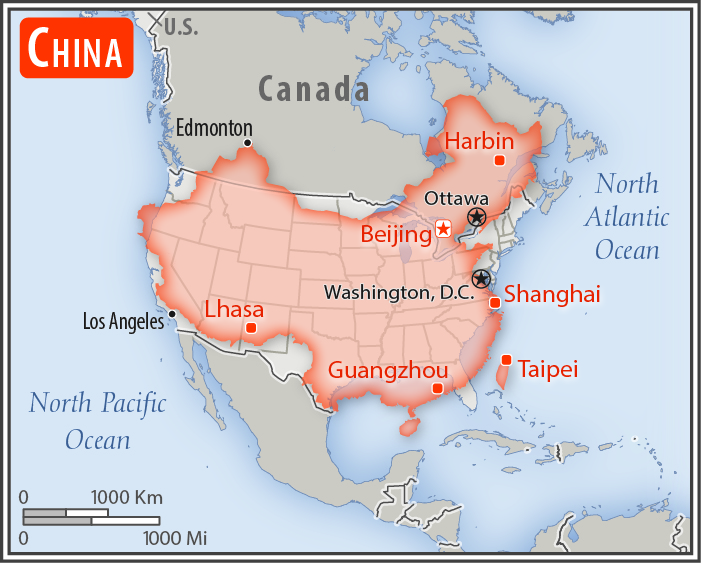
Wilkerson notes a caste system can be built around ethnicity, religion, language, or gender but race discrimination is what she has personally experienced and underlays much of her comparisons of American history with India and Nazi Germany. Equality of opportunity is key to continued growth of human beings and national economies in the age of technology. In the short term, one may see an autocratic country like China become an economic and military hegemon, but maintenance of that success is dependent on equality of opportunity for all, not just those in power.

One can sympathize with the author’s view of discrimination but her comparison of America to India and Nazi Germany misses too much of what unequal treatment in America is based upon.

Discrimination is certainly based on the color of one’s skin but also on gender, ethnicity, and income inequality. Those nations that embrace equality of opportunity for all will be the leaders of the future in the age of technology.