As Lord Acton said, “Power tends to corrupt, absolute power corrupts absolutely”. North Korea is a case that proves the point.
Books of Interest Website: chetyarbrough.blog
In Order to Live (A North Korean Girl’s Journey to Freedom)
Author: Yeonmi Park
Narration by: Eji Kim
Yeonmi Park (Author, North Korean defector)
Yeonmi Park has written an interesting story about North Korea’s general conditions before she and her mother defected. In 2007, at the age of 13, Yeonmi and her mother escaped North Korea. They crossed the border from Hyesan, North Korea into China. They ventured into Mongolia and escaped to South Korea in 2009.
North Korea is a dark place in many ways.
The picture Yeonmi paints of North Korean life is one of famine, and chronic hunger that is exacerbated by a state-controlled food assistance policy. She reveals a North Korean environment that is hypervigilant about ideological control of its citizens with a system of informants about any criticism of North Korean rule or government belief. She notes human trafficking exists for North Korean women who cross the Yalu River to China. She suggests her mother is a victim of that abhorrent trade in order to escape North Korea. This illicit form of trade is corroborated by other North Korean women who crossed the border to China.
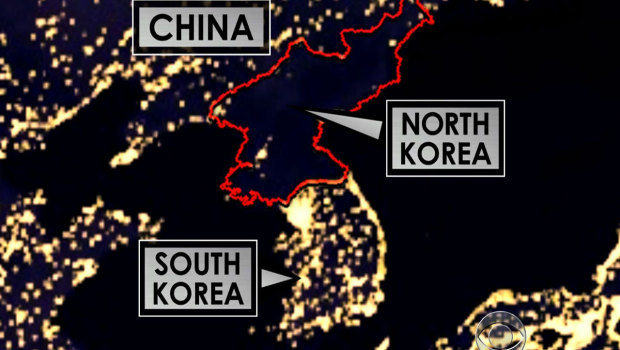
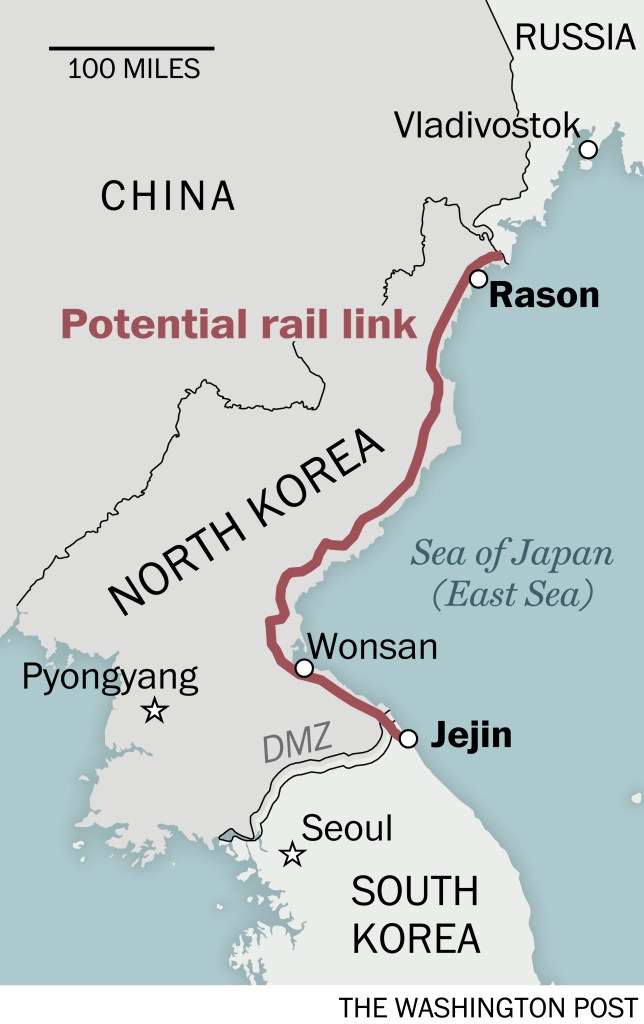
Border between China and N. Korea.
To survive in North Korea, Yeonmi’s family is involved in black-marketing between North Korea and China. Her father participates in a network of bribed officials in the black market to improve their family’s living conditions while in North Korea. Yeonmi explains her father becomes intimately involved with another woman in his North Korean activities which undoubtedly encourages her mother to defect. Another incentive for her mother’s decision is Yeonmi’s older sister who had crossed the border into China at age 16 and lost communication with her family. Presumably, the older daughter wished also to find a better life.
Naturally, Western’ listener/readers want to believe everything Yeonmi writes. In the context of what others have written about North Korean life, one is inclined to believe much of what she recalls in her book. Many North Korean citizens want a better life while women are coveted on the border because of the sex trade. Yeonmi notes her mother is sexually assaulted by a trafficker during their escape into China. She infers the assault is a combination of coercion and violence, not a transactional choice.
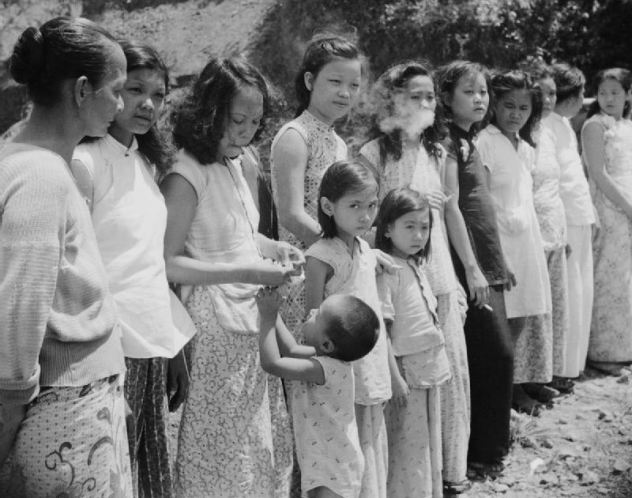
This illicit trade is a reminder of the so-called “comfort women” of WWII but with Japan as the culprit.
Women’s exploitation is a worldwide issue. Yeonmi paints a picture of North Korea’s and China’s border trade, and risks that are entirely believable in the context of other critics who have written about the illicit trade between North Korea and China. Just like the illegal drug trade between Columbia, Venezuela, Mexico and the United States, North Korea and China run an illegal trade in human beings. At the heart of this corruption is the money and power it gives those who choose to support or ignore it. Sex, like drugs, victimizes the innocent and lures corrupt citizens in all cultures.
1990s famine in North Korea.
Yeonmi writes about the chronic hunger, famine, and food scarcity in North Korea’s 1990s that is corroborated by UN reports and Non-Government Organizations research and other defector testimonies. The same UN’ and NGO’ reports refer to North Korea’s repression, use of surveillance, and ideological indoctrination. North Koreans that have escaped reinforce reports of indoctrination, the fear of being informed upon and the propaganda about the “Dear Leader” that rules their forsaken country. Many defectors have reported the harsh punishments, forced labor, and border violence (shootings) they have experienced or seen in North Korea.
A picture of Yeonmi Park’s family in North Korea before the mother’s and youngest daughter’s decision to defect.
Yeonmi Park’s story may not be entirely true or objective but enough of her story is corroborated by other organizations and writers that give credence to her story. The inhumanity that has been created by the leader of North Korea turns one’s stomach. As Lord Acton said, “Power tends to corrupt, absolute power corrupts absolutely”. North Korea is a case that proves the point.
One can appreciate Vuong’s picture of two immigrant Americans lives but his story is too maudlin for this listener.
Books of Interest Website: chetyarbrough.blog
The Emperor of Gladness
Author: Ocean Vuong
Narration by: James Aaron Oh
Vương Quốc Vinh (Author, poet, professor at NYU and the University of Massachusetts, born and raised in rural Vietnam who is now an American citizen.)
“The Emperor of Gladness” is like “Alice in Wonderland”. The author’s story draws one down into a rabbit hole of personal experience and imagination. It tells what life is like for people who become lost to themselves because of advanced age or youthful experiment with drugs and addiction. It begins with a young addict who is teetering on suicide and is rescued by an old woman nearing senile dementia. It is largely the backstory of two immigrants and their lives in America.
American immigrants.
The old woman is from Lithuania. The young boy is a Vietnam immigrant brought to the United States by his family near the end of America’s misbegotten war. Both live in poverty in America. Their stories tell how they survive the grief and trauma of their lives. The elderly woman has lost her husband, lives alone, and had a social services person visit her for a time but is never replaced. Some of the trauma that occurs in the boys and aged mother of a daughter is brought on by themselves, particularly with the young boy. For the elderly woman, it seems brought on by living in poverty in a country that has great wealth but is unable to offer adequate care for the elderly poor.
One who has traveled to Lithuania has some understanding of the tragedy of Stalin’s dictatorial control and displacement of the Lithuanian people. That is partly what draws one to stay in the story. However, it is not enough to maintain this listener’s interest in the story. The young boy is raised in poverty and succumbs to addiction which is hard for some to understand because they have not fallen into that addictive trap. The author does a fine job of showing how these two characters meet each other and become a family that cares for each other. The growing dementia of the old woman is managed by the young boy in a way that is endearing and insightful for those who do not have the patience to deal with infirmity and elderly dementia.
There are lessons about being poor in America in Vuong’s story.
Vuong notes immigrants who have reached a certain age in their native countries are faced with learning a new language and culture when they arrive in a foreign country. All human beings gain understanding from the experience of living, but post-infancy immigrants are faced with translating language and experience understood in their home countries that are different in American culture. That by itself is a struggle.
Immigrants often grow up in silence because they are unsure of unaccustomed experiences that native-born children take for granted. Translation seems a matter of survival for an immigrant whereas a native feels experience is just part of living life that one runs from or towards.
The details of being a poor immigrant in America seem the same as a natives’ views of life but Vuong explains why they are not. To those who have been born and raised in a white privileged but economically challenged society, discrimination associated with being an immigrant minority or drug user is too unrelatable. The underlying message by the author is that in the age of “Make America Great Again”, being an immigrant makes one feel even more of an outsider.
Like in Solomon’s parable, the baby must be saved. That is the mind-set required for a negotiated peace between Israelites and Palestinians in Agha’s and Malley’s “Tomorrow is Yesterday”.
Books of Interest Website: chetyarbrough.blog
Tomorrow is Yesterday (Life, Death, and the Pursuit of Peace in Israel/Palestine)
Author: Hussein Agha, Robert Malley
Narration by: Imani Jade Powers
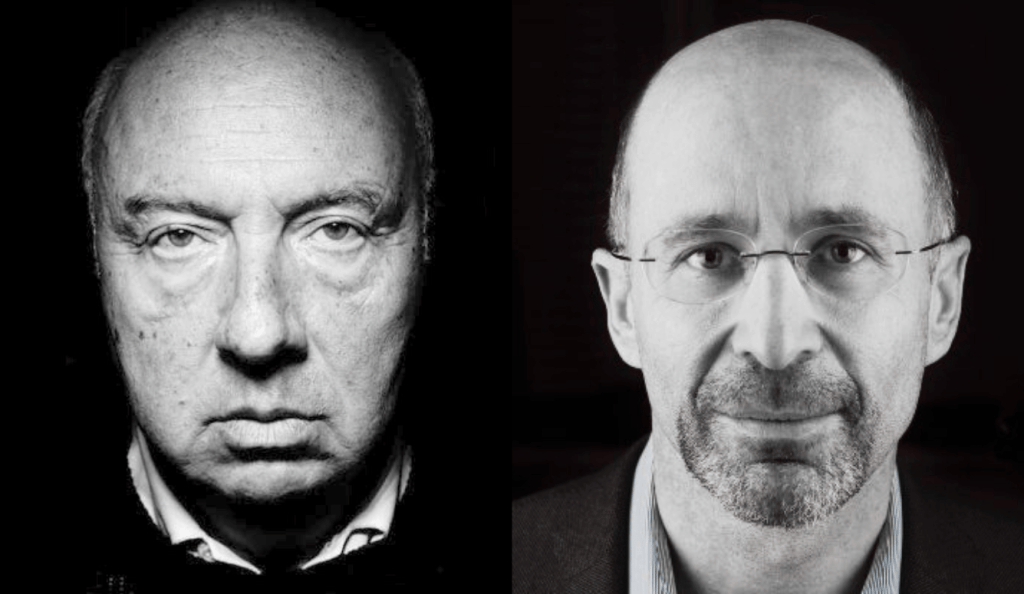
Hussein Agha (on the left) is a senior associate of Oxford University and was part of the Palestinian team that negotiated the Oslo II agreement in 1994-95. Robert Malley (on the right) is an American lawyer, political scientist and specialist in conflict resolution.
Imani Jade Powers (Actor, writer, and singer based in New York City and London.)
It is interesting that a female actor is asked to narrate “Tomorrow is Yesterday”. There is a harshness in Agha’s and Malley’s assessment of negotiations for peace between Jews and Palestinians in what seems an unresolvable conflict. It is the conflict between two peoples’ desire to live in a land that has historically been occupied by two different ethnicities. Presumably, a female narrator takes some (but not much) of the edge off the strong opinions expressed by the authors about the intransigence of Israeli/Palestinian leaders in coming to an agreement on their territorial rights in the Middle east. There is an irony in the choice of a woman narrator for the two men who wrote the book. One might presume a woman is chosen because of a woman’s longer association with nurturing rather than roiling humanity.
King Solomon ruled for 40 years in the Kingdom of Israel and built the First Temple in Jerusalem.
One may ask themselves of these two men’s history of the Israeli/Palestinian conflict–where is the wisdom of Solomon that challenged two women who claimed the same baby? Solomon orders the baby be cut in half, giving each woman one half. One woman agrees and the other begs the king to spare the child and give him to her rival. This seems the essence of the conflict between the State of Israel and the stateless Palestinians. What Agha and Malley imply is the leadership of the Israelites and Palestinians refuse to agree on sharing their land and choose to kill each other instead. There are no leaders that seem to have the compassion to save their progeny by either sharing or dividing the disputed territory upon which they live.
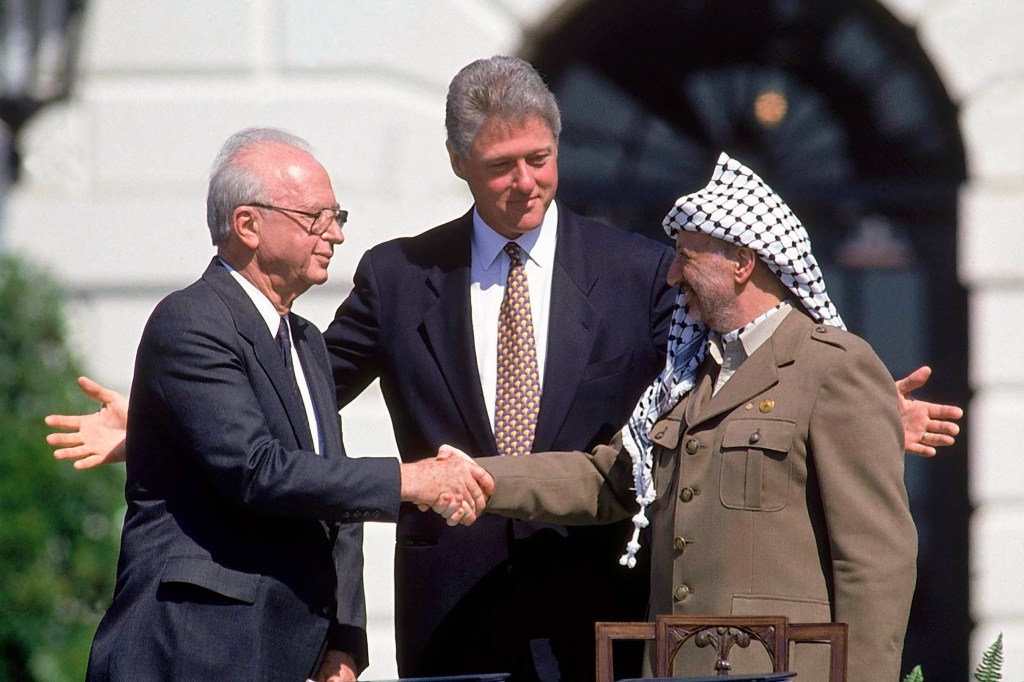
The Oslo Accord with Clinton, Rabin and Arafat in its first iteration.
The authors suggest the only negotiation that had any success was in the Oslo accords in which one of the negotiators is Hussein Agha (the co-author of this book). His experience with both sides of the negotiation offers some surprising and interesting profiles of the participants. Yasser Arafat is the symbolic father of the Palestinians, but he is shown as an ambiguous negotiator who is charismatic but contradictory which makes him both indispensable and obstructive. It is his identity as a leader of the Palestinians, rather than any negotiating skill, that makes him a player in the negotiations. In the second iteration of the Oslo Accords, the pragmatic Palestinian is Mahmoud Abbas (Abu Mazen) but he did not have the legitimacy of Arafat in the authors’ opinions. On the Israeli side there is Barak, Olmert, and Netanyahu. The first two seem to be rationalist pragmatists but Netanyahu, not surprisingly, is characterized as a skeptic who believed the Oslo Accords were a threat to Israel. On the American side is Clinton who focused on closing a deal which fails to confront the historical and emotional roots of the conflict.
In the end, at best, the authors argue Oslo creates a process for negotiating but not peace.
The process allows both sides to avoid confronting the deeper issues of their conflict. The Oslo Accords gave the illusion of progress without any real movement on either side. October 7th is clear evidence of the truth of that observation.
World superpowers of the future.
None of the world’s most powerful leaders, including America, China, Russia, the UK, Germany, South Korea, France, Japan, Saudi Arabia, or Israel show the wisdom of a Soloman. All the leaders on both sides of the negotiation appear to have their heads in the sand with agendas that fail to understand or address the fundamental concerns of the opposing sides. The results have been to allow events to unfold where Israeli’ and Palestinian’ families are torn apart, kidnapped, imprisoned, raped or murdered.
“Tomorrow is Yesterday” is a painful recitation of the failure of the world to understand and resolve the conflict between the Israelites and the Palestinian people. These two authors have an opinion about how “Tomorrow…” can be different than “…Yesterday”. They argue steps toward peace can only occur with a better understanding of what drives their conflict. The writers note there needs to be a mutual understanding of the trauma and injustice of their conflicts. Their respective suffering, and a sense of injustice needs to be accountably recognized by both Israeli and Palestinian leaders for a chance of a negotiated peace.
The authors do not show a plan, roadmap, or political structure that will settle disagreement between Israelis and Palestinians.
What they explain is why previous plans have failed. They diagnose the disease which is revealed in the history of failed plans for reconciliation. There seem to be only two options. One is a two-state solution, and the other is one state with equal representation, along the lines of the relative peace between Irish Catholics and Protestants in Ireland. Like in Solomon’s parable, the baby must be saved. That is the mind-set required for a negotiated peace between Israelites and Palestinians in Agha’s and Malley’s “Tomorrow is Yesterday”.
“The God of Small Things” is a revealing and disturbing telling of the human condition.
Books of Interest Website: chetyarbrough.blog
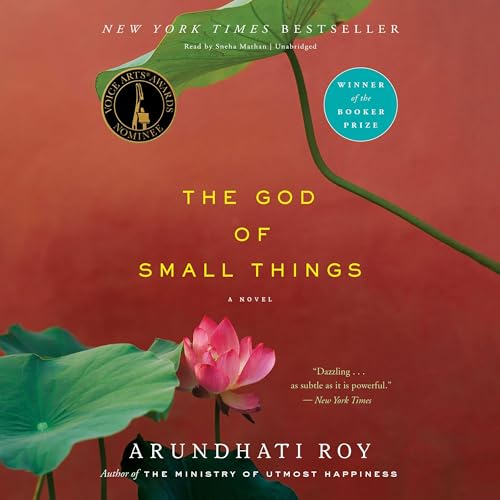
The God of Small Things
Author: Arundhati Roy
Narration by: Sneha Mathan
Arundhati Roy (Author, Booker Prize for Fiction awarded in 1997 for “The God of Small Things”.)
Arundhati Roy gained fame with “The God of Small Things” because of its originality. It is in the big and small things of colonialism and culture that expose the flaws of all societies. “The God of Small Things’ is a criticism of the world in which we live. Roy creates a fictional story that helps one understand the emotional, social, and political failings of India that are, in reality, repeated in societies throughout the world.
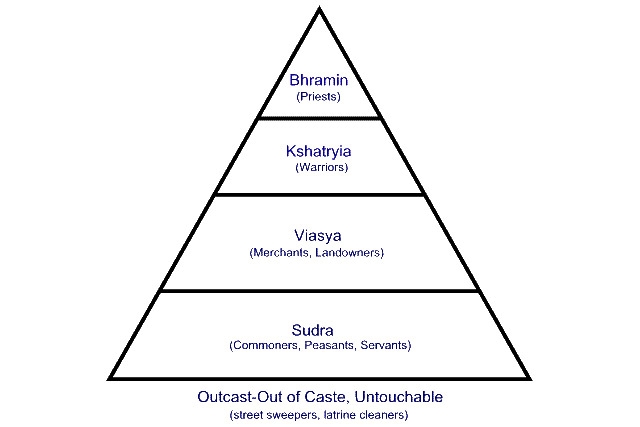
Rather than disrupting the caste system of India, Britain created an Anglophile elite that competed and supported Brahman aristocracy.
In some ways, British colonialism reshaped India’s culture. Britain’s colonization of India created a level of class superiority that hardens the administrative functions of India’s government. That hardening became an integral part of Indian culture. The English language became a symbol of superiority. Schools, courts, and government offices emulated British customs that copied systems of hierarchy, and labor control that continued after the British abandoned colonialist control of India. In visiting India, British influence is seen in country estates that travelers stay in when they ride trains from the north to the south.
The more encompassing truth of Roy’s observations is that the flaws in India’s society exist in all societies.
Ammu, one of Roy’s main characters, is a Syrian Christian woman who marries a man from a lower caste. Her husband comes from the so-called “Untouchable” caste. He turns out to be a brutal abuser of his wife and is eventually divorced by Ammu, but she continues to suffer from discrimination for her religious belief and her breaking of the caste taboos of India.
Roy’s characters like Baby Kochamma, a young woman obsessed with English manners and Catholic respectability is mocked by others in her community. Having an Oxford education became a badge of status with Englishness at the top of the hierarchy of Indian culture. Roy’s novel is set in the 1960s. A moral code of sexual guilt, fear of sin, belief in purity, and policing of desire are exemplified by India’s women who are influenced by catholic proselytizing. In today’s India, the most endemic religion is Hinduism. Rules of marriage, the norms of purity, the stigma of divorce, and association of sin with female desire are tied to Hindu social beliefs. As a Catholic, Baby Kochamma has the additional burden of believing in a minority religion which exacerbates her isolation.
Caste system’s endurance in India is undoubtedly reinforced today by the Prime Minister of India, Narendra Modi and its President, Droupadi Murmu, who are Hindu adherents. Though Roy shows there is little theological hostility between Catholic and Hindu influences, there are inherent tensions between these two religions. Roy infers caste system is reinforced by Hindu beliefs while Catholicism is less concerned about caste than morality or guilt. The irony is that Catholicism rejects caste in theory while accepting it as a part of India’s culture. The two religions compete while reinforcing similar authoritarian beliefs on India’s citizens.
A point made by Roy is that societal, religious, and political dysfunction is not limited to India. Dysfunction exists in all nations.
When Roy’s character Ammu succumbs to the sexual desire of a male, she is criticized more for the caste difference than the sin of entering into an intimate relationship that ultimately falls apart with the abuse of her husband. The physical abuse compounds her violation of Hindu’ caste belief. The fact is that Ammu divorces her husband because he is an abusive alcoholic, not because of caste difference.
Roy shows India is a microcosm of the world, weighted down with sexism and discriminatory inequality that grows from ignorance, and societal dysfunction which often turns into human violence within and between societies and nations that can engulf the world.
“The God of Small Things” is a revealing and disturbing telling of the human condition.
Without a competent Chief of Staff, democracies are subject to authoritarian tyranny.
Books of Interest Website: chetyarbrough.blog
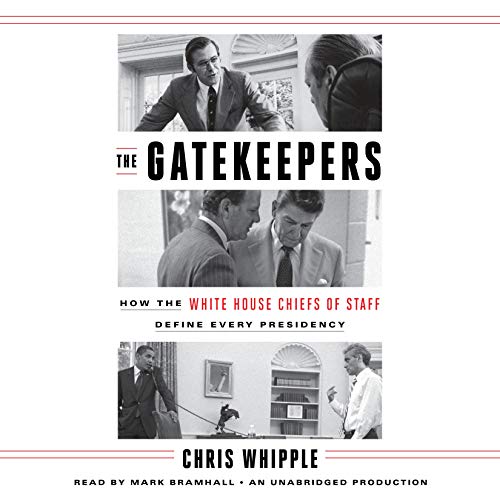
The Gatekeepers (How the White House Chiefs of Staff Define Every Presidency)
Author: Chris Whipple
Narration by: Mark Bramhall
Chris Whipple (Author, political analyst, documentary film maker, journalist.)
Democratic government is complicated and messy, but decisions are made based on an understanding of the interests of many as opposed to the dictate and judgement of one.
“The Gatekeepers” may be viewed by most as an historical account of White House Chiefs of Staff based on many interviews of former government officials. However, one is inclined to see this history as a chronical of American government effectiveness. The facts and incidents reported give reader/listeners a view of America’s government function. Whipple details a series of relatively prudent and sometimes bad decisions made by late twentieth and twenty-first century presidents. Whipple’s history suggests the decision-maker for pursuit of government policy is America’s elected President. However, the road to policy approval or rejection is paved by White House’ Chiefs of Staff.
Whipple covers Nixon’s, Ford’s, Carter’s, Reagan’s, both Bush’s, Clinton’s, Obama’s, and Trump’s first administration. It does not address Biden’s Presidency or the Chief of Staff for Trump’s second term. The many interviews Whipple bases his history on offer a credible and enlightening history of American government. It is H. R. Haldeman, Cheney, Rumsfeld, Baker, Panetta, Card, and Rahm Emanuel that are the most prominent examples of effective and consequential Chiefs of Staff in Nixon’s, Ford’s, Reagan’s, Clinton’s, first and second Bush’s, and Obama’s administrations. The definition of effective is their ability to achieve a desired result whether good or bad for America. This is where one’s personal political beliefs come into question. It is always easy to see the errors of the past retrospectively. Whipple is careful to report facts and results without much judgement about their consequences.
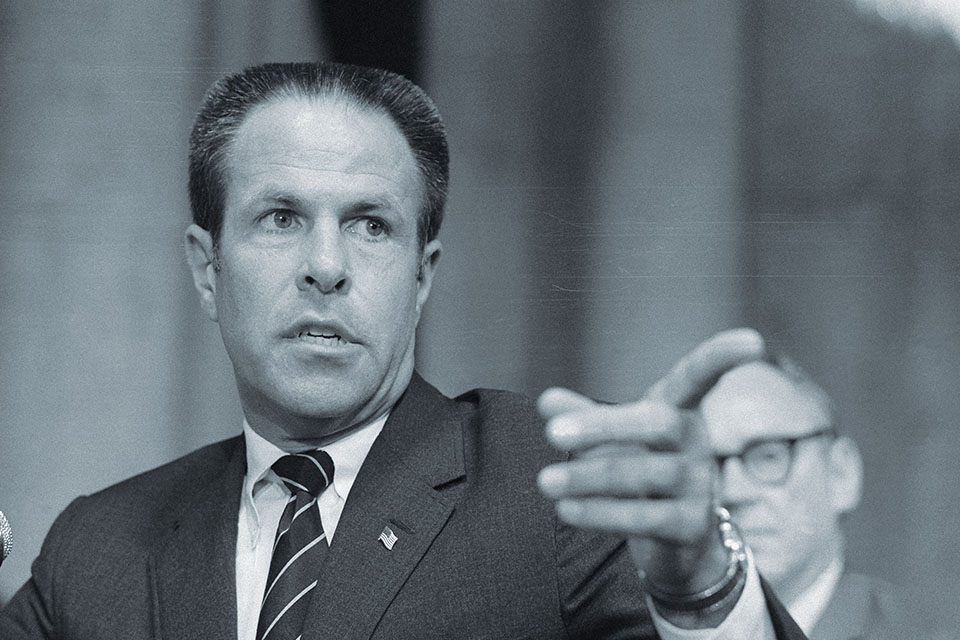
H.R. Halderman (1926-1993, former Chief of Staff for President Nixon.)
Haldeman was Nixon’s Chief of Staff. There is no evidence that he had anything to do with the planned or ordered Watergate break-in, but Whipple shows he participated in a Watergate cover-up. Though Haldeman’s actions after the Watergate scandal are reprehensible, the point made by Whipple is that Haldeman set the table for what an effective Chief of Staff should be for a President. Haldeman acts as a consummate gatekeeper. One can criticize Haldeman’s bad decision to try and coverup Watergate, but he defined the role of a President’s Chief of Staff. Whipple shows Haldeman manages access to the President, understands where the power of government lies, has a good understanding of staff members surrounding the President, protects the President’s time, and balances a President’s policies with the politics of his party.
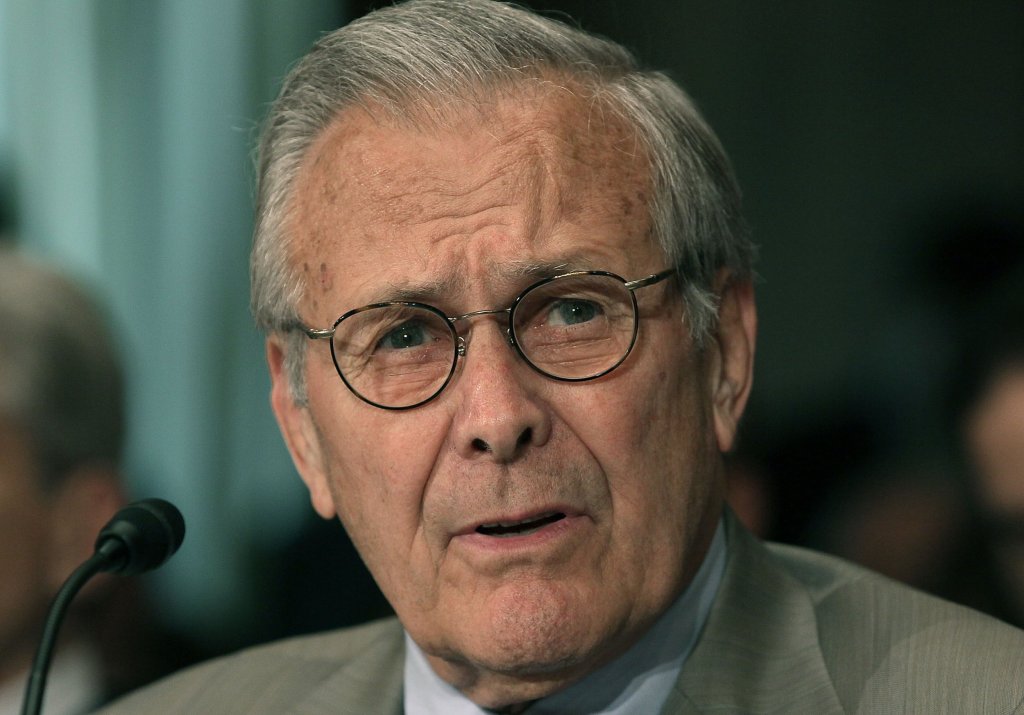
Donald Rumsfeld (1932-2021, Secretary of Defense and former Chief of Staff for President Ford.)
President Ford’s Chief of Staff is Donald Rumsfeld with Dick Cheney as Deputy Chief of Staff. Rumsfeld is characterized as a mentor to Cheney. They had a close relationship according to Whipple. Ford’s political decision to give a full pardon to Nixon and clemency for Vietnam draft dodgers were hot potato issues that were abetted (if not endorsed) by Rumsfeld and Cheney. Most significantly Ford ended America’s war in Vietnam. Ford endorses tax increases to reduce inflation while supporting tax cuts to stimulate the economy. Ford increases congress’s role in foreign policy.
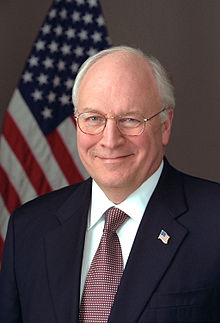
Dick Cheney (1921-2025, second Chief of Staff for President Ford.)
In a cabinet reorganization Cheney becomes the Chief of Staff and Rumsfeld switches to Secretary of Defense. Rumsfeld and Cheney, in their roles as Chiefs of Staff, control access to President Ford, coordinate policy actions, shape internal decision-making, and advise Ford on strategy to influence people who accomplish these acts. The two Chiefs influenced Ford to replace Kissinger as National Security Advisor, promote George Bush as CIA Director, and prepare Ford for the next election which is ultimately lost to Jimmy Carter.
Hamilton Jordan (1944-2008, Chief of Staff of President Carter.)
When elected, President Carter felt he did not need a Chief of Staff. However, he relented in 1979, when he found the job was needed. Carter hired Hamilton Jordan who had been his campaign strategist when he ran for President. Whipple notes that appointment became a mistake because of Jordan’s lack of discipline. Though the Ford administration fought the idea of promoting Reagan for President, the public felt otherwise.
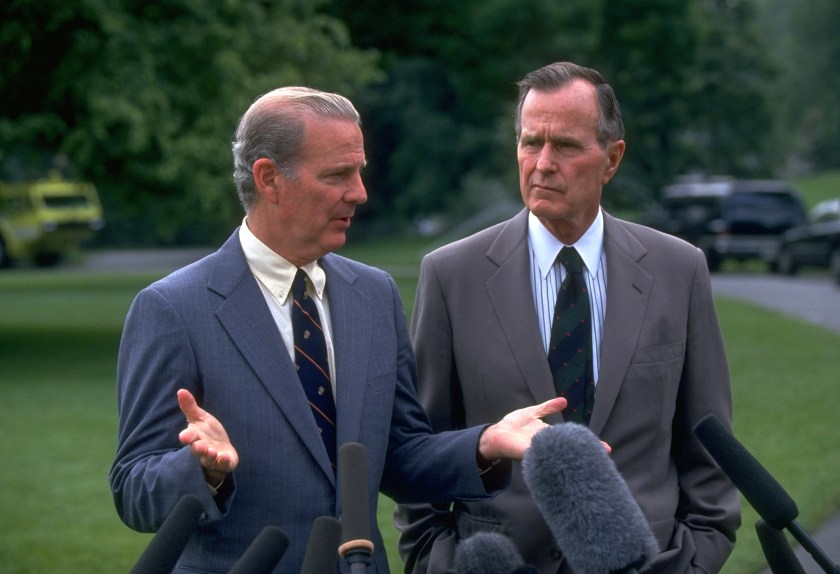
James Baker (1930-, Chief of Staff for President George H.W. Bush.)
After Carter, when Reagan is elected, he chooses James Baker as his Chief of Staff. Whipple suggests Baker is the quintessential model of a great Chief of Staff which all could be measured against. Baker is characterized by Whipple as an expert at managing the White House, the press, and Capitol Hill. Baker understood the process, the politics, communication, and presidential management requirements of the job. He never confused himself with the power of the President. He became manager of what is called the Reagan Revolution. The political and social movement revolves around ideas of smaller government, deregulation, cutting taxes, and endorsement of free enterprise. Whipple infers the success of the Reagan Revolution is largely due to the skill of James Baker.
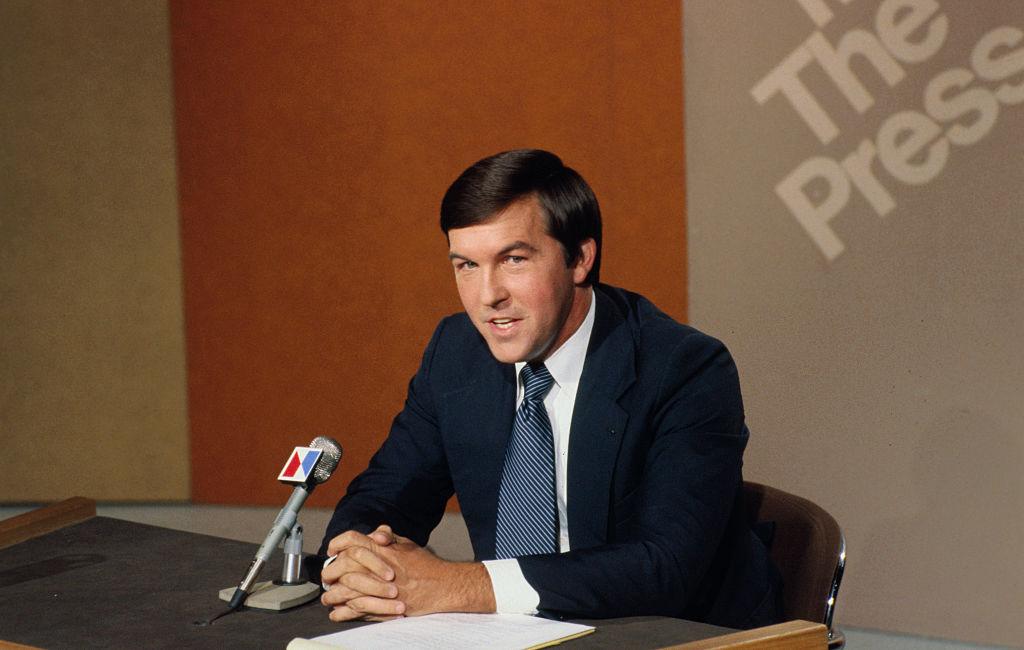
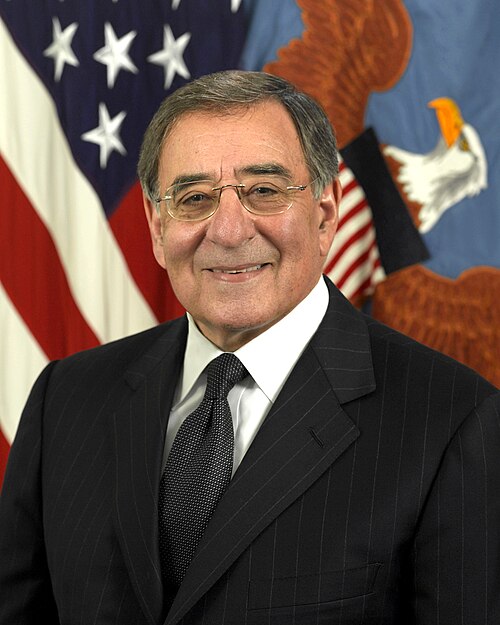
Leon Panetta (1938-, Chief of Staff for President Clinton.)
One may argue Reagan caused America’s 1990-91 recession. Unemployment had risen to 7.8%. This set the table for a Democratic President named Bill Clinton. The initial Chief of Staff for Clinton is John Podesta who served from 1998-2001 and is replaced by Leon Panetta who, in the author’s opinion, rivals James Baker as a great Chief of Staff. Whipple infers that, without Panetta, Clinton would not have been reelected after the Monica Lewinsky affair. Panetta brought discipline and structure to the Clinton White House. Panetta could say “no” to the President, at least, in private. Panetta gained a reputation for being an honest broker as a negotiator for the President.
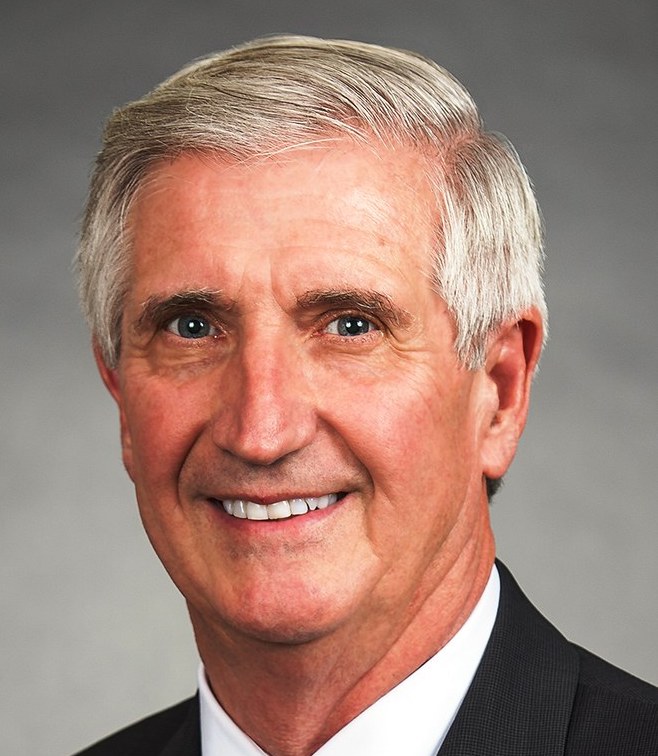
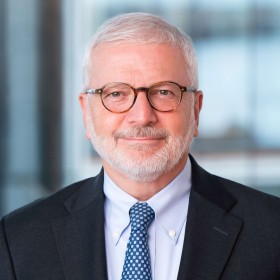
Andrew Card on the left. Joshua Bolten on the right.
George W. Bush, the next President, is noted to have two Chief’s of Staff during his two terms as President. It appears both Andrew Card and Joshua Bolten were more soldiers than Chiefs of Staff for George W. Bush. The policy decider is certainly George W. Bush but the influence of Dick Cheney as Bush’s V.P. seem a major influence on George W.’s decisions. Bush’s two Chief’s of Staff may have been effective as screeners but not as Chiefs of Staff that could say no to a President influenced by his cabinet and personal opinions. The entry to the wars in Afghanistan and Iraq suggests Card and Bolten were unduly influenced by others in the administration.
No one seems inclined to say no to President Bush in private. In retrospect, President Bush seems let down by his Chief’s of Staff and the research and judgement of his Department Heads. Both Afghanistan’s and Iraq’s invasions by the American military are retrospectively shown by most (if not all) histories as American mistakes, if not tragedies.
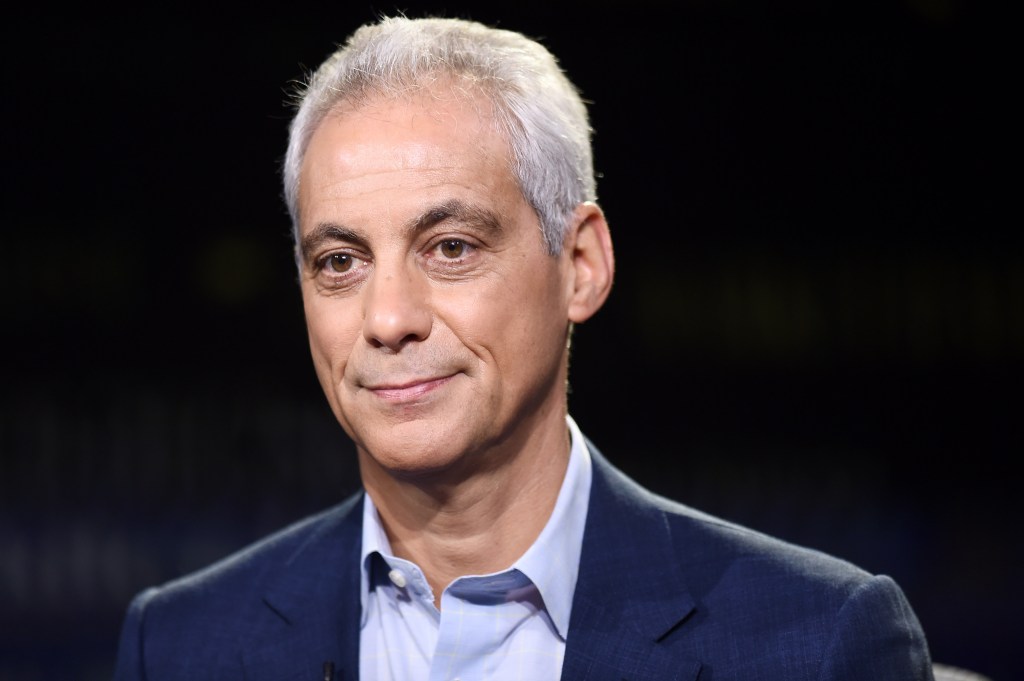
Rahm Emanuel (1959-, Chief of Staff for President Obama.)
The final chapters address Chief’s of Staff for Obama and Trump. Obama became President when the American economy is in an economic crisis that threatens the financial industry, the general economy, and the mortgage market for many American homeowners. He asks Rahm Emanuel to become his Chief of Staff. Emanuel is a tough Chicago politician who recognizes the pressure of the office and has some level of fear about the future of the American economy. He understood the gravity of the job he is being asked to take. However, his reputation as a tart tongued fighter for what he believed as right made him the best Chief of Staff that could be found. His role as gatekeeper gave Obama the support needed to pass the Obama Health Care plan and work through the economic crisis that nearly bankrupted America.
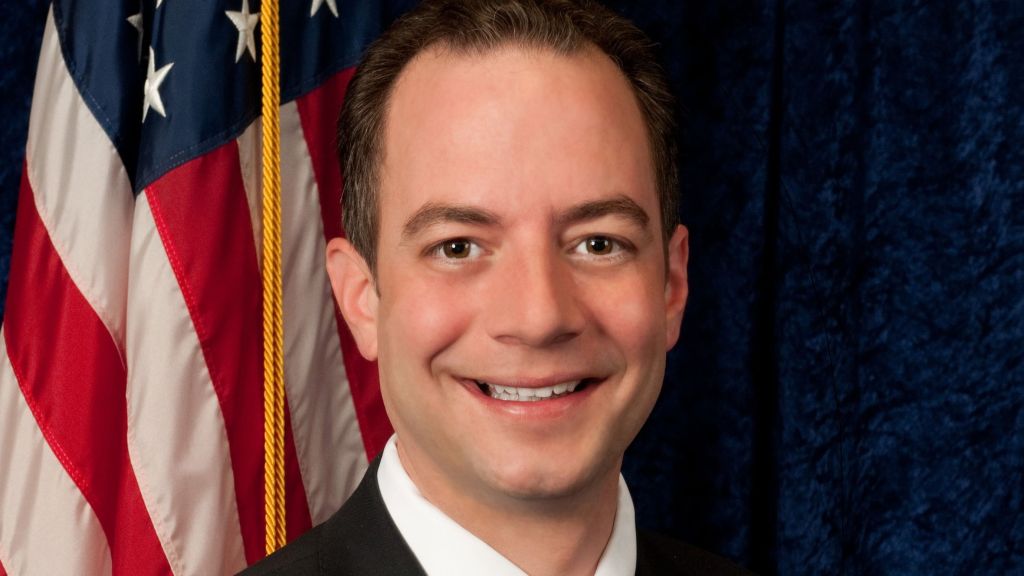
Reince Priebus (1972-, Chief of Staff for President Trump.)
Trump’s choice of Reince Priebus as his first Chief of Staff is short lived and lasts for less than 8 months. His short tenure is not evaluated, and history shows he is replaced three times in the remaining years of Trump’s first term. A pro-Trump person will have one opinion about those facts while an anti-Trump person will have another.
Whipple convinces reader/listeners that a competent Chief of Staff is critically important for any organization that approaches the complexity of a nation-state government. Without a competent Chief of Staff, democracies are subject to authoritarian tyranny.
Dylan Roof is not South Carolina, and neither are the preachers who believe in the divinity and eternity of God. All people of the world are subject to the sins of living life.
Books of Interest Website: chetyarbrough.blog
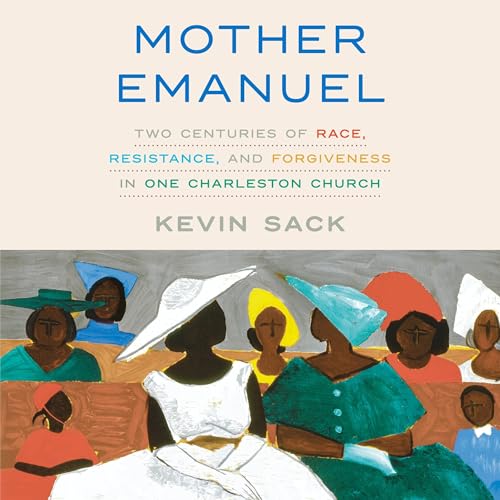
Mother Emanuel (Two Centuries of Race, Resistance, and Forgiveness in One Charleston Church)
Author: Kevin Sack
Narration by: William DeMeritt
Kevin Sack (Author, American journalist, senior reporter for The New York Times who shared a Pulitzer Prize for National Reporting in 2001.)
South Carolina is the underlying subject of Mother Emanuel. It focuses on a State that shows the very best and worst of what it can mean to be born in America. South Carolina is the home of Americans who fought on the side of the confederacy in the Civil War. The confederates of the south did not believe in human equality but in the superiority of the white race and the rightness of slavery.
Mother Emanuel is an African Methodist Episcopal Church located at 110 Calhoun Street in Charleston, South Carolina.
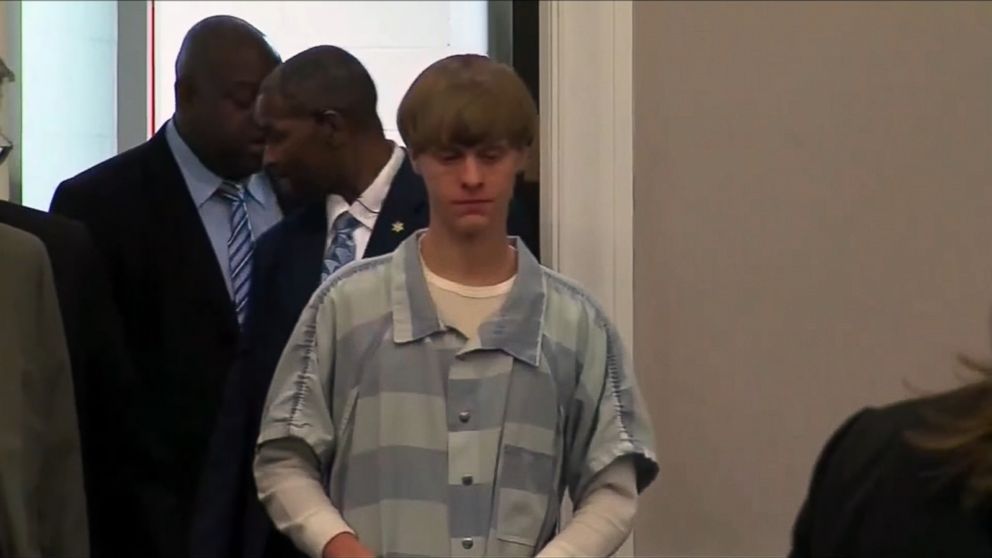
Mother Emanuel was built in 1891 and has capacity to seat 2,500 congregates. The church is considered a symbol of Black autonomy and resistance to some South Carolinians. On June 17, 2015, the senior pastor of the church and 8 African American parishioners were shot by a white 21-year-old American name Dylann Storm Roof. Roof, when he came to the church service, is invited into a Bible study group. He sits in the study group for nearly an hour before drawing a 45-caliber Glock handgun to murder 9 people, including the pastor of the church. The author and journalist Kevin Sack explains Dylann Roof was not a dumb white American but a person of above average intelligence who believed Black Americans were an imminent danger to white Americans’ way of life. Roof intended to motivate a Black American uprising that could be crushed by an American white majority.
Dylan Roof (At the time of his trial.)
A listener/reader is unlikely to believe Sack is writing this book to suggest all white Americans, let alone South Carolinians, are like Dylann Roof. Sack is not suggesting all humans have equal capabilities but that all people are influenced by the environment in which they live, their genetic inheritance, and their psychological development. What the author shows is that one’s intelligence can as easily lead to horrific acts of violence, dishonesty, theft, and social hate as belief in the truth of human equality.
Reverend Eric Manning navigated multiple difficulties when he became the pastor of the church after the massacre.
As a church, Mother Emanuel has existed for well over 100 years. It has had many pastors who are subject to the same strengths and weaknesses of all human beings. Sack infers some pastors in Mother Emanuel’s long life have been seduced by the money, power, and prestige of their office while preaching belief in God. Sack infers every human being, including pastors, can be led astray in life. A few, like Dylan Roof, become corrupted by life for reasons that are incomprehensible to one who believes in something greater than themselves, whether that something is the moral, communal, or cosmic reality of human life, or a fervent belief in God and redemption.
Dylan Roof’s verdict for execution is appealed to the U.S. Supreme Court but is rejected. He remains on federal death row.
Dylan Roof is not South Carolina, and neither are the preachers who believe in the divinity and eternity of God. All people of the world are subject to the sins of living life. Roof is shown by Sack to be an unremorseful murderer of human beings for little other reason than the color of their skin. A lesson of life that the murders explain is that forgiveness is not for the sake of Roof’s peace of mind but a mindful reconciliation for those who lost their loved ones.
As of the writing of this book, Dylan roof remains in prison, without personal remorse and a remaining verdict that warrants execution.
Sorkin’s “1929” makes one think about 20th and 21st century American Presidents who may have set a table for a second economic crisis. As the Turkish proverb says “…fish stinks first at the head.”
Books of Interest Website: chetyarbrough.blog
1929 (Inside the Greatest Crash in Wall Street History–and How It Shattered a Nation)
Author: Andrew Ross Sorkin
Narration by: Andrew Ross Sorkin
Andrew Sorkin (American author, journalist, and columnist for The New York Times.)
“1929” is a history of the build-up to the stock market crash and the advent of the depression with opinions about how today’s economy compares and what should be done to keep it from happening again. Though Sorkin is not an economist, he has written an interesting history of the build-up to the 1929 depression.
Faltering economies.
There is a sense of danger being felt by some today when reading/listening to Sorkin’s history of the 1920s. Few seem to have a clear understanding of world market forces and whether we are heading for an economic catastrophe or a mere hiccup in the growth of the economy. Neither bankers, regulators, nor politicians in the 1920s (or for that matter now) seem to have a clue about the economy’s trouble and what can be done to ameliorate risks. Like 1929, today’s insiders, power brokers, and rich have more options to protect themselves than most of the world’s population.
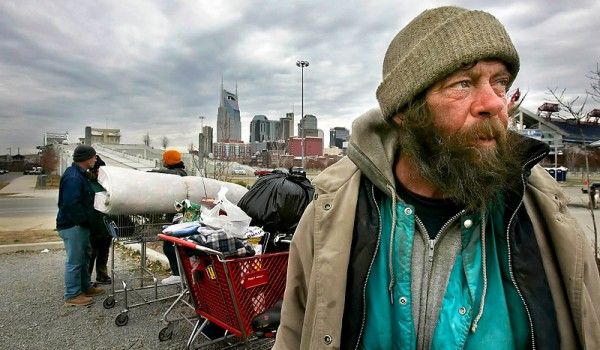
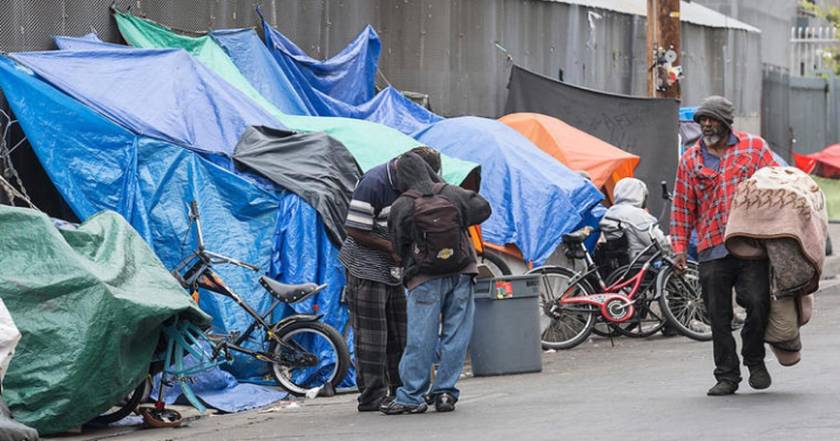
Increasing homelessness in America.
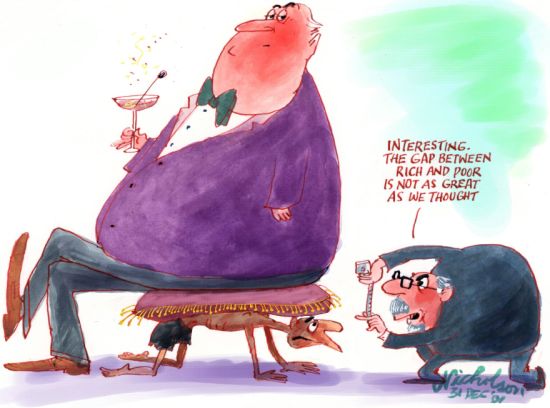
In America, it seems those in power have no concern about the rising gap between rich and poor or the immense increase in homelessness. Without a plan by those in power, there seems little concern about reducing inequality, the common denominator for the wealth gap and homelessness. Sorkin’s book outlines the reality of 1929 that gives reader/listeners a feel of history that may repeat itself.
Sorkin’s history seems credible as he notes human nature does not change.
Today’s leaders are like yesterday’s leaders. Not because they are venal but, like most if not all human beings, leaders in power are concerned about themselves and what there is in life that serves their personal needs and wants. Of course, the difference is that leaders that are power brokers affect others that do not have the same influence or options to protect themselves. We all have blinders that keep us from seeing the world as it is because human nature is to ask what is in it for me, i.e., whatever “it” is. The 1920s had a merger bubble in manufacturing and communication that is fed by the industrial revolution. Today, we have a merger bubble with mega-corporations like Tesla, Apple, Amazon and others that are mega-corporations capitalizing on a new revolution coming with A.I., the equivalent of the Industrial Revolution. Some critics argue mega-corporations, like what happened with the oil industry could be broken up to increase competition which is the hallmark of improved production, cost reduction, and lower consumer prices.
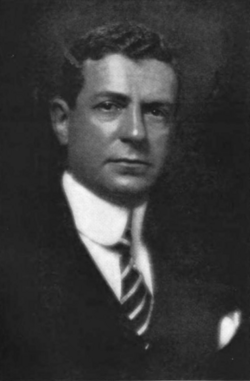
Charles E. Mitchell (American banker, led the First Nation City Bank which became Citibank.)
What makes this history interesting is Sorkin’s identification of the most responsible power brokers who bore responsibility for the stock market crash. Charles Mitchell of Nation City Bank is identified as the central driver of the stock market bubble. Mitchell denied the reality of the financial systems fragility. His ambition and unfounded optimism magnified the systemic risk of the financial crises. He openly defied the Federal Reserve’s warning to curb margin lending that risked other people’s money and their financial stability. He continued to promote purchase of stocks on credit that were fueling the stock market bubble. Mitchell appears to have misled the public in order to increase his power and protect his personal wealth by creating the illusion of market stability and his bank’s profitability. Though Mitchell is not the sole villain, he became the most powerful banker in the nation while breaking the financial backs of many Americans. In general, it is the self-interest of those who listened to him that have responsibility for their financial collapse, but it is always hard to know who is lying to you. Part of the blame is the hesitation of the Federal Reserve Board to act because the people in charge could not agree but that was more a matter of omission than commission which Mitchell was charged with but not convicted. Of course, the political leaders of that time also failed but hindsight is a lot easier than foresight.
Artificial Intelligence is today’s equivalent of the Industrial Revolution of the twentieth century.
Similar to the corporate mergers and investment from growing industrialization of the 1920s, today’s mania is mega corporation’ investment in Artificial Intelligence. Sorkin notes the ease of trading stocks, expectations of crypto investments, and A.I. hype may well move the market beyond its value. He argues for stronger guardrails on speculative investments, more limits on margin lending, and transparency on high-risk investments. He cautions easier credit as seen this Christmas season with buying based on delayed payment incentives and increasing credit card availability, card balance increases, and more liberal repayment terms. In general, Sorkin wants to see more, and better government oversight and regulation of credit offers. He believes too many lenders are overly optimistic about the future with the gap between rich and poor widening and trending to get worse. That inequality threatens the success of capitalism as a driver for shared prosperity, and economic growth.
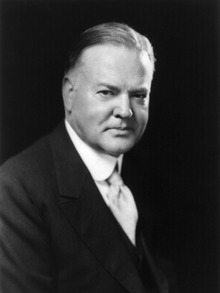
Herbert Hoover (President 1929-1933, though characterized as the primary villain for the depression, Sorkin identifies his role as one of omission rather than commission.)
The Presidents shown below carry some responsibility for where the American economy is today but that would be another book.
Sorkin’s “1929” makes one think about 20th and 21st century American Presidents who may have set a table for a second economic crisis. As the Turkish proverb says “…fish stinks first at the head.”
In the pre-A.I. age, democratic socialism is unachievable, but A.I. may resurrect its potential. However, as Orwell noted, the risk is a “Brave New World” rather than a hoped-for democratic socialism.
GEORGE ORWELL (Author, 1903-1950)
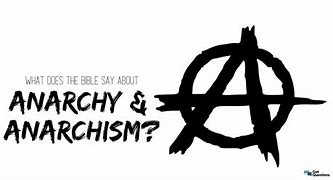
In Norm Chomsky’ ‘s and Nathan Schneider’s book, “On Anarchy”, George Orwell’s book “Homage to Catalonia” is called one of Chomsky’s favorite books. “On Anarchy” infers Orwell believed in anarchy because of his role in the war (1936-1939) against the Franco government. Though Orwell’s risk of life in Spain’s war is inconceivable to me, it seems prudent to listen to his story and point to the significant difference between what Chomsky and Schneider infer about Orwell’s belief in “…Anarchism” and what Orwell really wrote and believed. Though Orwell takes anarchism seriously as a political working-class movement, he believes it is impractical and that democratic socialism (with “1984” reservations) is what he believes could be the best form of government. The idea of abolishing all forms of coercive authority and hierarchy with a government anarchy is impractical because of the nature of human beings.
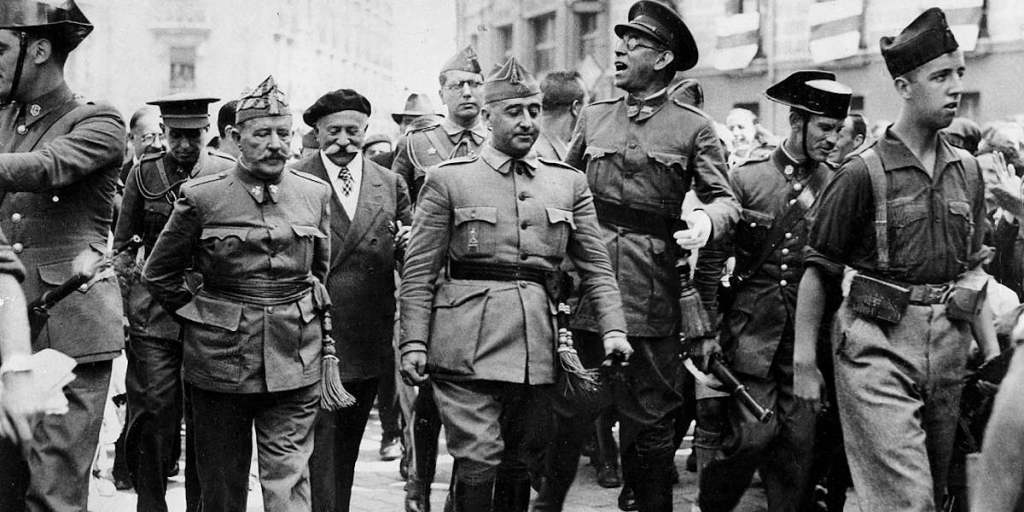
Francisco Franco with his soldiers in 1936.
Because of Orwell’s belief in democracy and equality he chooses to join the fight against Franco’s fascism. He joins the resistance at the age of 33 because of his belief in democratic socialism. He felt he needed to join the ideological struggle against Franco’s regime. It is a remarkable decision considering he is married, and relatively unknown. He is oddly driven by his moral belief in democracy and equality. Presumably, he entered the war to understand what it means to fight a war against a government he felt was immoral and totalitarian. Orwell served for approximately six months beginning in December 1936. He was shot in the throat and nearly died.
Anarchy and human nature.
It seems inconceivable that anarchism is a reasonable way of governing human nature. It is interesting to contrast what Orwell believes and what anarchists argue. This is particularly relevant in the 21st century because of the inevitable change in society that is occurring with artificial intelligence. A.I. has an immense potential for creating Huxley’s “Brave New World”. However, his writings reject the ideal of “Anarchy” espoused by Chomsky and Schneider because of its impracticality. Huxley shows that human nature contains both heroism and weakness tied to the material world. Even though human nature is basically decent, it is easily corrupted. That corruption makes humans hope and fear human decisions designed by consensus. It is not to say democratic socialism would be infallible, but it offers a structure for regulation of different governments at chosen intervals of time.
Human nature will not change. Human nature is a set of relatively stable psychological, biological, and social tendencies that are shared by all human beings. These tendencies shape how humans think, feel, and act even as culture and governance changes. Artificial intelligence will only intensify the strengths and weaknesses of human nature. The principles of anarchy in an A.I. world is frightening:
No centralized government, police, or standing armies.
Society organized through federations of communes, cooperatives, or councils.
Emphasis on direct democracy, mutual aid, and local autonomy.
Suspicion of any coercive authority — even democratic majorities.
Change often imagined as revolutionary, not incremental.
A more rational alternative to Anarchy is Democratic Socialism believed by Orwell and espoused by MLK.
The state remains, but becomes more egalitarian and accountable.
Markets may still exist, but are regulated or supplemented by public ownership.
Political parties and electoral competition are central.
Emphasis on universal programs: healthcare, education, housing, worker protections.
Change is gradual, through reforms, not revolution.
Differences of opinion.
There are obvious differences between Chomsky’s and Orwell’s beliefs. Both have social weaknesses. Human nature gets in the way of both forms of governance. Orwell seems to have recognized the weaknesses of his belief in democratic socialism in his writing of “Brave New World”. In contrast, Chomsky’s and Schneider’s pollyannish view of anarchy as “…a better form of government where power is decentralized and citizens can and should collectively manage their own affairs through direct democracy and cooperative organizations” is absurd. The difference is that Huxley foresees the dangers of his idea in “Brave New World” which anticipates something like A.I. that has the potential for society’s destruction. “On Anarchy” ignores the truth of human nature, “Brave New World” does not.
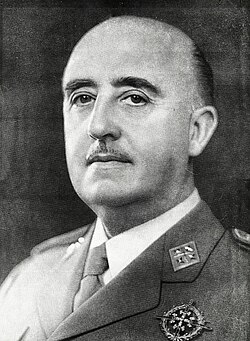
Franciso Franco (1936-1975, died in office.)
Orwell’s decision to join opposition to Franco’s dictatorship fails. Their right-wing beliefs in authoritarianism, anti-communism, and pro-Catholicism prevails. Spain’s 1930s opposition leaders (Manuel Azaña, Largo Caballero, and Juan Negrín) were pro-democracy with anti-fascist, socialists, communists, anarchists, trade unions, urban workers, and peasants who Orwell joined to support democratic socialism, not anarchy.
In the pre-A.I. age, democratic socialism is unachievable, but A.I. may resurrect its potential. However, it is the risk of a “Brave New World” or “1984” rather than a hoped-for democratic socialism.
Like America’s Civil War and the issues of slavery and independence, peace will only come to Israel with a political and territorial agreement based on human equality.
Books of Interest Website: chetyarbrough.blog
BEING JEWISH AFTER THE DESTRUCTION OF GAZA (A Reckoning)
Author: Peter Beinart
Narration by: Malcolm Gladwell
Peter Beinart (Author, journalist, political commentator, professor, former editor of the New Republic, born in Cambridge, Mass. to Jewish immigrants from S. Africa.)
This is a surprising Jewish author’s analysis of Israel’s response to the horror of Hamas’ murders/rapes of 1200 people and the taking of 251 Jewish hostages on October 7, 2023. Peter Beinart appears to be a devout Jew and journalist who criticizes Israel’s response to Hamas’s brutal attack and hostage taking. He believes, as current news reports confirm, Hamas will return to control and influence Gaza and West Bank Palestinians after Israel’s brutal response to the Hamas’ atrocity.
NYT’s Picture of Grief over the Hamas attack on October 7th, 2023.
Without reservation, Beinart condemns Hamas for their war crime on October 7th. However, his book equally condemns Netanyahu’s response. Beinart points to the Israeli government’s destruction, murder, and starvation of thousands of Palestinian men, women, and children who had nothing to do with the planning or execution of the Hamas horror of October 7th. The author argues Israel must focus on a political, non-military solution to Palestinian human rights. He believes Netanyahu’s actions only perpetuate a cycle of violence in Israel which will not achieve security for either the Israeli or Palestinian people.
One wonders how unpopular Beinart’s opinion may be among Israel’s Jewish population. As a blogger who received written comments from a devout Jewish person who supports Trump and Netanyahu’s actions in Israel, it is surprising to hear Beinart’s analysis of the Gaza war and his criticism of Israel’s actions. As the reviewer of this book who admittedly has little respect for religion and its history of atrocities, it is encouraging to hear from one who believes in their religion and condemns those who have no empathy for other religions. God is a universal concept with religions that worship His existence in different ways. Beinart makes one wonder why there is so little room for a “let it be” attitude toward different religious beliefs.
Empathy.
Beinart argues for Jewish empathy toward Palestinians while condemning Hamas’ actions in Israel. He believes long-term peace requires political compromise and a recognition of Palestinian rights. Military actions only guarantee rather than deter future violence and injustice. Beinart’s plan is to end Israeli’ occupation of Gaza and expand the rights of Palestinians to control Gaza and the West Bank. He argues it can be either a one-state or two-state solution. Beinart argues ground invasion by Israel in Gaza must stop. He recommends forthrightly engaging the humanitarian crises in Gaza by providing aid and rebuilding what has been destroyed.
Pursuit of peace is not easy.
None of this is easy because of the enmity that remains. The complications of political opposition, and security are ongoing concerns for Israelites and Palestinians, but Beinart believes the risks of a negotiated political, religious, and territorial settlement is worth it. Human equality is a work in progress for all nations in the world. Beinart persuasively argues a political and territorial agreement between Palestinians and Israelites is the only possible path to peace. Like America’s Civil War and the issues of slavery and independence, peace will only come to Israel with a political and territorial agreement based on human equality. Of course, the drive for equality remains a work in progress for America. That will be true in Israel for generations to come, but peace can be restored with pursuit of equality for Palestinians and Jews.
America’s next President needs to forcefully change the economic direction of America in the same way Timothy Egan shows Franklin Roosevelt and the Secretary of Agriculture, Henry Wallace, did during the Dust Bowl and Depression era.
Books of Interest Website: chetyarbrough.blog
THE WORST HARD TIME (The Untold Story of Those Who Survived the Great American Dust Bowl)
Author: Timothy Egan
Narration by: Jacob York
Timothy Egan (Author, American journalist, former op-ed columnist for The New York Times, won the National Book Award in 2006 for “The Worst Hard Time”.)
Timothy Egan wrote an interesting history of America during the dust bowl years that resulted in the Great Depression that lasted from 1929 to the early 40s. “The Worst Hard Time” has concerning parallels to today’s economy. Timothy Egan notes the Dust Bowl is caused by climate change, water scarcity, and energy transition, i.e. all conditions of the year 2025.
Contrary to Trump’s belief that global warming is a cycle of nature, most scientists argue the earth is warming because of the world’s burning of fossil fuels.
Clean potable water is a growing threat to a rising world population.
American Oil Refineries.
Transition from fossil to renewable energy sources is being delayed by the Trump administration.
Agricultural markets dramatically rose and fell in the 1920s and 30s. Wealth and greed created by wheat farming blinded farmers to the harm they were doing to the Nebraska, Oklahoma, and Texas panhandle plains of middle America. With the scarification of soil and seasonal planting and harvesting of wheat, millions of acres of grass land were left barren between crop seasons.
Trump is a sad reminder of the political blindness of Herbert Hoover.
Herbert Hoover (31st President of the United States.)
Tariffs and anti-immigration policies were instituted by the Hoover administration as a response to declining prosperity caused by excessive wheat farming cultivation. This is reminiscent of President Trump’s response today with tariffs, militant immigration policies, and his rejection of science that warns of the impact of global warming.
Trump’s modus vivendi.
Artificial Intelligence in today’s economy has increased investment of billions of dollars in today’s money like that spent to grow and harvest wheat in the 1920s. Investment in farmland skyrocketed in the 1920s with farming as a way to increase wealth with cultivation of land that was nearly free in Nebraska, Oklahoma, and the Texas panhandle. Today, massive investments in A.I. are being made by wealthy tech company owners. Without pragmatic and careful implementation of A.I. to America’s economy, tech company’ investments may have the same consequence to its investors as the farming collapse had to the wheat farmers.
A.I. will become the engine of American economic improvement just as Industrial Revolution changed agricultural production.
Today, A.I., rather than industrialized agriculture, has become the great economic engine of America. Today’s massive investments are in A.I. rather than wheat harvesting. The collapse of wheat prices because of oversupply disrupted the American economy because workers were not needed. A.I. will have a similar impact on all industries which may lead to the next world-wide depression.
1933 Depression bread lines.
Trump’s idea of Making America Great Again is a twentieth century idea that may lead to economic collapse rather than economic prosperity. His tariff policies set a table for damaging the world economy in the same way they did when Hoover became President. America needs to embrace the inevitable decline of human manufacturing and focus on transitioning America to a service economy. America needs more doctors, nurses, social workers, educators, house builders, scientists, and ecologically minded politicians rather than investors and manufacturers of disposable conveniences. At the same time, regressive tax policies that penalize the poor and enrich the wealthy need to be changed. Tax revenue needs to be focused on America’s economic transition from a disposable manufacturing economy to service and ecological preservation industries.
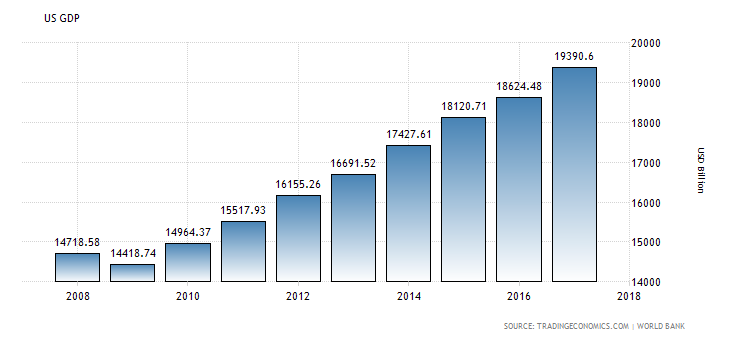
The hope for GDP growth in America’s future depends on a change in economic direction.
America’s next President needs to forcefully change the economic direction of America in the same way Timothy Egan shows Franklin Roosevelt and the Secretary of Agriculture, Henry Wallace, did during the Dust Bowl and Depression era. The reversal of Trump’s mistakes will take more than one four-year-term for correction, but the next election needs to set a different course for the American economy.