COST/BENFIT

“Apple in China” is a message to the entire world about the risks of technological relocation solely based on reducing costs of labor in a politically and culturally divided world. This is a book every employer should listen to or read.

Books of Interest
 Website: chetyarbrough.blog

Apple in China (The Capture of the World’s Greatest Company)

Author: Patrick McGees

Narrated By:  Fred Sanders

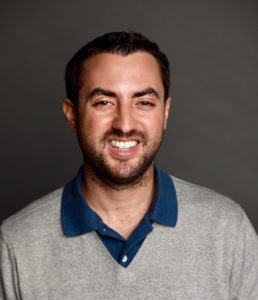
Patrick McGee (Author, technology/business journalist, San Francisco Correspondent for “Financial Times”.)

Patrick McGee has written an important book about world trade. He reveals a shocking story about Apple and the risk of basing a corporation’s economic future on a singular aspect of its success, i.e. cost of manufacturing. This is a story of two companies and the world’s labor market. Foxconn and Apple look to China, Taiwan, South Korea, Ireland, and Asian countries that vie for the role of the cheapest and best labor markets in the world. Foxconn’s and much of Apple’s search and success as a tech company is based on finding the cheapest labor in the world for the manufacture of product. However, McGee explains how that view makes Apple and other international corporations vulnerable to the politics of nation-states that have a mix of economic and political agendas. McGee explains how politics can be a greater cost than benefit to a business enterprise because of nation-state’ politics.

The power of political leadership in business enterprise is on display in America today with Donald Trump and his doomed effort to return America to a 20th century manufacturing behemoth.

McGee’s story is about the impact of China’s government on Apple and Foxconn led by Tim Cook and Terry Gou. Tim Cook is the wunderkind hired by Steve Jobs before his death, and Terry Gou is the Taiwanese billionaire who founded Foxconn which is now headed by Young Liu who was educated in Taiwan and the United States.

Tim Cook (CEO of Apple Inc.)

McGee explains why and how Tim Cook became the CEO of Apple. Jobs who was known as a poor manager of people, needed a manager who emulated Jobs’ drive but understood how to manager an organization to become bigger while remaining profitable. Cook is characterized as someone who has a near photographic memory. His analysis of reports from subordinates could be used to advance company goals or change a subordinate’s understanding of anything they propose that is not practicable or goal focused. What McGee argues is that Tim Cook’s focus on the cost of manufacturing became an Achilles heel when he hires Foxconn to organize Apple’s iPhone manufacturing to be done mostly in one country, China.

To accomplish iPhone manufacture in China, Cook had to transfer thousands of American engineers to train laborers in the assembly of Apple products.

Cook needed a go-between which became Foxconn, a Taiwanese company that is the largest electronics labor contractor in the world. Foxconn is also China’s largest private-sector employer with over 800k employees. Foxconn employees assemble iPhones, semiconductors, and electronics for some of the largest American technology companies in the world, e.g. Apple, Microsoft, and Dell. Foxconn’s relationship with China is further complicated by the international relationship between Taiwan and China. Foxconn has built a lucrative business in the tech industry because of its labor intensity and the desire of tech companies to minimize overhead to improve their profits.

World trade has made Foxconn the leading international labor subcontractor in the world. They employ an estimated 800,000 employees in China alone.

The desire to bring Taiwan under the control of communist China is a background conflict between Xi and Terry Gou. It may be unlikely that Gou would ever be elected President of Taiwan, but his candidacy is a cloud of suspicion to knowledgeable Chinese, Taiwanese, and American leaders. McGee notes Foxconn’s tax audits and land-use investigations by Chinese authorities that some believe are politically motivated. Foxconn has been criticized for poor working conditions because of incidents of worker protests, suicides, and labor strikes. China’s posture on those working conditions is ambiguous and most American businesses are ignorant or uncaring. A China crackdown on labor conditions would have wide effects on the global tech industry.

For Apple to lower costs of iPhone assembly, Foxconn contracted China’s people at low wages, to support what would be unfair labor practices in America, to assemble iPhones.

This benefited Apple in the first years of their association with Foxconn in China. However, later in the transition President Xi spread false reports of poor and unfair warranty practices being offered Chinese consumers of Apple products. Contrary to Xi’s claims, McGee explains that Apple warranties were the same in China as they were throughout the world.

McGee infers politics were behind Xi’s false claims about iPhone warranties.

China’s economy benefited from Apple’s move for cheaper manufacturing costs. China gained an immense technology boost from the retraining of Chinese citizens by Apple’s experienced engineers. With iPhone manufacturing in China, Apple’s revenues rose from $24 billion in 2007 to $201 billion in 2022. Apple invested an estimated $275 billion in China’s economy over 5 years. However, with Xi’s lies and vilification of Apple’s warranty, Chinese smartphone giants like Huawei, Xiaomi, Oppo, and Vivo increased sales. One presumes, Tesla followed a similar cost and benefit reward with its labor and technology transfer to China’s electric vehicle manufacturers.

McGee notes the bad publicity for Apple in the Chinese market threatens Apple’s future in three ways.

One, its loss of sales in China, two, a significant change in low-cost manufacturing advantages with rising Chinese labor cost, and three, Apple’ technology transfer to Chinese companies. Add to those lost advantages is Apple’s relocation costs to another country for iPhone manufacture.

GENERAL GEORGE C. MARSHALL (1880-1959)

An interesting comparison McGee makes between Apple’s $275 billion investment in China for iPhone assembly is that it is more than double the amount used in the Marshall Plan to rebuild Europe after WWII.

McGee notes Apple has a supply chain vulnerability from the Chinese government’s relationship with key suppliers of iPhone components wherever they are assembled. “Apple in China” is a message to the entire world about the risks of technological relocation solely based on reducing costs of labor in a politically and culturally divided world. This is a book every employer should listen to or read.

GOVERNMENT

The inference of “Plato and the Tyrant” is that all forms of government are like the parable of the cave in “The Republic”, i.e., people only see shadows of life’s truth.

Books of Interest
 Website: chetyarbrough.blog

Plato and the Tyrant (The Fall of Greece’s Dynasty and the Making of a Philosophic Masterpiece)

Author: James Romm

Narrated By:  Paul Woodson

James Romm (Author, Professor of Classics at Bard College, specializes in ancient Greek and Roman culture and civilization.)

James Romm reviews Plato’s personal correspondence that offers an interesting perspective on “The Republic” as a critique of Dionysius the Elder’s tyrannic rule of the island nation of Syracuse, Sicily, and southern Italy. (Syracuse is a Mediterranean island 620 miles off the coast of Greece.) Some believe there are 13 private letters written by Plato with the most famous and debated letter being number 7. Romm’s book is about these private letters and what they reveal about Plato’s character.

Excerpt of the 7th letter to Dionisius the Elder:

Holding these right views, Dion persuaded Dionysius to summon me; and he himself also sent a request that I should by all means come with all speed, before that [327e] any others13 should encounter Dionysius and turn him aside to some way of life other than the best. And these were the terms—long though they are to repeat—in which his request was couched: ” What opportunities (he asked) are we to wait for that could be better than those that have now been presented by a stroke of divine good fortune?” And he dwelt in detail on the extent of the empire [328a] in Italy and Sicily and his own power therein, and the youth of Dionysius, mentioning also how great a desire he had for philosophy and education, and he spoke of his own nephews14 and connections, and how they would be not only easily converted themselves to the doctrines and the life I always taught, but also most useful in helping to influence Dionysius; so that now, if ever (he concluded), all our hopes will be fulfilled of seeing the same persons at once philosophers and rulers of mighty States. [328b]

By these and a vast number of other like arguments Dion kept exhorting me; but as regards my own opinion, I was afraid how matters would turn out so far as the young people were concerned—for the desires of such as they change quickly, and frequently in a contrary direction; although, as regards Dion’s own character, I knew that it was stable by nature and already sufficiently mature. Wherefore as I pondered the matter and was in doubt whether I should make the journey and take his advice, or what, I ultimately inclined to the view that if we were ever to attempt to realize our theories [328c] concerning laws and government, now was the time to undertake it; for should I succeed in convincing one single person sufficiently I should have brought to pass all manner of good. Holding this view and in this spirit of adventure it was that I set out from home,—not in the spirit which some have supposed, but dreading self-reproach most of all, lest haply I should seem to myself to be utterly and absolutely nothing more than a mere voice and never to undertake willingly any action, and now to be in danger of proving false, in the first15 instance, to my friendship [328d] and association with Dion, when he is actually involved in no little danger. Suppose, then, that some evil fate should befall him, or that he should be banished by Dionysius and his other foes and then come to us as an exile and question us in these words—“O Plato, I come to you as an exile not to beg for foot-soldiers, nor because I lack horse-soldiers to ward off mine enemies, but to beg for arguments and persuasion, whereby you above all, as I know, are able to convert young men to what is good and just and thereby to bring them always into a state of mutual friendliness [328e] and comradeship. And it is because you have left me destitute of these that I have now quitted Syracuse and come hither. My condition, however, casts a lesser reproach on you; but as for Philosophy, which you are always belauding, and saying that she is treated with ignominy by the rest of mankind, surely, so far as it depends on you, she too is now betrayed [329a] as well as I. Now if we had happened to be living at Megara,16 you would no doubt have come to assist me in the cause for which I summoned you, on pain of deeming yourself of all men the most base; and now, forsooth, do you imagine that when you plead in excuse the length of the journey and the great strain of the voyage and of the labor involved you can possibly be acquitted of the charge of cowardice? Far from it, indeed.”

Dionysius the Elder ruled for 35 years and is succeeded by his son, Dionysius the Younger. Dionysius is characterized as a combative, brutal, and authoritarian leader. Plato visited Syracuse many times with the desire to ameliorate the Elder’s style of leadership. Plato’s effort results in the Elder’s selling him into slavery, presumably because of political differences and the Elder’s tyrannical power.

Plato (428/423 BC to 348/347 BC, died near 80 years of age.)

Soon after being sold into slavery by Dionysius the Elder, Plato is rescued by Anniceris who bought Plato out of slavery. Anniceris (aka Annikeris), a wealthy Greek philosopher, apparently recognized Plato’s brilliance. Plato goes on to create his famous academy in Athens. Though the Elder successfully controlled Syracuse and much of Italy during his tyrannic rule, his son, Dionysius II, used similar but less effective tyrannical rule and was eventually defeated. Plato tried to convince Dionysius II of his errors in leadership but fails and is compelled to flee house arrest to return to Athens. (Romm suggests Plato loved Dionysius II in more than a platonic way but was unable to change his tyrannical rule.)

Plato’s ideal republic envisioned a just society led by philosopher-kings. These rulers would rule based on collective good rather than personal gain.

This ideal republic would be built on wisdom, justice, and a strict class structure where there would be rulers, soldiers, and workers. Of course, the weakness in this ideal is human nature. Whether ancient or modern culture, as Lord Acton notes in 1887–power corrupts, absolute power corrupts absolutely. People do not naturally fall into specific classes. Human beings are individually and differently self-interested which ensures conflict. That is why both communism, capitalism, and its socialist leanings work inefficiently in ways that unjustly create haves and have-nots.

At the heart of all known forms of government is power.

There are good and bad leaders in history. The good are those who shaped nations, inspired movements, and changed the course of civilization for the better. The bad are the tyrants, the incompetents, and the cruel. Both the good and bad can be found in the histories of every form of government rule. One can argue Alexander the Great, Napoleon Bonaparte, Abraham Lincoln, and Queen Elizabeth I led forms of government that changed the course of civilization for the better. By the same token, one can argue Dionysius the Elder and Hitler changed the course of civilization in the opposite direction. The common denominator for constructive and destructive leadership is power. The type of government makes little difference. Every form of government has human leaders which may lead in ways contrary to the best interest of those they rule.

Plato’s Republic, Adam Smith’s “…Wealth of Nations”, and Adolph Hitlers’ “Mein Kamph” are ideas directed toward the exercise of power.

“Plato and the Tyrant” offers a perspective that makes one think about the history of Plato and government but does not offer anything new.

Romm’s evaluation of Plato’s “Republic” is a retelling of an ideal form of government that cannot exist because of the nature of human beings and the caves in which we live.

The private letters of Plato reveal little new about the consequences of rule by democracies, monarchies, oligarchies, dictatorships, theocracies, or anarchies. The inference of “Plato and the Tyrant” is that all forms of government are like the parable of the cave in “The Republic”, i.e., people only see shadows of life’s truth. Governance will only improve when people crawl out of the cave to see the truth of life.

SNARES

Being bad is a human characteristic, i.e., the desire for money, power, prestige, and sex are elemental parts of the human condition. They are the “Snares” of human life.

Books of Interest
 Website: chetyarbrough.blog

The Snares (A Novel)

By: Rav Grewal-Kök

Narrated By:  Neil Shah

Rav Grewal-Kök (Author, “The Snares” is his first novel. Rav Grewal-Kök has written for The Atlantic, New England Review and won a National Endowment for the Arts fellowship.)

“The Snares” is about a well-educated lawyer who feels like an American outsider struggling to become a success. His mother and father are Punjabi. He seems burdened by being a person of a different race and ethnicity in white America. That feeling is reinforced by the circumstances of his life. He is married to a woman who comes from a wealthy white American family. He is a lawyer at forty years of age that is offered a job by the CIA. His hope is that working for the CIA will be a career making move that will make him a success in his own eyes and in the opinion of his in-laws. The irony of Grewal-Kök’s story is that the CIA is not an avenue for success but a road to perdition. The author paints a picture of the CIA and FBI that makes a mockery of American ideals.

What Grewal-Kök shows is that American government employees are just like the general population.

All the prejudices and dishonesty of America (or any country) are as present in governments as in any organization of human beings. The difference is that government has wider societal influence than a singular business, or eleemosynary organization. Government is filled with all the social goodness and prejudice of the society in which it is designed to serve.

“The Snares” the author is writing about are the best and worst of what the American CIA represent. The author’s main character, Neel Chima, is interviewed for a job with the CIA. Chima is hired by the CIA during the George W. Bush administration. George W., considered a Republican conservative, is the first President to authorize drone strikes for targeted killing. President Bush approved the killing of 6 Yemeni’ men in Yemen for their attack on the USS Cole. What is often forgotten is that Barack Obama, a Democratic liberal, authorized between 400 and 600 drone strikes that killed an estimated 3,797 people, of which 300 to 400 were civilians.

Obama’s drone strikes were in Afghanistan, Pakistan, Yemen, and Somalia.

One takes for granted that every drone strike is based on a careful examination of the human targets that are chosen. What Grewal-Kök implies is the CIA is something more than an intelligence service charged with collecting, analyzing and acting on foreign threats to America. As CIA operatives, these very human and well-educated government employees are pursuing a good life by stopping considered threats to America. Neel Chima is hired because the CIA officer in charge believes he can be an asset in the pursuit of foreign intelligence because of his ambition and life as a Punjabi American. However, Chima’s career ends in a state of turmoil, in part because of his own human vices but largely because of inept management by unscrupulous supervisors.

The snares that Grewal-Kök is referring to are “bad people” who are in powerful government positions. These bad government actors use their position to subvert newbies to their organization for actions that are contrary to ideals of the government agency for which they work. This is particularly dangerous in organizations like the CIA and FBI that are designed to interpret behaviors of potential criminals, i.e. not criminals in the act of crime but those who may or may not commit a crime.

J. Edgar Hoover led the FBI from 1924 to 1972.

The FBI arrested Americans suspected of being radicals during the Red Scare without due process. President Trump is doing the same thing with the arbitrary exportation of immigrants today. The FBI targeted Martin Luther King Jr. and tried to discredit him by closely surveilling, recording, and interpreting his activity. Hoover arguably collected secret files on politicians and famous Americans to aid his power and influence in government more than to reduce public corruption. The author infers the same is true in the CIA.

Grewal-Kök’s primary focus is on the CIA but the “Snares” of which he writes are the same that troubled the FBI. The CIA is creating files on other countries’ citizens with recommendations on actions to kill real and perceived enemies of America. Both conservative and liberal Presidents of the United States have used the CIA to kill foreign nationals. In 2o05 Abu Hamza Rabia was killed by a drone strike under George W. Bush’s administration. In 2006, the assassination of Abu Musab al-Zarqawi was done in an airstrike under Bush. In 2011, Anwar al-Awlaki, a U.S. born cleric and Al-Qaeda figure was killed in Yemen by a drone strike under Obama’s administration. In the same year, Osama bin Laden is assassinated in a U.S. Navy Seal’ raid ordered by Obama. In 2020, Qasem Soleimani, a major general in Iran’s Islamic Guard was killed in a drone strike at the orders of the Trump administration. In 2022, a CIA drone strike in Kabul, Afghanistan killed Ayman al-Zawahiri under President Biden.

WHAT IS THE TRUTH?

Even if all of these sanctioned murders by American Presidents have been justified, the story of “Snares” makes real–the potential for a bad or ambitious CIA agent to lie or inadvertently misconstrue the truth. Grewal-Kök explains how all human beings are subject to the “Snares” of life.

The character of Neel Chima is an everyman in America. His fall from grace is partly self-inflicted but accelerated by bad actors in the CIA. Being bad is a human characteristic, i.e., the desire for money, power, prestige, and sex are elemental parts of the human condition. They are the “Snares” of human life.

MUSK

Musk, like all human beings, is imperfect. His association with a President who feels money is more important than humanity only feeds Musk’s ineptitude as a manager of people.

Books of Interest
 Website: chetyarbrough.blog

Hubris Maximus  (The Shattering of Elon Musk)

By: Faiz Siddiqui

Narrated By:  André Santana

Faiz Siddiqui (Author, technology reporter for The Washington Post)

Faiz Siddiqui exposes the character of Elon Musk as a brilliant entrepreneur with an outsized pride in his ability that reflects an arrogance that diminishes his genius. Musk’s success with Tesla and SpaceX accomplishments are equal, and in some ways exceed, the business successes of John D. Rockefeller and Steve Jobs. In wealth, Musk exceeds Rockefeller and in inventiveness, he competes with Steve Jobs.

As brilliant as Musk shows himself to be, his fragile ego diminishes his genius.

Siddiqui reveals how petty Musk can be while balancing that pettiness with his contribution to creative ideas that will live far beyond his mortal life. Musk’s development of space travel and communication satellites for the world with a non-governmental, free enterprise operation is a tribute to the power of capitalism. His next immense contribution, though controversial and a work in progress, will be self-driving transportation.

Elon Musk’s Successful Return of Rockets Launched into Space.

Siddiqui’s picture of Musk’s flawed personality is somewhat balanced by the image of a person driven to succeed. However, that drive is not something that naturally translates to organizational performance. Musk is not a developer of people and should not be in charge of an organization’s management. Like Apple employees that kept some of their work undisclosed to Steve Jobs when the mobile phone was being considered, Musk needs to leave management of employees to others. People management is a skill set that Musk does not have as was made quite clear with his acquisition of Twitter and his work with DOGE. DOGE feeds Musk’s managerial weaknesses with President Trump’s mistaken belief that cost of government is more important than effectiveness. DOGE is a growing tragedy of American governance.

Musk is right about the value of self-driving vehicles, but he is trying to produce the wrong product to prove his belief.

Self-driving vehicles will reduce traffic accidents, injuries, and death but the product to achieve that goal is what Musk should be working on. The game of Go is estimated to have 10 to the 172nd power of possible positions. Self-driving cars probably have a similar astronomical number of possible causes of accidents.

Musk, or someone with his creative genius, needs to create a product that can be sold to all vehicle manufacturers.

This newly invented product would use AI to learn, reinforce understanding of vehicular movements, accidents, and incidents. That accumulated information would allow creative play in the same way GO became an unbeatable game for human beings playing against a programed computer. Musk is putting the cart before the horse by building cars and then making them safe, self-driving vehicles. The first step is to gather information from as many driven vehicles as possible, collate that information, and use computer power to creatively play with the information. That information, like learning the moves of GO would create self-driving algorithms that would reduce self-driving vehicle’ accidents, injuries, and deaths.

A sad reveal in “Hubris Maximus” is that an American treasure, Elon Musk, is being vilified for the wrong reasons.

Musk’s contribution to the reduction of air pollution has benefited the world. His vision of interstellar travel may be the next step in human expedition, exploration, and habitation of the universe. Earth’s interconnectedness is vitally enhanced by Musk’s satellite system. The universe is humanity’s next frontier.

Musk, like all human beings, is imperfect. His association with a President who feels money is more important than humanity only feeds Musk’s ineptitude as a manager of people.

MEDICINE

A government designed to use public funds to pick winners and losers in the drug industry threatens human health. Only with the truth of science discoveries and honest reporting of drug efficacy can a physician offer hope for human recovery from curable diseases.

Books of Interest
 Website: chetyarbrough.blog

Rethinking Medications (Truth, Power, and the Drugs You Take)

By: Jerry Avorn

Narrated By: Jerry Avorn MD

Jerry Avorn (Author, professor of medicine at Harvard Medical School where he received his MD, Chief Emeritus of the Division of Pharmacoepidemiology and Pharmacoeconomics)

Doctor Avorn enlightens listener/readers about drug industry’ costs, profits, and regulation. Avorn explains how money corrupts the industry and the FDA while encouraging discovery of effective drug treatments. The cost, profits, and benefits of the industry revolve around research, discovery, medical efficacy, human health, ethics, and regulation.

Drug manufacture is big business.

Treatments for human maladies began in the dark ages when little was known about the causes of disease and mental dysfunction. Cures ranged from spirit dances to herbal concoctions that allegedly expelled evil, cured or killed its followers and users. The FDA (Food and Drug Administration) did not come into existence until 1930, but its beginnings harken back to the 1906 Pure Food and Drug Act signed into law by Theodore Roosevelt. The FDA took on the role of reviewing scientific drug studies for drug treatments that could aid health recovery for the public. The importance of review was proven critical by incidents like that in 1937, when 107 people died from a Sulfanilamide drug which was found to be poisonous. From that 1937 event forward, the FDA required drug manufacturers to prove safety of a drug before selling it to the public. The FDA began inspecting drug factories while demanding drug ingredient labeling. However, Avorn illustrates how the FDA was seduced by Big Pharma’ to offer drug approvals based on flawed or undisclosed research reports.

Dr. Martin Makary (Dr. Makary was confirmed as the new head of the FDA on March 25, 2025. He is the 27th head of the Department. He is a British-American surgeon and professor.)

What Dr. Avorn reveals is how the FDA has either failed the public or been seduced by drug manufacturers to approve drugs that have not cured patients but have, in some cases, harmed or killed patients. It will be interesting to see what Dr. Marin Makary can do to improve FDA’s regulation of drugs. Avorn touches on court cases that have resulted in huge financial settlements by drug manufacturing companies and their stockholders. However, he notes the actual compensation received by individually harmed patients or families is miniscule in respect to the size of the fines; not to mention many billions of dollars the drug companies received before unethical practices were exposed. Avorn notes many FDA’ research and regulation incompetencies allowed drug companies to hoodwink the public about drug companies’ discovered but unrevealed drug side-effects.

A few examples can be easily found in an internet search:

1) Vioxx (Rofecoxib), a pain killer, had to be withdrawn from use in 2004 because it was linked to increased risk of heart attacks and strokes. It was removed from the market in 2004.

2) Fen-Phen (Fenfluramine/Phentermine), a weight-loss drug had to be taken off the market in 1997 because of severe heart and lung complications.

3) Accutane was used to cure acne but was found to be linked to birth defects and had to be withdrawn in 2009.

4) Thalidomide was found to cause birth defects to become repurposed for treatment of certain cancers.

5) A more recent failure of the FDA is their failure to regulate opioids like OxyContin that resulted in huge fines to manufacturers and distributors of the drug.

Lobbyists are hired by drug companies to influence politicians to gain support of drug companies. In aggregate, this chart shows the highest-spending lobbyists in the 3rd Qtr. of 2020 were in the medical industry.

Dr. Avorn argues Big Pharma’s lobbying power has unduly influenced FDA to approve drugs that are not effective in treating patients for their diagnosed conditions. Avorn infers Big Pharma is more focused on increasing revenue than effectively reviewing drug manufacturer’ supplied studies. Avorn argues the FDA has become too dependent on industry fees that are paid by drug manufacturers asking for expedited drug approvals. Avorn infers the FDA fails to demand more documentation from drug manufacturers on their drug’ research. The author suggests many approved opioids, cancer treatment drugs, and psychedelics have questionable effectiveness or have safety concerns. Misleading or incomplete information is provided by drug companies that makes applications an approval process, not a fully relevant or studied action on the efficacy of new drugs.

Avorn is disappointed in the Trump administrations’ selection of Robert Kennedy as the U.S. Secretary of Health and Human Services because of his lack of qualification.

The unscientific bias of Kennedy and Trump in regard to vaccine effectiveness reinforces the likelihood of increased drug manufacturers’ fees that are just a revenue source for the FDA. Trump will likely reward Kennedy for decreasing the Departments’ overhead by firing research scientists and increasing the revenues they collect from drug manufacturers seeking drug approvals.

Trump sees and uses money as the only measure of value in the world.

It is interesting to note that Avorn is a Harvard professor, a member of one of the most prestigious universities in the world. Harvard is being denied government grants by the Trump administration, allegedly because of Harvard’s DEI policy. One is inclined to believe diversity, equity, and inclusion are ignored by Trump because he is part of the white ruling class in America. Trump chooses to stop American aid to the world to reduce the cost of government. American government’s decisions to starve the world and discriminate against non-whites is a return to the past that will have future consequences for America.

Next, Avorn writes about the high cost of drugs, particularly in the United States. Discoveries are patented in the United States to incentivize innovation, but drug companies are gaming that Constitutional right by slightly modifying drug manufacture when their patent rights are nearing expiration. They renew their patent and control the price of the slightly modified drug that has the same curative qualities. As publicly held corporations, they are obligated to keep prices as high as the market allows. The consequence leaves many families at the mercy of their treatable diseases because they cannot afford the drugs that can help them.

Martin Shkreli, American investor who rose to fame and infamy for using hedge funds to buy drug patents and artificially raise their prices to only increase revenues.

The free market system in America allows an investor to buy a drug patent and arbitrarily raise its price. Avorn suggests this is a correctable problem with fair regulation and a balance between government sponsored funding for drug research in return for public funding. Of course, there are some scientists like Jonas Salk in 1953 who refused to privately patent the polio vaccine because it had such great benefit to the health of the world.

Avorn notes the 1990’s drug costs in the U.S. are out of control.

Only the rich are able to pay for newer drugs that cost hundreds of thousands of dollars per year. Americans spend over $13,000 per year per person while Europe is around $5,000 and low-income countries under $500 per year. These expenditures are to extend life which one would think make Americans live longest. Interestingly, America is not even in the top 10. Hong Kong’s average life expectancy is 85.77 years, Japan 85. South Korea 84.53. The U.S. average life expectancy is 79.4. To a cynic like me, one might say what’s 5 or 6 more years of life really worth? On the other hand, billionaires and millionaires like Peter Thiel and Bryan Johnson have invested millions into anti-aging research.

Avorn reinforces the substance of Michael Pollan’s book “How to Change Your Mind” which reenvisions the value of hallucinogens in this century.

Avorn notes hallucinogens efficacy is reborn in the 21st century to a level of medical and social acceptance. Avorn is a trained physician as opposed to Pollan who is a graduate with an M.A. in English, not with degrees in science or medicine.

In reviewing Avorn’s informative history, it is apparent that patients should be asking their doctors more questions about the drugs they are taking.

Drugs have side effects that can conflict with other drugs being taken. In this age of modern medicine, there are many drugs that can be effective, but they can also be deadly. Drug manufacturers looking at drug creation as only revenue producers is a bad choice for society.

Avorn’s history of the drug industry shows failure in American medicines is more than the mistake of placing an incompetent in charge of the U.S.

Taking money away from research facilities diminishes American innovation in medicine and other important sciences. However, research is only as good as the accuracy of its proof of efficacy for the treatment of disease and the Hippocratic Oath of “First, do no harm”. A government designed to use public funds to pick winners and losers in the drug industry threatens human health. Only with the truth of science discoveries and honest reporting of drug efficacy can a physician offer hope for human recovery from curable diseases.

PROJECT 2025

Only the Constitution of the United States stands between Trump’s authoritarianism and what has made America one of the wealthiest countries in the world.

Books of Interest
 Website: chetyarbrough.blog

The Project (How Project 2025 Is Reshaping America)

By: David A. Graham

Narrated By: Ari Fliakos

David A. Graham (Author, journalist, staff writer at The Atlantic.)

Graham has taken the time to dissect the policies proposed by the Heritage Foundation’s support and creation of Project 2025. Project 2025 is a political treatise that seems to outline many of the policies and objectives of the Trump administration.

As Graham notes, even though Trump is unlikely to have read Project 2025, its content seems to outline much of what Trump has done or is trying to do in his Presidency.

A priority in Project 2025 is downsizing the federal government. Interestingly, government employee firings began as soon as Trump entered the oval office. With Trump’s appointment of Elon Musk as the leader of DOGE (the Department of Government Efficiency) over 200,000 federal workers have been discharged. An estimated 10,000 employees were discharged from the Department of Health and Human Services. If all of these firings were to be permanent, an estimated $1.17 billion to $1.26 billion would be saved per year. With 2 million federal employees, less than 1 percent of the payroll cost of government has been SAVED.

Three things come to mind with the 1 percent cost reduction in government employee payroll.

One, is the effect of a job lost to a family who depends on gainful employment. Two, what public services are lost as a result of 2oo,000 fired government employees. And finally, what value is there to the public in reducing government payroll cost by less than 1 percent?

Of course, some will say that misses the point of the symbolic value of reducing the cost of government.

After all, America is founded on capitalism not socialist welfare. Yes and no. Yes, we are capitalists. No, we benefit from government employees who are gainfully employed because they buy things with the money they make while providing service to the public. Is the risk of unemployment in America worth the cost of some human inefficiency?

Project 2025 recommends tax system overhaul with the implementation of a flat income tax.

Trump has reduced jobs in the Department of the IRS. One should remind oneself that the present tax system takes the same maximum amount of money per year out of a family’s income for social security whether they make a million dollars per year or minimum wage. The social security tax rate is 6.2% of up to $176,100 of income per year. After one who is making more than $176,100, no further social security tax is taken. Americans pay that 6.2% whether they make minimum wage or millions of dollars per year. There is something wrong with that picture. Tax reform is needed in America, but the tax reform Trump is interested in is for rich capitalists, not minimum wage earners.

Trump wants to abolish the IRS and finance the government with tariffs and a sales tax.

He wants to have a national sales tax of 23% or roughly 30 cents per dollar spent. That tax will be a burden to the poor but nothing to the rich. Trump perceives an equal benefit to minimum wage workers because they would not have to pay taxes on tips, overtime, and social security. Is that tax benefit equal to corporate tax reductions of 21% to 20% and a reduced rate of 15% for U.S. manufacturers. More jobs may or may not be created, but who gains the most benefit?

Trump infers corporation owners and managers would not put tax savings in their pockets but would create more jobs.

Two entitlement programs Trump believes will be unnecessary as a result of his tax changes are Medicare and Medicaid. Trump supporters believe economic growth will offset the negative impact that his tax reform plan will have on the poor. Does that make it unnecessary to have Medicare or Medicaid for the poor?

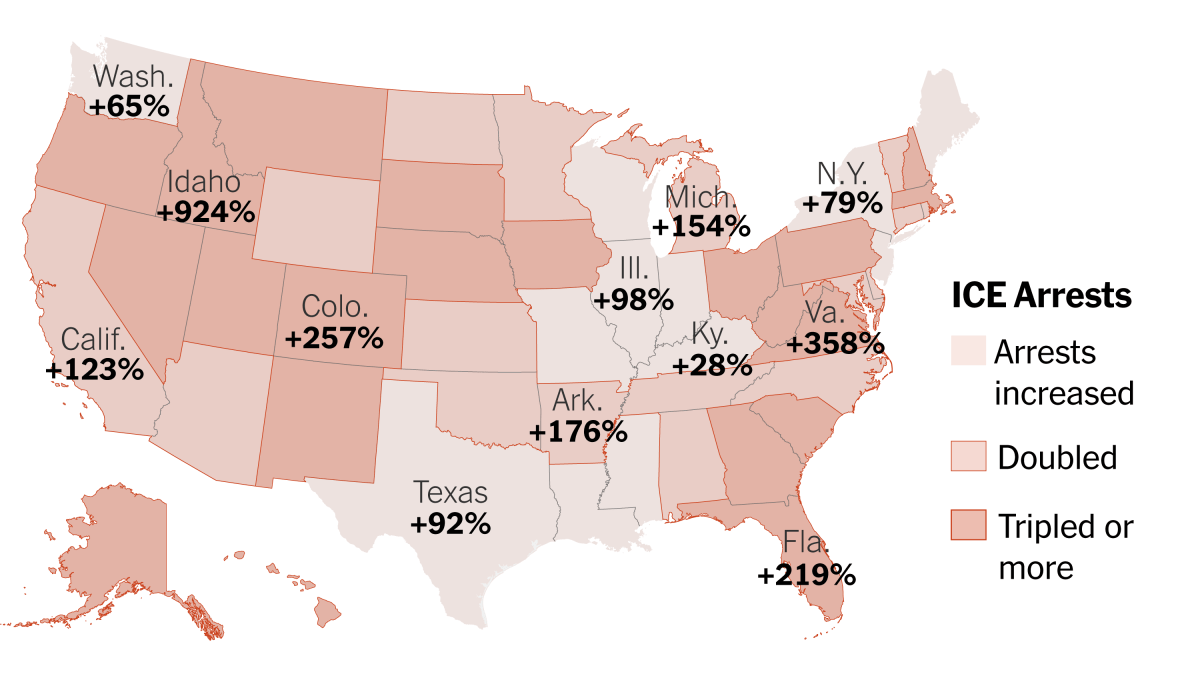
Trump is making a mockery of the Constitution by indiscriminately arresting and deporting anyone who cannot prove their status as a legal resident of America.

Project 2025 insists on immigration enforcement with improved border security and tighter immigration policies. Trump endorses that plan, but it is a job for Congress, not an autocratic President. He is willing to pay immigrants with American tax dollars for them to return to their countries of birth. Whose money is it that Trump is choosing to use?

Trump believes global warming is just a seasonal event in the history of earth.

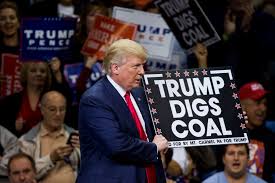
Project 2025 recommends rolling back environmental regulations and endorsing fossil fuels over renewable energy. Trump endorses that plan by rolling back environmental regulations because he believes global warming is a fiction. Science is a fiction to President Trump.

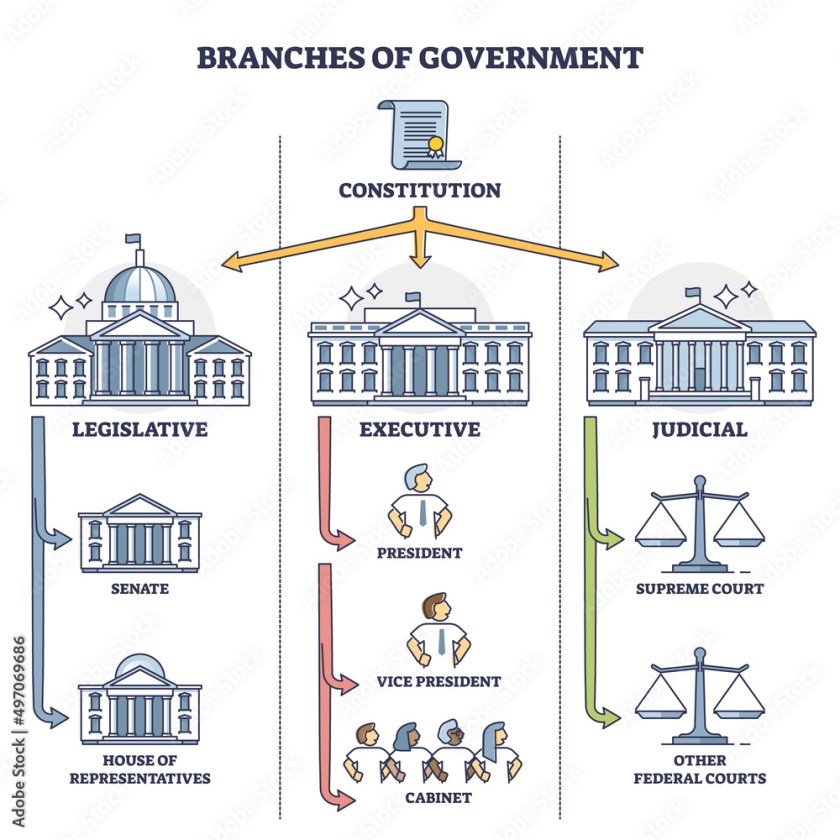
Project 2025 recommends strengthening the executive branch of government and decreasing the rolls of Congress and the courts.

Project 2025 recommends strengthening the executive branch of government and decreasing the rolls of Congress and the courts that are the basis upon which separation of powers were written into the Constitution. Trump is ignoring fundamental tenants of the Constitution like Due Process of Law in the deportation of immigrants.

Project 2025 recommends criminalizing pornography, removing legal protections for anti-LGBT discrimination, and ending diversity programs that drive for equality of all Americans. Trump is using the office of the Presidency to punish elite colleges that have DEI programs meant to address American social inequality.

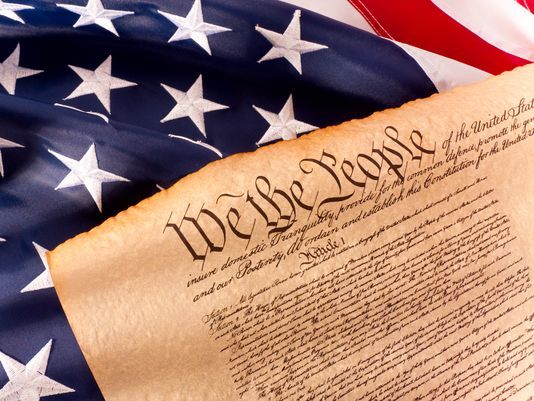
Trump believes what he believes and acts on those beliefs. His sexual picadilloes are ok but pornography is not. The author shows Trump has support for his beliefs in Project 2025. His support is equally apparent in the free vote of a majority who voted for him in the last election. Only the Constitution of the United States stands between Trump’s authoritarianism and what has made America one of the wealthiest countries in the world.

RISK/REWARD

AI is only a tool of human beings and will be misused by some leaders in the same way Atom bombs, starvation, disease, climate, and other maladies have harmed the sentient world. AI is more of an opportunity than threat to society.

Books of Interest
 Website: chetyarbrough.blog

A Brief History of Artificial Intelligence (What It Is, Where We Are, and Where We Are Going)

By: Michael Wooldridge

Narrated By: Glen McCready

Michael Wooldridge (Author, British professor of Computer Science, Senior Research Fellow at Hertford College University of Oxford.)

Wooldridge served as the President of the International Joint Conference in Artificial Intelligence from 2015-17, and President of the European Association for AI from 2014-16. He received a number of A.I. related service awards in his career.

Alan Turing (1912-1954, Mathematician, computer scientist, cryptanalyst, philosopher, and theoretical biologist.)

Wooldridge’s history of A.I. begins with Alan Turing who has the honorific title of “father of theoretical computer science and artificial intelligence”. Turing is best known for breaking the German Enigma code in WWII with the development of an automatic computing engine. He went on to develop the Turing test that evaluated a machine’s ability to provide answers to questions that exhibited human-like behavior. Sadly, he is equally well known for being a publicly persecuted homosexual who committed suicide in 1954. He was 41 years old at the time of his death.

Wooldridge explains A.I. has had a roller-coaster history of highs and lows with new highs in this century.

Breaking the Enigma code is widely acknowledged as a game changer in WWII. Enigma’s code breaking shortened the war and provided strategic advantage to the Allied powers. However, Wooldridge notes computer utility declined in the 70s and 80s because applications relied on laborious programming rules that introduced biases, ethical concerns, and prediction errors. Expectations of A.I.’s predictability seemed exaggerated.

The idea of a neuronal connection system was thought of in 1943 by Warren McCulloch and Walter L Pitts.

In 1958, Frank Rosenblatt developed “Perception”, a program based on McCulloch and Pitt’s idea that made computers capable of learning. However, this was a cumbersome programming process that failed to give consistent results. After the 80s, machine learning became more usefully predictive with Geoffrey Hinton’s devel0pment of backpropagation, i.e., the use of an algorithm to check on programming errors with corrections that improved A.I. predictions. Hinton went on to develop a neural network in 1986 that worked like the synapse structure of the brain but with much fewer connections. A limited neural network for computers led to a capability for reading text and collating information.

Geoffrey Hinton (the “Godfather of AI” won the 2018 Turing Award.)

Then, in 2006 Hinton developed a Deep Belief Network that led to deep learning with a type of a generative neural network. Neural networks offered more connections that improved computer memory with image recognition, speech processing, and natural language understanding. In the 2000s, Google acquired a deep learning company that could crawl and index the internet. Fact-based decision-making, and the accumulation of data, paved the way for better A.I. utility and predictive capability.

Face recognition capability.

What seems lost in this history is the fact that all of these innovations were created by human cognition and creation.

Many highly educated and inventive people like Elon Musk, Stephen Hawking, Bill Gates, Geoffrey Hinton, and Yuval Harari believe the risks of AI are a threat to humanity. Musk calls AI a big existential threat and compares it to summoning a demon. Hawking felt Ai could evolve beyond human control. Gates expressed concern about job displacement that would have long-term negative consequences with ethical implications that would harm society. Hinton believed AI would outthink humans and pose unforeseen risks. Harari believed AI would manipulate human behavior and reshape global power structures and undermine governments.

All fears about AI have some basis for concern.

However, how good a job has society done throughout history without AI? AI is only a tool of human beings and will be misused by some leaders in the same way atom bombs, starvation, disease, climate, and other maladies have harmed the sentient world. AI is more of an opportunity than threat to society.

ABSOLUTION

History of the world has shown all forms of government are “equal opportunity” inhibitors, if not destroyers.

Books of Interest
 Website: chetyarbrough.blog

Secondhand Time (The Last of the Soviets)

By: Svetlana Alexievich

Narrated By: Amanda Carlin, Mark Bramhall, Cassandra Campbell & 8 more.

Svetlana Alexievich (Author, Belarusian investigative journalist, winner of the Nobel Prize in Literature in 2015.)

Svetlana Alexievich’s “Secondhand Time” is a remarkable and informative explanation of why Putin believes he is right and why many citizens of Russia seem to continue in their support of his administration.

Map of the former U.S.S.R.

Alexievich conducts a series of interviews with Russian citizens of different generations about the U.S.S.R. and its return to the world stage as a Russian nation. The narrators of her book recite those interviews to give listener/readers a complex and enlightening picture of Russian culture. The clash of communist and capitalist ideals is at the foundation of the interviews and the narrators dramatically told stories.

The Russian Soviet Army is the first to arrive in the Battle of Berlin on April 16, 1945. Their flag was hoisted on May 1, 1945.

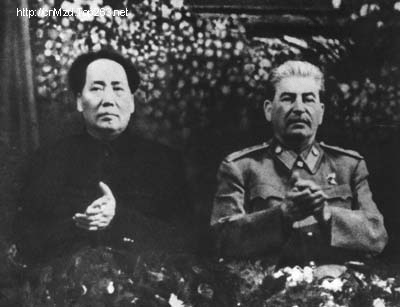
The citizens of Russia are justifiably proud of their role in WWII that turned the tide of Germany’s war of aggression. (Of course, that is putting aside Stalin’s Machiavellian decision to join Hitler at the beginning of the war.) Some Russian soldiers who fought in that war were disgusted with what they feel was a betrayal by Mikhail Gorbachev of communist ideals for which they lived and died for in the 20th century.

The rejection of communist ideals for capitalism is viewed by some Russians as a tyranny of greed that lays waste to the poor and creates a class of haves and have-nots.

Some Russian veterans of WWII see the seduction of capitalism destroying the ideal of a classless society. Some citizens see the ideal of a government is to demand the wealth of life be spread equally according to individual need. To these believers, enforcement of communist ideals would eliminate private property and greed that would create a classless society. Some believed Stalin exemplified leadership that would achieve that ideal. The hardship of life during Stalin’s rule is considered by some as justified means for the achievement of the Marxist ideal of communism.

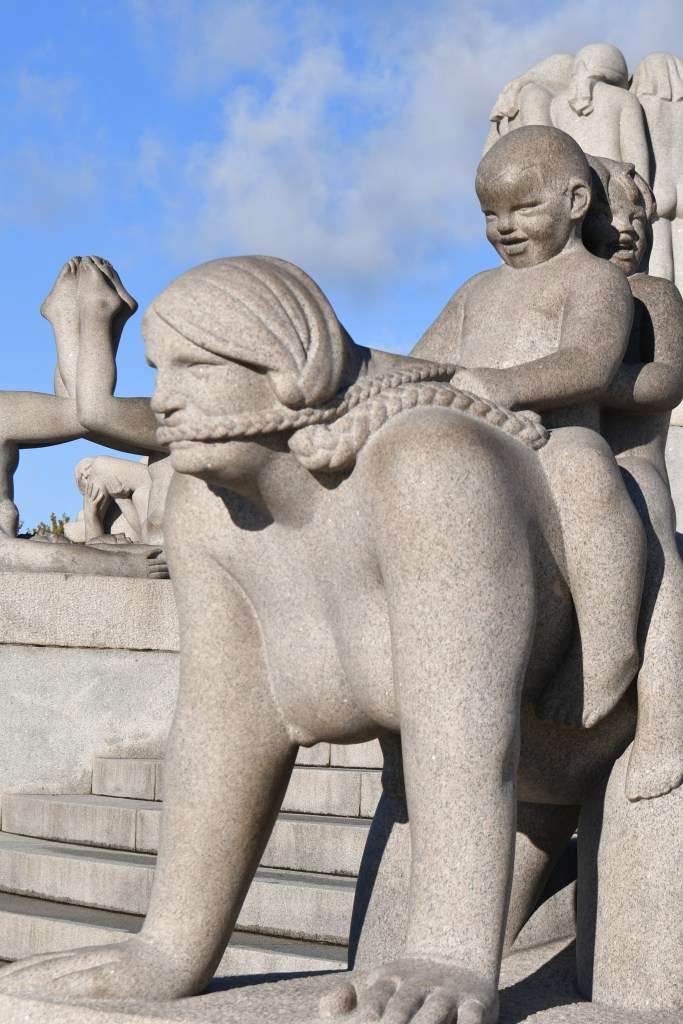
Statue of the “Circle of Life” in Norway.

Cultures may be different, but all human life is the same.

The underlying point of these interviews is to show Russian culture is not monolithic, just as culture is not in any nation. All cultures are filled with diversity. There is no singular cultural mind but a range of interests among many factions that establish a nation’s culture. The evidence of that is the contrast of Gorbachev and Putin in Russia and FDR and Trump in America. All four leaders led their countries but represent completely different cultural beliefs.

Conservatives, New York Governor Al Smith, Southern Democrats, and isolationists like Charles Beard opposed FDR in America. Putin and Trump have their cultural supporters in today’s national governments, but they also have their critics. The difference is that in Putin’s world, being killed or put in prison for opposition is culturally acceptable. In America, one is reminded of Trump’s deportation and imprisonment of migrants without due process.

The author’s interviews are not suggesting that either Russia or the West have good or bad governments but that every culture tests their leaders.

Many Russians, undoubtedly blame American Democracy for the dismantling of the U.S.S.R. Alexievich interviews Russians who believe the hardship that countries within the U.S.S.R. experienced were not the fault of Stalinist policies but the failure of citizens to live up to the ideals of communism. To anyone who has traveled to the Baltics, that opinion is founded on ignorance of the hostility expressed by citizens of the Baltics who were starved, displaced, jailed, and murdered during their occupation by Russia.

The other part of the story is the rise of the oligarchs in Russia as a result of the greed associated with capitalism.

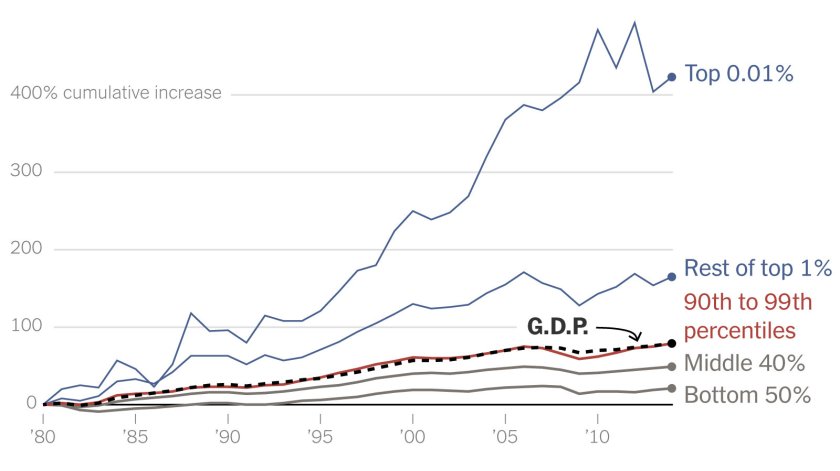
The gap between rich and poor is accelerated in Russia just as it has been in America. Democracy does not have clean hands when it comes to equality of opportunity. Like the Jewish pogroms in Russia, America’s enslavement, murder, and discrimination of Blacks is proven history.

Siberian Exile during Stalin’s reign in Russia.

Alexievich draws from all sides of Russian beliefs. Those interviewed note the terrible conditions of those exiled to Siberia. Many Russians became disillusioned by the redistribution of wealth and privilege after Gorbachev and Yeltsin showed themselves to not be up to the task of leadership change. In fairness, one wonders who could have been up to the task when Russia had a long history of monarchal and tyrannical leadership?

A few Russians became immensely wealthy while the majority were somewhat better off but some struggled with the loss of State benefits and fewer jobs. The rising gap between rich and poor soured communist idealists. Even those who had been sent to Siberia by Stalin who toiled and suffered the experience of isolation, slave labor, and frigid weather felt they were no better off because of the loss of a socialist future.

The frightening truth of Alexievich’s book about the culture of Russia is that Putin may be absolved for his atrocities just as leaders of America have been absolved for their mistakes. History of the world has shown all forms of government are “equal opportunity” inhibitors, if not destroyers.

MODERATION

Unless homelessness is addressed with affordable housing, America’s future looks bleak. A land of have and have-nots will grow to crush American prosperity.

Books of Interest
 Website: chetyarbrough.blog

Abundance 

By: Ezra Klein, Derek Thompson

Narrated by: The Authors

These two young Americans offer an insightful view of politics and American government in the 21st century.

Klein or Thompson could have voted for either Trump or Harris in America’s last election. Their book argues American government is both a boon and bane for citizen “Abundance” in the 21st century. They note America has contradictory economic policies that have created great abundance among Americans while exacerbating inequality. Evidence for their opinion is growing homelessness, an immigration crisis, loss of manufacturing jobs, and government’s failure to creatively adjust public policies to provide solutions.

Those who have shared in the abundance of America have voted for candidates to preserve their privileges.

The authors note homelessness is a function of affordable housing that is denied by government policies that regulate zoning and construction requirements. Government policies make affordable housing too costly to build and impossible to locate because of zoning restrictions. The number of people living on the street is a self-inflicted American tragedy. Some of the homeless are young, some are old, some have mental or physical problems, and others are victims of drugs or their own weaknesses. What they have in common is unaffordable housing.

Historically, immigration has been a great boon to American economic growth.

Klien and Thompson note restrictive immigration policies have created obstacles for workers needed for manufacturing in key industries like agriculture, auto industry assembly, housing construction, and clean energy infrastructure. Rather than wasting money on building walls and deporting workers, the authors advocate immigration reform that meets the needs of American business. One can imply the authors meaning is that to “Make America Great Again” requires immigrants willing to work in agricultural and manufacturing jobs. The end of the baby boom requires help from immigrants to meet the needs of increased manufacturing and construction in the United States.

Some believe what Trump is doing is good for the American economy in the long run.

The criticism is that in the short run, the economy may collapse. Tariffs being used as a ham-fisted way of negotiating fair international trade is a fool’s errand. America needs labor and material in the short run to achieve equal and greater prosperity than it had in the 1970s. Added manufacturing will aid American prosperity, but it will be surpassed in the long run by automation. It is the automation race America needs to win or compete with to remain a world leader. Competing in that race depends on education, and scientific research. The irony is that Trump is firing government employees who have responsibility for public education, research, and funding that have been the engines of America’s prosperity.

The government employees discharged by the Trump administration to solely reduce costs is short sighted.

In the 1980s, 60% of basic research in the U.S. was funded by the government. In 2022 that funding dropped to 40%. Advances in semiconductors, global positions systems, biotechnology, and aeronautics were government-funded discoveries in the 1980s. American government-funded scientific research gave America the internet, GPS technology, mass production of penicillin, Space exploration, human genome project discoveries, and renewable energy innovations. The Department of Health and Human Services has lost 20,000 employees, the Department of Education 1,300, the National Oceanic and Atmospheric Administration 800, and the National Institutes of Health 1,200. One wonders how many of these employees may have been on the edge of scientific discoveries that could change the world.

The truth of “Abundance” is that America has caused many negative ecological impacts and aggravated the gap between rich and poor.

Klein and Thompson have written a provocative book. However, the truth of “Abundance” in America has caused many negative ecological impacts and aggravated the gap between rich and poor. Looking only to abundance does not address either social inequality or the environment. The NIMBY (not in my back yard) resistance to affordable housing aggravates inequality and increases homelessness. Unquestionably, higher density housing impacts the environment.

Klein and Thompson fail to address the increased power of corporations in America.

The 2010 Citizens United v. Federal Election Commission gave corporations the power to spend unlimited amounts of money on political campaigns. The influence of corporations on elections has disproportionate power in the election of government policy makers. That decision by the Court is a distortion of one person, one voter’s influence on public policy.

Aristotle emphasized the importance of “All things in moderation”. NIMBY communities must open their minds and hearts to homelessness and moderate their resistance to neighborhood accommodation. Government agencies must supervise and service higher density housing impacts wherever they are built and after they are completed.

Unless homelessness is addressed with affordable housing, America’s future looks bleak. A land of have and have-nots will grow to crush American prosperity.

SERVICE & PROFIT

Government is not a business for profit and should not be solely measured by its cost. America will survive the catastrophic mistakes being made by President Trump but American citizens, and the welfare of the world will suffer for years to come.

Books of Interest
 Website: chetyarbrough.blog

Who is Government (The Untold Story of Public Service)

By: Michael Lewis, Casey Cep, Dave Eggers, John Lanchester, Geraldine Brooks, Sarah Vowell, and Kamau Bell

Edited By: Michael Lewis

The stories of these writers are a tribute to those who have chosen careers in American government. Having personally earned a master’s degree in public administration, worked as a local government manager, then as a manager of a private business division, and finally, as a personal business owner, I have an opinion about President Trump. My experience is based on three different types of employment. All were rewarding experiences but in fundamentally different ways.

The writers of “Who is Government” show how ignorant business creators and managers like Donald Trump and Elon Musk are in discounting the contribution of employees of government organizations. Private corporations do not survive without profit to its owners. Public organizations do not survive without service to the public.

Profit is simple to measure. Public service is measurable but more abstract and difficult to quantify.

One can choose, like Musk did with Twitter, to reduce costs by firing employees. That may improve profitability but at a cost that may hurt or destroy the future of a business. In the case of Twitter, the company lost much of their advertising revenue because an unsupervised public forum could spread false and defamatory information that embarrasses advertisers who were protected by Twitter’ employees that were fired. No analysis was done by Musk about Twitter information’ controls provided by employees. The new entity, “X”, seems to have assuaged some advertisers’ concerns because they have started to use Musk’s new company. The point is that if Musk had taken more time to evaluate what fired employees were doing, he may have retained many of the advertisers who left the forum.

Trump’s employment of Musk to decimate the government employee workforce is following the same foolish path that was taken with Twitter.

No analysis of employee contributions is made. The goal is only to reduce government’ cost regardless of employee’ contribution to public need or service. The consequences have likely reduced health and welfare of American citizens; not to mention harm done to incomes of thousands of government employees’ families.

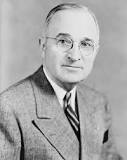
With exceptions of George Washington, Harry Truman, Carter, and the two Bush presidents, the worst former businessman that became President was Herbert Hoover who served as President before the greatest depression in America’s history. With Trump as President, one has to wonder whether he is leading America and the world toward its second great depression.

HERBERT HOOVER (31ST PRESIDENT OF THE U.S.)

“Who is Government” illustrates how government employees have contributed to the health and welfare of America. They are unknown and viewed by people like Trump and Musk as just a cost, without benefit to the public. How many science, medical, veteran, and welfare services are being decimated by their narrow vision of government management?

Government is not a business for profit and should not be solely measured by its cost. America will survive the catastrophic mistakes being made by President Trump but American citizens, and the welfare of the world will suffer for years to come.