A MODERN MACHIAVELLI

Audio-book Review
By Chet Yarbrough

(Blog:awalkingdelight)
Website: chetyarbrough.com

Human Action (A Treatise on Economics)

Written by: Ludwig von Mises

Narrated by: Jeff Riggenbach

LUDWIG von MISES (1881-1973, THEORETICAL ECONOMIST OF THE AUSTRIAN SCHOOLD, INFLUENCED HAYEK AND FRIEDMAN)

America is on the threshold of the largest tax change since Ronald Reagan’s presidency.  If past is prologue, trickle down economics will not work, the deficit will rise, and the poorest will  be victimized.  The genesis of the delusion of trickle down economics comes from interpretations of a modern Machiavelli.

Ludwig von Mises is a twentieth century Machiavelli.  This near 48-hour audio book details a theory of economics that will offend modern liberals, expose weakness of libertarians, and vilify the new American President’s nationalist policies.  The venality of treating government as a business is a mistake of monumental proportion.

Approaching von Mises as a devil incarnate is unfair.  His beliefs are pilloried by today’s liberals as loudly as aristocrats and rulers vilified Machiavelli in the 16th century.  Like Machiavelli, von Mises looks at the world as it is; not as it ought to be.  His observations cut at modern liberal, as well as anarchic, views of highly regarded liberals like Ralph Nader, Martin Luther King, Norm Chomsky, and alleged conservatives-like President Trump.

In von Mises book, Roosevelt’s New Deal is vilified.  Additionally, von Mises vociferously disagrees with the liberal John Maynard Keynes’s

JOHN MAYNARD KEYNES (1883-1946)

economic interventionist creed. Ironically, Donald Trump may be the most interventionist President since FDR with a scatter brained economic plan that von Mises would equally vilify.

Von Mises observations have historical credibility.  What they do not have is social conscience.  In fact, he suggests social conscience is a fiction perpetrated by populists to distort the value of capitalist economies.  Like Machiavelli, von Mises observes the nature of human beings, and recognizes their inherent irrationality and moral weakness.  Von Mises illustrates numerous examples of human irrationality; beginning with market consumption, and ending with entrepreneurial ambition.  Donald Trump exemplifies von Mises argument that humans are irrational, greedy, power-hungry, and vain.  For President Trump to believe taxing imports by 20% makes Mexico pay for a useless five-billion-dollar wall is absurd.  The American consumer will pay for that wall in increased cost of Mexican produce and manufactured goods.TRUMP AND FREE TRADE

Von Mises criticizes famous economists like David Ricardo for introducing politics into economics.  Von Mises argues that the drive for money, power, and prestige are inherent in an entrepreneurial capitalist system.  Von Mises argues that government officials who profess social conscience distort free enterprise by picking winners and losers.  When politicians pass legislation that aids one entrepreneur over another, it distorts the driving force of capitalist economies.  He equally vilifies government leaders who impose tariffs on international trade.  Von Mises explains that the fallacy of government leaders who pass favoring legislation is that the real mover of the economy is the consumer; not the producer.

FRENCH REVOLUTION
Von Mises believes labor has a choice.  They can work for low wages or remain idle.  The fallacy of that argument is the inherent unfairness of not having enough income to live creates revolutionary discontent.

The logical extension of von Mises’ theory is that any government planning or action that affects an entrepreneur’s willingness to take a risk to produce product, or service a customer’s perceived needs, is bad for society.  To von Mises, efforts to organize labor is an interference with capitalist entrepreneurs because labor is not taking a risk. Von Mises argues that labor costs will find its own level by being an automated tool of the entrepreneur; subject to hunger and deprivation if they choose not to participate.  Von Mises point is that the entrepreneur will pay what he/she must to have labor available, but no more than what the end-product consumer is willing to pay.  Von Mises believes labor has a choice.  They can work for low wages or remain idle.  The fallacy of that argument is the inherent unfairness of not having enough income to live creates revolutionary discontent.

UNION MOVEMENTUnions offer a vehicle for leveling the power between businesses and labor.  To not allow unionization is tantamount to favoring businesses that are no longer competitive but are today recognized as an economic equivalent of individuals.  Not to give unions a place “at the table” is morally, ethically, and economically unfair; particularly in industries that are no longer entrepreneurial.

Another von Mises’ observational theory is that government policy should have no role in subsidizing new inventions, new drugs, the ecology of the world, or the elimination of slavery because such policies interfere with pure capitalism. This reinforces absurdist arguments of libertarians.

NATIONAL INSTITUTE OF HEALTH
NATIONAL INSTITUTE OF HEALTH (RESEARCH INSTITUTE FINANCED BY THE GOVERNMENT.)

American creativity has historically been benefited by government subsidization of technological advances.  (President Putin noted in a 60 Minutes’ interview that creativity is his most admired quality in the American economy.) The speed of improvements in health, education, and welfare historically increased with government subsidization of drug research, public education, and the energy industry.

THE CIVIL WARThe fallacy of von Mises’ theory lies in the framework of theorists.  It ignores human existence by hiding behind the unquantifiable nature of society.  One may argue that America’s Civil War had nothing to do with the elimination of slavery.  (Von Mises suggests that slavery was abolished because it became too expensive; not because it was morally and ethically reprehensible.)  One may argue that Roosevelt’s New Deal was a failure.  One may argue that the Marshall Plan after WWII rewarded failed nations.  One may argue that George Bush’s and Barrack Obama’s decisions to bail out the American economy interfered with pure capitalism. History suggests von Mises is wrong.  Government intervention can be good as well as bad.  (Bush unilaterally agreed to lend $17.4 billion of taxpayers’ money to General Motors and Chrysler, of which $13.4 billion was to be extended immediately.)

Von Mises lived into the 1970 s.  How could he ignore the moral and ethical iniquity of slavery, the value of the Marshall Plan, government subsidization of the American banking system, financial incentives for the energy industry, and the billions spent to advance technological inventions?  Those are good examples of government intervention.  On the other hand, building a wall between Mexico and the U.S. and levying a 20% import tax is a bad government intervention.TRUMP'S WALL 2

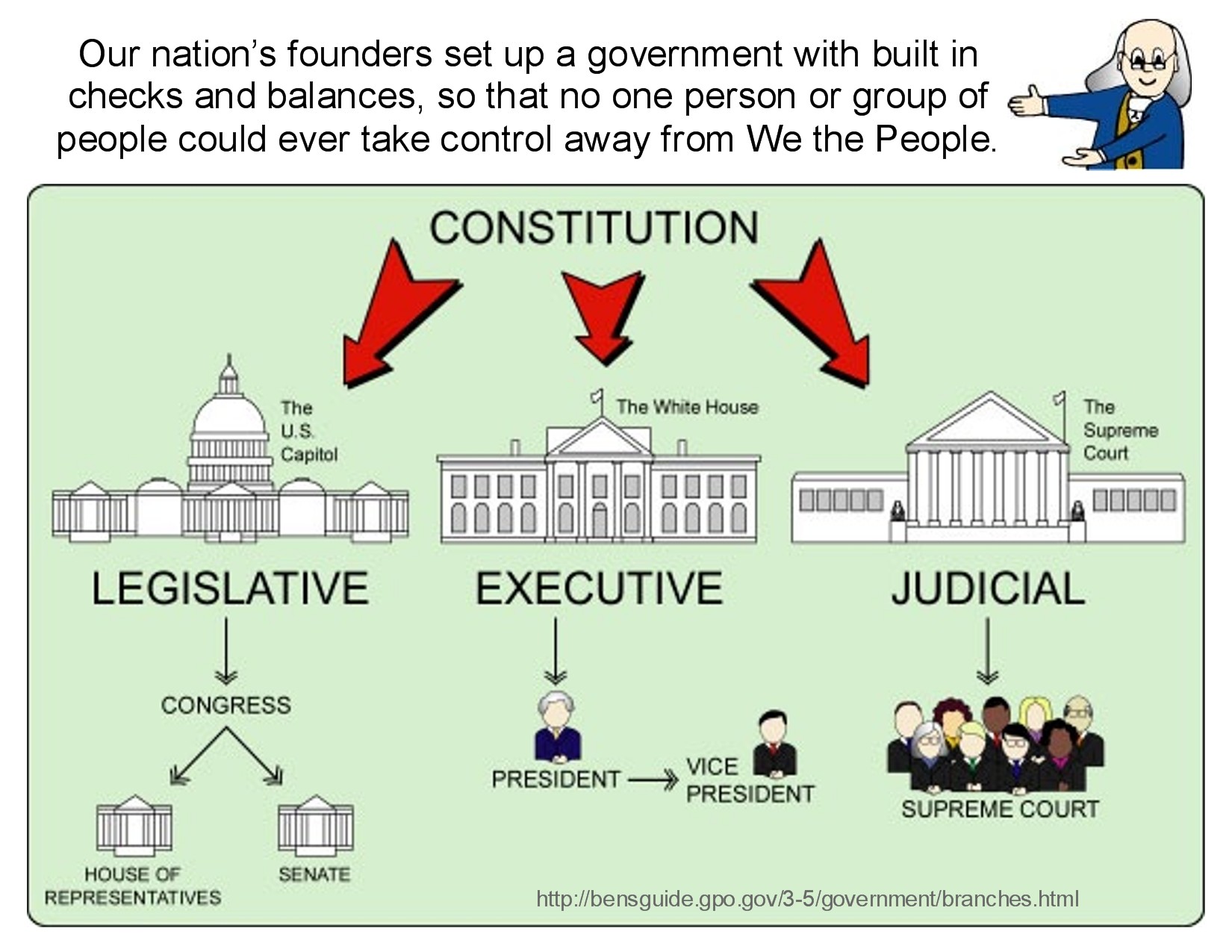
American capitalism works because of the checks and balances written in the Constitution.  Von Mises theory is based on valid observations but social conscience, whether statistically measurable or not, must be a part of decisions that affect the lives of millions.  Mistakes will be made, and have been made, but economic statistics cannot be substituted for pragmatism.

POLITICS AND ADMINISTRATION

Audio-book Review
By Chet Yarbrough

(Blog:awalkingdelight)
Website: chetyarbrough.blog

The Courage to Act: A Memoir of a Crisis and Its Aftermath

Written by: Ben S. Bernanke

Narrated by: Grover Gardner

Ben Bernanke (Author, Former Chairman of the Federal Reserve.)

THE FEDERAL RESERVE

Politics and administration is a marriage of necessity.  Ben Bernanke writes a “nuts and bolts version” of the role of the Federal Reserve in the United States during the economic crises of 2007.  Bernanke is the chairman of the Federal Reserve during the near collapse of the world economy.  The story Bernanke tells is consistent with most details revealed by Tim Geithner and Henry Paulson (the former Department of the Treasury Secretaries) during the worst part of America’s 2007-2008 global financial crises.

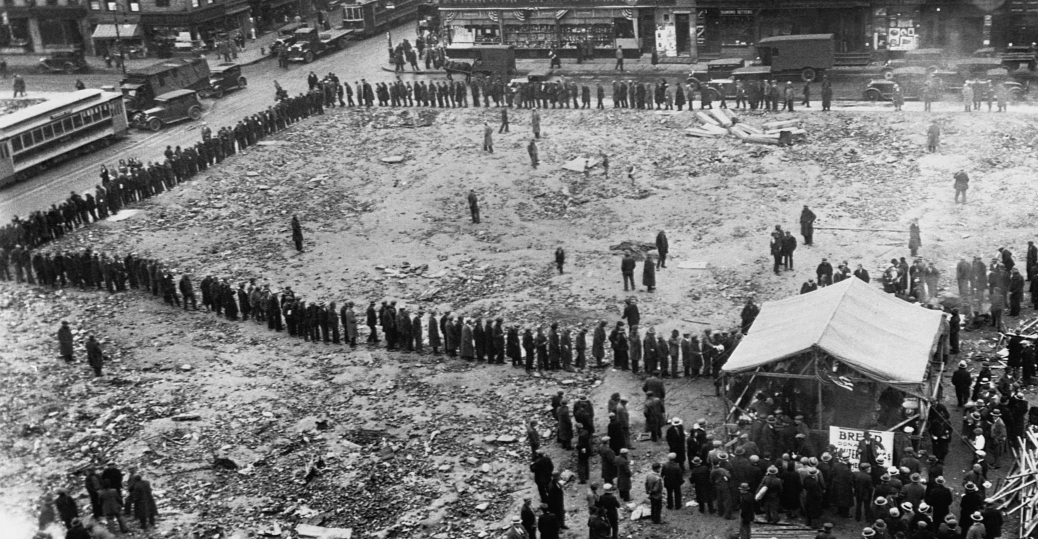
BREAD LINES IN NEW YORK 1933

BREAD LINES IN NEW YORK 1933

What Bernanke adds to Geithner’s and Paulson’s version of events is a more transparent understanding of how American politics and administration dealt with the greatest economic crises since 1929. These three managers, along with elected officials and other public administrators, cussed, discussed, agreed, and disagreed on actions taken to stabilize the American economy.  Without a level of cooperation between politics and public administration, it is entirely possible America would be in the middle of a second great depression.

THE BLACK SWAN

The mortgage crises of 2007 is a “Black Swan” event in American history.  A “Black Swan” is a metaphor for an event that is generally unforeseen that changes the direction of history.

The packaging of real estate and home mortgages of varying levels of security leads to the mistaken belief that housing and commercial land prices will always increase as the economy expands.  This false belief led to sales throughout the world of figurative IEDs (Improvised Explosive Devices”) that bankrupted individuals, corporations, and Nation-State economies.  The shock waves of these instruments of economic mass destruction continue to impact the world economy.

QUANTS

QUANTS–COMPUTER TECHNICIANS WHO CREATED MORTGAGE BACKED DERIVATIVES.

With the advent of computer technology, the added assets in derivative instruments became so complex that individual human judgement of value is clouded.

With each individual asset added to a conglomeration of houses, property, and/or stocks–value changes.  The change is meant to spread risk and increase the financial stability of combined assets.  However, as similarity of combined assets accumulate, the created aggregate becomes more (rather than less) vulnerable to market change.

MORTGAGE RATING COMPANY LOGOS

The rising risk of these combined securities is compounded by “independent” rating agencies.  If vulnerabilities are not clearly understood, sellers of these security conglomerations rely on ratings from analysts that underestimate volatility.  That misunderstanding is harmful, because both sellers and buyers are incentivised to buy and sell a security that is not clearly understood. 

When one of the derivative assets begins to lose value; particularly if the asset is related (like land and vertical construction), all assets in the packaged security are infected by loss of value.

Further, rating companies lose their objectivity.  They may be incentivized by the same companies they are evaluating; or they may be paid for their review productivity rather than the quality of their investigation. Greed takes over both buyer and seller.

Though this explanation of derivatives is undoubtedly too simply described in this review, it is shown in Bernanke’s, Paulson’s, and Geithner’s books to have been a proximate cause for the loss of trillions of dollars in the world economy.

What makes Bernanke’s book interesting is his explanation of how politics and public administration worked together to right America’s sinking economy.  Even today, recovery is not complete but the ship-of-state did not sink.  “Working together” is a qualified description of what happened based on Bernanke’s view.  There were bitter disagreements among elected and administrative agents that could only be resolved with an appreciation and exercise of politics.

Politics have become synonymous with lying and misrepresentation in the modern world.  Some say President Trump exemplifies that belief. 

Democrats were not listening to middle class America.  Politics represent the will of people who are being governed.  Without politics, the best intentions of administration devolve into ineffective and autocratic actions that fail to serve the needs of a country’s citizens.

Not to defend Trump, but his election is a consequence of ignoring the importance of politics in determining what is right or wrong in America’s democracy.

CHECKS AND BALANCES

On many occasions, Bernanke shows how elected officials remind administrators of the real-world impact of their policy actions.  The give and take of politics is the bridge between a bureaucratic idea and citizen impact. 

The Affordable Care Act is not perfect because of politics but modifications made are the result of political input from the constituents of American Democracy.

Those constituents are companies, professions, and individual citizens represented by elected officials who work with government agencies responsible for administration.  It is a messy process, but politics is a bridge between thought and deed that can only be replaced by autocratic dictatorship; i.e. a dictatorship that inevitably has unintended consequences; that ignores politics, and dictates what is good.

Parenthetically, the crises of 2007 is repeatable.  Today’s political climate is to deregulate the economy.  The political intent of deregulation is to unleash capitalism.  However, deregulation gives reign to both good and bad qualities of human nature.  As Mark Twain noted, history does not repeat, but it does rhyme.

The Federal Reserve, the Departments of Treasury, and America’s elected officials successfully saved America from a second Great Depression. 

It is politics; i.e., the political interface between President Bush, President Obama, Treasury Secretaries Paulson and Geithner, Federal Reserve Chairman Bernanke, Senators and Representatives of Congress, and the Supreme Court saved America.