TWO OLD MEN

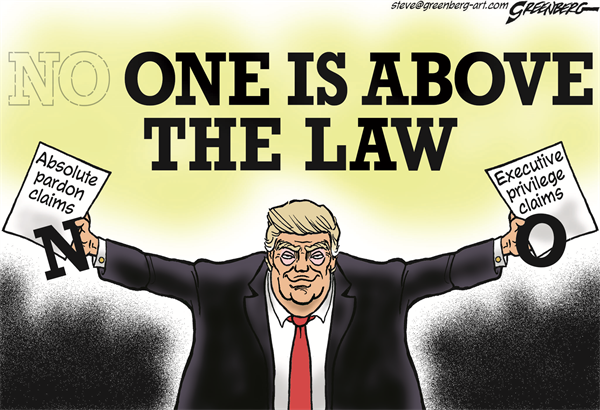
Age is an existential risk that can only be managed by the checks and balances of others which is why America’s government has survived and prospered despite good and ethically or morally corrupt Presidents.

Books of Interest
 Website: chetyarbrough.blog

Original Sin (President Biden’s Decline, Its Cover-Up, and His Disastrous Choice to Run Again)

AuthorJake Tapper, Alex Thompson

Narrated By:  Jake Tapper

“Original Sin” is a hard-hitting expose by two tough minded reporters that convincingly explain President Biden did not have the cognitive ability to be America’s President in the last two years of his Presidency. This is a particularly hard pill to swallow because the current President of the United States is old while being at the opposite end of the political spectrum. At 74, this book reviewer is old. Age undoubtedly has an impact on this reviewer’s cognitive abilities and the cogency of what he thinks and writes. President Trump is 79 years old. The difference is that what a critic writes means nothing in respect to governance of the United States and the impact it has on American citizens and world events.

Trump’s decisions and actions have had great impact on U.S. relationship with other countries, American public policy, and the economic future of Americans.

Trump has directed the firing of thousands of government employees. Because of Trump’s authoritarian characteristics, he surrounds himself with sycophants who are more interested in pleasing him than managing the government’s responsibility for America’s welfare and role in the world. Authoritarianism is untrue of Biden who throughout his public career has been a consensus builder, not an autocrat. This is not to suggest Biden is not fundamentally wrong in not immediately supporting an alternative candidate for the Presidency. The authors of “Original Sin” clearly explain Biden fails America by waffling on his candidacy for a second term.

Old age is a risk for every manager of other people’s lives and opportunities.

Biden is not at fault for getting old but people who worked with him are guilty of negligence in their service to the American people. Tapper and Thompson offer numerous examples of Biden’s intellectual decline. The importance of their assessment of Biden’s failing capabilities is a warning to all managers of other people’s lives, employment, and family responsibilities. Age is a life circumstance that affects every human being. One who is losing their cognitive ability cannot see it in themselves. It is the responsibility of others to help older people relinquish responsibility for those things they can no longer handle.

Relinquishment by a man or woman who has great responsibility is a hard thing to accept. Age effects people in different ways. The catch 22 is that loss of cognitive ability is unseen by the person who loses it. It is the responsibility of those who rely on one who is losing their reasoning ability to manage the circumstance of that decline.

Putting politics of government aside, President Trump is old. The concern one has is the risk of relying on those who work for Trump, like many who worked for Biden, may see loyalty as more important than the public interest of America. Age is an existential risk that can only be managed by the checks and balances of others which is why America’s government has survived and prospered despite good and ethically or morally corrupt Presidents.

America will survive Trump but it will take time to reset America’s relationship with the world. America has had good and bad Presidents in both political parties but its foundation of checks and balances have kept it on course for the betterment of society. It is nations with leaders that have no checks and balances that threaten social and economic equality.

INEPTITUDE

“The Mission” is a depressing view of American ineptitude that reminds one of the Bay of Pigs, Vietnam, Iraq, Afghanistan, and 9/11.

Books of Interest
 Website: chetyarbrough.blog

The Mission (The CIA in the 21st Century)

AuthorTim Weiner

Narrated By:  Stefan Rudnicki

Tim Weiner (Author, American reporter, awarded Pulitzer Prize and National Book Award for books on espionage, national security and foreign policy.)

This is a tough book to read/listen to because of its damning assessment of the American CIA. Weiner is not the only American writer to reveal failed operations of the CIA but his access to their files seems like America’s attempt to understand and improve CIA operations’ management. That is the best face one can put on Weiner’s highly critical assessment of CIA operations. The CIA’s official response is that Weiner is biased, and his research of CIA files misrepresents the complexity of intelligence work. Some historians suggest Weiner cites CIA’ failures without enough context to balance the need for a covert intelligence agency.

The more troubling concern inferred by Weiner is the Trump Presidency and his authoritarian character and tolerance for leaders like Putin who think “might makes right”. What use will Trump make of the CIA’s covert power?

As the Turkish proverb says, “fish stinks first at the head”. Weiner notes, along with the huge escalation of drone assassinations by a liberal Democrat like Obama, one wonders what Trump may do in his second term.

Weiner explains the second Bush administration uses the CIA to push for evidence of WMD in their desire for justification to invade Iraq. The facts did not matter because the President wanted action. Under the Bush administration, the CIA adopts “enhanced interrogation techniques” (brutal torture) of political prisoners kept at Bagram Air Base. Weiner argues the CIA mission of covert intelligence is distorted in a drift toward paramilitary operations causing civilian casualties. One gets a sense that the second Bush administration is reacting to the horrendous 9/11 attack because of his administration’s failure to acknowledge CIA’s evidence that Bin Laden planned an attack on the U.S. The evidence of an attack’s imminence is clearly reported to the President by CIA leadership. This is a tough pill to swallow because the intelligence purpose of the CIA seems subordinated by both Democrats and Republicans to political interest rather than nation-state security.

Weiner vilifies CIA leaders like George Tenet, Porter Goss, and Leon Panetta. Tenet assures President Bush of Iraq’s possession of WMD. Goss, a Republican appointed by Bush, and Panetta, appointed by Obama, transformed the CIA into a paramilitary force after 9/11. Obama authorized use of drones in covert killings of over 500 foreign agents based on CIA’ espionage and analysis of their activities. Weiner notes Michael Hayden authorized torture programs by the CIA. Wiener argues torture programs and authorized assassinations damaged CIA’s credibility and effectiveness. To Wiener, the CIA’s leadership decline reaches back to Allen Dulles’s Cold War and William Casey’s Iran-Contra entanglement during the Reagan years. Covert action became more important than intelligence gathering.

“The Mission” is a depressing view of American ineptitude that reminds one of the Bay of Pigs, Vietnam, Iraq, Afghanistan, and 9/11. Wiener offers a dim view of both Democratic and Republican leadership in America. One hopes America can be better than what Wiener reveals in “The Mission”. The jury may still be out, but Trump’s administration seems likely to continue America’s international decline.

FARMLAND

Historically, collectivization of land has failed even when those who are part of the collective are better off than they were when they had no land.

Books of Interest
 Website: chetyarbrough.blog

Land Power (Who Has It, Who Doesn’t, and How that Determines the Fate of Societies)

Author: Michael Albertus

Narrated By: Braden Wright

Michael Albertus (Author, professor at the University of Chicago in the Department of Political Science.)

Michael Albertus develops a powerful argument for “Land Power”. Much of history and current events in relatively undeveloped countries are identified as proof of Albertus’s belief that “Land Power” is key not only to economic growth but to social improvement. He reflects on the history of Great Britain, France, and the United States while noting current affairs in developing countries like Peru, Columbia, and Bolivia support his argument.

The unfortunate truth of history is that indigenous populations, particularly in America and Great Britain, were displaced in order for “Land Power” to be the engine for economic prosperity and social change. In the case of America of course, it is the displacement of North American natives by English settlers who became Americans. In contrast Great Britain’s “Land Power” comes from a landed aristocracy and their subjugation of foreign cultures with autocratic control and rule of Asian and European countries. In France, Kings and an aristocratic government’s rejection by commoners in 1789 seem the motive force behind “Land Power” ascension.

For Peru, Columbia, and Bolivia Albertus infers examples of Britain, America, and France set a table for “Land Power” change by their governments. In my opinion, the age of technology has diminished “Land Power” importance in America, Great Britain, and France.

“Land Power” still carries weight in America, Great Britain, and France but in the tech age it seems the power of accumulated wealth has become more powerful than land. However, Albertus’s “Land Power” argument in regard to South American countries like Peru, Colombia, and Bolivia are compelling in regard to their economic and social improvement. Albertus notes private land ownership and recognition of women’s rights to own property, show that “Land Power” is a source of economic and social improvement in South America. He suggests countries like Mexico are being challenged by their failure to reform land ownership policies but today’s leaders in Peru, Columbia, and Bolivia have made significant land reform changes.

Albertus explains the major reform movement between 1969-1980 made by General Alvarado in Peru.

General Alvarado ordered nearly half of all private agricultural land be redistributed among Peruvian citizens. He dismantled large estates to empower peasant cooperatives. It has not been a perfect solution because it created an insurgent group called the Shining Path that pressed for a Maoist collective land reform for the redistributed Peruvian estates. Just as collective farms failed in China, they failed in Peru because common gains in collectives did not fairly reward performance. Collective farms distort the needs and results when a collective rather than a singular leader is responsible for performance of the collective. Nevertheless, the steps taken to dismantle half of private agricultural land, is considered by Albertus a step in the right direction because it incentivized many Peruvians who were living in poverty.

In Colombia, in 1966 through 1970 President Restrepo redistributed agricultural land to former agricultural laborers.

FARC (Revolutionary Armed Forces of Colombia) is organized in 1964 to offer peasant self-defense for actions soon to be taken by President Restrepo to reduce land ownership inequality. Between 2010 and 2018, President Santos negotiated with FARC to settle disputes between former landowners, and new farmers that benefited from land redistribution. There is still conflict because of FARC’s false belief in collective farming which has been proven a failure in other countries, but President Santos and his successors have created a path, though no solution, for reform through the hope for understanding and compromise. Albertus infers land reform is a work in progress, not a perfect solution.

Land reform in Bolivia spans 1953 and the early 2000s.

Presidents Estenssoro (1952-1956) and Evo Morales (2006-2019) worked on land reform along the same lines as Peru and Colombia. Large estates were broken up in 1953 and redistributed to peasants. Morales clarifies indigenous land rights but formalized communal ownership of redistributed land. This is another example of a work in progress because collectivization may be a step in redistributed land, but it has not proven to be a long-range benefit to a country’s citizens. It becomes too divisive and unrewarding for optimum performance and fair rewards for those who excel.

One who read/listens to Albertus’s insight to land reform believes his story has merit but his history is too optimistic when a little additional research shows land reform is a losing proposition when not fully supported by institutions that had implemented change.

History shows land collectivization when large landowners lose their land is a fool’s errand because it fails to reward those who excel as part owners of redistributed land. Human nature gets in the way. Those who work harder than others expect to have proportionate reward. Collective farming disincentivizes personal high performance. Historically, collectivization of land has failed even when those who are part of the collective are better off than they were when they had no land.

ALEXANDER HAMILTON

It is interesting to be reminded of the danger of a strong executive branch and the consequence of rule by an authoritarian President. Trump shows loyalty to his beliefs, rather than competence, as the primary qualification for appointment to America’s federal government bureaucracy.

Books of Interest
 Website: chetyarbrough.blog

Alexander Hamilton

Author: Ron Chernow

Narrated By: Scott Brick

Ron Chernow (Author, biographer of Alexander Hamilton, George Washington, Ulysses Grant, and Mark Twain.)

Though this critic did not care for Chernow’s biography of Washington, his examination of Alexander Hamilton is of some value. Chernow’s attention to detail is impressive. Considering the detail of Chernow’s biographies, it is quite an achievement for Chernow to have had the time to fully research and write histories of one, let alone four, important American’ leaders and influencers.

Traditionally, Alexander Hamilton’s father has been identified as James A. Hamilton, a largely unsuccessful Scottish trader in the British West Indies (approximately 1,000 miles from the American’ continent–made up of the islands of Cuba, Jamaica, and the Lesser Antilles.)

However, Chernow suggests James Hamilton may not have been the father of Alexander because his mother, Rachel Faucette, may have had sexual relations with other men. Ms. Faucette had become James’ lover while being married to Johann Lavien. Faucette had become unhappy and left Lavien in 1750 to take up with James Hamilton. Lavien had Faucette imprisoned for adultery. Lavien eventually divorces Faucette in 1759.

Chernow suggests Faucette, at some point, may have had an affair with Thomas Stevens, a successful merchant and landlord, while living with James Hamilton.

Chernow’s evidence is primarily from reports of Alexander’s close physical appearance to a son of Thomas Stevens. These two young men, Alexander and Thomas Steven’s son, Edward, were about a year apart in age with Edward being the older. Alexander and Edward became close friends, and Thomas Stevens played an important role in Alexander’s life when his mother died. Stevens took Hamilton into his household on St. Croix. Alexander became part of the Stevens’ family.

In Hamilton’s time with the Stevens family, he became educated by reading books and being employed in the mercantile trades of the West Indies.

By any measure, whether Alexander is the son of Stevens or Hamilton makes little difference. By definition, Alexander’s paternity is illegitimate. One asks oneself–so what? Alexander’s genetic inheritance from Faucette and either father leads him to become one of the most important historical influences in the creation of the American Constitution.

Hamilton arrives in New York City in 1772. Hamilton is only 17. The American Constitution is adopted, signed and ratified on September 17, 1787, and implemented on March 4, 1789.

Hamilton’s influence as a representative of New York is to create a centralized government with taxation authority.

This national government is to have the right to enforce national laws that apply to all citizens according to enumerated powers of a federal government under the direction of a President and Congress elected by American citizens. Chernow notes that George Clinton, the governor of New York, is opposed to the strengthening of the federal government because of his interest in maintaining his power as Governor of New York. Hamilton is one of the three representatives of New York at the convention, two of which were opposed to strengthening the federal government.

Chernow explains how the convention succeeded in strengthening the federal government.

The two framers that are shown to have the greatest impact on the draft of the Constitution are Alexander Hamilton and James Madison. Chernow explains Hamilton pushed for a strong centralized government with broad powers to tax, regulate commerce, and enforce laws. Madison supports a strong federal government but argues for states’ rights and strict limits on federal authority. Hamilton wishes for broad flexibility for the federal government in the interpretation of implied powers while Madison insists on an explicit statement of the powers of the federal government to limit its implied powers. Hamilton looks to America as an industrializing nation that should be supported by a national bank with federal support for infrastructure improvements while Madison sees America as the agrarian breadbasket for the world with limited banking and industrial’ support by the federal government. Hamilton believes in rule by an educated elite while Madison is concerned about concentration of power in an elitist aristocracy. In the end, Madison takes on the role as the principal author of the Constitution which is intended to limit Hamilton’s expansive interpretation of federal government control of State governance.

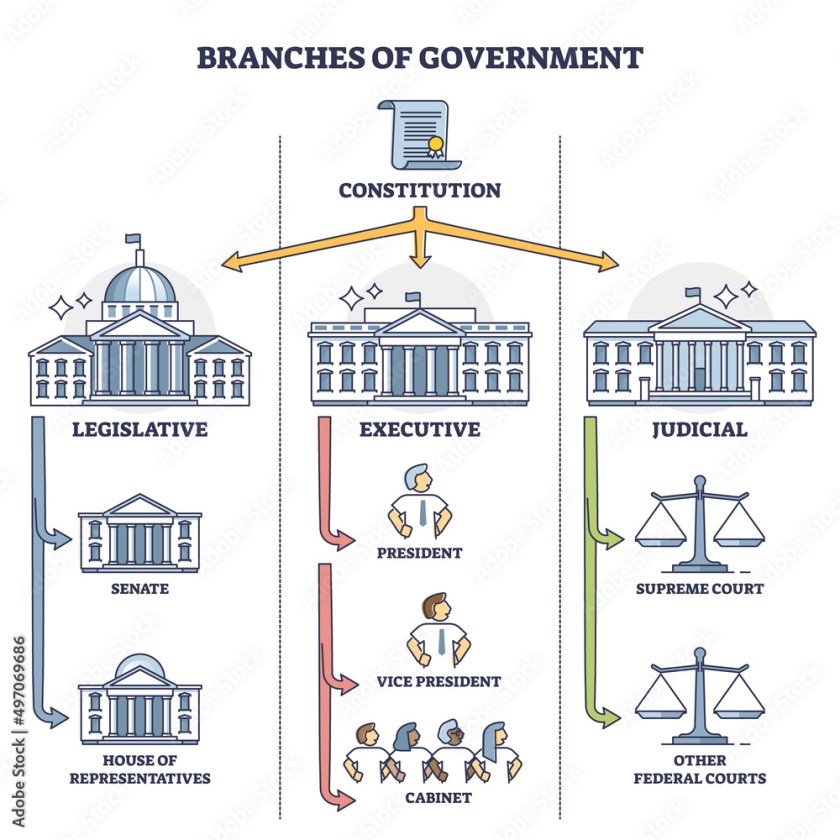
It is interesting to be reminded of the danger of a strong executive branch and the consequence of rule by an authoritarian President.

Trump shows loyalty to his beliefs, rather than competence, as the primary qualification for appointment to America’s federal government bureaucracy. Chernow successfully reminds listener/readers of the history of early American government creation, but “Hamilton” is not a page turner like his biography of Mark Twain.

EMIGREE

“The Sun is Also a Star” is a nicely written book that will keep reader/listeners interested in knowing what happens to two young lovers. One is left in suspense until its last chapters.

Books of Interest
 Website: chetyarbrough.blog

The Sun is Also a Star 

Author: Nicola Yoon

Narrated By: Bahni Turpin & 2 more

Nicola Yoon (Author, Jamaican American, NYT’s bestselling author, National Book Award finalist, electrical engineering undergraduate at Cornell, graduated from Emerson College with a Master of Creative Writing.)

Nicolo Yoon, the author, worked as a programmer in investment management for 20 years before publishing her first book, “Everything Everything”. It became a best seller. “The Sun is Also a Star” is her second published book which also became a best seller. Interestingly, the Jamaican born writer’s husband is a Korean American graphic designer. One presumes her book partly reveals her life experience in America. The credibility of her love story lies in the truth of the saying that “birds of a feather flock together”, an apocryphal Biblical saying that reaches back to the “Book of Ecclesiasticus” in the first century. Her hero and heroine are highly intelligent teenagers of immigrant parents who are influenced by their parent’s native cultures. Being children of immigrants, highly intelligent, high performers in academics, and living in America are why one thinks of the “birds of a feather…” analogy.

JAMAICA, SOUTH OF CUBA, OFF OF THE FLORIDA COAST.

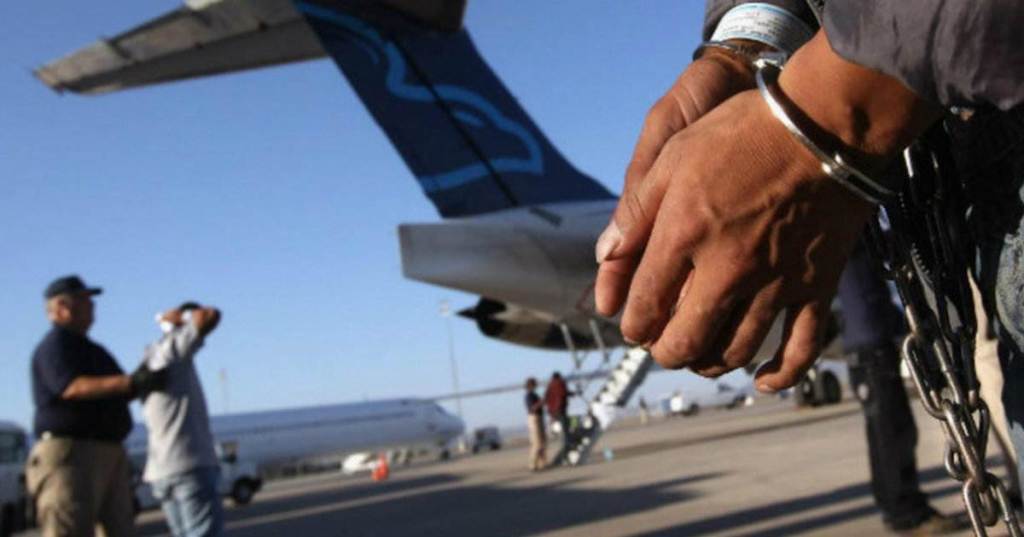
“The Sun is Also a Star” is about a Jamaican girl, a South Korean boy, and the girl’s parents who are being deported because of their illegal immigration status. The heroine’s father comes to America illegally to pursue a career. His wife and daughter follow later in presumably the same illegal way. The girl’s father struggles as an unsuccessful aspiring actor. He and the girl’s mother work at menial jobs for the families’ survival. They are within a day of being deported by the American government. Their daughter loves her mother and is ambivalent about her father. She is a bright high school student nearing graduation. The daughter is seeking help from an immigration attorney to delay and hopefully stop their deportation. On her way to an immigration lawyer’s office, she meets a handsome South Korean boy near her age who is interviewing with an Ivy League school in the same building in which the lawyer practices his profession. They serendipitously meet and their lives become intertwined.

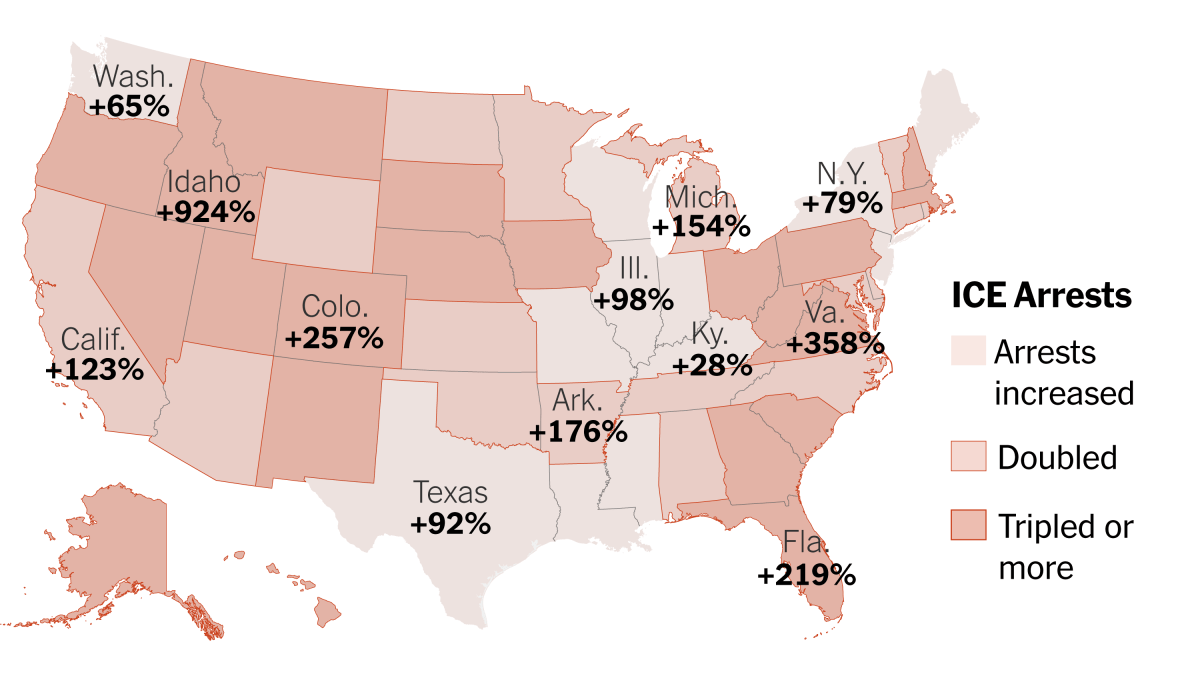
Over 200,000 immigrant arrests in America have been made as of August of 2025.

This is a fairy tale story that offers a truth about the iniquity of arbitrary enforcement and forced ejection of purported illegal immigrants in America. The second term of the Trump’ presidency shows how wrong it is to deport alleged illegal immigrants without judicial review. Obviously, if a legal review shows an immigrant is a criminal there is justification for immediate deportation. If the legal review shows an immigrant has always been a productive and law-abiding citizen of America, some may reasonably argue they should be directed to a program that allows them to eventually become legal residents of the United States.

Without legal review, a valuable source of American productivity is unnecessarily lost. To argue that loss is justified by jobs that will be filled by citizens of the United States is weak because many of the jobs taken are not taken by American citizens because the wages are too low, the physical demands too high, and the hospitality needs of much of America are unmet. It is true that many in America are unemployed because they have chosen to not get a good education and choose to remain unemployed by being unwilling to work for low wages. Their unemployment is not because of illegal immigrants but because of the choices they have made in their lives. Construction, agriculture, hospitality, retail, healthcare, and small businesses have been negatively impacted by the deportation of immigrant labor. In some industries, up to 40% of the workforce has been impacted by deportation.

Yoon’s story is a fairy tale of young love between an illegal and legal immigrant living in America.

Nicolo Yoon explains how love between two people occurs when they have similar life experiences and relate to those experiences with shared intelligence. The young girl and boy have similar life experiences in America. Both choose to educate themselves. The two young teenagers have parents that love them who have their own prejudices and life experiences in ways that influence their children to be ambivalent about the love they have for each parent.

Most parent’s, regardless of their culture, want a better life for their children.

Yoon illustrates the motivations and consequences of people who decide to emigrate. Whether emigrating legally or illegally, emigrees are faced with the difficulty of adjusting to a different culture that conflicts in good and bad ways with the culture they have left. Emigree’ parents wish well for their children but many fail to grasp the freedom offered by American culture to choose their own path in life. Even though life choices are influenced by one’s intellect, emotions, and (in America) a white majorities’ discrimination, most young people are able to choose their own path in life.

“The Sun is Also a Star” is a nicely written book that will keep reader/listeners interested in knowing what happens to two young lovers. One is left in suspense until its last chapters.

DICTATORSHIP

The importance of freedom in book publication and for those who read them is the message Charlie English gives the public in “The CIA Book Club”. It is too bad America’s current President chooses not to read because this book reminds one of how important books are in the world.

Books of Interest
 Website: chetyarbrough.blog

The CIA Book Club (The Secret Mission to Win the Cold War with Forbidden Literature)

Author: Charlie English

Narrated By: Michael David Axtell

Charlie English (Author, British non-fiction author, former head of international news at the Guardian.)

“The CIA Book Club” is a reminder of the former USSR and today’s Russian invasion of Ukraine and what is at stake for Ukraine’s citizens that may, once again, come under the repressive return of a dictatorial leader. Putin has adopted many of the same characteristics of Joseph Stalin, a leader who believed in dictatorial control over the media, and isolating or murdering anyone who challenges his leadership. The scale of Putin’s use of gulags, and mass executions is much smaller than Stalin’s but his cultivation of a cadre of followers, rewarded by the power of association and lure of wealth, create a similar dictatorship.

Poland-Europe’s crossroad.

What Charlie English reminds listener/readers of is how Poland suffered under Stalin and what it will mean to Ukrainians when much of their land is taken to settle the Ukrainian war.

Without solid opposition of all Western powers, concession of Ukrainian land seems inevitable. Trump’s waffling opposition to Putin and the fear of nuclear confrontation reduce the likelihood of Russia’s peaceful withdrawal from Ukraine.

Like the repressive actions of the USSR in the Baltics, English explains how brutal Hitler, Stalin, and Stalin’s successors were to Poland even after Stalin’s death.

Strick control over publishing continued after Stalin’s death. Orwell, Koestler, and Solzhenitsyn were banned, and western books were blocked at the border. Polish citizens like Miroslaw Chojecki risked imprisonment for smuggling and/or re-printing forbidden works. The KGB monitored dissidents, writers, and students. English notes that phones were tapped and homes raided. However, a CIA program continued to provide copies of banned books to Polish dissidents. Polish citizens became partners in covert activities to smuggle and re-print books for their countrymen and women. A Solidarity movement against censorship and discrimination is formed by Polish patriots. This reminds one of the resistances one hears when visiting today’s Baltic countries and stories of citizens whose families were jailed, tortured, and sometimes killed during Stalin’s occupation.

Poland, a spectacularly beautiful country.

Poland is an important trade and agricultural producer at the crossroad of Europe. It has no natural land barriers between itself and the great powers on their borders. Its strategic value to European aggressors has made it a victim of a history of foreign occupation. In the 13th, 17th, 18th, and 20th centuries Poland was occupied by Mongols, Prussians, Germans, and Russians. Poland’s diverse population seems to have been unable to create a strong centralized authority that could successfully resist their powerful neighbors who confiscated their riches and occupied their land. Charlie English’s book reminds reader/listeners of what makes Poland a great nation. It is its diversity and its pursuit of intellectual development. Sadly, its geographic location has threatened its existence for millenniums. America is blessed by its geographic location and shows how it could survive as a free democratic nation. Through clandestine operations and support by the CIA, Polish patriots were able to reproduce banned books during the cold war that aided the intellectual growth of Poland despite Stalin’s repression.

America’s current President impedes the influence of freedom in Europe by dismantling surveillance oversight, undermining the EU-U.S. Data privacy framework, and by shutting down the GEC (Global Engagement Center) which is designed to counter foreign disinformation.

Trump’s intent is to save money. The author notes the same thing nearly happened with the CIA book publishing support of Poland when some of America’s leaders tried to cut its funding. The CIA prevailed and the financial support continued.

The importance of freedom in book publication and for those who read them is the message Charlie English gives the public in “The CIA Book Club”. It is too bad America’s current President chooses not to read because this book reminds one of how important books are in the world.

NO WINNERS

Black America is not liberated by the Civil War. Neither will the Russians or Ukrainians be liberated by whichever side wins. There are no winners. There is only death and destruction as evidenced by the tragedy unfolding in Gaza.

Books of Interest
 Website: chetyarbrough.blog

How to Dodge a Cannon Ball (A Novel)

Author: Denard Dayle

Narrated By: William DeMeritt

Denard Dayle (Author, Jamaican-American writer, graduate of Princeton with an MFA from Columbia University.)

The central character in Denard Dayle’s novel is Anders. Anders is a light skinned Black soldier in the American Civil War. He begins as a Confederate and escapes to become a Union soldier as a Flag carrier. The author’s story is tedious and a mess, but it reflects the many conflicts among Americans fighting in the Civil War. The bizarre happenings in Dayle’s story are meant to be satirical with a bite but with so many twists in ideas about race, nationalism, gender, and the history of the war that one is inclined to put the book down. One may soldier on with a hope to understand Dayle’s point.

America’s Civil War.

After listening to “How to Dodge a Cannonball” for several hours, one gathers Dayle’s point is to show the complexity of America’s Civil War and what it means to be an American. The absurdity of all wars is revealed in America’s Civil War contradictions and hypocrisies. There are many, some of which are uniquely about civil wars, but also about every war.

In fighting a civil war for freedom in America, governments deny freedom to both sides of the conflict.

In fighting a war of conquest like that in Ukraine, both the aggressor and defender nations equally deny freedom to their citizens. Dayle shows race, gender, and nationality make little difference in who loses their freedom when war is declared. Black America is not liberated by the Civil War. Neither will the Russians or Ukrainians be liberated by whichever side wins. There are no winners. There is only death and destruction as evidenced by the tragedy unfolding in Gaza.

Dayle makes his point, but the story becomes too repetitive and tiresome for this listener/reader who quits the book before its ending.

UNINTENDED CONSEQUENCE

Technology is a key to social need which has not been well served in the past or present and could become worse without pragmatic accommodation.

Books of Interest
 Website: chetyarbrough.blog

Daughters of the Baboo Grove (From Chian to America, a True Story of Abduction, Adoption, and Separated Twins)

Author: Barbara Demick

Narrated By: Joy Osmanski

Barbara Demick (Author, American journalist, former Beijing bureau chief for the Los Angeles Times.)

This is a brief and fascinating historical glimpse of a government policy gone awry. Like America’s mistaken policies on immigration, Barbara Demick’s story of China’s one-child policy traces the effects of government overreach. Demick tells the story of a rural Chinese family who births twin sisters during the time of China’s unjust enforcement of their one-child policy. One sister is abducted by Chinese government officials, and is adopted by a family in Texas. The ethics of an inhumane Chinese government policy and the perfidy of free enterprise are exposed in Demick’s true story of two children’s lives.

The territorial size of China in respect to continental America.

China’s one-child policy leads to a Chinese criminal enterprise to capitalize on kidnapping and selling children born to families that could not afford the fines for having more children than the law allows. Undoubtedly, most children born were cherished by their parents, but the hardship of life and human greed leads to unconscionable human trafficking. Kidnapping became a part of a legal and criminal enterprise in China. Government policy allowed bureaucrats and scofflaws to confiscate children from their parents and effectively deliver or sell children to orphanages or people wanting to adopt a child. Demick recounts stories of grieving parents and grandparents that cannot get their children back once they have been taken.

Child trafficking, broken families, loss of personal identity, human shame, and the immoral implication of other countries interest in adopting children are unintended consequences of a poorly thought out and implemented government policy.

Demick becomes interested in this story because of a message she receives from a stepbrother of an adopted Chinese sister that has a twin that lives in China. Because of Demick’s long experience in visiting and reporting on China, she had a network of people she could call. Using adoption records, Demick is able to find the Texas stepsister who had been kidnapped when she was 22 months old. She was trafficked to an orphanage in the Hunan Province of China. Years later, through messaging apps, the twins communicated with each other and shared their photographs. They eventually meet in China in 2019.

One is hesitant to argue a government policy is a unique act of China when every government makes policy decisions that have unintended consequences.

America’s policy decisions on immigration are a present-day fiasco that is as wrong as the one-child policy in China’s history. The one-child policy is eventually rejected by the Chinese’ government but Demick’s book shows how bad government policy has consequences that live on even when they are changed by future governments. America’s policy on immigration will be eventually reversed but its damage will live on.

Getting back to the story, Demick is instrumental in having the mother of Esther (aka E) and the twins meet in China.

One is hesitant to argue a government policy is a unique act of China when every government makes policy decisions that have unintended consequences. The twins are initially reticent but warm to each other in a way that bridges the cultural and language divide between the sisters. The two mothers see their respective roles in their daughter’s lives. E and her identical twin, Shuangjie, are reserved when they meet because of the cultural distance that was created by E’s adoption.

E. appears more confident than Shuangjie who is more reserved and less assured.

However, Demick suggests they seem to mirror each other in subsequent meetings. One feels a mix of emotions listening to this audiobook version of “Daughter’s of the Bamboo Grove”. They have grown up in different environments but seem to have been raised in similar economic circumstances, though the two economies are vastly different in income per household, the two appear to be raised in similar economic classes.

Every person who reads/listens to “Daughter’s of the Bamboo Grove” can view the story from different perspectives.

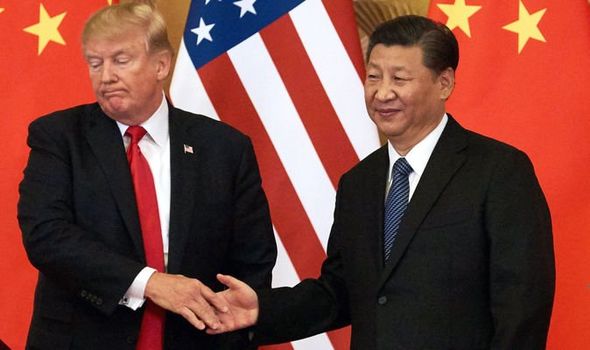
There is the perspective of identical twins raised in different families, cultures, and histories. How are identical twins different when they are raised by different parents and in different cultures? Another perspective is that Xi and Trump have had dramatic effects on the societies their policies have created. The Twin’s meeting in 2019 is one year after my wife and I had visited China. Xi had become President after his predecessor began opening China’s economic opportunities. Two incidents on the trip when Xi had become President come to mind. The first is the feeling one has of being monitored everywhere and the internet restrictions when used to ask questions. The second was an incident in a crowded Chinese market when I was approached by a beefy citizen who raised his arms and seemed to be angrily talking to me in Chinese which I sadly did not understand. The distinct impression is that I was not welcome. This was a singular incident that did not repeat in our 21-day tour, but it seemed like an expression of hostility toward America.

This listener/reader thinks of the unintended consequences of Trump’s treatment of alleged illegal immigrants.

Trump’s immigration policy is similar to China’s earlier mistake with the one-child policy. America’s, China’s, and Japan’s economies are highly dependent on youth which is diminished in two fundamental ways. One is by public policy that restricts birth, and the other is immigration. Freedom of choice is a foundational belief in democracy while considered a threat in autocracy. In America today, it seems there is little difference between America, Japan, or China in regard to government policy that threatens the future. All have an aging population that can only be aided by younger generations. Even though manufacturing may become less labor intensive, public need in the service industry will grow. Technology is a key to social need which has not been well served in the past or present and could become worse without pragmatic accommodation.

ISRAEL

Many soldiers and victims of war are teenagers, coping with life and death on a daily basis. They wonder, what is the point? We who sit on the sidelines because of age, agnosticism, or an unfettered life read or write about war as though it is just a story.

Books of Interest
 Website: chetyarbrough.blog

Beaufort (A Novel)

Author: Ron Leshem

Narrated By: Dick Hill

Ron Leshem (Author, born in 1976, recieved Sapir Prize, a top literary award in Israel, his book, Beaufort, is turned into a movie and is nominated for an Academy Award.)

Ron Leshem’s book “Beaufort” helps one understand why the idea of Gaza becoming a Palestinian state is anathema to a majority of Israeli citizens. Beaufort is located in southern Lebanon, on the border of Israel. In the 1970s Beaufort was used by the PLO as a base for operations against Israel. In 1982 Israeli forces capture Beaufort and it became an operating base for defense of Israel until their withdrawal in 2000. Lesham served in the intelligence corps during the time of the fight for control of Beaufort. He was not directly involved in the fighting but had an intimate understanding of the conflict. What “Beaufort” makes clear to Americans who are ignorant of what it is like to live in a country surrounded by militant minorities who wish to obliterate Israel.

Israel has a right to its existence on Israeli lands based on its ancient occupation of the land in 1200 BCE.

The proof of early occupation of Israel by Jews is in an inscription on a 1209 BCE Egyptian’ Merneptah Stele, a black granite slab. Though they were a tribal community, they had a form of governance that pre-dates nation-state development. Though one may argue Palestinians had lived in the lands of Israel since the 7th century, they were late comers to the land. The Palestinians were a nomadic Arab population that came nearly 600 years after settlement by the Israelites. The point made by the story of “Beaufort” shows why no rational human being would want another hostile haven for antisemitic opposition to Israel as a legally recognized nation-state.

“Beaufort” shows the human and psychological toll of an unjustified “forever war” conducted by two militant factions in Arab nations surrounding Israel.

Hamas and Hezbollah are two militant Islamist organizations deeply committed to destroying Israel and creating an Islamic state in the territory known as Isreal and Gaza. In 1947, a UN partition plan between Palestine and Israel was proposed but Arab leaders rejected it, while Israel accepted it. One can consider the history of the lands’ longer occupation by Jews of the holy land and Palestinians and wonder why partition was rejected by the Arabs.

The conflict revealed by “Beaufort” is a message to the world about life in Israel. Warfare is a fact of life for those who choose to live in Israel. Soldiers become disillusioned about why they are at the frontlines of an irreconcilable conflict. Kill or be killed becomes the mantra of their lives at the front. Unquestionably, it does have something to do with ideology or religion. How many soldiers and victims of war are teenagers, coping with life and death on a daily basis? Some must wonder, what is the point? We who sit on the sidelines because of age, agnosticism, or an unfettered life read or write about war as though it is just a story. It is not a story to Israelites or Palestinians. It is living life when surrounded by others who want to kill you.

UNJUST CAPITULATION

Both Trump and Putin are wrong in trying to return America and Russia to their past. What one presumes from Nye’s lectures is that a threat of millions of lives being lost from nuclear war will actually result in a gorilla war in territory unjustly ceded to Russia by Ukraine.

Books of Interest
 Website: chetyarbrough.blog

Must History Repeat the Great Conflicts of This Century? 

Lecturer: Joseph S. Nye Jr.

By:  The Great Courses

Joseph Nye Jr. (1937-2025, Distinguished Service Professor Political Scientist at Harvard Kennedy University.)

In listening to Joseph Nye Jr.’s history of “…Great Conflicts…”, one thinks about similarities between leadership of Russia and America today. Both Trump and Putin believe in strong executive leadership and appear to have a political base that allows Putin to exercise dictatorial power and Trump to bypass traditional bureaucratic limitations on government power. Both Putin and Trump believe in their countries moral and economic superiority and are trying to return their nations to the twentieth century. As leaders of their countries, they have influenced media support of their ambitions through influence and the creation of conspiracy-driven narratives.

Joseph Nye’s lectures suggest history is only a guide to the future, not a prediction.

Nye explains circumstances of the present are never exactly the same as the past. Every war of the past is based on complex causes that are never precisely the same. The world wars and the cold war developed as a result of specific government’ diplomatic, operational, and international circumstances. Nye explains why two world wars were about balance of power that changed with WWI and were refined by WWII. The German, Austro-Hungarian, and Ottoman empires collapsed after WWI. With the defeat of Hitler, Nye infers WWII is a failed effort to reestablish the German empire.

Listening to Nye’s view of history, makes one think of Putin’s and Trump’s maneuvering in the 21st century. Both leaders are trying to recreate a balance of power with America strengthening its position and Russia reestablishing its role among the top three powers. What gives weight to that view is Russia’s invasion of Ukraine, China’s wait and see attitude, and Trump’s foolish antagonism toward its traditional western allies in the belief that it strengthens America. Trump seems ignorant of history by failing to recognize America’s power is hugely benefited by its close relationship with Great Britain and North America. To antagonize England, Canada, and Mexico with tariffs and the NATO alliance with complaints about unequal financial support reduces America’s power and influence.

Today, nuclear war is a different circumstance upon which every government leader recognizes as a fundamental change in the principle of “might makes right”.

One sees that Trump’s hostile confrontation with Zelenskyy on television is an expression of America’s leadership fear of nuclear war. Putin threatens nuclear retaliation, but threats are not actions. Putin continues his conventional war against Ukraine and Trump pressures Putin to end the conflict with limited support of weapons for Ukraine and implied willingness to agree to Putin’s demands for annexation of some part of Ukranian territory.

Nye’s lectures do not say history repeats, but he warns it can have similar results without careful analysis and strategic foresight by government leaders.

However, Trump and his advisors appear ignorant of the lessons of history noted by Professor Nye. America and Russia think they have a choice in how the war in Ukraine can be brought to an end that will bring peace. The truth is that peace is only a Hobson’s choice where there is only one option. Trump sees the possibility of millions being killed from a nuclear war. Putin sees the possibility of gaining territory from Ukraine with potential loss of rule as President of Russia. Zelenskyy and Putin have the illusion of choice while the international community and America will likely make the decision.

Both Trump and Putin are wrong in trying to return America and Russia to their past. What one presumes from Nye’s lectures is that a threat of millions of lives being lost from nuclear war will actually result in a gorilla war in territory unjustly ceded to Russia by Ukraine. Russia will lose more than it gains just as it did in Afghanistan.