The essence of Rickard’s book is that the use of GPT is a threat to the financial world and to world peace. If the war on Iran continues, there is increased risk of wider conflict, further financial stress, reduced human judgement, and greater potential for world conflagration in a nuclear war.
Books of Interest Website: chetyarbrough.blog
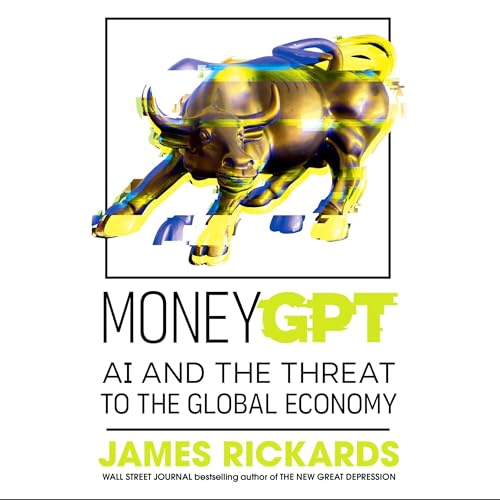
MONEY GPT (AI and the Threat to the Global Economy)
Author: James Rickards
Narration by: James Rickards
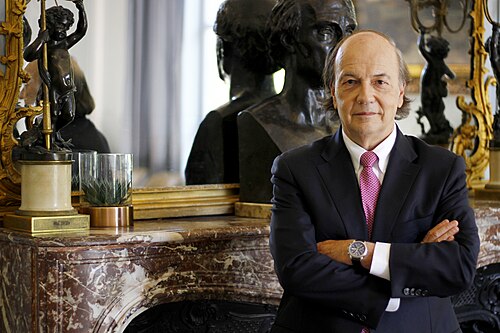
James G. Rickards (Author, American lawyer, investment banker, media commentator.)
Though Mr. Rickards has something valuable to tell his audience, his writing leaves room for improvement. The initials “GPT” stand for “Generative Pre-trained Transformer”. They are an abbreviation for massive datasets gathered by artificial intelligence to aid one’s understanding of complex predictions about finance and military conflict based on collected language used to explain the world.
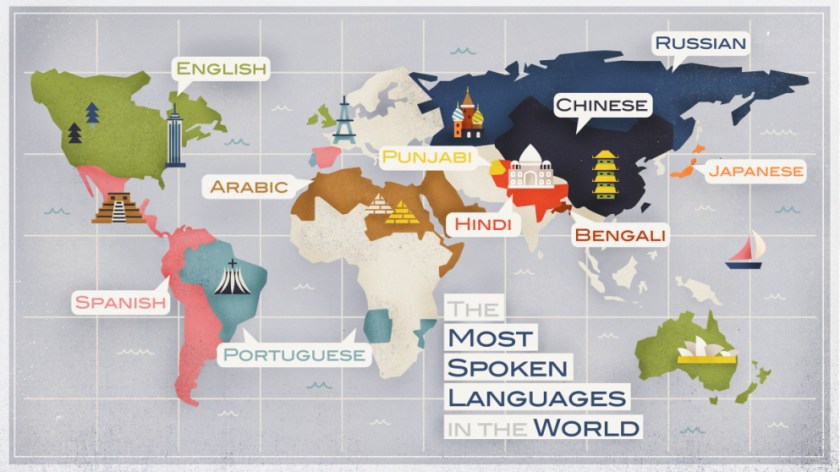
Languages of the world.
What Rickards intellectually recognizes is that collected language about the real world lacks human judgement which can accelerate human actions, weaponize misinformation, and increase conflict because AI lacks human reasoning. Without judgement, facts imparted by language collection may as quickly make wrong as right decisions. Optimum answers to complex problems require human judgement. Optimum answers may be aided by AI collated language, but human judgement is key to appropriate action. Rickards notes how stock market investors who rely on AI for decisions about what to do with their investments can as easily be misled when the market is in crisis because collected language is as likely to lead one further into crisis as toward a reasoned investment response.
Rickard explains a financial decision based on GPT carries the same threat in regard to war. One wonders whether President Trump’s escalation of the war on Iran is not based on GPT that compresses decisions and amplifies the volatility of America’s actions. Is the war escalating because of GPT and inadequate human judgement? America is faced with incomplete information on a purpose for bombing Iran and what goals are intended for ending the conflict. What GPT predicts is more U.S. strikes, further Iranian retaliation, and prolonged conflict that will continue to roil the economies and citizens of the world. Regional war, let alone a World War, is increasingly likely to cause a global shock to financial markets.
Uses of GTP aka GPT.
The essence of Rickard’s book is that the use of GPT is a threat to the financial world and to world peace. If the war on Iran continues, there is increased risk of wider conflict, further financial stress, reduced human judgement, and greater potential for world conflagration in a nuclear war.
Green questions the profit motive of drug companies that ignore the benefits of drugs that poor societies cannot afford that would cure tuberculosis. At the same time, Green implies the political will of all nations fail to provide known curative drugs for tuberculosis.
Books of Interest Website: chetyarbrough.blog
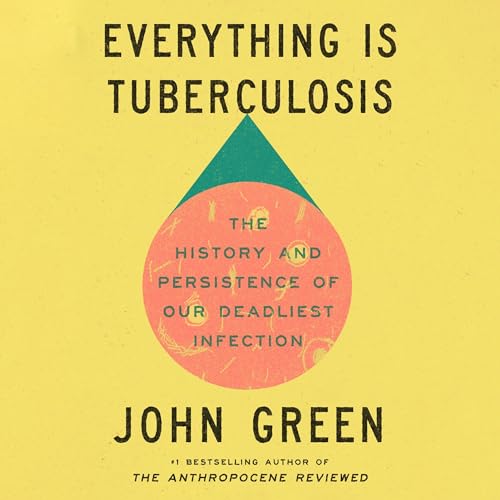
Everything is Tuberculosis (The History and Persistence of Our Deadliest Infection)
Author: John Green
Narration by: John Green
John Green (Author, YouTuber, and philanthropist.)
“Everything is Tuberculosis” is an apt title for John Green’s book but unlikely to attract many listener/readers. However, those who have read John Green’s books are attracted to his story because of the humor and insight he offers to living life. Green offers an interesting human perspective about a disease that kills hundreds of thousands of people every year and is both preventable and curable. Recognizing this critic’s own biases, “Everything is Tuberculosis” is a belief that there are only two important issues for human species’ survival, i.e., world peace and personal health. “Everything is Tuberculosis” deals with the principal of health while others write about world peace.
Tuberculosis transmission.
Peace is only indirectly addressed in “Everything is Tuberculosis” while health is the primary focus of Green’s book. Today, approximately 1.23 million people die from tuberculosis every year. Surprisingly, it remains the deadliest curable infectious disease in the world. An estimated 10.7 million people are presently diagnosed with tuberculosis. This high infection rate is for a disease that is curable and preventable. Green explains in countries with high rates of poverty, undernutrition, overcrowding, high HIV infections, and poor medical services tuberculosis becomes a greater killer of human beings than any other infectious disease.
The fear and anxiety of Covid mimics the fear of tuberculosis.
Green personalizes his story by being its main character. He writes in the first person and uses his personal anxiety driven thoughts to explain tuberculosis’ illness and vulnerability. As a child, Green recalls his own illnesses and anxieties that required hospitalization. He contrasts his life of economic security with the lives of many people in the world that have little to no economic security. He views tuberculosis, not as a scientist or patient, but as an observer of poverty in Sierra Leone and the personal life of a young boy with the disease.
The cost of medication.
The young boy’s recovery experience is on-again/off-again, in part because of his father’s skepticism about the effectiveness of drugs and his belief in God, but also because of a failure of experimental drug treatments from other tuberculosis patients that die. There is a happy ending when a new drug cure is found and started; the boy recovers, resulting in eradication of the infection. He finishes high school and goes on to college. Other stories of the disease in Sierra Leone show distances patients have to travel, the cost of treatments, and different economically challenged families who are discouraged by continued treatment. Those patients that do not continue the medical treatment often see regrowth of the Tuberculosis bacteria which ends their sons, daughters, fathers, or mother’s lives.
Green’s point is that human beings are dying from tuberculosis, a curable disease that kills; not because it is often fatal, but because of a human-systems’ failure.
TB deaths are a predictable outcome of poverty, undernutrition, overcrowding, political neglect, and global indifference. Green gets at the heart of the problem of societal indifference. The indifference is both political and economic. The political indifference comes from every government that is only concerned about their country’s health and welfare. The economic difference is similar but more pronounced in capitalist countries that focus on profit more than societal benefit. Political difference is in nation-state’ leadership whether countries are democratic or other.
Green questions the profit motive of drug companies that ignore the benefits of drugs that poor societies cannot afford that would cure tuberculosis. At the same time, Green implies the political will of all nations fail to provide known curative drugs for tuberculosis.
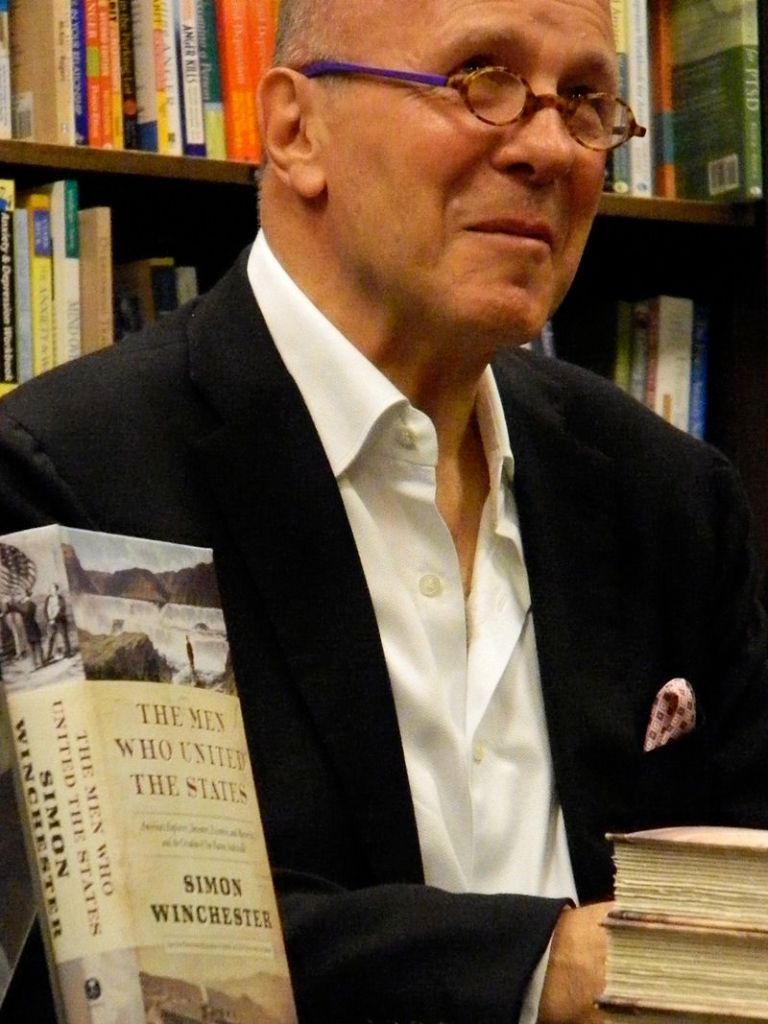
Winchester’s biography of Needham offers valuable insight to scientific discovery and its intersection with socio/political structure of government. Government bureaucracy can either aid or impede nation-state’ discovery and innovation.
Books of Interest Website: chetyarbrough.blog
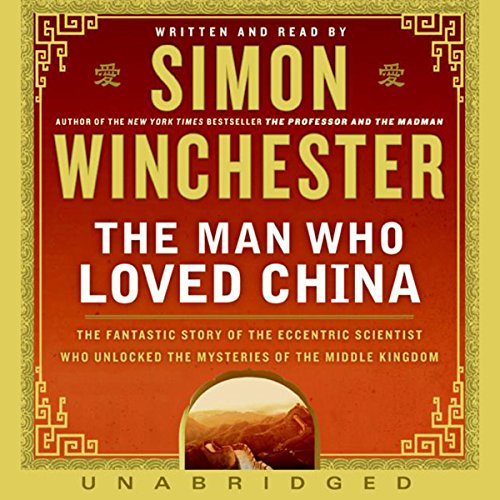
The Man Who Loved China (The Fantastic Story of the Eccentric Scientist Who Unlocked the Mysteries of the Middle Kingdom)
Author: Simon Winchester
Narration by: Simon Winchester
Simon Winchester (Author, historian, British American author, journalist, and broadcaster.)
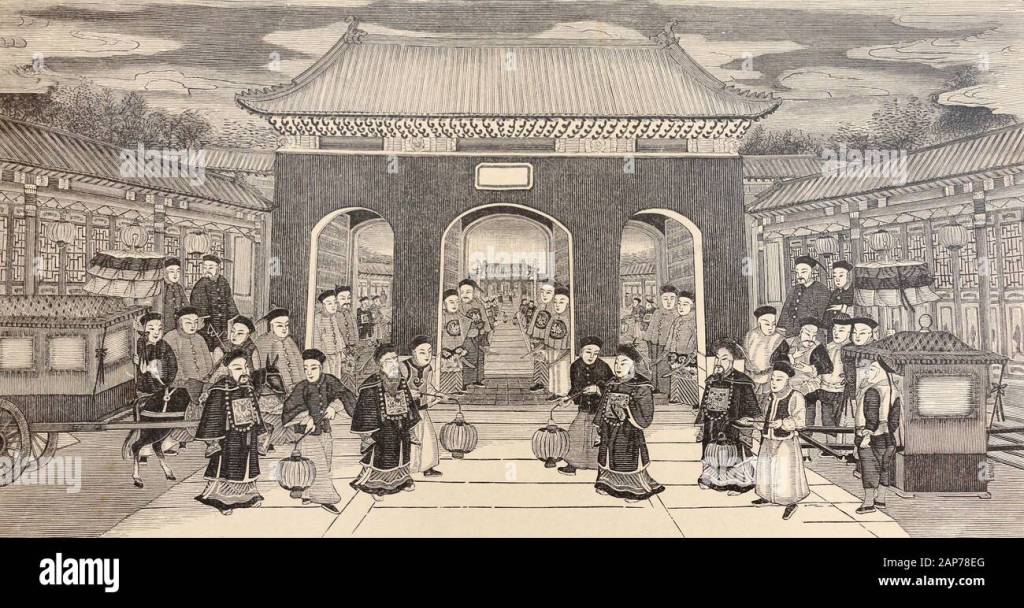
Having traveled to China a few years ago, it is interesting to listen to Simon Winchester’s biography of Joseph Needham, who is considered one of the foremost historians of Chinese science and technology.
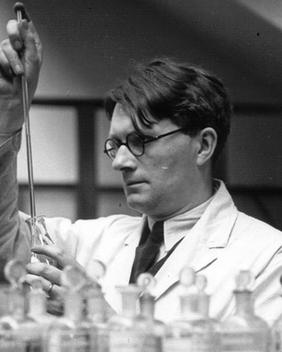
Noel Joseph Terence Montgomery Needham (1900-1995, British biochemist, historian of science and sinologist who wrote a history of Chinese science and technology based on his British education and experience in China during the 1940s.)
Discovery of the new can improve or impede society. In listening to this biography of Joseph Needham, one wonders how farther ahead science might be if it was more widely shared between countries of the world. Needham is characterized as a polymath who became educated as a biochemist at Cambridge. Needham is a freethinking eccentric, a nudist, a folk dancer, and a thoroughly unconventional human being.
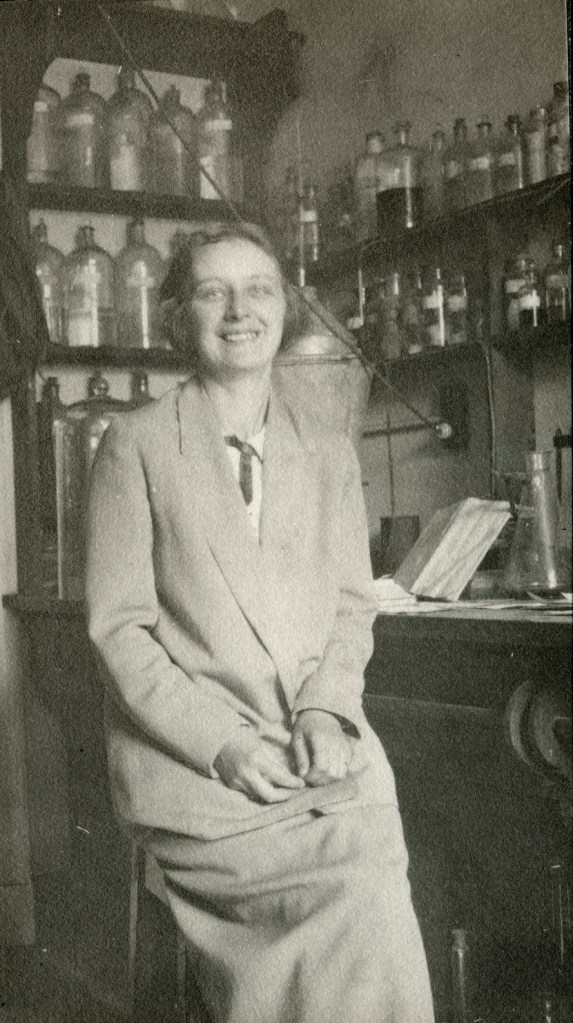
Needham meets a fellow student at Cambridge with whom he pursues a scientific/intellectual partnership and an “open” marriage that lasts until the death of his wife in 1987. Needham’s first wife, Dorothy Moyle Needham, offers stability to his life while accepting a second woman, Lu Gwei-djen, as an intimate in Needham’s life during their marriage. Dr. Gwei-djen was also a biochemist who studied at Cambridge. When Needham’s wife dies in 1987, after 63 years of marriage, he marries Lu Gwei-djen.
Japan creates what is misogynistically characterized as “comfort women” in their attack and domination of China in the early years of WWII.
As WWII began and the Japanese were attacking China, Needham is engaged by the Sino-British Science Cooperation Office to document scientific manuscripts, meet Chinese scholars, and build a record of China’s scientific networks. His wife joins Needham in 1944 just before Needham’s return to Great Britain. Needham’s separation from his wife gave him time to become an important historian of Chinese Science. His grasp of the Chinese language from his association with Lu Gwei-djen is a great aid to his accumulation of China’s extraordinary advances in science that created many discoveries–long before the rest of the world.
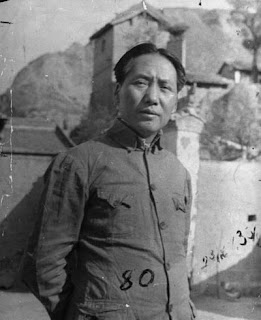
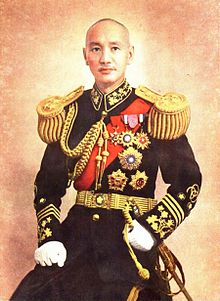
Mao at the time of Needham’s travels in China.CHIANG KAI-SHEK (CHAIRMAN OF THE NATIONAL GOVERNMENT OF CHINA 1943-1948)
Needham fell in love with China and became acquainted with the war years of China and its communist movement. Needham looked favorably on the communist philosophical movement. However, his political leanings were inconsequential because his primary focus is on China’s scientific history.
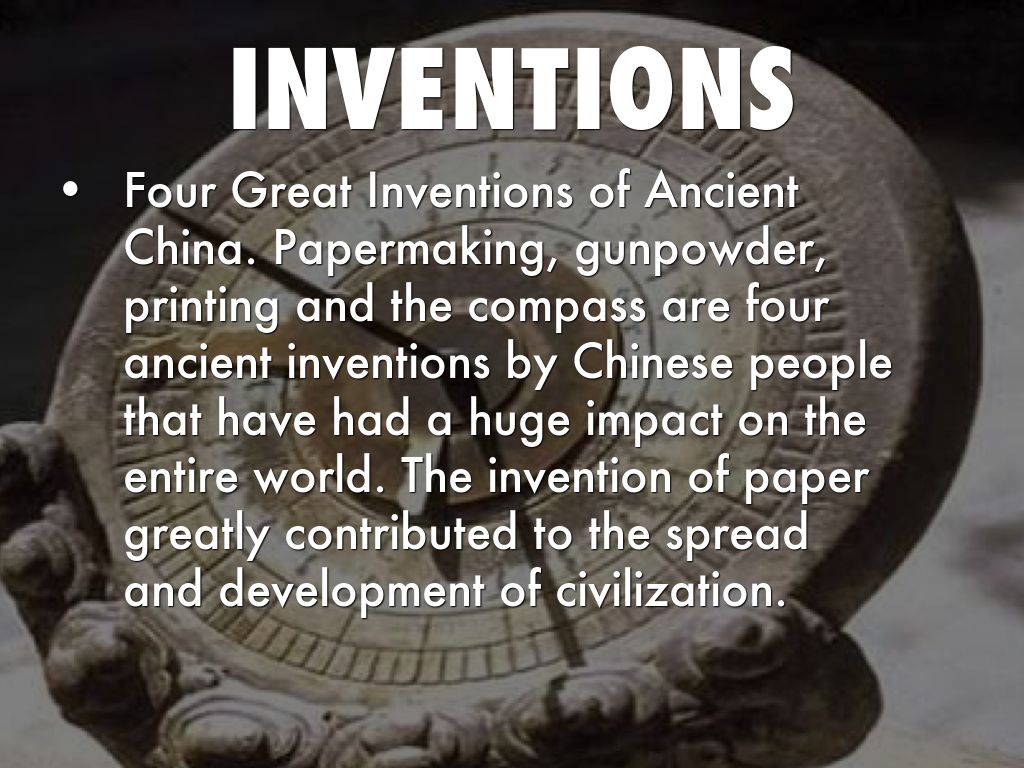
Early discoveries in China.
Needam’s research results in a book titled “Science and Civilization in China”. With the help of Lu Gwei-djen, his book became a societal corrective to the West’s bias about China’s technological backwardness. Needam reveals amazing discoveries made by China long before the rest of the world. He found papermaking is developed in the 2nd century BCE, the magnetic compass was used in China in the 11th century, gunpowder is discovered in the 9th century, and printing began in the 7th century. Adding to these discoveries are the many engineering and mechanical innovations of China. They discovered the value of differential gears to aid vehicle function, the idea of a sternpost to guide ships, water power to aid clockworks with escapements for timekeeping.
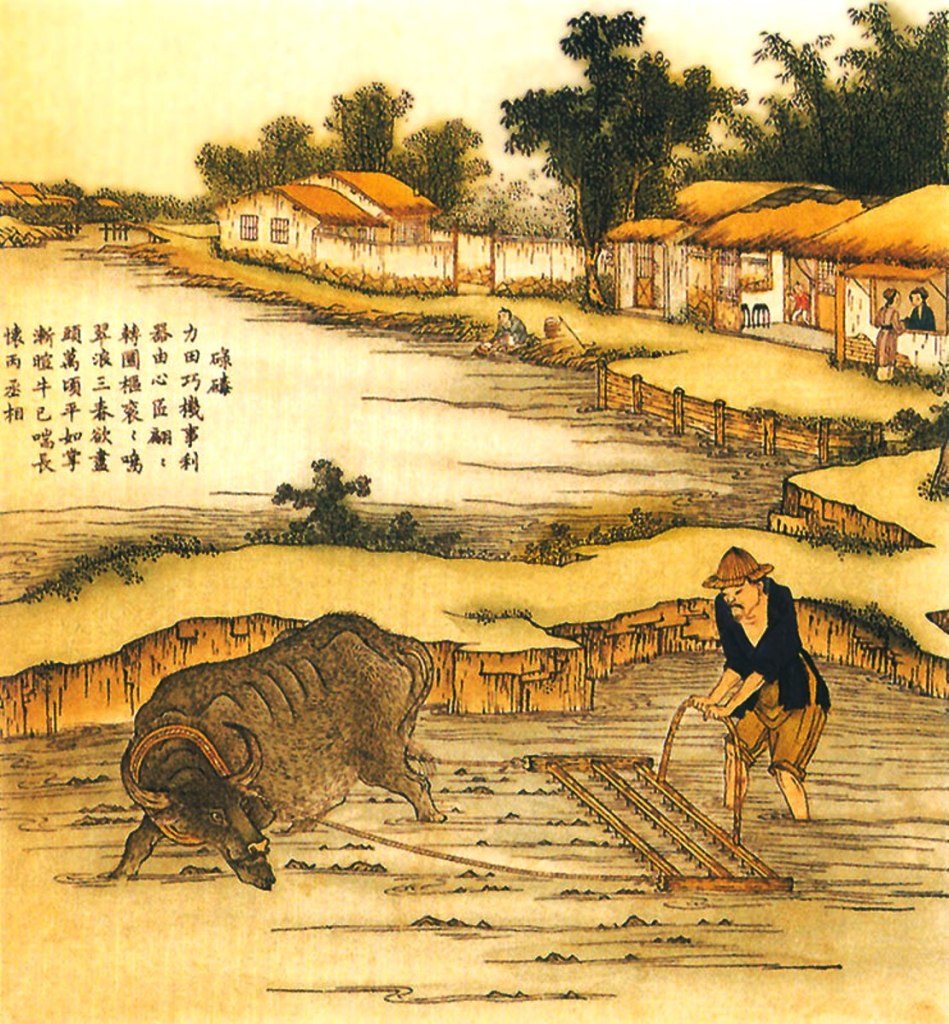
Agricultural invention in early China.
Needham discovers the agricultural and industrial breakthroughs of China. They used multi-tube seed drills and advanced iron plows to improve agricultural yields centuries before European innovations. Between the 5th and 3rd century BCE, China had developed blast furnaces and iron-working innovations that were not discovered in the west until the medieval period. The Song dynasty in the 10th century pioneered the use of paper money backed by the government.
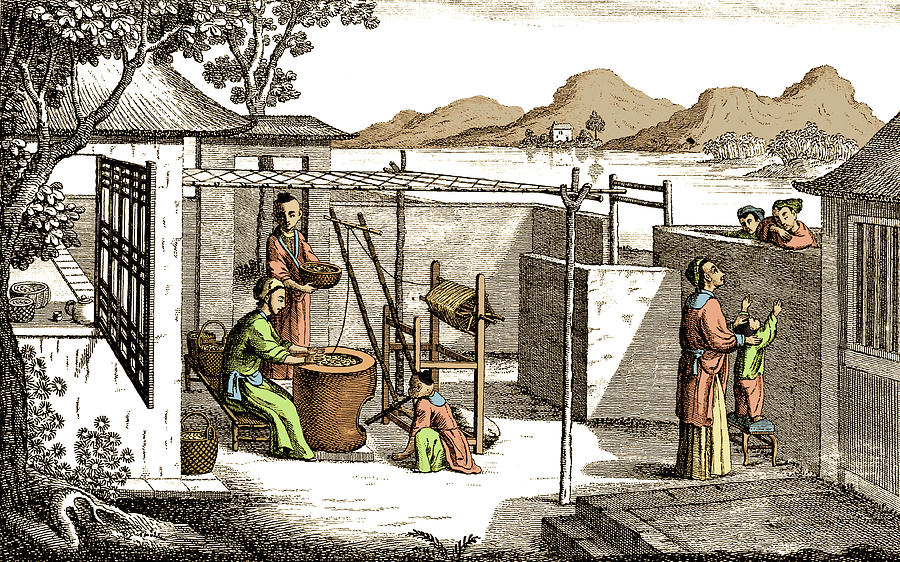
Silk making in early China.
In the science of chemistry, silk production began thousands of years before the west understood its value. Porcelain innovation with hardening through a high-temperature process was used long before its discovery in Europe in the 18th century. Natural gas drilling was discovered with the invention of bamboo derricks and piping for industrial use. Chinese gas drilling dated back to when Roman legions were invading Europe.
China’s centralized bureaucracy.
What is puzzling about Needham’s book is not only how early these discoveries were made in China, but why these remarkable innovation capabilities did not continue through the twentieth century. He argues the foundation of their advances is its powerful, centralized bureaucratic state, a culture that valued practical knowledge, and a worldview that is comfortable with pattern, process, and observation of nature.
Management of China’s waterways is critical for agriculture and flood risk to those who lived near rivers. Life experience with the threats and benefits of water demanded Chinese attention. Literacy and standardized examinations in China created a cadre of technically motivated officials. With systematic observation of nature, these technocrats harnessed the power of water. So why has there been nothing like the scientific revolution that happened in Europe. To this reviewer, something changed with the rise of communism.
China’s education system.
Needham’s book argues the bureaucracy of China became too conservative and discouraged independent initiatives while emphasizing stability through exam-driven education. Conformity became more important than innovation. Needham infers the scientific revolution went into hibernation in China while blossoming in Europe. One may speculate that is partly due to emphasis on communism, a socio/political rather than a science/nature focused view of life, i.e. a view toward social stability more than one of curious exploration,
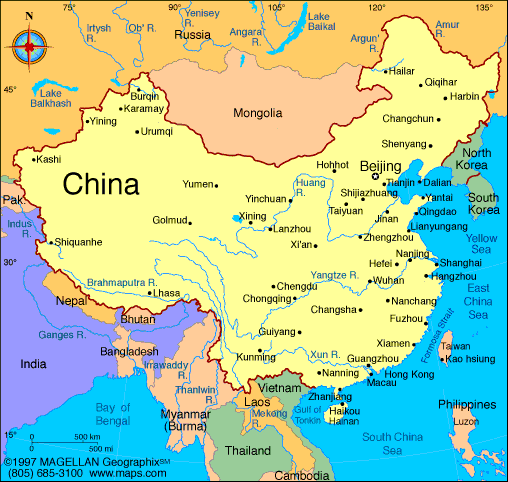
CHINA
Winchester’s biography of Needham offers valuable insight to scientific discovery and its intersection with socio/political structure of government. Government bureaucracy can either aid or impede nation-state’ discovery and innovation.
The obvious irony of McWilliam’s history of money is that it began in Africa and its newest successful iteration comes from the same continent.
Books of Interest Website: chetyarbrough.blog
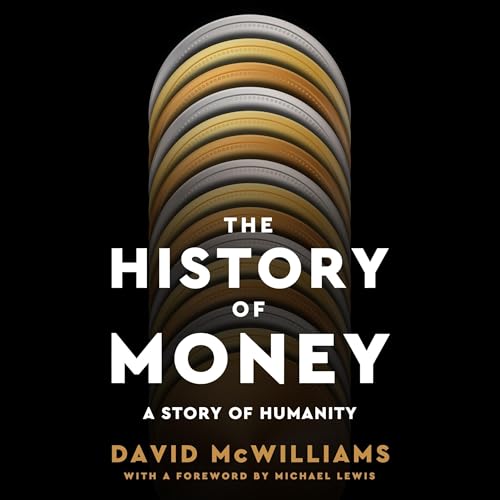
The History of Money (A Story of Humanity)
Author: David McWilliams & 1 More
Narration by: David McWilliams
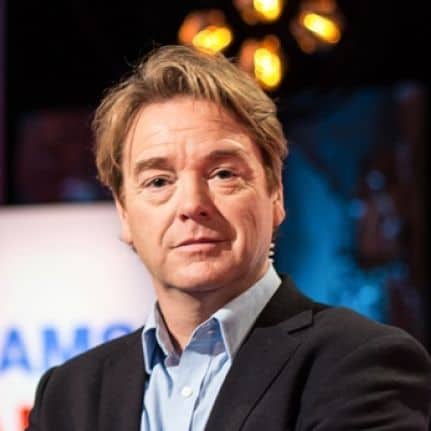
David McWilliams (Author, Irish economist, former Central Bank of Ireland and UBS economist.)
McWilliams has created an interesting history of the origin of money. It began with agricultural production of grain somewhere between 3000 and 2000 BCE and evolved into an abstract representation of physical properties. Somewhere around 2500 BCE, Sumerians introduce the idea of interest on money over time. They create a lending system for farmers and traders so they can borrow against an unknown future. This became the engine for investment and economic growth.
Around 600 BCE, coins are minted to provide portability of money.
McWilliams believes portability of money originated in western Turkey among people who lived on the Aegean Sea. McWilliams’ source of information is Herodotus. Herodotus was a Greek historian and geographer in Turkey who became identified as the “Father of History” by the Roman orator, Cicero. Because money became portable, trades and markets around the known world could be expanded. The key to the success of “money” is trust in its value by society. Once the value of coin was accepted, coin became abstracted to paper as a representation of coins’ value. McWilliams explains this began in medieval times and continues through today.
The power of information technology.
However, in the 20th and 21st century McWilliams notes money becomes digital currency which turns paper currency into information. This fascinating history explains how money evolved from physical assets to coin to paper and now to digital currency with societal trust and imagination. McWilliams explains money power became less physical and more conceptual with the emergence of collective trust. Conceptual transition came gradually but accelerated with Guttenberg’s printing press and religious beliefs in indulgences that could be sold to the public to assure entry into heaven. Even with the protestant reformation and the end of indulgences, trust in money continued to grow.
McWilliams explains expansion of money power came from trust in issuers and the authenticity of tokens backed up by societal support.
Societies’ trust is reinforced by the rise of record-keeping, writing, and enforceability of promises. Society accepted belief that money would remain valuable in the future. With societal acceptance lending, savings, and investments expanded. Societal trust in money made the world go round. What is interesting about McWilliams’ concept of money is that without trust, money’s transition to information is challenged by the invention of crypto currency. He argues crypto currency is a gambling phenomenon because it does not rely on societal support. Support relies on its singular cryptographic information. Furthermore, McWilliams notes it requires a level of technological understanding on the part of its users which discourages social trust.
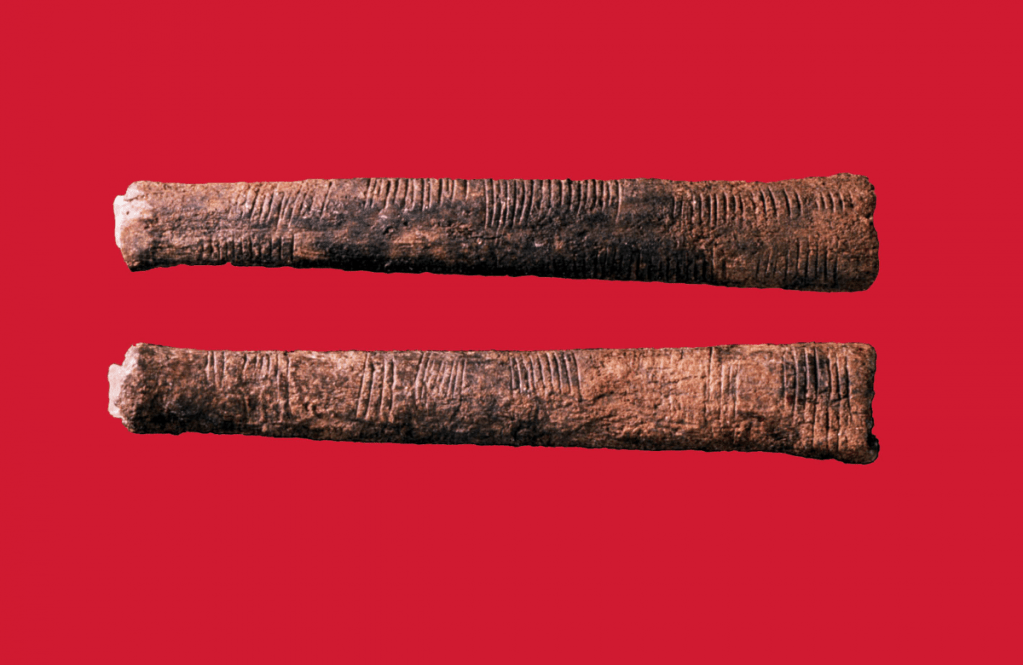
The Ishango bone shows notches carved into it that purportedly show the value of accounting or numerical thinking.
McWilliams traces the origin of money to the Ishango bone (discovered in the 1950s) that dates to 18,000 BCE on the Congo River in Africa.
In contrast to the complicated creation and use of Crypto currency, McWilliams notes the success of M-Pesa which has achieved societal trust in Kenya. M-Pesa is a digital wallet that lives on a mobile phone’s SIM card. This digital wallet can store money, send and receive payments, withdraw and deposit cash–all on a mobile phone, without internet access. This idea offers a model of financial services without ever opening a bank account. It avoids reliance on a creator of crypto currency or the banking industry with an app-based wallet like Apple Pay or PayPal.
The obvious irony of McWilliam’s history of money is that it began in Africa and its newest successful iteration comes from the same continent.
Like all world changing inventions and discoveries, iPhone came with costs ranging from children’ and adults’ addiction, to rare minerals depletion, to environmental pollution. The long-term effect of iPhones has changed the world with unexpected, often unforeseen, consequences.
Books of Interest Website: chetyarbrough.blog
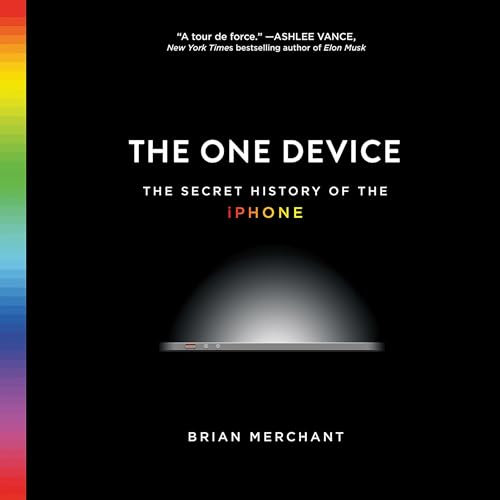
The One Device (The Secret History of the iPhone)
Author: Brian Merchant
Narration by: Tristan Morris
Brian Merchant (Author, American technology journalist, writes for The New York Times, Wired, Slate, The Atlantic, and the Guardian.)
Brian Merchant works around the tech world but never quite in it. His understanding of today’s technology has made him a popular writer for national news outlets. Never having been employed by a tech company, his analysis of iPhone history, the role of Jobs, and the history of its development is as an outsider to the process of invention. As a writer about technology, there is a level of objectivity but also reservation about an outsider’s details. Merchant reports what others tell of iPhone’s history rather than as a person being there as a part of its development.
Merchant’s investigation explains the iPhone’s creation is a messy human process entailing the dangers of mining, involvement of other companies and individuals, patent questions, and labor struggles. The impact of the iPhone’s invention is world changing. In a fundamental way, Merchant discounts the mythology of iPhone’s invention by one person or company. There were decades of prior invention before the iPhone became more than an idea, let alone a world changing device.
The mining industry and assembly line development were in place before the raw material and labor that would be needed for iPhone development. Merchant suggests Apple became the central orchestrator rather than singular inventor of the iPhone. Merchant argues the iPhone is a synthesis of decades of technological improvement, unnamed engineers, labor and organizations of miners and factory workers, and innovations needed to produce Apple’s revolutionary product.
Genius and invention go hand in hand. However, Merchant explains in the early 20th century, much of the technology that became a part of the iPhone’s foundation were already invented. He notes touchscreens, voice recognition tools, motion tracking, and early iterations of what became Artificial Intelligence had already been discovered. Merchant’s intent is not to diminish the genius of Apple, Jobs, or its employees but to show the public that every extraordinary human invention has precursors and essential earlier discoveries. It took Apple’s leadership and employees to integrate the many technologies that had been discovered earlier to create what has become a handheld window to the world. Merchant explains no great inventions are created out of thin air. He suggests every invention of the present is dependent on thought, labor, experience, and invention of the past.
Merchant discounts the idea of the “lone genius” because every genius depends on insight and events of the past to correlate what she/he invents in the present. The iPhone unifies decades of technological progress. The iPhones’ invention reorganizes global behavior, creates a new economic and industrial model, and gives the world a pocket supercomputer. The geniuses of Apple earned their reputations, but they relied on discoveries of the past.
Thinking of Curie, Einstein, Newton, and other giants of science, one wonders how Merchant’s belief about genius is valid. He would argue the brilliance of Curie, Einstein, and Newton are built on prior knowledge, their predecessors, and the tools of their time. Their genius is in connecting past knowledge and discovery of others with the present. Their genius is dependent on predecessors. Merchant is not diminishing Jobs’ or Apple’s genius, but their breakthroughs could only come from groundwork established by others.
INDUSTRIAL POLLUTION ON A BAD DAY IN BEJING,, CHINA
Like all world changing inventions and discoveries, iPhone came with costs ranging from children’ and adults’ addiction, to rare minerals depletion, to environmental pollution. The long-term effect of iPhones has changed the world with unexpected, often unforeseen, consequences.
In the pre-A.I. age, democratic socialism is unachievable, but A.I. may resurrect its potential. However, as Orwell noted, the risk is a “Brave New World” rather than a hoped-for democratic socialism.
GEORGE ORWELL (Author, 1903-1950)
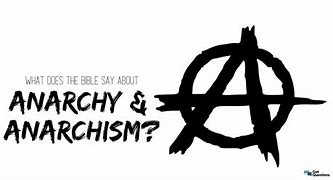
In Norm Chomsky’ ‘s and Nathan Schneider’s book, “On Anarchy”, George Orwell’s book “Homage to Catalonia” is called one of Chomsky’s favorite books. “On Anarchy” infers Orwell believed in anarchy because of his role in the war (1936-1939) against the Franco government. Though Orwell’s risk of life in Spain’s war is inconceivable to me, it seems prudent to listen to his story and point to the significant difference between what Chomsky and Schneider infer about Orwell’s belief in “…Anarchism” and what Orwell really wrote and believed. Though Orwell takes anarchism seriously as a political working-class movement, he believes it is impractical and that democratic socialism (with “1984” reservations) is what he believes could be the best form of government. The idea of abolishing all forms of coercive authority and hierarchy with a government anarchy is impractical because of the nature of human beings.
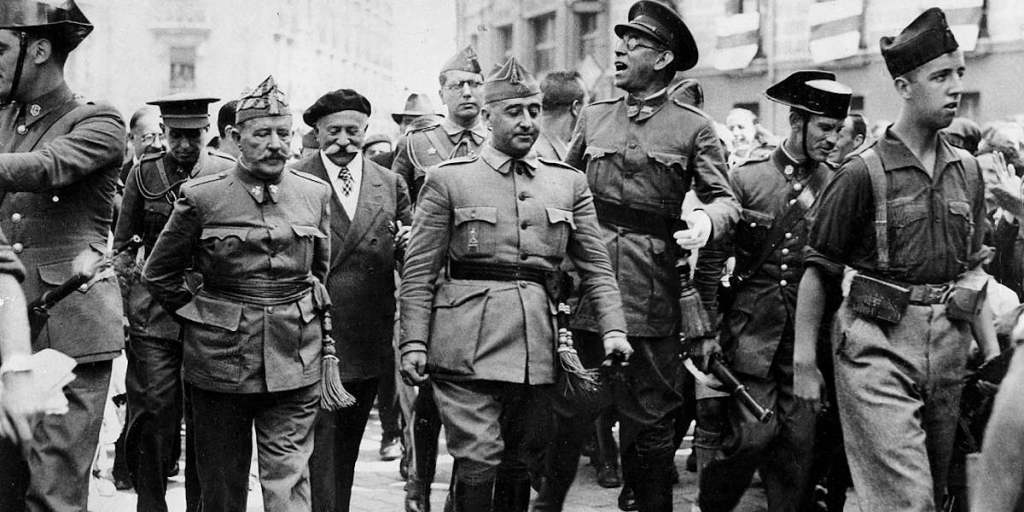
Francisco Franco with his soldiers in 1936.
Because of Orwell’s belief in democracy and equality he chooses to join the fight against Franco’s fascism. He joins the resistance at the age of 33 because of his belief in democratic socialism. He felt he needed to join the ideological struggle against Franco’s regime. It is a remarkable decision considering he is married, and relatively unknown. He is oddly driven by his moral belief in democracy and equality. Presumably, he entered the war to understand what it means to fight a war against a government he felt was immoral and totalitarian. Orwell served for approximately six months beginning in December 1936. He was shot in the throat and nearly died.
Anarchy and human nature.
It seems inconceivable that anarchism is a reasonable way of governing human nature. It is interesting to contrast what Orwell believes and what anarchists argue. This is particularly relevant in the 21st century because of the inevitable change in society that is occurring with artificial intelligence. A.I. has an immense potential for creating Huxley’s “Brave New World”. However, his writings reject the ideal of “Anarchy” espoused by Chomsky and Schneider because of its impracticality. Huxley shows that human nature contains both heroism and weakness tied to the material world. Even though human nature is basically decent, it is easily corrupted. That corruption makes humans hope and fear human decisions designed by consensus. It is not to say democratic socialism would be infallible, but it offers a structure for regulation of different governments at chosen intervals of time.
Human nature will not change. Human nature is a set of relatively stable psychological, biological, and social tendencies that are shared by all human beings. These tendencies shape how humans think, feel, and act even as culture and governance changes. Artificial intelligence will only intensify the strengths and weaknesses of human nature. The principles of anarchy in an A.I. world is frightening:
No centralized government, police, or standing armies.
Society organized through federations of communes, cooperatives, or councils.
Emphasis on direct democracy, mutual aid, and local autonomy.
Suspicion of any coercive authority — even democratic majorities.
Change often imagined as revolutionary, not incremental.
A more rational alternative to Anarchy is Democratic Socialism believed by Orwell and espoused by MLK.
The state remains, but becomes more egalitarian and accountable.
Markets may still exist, but are regulated or supplemented by public ownership.
Political parties and electoral competition are central.
Emphasis on universal programs: healthcare, education, housing, worker protections.
Change is gradual, through reforms, not revolution.
Differences of opinion.
There are obvious differences between Chomsky’s and Orwell’s beliefs. Both have social weaknesses. Human nature gets in the way of both forms of governance. Orwell seems to have recognized the weaknesses of his belief in democratic socialism in his writing of “Brave New World”. In contrast, Chomsky’s and Schneider’s pollyannish view of anarchy as “…a better form of government where power is decentralized and citizens can and should collectively manage their own affairs through direct democracy and cooperative organizations” is absurd. The difference is that Huxley foresees the dangers of his idea in “Brave New World” which anticipates something like A.I. that has the potential for society’s destruction. “On Anarchy” ignores the truth of human nature, “Brave New World” does not.
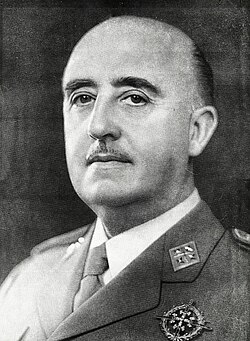
Franciso Franco (1936-1975, died in office.)
Orwell’s decision to join opposition to Franco’s dictatorship fails. Their right-wing beliefs in authoritarianism, anti-communism, and pro-Catholicism prevails. Spain’s 1930s opposition leaders (Manuel Azaña, Largo Caballero, and Juan Negrín) were pro-democracy with anti-fascist, socialists, communists, anarchists, trade unions, urban workers, and peasants who Orwell joined to support democratic socialism, not anarchy.
In the pre-A.I. age, democratic socialism is unachievable, but A.I. may resurrect its potential. However, it is the risk of a “Brave New World” or “1984” rather than a hoped-for democratic socialism.
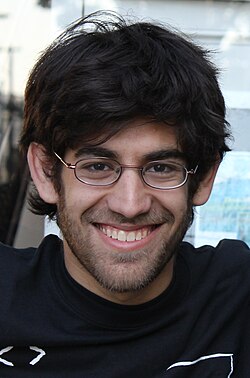
“We Are the Nerds” is a story about “Nerdom” and the tragic loss of Aaron Swartz to his loving family and the world of coding.
Books of Interest Website: chetyarbrough.blog
WE ARE THE NERDS (The Birth and Tumultuous Life of Reddit, the Internet’s Culture Laboratory)
Author: Christine Lagorio-Chafkin
Narration by: Chloe Cannon
Christine Lagorio-Chafkin (Author, reporter, podcaster based in New York.)
Relistening to “We are the Nerds” may be reviewed from a perspective of the future of newspapers but that diminishes the tragedy of Aaron Schwarz’s suicide.
The original founders of what became known as Reddit were Steve Huffman and Alexis Ohanian, graduates from the University of Virginia. A third partner, Aaron Swartz, is invited into the company because of his tech experience in creating a company called Infogami which merged with Reddit. With the addition of Infogami, the original founders of Reddit created a parent organization called “Not a Bug, Inc”. Schwartz insists on being called a co-founder because of his contribution to Reddit as a programmer. That insistence rankled Huffman and Ohanian which grew into a resentment that fills the pages of the author’s story.
Steve Huffman on the left with Alexis Ohanian and his wife, Serena Williams, and their daughter on the right.
The author seems to minimize Schwartz’s contribution to Reddit despite the framework he created that made Reddit scale more quickly because of its open access and community-driven cultural impact. Swartz’s contributed code appears to have been an important step in the useability of Reddit by the public. However, in fairness to the original founders, the author infers that contribution pales in respect to the extensive coding and work done by Huffman. The point is that this conflict becomes an irritant that leads to the departure of Swartz from Reddit in 2007, after it was acquired by Condé Nast in 2006. That acquisition made all three original coders millionaires.
Swartz’s life and premature death is a tragic encomium to the story of Reddit’s success as a public forum.
By some measure, Swartz is a brilliant human being, but his intelligence is accompanied by what might be characterized as a self-destructive personality. His ability as a computer nerd is evident in his High School days in Highland Park, Illinois. He goes on to Stanford, but its educational regimen leads him to leave after his first year. He preferred independent learning. Schwartz’s remarkable ability led him to become a research fellow at Harvard University in 2010. He became a self-taught intellectual with an activist belief in academic freedom that eventually led him to rebel against authority. He was arrested in 2011 for allegedly breaking into MIT’s computer network without authorization. He was charged for computer fraud and faced 34 years in prison and a million-dollar fine. At the age of 26, Swartz hung himself and died on January 11th, 2013.
An American mass media company founded in 1909.
Huffman and Ohanian believed Swartz’s contributions to Reddit were less than theirs in creating the company they sold to Condé Nast that made them millionaires. Swartz’s idealism and independence conflicted with the original founders of Reddit who seemed more interested in building a public platform that could make them rich. Though Ohanian believed they sold too soon, all three agreed to Condé Nast’s final offer that made them millionaires.
In retrospect, Ohanian may have been right about the future value of Reddit. Condé Nast spun Reddit out to an independent subsidiary under Advance Publications where it became a 42-billion-dollar success by 2025. Today, Huffman’s net worth is estimated at $1.2 billion as a result of his Reddit shares. Though Ohanian may not have held on to his shares, his net worth is estimated at $150-$170 million. Not bad for two University of Virginia graduates. However, as Plato observed, “The greatest wealth is to live content with little”. Swartz’s life seems to have had little to do with desire for wealth.
“We Are the Nerds” is a story about “Nerdom” and the tragic loss of Aaron Swartz to his loving family and the world of coding.
A.I.s’ contribution to society is similar to the history of nuclear power, it will be constructively or destructively used by human beings. On balance, “Burn-In” concludes A.I. will mirror societies values. As has been noted in earlier book reviews, A.I. is a tool, not a controller of humanity.
Books of Interest Website: chetyarbrough.blog
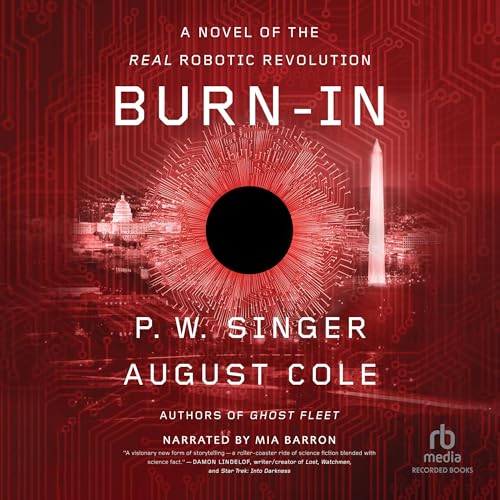
BURN-IN (A Novel of the Real Robotic Revolution)
Author: P. W. Singer, August Cole
Narration by: Mia Barron
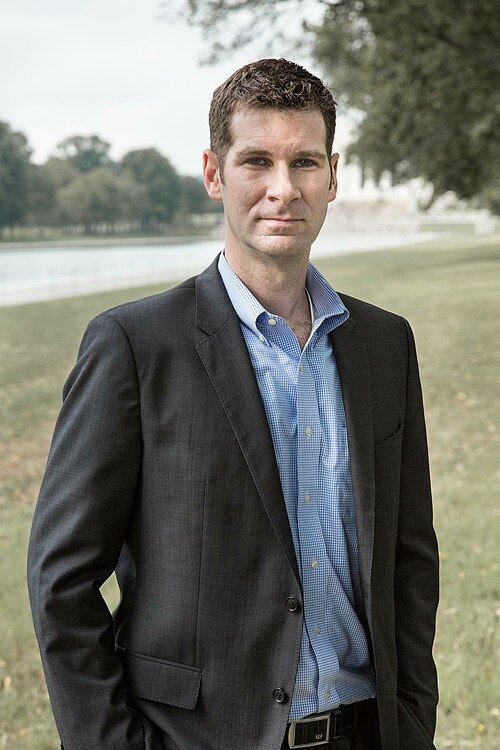
Peter Warren Singer (on the left) is an American political scientist who is described by the WSJ as “the premier futurist in the national security environment”. August Cole is a co-author who is also a futurist and regular speaker before US and allied government audiences.
As an interested person in Artificial Intelligence, I started, stopped, and started again to listen to “Burn-In”.
The subject of the book is about human adaptation to robotics and A.I. It shows how humans, institutions, and societies may be able to better serve society on the one hand and destroy it on the other. Some chapters were discouraging and boring to this listener because of tedious explanations of robot use in the future. The initial test is in the FBI, an interesting choice in view of the FBI’s history which has been rightfully criticized but also acclaimed by American society.
Starting, stopping, and restarting is a result of the author’s unnecessary diversion to a virtual reality game being played by inconsequential characters.
In an early chapter several gamers are engaged in VR that distracts listeners from the theme of the book. It is an unnecessary distraction from the subject of Artificial Intelligence. Later chapters suffer the same defect. However, there are some surprising revelations about A.I.’s future.
The danger in societies future remains in the power of knowledge. The authors note the truth is that A.I.’s lack of knowledge is what has really become power. Presumably, that means technology needs to be controlled by algorithms created by humans that limit knowledge of A.I.’ systems that may harm society.
That integration has massive implications for military, industrial, economic, and societal roles of human beings. The principles of human work, social relations, capitalist/socialist economies and their governance are changed by the advance of machine learning based on Artificial Intelligence. Machine learning may cross thresholds between safety and freedom to become systems of control with potential for human societies destruction. At one extreme is China’s surveillance state; on the other is western societies belief in relative privacy.
Robot evolution.
Questions of accountability become blurred when self-learning machines gain understanding beyond human capabilities. Do humans choose to trust their instincts or a machines’ more comprehensive understanding of facts? Who adapts to whom in the age of Artificial Intelligence? These are the questions raised by the authors’ story.
The main character of Singer’s and Cole’s story is Lara Keegan, a female FBI agent. She is a seasoned investigator with an assigned “state of the art” police robot. The relationship between human beings and A.I. robots is explored. What trust can a human have of a robotic partner? What control is exercised by a human partner of an A.I.’ robot? What autonomy does the robot have that is assigned to a human partner? Human and robot partnership in policing society are explored in “Burn-In”. The judgement of the author’s story is nuanced.
In “Burn-In” a flood threatens Washington D.C., the city in which Keegan and the robot work.
The Robot’s aid to Keegan saves the life of a woman threatened by the flood as water fills an underground subway. Keegan hears the woman calling for help and asks the robot to rescue the frightened woman. The robot submerges itself in the subway’ flood waters, saves the woman and returns to receive direction from Keegan to begin building a barrier to protect other citizens near the capitol. The Robot moves heavy sacks filled with sand and dirt, with surrounding citizens help in loading more sacks. The robot tirelessly builds the barrier with strength and efficiency that could not have been accomplished by the people alone. The obvious point being the cooperation of robot and human benefits society.
The other side of that positive assessment is that a robot cannot be held responsible for work that may inadvertently harm humans.
Whatever human is assigned an A.I robot loses their privacy because of robot’ programing that knows the controller’s background, analyzes his/her behavior, and understands its assigned controller from that behavior and background knowledge. Once an assignment is made, the robot is directed by a human that may or may not perfectly respond in the best interest of society. Action is exclusively directed by the robot’s human companion. A robot is unlikely to have intuition, empathy, or moral judgement in carrying out the direction of its assigned human partner. There is also the economic effect of lost human employment as a result of automation and the creation of robot’ partners and laborers.
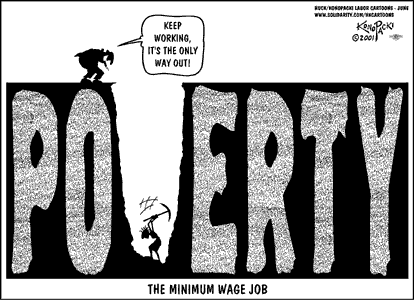
Capitalism should be designed to ameliorate the wealth gap, not exaggerate it to the point of people going hungry in one of the richest countries in the world. Capitalism is the greatest economic system in the world, but equality of opportunity remains a work in progress that is made worse by poor government policies and the inherent faults of human nature.
Books of Interest Website: chetyarbrough.blog
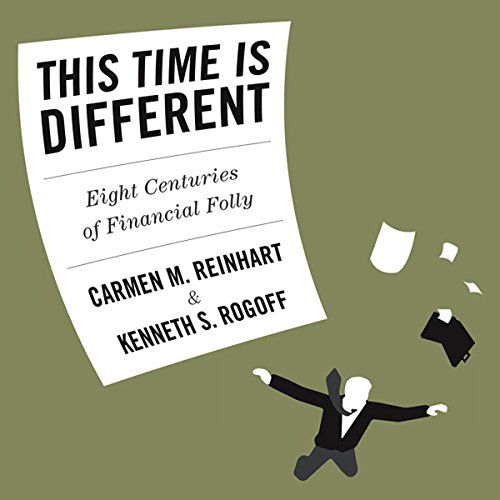
This Time is Different (Eight Centuries of Financial Folly)
Author: Carmen Reinhart, Kenneth Rogoff
Narration by: Sean Pratt
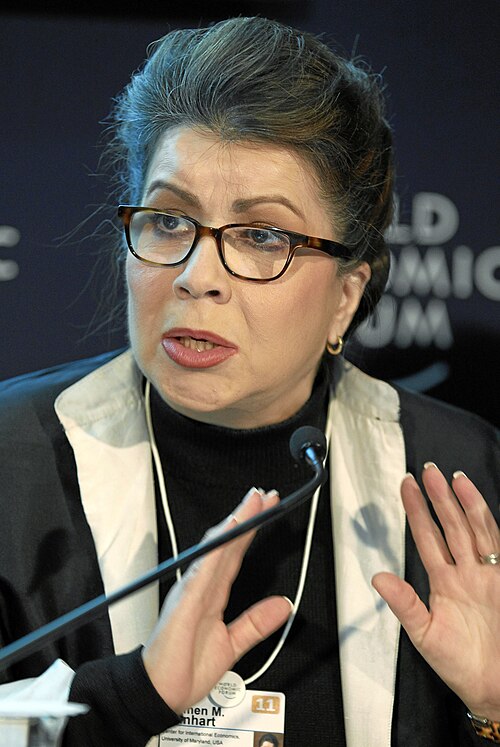
Carmen Reinhart (on the left) is a Cuban American economist and Professor of the International Financial System at Harvard Kennedy School of Business. She has a Ph.D. from Columbia University. Kenneth Rogoff is an American economist and chess Grandmaster who received a B.A. and M.A. from Yale and a PhD in Economics from MIT.
Two well educated academics try to explain why world economies are not unique by arguing the patterns of financial crises are similar, if not identical.
They argue heavy borrowing, inflated optimism, bank collapses, high inflation and currency devaluations are common characteristics of nation-state financial crises. These nation-state government actions and reactions are a result of innate human behaviors. They argue recurrent financial crises feed off of each other to spread economic chaos that creates panic among economic movers and shakers of national economies.
Our American government.
The importance of Reinhart’s and Rogoff’s observation is particularly interesting in light of the economic disruptions of the current American government. History shows America is not exempt from economic crises. In 2008’s economic crises America carries a large responsibility for itself and other nations near collapse. The 2008 economic crisis shows how domestic debt can threaten the world, let alone one country.
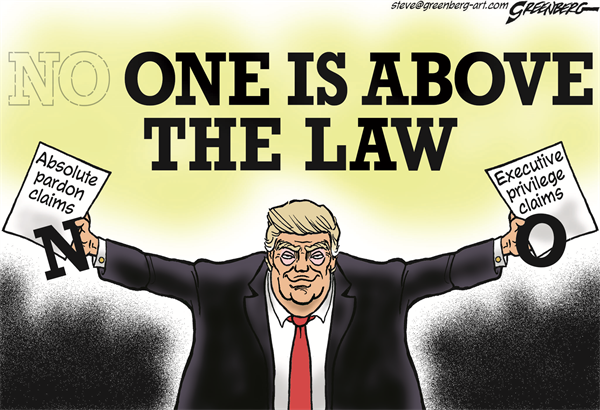
Maybe American government is not above the law, but a President shows he is capable of bending it.
In light of Donald Trump’s directed tariff war and his “…Big Beautiful Bill Act” that eliminates federal income taxes on Social Security, tips, and overtime pay, America’s national debt is likely to balloon. He is gambling American citizens’ future on belief that tax reductions will be offset by economic gains from improved industrial development. This is at a time when industrial development is being impacted by arbitrary firing of government employees, AI innovations that reduce employment, and industry employees retiring or transitioning to a service economy that pays less livable wages.
Trump’s tax policy will continue its top tax rate at 37% despite the government’s earlier intent to have it revert to 39.6%.
The effect of these tax policy changes is expected to reduce tax revenues by 4 to 5 trillion dollars at a time when America’s debt has never been higher. It is estimated at $38 Trillion dollars today. America’s interest rate on that debt is 3.393%, more than double the rate of five years ago. The increasing rate is related to the believed risk of U.S. default which will most likely rise with Trump’s tax breaks. U.S. debt has never been higher. Interest at its present rate will consume 14% of the federal government’s outlay in 2028. That 14% could help pay for the Affordable Care Act that is opposed by the Republican majority. The Trump tax policy implies continued heavy borrowing, an inflated optimism that threatens bank collapses, high inflation, and currency devaluations. Though the authors are not writing that America is on the verge of economic collapse, their observations infer a crisis is nearing, if not inevitable.
Capitalism should be designed to ameliorate the wealth gap, not exaggerate it to the point of people going hungry in one of the richest countries in the world. Capitalism is the greatest economic system in the world, but equality of opportunity remains a work in progress that is made worse by poor government policies and the inherent faults of human nature.
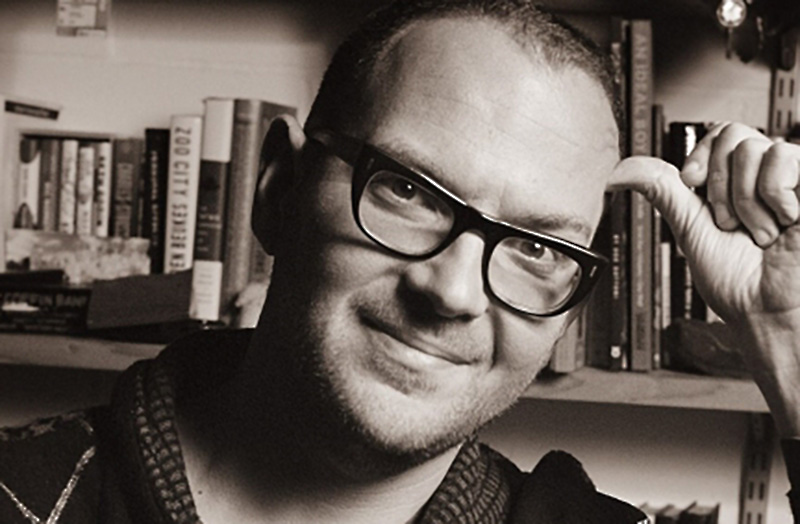
Despite the poor choice of titles for Cory Doctorow’s book, his theme of internet corruption is inevitable because of the nature of human beings. The corruption of which Doctorow writes is evident in most mega-corporations and governments. The only difference is in their motivation, i.e. whether it is money, power, or both in world organizations.
Elon Musk (Businessman, billionaire, entrepreneur, leader of Tesla, SpaceX, Twitter, and xAI.)
The first part of Doctorow’s book is an evisceration of the famous Elon Musk. Not surprisingly, Doctorow is not a fan of Elon Musk. Musk is an example of the theme of Doctorow’s book. Musk’s acquisition and decimation of a widely used communication platform known as Twitter exemplifies “Enshittification”. Doctorow infers Musk’s desire to have a free speech forum is actually a betrayal of the principle of free speech. The reality is that Musk has only created a Megaphone for his personal biased beliefs. Musk’s first action in the Twitter acquisition is to fire essential employees to reduce costs of operation. One presumes from Doctorow’s theme that Musk’s first step results in “Enshittification” of Twitter. Twitter’s new name is “X”. “X”s value has plummeted just as the American government’s service to the poor has fallen. With Musk’s singular focus on reducing cost, without consideration of effectiveness, enshittification is virtually guaranteed by Musk’s actions.
(Though not mentioned by Doctorow, it seems to this critic, that Musk’s firing of government employees under Trump, is similar to the dismantling of Twitter. The firing of government employees results in citizen-service’ losses equivalent to Twitter’s loss of advertisers.)
Traditional media is a one-way broadcast of information whereas the Internet is two-way interactive communication. Anyone can publish on the internet while singular corporations or institutions that own traditional media have only a one-way form of communication. The internet is global, instant, and decentralized while traditional media is scheduled for delivery and centralized. Access with on-demand, 24/7 internet are not time-bound like traditional media. The cost of using the internet is low and often free while traditional media entails infrastructure costs.
Trouble arises with the internet because of its ubiquitous availability while traditional media is singularly targeted.
The internet is immediate while publications are period based. It is possible to precisely and instantaneously measure internet responses based on clicks, views, and engagement while traditional media relies on third party analysis by publishers or by hired companies like Nielsen. Doctorow shows how differences between internet and traditional media exacerbate loss of privacy and increase potential for massive societal disruption. The internet can immediately influence and potentially control social beliefs. In less capitalist and more authoritarian governments the danger of the internet is direct influence and control of its citizens.
In American capitalism, the danger lies more in the drive for profitability than the control of social and political belief.
Doctorow argues America’s social norms are being corrupted by disparate industries that are creating tech platforms to monopolize product consumption only for economic gain, not service to its users. The consequence erodes trust of the public, distorts accountability, and thwarts free choice. The ruling classes of American society can evade traditional checks and balances. The utility of the internet can be used to distort the truth. Corporate objective is to make more money, not to benefit public discourse, improve product, reduce product cost, or improve service, but to monopolize consumption.
On the one hand, Doctorow acknowledges social media platforms optimize engagement. However, these platforms become forums for outrage, and misinformation that tribalizes society.
Rather than improving connections between people, algorithms are created by users of a media platform to exacerbate outrage, foster conspiracy theories, stir up and ultimately exhaust the public. The objective is increase clicks to make buyers of advertising to purchase time on their platform. As a free society, Doctorow suggests Democracy can mitigate the “Enshittification” by regulating the internet. He argues that one’s use of a platform should not monopolize personal information by restricting one’s right to take their information with them if they become unhappy. Platforms should not be prisons that restrict users legal right to their personal information if they choose to change platform providers. He argues for a breakup of major providers like Amazon, Facebook, Google, X, and Adobe.
Doctorow argues for more transparency in the algorithms being used by media platforms.
The public should be informed about how a platform’s algorithms are being used to steer the public. Individuals should be given the opportunity to opt out of algorithmic categories if they wish. Regulatory agencies should be created with the right to enforce consumer protections. He notes the EU’s move to require platform accountability. In general, Doctorow argues that the internet should return to its roots as a space for mutual aid, free expression, and innovation.
Internet Moguls: CEO Google Pichai, CEO Meta Zuckerberg, CEO Apple Cook, Executive Chairman of Amazon Bezos
Doctorow is not the first to propose reform of the internet.
Doctorow argues for the breakup of internet companies that have become too big. He believes returning the internet to the service of society requires a more level playing field to equitably serve the public.































 REVIEWS AND VIEWS OF LIFE