BALANCE

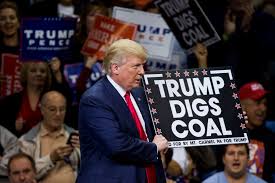
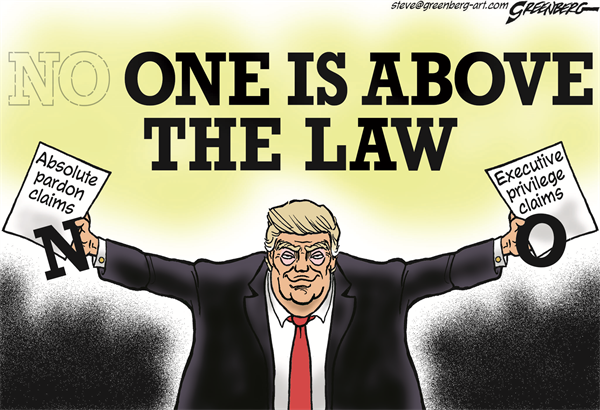
It is ironic that Trump has suffered so much from America’s legal system and is unable to see NIMBY mentality and a return to the past will not “Make America Great”.

Books of Interest
 Website: chetyarbrough.blog

Breakneck (China’s Quest to Engineer the Future)

AuthorDan Wang

Narrated By:  Jonathan Yen

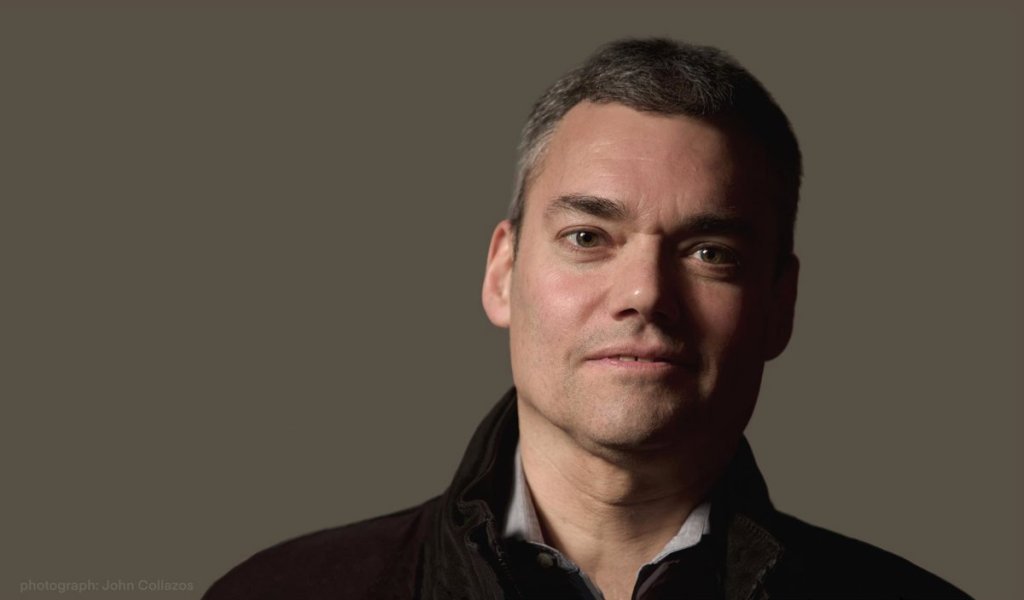
Feng Chen Wang aka Dan Wang (Author, Canadian technology analyst and writer, visiting scholar at Yale Law School.)

Dan Wang is a highly credible author of the 21st century economies of China and the United States. Mr. Wang’s mother and father were born in China when the one child policy was the law of the land. Mr. Wang was born in Canada in either 1991 or 1992. Though Mr. Wang may be an only child, his parents advised him that living in China was challenging because of its state control and family planning that restricted their human rights.

Dan Wang has lived in Canada, America, and China.

From 2017 to 2023 he worked as a technology analyst in Hong Kong, Beijing, and Shanghai. As a young man, Wang bicycled across China with young friends. Having been educated in Canada and the United States, growing up in Toronto and Ottawa and going to high school in Philadelphia, he has a broad understanding of the economies of all three nations. Of course, his specialty is technology which gives him a unique understanding of what is happening in America and China today. He graduated from the University of Rochester in 2014, studying philosophy and economics.

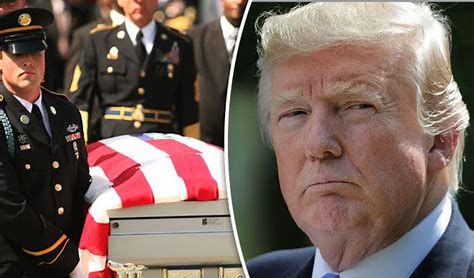
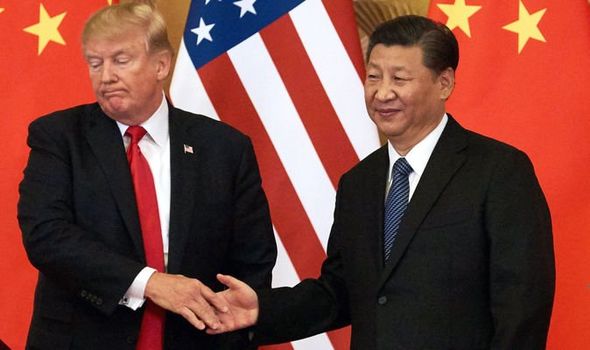
Trump’s apparent view of Xi.

After listening to Wang’s book, one begins to understand why President Trump’s perspective is that the world, with emphasis on China, has taken advantage of America’s economic wealth by eviscerating its industrial industries with less expensive product made in other countries. Wang presumes as a person who has an economics education that Adam Smith (the Father of Economics) and Donald Trump are right when they argue tariffs are justified in areas of national defense, or for retaliation. On the other hand, Adam Smith, noted “It is the maxim of every prudent master of a family, never to attempt to make at home what it will cost him more to make than to buy.”

Adam Smith (Father of Economic Theory)

Smith argued if another nation can provide the same product for less cost, a prudent buyer should buy the cheaper product and use money saved to produce a different product. Wang and Trump disagree with Smith because the revenue producer that America turns to is the service industry rather than product development. What is missed by Wang and Trump is that America is the third largest agricultural producer in the world with China and India being the largest. Of course, the difference is that America has 1/3rd the population of China and India, respectively. Lower population and high agricultural production in the United States hugely benefits its economy. More significantly, food, like water, is an essential need of life. The point is that non-food product production is not necessary for living life.

Loss of industrial production to China.

Wang’s and Trump’s argument is that America’s loss of industrial production has made it too dependent on other countries. They either infer or say Americans are forgetting how to manufacture product. They argue American industries are closing because of America’s inability to compete with other nations because of labor and material cost differences. History shows America fails to expand its industries because production of things is provided by other nations at a lower cost. And as Adam Smith noted, “It is the maxim of every prudent master of a family, never to attempt to make at home what it will cost him more to make than to buy.”

Wang decries America’s movement toward a service industry as the basis for economic growth.

America is the richest country in the world, but America has failed to eliminate poverty, house the homeless, feed the malnourished, and provide for the infrastructure needed to improve America lives. One may ask oneself-what is wrong with becoming a service industry nation? Why does America have to return to its past. As Adam Smith noted: “It is the maxim of every prudent master of a family, never to attempt to make at home what it will cost him more to make than to buy.” The future is about being healthy, being housed, fed, and clothed. It should not be about being the richest and fattest minority in the world, particularly when there is an inordinate gap between the rich and poor.

Wang argues America’s economy is diminished, not by reduced industrialization, but by its growth of legalism that reinforces nimby (not in my backyard) litigation.

Delays in public improvements in America are restrained by lawsuits that protect the rich and victimize the poor. An example is the long delays in mass transportation improvements which become more costly with every year that passes before completion. The delays are caused by litigation. When China can build rapid transit in 3 years while it takes 15 or more years in America, one wonders why. The huge investments China has made in massive infrastructure improvements have vastly improved their economy. In contrast, America wastes investment resources litigating mass transportation improvements in California, Washington, and other states by increasing costs from delays caused by litigation. It is like throwing the baby out with the bath water because the number of people who benefit from infrastructure improvement are largely discounted or ignored. Equally appalling is homelessness in America because of NIMBY’ objection to low-cost multifamily housing that could get the homeless off the street. Cost benefit analysis should prevail, not litigation based on interest group objection. In Wang’s terms, American infrastructure decisions should be based on science and engineering like, what he argues, China bases their infrastructure decisions upon.

The fundamental point is that America has lost sight of the importance of a balance between benefit to the public and individual rights. Equality of opportunity is split between the rich and poor with the middle class being too complacent while the rich reap unconscionable reward. Where are the Eisenhower-like Presidents who promoted an Interstate Highway System that created a 421,000-mile interstate highway system?

Trump is no Eisenhower because he wishes to return America to a past rather than look to its future. It is ironic that Trump has suffered so much from America’s legal system and is unable to see NIMBY mentality and a return to the past will not “Make America Great”. Wang’s book explains how China has succeeded in improving their economy while America’s economy is failing.

FARMLAND

Historically, collectivization of land has failed even when those who are part of the collective are better off than they were when they had no land.

Books of Interest
 Website: chetyarbrough.blog

Land Power (Who Has It, Who Doesn’t, and How that Determines the Fate of Societies)

Author: Michael Albertus

Narrated By: Braden Wright

Michael Albertus (Author, professor at the University of Chicago in the Department of Political Science.)

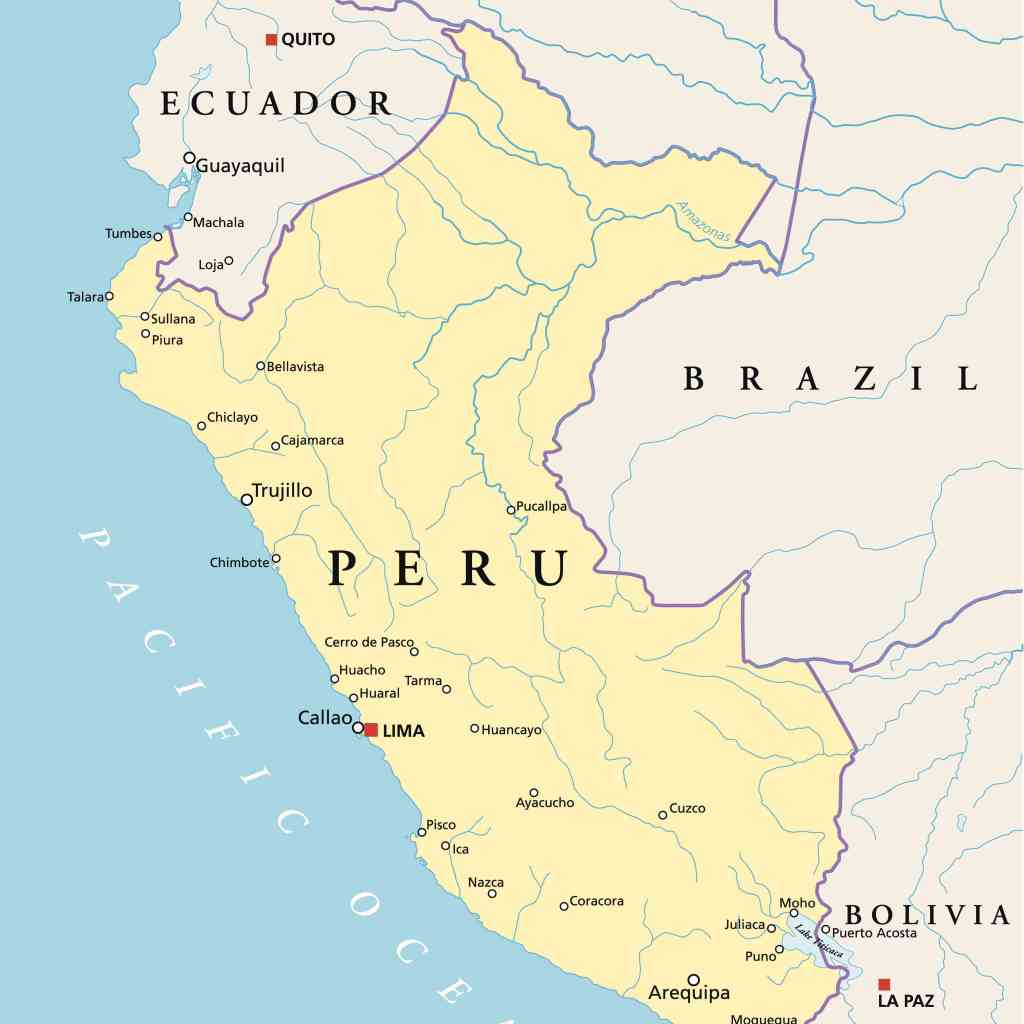
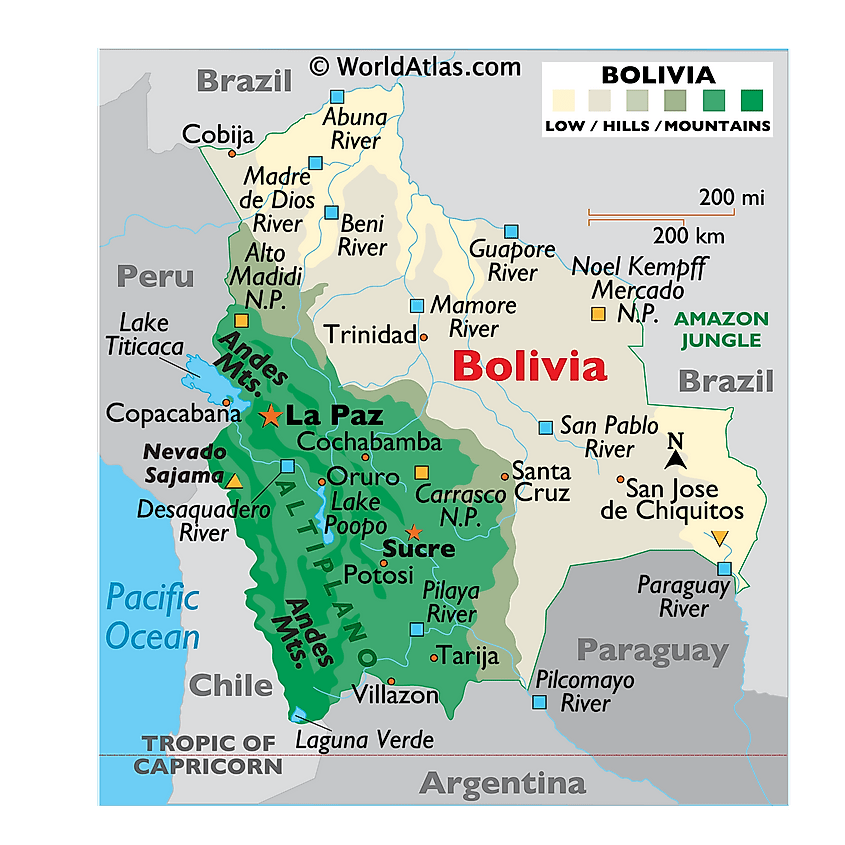
Michael Albertus develops a powerful argument for “Land Power”. Much of history and current events in relatively undeveloped countries are identified as proof of Albertus’s belief that “Land Power” is key not only to economic growth but to social improvement. He reflects on the history of Great Britain, France, and the United States while noting current affairs in developing countries like Peru, Columbia, and Bolivia support his argument.

The unfortunate truth of history is that indigenous populations, particularly in America and Great Britain, were displaced in order for “Land Power” to be the engine for economic prosperity and social change. In the case of America of course, it is the displacement of North American natives by English settlers who became Americans. In contrast Great Britain’s “Land Power” comes from a landed aristocracy and their subjugation of foreign cultures with autocratic control and rule of Asian and European countries. In France, Kings and an aristocratic government’s rejection by commoners in 1789 seem the motive force behind “Land Power” ascension.

For Peru, Columbia, and Bolivia Albertus infers examples of Britain, America, and France set a table for “Land Power” change by their governments. In my opinion, the age of technology has diminished “Land Power” importance in America, Great Britain, and France.

“Land Power” still carries weight in America, Great Britain, and France but in the tech age it seems the power of accumulated wealth has become more powerful than land. However, Albertus’s “Land Power” argument in regard to South American countries like Peru, Colombia, and Bolivia are compelling in regard to their economic and social improvement. Albertus notes private land ownership and recognition of women’s rights to own property, show that “Land Power” is a source of economic and social improvement in South America. He suggests countries like Mexico are being challenged by their failure to reform land ownership policies but today’s leaders in Peru, Columbia, and Bolivia have made significant land reform changes.

Albertus explains the major reform movement between 1969-1980 made by General Alvarado in Peru.

General Alvarado ordered nearly half of all private agricultural land be redistributed among Peruvian citizens. He dismantled large estates to empower peasant cooperatives. It has not been a perfect solution because it created an insurgent group called the Shining Path that pressed for a Maoist collective land reform for the redistributed Peruvian estates. Just as collective farms failed in China, they failed in Peru because common gains in collectives did not fairly reward performance. Collective farms distort the needs and results when a collective rather than a singular leader is responsible for performance of the collective. Nevertheless, the steps taken to dismantle half of private agricultural land, is considered by Albertus a step in the right direction because it incentivized many Peruvians who were living in poverty.

In Colombia, in 1966 through 1970 President Restrepo redistributed agricultural land to former agricultural laborers.

FARC (Revolutionary Armed Forces of Colombia) is organized in 1964 to offer peasant self-defense for actions soon to be taken by President Restrepo to reduce land ownership inequality. Between 2010 and 2018, President Santos negotiated with FARC to settle disputes between former landowners, and new farmers that benefited from land redistribution. There is still conflict because of FARC’s false belief in collective farming which has been proven a failure in other countries, but President Santos and his successors have created a path, though no solution, for reform through the hope for understanding and compromise. Albertus infers land reform is a work in progress, not a perfect solution.

Land reform in Bolivia spans 1953 and the early 2000s.

Presidents Estenssoro (1952-1956) and Evo Morales (2006-2019) worked on land reform along the same lines as Peru and Colombia. Large estates were broken up in 1953 and redistributed to peasants. Morales clarifies indigenous land rights but formalized communal ownership of redistributed land. This is another example of a work in progress because collectivization may be a step in redistributed land, but it has not proven to be a long-range benefit to a country’s citizens. It becomes too divisive and unrewarding for optimum performance and fair rewards for those who excel.

One who read/listens to Albertus’s insight to land reform believes his story has merit but his history is too optimistic when a little additional research shows land reform is a losing proposition when not fully supported by institutions that had implemented change.

History shows land collectivization when large landowners lose their land is a fool’s errand because it fails to reward those who excel as part owners of redistributed land. Human nature gets in the way. Those who work harder than others expect to have proportionate reward. Collective farming disincentivizes personal high performance. Historically, collectivization of land has failed even when those who are part of the collective are better off than they were when they had no land.

UNINTENDED CONSEQUENCE

Technology is a key to social need which has not been well served in the past or present and could become worse without pragmatic accommodation.

Books of Interest
 Website: chetyarbrough.blog

Daughters of the Baboo Grove (From Chian to America, a True Story of Abduction, Adoption, and Separated Twins)

Author: Barbara Demick

Narrated By: Joy Osmanski

Barbara Demick (Author, American journalist, former Beijing bureau chief for the Los Angeles Times.)

This is a brief and fascinating historical glimpse of a government policy gone awry. Like America’s mistaken policies on immigration, Barbara Demick’s story of China’s one-child policy traces the effects of government overreach. Demick tells the story of a rural Chinese family who births twin sisters during the time of China’s unjust enforcement of their one-child policy. One sister is abducted by Chinese government officials, and is adopted by a family in Texas. The ethics of an inhumane Chinese government policy and the perfidy of free enterprise are exposed in Demick’s true story of two children’s lives.

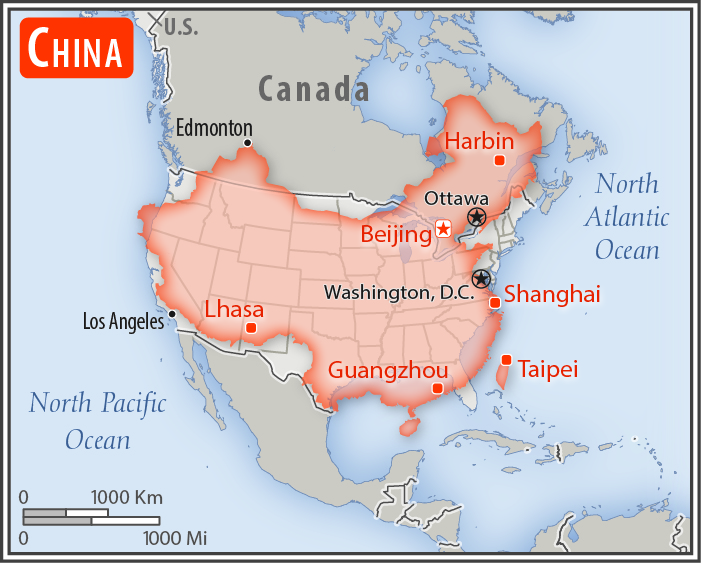
The territorial size of China in respect to continental America.

China’s one-child policy leads to a Chinese criminal enterprise to capitalize on kidnapping and selling children born to families that could not afford the fines for having more children than the law allows. Undoubtedly, most children born were cherished by their parents, but the hardship of life and human greed leads to unconscionable human trafficking. Kidnapping became a part of a legal and criminal enterprise in China. Government policy allowed bureaucrats and scofflaws to confiscate children from their parents and effectively deliver or sell children to orphanages or people wanting to adopt a child. Demick recounts stories of grieving parents and grandparents that cannot get their children back once they have been taken.

Child trafficking, broken families, loss of personal identity, human shame, and the immoral implication of other countries interest in adopting children are unintended consequences of a poorly thought out and implemented government policy.

Demick becomes interested in this story because of a message she receives from a stepbrother of an adopted Chinese sister that has a twin that lives in China. Because of Demick’s long experience in visiting and reporting on China, she had a network of people she could call. Using adoption records, Demick is able to find the Texas stepsister who had been kidnapped when she was 22 months old. She was trafficked to an orphanage in the Hunan Province of China. Years later, through messaging apps, the twins communicated with each other and shared their photographs. They eventually meet in China in 2019.

One is hesitant to argue a government policy is a unique act of China when every government makes policy decisions that have unintended consequences.

America’s policy decisions on immigration are a present-day fiasco that is as wrong as the one-child policy in China’s history. The one-child policy is eventually rejected by the Chinese’ government but Demick’s book shows how bad government policy has consequences that live on even when they are changed by future governments. America’s policy on immigration will be eventually reversed but its damage will live on.

Getting back to the story, Demick is instrumental in having the mother of Esther (aka E) and the twins meet in China.

One is hesitant to argue a government policy is a unique act of China when every government makes policy decisions that have unintended consequences. The twins are initially reticent but warm to each other in a way that bridges the cultural and language divide between the sisters. The two mothers see their respective roles in their daughter’s lives. E and her identical twin, Shuangjie, are reserved when they meet because of the cultural distance that was created by E’s adoption.

E. appears more confident than Shuangjie who is more reserved and less assured.

However, Demick suggests they seem to mirror each other in subsequent meetings. One feels a mix of emotions listening to this audiobook version of “Daughter’s of the Bamboo Grove”. They have grown up in different environments but seem to have been raised in similar economic circumstances, though the two economies are vastly different in income per household, the two appear to be raised in similar economic classes.

Every person who reads/listens to “Daughter’s of the Bamboo Grove” can view the story from different perspectives.

There is the perspective of identical twins raised in different families, cultures, and histories. How are identical twins different when they are raised by different parents and in different cultures? Another perspective is that Xi and Trump have had dramatic effects on the societies their policies have created. The Twin’s meeting in 2019 is one year after my wife and I had visited China. Xi had become President after his predecessor began opening China’s economic opportunities. Two incidents on the trip when Xi had become President come to mind. The first is the feeling one has of being monitored everywhere and the internet restrictions when used to ask questions. The second was an incident in a crowded Chinese market when I was approached by a beefy citizen who raised his arms and seemed to be angrily talking to me in Chinese which I sadly did not understand. The distinct impression is that I was not welcome. This was a singular incident that did not repeat in our 21-day tour, but it seemed like an expression of hostility toward America.

This listener/reader thinks of the unintended consequences of Trump’s treatment of alleged illegal immigrants.

Trump’s immigration policy is similar to China’s earlier mistake with the one-child policy. America’s, China’s, and Japan’s economies are highly dependent on youth which is diminished in two fundamental ways. One is by public policy that restricts birth, and the other is immigration. Freedom of choice is a foundational belief in democracy while considered a threat in autocracy. In America today, it seems there is little difference between America, Japan, or China in regard to government policy that threatens the future. All have an aging population that can only be aided by younger generations. Even though manufacturing may become less labor intensive, public need in the service industry will grow. Technology is a key to social need which has not been well served in the past or present and could become worse without pragmatic accommodation.

THE PATRIOT

Benjamin Franklin was no saint. He was a pragmatic, diplomatic, and intelligent politician who believed in improving himself, being honest in his relations with others, and determinately set on leaving a legacy of diplomatic accomplishments that (unlike our current government leaders) was intent on truly making America great.

Books of Interest
 Website: chetyarbrough.blog

The Completed Biography of Benjamin Franklin

Author: Mark Skousen

Narrated By: Richard Ferrone

Mark Amdrew Skousen (Author, economic analyst for the CIA from 1972-1977, is considered a political conservative, a distant descendant of Benjamin Franklin.)

Though the history of Benjamin Franklin is “well plowed” ground, Mark Skousen assembles Franklin’s original papers on his intended biography to give a fascinating portrait of perhaps the greatest American patriot in our history. Franklin’s role in America’s independence from Great Britain is perfectly explained in Skousen’s review of Franklin’s intended autobiography. The many offices that Franklin assumed in pre- and post-revolutionary times are evidence of his patriotism and importance.

Benjamin Franklin (1706-1790, died at the age of 84.)

Franklin served as a member of the Continental Congress from 1775 to 1776. He was the President of Pennsylvania from 1785 to 1788. His diplomatic roles were as Commissioner to France from 1776-1778, Minister Plenipotentiary to France from 1779 to 1785, and Peace Commissioner who negotiated the Treaty of Paris ending the Revolutionary War and establishing American independence. These formal posts fail to mention his great role in representing America to the British throne while sailing to England before the revolution.

Thomas Penn (1702-1775)

It is ironic that Franklin became the President of Pennsylvania in 1785 when he had challenged the Penn family’s proprietary control over Pennsylvania territory given to the Penn family by the King of England.

The Penns refused to allow taxation of their estates in the colonies. Franklin met with Thomas Penn and wrote a paper saying the Penns prevented governors from using discretion in the management of the Pennsylvania colony, refused colonists right to raise funds, and would not accept taxation on their properties. Though Franklin did not legally represent the colonies, he galvanized opposition and created groundwork for colonial autonomy. He became known as the “defender of colonial rights”.

Franklin’s biography explains how he became widely known in England, France, and the colonies.

In 1773, two Massachusetts’s colonial government letters were published at the direction of Franklin that exposed British officials’ promotion of restrictions on the colonies’ liberties. Franklin had been appointed Postmaster General in America, authorized by England, but was discharged for having published those inflammatory letters. Franklin wrote several satires mocking British colonial policies. He opposed the Stamp Act while becoming a representative of Pennsylvania, Massachusetts, Georgia, and New Jersey in London.

Benjamin Franklin’s experiment.

Despite Franklin’s opposition to England’s infringement on colonial rights, he was celebrated in England’s scientific community. He received the Copley Medal for his experiments with electricity and a fellowship in the Royal Society. William Strahan, one of England’s printers who was an MP, and the famous William Pitt sympathized with Franklin’s explanation of the colony’s grievances. On the other hand, growing anger from England’s parliamentarians required Franklin to escape arrest in England in 1775.

Benjamin and William Franklin

To show how torn colonist’ families are about the colony’s declaration of independence, Franklin’s son, “Billy”, actually William Franklin, is noted in his father’s diary and writings to have chosen to take the British side of the conflict. William had served as the Royalist’s Governor of New Jersey. He was appointed with the help of his father’s influence in London. William refused to join the Patriot cause and was imprisoned from 1776 to 1778, and later, exiled to Britain where he lived until the end of his life. It appears Benjamin and William never reconciled and never saw each other again. Benjamin Franklin dies at the age of 84 in 1790 while his son Willaim passes at the age of 83 in 1813.

Symbol of the Colonys’ fight for independence.

Some interesting notes are in Franklin’s diary about symbols of the war of independence. In 1754, Franklin published the cartoon of a snake emblazoned with 13 skin segments with a message “Join or Die” It was originally designed for the French and Indian War but became a symbol of the colonies fight for independence from Britain. In contrast, Franklin opposed the eagle as a national emblem and preferred the turkey. To Franklin, the eagle was a bird of bad moral character while the turkey, in his opinion, represented “a more respectable bird”. This is a surprise to many who revere the eagle as America’s symbol of independence, strength, and elegance today.

Franklin is considered wealthy at the time of his death.

In today’s dollars, Franklin’s wealth may be estimated at 10 to 90 million dollars. He had created a printing empire with “The Pennsylvania Gazette” and “Poor Richard’s Almanack” and used his presses to print books, pamphlets, and even currency. He licensed lighting rods to minimize building destruction from lightning strikes and provided heat to colonist’s homes with the Franklin stoves. He had rental properties in Philadelphia and speculated on western land purchases. He received compensation for his diplomatic and government service as Postmaster General. Franklin showed himself to be frugal putting money aside to receive compounding interest on its principle. He preached and practiced the adage, “A penny saved is a penny earned”.

Deborah (Read) Franklin, Benjamin Franklin’s wife.

Benjamin Franklin notes his wife’s name is Deborah Read. She dies in 1774 at the age of 66 from a series of strokes. Her health declined as Franklin’s diplomatic service in England and France took him away from home. When she suffered from a series of strokes, his voyages to Europe kept him from returning immediately. He returned in 1775, and Franklin was buried beside her in 1790.

Franklin’s self-written biography shows him to be charming and flirtatious with an appreciation of women.

Franklin’s flirtations with Brillon and Helvétius connected Franklin to influential French society, helping him secure support for the American cause. Ms. Brillon is in her 30s while Franklin is in his 70s. Another French lady is Madam Helvétius is in her mid-60s. Franklin proposes marriage to which she declines. It seems there is more smoke than fire in regard to Franklin’s illicit liaisons in France. However, he does admit to some youthful indiscretions with women of challenged reputations when he is younger.

Benjamin Franklin was no saint. He was a pragmatic, diplomatic, and intelligent politician who believed in improving himself, being honest in his relations with others, and determinately set on leaving a legacy of diplomatic accomplishments that (unlike our current government leaders) was intent on truly making America great.

BRUTALITY

What is so troubling about Grandin’s history is what appears to be the nature of human beings whether royalist, capitalist, socialist, or communist.

Books of Interest
 Website: chetyarbrough.blog

America, América (A New History of the New World)

Author: Greg Grandin

Narrated By:  Holter Graham

Greg Grandin (Author, American historian, professor of history at Yale University.)

Before Professor Grandin, most Americans presumed the United States came from the traditions of the British empire. After reading/listening to America, América, one recognizes the powerful influence of the Spanish empire on the settlement of North America, the attitude of colonists toward minorities, the growth of slavery, and the deep entanglement of Spain in the broader Americas. America, América is a book that widens one’s understanding of the history of the United States.

When being reminded of the many atrocities of colonization and the decimated indigenous natives of the Americas, one is appalled by man’s inhumanity to man. Grandin begins his history of colonization with the Spanish empires’ expansion into the Americas long before the Mayflower expedition to America. Conquistadors set the table for the way what became Americans way to colonize the New England territory. Hernán Cortés and Francisco Pizarro led expeditions that decimated the Aztecs in Mexico and the Incas in Peru. Looking for wealth Spanish conquistadors murdered, raped, and pillaged Latin American native populations. The conquistadors exemplified what became the modus vivendi of British colonists in America. Indigenous peoples were forced to work for Spanish landlords, later supplemented by imported African slaves. The atrocities of Spain in the 16th century are repeated by English settlers in the 17th and later centuries. An estimated 80% of the indigenous people of the Americas perished from disease, forced labor, and ethnic cleansing by Spanish settlers–a grim reminder of American settlers did to indigenous natives in America.

What is so troubling about Grandin’s history is what appears to be the nature of human beings whether royalist, capitalist, socialist, or communist. America, América shows the founding of the United States is a repeat of Spain’s early colonization of the southern part of North America. The human race appears driven by the desire for money, power, and prestige in a system that begins with attack on indigenous peoples and repeats as a perceived advance of civilization. There is some truth in that perception but one realizes indigenous peoples are equally driven and commit human atrocities among themselves in pursuit of value, power, and, or prestige.

This book is returned before completion because of its length. Its history is enlightening but its length is too much for this dilettante.

COST/BENFIT

“Apple in China” is a message to the entire world about the risks of technological relocation solely based on reducing costs of labor in a politically and culturally divided world. This is a book every employer should listen to or read.

Books of Interest
 Website: chetyarbrough.blog

Apple in China (The Capture of the World’s Greatest Company)

Author: Patrick McGees

Narrated By:  Fred Sanders

Patrick McGee (Author, technology/business journalist, San Francisco Correspondent for “Financial Times”.)

Patrick McGee has written an important book about world trade. He reveals a shocking story about Apple and the risk of basing a corporation’s economic future on a singular aspect of its success, i.e. cost of manufacturing. This is a story of two companies and the world’s labor market. Foxconn and Apple look to China, Taiwan, South Korea, Ireland, and Asian countries that vie for the role of the cheapest and best labor markets in the world. Foxconn’s and much of Apple’s search and success as a tech company is based on finding the cheapest labor in the world for the manufacture of product. However, McGee explains how that view makes Apple and other international corporations vulnerable to the politics of nation-states that have a mix of economic and political agendas. McGee explains how politics can be a greater cost than benefit to a business enterprise because of nation-state’ politics.

The power of political leadership in business enterprise is on display in America today with Donald Trump and his doomed effort to return America to a 20th century manufacturing behemoth.

McGee’s story is about the impact of China’s government on Apple and Foxconn led by Tim Cook and Terry Gou. Tim Cook is the wunderkind hired by Steve Jobs before his death, and Terry Gou is the Taiwanese billionaire who founded Foxconn which is now headed by Young Liu who was educated in Taiwan and the United States.

Tim Cook (CEO of Apple Inc.)

McGee explains why and how Tim Cook became the CEO of Apple. Jobs who was known as a poor manager of people, needed a manager who emulated Jobs’ drive but understood how to manager an organization to become bigger while remaining profitable. Cook is characterized as someone who has a near photographic memory. His analysis of reports from subordinates could be used to advance company goals or change a subordinate’s understanding of anything they propose that is not practicable or goal focused. What McGee argues is that Tim Cook’s focus on the cost of manufacturing became an Achilles heel when he hires Foxconn to organize Apple’s iPhone manufacturing to be done mostly in one country, China.

To accomplish iPhone manufacture in China, Cook had to transfer thousands of American engineers to train laborers in the assembly of Apple products.

Cook needed a go-between which became Foxconn, a Taiwanese company that is the largest electronics labor contractor in the world. Foxconn is also China’s largest private-sector employer with over 800k employees. Foxconn employees assemble iPhones, semiconductors, and electronics for some of the largest American technology companies in the world, e.g. Apple, Microsoft, and Dell. Foxconn’s relationship with China is further complicated by the international relationship between Taiwan and China. Foxconn has built a lucrative business in the tech industry because of its labor intensity and the desire of tech companies to minimize overhead to improve their profits.

World trade has made Foxconn the leading international labor subcontractor in the world. They employ an estimated 800,000 employees in China alone.

The desire to bring Taiwan under the control of communist China is a background conflict between Xi and Terry Gou. It may be unlikely that Gou would ever be elected President of Taiwan, but his candidacy is a cloud of suspicion to knowledgeable Chinese, Taiwanese, and American leaders. McGee notes Foxconn’s tax audits and land-use investigations by Chinese authorities that some believe are politically motivated. Foxconn has been criticized for poor working conditions because of incidents of worker protests, suicides, and labor strikes. China’s posture on those working conditions is ambiguous and most American businesses are ignorant or uncaring. A China crackdown on labor conditions would have wide effects on the global tech industry.

For Apple to lower costs of iPhone assembly, Foxconn contracted China’s people at low wages, to support what would be unfair labor practices in America, to assemble iPhones.

This benefited Apple in the first years of their association with Foxconn in China. However, later in the transition President Xi spread false reports of poor and unfair warranty practices being offered Chinese consumers of Apple products. Contrary to Xi’s claims, McGee explains that Apple warranties were the same in China as they were throughout the world.

McGee infers politics were behind Xi’s false claims about iPhone warranties.

China’s economy benefited from Apple’s move for cheaper manufacturing costs. China gained an immense technology boost from the retraining of Chinese citizens by Apple’s experienced engineers. With iPhone manufacturing in China, Apple’s revenues rose from $24 billion in 2007 to $201 billion in 2022. Apple invested an estimated $275 billion in China’s economy over 5 years. However, with Xi’s lies and vilification of Apple’s warranty, Chinese smartphone giants like Huawei, Xiaomi, Oppo, and Vivo increased sales. One presumes, Tesla followed a similar cost and benefit reward with its labor and technology transfer to China’s electric vehicle manufacturers.

McGee notes the bad publicity for Apple in the Chinese market threatens Apple’s future in three ways.

One, its loss of sales in China, two, a significant change in low-cost manufacturing advantages with rising Chinese labor cost, and three, Apple’ technology transfer to Chinese companies. Add to those lost advantages is Apple’s relocation costs to another country for iPhone manufacture.

GENERAL GEORGE C. MARSHALL (1880-1959)

An interesting comparison McGee makes between Apple’s $275 billion investment in China for iPhone assembly is that it is more than double the amount used in the Marshall Plan to rebuild Europe after WWII.

McGee notes Apple has a supply chain vulnerability from the Chinese government’s relationship with key suppliers of iPhone components wherever they are assembled. “Apple in China” is a message to the entire world about the risks of technological relocation solely based on reducing costs of labor in a politically and culturally divided world. This is a book every employer should listen to or read.

GOVERNMENT

The inference of “Plato and the Tyrant” is that all forms of government are like the parable of the cave in “The Republic”, i.e., people only see shadows of life’s truth.

Books of Interest
 Website: chetyarbrough.blog

Plato and the Tyrant (The Fall of Greece’s Dynasty and the Making of a Philosophic Masterpiece)

Author: James Romm

Narrated By:  Paul Woodson

James Romm (Author, Professor of Classics at Bard College, specializes in ancient Greek and Roman culture and civilization.)

James Romm reviews Plato’s personal correspondence that offers an interesting perspective on “The Republic” as a critique of Dionysius the Elder’s tyrannic rule of the island nation of Syracuse, Sicily, and southern Italy. (Syracuse is a Mediterranean island 620 miles off the coast of Greece.) Some believe there are 13 private letters written by Plato with the most famous and debated letter being number 7. Romm’s book is about these private letters and what they reveal about Plato’s character.

Excerpt of the 7th letter to Dionisius the Elder:

Holding these right views, Dion persuaded Dionysius to summon me; and he himself also sent a request that I should by all means come with all speed, before that [327e] any others13 should encounter Dionysius and turn him aside to some way of life other than the best. And these were the terms—long though they are to repeat—in which his request was couched: ” What opportunities (he asked) are we to wait for that could be better than those that have now been presented by a stroke of divine good fortune?” And he dwelt in detail on the extent of the empire [328a] in Italy and Sicily and his own power therein, and the youth of Dionysius, mentioning also how great a desire he had for philosophy and education, and he spoke of his own nephews14 and connections, and how they would be not only easily converted themselves to the doctrines and the life I always taught, but also most useful in helping to influence Dionysius; so that now, if ever (he concluded), all our hopes will be fulfilled of seeing the same persons at once philosophers and rulers of mighty States. [328b]

By these and a vast number of other like arguments Dion kept exhorting me; but as regards my own opinion, I was afraid how matters would turn out so far as the young people were concerned—for the desires of such as they change quickly, and frequently in a contrary direction; although, as regards Dion’s own character, I knew that it was stable by nature and already sufficiently mature. Wherefore as I pondered the matter and was in doubt whether I should make the journey and take his advice, or what, I ultimately inclined to the view that if we were ever to attempt to realize our theories [328c] concerning laws and government, now was the time to undertake it; for should I succeed in convincing one single person sufficiently I should have brought to pass all manner of good. Holding this view and in this spirit of adventure it was that I set out from home,—not in the spirit which some have supposed, but dreading self-reproach most of all, lest haply I should seem to myself to be utterly and absolutely nothing more than a mere voice and never to undertake willingly any action, and now to be in danger of proving false, in the first15 instance, to my friendship [328d] and association with Dion, when he is actually involved in no little danger. Suppose, then, that some evil fate should befall him, or that he should be banished by Dionysius and his other foes and then come to us as an exile and question us in these words—“O Plato, I come to you as an exile not to beg for foot-soldiers, nor because I lack horse-soldiers to ward off mine enemies, but to beg for arguments and persuasion, whereby you above all, as I know, are able to convert young men to what is good and just and thereby to bring them always into a state of mutual friendliness [328e] and comradeship. And it is because you have left me destitute of these that I have now quitted Syracuse and come hither. My condition, however, casts a lesser reproach on you; but as for Philosophy, which you are always belauding, and saying that she is treated with ignominy by the rest of mankind, surely, so far as it depends on you, she too is now betrayed [329a] as well as I. Now if we had happened to be living at Megara,16 you would no doubt have come to assist me in the cause for which I summoned you, on pain of deeming yourself of all men the most base; and now, forsooth, do you imagine that when you plead in excuse the length of the journey and the great strain of the voyage and of the labor involved you can possibly be acquitted of the charge of cowardice? Far from it, indeed.”

Dionysius the Elder ruled for 35 years and is succeeded by his son, Dionysius the Younger. Dionysius is characterized as a combative, brutal, and authoritarian leader. Plato visited Syracuse many times with the desire to ameliorate the Elder’s style of leadership. Plato’s effort results in the Elder’s selling him into slavery, presumably because of political differences and the Elder’s tyrannical power.

Plato (428/423 BC to 348/347 BC, died near 80 years of age.)

Soon after being sold into slavery by Dionysius the Elder, Plato is rescued by Anniceris who bought Plato out of slavery. Anniceris (aka Annikeris), a wealthy Greek philosopher, apparently recognized Plato’s brilliance. Plato goes on to create his famous academy in Athens. Though the Elder successfully controlled Syracuse and much of Italy during his tyrannic rule, his son, Dionysius II, used similar but less effective tyrannical rule and was eventually defeated. Plato tried to convince Dionysius II of his errors in leadership but fails and is compelled to flee house arrest to return to Athens. (Romm suggests Plato loved Dionysius II in more than a platonic way but was unable to change his tyrannical rule.)

Plato’s ideal republic envisioned a just society led by philosopher-kings. These rulers would rule based on collective good rather than personal gain.

This ideal republic would be built on wisdom, justice, and a strict class structure where there would be rulers, soldiers, and workers. Of course, the weakness in this ideal is human nature. Whether ancient or modern culture, as Lord Acton notes in 1887–power corrupts, absolute power corrupts absolutely. People do not naturally fall into specific classes. Human beings are individually and differently self-interested which ensures conflict. That is why both communism, capitalism, and its socialist leanings work inefficiently in ways that unjustly create haves and have-nots.

At the heart of all known forms of government is power.

There are good and bad leaders in history. The good are those who shaped nations, inspired movements, and changed the course of civilization for the better. The bad are the tyrants, the incompetents, and the cruel. Both the good and bad can be found in the histories of every form of government rule. One can argue Alexander the Great, Napoleon Bonaparte, Abraham Lincoln, and Queen Elizabeth I led forms of government that changed the course of civilization for the better. By the same token, one can argue Dionysius the Elder and Hitler changed the course of civilization in the opposite direction. The common denominator for constructive and destructive leadership is power. The type of government makes little difference. Every form of government has human leaders which may lead in ways contrary to the best interest of those they rule.

Plato’s Republic, Adam Smith’s “…Wealth of Nations”, and Adolph Hitlers’ “Mein Kamph” are ideas directed toward the exercise of power.

“Plato and the Tyrant” offers a perspective that makes one think about the history of Plato and government but does not offer anything new.

Romm’s evaluation of Plato’s “Republic” is a retelling of an ideal form of government that cannot exist because of the nature of human beings and the caves in which we live.

The private letters of Plato reveal little new about the consequences of rule by democracies, monarchies, oligarchies, dictatorships, theocracies, or anarchies. The inference of “Plato and the Tyrant” is that all forms of government are like the parable of the cave in “The Republic”, i.e., people only see shadows of life’s truth. Governance will only improve when people crawl out of the cave to see the truth of life.

CRISIS

There is no religious, nationalist, or political justification for killing of innocents but the history of the world shows we are all killers.

Books of Interest
 Website: chetyarbrough.blog

Conquering Crises (Ten Lessons to Learn Before You Need Them)

By: Admiral William H. McRaven

Narrated By:  Willaim H. McRaven

William H. McRaven (Author, retired four-star admiral in the U.S. Navy, ninth commander of the U.S. Special Operations Command from 2011 to 2014, commanded special operations in Iraq and Afghanistan.)

Wisdom does not always come with experience or age. Though born in 1955, William McRaven spent 40 years as a special operations officer in the U.S. Navy. He retired from military service and became chancellor of the University of Texas System from 2015-2018. Now, as a writer, McRaven offers some insightful advice to those who manage others in response to crises. He offers his personal, corporate, and institutional experience as a crises’ manager.

Though McRaven’s experience comes from a military system of command, he offers a listen, learn, and plan approach to getting things done through others.

When faced with a reported crisis, he notes the first information one receives is usually inaccurate and misleading. He offers numerous examples like Pearl Harbor in 1941, Hurricane Katrina in 2005, and Covid-19 in the 21st century. The first reports of those crises were misleading and were found to be much more consequential and damaging than originally reported. The first step when faced with a crisis is to be sure of the facts. McRaven generally discounts first reports. He suggests one should confirm details from personal observation (if possible or practicable). If one cannot investigate facts of a crises personally, one must confirm details from other sources that are at, subject to, or near the crisis. The point is not to act on first reports but to seek more information.

McRaven receives a phone call in the middle of the night about a mistaken Taliban sympathizer carrying a weapon who is shot and killed by an American soldier during America’s intervention in Afghanistan.

It was found he was not a sympathizer but a cousin of the President of Afghanistan. McRaven calls General Petraeus in the middle of the night to report the incident. Petraeus thanks McRaven for contacting him immediately rather than waiting until the morning. Both recognize the urgency of the crises. They discuss details of what happened and plan a response. McRaven is ordered to contact the President of Afghanistan immediately to explain what happened and offer American support for the family of the murdered cousin. McRaven’s point is know the facts of a crises, create a plan to address what is known, react as quickly as the correct facts are known, plan a response agreed upon by those in authority, and act (as soon as possible) according to plan.

Taliban resurgence in Afghanistan.

A more complicated crisis noted by McRaven is also in Afghanistan. America’s ambassador to Afghanistan meets with McRaven to tell him the special forces reporting to him in Afghanistan are alienating local Afghan citizens with their military actions against the Taliban. The ambassador tells McRaven his operations are alienating Afghani citizens to the point of losing America’s war against the Taliban. The meeting becomes heated because McRaven believes his command is doing a great job of pacifying Taliban attacks on local citizens. Rather than acting like an ostrich with its head in the sand, McRaven calls for a meeting of colonels in the Afghanistan theater to investigate the Ambassador’s accusation. The team McRaven assembles finds the Ambassador’s concerns are justified. Though peaceful coexistence appeared to be improved with McRaven’s special forces’ actions, the alienation of Afghani’s was growing. As has been written by other authors, America’s special forces often acted based on one Afghani family’s personal anger at another family rather than for any concern about Taliban activity.

The group of colonels assembled by McRaven developed a plan to more judiciously act on alleged Taliban activity from Afghan informants.

Of course, America’s ignominious departure from Afghanistan, implies McRaven’s response was too little and too late. This is not to argue that McRaven’s response was wrong but only that the plan did not stop Taliban resurgence. The valid point McRaven is making is that one should systematically address a crisis, create a plan once the facts are known, and execute the plan. Obviously, not all crises are successfully resolved. In the case of America’s intervention in Afghanistan, McRaven’s plan may not have been right for the facts that were gathered, or the crises was just too culturally complex for a successfully executed response.

McRaven comes across as a highly competent leader and manager in a crises.

Where one may have reservations about any leader’s role in a crisis is whether they agree on the facts. McRaven believes it is right to assassinate a proven terrorist who has killed innocent people. That kind of decision goes beyond the principles of McRaven’s book about response to crises. “Judge not, lest ye be judged” is alleged to have been said by Jesus in his Sermon on the Mount.

McRaven believes assassination is justified.

In Ukraine and Gaza, innocents are being killed every day. There is no religious, nationalist, or political justification for killing of innocents but the history of the world shows we are all killers. In a crisis, you would want someone like McRaven to be the “beauty on duty”, but one must ask oneself if assassination is ever justified.

ABSOLUTION

History of the world has shown all forms of government are “equal opportunity” inhibitors, if not destroyers.

Books of Interest
 Website: chetyarbrough.blog

Secondhand Time (The Last of the Soviets)

By: Svetlana Alexievich

Narrated By: Amanda Carlin, Mark Bramhall, Cassandra Campbell & 8 more.

Svetlana Alexievich (Author, Belarusian investigative journalist, winner of the Nobel Prize in Literature in 2015.)

Svetlana Alexievich’s “Secondhand Time” is a remarkable and informative explanation of why Putin believes he is right and why many citizens of Russia seem to continue in their support of his administration.

Map of the former U.S.S.R.

Alexievich conducts a series of interviews with Russian citizens of different generations about the U.S.S.R. and its return to the world stage as a Russian nation. The narrators of her book recite those interviews to give listener/readers a complex and enlightening picture of Russian culture. The clash of communist and capitalist ideals is at the foundation of the interviews and the narrators dramatically told stories.

The Russian Soviet Army is the first to arrive in the Battle of Berlin on April 16, 1945. Their flag was hoisted on May 1, 1945.

The citizens of Russia are justifiably proud of their role in WWII that turned the tide of Germany’s war of aggression. (Of course, that is putting aside Stalin’s Machiavellian decision to join Hitler at the beginning of the war.) Some Russian soldiers who fought in that war were disgusted with what they feel was a betrayal by Mikhail Gorbachev of communist ideals for which they lived and died for in the 20th century.

The rejection of communist ideals for capitalism is viewed by some Russians as a tyranny of greed that lays waste to the poor and creates a class of haves and have-nots.

Some Russian veterans of WWII see the seduction of capitalism destroying the ideal of a classless society. Some citizens see the ideal of a government is to demand the wealth of life be spread equally according to individual need. To these believers, enforcement of communist ideals would eliminate private property and greed that would create a classless society. Some believed Stalin exemplified leadership that would achieve that ideal. The hardship of life during Stalin’s rule is considered by some as justified means for the achievement of the Marxist ideal of communism.

Statue of the “Circle of Life” in Norway.

Cultures may be different, but all human life is the same.

The underlying point of these interviews is to show Russian culture is not monolithic, just as culture is not in any nation. All cultures are filled with diversity. There is no singular cultural mind but a range of interests among many factions that establish a nation’s culture. The evidence of that is the contrast of Gorbachev and Putin in Russia and FDR and Trump in America. All four leaders led their countries but represent completely different cultural beliefs.

Conservatives, New York Governor Al Smith, Southern Democrats, and isolationists like Charles Beard opposed FDR in America. Putin and Trump have their cultural supporters in today’s national governments, but they also have their critics. The difference is that in Putin’s world, being killed or put in prison for opposition is culturally acceptable. In America, one is reminded of Trump’s deportation and imprisonment of migrants without due process.

The author’s interviews are not suggesting that either Russia or the West have good or bad governments but that every culture tests their leaders.

Many Russians, undoubtedly blame American Democracy for the dismantling of the U.S.S.R. Alexievich interviews Russians who believe the hardship that countries within the U.S.S.R. experienced were not the fault of Stalinist policies but the failure of citizens to live up to the ideals of communism. To anyone who has traveled to the Baltics, that opinion is founded on ignorance of the hostility expressed by citizens of the Baltics who were starved, displaced, jailed, and murdered during their occupation by Russia.

The other part of the story is the rise of the oligarchs in Russia as a result of the greed associated with capitalism.

The gap between rich and poor is accelerated in Russia just as it has been in America. Democracy does not have clean hands when it comes to equality of opportunity. Like the Jewish pogroms in Russia, America’s enslavement, murder, and discrimination of Blacks is proven history.

Siberian Exile during Stalin’s reign in Russia.

Alexievich draws from all sides of Russian beliefs. Those interviewed note the terrible conditions of those exiled to Siberia. Many Russians became disillusioned by the redistribution of wealth and privilege after Gorbachev and Yeltsin showed themselves to not be up to the task of leadership change. In fairness, one wonders who could have been up to the task when Russia had a long history of monarchal and tyrannical leadership?

A few Russians became immensely wealthy while the majority were somewhat better off but some struggled with the loss of State benefits and fewer jobs. The rising gap between rich and poor soured communist idealists. Even those who had been sent to Siberia by Stalin who toiled and suffered the experience of isolation, slave labor, and frigid weather felt they were no better off because of the loss of a socialist future.

The frightening truth of Alexievich’s book about the culture of Russia is that Putin may be absolved for his atrocities just as leaders of America have been absolved for their mistakes. History of the world has shown all forms of government are “equal opportunity” inhibitors, if not destroyers.

MODERATION

Unless homelessness is addressed with affordable housing, America’s future looks bleak. A land of have and have-nots will grow to crush American prosperity.

Books of Interest
 Website: chetyarbrough.blog

Abundance 

By: Ezra Klein, Derek Thompson

Narrated by: The Authors

These two young Americans offer an insightful view of politics and American government in the 21st century.

Klein or Thompson could have voted for either Trump or Harris in America’s last election. Their book argues American government is both a boon and bane for citizen “Abundance” in the 21st century. They note America has contradictory economic policies that have created great abundance among Americans while exacerbating inequality. Evidence for their opinion is growing homelessness, an immigration crisis, loss of manufacturing jobs, and government’s failure to creatively adjust public policies to provide solutions.

Those who have shared in the abundance of America have voted for candidates to preserve their privileges.

The authors note homelessness is a function of affordable housing that is denied by government policies that regulate zoning and construction requirements. Government policies make affordable housing too costly to build and impossible to locate because of zoning restrictions. The number of people living on the street is a self-inflicted American tragedy. Some of the homeless are young, some are old, some have mental or physical problems, and others are victims of drugs or their own weaknesses. What they have in common is unaffordable housing.

Historically, immigration has been a great boon to American economic growth.

Klien and Thompson note restrictive immigration policies have created obstacles for workers needed for manufacturing in key industries like agriculture, auto industry assembly, housing construction, and clean energy infrastructure. Rather than wasting money on building walls and deporting workers, the authors advocate immigration reform that meets the needs of American business. One can imply the authors meaning is that to “Make America Great Again” requires immigrants willing to work in agricultural and manufacturing jobs. The end of the baby boom requires help from immigrants to meet the needs of increased manufacturing and construction in the United States.

Some believe what Trump is doing is good for the American economy in the long run.

The criticism is that in the short run, the economy may collapse. Tariffs being used as a ham-fisted way of negotiating fair international trade is a fool’s errand. America needs labor and material in the short run to achieve equal and greater prosperity than it had in the 1970s. Added manufacturing will aid American prosperity, but it will be surpassed in the long run by automation. It is the automation race America needs to win or compete with to remain a world leader. Competing in that race depends on education, and scientific research. The irony is that Trump is firing government employees who have responsibility for public education, research, and funding that have been the engines of America’s prosperity.

The government employees discharged by the Trump administration to solely reduce costs is short sighted.

In the 1980s, 60% of basic research in the U.S. was funded by the government. In 2022 that funding dropped to 40%. Advances in semiconductors, global positions systems, biotechnology, and aeronautics were government-funded discoveries in the 1980s. American government-funded scientific research gave America the internet, GPS technology, mass production of penicillin, Space exploration, human genome project discoveries, and renewable energy innovations. The Department of Health and Human Services has lost 20,000 employees, the Department of Education 1,300, the National Oceanic and Atmospheric Administration 800, and the National Institutes of Health 1,200. One wonders how many of these employees may have been on the edge of scientific discoveries that could change the world.

The truth of “Abundance” is that America has caused many negative ecological impacts and aggravated the gap between rich and poor.

Klein and Thompson have written a provocative book. However, the truth of “Abundance” in America has caused many negative ecological impacts and aggravated the gap between rich and poor. Looking only to abundance does not address either social inequality or the environment. The NIMBY (not in my back yard) resistance to affordable housing aggravates inequality and increases homelessness. Unquestionably, higher density housing impacts the environment.

Klein and Thompson fail to address the increased power of corporations in America.

The 2010 Citizens United v. Federal Election Commission gave corporations the power to spend unlimited amounts of money on political campaigns. The influence of corporations on elections has disproportionate power in the election of government policy makers. That decision by the Court is a distortion of one person, one voter’s influence on public policy.

Aristotle emphasized the importance of “All things in moderation”. NIMBY communities must open their minds and hearts to homelessness and moderate their resistance to neighborhood accommodation. Government agencies must supervise and service higher density housing impacts wherever they are built and after they are completed.

Unless homelessness is addressed with affordable housing, America’s future looks bleak. A land of have and have-nots will grow to crush American prosperity.