Graduate Oregon State University and Northern Illinois University,
Former City Manager, Corporate Vice President, General Contractor, Non-Profit Project Manager, occasional free lance writer and photographer for the Las Vegas Review Journal.
Brianna Weist philosophical book is worth listening to as a guide but not as an authority of how one should live their life.
Books of Interest Website: chetyarbrough.blog
101 Essays That Will Change the Way You Think
Author: Brianna Wiest
Narration by: Abby Craden
Brianna Wiest (Author, earned a BA in English and received an Honorary Doctorate in Literature from Elizabethtown College.
This is an odd book because it is written by someone who is not a psychologist, psychiatrist or therapist but presumes to know how one can understand themselves, think differently and become a more psychologically heathy human being. “101 Essays…” has become a popularly read and listened to book by the public. Of course, one can take her observations like one would take the meaning of many non-fiction authors who have a point of view about life and living. They are called philosophers.
One finds Wiest’s essays make sense, but her formal education makes one uncomfortable with her expressed beliefs.
On the other hand, what formal education was there for Socrates? (A. I. generated image of Socrates as a young man.)
Weist is straight forward in her opinions, and she taps into a human wish for one to be psychologically and physically as good as they can be. Changing “…the Way You Think” is no easy task but the idea of consciously understanding ourselves is an oxymoron that limits one’s ability to change. We are as likely to lie to ourselves about who we are or what we believe as to have a true understanding of ourselves.
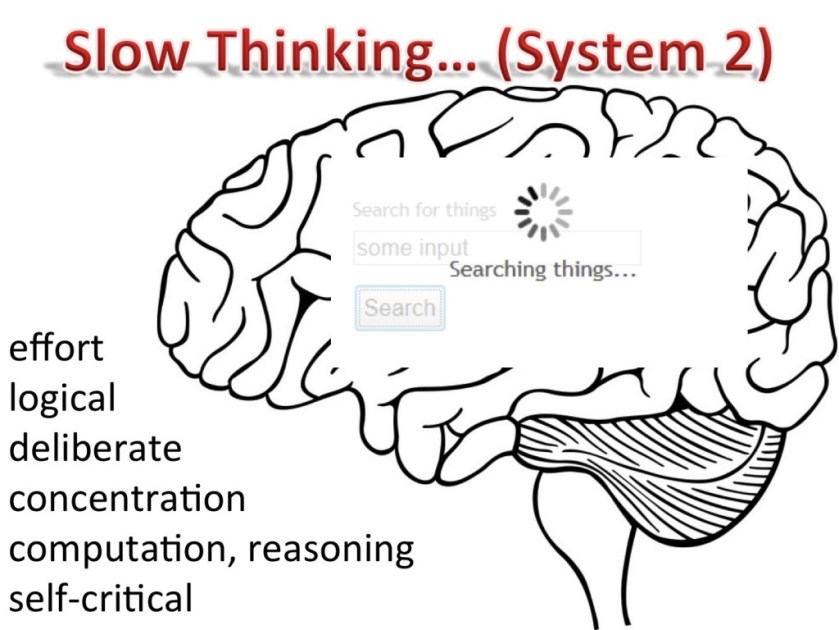
Daniel Kahneman is a renowned psychologist and Nobel laureate. He is an American citizen that served in the Israeli military and used his education, research, and experience to write “Thinking Fast and Slow”. His observations explore many aspects of human decision-making.
Weist logically argues one can become a better human being by changing the way they think. She is not acting as a clinical psychologist but as a philosopher of life and how one may make the most of it. If one understands Weist from that perspective, she is like Marcus Aurelius, Soren Kierkegaard, or Simone de Beauvoir. She has a philosophical point of view but not necessarily a happier or more fulfilling life.
The meaning of experience on one’s life is often too opaque for one’s understanding without the help of others.
Weist writes we should see what hurts others and ourselves and quit doing those hurtful things by changing our mind. This seems a good idea but denies the subjectivity and the unique experiences in one’s life. Many people are unable to understand the impact of experience on their lives. They are unable to change the way they think because they are unable to understand how or why an experience has affected their lives. Only with the help of a qualified psychologist, psychiatrist, or trained therapist can most people objectively understand themselves to constructively change their mind.
Nevertheless, Weist philosophical book is worth listening to as a guide but not an authority on how one should live their life. Most human beings are not introspective enough to find their way through life without the help of a person trained to elicit what we do not know about ourselves. On the other hand, it appears Weist has a genius beyond her years of life.
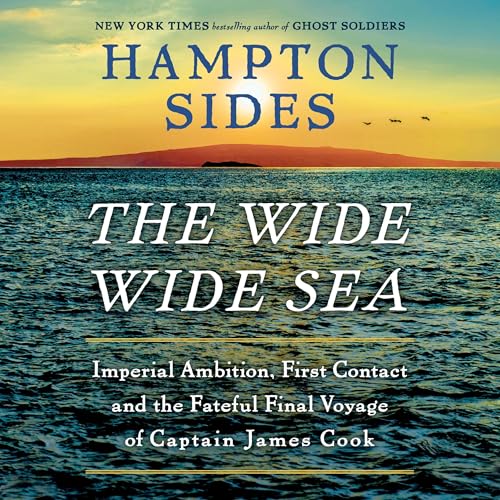
Like being a New Zealander, Americans are made of many cultures. That is an underlying theme of Hampton Sides interesting biography of Captain Cook.
Books of Interest Website: chetyarbrough.blog
The Wide Wide Sea (Imperial Ambition, First Contact and the Fateful Final Voyage of Captain James Cook)
Author: Hampton Sides
Narration by: Peter Noble
Hampton Sides (Author, American historian Yale graduate with a BA in history. As an editor, Sides has written many articles for national publications. He is awarded an honorary doctorate from Colorado College.)
Hampton Sides has written an interesting history of James Cook’s voyages with a focus on his final expedition to find a Northwest Passage. This is a slightly misleading statement because in the 18th century, a ship sailing from the Atlantic to the Pacific typically had to navigate around Cape Horn at the southern tip of South America. Explorers seeking a northern connection between the oceans attempted to reach a Northwest Passage, but the Arctic route was blocked by ice. Why would one think there was a northwest access from the Pacific if there was no passage from the Atlantic? Apparently, people believed the Atlantic side had been thoroughly searched without finding a passage, but the Pacific had been less explored and might have an unknown channel that would allow passage.
Sides writes the story of an 18th century navigator who had sailed the globe twice and was contracted to find a Northwest route that would shorten the distance between Europe and the North American continent. Called out of retirement by the British Admiralty, James Cook set sail on his third and final voyage in 1776, a propitious year for the American colonies. Cook took command of the HMS Resolution, accompanied by one other vessel eventually commanded by Captain Charles Clerke on the HMS Discovery. (Both Clerke and Cook died on this voyage, i.e., Clerke from tuberculosis and Cook from a melee in the Pacific.) It is interesting to find that the vessels are loaded with animals as well as food provision for long voyages. Sides notes Cook dislikes the requirement of livestock because of the stink from their offal. Cook is a stickler for the cleanliness of his vessels and crew members. However, Cook recognizes livestock’s importance on long voyages for adequate food provision.
Before science showed lack of vitamin C caused scurvy, Cook required provisioning of fruit on his long voyages.
It is Cook’s observation of other mariners’ health experience that made Cook decide on food provisioning for his voyages. Sides writes Captain Cook only had a village-school education, but he had a practical maritime apprenticeship based on learning by doing as well as by observation of past sailings of other mariners.
The character of Cook is somewhat revealed in the history of an earlier voyage to New Zealand in 1773.
Sadly, Sides notes Cook’s personally written logs and correspondence are stoic with little insight to his emotions. He notes Cook’s stoicism is even more difficult to pierce because his younger wife destroyed Cook’s personal letters. Nevertheless, Cook’s stern character is illustrated by Sides’ details during his voyages. There is no doubt in a listener’s mind that Cook is a highly competent leader who brooked no opposition from his crew while exhibiting a nascent understanding of the importance of native cultures. Sides shows Cook to be a keen observer of different cultures and, for the most part, avoided criticism of other societies as long as they did not interfere with the Admiralty’s commissioned objectives.
A New Zealand Māori politician, Nanaia Mahuta, serving New Zealand in 2021.
The indigenous Māori live in New Zealand today. Cook’s two ships that visited New Zealand were the Resolution and Adventure. They became separated because of bad weather. The captain of the Adventure, Tobias Furneaux arrives in New Zealand after Cook had already departed. Furneaux dispatched 10 armed men to collect fruited plants for scurvy prevention. The 10 men did not return. In searching for the men, the search party found severed body parts being eaten by dogs. A tattooed hand revealed the remains as one of the 10 men. The 10 mariners had been killed in what is called a whāngai hau ritual which is an act of consuming an enemy’s spirit by eating their flesh. Because Cook had already left, the search party interrupted the ritual and recovered some of the remains. The cause of the 10 men’s killing is unknown but the incident shaped Māori–European relations. When Cook returned, he chose not to retaliate because he did not know what caused the killings and understood the acts of the Māori were a culturally influenced event, presumably caused by something the 10 men did that threatened the indigenous New Zealand tribe. Cook chose to respect the cultural beliefs of the tribe rather than seek a revenge urged by some of his crew.
New Zealand farmland.
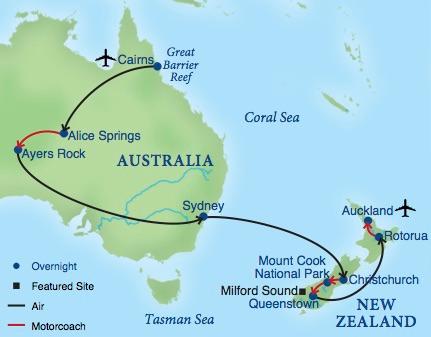
Having personally visited New Zealand, one appreciates one of the most beautiful places in the world, but the story of the Māori Grass Cove incident is a shocking reminder of how much civilization has changed over the centuries. One of our guides belonged to the Māori tribe.
Sides explains Cook is commissioned by the Admiralty to settle a question of the existence of a presumed unknown southern continent in the Pacific that was tentatively identified as Terra Australis. Cook’s expedition found there was no great habitable continent to the south, but he crossed the Antarctic Circle many times. Massive ice fields kept Cook from the Antarctic mainland. Anyone who has visited Antarctica knows of the Drake passage and how rough the sea can be. Having visited Antarctica clearly shows year-round habitation would be like living on the moon, i.e. possible but highly inhospitable. Cook found no habitable continents in the south seas because there are none.
Kealakekua Bay in Hawaii.
Cook’s third expedition is the first European contact with Hawaii after passing through the Bering Strait on his way through the north Pacific. Ironically, in his last voyage, he is killed in Hawaii in 1779, one year after he returned to Hawaii. He had spent a year more searching for the passage when he returned to Hawaii on his way back to England. When Cook first landed on Hawaii, he and his crew were welcomed with open arms. Cook appears like a God to many Hawaiians. Cook’s steely personality is two edged in that it made him a great leader of men on long exploratory voyages, but he brooked no insubordinate behavior. When returning to Hawaii after a year of looking for the Northwest Passage, reception by the Hawaiians was less respectful. A boat is stolen by some Hawaiians when they were anchored at Kealakekua Bay. The stolen boat is a major diplomatic and military issue because it was an important piece of the ship’s survival. Sides notes theft is not uncommon in native Hawaiian culture. Cook’s response is to attempt capture of the chief of Hawaii and hold him hostage until the boat is returned. The Hawaiians resist. A fight breaks out and Cook is struck; he falls to the ground and is stabbed and beaten to death by the Hawaiians. Four marines were killed with 17 Hawaiians that died in the confrontation. Cook’s body is ritually dismembered as is the custom of the Hawaiian culture in respecting a high-ranking enemy.
A.I. Generated picture of what Omai may have looked like.
Sides’ story is more than a recounting of historical facts. He writes several chapters about a native of the Society Islands name Omai who became a celebrity in London. Cook had brought Omai to England after his second world voyage. Omai boards the ship on Cook’s third voyage to be returned to his homeland after having lived in London for two years. The Society Islands are an archipelago in the South Pacific Ocean made up of Tahiti and four other islands.
At first, one wonders why the story of Omai is included in Side’s book. One realizes the story of Captain Cook, in broad strokes, is well known but Omai reflects on how history is shaped by those who tell a story that often obscures the complexity of past events.
The story of Omai is obscured by the big picture of Captain Cook’s momentous voyages but Omai’s story shows how cultures are widely misunderstood because of those who tell the story. Omai’s cultural influences are lost because they are interpreted through the lens of a society that sees people of other cultures as noble savages or exotics, i. e., not based on their unique experience and culture. After Omai’s experience in London, he is no longer just a Tahitian. In returning to Omai’s culture, he is a different human being. He becomes an exotic in both societies. He dies only a few years after his return to his native country.
Many cultures have influenced what Americans have become.
One comes away from “The Wide Wide Sea” thinking of today’s immigration policy and the many who have come here to only be rejected for not being born in America. America has lost its historical memory. Many people who immigrated have added their cultures to society in many positive ways that have made America great. Our ignorance and actions that contradict that truth are appalling to many. Captain Cook recognized the murder and dismemberment of ten Englishmen by the Māori was terrible, but his response respected their culture. The Māori remain an important part of New Zealand culture just as American Indians are an important part of American culture. To arbitrarily reject immigrants without due process is unjustifiable in a country made great by many different cultures.
Like being a New Zealander, Americans are made of many cultures. That is an underlying theme of Hampton Sides interesting biography of Captain Cook.
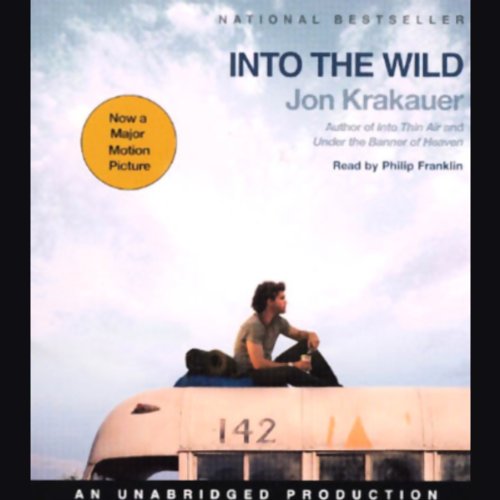
The story of McCandless’s life is that meaning in life comes from people and nature, not one or the other but both.
Books of Interest Website: chetyarbrough.blog
Into the Wild
Author: Jon Krakauer
Narration by: Philip Franklin
John Krakauer (Author, mountaineer, raised in Corvallis, Oregon.)
The main character in “Into the Wild”, tuned in and dropped out. His “tune in” is not to drugs but a wish to understand the meaning of life. Christopher Johnson McCandless chose, after graduating from Atlanta, Georgia’s Emory University, to live off the grid of society, i.e. particularly capitalist society. His degree is a BA in history and anthropology. McCandless chooses to drive around the country, working at dead-end jobs to sustain himself until he finds a place to live in a natural habitat, without the aid of society which he believes keeps him from understanding the meaning of life. He began a “walk about” from Georgia with a plan to explore survival in the frigid wilds of Alaska. McCandless kept a journal of his search for life’s meaning. His journal became the guiding source for Jon Krakauer’s book about McCandless’s brief life.
Christopher Johnson McCandless (1967-1992, died at the age of 24.)
The McCandless family picture with Christopher either before or after enrollment at Emory University.
McCandless came from a solidly middleclass family but rejected capitalism defined by the desire for money, power, and/or prestige. He obviously loved the outdoors and wished to explore the possibility of living off the land with whatever nature had to offer. McCandless rebels against capitalist beliefs when graduating from college. He begins a search for the meaning of life beyond the principles of a capitalist society. He sought understanding by experiencing the attractions and dangers of the American wilderness. McCandless wishes to be free of materialism, his familial relationships, and the conventions of a middleclass capitalist life.
(One wonders if McCandless’s story is part of today’s rising homelessness with people living in tents, sleeping in business doorways and on sidewalks of American cities? Are Americans becoming disillusioned with capitalism because the gap between rich and poor is rising and pushing the middleclass into poverty? Some argue the cost of living is climbing faster than the wages of employment.)
McCandless graduation form Emory University in Atlanta Georgia.
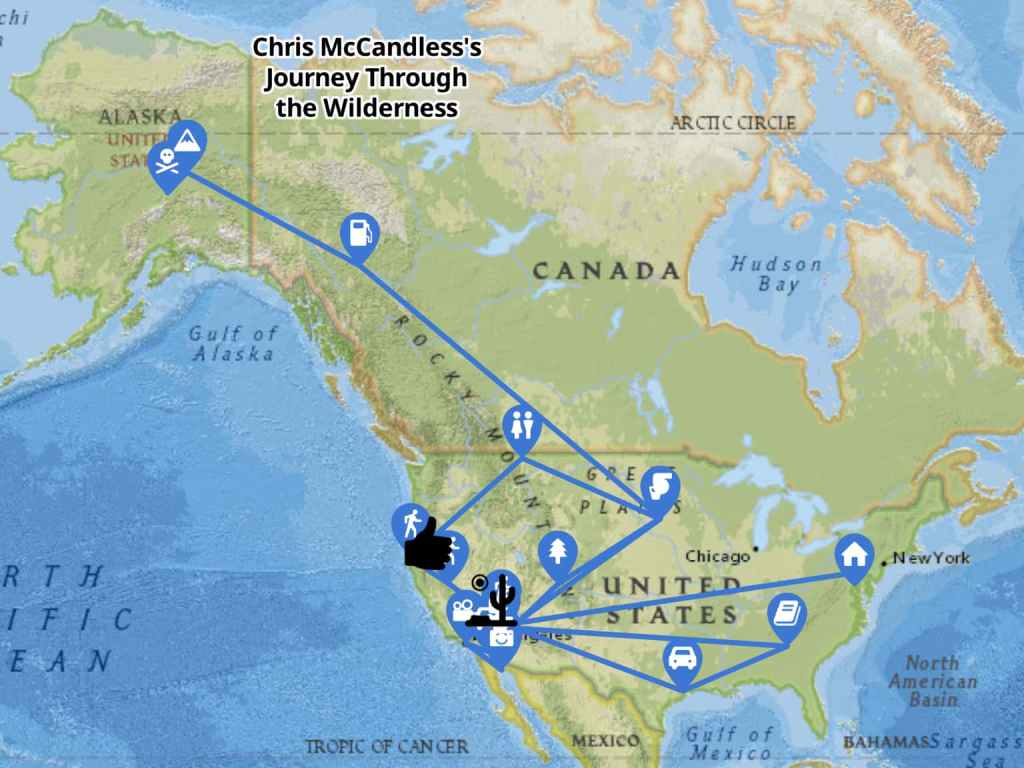
With a BA in history and anthropology, McCandless graduates from Emory in 1990 and leaves Atlanta, heading west. Rather than look for a job or extending his education, he donates his savings to charity, cuts off communication with his family, and journeys to the west in a 1982, B210, Datsun. He heads southwest, traveling to Alabama, Mississippi, Louisiana, Texas, and New Mexico. He spends some time in Arizona with odd jobs and becomes stranded when his Datsun is disabled by a flood. He hitchhikes to California via Las Vegas, goes through South Dakota with his determined destination being Alaska in 1992. Nearly two years have passed since graduating from Emory.
Map showing McCandless’s two years of travel from the East to the West, mid-West, and on to Alaska.
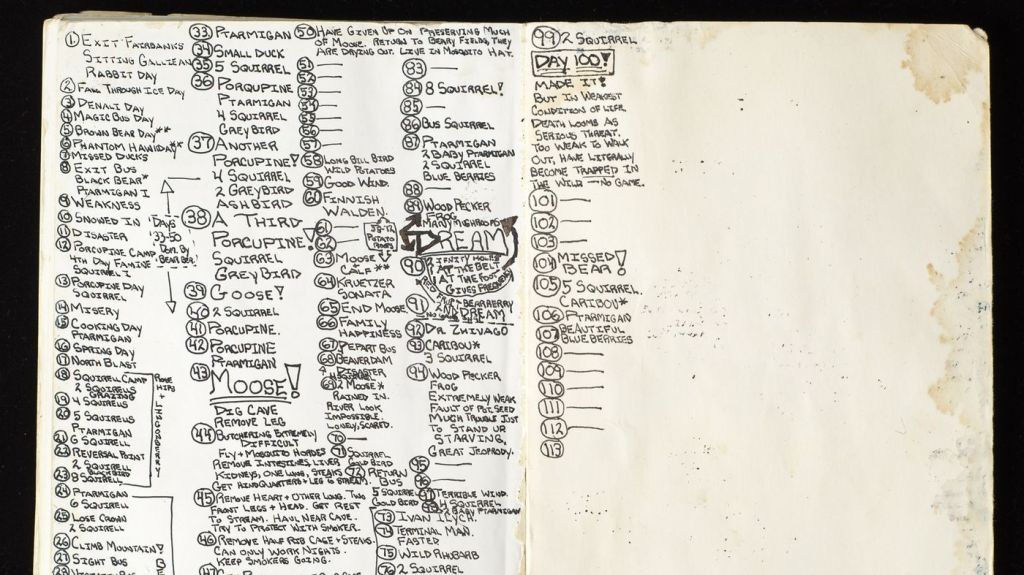
McCandless kept a journal of his travels. The author, John Krakauer, interviews some of the people McCandless meets and/or works for that are noted in his journey. All say he was a nice person and hard worker who dependably showed up for work. However, one employer noted he had to be told to take a shower and wear socks when he came to work at their fast-food restaurant. McCandless was obviously homeless and had no shower facilities in which to bathe. He reluctantly complied as best he could but soon left to find his way to Alaska.
Sample of McCandless’s journal when he called himself Alex Supertramp.
McCandless arrives in southern California. He meets an older (80 something) American named Ronald Franz, a leatherworker, who tries to convince McCandless to give up his wandering life. They become friends but McCandless leaves Franz without saying goodbye as he heads north. The importance of their relationship is shown in a letter sent to Franz by McCandless that explains his inner conflicts. McCandless explains his need for independence and the freedom it gives him to personally connect with himself. By abandoning materialism, wealth, and social expectations, McCandless believes it makes him free. The tension created by McCandless’s belief in social isolation versus human relationship is expressed in his letter to Franz. Being alone is no answer to the conflict one feels toward their family or those who are part of society. Part of one’s identity, belief in who they are, and belief in oneself is reinforced by other people, not in wilderness isolation. This is a lesson of life that McCandless refuses to see or understand. The well-known poet, John Donne, recognizes “No man is an island”. All humans are interconnected which is a truth McCandless refuses to see.
McCandless dies in a Fairbanks city Transit bus he used as a shelter in Alaska. John Krakauer speculates on the cause of death being inadvertent poisoning from eating potato seeds because of McCandless’s hunger, emaciation, and lack of nourishment. If there is meaning in life, McCandless search and isolation is in vain. The story of McCandless’s life is that meaning in life comes from people and nature, not one or the other but both.
Like being raised in India by a single parent, Roy shows parallels of what it’s like to be raised in America. We all become who we are by genetic inheritance, socialization, experience, choice, and chance.
Books of Interest Website: chetyarbrough.blog
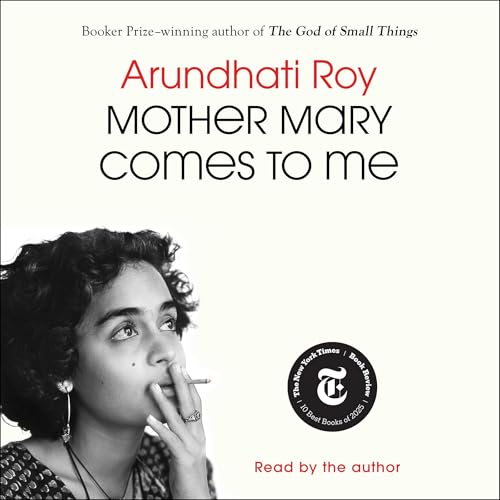
Mother Mary Comes to Me
Author: Arundhati Roy
Narration by: Arundhati Roy
Arundhati Roy (Author, Booker Prize for Fiction awarded in 1997 for “The God of Small Things”.)
Born in India in 1961, Arundhati Roy offers a memoir of her life. Roy is born into a Christian family in a country that is 79.8% Hindu while only 2.3% Christian. Roy suggests her early life is shaped more by instability than penury. Her mother is a teacher who becomes a founder of a school. It seems Roy’s young life is filled with emotional turbulence with a fierce and complicated mother who greatly influences her.
The poverty of India.
The facts of Roy’s memoir are straightforward but the presentation and supporting examples of a mother who is fierce and complicated are both humorous and foreboding. One can understand why Roy is capable of overcoming the hardship of life to become an accomplished writer.
Arundhati Roy’s mother Mary.
Roy explains her mother and father were divorced when she was two years old. Her father was a Bengali Christian who managed a tea plantation but appears absent from most of Roy’s young life. Her mother, Mary Roy, seems a great part of who she became and what she believes. Her mother seems both a source of terror and inspiration. Her mother’s rages and criticism had an immense impact on who Roy became as an adult. Her mother had a reputation as a celebrated educator, and a women’s rights activist who was politically active in Indian rights. Her mother’s education and activism became a gravitational center for Arundhati Roy.
Cremation preparation for burial in the Ganges River in India in 2018.
A part of what makes Roy’s memoir interesting is her perspective on India’s culture. Having traveled to northern India, the harsh climate, overcrowded streets, Ganges burial ceremonies, and obvious poverty juxtaposed with fine hotels and great restaurants is disturbing to a traveler who can afford to see the world.
Single parent homes in America.
However, Roy’s story shows being raised by a single parent (most often a single mother) is not uncommon and the influence of a one parent family appears the same in India as in America. The unique experience Roy has in India is interesting because of its similarity to a single-parent child’s experience in America. Roy is highly influenced by the mother who raised her. Roy is reflecting on truths that apply to children’s experiences in America. Though a single parent to a child is a primary influence, there are others like teachers, mentors, friends, and extended family members that influence who we become. However, being raised by a mother who is responsible for your education and survival tempers your feelings about parenting. You realize how hard a single parent’s life can be with responsibilities beyond taking care of themselves.
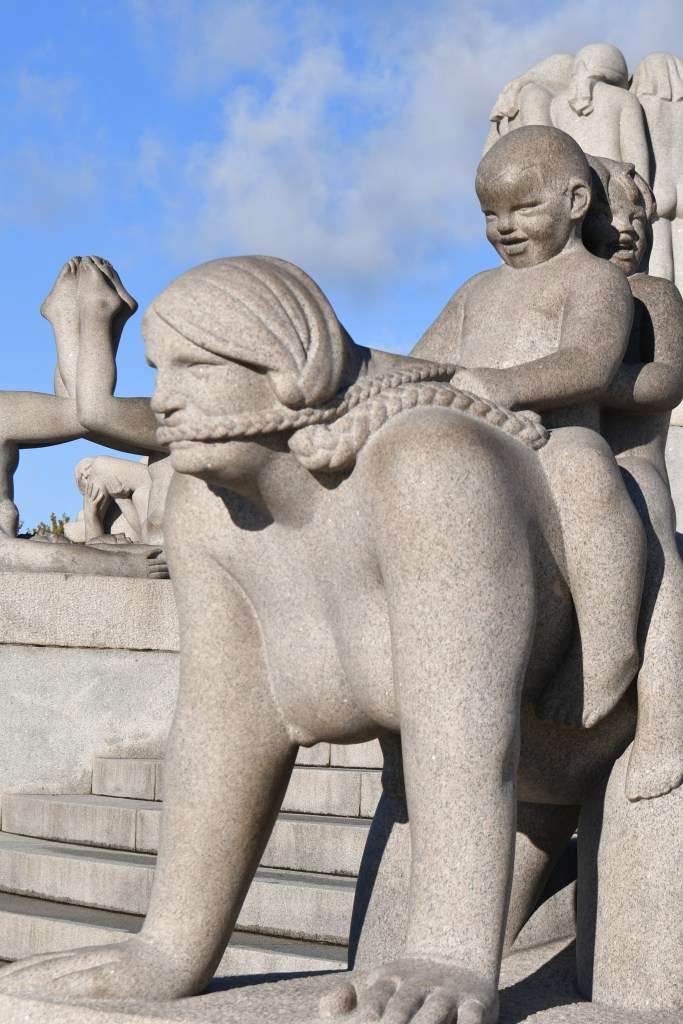
A circle of life statue in Norway reflects the importance of mothers in raising children in the world.
Roy, as an adult, recognizes her mother as a sun around which her life revolves. Roy’s mother divorces when Arundhati is two years old. Her father is characterized as an alcoholic and not part of Roy’s life as a child. Her mother is a model of independence, activism, and defiance. Her mother understood, despite male dominance in Indian society, a woman must have grit, political courage, and belief in their role in society. That attitude shaped Roy as a writer and activist. Roy’s mother gave her a sense of self, partly from love but also from respect for independence from the harsh realities of life. Roy’s mother died in 2022 which undoubtedly explains a part of why this memoir is written.
Women’s impact on the world.
Roy explains her mother was intense, intelligent, and emotionally volatile. In Roy’s life, her mother is a source of terror and inspiration. On the one hand, her mother frightened her and her brother but on the other she fueled Roy’s courage and creativity as an independent human being. As she approaches her own adulthood, fear of her mother changes to overt resistance. Roy leaves home at the age of 18 which undoubtedly represents her drive for independence, but she fully realizes her mother’s example made her the adult she became.
Not surprisingly, Roy objects to Hindu authoritarian nationalism represented by India’s political leader, President Narendra Modi.
Roy feels Modi’s BJP party discriminates against women and uses religion as a political tool to weaponize Hindu nationalism that shapes its authoritarianism. She argues dissenters, and minorities are being silenced when seeking equal rights for all. Roy is not writing about her spiritual beliefs but about India’s use of religion, politics, and its legal system to restrict equal rights for all. Roy shows she is her mother’s daughter who is a fierce and opinionated feminist.
Raising children of the world.
In pointing to life in India and Roy’s upbringing, she humorously addresses her mother’s contradictions, her theatricality, and the chaos of her upbringing. What is missing are examples of personal relationships her mother had with others after her divorce from an alcoholic husband. (The truth is that the book is long enough as it is.) Like being raised in India by a single parent, Roy shows parallels of what it’s like to be raised in America. We all become who we are by genetic inheritance, socialization, experience, choice, and chance. It is the parent who stands with us through our childhood that gives us what is good and bad about who we become.
Imagining a single mother raising a child, working full time, and trying to be happy is an arduous task in itself.
Roy’s mother prepared her daughter for the hardship of life with a decent education and the toughness needed to cope with both failure and success. Roy shows her mother succeeded in making her daughter a tough independent adult in “Mother Mary Comes to Me”. Roy’s life seems to repeat some of the mistakes of her mother’s life while forging her own success as a writer and opinionated activist.
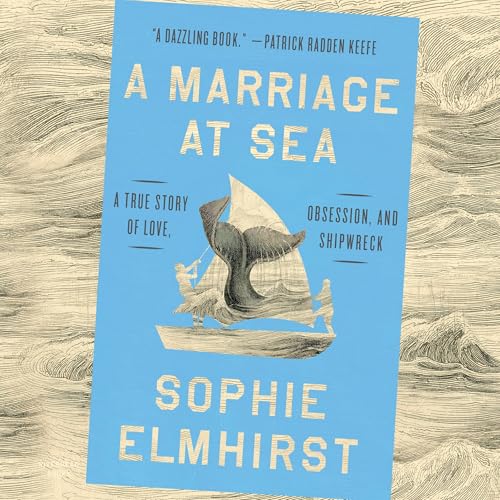
In the book “A Marriage at Sea”, one wonders how a husband or wife would respond in a crisis. Who would take command and who would follow? Is it a matter of nature or nurture?
Books of Interest Website: chetyarbrough.blog
A Marriage at Sea (A True Story of Love, Obsession, and Shipwreck)
Author: Sophie Elmhirst
Narration by: Marisa Calin
Sophie Elmhirst (Author, British journalist who wrote the story of Maurice and Maralyn Bailey who survived 118 days on a life raft in 1973.)
Surprisingly, Elmhirst writes about marriage in telling the story of a shipwreck that left Maurice and Maralyn Bailey on a life raft in the Pacific Ocean for 118 days. The Baileys had been married for 9 and a half years when their yacht was struck by what is presumed to be a dying whale.
The Baileys.
The Baileys were a middle-class British couple who fell in love with an idea to buy a small yacht and sale the sea to visit the Galapagos islands and beyond, a fantasy both adopt. Maurice’s strict childhood had prepared him to master the technical skills of a seafarer, but Maralyn seems to have the determination to make their dream real. They sold all their possessions, including their home, and contracted with a boatbuilder in Southampton who began the long process of building a yacht for their voyage at sea.
Maralyn Bailey using a sextant on their sailboat.
They set sale in June 1972 in a 31-foot yacht named Auralyn. They crossed the Atlantic and reached Panama in February 1973 and headed for the Galapagos islands in the Pacific, expecting it to take ten days. At dawn on March 4, 1973, their vessel was struck by a whale in the Pacific Ocean. They were 300 miles from the Galapagos islands when their vessel sank. Water filled the hold, and they abandoned ship on a raft with a small dinghy they used to store supplies they gathered from their sinking boat.
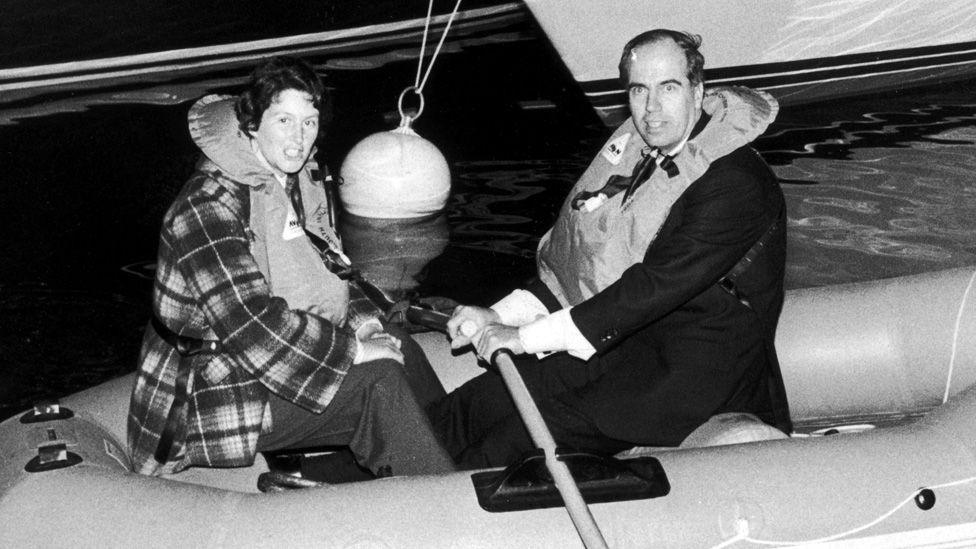
Maralyn and Maurice on a rubber raft before their sea adventure.
On the one hand, the knowledge of Maurice’s navigation skill aided their eventual rescue, but it seems Maralyn’s will and determination saves their lives. Their slim provisions would only last for a few days before dehydration and starvation. To last for their 118 days adrift, they improvised. They caught and ate raw turtles, fish, and seabirds while collecting rainwater for their sustenance. They had no fishing hooks and had to bend safety pins. They had to make fishing line for the hooks from thread, cord, twine, or maybe the yacht’s emergency kit. Whatever they caught had to be killed, cleaned, and eaten raw.
Seven ships passed the Baileys who were lost at sea.
Seven ships passed the Baileys but did not see their raft and dinghy. Even though they were in the “Sea Lane”, it is easy to understand why they were missed. They had flares that did not ignite which made their being seen unlikely, particularly with the immense size of sea transport vessels. Their hope for rescue rose and fell with each vessel sighting. Their boat, the size of the ships, and the distance from sea-going vessels must have been too far for anyone on board to see them.
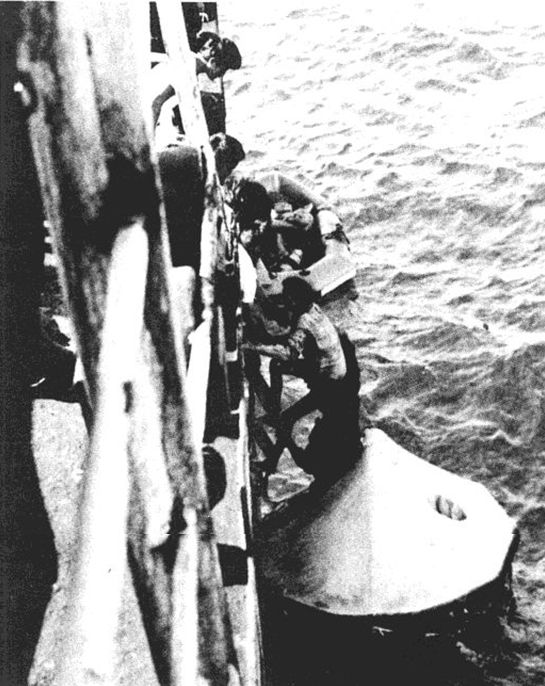
Vessel that found the Baileys.
It is a South Korean fishing boat that spots them. They had drifted over 1800 miles from the Galapagos Islands when they were rescued. Fortunately, the Bailey’s voyage is within the fishing routes of the Pacific. South Korean fishing boats would travel hundreds of miles from shore to catch tuna, billfish, mahi-mahi and other marketable fish. The South Korean boat was a deep-sea commercial fishing vessel. Its smaller size undoubtedly helped them see the Baileys.
The Bailey’s after their recovery from 117 days on the sea.
The Baileys were severely emaciated. Both had lost over 40 pounds. They could barely walk because of malnutrition and saltwater sores from skin irritation. It is hard to conceive of how exhausted they must have been. The Baileys were taken to Honolulu, Hawaii for medical care and recovery. Without doubt, the South Koreans saved the Baileys lives but it was a 1500-mile trip to Honolulu for the fishing vessel which would take 5 to 8 more days.
Sexual equality.
Elmhirst’s story suggests survival is largely because of Maralyn’s tough-mindedness and attention to her husband’s strengths and weaknesses.
In a marriage, one wonders how any husband and wife might respond in a crisis. Who would take command and who would follow in a crisis? Is it a matter of nature or nurture? In the case of the Bailey’s crisis, it appears Maralyn took command. The cost of that command is unknown, but parenthetically one notes Maralyn died at 61 while Maurice lived into his 80s.
There is a risk of pathologizing social skills if one comes away from Clayton’s book thinking that fawning is only a negative characteristic of society.
Books of Interest Website: chetyarbrough.blog
Fawning (Why the Need to Please Makes Us Lose Ourselves–and How to Find Our Way Back)
Author: Ingrid Clayton
Narration by: Ingrid Clayton
Ingrid Clayton (Author, clinical psychologist, trauma therapist)
“Fawning” as described by psychologist Ingrid Clayton can cause an unconscious trauma when a person appeases, pleases, or over-accommodates others to feel safe. Clayton explains it is a survival strategy for one who deals with another person who is physically or emotionally abusive. Clayton recalls her life as a child with a stepfather who is grooming her for an intimate relationship when she is 13 years old. Clayton manages to avoid that relationship but explains the long-term psychological impact in her life is similar to PTSD.
Post-traumatic-stress disorder is a mental health condition caused by experiences, witnesses, or traumatic events that make one feel fear, stress, or danger. Clayton notes that her life when leaving home at 17 had those symptoms. She pursues a college education, graduates, continues her education to receive a PhD and finds employment as a therapist.
Pedophilia.
At the age of 13, her male stepfather created a grooming environment that created a long-term psychological impact on her life. She matured to feel fear, stress, and danger in developing relationships with others. She wrote “Fawning” as an educated PhD clinical psychologist to explain how a child growing to an adult can “…lose themselves…” with a form of PTSD. She believes she has found a pathway back to relationship’ normality after years of broken relationships. The irony of her realization is that all human beings are “fawners”.
Some will be inclined to put Clayton’s book down as an exaggeration of relationship reality but as she tells of her personal experience and therapy of others, both men and women, her beliefs become disturbingly credible. As one examines their own life (if they have lived as long as this book reviewer) know every human being is raised in their own familial circumstances. Children raised with 1, 2, or no parent families, develop behavior toward themselves and others that can lead to abuse of others which diminish their and other’s humanity. What Clayton shows is how her stepfather grooms her and how she responds based on her own grooming ability. She rejects his advances, a grooming behavior that a parent-child relationship allows with the risk of physical sexual abuse.
There is truth in Clayton’s explanation of “Fawning” as a universal relationship modifier, but it is not always linked to either grooming or abuse. People-pleasing behavior is a universal characteristic of society.
There can be good reasons as well as bad reasons for fawning. Looking at grooming as the only lens one views fawning diminishes its social value. That is certainly not Clayton’s intent but one may come away from her book seeing pedophilia as the primary consequence of fawning. The reality is that rigid family dynamics, cultural hierarchy, and high-pressure workplaces are common examples of fawning. Social cohesion and disruption are a general consequence of human nature influenced by fawning.
Clayton outlines a pathway back from PTSD. Prevention of trauma is of course the best solution. However, if one is a child, prevention becomes more problematic.
Clayton argues it is important to recognize fawning is not a people-pleasing choice but a survival strategy. Rather than feeling fear from what appears to be happening, clearly remind yourself of who you are and what you believe to be right. Recognize other’s motives. Respond appropriately by speaking up if your personal boundaries are being violated. Reflect on who you are and interrupt any motives of others that conflict with what you believe about yourself. The weakness of this pathway seems problematic for younger children. The pathway back for a child seems likely to be after the fact.
There is a risk of pathologizing social skills if one comes away from Clayton’s book thinking that fawning is only a negative characteristic of society. Pedophilia is a terrible societal malady, but society cannot function or improve without fawning.
Without a competent Chief of Staff, democracies are subject to authoritarian tyranny.
Books of Interest Website: chetyarbrough.blog
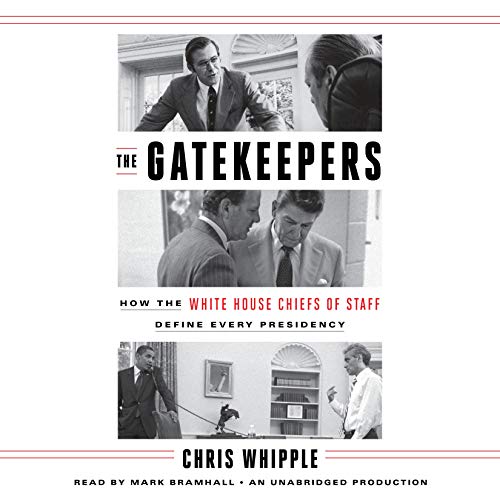
The Gatekeepers (How the White House Chiefs of Staff Define Every Presidency)
Author: Chris Whipple
Narration by: Mark Bramhall
Chris Whipple (Author, political analyst, documentary film maker, journalist.)
Democratic government is complicated and messy, but decisions are made based on an understanding of the interests of many as opposed to the dictate and judgement of one.
“The Gatekeepers” may be viewed by most as an historical account of White House Chiefs of Staff based on many interviews of former government officials. However, one is inclined to see this history as a chronical of American government effectiveness. The facts and incidents reported give reader/listeners a view of America’s government function. Whipple details a series of relatively prudent and sometimes bad decisions made by late twentieth and twenty-first century presidents. Whipple’s history suggests the decision-maker for pursuit of government policy is America’s elected President. However, the road to policy approval or rejection is paved by White House’ Chiefs of Staff.
Whipple covers Nixon’s, Ford’s, Carter’s, Reagan’s, both Bush’s, Clinton’s, Obama’s, and Trump’s first administration. It does not address Biden’s Presidency or the Chief of Staff for Trump’s second term. The many interviews Whipple bases his history on offer a credible and enlightening history of American government. It is H. R. Haldeman, Cheney, Rumsfeld, Baker, Panetta, Card, and Rahm Emanuel that are the most prominent examples of effective and consequential Chiefs of Staff in Nixon’s, Ford’s, Reagan’s, Clinton’s, first and second Bush’s, and Obama’s administrations. The definition of effective is their ability to achieve a desired result whether good or bad for America. This is where one’s personal political beliefs come into question. It is always easy to see the errors of the past retrospectively. Whipple is careful to report facts and results without much judgement about their consequences.
H.R. Halderman (1926-1993, former Chief of Staff for President Nixon.)
Haldeman was Nixon’s Chief of Staff. There is no evidence that he had anything to do with the planned or ordered Watergate break-in, but Whipple shows he participated in a Watergate cover-up. Though Haldeman’s actions after the Watergate scandal are reprehensible, the point made by Whipple is that Haldeman set the table for what an effective Chief of Staff should be for a President. Haldeman acts as a consummate gatekeeper. One can criticize Haldeman’s bad decision to try and coverup Watergate, but he defined the role of a President’s Chief of Staff. Whipple shows Haldeman manages access to the President, understands where the power of government lies, has a good understanding of staff members surrounding the President, protects the President’s time, and balances a President’s policies with the politics of his party.
Donald Rumsfeld (1932-2021, Secretary of Defense and former Chief of Staff for President Ford.)
President Ford’s Chief of Staff is Donald Rumsfeld with Dick Cheney as Deputy Chief of Staff. Rumsfeld is characterized as a mentor to Cheney. They had a close relationship according to Whipple. Ford’s political decision to give a full pardon to Nixon and clemency for Vietnam draft dodgers were hot potato issues that were abetted (if not endorsed) by Rumsfeld and Cheney. Most significantly Ford ended America’s war in Vietnam. Ford endorses tax increases to reduce inflation while supporting tax cuts to stimulate the economy. Ford increases congress’s role in foreign policy.
Dick Cheney (1921-2025, second Chief of Staff for President Ford.)
In a cabinet reorganization Cheney becomes the Chief of Staff and Rumsfeld switches to Secretary of Defense. Rumsfeld and Cheney, in their roles as Chiefs of Staff, control access to President Ford, coordinate policy actions, shape internal decision-making, and advise Ford on strategy to influence people who accomplish these acts. The two Chiefs influenced Ford to replace Kissinger as National Security Advisor, promote George Bush as CIA Director, and prepare Ford for the next election which is ultimately lost to Jimmy Carter.
Hamilton Jordan (1944-2008, Chief of Staff of President Carter.)
When elected, President Carter felt he did not need a Chief of Staff. However, he relented in 1979, when he found the job was needed. Carter hired Hamilton Jordan who had been his campaign strategist when he ran for President. Whipple notes that appointment became a mistake because of Jordan’s lack of discipline. Though the Ford administration fought the idea of promoting Reagan for President, the public felt otherwise.
James Baker (1930-, Chief of Staff for President George H.W. Bush.)
After Carter, when Reagan is elected, he chooses James Baker as his Chief of Staff. Whipple suggests Baker is the quintessential model of a great Chief of Staff which all could be measured against. Baker is characterized by Whipple as an expert at managing the White House, the press, and Capitol Hill. Baker understood the process, the politics, communication, and presidential management requirements of the job. He never confused himself with the power of the President. He became manager of what is called the Reagan Revolution. The political and social movement revolves around ideas of smaller government, deregulation, cutting taxes, and endorsement of free enterprise. Whipple infers the success of the Reagan Revolution is largely due to the skill of James Baker.
Leon Panetta (1938-, Chief of Staff for President Clinton.)
One may argue Reagan caused America’s 1990-91 recession. Unemployment had risen to 7.8%. This set the table for a Democratic President named Bill Clinton. The initial Chief of Staff for Clinton is John Podesta who served from 1998-2001 and is replaced by Leon Panetta who, in the author’s opinion, rivals James Baker as a great Chief of Staff. Whipple infers that, without Panetta, Clinton would not have been reelected after the Monica Lewinsky affair. Panetta brought discipline and structure to the Clinton White House. Panetta could say “no” to the President, at least, in private. Panetta gained a reputation for being an honest broker as a negotiator for the President.
Andrew Card on the left. Joshua Bolten on the right.
George W. Bush, the next President, is noted to have two Chief’s of Staff during his two terms as President. It appears both Andrew Card and Joshua Bolten were more soldiers than Chiefs of Staff for George W. Bush. The policy decider is certainly George W. Bush but the influence of Dick Cheney as Bush’s V.P. seem a major influence on George W.’s decisions. Bush’s two Chief’s of Staff may have been effective as screeners but not as Chiefs of Staff that could say no to a President influenced by his cabinet and personal opinions. The entry to the wars in Afghanistan and Iraq suggests Card and Bolten were unduly influenced by others in the administration.
No one seems inclined to say no to President Bush in private. In retrospect, President Bush seems let down by his Chief’s of Staff and the research and judgement of his Department Heads. Both Afghanistan’s and Iraq’s invasions by the American military are retrospectively shown by most (if not all) histories as American mistakes, if not tragedies.
Rahm Emanuel (1959-, Chief of Staff for President Obama.)
The final chapters address Chief’s of Staff for Obama and Trump. Obama became President when the American economy is in an economic crisis that threatens the financial industry, the general economy, and the mortgage market for many American homeowners. He asks Rahm Emanuel to become his Chief of Staff. Emanuel is a tough Chicago politician who recognizes the pressure of the office and has some level of fear about the future of the American economy. He understood the gravity of the job he is being asked to take. However, his reputation as a tart tongued fighter for what he believed as right made him the best Chief of Staff that could be found. His role as gatekeeper gave Obama the support needed to pass the Obama Health Care plan and work through the economic crisis that nearly bankrupted America.
Reince Priebus (1972-, Chief of Staff for President Trump.)
Trump’s choice of Reince Priebus as his first Chief of Staff is short lived and lasts for less than 8 months. His short tenure is not evaluated, and history shows he is replaced three times in the remaining years of Trump’s first term. A pro-Trump person will have one opinion about those facts while an anti-Trump person will have another.
Whipple convinces reader/listeners that a competent Chief of Staff is critically important for any organization that approaches the complexity of a nation-state government. Without a competent Chief of Staff, democracies are subject to authoritarian tyranny.
Dylan Roof is not South Carolina, and neither are the preachers who believe in the divinity and eternity of God. All people of the world are subject to the sins of living life.
Books of Interest Website: chetyarbrough.blog
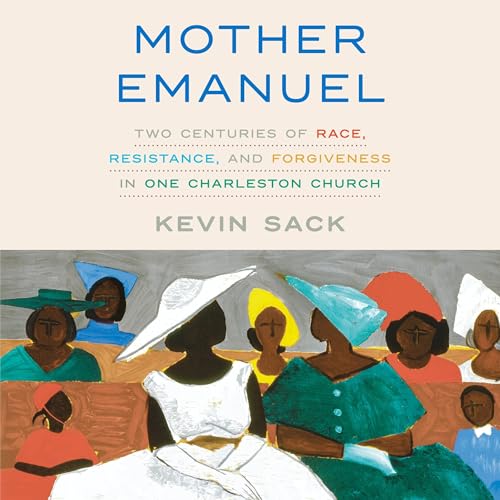
Mother Emanuel (Two Centuries of Race, Resistance, and Forgiveness in One Charleston Church)
Author: Kevin Sack
Narration by: William DeMeritt
Kevin Sack (Author, American journalist, senior reporter for The New York Times who shared a Pulitzer Prize for National Reporting in 2001.)
South Carolina is the underlying subject of Mother Emanuel. It focuses on a State that shows the very best and worst of what it can mean to be born in America. South Carolina is the home of Americans who fought on the side of the confederacy in the Civil War. The confederates of the south did not believe in human equality but in the superiority of the white race and the rightness of slavery.
Mother Emanuel is an African Methodist Episcopal Church located at 110 Calhoun Street in Charleston, South Carolina.
Mother Emanuel was built in 1891 and has capacity to seat 2,500 congregates. The church is considered a symbol of Black autonomy and resistance to some South Carolinians. On June 17, 2015, the senior pastor of the church and 8 African American parishioners were shot by a white 21-year-old American name Dylann Storm Roof. Roof, when he came to the church service, is invited into a Bible study group. He sits in the study group for nearly an hour before drawing a 45-caliber Glock handgun to murder 9 people, including the pastor of the church. The author and journalist Kevin Sack explains Dylann Roof was not a dumb white American but a person of above average intelligence who believed Black Americans were an imminent danger to white Americans’ way of life. Roof intended to motivate a Black American uprising that could be crushed by an American white majority.
Dylan Roof (At the time of his trial.)
A listener/reader is unlikely to believe Sack is writing this book to suggest all white Americans, let alone South Carolinians, are like Dylann Roof. Sack is not suggesting all humans have equal capabilities but that all people are influenced by the environment in which they live, their genetic inheritance, and their psychological development. What the author shows is that one’s intelligence can as easily lead to horrific acts of violence, dishonesty, theft, and social hate as belief in the truth of human equality.
Reverend Eric Manning navigated multiple difficulties when he became the pastor of the church after the massacre.
As a church, Mother Emanuel has existed for well over 100 years. It has had many pastors who are subject to the same strengths and weaknesses of all human beings. Sack infers some pastors in Mother Emanuel’s long life have been seduced by the money, power, and prestige of their office while preaching belief in God. Sack infers every human being, including pastors, can be led astray in life. A few, like Dylan Roof, become corrupted by life for reasons that are incomprehensible to one who believes in something greater than themselves, whether that something is the moral, communal, or cosmic reality of human life, or a fervent belief in God and redemption.
Dylan Roof’s verdict for execution is appealed to the U.S. Supreme Court but is rejected. He remains on federal death row.
Dylan Roof is not South Carolina, and neither are the preachers who believe in the divinity and eternity of God. All people of the world are subject to the sins of living life. Roof is shown by Sack to be an unremorseful murderer of human beings for little other reason than the color of their skin. A lesson of life that the murders explain is that forgiveness is not for the sake of Roof’s peace of mind but a mindful reconciliation for those who lost their loved ones.
As of the writing of this book, Dylan roof remains in prison, without personal remorse and a remaining verdict that warrants execution.
History buffs will be fascinated by Atkinson’s history of America’s Revolution, but it is a bit too long for this non-historian.
Books of Interest Website: chetyarbrough.blog
The Fate of the Day (The War for America, Fort Ticonderoga to Charleston, 1777-1780)
Author: Rick Atkinson
Narration by: Grover Gardner, Rick Atkinson
Rick Atkinson (American author, journalist, and military historian.)
Atkinson is an accomplished writer who has won Pulitzer Prizes for both histories and journalism. “The Fate of the Day” is a well written book about America’s war of independence. It is highly entertaining because of Atkinson’s detailed descriptions of the times and the major combatants in the revolutionary war. It gives reader/listener’s a view of the rag-tag and multi-cultural colonial military and British leaders. “The Fate of the Day” illustrates the colonists’ successes and failures against a much better trained and experienced British military.
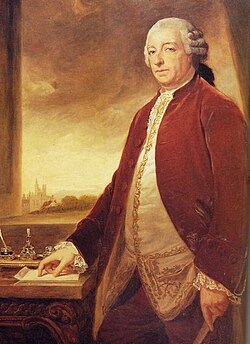
Sir Henry Clinton on the left and Lord George Germain on the right.
Atkinson offers a picture of Great Britain’s incompetence, arrogance, and misjudgment of the colonies fight for independence. Atkinson explains that Sir Henry Clinton, the Commander-in-Chief of the British Forces, though quite smart and considered a gifted strategist, fails to communicate clearly to his British field officers. Compounding that confusion is Lord Germain, the Secretary of State in England, to whom Clinton, Howe, and Cornwallis reported. Germain gave orders that were too far removed from the field of action. It caused many misunderstandings and confusion that diminished the effectiveness of British forces during the colonists’ battles for independence.
George Washington.
However, Atkinson also explains the faults of the Colonies’ leadership during the revolution. The stoic George Washington learned his role in the revolution on the job. He had no experience in the tactics of battle which led to misjudgments in the field. However, his skill in managing Congress, the states, and his fractious international officers offset his tactical mistakes. Washington instilled resilience, discipline, and courage in his subordinates. He held the army together despite poor military provisioning, erratic and meager pay, inadequate recruitment and training for war in an often-harsh environment.
Nathanael Greene (Major General in the Revolutionary War for America’s independence.)
Washington has some good field commanders reporting to him. Nathanael Greene is a self-taught militia officer who became a sophisticated strategist. He had a strategy to defeat British forces in the south with his troop mobility and attrition in fighting British superiority. Green avoids decisive battles with the British by evading superior forces and coordinating local militias to harass and ambush British forces. (A reminder of the Vietcong in America’s future war.) This causes the British to spread their forces to try and defend everywhere at once which only made them more vulnerable to attack. Atkinson gives the example of Greene’s retreats across North Carolina that make Cornwallis pursue Union soldiers over rough terrain which made Cornwallis outrun his supplies. By the time they reached Virginia, Cornwallis and his troops were overextended. Though Green did not win many battles, he effectively undermined British resolve to continue the fight.
Benedict Arnold (American-born British military officer who fought with distinction for the American Continental Army.)
In contrast to Greene, Atkinson profiles the infamous Benedict Arnold. It is a surprising contrast because Arnold betrayed the colonies by defecting to the British. Atkinson explains Arnold risked his life in defense of America’s drive for independence. He was heroic in that drive but felt unrecognized. Arnold led the surprise seizure of Fort Ticonderoga, the first major victory of the war. Atkinson notes Arnold led his troops on the assault of Quebec in 1775 which required a 300-mile march for which his men nearly starved; some dying on the march. Arnold led the assault and was shot in the leg. Even though wounded again in the leg at the Battle of Saratoga, he fought through 1777 when his tactical military actions compelled Burgoyne to surrender. Atkinson shows Arnold to be a smart, heroic commander but his emotions, the lack of recognition or promotion led him to defect to the British. The irony is that he is never trusted by either America or the British because of his defection.
America’s Revolutionary War.
Atkinson’s book is compelling because of the cinematic way he tells the story of America’s Revolutionary War. Picking details of heroes like Washington, and Greene which ranges from Washington’s trouble with his teeth to the clever strategy of guerilla war conducted by Greene to the bravery and defection of Arnold. Atkinson’s story helps one understand how human and creative early settlers of America were, not unlike the better American leaders of today.
Ben Franklin (America’s chief diplomat in Europe during the Revolution.)
Atkinson explains Ben Franklin is the colonists’ chief diplomat in Europe. Franklin’s charm as a a political operator who is willing to lie and flatter the French gave him celebrity and influence in the French court. He manages to create a French alliance that eventually supplied material and military power for support of the colonies against Great Britain. Of course, it helps that the French were vying for their own influence against the growing hegemony of England.
The Marquis de La Fayette (French miliary officer and politician who volunteered to serve in the Continental Army.)
Even before France began supporting the colonists, a young soldier named Lafayette joined the Revolution. The French aristocracy originally objects to the wealthy young aristocrat’s involvement. In response, Lafayette sails to America as a 19-year-old who believed in the colonists’ cause. His early experience as a soldier in France made him a general officer in the Continental army. He rode next to George Washington which gave weight to the Revolution’s global importance by internationalizing the war.
America’s independence.
History buffs will be fascinated by Atkinson’s history of America’s Revolution, but it is a bit too long for this non-historian.
Sorkin’s “1929” makes one think about 20th and 21st century American Presidents who may have set a table for a second economic crisis. As the Turkish proverb says “…fish stinks first at the head.”
Books of Interest Website: chetyarbrough.blog
1929 (Inside the Greatest Crash in Wall Street History–and How It Shattered a Nation)
Author: Andrew Ross Sorkin
Narration by: Andrew Ross Sorkin
Andrew Sorkin (American author, journalist, and columnist for The New York Times.)
“1929” is a history of the build-up to the stock market crash and the advent of the depression with opinions about how today’s economy compares and what should be done to keep it from happening again. Though Sorkin is not an economist, he has written an interesting history of the build-up to the 1929 depression.
Faltering economies.
There is a sense of danger being felt by some today when reading/listening to Sorkin’s history of the 1920s. Few seem to have a clear understanding of world market forces and whether we are heading for an economic catastrophe or a mere hiccup in the growth of the economy. Neither bankers, regulators, nor politicians in the 1920s (or for that matter now) seem to have a clue about the economy’s trouble and what can be done to ameliorate risks. Like 1929, today’s insiders, power brokers, and rich have more options to protect themselves than most of the world’s population.
Increasing homelessness in America.
In America, it seems those in power have no concern about the rising gap between rich and poor or the immense increase in homelessness. Without a plan by those in power, there seems little concern about reducing inequality, the common denominator for the wealth gap and homelessness. Sorkin’s book outlines the reality of 1929 that gives reader/listeners a feel of history that may repeat itself.
Sorkin’s history seems credible as he notes human nature does not change.
Today’s leaders are like yesterday’s leaders. Not because they are venal but, like most if not all human beings, leaders in power are concerned about themselves and what there is in life that serves their personal needs and wants. Of course, the difference is that leaders that are power brokers affect others that do not have the same influence or options to protect themselves. We all have blinders that keep us from seeing the world as it is because human nature is to ask what is in it for me, i.e., whatever “it” is. The 1920s had a merger bubble in manufacturing and communication that is fed by the industrial revolution. Today, we have a merger bubble with mega-corporations like Tesla, Apple, Amazon and others that are mega-corporations capitalizing on a new revolution coming with A.I., the equivalent of the Industrial Revolution. Some critics argue mega-corporations, like what happened with the oil industry could be broken up to increase competition which is the hallmark of improved production, cost reduction, and lower consumer prices.
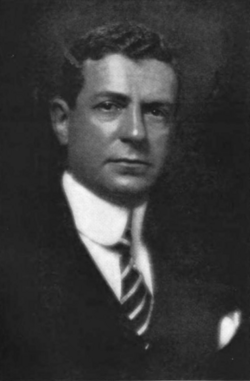
Charles E. Mitchell (American banker, led the First Nation City Bank which became Citibank.)
What makes this history interesting is Sorkin’s identification of the most responsible power brokers who bore responsibility for the stock market crash. Charles Mitchell of Nation City Bank is identified as the central driver of the stock market bubble. Mitchell denied the reality of the financial systems fragility. His ambition and unfounded optimism magnified the systemic risk of the financial crises. He openly defied the Federal Reserve’s warning to curb margin lending that risked other people’s money and their financial stability. He continued to promote purchase of stocks on credit that were fueling the stock market bubble. Mitchell appears to have misled the public in order to increase his power and protect his personal wealth by creating the illusion of market stability and his bank’s profitability. Though Mitchell is not the sole villain, he became the most powerful banker in the nation while breaking the financial backs of many Americans. In general, it is the self-interest of those who listened to him that have responsibility for their financial collapse, but it is always hard to know who is lying to you. Part of the blame is the hesitation of the Federal Reserve Board to act because the people in charge could not agree but that was more a matter of omission than commission which Mitchell was charged with but not convicted. Of course, the political leaders of that time also failed but hindsight is a lot easier than foresight.
Artificial Intelligence is today’s equivalent of the Industrial Revolution of the twentieth century.
Similar to the corporate mergers and investment from growing industrialization of the 1920s, today’s mania is mega corporation’ investment in Artificial Intelligence. Sorkin notes the ease of trading stocks, expectations of crypto investments, and A.I. hype may well move the market beyond its value. He argues for stronger guardrails on speculative investments, more limits on margin lending, and transparency on high-risk investments. He cautions easier credit as seen this Christmas season with buying based on delayed payment incentives and increasing credit card availability, card balance increases, and more liberal repayment terms. In general, Sorkin wants to see more, and better government oversight and regulation of credit offers. He believes too many lenders are overly optimistic about the future with the gap between rich and poor widening and trending to get worse. That inequality threatens the success of capitalism as a driver for shared prosperity, and economic growth.
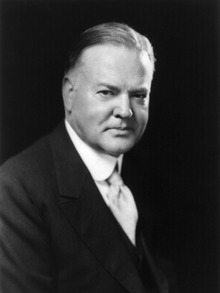
Herbert Hoover (President 1929-1933, though characterized as the primary villain for the depression, Sorkin identifies his role as one of omission rather than commission.)
The Presidents shown below carry some responsibility for where the American economy is today but that would be another book.
Sorkin’s “1929” makes one think about 20th and 21st century American Presidents who may have set a table for a second economic crisis. As the Turkish proverb says “…fish stinks first at the head.”
































































 REVIEWS AND VIEWS OF LIFE