CHOICE

The surprising message in “The Glass Castle” is homelessness may be a choice. One wonders if that is the fault of American society or the nature of human beings.

Books of Interest
 Website: chetyarbrough.blog

The Glass Castle (A Memoir) 

Author: Jeannette Walls

Narration by: Jeannette Walls
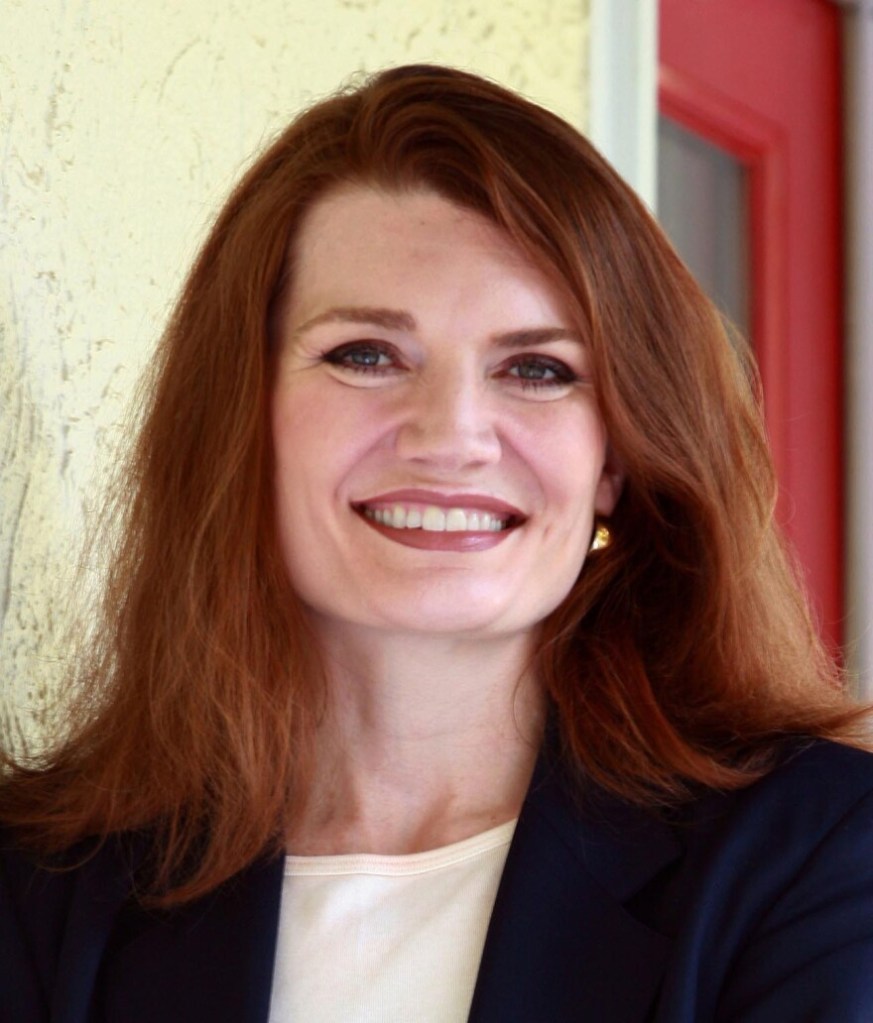
Jeanette Walls (Author, American journalist, former gossip columnist for MSNBC.)

“The Glass Castle” is Jeanette Walls remembrance of her nomadic family and the way she is raised in America. With 3 siblings, an alcoholic father who knows something about electrical and mechanical engineering, a mother qualified as a schoolteacher who is an aspiring artist, Jeanette Wall’s parents choose to roam America.

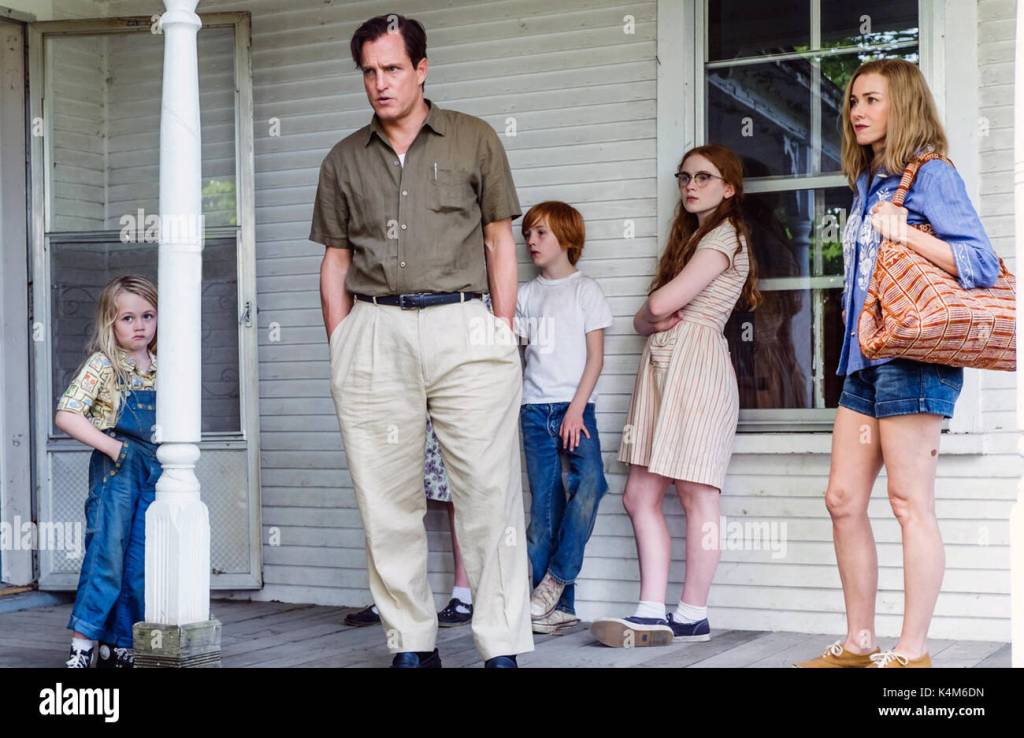
The Walls Family.
“The Glass Castle” is a memoir of Jeanette Walls upbringing in America. Her story is enlightening if not entirely believable. Walls writes about her chaotic peripatetic life in America, mentions two personal marriages, and a life she lives with a father who loves her and a mother who holds the family together. Jeanette Walls is the second child of the family. She has an older sister, Lori, a younger brother named Brian, and a younger sister named Maureen. She and her brother are characterized with above average intelligence. In the beginning of her story, she notes living on Park Avenue and seeing her homeless mother rummaging through a dumpster in New York city. She confronts her mother, Rose Mary, who walks away saying Americans are wasteful and throw away perfectly useful, sometimes beautiful, things. This shocking introduction is about Jeanette Walls’ and her family’s life in America.

Arizona and West Virginia.

Listener/readers are introduced to Wall’s grandparents who came from two different economic backgrounds with Jeanettes mother’s family being middle class living in Arizona and her father’s parents being poor and living in West Virginia. Both grandparent families are matriarchal with mothers being rulers of the roost. The grandmother in Arizona dies and leaves two houses and Arizona land with some money to Jenette’s mother that offers, for a short time, some economic stability to the family’s life in America. However, Jennett’s family decides to move on to pursue their peripatetic life. They visit her father’s parents in West Virginia. Her dad’s father is an alcoholic with a wife that sternly rules the house. That sternness causes Jeanette Walls and her family to leave for New York City.

“The Glass Castle” is a story about how children are raised in America.

There is no particular standard for those who grow up in America or, for that matter, anywhere in the world. Living life anywhere can be romantically identified as perfect but that is a universal fiction. There is no safety net whether in America or anywhere in the world. There are “haves’ and “have nots” in every society. Children growing to adulthood, whether wealthy or poor, are faced with the trials of life that begin with their birth, extend through family relationships and the exigencies of making their way in the culture in which they live. Children live and are raised in a “…Glass Castle” that hides little from the world and can be shattered by the random circumstances of life. “The Glass Castle” shows experiences of childhood are universal and are either constructive or destructive in ways that mold a child’s character.

Children are influenced by their parents in both good and bad ways.

Alcoholism in a parent may lead to a child’s following or rejecting its influence in their life. Seeing the consequence of a parent’s experience can turn one toward their parents or steer one’s life in an opposite direction. America purports to be a land of opportunity but like every culture in the world there is inequality, instability, risk, and reward that change a child’s direction in life.

The surprising message in “The Glass Castle” is homelessness may be a choice. One wonders if that is the fault of American society or the nature of human beings.
MOTHERHOOD

Like being raised in India by a single parent, Roy shows parallels of what it’s like to be raised in America. We all become who we are by genetic inheritance, socialization, experience, choice, and chance.

Books of Interest
 Website: chetyarbrough.blog

Mother Mary Comes to Me 

AuthorArundhati Roy

Narration by: Arundhati Roy

Arundhati Roy (Author, Booker Prize for Fiction awarded in 1997 for “The God of Small Things”.)

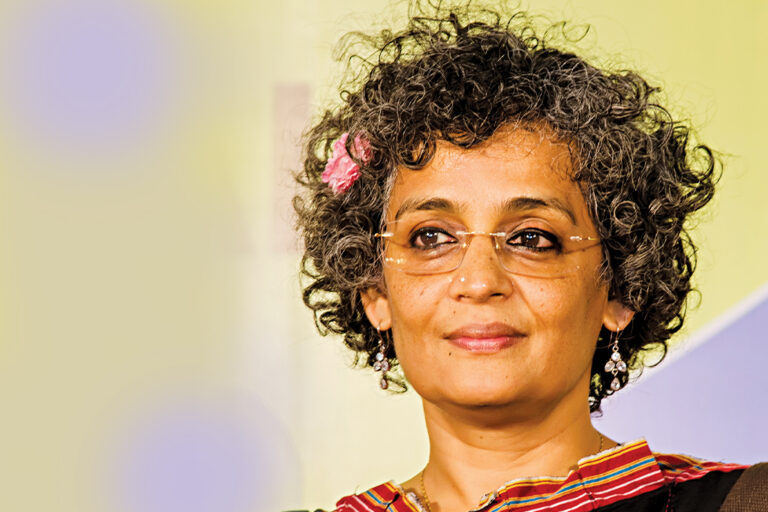
Born in India in 1961, Arundhati Roy offers a memoir of her life. Roy is born into a Christian family in a country that is 79.8% Hindu while only 2.3% Christian. Roy suggests her early life is shaped more by instability than penury. Her mother is a teacher who becomes a founder of a school. It seems Roy’s young life is filled with emotional turbulence with a fierce and complicated mother who greatly influences her.

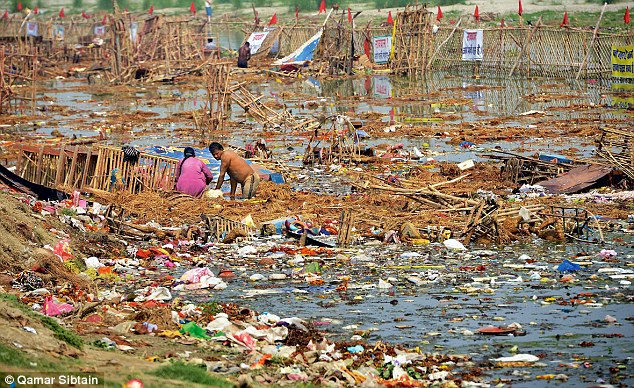
The poverty of India.

The facts of Roy’s memoir are straightforward but the presentation and supporting examples of a mother who is fierce and complicated are both humorous and foreboding. One can understand why Roy is capable of overcoming the hardship of life to become an accomplished writer.

Arundhati Roy’s mother Mary.

Roy explains her mother and father were divorced when she was two years old. Her father was a Bengali Christian who managed a tea plantation but appears absent from most of Roy’s young life. Her mother, Mary Roy, seems a great part of who she became and what she believes. Her mother seems both a source of terror and inspiration. Her mother’s rages and criticism had an immense impact on who Roy became as an adult. Her mother had a reputation as a celebrated educator, and a women’s rights activist who was politically active in Indian rights. Her mother’s education and activism became a gravitational center for Arundhati Roy.

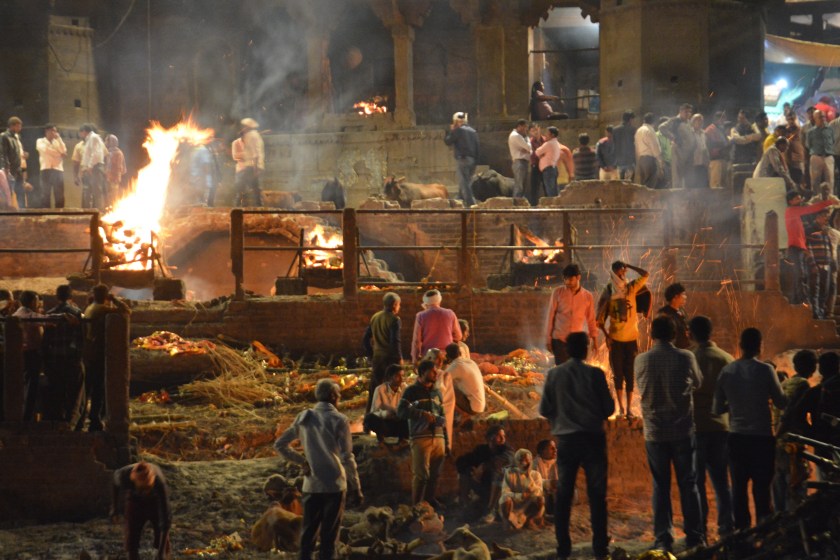
Cremation preparation for burial in the Ganges River in India in 2018.

A part of what makes Roy’s memoir interesting is her perspective on India’s culture. Having traveled to northern India, the harsh climate, overcrowded streets, Ganges burial ceremonies, and obvious poverty juxtaposed with fine hotels and great restaurants is disturbing to a traveler who can afford to see the world.

Single parent homes in America.

However, Roy’s story shows being raised by a single parent (most often a single mother) is not uncommon and the influence of a one parent family appears the same in India as in America. The unique experience Roy has in India is interesting because of its similarity to a single-parent child’s experience in America. Roy is highly influenced by the mother who raised her. Roy is reflecting on truths that apply to children’s experiences in America. Though a single parent to a child is a primary influence, there are others like teachers, mentors, friends, and extended family members that influence who we become. However, being raised by a mother who is responsible for your education and survival tempers your feelings about parenting. You realize how hard a single parent’s life can be with responsibilities beyond taking care of themselves.

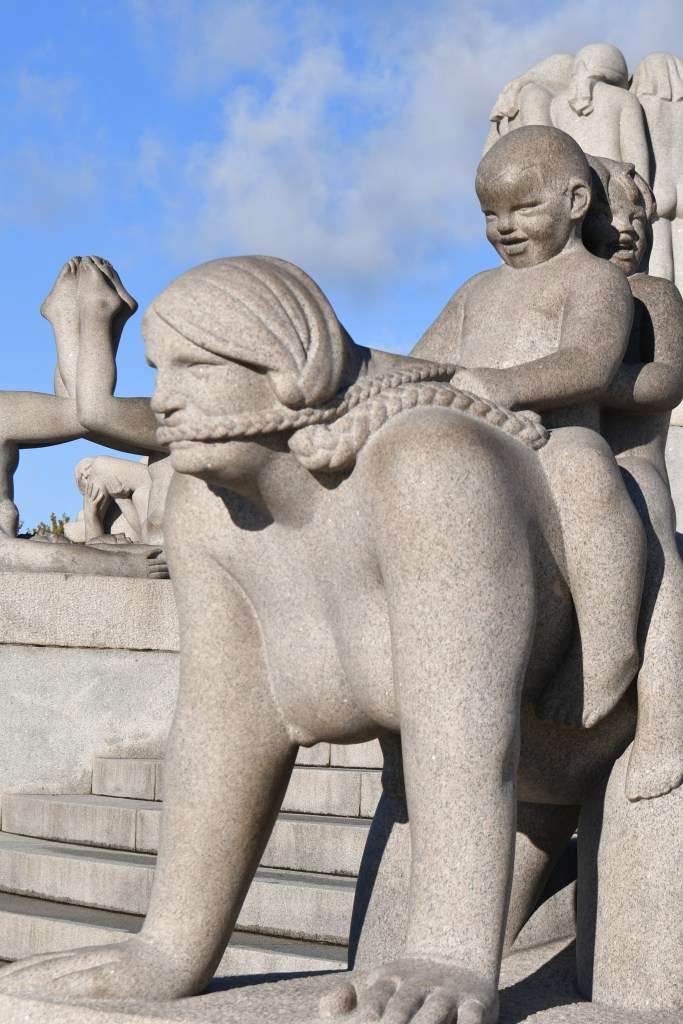
A circle of life statue in Norway reflects the importance of mothers in raising children in the world.

Roy, as an adult, recognizes her mother as a sun around which her life revolves. Roy’s mother divorces when Arundhati is two years old. Her father is characterized as an alcoholic and not part of Roy’s life as a child. Her mother is a model of independence, activism, and defiance. Her mother understood, despite male dominance in Indian society, a woman must have grit, political courage, and belief in their role in society. That attitude shaped Roy as a writer and activist. Roy’s mother gave her a sense of self, partly from love but also from respect for independence from the harsh realities of life. Roy’s mother died in 2022 which undoubtedly explains a part of why this memoir is written.

Women’s impact on the world.

Roy explains her mother was intense, intelligent, and emotionally volatile. In Roy’s life, her mother is a source of terror and inspiration. On the one hand, her mother frightened her and her brother but on the other she fueled Roy’s courage and creativity as an independent human being. As she approaches her own adulthood, fear of her mother changes to overt resistance. Roy leaves home at the age of 18 which undoubtedly represents her drive for independence, but she fully realizes her mother’s example made her the adult she became.

Not surprisingly, Roy objects to Hindu authoritarian nationalism represented by India’s political leader, President Narendra Modi.

Roy feels Modi’s BJP party discriminates against women and uses religion as a political tool to weaponize Hindu nationalism that shapes its authoritarianism. She argues dissenters, and minorities are being silenced when seeking equal rights for all. Roy is not writing about her spiritual beliefs but about India’s use of religion, politics, and its legal system to restrict equal rights for all. Roy shows she is her mother’s daughter who is a fierce and opinionated feminist.

Raising children of the world.

In pointing to life in India and Roy’s upbringing, she humorously addresses her mother’s contradictions, her theatricality, and the chaos of her upbringing. What is missing are examples of personal relationships her mother had with others after her divorce from an alcoholic husband. (The truth is that the book is long enough as it is.) Like being raised in India by a single parent, Roy shows parallels of what it’s like to be raised in America. We all become who we are by genetic inheritance, socialization, experience, choice, and chance. It is the parent who stands with us through our childhood that gives us what is good and bad about who we become.

Imagining a single mother raising a child, working full time, and trying to be happy is an arduous task in itself.

Roy’s mother prepared her daughter for the hardship of life with a decent education and the toughness needed to cope with both failure and success. Roy shows her mother succeeded in making her daughter a tough independent adult in “Mother Mary Comes to Me”. Roy’s life seems to repeat some of the mistakes of her mother’s life while forging her own success as a writer and opinionated activist.

PERSONAL IDENTITY

Susan Faludi concludes one’s personal identity is not fixed but changes based on our parents’ influence and life experience.

Books of Interest
 Website: chetyarbrough.blog

In the Darkroom 

Author: Susan Faludi

Narrated By: Laurel Lefkow

Susan Charlotte Faludi (Author, American feminist, and journalist. Received the Kirkus Prise for “In the Darkroom” in 2016.)

“In the Darkroom” is an interesting exploration of Susan Faludi’s remembrance of her father. Every parent who has a child thinks about what their influence is or will be in their children’s life and memory. Faludi’s memoir shows parents have an immense influence on who our children become.

Steven Faludi, Susan’s father, passed away on May 14th, 2015.

Faludi shows her father as a chameleon who refuses to be identified as one thing or another.

Susan Faludi’s father was Steven Faludi, a Holocaust survivor who made his living as a professional photographer. “In the Darkroom” Susan Faludi explains her father chose to become a woman at the age of 76 by undergoing sex reassignment surgery in Thailand. Her father became Stefánie Faludi living in Hungary. As an author, Susan recalls her childhood and the volatile relationship her father had with her mother. Steven Faludi was a domineering husband and father who is eventually divorced by Susan’s mother. She recalls a violent incident after the divorce where Steven crashes through their front door to stab her mother’s presumed boyfriend. He is arrested but manages to turn the attack into a rescue of his ex-wife from an intruder to avoid criminal charges.

Despite Steven Faludi’s survival from the Holocaust, he aligned himself with right-wing nationalist politics when he returned to Hungary.

Hungary had a reputation for anti-Semitism and anti-LGBTQ beliefs. Surprisingly, he became xenophobic and anti-Semitic despite being Jewish. Faludi suggests her father may have rejected his Jewish identity as a way of distancing himself from what he had been through. Like his decision to become a woman, he recreated himself. His irrational fears may have made him dislike people from other countries, cultures, or ethnicities. Susan Faludi believes it is his way to defend his self-identity from the Holocaust’ trauma, shame, and loss of people he knew, loved, or cared about. It is impossible to comprehend what it must have been like to survive the Holocaust. Anyone who has visited Auschwitz or a concentration camp site understands how unbelievably horrible that experience must have been. On the other hand, Ms. Faludi interviews grade school friends of her father before the war and notes Steven Faludi was a difficult student with which to be friends.

Susan Faludi is considered among the top 20 influential modern feminist theorists.

Not surprisingly, Susan Faludi becomes a feminist with gender identity being an important experience in her family’s life. She uses her journalistic talent to look at her father’s past and her personal experience. Her memoir looks into the nature of personal identity, how our identity is made, and what we do with it. Not surprisingly, much of who we become is from genetic inheritance and interaction with our parents. Faludi is an investigative journalist which drives her to dig into the details of her family’s past to better understand herself. Faludi’s father is shown to be abusive, controlling, and emotionally distant husband and father, a characteristic not uncommon in this patriarchal world.

“In the Darkroom” is an ironic title to Faludi’s book because much of one’s family life takes place in the “…Darkroom” of one’s mind.

Does one’s identity come from what you choose or is it a consequence of your experience as a child born into a family that is either nurturing or neglectful? Her memoir offers no formulaic answer. She suggests close examination of our family childhood reveals we are witnesses to the strengths and weaknesses of our parents. However, as witnesses we live in a “…Darkroom” of the mind that obscures any truth that explains how children are influenced by parental relationship.

We are not puppets of our parents, but neither are we free.

We choose to become ourselves through acceptance or rejection of up and down experience with parents but that is not the only experience that influences our lives. As we grow, we meet others who impact and change our views of life. Faludi explains she initially rejected her father because of his violence, abuse, and distant behavior but as she learned of his gender confusion and transition, she recognized her father’s pain and reassessed her relationship with him. Our parents experience and growth to adulthood have the same ups and downs of life that every human being experiences. They had their influences and choices just as their children will have in their lives.

Unlike the development of an image in a dark room, one’s life is never fixed by the solution in which it is placed.

Susan Faludi concludes one’s personal identity is not fixed but changes based on our parents’ influence and life experience. Of course, this is a subjective process, and “truth” is hard to pin down. Ignorance or the influence of others often distorts “truth”. Faludi suggests life is shaped by memory, trauma, the stories we tell, and the life we live. The story of her father’s life is the example of one who reconstructed his/her life. Change does not erase the past, but her father’s reinvention of his identity changed Faludi’s feelings about him. Faludi’s memoir shows how life is contradictory and complex.