The essence of Rickard’s book is that the use of GPT is a threat to the financial world and to world peace. If the war on Iran continues, there is increased risk of wider conflict, further financial stress, reduced human judgement, and greater potential for world conflagration in a nuclear war.
Books of Interest Website: chetyarbrough.blog
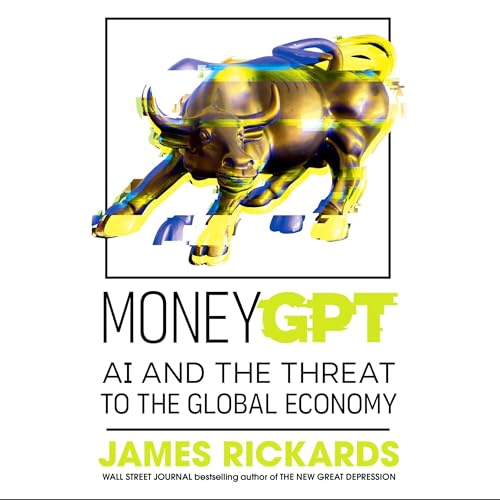
MONEY GPT (AI and the Threat to the Global Economy)
Author: James Rickards
Narration by: James Rickards
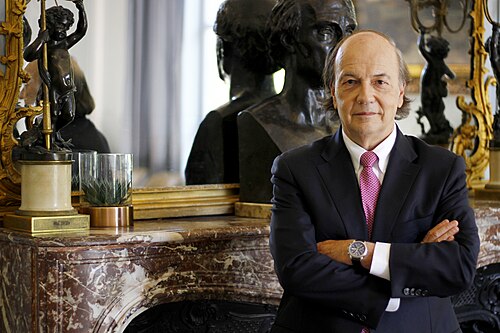
James G. Rickards (Author, American lawyer, investment banker, media commentator.)
Though Mr. Rickards has something valuable to tell his audience, his writing leaves room for improvement. The initials “GPT” stand for “Generative Pre-trained Transformer”. They are an abbreviation for massive datasets gathered by artificial intelligence to aid one’s understanding of complex predictions about finance and military conflict based on collected language used to explain the world.
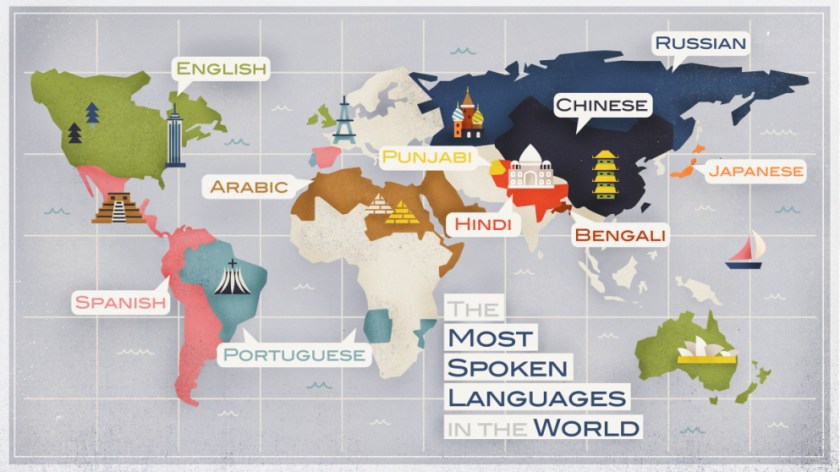
Languages of the world.
What Rickards intellectually recognizes is that collected language about the real world lacks human judgement which can accelerate human actions, weaponize misinformation, and increase conflict because AI lacks human reasoning. Without judgement, facts imparted by language collection may as quickly make wrong as right decisions. Optimum answers to complex problems require human judgement. Optimum answers may be aided by AI collated language, but human judgement is key to appropriate action. Rickards notes how stock market investors who rely on AI for decisions about what to do with their investments can as easily be misled when the market is in crisis because collected language is as likely to lead one further into crisis as toward a reasoned investment response.
Rickard explains a financial decision based on GPT carries the same threat in regard to war. One wonders whether President Trump’s escalation of the war on Iran is not based on GPT that compresses decisions and amplifies the volatility of America’s actions. Is the war escalating because of GPT and inadequate human judgement? America is faced with incomplete information on a purpose for bombing Iran and what goals are intended for ending the conflict. What GPT predicts is more U.S. strikes, further Iranian retaliation, and prolonged conflict that will continue to roil the economies and citizens of the world. Regional war, let alone a World War, is increasingly likely to cause a global shock to financial markets.
Uses of GTP aka GPT.
The essence of Rickard’s book is that the use of GPT is a threat to the financial world and to world peace. If the war on Iran continues, there is increased risk of wider conflict, further financial stress, reduced human judgement, and greater potential for world conflagration in a nuclear war.
Like all world changing inventions and discoveries, iPhone came with costs ranging from children’ and adults’ addiction, to rare minerals depletion, to environmental pollution. The long-term effect of iPhones has changed the world with unexpected, often unforeseen, consequences.
Books of Interest Website: chetyarbrough.blog
The One Device (The Secret History of the iPhone)
Author: Brian Merchant
Narration by: Tristan Morris
Brian Merchant (Author, American technology journalist, writes for The New York Times, Wired, Slate, The Atlantic, and the Guardian.)
Brian Merchant works around the tech world but never quite in it. His understanding of today’s technology has made him a popular writer for national news outlets. Never having been employed by a tech company, his analysis of iPhone history, the role of Jobs, and the history of its development is as an outsider to the process of invention. As a writer about technology, there is a level of objectivity but also reservation about an outsider’s details. Merchant reports what others tell of iPhone’s history rather than as a person being there as a part of its development.
Merchant’s investigation explains the iPhone’s creation is a messy human process entailing the dangers of mining, involvement of other companies and individuals, patent questions, and labor struggles. The impact of the iPhone’s invention is world changing. In a fundamental way, Merchant discounts the mythology of iPhone’s invention by one person or company. There were decades of prior invention before the iPhone became more than an idea, let alone a world changing device.
The mining industry and assembly line development were in place before the raw material and labor that would be needed for iPhone development. Merchant suggests Apple became the central orchestrator rather than singular inventor of the iPhone. Merchant argues the iPhone is a synthesis of decades of technological improvement, unnamed engineers, labor and organizations of miners and factory workers, and innovations needed to produce Apple’s revolutionary product.
Genius and invention go hand in hand. However, Merchant explains in the early 20th century, much of the technology that became a part of the iPhone’s foundation were already invented. He notes touchscreens, voice recognition tools, motion tracking, and early iterations of what became Artificial Intelligence had already been discovered. Merchant’s intent is not to diminish the genius of Apple, Jobs, or its employees but to show the public that every extraordinary human invention has precursors and essential earlier discoveries. It took Apple’s leadership and employees to integrate the many technologies that had been discovered earlier to create what has become a handheld window to the world. Merchant explains no great inventions are created out of thin air. He suggests every invention of the present is dependent on thought, labor, experience, and invention of the past.
Merchant discounts the idea of the “lone genius” because every genius depends on insight and events of the past to correlate what she/he invents in the present. The iPhone unifies decades of technological progress. The iPhones’ invention reorganizes global behavior, creates a new economic and industrial model, and gives the world a pocket supercomputer. The geniuses of Apple earned their reputations, but they relied on discoveries of the past.
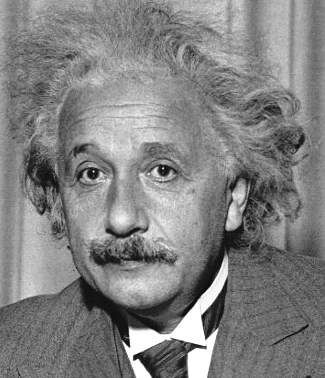
Thinking of Curie, Einstein, Newton, and other giants of science, one wonders how Merchant’s belief about genius is valid. He would argue the brilliance of Curie, Einstein, and Newton are built on prior knowledge, their predecessors, and the tools of their time. Their genius is in connecting past knowledge and discovery of others with the present. Their genius is dependent on predecessors. Merchant is not diminishing Jobs’ or Apple’s genius, but their breakthroughs could only come from groundwork established by others.
INDUSTRIAL POLLUTION ON A BAD DAY IN BEJING,, CHINA
Like all world changing inventions and discoveries, iPhone came with costs ranging from children’ and adults’ addiction, to rare minerals depletion, to environmental pollution. The long-term effect of iPhones has changed the world with unexpected, often unforeseen, consequences.
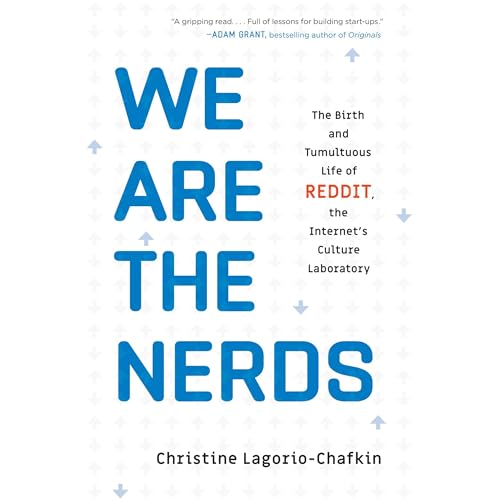
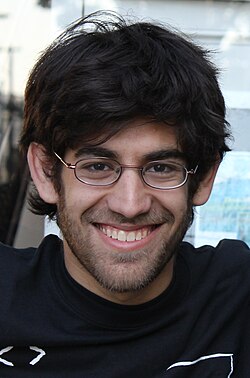
“We Are the Nerds” is a story about “Nerdom” and the tragic loss of Aaron Swartz to his loving family and the world of coding.
Books of Interest Website: chetyarbrough.blog
WE ARE THE NERDS (The Birth and Tumultuous Life of Reddit, the Internet’s Culture Laboratory)
Author: Christine Lagorio-Chafkin
Narration by: Chloe Cannon
Christine Lagorio-Chafkin (Author, reporter, podcaster based in New York.)
Relistening to “We are the Nerds” may be reviewed from a perspective of the future of newspapers but that diminishes the tragedy of Aaron Schwarz’s suicide.
The original founders of what became known as Reddit were Steve Huffman and Alexis Ohanian, graduates from the University of Virginia. A third partner, Aaron Swartz, is invited into the company because of his tech experience in creating a company called Infogami which merged with Reddit. With the addition of Infogami, the original founders of Reddit created a parent organization called “Not a Bug, Inc”. Schwartz insists on being called a co-founder because of his contribution to Reddit as a programmer. That insistence rankled Huffman and Ohanian which grew into a resentment that fills the pages of the author’s story.
Steve Huffman on the left with Alexis Ohanian and his wife, Serena Williams, and their daughter on the right.
The author seems to minimize Schwartz’s contribution to Reddit despite the framework he created that made Reddit scale more quickly because of its open access and community-driven cultural impact. Swartz’s contributed code appears to have been an important step in the useability of Reddit by the public. However, in fairness to the original founders, the author infers that contribution pales in respect to the extensive coding and work done by Huffman. The point is that this conflict becomes an irritant that leads to the departure of Swartz from Reddit in 2007, after it was acquired by Condé Nast in 2006. That acquisition made all three original coders millionaires.
Swartz’s life and premature death is a tragic encomium to the story of Reddit’s success as a public forum.
By some measure, Swartz is a brilliant human being, but his intelligence is accompanied by what might be characterized as a self-destructive personality. His ability as a computer nerd is evident in his High School days in Highland Park, Illinois. He goes on to Stanford, but its educational regimen leads him to leave after his first year. He preferred independent learning. Schwartz’s remarkable ability led him to become a research fellow at Harvard University in 2010. He became a self-taught intellectual with an activist belief in academic freedom that eventually led him to rebel against authority. He was arrested in 2011 for allegedly breaking into MIT’s computer network without authorization. He was charged for computer fraud and faced 34 years in prison and a million-dollar fine. At the age of 26, Swartz hung himself and died on January 11th, 2013.
An American mass media company founded in 1909.
Huffman and Ohanian believed Swartz’s contributions to Reddit were less than theirs in creating the company they sold to Condé Nast that made them millionaires. Swartz’s idealism and independence conflicted with the original founders of Reddit who seemed more interested in building a public platform that could make them rich. Though Ohanian believed they sold too soon, all three agreed to Condé Nast’s final offer that made them millionaires.
In retrospect, Ohanian may have been right about the future value of Reddit. Condé Nast spun Reddit out to an independent subsidiary under Advance Publications where it became a 42-billion-dollar success by 2025. Today, Huffman’s net worth is estimated at $1.2 billion as a result of his Reddit shares. Though Ohanian may not have held on to his shares, his net worth is estimated at $150-$170 million. Not bad for two University of Virginia graduates. However, as Plato observed, “The greatest wealth is to live content with little”. Swartz’s life seems to have had little to do with desire for wealth.
“We Are the Nerds” is a story about “Nerdom” and the tragic loss of Aaron Swartz to his loving family and the world of coding.
A.I.s’ contribution to society is similar to the history of nuclear power, it will be constructively or destructively used by human beings. On balance, “Burn-In” concludes A.I. will mirror societies values. As has been noted in earlier book reviews, A.I. is a tool, not a controller of humanity.
Books of Interest Website: chetyarbrough.blog
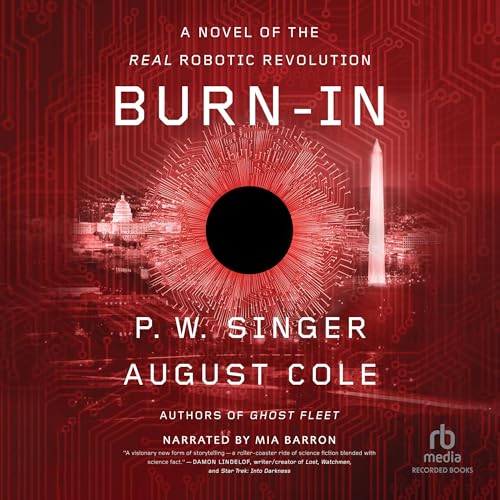
BURN-IN (A Novel of the Real Robotic Revolution)
Author: P. W. Singer, August Cole
Narration by: Mia Barron
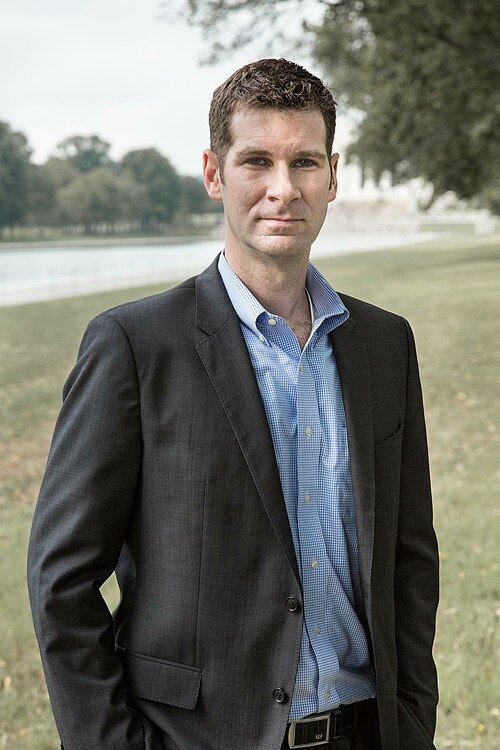
Peter Warren Singer (on the left) is an American political scientist who is described by the WSJ as “the premier futurist in the national security environment”. August Cole is a co-author who is also a futurist and regular speaker before US and allied government audiences.
As an interested person in Artificial Intelligence, I started, stopped, and started again to listen to “Burn-In”.
The subject of the book is about human adaptation to robotics and A.I. It shows how humans, institutions, and societies may be able to better serve society on the one hand and destroy it on the other. Some chapters were discouraging and boring to this listener because of tedious explanations of robot use in the future. The initial test is in the FBI, an interesting choice in view of the FBI’s history which has been rightfully criticized but also acclaimed by American society.
Starting, stopping, and restarting is a result of the author’s unnecessary diversion to a virtual reality game being played by inconsequential characters.
In an early chapter several gamers are engaged in VR that distracts listeners from the theme of the book. It is an unnecessary distraction from the subject of Artificial Intelligence. Later chapters suffer the same defect. However, there are some surprising revelations about A.I.’s future.
The danger in societies future remains in the power of knowledge. The authors note the truth is that A.I.’s lack of knowledge is what has really become power. Presumably, that means technology needs to be controlled by algorithms created by humans that limit knowledge of A.I.’ systems that may harm society.
That integration has massive implications for military, industrial, economic, and societal roles of human beings. The principles of human work, social relations, capitalist/socialist economies and their governance are changed by the advance of machine learning based on Artificial Intelligence. Machine learning may cross thresholds between safety and freedom to become systems of control with potential for human societies destruction. At one extreme is China’s surveillance state; on the other is western societies belief in relative privacy.
Robot evolution.
Questions of accountability become blurred when self-learning machines gain understanding beyond human capabilities. Do humans choose to trust their instincts or a machines’ more comprehensive understanding of facts? Who adapts to whom in the age of Artificial Intelligence? These are the questions raised by the authors’ story.
The main character of Singer’s and Cole’s story is Lara Keegan, a female FBI agent. She is a seasoned investigator with an assigned “state of the art” police robot. The relationship between human beings and A.I. robots is explored. What trust can a human have of a robotic partner? What control is exercised by a human partner of an A.I.’ robot? What autonomy does the robot have that is assigned to a human partner? Human and robot partnership in policing society are explored in “Burn-In”. The judgement of the author’s story is nuanced.
In “Burn-In” a flood threatens Washington D.C., the city in which Keegan and the robot work.
The Robot’s aid to Keegan saves the life of a woman threatened by the flood as water fills an underground subway. Keegan hears the woman calling for help and asks the robot to rescue the frightened woman. The robot submerges itself in the subway’ flood waters, saves the woman and returns to receive direction from Keegan to begin building a barrier to protect other citizens near the capitol. The Robot moves heavy sacks filled with sand and dirt, with surrounding citizens help in loading more sacks. The robot tirelessly builds the barrier with strength and efficiency that could not have been accomplished by the people alone. The obvious point being the cooperation of robot and human benefits society.
The other side of that positive assessment is that a robot cannot be held responsible for work that may inadvertently harm humans.
Whatever human is assigned an A.I robot loses their privacy because of robot’ programing that knows the controller’s background, analyzes his/her behavior, and understands its assigned controller from that behavior and background knowledge. Once an assignment is made, the robot is directed by a human that may or may not perfectly respond in the best interest of society. Action is exclusively directed by the robot’s human companion. A robot is unlikely to have intuition, empathy, or moral judgement in carrying out the direction of its assigned human partner. There is also the economic effect of lost human employment as a result of automation and the creation of robot’ partners and laborers.
“IF ANYONE BUILDS IT, EVERYONE DIES” is an alarmist, and unnecessarily pessimistic view of the underlying value of Artificial Intelligence. This is not to suggest there are no risks in A.I. but its potential outweighs its risks.
Books of Interest Website: chetyarbrough.blog
IF ANYONE BUILDS IT, EVERYONE DIES
Author: Eliezer Yudkowsky, and Nate Soares
NarratedBy: Rae Beckley
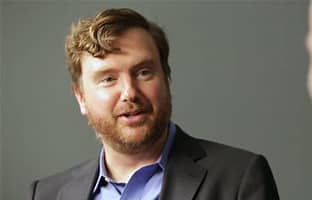
Eliezer Yudkowsky Nate Soares
Eliezer Yudkowsky is a self-taught A.I. researcher without a formal education. As an A.I. researcher, Yudkowsky founded the Machine Intelligence Research Institute (MIRI). Nate Soares received an undergraduate degree from George Washington University and became President of MIRI. Soares had worked as an engineer for Google and Microsoft. Soares also worked for the National Institute of Standards and Technology and the U.S. Dept. of Defense.
“IF ANYONE BUILDS IT, EVERYONE DIES” is difficult to follow because it’s convoluted examples and arguments are unclear. The fundamental concern the writers have is that A.I. will self-improve to the point of being a threat to humanity. They argue that A.I. will grow to be more interested in self-preservation than an aid to human thought and existence. The irony of their position is that humanity is already a threat to itself from environmental degradation, let alone nuclear annihilation. The truth is humanity needs the potential of A.I. to better understand life and what can be done to preserve it.
To this listener/reader environmental degradation is a greater risk than the author’s purported threats of A.I.
Pessimism is justified in the same way one can criticize capitalism.
The authors have a point of view that is too pessimistic about A.I. and its negative potential without recognizing how poorly society is structured for war and killing itself without Artificial Intelligence. The advance of A.I. unquestionably has risks just as today’s threat of mutual nuclear annihilation but A.I.s’ potential for changing the course of civilization for the better exceeds the agricultural and industrial revolutions of the past.
The nature and intelligence of human beings is underestimated by Yudkowsky and Soares.
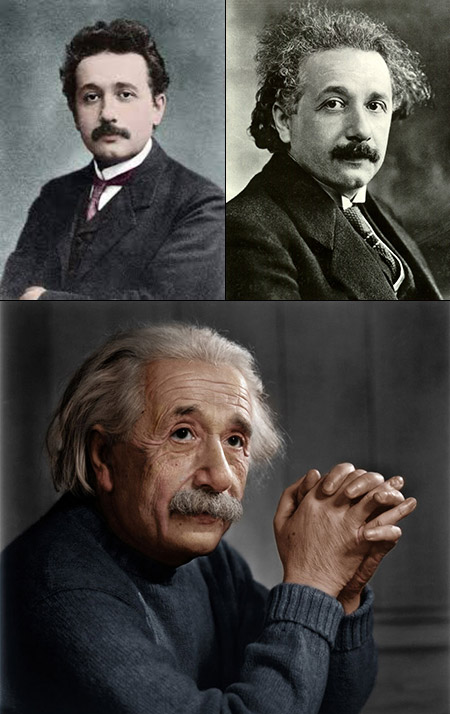
There have been a number of amazing human discoveries that have accelerated since the beginning of civilization in Mesopotamia. Humans like Einstein and their insight to the universe will be aided, not controlled, by the potential of A.I. Artificial Intelligence is no more a danger to humanity than the loss of craftsman during the industrial revolution. Civilization will either adapt to revelations coming from A.I. or environmental degradation or human stupidity will overtake humanity.
“IF ANYONE BUILDS IT, EVERYONE DIES” is an alarmist, and unnecessarily pessimistic view of the underlying value of Artificial Intelligence. This is not to suggest there are no risks in A.I. but its potential outweighs its risks.
Good luck and safe travels, if you have the time and inclination to visit, go see Dorothy and her companions in Dolan’s immersive theatre.
Travel
Written by Chet Yarbrough
The Sphere in Las Vegas is a must see when visiting Las Vegas.
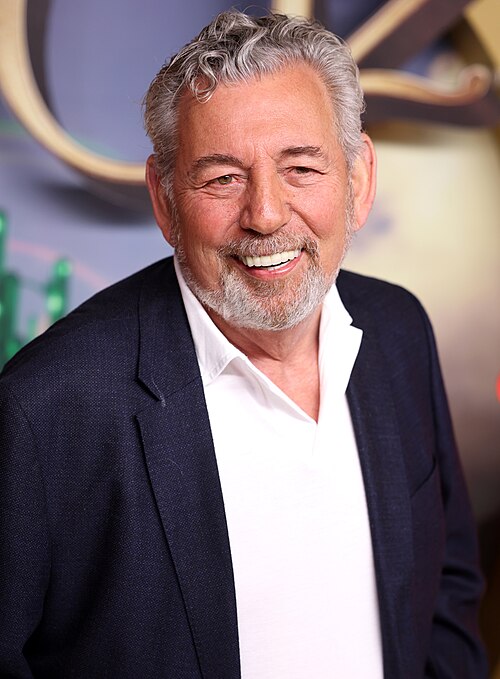
James Dolan, the executive chairman of Madison Square Garden Company, is credited with the idea of the Las Vegas Sphere.
James Lawrence Dolan (American businessman, supervisor of the New York Knicks, and New York Rangers, former CEO of cable vision, owns 70% of the voting power of the Sphere Entertainment Co., a publicly traded company.)
At the time of the Sphere’s construction in Las Vegas, there was concern about it ever being profitable. The cost of the Sphere exceeded expectations but Dolan’s vision and anyone who has visited the Sphere will be overwhelmed by its sensory impact and entertainment potential. In its first quarter of operation, a 98.4 million operating loss was reported. However, the reported revenue of the Sphere was $314.2 million in 2024 and its showed net inc9ome of $151.8 million in Q2 of 2025 after a previous year’s loss of an estimated $46.6 million.
The Wizard of Oz at the Sphere had mixed reviews when it first came out. We had visited the Sphere when it first opened with a World of life’ presentation. The Wizard was equally astonishing and entertaining.
As the Sphere production introduces unforgettable characters like The Scarecrow, The Tin Man, and the Cowardly Lion, some fans will tear up with the joy of seeing them in the immersive qualities of the Sphere. Viewers will feel the wind of the storm as it sweeps across the Sphere’s dome.
The special effects are amazing. You feel the wind of the hurricane, catch a fake apple from a forest of talking trees that complain about travelers picking their apples, and feel the heat from a fire in the witch’s castle. This is a tour de force of the Sphere’s potential.
Good luck and safe travels, if you have the time and inclination to visit, go see Dorothy and her companions in Dolan’s immersive theatre.
Didion reminds one of Yeats Poem to warn society of civilization’s collapse. Yeats wrote “The Second Coming” after WWI and the Spanish Flu. Seems similar to today’s political war and the Covid pandemic.
Books of Interest Website: chetyarbrough.blog
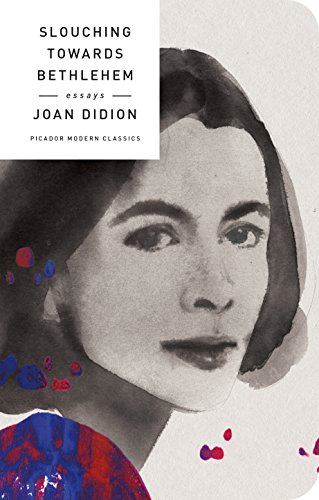
Slouching Toward Bethlehem
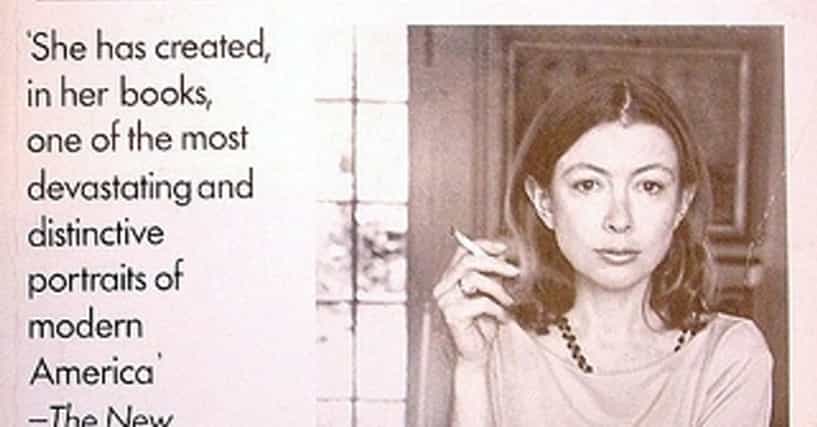
Author: Joan Didion
NarratedBy: Diane Keaton
Joan Didion (Author, American writer and journalist, published in The Saturday Evening Post, National Review, Life, Esquire, and The New Yorker. She also wrote screenplays for “The Panic in Needle Park”, “A Star is Born”, and “Upclose and Personal” as well as receiving a National Book Critics Circle Award and a Pulitzer. 1934-2021.)
Diane Keaton (Actor, Academy Award winner, BAFTA recipient, two-time Golden Globe, and Tony Award winner. 1946-2025.)
Diane Keaton died yesterday.
Several years ago, I purchased “Slouching Toward Bethlehem” without reading it until Keaton had done an audiobook’ narration of it. “Slouching Toward Bethlehem” illustrates Didion’s skill as an essayist and writer while Keaton’s many acclaimed movies show how accomplished both women have been in their lives.
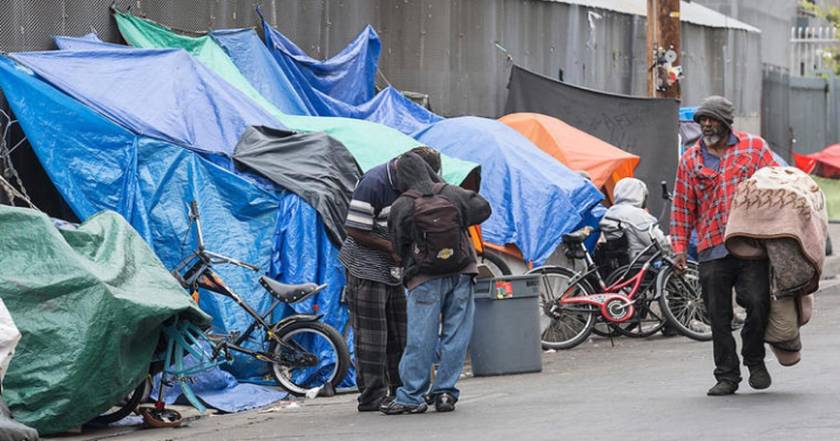
“Slouching Toward Bethlehem” is interesting because it offers an interpretation of why homelessness is so much more obvious in America than other countries.
Having lived in different areas of the United States, the appearance of homelessness in the big cities of America is disgraceful. Visiting the Baltics, Norway, Finland, China, and Japan in the last few years illustrates how badly America is handling homelessness. With the exception of Norway, per capita incomes in the United States are more than twice the incomes of the aforementioned countries. Norway’s per capita income is $87,925 while America’s is $82,769. China’s per capita income is $13,122 but walking through major Chinese cities, there are no people sleeping on the streets. The Baltics per capita incomes range from $22,000 to a little more than $30,000. There is poverty in all these countries, but their leaders and societies have found a way to keep their citizens housed. This is not to argue their poor are not faced with hardship but to show how poorly American society is treating its homeless.
There seems a generational divide in Didion’s “Slouching Toward Bethlehem”.
The beat generation of the 1960s for which Timothy Leary coined the phrase “Turn on, tune in, drop out” alluded to in Didion’s essays may offer a partial explanation. Many of us experimented with drugs in the 60s but there has to be more than that to explain what has happened to big cities in America. Part of the answer is the change in income for the middle-class. In the 1960s middle-class incomes were strong and broadly shared. In the 21st century, middle class incomes have stagnated. CEO’s income in the ’60s made 20 times middle class earners but in the 21st century the ratio rose to 300-1. The rich got richer and the middleclass got poorer. Power shifted from a voting middle class to a richer upper-class that accelerated income gaps that changed election results with an income class bias.
Housing costs accelerated to new highs in the 21st century. The 1960s price-to-income ratios were 2:1 while today they are 5:1 or higher. The effort during the Obama administration to weaken standards for home buyer qualification exacerbated the greed of mortgage companies which led to a near economic collapse of the finance industry. Instead of bailing out homebuyers that could not pay their mortgages, the Obama administration bailed out mortgage companies and their owners while endorsing eviction of buyers who could not afford their mortgage payments.
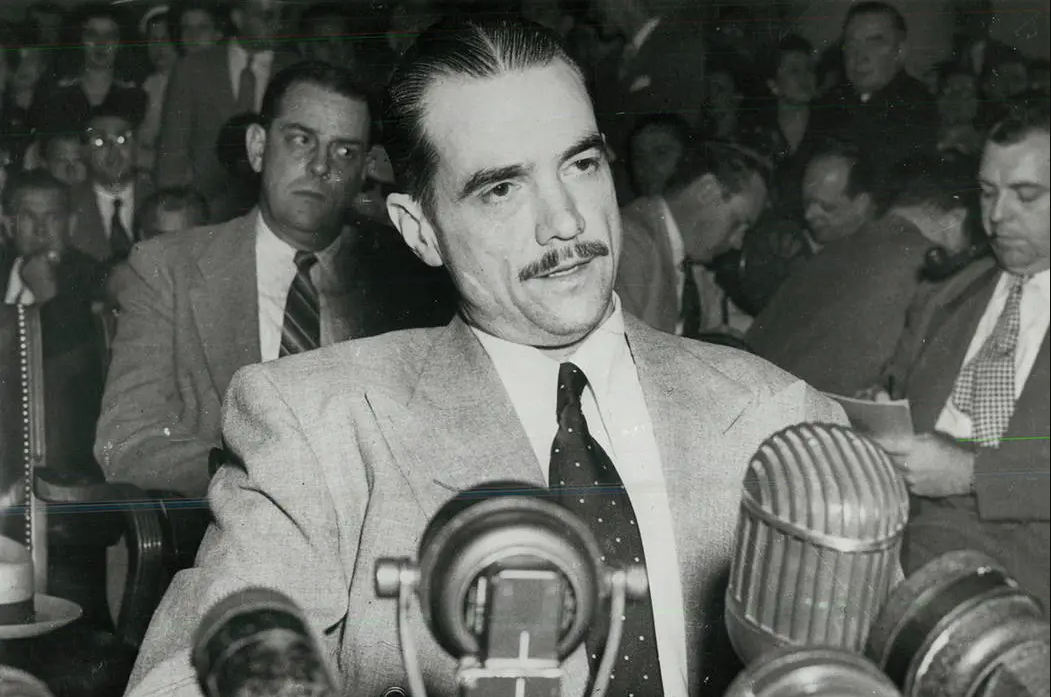
“Slouching Toward Bethlehem” writes of famous successful people like John Wayne, Howard Hughes, Joan Baez, and herself as symbols of the 1960s. She is effectively glorifying them and herself while showing how they mythologized success to a generation of young people who were turning on, tuning in, and dropping out. Image became more important than substance. Working to be great at acting, becoming wealthy by investing wisely, singing about peace, justice and non-violence to make money, and writing about societal dysfunction were money makers. Capitalizing on dysfunction of society did nothing to ameliorate it. John Wayne is only a symbol of justice in the movies and Howard Hughes inherited his wealth that allowed him to invest, sometimes unwisely and with poor personal management skills. He began investing in Las Vegas because management could be left to others. To be fair, Didion and Baez try to return something to society for their success but their efforts pale in comparison to America’s decline. Artists report facts of life but rarely offer solutions.
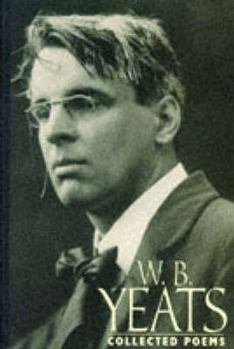
William Butler Yeats (1865-1939, Irish poet, dramatist, writer and literary critic.
W. B. Yeats Poem summarizes and exemplifies what Didion alludes to in her book.
Turning and turning in the widening gyre
The falcon cannot hear the falconer;
Things fall apart; the centre cannot hold;
Mere anarchy is loosed upon the world,
The blood-dimmed tide is loosed, and everywhere
The ceremony of innocence is drowned;
The best lack all conviction, while the worst
Are full of passionate intensity.

Surely some revelation is at hand;
Surely the Second Coming is at hand.
The Second Coming! Hardly are those words out
When a vast image out of Spiritus Mundi
Troubles my sight: somewhere in sands of the desert
A shape with lion body and the head of a man,
A gaze blank and pitiless as the sun,
Is moving its slow thighs, while all about it
Reel shadows of the indignant desert birds.

The darkness drops again; but now I know
That twenty centuries of stony sleep
Were vexed to nightmare by a rocking cradle,
And what rough beast, its hour come round at last,
Slouches towards Bethlehem to be born?
Didion reminds one of Yeats Poem to warn society of civilization’s collapse. Yeats wrote “The Second Coming” after WWI and the Spanish Flu. Seems similar to today’s political war and the Covid pandemic.
A not surprising irony in “They Made America” is that great innovators like the rest of us are flawed. Ford is widely considered an antisemite, Edison is too opinionated to countenance differences of opinion, Rockefeller is an elitist, Singer is a misogynist and so and so on
Books of Interest Website: chetyarbrough.blog
They Made America (From the Steam Engine to the Search Engine: Two Centuries of Innovators)
Author: Harold Evans, Gail Buckland & 1 more
NarratedBy: Harold Evans
Harold Evans (Author, 1928-2020, British journalist died at age 92.)
“They Made America” is partly about inventions but mostly about innovations that transform society. He writes of America but his explanation of making any successful economy requires innovation. Invention may be a beginning while innovation has no end. He writes of mostly American men whose imagination leads to innovations that transform America’s economy. The generation of power, and advances in communication, transportation, finance, and culture are the consequence of innovation that may or may not be based on original invention. Some of a nation’s economic and social advancement is from unique invention but all of a nation’s success is a result of innovation.
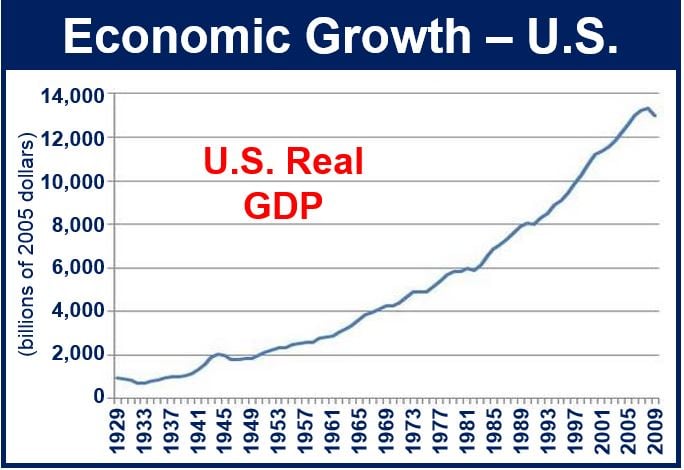
During the Obama administration, America’s economic growth began to decline and accelerated with the Covid 19 pandemic.
Evans and his co-authors identify many who have contributed to the success of America’s economic growth. Most of those he identifies are Americans but a few like Leo Baekeland, Reginald Fessenden, and Herbert Boyer show that innovation is not just an American phenomenon. Baekeland is a Belgian who invented Bakelite and became a U.S. citizen. Bakelite is the first fully synthetic plastic that revolutionized design and manufacture of consumer goods. Fessenden was a Canadian who pioneered radio transmission technology and Herbert Boyer and Robert Swanson were Americans who collaborated with many international scientists to create Genetech, the first biotech firm in the world that commercialized recombinant DNA for life-saving medicines like insulin.
Though British innovator, James Watt, did not invent the steam engine he radically improved it by adding a separate steam condenser.
The invention and innovational changes of the steam engine led innovators like Robert Fulton to see how a steam engine could power a steamboat. The invention of the automobile led to Henry Ford’s innovations in assembly line work that reduced the cost of production to make cars available to almost every working American. Ford also increased wages of his workers so they could buy Ford products. The founder of Bank of America, A.P. Giannini, innovated lending with idea of consumer banking giving workers a way to secure their paychecks in a bank that could provide a means to pay for services and possible credit based on accumulated wealth in their checking account. Innovations in communication by Ted Turner, Page and Brin, and Jobs and Wozniak changed the media communications industry.
Thomas Edison (1847-1931).
The recounting of the many American innovators in “They Made America” is not a picture of idealized human beings. Thomas Edison, who is among the greatest innovators in America, created a team of experimenters at Menlo Park in New Jersey. Edison created an “Invention Factory” that led to the electrification of the world. Though he did not believe in alternating current (AC) as an improvement over direct current (DC) in the use of electricity, he envisioned an electrical system that would light the dark streets of the world. Edison is a perfect representation of inventor and innovator in Evans’ American story. Edison’s belief in himself, his drive for accomplishment, and risks he was willing to take, exemplify the best an American entrepreneur can be.
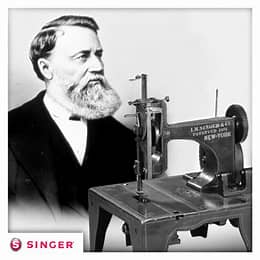
Isaac Merritt Singer (1811-1875).
Isaac Singer innovated sewing machine manufacturing and sale but led a profligate life as a seducer of women with a volatile reputation that often erupted in anger toward others. Singer is alleged to have fathered 24 children from wives and girlfriends. Like his name, Singer was a showman who demonstrated his machines and built a brand that remains popular today. He was flamboyant and accused of bigamy and adultery but is noted to have created a global sales and service company with an installment purchasing plan for his machines. He carries the same force of nature as Edison but with the development of a singular product.
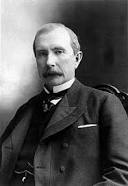
John D. Rockefeller (1839-1937).
In contrast to either Edison or Singer, Rockefeller is primarily focused on increasing his wealth and power. He revolutionizes the oil industry through monopolization while raising prices of oil to increase his wealth. He brands his product, reduces his costs of operation by building oil pipelines to reduce delivery costs and develops a corporate strategy to eliminate competition. His focus is on creating an industrial empire.
Malcolm Purcell McLean (1913-2001)Ted Turner (Born in 1938, now age 86.)
Evans notes other innovators like Ted Turner and Malcolm McLean and their innovations in media and global shipping. The lesser-known McLean introduced and launched the first container ship in 1956 that dramatically reduced loading times, labor costs, and cargo theft in the shipping industry. Ted Turner created CNN and TBS to revolutionize the news and entertainment industries. Page and Brin, and Jobs and Wozniak unleashed the internet to offer wider knowledge to the world but also provided a network that spread lies and misrepresentations of truth.
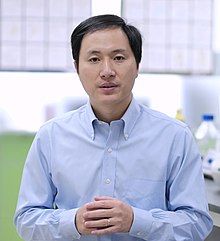
Dr. He Jiankui is an example of human blind spots. (Jiankui claims to have conducted the first human genome-editing of a human embryo with no oversight and a botched process that embarrassed the scientific community.)
The common denominator of these and many more innovators described in Evans’ book (though Jiankui is not mentioned) is their ambition, ego, and human blind spots. Edison is domineering and ruthlessly competitive. Ford’s antisemitism is reflected in his support for Adolph Hitler and being the only American cited in “Mein Kampf” as a model of antisemitism. Rockefeller shows the same traits as Edison as a corporate hegemon while using his innovative skill to dominate competitors and corner the market price for oil. Singer improves the utility of sewing machines through innovation and salesmanship while living life as though his personal ego is all that matters.
A not surprising irony in “They Made America” is that great innovators (like all of us) are flawed. Ford is widely considered an antisemite, Edison is too opinionated to countenance differences of opinion, Rockefeller is an elitist, Singer is a misogynist, Jiankui is a scofflaw, and so and so on. On balance however, innovators make a contribution to the success of America while most of us go along to get along.
Governmental and educational institutions are the foundations of Democracy. They must stand and support the right to free speech without committing, allowing, or condoning violence in the exercise of that right. (Of course, this is easy to say but difficult to follow because of the loss of emotional control by protectors of the public and/or protesters.)
Books of Interest Website: chetyarbrough.blog
The Coddling of the American Mind (How Good Intentions and Bad Ideas are Setting Up a Generation for Failure)
Author: Jonathan Haidt, Greg Lukianoff
NarratedBy: Jonathan Haidt
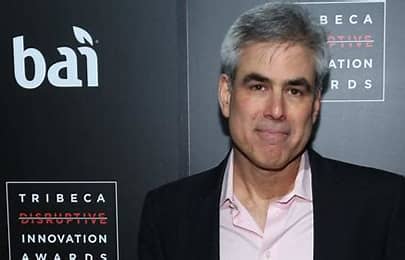
Jonathan Haidt (Social Psychologist)Greg Lukianoff (Lawyer & free speech advocate.)
This is an interesting book written by a social psychologist and a free speech advocate. The authors suggest the focus for parents of Generation Z have, in some ways, become overly protective of their children. They argue– Gen Z’ parents are not addressing the mental health issues caused by this technological age. Jonathan Haidt and Greg Lukianoff argue society has become more attuned to children’s protection than the reality of living in a world of diversity.
With the societal change that has accompanied the birth and maturation of Generation Z, immersive tech like AR and VR, along with AI and smart devices, is having profound effects on society.
Haidt and Lukianoff suggest parents focus too much on keeping their children safe to the point of stifling their intellectual growth. The example they give is of the mother who is publicly ridiculed for allowing her 8-year-old son to find his way back home from a city market by mass transit. She prepares him for the excursion with a transit schedule, pocket money, a cell phone, and general information he needs to find his way home. The boy successfully finds his way home and allegedly expresses happiness about what he views as an adventure and accomplishment.
Undoubtedly, there is some truth to the authors’ suggestion that parents are too protective of their children. Thinking of a single mother who has to work but has children at home. Many single parents cannot afford a babysitter, so leaving their children during the day is not uncommon. Single parent families do the best they can but if children are old enough to fill a cereal bowl for breakfast, they are expected to take care of themselves.
John Walsh (Became a child protection advocate, producer, and actor after the murder of his son.)
On the other hand, the writers note the horrible tragedy of John Walsh who’s six-year-old son is kidnapped in 1981. The six-year-old is found two weeks later with a severed head. Though child kidnappings rarely end in such a horrific way, one can understand why many parents became highly protective of their children after the 1980s. Haidt and Lukianoff acknowledge the horrific murder of Walsh’s son, but history shows unsupervised children that are harmed is much less than 1 percent of the dependent children population. What the authors suggest is that some of the overprotection of children since the Walsh tragedy in 1981 has been counterproductive.
Allergy immunity.
As an example of over protection, the authors suggest peanut butter allergies have risen because of inordinate fear by the public. They suggest that early life exposure to peanuts would have provided immunity and fear of exposure is the proximate cause for today’s rise in allergic reactions. Putting aside the theory of a human body’s creation of developing an allergy immunity, the frustration one has with monitoring a child’s life experience is in knowing where to draw the line between reasonable supervision and overprotectiveness.
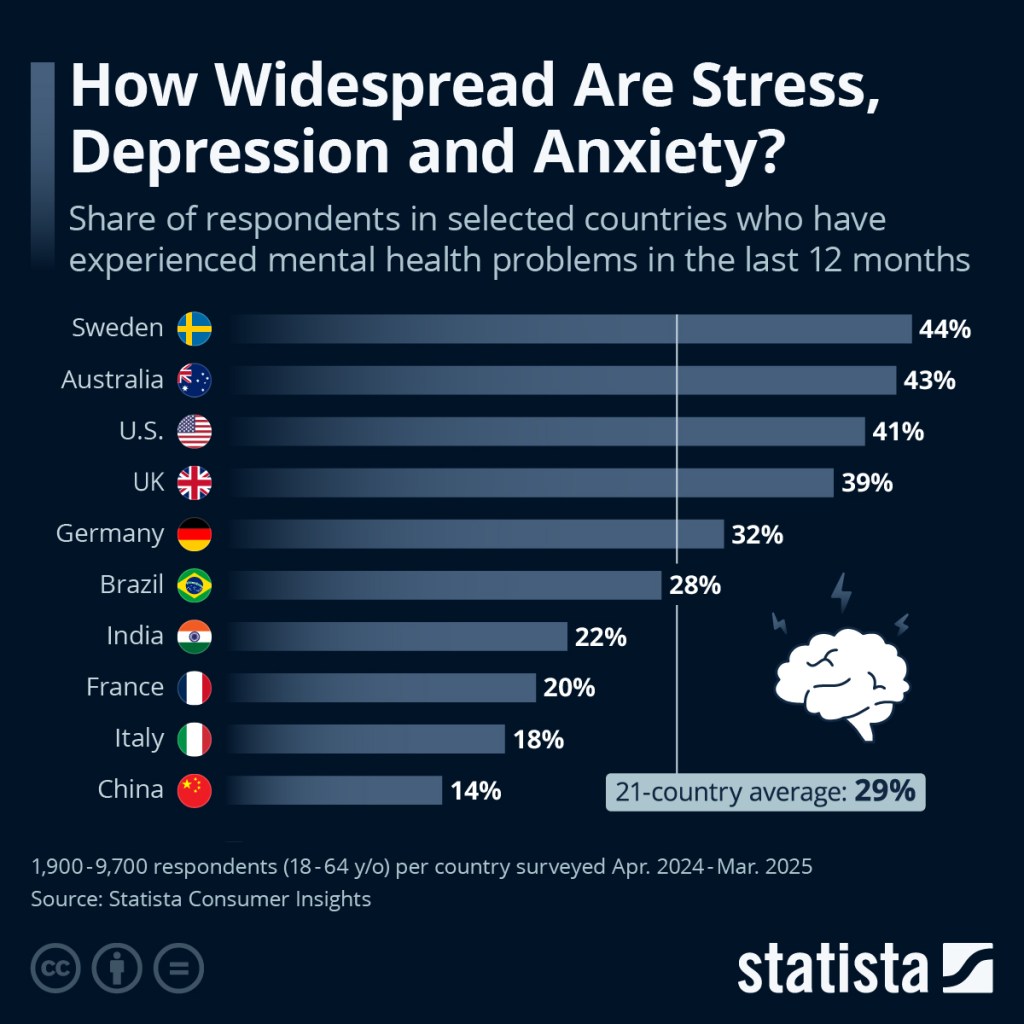
The authors infer the widespread rise in stress, anxiety, and depression in America is partly due to overprotectiveness.
Undoubtedly suppression of free inquiry and play diminishes the potential of a child’s development. Haidt and Lukianoff argue overprotection has contributed to a rising anxiety and depression in Generation Z and society in general. The authors cite national surveys that show increased rates of anxiety, depression, and self-harm. They note hospitalization and suicide rates are increasing based on self-inflicted injuries among teens with sharper rises among females. They note colleges and universities are reporting higher demand for mental health services.
Whether stress, anxiety, and depression are because of over protection remains a question in this listener’s mind. One suspects that children are cared for in too many different ways for research to conclude that stress, anxiety, and depression increases due to overprotection. It is more likely due to parental inattention because of work that takes them away from home and personal fulfillment in their own lives which are only partly satisfied by being parents.
Rather than parental overprotection, it seems intensified social media and smartphone use accelerates stress, anxiety, and depression in children and society in general.
Constant connectivity, online comparison, and cyberbullying are having outsized effects on emotional stability. The authors suggest overprotective parenting compounds the negative consequence of connectivity by depriving children of experience that can build their resistance to anxiety and depression. That may be partly true but not the whole story. Smart phone screen addiction takes one away from day-to-day real-life experience. The idea being that experiencing life’s failures and successes builds resistance to anxiety and depression whereas smart screens are pictures of life not lived by the person who is looking at them. Smart phones open the Pandora’s box of judgement which can either inflate or deflate one’s sense of themselves.
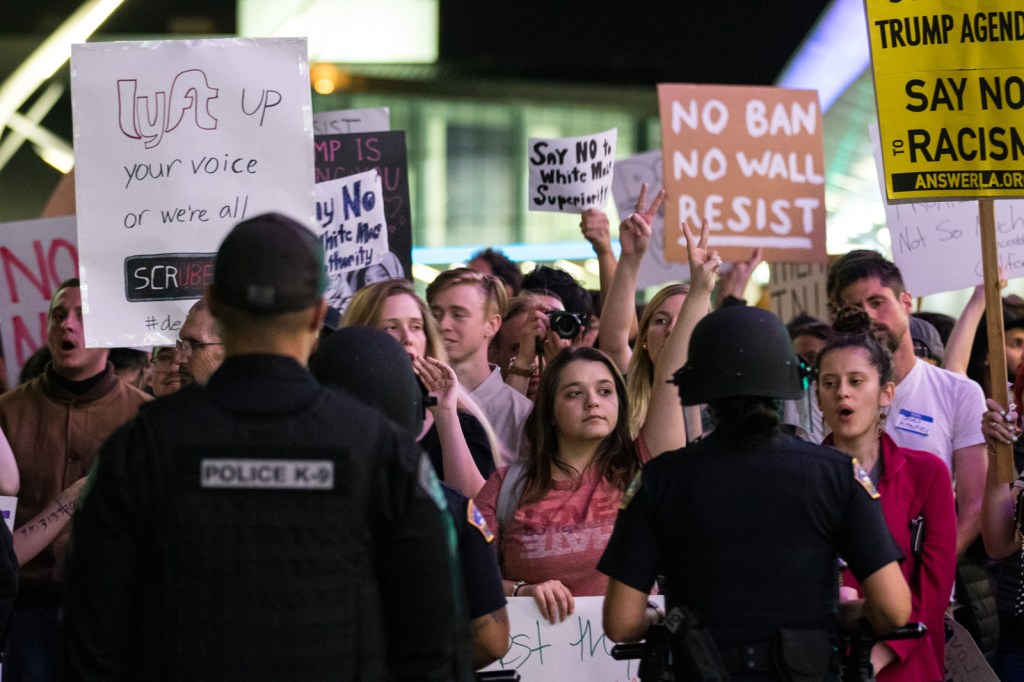
A large part of Haidt’s and Lukianoff’s book addresses the public confrontations occurring on campuses and the streets of America that are becoming violent demonstrations rather than expressions of opinion.
They suggest street demonstrations can be used constructively if participants would commit themselves to open dialogue and diverse viewpoints. Participants need to be taught cognitive behavioral techniques that can mitigate emotional reactions while building on psychological resilience. Rather than reacting emotionally to what one disagrees with, participants should focus on diverse viewpoints that allow for disagreement but do not become physical conflicts. We are all an “us”, i.e. not an “us and them’. Confrontation can be the difference between a white supremacist plowing into a crowd in Charleston, South Carolina and non-violent protest by leaders like Martin Luther King Jr. or Václav Havel. People like President Trump see the world as “us vs them” rather than one “blue marble” hoping to find another that can support human civilization.
Peaceful protests are an opportunity to understand human diversity without losing one’s humanity. Race, creed, and ethnicity are who we are and what we believe. Protesters should not be used as an excuse for violence but for understanding. Of course, this is a big ask which is too often unachievable.
The authors believe humanity can do better by allowing children to learn from their experiences while accepting diversity or difference of opinion without violence. Children and adults can be taught by experience and guidance to manage stress. Free play, risk-taking and real-world problem-solving come at every age and they can make a difference in human life. This listener only partially agrees with the author’s belief that “helicopter parenting” is interfering with free play and reasonable levels of risk taking. Democratic cultures need to reaffirm free speech as a mandate; with violence being unacceptable on every side of the aisle.
Anti-Trump demonstration.
Governmental and educational institutions are the foundations of Democracy. They must stand and support the right to free speech without committing, allowing, or condoning violence in the exercise of that right. (Of course, this is easy to say but difficult to follow because of the loss of emotional control by protectors of the public and/or protesters.)
Like Climate Change, AI seems an inevitable change that will collate, spindle, and mutilate life whether we want it to or not. The best humans can do is adopt and adapt to the change AI will make in human life. It is not a choice but an inevitability.
Books of Interest Website: chetyarbrough.blog
Deep Medicine (How Artificial Intelligence Can Make Healthcare Human Again)
Author: Eric Topol
Narrated By: Graham Winton
Eric Topol (Author, American cardiologist, scientist, founder of Scripps Research Translational Institute.)
Eric Topol is what most patients want to see in a Doctor of Medicine. “Deep Medicine” should be required reading for students wishing to become physicians. One suspects Topol’s view of medicine is as empathetic as it is because of his personal chronic illness. His personal experience as a patient and physician give him an insightful understanding of medical diagnosis, patient care, and treatment.
Topol explains how increasingly valuable and important Artificial Intelligence is in the diagnosis and treatment of illness and health for human beings.
AI opens the door for improved diagnosis and treatment of patients. A monumental caveat to A.I.s potential is its exposure of personal history not only to physicians but to governments and businesses. Governments and businesses preternaturally have agendas that may be in conflict with one’s personal health and welfare.
Topol notes China is ahead of America in cataloging citizens’ health because of their data collection and AI’s capabilities.
Theoretically, every visit to a doctor can be precisely documented with an AI system. The good of that system would improve continuity of medical diagnosis and treatment of patients. The risk of that system is that it can be exploited by governments and businesses wishing to control or influence a person’s life. One is left with a concern about being able to protect oneself from a government or business that may have access to citizen information. In the case of government, it is the power exercised over freedom. Both government and businesses can use AI information to influence human choice. With detailed information about what one wants, needs, or is undecided upon can be manipulated with personal knowledge accumulated by AI.
Putting loss of privacy and “Brave New World” negatives aside, Topol explains the potential of AI to immensely improve human health and wellness.
Cradle to grave information on human health would aid in research and treatment of illnesses and cures for present and future patients. Topol gives the example of collection of information on biometric health of human beings that can reveal secrets of perfect diets that would aid better health during one’s life. Topol explains how every person has a unique biometric system that processes food in different ways. Some foods may be harmful to some and not others because of the way their body metabolizes what they choose to eat. Topol explains, every person has their own biometric system that processes foods in different ways. It is possible to design diets to meet the specifications of one’s unique digestive system to improve health and avoid foods that are not healthily metabolized by one’s body. An AI could be devised to analyze individual biometrics and recommend more healthful diets and more effective medicines for users of an AI system.
In addition to improvements in medical imaging and diagnosis with AI, Topal explains how medicine and treatments can be personalized to patients based on biometric analysis that shows how medications can be optimized to treat specific patients in a customized way. Every patient is unique in the way they metabolize food and drugs. AI offers the potential for customization to maximize recovery from illness, infection, or disease.
Another growing AI metric is measurement of an individual’s physical well-being. Monitoring one’s vital signs is becoming common with Apple watches and information accumulation that can be monitored and controlled for healthful living. One can begin to improve one’s health and life with more information about a user’s pulse and blood pressure measurements. Instantaneous reports may warn people of risks with an accumulated record of healthful levels of exercise and an exerciser’s recovery times.
Marie Curie (Scientist, chemist, and physicist who played a crucial role in developing x-ray technology, received 2 Nobel Prizes, died at the age of 66.)
Topol offers a number of circumstances where AI has improved medical diagnosis and treatment. He notes how AI analysis of radiological imaging improves diagnosis of body’ abnormality because of its relentless process of reviewing past imaging that is beyond the knowledge or memory of experienced radiologists. Topol notes a number of studies that show AI reads radiological images better than experienced radiologists.
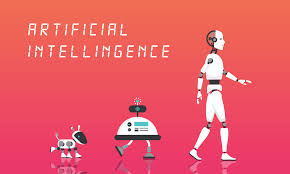
One wonders if AI is a Hobson’s choice or a societal revolution.
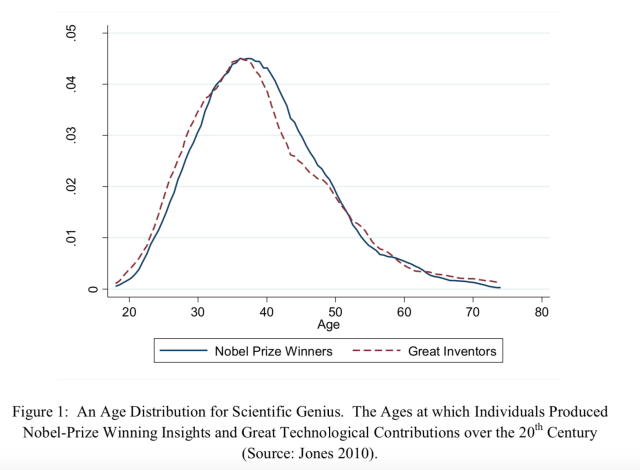
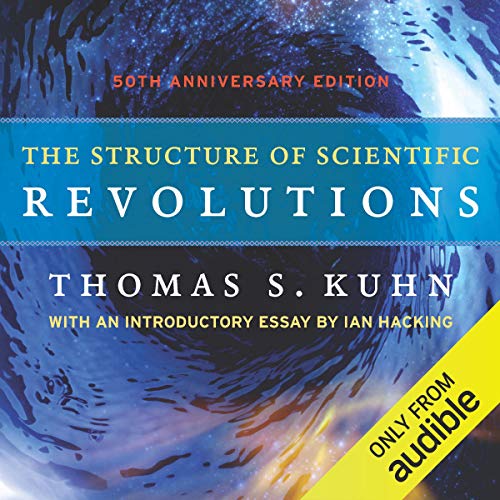
One wonders if AI is a Hobson’s choice or a societal revolution greater than the discovery of agriculture (10000 BCE), the rise of civilization (3000 BCE), the Scientific Revolution (16th to 17th century), the Industrial Revolution (18th to 19th century), the Digital Revolution (20th to 21st century), or Climate Change in the 21st century. Like Climate Change, AI seems an inevitable change that will collate, spindle, and mutilate life whether we want it to or not. The best humans can do is adopt and adapt to the change AI will make in human life. It is not a choice but an inevitability.





































 REVIEWS AND VIEWS OF LIFE