CAPITALIST DEMOCRACY

America’s current government may not be the criminal enterprise of Drew Hayes’ “Forging Hephaestus”, but it reflects on the worst characteristics of capitalist democracies.

Books of Interest
 Website: chetyarbrough.blog

Forging Hephaestus: Villains’ Code Series, Book 1 

Author: Drew Hayes

Narrated By: Amy Landon

Drew Hayes (Author, humorist writer who earned a BA in English from Texas Tech University.)

“Forging Hephaestus” is the beginning of a series of books that this critic is unlikely to complete. The first book, “Forging Hephaestus” sets the table for some interesting points about systems of power, identity, and morality that reminds one of government control and influence. However, Hayes is creating a secret guild of criminals’ intent on ruling the world of crime.

Drew’s story begins with the creation of a young woman that embodies the force of fire.

She is like the mythological god of fire though not appearing as someone who is male or has, as the Greek myth goes, any physical imperfection. One presumes the author is challenging the patriarchal truth of history that shows power, aggression, and ambition are not only masculine. Additionally, the choice of Hephestus as a woman makes one think about a person who exemplifies both creation and destruction, i.e., the birth and death of humanity.

If one thinks of Hayes’ story as a cynical allegory of government, rather than a criminal enterprise, it becomes more interesting to this reviewer.

What Drew describes as a Villains’ Guild is like a government elected by people who believe they are voting for someone who represents their interests. In reality, voters are voting for self-interested people who may or may not govern in voter’s best interest. At best, governments try to serve the public but are not gods of infallible understanding that can legislate what is always in the best interest of its citizens. Generally, governments control through compliance, not morality. Order is prized over justice and equity. That desire for order changes elected officials’ loyalty to those who are elected as much as to people who voted for them.

The guild that Hayes creates audits and enforces their criminal objectives with state surveillance and internal security.

State surveillance and internal security are the same tools used by government which are even more effective today than in the past because of technology. (A past trip to China after Xi had taken power shows how internet searches are restricted when one is in a Bejing’ hotel.) The paradox of surveillance and internal security is that no one is truly free whether they are a part of those who govern or are the governed. Human nature exploits the weak, the ethnic, and ill-informed. Government representatives are no more virtuous or venal than the citizens who elected them. That is why citizens become skeptical about the legitimacy of their government’s concern about common good.

Trump’s world view.

Listening/reading “Forging Hephaestus” is an apocryphal story to some who feel President Trump is the quintessential example of one who is more interested in himself and his family’s wealth than the people who voted for him. America’s current government may not be the criminal enterprise of Drew Hayes’ “Forging Hephaestus”, but it reflects on the worst characteristics of capitalist democracies.

DANGER WILL ROBINSON

Trump’s push to hugely increase government debt at the expense of the poor and middle class, along with a tariff war, look to some like paths toward an economic Armageddon.

Books of Interest
 Website: chetyarbrough.blog

On Tyranny (Twenty Lessons from the Twentieth Century)

Author: Timothy Snyder

Narrated By: Timothy Snyder

Timothy Snyder (Author, graduated from Brown University with a degree in history and political science, received a Doctor of Philosophy in modern history from the University of Oxford.)

“On Tyranny” makes one research Timothy Snyder’s education because of his allusion to the rise of Hitler and America’s rising authoritarianism in the 21st century. His short book “On Tyranny” is disconcerting. He infers Trump’s presidency is an early sign of American democracy’s deterioration. He recounts the rise of German complacency when Hitler came to power and Nazi’ support for victimization of Jews and invasion of Poland are the beginning of a plan to reorganize spheres of influence in Europe.

Snyder’s observation is undoubtedly to create a sense of moral urgency on the part of American listener/readers to do more than just observe what is happening in America. Not that it is about Jewish discrimination but about American government rounding up and deporting alleged illegal immigrants without due process and sending them to prisons in other countries. Snyder is a scholar who specialized in Eastern European totalitarianism which suggests he knows something about the precursors of authoritarianism.

It seems the comparison of Trump to Hitler is hyperbolic when one considers the dire financial condition of Germany in the late 1920s. However, Trump’s push to hugely increase government debt at the expense of the poor and middle class, along with a tariff war, look to some like paths toward an economic Armageddon. If the economy falters, would America fall into Germany’s past? One doubts that will happen, but with a President who believes his own lies and Americans who accept them gives listener/readers of “On Tyranny” a chill. The power of Snyder’s argument gains some credibility.

It seems with the history of the United States, federal government checks and balances, and the limited tenure of elected Presidents, a Nazification of America seems unlikely. However, the danger is there because Trump has strong support from his party and many Americans who voted for him who choose to ignore his lies.

WHO ARE YOU?

Greene explains self-awareness of introversion or extroversion is key to understanding one’s social limitations and blind spots in being a constructive part of society.

Books of Interest
 Website: chetyarbrough.blog

The Laws of Human Nature

Author: Robert Greene

Narrated By: Paul Michael & 1 more

Robert Greene (Author, with several NYT’s bestsellers addressing human nature, graduated with a degree in classical studies.)

“The Laws of Human Nature” is a tour deforce of what one learns in life about being a good manager. The difference between a technically excellent employee and a manager is that the first has skill in doing things while the second has skill in managing those who do things. Occasionally, one can be both, but as the complexity of life increases, the likelihood becomes rarer. Human nature revolves around behavior and one’s psychological characteristics. Greene argues there are fundamental laws of human nature that can enlighten listener/readers about themselves and others.

Aristotle’s, Hobbes’, Rousseau’s, and Darwin’s views of human nature have different perspectives. Aristotle believes human nature is teleological with a belief that we all have purpose that is revealed by reason and virtue. Hobbes believes humans are innately self-interested and capable of both good and bad behavior. Rousseau believes humans are inherently good but corrupted by society. Darwin believes humans evolve through natural selection and will do whatever is necessary to survive. Of the four perspectives, Aristotle seems the most idealistic while the other three account for human nature’s irrationality.

Greene suggests humans can be irrational, narcissistic, misleading, and sometimes repressive.

What one can draw from his book is how those characteristics exhibit and what one can do about it. The potential of irrationality exists in everyone. It can cause fear, envy, insecurity, and desire. Bias is at the heart of these emotions. He turns to ancient history to give the example of the war between Spartans and Greeks that may have been avoided if heightened emotions had not been aggravated by a plague in Greece and the death of Pericles who had a rational plan to avoid war. Greene suggests Augustus defeats Anthony to become ruler of Rome because of Anthony’s neglect of his duty as leader of Rome for the desire of the Egyptian Queen, Cleopatra. Greene notes irrationality is a universal characteristic of humanity. The anecdote is to calm one’s emotions, clearly understand what it is that you fear, and to mirror back that clear understanding to yourself and change your behavior.

One can see narcissism in themselves or others when one seeks admiration, overreacts to criticism, has no interest in others perspective, or manipulates others by ignoring or emotionally withdrawing attention.

Married people often do this with their significant other. Greene explains self-awareness, seeing others through their eyes, redirecting your energy to something more important, and being more disciplined can abate narcissism. He notes narcissism is not a flaw but a force that can be turned to good. The history of Oppenheimer, considered by some to be narcissistic, is noted as an example of someone who saw the big picture of life and the consequence of war. He came to understand something bigger than himself and successfully manages other scientists to create the first nuclear bomb. The contrary of a narcissist who could not see the big picture is the story of Howard Hughes who could not manage his father’s company or his entry into the film industry because he could not get things done through other people. He believed only he could handle the complexity of a film production and plane manufacturing company. No one could work under him because of his uncontrolled narcissism that interfered with others he hired to help him manage businesses bigger than one mind could control. His managers resigned because he would not allow them to do the job they were hired to do. Hughes failed as a movie producer and plane manufacturer because of his narcissism.

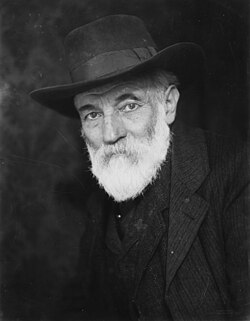
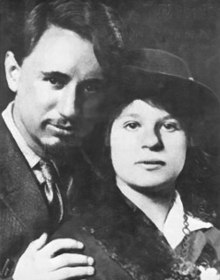
Bernie Madoff (Born 1938, died in Federal Medical Center in 2021)

History is festooned with misleading information by people who distort the truth in order to achieve their personal goals. Greene recalls the history of swindlers like Bernie Madoff that lied to his investors about investments that were Ponzi schemes that fed his investment company’s growth, not from honest investment in publicly traded stocks or business enterprises.

Stalin in Russia, is the penultimate example of a psychological characteristic of repression. One suspects the same is true of Putin. Even America’s President Trump could be characterized as a narcissist. He used federal power to investigate and punish political opponents. Trump politicized the civil service by conducting mass firings to replace employees that were loyal to his agenda. Justice Department’ independence has similarly been restructured. Trump suppresses dissent and free expression by cracking down on student protests, detained and deported not only illegal immigrants but U.S. citizens. He ended asylum protections and militarized crackdowns with the use of the National Guard and U.S. marines to aid ICE in deporting undocumented immigrants and quelling public opposition. All of these actions are examples of an increasingly repressive American President. There were similar arguments about Franklin Roosevelt in his early actions to rescue America from the pre-WWII’ depression.

Greene goes on to explore personality types that are a combination of extroversion and introversion characteristics.

He notes both characteristics have strengths and weaknesses. Extroverts generally have more social fluency, have a more charismatic presence and higher social visibility. They can also become subjects of envy or derision because of their high profile. Greene suggests they are more vulnerable to manipulation because their habits reveal too much about themselves. They become more susceptible to groupthink rather than individual judgement. On the other hand, introversion has equivalent but different strengths and weaknesses. Introverts have more control over themselves because they reveal less of themselves to others. They are naturally less likely to succumb to groupthink. On the other hand, they tend to misread socially valuable influences because of their isolated view of the world. They fail to offer their opinion because of fear of self-exposure and ridicule which diminishes their understanding of beneficial social norms.

Greene explains self-awareness of introversion or extroversion is key to understanding one’s social limitations and blind spots in being a constructive part of society. However, his analysis of “The Laws…” of human nature becomes tedious because it offers too many examples and views of biases and their anecdotes for most listener/readers to be patient enough to complete his book. Nevertheless, Greene’s first chapters are enlightening and worth one’s time.

ANARCHY

In reading/listening to Chomsky some will conclude he is wrong about there ever being a nation-state that will be successfully governed as an Anarchy because of the nature of human beings.

Books of Interest
 Website: chetyarbrough.blog

On Anarchisn 

Author: Noam Chomsky, Nathan Schneider

Narrated By: Eric Jason Martin

When one thinks of a political system called Anarchism, the first thing that comes to mind is a vision of rampant disorganization where there is no sense of direction or social cohesion.

Noam Chomsky is a polarizing figure who is admired as an anti-capitalist and anti-imperialist who fiercely criticizes U.S. and Israeli foreign policy. He views Israel as a client state of the U.S. that relies on authoritarianism to manage their countries roles in the world. He notes America’s interventions in Vietnam, Central America, Iraq, and Afghanistan as evidence of America’s failure as a democracy. He views Israeli foreign policy in regard to Gaza as infected with hypocrisy and violence with a narrow view of territorial expansion. He feels both America and Israel are driven by strategic and economic interests, not by the idealism of democracy.

Chomsky is a fierce critic of capitalism and imperialism because both marginalize citizens’ freedom of thought and action.

Chomsky’s view is that anarcho-syndicalism is a better form of government where power is decentralized and citizens can and should collectively manage their own affairs through direct democracy and cooperative organizations. He argues for participatory democracy by voluntary associations that are freely formed into cooperative communities. There should be no centralized authority with all workplaces and production controlled by the workers themselves. He believes in libertarian socialism because he sees it as the most humane and rational extension of Enlightenment ideals in society. Any authority exercised by a government entity in a libertarian socialist country, in Chomsky’s opinion, is the most humane and rational extension of the ideals of the Enlightenment.

The Age of Enlightenment or sometimes called the Age of Reason was a movement in the late 17th century that extended into the 19th century.

It emphasized the power of reason, science, and individual liberty as the tools for the reform of society. The tools of reason, science, and liberty were believed to be the natural rights of humanity, and the possibility of improving society through education and reform based on science.

Francisco Franco (Spain’s dictator 1939-1975.)

Chomsky argues those tools were engaged by Spanish revolutionaries during Franco’s dictatorship in Spain. Chomsky notes workers took control of factories and farms in Catalonia and Aragon that were run collectively and democratically by workers. He believes voluntary cooperation thrived. He believes the anarchist movement grew through three generations based on education and considered organization of Spanish interest groups. However, Franco’s forces with the help of England, Germany, and Italy defeated the movement.

Republican factions fought against Franco’s government in the 1930s.

Chomsky believes revolutionaries against Franco were practical visionaries that showed how anarchy could be a legitimate and superior way of governing a nation.

Surprisingly, there are several examples besides Spain’s revolution that were collectivist organizations that could be classified as anarchies. From 1918-1921, the free territory of Ukraine was led by Nestor Makhno during Russia’s Civil War. It was ended by Russian communism after its ascension in 1917. Modern communes were set up in Mexico’s Zapatista territories with autonomous zones that had collective farming and indigenous self-rule. Of course, in ancient times there were hunter-gatherer societies that shared norms, and governance through consensus decision-making and resource sharing. However, there is a history of atrocity, failure, and disruption by governing bodies that have tried Anarchy. Spain’s effort fell apart in 1939. Freetown Christiania in Denmark, in a neighborhood in Copenhagen has struggled with Anarchy since 1971. A number of legal battles have been fought over commercial ownership and control. By some measures, the kibbutz movement in Israel has been successful. However, even Chomsky notes friction comes within kibbutz communities over disagreement with elected leaders. Research shows that some kibbutzim are privatizing and paying differential wages for communal services. Collectivism is becoming harder to maintain.

Chomsky is considered by some to be the most important intellectual alive today. He is highly respected for theories on the understanding of language based on modern cognitive science.

Chomsky has shaped how we think of human capabilities. He is famous for his dissents which are naturally about government control and media manipulation. He was against the Vietnam war and opposed Israeli occupation because of his libertarian socialism, a form of anarchy or a collective that is purely democratically determined. He is reported to be an excellent lecturer and capable of going toe to toe with experts in linguistics, philosophy, political science, and education. His opinions have global reach with translations in many languages.

In reading/listening to Chomsky some will conclude he is wrong about there ever being a nation-state that will be successfully governed as an Anarchy because of the nature of human beings. Whether one believes in Hobbes’ view of selfish humans, Rousseau’s belief in people being corrupted by society, Kant’s belief in rationality, or Sartre’s belief in human choices and actions, there will always be dominant personalities who will victimize those whom they commune. Human nature as defined by Hobbes, Rousseau, Kant, Sartre, and other brilliant philosophers infer there will always be miscreate leaders that will destroy egalitarianism, the foundational principle of anarchy. Human nature, as it exists today, is unlikely to change.

EQUALITY

Discrimination is certainly based on the color of one’s skin but also on gender, ethnicity, and income inequality. Those nations that embrace equality of opportunity for all will be the leaders of the future in the age of technology

Books of Interest
 Website: chetyarbrough.blog

Caste (The Origins of Our Discontent)

Author: Isabel Wilkerson

Narrated By:  Robin Miles

Isabel Wilkerson (Author, American journalist, winner of the Pulitzer Prize in journalism in 1994 while serving as the Chicago Bureau Chief for the NYTimes.)

Isabel Wilkerson has written a provocative book about what she characterizes as a rigid social hierarchy in America that undermines the ideals of democracy. Wilkerson weaves her personal life and the history of black experience with the sociological failings in America’s treatment of race. She notes the past and present truth of white America’s unequal treatment of its citizens based on race. However, her characterization of America’s discrimination as a caste system and its comparison to India’s and Nazi Germany’s governments is hyperbolic. Nevertheless, it creates a sense of urgency for those who believe in the ideal of human equality. It is difficult, if not impossible, to compare other nation’s inequality with America’s effort and present-day failure to fulfill the ideals of democracy.

The timeliness of Wilkerson’s book seems appropriate in relation to the backward steps being taken by Donald Trump.

Some Americans feel threatened by demographic change that will make white citizens less than 50% of America’s population by 2045. In theory, no one should care if all people are treated equally. What history shows is that the ideals of equality have never been achieved in America or in any other country with a dominant race and/or ethnicity.

Trump’s effort to return America to its past is interpreted by some as a return to industrial production.

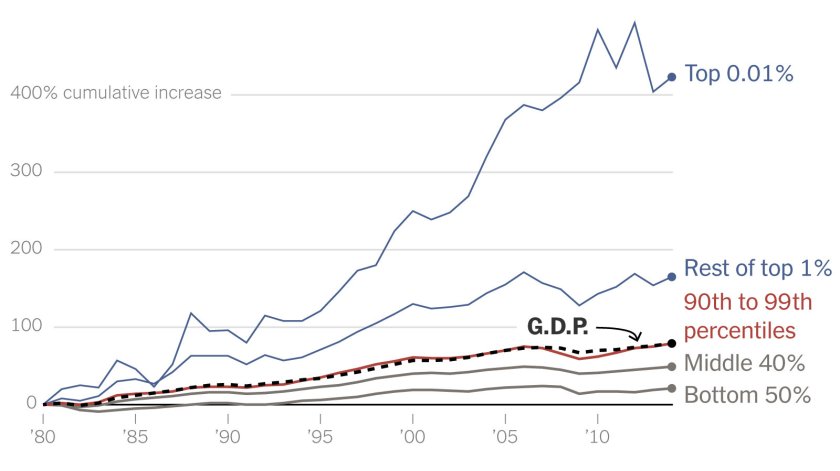
America’s return to industrialization is a false flag that will not make America Great. Reindustrialization and keeping America white is a fool’s errand based on demography and the age of technology. Trump’s desire for power, adulation, and loyalty have little to do with prejudice but everything to do with appealing to the worst fears of middle-class America. Trump is willing to use whatever dog whistle is required to satisfy his desire for power and prestige. He understands the fears of the middle class and where American power lays. Power and money are the driving forces of capitalism. Middle class American’s buying power has stagnated or fallen since the 1970s despite the increasing wealth of the top 10% of American citizens. The middle class of America is something Trump appealed to in his re-election for a second term because of their disproportionate loss of income and the rising wealth of America’s business leaders. The irony is that Trump is one of the beneficiaries of that income gap between the very rich and the working-class.

Income growth in America.

Income disparity trend in the U.S. through 2015.

Wilkerson is right in the sense that America’s real objective should be to ensure equality of all. She is arguing we should have a greater sense of urgency in achieving equality. Equal treatment for all is a formula that can maintain America’s position as an economic, military, and political hegemon. American industrial hegemony is yesterday’s goal. Technological advancement is today’s goal. To achieve today’s goals, equal treatment of all becomes essential in technology because intelligence, innovation, and persistence does not lie in any one race, sex, or creed.

America is class conscious but not in the same way as either India’s or Nazi Germany’s histories.

Wilkerson notes a caste system can be built around ethnicity, religion, language, or gender but race discrimination is what she has personally experienced and underlays much of her comparisons of American history with India and Nazi Germany. Equality of opportunity is key to continued growth of human beings and national economies in the age of technology. In the short term, one may see an autocratic country like China become an economic and military hegemon, but maintenance of that success is dependent on equality of opportunity for all, not just those in power.

One can sympathize with the author’s view of discrimination but her comparison of America to India and Nazi Germany misses too much of what unequal treatment in America is based upon.

Discrimination is certainly based on the color of one’s skin but also on gender, ethnicity, and income inequality. Those nations that embrace equality of opportunity for all will be the leaders of the future in the age of technology.

LANGUAGE

Spinney makes some interesting points that may or may not be the principal origin and evolution of language difference. Her ideas seem plausible, just as Newton’s physics seemed entirely correct until Einstein proved otherwise.

Books of Interest
 Website: chetyarbrough.blog

Proto (How One Language Went Global)

Author: Laura Spinney

Narrated By:  Emma Spurgin-Hussey

Laura Spinney (British science journalist, novelist, and non-fiction writer.)

Laura Spinney has written a challenging book for non-linguistic learners. Her book, “Proto”, focuses on a single ancient language she calls Proto-Indo European (PIE) that is said to have spread across the world to form half of the world’s spoken languages. She is not suggesting a new origin theory but argues languages around the world are synthesized by language structure and use. She suggests genetics, human cooperative effort, and recurring mythological beliefs are the basis of adopted languages.

A contrast between the way Spinney’s theory of the spread of a language and others is that it is based on wide use of peoples’ words in daily activity rather than a dictation by leaders who exercise control over a gathered group of people.

Spinney’s historical view for language development is in a people’s events of the day, repeated word use, and changing mythological stories that cultivate and spread a language. The language grows, changes, and spreads based on wider adoption by those who are communicating daily experiences to others. As inventions like horseback riding and wheeled transport show their value to an individual, its descriptions spread new words to one person that grows to many in that culture who communicate its value to others.

As one reads/listens to Spinney’s story, the reasons for differences in language appear based on the timing of ancient cultures growth when one area of the world is populated longer than another.

Every populated area creates their own mythologies. Mythologies are different because they are created by local events, burial rituals, and the desire to explain the “not understood” to others. Additionally, people live in environmentally different areas of the world. A native American has no reason to precisely or creatively describe snow whereas an Eskimo who deals with snow on a daily basis uses more precise and creative words to describe snow’s characteristics and its effect on their lives.

Whether true or not, this is an interesting hypothesis on the growth of language.

PIE, of course, is only one family of languages but her idea of its spread seems applicable to other equally important languages. As in all stories of ancient cultures, there is misrepresentation or misunderstanding because of not being there as languages are formed. Spinney acknowledges the fragmentary evidence of her theory which makes her conclusions tentative, if not suspect. Human nature is to relate facts that make sense of one’s own beliefs and may not accurately recall or report actual experience because of research bias. Power of leaders is diminished or discounted by Spinney’s theory of the spread of language.

Spinney believes PIE originated among the Yamnaya people, north of the Black Sea in what is now eastern Ukraine and southern Russia.

From there it spread westward into Europe, southward into Antolia, eastward into Central and South Asia, and into the Tarim Basin in western China. She believes PIE expansion is primarily because of technological innovations like the wheel and domestication of horses. This is interesting because it suggests the spread of language did not come from conflicts among warring regions but the utility of new technological discoveries.

Will today’s technology bring nations together or reinforce the silos of our differences?

Spinney makes some interesting points that may or may not be the principal origin and evolution of language difference. Her ideas seem plausible, just as Newton’s physics seemed entirely correct until Einstein proved otherwise.

EDUCATION’S BOUNTY

Ibram Kendi’s book is about Malcolm X’s transformation from a poorly educated Black youth to man of erudition and importance–a remarkable tribute to the equality of all human beings.

Books of Interest
 Website: chetyarbrough.blog

Malcolm Lives! (The Official Biography of Malcolm X for Young Listeners)

Author: Ibram X. Kendi

Narrated By:  Ibram X. Kendi

Ibram X. Kendi (Author, American professor and historian of race at State University of New York.)

Though Kendi’s book does not have the erudition of Manning Marable’s “Malcolm X”, his book reveals much more about Malcolm Littles’ challenging childhood and his pilgrimage to Pano-Africanism, global human rights, and belief in Sunni Islamism. The Sunni belief in community and the scholarship of study, along with the rough early experience of Malcolm Little’s life, changes him and, to a degree, America’s racist belief in human inequality.

Malcolm X (born Malcolm Little, 1925-1965, human rights activist.)

Kendi's book is about Malcolm's transformation from an uneducated Black youth to man of erudition and importance is a remarkable tribute to the equality of all human beings.

Kendi explains how Malcolm Little was an uneducated hoodlum when young. Manning Marable shows how insightful and intelligent Malcolm became as a man. A listener/reader of “Malcolm Lives!” gives listener/readers a glimpse of how great they can be if they put their minds and hearts into a life that can make a difference in flawed society. Little becomes self-educated by reading and adopting a belief in something greater than himself.

In some ways, Malcolm is aided by his innate ability to separate the kindness of people he knew from the ignorance of their prejudice.

Interestingly, it is a helpful teacher that changes the direction of Malcolm’s life by encouraging him to be a part of society. On the other hand, this early teacher discourages Malcolm from becoming a Lawyer because he believed the color of Malcolm’s skin would get in his way. Malcolm learned lessons of self-reliance and independence that diminished his regard for the help of a teacher he formally admired. Kendi explains this is just the beginning of Malcolm’s life that evolves from hoodlumism to caring about society that is riven with inequality, but capable of change. Kendi explains how Malcolm’s life exemplifies that capability.

Malcom Little’s life begins in 1925 in Omaha, Nebraska. This is a time in America when the Ku Klux Klan is at its greatest strength.

Malcolm is in the eighth grade experiencing disillusionment from a teacher he respected. He drops out of school and learns how to live off the land by working minimum wage jobs. The work is at night clubs and pool halls that feed his hunger for excitement while growing angrier and angrier about a world of injustice. He covets a white girlfriend who is seduced by his charm but lets him down when she rats him out for house robberies while she and two girlfriends are parties to the crimes. Little is sentenced to eight years in prison for the crime. The lesson he learns from that experience is that friendliness is no protection from the ignorance of prejudice.

John Elton Bembry (aka Bimbi, an inmate who befriended Malcolm and encouraged him to read and educate himself while serving his sentence.)

The irony of Little’s imprisonment is that the teacher he needed when young came in the guise of a fellow prisoner who is recognized by others as someone who commanded respect because of his book learning, intellect, and eloquence. His name was John Elton Bembry, aka “Bimbi”. Bimbi’s leadership by example and eloquence led Little back to what was seen by his early teacher, the capability of a young man willing to work hard to better himself. Little began re-educating himself by reading books from the prison library. Soon after, one of Little’s brothers introduces him to the Nation of Islam.

Elijah Muhammad (1897-1975, American religious leader and self-proclaimed Messenger of Allah)

Kendi reveals the spotty history of the founding of NOI, which ultimately leads to Little’s break with NOI and his adoption of the Sunni faith. Though religion means nothing to some, Little’s adoption of Sunni beliefs and his self-education through reading and travel (when released from prison) changes his life. NOI gave Malcom purpose and discipline while in prison because it reinforced his belief in Black pride and self-reliance. However, the rigidity of its teaching of Black separatism and the personal conduct of its leader, Elijah Muhammad, who fathered children out of wedlock, alienated Little. In 1964, Malcolm went on a pilgrimage to Mecca. He found Muslims of all races praying together. The universality of Sunni Islam showed the narrowness of NOI’s view of society.

This is the capture of the NOI follower who is convicted of Malcolm X’s assassination. He is paroled after serving 45 years in a prison cell.

In the last chapters of Kendi’s book there is mention of the establishment of the nation of Israel and the resistance of Palestinian’ Muslim followers to the taking of land for the formation of Israel. The land that became Israel and Gaza were occupied by an early ethnic group known as the Canaanites. Many Palestinians and Israelites descended from the Canaanites. What some may argue is that people of the Jewish faith were first to create a religious force and formal government in the holy lands of Jerusalem. In Malcolm X’s opinion, the rights of the Palestinian people were being violated in the same way as Blacks in America. Whether that is fair judgement remains a question.

Without hegemonic control by the Palestinian leadership of disputed holy lands, no Palestinian State could be created. Today–Jews, Palestinians, and the world are paying a price for that disagreement.

An argument can be made that in ancient times Jews chose to create a form of government in Jerusalem while Palestinians did not. The same is true today. Yassa Arafat and his followers refused an opportunity to create a separate Palestinian State. Arafat would not agree because of conflicts over full sovereignty over holy lands that were disputed by both Jews and Palestinians.

Kendi ends his book with a story about NOI and Malcom X’s assassination. Malcolm had split from NOI and formed his own movement. The fact that members of NOI were involved in the murder of Malcolm X seems damning. However, Kendi’s book is about Malcolm X’s transformation from a poorly educated Black youth to man of erudition and importance–a remarkable tribute to the equality of all human beings.

UNITED

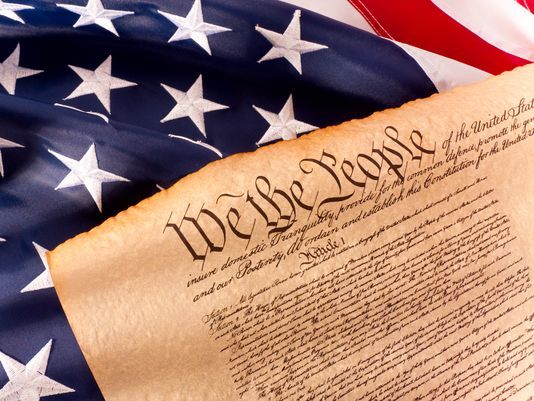
Many of Gibbon’s noted reasons for the Roman Empire’s decline are mitigated by the brilliance of the founders of the American Constitution and the “balance of power” principle that created three branches of government. With a balance of power, neither a President, a Congress, or a Court is likely to endorse dictatorship.

Books of Interest
 Website: chetyarbrough.blog

The History of the Decline and Fall of the Roman Empire (Volume 1)

Author: Edward Gibbon

Narrated By:  Bernard Mayes

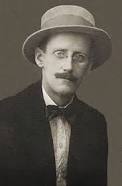
Edward Gibbon (Author, 1737-1794, Englishman who received degrees from the Universities of Cambridge and Oxford.)

Gibbon has an interesting background that seemed suited to admittance to the clergy when he became a symbol of militant agnosticism, even though he was more sophist than militant. This first volume of “The…Decline and Fall of the Roman Empire” made him famous.

Volume 1 of Gibbon’s history of the Roman Empire is interesting for its relevance to modern day nation-state leadership.

One is inclined to compare the tumultuous leadership of the Roman Empire to the history of one’s own country. There are parallels between good and bad leaders of the Roman Empire and the potential for collapse of today’s nation-states. Thinking of America, even a non-historian knows of leaders like Washington, Lincoln, and the Roosevelts who are considered by most historians and political scientists as great leaders. They managed American crises and had greater overall impact on America’s future than most other Presidents. Of course, America has also had its duds which can only be considered long after their tenure by historians who mitigate subjectivity.

America’s President Washington might be favorably compared to Rome’s first emperor, Augustus. Both exemplified leadership that could bring together disparate interests with a vision of what their nations could achieve in the world in which they lived. Of course, Augustus ruled for over 40 years while Washington led America for only 8. Augustus established an empire while Washington established a singular nation-state. However, both created a period of peace and stability during their terms of leadership.

Augustus transitioned Rome from a Republic to an Empire while Washington helped establish the U.S. government by presiding over debates on a constitution that defined the presidency and a system of government’ checks and balances.

Augustus stabilized Rome during years of civil war while Washington led the U.S. through the post-Revolutionary War with Great Britain. Both Augustus and Washington commanded militaries that assured peace within their countries. Washington took command of the Continental Army throughout the war with Great Britain. He organized and trained the troops who had little formal military training. He retreated when necessary and took calculated risks while forging foreign alliances to win American independence from the British. Both Augustus and Washington influenced the economics of taxation to support the administration of government. Though their tenures were quite different, each warranted a system for leadership succession.

Like the great achievements of Augustus in forging an empire, many of Washington’s methods for establishing an independent government have been modified by future leaders. American leadership changes every four to eight years. Surprisingly, despite some long reigning emperors of Rome like Augustus, the average reign is only 5 to 7 years. America’s new Presidents, like Rome’s often acted in ways that would not have been acceptable to their predecessors. Gibbon explains how different emperors shaped the Roman empire through inheritance, military coups, and political maneuvering. Some emperors were assassinated within months of their ascension. American Presidents have been assassinated but inheritance of leadership came from elections, not the power of the military or a leader’s wealth.

The power of a Roman emperor could ignore the Roman Senate and its citizens with the military might at their beckon call.

Successive Roman emperors and American presidents changed the way their governments functioned. The power of a Roman emperor could ignore the Roman Senate and its citizens with the power of the military. In contrast an American President’s government policy changes require a level of cooperation from congress, the judiciary, and the will of the people to make fundamental changes in governance. Gibbon’s history shows Roman emperors handled crises with the power of their position but the same may be argued for America if one considers Lincoln’s actions to preserve the Union with a Civil War. Both emperors and presidents used propaganda, public display, and association with religion to preserve their public image and legitimacy.

The Roman Empire and the destruction of Carthage.

Gibbon’s history of the Roman Empire in Volume 1 contrasts the good and bad that occur during the growth and survival of the Empire. There are numerous examples of horrific times for the Empire’s citizens. However, the Roman Empire lasted for 1,500 years despite what he called the loss of civic virtue, the rise of religion, military decay, economic strain, and barbarian invasion. Many of Gibbon’s noted reasons for the Roman Empire’s decline are mitigated by the brilliance of the founders of the American Constitution and the “balance of power” principle that created three branches of government. With a balance of power, neither a President, a Congress, or a Court is likely to endorse dictatorship.

A part of Gibbon’s first volume addresses the conflict between the Roman legions and what are loosely described as the barbarians. Barbarians were the non-Romans of that time.

They were the Germanic tribes of Goths, Vandals, Franks, and Alemanni. There were the Celts of Gaul and Britain, the Huns of Central Asia, the Parthians and Sassanids of the Persian empires, and the Slaves and Bulgars that arrived at the end of the Roman Empire. The distinction between a Roman soldier and a Barbarian is somewhat obscure. Though the Romans were more highly trained and operated within a structured military hierarchy, they exhibited some of the unruliness of the Barbarians who fought in loose tribal warbands. Roman’ equipment and armor were more standardized than the weapons of the Barbarians. Though some might argue the Romans had citizenship and status, they succumbed to mercenary actions just as the Barbarians often did in their tribal communities. A significant difference between the Roman soldier and Barbarians was discipline in battle. Roman soldiers fought in tight formations while the Barbarians fought with hit-and-run tactics. The interesting thought one has about that difference is the mistakes of America in Vietnam and what many consider a defeat by Ho Chi Minh’s hit-and-run tactics.

Map of the United States of America with state names.

America declared independence in 1776 which means it has lasted for 249 years. There seems little reason to believe America cannot survive more years, i.e. presuming global warming, nuclear war, virus creation, or some other unimagined catastrophic event destroys human life.

SUPREME COURT

To Leah Litman, Trump’s election seems a setback but not a reversal of the ideal of balancing equal rights with private interests. As Alexander Pope wrote in his poem, in the 18th century “Hope springs eternal in the human breast”.

Books of Interest
 Website: chetyarbrough.blog

Lawless (How the Supreme Court Runs Conservative Grievance, Fringe Theories, and Bad Vibes)

Author: Leah Litman

Narrated By:  Leah Litman

Leah Litman (Author, BA in Chemistry & Chemical Biology, constitutional law scholar with Doctorate from University of Michigan Law School.)

One doubts Leah Litman would suggest there are no biological differences between men and women considering her education as a science major and legal scholar. As a science major, she knows there are chromosomal, hormonal, physical, and reproductive system differences between the sexes. However, Litman is spot on in arguing women do not have equal rights with men just as all races and ethnicities do not in the ideals of American Democracy. Litman argues that legally, equality is not being enforced in America today and is being diminished by today’s Supreme Court of the United States.

American Supreme Court

Litman persuasively argues today’s Supreme Court has eroded women’s rights by supporting legal theories that are ideologically promoted by political conservatives but not by precedents set by an earlier Supreme Court. Today’s majority at the Supreme Court has succumbed to the influence of conservative theories about the sexes rather than precedents set by an earlier Supreme Court.

It is not that the sexes are not different but that they deserve equal treatment under the law.

The point made by Litman is that the Supreme Court has found that in “all forms of discrimination”, equality of opportunity is mandated by the 14th amendment which provides equal protection under the law to all citizens with assurance that no person should be deprived of life, liberty, or property without due process. Further, the Civil Rights Act of 1964 prohibits discrimination based on race, color, religion, sex, or national origin in employment, education, and public accommodation. Previously settled law by the Supreme Court is being ignored in reversing Roe v. Wade, criminalizing same sex intimacy and marriage, and denying equal rights to the LGBTQ community.

What Litman is pointing to is the politicalization of the Supreme Court.

One might argue the Court has always been a political body. America’s history of discrimination has been reinforced and attacked in different eras of the Court. As the Turkish saying, “A fish rots from the head down”, today’s Justices of the Supreme Court are reversing precedents set in former rulings. America elects a President every four years. Even though Supreme Court justices are appointed for a lifetime, they decide to retire at some point in their careers and are replaced by recommendations of a current President with acceptance or rejection by Congress. If a conservative is in the office of the Presidency, then the recommendation will be based on candidates who reinforce a President’s political leaning. The same, of course, is true for a more liberal President.

Litman infers a politicalization of the Supreme Court lies at the feet of those who choose to vote, promote, and support candidates of their choice.

America is at a conservative revisionist point in the history of the Court with Donald Trump’s election. America has only itself to blame or praise for that revisionism. The obvious leaning of Litman is liberal in that she strongly believes in equal rights for all Americans. Her plea is for Americans to wake up to the importance of voting, promoting, and supporting candidates for public office.

American Democracy remains the best form of government despite wavering on balancing equal rights and private interests.

A perfect society will balance equal rights with private interests. America is not there, but it has a greater possibility of getting there than any other form of governance. To Leah Litman, Trump’s election seems a setback but not a reversal of the ideal of balancing equal rights with private interests. As Alexander Pope wrote in his poem, in the 18th century “Hope springs eternal in the human breast”.

BRUTALITY

What is so troubling about Grandin’s history is what appears to be the nature of human beings whether royalist, capitalist, socialist, or communist.

Books of Interest
 Website: chetyarbrough.blog

America, América (A New History of the New World)

Author: Greg Grandin

Narrated By:  Holter Graham

Greg Grandin (Author, American historian, professor of history at Yale University.)

Before Professor Grandin, most Americans presumed the United States came from the traditions of the British empire. After reading/listening to America, América, one recognizes the powerful influence of the Spanish empire on the settlement of North America, the attitude of colonists toward minorities, the growth of slavery, and the deep entanglement of Spain in the broader Americas. America, América is a book that widens one’s understanding of the history of the United States.

When being reminded of the many atrocities of colonization and the decimated indigenous natives of the Americas, one is appalled by man’s inhumanity to man. Grandin begins his history of colonization with the Spanish empires’ expansion into the Americas long before the Mayflower expedition to America. Conquistadors set the table for the way what became Americans way to colonize the New England territory. Hernán Cortés and Francisco Pizarro led expeditions that decimated the Aztecs in Mexico and the Incas in Peru. Looking for wealth Spanish conquistadors murdered, raped, and pillaged Latin American native populations. The conquistadors exemplified what became the modus vivendi of British colonists in America. Indigenous peoples were forced to work for Spanish landlords, later supplemented by imported African slaves. The atrocities of Spain in the 16th century are repeated by English settlers in the 17th and later centuries. An estimated 80% of the indigenous people of the Americas perished from disease, forced labor, and ethnic cleansing by Spanish settlers–a grim reminder of American settlers did to indigenous natives in America.

What is so troubling about Grandin’s history is what appears to be the nature of human beings whether royalist, capitalist, socialist, or communist. America, América shows the founding of the United States is a repeat of Spain’s early colonization of the southern part of North America. The human race appears driven by the desire for money, power, and prestige in a system that begins with attack on indigenous peoples and repeats as a perceived advance of civilization. There is some truth in that perception but one realizes indigenous peoples are equally driven and commit human atrocities among themselves in pursuit of value, power, and, or prestige.

This book is returned before completion because of its length. Its history is enlightening but its length is too much for this dilettante.