HOPE VS. ACTION

Hannah Ritchie advises that a Sixth Extinction event, unlike former extinction events, can be stopped because it is manmade.

Books of Interest
 Website: chetyarbrough.blog

“Not the End of the World” (How We Can Be the First Generation to Build a Sustainable Planet)

By: Hannah Ritchie

Narrated by: Hannah Ritchie

Hannah Ritchie (Author, Scottish data scientist, senior researcher at the University of Oxford, undergraduate degree in environmental geoscience and master’s in carbon management, working on a Ph D.)

Hannah Richie is vilified by some environmentalist who suggest she looks at global warming as a problem on its way to resolution. They argue Richie offers an unreasonably optimistic view of global warming. She obviously believes global warming is real, but argues history shows humanity is dealing with the crises and is working on what must be done to survive the future.

A little history: Since 1850, the National Oceanic and Atmospheric Administration estimated the world temperature would increase by 2 degrees Fahrenheit per decade. However, in 2023 NOAA shows the actual average has been 2.43 degrees Fahrenheit per decade since the 1850s. The 10 warmest years have been in the last decade.

Though the exact temperature increase is disputed by other scientific studies, there is no rational disagreement on evidence of warming. Global warming is having an effect on world’ biodiversity.

Richie notes loss of forest lands from farming and timber production adds to global warming because trees absorb carbon dioxide from the air.

Atmospheric carbon-load increases global warming. Counter intuitively, Richie argues the building of cities and concentration of populations improves the world’s environment by moving people into the city which aids biodiversity in the country. She argues population services in a city reduces inefficient travel, conserves energy, encourages mechanized farming, reduces the environmental load of human’ waste disposal, and promotes community-wide water conservation.

As noted by many historians, sources of energy that are polluting the atmosphere have changed over the centuries. With few exceptions, these energy sources required burning. The world has moved from wood burning to coal to oil to non-burning energy sources like nuclear and alternative energy sources that have reduced carbon in the atmosphere. Richie notes each stage of energy development has incrementally reduced pollution, but global warming continues because of population increase and the continued use of fossil fuels in industrial production.

Richie notes the rate of world population increase has incrementally decreased and continues to decline with fewer babies being born per family.

Richie believes earth’s human population will plateau at around 10 billion people. At the same time the machine age and technology will improve efficiency of fossil fuel use to reduce the rate of environmental pollution. Richie infers the hope of limiting earth’s warming to 1.5 degree centigrade in this century (3 degrees Fahrenheit) is unlikely to be achieved. Still, she remains optimistic based on human history’s technological improvements since the agricultural and industrial revolutions. Richie is a proponent of nuclear energy because of its efficiency and clean energy potential. She discounts nuclear accidents by noting even with the worst nuclear accident at Chernobyl, deaths were minimal. (Less than 40 people were killed in the disaster with some disagreement about the number of deaths from indirect exposure.)

What is off-putting to many people is Richie’s argument for societal change. She argues the world population must become more vegan because of the negative environmental consequence of raising beef and sheep for food. Richie argues food shortages are the greater risk to human survival. To sustain the lives of ten billion people in the world, Richie believes there is not enough arable land to raise livestock and feed the hungry. She implies only with the advance of agricultural research and produce, including the creation of nutritious meat substitutes, can the world’s future population be sustained.

The threat Richie gives at the end of her book is that that speed of today’s individual extinction of species is a clear warning of what may be the sixth mass extinction, the Anthropocene Extinction, the death of humankind. She advises that a Sixth Extinction event, unlike former extinction events, can be stopped because it is manmade. Richie explains how a Sixth Extinction can be un-manmade by human beings’ actions. Richie argues humans are responsible for despoiling earth and it is up to humans to change nature’s degradation and its potential for a Sixth Extinction.

Richie offers solutions for global warming that are in the hands of humanity. She may be overly optimistic but hope changes to reality with action.

UNIONIZATION

Nolan clearly illustrates how important political power is in balancing corporate owner/managers’ disproportionate incomes and privileges with labor.

Books of Interest
 Website: chetyarbrough.blog

“The Hammer” (Power, Inequality, and the Struggle for the Soul of Labor)

By: Hamilton Nolan

Narrated by: Franklin Pierson

Hamilton Nolan (Author and free-lance Journalist)

“The Hammer” is a paean to unionization. Unions lost much of their political power in the early 1970s. Political power of labor was diminished by State governments, poor labor union management, and a diminishing number of labor union members. Nolan’s argument is workers have to reestablish political power to change their unfair and inequitable relationship with business.

The widening gap between rich and poor is traced to the era of President Reagan when the first deep cuts in corporate taxes occur.

Reagan fought unionization by firing air traffic controllers that sought better wages. Reagan’s supporters believed government social programs were out of control and their cost diminished the power of free enterprise. Much of the American public either agreed or were apathetic. However, as the gap between rich and poor accelerated, Americans began to complain about inequality. With extraordinary income increases for business owners and CEOs, and repressed wages for workers, the need for unionized political power became self-evident. Nolan introduces his book about unionization with a brief biography of Sara Nelson.

Sara Nelson (AFA president of the Association of Flight Attendants.)

Nolan writes about Sara Nelson who became a union member when she worked for United Airlines as a stewardess. Nelson was born and lived in Corvallis, Oregon. She applies for a job with United Airlines in St. Louis. She gets the job but her first paycheck is late. She couldn’t pay her rent. A check is given to her by a union employee to tide her over until her first check is delivered. From that day forward, according to Nolan, Nelson became a supporter of unions. Eventually Nelson becomes the president of the Association of Flight Attendants (AFA).

Liz Shuler (President of the AFL-CIO since 8/5/21.)

Ironically, the first woman President of the AFL-CIO is also from Oregon. Liz Shuler received a bachelor’s degree in journalism from U of O in Eugene, Oregon. She became a union activist after college and worked to organize clerical workers at Portland General Electric. She is elected as the President of the AFL-CIO in 2021 after serving as the first woman Secretary-Treasurer of the organization.

Nolan’s book addresses State conflicts with unionizers and family-income for low-income workers. The first states he addresses are South Carolina and California. Nolan notes South Carolina has become a haven for businesses wishing to avoid unions. South Carolina’ State laws discourage unionization which appeals to businesses wishing to relocate. Nolan notes South Carolina attracts businesses looking to improve profits by reducing labor costs. The consequence of business’s lower labor cost is to reduce South Carolina workers’ standard of living. South Carolina’s workers are among the lowest (19th out of 50 States) paid workers in the U.S. Nolan implies South Carolina’s income inequality is a consequence of the State’s policy of discouraging unionization.

California has the fourth largest income inequality in the U.S.

Nolan notes the cascading negative of unfair compensation for domestic labor. Though California now allows childcare servers to be unionized, their unionization efforts are discouraged by government regulation, as well as the fragmentation of its poorly compensated workers. The consequence of State government regulation keeps wages low and discourages entrepreneurs from starting childcare’ businesses. A compounding negative is created when users of childcare’ service, women in particular, are unable to work in regular work-day jobs. Workers are compelled to stay home to take care of their children, reducing family income and further impoverishing low-income childcare’ workers. It becomes a vicious cycle, hurting entrepreneurs trying to start a childcare service, employees wishing to increase family income, and employers needing more workers.

Nolan expands his argument by noting how service industries in Las Vegas, the State of Florida, New Orleans, and Mississippi are benefited by unionization.

Vacation and gambling meccas like Las Vegas, Florida, New Orleans and Mississippi need service industry employees. These vacation and gambling meccas depend on service quality for visiting tourists. Lack of representation for service employees diminishes employee’ standards of living which indirectly damages the reputation of the entertainment and vacation industry.

In Las Vegas, where Nolan lived for twenty years, the service industry is protected by the Culinary Union.

Nolan notes how strong the Culinary Union has become in Las Vegas and disparages casino owners like the Fertitta’s who have fought unionization. Numerous examples are given to show how union actions have improved the lives of Casino workers, many of which are immigrants from other countries.

Nolan’s argument for the value of unionization is compelling but his encomium for the union movement ignores America’s immigration crises.

The vast need for immigration reform is not being forcefully addressed by unions. Compensation inequity is a noble fight carried out by unionization, but it needs to broaden its role in immigration. Unions need to use their power and influence to change immigration policies to equitably treat a labor force that is sorely needed in America. Unions need to help educate and house legal immigrants, so they do not become a part of America’s growing homelessness. Additionally, unions could use their recruiting expertise to get Americans off the street by providing job training services and gainful employment.

Public perception of unions could be monumentally improved with a program to recruit and indoctrinate the homeless with training for jobs in the 21st century.

There is so much that unions could do to far exceed the minimalist goal noted in Liz Shuler’s plan to add a million union members over the next 10 years. Nolan pitches for Sara Nelson as a more dynamic leader for the union movement. Maybe Nelson would be better than Shuler, but growth, value, and public perception of union members could be monumentally improved with a program to recruit and indoctrinate the homeless with training and jobs for the 21st century.

Whomever the leaders of unionization may be in the future, Nolan clearly illustrates how important political power is in balancing corporate owner/managers’ disproportionate incomes and privileges with labor.

TIKTOK ENERGY

America and every nation must believe in themselves until, like all changes in society, the proof of an energy’s value becomes self-evident

Books of Interest
 Website: chetyarbrough.blog

“Energy” (A Human History)

By: Richard Rhodes

Narrated by: Jacques Roy

Richard Rhodes (American journalist, historian, and author.)

Richard Rhodes explains the many forms of “Energy” that have changed the course of history. The one constant is human ingenuity. The source of energy evolves over centuries of civilization. The source of energy has changed from human hands to fuel burning machines to atomic fission to fusion to information. The back and forth of human thought and action have used sources of energy to remake the world. Rhodes’ history shows progress is not always forward. Change is often resisted until results outweigh failures.

Having just gone through the first chapters of Rhode’s excellent history of energy, this review was prematurely completed because of the TikTok controversy noted in the news.

It is important to complete Rhodes’ history to have some understanding of why information is the energy of modern times. Citizens of the world are facing many of the same obstacles Rhodes wrote about in his book. That energy is information may seem incongruous to some but, Rhodes’ history about wood, coal, oil, electricity, nuclear power, and the current state of renewables is like the energy crises of information today. Rhodes does not consider what some argue is tomorrow’s energy source. Tomorrow’s energy source is information. The many trials, the fits and starts, of the energy sources Rhodes explains are the same trials facing today’s world with information as the most current iteration of “Energy”.

Energy is fuel for doing work. Its early forms are those noted in Rhodes’ history. Earlier forms of energy are still relevant, but their utility is being challenged by the immense growth of information and how information drives the future.

There are lessons to be learned about the challenges of information as energy from the experiences noted in Rhodes’ history. This is a bumpy time that shares the trials and tribulations of wood, coal, oil, electricity, nuclear power, and renewable energy of the past. Each energy source has improved the lives of its users but not without trial and error. The world is in the midst of a transition from the industrial age just as the industrial age transitioned from the agricultural age. The world is entering the information age.

The energy change today is information, most recently multiplied by artificial intelligence.

The paranoia of today is that foreign governments will use information to disrupt the progress of nations that have their own forms of government. The controversy of TikTok is a case in point. On the one hand TikTok is being used by small entrepreneurs in America to conduct their businesses. On the other, TikTok’ popularity is spreading the equivalent of porn to the public, distorting the perception and education of children. There is the added threat of influencing the public to overthrow governments. The question is would TikTok be any less a threat if it were owned and restricted to one country or another? Facebook offers the same potential as TikTok. Facebook, Google, and Amazon are energy sources for distorting truth and influencing the public in the same way as TikTok. Domestic ownership does not cure the negative potential of information distortion or abhorrent political influence.

Is TikTok going to change democratic capitalism or is it going to change Chinese communism? One suspects, it will change both. The information highway cannot be blocked. Information energy, like water, will find its own way through cracks in its environment.

The fundamental point made in the last two chapters of Rhode’s excellent history is that the world, and America, need to increase the number of nuclear energy plants based on the need to curb environmental pollution. His argument is based on learning from the nuclear accidents that have occurred, and designing nuclear power plants to mitigate the consequence of failure. He notes no energy source in the world has succeeded without learning from producer’s mistakes. Our mistakes at Chernobyl, 3-Mile Island, and Fukushima are correctable. Environmental degradation is the crises of the 21st century that threatens human existence.

America and every nation must believe in themselves until, like all changes in society, the proof of an energy’s value becomes self-evident.

SOCIAL DYSFUNCTION

Rooney’s story is not a comforting tale but a reflection of social dysfunction that threatens humanity.

Books of Interest
 Website: chetyarbrough.blog

“Normal People” (A Novel)

By: Sally Rooney

Narrated by: Aoife McMahon

Sally Rooney (Irish author and screenwriter.)

Sally Rooney infers high school is a testing ground for one’s conduct and place in society. High school is a highly formative period because of its social influences. It is a testing ground for leaders and followers. However, students do not arrive as blank slates. Every person has a genetic inheritance and family relationships, some come from wealth, some from poverty, some from close families, others from broken homes with emotionally close or distant parents. Rooney reveals how high school students bring learned experiences that test one’s social and intellectual abilities. Rooney’s main characters, Marianne and Connell come from different socioeconomic backgrounds who become intimately close but socially isolated.

Mariane comes from a wealthy Irish family, Connell from a poor Irish single parent family. Both are gifted with high intelligence and low self-esteem. Mariane’s self-esteem is largely caused by her mother’s and sibling’s ridicule. Connell’s low self-esteem seems to come from poverty while being raised by a single supportive mother. Mariane and Connell become lovers in high school. It is Mariane’s first sexual experience and Connell’s first meaningful relationship.

That tragic event of a young friend’s suicide makes Mariane and Connell re-evaluate their lives. Despair over their non-committal lives reaches a crisis reflected in the statistics noted above.

Rooney explores Mariane’s and Connell’s on and off again romance through their college years and later adult lives. Their relationship remains close, but both choose other lovers in their post HS’ years. Mariane’s hook-ups are with self-absorbed, abusive men, while Connell’s appear casual, not deep or lasting. Near the end of the story Mariane and Connell are brought together by the tragic loss of a friend who commits suicide. A listener realizes they are both on a path that could either be self-destructive or redemptive.

In the last chapters, Rooney leaves listeners wondering whether Mariane and Connell will have a life together or revert to their former desperate lives.

Their relationship mends and the potential for self-destruction seems ameliorated but separation looms over their lives. Apart, they may revert to the damaged personalities of their earlier lives. Rooney’s story is not a comforting tale but a reflection of social dysfunction that threatens humanity.

OCCUPATION

“Apeirogon” is a little too repetitive for this reviewer, but it is cleverly written and shows why political and military occupation is a fool’s leadership style.

Books of Interest
 Website: chetyarbrough.blog

“Apeirogon” (A Novel)

By: Colum McCann

Narrated by: Colum McCann

Colum McCann (Author, Irish writer living in New York.)

At first the idea of an Irish author writing a book about Israel seems incongruous. After the first few paragraphs, one realizes Colum McCann grasps a truth about religious conflict that is far better than most because of Ireland’s “Troubles” between the 1960s and 1990s.

“Apeirogon” is timely novel in regard to Israel’s response to the October 7 Hamas attack in Gaza. A little history helps one understand the complexity and terrible consequence of the slaughter of innocents.

An estimated 30,228 people have been killed in Gaza, 12,000 of which are thought to be Hamas combatants.

Gaza dates back to Egyptian times, populated by Canaanites who share an ancestral connection to Israelites. Gaza later became part of the Assyrian Empire in 730 BC. Assyrians intermixed with Canaanites, Israelites, Philistines and undoubtedly Palestinians. History shows historical connection between ancient Assyrians and Palestinians just as there were with Israelites. However, Israelites were forcibly relocated to Assyria from the Kingdom of Israel. Because the Israelites were descendants of the Canaanites, they predated Palestinian settlement in Gaza. Ethnic precedent and the want of land area is a part of what complicates the idea of a separate Palestinian state. Where is a homeland for a Palestinian state going to come from?

McCann chose a perfect title for his novel. An apeirogon is a geometric shape that has an infinite number of sides; just like the many sides of Israeli/Palestinian arguments for a homeland. Column McCann cleverly explores these arguments in his novel. He creates a series of Israeli/Palestinian incidents that show how each ethnic culture believes and acts in their perceived self-interests. Every chapter is titled as a series of numbers that begin with the number 1, jumps from 500 to the number 1001; then jumps back to 500 and descends to number 1 to end his story. Revelation comes in 1001. Occupation is an evil that cannot stand.

America’s civil war carries some parallels to what is happening in Israel and Gaza.

What is revelatory about McCann’s novel is its similarities to America’s civil war that ended the lives of too many Americans. Today’s conflict in Gaza is instigated by Hamas just as the Civil War was instigated by southern slave holders. America eventually forgave southern slave holders, but Black Americans continue to suffer from institutional racism. Can a one state solution as demanded by Israel’s conservatives serve Palestinians any better than white America has served Black Americans? America’s civil war ended in 1865-1866, some 158 years later, Black Americans are still discriminated against. Can Palestinians wait more than 158 years to have equal rights in an Israeli nation?

McCann’s novel repeats, too many times, the unfairness of Israel’s occupation of Gaza. Hamas has its rebellious leaders like America had John Brown who killed one Marine, wounded another, and killed six civilians. Neither Brown nor the Hamas leaders can justify their murders though both argue with righteous conviction. The United States could have split between abolitionist and non-abolitionist states, or they could move toward reconciliation. Obviously, the U.S. government prevailed with reconciliation. It seems imperative for Israeli and Palestinian leaders to take the same road as Abraham Lincoln. Hamas is a splinter group like that led by America’s John Brown. Their objective is as horribly misguided as Brown’s. Hamas’s hostage taking and murder of Jewish settlers is as reprehensible as Brown’s murders of a Marine and six civilians.

ISRAEL’S OCCUPATION OF PALESTINE

As difficult as it may be, a two-state solution seems unlikely. What American history suggests is as difficult as America has found reconciliation to be for white America’s murder and unjust treatment of Black Americans. That reconciliation remains a work in progress. However, only union offers a way toward peace. America is not there yet but it is making progress.

Two political factions, bound by both religion and ethnicity, must learn to live with each other for peace to be achieved.

There is no other land for Palestinians. Israel may have the older of the two cultures, and both Israelites and Palestinians have a much longer history of religious and ethnic difference than America. America is founded on religious freedom and equality, though not perfect in either principle. In contrast, religion is a primary determinant in Palestinian and Israeli cultures while equality seems a less prominent concern. Peace will not come without hardship, but a beginning is dependent on Israel’s abandonment of occupation. It will be one country’s leaders’ imperative to provide equal opportunity for all its citizens. The struggle will be long as is shown by America’s history but what realistic alternative is there for the Israeli and Palestinian people? What neighboring country is likely to give up their land to create a two state solution?

“Apeirogon” is a little too repetitive for this reviewer, but it is cleverly written and shows why political and military occupation is a fool’s leadership style. Israel, like white America, needs to do better in reconciling ethnic differences.

CAPITALIST’ LESSONS

Capitalism is not a partisan issue but a social imperative for both Republicans and Democrats to work together to benefit all Americans.

Books of Interest
 Website: chetyarbrough.blog

“Capitalism in America” (A History)

By: Alan Greenspan, Adrian Wooldridge

Narrated by: Ray Porter

As one would expect, “Capitalism in America” begins with the British economist, Adam Smith, who defined capitalism in 1776 with “An inquiry into the Nature and Causes of the Wealth of Nations”.

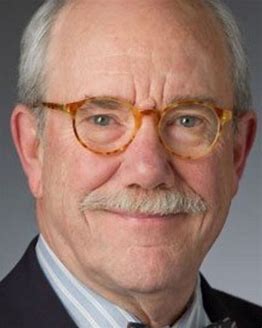
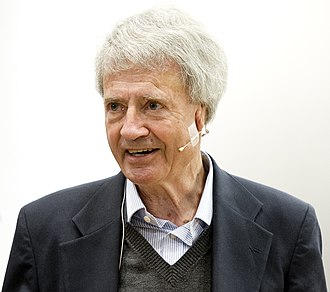
Alan Greenspan (on the left) is an American economist who was chairman of the Federal Reserve from 1987-2006. Adrin Wooldridge (on the right) is a British economist and journalist who wrote for “The Economist”. Wooldridge has a doctorate in philosophy and has co-written several books with Richard Micklethwait, the editor-and-chief of Bloomberg News. One might argue Greenspan has a conservative bias but Wooldridge’s experience as a British journalist gives one a sense of balance in this informative and well-written history of American capitalism.

Smith’s concept of capitalism advocated leaving economic decisions to market forces, tempered by individual economic decision makers. What Greenspan and Wooldridge infer is that decision-makers’ discretion and interference are what roils capitalism’s history.

“Capitalism in America” reveals tumultuous times for the American economy but with positive forward momentum. The public in all countries have experienced hard times from market forces. Some countries, like Israel, India, and the U.K. have experimented with socialism as an alternative to capitalism. Communist countries like Russia and China flirt with capitalism and one may argue–benefited from its market results. The author’s history shows capitalism as the primary reason for America’s economic growth and success. However, that’s getting ahead of their story.

The authors begin at beginning with the story of Jefferson’s desire to emphasize agriculture as the primary driver of economic growth in America. In contrast, Alexander Hamilton believes the industrial revolution demands a broader view of economic policy. The key to tapping into the industrial revolution required capital which Hamilton clearly recognizes. Hamilton recommends the creation of a national bank. Hamilton is inspired by Great Britain’s Bank of England. It offered private capital and paper credit to businesses and entrepreneurs.

Hamilton, as Secretary of the Treasury, presented a “Report on a National Bank” to President Washinton and the House of representatives in 1790. This report notes that Congress, with its authority to collect taxes, could fund the bank and lend money to the government to pay foreign creditors, public services, and private businesses to grow the economy. Jefferson opposed the idea, but Hamilton’s broad interpretation of the Constitution allowed his idea of a national bank to be created. In 1791 the First Bank of the United States is established in Philadelphia and remained chartered for 20 years. This became a giant step for America’s economic growth.

Several future Presidents opposed an American national bank. Of course, Jefferson was one because of his belief in an agrarian future for America. Jefferson’s friend and future President, Madison (the 4th President of the U.S.) opposed the idea of a national bank, and Andrew Jackson (the 7th President of the U.S.) used his power as President to oppose the “Second Bank of the United States” in 1833.

The authors note the successful industrialists of the 19th century capitalized on Hamiltonian creation of an American banking system. They became known as the robber barons of America. Rockefeller, Vanderbilt, Carnegie, and J.P. Morgan used capital to produce oil, expand rail transportation, make steel, and provide bank capital to grow the economy.

And then, WWI drew America into events that roil the course of its economic history.

An American economic boom occurs in the first two years of the war with America choosing neutrality. Exports surged from $2.4 billion to $6.2 billion in 1917. Everything from cotton, to wheat, to automobiles, to food, to machines were exported during those years. After joining the war, 3 million Americans were mobilized. When the war was over, the world and the American economy faltered. Recession (1918-1921) hit the world after the war, though America showed it had become a major world power.

As America recovered from WWI, their prowess as a producer of goods and services led to the roaring 20s and a runaway stock market that eventually crashed at the beginning of the Great Depression (1929-1939).

The authors note President Roosevelt is a great salesman who provides relief to many Americans with government employment programs during the depression. However, the authors note Roosevelt’s inept management delays America’s recovery by instituting price controls that distort market forces. Overt price control is a recurring mistake of national economies. The authors are not saying that price control is a singular cause of America’s continuing economic crisis, but it makes market recovery more difficult and longer to achieve.

The authors explain reparations for WWI’s winners helped set the table for WWII.

Germany’s inability to pay reparations, the growth of Antisemitism, and German inflation led to the rise of Hitler. Though not addressed by the authors, Japan felt threatened by American, Chinese, and Russian influence in Asia that led to Pearl Harbor and America’s entry into WWII.

The point is made that America’s depression before the war is not cured by Roosevelt’s economic intervention. The advent of war mobilized American industry.

The authors suggest market interference delayed recovery from the Great Depression. On the other hand, Roosevelt gave hope to the country with his speeches and employment programs. Citizens underlying faith in America’s ability to overcome hardship, and their response to Pearl Harbor reinvigorated the economy. Industries were retooled to meet the demands of war.

The authors argue mistakes in America’s capitalist history have been made by both Democratic and Republican Presidents who interfered with naturally occurring market forces. From Roosevelt to Nixon to Reagan to Obama to Trump, Presidents who institute price controls and/or tariffs interfere with free trade. America’s capitalist economy suffers from those actions. This is not to argue all legislation and federal action on the economy constitutes capitalist interference. Fundamental human rights that ensure freedom to vote, speak one’s mind, practice one’s own religion, work in industries one chooses, while seeking peaceful resolution of differences, are interferences that sustain capitalism.

When natural market forces are interfered with by business leaders and public legislators, capitalism suffers. An inference one may draw from the authors is that legislated programs that aid Americans who are unable or unwilling to participate in the capitalist economy are an interference with capitalism. That raises legislated issues of emigration, social security, health insurance, education, defense, transportation, veteran’s benefits, housing, environmental protection, occupational safety, and other public benefit programs. This is where there is continuing disagreement among Americans. These are not party issues because both Republican and Democratic leaders have both positive and negative arguments for and against these policies.

There is the law of unintended consequences that plague government policies. Some argue Reagan reinvigorated the American capitalist economy by reducing taxes, cutting government programs, reducing government employment, and busting union strikes. He did those things and government debt skyrocketed to a level greater than ever in the history of America. The gap between rich and poor was set on a path that beggared the poor and enriched business managers without comparable enrichment of labor. Like Roosevelt, Reagan sold ideas that had unintended consequences that were not in the long-term interest of Americans.

How can one measure the success of capitalism versus other economic systems? The author’s history of capitalism offers no answer but reveals what has benefitted and damaged American society since 1776. They illustrate failure of capitalism is in the hands of American leaders. Capitalism’s improvement is not a partisan issue but a social imperative for both Republicans and Democrats to work together to benefit all Americans.

CAPITALISM’S DEATH?

Democratic capitalism is the most likely form of government to assuage our worry and find a rational solution for our right to privacy.

Books of Interest
 Website: chetyarbrough.blog

“TECHNO-FEUDALISM” (What Killed Capitalism)

By: Yanis Varoufakis

Narrated by: Yanis Varoufakis

Yanis Varoufakis (Author, Greek economist and politician, Minister of Finance of Greece for 7 months in 2015, launched Diem25, the “Democracy in Europe Movement 2025” in February 2016.)

Yanis Varoufakis’s “Techno-Feudalism” argues the advance of technology is killing capitalism. Varoufakis’s argument is that democratic capitalism is either dying or dead. He suggests a survival plan in the last chapter of his book. This misguided book reminds one of Mark Twain’s response to news of his illness, i.e., “The reports of my death are greatly exaggerated”.

Varoufakis argues the advance of technology and its intrusion into private lives of citizens will destroy freedom of the individual and result in a government ruled by authoritarian, undemocratic, feudal oligarchs.

Varoufakis infers technology is the cause of the rise of new robber barons that have struck it rich in the internet era. He largely disparages the great wealth accumulation by the founders of Amazon, Google, Microsoft, Apple, and other tech leaders in the 21st century. His argument is based on belief that these new robber barons became rich without the hard work of laborers like those during the industrial revolution. The error in his argument is that labor is adjusting from work with one’s hands to work with one’s mind.

Freedom is the keystone of democracy.

Freedom and democracy have been limited and abused over the centuries but have ultimately led to the wealthiest countries in the world. When freedom is overregulated by democratic leadership, economic progress is diminished. Democracy has historically mitigated mistakes of overregulation with human nature’s desire for freedom. There is no reason to believe human nature will change.

In one sense, Varoufakis’s argument is correct. There is a greater risk of loss of freedom with the advance of technology, i.e., particularly with the rise of artificial intelligence. The evidence of that risk is seen in China and North Korea’s surveillance capabilities today.

As inferred by Varoufakis, authoritarian risk is greater in the 21st century because of surveillance technology and the predictive power of artificial intelligence. Surveillance does not change the nature of humankind. Democratic government only becomes more important. The juggernaut of technology will not be stopped, and our lives will be more intimately understood by strangers than ever before. That truth only means democracy, freedom of choice, and equal opportunity are made more consciously recognized as important.

All forms of government have winners and losers. What democracy does is level the playing field. It is a raucous governing system that leaves some out of success, but it beats any known alternative for broader human opportunity. Democracy will always be a work in progress. America needs better health care for all citizens. America needs improvement in equal rights and opportunity for all citizens. No Americans should be homeless or hungry. Few countries, if any, have adequate health care, equal rights, and opportunities for all its citizens. Most realize, America must do better.

The resurgence of labor unions in America is a good sign for American peace and prosperity.

Varoufakis suggests democracy can be saved by bringing it down to an individual level within companies that generate wealth for the country. In one sense, he is right but his idea of giving one vote to every employee in determining wages, and the direction of a company are a step too far. Labor is a critical part of yesterday’s, today’s, and tomorrow’s economic prosperity. Owners and managers of companies need to include union representation in their corporate decisions. Neither labor nor management have all the answers, but all have money, commitment, and labor in the game. Each should have their say. That is a part of Democracy’s success in the world.

The intimate knowledge of personal behavior is a valid concern in the modern world. In the hands of authoritarians, the risks of surveillance technology are multiplied. In democracy, risks are not eliminated but can be judiciously regulated. Democracy has the best chance of determining how a surveillance economy needs to be handled. Democracy will continue to make mistakes, but historically, its successes outweigh its failures.

Citizens should worry about what others know about their personal lives, but the advance of technology will not be stopped. Democratic capitalism is the most likely form of government to assuage our worry and find a rational solution for our right to privacy. Varoufakis’s “Techno-Feudalism” is more wrong than right, but he makes one think about our future.

POWER & INTRIGUE

Lessons may be drawn into the 21st century by the power and intrigue of the 16th century.

Books of Interest
 Website: chetyarbrough.blog

“The Mirror and the Light” (Seven Hundred Years of Humanist Freethinking, Inquiry, and Optimism)

By: Hilary Mantel

Narrated by: Ben Miles

Hilary Mantel (1952-2022, British author, Booker Prize winner acclaimed for historical fiction like the Thomas Cromwell trilogy. Died at the age of 70.)

Historical fiction is a valuable tool when combined with a research-driven imagination. Hiliary Mantel’s trilogy, “Wolf Hall”, “Bring Up the Bodies”, and “The Mirror and the Light”, offer a fascinating picture of Thomas Cromwell.

Thomas Cromwell has been labeled as a dictator by some and a hero of liberty by others. He gained a reputation as a consummate power broker and political advisor, but some consider his protestant religious convictions bordered on zealotry. The famous Winston Churchill disparaged Cromwell’s role in England’s 16th century as a dictator. Winston Churchill was an aristocrat from a wealthy family. One is inclined to think Churchill would have been one of many noblemen in King Henry’s time that would have disparaged Cromwell for being the son of a blacksmith. Mantel’s historical fiction envisions Cromwell as a brilliant political tactician who initiated democratization of England’s government. (By democratization, one must recognize Cromwell believed the King’s decisions were paramount, but that monarchy is limited by dependence on consent.) Far from being a dictator, Mantel shows Cromwell was an astute leader of men superior to him in rank but beneath him in ability.

Henry VIII (1491-1547, King of England from 1509-1547, died at the age of 55.)

Many views of Henry VIII and Thomas Cromwell have been offered by historians. One is that the King was a great sportsman who enjoyed participating in violent competitions like jousting. Mantel mentions one of those events when the King is unhorsed and appears dead from the impact of an opponent’s lance. The King is unconscious for some time and is pounded on the chest by an attendant that brings him back to consciousness. This is later in his reign, possibly after the beheading of Anne Boleyn. One wonders if his many marriages are in part because of something more than want of a male heir. There is little doubt that a male heir was extremely important, but six wives seem extreme and his decision to execute Cromwell unjust.

Some fundamental truths about King Henry VIII’s era make Mantel’s fictionalized history easier to follow.

King Henry needed money to expand and sustain his monarchy. His greatest opportunity to gain wealth was in confiscation of assets held by the papist Church in England. The King and Cromwell opposed the idea of the Roman Catholic Church’s influence on England’s affairs. Papal opposition was reinforced by Cromwell’s Calvinist beliefs, aligned with England’s Puritan radicals who offered support for history’s course of events. The King needed money. Cromwell’s Puritan and political beliefs coincided with the monarchy’s needs.

Anne Boleyn (Born 1501 or 1507, beheaded in 1536 at age 29 or 35.)

A second fundamental truth is that Anne Boleyn was unable to give the King a surviving male heir. One might question Boleyn’s alleged affairs, but her motives were obscured by history. Maybe Boleyn simply exercised her libido in the same way men often did and still do. On the other hand, if King Henry could not sire a male heir, maybe Boleyn believed a secret conjugal partner would provide an heir. A male heir may have insured Boleyn’s life as long as secrets are kept.

(The great number of historical characters in “The Mirror and the Light” distract from Mantel’s view of King Henry’s time. One often has to look-up the characters she has introduced to keep track of the story. Thirty to forty characters are too many for a casual reader to appreciate the context of an historical novel’s era.)

Human nature’s faults, like desire for money, power, and prestige were the same then as they are now.

The King’s prestige was dealt a blow when Boleyn’s affairs become public. Like today, a cuckolded husband rarely forgives a wife’s extramarital affairs. With the King’s need for a male heir, accusation, trial, and execution were justification for getting rid of Henry’s second wife. She was beheaded by a sword’s blade alluded to in the title of Mantel’s novel. Cromwell provided the evidence, which is to this day, questioned by historians.

Martin Luther (1481-1546)

Cromwell lived in the time of Martin Luther’s attack on the Catholic church and the printing of the Tyndale Bible in Germany.

The middle of “The Mirror and the Light” gives its listeners a view of the religious evolution of Thomas Cromwell. The King’s desire for the wealth of Papal holdings in England seems enough to motivate the King. One wonders if Cromwell’s experience with “royal power” or protestant belief are the primary motivation for his actions.

Cardinal Thomas Wolsey (1473-1530, English statesman and Catholic cardinal.)

Cardinal Wolsey resisted King Henry’s desire to divorce Catherine of Aragon to marry Anne Boleyn. Wolsey was dismissed by the King. Ironically, Cromwell owed his rise in parliament to Wolsey and remained loyal to Wolsey despite the King’s dismissal. Despite Wolsey’s resistance and dismissal by the King, he died of natural causes. Cromwell’s abilities and skill as a go-between came to the attention of King Henry. However, Mantel suggests Cromwell is never forgiven by Wolsey’s children for the King’s demotion of their father. What remains in Mantel’s story is how the King loses faith in Cromwell as his advisor.

Holbein portrait of Anne of Cleaves (1515-1557, the fourth wife of King Henry VIII.)

The proximate cause of Cromwell’s conviction for treason and heresy was his negotiation and recommendation to King Henry for marriage to the Duke of Cleaves’ sister.

Thomas Cromwell was executed for treason and heresy in 1540. Cromwell’s intent was to provide an alliance with the Duke of Cleaves against the Holy Roman Empire. Hans Holbein’s painting of Anne was said to have unfairly enhanced her looks. The Duke of Cleaves alliance did not appreciably improve England’s defense and the questionable value of the alliance was laid at the feet of Cromwell. King Henry declared his six-month marriage to Anne of Cleaves was unconsummated. Cromwell’s English aristocratic enemies used the King’s discontent as grounds for the accusation of treason and heresy for which he was executed.

The power and intrigue of King Henry VIII and Thomas Cromell are munificently rendered by Hilliary Mantel in her trilogy. Lessons may be drawn into the 21st century by the power and intrigue of the 16th century.

GODLESS

Sartre seemed right when he wrote “hell is other people” in “No Exit”. Neither belief in humanism nor God seem to hold an answer for humanity’s future.

Books of Interest
 Website: chetyarbrough.blog

“Humanly Possible” (Seven Hundred Years of Humanist Freethinking, Inquiry, and Optimism)

By: Sarah Bakewell

Narrated by: Antonia Beamish

Sarah Bakewell (British author and professor, received the Windham-Campbell Literature Prize for non-fiction in 2018.

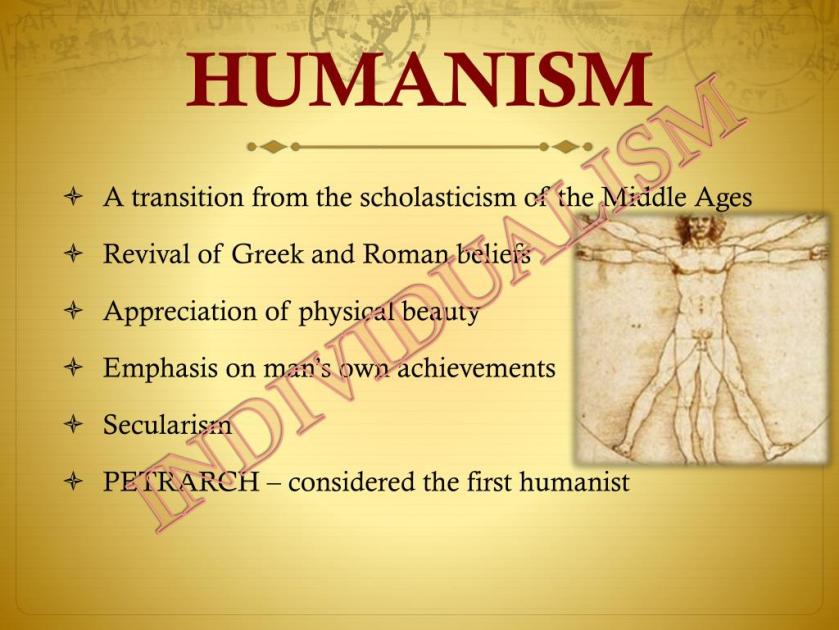
Sarah Bakewell provides a detailed history of humanism. To many, Bakewell’s story is a history of society falling away from God. Bakewell puts religion aside while explaining why and how humanists challenge religious belief and lean toward science as an explanation of life.

Bakewell notes humanism reaches back to the 5th century BCE with the Greek philosopher Protagoras. He was a teacher identified by Plato in a dialogue titled “Protagoras”. Through Plato’s dialogue, one finds Protagoras taught the importance of literature, and art that infers a set of moral principles to guide human behavior. Several centuries later, Diogenes Laertius writes “Lives of the Philosophers” that adds to history’s knowledge of Protagoras’s beliefs. Protagoras taught public speaking, poetry criticism, citizenship, and grammar.

Protagoras (490-420 BCE, Bakewell suggests Protagoras set the foundation for the humanist movement.)

Francesco Petrarch (1304-1374) takes up the humanist movement during the Italian Renaissance. Petrarch became internationally known as a humanist. He traveled extensively, looking for Classical manuscripts and ancient texts to recover the knowledge of Greek and Roman writers. He discovered letters that told of Cicero’s personal life–what it was like in the late Roman Republic (106-43 BCE). Cicero’s observations showed the importance of human character in the way one lives life.

Francesco Petracco (1304-1374, Italian scholar and poet and one of the earliest students and promoters of humanism.)

Collection of ancient manuscripts by Petrarch and Coluccio Salutati (1331-1406) of Florence expanded the humanist movement. Giovanni Boccaccio writes “The Decameron”, a collection of short stories that reinforces the principles of human worth and dignity, belief in reason and human ethics, and the value of critical thinking, i.e., humanist ideals.

The humanist mantle is picked up in England and the wider part of continental Europe after the early 15th century. Erasmus, Sir Thomas More, and William Shakespeare, reinforce the movement. Desiderius Erasmus is a Dutch humanist. He attacks the excessive powers of the papacy. He values human liberty more than orthodoxy. He inspires the Protestant Reformation and the Catholic Counter-Reformation. He emphasizes the study of classics over medieval tradition. Erasmus has great impact on the Renaissance and its religious and intellectual climate with an eye for life on earth, more than an afterlife. He wrote “The Praise of Folly”, satirizing religious practices based on superstition and impiety. Though he hoped for divine mercy, Erasmus emphasized faith and good deeds in life, humanist ideals.


Bakewell notes Sir Thomas More writes “Utopia”, published in 1516, that describes an ideal society that addresses penology, state-controlled education, religious pluralism, divorce, euthanasia, and surprisingly, women’s rights.

Shakespeare’s plays introduce psychological realism and depth to human thought and action. Much of what he writes is secular rather than religious. Shakespeare implies life on earth is more than preparation for an afterlife.

Shakespeare suggests life on earth is more than preparation for an afterlife. Death is viewed as final, a humanist view of life and death.

Bakewell goes on to write of Denis Diderot, David Hume, Kant, Adam Smith, and Voltaire. They become leaders of humanism in the 17th and 18th centuries. Diderot emphasizes critical thinking, education, and secular values. Hume writes “A Treatise of Human Nature” to explain human morality. Adam Smith’s “Wealth of Nations” reflects on national economic growth and how the principle of “raising all boats” comes from free enterprise and free trade, humanity in action.

The idea of humanism is rocketed into American thought by Charles Darwin’s “Origin of Species”.

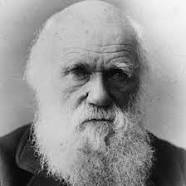
Natural selection became a science-based explanation for the origin of species, including human beings. Its impact is evident in the personal transition of Darwin (the son of a medical doctor and grandson of a botanist), who planned to join the clergy, but became a person who identifies himself as an agnostic. Thomas Henry Huxley publicly endorses Darwin’s theory and coins the term “agnosticism” in 1869. Many of the scientific community joined that endorsement during Darwin’s life.

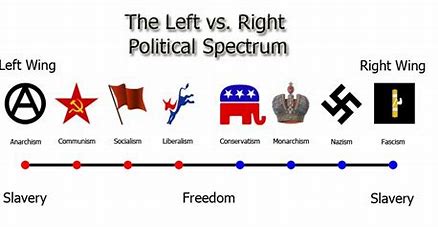
As Bakewell advances her history into the twentieth century, Thomas Mann and Bertrand Rusell carry the torch of humanism. The interesting point made about humanism by Mann is that a humanist must guard against the tendency to reason too much. The rise of Nazism in Mann’s home country and the repressiveness of Stalin’s (and now Putin’s) communism are examples of what concerned Mann. On the one hand, Mann recognizes the “unbearable pity for the sufferings of mankind” but also the danger of accepting authoritarian leaders who preach nationalist socialism or communism while promoting nationalist hegemony, forced labor, racial discrimination, ethnic cleansing, and gender inequality. The rise of Nazism and Putin’s invasion of Ukraine show how authoritarian reasoning can magnify the sufferings of humanity.

Bertrand Russell, a British philosopher, mathematician, logician, historian, and humanist activist, warned against superstition and preached the importance of education. Both Mann and Russell advance the ideals of humanism. One still reserves judgement about humanist’ rejection of God when both religion and science have a mixed history for humanity.

Bakewell does not end with just a history of humanism. She speculates on where humanism may go from here.

She acknowledges her own beliefs as a humanist. She notes humanism has been noted in the past as a fragile vessel for transporting humanity into a future. The vessel’s fragility is in the nature of human beings.

Few can doubt we are self-interested animals that have to come to grips with what is ultimately in our self-interest.

Human self-interest must change from greed for money and/or power for humanism to work. If self-interest rests anywhere, it needs to be in the prestige that is earned by being engaged with the welfare of humanity. In light of history, human pursuit of societal welfare seems only to appear when annihilation is nigh. The war in Ukraine and human history are evidence of humanity’s failures. When perceived threats to peace and happiness disappear, humanity returns to the destructive self-interest of money and power.

Sartre seemed right when he wrote “hell is other people” in “No Exit”. Neither belief in humanism nor God seem to hold an answer for humanity’s future.

TRAVELING

Steve Hely’s travels give one a sense of adventure and camaraderie.

Books of Interest
 Website: chetyarbrough.blog

“The Wonder Trail”

By: Steve Hely

Narrated by: Steve Hely

Steve Hely (Author, screen writer, co-executive producer for the Veep tv series, also appeared as an actor on tv sitcoms like “The Office” and “30 Rock”.)

“The Wonder Trail” is an entertaining tale by a sitcom television writer who chooses to take a trip south. He travels through Mexico, the Panama Canal, and South America. He travels on the cheap to give the young an idea of what to do on a summer vacation. Hely’s writing profession is on display as he offers a “being there” experience and a laugh.

Traveling away from the U.S. should be in every young or old American’s experience. Those who visit other countries give perspective to life and how people are more alike than different.

“The Wonder Trail” shows human nature is the same, though the color of life is hued by the cultures in which we live. The desires of life or death are closely related, if not the same. As Hely travels, he recalls books he has read to give perspective and depth to the experiences of his journey. From Mexico, down through Chile and the southern tip of the Western Hemisphere, Hely tells of fellow travelers, the sites he visits, and the native citizens he meets. Every nation visited is accompanied by vignettes about its history. From the Mexican city of Oaxaca to Mayan ruins in Central America, to Patagonia, listeners are introduced to many of America’s southern border countries.

Hernan Cortes (1485-1547, died at the age of 61 or 62.)

Hely notes Hernan Cortes’s ruthless reputation for destroying temples of what was the Aztec capitol. Cortes became a ruthless symbol of conquest and European colonization.

Mexico City came from a city-state called Tenochtitlan which was a spec of land in the middle of a lake in 1325. Cortes, an infamous Spanish conquistador, razed Tenochtitlan to the ground in 1521 and created a Spanish colonial capital he named Mexico City.

Hely reflects on the lost language of the Aztecs and the many ruins buried beneath Mexico City’s thriving metropolis. Translators have deciphered some of the texts of the Aztecs that reveal the sophisticated pagan culture that was lost when Cortes colonized the country. Hely notes the Aztecs practiced human sacrifices to their gods.

Hely’s travels give one a sense of adventure and camaraderie. He notes how his favorite experiences are with other people, particularly Australian groups and some adventurous unattached women who choose to travel alone. Having traveled with an Aussie guide in Australia, I would agree with Hely’s suggestion that Aussies are among the best travelling companions.

Hely’s journey ends in Patagonia, a territory under the control of Argentina and Chile. Having personally traveled to Antarctica, the point of debarkation is Ushuaia, the capital of Tiera del Fuego in Patagonia. Ushuaia is not mentioned in Hely’s book, but it is a beautiful village/city on the southernmost port of the world. The Drake Passage to Antarctica is not for the faint of heart because of the rolling sea. It’s worth the voyage because of the grandeur of ice flows, whale watching, and penguin excursions.