DARWIN’S THEORY

To Carl Woese, Darwin’s theory of evolution was, at the least, horribly misleading.

Books of Interest
 Website: chetyarbrough.blog

The Tangled Tree” A Radical New History of Life

By: David Quammen

Narrated By: Jacques Roy

David Quammen (Author, Yale University graduate, Rhodes scholar, fiction and non-fiction nature and science writer and historian.)

Quammen’s history of the discovery of a new form of life is interesting and enlightening. Archaea cells are not discovered until 1977 at the University of Illinois. Archaea are neither animal nor vegetable but resemble bacteria, a single-celled prokaryote. Archaea are prokaryotic (without a nucleus), like bacteria. There seem to be two differences between Archaea and bacteria. Archaea often thrive in extreme environments by using ether-linked lipids while bacteria only use ester-linked lipids. The difference has to do with how these prokaryotes bond to lipid molecules.

Archaea are believed to have set a boundary for evolutionary diversity in earth’s early extreme environment.

Archaea are believed to have played a role in the transition and adaptations that allowed life to change and flourish. The suggestion is that archaea were instrumental in creating a “The Tangled Tree” of life. Archaea, like bacteria, are everywhere in the soils and water of earth. Through chemical processes, they moderate global carbon and nutrients that exist in the world’s ecosystem. Some suggest life would have evolved without archaea but their role in earth’s early existence seems especially relevant because of early earth’s extreme environments.

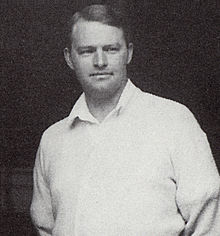
Carl Woese (1928-2012, American microbiologist and biophysicist.)

Quammen introduces Carl Woese, the evolutionary biologist who revealed archaea as a third form of life. Woese challenges Charles Darwin’s theory of evolution because this third domain of life, alongside bacteria and eukaryotes, fundamentally changed representation of life as a branching tree. Archaea are similar to bacteria in that they are procaryotic (singular cells with no nucleus). However, archaea have cell wall differences. Archaea cannot perform photosynthesis, they reproduce by fission, and interact with DNA and RNA differently. What is discovered about archaea is that like bacteria, they can transfer genetic information horizontally, i.e. directly affecting the evolutionary characteristics of species.

The idea of descendent inheritance is not overturned but hugely expanded with archaea becoming a part of the process of evolution.

Archaea, like a bacterium can infect living things but as a genetic cell, archaea can initiate inheritance. To stretch one’s imagination, archaea might be transmitted between a human and a pet like a bacterium but with the potential of inheritable characteristics. Like learned behavior, the inference is there is a possible exchange of archaea cells between humans and pets that may change behavior of one or the other. The inference is that a pet dog may exhibit the behavior of its owner, not only because of learned behavior, but because of archaea transfer.

The idea of horizontal gene transfer (HGT) by archaea tangles the tree of life in ways that make natural selection a lottery as well as a parental inheritance.

Quammen touches on discovery of CRISPR (clustered regularly interspaced short palindromic repeats) which is a powerful technology that allows precise gene editing of an organism. As science discovers the genetic origin of disease and animal kingdom vulnerability, gene editing has the potential of saving or destroying life.

Quammen turns back to the age-old question about the beginning of life on earth. What came first and how did eukaryotes evolve into sentient beings? A suggestion made by some and recalled by the author is Loki’s Castle, a hydrothermal vent in the mid-Atlantic Ocean. Here, a thermophile, which is an archaeon, may have been life’s trigger that began evolution.

To Carl Woese, Darwin’s theory of evolution was, at the least, horribly misleading. Today, Darwin’s “Origin of Species” remains a seminal work of evolutionary science. Darwin’s work was based on observations during the voyage of the Beagle in the 1830s. Admittedly, natural selection from a common ancestor was not the whole story but it opened the door for further investigation and scientific proof.

CHARLES DARWIN (1809-1882) FOUNDER OF THE THEORY OF THE ORIGIN OF SPECIES.

Woese and other biologists owe much to Darwin’s early observation and theory of evolution. Science begins with theory and evolves with proof, demonstrated by repeatable experimental results. Darwin gave the world the theory. Biologists have been working on the proof ever since.

TRAGEDY’S LESSON

The sharpened point of Slade’s story is that, like the sinking of the Edmund Fitzgerald and El Faro, it takes great tragedy before change takes place.

Books of Interest
 Website: chetyarbrough.blog

“Into the Raging Sea” Thirty-Three Mariners, One Megastorm, and the Sinking of the El Faro

By: Rachel Slade

Narrated By: Erin Bennett

Rachel Slade (Author, winner of the Maine Literary Award for non-fiction.)

Rachel Slade begins her book with the last words of a mariner calling for help from a sinking ship in the grip of a Hurricane. The ship is the El Faro. The author writes her story based on the El Faro’s written log during a severe storm somewhere between Florida and Puerto Rico. The storm was Hurricane Joaquin, a category 4 Hurricane that had recorded wave heights of 10 meters (over 32 feet). Winds ranged from 130 to 156 mph with rough seas, roiled by rogue waves. Rogue waves are twice the size of surrounding waves and appear unexpectedly.

Slade methodically sets a table for the El Faro on a “…Raging Sea”.

Slade writes about a mariner’s desperate call for help. In its beginning, the story lags but the author offers cultural insight to the life of merchant marines, the equipment they operate, and the business of international trade. Her story explains how important and dangerous the life of a merchant marine can be, why it is important, and how mariners are dependent on equipment they use, their shipmates’ qualifications, and business owners’ drive for success.

Every person makes decisions about what they are going to do to make their way in life.

Becoming a merchant marine, like every decision in life, is based on personal circumstances, ambitions, and choices. Slade describes the El Faro mariners as adventurous and interested in seeing the world and being paid for what they do. Some are educated, others not, but all learn what they need to do to be part of a mariners’ crew.

There are schools for mariners at all levels of education but like any job, one can start at the bottom as a laborer that learns by doing. What the story of the El Faro shows is that like in any chosen job in life, some become expert at what they do, others try and fail, try again or move on. What Slade infers is that the El Faro sinks because of its crew but also because of others, both on and off the sea. As John Donne wrote in 1624, “no man (or woman) is an island”–emphasizing the interconnectedness of society.

The crew of the El Faro wanted to be paid but to some it was adventure and/or escape from a humdrum of life. Undoubtedly, mariners were motivated for different reasons. Some wished to see the world, be recognized for good work, wished to crew on bigger and better vessels, or be promoted to higher position. Motivation and ambition are different for everyone. What is lost to history are details. Slade tries to reveal some of the details about the El Faro’ crew, its owners, the ship, and the business of international trade. Why did the El Faro sink? Who and what was lost? What is it like to be in a hurricane at sea? Is somewhat at fault?

Slade’s story gains momentum as sinking of the El Faro seems imminent.

The aftermath is a careful and detailed explanation of rescues at sea, why the El Faro sank, what rescue efforts were made, how families of the lost were affected, and what changes were demanded in the industry. The loss of 33 mariners, the entire crew of the El Faro, is a horrible tragedy for the families who lost their loved ones. The causes of the tragedy range from crew mistakes to ship design to corporate malfeasance. The common thread is human nature.

What this review suggests is that the fundamental issue in every form of government and society is balance between public and private good.

One will draw their own conclusions from Slade’s history of the loss of the El Faro. In a capitalist society, balance is dependent on prudent regulation. Prudence is meant to mean the use of human reason to balance the needs of the public with private interests. That balance is complicated by human nature that drives private interests to focus on money, power, and prestige rather than public need.

Slade shows regulation of international trade often conflicts with private interests that object to regulation and improvements in ship design.

Conflict between public good and private interest is not a new discovery. Neither is the sinking of the El Faro. The sinking of the Edmund Fitzgerald in 1975 led to changes in international shipping. Business owners were required to provide survival suits for mariners in their employ, depth finders, positioning systems, improved ship design, and inspections by the Coast Guard became mandatory. These were regulations that increased costs of shipping that rippled through the economy and initially penalized private interests. The public benefits because mariners are safer, and families are less threatened by loss. The public also suffers because transported goods become more expensive. Balance eventually occurs as private interests are compelled to pay more for labor which is part of the public.

Capitalism works because it is a process that balances public need with private interests. Capitalism’s weakness is that the process takes time to balance public needs with private interests.

The sharpened point of Slade’s story is that, like the sinking of the Edmund Fitzgerald and El Faro, it takes great tragedy before change takes place.

KKK

American Democracy is a work in progress and remains at risk of failure.

Books of Interest
 Website: chetyarbrough.blog

“A Fever in the Heartland” 

By: Timothy Egan

Narrated By: Timothy Egan

Timothy Egan (American Author, journalist, former columnist for the New York Times, won the National Book Award, the Carnegie Medal, and a Pulitzer Prize for National Reporting.)

Timothy Egan’s “A Fever in the Heartland” is about the Ku Klux Klan and its growth in Indiana, the American Midwest, and Oregon in the early 1920s. Soon after the Civil War and death of Abraham Lincoln, a group of former Confederate veterans formed a social club in Pulaski, Tennessee.

The Ku Klux Klan grew into an underground movement that peaked in the 1920s with white American membership estimated at over 4 million.

Egan’s history is about the rise and fall of David Curtis “Steve” Stephenson who became the Grand Dragon of the Indiana Klan in 1923. Stephenson endorsed and promoted public hate toward immigrants and minorities. He became a proven liar who lied about his past and his actions as a leader. Egan’s history of Stephenson is an American political’ warning. Egan shows how character and honesty are as important in today’s politics as they were in the 1920s.

Egan’s choice of David Curtis Stephenson as a KKK’ leader illustrates how “A Fever in the Heartland” can grow to threaten American Democracy.

Stephenson is a man who smoothly lies his way to the top of a weak KKK’ chapter in Indiana by pandering to anti-immigration and anti-minority sentiments in the country. (The same sentiment seen in today’s America.) Stephenson became a rich man by recruiting the public into the KKK with a $10 fee for a white hooded garment ($4 for the garment, with $6 in his pocket) for membership to an exclusive group of American white men who would terrorize and murder non-whites, non-protestants, and immigrants. The KKK used secrecy to hide membership in this exclusive white American group.

The KKK hid their private reputations while (as an organization) publicly funding American celebrations and charities to feed its membership.

With membership dues and a persuasive personality, Stephenson (within 3 years) became a powerful and influential KKK’ leader. Stephenson convinced members of the KKK to become elected officials to gain control of government and public offices in Indiana. KKK’ members subsidized and promoted the election of like-minded white Americans. With control of government agencies, public services like the police and judiciary, the KKK controlled much of what happened in the State of Indiana. The wealth and influence of Indiana’s KKK planned a Presidential run in the late 1920s. The Indiana leader of the Republican Party was a member of the KKK and kowtowed to Stephenson as Grand Dragon of Indiana’s KKK.

Egan explains Stephenson was a persuasive carpetbagger who moved to Indiana from Texas while inferring he was an Indianan to become the Grand Dragon of Indiana’s KKK’ chapter.

Stephenson lied about his education and past but with success in increasing membership, he gained support of the National KKK’ organization. The truth of his background is that he abandoned his first wife and child when he left the lone star state. He was remarried to a second wife who leaves him. Stephenson beat his second wife who returned only to be beaten a second time when she attempted reconciliation. Egan noted Stephenson was a heavy drinker and abusive molester of women who worked for him. Stephenson was ultimately convicted of second-degree murder of Madge Oberholtzer, who was the creator and manager of a lending library.

Madge Oberholtzer (Stephenson is ultimately convicted of second-degree murder of Madge Oberholtzer for brutalization and rape.)

In the middle of the night, with the help of fellow Klansman, Madge Oberholtzer was kidnapped by Klansman working for Stephenson to take a train to Chicago. On the train, Stephenson rips Oberholtzer’ clothes off and rapes her. He used his teeth to bite her breast and parts of her body.

After being returned to Indianapolis, Overholtzer went to a drug store to buy bichloride of mercury, a slow acting poison. She chose to take the poison to end her life.

The taller man in this picture is Ephraim Inman, the defense attorney for Stephenson. He is standing next to Will Remy the prosecuting attorney, dubbed the “boy prosecutor” who successfully convicted Stephenson for 2nd degree murder.

Will Remy told the crowded courtroom that Stephenson “destroyed Madge’s body, tried to destroy her soul” and over the course of the trial tried to “befoul her character.” Overholtzer’s left breast and a bleeding right cheek were bitten by Stephenson when she was raped. Remy argues Stepheson’s teeth were a murder weapon. Attorney Asa Smith, a Overholtzer-family’ friend prepared a dying declaration for Madge Oberholzer that was placed into evidence.  Judge Sparks admitted the declaration and allowed Remy to read it to the jurors. (Sparks was not a Klansman.)

Stephenson considered himself, not only above the law, but as the law in Indiana. (That is a familiar refrain in the 21st century.) Stephenson was convicted for second degree murder. It was second degree murder because the cause of death was Madge Oberholzer’s decision to take her own life.

The Klan still exists in America.

James Alex Fields Jr. plowed into a crowd of demonstrators in Charlottsville, Va in 2017. He killed one of the protestors.

Fields admitted to being a member of the KKK. Though the Klan remained a political power in Indiana for some years after Stephenson’s trial and conviction, its Indiana’ power and influence was diminished. The national position of the Klan has declined in America as is believed in modern times, but it still exists.

Speaking about the white nationalist groups rallying against the removal of a Confederate statue, former President Trump said, “You had some very bad people in that group, but you also had people that were very fine people, on both sides.”

As Egan’s history of Grand Dragon Stephenson illustrates, American Democracy is a work in progress and remains at risk of failure. Honesty of elected officials and “there being no person or elected official above the law” remain important for America to remain a Democracy.

LIFE’S DEMONS

A sad ending to a remarkable human being.

Books of Interest
 Website: chetyarbrough.blog

“Robin” 

By: Dave Itzkoff

Narrated By: Fred Berman

Dave Itzkoff (Author, American journalist, former culture reporter for the NYT.)

Dave Itzkoff produces an insightful and well written biography of Robin Williams. Robin Williams was a spectacular actor and comedic genius who brightened the lives of many while hiding a personal insecurity and a self-critical demon.

The author’s story is an audiobook delight because of its author and narrator. The narrator, Fred Berman, offers a reminder of Robin Williams incredible ability to entertain an audience with human observations and ethnic expressions that make one laugh.

Berman is not Robin, but he is enough of a mimic to help listeners understand the ways in which Robin was a genius. Itzkoff completes that categorization by explaining how Robin could read a script in one sitting and recite it verbatim at a next day’ rehearsal.

Williams became friends with famous future actors at Julliard.

Williams was admitted to Julliard as a promising actor. Julliard is noted for rigorous training, and imaginative daring. Julliard was an introduction to performance opportunities in New York city. However, his undisciplined character cost him the opportunity of graduating. Nevertheless, association with Julliard paid dividends in later years because of its reputation. One close friend was Christopher Reeves of Superman fame who, as is well known, became paralyzed later in life from a horse-riding accident. Reeves died in 2004, ten years before William’s suicide.

Williams was a father of two boys and a girl, born from two marriages. His first marriage ended after ten years with one child born in 1983, Zachary Williams. His second marriage to Marsha Garces lasts for two decades with the birth of a girl and boy, Zelda and Cody. Itzkoff implies both marriages end because of Robin’s self-critical demon. Robin lets the demon loose with insobriety. Drugs and alcohol magnify his fears and distort his relationship with others. Both marriages failed as alcohol and drugs entered, left, and reentered his life.

What was surprising to some who read this biography, were the number of movies Robin Williams worked in either as a lead or supporting actor.

Williams was in over 70 films, some of which became block busters. Some were duds but others received high acclaim. Among the most memorable were “Good Morning, Vietnam”, “Dead Poets Society”, “Awakenings”, “Mrs. Doubtfire” “Good Will Hunting”, and “Aladdin”. Some were bombs at the box office while these six had some negative reviews but blockbuster revenues. Williams received an Oscar for best supporting actor in “Good Will Hunting”.

Some think of Williams as a stand-up comic that reminds one of Jonathan Winters, a close friend of Robin’s.

Others remember the television show “Mork and Mindy” where Robin played a space alien coming to earth. The versatility of Williams is revelatory in Itzkoff’s biography. Itzkoff notes the many friends Williams had and how generous he was with his time and support of others. When Cristopher Reeve’s accident happened, the support offered by Williams is touchingly explained by Itzkoff.

Throughout the biography, a listener becomes aware of the destructive impact of drugs and alcohol on William’s life.

In his first marriage, William’s growing fame gave him access to all the cocaine he wanted. He comes to a realization that his addiction was out of control when John Belushi, his friend, dies in an overdose on the same night they were together. This was 1982. In 1988, his first wife, Valerie Velardi divorced him. In 1989, Williams married Marsha Garces.

Robin Williams’ demon does not disappear but becomes quiet in his mind as he becomes sober.

Williams life with Marsha broke him away from drugs and alcohol for several years. Williams and Marsha succeeded in having a daughter and son together. Marsha managed to get him away from the life of drugs and alcohol. The demon in Williams’ mind returned in the last years of his marriage to Marsha when he returned to drugs and alcohol. Williams hanged himself in 2014. He and his wife, Marsha were divorced. Sometime after his second divorce, Williams was married a third time.

A few months before his suicide, Williams was misdiagnosed with Parkinson’s disease.

It was found in autopsy that Williams had Lewy body dementia, a debilitating brain disease that is symptomatically similar to Parkinson’s. Williams’ demon was Lewy body dementia, a brain disorder that causes depression, anxiety, and paranoia. Clinically, LBD is caused by abnormal proteins. One wonders whether those abnormal proteins were always in Williams’ body. Were they always there or stimulated by his addictions? In any case, it was a sad ending to a remarkable human being.

RIGHT OR LEFT

Until belief in ourselves is restored, neither left-thinking public services nor right-thinking orders will make a difference in Klein’s “Doppelganger” world.

Books of Interest
 Website: chetyarbrough.blog

“Doppelganger: A Trip into the Mirror World” 

By: Naomi Klein

Narrated By: Naomi Klein

Naomi Klein (Author, who won the Women’s Prize for “Doppelganger” and has achieved best seller listing for several of her books in the New York Times.)

“Doppelganger” is a troubling story about democracy with a capital “D”. Naomi Klien’s reputation is conflated with Naomi Wolf’s career. Both are published journalists and writers. Wolf is a Yale-educated graduate who has published in “The Nation”, “The New Republic”, “The Guardian” and other publications. However, Wolf fell or jumped into a rabbit hole of conspiracy theories while falsely claiming “Covid 19 vaccinated mothers experienced a baby die-off”. Further, Wolf misled the public by suggesting “86 stillbirths” were caused by Covid vaccinations.

Wolf reported on U. K network television that America’s Covid vaccination program was a “mass murder” effort, similar to what “doctors ordered in pre-Nazi Germany” for Jews. History reveals the absurdity of her claim.

The conflation of the journalist/authors first names and professions embarrass and frustrate Naomi Klein enough for her to write “Doppelganger”. Klein’s story is even more impactful because both authors are Jewish, near the same age, and have been reported to be liberals. But Klein’s book is about more than unhappiness of her association with a “Doppelganger”. Naomi Klein is an award-winning journalist and New York Times bestselling author who studied English and Philosophy at the University of Toronto. (She withdrew before graduating to pursue her career as a writer.) Klein, in part, chooses to write “Doppelganger” to express her frustration with the public’s association of her with Naomi Wolf. However, her story is a broader examination of society.

The perspectives of these two authors on Covid vaccination are totally different.

Presumably, a rational person would ask oneself how a Yale graduate could believe what Wolf wrote and said about Covid vaccinations when millions were dying from its spread. Many families expressed regret for not being vaccinated. Some belatedly acknowledged they became deathly ill or lost loved ones because they failed to be vaccinated. Of course, that is only a singular point in Klein’s reason for writing her story. The broader import is that every person is becoming a mirrored image, a “Doppelganger”, of themselves.

Use of the internet by the public is ubiquitous.

Like the writing of this blog, using a cell phone to buy something on the internet, texting a friend, people are creating a profile (a “Doppelganger”) of who they are, who they know, where they live, and what they believe. In capitalist countries all of this information is being collected by private and publicly held companies with the goal of making money. In some forms of government, the goal may not be money but overt control of one’s thoughts and actions. Human doppelgangers are multiplying at a rate that will eventually duplicate every person on the planet.

Naomi Klein’s solution is to have government regulate the internet or nationalize its use.

Klein infers the internet is a public utility that can only be reasonably and fairly managed by a democratic form of government. That is a tough sell in a capitalist democracy that prides itself in “freedom of choice”. A case in point is America’s gun culture. Despite the murder of school children, the 2017 mass murder in Las Vegas Nevada, and numerous deaths in the 21st century from gun violence, the Congress of the United States refuses to regulate firearms. Some argue there is a constitutional right to bear arms despite the fact that this alleged “right” is related to “a well-regulated Militia”, not to Tom, Dick, and Naomi Wolf, or any other conspiracy’ fruitcake.

Klein seems right in suggesting a “Doppelganger” is being created for every person in today’s world.

A.I. makes that even more true and threatening in this modern era. Ironically, A.I. may be a solution that can regulate the internet in a way that preserves truth and fairness while allowing capitalist use of its ubiquitous presence. Of course, there remains the threat of A.I. choosing to preserve itself at the expense of humanity. Naomi Klein is clearly not Naomi Wolf. As an author, Klein has succeeded in making that clear, but it seems unlikely that either doppelgangers or guns will disappear from the world. The world seems split between right and left political beliefs.

It seems Klein reflects the left while Wolf the right.

The extreme of Klein’s views presents the potential for a “nanny state” where government makes all decisions for the welfare of its citizens. Wolf’s views present the potential of a similar state but more along the lines of control of its citizens. Neither recognize the reality of human nature.

No government is capable of understanding the desires, ambitions, motivations of the individual in a way that can be either provided for or given.

Covid19 was a wake-up event, from which the world is trying to recover. The homelessness epidemic in America is a consequence of humans feeling life is out of their control. Until belief in ourselves is restored, neither left-thinking public services nor right-thinking orders will make a difference in Klein’s “Doppelganger” world.

BIODIVERSITY

Human population growth is slowing, and awareness of biodiversity is improving but is the trajectory of global warming outpacing human action?

Books of Interest
 Website: chetyarbrough.blog

Biology: The Science of Life

Author: Great Book Series

Narrated By: Professor Stephen Nowicki

Stephen Nowicki, Ph.D. (Bass Fellow and Professor of Biology @ Duke University, Associate Chair of the Dept. of Biology and Neuroscience.)

This is a dauting series of lectures with a theory of the beginning of life. It addresses living things in general but more specifically what is known about human life. Not surprisingly, it is immensely complicated.

There may have been an Adam and Eve in history, but Science infers any garden of Eden had to have been long after the beginning of life on earth.

Nowicki explains how Stanley Miller conducted an experiment in 1952 that simulated conditions of the early days of earth’s formation. Methane, ammonia, hydrogen, and water were present in those early days. These ingredients were used in a controlled environment, with the help of energy (primordial lightening), to combine into amino acid compounds that are essential to life. These basic chemicals were present in the early days of earth. These amino acid compounds are the building blocks of life.

With amino acids, it became possible for DNA and RNA formation. DNA and RNA are shown to synthesize proteins leading to cellular process and organic development.

From these early beginnings, a natural selection process is initialized, i.e. evolution began which led to complex organisms like viruses, bacteria, animals, and eventually humans. Nowicki goes on to explain the complex biology of science. This is a point at which understanding by a lay reader/listener becomes difficult and only partially comprehensible. He begins with a detailed discussion of genetics, the study of genes, their discovery and function.

With the help of Rosalind Franklin (lower right), Watson (lower left) and Crick came up with the double helix model made of deoxyribose sugar that alternates with phosphate group strands.

The most famous pioneers of genetics are James Watson and Francis Crick. The genetic model they created reveals the backbone (organizational structure) of genes. With addition of nucleotides (adenine, thymine, guanine, and cytosine) to the gene backbone, genetic instructions are encoded by single strands of RNA into double strands of DNA. RNA’s single strands direct ribosomes that prevent mutation and maintain genetic integrity.

Nowicki jumps back in history to explain Darwin’s theory and proof of evolution. In addition, he recounts Gregory Mendel’s discovery of genetic inheritance. (Though Darwin and Mendel were contemporaries, it is not believed they ever met.) Mendel found, in breeding pea plants, that pea plants inherited certain traits of their parent plants with first generation plants having one color flower while second generation had 1/3rd to 2/3rd color differences that experimentally suggest inheritability of appearance. Mendel had no knowledge of genetics but was aware of Darwin’s writing. Ironically, Mendel discovered that inheritance had distinct genetic units of dominant and recessive characteristics explained how second-generation pea plants had mixed colors. This inheritable element of a gene became known as an “allele”, a word coined by British geneticist William Bateson in the early 1900s.

A listener/reader is only 1/4 of the way through Nowicki’s lectures at this point. Many of the remaining lectures delve into the details of gene function that will be interesting to biology students but only confuse and tire a dilettante.

To this reviewer, the two most enlightening features of Nowicki’s lectures are his views on the origin of human life and the ecological loss of biodiversity that threatens human existence. Nowicki challenges religious belief in the origin of life with a convincing argument for nature’s creation of human existence. His last lecture addresses global warming, reduced biodiversity, and the consequences of a loss of earth’s laboratory of medicinal cures for human ailments.

Nowicki leaves listener/readers with belief in humanity’s and earth’s environmental correction but with reservation. Human population growth is slowing, and awareness of biodiversity is improving but is the trajectory of global warming outpacing human action?

UNENDING PURSUIT

Science is an unending pursuit of knowledge that is refined and advanced by new techniques of examination.

Books of Interest
 Website: chetyarbrough.blog

“Gene Machine

Author: Venki Ramakrishnan

Narrated By: Matthew Waterson

Venki Ramakrishnan (Author, British-American structural biologist, shared 2009 Nobel Prize in Chemistry with Thomas A Steitz and Ada Yonath.)

“Gene Machine” tells reader/listeners of the discovery of the structure of ribosomes. Ribosomes are elemental cellular organisms (organelles) made up of proteins within living cells. They are genetic factories that process protein within the body. Without ribosomes, life as we know it, would not exist. Ribosomes repair cellular damage, maintain cell structure, and direct chemical processes within the body.

In the 20th century, after years of research, Ada Yonath, Venki Ramakrishnan, and Thomas Steitz discover clues to the structure of Ribosomes. Ramakrishnan story is about the complex process of scientific discovery. He reveals how scientists are motivated by the same desires of all humanity; namely money, power, and/or prestige. This is “the way” of the world, whether its religion, science, or society.

To the lay reader/listener, Ramakrishnan’s story is most interesting because it illustrates science research is more than a quest for knowledge. Curiosity and thrill of discovery are important, but it is the reward of being first and the accompanying money, power, and prestige that are scientists’ greatest reward.

Ramakrishnan somewhat ambivalently acknowledges Ada Yonath is the first scientist to recognize the critical role of ribosomes in genetic engineering. Ms. Yonath pioneers the use of crystallization in studying the elusive ribosome existence. However, Yonath fails to reveal a clear picture of the ribosome because of repeating the same chemical means of freezing the image of the elusive organelle. Ramakrishnan and his team of graduate students manage to come up with a chemistry formula that clears the image enough to make the structure of ribosomes more accurate.

Thomas Steitz helped perfect x-ray crystallography to more clearly map the structure of ribosomes.

Steitz’ work justified his inclusion in the Nobel award. The significance of Ramakrishnan’s story to a non-scientist is his unabashed and self-effacing humility when explaining his role in discovering the structure and purpose of ribosomes.

One wonders if Ramakrishnan harbors an opinion that Yonath’s pioneering of ribosome research is overblown.

Ramakrishnan criticizes Ada Yonath for being too verbose when participating in public conferences by recalling a conference that limited presenters to 15 minutes. Ramakrishnan explains Yonath went on for over 30 minutes despite the audiences expressed discontent. In the end, he acknowledges Yonath’s role in being among the first to suggest ribosome research was important. She was the first to use crystallography to identify its structure. Ramakrishnan notes those two facts justify her Nobel’ selection.

Ramakrishnan suggests winning a Nobel opens doors to opportunities that are unjustified in ways that have little to do with the specific work or a particular discovery.

Ramakrishnan explains much of the public think a winner of a Nobel could talk about any scientific subject with expertise. He notes the Nobel Prize is a great honor but is proffered to scientists that have achieved a finite discovery in a specific discipline, not a general understanding of all science. He goes on to explain how his country of birth (India), the country of England, and one suspects America, wish to claim him as representative of their countries–when, in fact, he is an individual who achieved success by dint of hard work, the help of others, and personal discipline. Ramakrishnan’s story explains how he pursued understanding of crystallography because it could help him achieve a goal. His point seems that the hard work of many scientists, not nationality or Nobel recognition, are keys to successful science research.

Ramakrishnan story is about science as an unending pursuit of knowledge that is refined and advanced by new techniques of examination.

In today’s science research, chemistry of crystallography is made less valuable with the invention of the atom-level microscope that offers direct, firsthand observations of the structure of human organelles like the ribosome. Ramakrishnan suggests science is an eternal search for knowledge.

TIME TRAVEL

The social implications of time travel are revealed in Bradley’s clever, adventurous, sometimes humorous, and apocryphal story.

Books of Interest
 Website: chetyarbrough.blog

“The Ministry of Time” 

By: Kaliane Bradley

Narrated By: George Weightman, Katie Leung

Kaliane Bradley (Author)

Kaliane Bradley imaginatively writes about the social complications that arise if time travel were found possible in the 21st century. The main characters are an unnamed narrator and a 19th century British Commander named Graham Gore. A key to understanding “The Ministry of Time” is that the narrator is unnamed.

At times, “The Ministry of Time” is difficult to understand because of a perspective that mystifies listener/readers who are not raised in a British culture. However, on balance, comedy, tragedy, romance, and history are universal experiences that pull one into Bradley’s imaginative story.

The story begins with the final interview of a person who is hired by “The Ministry of Time” to become a councilor to one of several characters drawn out of time into the 21st century.

This interviewee is a Cambodian born British citizen. The choice of the person’s birth country is clever for several reasons. One, the interviewee, her mother, and grandfather are born in a country that experienced the killing fields of Cambodia’s Pol Pot. Two, the interviewee is an attractive non-white woman who knows what it is like to work in a country largely controlled by white men. And three, she represents a libertine western world’ lifestyle.

The main character of the story, the interviewee, is to become one of several councilors to stay with individuals who are rescued from assured death in past centuries.

There is a limit to the number of people that can be rescued because of the design of the time-travel’ portal. That limit generates an interest in a time traveler who wishes to control who can use the portal. A surprise is to find who that time traveler is and why he/she is determined to control its use.

The social implications of time travel are revealed in Bradley’s clever, adventurous, sometimes humorous, and apocryphal story.

Along the way, reader/listeners are exposed to the complexity of human beings, the historic recurrence of discrimination, the consequence of despoilation of the world’s environment, and the power of attraction that leads to love, and sometimes tragedy.

CIVILIZATIONS’ FUTURE

“…Western Civilization” and its Christian and democratic foundation gives little comfort to those who are worried about societies’ future.

Books of Interest
 Website: chetyarbrough.blog

“The Foundations of Western Civilization” 

By: Great Books Series

Lecturer: Professor Thomas F.X. Noble

Thomas F. X. Noble (Professor at Notre Dame, Ph.D. from Michigan State University, President of the American Society of Church History, received the Charles Sheedy Prize for Excellence in Teaching in 2011.)

Noble offers a distinctive view of the foundation of Western Civilization in 48-lectures sponsored by the Great Books Series. There is little doubt about the importance of religion in the world. Noble explains how the Bible is a seminal work underpinning one of the two largest religions of the world, Christianity. Noble explains the Bible, just as the Quran in the east, provides a contract between a singular God and humanity. However, the dialectic of religion is that it binds people together as well as rips them apart. On the one hand, religious belief brings people together with belief in something greater than themselves. On the other, Christian and Islamic believers have maimed and murdered millions.

Noble explains Christianity began in the same area of the world as the Muslim religion, but several centuries earlier.

The spread of Christianity begins in the 1st century while Muslimism spread in the 7th. The ministry of Jesus Christ spread Christianity in 30-33 AD. Some would argue the New Testament Gospels of Matthew, Mark, Luke, and John are extensions of the Hebrew Bible. The Jewish Torah and Hebrew Bible emphasize the oneness of God, which is consistent with Christian belief, but the difference is that Jesus was not considered a Messiah by Jews. Jesus was, at most, only a messenger of God to Jews, like Muhammed is considered to Muslims.

Noble notes the spread of Christianity began in the Middle East, centuries before Muhammad’s spread of Muslimism in Mesopotamia.

Noble suggests Christianity’s spread is associated with the advent of Zoroastrianism in Mesopotamia. The prophet Zoroaster believed in a monotheistic faith before the ministry of Jesus in Judea and before the record of Judaism in the Torah of 1400 BC, the later Holy Bible, New Testament, and Quran. The common factor in Judaism, Christianity, and Muslimism is belief in one Supreme Being. Of course, there are numerous differences in these religions after their “One God” similarity. The point is, they all originated in the Middle East according to Noble’s history.

The point Noble is making is that religion is an integral part of the foundation of civilization. Religion brought people together. At the same time, religion became a foundation for difference among people of similar and different cultures. Noble explains those differences helped and hindered the shape of western civilizations.

Religion is not the singular shaper of western civilization. Noble goes on to explain the early stages of democracy that began in Greece. Ironically, democracy was looked down upon by Greeks and much of their criticism holds true in modern times.

Greeks feared the tyranny of the majority and were concerned about the lack of expertise in governance and decision-making on the part of the general population. They saw the risk of demagogues. America and the western world have experienced all of these democratic risks. One could argue America is experiencing those risks in 2024.

As these risks play out in ancient Greece, they were mitigated by pragmatic Athenian leaders like Cleisthenes who respected special interests of his time in office. He introduced a lottery system that gave voice and some influence on policy to representatives of these special interests. The people being governed were recognized in public forums that allowed free expression. On the other hand, Cleisthenes instituted the principle of societal ostracism for aberrant behavior of people who advocated against what was perceived as the common good. Future leaders expanded political rights of Greek residents and created a council of special interests to have a direct role and influence in public policy. Public ostracism of Greek citizens for up to ten years was formalized to maintain government’ stability.

Rather than direct democracy, Rome established a representative system of democratic governance.

Noble moves on to the Roman Empire that adopted many of the principles that advanced Greek civil governance. However, rather than direct democracy, Rome established a representative system of democratic governance. Rome made wealth a more important criteria for serving as a representative of government. However, Rome did not use their citizen representatives to make law but only to give vent to their opinions about leadership’s decisions. Rome extended their empire by military conquest but when battles were won, they appointed governors of new territories that granted citizenship to the conquered. Military control is maintained by Rome for centuries, but a voice is given to the citizens of conquered territories. In a combination of military power, alliances with native rulers, and positive incentives, Rome assimilated foreign cultures into a vast empire.

The power and influence of Rome diminished in the 3rd century. Rome’s diminishing power comes from multiple directions. Noble explains the rise of disparate tribal groups challenged Roman authority. The growing influence of religion and diminished gravitas of its citizens accelerated Romes’s loss of power and influence.

However, it is clear the lessons of Greece’s and Rome’s democratic history are guides to the future of “…Western Civilization”.

One is drawn to a conclusion that America cannot abandon its military investment and strength or its economic support of foreign countries if it wishes to remain a hegemonic power in the world.

China recognizes the importance of investment in their military and its economic investment in other countries (e.g., Road and Belt program) to advance its influence and role in the world.

The difference is that China relies on centralized government control while America relies on the principle of “power to the people”. Dictatorships are inherently limited by military prowess and singular, autocratic leadership. In contrast, the ideals of democracy are humanly limitless. Today’s unknown seems to be religion. In theory, America’s founding fathers recognized religions’ powerful influence by legislating separation of church and state. Religion remains a great force in the world, let alone American society.

Religion brought societies together while splitting human society in ways that maimed and murdered millions of people.

Noble circles back to a more detailed history of religion. As the Roman Empire begins to collapse, dynasties were formed through the 3rd century AD.

As these dynasties collapsed, Christianity spreads across former Roman controlled lands. The Byzantine Empire formed in 395 CE; Christianity grew through the 15th century to become the largest religion in the world. The Frankish dynasty established itself between 750 and 887 CE, with Charlemagne as its most renown leader. In 774 CE., Charlemagne created a papal state in central Italy. A Frankish dynasty was formed by the Carolingian family (756-887 CE) that managed to stabilize and spread Christian religion throughout Western Europe. The Carolingian family constructed churches and schools to teach Christianity. They created a Carolingian army to protect and expand belief in a Christian God. Noble’s lectures show religious belief in a Supreme Being roils the world. From reading/listening to other histories, governments founded on religious belief are destined to fail.

The remaining lectures summarize the history of the Rennaissance, the Reformation, and the split of the Christian church. Noble’s lectures reflect his erudition, multi-lingual expertise, and understanding of the people of those historical events. The underpinning notion is that religion and its permutations will continue to impact the future of the world, let alone “…Western Civilization”.

“…Western Civilization” and its Christian and democratic foundation gives little comfort to those who are worried about societies’ future.

DEMAGOGUERY

In 2025, the American election process may allow an adjudicated felon become President.

Books of Interest
 Website: chetyarbrough.blog

“It Can’t Happen Here” 

By: Sinclair Lewis

Narrated By: Grover Gardener

Sinclair Lewis (1885-1951, American novelist and playwright, first American to receive the Nobel Prize in Literature.)

“It Can’t Happen Here” was published in 1935. It is a novel about the election of a fascist to the American Presidency. Lewis was a recovering alcoholic who died at the age of 65 from advanced alcoholism. Though divorced in 1942, he was a father of a son who died in WWII in 1944. There is a sad irony in his son’s death when “It Can’t Happen Here” was written before America’s entry into war against the fascist nations of Germany and Italy.

Lewis describes a view of the 1930s in America when Roosevelt was dealing with the Great Depression and Hitler was martialing a nascent Nazi party in Germany.

Some Americans viewed Roosevelt as a fascist because of his centralization of power in the government. Famous people of that time, like V.P. John Nance Garner, Journalist Walter Lippmann, and Ambassador Joseph Kennedy turned against Roosevelt’s early administration. On the one hand, “It Can’t Happen Here” may be interpreted as a critique of the Roosevelt Administration.

Benito Mussolini (1883-1945, WWII Italian dictator who founded the National Fascist Party.)

However, historians suggest Lewis wrote “It Can’t Happen Here” as a warning to Americans that a reaction to Roosevelt’s interventionist economic policies could lead to a fascist American President’s election.

A fascist President’s policies would promote rich white Americans at the expense of the poor, particularly women and racial minorities. Lewis had reservations about extending Roosevelt’s New Deal policies but recognized it had alleviated much of the Depression’s suffering.

That control and influence hugely increased in the Roosevelt administration and roosted in the 1950s with Eisenhower’s mandated Interstate Highway System, and signature Civil Rights Legislation. Some would argue it blossomed with John Kennedy’s election, expanded in Johnson’s administration, and changed direction with Reagan’s election. Between 1789 and today, American political parties have increased federal government control on, and influence of, American society. Those controls changed human’ and economic’ rights of Americans.

Humans are naturally motivated by self-interest. In a capitalist economy, money and power are synchronized influences on freedom. Those influences are concentrated in an election process largely dependent on Americans who have money and power. Without money, one is unlikely to be elected to a political office. The consequence is a distortion of equality of opportunity. Corporations legally recognized as individuals carry greater influence on electability than “one person, one vote”.

“It Can’t Happen Here” and the American Presidential election process clearly shows “It Can Happen Here”, and it has happened here.

In 2025, the American election process may allow an adjudicated felon become President.