Klune’s fantasy offers no clear answer to “the best way” to raise children, but he crystalizes how important they are to the future of the world.
Books of Interest Website: chetyarbrough.blog
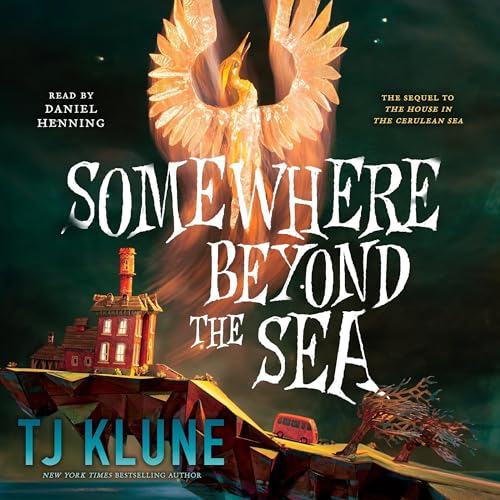
Somewhere Beyond the Sea (Cerulean Chronicles, Book 2)
By: T.J. Klune
Narrated By: Daniel Henning
T.J. Klune (Author, winner of the 2021 Mythopoeic Awards)
“Somewhere Beyond the Sea” is a wild ride by an author with an extraordinary imagination. Some listener/readers will be inclined to reject Klune’s book because its flights of imagination obscure the author’s social criticism. This is a fantasy novel offering a message about mistakes parents and society make when raising children.
One might view “Somewhere Beyond the Sea” as a simple fantasy novel about extraordinary children cared for in orphanages.
However, every parent of a child will see themselves and the mistakes they may have made in raising their children. Though science explains much of who humans become is genetically determined, the influence of parents and acquaintances affect genetic predisposition. A child may mature to become a Jesus or Hitler without human understanding of why they became the best or worst of society.
Klune’s fantasy is about an orphanage populated with magical children that have powers beyond rational belief.
They are morphological creatures with powers capable of destroying or creating reality. Being free of parental guidance and raised in an orphanage, the maturity of these children is institutionally influenced. As is true in any orphanage, or any parental home, there are good and bad management practices. As either an orphanage manager or parent, one wonders if they are making the right decisions in the way they are influencing their children.
Klune obviously believes letting children become who they are, as long as they do no harm to themselves or others, is a life goal.
That seems a fine ideal, but parents and institutions are made of humans who are trapped by personal experiences of their own that influence how they raise their children. Some are disciplinaries, others are not. Some are physical punishers of bad behavior; others believe physical punishment only releases a parent’s anger and actually reinforces bad behavior. Despite bad parenting, some children grow to become great contributors to society, regardless of how they were raised, others become criminals of every type.
Does the way we raise our children make a difference in who they become?
There seems no disciplinary practice that guarantees the best outcome of a child raised by either institutions or parents. This is particularly concerning to parents of children who become unhappy and choose to pursue unhealthy relationships, become drug addicts, criminals, or suicide statistics. Parents become victims of guilt. They wonder how they might have been better managers of their children’s lives, thinking that could have made the difference.
Klune’s fantasy offers no clear answer to “the best way” to raise children, but he crystalizes how important they are to the future of the world.
“Say Nothing” is an attempt to give listener/readers an understanding of Ireland’s “Troubles”. Patrick Radden Keefe helps one understand but it remains a complicated and confusing history because of its mix of religion and national sovereignty.
Books of Interest Website: chetyarbrough.blog
Say Nothing (A True Story of Murder and Memory in Northern Ireland)
By: Patrick Radden Keefe
Narrated By: Mathew Blaney
Patrick Radden Keefe (Author, American writer and investigative journalist.)
“Say Nothing” is an attempt to give listener/readers an understanding of Ireland’s “Troubles”. Patrick Radden Keefe helps one understand but it remains a complicated and confusing history because of its mix of religion and national sovereignty. From the 1960s to the late 1980s, there were violent clashes between unionist/loyalists, who were largely protestant and wanted to be part of Great Britain; while Unionist/loyalists, who were largely Catholic wanted independence as the Republic of Ireland.
Bombings, sniper attacks, and violent confrontations caused an estimated 3600 deaths and tens-of-thousands injuries during the “Troubles”.
Not until 1998, with the “Good Friday Agreement” did the deadly conflicts cease. However, Great Britain’s Brexit, periods of political deadlock with the Northern Ireland Assembly, and debates over details of the “…Agreement” have occurred. Keefe tells a story of the build-up to the “…Agreement” in “Say Nothing”.
The Irish Republican Army that wished for Irish independence murdered Jean McConville, a mother of ten, in 1972.
The murder is puzzling because McConville is Catholic which suggests her death was either a mistake or that some Catholics were union/loyalists. Some in the IRA suggested she acted as a spy for the UK. That is a mystery Keefe fails to unravel while giving listener/readers some historical perspective on Ireland’s Troubles. Some say Marian Price was the murderer, but Keefe demurs and argues there is no concrete evidence.
Northern Ireland is over 40% Catholic while the Republic of Ireland is over 60% Catholic.
Ireland’s troubles date back to the 16th and 17th centuries when English and Scottish Protestant settlers chose Ireland as their new home. The native population of Ireland was Catholic and religious differences and land acquisition by Protestants set the table for conflict. In 1921, Ireland was split in two with Northern Ireland remaining a part of the UK but with a 40% minority who remained Catholic. A Catholic movement for civil rights in Northern Ireland began in the 1960s. Violence and political conflict ensued with the formation of paramilitary groups like the IRA (Irish Republican Army) that began bombing and shooting Protestant followers. The IRA wished to end British rule, unify Ireland, accommodate religious difference, and create an independent nation.
Over the years, there were several leaders of the IRA. Michael Collins, Cathal Brugha, Liam Lynch, Sean Stiofain, Gerry Adams, and Martin McGuinness. Gerry Adams is the leader most often referred to in Keefe’s book.
The IRA never admitted to ordering the abduction and murder of Jean McConville. The author directly asks Adams if he ordered the murder, and his response is that he has no blood on his hands. Some suggest, her murder was a collective decision by leaders of the IRA.
Both Northern Ireland and the Republic of Ireland were ambivalent about Brexit and chose to neither entirely agree with separation from the EU nor entirely agree with the UK in its rejection of membership.
There remains a great deal of ambivalence about unification of Ireland as an independent nation but “The Good Friday Agreement” allows for a referendum on unification because of what appears to be a majority wishing to create one nation. However, Northern Ireland’s majority wishes to remain part of the UK while the Republic of Ireland wishes to remain independent. Unification seems unlikely because of their differences about being part of the UK.
It is interesting to note that the Catholic religion is the largest religious group in both Northern Ireland and the Republic of Ireland, but that Northern Ireland Catholics constitute 42.3% while the Republic of Ireland is 69.1% Catholic. Keefe’s story triggers an interest in understanding the history of Ireland, but it is too long in its telling to offer clarity.
Criminal imprisonment, gun control, and drug addiction solutions are elusive, just as America’s eradication of discrimination is, at best, only a work in progress.
Books of Interest Website: chetyarbrough.blog
Locking Up Our Own (Crime and Punishment in Black America)
By: James Forman Jr.
Narrated By: Kevin R. Free
James Forman Jr. (Author, professor of law and education at Yale Law School)
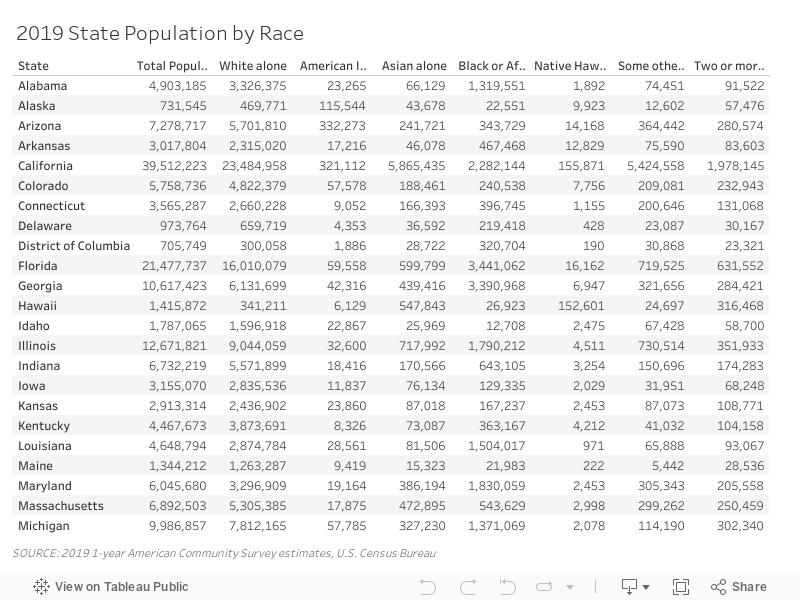
James Forman Jr. argues Washington D.C. is a multi-ethnic democratic example of what is wrong with the American penal system, gun control, and an addiction crisis. Forman offers an eye-opening recognition of America’s social blindness. The 2019 estimated population of Black residents in D.C. is approximately 44%. Forman suggests D.C. constitutes a representative sample of what has happened and is happening to Black Americans in “Locking Up Our Own”.
Forman addresses three social issues with Washington D.C.s’ effort to legislate against the consequences of crime associated with a Black population’s gun possession, and drug addiction. America’s history of Black discrimination is well documented. The issues of gun control and drug addiction are top-of-mind issues in all American communities. What makes Forman’s book interesting is his analysis of what he argues is a nascent conservative movement in Black American society.
Forman’s argument is based on statistics and the history of Black discrimination. The American incarceration rates for Black citizens are six times higher than for white citizens. Today’s statistics show 33% percent of the prison population is Black when it is only 12% of the U.S. adult population. White prisoners account for 30% of America’s prisoners but amount to 64% of the adult population.
The fundamental issue of Forman’s book is that more Black Americans are being imprisoned for crimes of addiction and theft than those committed by white Americans.
Forman uses Washington D.C. as evidence for a Black conservative movement because of its high percentage of Black residents. He notes D.C.’s effort to legislate gun control and regulate drug addiction are arguably more restrictive than other parts of the country. Firearms must be registered with the police department. A permit is required to purchase a firearm. Concealed weapons require a license. Assault weapons are banned. Magazine capacities are limited. Safe storage requirements are mandated. In the case of addiction, the “Office of National Drug Control Policy”, ONDCP is established in D.C. The program is instituted to provide funding to support communities heavily impacted by drug trafficking. A “Drug-Free Communities Program” offers grants to community coalitions to prevent youth substance abuse. The city expands Naloxone access to citizens to reverse opioid overdose.
Forman explains these policies are supported by D.C. residents in the face of national opposition to gun control. Forman notes the proactive drug control programs of D.C.
The obvious irony of D.C.’s policies is that they do not reflect what white America promotes but suggests Black America is likely more victimized by lax gun controls and drug regulation. White America needs to get on board.
Several chapters of Forman’s book explain the difficulties of integrating minorities into local police forces.
Police department managers opened their hiring practices to Blacks based on growing Black neighborhoods and belief that police services would be improved with officers who would be more racially and culturally suited to understand policing in minority neighborhoods. Forman recounts 1940s through the 1960s police force integration. He notes police department integration is fraught with discriminatory treatment of Black recruits.
Of course, the idea of crime in a Black neighborhood being better understood by Black officers is just another form of discrimination.
Crime is crime, whether in a minority neighborhood or not. Relegating Black police to Black neighborhoods only reinforces racial discrimination. Integrating the police only became another example of racial discrimination in America. Paring white and Black policemen on petrol became difficult. Getting white and Black policemen to work together becomes even more problematic when promotions are denied qualified Black officers. As with all organizations, police promotions were based on experience and standardized testing. What police departments would typically do is promote white officers over Black officers whether their experience rating or test scores were better or not.
The irony of white resistance to gun control and ineffective drug addiction policies has had an adverse impact on Black-on-Black crime.
The culture created in formally white police departments adversely condones harsh treatment of minorities. Black officers buy into a police department’s culture and begin discriminating against Black residents in the same way as white policemen.
The 2003 brutal beating and killing of Tyre Nichols by 5 Black Police Officers.
Drug addiction is the scourge of our time. Its causes range from the greed of drug company executives to poor policy decisions by the government to escapist and addictive desires of the public. Addictive drugs are the boon and bane of society. On the one hand, they reduce uncontrollable pain and anxiety; on the other they are often addictive, causing incapacity or death.
Discrimination can only be ameliorated with education, understanding, and governmental regulations that are consistent with the rights written in the American Constitution.
Criminal imprisonment, gun control, and drug addiction solutions are elusive, just as America’s eradication of discrimination is, at best, only a work in progress. Guns in the hands of American citizens are not guaranteed except as noted in the Constitution which infers “A well-regulated Militia…” is the only reason for “…people to keep and bear Arms…” How many more school children have to be killed by guns before the lie of American gun rights is dispelled.
The last chapters of Forman’s book address his experience as a public defender in Washington D.C. This is the weakest part of his story, but it points to the theme of an incarceration system in America that is broken. Prisons are not meant to reform criminals. They are overcrowded, violent, understaffed and, most damagingly, lack rehabilitative programs for re-education and vocational training that could reduce recidivism and return former prisoners to a socially productive society.
Homelessness, illegal immigration, and America’s budget deficit will not be cured by reducing taxes on the rich or by tariffs that artificially increase the cost of living, or by cutting the labor force of farmers through mass deportations, or by making it easier to do business in the U.S.
Books of Interest Website: chetyarbrough.blog
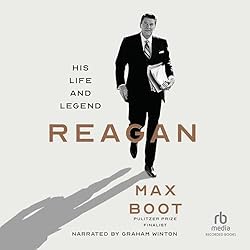
Reagan (His Life and Legend)
By: Max Boot
Narrated By: Graham Winton
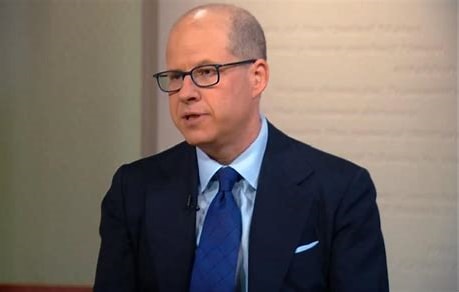
Max Boot (Russian-born naturalized American author, editorialist, lecturer, and military historian, writer and editor for The Christian Science Monitor.)
Not being a fan of Ronald Reagan’s presidency, there is some reluctance in reviewing Max Boot’s biography of the man. However, Boot’s writing and research offer an understanding that makes one separate Reagan’s political life from his experienced life. Boot explains Reagan’s life during the years before and after the depression.
Reagan’s father was an alcoholic which reminds one of how one’s childhood is rarely idyllic. Boot’s biography of Reagan shows one becomes who they are–despite the human faults of their parents. The way a child matures is only partly defined by parents’ influence. Reagan’s father’s alcoholism did not carry through to his son.
Boot’s biography shows Reagan to be an affable, well-adjusted, teenager and young adult who has a strong sense of what he believes is right and wrong.
Reagan is a football athlete in high school that grows to become a 6′ 1″ handsome young man from a relatively poor middle-class family. He aspires to college and works to have enough money to attend Eureka College in Illinois. He graduates in 1932 with a BA in Economics and Sociology. Reagan is remembered by classmates and teachers as a smart student and determined football player that gave him the grit and experience to become a movie star in the 1940s.
The first chapters of Boot’s biography of Reagan are about his break into the entertainment industry as a sports caster.
Reagan had a nearly photographic memory. He used that skill to recall a football game he played in college to impress a radio station manager with broadcast details of a game. He recalls a game he played in college and purposefully embellishes his role in the game. Reagan’s skill as a radio announcer led to a screen test with Warner Brothers in 1937 that launched his film career.
As WWII approaches, Reagan enlists as a lieutenant in the U.S. Army Air Force. (The Air Force in these early days were not a separate branch of the service.)
Reagan’s experience in the entertainment industry led to producing training and propaganda films for the Army Air Force. Boot explains Reagan had significant vision problems with nearsightedness in his youth and presbyopia (difficulty of focusing on close objects) as he got older. Reagan never served in a combat role. He eventually adopted contact lenses to correct his vision; partly to please film producers who disliked the “coke bottle” lenses he needed to see properly.
Four issues that are interesting and informative in the first chapters of Boot’s biography of Reagan are 1) how affable, and well liked Reagan was to people who met him, 2) that he was well-read, 3) very handsome with a respect for women that carried through to several relationships, and 4) that though he had a sense of right and wrong, his moral center seemed to waiver between concern and indifference.
During the depression, Reagan was a strong supporter of Franklin Roosevelt’s efforts to resurrect the American economy.
Reagan seemed more like a liberal Democrat than the conservative Republican he came to be as Governor of California and President of the United States. The remainder of the book shows how that change came about. Boot notes several factors that influenced Reagan to change from a Roosevelt to Goldwater supporter. The movie industry and the growing anti-communist era of the fifties influenced many former liberals. Reagan’s experience in Hollywood reinforced conservativism.
Reagan became rich from his relationship with Gerneral Electric. The corporate culture of GE in the 1950s and 60s was decidedly conservative. When Reagan became the host of “General Electric Theater” that culture seeped into his consciousness.
In 1962, Reagan switched from the Democratic party to the Republican party. He supported the election of Goldwater who ran against President Lyndon Johnson who was mired in the Vietnam war while promoting big government social welfare programs. The influence of Goldwater and the liberalism of the Johnson polices drove Reagan to believe big government was ruining the wealth and opportunity of Americans. He adopted conservative beliefs for economic deregulation, tax cuts that largely benefited the rich, and promoted anti-communist foreign policies. Reagan’s support for conservative policies is exemplified by his “A Time for Choosing” speech supporting Barry Goldwater’s campaign for President in 1964.
In the political climate of the 1960s, Reagan, with the support of GE, runs for Govenor of California. His position as president of the Screen Actors Guild, support of Goldwater, and the public’s perception of inefficiency of state government provided a platform for Reagan to run. The civil rights movement, Vietnam protests, the free speech movement, the Watts riots in LA, and the hippie movement in San Francisco created an environment ripe for conservative reaction. Reagan is elected Governor of California twice, to serve from 1967 to 1975.
Reagan as the Governor of California.
Reagan described his time with GE as a “postgraduate course in political science”.
Reagan’s experience as Governor of California, his Hollywood image, the support of big companies like GE, and the economic issues confronting Carter, give him a platform to run for President of the United States. Todays’ Republicans hold Reagan in high regard. Some view Reagan as one of the best recent presidents of the United States. Those who hold him in high regard cite his economic policies, strong national defense and leadership during the cold war. He believed in small government, lower taxes, and conservative values. Some suggest Trump is Reaganomics second coming.
Reagan runs for President of the United States in 1976. He wins and is re-elected in 1980.
What is not fully understood by some Americans, is the accomplishments of Reagan held some very negative consequences. Some argue he was the prime mover in nuclear weapons reduction. The biography of Gorbachev suggests the prime mover was Gorbachev and his support of glasnost with an opening of Russia to western ideals.
Some, like me, would argue Reagan accelerated economic inequality by giving tax cuts to the wealthy and deregulating the economy.
The federal deficit increased from $70 billion dollars to 152.6 billion dollars during the Reagan presidential years. In comparison to Carter’s administration, the deficit was less than half of Reagan’s at $74 billion dollars. Today’s deficit has grown to 1.83 trillion dollars. Four out of seven presidents (including Trump’s second term) since Reagan have been Republican. The deficit lays at the feet of both parties.
With the election of Trump, who emulates Reagan’s policies, one wonders–how much greater the deficit will be with reduced taxes for the rich and a renewal of economic deregulation.
Homelessness, illegal immigration, and America’s budget deficit will not be cured by reducing taxes on the rich or by tariffs that artificially increase the cost of living, or by cutting the labor force of farmers through mass deportations, or by making it easier to do business in the U.S.
With the death of Riley’s brother from suicide, a spiraling downward seems inevitable for Lisa Marie Pressley. Surprisingly, Lisa Marie rallies after the suicide of her son, but the negative consequence of fame remain. The pressure of fame, like poverty, are equal opportunity killers.
Books of Interest Website: chetyarbrough.blog
From Here to the Great Unknown (A Memoir)
By: Lisa Marie Presley, Riley Keough
Narrated By: Riley Keough, Julia Roberts
Lisa Marie Presley (Singer, song writer, daughter of Elvis)Danielle Riley Keough (Actress, eldest grandchild of Elvis)
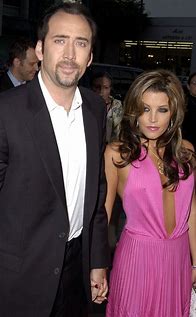
“From Here to the Great Unknown” begins rather shakily because it is unclear about who is narrating and being represented in the story. Listeners who stick with the story begin to see that Keough’s voice is of herself while the non-tape-recorded voice by Julia Roberts is Lisa Marie, telling and filling gaps in Danielle Riley’s story. The two photographs above are meant to show Lisa Marie in her prime and Riley in the present.
This memoir explains Danny Keough (Danielle’s father and Lisa Maries first husband) is an ever-present person in Riley Keough’s life.
The book reveals the thrills, fears, and tragedy of inheriting fame. Danielle Riley Keough assembles a memoir from tape recordings by her mother and recollections of Elvis Pressley’s only daughter, Lisa Marie Pressley. “From Here to the Great Uknown” infers genetics may have something to do with descendants’ lives but the consequence of fame magnifies life’s proclivities.
Lisa Marie is shown to idolize her father who loved her dearly.
As most know, Elvis descended into addiction. This is not a story about Elvis but about Lisa Marie who loved her father, struggled with her mother, and created a career for herself in the music industry. She never achieves the fame of her father but had some success with “Lights Out”, “You Ain’t Seen Nothin’ Yet”, “Dirty Laundry”, “S.O.B”, and “Over Me”. Keough briefly talks about traveling with her mother on tour. Keogh explains her mother dabbled with drugs in earlier years but seemed to kick the habit as she began establishing her own career. Lisa Marie meets and marries Danny Keough, and has two children with her, Riley and a son named Benjamin. Despite a divorce in 1994, Riley Keough and even her mother remained close with Danny.
Lisa Marie’s divorce seems precipitated by a growing intimate relationship between Lisa Marie and the famous King of Pop, Michael Jackson. After divorce, Lisa Marie marries Jackson in 1994.
Keough mentions Jackson’s pedophilia accusations in 1993 that makes one wonder if the marriage had anything to do with the accusations of five boys. Lisa Marie and Jackson divorced in 1996. Riley suggests Jackson’s desire to be in control created friction between the couple that led to the divorce. Jackson was acquitted of any pedophilia charges in 2005.
Lisa Marie marries again in 2002 to the actor, Nicolas Cage, but they are divorced two years later.
Despite three failed marriages, Riley explains her mother wishes to have more children and decides to marry Michael Lockwood in 2006. Through invitro fertilization, Lisa Marie becomes pregnant with twins. She has a cesarian delivery that births Harper and Finley who become Riley’s sisters. Riley explains her mother had quit drugs which she had gone through in her younger years but recovering from the cesarian operation led her back to drugs. She separates from Lockwood in 2016, and they divorce in 2021.
One begins to think about the famous film “Alfie” that came out in 1966.
Michael Caine, who is Alfie, looks back on his life and his famous line in the film is “What’s it all about Alfie?” Riley suggests Lisa Marie was a great mother because she had an instinct for caring about her children. Riley believes her mother slipped back into drugs because of the pain killers she took from the cesarean delivery of her twins.
Living a life of fame has consequences. One can argue that no singer in modern times has exceeded the fame of Elvis Pressley. Maybe Taylor Swift is nearing Elvis’s fame. Time will tell.
The price of fame is loss of privacy, mental strain to maintain an image, isolation, hangers-on self-interests, constant public exposure, and personal security concerns. Riley’s memoir of her mother’s life suggests fame influences Elvis’s, Lisa Marie Pressley’s, and Ben’s lives and deaths. All three had problems with drug use, but Elvis had a heart attack and Lisa Marie had a bowel obstruction thought to have caused excessive weight-loss and death.
With the death of Riley’s brother from suicide, a spiraling downward seems inevitable for Lisa Marie Pressley.
Surprisingly, Lisa Marie rallies after the suicide of her son, but the negative consequence of fame remain. The pressure of fame, like poverty, are equal opportunity killers.
A.I. machines do not think! It is critically important for users of A.I. to continually measure the human results of “A.I. based” decisions. Users must be educated to understand A.I. is a tool of humanity, not an oracle of truth. A.I. must be constantly reviewed and reprogrammed based on its positive contribution to society.
Books of Interest Website: chetyarbrough.blog
Prediction Machines (The Simple Economics of Artificial Intelligence)
By: Ajay Agrawal, Joshua Gans, Avi Goldfarb
Narrated By: U Ganser
Authors, from left to right: Ajay Agrawal (Professor at Rotman School of Management @ University of Toronto), Joshua Gans (Chair in Technical Innovation and Entrepreneurship at the Rotman School), Avi Goldfarb (Chair in Artificial Intelligence, Healthcare, and Marketing at the Rotman School).
This is a tedious book about the mechanics of artificial intelligence and how it works, i.e., at least in its early stages of development.
Like in the early days of computer science, the phrase “garbage in, garbage out” comes to mind. “Prediction Machines” makes the point that A.I. is software creation for “…Machines” that are only as predictive as the ability of its programmers. Agrawal, Gans, and Goldfarb give a step-by-step explanation of a programmer’s thought process in creating a predictive machine that does not think but can produce predictions.
The obvious danger of A.I. is that users may believe computers think when in fact they only reproduce what they are programmed to reveal.
They can be horribly wrong based on misrepresentation or misunderstanding of the real world by programmers who are trapped in their own beliefs and prejudices. A. I.’s threat rests in the hands of those who view it as a “god-like” oracle of truth when it is only a tool of human beings.
The horrible and unjust murder of the United Health Care executive reminds one of how critical it is for all business managers to be careful about how A.I. is used and the way it affects its customers.
“Prediction Machines” is a poorly written book that illustrates how a programmer methodically organizes information with decisions and actions triggered by A.I.’ users who believe machines can be programmed to think. A.I. machines do not think!
Managers must be alert and always inspect what they expect.
It is critically important for users of A.I. to continually measure the human results of “A.I. based” decisions. Users must be educated to understand A.I. is a tool of humanity, not an oracle of truth. A.I. must be constantly reviewed and reprogrammed based on its positive contribution to society.
The well-made point of Orlean’s history of the Los Angeles Central Library is that a listener/reader can learn a great deal about the world and other people’s life experience from books. The loss of a book is not like human death, disease, or disability. A book is a liberation and broadening of life’s narrowness.
Books of Interest Website: chetyarbrough.blog
The Library Book
By: Susan Orlean
Narrated By: Susan Orlean
Susan Orlean (Author, American journalist, tv writer, staff writer for The New Yorker.)
“The Library Book” is not a thriller, but it is an appreciation of a public service available in nearly every community of the United States. Libraries can be found in communities of less than 8,000 people or megalopolises of millions. Susan Orlean focuses her book on the great fire in 1986 at the Los Angeles Central Library where over 400,000 books were destroyed, and an estimated 700,000 were damaged. Though this was not the largest library in America, it was the largest library fire in U.S.’ history. Orlean’s research suggests the arsonist was a Wanna-Be actor named Harry Peak. However, there is no concrete evidence to confirm his guilt. No one is convicted for the library’s alleged arson. The cause remains undetermined.
It is interesting to note that Orlean admits there were electrical problems in the old building that had been recorded by building inspectors, but fire inspectors concluded it was arson.
It seems somewhat disingenuous for the City or Orlean to accuse Peak as an arsonist but that is not the primary message of her book. Her message is that many, including this reviewer, love the knowledge and experience of others who write books. Arguably, public libraries are one of the greatest public services in America, and at a cost much less than most public services in America.
The last chapters of her book address the history of the creation and renovation of the Los Angles Central Library. It reaches back to the 19th century. She recalls the liberal leaning of librarians and their early adoption of women in the workplace. Two women became Library’ managers in the 1800s. Orlean notes in a joking conversation with a manager of the library about the unlikely promotion of a political conservative as a head librarian.
An interesting note from the author is that the Los Angeles library has historically been a haven for the homeless, a problem that has dramatically risen in the 21st century. Some librarians have expanded their services to help the homeless. It seems noteworthy that the libraries in Las Vegas and those visited in other cities do not lock their bathroom doors the way private businesses like Starbucks choose to do.
The Los Angeles Library took six years to rebuild while workers carried on during the course of reconstruction. She notes that a new book generally requires a week before it hits the shelf because of time needed for proper cataloging. A somewhat distracting habit Orlean uses is recitation of a book’s Dewey Decimal’ number that begins most of the chapters. An interesting note from the author is that the library has historically been a haven for the homeless, a problem that has dramatically risen in the 21st century. Some librarians have expanded their services to help the homeless. It seems noteworthy that the Los Angeles Central library and libraries in Las Vegas do not lock their doors the way private businesses like Starbucks have chosen to do.
The Los Angeles Library is rebuilt to be better than it was before the fire.
Orlean explains library managers in LA are pushing to expand services their libraries provide. Having personal experience of traveling the world, countries like Finland show they have modernized libraries with a concept highly recommended in Orlean’s history of the Los Angeles’ library. Helsinki, Finland’s state-of-the-art library is a dramatic example of the services a library can provide. Everything from music instrument rentals, to recording studios, to sewing machine tables, and cooking kitchens are added to the library’s book inventory. All of these features have been created in Helsinki’s modernly designed library. It is a multi-purpose building that serves both children and adults.
The well-made point of Orlean’s history of the Los Angeles Central Library is that a listener/reader can learn a great deal about the world and other people’s life experience from books.
The loss of a book is not like human death, disease, or disability. A book is a liberation and broadening of life’s narrowness.
Many of the Los Angeles Library books were recovered but the process of recovery required the help of many of LA’s businesses. The books that got wet needed to be frozen to keep them from molding. City businesses made room for soaked books in their commercial freezers. The Los Angeles Central Library is rebuilt to be better than it was before the fire. Many of the books survived with the feint smell of smoke. The library continues to expand and enlighten Angeleno’s lives.
Trump’s purposefully uninformed knowledge of history will become a greater source of conflict in the world because he has a second term’ understanding of how the American government works and how it can be subverted with loyal followers.
Books of Interest Website: chetyarbrough.blog
Underground Empire (How America Weaponized the World Economy)
By: Henry Farrell, Abraham Newman
Narrated By: L. J. Ganser
Henry Farrell (Professor at Johns Hopkins School of Advanced International Studies, editor at the Washington Post.)Abraham L. Newman (Professor, School of Foreign Service and Government Dept. at Georgetown University.)
“Underground Empire” is not a surprising revelation in today’s media-savvy era. Every person in the world is being surveilled by someone because of the power and influence of government. Whether a democracy that believes in freedom or an autocracy that believes in absolute control, Farrell and Newman explain how “Big Brother” is watching and acting in ways that affect your life.
The potential for ubiquitous surveillance was known and wished for by some government bureaucrats. Wide social surveillance was resisted by many in the American government until 9/11. After 9/11 that resistance weakened and surveillance of the world, more fully including American citizens, became indispensable. The creation of an “Underground Empire” has weaponized privacy and the fuel of money that can heat, cool, burn or freeze national economies.
The empire’s objective is to be in charge of the future. One may take issue with the word “…Empire”. The scale of an “Underground Empire” varies from nations like America, China, the UK, the EU, Russia, and others to a group of Al Qaeda’ terrorists, or a disparate group of Syrian freedom fighters. The common denominator is technological connection, i.e. the basis of “Underground…” organization for coordinated action that changes the world.
Ferrell and Newman’s primary focus becomes the use of surveillance to influence world policy.
Particularly, the surveillance of money, the source of power and prestige, is shown by the authors to be key to understanding what other countries and interests are planning and doing that affects society. They speculate that 9/11 could have been exposed before it happened with more surveillance of the money that was being accumulated by Al Qaeda and used by the terrorists who attacked the world trade center in New York. That might be true but there is a wider consequence of that level of surveillance. Surveillance has become a weapon in the hands of political leaders. Surveillance of the flow of money, the source of power and prestige, may make “America Great” as inferred by the pending second term President. The EU, NATO, and other international organizations are looked at differently by Trump than by former post-world war’ Presidents. Trump views the EU and NATO as users of American wealth without equivalent contribution to world defense.
On the one hand, Trump objects to NATO because of its disproportionate financial burden to the United States which pleases Putin and changes the perspective of America’s role in the world. On the other hand, the authors note Trump opposed Putin when it came to the Nord Stream 2 oil pipeline to the E.U. The difference has to do with the Trump’s transactional view of the world. Because of America’s vast gas supplies from fracking, Trump sided with Texas politicians who vociferously objected to the second Nord stream pipeline to Europe.
The “Underground Empire” is not exclusively focused on money, but the use of money is based on knowledge of what people are thinking, doing, and wanting. Accumulating information becomes actionable with money. The inference by the authors is that the government’s decision to track money, as well as private information, informs one of what will happen in the future. The problem with this narrow reasoning is that national interests of countries do not always line up with each other. The formation of the EU with its own currency becomes a competitor for America, not just a useful tool for exchange of goods between nations.
Today’s playing field is not limited to major powers. As the spread of technology is mastered by the public, anyone as small as an interest group or as large as an international alliance can influence and potentially change the world. Farrell and Newman offer important understanding of that invisible war. Obvious examples are 9/11, Ukraine’s invasion, and most recently, the overthrow and exile of Bashar al-Assad in Syria. But they also reveal another front for conflict between the U.S. and countries that have traditionally been allied with America.
Histories carriers of belief in information transparency are people like Edward Snowden, Daniel Ellsberg, Chelsea Manning, Mark Felt, and Reality Winner. Snowden, a former NSA contractor, leaked classified information about global surveillance, Ellsberg exposed the lies of Vietnam, Manning exposed the WikiLeaks, Felt exposed the Watergate scandal, and Winner exposed presidential election interference in 2016. Secrets frequently kill the truth.
Ferrell’s and Newman’s book will make many even more concerned about the Trump presidency. Trump’s purposefully uninformed knowledge of history will become a greater source of conflict in the world because he has a second term’ understanding of how the American government works and how it can be subverted with loyal followers.
To make the point clearer, Trump views the world transactionally. The measure of value is most easily understood as wealth and the influence of money. Appointing wealthy sycophants to the government ensure victimization of the poor.
Freedom, once it is experienced, is an unconquerable force. Conquest of Ukraine, the Baltics, or Taiwan would be a pyric victory at a cost far in excess of a conquerors’ perceived value.
Books of Interest Website: chetyarbrough.blog
The Return of Great Powers (Russia, China, and the Next World War)
By: Jim Sciutto
Narrated By: Jim Sciutto
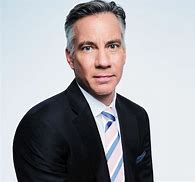
Jim Sciutto (Former American news anchor for ABC, national security correspondent for CNN, Yale graduate majoring in Chinese history.)
Jim Sciutto has been seen by many on television. One suspects few know he served as the Chief of Staff and Senior Advisor to the U.S. Ambassador to China between 2011 and 2013. His book, “The Return of Great Powers” is interesting but not particularly revelatory. It was written before today’s news of the blows to Iran’s role in the Middle East with the removal of Syria’s brutal leader and Israel’s increased attacks on Hezbollah and Hamas. Tragically, there is always death of innocents in war. The question is whether war is ever worth its cost.
Sciutto certainly has a better grasp of China than most Americans based on his education and experience but his general analysis of the “…Great Powers” and their return is more topical than insightful.
The rise of Putin and Xi have certainly changed the world. Newspapers and television are full of stories about these leaders’ dance around the war in Ukraine. Xi offers moral and financial support to Putin, along with some important weapon components needed by the military, but China limits military equipment and direct munitions provisions for the war. China may benefit from Russia’s Ukraine invasion because of Xi’s expressed interest in acquiring Taiwan but China’s advances have not moved much from where they were before the invasion.
What seems clear today, particularly in Sciutto’s book, is that Putin has made too many mistakes in his invasion of Ukraine.
Putin’s apparent disregard for Russian soldiers’ deaths undoubtedly threatens his influence with many Russian citizens. Some of America’s media suggest Putin is becoming more conscious of his political and personal vulnerability. It is reported by Gleb Karakulov. a Russian engineer and defector who fled to Kazakhstan, that Putin has become paranoid and increasingly isolated.
Sciutto suggests Estonia is on a Putin invasion list once Ukraine has been conquered.
Having recently returned from the Baltics, occupation of Estonia would be a pyric victory for the same reasons as the Ukraine invasion. The hate for Russians one hears from Baltics’ residents (Lithuanian, Estonian, and Latavian) who were under the rule of Russia from 1940s to 1991 is palpable. The jail cells, torture, and murder of Baltic citizens by Russia is detailed by tour guides from each country. The prosperity of the Baltic countries since 1991 is a tribute to freedom that will not be given up easily by its people. At best, Russia may be able to occupy the Baltics, but citizen resistance would far outweigh any value occupation might offer.
Sciutto goes on to imply Taiwan will lose its independence to China.
The picture of death and destruction he outlines with China’s overwhelming military might mitigates against China’s success. Once freedom is experienced, it is like genies in a bottle–difficult to be re-imprisoned. Whether NATO or America will come to Taiwan’s aid is unknown, but like Russia’s invasion of Ukraine and Putin’s interest in the Baltics, the price to be paid is higher than the reward they can expect.
Freedom, once it is experienced, is an unconquerable force. Conquest of Ukraine, the Baltics, or Taiwan would be a pyric victory at a cost far in excess of a conquerors’ perceived value.
Katherine Eban infers the lure of money, power, and prestige, continues to incentivize fudging, if not outright lies, about the effectiveness and safety of generic drugs.
Books of Interest Website: chetyarbrough.blog
Bottle of Lies (The Story of the Generic Drug Boom
By: Katherine Eban
Narrated By: Katherine Eban
Katherine Eban (Author, American investigative journalist focused on public health issues.)
Katherine Eban’s book is tedious, but it tells a story that challenges the generic drug industry and exposes the strength and weakness of capitalism. Eban makes one suspicious of the efficacy of generic drug treatments. Society depends on drug discoveries that can return one to health when struck by known and unknown malefactors. At the same time, Eban indirectly attacks capitalism as a primary force for discovery of life saving drug treatments. Capitalism is motivation for drug manufacturers to discover new drugs, but profit motive and human nature incentivize deception that can harm the public.
America’s police department for the drug industry is the Food and Drug Administration.
The difficulty of a policing function is in human nature and an investigators’ effort to find incriminating evidence that proves guilt. The consequences of poor policing in the generic drug industry are loss of health, and sometimes, life. The FDA is responsible for protecting public health by ensuring the safety, efficacy, and security of human and veterinary drugs manufactured or imported to the U.S.
Just as every police force is not perfect, the FDA has made mistakes and failed to uncover evidence for crime. There have been instances of drug manufacturers around the world, including America, that have adulterated approved generic drugs. (A U.S. generic drug manufacturer, KVK Research Inc in Pennsylvania, pled guilty in 2024.) Generic manufacturers and distributors around the world have misled the public on the efficacy and/or addictive qualities of drugs. A primary source of generic drug manufacturing crimes is the lure of increased profitability.
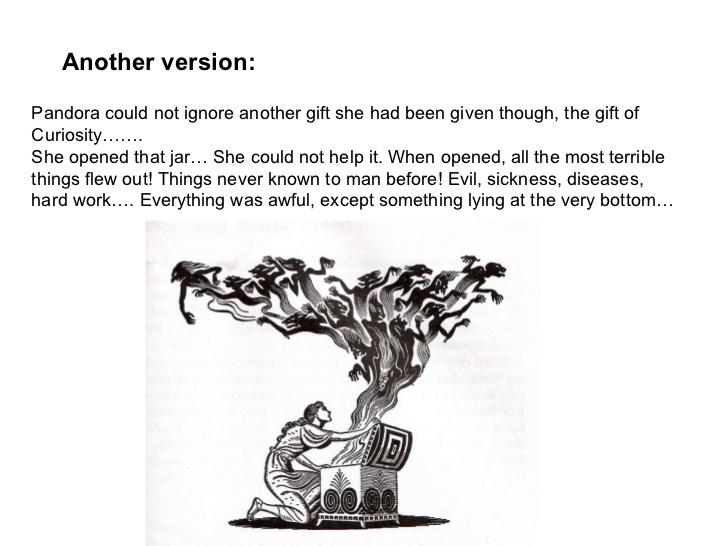
Eban focuses on a pandora’s box opened when the world’s generic drug industry began producing substitutes for previously patented drugs.
Patents for new drugs have a determinate shelf life but expire after a stipulated period of time. One can complain and challenge the price of patented drugs, but patented drugs require a level of scientific experiment and reporting to prove efficacy. When patents expire, there is a rush by generic manufacturers to produce the same drug at a lower cost. The trouble arises when a generic drug’s lower cost is achieved with substituted or reduced ingredients; also, it may be adulterated by poor manufacturing practices.
Eban offers the history of the AIDS’ epidemic to illustrate how generic drugs became supercharged in the 1980s.
Three companies in India and one in South Africa began working with the Clinton Foundation to offer an AIDS’ generic drug that fell to a cost of $.40 per day when patented AIDS’ drugs cost as much as $8,000 per year. Millions of people were at risk, none more than those who live in Africa. However, the effectiveness of the generic drug came under suspicion. It was found that data was being falsely created by India and Africa. It was manufactured data that falsely reported generic drugs effectiveness in treating AIDS. The generic African and India manufacturers were cutting corners in production to increase profits. No one checked the effectiveness of the produced drugs and posted false patient reports. Because the data was not based on patient experience but on falsely created data, it became unclear whether the drug was working. Without any reports showing the generic drug’s effectiveness, incentive grew to continue reducing costs. Manufacturers pushed production, compromised AIDS ingredients, and falsely reported treatment results of patients.
Dinesh S. Thakur (Received the Joe A. Callaway award for Civic Courage in 2014.)
Eban explains how Dinesh Thakur. a former executive at Ranbaxy Laboratories, became a whistle blower who “spilled the beans” on falsely created data sent to the FDA.
Thakur was the Director and Global Head of Research information & Portfolio Management at the Ranbaxy company. He began asking questions of the people reporting the generic AIDS Drug efficacy data. Thakur found that 50% to 100% of information on generic AIDS drug’ efficacy was manufactured and not related to actual use by AIDS sufferers. Ranbaxy Laboratories pleaded guilty of falsifying information in 2003. Ranbaxy agreed to pay $500 million to settle their guilty plea.
Despite the Ranbaxy settlement, the author shows generic drug misinformation is still being produced. Further reviews by FDA inspectors found continuing violations of protocol and testing of generic drug manufacturing and reporting.
Ranbaxy is no longer an independent company. It was purchased by Sun Pharmaceutical Industries Ltd in 2014. Eban explains how FDA inspectors fell victim to India manufacturers malfeasance by accepting luxury hotel accommodations and gifts that clouded their judgement about the companies they were investigating. A bad report from an FDA inspector could and did cost millions of dollars to companies that produced tainted generic drugs.
Eban explains the FDA has changed their policy of giving advance notice of inspections while inferring inspectors are advised to avoid conflicts of interest in their inspections. One takes this inference with reservation because human nature is an immutable force.
The incentive for increased profitability by reducing the cost of manufacturing generic drugs continues to threaten the public. Eban infers the lure of money, power, and prestige, continues to incentivize fudging, if not outright lies, about the effectiveness and safety of generic drugs.