TRAVEL

Understanding our place in the world as a democratic nation is the real value of travel.

Books of Interest
 Website: chetyarbrough.blog

“The New Tourist” Waking Up to the Power and Perils of Travel

By: Paige McClanahan

Narrated By: Paige McClanahan

Paige McClanahan (Author, journalist, world traveler.)

“The New Tourist” offers a mixed message about travel outside of one’s own country. As a journalist, paid for her travel, Paige McClanahan explains the power and peril of travel in a way that misses the point. She explains the power of travel as an economic benefit to travel writers and countries which travelers visit. One peril she notes is the destruction from tourists who damage pristine natural environments because citizens of a host country are often not accustomed to crowds of travelers. One who travels and writes of their adventures encourages travel to exotic places that may or may not be prepared for high tourist traffic. Unpreparedness is partly due to host countries interest in the economic benefit of tourist visits but are disinclined to spend potential profits on preparation for high tourist traffic that may not arrive.

Like the Maui wildfires in 2o23, better Hawaiian’ preparation may have saved 102 lives and the beautiful town of Lahaina.

Ironically, travel writers like McClanahan are partly to blame for writing of great travel experiences they have had as tourists. They make a living by writing about their travels around the world.
There is a balance between tourist satisfaction and host countries’ benefit but finding the balance is a work in progress that may not begin before damage is done.

What McClanahan misses in her book, is the great benefit of traveling to learn about other cultures.

From personal experience, I have been surprised by natives of other countries who know so much about life and what their personal experiences have meant to them. In Africa, a native guide explains the night sky in a way that reminds one of a college astronomy course. In the former Yugoslavia, an older person explains how much she misses Tito as the ruler of her country. Visiting Turkey’s Cappadocia, one visits an underground “city” meant to protect Christians from people of another faith. In China, the incident of Tiananmen Square is told by a young man in a way that makes one understand authoritarianism carries a threat. In India, one is overwhelmed by the gap between the rich and poor, the monuments of a great nation’s antiquity, and the remnants of British colonization. In Thailand, you find there are citizens who admire their king, others that revile the army that is running the country, and youth that want change. A traveler learns of the killing fields of Cambodia and the mine fields left behind by America and Vietnam as a reminder of America’s folly in believing the lie of falling dominoes. These are a few examples of what can be learned by travel to other countries.

McClanahan briefly alludes to some of cultural benefits of travel, but her book focuses more on travels’ economic benefits for writers and host countries.

Understanding our place in the world as a democratic nation is the real value of travel.

HOLODOMOR

Communism has failed in every country that has tried to institute what their rulers believe is in the best interest of their citizens.

Books of Interest
 Website: chetyarbrough.blog

“Red Famine” Stalin’s War on Ukraine

By: Anne Applebaum

Narrated By: Suzanne Toren

Anne Applebaum (Author, journalist, historian, wrote Pulitzer Prize for Non-Fiction with “Gulag: A History”.)

As an accomplished historian, Anne Applebaum offers an insightful view of the 1917 Russian Revolution and its rule over Ukraine, the breadbasket of Europe. Her history is a reminder of the Stalin’ atrocity which is being reinvented by Vladimir Putin in his invasion of Ukraine. The striking difference is that Putin, unlike Stalin, cares less about stealing Ukraine’s agricultural productivity than Russia’s return to a dead past. Applebaum’s history leads one to conclude that Russia’s twenty first century youth, its oil wealth, and political influence are being wasted by Putin. The past never precisely repeats itself, but Putin is committing many of the same mistakes made by Lenin and Stalin in the early 20th century.

Ukraine is an independent nation with its own evolving culture.

Applebaum’s history shows that only through covert and overt repression could Ukraine become a part of the Russian nation. Putin’s war may succeed in the short term, but Ukrainian independence will reassert itself when Russia’s leadership realizes the cost of repression is greater than the benefit of colonialization. Just as Israel will realize it cannot eradicate an idea by cutting off heads of its leaders, Russia will not erase a culture by murdering nationalist defenders.

Holodomor, The Ukrainian Famine That Killed Millions in 1932-33.

Applebaum addresses the history of the 1921′ and early 1930s’ famines in Ukraine to reveal the anguish felt by some, if not all, native Ukrainians. The Russification of Ukraine began with the 1917 revolution. Lenin, and later Stalin, were dealing with the many difficulties of establishing a new form of government in a nation accustomed to monarchal control. They viewed communism through the eyes of a people accustomed to totalitarian control. Lenin, with the help of associates like Stalin, preached the fiction of social and economic equality that gives every citizen compensation according to their abilities and needs. That impossible objective melded with Russia’s history of monarchal control of its citizens.

Lenin, and then Stalin, use their power to lead and govern, like the Russian Czars of its past, but with the curtain of communism to hide their ambition.

Applebaum’s story of Ukraine’s treatment in the Lenin’ and Stalin’ years (and today’s Putin’ years) reveals the cruelty and consequence of totalitarian rule. Applebaum focuses on two famines in Ukraine’s history, the famines of 1921-23 and 1932-33. The first famine is caused by drought, consequences of WWI and the complicated change in Russian governance after the 1917 revolution. By the time of the so-called famine in1932-33, Russia’s new form of government had stabilized with one ruler exercising control over the interpretation and actions of a communist government. By 1927, Stalin had become the undisputed leader of Russia.

Ukraine is considered the breadbasket of Europe.

In 1922, Stalin views Ukraine as a source of food to stabilize Russian control of what became known as the U.S.S.R.

Stalin, like Mao in China, believed collectivization of farmland and its cultivation would improve agricultural production in Ukraine. Like the experience in China, farm collectivization had the opposite effect. It reduced production and demotivated farmers. When production declined in Ukraine, Stalin ordered Russian troops to confiscate grain and the livestock of Ukraine citizens in the 1932-33 so-called famine. Arguably, that famine is manmade, not caused by nature but by Stalin’s decision. Stalin ordered confiscation of Ukrainian food and livestock provisions for the Russian people. Stalin created a famine and caused the death of an estimated 4,000,000 Ukrainian citizens.

Like Stalin in 1932, Putin chooses to murder Ukrainian citizens without concern about war’s inhumanity.

Communism has failed in every country that has tried to institute what their rulers believe is in the best interest of their citizens.

FATHERS

One recognizes the many mistakes a father or parent can make in their lives in failing to be the best they can be for their children.

Books of Interest
 Website: chetyarbrough.blog

“An Odyssey” A Father, a Son, and an Epic

By: Daniel Mendelsohn

Narrated By: Bronson Pinchot

Daniel Adam Mendelsohn (Author, essayist, critic, columnist, and translator, Professor of Humanities at Bard College.)


“An Odyssey” is a memoir that combines Mendelsohn’s life and educational experiences with Homer’s “… Odyssey”. As most know, “The Odyssey” is one of two ancient Greek epic poems, the other being “The Iliad”. Both are attributed to Homer who is questioned by some scholars as neither the soul creator nor (necessarily) its singular author. Both poems are said to have come from an oral tradition in ancient times, told and re-told, with no written editions until the late 8th or early 7th century BCE. Homer is believed to have lived in the 9th or 8th century BCE which makes it possible for him to be the originator, but no one really knows. Homer seems a singular source, or one of many who told and retold the epic poems.

In a broad sense, Daniel Mendelsohn’s memoir is about parenting but in a more succinct view, it is about fatherhood and the inevitability of death.

“An Odyssey” is a tribute to Mendelsohn’s father, his intellect and his impact on his son’s understanding of life. Mendelsohn cleverly intersperses “The Odyssey” of the heroic life of Odysseus with the accomplished life of his father.

The two poems tell the history of the Trojan War with the main character of “The Iliad” being Achilles, while Odysseus is the main character of “The Odyssey”.

Both heroes are characterized in “The Odyssey”. Achilles is recalled as the greatest warrior of the Trojan War who dies as a hero. Odysseus is also a warrior but is noted as a strategist who skillfully manipulates others with his cunning wit and intelligence. In Odysseus’ return, he meets Achilles in a nether world to find Achilles regrets his fate. Achilles explains he would have rather continued in life than being remembered by the living as heroic in the nether world of death.

Daniel Mendelsohn, like Odysseus, is a witty teacher who uses his intelligence to dissect “The Odyssey” by giving listeners a memoir of his relationship with his father.

In that dissection, one gains some understanding of “The Odyssey” while glimpsing what it was like to be raised by a loving but strict father.

What Mendelsohn introduces is every father’s role in raising children.

A theme that runs through “The Odyssey” is Odysseus’s troubled ten-year journey to Ithaca after the Trojan war but what Mendelsohn introduces is every father’s role in raising children. Mendelsohn’s father is nearing the end of his life. He is a retired engineer who worked for the American government on high security projects before becoming a professor. In retirement, his father chooses to attend his son’s class on “The Odyssey”. Mendelsohn combines his father’s attendance in his class with a real and reimagined trip they take to retrace Odysseus’s travels in “The Odyssey”.

Mendelsohn’s father has strong opinions about the character of Odysseus, and he expresses them in class.

Mendelsohn’s father characterizes Odysseus as a poor leader who lost all his men in his return to his homeland. Mendelson’s father gives the example of the cyclops who imprisons and eats some of Odysseus’s men but, after a clever escape, Odysseus foolishly chooses to taunt the cyclops. The cyclops nearly sinks the ship and appeals to Poseidon to kill the escaped sailors (none of which survive) because of Odysseus’s taunt. Mendelsohn’s father characterizes Odysseus as a poor leader of men, a braggart, liar, and cheater on his wife, Penelope.

There is a sense of the Professor learning many things about his father from discussions in the class. At the same time, listeners gain personal knowledge of the epic poem, its universal meaning, and why it is considered a classic. From the class discussion about Telemachus, the son of Odysseus, one realizes the tale is about the role of fathers and, to a lesser extent, mothers in educating their children. Mendelson admires his father for his intelligence, fidelity and what he believes is unbending truthfulness. On the other hand, Mendelson is embarrassed by his father’s slovenly dress, eating habits, and what he perceives as his father’s parental neglect during his childhood.

Mendelsohn’s father does not fear death but is afraid of the mental and physical deterioration that comes before death.

Mendelsohn seems hurt by his father’s emotional distancing but becomes less hurt as he gains a clearer understanding of where that distancing comes from. Mendelsohn’s father lives in a black and white world. Everything is one way or another. The end of one’s life is often gradual and only becomes one way or another at the very end. There is an inkling of tragedy to come as his father finally dies.

Truth and a lie are two sides of a coin. The fear of losing one’s physical or mental abilities is not a choice but something beyond one’s control.

Understanding what is black, white, true, or false loses meaning as one nears the end of life. Mendelsohn’s father has lived a life where he depended on himself. He made his own choices. As one’s body or mind deteriorates, depending on oneself become problematic. That loss of control is the fear of Mendelsohn’s father. Here is the tragedy of Mendelsohn’s story.

Mendelsohn’s father’s life is extended by the desires of his family and his doctor’s ministrations, despite the diminishing quality of his father’s life. Mendelsohn’s brilliant father lives months after his debilitating stroke. The only point one can see in the extension of life when death is imminent seems to be a family’s grief, and a kind of selfishness over loss of a loved one. There seems a high degree of selfishness in extending the life of one who is at the end of their life.

As a father, there is much more to be learned in Mendelsohn’s story about what it means to be a good father.

One recognizes the many mistakes a father or parent can make in their lives in failing to be the best they can be for their children.

REBOOTING LIFE

One wonders if gun violence in America is influenced by gaming. Unlike a gamer’s reboot of virtual life, real life does not reboot.

Books of Interest
 Website: chetyarbrough.blog

“Tomorrow, and Tomorrow, and Tomorrow” A Novel

By: Gabrielle Zevin

Narrated By: Jennifer Kim, Julian Cihi

Gabrielle Zevin (American author, screenwriter, Harvard graduate.)

Listening to fiction is considered by some to be a waste of time. What is missed by that opinion is the insight authors have of the society in which they live. As a reviewer from the baby boom generation, it is interesting to find what an author of the 1977 to 1983 generation (called Xennials) think about American life. Xennials grew up in the gaming generation, gaming is an experience some in the “boomer generation” do not understand and have little interest playing.

Xennials and other Gamers look to “Oregon Trail” or other games of their generation as an entertainment and representation of what life is today or was in the past.

Gabrielle Zevin writes an insightful introduction to her view of the Xennial generation’s view of 21st century American society. The author’s insight is limited to an estimated 10 percent of the Xennial population because her main characters have high intelligence quotients. Her characters have intellectual tools that get them into an Ivy League university. Zevin offers a vivid picture of high achievers in America.

Gaming is viewed by many Boomers as a waste of time and money but to those in the industry, it is a way to gain wealth and fame. Gaming is a sophisticated way to represent life in a virtual world.

Whether rich, poor, educated, or uneducated, gaming has an appeal to many who wish to escape the real world. Zevin tells a story of her generation and how a few become wealthy in the gaming industry. Her clever story shows how three teenagers from different racial, economic, and social backgrounds become successful entrepreneurial gamers. The only common denominator of her main characters is higher than average intelligence but despite that qualification, their life’ experiences have broad appeal to a listening audience.

“Tomorrow…” begins in a hospital with Sam and Sadie. Sam is in the hospital because of a crushed foot from a sports car’ accident that kills his mother.

Sadie is at the hospital because she is visiting her sister who has cancer. Sam and Sadie meet in a commons area of the hospital where Sam is playing a computer game. Both are high school age and are familiar with computer gaming. Sam responds to Sadie’s questions about the game he is playing. Reader/listeners find this is the first time Sam has talked to anyone for the weeks he has been in the hospital. When the nurses find that Sam is talking to Sadie, they ask her to visit regularly to aid Sam’s recovery. The two children become friends.

When Sam finds Sadie was visiting him because of the nurse’s ask, he is upset because it implies Sadie does not necessarily care for him as a friend.

As a young boy, Sam chooses to reject Sadie’s friendship. Some years after their breakup in the hospital, Sam sees Sadie catching a local train near Harvard, a university they are both attending. Sam calls out to Sadie, and they have a brief conversation. They become reacquainted and eventually renew their friendship. This renewal is a lesson about misunderstandings between people and false beliefs about each other because of poor communication. The story goes on to illustrate consequences of other relational misunderstandings.

Sadie takes a class on programing from a Harvard professor who becomes Sadie’s lover, another human relational mistake. The professor is married, and the relationship evolves into one of physical abuse.

The professor returns to his wife and Sadie decides to move to California with her friend Sam to start a company with the help of Marx, a friend and roommate of Sam’s at Harvard. The money for a gaming company start-up presumably comes from Sadie’s and Marx’s upper-class families. All three are Harvard graduates but Sam is a scholarship student that has little money. Their first invented game is a financial success. Start-up money is undoubtedly important, but it is the intelligence and education of the three characters that makes the company a success. Their company and their social relationships evolve. Their second game is a dud, but future games continue their business success.

There are stresses in the relationships between these three entrepreneurs.

Sadie is initially the more expert programmer of the two coders (Sam and Sadie). She is somewhat frustrated by Sam’s public face for the company because of his public identification with the gamer’ character created in their first successful game. She resents the public’s belief that Sam’s coding for the company and its success are more important than her technical contribution. Sam and Sadie come close to abandoning their friendship because of the public’s perception of the creators’ successful game release.

Sadie eventually marries Marx, the business manager, with Sam somewhat ambivalent about their relationship.

Despite Sadie’s discontent about Sam’s identification with their success, Sam grows jealous about her relationship with Marx. The three characters deeply love and respect each other but the dimension of intimacy between Marx and Sadie become a stressful dynamic for the trio. This is life, and all people of any age, education, or intelligence can see themselves in Zevin’s story.

Nearing the end of “Tomorrow…”, Marx is killed by a bullet from two gunman who storm the gaming business’ office because of Sam’s support of same-sex marriage in their latest successful game.

Sadie is pregnant and is grief stricken by Marx’s death. American gun violence and hate crime are shown by the author as a measure of modern times. The name of the gaming company that Sadie, Sam, and Marx form is “Unfair Games” which seems an ironic assessment America society.

Unlike a gamer’s reboot of virtual life, real life does not reboot. One wonders if gun violence in America is influenced by gaming, as well as Americans’ misrepresentation of the “…right to bear arms” in the Constitution of the United States.

LIFE’S LOTTERY

Eugenics and the fickle political nature of human beings outweighs the benefits of Harden’s idea of choosing what is best for society.

Books of Interest
 Website: chetyarbrough.blog

“The Genetic Lottery” Why DNA Matters for Social Equality

By: Kathryn Paige Harden

Narrated By: Katherine Fenton

Kathryn Paige Harden (Author, American psychologist and behavioral geneticist, Professor of Psychology at the University of Texas at Austin.)

“The Genetic Lottery” is an important book that may be easily misinterpreted. Hopefully, this review fairly summarizes its meaning. Fundamentally, Kathryn Paige Harden concludes all human beings are subject to a genetic lottery and the culture in which they mature. It is not suggesting all human beings are equal but that all can develop to their potential as long as he/she has an equal opportunity to become what their genetic inheritance, education, and life’s luck allow.

Harden explains racial identity is a false flag signifying little about human capability.

Every human being is born within a culture and from a mother and father who have contributed genetic DNA they inherited from previous generations. DNA carries genetic instructions for development, growth, and reproduction of living organisms. Those instructions are a blueprint for an organism’s growth. However, the genetic information passed on to future generations varies with each birth and is subject to a lottery of DNA instructions.

The lottery of genetics extends a multitude of characteristics ranging from intelligence to height to the color of one’s skin.

One may become an Einstein, or a slow-witted dolt. One may be born healthy or destined to die from an incurable disease. The growing understanding of genetics suggests the potential for human intervention to prevent disease, but also the possibility of creating a master race of human beings. That second possibility is a Hitlerian idea that lurks in the background of science and political power. It revolves around the theory of eugenics.

Harden suggests an ameliorating power of eugenics is its potential for offering equal opportunity for all to be the best version of themselves within whatever culture they live.

Putting aside the potential of human genetic theory’s risk, Harden explains every human is born within a culture that reflects the genetic inheritance of the continent on which they are born. The combination of the human genetic lottery and the culture in which humans live create ethnic identity and difference. Differences are the strengths and weaknesses of society. Strengths are in the diversity of culture that adds interest and dimension to life. The weakness of society is its tendency to look at someone who is different as a threat or obstacle to a native’s ambition or cultural identity.

Harden suggests every human being’s genetic code should be identified to aid human development by creating an environmental support system that capitalizes on genetic strengths and minimizes weaknesses.

This idealistic view of genetics is fraught with a risk to human freedom of thought and action. Science is generations away from understanding genetics and its relationship to the weaknesses and strengths of human thought and action. Understanding what gave Einstein a genetic inheritance that could see and understand E=MC squared is not known and may never be known. The luck of genetic inheritance and the lottery of life experiences are unlikely to ever be predictable. One interesting note in the forensic examination of Einsteins brain (recorded in another book) is that he had a higher-than-normal gilia cell ratio, non-normal folding patterns in his parietal lobe, and a missing furrow in the parietal lobe that may have allowed better connectivity between brain regions.

The threat of eugenic determinism and the fickle political nature of human beings outweighs the benefits of Harden’s idea of choosing what is best for society.

SOCIAL CHANGE

Social change for human equality is a long and arduous process. The election of 2025 will either be a step forward or backward.

Books of Interest
 Website: chetyarbrough.blog

Unexampled Courage” The blinding of Sgt Isaac Woodard and the Awakening of President Harry S. Truman and Judge J. Waties Waring

By: Richard Gergel

Narrated By: Tom Zingarelli

Richard Gergel (Author, American lawyer, assumed office 2010 as US District Court Judge for the District of South Carolina, graduate of Duke University School of Law in 1979.)

The Emancipation Proclamation was issued on January 1, 1863, as an executive order by Abraham Lincoln. It purportedly ended slavery, but it was only the beginning of a generational fight that is still being waged. “Unexampled Courage” is a history of a twentieth century turning point in the fight for equal treatment of Black Americans. The blinding of a Black veteran of WWII, Sergeant Isaac Woodard, in 1946 signified another major turning point for equal treatment of former American slaves. On July 26, 1948, President Harry Truman signed Executive Order 9981 which banned racial discrimination in the military. The blinding of Woodard by a white Sheriff in South Carolina and Harry Truman’s executive action are connected by Gergel’s history of Woodard’s horrid and brutal experience.

In 1946, a South Carolina police chief beat Sergeant Isaac Woodard’s head and used the butt of a Blackjack handle to gouge Woodard’s eye sockets.

Sergeant Woodard was beaten and blinded by a Batesburg, South Carolina police chief for drinking (and alleged disorderly conduct) on a Greyhound bus. Several white and Black soldiers were drinking and talking among themselves while returning from the service after the end of World War II. Woodard asked for a bathroom break from the bus driver and was refused. At a Batesburg, South Carolina bus stop, the driver left the bus to report Woodard to the police chief. The police chief attacked Woodard and beat him around his head and eyes with a leather Blackjack similar to the one shown above. Gergel reports Woodard’s eyes were directly poked and grinded by the butt of the police chief’s Blackjack before being thrown unconscious in a jail cell. The next morning, a local physician examined Woodard and he was taken to a veteran’s hospital, but any care provided was ineffectual. The assault on Woodard’s eyes is later determined to have caused an incurable blindness.

Orson Wells becomes aware of the horrid treatment of Woodard and chooses to broadcast the incident to American listeners. Orson had become famous for his 1938 “…War of the Worlds” radio broadcast.

When Wells broadcast the Woodard’ incident on public radio, he mistakenly identified the wrong South Carolina’ town in which the incident occurred. However, he continued investigating the incident and committed to correcting his error and identifying the police chief who battered Woodard to the point of blindness. The police chief and the town of Batesburg were correctly identified, and the wheels of justice slowly turned toward injustice, rather than justice.

Julius Waties Waring (1880-1968, U.S. District Court judge for the Eastern District of South Carolina.)

Though the police chief was tried for beating Woodard, he was acquitted by a South Carolina’ court. The story of Woodard’s blinding was prosecuted in the U.S. District court of Judge, J. Waites Waring. Waring was outraged by the inept prosecution by the federal prosecutors. After the acquittal, Waring began a movement in South Carolina for Black Americans’ equal rights. Waring’s outrage was supplemented by President Harry Truman who convened a commission on civil rights. After the report from the commission, Truman arranged a speech before the NAACP to reveal the findings of the commission and actions the Federal Government would take to address unequal treatment of Black Americans.

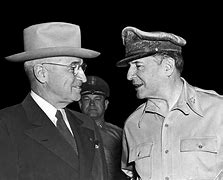
Harry S. Truman (1884-1972, 33rd President of the U.S.)

Truman is in the midst of a campaign to be re-elected as President of the United States in 1948. Gergel argues Truman decides to use his speech before the NAACP to announce his plan to fight for Negro equal rights, in part because of the blinded Woodard, but also because of many unjust southern murders and discriminatory actions against Black Americans.

Thomas E. Dewey (1902-1971, American lawyer and politician, 47th governor of New York 1943 to 1954.)

As most Americans know, President Truman was expected to lose to Thomas Dewey in his re-election campaign. A major reason for that belief was because of executive action to integrate the military and the opposition from southern voters who insisted on the inequality of Black Americans. From a coalition of labor, Blacks, Jews, mid-western farmers, and some number of southern states, Truman won re-election by a slim margin.

Gergel makes it clear that a fight for equal rights is not won and in fact was resisted by military leaders who tried to stop integration of the military after Truman’s executive action.

The military leaders fail to change Truman’s mind and military leaders finally took the required steps to integrate and assure a level of equality among white and Black Americans. Of course, equal treatment remains an issue in the military, as well as throughout America. Social change seems to conflict with genetic inheritance, compounded and multiplied by human ignorance.

Gergel shows social change for human equality is a long and arduous process.

The Civil War only dated the beginning of the American fight for equality. It has become a broader effort, including racial, gender, LGBTQ, marriage, civil, economic, natural, and political equality. One wonders if humans, let alone Americans, will ever get there. The election of 2025 will either be a step forward or backward.

AN IMMIGRANT LIFE

Immigrants treated equitably are more likely to bring positive additions to countries in which they choose to live.

Books of Interest
 Website: chetyarbrough.blog

The House of Broken Angels

By: Luis Alberto Urrea

Narrated By: Luis Alberto Urrea

Luis Alberto Urrea (Author, Mexican American poet, novelist, and essayist.)

“The House of Broken Angels” tells many Americans what they may not know about Latino Mexican culture. Luise Alberto Urrea explains what it is like to be Mexican American and/or raised in Mexico before emigrating. The Mexican American’ picture is harsh, but Urrea’s picture of being raised in Mexico is heart rending.

Not surprisingly, emigrating to America raises more social barriers for non-white immigrants than white immigrants.

The first barrier is skin color, but there is also language, education, and most importantly gainful employment. When a Mexican enters the country, all four barriers make their lives hard. If they were raised in Mexico, Urrea suggests they are poor and misogynistic but spiritually tough.

Poverty in Mexico and America comes from low wages and few jobs.

Misogyny lives in most countries of the world, but it is exacerbated by the strong patriarchal nature of families in Mexico. On the other hand, spiritual toughness comes from patriarchal parents (when they are present) because of influences like the Catholic Church in Mexican culture. Urrea explains how some Mexican fathers beat their male children to make them understand life is hard with belief that physical beatings will make them tough. He goes on to suggest Mexican’ girls are raised as bearers of children and companions or servers of men. Mexican fathers set the stage for their sons to be either tough or hopeless. Urrea infers Mexican mothers and fathers insist their children be raised to believe in God because the way people live make heaven or hell life’s only destination.

Urrea paints a picture of being poor and raised in Mexico.

He infers a table is set for many Mexican Americans who use their spiritual toughness and survival experience to get ahead. Women seem relegated to being wives, sex-objects, or mothers, rather than independent, potentially successful human beings. Spiritual toughness may lead to excelling in a job, or at school for men, and a minority of women, to become productive citizens of their new country. Urrea infers the spiritual and physical toughness can take different courses in an immigrant’s life, one is criminal, and the other is not.

Urrea’s story notes some Mexican immigrants choose to join gangs and use their toughness to fight for higher position, more money, and power within a gang.

Education and jobs are one of the ladders, but gang membership and crime become a less difficult path to follow in a foreign culture. Both ladders suffer from macho and misogynistic views of life, but Urrea argues Mexican immigrant life is tempered by the strength of paternalistic family hierarchies and religion.

The main character in “The House of Broken Angels” is Big Angel, the patriarch of a family with many sons, daughters, and grandchildren.

Big Angel is born in Mexico and is raised by a mother whose husband leaves his mother with nothing but a motorcycle which she is compelled to sell to feed her family. Big Angel chooses to leave home. He tries to make a living in Mexico but leaves under suspicious circumstances to join his father in America. Big Angel becomes a self-educated technology programmer through hard work and self-discipline. His offspring in Urrea’s story is about immigrant offspring and their lives in America.

America is shown to be less hospitable than one would hope considering how valuable immigrants have been to its economic growth.

Some like Big Angel choose to stay within the culture of their new homeland with the intent of becoming a positive contribution to society. They take the best lessons of their lives to adjust to a new culture despite unequal treatment. The generations that are related to Big Angel, like all humans, make their own choices in life. Their innate intelligence and life experiences are not the same as Big Angel’s, but they are influenced by his paternal care.

Some listener/readers will use Urrea’s story to argue immigration is bad for America because some choices made by descendants of immigrants have violently robbed, injured, or murdered others.

The fallacy of their argument is that bad actors come from all walks of life. Mexican culture, like all cultures that have survived history, have good and bad qualities. Immigrants treated equitably are more likely to bring positive additions to countries in which they choose to live. That is not Urrea’s story, but he explains how one Mexican immigrant overcame unfair treatment to become a contributor to his adopted country. Big Angel brought something valuable from Mexico to America. Big Angel’s story brought hard work, family, and caring for others as examples of what truly makes America Great.

INDIGENOUS

Orange’s book shows how culture can kill. What citizens of the world need to do is understand how a broader culture can be built.

Books of Interest
 Website: chetyarbrough.blog

There There: A Novel

By: Tommy Orange

Narrated By: Darrell Dennis, Shaun Taylor-Corbett, Alma Ceurvo, Kyla Garcia

Tommy Orange (Author, received a Master of Fine Arts from the Institute of American Indian Arts, winner of the 2019 American Book Award for “There There…”)

Tommy Orange illustrates how culture is the god of creation and destruction. “There There…” offers a glimpse of what it is like to be poor and indigenous in Oakland, California. The name “Indians” for the indigenous of America is said to have been created by Christopher Columbus in the 1400s. Orange has the idea at a gathering of native Americans to have each write their stories, i.e., their memories of what life has been for them in Oakland, California in the 20th and 21st centuries. Their stories are the substance of Orange’s book. They reveal the crushing reality of being descendants of the indigenous in Oakland, and believably all of America. A grant from Oakland becomes the funding source for Orange’s idea. Fighting to making a living as an author is at the core of “There There…” Orange undoubtedly calls “There There…” a novel to protect the story tellers.

Orange shows recycling-poverty, addiction, and misogynistic abuse are big problems for “Indians” in Oakland. The stories reveal an underlying frustration, if not anger, of indigenous Americans who are being molded by government programs that ignore native traditions and emphasize integration into whatever American society has become. There is justification for anger among American minorities. However, there is a fundamental misunderstanding when suggesting government programs are meant to mold Americans. The goal of government is not to mold its citizens but to create cultural norms for a diverse culture. Government fails because ethnic norms of minorities protect American citizens who are treated unequally.

Names like “Two Shoes”, “Red Feather” and the “Indian symbol” that once tested color on televisions are interesting examples of the significance of native influence in American culture.

Though America has and continues to try to Americanize natives, cultural influence is a two-way street. The stories in “There There…” illustrate how everything from influence of addiction to spousal abuse to abortion to overeating to violence are revealed as problems in native American’ lives. This is a hard novel to listen to because it denigrates Indian heritage and justifiably blames American culture.

One is drawn to wonder what can be done to correct the truth of American culture’s blame. The answer is in the Constitution of the United States.

All men are created equal, and the job of government is to provide for the health, education, and welfare of its citizens. American government is struggling to find a way of doing what it is meant to do because of the nature of human beings. Neither capitalism, utopianism, socialism, or communism change human nature. Ironically, only culture has the potential for achieving the goal of equality and fraternity.

Orange’s stories illustrate how Indian poverty is destructive and ethnic cultural inheritance is destroying native Americans.

One presumes Orange would object to the category of American when referring to indigenous peoples. However, it is only with change in culture that all citizens become more socially cohesive than one ethnic identity. If America can institute policies that genuinely provide equality for health, education, and welfare of all, culture will heal itself. When that is achieved, one can be Black, white, Latino, indigenous, or whatever ethnic group one wishes–but within broader American culture.

Orange’s book shows how culture can kill. What citizens of the world need to do is understand how a broader culture can be built.

BEING HUMAN

Robinson shows society treats people unequally, wages war for power, lacks control over behavior, and deceives itself about human nature.

Books of Interest
 Website: chetyarbrough.blog

Gilead

By: Marilynne Robinson

Narrated By: Tim Jerome

Marilynne Robinson (Author, received the 2005 Pulitzer Prize for fiction for “Gilead”.)

“Gilead” is a Pulitzer Prize winning novel. It is cleverly written by Marilynne Robinson and beautifully narrated by Tim Jerome. Some listeners may have a hard time getting through its religious point of view. It is largely about belief in God. However, it’s truth about human nature makes it a classic regardless of one’s religious beliefs.

In broad outline, it is about three generations of preachers, a grandfather, his son, and a grandson, who live in Gilead, Iowa.

There is the grandfather who fights on the Union side of the Civil War in Kansas, presumably because of belief in human equality and union. However, it appears his son cannot justify killing of any human being, for any reason. Later, a listener/reader finds there is a rift between the Civil War’ preacher and his son who also becomes a preacher. The son becomes a father who has his own son. This book is like a letter to his son to explain his journey through life and what he has learned. The story begins by recalling a trip he and his son take to discover the grandfather’s grave in Kansas.

The journey is in the late 19th century.

The grandson accompanies his father on the arduous journey from Gilead to Kansas. They begin in a horse drawn carriage but because of weather leave the horse and carriage to walk the last miles. It is hot. One realizes the father’s decision to travel with his son is for many reasons beyond companionship. One presumes the father is ambivalent about the grandfather’s decision to join union soldiers with a willingness to kill secessionists opposed to abolition. One wonders if the father is saying there is no justification for War. The story gains broader interest at this point.

KILLING IS NEVER JUSTIFIED.

After having found the grave, the father relates a story of burying his father’s gun and some shirts. The gun and clothing are dug up. The bloodied and dirty clothes are washed, but they do not come clean. The wife of the letter writer and preacher finally throws them away, but the gun is reburied, dug up again, dismantled and thrown into a lake by the preacher. The vignette suggests the father believes killing is never justified, even in a war meant to preserve union and abolish slavery.

Preachers.

The father’s writing suggests there is a gap in ages between him and his wife. We find he is 67 when he marries his wife who is in her 30s. The preacher is nearing death by the time of the letter to his son is written. With the gap in their ages, there is a hint of jealousy about a man raised by the preacher’s best friend, who is also a preacher of the cloth. The son is Jack Boughton. Jack often played baseball with the preacher’s son, but the preacher had been told by Jack Boughton’s father to be wary of Jack.

The carrot and stick of parenting.

The impact of neglectful parenting is referred to in a sermon noted in the preacher’s story. Jack Boughton’s intelligence and education combined with parental neglect is inferred to be a cause of atheism and a penchant for illicit behavior. This creates a tension between the preacher and his close friend’s son, particularly when the childhood friend visits the preacher’s wife and son.

One comes away from Robinson’s story with a summary of the flaws of humanity. At the end of the author’s story, Jack Boughton has created a second human nature crises that will resolve itself in either happiness or tragedy. Robinson shows society treats people unequally, wages war for power, lacks control over behavior, and deceives itself about human nature.

RAISED FIST

American Democracy will either fail or evolve by choosing to ignore or address the stated purposes of the Constitution.

Books of Interest
 Website: chetyarbrough.blog

Solitary: Unbroken by four decades in solitary confinement. My story of transformation and hope

By: Albert Woodfox

Narrated By: JD Jackson

Albert Woodfox, (1947-2022) Author who spent 43 years in solitary confinement in Louisiana’s Angola prison.

Woodfox dies at the age of 75 after being released in 2016.

“Solitary” is about American injustice on many levels. Every societal injustice is magnified by America’s penal system. There is racial discrimination, healthcare disparity, legal system bias, and law enforcement use-of-force to name the most prominent magnifications. Albert Woodfox’s story is a lived life in prison that exposes those levels of societal injustice.

Woodfox’s book is about America’s prison system, but it addresses growing up in the baby-boom generation.

Woodfox, like every human being, is a prisoner of mind but he becomes a physical prisoner in Angola, one of many prisons in America. Woodfox’s tragic life appears emblematic of many poverty-stricken baby-boomer’ lives in the 1960s. His story tells the world what it was, and undoubtedly still is, to live life in America when you are poor, ill-educated, living in a broken home, and/or Black.

Albert is born in Louisiana to a Black father (who retires after 25 years in the Navy) and a loving illiterate Black mother.

When Albert is a young child, his mother is compelled to leave her husband because he becomes a violent abuser after retiring from the Navy. Albert is raised in New Orleans by a single parent. His mother struggles to feed and clothe Albert and his siblings. Albert’s life in New Orleans includes petty theft and the troubles of untethered youth in a home where a single parent is not present because he/she is working to feed and house the family.

After several releases and returns to Angola, in 1971 Albert becomes known as an acolyte of the Black Panthers.

Albert grows up tough and independent but without purpose in his life. He quits school and evolves from petty criminal to armed robber. He first becomes acquainted with the Black Panther movement when he is jailed in New York. Association with the Panther movement changes his life. He is arrested and imprisoned in New York. He becomes a participant in the New York prison riots and adopts much of the Black Panther philosophy, i.e., a belief in Black nationalism, socialism and armed self-defense in the face of white discrimination. Albert began to believe in himself, improving his education by reading, and more importantly, respecting what is right in his life rather than what is expedient.

Woodfox is released from the New York prison system but is remanded to Angola for escaping the Louisiana prison system from an earlier crime.

He finds Angola is the same pit of despair it was when he was first imprisoned in Louisiana. Angola remains poorly maintained and continues to treat inmates, particularly Black inmates, inhumanely. However, Albert’s life is changed by the Panther’ philosophy. He begins to feel there is purpose in his life. His purpose becomes uniting prisoners (the Black Panther’ symbol of a closed fist meaning a “coming together” like the 5 fingers of a hand). Black prisoners come together in an effort to improve their treatment and education in prison. He allies himself with another devotee to begin a chapter of the Panther’ movement in the Angola prison.

The Black Panther movement began in 1966 with Huey Newton and Bobby Seale. Their plan was to unify African Americans to challenge police brutality in Oakland, California.

The movement failed because of internal tension, the FBI’s successful effort to undermine the movement, and determined white American resistance. Despite the demise of the movement, the idea of unifying African Americans against white privilege and unequal treatment survived despite the fall of the Black Panther movement. The movement has had a lasting impact on prison reform, community programs to improve education, and health services in poor black communities.

In 1974, Albert Woodfox is tried and convicted for murdering Brent Miller, a prison guard who is a third-generation guard at the Angola prison farm on which inmates worked. There is no concrete evidence to show Woodfox murdered Miller

He is put in solitary and remains in solitary for 40 years where he spends 23 hours a day with 1 hour for prison-yard exercise per day. That one hour per day is reduced to 3 hours a week in his last year of imprisonment. Amazingly, Woodfox survives and after several appeals, delayed and fought by the State of Louisiana, Woodfox is released to die a free man.

“Solitary” is an amazing tribute to the strength and resilience of human beings.

Woodfox becomes a self-educated American despite his horrendous treatment in the American prison system. He, and other prisoners, expose the failure of the American penal system to be more than an incarceration system to separate criminals from the general public. In that exposure, Woodfox shows changes were made in Angola and other prisons but far from turning prison into the rehabilitative need of society.

The fundamental cause of America’s failure is not achieving the stated purpose of equal opportunity for all in the Constitution of the United States.

The inferences one draws from “Solitary” reinforces America’s need to address the root causes of failure in its prison system. All men are created equal. America must improve government policies that assure the health, education, and welfare of its citizens. Woodfox’s story of Angola suggests socialism will cure the ills of American society. The truth seems more to be whether American Democracy will evolve or fail by choosing to ignore or address the stated purposes of the Constitution.