RELIGIOUS DIFFERENCE

Is belief in God worth it? Cook’s history of Muslimism and knowledge of Christianity makes one wonder.

Books of Interest
 Website: chetyarbrough.blog

“A History of the Muslim World From its origins to the Dawn of Modernity” 

By: Michael Cook

Narrated By: Ric Jerrom

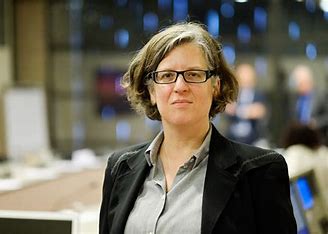
Michael A. Cook (British historian, scholar of Islamic History)

Professor Cook overwhelms one with a voluminous examination of the Muslim World. His history really begins before the birth of the Arab prophet, Muhammad (570-632). However, it is after Muhammed’s revelations and his departure from Mecca in 610 CE, when he and his followers settle in Medina (622) that a more documented history is revealed. Arabs are identified as a nomadic tribe who occupied the Arabian Peninsula, Syrian Desert, North, and Lower Mesopotamia in the mid-9th century BCE. However, notable territorial regions first appeared in the 14th century BCE with the Assyrian and Neo-Assyrian Empires. Cook suggests it is in the 7th century CE that Islam became a force in the Middle East. After the Prophet Muhammad’s death in 1632, the Rashidun Caliphate established itself (632-661 CE).

The Rashidun Caliphate boundaries.

The messenger of Allah is Muhammed. Muhammed was an Arab. Born in 540 CE in Mecca, Arabia (now Saudi Arabia), Muhammed is considered by Muslim’s the last messenger of Allah. Though Muhammed could neither read nor write, his counsel with scribes resulted in the equivalent of the Christian Bible, called the Quran, which is alleged to reflect the word of the Supreme creator of life, the world, and the hereafter. This is different than the scribes of the Christian Holy Bible. However, the Holy Bible’ and Quran’ texts offer the same confusion about their meaning because these holy books have first, second, third, and later-hand writings of scribes.

(REVIEWER’S NOTE: Scribes recreated fragmentary writings and legends of long-dead contemporaries of Christ in the case of the Holy Bible, just as the thoughts of the “last messenger of Allah” were recorded by scribes. Modern science experiments explain human minds do not precisely record or recall the past. The human mind recreates the past and fills any gaps that may arise to complete the mind’s imprecise memory. That is why scribes of biblical or unbiblical history are interpretations of facts of the past, and not necessarily accurate facts of the past.)

With the Ottoman Empire’s dissolution, Turkey, Greece, Serbia, Bulgaria, Romania, Albania, Montenegro, and Macedonia were formed. Three Arab nation-states came out of the Ottoman Empire’ dissolution. They were Syria, Iraq, and Transjordan (now Jordan).

Interestingly, modern states with the highest number of Arab speaking residents are Egypt, Sudan, Algeria, Iraq, Morocco, Saudi Arabia, and Yemen. Only Egypt and Sudan have more than 10% of their population who use Arabic as their primary language. The point of this realization is that Professor Cook is writing a history of the Muslim religion, not Arab culture.

However, there seems little doubt that the 6 major Arab tribes of earlier centuries were the vessels of change for Muslim’ belief and practice. Arab tribes existed as far back as 6000 BCE. By 1200 BCE, they had established settlements and camps that formed into Kingdoms.

Arab tribal land extended from the Levant to Mesopotamia and Arabia.

Cook infers Arabs spread the Muslim religion to northern Africa and throughout the Asian continent while crossing the Mediterranean to influence, but not convert, southern Spain. Cook illustrates how Muslim’ belief shaped human history and culture. An estimated 55% of the world population identifies itself as Christian, or Muslim. Hinduism constitutes 15%, Buddhism 7%, with the remaining religions in lower single digits.

What Cook shows is how Muslim belief (24% of the world population) impacted the world.

Cook begins to explain the split between Sunni and Shia religious belief. In the modern world, only Iran, Bahrain, Yemen, and Iraq have Shia-majority populations with a significant Shia community in Lebanon and Afghanistan. Sunni religious belief is practiced by a majority population in nearly 20 countries with a mixture in Egypt, Turkey, Pakistan, Saudi Arabia, Yemen, Eritrea, Syria, Afghanistan, Lebanon, Turkmenistan, and Azerbaijan.

A surprising observation by Cook is the impact of a language change in the Middle East. Persian (aka Farsi) became a bridge connecting the diverse communities and histories of the Middle East. This change largely took place between the 9th and 11th centuries. It significantly impacted Muslim cultural beliefs and Iranian culture in general.

Cook implies the colloquialization of translations by Farsi (the language of Persia) of Arab Caliphate’ triumphs and failures molded beliefs of Middle Eastern nation-states. Countries like Iran either adopted or rejected Farsi’ stories of accomplishments and failures by Arab Caliphates. Some failure is associated with moral turpitude, a falling away from Qur’anic teaching, translated into Farsi language.

Cook’s next step in the history of Islam is to reveal the impact of Turkey and the Mongol empire’s spread of the Muslim religion. There is a confluence of tribal association and acceptance of the Islamic religion in the military campaigns of Genghis Kahn (1162-1227) followers, some of which were Turkish.

(Genghis Khan’s sons establish four kingdoms in the Middle East that lasted until 1368.)

Though none of the kingdoms practiced a particular religion, each influenced the course of religious acceptance. The environment they created allowed Christian religion to spread from Russian territory, while Turkish influence leaned toward Islam. Cook explains how young rebel leaders gained followers by successfully defeating and pillaging villages that had poor defenses. With each successful raid, more young people would join the raiders. This incremental growth led to the spread of Christian and Islamic religious influence, depending on the religious leaning of raiding parties.

Cook clearly illustrates how Arab culture lies at the heart of Islamic religion despite its nomadic existence. From the first madrasas (Islamic schools) in the Abbasid Caliphate in the 9th century, the teachings of the last messenger of Allah began with Arabs. Cook explains the religion is unlikely to have flourished without other cultures adoption. Without Persian, Turk, Uzbek, and Mongol societies adoption, the spread of Islam would have been minimized. Muslim belief evolved in a cauldron of conflict with Christianity, Judaism, and other indigenous religions but prevailed as a religion with two faces, i.e., the Suni and Shia Divide.

Like the schism between Catholics and Protestants, Sunni and Shia believe in one God but differ in ways that have roiled the world. In the case of Catholics and Protestants, there is the French wars of 1562-1598, the European thirty years war of 1618-1648, and the Troubles in Ireland in 1968-1998. In the case of Sunni and Shia, there was the battle of Karbala in 680 CE, the Safavid-Ottoman wars in the 16th-17th centuries, the Lebanese Civil War of 1975-1990, the Iraq War of 2003-2011, and the Syrian Civil War that began in 2011 and continues through today.

The forgoing were only human deaths within the two major religions of the world, while neglecting the atrocities incurred between Christianity and Islam. There were the Crusades between the 11th and 13th centuries, the Battle of Lepanto in 1571, The Siege of Vienna in 1683, and the Lebanese Civil War between 1975-1990.

Later chapters of Cook’s history reveal the conflicts between the Islamic religion and other major religions in the Middle East, besides Christianity. Many leaders are identified for historians who will be interested in knowing more, but the names become a blur to a dilatant of history.
Is belief in God worth it? Cook’s history of Muslimism and knowledge of Christianity makes one wonder.

LABOR REVOLUTION

Todays’ workers are like the trees in life, i.e., they communicate with each other and provide for the needs of society.
Books of Interest
 Website: chetyarbrough.blog

“The Problem with Change” 

By: Ashley Goodall

Narrated by: Ashley Goodall

Ashley Goodall (Author, organizational consultant, served as a Senior VP at Cisco for 6 years and HR at Deloitte for 14 years.)

As an experienced Human Resources manager, Ashley Goodall addresses “The Problem with Change” in 21st century corporations. In the first chapters of his book, Goodall focuses on corporate change brought on by industry consolidation but later broadens his assessment of business management based on his experience and opinion.

Goodall argues today’s businesses need to build from the bottom up rather than the top down.

Arguably, today’s business enterprises become highly successful because of their employees and the way they are managed. As has been true since the industrial revolution, growing a business requires employees. The way employees are managed is slowly changing, in part because of changes in American capitalism. In America, a labor revolution has begun with the growth of knowledge workers and technology. In earlier times, business management was successfully managed from the top down.
Top-down management has become much less effective in the 21st century with knowledge workers who have a better understanding of their contribution to the success of a company than their CEOs. Goodall infers many American corporations continue to operate from the top down based on one criteria of performance–return on assets (some say profit, others say costs of doing and staying in business). The mistake of top-down management in modern times, is that return on assets is compromised because of its narrow focus on balance sheet numbers.

Goodall explains “The Problem of Change” is compounded with industry consolidation because top-down management diminishes the effectiveness of an acquired company’s knowledge workers.

Workers are only viewed as cost centers, not revenue producers. Goodall notes an acquiring corporation compounds their cost of acquisition and diminishes profitability by losing knowledge workers. “The Problem of Change” is both for the acquirer and the acquired. There is loss of motivation by workers who feel threatened by job loss and loss to the acquirer because too little value is given to the contribution made by knowledge workers.

Being employed in a capitalist society is part of one’s identity.

To lose a job, is a major loss for one’s identity. Goodall explains an acquiring company could benefit from consulting employees on their future after acquisition. Patience of the acquirer, and transparency with employees could inure to the benefit of both. Questions should be asked of employees about what their experience can contribute to the acquirer’s future plans. The acquirer should take some time to evaluate acquisitions before reorganizing.

Goodall refers to experimental studies that show how animals confined to a cage are shown how to escape a shock by jumping out, while other caged animals are not shown how to escape. Their responses are different. The uneducated animals presume the shock has become a part of their lives and choose to cower in their cages. An acquiring company needs to be transparent when acquiring a company so employees can make a rational decision to either jump or accept change. How many employees are cowering in their cages rather than leaving a company or having a company change their way of managing knowledge workers?

Empowerment is in the hands of an employee when he/she has an opportunity to explain what they can do for an acquiring company. With patience and transparency, the acquiring company may find that a particular team of knowledge workers may have an idea that will offer bigger opportunities.

Here is where Goodall explains how teams of knowledge workers are key to corporate success. Humans are social creatures. Whether introverted or extroverted, we wish to be a part of something bigger than ourselves.

In this technological age, the complications of work and life are beyond the comprehension of most individuals. It is natural for workers to seek help from other employees to understand their job and how it contributes to a company’s goals. That natural tendency leads to the development of teams, particularly in more technological companies. There is a synergy in teams that comes from one individual who likes doing something while others don’t. (Coding, for example, is a laborious and boring process for some but a fascination for others.)

In a corporate acquisition, the acquirer can choose to be transparent about their objectives with employees. An acquiring company can capitalize on existing teams or generate movement toward creating new teams in line with the needs of the new company. Of course, it can also lead to the exodus of employees who realize they do not fit the new company’s culture. What Goodall infers is leaving a company is better than living as a cowering employee that does not fit the new company’s culture.

Goodall ends his book by characterizing workers like transplanted trees.

Trees communicate with each other through their root system. Some trees flourish better than others based on when they were transplanted. If they were transplanted when young, they flourished; when older, they still grew but had fewer branches and leaves. All still offer a product needed by society. Todays’ workers are like the trees in life, i.e., they communicate with each other and provide for the needs of society.

SAPIEN RELATIONSHIP

There is much to be learned about human behavior and relationship from Leary’s lectures.

Books of Interest
 Website: chetyarbrough.blog

“Understanding the Mysteries of Human Behavior” 

By: Mark Leary

Great Books Lecture: Professor Mark Leary

Mark Richard Leary (Professor of psychology and neuroscience at Duke University.)

Professor Leary offers an introduction to the psychology of who we are and why we act the way we do. Leary takes a Darwinian, as well as clinical, view of human nature. He attempts to unravel the mystery of personality, why humans are different, what self-esteem is and why it is important, and how understanding psychological process may help us become more self-aware, and emotionally healthy.

Homo sapiens have only been on earth an estimated 300,000 years on a planet estimated to be 4.6 billion years old.

Leary suggests the psychology of homo sapiens is probably not much different today than when they first became sentient. The inference made is that our emotional and intellectual framework evolved from ontological experience and genetic inheritance. The history of human nature is written in our genes and the memes created by the nurturing of human life. Our nervous system evolved through Darwinian natural selection intent on preserving itself. Along with genetic evolution of the human neurological system, social and emotional responses to the environment were formed by inherited memes. (Richard Dawkins, an evolution biologist, defined “meme” as an inheritable behavior.)

Leary explains fear, fight, or flight responses are heritable behaviors.

Dawkins suggests they are inherited memes and Leary suggests they are why most humans fear snakes, the dark, approaching strangers, and the unknown. Leary goes on to explain emotional responses like embarrassment, stress, and hurt feelings are inheritable physiological responses to inter and intra social relationships. He also explains more people, more noise, more urbanization subliminally affects human behavior.

Interestingly, Leary notes hurt feelings are shown to stimulate portions of the human nervous system that literally register physical pain.

That pain can make mountains out of mole hills and cause disproportionate physical response and verbal abuse. He notes human’ self-control is often difficult to exercise when feelings are hurt.

Somewhat bizarrely, Leary notes California tried to legislate self-esteem in school curriculum.

California reasoned feeling good about oneself would instill confidence and self-worth. The mistake is that self-esteem does not mean the same thing to everyone. It is not like gas that powers an automobile. Self-esteem comes from the many experiences children have with parents, teachers, other people, and personal accomplishment. Government cannot legislate all of the interactions in one’s life. It is not that self-esteem is unimportant, but it comes from broad societal experience and personal accomplishment. A classroom education is only a small part of life’s experience, let alone accomplishment.

Leary touches on memory and why we forget. Humans see an event but only recall events by reconstructing their occurrence. In that reconstruction, details are often manufactured rather than accurately recalled. Reconstruction rather than precise memory is the reason for mistakes made by eyewitnesses to events, and more particularly, crime.

There are many more insights to human behavior in Leary’s lectures.

He suggests dreams are not a source of discovery but a way of clearing one’s brain of errant, inconsequential fragments of synaptic events. A surprising lecture suggests there is experimentally proven existence of humans having psychic abilities. There is much to be learned about human behavior and relationship from Leary’s lectures.

HEGEMONY

Every nation in the world can learn from nation-state’ mistakes in history but none can right the wrongs of the past.

Books of Interest
 Website: chetyarbrough.blog

“Empireworld” (How British Imperialism Shaped the Globe)

By: Sathnam Sanghera

Narrated by: Homer Todiwala

Sathnam Sanghera (Author, British journalist, born to Punjabi parents, graduate of Christ’s College, Cambridge with a degree in English Language and Literature.)

“Empireworld” offers a credible explanation of how the white race, which is a mere 16% of the world’s population, has dominated the world since the 17th century. That domination changed in the 21st century. It changed with the power and economic growth of the United States which is being challenged today by the Asian continent.

Prior to the 17th century, an empire’s influence is arguably more local because of transportation and communication limitations. What Sanghera infers is Great Britain’s growing power and influence surpassed others because of its domination of the sea and growing industrialization. The point is all of these 17th century nations were principally white with similar ambitions but only Great Britain influenced all foreign cultures of that period, with remnants extending into modern times.

France, Spain, the Dutch Republic, and Portugal were major 17th century players, but Sanghera argues the imperialist drive of Great Britain surpassed its rivals.

Sanghera focuses on GB, not only because it was white but because it represented a national power’s intent to shape the world in its own image. The image Sanghera creates is not egalitarian, democratic, or sanguine. GB is characterized as dominating, autocratic, and driven by self-interest. He suggests eleemosynary efforts by GB to aid other countries was principally to guild their own lily, not to offer other countries self-determination or freedom. Indigenous populations are inferred to be expendable in Sanghera’s “Empireworld”.

“Empireworld” is a harsh judgement of Great Britain’s history of enslavement, indigenous displacement, colonization, and confiscation of other countries’ natural resources. Sanghera systematically builds a case for GB’s attempt to English-size the world. Parenthetically, this is the same view held by some nations about America.

Sanghera recalls the history of the slave trade, Great Britain’s colonization of India, Nigeria, Australia, New Zealand, North America, and other countries of the world. He reminds listener/readers of the despoiling of the animal kingdom, confiscation of nation-state natural resources, enslavement of Africans, sexual discrimination, suppression of colonial sovereignty, displacement of indigenous peoples, and re-education or extermination of native countrymen who will not accept an English view of superiority and custom.

Sanghera tempers his harsh view of Great Britain in the conclusion of “Empireworld”. He does not deny G.B.’s history but acknowledges his countries’ measured efforts to right the wrongs of the past; which is of course not possible.

Sanghera cites G.B.’s belated effort to preserve animal and plant species, its acceptance of former colonies’ nation-state sovereignty, growing discussion about reparation for profiting from the slavery trade, endorsement of indigenous people’s rights, legislative action for sexual freedom, and support for improved health, education, and welfare of former colonial citizens. All are works in process, far from completion, but progressing. Sanghera’s history of Great Britain is the story of America. Though America avoided the colonial history of England, it has similar challenges.

Every nation in the world can learn from nation-state’ mistakes in history but none can right the wrongs of the past.

BELIEF IS NOT ENOUGH

“Believing” is not enough. The nature of humanity needs to change,

Books of Interest
 Website: chetyarbrough.blog

“Minor Feelings” (An Asian American Reckoning)

By: Cathy Park Hong

Lectures by: Cathy Park Hong

Cathy Park Hong (Author, writer, poet, and professor, graduate of Oberlin College with an MFA from Iowa Writers’ Workshop.)

“Minor Feelings” is a mild representation of a social malady that plagues humanity. Ethnic differences, social hierarchy, and political power create and embolden nation-state’ inequality. It seems in the history of the world, with the exception of most Asian and African countries, the white race rules society. This seems odd when only 16% of the world’s population is white.

Hong offers a memoir of her life in America. Born in Los Angeles, California, Hong notes experiencing discrimination between white Americans and Asians.

Hong acknowledges discrimination within, as well as outside, ethnic cultures by recounting her somewhat comic effort to seek help from a Korean therapist for a recurrent facial tic. The therapist said Hong should seek help from someone else without explaining why. Of course, one wonders if that classifies as discrimination or therapeutic professionalism.

Mosaic of children from around the world, including, Kayapo, Indian, Native American, Inuit, Balinese, Polynesian, Yanomamo, Cuban, Tsaatan, Moroccan, Mongolian, Karo, Malagasy, and Pakistani.

All humans have a tendency to generalize ethnic qualities based on human difference. Those differences can range from the obvious to the miniscule but have the common failing of not seeing the humanity of every human being. Hong notes how Asians are generalized by many ethnic groups, including Asians according to Hong, as industrious, intelligent, and hard working without recognizing the individual. Whether generalization about an ethnicity is true or not, the individual’s success or failure is diminished by generalization.

In what was called social studies in the 1960s, I remember our teacher asking if we were prejudiced. No one commented.

Then, the Social Studies teacher asked the class if any of the boys had asked an Asian girl if she had been asked to go to the prom with them. No one answered but I, for one, felt guilty about not even thinking of it. Though the teacher inappropriately asked the question, he demonstrated how America is as ignorant about Asian discrimination in the 1960s as Hong illustrates in “Minor Feelings”. (Parenthetically, the teacher’s question was even more inappropriate and hurtful because the Asian girl was in the class.)

The truth is every nation-state’ political structure, whether white, off-white, or black, discriminates against whomever is not part of the government in power. In China it is the Han, in Russia it is Aryan Russians, in India it is the Indo-Aryans, in Botswana it is the Tswana. Each of these ethnicity’s discriminate against minorities not in power.

This is not meant to diminish the truth of what Wong explains about her life experience. “Minor Feelings” is a difficult book to read or listen to because it offends many Americans who believe they look at every person as an individual. However, “believing” is not enough. The nature of humanity needs to change.

ENTROPY, TIME, & LIFE

As one gets older, the principle of entropy takes on a personal meaning. Getting older may make one wiser but not smarter.

Books of Interest
 Website: chetyarbrough.blog

The Great Courses: “Mysteries of Modern Physics: Time” 

By: Sean Carroll

Lectures by: Sean Carroll

Sean Michael Carroll (American theoretical physicist and philosopher specializing in quantum mechanics, cosmology, and philosophy of science.)

Sean Carroll presents scientists’ views of time, entropy, and life. There are instances of his lectures that are too obscure for this reviewer, but for physicists the lectures are undoubtedly clearer and more concise than for this seeker of understanding.

Carroll explains there are four physical dimensions in the world. There is length, width, depth, and a fourth dimension called time. The first three are easy to understand because they are physical characteristics while time is not. Time cannot be seen, touched, or tasted.

Time is a fourth dimension measured by calendars and clocks that divide the past and present into days, hours, minutes, and seconds. Carroll notes knowledge of length, width, and depth are of the past and present while time points to an unknown future as well as the present and past. Einstein refined the definition of time by renaming it space time which combines physical dimensions with observers’ perception of events, i.e., where and when observations occur and where the observer is located. The significance of Einstein’s space time is that the location and traveling speed of the observer affects the perceived time of events. Carroll’s attention is about time as an arrow that only points forward. Carroll explains how events of the present and past can be defined while the future is unknown. An extended meaning of the arrow of time is that it seems unlikely (though not impossible according to Carroll and the current state of physics) that we can physically return to a past.

There is a significant distinction between entropy and loss of energy. Energy is always conserved but it may not be useable for work. Entropy is about increased disorder and randomness of energy states. Carroll defines entropy as a characteristic of matter in the world which is in a state of molecular disorder, randomness, and uncertainty. This definition is reinforced by the discovery of quantum mechanics which experimentally illustrates probabilities rather than certainty at atom-level interactions. (Einstein never accepted quantum mechanics as a truth of life but only a step of discovery in physics. Einstein believed there would be a discovery that incorporates quantum mechanics in an ultimately predictive physics world.) Carroll notes a theory that explains gravity along with the proof of quantum mechanics holds a key to whether Einstein is wrong when he suggested God does not play with dice.

An interesting note by Carroll is that transition from low to high entropy has an interesting effect in an experiment with two separate enclosures that are connected. One has gas molecules in it while the other does not. There is a hole between the enclosures through which molecules can enter. Over time the two boxes will have the same amount of gas through a process of equilibration. This reinforces the idea of conservation of energy while demonstrating energy transformation.

Transformation of energy is exhibited in animal life by its eventual death, but Caroll explains it equally applies to all matter in the universe. The idea of entropy is reinforced by the arrow of time that only points in one direction.

At an atomic level, all matter transforms over time.

Entropy does not mean loss of energy. Energy is always conserved but it may not have a useful work purpose. The second law of thermodynamics, postulated by Rudolf Clausius in the 1850s, explains that heat always flows from hotter to colder through the process of entropy. For example, a low-level heat energy may not serve a work purpose, but it still conserves energy balance. Raising the heat on a cube of ice transforms its molecules from a frozen state to water to steam which conserves energy that can generate working steam molecules to power an engine.

Much of Caroll’s lectures are an examination of Ludwig Boltzmann’s theory of statistical mechanics and kinetic theory. Much of Boltzmann’s contribution revolves around the concept of entropy and a detailed understanding of the behavior of particles in gases, liquids, and solids. He performed experiments that proved the conservation of energy and the equilibration of atoms and molecules as an observable phenomenon.

Boltzmann speculated that in the beginning of the universe, the chaotic activity of its beginning transformed into a lower state of entropy to create what we see in the world.

Ludwig Edward Boltzmann (1844-1906, Austrian physicist and philosopher.)

Boltzmann’s idea came before the theory of the Big Bang. The idea of the Big Bang actually presumes less entropy rather than more before the creation of the universe. Boltzmann’s idea is that the universe began in chaos (high entropy) to form what became known as a Boltzmann brain (low entropy), a thought experiment where a highly advanced brain formed in a void, from which the universe evolved. The Boltzmann brain is like the singularity of the Big Bang where cosmic dust condensed into a low entropy state and then exploded into our universe.

The origin of the universe may, in one sense, come from either a Boltzmann brain or a Big Bang. Both suggest the universe began in a low entropy state.

However, the Big Bang seems more reliably built on evidence by the measurement of an expanding universe with proven remnants (cosmic radiation) from a massive explosive event. Either theory implies the potential for a multiverse that began from a low entropy theory of our universe’s origin.

At this point in Carroll’s lectures, one’s head begins to hurt. He addresses the many ramifications of the origin of life. As one gets older, the principle of entropy takes on a personal meaning. Getting older may make one wiser but not smarter.

PRECISION

The human factor is at the heart of perfection with precision as the qualifying characteristic of craftsmanship or technology.

Books of Interest
 Website: chetyarbrough.blog

“The Perfectionists” How Precision Engineers Created the Modern World

By: Simon Winchester

Narrated by: Simon Winchester

Simon Winchester (British-American author, journalist, historian.)

Simon Winchester has a remarkable ability to simplify, detail, and vivify history’s complexity. Winchester is not new to this listener. His erudition, writing, and narration are a pleasure to read or hear. His story of the origin of the first Oxford English Dictionary, is a fascinating recollection of Dr. William Minor who shot and killed a stranger on a London street. Dr. Minor was imprisoned in an asylum for his aberrant behavior but became an important source of information for James Murray, the leading lexicographer of the “Oxford English Dictionary”.

“The Perfectionists” is about the advance of the world economy from the perspective of entrepreneurs driven to succeed. Their success, in Winchester’s opinion, is based on understanding and capitalizing on the value of precision.

Though one may go back to the first century to find the first steam engine, it is the invention of James Watt, and the improvements of Matthew Boulton, and Sir Charles Algernon Parsons in the 18th and later 19th centuries that perfected steam engine utility and power. Watt created the steam engine, Boulton helped Watt perfect the steam engine for industrial use, and Parsons expanded its utility by creating steam turbines to power the propellers of steamboats. Each played a role in making steam engines more efficient with precise design and milling refinements that provided more power and wider utility.

Luddites protested against the industrial revolution because machines were replacing jobs formerly done by laborers.  Just as the Luddites fomented arguments against mechanization, Nicholas Carr argues automation created unemployment and diminished craftsmanship.

With the advent of the industrial revolution, Winchester explains how speed and quality of production were geometrically improved by focusing on precision. He offers several industry examples, including weapon manufacture, automobile production, camera refinement, telescope resolution, airplane manufacture, watch making, and CPU design which now leads to the A.I. revolution.

Winchester notes the beginning of the industrial revolution starts with the perfection of energy production machines that power the manufacture of standardized parts for finished products.

Winchester tells the story of the French that insisted on standardizing parts for gun manufacture to increase the speed with which repairs could be made for damaged weapons. Winchester recounts the war of 1812 when Great Britain bloodied the nose of America by routing the capitol’s volunteer defense because of a lack of useable guns. He tells the story of an American rifleman with a broken trigger on his rifle who chooses to run from a British onslaught because trigger replacement would take two weeks for customization to fit his gun.

American guns were custom made which meant that when one was damaged it would take weeks for repair.

Honoré LeBlanc, a French gunsmith during the reigns of Louis XV and XVI, created the idea of interchangeable gun parts in the 18th century. Though it came to the attention of Thomas Jefferson, it did not catch hold in America until after the war of 1812. There was an effort by America to standardize parts in the early 1800s but Eli Whitney (the inventor of the cotton gin), hoodwinked the American government into a contract for standard gun parts that never materialized.

Winchester explains Eli Whitney flimflammed the American government to get a contract for standardized gun parts but never produced the product for which the government contracted.

Winchester notes Whitney knew nothing about guns and hired a crew of customizing gunsmiths who manufactured unique weapons that could not be repaired with standardized parts. Because the parts were manufactured by individual craftsman, the guns produced were not interchangeable. They did not have precisely manufactured parts that would allow interchangeability. Whitney gave a demonstration to the government with only one gun that he assembled in front of Jefferson and a government committee. He did not demonstrate any repair with standard parts. Jefferson fell for the false presentation and initially lauded Whitney. This demonstration was in 1801 which explains why a soldier might have fled because of a broken trigger in the War of 1812.

Henry Royce (1863-1933)

Winchester explains standardizing and precision making of gun parts were an essential step in the industrialization of America. Standardization and precision-made interchangeable parts became the touchstone of success in the automobile industry in the 20th century. Winchester tells the story of Rolls Royce and Ford Motor companies to make his point. Both Royce and Ford recognized the importance of precisely made standard automobile parts to garner their success in the automobile business. Though their route to success is precise manufacture of automobile parts, the wealth they created for themselves was quite different.

Henry Ford (1863-1947)

Ford became one of the richest people in the world while Royce became wealthy but not among the richest in the world. Royce chose to pursue perfection of every part of the automobile which limited his unit production and increased manufacturing cost. Though Ford perfected standardized mechanical parts, they were precisely designed only for functionality. Ford added the dimension of standardized labor to the manufacturing process. By creating an assembly line of laborers with precise replaceable mechanical parts, Ford could produce more automobiles than Royce in a shorter period of time.

The point Winchester makes is perfection of standardization (production of precisely tooled engine parts) is a cornerstone of successful industrialization. Royce expanded the concept to every part of an automobile while Ford focused on replaceable mechanical parts of the automobile.

Winchester tells a story of ball bearing manufacturing during Henry Ford’s reign when some automobiles were failing. The bearing manufacturer proved it was not their bearings with tests that showed the bearings were perfectly within precise measurement requirements. What Ford realizes is that the ball bearings were milled exactly the same and met the precise dimensions required. The problem was found to be the assembly line and human assembly mistakes. One thinks of the loss of precision in Boeing aircraft today and wonders what that means for Boeing’s future if it is not immediately corrected.

Winchester contextualizes the story of the ball bearings in recalling the history of a near catastrophic plane crash when a Rolls-Royce jet engine fails on a Qantas Airlines Airbus A380 in 2010.

Jet engines are precisely manufactured marvels of aviation. However, a tiny flaw in one oil pipe within the engine nearly caused the loss of over 400 passengers. Winchester explains Jet engines are dependent on superheated gas exchange that, if not properly cooled, will damage the engine. Every engine has a series of drilled holes that allow ambient air to cool the engine during flight. The holes are drilled in precise locations throughout the engine louvers and oil pipes to keep the engine from overheating. One of the oil pipes holes is in the wrong location which caused the engine to overheat after many flights. The failure of human oversight of the automated process and final checks by the manufacturer are the underlying cause of the near catastrophe.

More examples of the importance of precision are wonderfully offered by Winchester in “The Perfectionists”. His examination of the tech industry is as prescient as his analysis of the automotive industry and airline industry. He covers Moore’s law and how technology is advancing at an accelerating pace while inferring humanity may be at a turning point. That turning point is the crossroad between human and machine decisions about the future.

The human factor is at the heart of perfection with precision as the qualifying characteristic of craftsmanship or technology.

Winchester infers craftsmanship does not mean precision is to be sacrificed. He recalls the emphasis on precision in Japanese culture where many craftsmen assembled and repaired Seiko watches to revitalize the brand in the late 20th century. Precision is not a lost art whether work is done by machine or a craftsman, but the human factor remains a critical component of both processes. The point to this listener is that precision is only a part of what has advanced the welfare of society.

ENERGY MATTERS

The boon for composite material is their utility for work and play. Their bane is disposal and their effect on the environment.

Books of Interest
 Website: chetyarbrough.blog

“The Nature of Matter: Understanding the Physical World” (The Great Book Lectures)

By: David Ball

Narrated by: Professor David W. Ball

Professor David W. Ball (Professor of Chemistry and Chair of Chemistry Dept. at Cleveland State University, received Masters and Doctoral Degrees from Rice University,

Professor Bell offers a definition and description of matter in the universe. He carries on much of what is explained by Pollock in “Particle Physics”. Bell explains how physics particles form matter with the addition of energy, Bell reifies and expands Pollock’s history of physics. Though there is significant overlap in their presentations, Bell offers a more detailed understanding of matter with its component particles and the role of energy in what humans hear, feel, smell, and see.

Two facts about matter expanded by Bell are about energy’ component’s and structure’s interactions among and within atoms. Though Pollock alluded to the structure of matter and fully explains energy’s importance at the atomic level, Bell expands explanation of electrons and the way they provide energy within and between atoms.

The structure of revolving electrons generate energy in different orbits around the nucleus of an atom. Initially, those orbits were thought to be like planets revolving around the sun but were found to be located within shells around the nucleus in three different orbits. These shells come in three categories. One is spherically symmetric (called the S orbital), the second is dumbbell-like with two lobes along specific axis’s (called P orbitals), and the third (which are also called P orbitals) follow a preferred direction that is not spherical. These shells are important because their reactivity and bonding play a critical role in the formation of matter.

Ball explains electron arrangement around the nucleus of an atom determine chemical properties and behavior of molecular interactions. Electrons are the wave feature of Quantum Mechanics that confound an ordered world of cause and effect postulated by Albert Einstein. What is made a little clearer by Ball is that color is an integral part of energy at the atomic level. Electron energy has discrete and precise energy levels that are arranged around the nucleus of an atom.

Without light particles (protons), energy would not exist. Ball notes electron energy is fundamentally affected by light.

Light or photons are the source of discrete energy levels called quanta that do different things–1) generate absorption, 2) cause transition between shell levels, 3) generate fluorescence, and/or 4) penetrate an atom’s dense nucleus to change mass to energy.

Ball explains why carbon is the most important element in the periodic table. Carbon’s importance is signified by its absence or presence in matter. Matter is either organic or inorganic with carbon being the measure of its classification. The astounding realization is that as a percentage of the earth’s elements, carbon is only 0.032% of our environment. (In contrast, the 3 largest fundamental elements on earth are oxygen at 46.6%, silicon is 27.7%, and Aluminum is 8.1%.) It is a reminder that earth’s living things (organic matter) are dependent on carbon, a miniscule percentage of our environment.

Without carbon, there would be no life (as we know it) on earth.

Ball’s chapter on water is an enlightening exploration of its reputation as a universal solvent with various uses and characteristics when boiled or frozen. Water’s dissolving and heat-storing capability are thoughtfully explained. Pollution is touched upon with explanations about what is being done and needs to be improved to preserve the world’s environment.

Ball explores prosthesis and material questions and solutions for the creation of body parts.

From dental fillings to tooth implants, to artificial hips, knees, hearts, arteries and breast implants, Ball explains how biochemistry and materials are critical to their manufacture and utility. He suggests the future will include brain implant enhancements and increases in human longevity.

In “Resistance is Futile”, Ball explains the value of superconductivity.

The current reality of world’ electrification is that 30% of its beneficial power is lost in transmission. Material qualities of our wired world inhibit electrical power conductivity. That 30% loss can be reduced by hugely lowering the temperature of transmission material, with the idea to invent a superconductive material that does not require super-cooled temperatures. Success in finding that material remains a work in progress. No one has found a superconductivity material that does not require super-cooled temperatures. However, Ball notes discovery would be an immense energy saver for the world.

In contrast to “Resistance is Futile” Ball notes “Resistance is Useful”.

Ball explains how resistance creates heat in a semi-conductor that can be translated in a wired circuit to trigger a directed instrumental behavior or action. With the design of circuit boards with semi-conductors (specifically transistors), one could initiate or complete a series of tasks. From automating machines to creating powerful laptop computers, semi-conductor manufacture grew into an immense industry. As the complexity of tasks increased, the size of semi-conductors decreased. Gordon Moore proposed Moore’s law that suggested transistor’ size (a form of semi-conductor) in integrated circuits would become smaller and double every two years. Moore’s Law is not precisely true, but miniaturization, performance, and integration remain semi-conductor manufacturing’ goals.

The last lectures address composites and their component assembly in everything from concrete to fiberglass to tires.

These composites are formed from different materials based on their elemental properties that provide valuable materials to society. They are formed by atomic level interactions between elemental properties. Composite materials are noted as a boon and bane of society. The boon is their utility for new products for work and play. Their bane is disposal and their effect on the environment.

PHYSICS STANDARD MODEL

Was Einstein right when he said, “God does not play dice with the universe.”

Books of Interest
 Website: chetyarbrough.blog

“Particle Physics for Non-Physicists: A Tour of the Microcosmos” (The Great Book Lectures)

By: Steven Pollock

Narrated by: Professor Steven Pollock

Steven J. Pollock (American professor of physics, 2013 U.S. Professor of the Year.)

Professor Pollock attempts to explain particle physics to non-physicists in this lecture series. The explanation details the contributions of many brilliant physicists and scientists that are generally well-known to most who wish to have a better understanding of physics beyond its mathematic proofs. Parenthetically, Pollock’s history shows few contributions to physics by women, a sad reflection on world society that ignores half the world’s intelligence.

Particle physics is about the most elemental ingredients of the universe. Pollock notes the known elemental particles are either bosons or fermions which have been identified through various methods of breaking down the structure of the atom. Examples of bosons are photons, gluons, and bosons. Examples of fermions are electrons, quarks, and neutrinos.

Pollock explains fermions are the elemental particles that make up the matter of what we see. Bosons are the forces of the subatomic world that manipulate fermions. Pollock believes the standard model of physics has largely been determined and that there are unlikely to be any fundamental changes to that model. That conclusion reminds one of Lord Kelvin in 1900 who suggested “There is nothing new to be discovered in physics now.” In contrast, Albert Einstein noted “The more I learn, the more I realize how much I don’t know.” One wonders if Pollock is leaning toward a Kelvin perception of the standard model of physics by discounting Einstein’s observation about knowledge.

Higgs boson gives mass to what humans see in the world by combining the forces and matter of the sub-atomic world.

Pollock explains the evolution of research in identifying new elemental particles. Pollock notes the Higgs-Boson, the latest particle identified with the Large Hadron Collider in Geneva in 2021, suggests the same tool will lead to further particle discoveries. He explains how the LHC is the latest method for revealing unknown elemental particles by bombarding atoms with proton beams and heavy ions to discover the elemental ingredients of nature. The LHC’s ability to generate a high enough velocity to break the atom into its constituent parts remains a work in progress. Interestingly, Pollock expresses some reservations about the experimental proof of Higgs-Bosun because of the LHC’s unreliable replication of the Higgs-Bosun results. The LHC is shut down for an upgrade that will presumably prove or disprove the Higgs-Bosun discovery.

Will LHC and linear accelerator experiments find more fundamental particles for the standard model of physics? Was Einstein right when he said, “God does not play dice with the universe.” Pollock implies not.

Pollock, like many physicists, believes quantum mechanics are the way the world works at an atomic level and infers the distinction is like the difference between Newtonian and Einsteinian physics. Newton’s world of physics is about earth and its existence while Einstein’s view is of the universe. Both were right within their fields of analysis, but each assumed life exists in a deterministic universe.

It seems Pollock chooses to accept the atomic level of the world operates probabilistically while the macro world operates deterministically because both show experimental proof of difference. Einstein believed the difference would be resolved by further knowledge, i.e., knowledge that explains how there can be a difference between particle physics and Newton/Einstein’ physics that reasons both are ultimately deterministic.

27 BOOKS

Like the number 47 in “Guardians of the Galaxy”, the 27 books of the New Testament offer no answer to the meaning of life.

Books of Interest
 Website: chetyarbrough.blog

“The History of the Bible” (The Great Book Lectures)

By: Bart D. Ehrman

Narrated by: Bart D. Ehrman Lectures

Bart Denton Ehrman (American New Testament Scholar, Wheaton College BA, Princeton Theological Seminary received a Master of Divinity and PhD.)

Bart D. Ehrman’s lectures are a revelation to one who knows little about either the Bible or the New Testament. As a scholar, Ehrman views the New Testament as history, not a religious covenant. The New Testament, as differentiated from the Holy Bible (a covenant with Israel), is a later covenant with Jesus that extends religion to all humankind.

Ehrman’s lectures are not about religious belief but about the history of the New Testament.

Removing the ideas of religious belief from his lectures will undoubtedly offend many who believe in God’s and/or Jesus’s divinity. What Ehrman does is explain how the New Testament is a flawed recollection of historical figures. The flaws come from scribes who interpret three contemporaries of Jesus–Matthew’s, John’s, and Peter’s fragmentary writings of Jesus’ ministry and teachings.

The 27 books of the New Testament are written by scribes of later centuries that are interpretations of Matthew’s, John’s, and Peter’s interpretations of Jesus’s beliefs and history on earth.

Because scribes and contemporaries’ recollection of Jesus are human, truth is in the eye and limitations of its beholders. The inference from Ehrman’s lectures is that truth is distorted by interpretations of interpretations.

Ehrman systematically reveals how the story of Jesus’s life and beliefs change over the centuries.

He gives listeners a better understanding of the complexity and false interpretations of religion that accompany the many atrocities committed by believers who foolishly murder fellow human beings. These great historical conflicts are based on interpreters’ interpretations of interpretations.

God may or may not exist, but human beings insist on their beliefs to the detriment of humanity.

History unreservedly shows–believing in religion, without concern for society leads to discrimination, mayhem, and murder. That is as clear today in the Israeli/Palestinian conflict as in the history of the Jewish holocaust and pogroms of the past.

Like the number 47 in “Guardians of the Galaxy”, the 27 books of the New Testament offer no answer to the meaning of life.