UNDERCOVER

Scott Payne’s story makes one proud to be an American because of his bravery and willingness to risk his life for what is good about being in the land of the free.

Books of Interest
 Website: chetyarbrough.blog

 Code Name: Pale Horse (How I Went Undercover to Expose America’s Nazis)

Author: Scott Payne, Michelle Shephard

Narrated By:  Scott Payne

Scott Payne is a former undercover FBI agent who retired from the agency after 23 years of service. Michelle Shephard is an independent investigative reporter, author, and Canadian filmmaker.

Scott Payne’s history as an undercover FBI agent offers a dark picture of a part of America that one hopes and presumes most Americans revile.

With the help of Michelle Shepard, Payne reveals how a part of American society believes in white supremacy and an inherent right to victimize the public. Some people seek the reward of money and power, along with the prestige of being members of a miscreant minority, to murder, rob, and sell illicitly gained drugs and merchandise to enrich themselves. This minority demeans the ideals of American democracy.

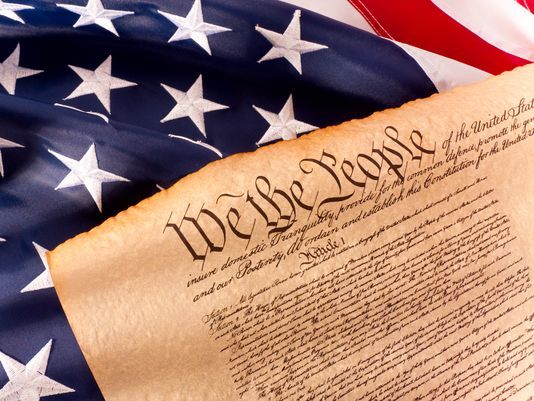
America is founded on a government with power that comes from the consent of the people.

America is managed with belief in the rule of law, individual rights, a separation of powers to prevent tyranny, the equality of all people, and the right to vote for its leadership. Payne’s service in the FBI as an undercover agent shows how a minority of Americans violate these founding principles. Payne’s story reminds one of what many Americans think they are and should be. He, like most Americans, comes from the middle-class, finishes high school and grows into adulthood. He chooses to go to college, has found God to be important in his life, gets married, has children, and gets on with life. He comes across as an “everyman” American; although at 6′ 4″, he is taller and more athletic than most. He chooses to become a policeman and is later hired by the FBI.

Texas Motorcycle Club’ Patches.

Payne chooses to become an undercover agent for the FBI and becomes acquainted with a motorcycle group in Texas that is being investigated. Payne spends many months to ingratiate himself to the group and eventually becomes a member of the Outlaws, one of the “Big Four” clubs in America. This particular chapter deals in stolen goods and drugs. Payne’s entry as an undercover agent was in the stolen vehicles business with the intent of becoming undercover in their drug business. What is made clear in Payne’s story is how dangerous the drug business is and how he is nearly killed when a body search is conducted in a dark basement.

The personal stress of an undercover agent is made clear in Payne’s story.

Payne’s belief in God, FBI support, and his wife’s commitment to their marriage save him from a mental breakdown. After arrests of the biker gang members that were breaking the law in Texas, Payne moves on to an undercover assignment in Tennessee to infiltrate a white supremacist group. Like Germany’s Nazi movement, white supremacy in America is a sore that never heals and can grow to threaten a country’s life. The disgusting delusion that “all people are not equal” penetrates society like a contagious disease. Payne shows how white supremacists recruit and train followers that infect society. Humans have a desire to become a part of something greater than themselves. Sadly, that desire works for and against the American ideal of freedom.

Payne’s story makes one proud to be an American because of his bravery and willingness to risk his life for what is good about being in the land of the free.

BRUTALITY

What is so troubling about Grandin’s history is what appears to be the nature of human beings whether royalist, capitalist, socialist, or communist.

Books of Interest
 Website: chetyarbrough.blog

America, América (A New History of the New World)

Author: Greg Grandin

Narrated By:  Holter Graham

Greg Grandin (Author, American historian, professor of history at Yale University.)

Before Professor Grandin, most Americans presumed the United States came from the traditions of the British empire. After reading/listening to America, América, one recognizes the powerful influence of the Spanish empire on the settlement of North America, the attitude of colonists toward minorities, the growth of slavery, and the deep entanglement of Spain in the broader Americas. America, América is a book that widens one’s understanding of the history of the United States.

When being reminded of the many atrocities of colonization and the decimated indigenous natives of the Americas, one is appalled by man’s inhumanity to man. Grandin begins his history of colonization with the Spanish empires’ expansion into the Americas long before the Mayflower expedition to America. Conquistadors set the table for the way what became Americans way to colonize the New England territory. Hernán Cortés and Francisco Pizarro led expeditions that decimated the Aztecs in Mexico and the Incas in Peru. Looking for wealth Spanish conquistadors murdered, raped, and pillaged Latin American native populations. The conquistadors exemplified what became the modus vivendi of British colonists in America. Indigenous peoples were forced to work for Spanish landlords, later supplemented by imported African slaves. The atrocities of Spain in the 16th century are repeated by English settlers in the 17th and later centuries. An estimated 80% of the indigenous people of the Americas perished from disease, forced labor, and ethnic cleansing by Spanish settlers–a grim reminder of American settlers did to indigenous natives in America.

What is so troubling about Grandin’s history is what appears to be the nature of human beings whether royalist, capitalist, socialist, or communist. America, América shows the founding of the United States is a repeat of Spain’s early colonization of the southern part of North America. The human race appears driven by the desire for money, power, and prestige in a system that begins with attack on indigenous peoples and repeats as a perceived advance of civilization. There is some truth in that perception but one realizes indigenous peoples are equally driven and commit human atrocities among themselves in pursuit of value, power, and, or prestige.

This book is returned before completion because of its length. Its history is enlightening but its length is too much for this dilettante.

ABSOLUTION

History of the world has shown all forms of government are “equal opportunity” inhibitors, if not destroyers.

Books of Interest
 Website: chetyarbrough.blog

Secondhand Time (The Last of the Soviets)

By: Svetlana Alexievich

Narrated By: Amanda Carlin, Mark Bramhall, Cassandra Campbell & 8 more.

Svetlana Alexievich (Author, Belarusian investigative journalist, winner of the Nobel Prize in Literature in 2015.)

Svetlana Alexievich’s “Secondhand Time” is a remarkable and informative explanation of why Putin believes he is right and why many citizens of Russia seem to continue in their support of his administration.

Map of the former U.S.S.R.

Alexievich conducts a series of interviews with Russian citizens of different generations about the U.S.S.R. and its return to the world stage as a Russian nation. The narrators of her book recite those interviews to give listener/readers a complex and enlightening picture of Russian culture. The clash of communist and capitalist ideals is at the foundation of the interviews and the narrators dramatically told stories.

The Russian Soviet Army is the first to arrive in the Battle of Berlin on April 16, 1945. Their flag was hoisted on May 1, 1945.

The citizens of Russia are justifiably proud of their role in WWII that turned the tide of Germany’s war of aggression. (Of course, that is putting aside Stalin’s Machiavellian decision to join Hitler at the beginning of the war.) Some Russian soldiers who fought in that war were disgusted with what they feel was a betrayal by Mikhail Gorbachev of communist ideals for which they lived and died for in the 20th century.

The rejection of communist ideals for capitalism is viewed by some Russians as a tyranny of greed that lays waste to the poor and creates a class of haves and have-nots.

Some Russian veterans of WWII see the seduction of capitalism destroying the ideal of a classless society. Some citizens see the ideal of a government is to demand the wealth of life be spread equally according to individual need. To these believers, enforcement of communist ideals would eliminate private property and greed that would create a classless society. Some believed Stalin exemplified leadership that would achieve that ideal. The hardship of life during Stalin’s rule is considered by some as justified means for the achievement of the Marxist ideal of communism.

Statue of the “Circle of Life” in Norway.

Cultures may be different, but all human life is the same.

The underlying point of these interviews is to show Russian culture is not monolithic, just as culture is not in any nation. All cultures are filled with diversity. There is no singular cultural mind but a range of interests among many factions that establish a nation’s culture. The evidence of that is the contrast of Gorbachev and Putin in Russia and FDR and Trump in America. All four leaders led their countries but represent completely different cultural beliefs.
Conservatives, New York Governor Al Smith, Southern Democrats, and isolationists like Charles Beard opposed FDR in America. Putin and Trump have their cultural supporters in today’s national governments, but they also have their critics. The difference is that in Putin’s world, being killed or put in prison for opposition is culturally acceptable. In America, one is reminded of Trump’s deportation and imprisonment of migrants without due process.

The author’s interviews are not suggesting that either Russia or the West have good or bad governments but that every culture tests their leaders.

Many Russians, undoubtedly blame American Democracy for the dismantling of the U.S.S.R. Alexievich interviews Russians who believe the hardship that countries within the U.S.S.R. experienced were not the fault of Stalinist policies but the failure of citizens to live up to the ideals of communism. To anyone who has traveled to the Baltics, that opinion is founded on ignorance of the hostility expressed by citizens of the Baltics who were starved, displaced, jailed, and murdered during their occupation by Russia.

The other part of the story is the rise of the oligarchs in Russia as a result of the greed associated with capitalism.

The gap between rich and poor is accelerated in Russia just as it has been in America. Democracy does not have clean hands when it comes to equality of opportunity. Like the Jewish pogroms in Russia, America’s enslavement, murder, and discrimination of Blacks is proven history.

Siberian Exile during Stalin’s reign in Russia.

Alexievich draws from all sides of Russian beliefs. Those interviewed note the terrible conditions of those exiled to Siberia. Many Russians became disillusioned by the redistribution of wealth and privilege after Gorbachev and Yeltsin showed themselves to not be up to the task of leadership change. In fairness, one wonders who could have been up to the task when Russia had a long history of monarchal and tyrannical leadership?

A few Russians became immensely wealthy while the majority were somewhat better off but some struggled with the loss of State benefits and fewer jobs. The rising gap between rich and poor soured communist idealists. Even those who had been sent to Siberia by Stalin who toiled and suffered the experience of isolation, slave labor, and frigid weather felt they were no better off because of the loss of a socialist future.

The frightening truth of Alexievich’s book about the culture of Russia is that Putin may be absolved for his atrocities just as leaders of America have been absolved for their mistakes. History of the world has shown all forms of government are “equal opportunity” inhibitors, if not destroyers.

HUMAN

What is the value of high IQ? If everyone was smarter, would they be happier? It seems the only real value of genetics is in the prevention of known diseases, not in improvement of IQs or creation of a perfect human being (whatever that is).

Books of Interest
 Website: chetyarbrough.blog

The Social Genome: The New Science of Nature and Nurture

By: Dalton Conley

Narrated By: Christopher Douyard

Dalton Clark Conley (Author, Princeton University professor, American sociologist.)

Dalton Conley offers a complex explanation of why one child intellectually and financially excels while others are left behind. The “Social Genome” is an attempt to explain the complexity and inadequacy of genetic research. Not too surprisingly, there seems a correlation between wealth and intellectual development, but its relationship includes familial and environmental nurturing in ways that are too complex for today’s science to measure.

FAMOUS WOMEN IN HISTORY (Many women are as intellectually strong and mentally tough as men, e.g.  Cleopatra, Sojourner Truth, Indira Gandhi, Golda Meir, Benazir Bhutto, Malala Yousafzai, and others.)

Dalton argues both genetics and environment shape human intellect and economic success. However, science’s current knowledge of genetic and environmental impact is not clearly understood in a way to aid human development. The current limitations of science make it impossible to determine the precise genetic and environmental factors that shape human development. Dalton offers many examples of how genetics and environment are relevant to human development, but neither are precisely measurable nor manageable.

The idea of clearly understanding the genetic and environmental causes of who humans become is a bit frightening.

Even if it were possible to achieve precise measurement of genetic and environmental influences, should that knowledge be used to create designer human beings?

Piketty argues that the income gap widens after World War II.  He estimates 60% of 2010’s wealth is held by less than 1% of the population. 

Dalton does believe there is a correlation between economic well-being and IQ, but the correlation is affected by genetic inheritance. Dalton concludes economic well-being is a positive factor in IQ improvement. That raises questions about how one can improve the economic well-being of a society to improve IQ. Dalton infers there is no one size fits all solution for IQ improvement. Nurture and nature are too intimately intertwined to know how IQ of a society can be improved. A conclusion one may draw is that environmental and societal factors like human nutrition, general education and improved equal opportunity can mitigate IQ diminishment. Whether one should modify human genomes is a step too far.

In many ways, this is a frustrating book to listen to or read.

If all people looked more alike than different would there be less conflict in the world? No, but being of one race or another makes a difference in one’s opportunities in the world. What is the value of high IQ? If everyone was smarter, would they be happier? It seems the only real value of genetics is in the prevention of known diseases, not in improvement of IQs or creation of a perfect human being (whatever that is).

PAST & PRESENT

Only with education and understanding of the past can society or the individual change their future.

Books of Interest
 Website: chetyarbrough.blog

Cowboy Apocalypse (Religion and the Myth of the Vigilante Messiah)

By: Rachel Wagner

Narrated by: Dina Pearlman

Rachel Wagner (Author, professor of religion and philosophy at Ithaca College in Ithaca New York.)

Rachel Wagner has written a highly personal book about American gun culture that will resonate with some and appall others. As an academic philosopher and professor of religion, Wagner analyzes gun violence and sexism and how belief in “might makes right” is deeply ingrained in American character.

There are so many stories of death and injury from gun violence in America that one becomes numbed by Wagner’s apocalyptic story.

We were living in Las Vegas when 59 people were killed, and 527 were injured by one gunman in a hotel room less than 3 miles from our home. When one looks at statistics of children murdered in school rooms since 2010, a solution for gun violence should be urgent, but it appears not.

Rise in school shootings between 2010 and 2o19.

Wagner argues gun violence in the U.S. is viewed by much of the public as a belief in the myth of the “good guy with a gun” that is embedded in the history of America and reinforced by fictional stories, books, television, and the movies. She argues detective fiction like “The Big Sleep”, TV series like “Have Gun Will Travel”, and movies like “Die Hard” have lone heroes who defeat dastardly villains.

Think Alan Ladd in “Shane” or John Wayne in any of his westerns, and one believes gun-toting man-gods keep the world safe.

Wagner shows how malleable society is and why the gun lobby is rewarded and sustained by the myth of the “good guy with a gun”. Wagner argues gun-toting Americans have become gods in their own mind. What they really are is examples to potential killers of school children and unsuspecting tourists.

Wagner believes American gun obsession has wheedled its way into a religious narrative based on Christian apocalypticism and romanticization of American history. She notes the myths of armed vigilantes who are seen as saviors who can reset society when it goes astray. This myth seeps into American cultural shibboleths of white supremacy and patriarchal dominance that pervade video games, movies, and novels.

Wagner argues sexual and racial inequality are exacerbated by America’s gun culture. Wagner notes an experience in her personal life and her education in religion show how “might makes right” has been, and still is, a danger to society.

Wagner argues America needs to look in the mirror and quit glorifying firearms and vigilante justice. She suggests the January 6th attack on the capitol shows how widespread belief in vigilante justice is in America.

January 6, 2021, insurrection when a mob of supporters of then-President Trump stormed the U.S. Capitol.

The philosophical and religious beliefs of the author are made clear in her final chapters. Only with education and understanding of the past can society or the individual change their future.

MODERATION

Unless homelessness is addressed with affordable housing, America’s future looks bleak. A land of have and have-nots will grow to crush American prosperity.

Books of Interest
 Website: chetyarbrough.blog

Abundance 

By: Ezra Klein, Derek Thompson

Narrated by: The Authors

These two young Americans offer an insightful view of politics and American government in the 21st century.

Klein or Thompson could have voted for either Trump or Harris in America’s last election. Their book argues American government is both a boon and bane for citizen “Abundance” in the 21st century. They note America has contradictory economic policies that have created great abundance among Americans while exacerbating inequality. Evidence for their opinion is growing homelessness, an immigration crisis, loss of manufacturing jobs, and government’s failure to creatively adjust public policies to provide solutions.

Those who have shared in the abundance of America have voted for candidates to preserve their privileges.

The authors note homelessness is a function of affordable housing that is denied by government policies that regulate zoning and construction requirements. Government policies make affordable housing too costly to build and impossible to locate because of zoning restrictions. The number of people living on the street is a self-inflicted American tragedy. Some of the homeless are young, some are old, some have mental or physical problems, and others are victims of drugs or their own weaknesses. What they have in common is unaffordable housing.

Historically, immigration has been a great boon to American economic growth.

Klien and Thompson note restrictive immigration policies have created obstacles for workers needed for manufacturing in key industries like agriculture, auto industry assembly, housing construction, and clean energy infrastructure. Rather than wasting money on building walls and deporting workers, the authors advocate immigration reform that meets the needs of American business. One can imply the authors meaning is that to “Make America Great Again” requires immigrants willing to work in agricultural and manufacturing jobs. The end of the baby boom requires help from immigrants to meet the needs of increased manufacturing and construction in the United States.

Some believe what Trump is doing is good for the American economy in the long run.

The criticism is that in the short run, the economy may collapse. Tariffs being used as a ham-fisted way of negotiating fair international trade is a fool’s errand. America needs labor and material in the short run to achieve equal and greater prosperity than it had in the 1970s. Added manufacturing will aid American prosperity, but it will be surpassed in the long run by automation. It is the automation race America needs to win or compete with to remain a world leader. Competing in that race depends on education, and scientific research. The irony is that Trump is firing government employees who have responsibility for public education, research, and funding that have been the engines of America’s prosperity.

The government employees discharged by the Trump administration to solely reduce costs is short sighted.

In the 1980s, 60% of basic research in the U.S. was funded by the government. In 2022 that funding dropped to 40%. Advances in semiconductors, global positions systems, biotechnology, and aeronautics were government-funded discoveries in the 1980s. American government-funded scientific research gave America the internet, GPS technology, mass production of penicillin, Space exploration, human genome project discoveries, and renewable energy innovations. The Department of Health and Human Services has lost 20,000 employees, the Department of Education 1,300, the National Oceanic and Atmospheric Administration 800, and the National Institutes of Health 1,200. One wonders how many of these employees may have been on the edge of scientific discoveries that could change the world.

The truth of “Abundance” is that America has caused many negative ecological impacts and aggravated the gap between rich and poor.

Klein and Thompson have written a provocative book. However, the truth of “Abundance” in America has caused many negative ecological impacts and aggravated the gap between rich and poor. Looking only to abundance does not address either social inequality or the environment. The NIMBY (not in my back yard) resistance to affordable housing aggravates inequality and increases homelessness. Unquestionably, higher density housing impacts the environment.

Klein and Thompson fail to address the increased power of corporations in America.

The 2010 Citizens United v. Federal Election Commission gave corporations the power to spend unlimited amounts of money on political campaigns. The influence of corporations on elections has disproportionate power in the election of government policy makers. That decision by the Court is a distortion of one person, one voter’s influence on public policy.

Aristotle emphasized the importance of “All things in moderation”. NIMBY communities must open their minds and hearts to homelessness and moderate their resistance to neighborhood accommodation. Government agencies must supervise and service higher density housing impacts wherever they are built and after they are completed.

Unless homelessness is addressed with affordable housing, America’s future looks bleak. A land of have and have-nots will grow to crush American prosperity.

LIFE’S LOTTERY

The randomness of life and what we make of it is the most important theme of Weston’s insightful memoir about being “Alive”.

Books of Interest
 Website: chetyarbrough.blog

Alive (The Richness and Brevity of Existence)

By: Gabriel Weston

Narrated By: Gabriel Weston

Gabriel Weston (Author, English surgeon, television presenter.)

Gabriel Weston’s “Alive” is an intimate, blunt, and enlightening explanation of her experience as a woman, surgeon, mother, and member of the human race. For some, Weston’s story contains more information than one is prepared to take.

It begins with a self-effacing assessment of her early education in liberal arts where she achieved an MA in English. However, she decides to go to medical school in London where she qualifies as a physician in 2000. Her very personal memoir explains a great deal about being educated as a physician but more about being a woman.

Some reader/listeners will be put off by Weston’s blunt explanation of the human body. However, some will find much of what she writes as revelatory.

Weston explains what it means to be human and a woman who becomes a mother of twins at the age of forty, with two younger children.

It is hard to imagine a younger person who is uninterested in science, technology, engineering, or math, who receives an MA in English, would be interested in becoming a surgeon.

However, Weston chooses to become a doctor and graduates from a London medical school in 2000. She briefly explains her journey in “Alive” by reflecting on her classes in body dissection to explain the details of the human body and differences in sexual anatomy. Some will choose to leave her story, but others (if they stick with it) will be enlightened and surprised by her observations and opinions.

Weston notes the equivalent of the male penis is a woman’s clitoris. This is an interesting observation that most would be unlikely to publicly discuss or write about.

Presumably, Weston is making this point to show there is a great deal of similarity between men and women. However, she notes a significant difference. Menstruation is a sluffing process where the uterus sheds a layer of bedding material that exits the body through the vagina, i.e., something unique to women. The purpose of menstruation is to prepare the body for possible pregnancy by providing a thickening to the uterus that supports fertilization. That thickening is removed (sluffed off) approximately once per month. As is often noted, only women give birth, a singular difference between the sexes.

Weston goes on to explain her experience of birthing twins.

The two girls come late in her adult life. They are delivered in a caesarian operation. Children are born in amniotic sacs. This is likely a surprise to most men because birth of a baby is thought of as a delivery with a squirming body through the birth canal rather than a body within an amniotic sac. However, Weston notes the second twin is delivered within its amniotic sac which suggests she is a fraternal, rather than identical twin.

Syria’s use of nerve gas to murder their own citizens.

Weston’s story moderates in future chapters with notes about nerve gases used by governments to suffocate their own people as well as perceived foreign enemies. The point she makes is that oxygen deprivation in the 21st century and beyond is increasing with rising pollution on earth. She notes oxygen deprivation is the same suffocation caused when governments used lethal gases to kill their own citizens as perceived enemies. The obvious inference is today’s denial of earth’s environmental degradation risks the lives of all oxygen dependent lives.

Weston is an example of a working mother who succeeds in England despite the world’s history of misogyny.

Some women become a success despite the many obstacles they face. Weston symbolizes human grit and determination in the face of sexual inequality of opportunity but, as a human being, she is subject to the physical limitations of every life. She mentions during the course of her story a heart murmur that is caused by a defective heart valve. The last chapters of her book explain Weston is on a transplant list.

The randomness of life and what we make of it is the most important theme of Weston’s insightful memoir about being “Alive”.

BLACK & WHITE

One wonders if Abdulrazak Gurnah is proffering an opinion about race relations in the world or just leaving a lifeline for those disappointed by relationship failures.

Books of Interest
 Website: chetyarbrough.blog

Admiring Silence 

By: Abdulerazak Gurnah

Narrated By: Unnamed person from Zanzibar

Abdulerazak Gurnah (Author, Tanzanian-born British novelist and academic, moved to the UK in 1960.)

A little context for “Admiring Silence” will help understand Abdulerazak Gurnah’s interesting and troubling story. Gurnah received the Nobel Prize in Literature in 2021. “Admiring Silence” is the latest book published by Gurnah in 2020. He had written four earlier books: Memory of Departure (1987), Paradise (1994), By the Sea (2001), and Desertion (2005).

“Admiring Silence” is not a biography but an interesting story about a long-term relationship of a Black emigrant and a white woman who meet in Zanzibar (an island archipelago off the coast of Tanzania) and move to London. The two had met in a Zanzibar’ restaurant where they both worked. The Black emigrant leaves his native country with his restaurant mate.

Gurnah describes the two as lovers who are struggling restaurant workers who wish to improve their lives through higher education. An opportunity to attend a university leads the two to decide to emigrate to London because of their similar academic ambition. The two are enrolled at a university and both become teachers in England. Gurnah sets a table for understanding what life is like for an unwed mixed-race couple in mid-twentieth century England.

Their life together is complicated by the birth of a daughter and the father’s decision to visit his homeland when he is in his forties.

No one in Zanzibar knows he has a teenage daughter with an unmarried white woman he lives with in England. His mother wishes to fix him up with a future Black Muslim wife. The interest one has grows with the circumstances of Gurnah’s imaginative story.

  • What is it like to be in a racially mixed marriage in 1960s England?
  • How does a mixed-race child feel about her life in a predominantly white country?
  • What does a Black family think about their son having a mixed-race family?
  • Having lived together for 20 years and had a child, why haven’t they married?
  • How does the relationship between different races affect the feelings of a couple that chooses not to marry but have a child born to them?
  • Is Gurnah’s story representative enough to give one the answers?

The first question is largely unanswered. The last question is impossible to answer but the other four imply Gurnah’s opinion. Marriage is always a work in progress whether it is of a mixed-race couple or not. However, there is a distinction based on race when it comes to a man’s and woman’s personal relationship because of the dimension of racism. Every couple chooses to work through differences and become more or less committed to staying together but two people of different races face discrimination associated with racism, unequal treatment, and economic inequality existing in a country’s dominant racial profile.

Gurnah does not address how a mixed-race child deals with life in a predominantly white country, but one can imagine it depends in part on how distinctive a difference is in the color of their skin in relation to the dominate racial profile.

In terms of the daughter’s relationship with her parents, one presumes it is likely the same parent/child conflicts of all families. Some fathers are more distant than others just as some mothers range from helicopter to equally distant parents.

That these two lovers who have been together for so long without getting married, after their daughter is born, seems like a flashing yellow light, a cautionary notice of something is about to change.

When the father’s mother writes from Zanzibar to have him visit after being away for so long, flashes a yellow light that eventually turns red. He returns for a visit to Zanzibar at the encouragement of his partner. The partner’s encouragement seems disingenuous, i.e. more like a desire for a relationship break than a supportive gesture. The last chapters confirm that suspicion. A break-up occurs soon after the father returns. There is a brief father/daughter reconciliation, but the daughter also decides to separate from her father.

An interesting point is made by Gurnah about a Muslim Black person leaving a poverty-stricken country of his birth to a country of wealth and a different culture.

It is the wish of his Zanzibar’ family for the father to return to help with the disarray and economic disparity of his home country; as well as marry a local Black Muslim girl who wishes to become a doctor. The presumption is that if one leaves their poor country to become prosperous in a wealthy country, they have some magical power to help their poverty-stricken home-countries. It is of little concern to the family about his committed relationship to another but more about what his life is like in his newly adopted country and what he can offer to his homeland from what he has learned. The Muslim girl the mother wishes him to marry is twenty years old. Her son is in his 40s. Tt appears the primary reason for such a marriage is to help the young woman become a doctor. In the end, the son recognizes this is not practical but clearly understandable considering the poverty in Zanzibar.

Gurnah cleverly injects a conversation with a Nigerian Muslim woman on his plane ride back to London before his white lover’s rejection of their relationship.

The Nigerian woman has been divorced from her English husband for several years. It was an emotionally difficult divorce for her. A mix-up on a missing passport allows the father to find contact information for the divorcee. One wonders if Gurnah is proffering an opinion about race relations in the world or just leaving a lifeline for those disappointed by relationship failures.

.

THE WHITE HEGEMON

Muslim Palestinians, like the Indians of America and the Jews of Israel, believe they have the same rights to the lands of their ancestors. In history, that seems to have never been true for any indigenous or displaced culture.

Books of Interest
 Website: chetyarbrough.blog

One Day, Everyone Will Have Always Been Against This 

By: Omar El Akkad

Narrated By: Omar El Akkad

Omar El Akkad (Author, lives in Oregon, winner of the 2021 Giller Prize. Became a Egyptian Canadian citizen and now lives in Oregon.)

Omar El Akkad expresses the frustration of being an American citizen of an ethnicity and race that has little power as a minority in today’s world. He writes of life being out of one’s control. Akkad’s story is partly about his family’s life as they leave Egypt for Canada, and then America. However, his primary purpose is to write of the atrocity of the Palestinian/Israeli war. On the one hand it is a terrifying example of the domestic trials of his father and family in moving from Egypt to America. On the other, it is a heartbreaking review of slaughtered innocents in Gaza.

Ironically, the phrase “from God’s mouth to our ears” comes from a Jewish and Arabic religious expression.

Contrary to Omar El Akkad’s book title, the history of white society suggests the belief that “One Day Everyone Will Have Always Been Against This” will likely never come. The title of Akkad’s book is about how leadership in America and Israel has failed. As Lord Acton said in the 19th century “Power tends to corrupt, and absolute power corrupts absolutely”. President Trump, former President Biden, and Benjamin Netanyahu are proving Acton’s observation.

Social and cultural differences have always roiled world history.

Jews believe they have the right to live in peace in Israel because of their culture and the history of their settlement in the land of their forefathers. Muslim Palestinians, like the Indians of America and the Jews of Israel, believe they have the same rights to the lands of their ancestors. In history, that seems to have never been true for any indigenous or displaced culture.

The slaughter of Indians, enslavement of minorities by white America, and the slaughter of innocent Muslims by Netanyahu and his followers are all reprehensible examples of the misuse of government power. This is not to say Hamas is not guilty of crimes against humanity, but their evil acts do not warrant evil reactions. The power of Israel is being used for evil, not the return of peace.

Netanyahu’s refusal to settle with Hamas over unjustly murdered, imprisoned, and abused hostages does not justify the killing of Palestinian innocents in Gaza. The power of Netanyahu’s military actions and Trump’s support for taking Gaza land from the Palestinians is evil and unjust. That evil and injustice must be replaced with a negotiated settlement that releases Hamas’ hostages and returns Gaza to the Palestinian people. Humanity cannot wait until “…Everyone Will Have Always Been Against This”. Power lies in the hands of Israel’s leaders to negotiate a settlement.

The common denominator of the war in Gaza is the power being held by white people who refuse to believe all human beings are equal. It is partly a religious issue, but it is a human issue aggravated by religious difference and the self-interests of people of different races and cultures. The white world hegemon needs to come to its senses because at some point in the future, “being white” will not be where the power rests. Power will shift to other races and cultures just as Mesopotamians, Egyptians, Mongols, Chinese Dynasties, and Islamic Caliphates once changed the course of history.

Omar El Akkad pleads for peace and human equality in One Day, Everyone Will Have Always Been Against This. From El Akkad’s words, the white hegemon should hear and obey.

SEXUAL INEQUALITY

Emily Witt illustrates how undesirable sexual inequality is for the future of American society. Witt explains events in her life that have led her to become a successful author. Witt’s life experiences are like the events in every human’s life but without the unfair burden of sexual inequality.

Books of Interest
 Website: chetyarbrough.blog

Health and Safety (A Breakdown)

By: Emily Witt

Narrated By: Emily Witt

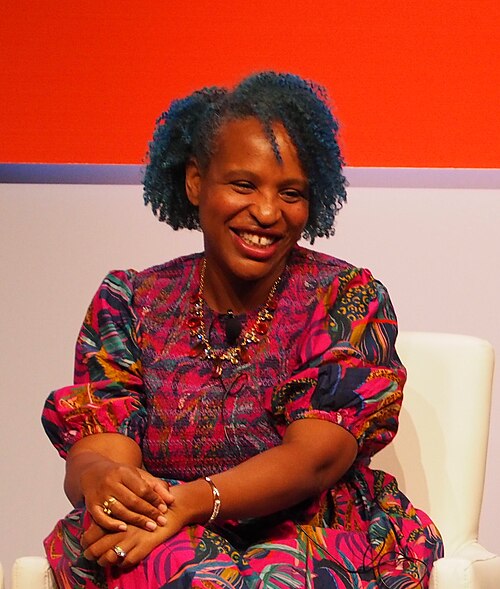
Emily Witt (Author, investigative journalist based in Brooklyn, worked as a staff writer for The New Yorker.)

Emily Witt is born two generations after this reviewer’s youth. It is a refreshing look at the great changes and similarities between my generation and Ms. Witt’s. The big difference is Ms. Witt is an attractive woman, not a man. Her life, in many ways, is unlike women of past generations but similar to men of my generation. She writes of her life, of experimenting with drugs, being in and out of serious and not-so-serious sexual relationships and striving for success in today’s America.

Witt is representative of societal change in America.

On the one hand she shows the independence and growing equality of the sexes. Liberated from the stereotypes of women as bearers of children and keepers of home and hearth, Witt’s story is like what American men’s lives were two generations ago. Her life today reminds one of a man’s life in the 1960s. She shows an understanding of the difference between love and sex but seems neither consumed nor controlled by either sex or love’s existence. She chooses her own path in life. There is strength and weakness in her character just as there is in all human beings.

The other side of her story is the consequence of sexual equality and its impact on culture.

In women’s liberation something is gained and lost. The gain is in women’s opportunity. It is time for men to step up and take equal responsibility for family comity, stability, and growth. One who did not come from an Ozzie and Harriet family but from a single parent family sees the strength of liberation of women but wonders what is lost by children raised by single parents in America. Do children become more or less dependent on others as a result of being raised by a single parent? In some ways they become more independent but in others they become socially isolated and culturally inept. That social isolation and ineptness has future consequences for children of single parent homes. Women are rightfully liberated from being the sole responsible parent for children’s care, but fathers are failing to pick up the slack.

Though juvenile delinquency is shown to have decreased in America, the education and success of children begins at home. More responsibility must be taken by fathers for teaching societal values and behavior to children. By taking equal responsibility, fathers will reinvigorate American society. Without a reorientation of men’s lives in American families, i.e., acceptance of family responsibility and women’s equality, American democracy’s economic and social success will be diminished.

The current political environment in America is trying to return the economy and society to the twentieth century, a fool’s errand.

Witt illustrates how undesirable sexual inequality is for the future of American society. Witt explains events in her life that have led her to become a successful author. Witt’s life experiences are like the events in every human’s life but without the unfair burden of sexual inequality.

Addendum: The most troubling part of Witt’s story is the feeling that her generation is failing American society by withdrawing into themselves with drugs to avoid dealing with the problems of the 21st century. Experimenting with drugs is one thing but using them to escape America’s problems is a disappointment to this aged survivor of the baby boom generation.