ANARCHY

In reading/listening to Chomsky some will conclude he is wrong about there ever being a nation-state that will be successfully governed as an Anarchy because of the nature of human beings.

Books of Interest
 Website: chetyarbrough.blog

On Anarchisn 

Author: Noam Chomsky, Nathan Schneider

Narrated By: Eric Jason Martin

When one thinks of a political system called Anarchism, the first thing that comes to mind is a vision of rampant disorganization where there is no sense of direction or social cohesion.

Noam Chomsky is a polarizing figure who is admired as an anti-capitalist and anti-imperialist who fiercely criticizes U.S. and Israeli foreign policy. He views Israel as a client state of the U.S. that relies on authoritarianism to manage their countries roles in the world. He notes America’s interventions in Vietnam, Central America, Iraq, and Afghanistan as evidence of America’s failure as a democracy. He views Israeli foreign policy in regard to Gaza as infected with hypocrisy and violence with a narrow view of territorial expansion. He feels both America and Israel are driven by strategic and economic interests, not by the idealism of democracy.

Chomsky is a fierce critic of capitalism and imperialism because both marginalize citizens’ freedom of thought and action.

Chomsky’s view is that anarcho-syndicalism is a better form of government where power is decentralized and citizens can and should collectively manage their own affairs through direct democracy and cooperative organizations. He argues for participatory democracy by voluntary associations that are freely formed into cooperative communities. There should be no centralized authority with all workplaces and production controlled by the workers themselves. He believes in libertarian socialism because he sees it as the most humane and rational extension of Enlightenment ideals in society. Any authority exercised by a government entity in a libertarian socialist country, in Chomsky’s opinion, is the most humane and rational extension of the ideals of the Enlightenment.

The Age of Enlightenment or sometimes called the Age of Reason was a movement in the late 17th century that extended into the 19th century.

It emphasized the power of reason, science, and individual liberty as the tools for the reform of society. The tools of reason, science, and liberty were believed to be the natural rights of humanity, and the possibility of improving society through education and reform based on science.

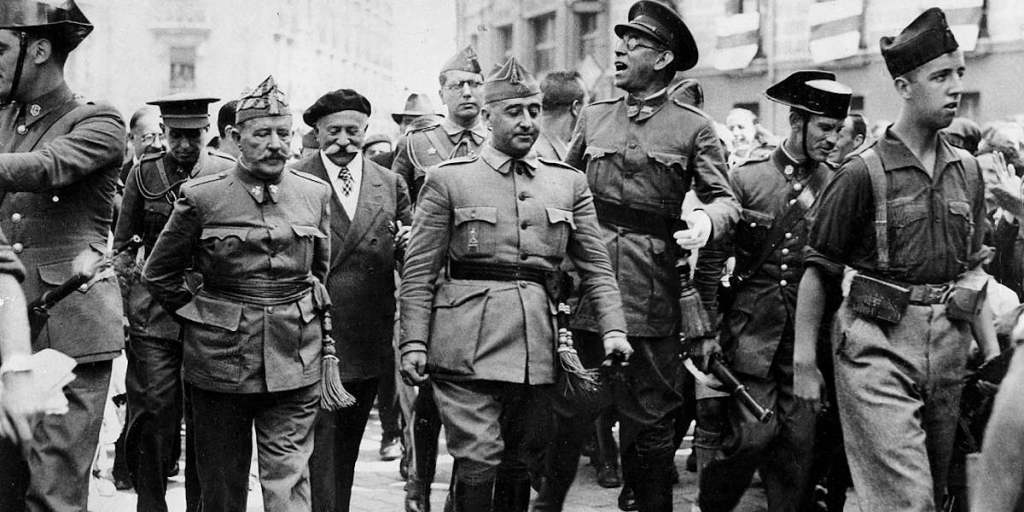
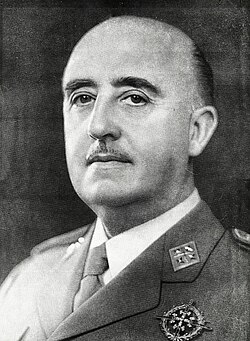
Francisco Franco (Spain’s dictator 1939-1975.)

Chomsky argues those tools were engaged by Spanish revolutionaries during Franco’s dictatorship in Spain. Chomsky notes workers took control of factories and farms in Catalonia and Aragon that were run collectively and democratically by workers. He believes voluntary cooperation thrived. He believes the anarchist movement grew through three generations based on education and considered organization of Spanish interest groups. However, Franco’s forces with the help of England, Germany, and Italy defeated the movement.

Republican factions fought against Franco’s government in the 1930s.

Chomsky believes revolutionaries against Franco were practical visionaries that showed how anarchy could be a legitimate and superior way of governing a nation.

Surprisingly, there are several examples besides Spain’s revolution that were collectivist organizations that could be classified as anarchies. From 1918-1921, the free territory of Ukraine was led by Nestor Makhno during Russia’s Civil War. It was ended by Russian communism after its ascension in 1917. Modern communes were set up in Mexico’s Zapatista territories with autonomous zones that had collective farming and indigenous self-rule. Of course, in ancient times there were hunter-gatherer societies that shared norms, and governance through consensus decision-making and resource sharing. However, there is a history of atrocity, failure, and disruption by governing bodies that have tried Anarchy. Spain’s effort fell apart in 1939. Freetown Christiania in Denmark, in a neighborhood in Copenhagen has struggled with Anarchy since 1971. A number of legal battles have been fought over commercial ownership and control. By some measures, the kibbutz movement in Israel has been successful. However, even Chomsky notes friction comes within kibbutz communities over disagreement with elected leaders. Research shows that some kibbutzim are privatizing and paying differential wages for communal services. Collectivism is becoming harder to maintain.

Chomsky is considered by some to be the most important intellectual alive today. He is highly respected for theories on the understanding of language based on modern cognitive science.

Chomsky has shaped how we think of human capabilities. He is famous for his dissents which are naturally about government control and media manipulation. He was against the Vietnam war and opposed Israeli occupation because of his libertarian socialism, a form of anarchy or a collective that is purely democratically determined. He is reported to be an excellent lecturer and capable of going toe to toe with experts in linguistics, philosophy, political science, and education. His opinions have global reach with translations in many languages.

In reading/listening to Chomsky some will conclude he is wrong about there ever being a nation-state that will be successfully governed as an Anarchy because of the nature of human beings. Whether one believes in Hobbes’ view of selfish humans, Rousseau’s belief in people being corrupted by society, Kant’s belief in rationality, or Sartre’s belief in human choices and actions, there will always be dominant personalities who will victimize those whom they commune. Human nature as defined by Hobbes, Rousseau, Kant, Sartre, and other brilliant philosophers infer there will always be miscreate leaders that will destroy egalitarianism, the foundational principle of anarchy. Human nature, as it exists today, is unlikely to change.

RELATIONSHIP EVOLUTION

Modern marriage expectation has become a way to provide security and freedom with stability and novelty. In Perel’s opinion, these paradoxical expectations were of less concern in the past but of central concern today.

Books of Interest
 Website: chetyarbrough.blog

The State of Affairs

Author: Esther Perel

Narrated By: Esther Perel

Esther Perel (Author, Belgian-American psychotherapist.)

Esther Perel has written a difficult book to listen to. It is about human relationship, focusing on love, desire, and sexual behavior. Perel begins with a history of the evolution of marriage in prosperous western nations. Though equality of women is far from accomplished, their entry into the postindustrial world is dramatically changing sexual relationships. The days of men treating women as objects is not over but gradually moving toward sexual equality.

Sexual inequality.

Normal human beings (whatever that means) experience some form of love or desire that elicits sexual behavior. Perel’s book is difficult because she holds a mirror up to every human being that exposes their inner failings as adults and maturing children. The difficulty comes from reviewing one’s own life when listening to her clinical analysis of infidelity, affairs, a victim-villain analysis, and sexual desire that permeates most human lives.

Traditional moral beliefs are zero-sum judgements of sexual desire and experience.

Perel tries to remove judgement by not saying infidelity is not a sin but a psychological and relational failing of human beings. She suggests infidelity is caused by unmet emotional needs, personal identity struggles, and/or a search for eternal vitality. This, in many ways, is no less devastating to one’s relationship even if it is characterized as a sin. Infidelity is a personal failure whether one is judged by a religious person or a psychotherapist who may not believe in divine judgement.

Perel believes humans are constantly seeking meaning in their lives.

We don’t just want to survive. Our cultures and histories have shaped us. We are erotic human beings, searching for security, vitality, imagination, and joy. Perel recognizes people can love their partners and still have a sexual desire for others. Recognizing the lure of sexual desire, Perel notes fidelity becomes a choice that offers an anchor and depth of understanding in a committed relationship. She notes betrayal has consequences while fidelity is a powerful container for sexual pleasure, if not love, and another kind of relationship growth.

Fundamentally, Perel is saying fidelity is important despite a marriage partner’s sexual desire for others.

She gives examples of therapeutic sessions of couples who have extramarital affairs that violate their presumptive marriage covenants. A betrayal can be by either partner, but the loss of trust is often irreparable. Because marriage has become less about economics and social stability, though both are still present, Perel infers married partners are emotionally more devastated by betrayal.

In modern times, Perel argues people marry for love, intimacy and personal growth more than economic security.

She suggests communal structures have weakened and community support is lost when a marriage falls apart. That rings true based on the mobility of people in the modern age. It has become much more common for people to leave the areas in which they were raised. Modern marriage expectation has become a way to provide security and freedom with stability and novelty. In Perel’s opinion, these paradoxical expectations were of less concern in the past but of central concern today.

This listener is inclined to have reservations about Perel’s assessment of present-day marriage and infidelity because of women’s inequality of opportunity, i.e., the same reality that exists for many in America.

AMERICAN LIFE

Governmental and educational institutions are the foundations of Democracy. They must stand and support the right to free speech without committing, allowing, or condoning violence in the exercise of that right. (Of course, this is easy to say but difficult to follow because of the loss of emotional control by protectors of the public and/or protesters.)

Books of Interest
 Website: chetyarbrough.blog

The Coddling of the American Mind (How Good Intentions and Bad Ideas are Setting Up a Generation for Failure)

Author: Jonathan Haidt, Greg Lukianoff

Narrated By: Jonathan Haidt

This is an interesting book written by a social psychologist and a free speech advocate. The authors suggest the focus for parents of Generation Z have, in some ways, become overly protective of their children. They argue– Gen Z’ parents are not addressing the mental health issues caused by this technological age. Jonathan Haidt and Greg Lukianoff argue society has become more attuned to children’s protection than the reality of living in a world of diversity.

With the societal change that has accompanied the birth and maturation of Generation Z, immersive tech like AR and VR, along with AI and smart devices, is having profound effects on society.

Haidt and Lukianoff suggest parents focus too much on keeping their children safe to the point of stifling their intellectual growth. The example they give is of the mother who is publicly ridiculed for allowing her 8-year-old son to find his way back home from a city market by mass transit. She prepares him for the excursion with a transit schedule, pocket money, a cell phone, and general information he needs to find his way home. The boy successfully finds his way home and allegedly expresses happiness about what he views as an adventure and accomplishment.

Undoubtedly, there is some truth to the authors’ suggestion that parents are too protective of their children. Thinking of a single mother who has to work but has children at home. Many single parents cannot afford a babysitter, so leaving their children during the day is not uncommon. Single parent families do the best they can but if children are old enough to fill a cereal bowl for breakfast, they are expected to take care of themselves.

John Walsh (Became a child protection advocate, producer, and actor after the murder of his son.)

On the other hand, the writers note the horrible tragedy of John Walsh who’s six-year-old son is kidnapped in 1981. The six-year-old is found two weeks later with a severed head. Though child kidnappings rarely end in such a horrific way, one can understand why many parents became highly protective of their children after the 1980s. Haidt and Lukianoff acknowledge the horrific murder of Walsh’s son, but history shows unsupervised children that are harmed is much less than 1 percent of the dependent children population. What the authors suggest is that some of the overprotection of children since the Walsh tragedy in 1981 has been counterproductive.

Allergy immunity.

As an example of over protection, the authors suggest peanut butter allergies have risen because of inordinate fear by the public. They suggest that early life exposure to peanuts would have provided immunity and fear of exposure is the proximate cause for today’s rise in allergic reactions. Putting aside the theory of a human body’s creation of developing an allergy immunity, the frustration one has with monitoring a child’s life experience is in knowing where to draw the line between reasonable supervision and overprotectiveness.

The authors infer the widespread rise in stress, anxiety, and depression in America is partly due to overprotectiveness.

Undoubtedly suppression of free inquiry and play diminishes the potential of a child’s development. Haidt and Lukianoff argue overprotection has contributed to a rising anxiety and depression in Generation Z and society in general. The authors cite national surveys that show increased rates of anxiety, depression, and self-harm. They note hospitalization and suicide rates are increasing based on self-inflicted injuries among teens with sharper rises among females. They note colleges and universities are reporting higher demand for mental health services.

Whether stress, anxiety, and depression are because of over protection remains a question in this listener’s mind. One suspects that children are cared for in too many different ways for research to conclude that stress, anxiety, and depression increases due to overprotection. It is more likely due to parental inattention because of work that takes them away from home and personal fulfillment in their own lives which are only partly satisfied by being parents.

Rather than parental overprotection, it seems intensified social media and smartphone use accelerates stress, anxiety, and depression in children and society in general.

Constant connectivity, online comparison, and cyberbullying are having outsized effects on emotional stability. The authors suggest overprotective parenting compounds the negative consequence of connectivity by depriving children of experience that can build their resistance to anxiety and depression. That may be partly true but not the whole story. Smart phone screen addiction takes one away from day-to-day real-life experience. The idea being that experiencing life’s failures and successes builds resistance to anxiety and depression whereas smart screens are pictures of life not lived by the person who is looking at them. Smart phones open the Pandora’s box of judgement which can either inflate or deflate one’s sense of themselves.

A large part of Haidt’s and Lukianoff’s book addresses the public confrontations occurring on campuses and the streets of America that are becoming violent demonstrations rather than expressions of opinion.

They suggest street demonstrations can be used constructively if participants would commit themselves to open dialogue and diverse viewpoints. Participants need to be taught cognitive behavioral techniques that can mitigate emotional reactions while building on psychological resilience. Rather than reacting emotionally to what one disagrees with, participants should focus on diverse viewpoints that allow for disagreement but do not become physical conflicts. We are all an “us”, i.e. not an “us and them’. Confrontation can be the difference between a white supremacist plowing into a crowd in Charleston, South Carolina and non-violent protest by leaders like Martin Luther King Jr. or Václav Havel. People like President Trump see the world as “us vs them” rather than one “blue marble” hoping to find another that can support human civilization.

Peaceful protests are an opportunity to understand human diversity without losing one’s humanity. Race, creed, and ethnicity are who we are and what we believe. Protesters should not be used as an excuse for violence but for understanding. Of course, this is a big ask which is too often unachievable.

The authors believe humanity can do better by allowing children to learn from their experiences while accepting diversity or difference of opinion without violence. Children and adults can be taught by experience and guidance to manage stress. Free play, risk-taking and real-world problem-solving come at every age and they can make a difference in human life. This listener only partially agrees with the author’s belief that “helicopter parenting” is interfering with free play and reasonable levels of risk taking. Democratic cultures need to reaffirm free speech as a mandate; with violence being unacceptable on every side of the aisle.

Anti-Trump demonstration.

Governmental and educational institutions are the foundations of Democracy. They must stand and support the right to free speech without committing, allowing, or condoning violence in the exercise of that right. (Of course, this is easy to say but difficult to follow because of the loss of emotional control by protectors of the public and/or protesters.)

LANGUAGE

Spinney makes some interesting points that may or may not be the principal origin and evolution of language difference. Her ideas seem plausible, just as Newton’s physics seemed entirely correct until Einstein proved otherwise.

Books of Interest
 Website: chetyarbrough.blog

Proto (How One Language Went Global)

Author: Laura Spinney

Narrated By:  Emma Spurgin-Hussey

Laura Spinney (British science journalist, novelist, and non-fiction writer.)

Laura Spinney has written a challenging book for non-linguistic learners. Her book, “Proto”, focuses on a single ancient language she calls Proto-Indo European (PIE) that is said to have spread across the world to form half of the world’s spoken languages. She is not suggesting a new origin theory but argues languages around the world are synthesized by language structure and use. She suggests genetics, human cooperative effort, and recurring mythological beliefs are the basis of adopted languages.

A contrast between the way Spinney’s theory of the spread of a language and others is that it is based on wide use of peoples’ words in daily activity rather than a dictation by leaders who exercise control over a gathered group of people.

Spinney’s historical view for language development is in a people’s events of the day, repeated word use, and changing mythological stories that cultivate and spread a language. The language grows, changes, and spreads based on wider adoption by those who are communicating daily experiences to others. As inventions like horseback riding and wheeled transport show their value to an individual, its descriptions spread new words to one person that grows to many in that culture who communicate its value to others.

As one reads/listens to Spinney’s story, the reasons for differences in language appear based on the timing of ancient cultures growth when one area of the world is populated longer than another.

Every populated area creates their own mythologies. Mythologies are different because they are created by local events, burial rituals, and the desire to explain the “not understood” to others. Additionally, people live in environmentally different areas of the world. A native American has no reason to precisely or creatively describe snow whereas an Eskimo who deals with snow on a daily basis uses more precise and creative words to describe snow’s characteristics and its effect on their lives.

Whether true or not, this is an interesting hypothesis on the growth of language.

PIE, of course, is only one family of languages but her idea of its spread seems applicable to other equally important languages. As in all stories of ancient cultures, there is misrepresentation or misunderstanding because of not being there as languages are formed. Spinney acknowledges the fragmentary evidence of her theory which makes her conclusions tentative, if not suspect. Human nature is to relate facts that make sense of one’s own beliefs and may not accurately recall or report actual experience because of research bias. Power of leaders is diminished or discounted by Spinney’s theory of the spread of language.

Spinney believes PIE originated among the Yamnaya people, north of the Black Sea in what is now eastern Ukraine and southern Russia.

From there it spread westward into Europe, southward into Antolia, eastward into Central and South Asia, and into the Tarim Basin in western China. She believes PIE expansion is primarily because of technological innovations like the wheel and domestication of horses. This is interesting because it suggests the spread of language did not come from conflicts among warring regions but the utility of new technological discoveries.

Will today’s technology bring nations together or reinforce the silos of our differences?

Spinney makes some interesting points that may or may not be the principal origin and evolution of language difference. Her ideas seem plausible, just as Newton’s physics seemed entirely correct until Einstein proved otherwise.

EDUCATION’S BOUNTY

Ibram Kendi’s book is about Malcolm X’s transformation from a poorly educated Black youth to man of erudition and importance–a remarkable tribute to the equality of all human beings.

Books of Interest
 Website: chetyarbrough.blog

Malcolm Lives! (The Official Biography of Malcolm X for Young Listeners)

Author: Ibram X. Kendi

Narrated By:  Ibram X. Kendi

Ibram X. Kendi (Author, American professor and historian of race at State University of New York.)

Though Kendi’s book does not have the erudition of Manning Marable’s “Malcolm X”, his book reveals much more about Malcolm Littles’ challenging childhood and his pilgrimage to Pano-Africanism, global human rights, and belief in Sunni Islamism. The Sunni belief in community and the scholarship of study, along with the rough early experience of Malcolm Little’s life, changes him and, to a degree, America’s racist belief in human inequality.

Malcolm X (born Malcolm Little, 1925-1965, human rights activist.)

Kendi's book is about Malcolm's transformation from an uneducated Black youth to man of erudition and importance is a remarkable tribute to the equality of all human beings.

Kendi explains how Malcolm Little was an uneducated hoodlum when young. Manning Marable shows how insightful and intelligent Malcolm became as a man. A listener/reader of “Malcolm Lives!” gives listener/readers a glimpse of how great they can be if they put their minds and hearts into a life that can make a difference in flawed society. Little becomes self-educated by reading and adopting a belief in something greater than himself.

In some ways, Malcolm is aided by his innate ability to separate the kindness of people he knew from the ignorance of their prejudice.

Interestingly, it is a helpful teacher that changes the direction of Malcolm’s life by encouraging him to be a part of society. On the other hand, this early teacher discourages Malcolm from becoming a Lawyer because he believed the color of Malcolm’s skin would get in his way. Malcolm learned lessons of self-reliance and independence that diminished his regard for the help of a teacher he formally admired. Kendi explains this is just the beginning of Malcolm’s life that evolves from hoodlumism to caring about society that is riven with inequality, but capable of change. Kendi explains how Malcolm’s life exemplifies that capability.

Malcom Little’s life begins in 1925 in Omaha, Nebraska. This is a time in America when the Ku Klux Klan is at its greatest strength.

Malcolm is in the eighth grade experiencing disillusionment from a teacher he respected. He drops out of school and learns how to live off the land by working minimum wage jobs. The work is at night clubs and pool halls that feed his hunger for excitement while growing angrier and angrier about a world of injustice. He covets a white girlfriend who is seduced by his charm but lets him down when she rats him out for house robberies while she and two girlfriends are parties to the crimes. Little is sentenced to eight years in prison for the crime. The lesson he learns from that experience is that friendliness is no protection from the ignorance of prejudice.

John Elton Bembry (aka Bimbi, an inmate who befriended Malcolm and encouraged him to read and educate himself while serving his sentence.)

The irony of Little’s imprisonment is that the teacher he needed when young came in the guise of a fellow prisoner who is recognized by others as someone who commanded respect because of his book learning, intellect, and eloquence. His name was John Elton Bembry, aka “Bimbi”. Bimbi’s leadership by example and eloquence led Little back to what was seen by his early teacher, the capability of a young man willing to work hard to better himself. Little began re-educating himself by reading books from the prison library. Soon after, one of Little’s brothers introduces him to the Nation of Islam.

Elijah Muhammad (1897-1975, American religious leader and self-proclaimed Messenger of Allah)

Kendi reveals the spotty history of the founding of NOI, which ultimately leads to Little’s break with NOI and his adoption of the Sunni faith. Though religion means nothing to some, Little’s adoption of Sunni beliefs and his self-education through reading and travel (when released from prison) changes his life. NOI gave Malcom purpose and discipline while in prison because it reinforced his belief in Black pride and self-reliance. However, the rigidity of its teaching of Black separatism and the personal conduct of its leader, Elijah Muhammad, who fathered children out of wedlock, alienated Little. In 1964, Malcolm went on a pilgrimage to Mecca. He found Muslims of all races praying together. The universality of Sunni Islam showed the narrowness of NOI’s view of society.

This is the capture of the NOI follower who is convicted of Malcolm X’s assassination. He is paroled after serving 45 years in a prison cell.

In the last chapters of Kendi’s book there is mention of the establishment of the nation of Israel and the resistance of Palestinian’ Muslim followers to the taking of land for the formation of Israel. The land that became Israel and Gaza were occupied by an early ethnic group known as the Canaanites. Many Palestinians and Israelites descended from the Canaanites. What some may argue is that people of the Jewish faith were first to create a religious force and formal government in the holy lands of Jerusalem. In Malcolm X’s opinion, the rights of the Palestinian people were being violated in the same way as Blacks in America. Whether that is fair judgement remains a question.

Without hegemonic control by the Palestinian leadership of disputed holy lands, no Palestinian State could be created. Today–Jews, Palestinians, and the world are paying a price for that disagreement.

An argument can be made that in ancient times Jews chose to create a form of government in Jerusalem while Palestinians did not. The same is true today. Yassa Arafat and his followers refused an opportunity to create a separate Palestinian State. Arafat would not agree because of conflicts over full sovereignty over holy lands that were disputed by both Jews and Palestinians.

Kendi ends his book with a story about NOI and Malcom X’s assassination. Malcolm had split from NOI and formed his own movement. The fact that members of NOI were involved in the murder of Malcolm X seems damning. However, Kendi’s book is about Malcolm X’s transformation from a poorly educated Black youth to man of erudition and importance–a remarkable tribute to the equality of all human beings.

MADNESS

Whether one is of a particular gender, good looking, unattractive, fat, thin, so on and so on, is superfluous. What is not different is we are all human. Murray infers that if leaders can keep humanness in mind, equality is the only thing that matters.

Books of Interest
 Website: chetyarbrough.blog

The Madness of Crowds (Gender, Race and Identity)

Author: Douglas Murray

Narrated By:  Douglas Murray

Douglas Murray (Author, Bristish political commentator, cultural critic, and journalist.)

All humans deserve equal treatment, rights, and opportunities. No known form of government achieves that ideal. Douglas Murray shows liberal and social democracies show concern about equality, while other forms of government don’t seem to care. What Murray argues is that western nations and educational institutions are not doing enough and what they are doing is maddeningly ineffectual.

Initially, Murray writes about gay rights which are not top of mind for many listener/readers.

However, the point is that sexual preference is a human right that harkens back to the age of ancient Mesopotamia (2000 BCE) and Greece (300 BCE). Mesopotamian law treated marriage as a legal contract. Men were allowed to have secondary wives or concubines with legal codes regulating inheritance rights. Women then, as now, were treated unequally. In Mesopotamia, marriage was tied to economic, social, and legal agreements to ensure social stability through male control. Interestingly, women had some legal rights in Mesopotamia while Greece was more patriarchal with limited legal independence for women. Mesopotamia artwork shows same-sex relationships existed, but contractual agreements in marriage were only for heterosexual relations.

In Plato’s time, legal codes in marriage were less important but social stability and male domination remained in both jurisdictions.

Ancient Greek history shows same-sex relationships were widely accepted but without any legal recognition like that required in heterosexual marriages. Same sex relationships go back to the beginnings of pictographic and written history. So, why is there so much Sturm and Drang about same sex relationships?

American democracy began a civil war in 1865 over the issue of slavery.

American democracy began a civil war in 1865 over the issue of slavery, passed the 14th Amendment in 1868 to provide equal protection for all, passed a Civil Rights Act in 1964 prohibiting discrimination based on race, color, religion, sex, or national origin, passed the Voting Rights Act in 1965, passed the Americans with Disabilities Act in 1990, and the Marriage Equality Act in 2015. Despite all of this history, in 2025, America continues to discriminate against same sex relationships and often violates the aforementioned laws. If a male or female wishes to have sex with a consenting person of the same sex, why should any American care? America has fought and died over equal rights for all Americans. It is maddening to keep reading about Democracies continuing violation of equal rights.

Murray offers numerous examples of protest in western society that reinforce his argument about the madness of crowds.

He reflects on Ivy League colleges like Yale and a small liberal arts college in Olympia, Washington where a crowd of students caused resignations of their professors. In 2015, a Yale faculty member questioned the university’s stance on culturally sensitive Halloween costumes. A crowd of students accused the faculty of failing to create a “safe space” because their professor raised the issue of identity as culturally insensitive. He and his wife who were professors at Yale chose to resign. In 2017, a professor objected to a campus event at Evergreen College in Olympia, Washington. White students and faculty were asked to leave for a day to highlight racial issues. The student protest against the professor for a “day off” event became a threat to his safety. He resigned. Murray’s point is that public discourse is increasingly driven by emotional reactions rather than reasoned debate.

Murray touches on the negative consequence of technology on the growing “…Madness of Crowds”. More than ever, the reach and size of crowds who object to human equality can spread social chaos. America experienced the power of technology with the attack on the Capitol on January 6, 2021.

The re-election of Donald Trump is a harbinger of a future where the emotion of crowds who have the right to vote is magnified by media paid for by the richest people in America.

Murray touches on the negative consequence of technology on the growing "...Madness of Crowds". More than ever, the reach and size of crowds who object to human equality can spread social chaos. America experienced the power of technology with the attack on the Capitol on January 6, 2021.

Emotions of crowd-think distort the difficult and personal trials of people with gender dysphoria.

The myth of Tiresias embodies the truth that humans are different but equal.

Tiresias is a figure in Greek mythology that was punished by Hera, the wife of Zeus, to be turned into a woman after he struck two mating snakes. He remained a woman for seven years when he was changed back into a man by Zeus. Zeus and Hera debated on whether experience of sex as a man or woman was more pleasurable. Tiresias agreed with Zeus who believed women experienced greater pleasure and Hera struck him blind for siding with Zeus. The debate goes on with Murray noting it occurs in crowd emotion that refuses to deal with the facts of gender dysphoria. One thinks of the many people that struggle with gender identity and how difficult it must be to live life with one’s own confusion, let alone the stupidity of people’s emotional reactions.

And then there is the issue of race.

Nearly 50% of the world is classified as Caucasoid with the remainder of three racial categories being no more than 33.5%. Unique physical characteristics of race are hair color and texture, facial features, average height, eye color, blood type, and skin color. Of course, there are differences beyond these features within each racial group. Whether one is of a particular gender, good looking, unattractive, fat, thin, so on and so on, is superfluous. What is not different is we are all human. Murray infers that if leaders can keep humanness in mind, equality is the only thing that matters.

UNITED

Many of Gibbon’s noted reasons for the Roman Empire’s decline are mitigated by the brilliance of the founders of the American Constitution and the “balance of power” principle that created three branches of government. With a balance of power, neither a President, a Congress, or a Court is likely to endorse dictatorship.

Books of Interest
 Website: chetyarbrough.blog

The History of the Decline and Fall of the Roman Empire (Volume 1)

Author: Edward Gibbon

Narrated By:  Bernard Mayes

Edward Gibbon (Author, 1737-1794, Englishman who received degrees from the Universities of Cambridge and Oxford.)

Gibbon has an interesting background that seemed suited to admittance to the clergy when he became a symbol of militant agnosticism, even though he was more sophist than militant. This first volume of “The…Decline and Fall of the Roman Empire” made him famous.

Volume 1 of Gibbon’s history of the Roman Empire is interesting for its relevance to modern day nation-state leadership.

One is inclined to compare the tumultuous leadership of the Roman Empire to the history of one’s own country. There are parallels between good and bad leaders of the Roman Empire and the potential for collapse of today’s nation-states. Thinking of America, even a non-historian knows of leaders like Washington, Lincoln, and the Roosevelts who are considered by most historians and political scientists as great leaders. They managed American crises and had greater overall impact on America’s future than most other Presidents. Of course, America has also had its duds which can only be considered long after their tenure by historians who mitigate subjectivity.

America’s President Washington might be favorably compared to Rome’s first emperor, Augustus. Both exemplified leadership that could bring together disparate interests with a vision of what their nations could achieve in the world in which they lived. Of course, Augustus ruled for over 40 years while Washington led America for only 8. Augustus established an empire while Washington established a singular nation-state. However, both created a period of peace and stability during their terms of leadership.

Augustus transitioned Rome from a Republic to an Empire while Washington helped establish the U.S. government by presiding over debates on a constitution that defined the presidency and a system of government’ checks and balances.

Augustus stabilized Rome during years of civil war while Washington led the U.S. through the post-Revolutionary War with Great Britain. Both Augustus and Washington commanded militaries that assured peace within their countries. Washington took command of the Continental Army throughout the war with Great Britain. He organized and trained the troops who had little formal military training. He retreated when necessary and took calculated risks while forging foreign alliances to win American independence from the British. Both Augustus and Washington influenced the economics of taxation to support the administration of government. Though their tenures were quite different, each warranted a system for leadership succession.

Like the great achievements of Augustus in forging an empire, many of Washington’s methods for establishing an independent government have been modified by future leaders. American leadership changes every four to eight years. Surprisingly, despite some long reigning emperors of Rome like Augustus, the average reign is only 5 to 7 years. America’s new Presidents, like Rome’s often acted in ways that would not have been acceptable to their predecessors. Gibbon explains how different emperors shaped the Roman empire through inheritance, military coups, and political maneuvering. Some emperors were assassinated within months of their ascension. American Presidents have been assassinated but inheritance of leadership came from elections, not the power of the military or a leader’s wealth.

The power of a Roman emperor could ignore the Roman Senate and its citizens with the military might at their beckon call.

Successive Roman emperors and American presidents changed the way their governments functioned. The power of a Roman emperor could ignore the Roman Senate and its citizens with the power of the military. In contrast an American President’s government policy changes require a level of cooperation from congress, the judiciary, and the will of the people to make fundamental changes in governance. Gibbon’s history shows Roman emperors handled crises with the power of their position but the same may be argued for America if one considers Lincoln’s actions to preserve the Union with a Civil War. Both emperors and presidents used propaganda, public display, and association with religion to preserve their public image and legitimacy.

The Roman Empire and the destruction of Carthage.

Gibbon’s history of the Roman Empire in Volume 1 contrasts the good and bad that occur during the growth and survival of the Empire. There are numerous examples of horrific times for the Empire’s citizens. However, the Roman Empire lasted for 1,500 years despite what he called the loss of civic virtue, the rise of religion, military decay, economic strain, and barbarian invasion. Many of Gibbon’s noted reasons for the Roman Empire’s decline are mitigated by the brilliance of the founders of the American Constitution and the “balance of power” principle that created three branches of government. With a balance of power, neither a President, a Congress, or a Court is likely to endorse dictatorship.

A part of Gibbon’s first volume addresses the conflict between the Roman legions and what are loosely described as the barbarians. Barbarians were the non-Romans of that time.

They were the Germanic tribes of Goths, Vandals, Franks, and Alemanni. There were the Celts of Gaul and Britain, the Huns of Central Asia, the Parthians and Sassanids of the Persian empires, and the Slaves and Bulgars that arrived at the end of the Roman Empire. The distinction between a Roman soldier and a Barbarian is somewhat obscure. Though the Romans were more highly trained and operated within a structured military hierarchy, they exhibited some of the unruliness of the Barbarians who fought in loose tribal warbands. Roman’ equipment and armor were more standardized than the weapons of the Barbarians. Though some might argue the Romans had citizenship and status, they succumbed to mercenary actions just as the Barbarians often did in their tribal communities. A significant difference between the Roman soldier and Barbarians was discipline in battle. Roman soldiers fought in tight formations while the Barbarians fought with hit-and-run tactics. The interesting thought one has about that difference is the mistakes of America in Vietnam and what many consider a defeat by Ho Chi Minh’s hit-and-run tactics.

Map of the United States of America with state names.

America declared independence in 1776 which means it has lasted for 249 years. There seems little reason to believe America cannot survive more years, i.e. presuming global warming, nuclear war, virus creation, or some other unimagined catastrophic event destroys human life.

AI & HEALTH

Like Climate Change, AI seems an inevitable change that will collate, spindle, and mutilate life whether we want it to or not. The best humans can do is adopt and adapt to the change AI will make in human life. It is not a choice but an inevitability.

Books of Interest
 Website: chetyarbrough.blog

Deep Medicine (How Artificial Intelligence Can Make Healthcare Human Again)

Author: Eric Topol

Narrated By:  Graham Winton

Eric Topol (Author, American cardiologist, scientist, founder of Scripps Research Translational Institute.)

Eric Topol is what most patients want to see in a Doctor of Medicine. “Deep Medicine” should be required reading for students wishing to become physicians. One suspects Topol’s view of medicine is as empathetic as it is because of his personal chronic illness. His personal experience as a patient and physician give him an insightful understanding of medical diagnosis, patient care, and treatment.

Topol explains how increasingly valuable and important Artificial Intelligence is in the diagnosis and treatment of illness and health for human beings.

AI opens the door for improved diagnosis and treatment of patients. A monumental caveat to A.I.s potential is its exposure of personal history not only to physicians but to governments and businesses. Governments and businesses preternaturally have agendas that may be in conflict with one’s personal health and welfare.

Topol notes China is ahead of America in cataloging citizens’ health because of their data collection and AI’s capabilities.

Theoretically, every visit to a doctor can be precisely documented with an AI system. The good of that system would improve continuity of medical diagnosis and treatment of patients. The risk of that system is that it can be exploited by governments and businesses wishing to control or influence a person’s life. One is left with a concern about being able to protect oneself from a government or business that may have access to citizen information. In the case of government, it is the power exercised over freedom. Both government and businesses can use AI information to influence human choice. With detailed information about what one wants, needs, or is undecided upon can be manipulated with personal knowledge accumulated by AI.

Putting loss of privacy and “Brave New World” negatives aside, Topol explains the potential of AI to immensely improve human health and wellness.

Cradle to grave information on human health would aid in research and treatment of illnesses and cures for present and future patients. Topol gives the example of collection of information on biometric health of human beings that can reveal secrets of perfect diets that would aid better health during one’s life. Topol explains how every person has a unique biometric system that processes food in different ways. Some foods may be harmful to some and not others because of the way their body metabolizes what they choose to eat. Topol explains, every person has their own biometric system that processes foods in different ways. It is possible to design diets to meet the specifications of one’s unique digestive system to improve health and avoid foods that are not healthily metabolized by one’s body. An AI could be devised to analyze individual biometrics and recommend more healthful diets and more effective medicines for users of an AI system.

In addition to improvements in medical imaging and diagnosis with AI, Topal explains how medicine and treatments can be personalized to patients based on biometric analysis that shows how medications can be optimized to treat specific patients in a customized way. Every patient is unique in the way they metabolize food and drugs. AI offers the potential for customization to maximize recovery from illness, infection, or disease.

Another growing AI metric is measurement of an individual’s physical well-being. Monitoring one’s vital signs is becoming common with Apple watches and information accumulation that can be monitored and controlled for healthful living. One can begin to improve one’s health and life with more information about a user’s pulse and blood pressure measurements. Instantaneous reports may warn people of risks with an accumulated record of healthful levels of exercise and an exerciser’s recovery times.

Marie Curie (Scientist, chemist, and physicist who played a crucial role in developing x-ray technology, received 2 Nobel Prizes, died at the age of 66.)

Topol offers a number of circumstances where AI has improved medical diagnosis and treatment. He notes how AI analysis of radiological imaging improves diagnosis of body’ abnormality because of its relentless process of reviewing past imaging that is beyond the knowledge or memory of experienced radiologists. Topol notes a number of studies that show AI reads radiological images better than experienced radiologists.

One wonders if AI is a Hobson’s choice or a societal revolution.

One wonders if AI is a Hobson’s choice or a societal revolution greater than the discovery of agriculture (10000 BCE), the rise of civilization (3000 BCE), the Scientific Revolution (16th to 17th century), the Industrial Revolution (18th to 19th century), the Digital Revolution (20th to 21st century), or Climate Change in the 21st century. Like Climate Change, AI seems an inevitable change that will collate, spindle, and mutilate life whether we want it to or not. The best humans can do is adopt and adapt to the change AI will make in human life. It is not a choice but an inevitability.

BRUTALITY

What is so troubling about Grandin’s history is what appears to be the nature of human beings whether royalist, capitalist, socialist, or communist.

Books of Interest
 Website: chetyarbrough.blog

America, América (A New History of the New World)

Author: Greg Grandin

Narrated By:  Holter Graham

Greg Grandin (Author, American historian, professor of history at Yale University.)

Before Professor Grandin, most Americans presumed the United States came from the traditions of the British empire. After reading/listening to America, América, one recognizes the powerful influence of the Spanish empire on the settlement of North America, the attitude of colonists toward minorities, the growth of slavery, and the deep entanglement of Spain in the broader Americas. America, América is a book that widens one’s understanding of the history of the United States.

When being reminded of the many atrocities of colonization and the decimated indigenous natives of the Americas, one is appalled by man’s inhumanity to man. Grandin begins his history of colonization with the Spanish empires’ expansion into the Americas long before the Mayflower expedition to America. Conquistadors set the table for the way what became Americans way to colonize the New England territory. Hernán Cortés and Francisco Pizarro led expeditions that decimated the Aztecs in Mexico and the Incas in Peru. Looking for wealth Spanish conquistadors murdered, raped, and pillaged Latin American native populations. The conquistadors exemplified what became the modus vivendi of British colonists in America. Indigenous peoples were forced to work for Spanish landlords, later supplemented by imported African slaves. The atrocities of Spain in the 16th century are repeated by English settlers in the 17th and later centuries. An estimated 80% of the indigenous people of the Americas perished from disease, forced labor, and ethnic cleansing by Spanish settlers–a grim reminder of American settlers did to indigenous natives in America.

What is so troubling about Grandin’s history is what appears to be the nature of human beings whether royalist, capitalist, socialist, or communist. America, América shows the founding of the United States is a repeat of Spain’s early colonization of the southern part of North America. The human race appears driven by the desire for money, power, and prestige in a system that begins with attack on indigenous peoples and repeats as a perceived advance of civilization. There is some truth in that perception but one realizes indigenous peoples are equally driven and commit human atrocities among themselves in pursuit of value, power, and, or prestige.

This book is returned before completion because of its length. Its history is enlightening but its length is too much for this dilettante.

HUMAN LIFE

What we see today is not reality, but our minds’ interpretation of the material world. It seems that everything in the world is process, e.g., gravity, or time relativity, or quantum unpredictability.

Books of Interest
 Website: chetyarbrough.blog

Brain Myths Exploded (Lessons from Neuroscience)

Lecturer: Indre Viskontas

By:  The Great Courses

Indre Viskontas (Ph.D. in cognitive neuroscience from UCLA, performed at Cafe Royal Opera in San Francisco, studies neural basis of memory and creativity, Lecturer at USF.)

Dr. Indre Viskontas offers interesting facts and theories about the brain in her Great Courses lectures. Her educational and musical accomplishments are remarkable examples of brain’ flexibility, human intelligence, and life-long potential. Her lectures show cognitive improvement may occur throughout one’s life while recalling incidents of brain damage and discoveries of science experiments that reveal how the brain works.

Viskontas suggests the belief that humans use only 10% of their brain is a myth.

The brain is made of eight distinctive structures which are interconnected and work together for our thoughts, feelings, and movements. A network of neurons sends electrical and chemical signals between parts of the brain that generate human thought and action; some of which are automatic and others cognitively reasoned. Viskontas explains how interconnections allow continued mental and physical functioning even when a part of the brain is damaged. Experiment and human accident have proven that the brain can adapt to loss of normal thought and action by retraining healthy parts of the brain. Retraining the brain can improve lost function. This may not return the perfect function of an undamaged brain, but it will improve function.

Viskontas explains human memory is a reconstructive process with varying degrees of accuracy.

There are people who have nearly perfect recall of their past. However, experiment has shown that even those few who can recall their personal history in detail are affected by emotion that distorts its accuracy. Furthermore, Viskontas explains personal history’ memory is limited to personal experience rather than any measurement of IQ. Of course, there are a few people who are said to have eidetic memories that can recall images with precision. They have so-called “photographic memories”, but IQ is based on problem-solving abilities that, at best, would be enhanced by a photographic memory. It is the application of recalled information to problem solving abilities that make one a genius like John von Neumann and Nikol Tesla who were alleged to have eidetic memories.

The risk is that “eyewitness” accounts can be influenced and totally wrong.

Scientific experiment has proven memory is a reconstructive process. With DNA analysis, a number of convicted murderers have been found innocent despite many eyewitnesses that identified them at scenes of crime. One is reminded of the gorilla experiment where eyewitnesses are distracted when a gorilla is sitting in a chair just as a human action scene is created in the same room. They do not see the gorilla and are surprised when it is pointed out to them later.

In the era of quantum computing, the concept of reality is evolving at a rate that boggles the mind.

The idea of a probabilistic rather than concrete reality reminds one of the differences between the science of Newton and Einstein. Newton thought of things as concrete reality. Einstein takes steps toward relativity with less emphasis on the concreteness of reality. What we see today is not reality, but our minds’ interpretation of the material world. It seems that everything in the world is process, e.g., gravity, or time relativity, or quantum unpredictability. Life and human beings may only be a pile of atoms in an atomic process of birth, life, death, and whatever comes after death.

As human beings grow older, new things take longer to learn but Viskontas explains it is commitment that makes a difference in learning something new.

Taking piano lessons as an older adult, deciding to become an opera singer after graduating from college as a neuroscientist, or reading/listening to books about science when you are not educated as a scientist takes more time as you get older, slower, and less inquisitive. Dr. Viskcontas’ lectures infer it is never too late to learn something new. It just takes longer for it to become a part of who you are.