AI & HEALTH

Like Climate Change, AI seems an inevitable change that will collate, spindle, and mutilate life whether we want it to or not. The best humans can do is adopt and adapt to the change AI will make in human life. It is not a choice but an inevitability.

Books of Interest
 Website: chetyarbrough.blog

Deep Medicine (How Artificial Intelligence Can Make Healthcare Human Again)

Author: Eric Topol

Narrated By:  Graham Winton

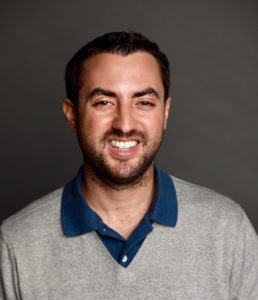
Eric Topol (Author, American cardiologist, scientist, founder of Scripps Research Translational Institute.)

Eric Topol is what most patients want to see in a Doctor of Medicine. “Deep Medicine” should be required reading for students wishing to become physicians. One suspects Topol’s view of medicine is as empathetic as it is because of his personal chronic illness. His personal experience as a patient and physician give him an insightful understanding of medical diagnosis, patient care, and treatment.

Topol explains how increasingly valuable and important Artificial Intelligence is in the diagnosis and treatment of illness and health for human beings.

AI opens the door for improved diagnosis and treatment of patients. A monumental caveat to A.I.s potential is its exposure of personal history not only to physicians but to governments and businesses. Governments and businesses preternaturally have agendas that may be in conflict with one’s personal health and welfare.

Topol notes China is ahead of America in cataloging citizens’ health because of their data collection and AI’s capabilities.

Theoretically, every visit to a doctor can be precisely documented with an AI system. The good of that system would improve continuity of medical diagnosis and treatment of patients. The risk of that system is that it can be exploited by governments and businesses wishing to control or influence a person’s life. One is left with a concern about being able to protect oneself from a government or business that may have access to citizen information. In the case of government, it is the power exercised over freedom. Both government and businesses can use AI information to influence human choice. With detailed information about what one wants, needs, or is undecided upon can be manipulated with personal knowledge accumulated by AI.

Putting loss of privacy and “Brave New World” negatives aside, Topol explains the potential of AI to immensely improve human health and wellness.

Cradle to grave information on human health would aid in research and treatment of illnesses and cures for present and future patients. Topol gives the example of collection of information on biometric health of human beings that can reveal secrets of perfect diets that would aid better health during one’s life. Topol explains how every person has a unique biometric system that processes food in different ways. Some foods may be harmful to some and not others because of the way their body metabolizes what they choose to eat. Topol explains, every person has their own biometric system that processes foods in different ways. It is possible to design diets to meet the specifications of one’s unique digestive system to improve health and avoid foods that are not healthily metabolized by one’s body. An AI could be devised to analyze individual biometrics and recommend more healthful diets and more effective medicines for users of an AI system.

In addition to improvements in medical imaging and diagnosis with AI, Topal explains how medicine and treatments can be personalized to patients based on biometric analysis that shows how medications can be optimized to treat specific patients in a customized way. Every patient is unique in the way they metabolize food and drugs. AI offers the potential for customization to maximize recovery from illness, infection, or disease.

Another growing AI metric is measurement of an individual’s physical well-being. Monitoring one’s vital signs is becoming common with Apple watches and information accumulation that can be monitored and controlled for healthful living. One can begin to improve one’s health and life with more information about a user’s pulse and blood pressure measurements. Instantaneous reports may warn people of risks with an accumulated record of healthful levels of exercise and an exerciser’s recovery times.

Marie Curie (Scientist, chemist, and physicist who played a crucial role in developing x-ray technology, received 2 Nobel Prizes, died at the age of 66.)

Topol offers a number of circumstances where AI has improved medical diagnosis and treatment. He notes how AI analysis of radiological imaging improves diagnosis of body’ abnormality because of its relentless process of reviewing past imaging that is beyond the knowledge or memory of experienced radiologists. Topol notes a number of studies that show AI reads radiological images better than experienced radiologists.

One wonders if AI is a Hobson’s choice or a societal revolution.

One wonders if AI is a Hobson’s choice or a societal revolution greater than the discovery of agriculture (10000 BCE), the rise of civilization (3000 BCE), the Scientific Revolution (16th to 17th century), the Industrial Revolution (18th to 19th century), the Digital Revolution (20th to 21st century), or Climate Change in the 21st century. Like Climate Change, AI seems an inevitable change that will collate, spindle, and mutilate life whether we want it to or not. The best humans can do is adopt and adapt to the change AI will make in human life. It is not a choice but an inevitability.

BRUTALITY

What is so troubling about Grandin’s history is what appears to be the nature of human beings whether royalist, capitalist, socialist, or communist.

Books of Interest
 Website: chetyarbrough.blog

America, América (A New History of the New World)

Author: Greg Grandin

Narrated By:  Holter Graham

Greg Grandin (Author, American historian, professor of history at Yale University.)

Before Professor Grandin, most Americans presumed the United States came from the traditions of the British empire. After reading/listening to America, América, one recognizes the powerful influence of the Spanish empire on the settlement of North America, the attitude of colonists toward minorities, the growth of slavery, and the deep entanglement of Spain in the broader Americas. America, América is a book that widens one’s understanding of the history of the United States.

When being reminded of the many atrocities of colonization and the decimated indigenous natives of the Americas, one is appalled by man’s inhumanity to man. Grandin begins his history of colonization with the Spanish empires’ expansion into the Americas long before the Mayflower expedition to America. Conquistadors set the table for the way what became Americans way to colonize the New England territory. Hernán Cortés and Francisco Pizarro led expeditions that decimated the Aztecs in Mexico and the Incas in Peru. Looking for wealth Spanish conquistadors murdered, raped, and pillaged Latin American native populations. The conquistadors exemplified what became the modus vivendi of British colonists in America. Indigenous peoples were forced to work for Spanish landlords, later supplemented by imported African slaves. The atrocities of Spain in the 16th century are repeated by English settlers in the 17th and later centuries. An estimated 80% of the indigenous people of the Americas perished from disease, forced labor, and ethnic cleansing by Spanish settlers–a grim reminder of American settlers did to indigenous natives in America.

What is so troubling about Grandin’s history is what appears to be the nature of human beings whether royalist, capitalist, socialist, or communist. America, América shows the founding of the United States is a repeat of Spain’s early colonization of the southern part of North America. The human race appears driven by the desire for money, power, and prestige in a system that begins with attack on indigenous peoples and repeats as a perceived advance of civilization. There is some truth in that perception but one realizes indigenous peoples are equally driven and commit human atrocities among themselves in pursuit of value, power, and, or prestige.

This book is returned before completion because of its length. Its history is enlightening but its length is too much for this dilettante.

HUMAN LIFE

What we see today is not reality, but our minds’ interpretation of the material world. It seems that everything in the world is process, e.g., gravity, or time relativity, or quantum unpredictability.

Books of Interest
 Website: chetyarbrough.blog

Brain Myths Exploded (Lessons from Neuroscience)

Lecturer: Indre Viskontas

By:  The Great Courses

Indre Viskontas (Ph.D. in cognitive neuroscience from UCLA, performed at Cafe Royal Opera in San Francisco, studies neural basis of memory and creativity, Lecturer at USF.)

Dr. Indre Viskontas offers interesting facts and theories about the brain in her Great Courses lectures. Her educational and musical accomplishments are remarkable examples of brain’ flexibility, human intelligence, and life-long potential. Her lectures show cognitive improvement may occur throughout one’s life while recalling incidents of brain damage and discoveries of science experiments that reveal how the brain works.

Viskontas suggests the belief that humans use only 10% of their brain is a myth.

The brain is made of eight distinctive structures which are interconnected and work together for our thoughts, feelings, and movements. A network of neurons sends electrical and chemical signals between parts of the brain that generate human thought and action; some of which are automatic and others cognitively reasoned. Viskontas explains how interconnections allow continued mental and physical functioning even when a part of the brain is damaged. Experiment and human accident have proven that the brain can adapt to loss of normal thought and action by retraining healthy parts of the brain. Retraining the brain can improve lost function. This may not return the perfect function of an undamaged brain, but it will improve function.

Viskontas explains human memory is a reconstructive process with varying degrees of accuracy.

There are people who have nearly perfect recall of their past. However, experiment has shown that even those few who can recall their personal history in detail are affected by emotion that distorts its accuracy. Furthermore, Viskontas explains personal history’ memory is limited to personal experience rather than any measurement of IQ. Of course, there are a few people who are said to have eidetic memories that can recall images with precision. They have so-called “photographic memories”, but IQ is based on problem-solving abilities that, at best, would be enhanced by a photographic memory. It is the application of recalled information to problem solving abilities that make one a genius like John von Neumann and Nikol Tesla who were alleged to have eidetic memories.

The risk is that “eyewitness” accounts can be influenced and totally wrong.

Scientific experiment has proven memory is a reconstructive process. With DNA analysis, a number of convicted murderers have been found innocent despite many eyewitnesses that identified them at scenes of crime. One is reminded of the gorilla experiment where eyewitnesses are distracted when a gorilla is sitting in a chair just as a human action scene is created in the same room. They do not see the gorilla and are surprised when it is pointed out to them later.

In the era of quantum computing, the concept of reality is evolving at a rate that boggles the mind.

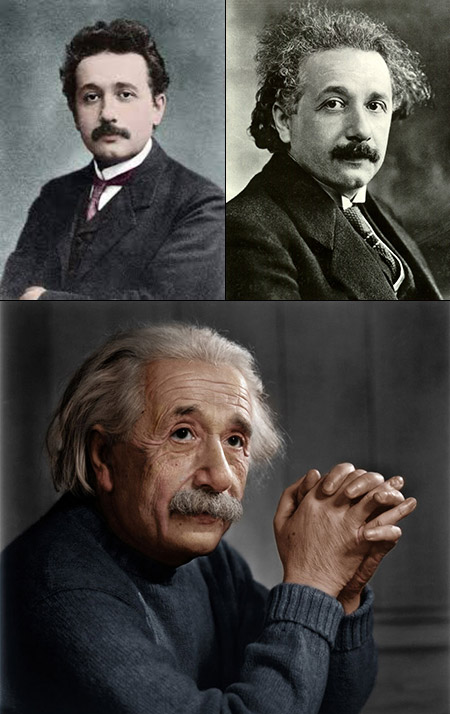
The idea of a probabilistic rather than concrete reality reminds one of the differences between the science of Newton and Einstein. Newton thought of things as concrete reality. Einstein takes steps toward relativity with less emphasis on the concreteness of reality. What we see today is not reality, but our minds’ interpretation of the material world. It seems that everything in the world is process, e.g., gravity, or time relativity, or quantum unpredictability. Life and human beings may only be a pile of atoms in an atomic process of birth, life, death, and whatever comes after death.

As human beings grow older, new things take longer to learn but Viskontas explains it is commitment that makes a difference in learning something new.

Taking piano lessons as an older adult, deciding to become an opera singer after graduating from college as a neuroscientist, or reading/listening to books about science when you are not educated as a scientist takes more time as you get older, slower, and less inquisitive. Dr. Viskcontas’ lectures infer it is never too late to learn something new. It just takes longer for it to become a part of who you are.

SNARES

Being bad is a human characteristic, i.e., the desire for money, power, prestige, and sex are elemental parts of the human condition. They are the “Snares” of human life.

Books of Interest
 Website: chetyarbrough.blog

The Snares (A Novel)

By: Rav Grewal-Kök

Narrated By:  Neil Shah

Rav Grewal-Kök (Author, “The Snares” is his first novel. Rav Grewal-Kök has written for The Atlantic, New England Review and won a National Endowment for the Arts fellowship.)

“The Snares” is about a well-educated lawyer who feels like an American outsider struggling to become a success. His mother and father are Punjabi. He seems burdened by being a person of a different race and ethnicity in white America. That feeling is reinforced by the circumstances of his life. He is married to a woman who comes from a wealthy white American family. He is a lawyer at forty years of age that is offered a job by the CIA. His hope is that working for the CIA will be a career making move that will make him a success in his own eyes and in the opinion of his in-laws. The irony of Grewal-Kök’s story is that the CIA is not an avenue for success but a road to perdition. The author paints a picture of the CIA and FBI that makes a mockery of American ideals.

What Grewal-Kök shows is that American government employees are just like the general population.

All the prejudices and dishonesty of America (or any country) are as present in governments as in any organization of human beings. The difference is that government has wider societal influence than a singular business, or eleemosynary organization. Government is filled with all the social goodness and prejudice of the society in which it is designed to serve.

“The Snares” the author is writing about are the best and worst of what the American CIA represent. The author’s main character, Neel Chima, is interviewed for a job with the CIA. Chima is hired by the CIA during the George W. Bush administration. George W., considered a Republican conservative, is the first President to authorize drone strikes for targeted killing. President Bush approved the killing of 6 Yemeni’ men in Yemen for their attack on the USS Cole. What is often forgotten is that Barack Obama, a Democratic liberal, authorized between 400 and 600 drone strikes that killed an estimated 3,797 people, of which 300 to 400 were civilians.

Obama’s drone strikes were in Afghanistan, Pakistan, Yemen, and Somalia.

One takes for granted that every drone strike is based on a careful examination of the human targets that are chosen. What Grewal-Kök implies is the CIA is something more than an intelligence service charged with collecting, analyzing and acting on foreign threats to America. As CIA operatives, these very human and well-educated government employees are pursuing a good life by stopping considered threats to America. Neel Chima is hired because the CIA officer in charge believes he can be an asset in the pursuit of foreign intelligence because of his ambition and life as a Punjabi American. However, Chima’s career ends in a state of turmoil, in part because of his own human vices but largely because of inept management by unscrupulous supervisors.

The snares that Grewal-Kök is referring to are “bad people” who are in powerful government positions. These bad government actors use their position to subvert newbies to their organization for actions that are contrary to ideals of the government agency for which they work. This is particularly dangerous in organizations like the CIA and FBI that are designed to interpret behaviors of potential criminals, i.e. not criminals in the act of crime but those who may or may not commit a crime.

J. Edgar Hoover led the FBI from 1924 to 1972.

The FBI arrested Americans suspected of being radicals during the Red Scare without due process. President Trump is doing the same thing with the arbitrary exportation of immigrants today. The FBI targeted Martin Luther King Jr. and tried to discredit him by closely surveilling, recording, and interpreting his activity. Hoover arguably collected secret files on politicians and famous Americans to aid his power and influence in government more than to reduce public corruption. The author infers the same is true in the CIA.

Grewal-Kök’s primary focus is on the CIA but the “Snares” of which he writes are the same that troubled the FBI. The CIA is creating files on other countries’ citizens with recommendations on actions to kill real and perceived enemies of America. Both conservative and liberal Presidents of the United States have used the CIA to kill foreign nationals. In 2o05 Abu Hamza Rabia was killed by a drone strike under George W. Bush’s administration. In 2006, the assassination of Abu Musab al-Zarqawi was done in an airstrike under Bush. In 2011, Anwar al-Awlaki, a U.S. born cleric and Al-Qaeda figure was killed in Yemen by a drone strike under Obama’s administration. In the same year, Osama bin Laden is assassinated in a U.S. Navy Seal’ raid ordered by Obama. In 2020, Qasem Soleimani, a major general in Iran’s Islamic Guard was killed in a drone strike at the orders of the Trump administration. In 2022, a CIA drone strike in Kabul, Afghanistan killed Ayman al-Zawahiri under President Biden.

WHAT IS THE TRUTH?

Even if all of these sanctioned murders by American Presidents have been justified, the story of “Snares” makes real–the potential for a bad or ambitious CIA agent to lie or inadvertently misconstrue the truth. Grewal-Kök explains how all human beings are subject to the “Snares” of life.

The character of Neel Chima is an everyman in America. His fall from grace is partly self-inflicted but accelerated by bad actors in the CIA. Being bad is a human characteristic, i.e., the desire for money, power, prestige, and sex are elemental parts of the human condition. They are the “Snares” of human life.

CRISIS

There is no religious, nationalist, or political justification for killing of innocents but the history of the world shows we are all killers.

Books of Interest
 Website: chetyarbrough.blog

Conquering Crises (Ten Lessons to Learn Before You Need Them)

By: Admiral William H. McRaven

Narrated By:  Willaim H. McRaven

William H. McRaven (Author, retired four-star admiral in the U.S. Navy, ninth commander of the U.S. Special Operations Command from 2011 to 2014, commanded special operations in Iraq and Afghanistan.)

Wisdom does not always come with experience or age. Though born in 1955, William McRaven spent 40 years as a special operations officer in the U.S. Navy. He retired from military service and became chancellor of the University of Texas System from 2015-2018. Now, as a writer, McRaven offers some insightful advice to those who manage others in response to crises. He offers his personal, corporate, and institutional experience as a crises’ manager.

Though McRaven’s experience comes from a military system of command, he offers a listen, learn, and plan approach to getting things done through others.

When faced with a reported crisis, he notes the first information one receives is usually inaccurate and misleading. He offers numerous examples like Pearl Harbor in 1941, Hurricane Katrina in 2005, and Covid-19 in the 21st century. The first reports of those crises were misleading and were found to be much more consequential and damaging than originally reported. The first step when faced with a crisis is to be sure of the facts. McRaven generally discounts first reports. He suggests one should confirm details from personal observation (if possible or practicable). If one cannot investigate facts of a crises personally, one must confirm details from other sources that are at, subject to, or near the crisis. The point is not to act on first reports but to seek more information.

McRaven receives a phone call in the middle of the night about a mistaken Taliban sympathizer carrying a weapon who is shot and killed by an American soldier during America’s intervention in Afghanistan.

It was found he was not a sympathizer but a cousin of the President of Afghanistan. McRaven calls General Petraeus in the middle of the night to report the incident. Petraeus thanks McRaven for contacting him immediately rather than waiting until the morning. Both recognize the urgency of the crises. They discuss details of what happened and plan a response. McRaven is ordered to contact the President of Afghanistan immediately to explain what happened and offer American support for the family of the murdered cousin. McRaven’s point is know the facts of a crises, create a plan to address what is known, react as quickly as the correct facts are known, plan a response agreed upon by those in authority, and act (as soon as possible) according to plan.

Taliban resurgence in Afghanistan.

A more complicated crisis noted by McRaven is also in Afghanistan. America’s ambassador to Afghanistan meets with McRaven to tell him the special forces reporting to him in Afghanistan are alienating local Afghan citizens with their military actions against the Taliban. The ambassador tells McRaven his operations are alienating Afghani citizens to the point of losing America’s war against the Taliban. The meeting becomes heated because McRaven believes his command is doing a great job of pacifying Taliban attacks on local citizens. Rather than acting like an ostrich with its head in the sand, McRaven calls for a meeting of colonels in the Afghanistan theater to investigate the Ambassador’s accusation. The team McRaven assembles finds the Ambassador’s concerns are justified. Though peaceful coexistence appeared to be improved with McRaven’s special forces’ actions, the alienation of Afghani’s was growing. As has been written by other authors, America’s special forces often acted based on one Afghani family’s personal anger at another family rather than for any concern about Taliban activity.

The group of colonels assembled by McRaven developed a plan to more judiciously act on alleged Taliban activity from Afghan informants.

Of course, America’s ignominious departure from Afghanistan, implies McRaven’s response was too little and too late. This is not to argue that McRaven’s response was wrong but only that the plan did not stop Taliban resurgence. The valid point McRaven is making is that one should systematically address a crisis, create a plan once the facts are known, and execute the plan. Obviously, not all crises are successfully resolved. In the case of America’s intervention in Afghanistan, McRaven’s plan may not have been right for the facts that were gathered, or the crises was just too culturally complex for a successfully executed response.

McRaven comes across as a highly competent leader and manager in a crises.

Where one may have reservations about any leader’s role in a crisis is whether they agree on the facts. McRaven believes it is right to assassinate a proven terrorist who has killed innocent people. That kind of decision goes beyond the principles of McRaven’s book about response to crises. “Judge not, lest ye be judged” is alleged to have been said by Jesus in his Sermon on the Mount.

McRaven believes assassination is justified.

In Ukraine and Gaza, innocents are being killed every day. There is no religious, nationalist, or political justification for killing of innocents but the history of the world shows we are all killers. In a crisis, you would want someone like McRaven to be the “beauty on duty”, but one must ask oneself if assassination is ever justified.

RIGHT & WRONG

The story of “…Belle Lettres…” inelegantly reminds one of the effects of Trump on America’s reputation.

Books of Interest
 Website: chetyarbrough.blog

The Belles Lettres Papers (A Novel)

By: Charles Simmons

Narrated By:  Alex Hyde-White

Charles Paul Simmons (1924-2017, Author and former American editor for The New York Times Book Review, graduate of Columbia University in 1948.)

“The Belles Lettres Papers” is a fictional account about the destruction of an American book review company. Written by a person who worked as the editor for the NY Times Book Review gives credibility to its author. One wonders how the nationally famous paper felt about his book. Simmons writes a story of a magazine company that exclusively reviews new books that become literary successes, sometimes bestsellers, or dead or dying dust gatherers.

To this book critic, Simmons certainly seems to know what he is writing about but “The Belles Lettres Papers” falls into a dust gatherer category of books.

Book reading or listening is an educational, sometimes entertaining, experience. There are so many books written that it is impossible to know what to read or listen to without someone’s review of what has been newly or recently published. Of course, there are genres that a reader/listener will choose that influences their book choices. Even when one limits themselves to a genre, there are too many choices that require a way of limiting one’s choice.

Experience reveals “best seller” is not a consistently reliable way of choosing a book, but it is one of the most commonly used methods of selection.

What “…Belles Lettres…” reveals is the potential corruption that can inflate a books placement on a best seller list. Book review publications, like all business enterprises, have owners and employees that have various levels of honesty, capability, and ethical standards. What Simmons shows is how every business owner and employee is subject to the influence of money and power.

The potential weaknesses of humanity play out in every organization that provides service or material to the public.

Simmons shows how a fictional book review company has employees who are corrupted by the power of their positions and the money they make. The fictional company has a male business manager who thinks his female secretary wishes to have sex with him because of natural attraction. Ethically, no employee reporting to a manager they work for should have sexual relations with a direct report. This is particularly egregious in Simmon’s story because of sexual inequality that permeates society. As Lord Acton’s observation about power (power corrupts, absolute power corrupts absolutely), a person who has power over another is always at risk of self-delusion.

Simmons goes on to explain how undercompensating employees can corrupt an organization by incentivizing theft and other ways of undermining a company’s integrity.

Simmons addresses the incentive of owners or those in power of an organization to cut personnel employment to save money at the cost of product quality or service. America is experiencing that today with the actions of the Trump Administration in arbitrarily firing federal employees, regardless of what they do for American citizens.

In a last chapter, Simmons addresses the revisions that can occur in a company that decides on a wholesale turnover in employees.

The integrity of a company’s mission can be sorely challenged. In the case of “…Belle Lettres…” a decision for publication of salacious books replaces the company’s former studied reviews of good writers. The organization loses its reputation as a reviewer of high-quality publications.

Trump’s assessment of immigration.

The story of “…Belle Lettres…” inelegantly reminds one of the effects of Trump on America’s reputation as a supporter of western society by reducing foreign aid, undermining university independence, denying global warming, arbitrarily firing government employees, and expelling American immigrants.

RISK/REWARD

AI is only a tool of human beings and will be misused by some leaders in the same way Atom bombs, starvation, disease, climate, and other maladies have harmed the sentient world. AI is more of an opportunity than threat to society.

Books of Interest
 Website: chetyarbrough.blog

A Brief History of Artificial Intelligence (What It Is, Where We Are, and Where We Are Going)

By: Michael Wooldridge

Narrated By: Glen McCready

Michael Wooldridge (Author, British professor of Computer Science, Senior Research Fellow at Hertford College University of Oxford.)

Wooldridge served as the President of the International Joint Conference in Artificial Intelligence from 2015-17, and President of the European Association for AI from 2014-16. He received a number of A.I. related service awards in his career.

Alan Turing (1912-1954, Mathematician, computer scientist, cryptanalyst, philosopher, and theoretical biologist.)

Wooldridge’s history of A.I. begins with Alan Turing who has the honorific title of “father of theoretical computer science and artificial intelligence”. Turing is best known for breaking the German Enigma code in WWII with the development of an automatic computing engine. He went on to develop the Turing test that evaluated a machine’s ability to provide answers to questions that exhibited human-like behavior. Sadly, he is equally well known for being a publicly persecuted homosexual who committed suicide in 1954. He was 41 years old at the time of his death.

Wooldridge explains A.I. has had a roller-coaster history of highs and lows with new highs in this century.

Breaking the Enigma code is widely acknowledged as a game changer in WWII. Enigma’s code breaking shortened the war and provided strategic advantage to the Allied powers. However, Wooldridge notes computer utility declined in the 70s and 80s because applications relied on laborious programming rules that introduced biases, ethical concerns, and prediction errors. Expectations of A.I.’s predictability seemed exaggerated.

The idea of a neuronal connection system was thought of in 1943 by Warren McCulloch and Walter L Pitts.

In 1958, Frank Rosenblatt developed “Perception”, a program based on McCulloch and Pitt’s idea that made computers capable of learning. However, this was a cumbersome programming process that failed to give consistent results. After the 80s, machine learning became more usefully predictive with Geoffrey Hinton’s devel0pment of backpropagation, i.e., the use of an algorithm to check on programming errors with corrections that improved A.I. predictions. Hinton went on to develop a neural network in 1986 that worked like the synapse structure of the brain but with much fewer connections. A limited neural network for computers led to a capability for reading text and collating information.

Geoffrey Hinton (the “Godfather of AI” won the 2018 Turing Award.)

Then, in 2006 Hinton developed a Deep Belief Network that led to deep learning with a type of a generative neural network. Neural networks offered more connections that improved computer memory with image recognition, speech processing, and natural language understanding. In the 2000s, Google acquired a deep learning company that could crawl and index the internet. Fact-based decision-making, and the accumulation of data, paved the way for better A.I. utility and predictive capability.

Face recognition capability.

What seems lost in this history is the fact that all of these innovations were created by human cognition and creation.

Many highly educated and inventive people like Elon Musk, Stephen Hawking, Bill Gates, Geoffrey Hinton, and Yuval Harari believe the risks of AI are a threat to humanity. Musk calls AI a big existential threat and compares it to summoning a demon. Hawking felt Ai could evolve beyond human control. Gates expressed concern about job displacement that would have long-term negative consequences with ethical implications that would harm society. Hinton believed AI would outthink humans and pose unforeseen risks. Harari believed AI would manipulate human behavior and reshape global power structures and undermine governments.

All fears about AI have some basis for concern.

However, how good a job has society done throughout history without AI? AI is only a tool of human beings and will be misused by some leaders in the same way atom bombs, starvation, disease, climate, and other maladies have harmed the sentient world. AI is more of an opportunity than threat to society.

FUTURE A.I.

Human nature will not change but A.I. will not destroy humanity but insure its survival and improvement.

Books of Interest
 Website: chetyarbrough.blog

Human Compatible (Artificial Intelligence and the Problem of Control)

By: Stuart Russell

Narrated By: Raphael Corkhill

Stuart Johnathan Russell (British computer scientist, studied physics at Wadham College, Oxford, received first-class honors with a BA in 1982, moved to U.S. and received a PhD in computer science from Stanford.)

Stuart Russell has written an insightful book about A.I. as it currently exists with speculation about its future. Russell in one sense agrees with Marcus’s and Davis’s assessment of today’s A.I. He explains A.I. is presently not intelligent but argues it could be in the future. The only difference between the assessments in Marcus’s and Davis’s “Rebooting AI” and “Human Compatible” is that Russell believes there is a reasonable avenue for A.I. to have real and beneficial intelligence. Marcus and Davis are considerably more skeptical than Russell about A.I. ever having the equivalent of human intelligence.

Russell infers A.I. is at a point where gathered information changes human culture.

Russell argues A.I. information gathering is still too inefficient to give the world safe driverless cars but believes it will happen. There will be a point where fewer deaths on the highway will come from driverless cars than those that are under the control of their drivers. The point is that A.I. will reach a point of information accumulation that will reduce traffic deaths.

A.I. will reach a point of information accumulation that will reduce traffic deaths.

After listening to Russell’s observation, one conceives of something like a pair of glasses on the face of a person being used to gather information. That information could be automatically transferred by improvements in Wi-Fi to a computing device that would collate what a person sees to become a database for individual human thought and action. The glasses will become a window of recallable knowledge to its wearer. A.I. becomes a tool of the human mind which uses real world data to choose what a human brain comprehends from his/her experience in the world. This is not exactly what Russell envisions but the idea is born from a combination of what he argues is the potential of A.I. information accumulation. The human mind remains the seat of thought and action with the help of A.I., not the direction or control by A.I.

Russell’s ideas about A.I. address the concerns that Marcus and Davis have about intelligence remaining in the hands of human’s, not a machine that becomes sentient.

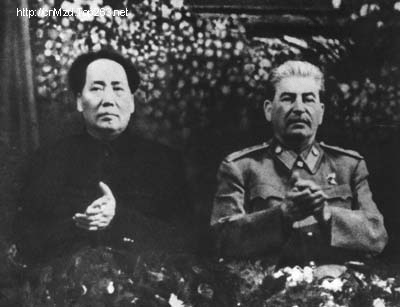
Russell agrees with Marcus, and Davis–that growth of A.I. does have risk. However, Russell goes beyond Marcus and Davis by suggesting the risk is manageable. Risk management is based on understanding human action is based on knowledge organized to achieve objectives. If one’s knowledge is more comprehensive, thought and action is better informed. Objectives can be more precisely and clearly formed. Of course, there remains the danger of bad actors with the advance of A.I., but that has always been the risk of one who has knowledge and power. The minds of a Mao, Hitler, Beria, Stalin, and other dictators and murderers of humankind will still be among us.

The competition and atrocities of humanity will not disappear with A.I. Sadly, A.I. will sharpen the dangers to humanity but with an equal resistance by others that are equally well informed. Humanity has managed to survive with less recallable knowledge so why would humanity be lost with more recallable knowledge? As has been noted many times in former book reviews, A.I. is, and always will be, a tool of human beings, not a controller.

The world will have driverless cars, robotically produced merchandise, and cultures based on A.I.’ service to others in the future.

Knowledge will increase the power and influence of world leaders to do both good and bad in the world. Human nature will not change but A.I. will not destroy humanity. Artificial Intelligence will insure human survival and improvement. History shows humanity has survived famine, pestilence, and war with most cultures better off than when human societies came into existence.

ABSOLUTION

History of the world has shown all forms of government are “equal opportunity” inhibitors, if not destroyers.

Books of Interest
 Website: chetyarbrough.blog

Secondhand Time (The Last of the Soviets)

By: Svetlana Alexievich

Narrated By: Amanda Carlin, Mark Bramhall, Cassandra Campbell & 8 more.

Svetlana Alexievich (Author, Belarusian investigative journalist, winner of the Nobel Prize in Literature in 2015.)

Svetlana Alexievich’s “Secondhand Time” is a remarkable and informative explanation of why Putin believes he is right and why many citizens of Russia seem to continue in their support of his administration.

Map of the former U.S.S.R.

Alexievich conducts a series of interviews with Russian citizens of different generations about the U.S.S.R. and its return to the world stage as a Russian nation. The narrators of her book recite those interviews to give listener/readers a complex and enlightening picture of Russian culture. The clash of communist and capitalist ideals is at the foundation of the interviews and the narrators dramatically told stories.

The Russian Soviet Army is the first to arrive in the Battle of Berlin on April 16, 1945. Their flag was hoisted on May 1, 1945.

The citizens of Russia are justifiably proud of their role in WWII that turned the tide of Germany’s war of aggression. (Of course, that is putting aside Stalin’s Machiavellian decision to join Hitler at the beginning of the war.) Some Russian soldiers who fought in that war were disgusted with what they feel was a betrayal by Mikhail Gorbachev of communist ideals for which they lived and died for in the 20th century.

The rejection of communist ideals for capitalism is viewed by some Russians as a tyranny of greed that lays waste to the poor and creates a class of haves and have-nots.

Some Russian veterans of WWII see the seduction of capitalism destroying the ideal of a classless society. Some citizens see the ideal of a government is to demand the wealth of life be spread equally according to individual need. To these believers, enforcement of communist ideals would eliminate private property and greed that would create a classless society. Some believed Stalin exemplified leadership that would achieve that ideal. The hardship of life during Stalin’s rule is considered by some as justified means for the achievement of the Marxist ideal of communism.

Statue of the “Circle of Life” in Norway.

Cultures may be different, but all human life is the same.

The underlying point of these interviews is to show Russian culture is not monolithic, just as culture is not in any nation. All cultures are filled with diversity. There is no singular cultural mind but a range of interests among many factions that establish a nation’s culture. The evidence of that is the contrast of Gorbachev and Putin in Russia and FDR and Trump in America. All four leaders led their countries but represent completely different cultural beliefs.

Conservatives, New York Governor Al Smith, Southern Democrats, and isolationists like Charles Beard opposed FDR in America. Putin and Trump have their cultural supporters in today’s national governments, but they also have their critics. The difference is that in Putin’s world, being killed or put in prison for opposition is culturally acceptable. In America, one is reminded of Trump’s deportation and imprisonment of migrants without due process.

The author’s interviews are not suggesting that either Russia or the West have good or bad governments but that every culture tests their leaders.

Many Russians, undoubtedly blame American Democracy for the dismantling of the U.S.S.R. Alexievich interviews Russians who believe the hardship that countries within the U.S.S.R. experienced were not the fault of Stalinist policies but the failure of citizens to live up to the ideals of communism. To anyone who has traveled to the Baltics, that opinion is founded on ignorance of the hostility expressed by citizens of the Baltics who were starved, displaced, jailed, and murdered during their occupation by Russia.

The other part of the story is the rise of the oligarchs in Russia as a result of the greed associated with capitalism.

The gap between rich and poor is accelerated in Russia just as it has been in America. Democracy does not have clean hands when it comes to equality of opportunity. Like the Jewish pogroms in Russia, America’s enslavement, murder, and discrimination of Blacks is proven history.

Siberian Exile during Stalin’s reign in Russia.

Alexievich draws from all sides of Russian beliefs. Those interviewed note the terrible conditions of those exiled to Siberia. Many Russians became disillusioned by the redistribution of wealth and privilege after Gorbachev and Yeltsin showed themselves to not be up to the task of leadership change. In fairness, one wonders who could have been up to the task when Russia had a long history of monarchal and tyrannical leadership?

A few Russians became immensely wealthy while the majority were somewhat better off but some struggled with the loss of State benefits and fewer jobs. The rising gap between rich and poor soured communist idealists. Even those who had been sent to Siberia by Stalin who toiled and suffered the experience of isolation, slave labor, and frigid weather felt they were no better off because of the loss of a socialist future.

The frightening truth of Alexievich’s book about the culture of Russia is that Putin may be absolved for his atrocities just as leaders of America have been absolved for their mistakes. History of the world has shown all forms of government are “equal opportunity” inhibitors, if not destroyers.

CHOICE

A listener/reader comes away from Pollan’s book with a feeling that there is as much at risk as reward in experimenting with hallucinogens without the aid of professionals. A bad trip can kill you.

Books of Interest
 Website: chetyarbrough.blog

How to Change Your Mind (What the New Science of Psychedelics Teaches Us About Consciousness, Dying, Addiction, Depression, and Transcendence)

By: Michael Pollan

Narrated By: Michael Pollan

Michael Pollan (Author, journalist, professor and lecturer at Harvard and UC Berkeley, received a B.A. in English from Bennington College and M.A. in English from Columbia University.)

“How to Change Your Mind” is a slippery slope examination of hallucinatory drugs. The slipperiness comes from a concern about drug use even though hallucinatory drugs are not addictive. Written by a liberal art’s graduate rather than a physician, psychiatrist, or scientist makes one skeptical of the author’s review and perspective on LSD and other hallucinatory drugs. However, his story is interesting and has an appeal to anyone who has experimented with hallucinogens.

RISKS AND EFFECTS OF HALLUCINOGENS

Pollan’s subject is partly about mushroom drug derivatives, like psilocybin and psilocin, that have hallucinogenic effects. But he also reviews the history of LSD which is a semi-synthetic compound accidentally discovered by a chemist named Albert Hofmann in 1938. LSD is derived from ergot, a type of fungus that grows on rye and other grains.

Albert Hofmann (1906-2008, chemist who synthesized, ingested and studied the effects of LSD.)

Pollan recalls the history of hallucinogenic drugs that evolved from ancient native rituals to public experimentation. Today, medical analysis and treatment with hallucinogenic drugs is being recommended. The revised belief of hallucinogens as a scourge of society is reborn to a level of medical and social acceptance.

One who has lived a long life in the 20th and now 21st century recalls Pollan’s rollercoaster history. Pollan falls on the side of acceptance of the hallucinogenic experience as an aid to society. His reported revisionist belief begins at the age of 60 when he tries a hallucinogenic drug and begins a study of its history. One is somewhat skeptical of Pollan’s objectivity because he is in the business of making a living from writing.

Pollan features several experts in the field of psychedelic research. He refers to Roland Griffiths (upper left corner) now deceased, neuroscientist at Johns Hopkins University who conducted studies on psilocybin’s effect on consciousness and mental health. He meets with Paul Stamets (lower left corner), a mycologist who is a fungi guru who explains where psilocybin mushrooms can be found, how they can be identified, while selling hallucinatory mushrooms to become a wealthy entrepreneur. He writes about James Fadiman (right), a psychologist and researcher who conducted hallucinogenic microdosing experiments on patients to show their potential benefits.

Pollan’s history persuasively argues the benefits of hallucinogenic drugs. However, a bad trip can kill you. On the other hand, Pollan notes recent research shows hallucinogenic drugs have alleviated anxiety, depression, PTSD, addiction, and the fear of dying. He notes psychedelics disrupt the brain’s default modes that negatively affect human behavior.

A listener/reader comes away from Pollan’s book with a feeling that there is as much at risk as reward in experimenting with hallucinogens without the aid of professionals.