ABSOLUTION

History of the world has shown all forms of government are “equal opportunity” inhibitors, if not destroyers.

Books of Interest
 Website: chetyarbrough.blog

Secondhand Time (The Last of the Soviets)

By: Svetlana Alexievich

Narrated By: Amanda Carlin, Mark Bramhall, Cassandra Campbell & 8 more.

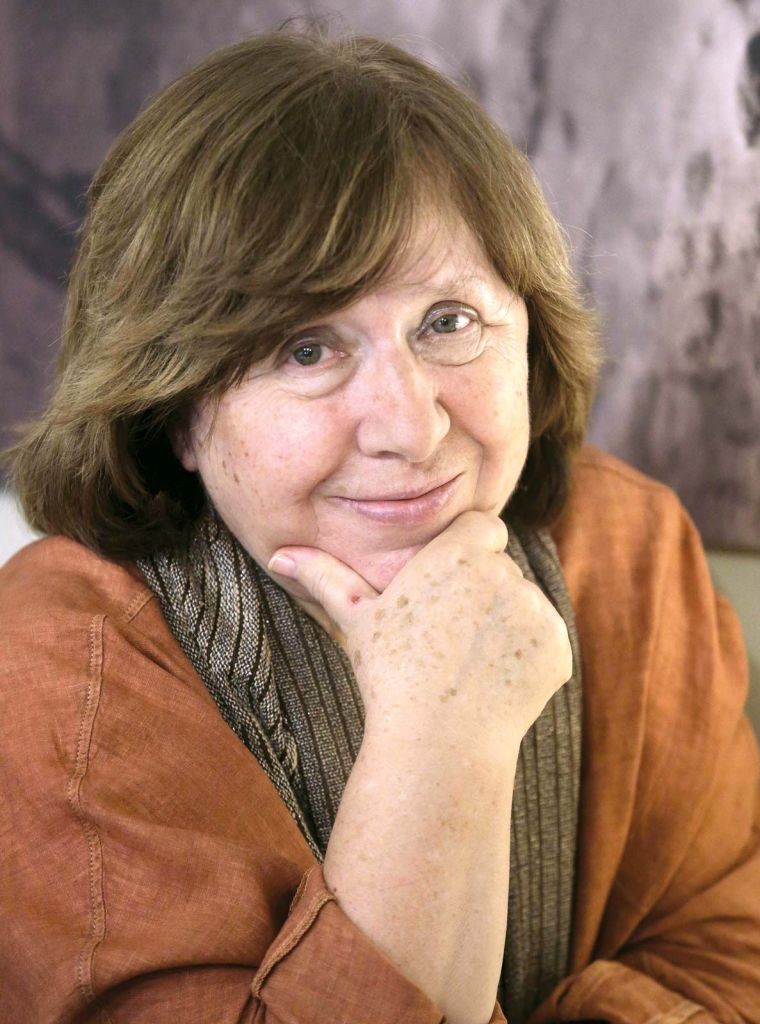
Svetlana Alexievich (Author, Belarusian investigative journalist, winner of the Nobel Prize in Literature in 2015.)

Svetlana Alexievich’s “Secondhand Time” is a remarkable and informative explanation of why Putin believes he is right and why many citizens of Russia seem to continue in their support of his administration.

Map of the former U.S.S.R.

Alexievich conducts a series of interviews with Russian citizens of different generations about the U.S.S.R. and its return to the world stage as a Russian nation. The narrators of her book recite those interviews to give listener/readers a complex and enlightening picture of Russian culture. The clash of communist and capitalist ideals is at the foundation of the interviews and the narrators dramatically told stories.

The Russian Soviet Army is the first to arrive in the Battle of Berlin on April 16, 1945. Their flag was hoisted on May 1, 1945.

The citizens of Russia are justifiably proud of their role in WWII that turned the tide of Germany’s war of aggression. (Of course, that is putting aside Stalin’s Machiavellian decision to join Hitler at the beginning of the war.) Some Russian soldiers who fought in that war were disgusted with what they feel was a betrayal by Mikhail Gorbachev of communist ideals for which they lived and died for in the 20th century.

The rejection of communist ideals for capitalism is viewed by some Russians as a tyranny of greed that lays waste to the poor and creates a class of haves and have-nots.

Some Russian veterans of WWII see the seduction of capitalism destroying the ideal of a classless society. Some citizens see the ideal of a government is to demand the wealth of life be spread equally according to individual need. To these believers, enforcement of communist ideals would eliminate private property and greed that would create a classless society. Some believed Stalin exemplified leadership that would achieve that ideal. The hardship of life during Stalin’s rule is considered by some as justified means for the achievement of the Marxist ideal of communism.

Statue of the “Circle of Life” in Norway.

Cultures may be different, but all human life is the same.

The underlying point of these interviews is to show Russian culture is not monolithic, just as culture is not in any nation. All cultures are filled with diversity. There is no singular cultural mind but a range of interests among many factions that establish a nation’s culture. The evidence of that is the contrast of Gorbachev and Putin in Russia and FDR and Trump in America. All four leaders led their countries but represent completely different cultural beliefs.

Conservatives, New York Governor Al Smith, Southern Democrats, and isolationists like Charles Beard opposed FDR in America. Putin and Trump have their cultural supporters in today’s national governments, but they also have their critics. The difference is that in Putin’s world, being killed or put in prison for opposition is culturally acceptable. In America, one is reminded of Trump’s deportation and imprisonment of migrants without due process.

The author’s interviews are not suggesting that either Russia or the West have good or bad governments but that every culture tests their leaders.

Many Russians, undoubtedly blame American Democracy for the dismantling of the U.S.S.R. Alexievich interviews Russians who believe the hardship that countries within the U.S.S.R. experienced were not the fault of Stalinist policies but the failure of citizens to live up to the ideals of communism. To anyone who has traveled to the Baltics, that opinion is founded on ignorance of the hostility expressed by citizens of the Baltics who were starved, displaced, jailed, and murdered during their occupation by Russia.

The other part of the story is the rise of the oligarchs in Russia as a result of the greed associated with capitalism.

The gap between rich and poor is accelerated in Russia just as it has been in America. Democracy does not have clean hands when it comes to equality of opportunity. Like the Jewish pogroms in Russia, America’s enslavement, murder, and discrimination of Blacks is proven history.

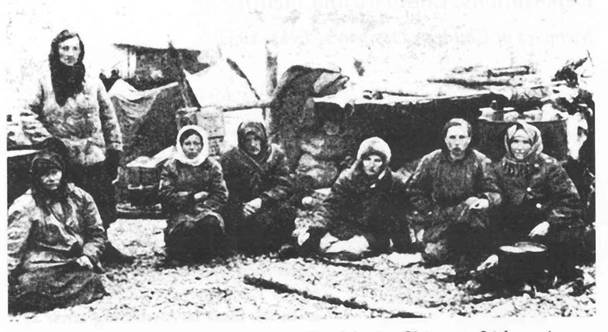
Siberian Exile during Stalin’s reign in Russia.

Alexievich draws from all sides of Russian beliefs. Those interviewed note the terrible conditions of those exiled to Siberia. Many Russians became disillusioned by the redistribution of wealth and privilege after Gorbachev and Yeltsin showed themselves to not be up to the task of leadership change. In fairness, one wonders who could have been up to the task when Russia had a long history of monarchal and tyrannical leadership?

A few Russians became immensely wealthy while the majority were somewhat better off but some struggled with the loss of State benefits and fewer jobs. The rising gap between rich and poor soured communist idealists. Even those who had been sent to Siberia by Stalin who toiled and suffered the experience of isolation, slave labor, and frigid weather felt they were no better off because of the loss of a socialist future.

The frightening truth of Alexievich’s book about the culture of Russia is that Putin may be absolved for his atrocities just as leaders of America have been absolved for their mistakes. History of the world has shown all forms of government are “equal opportunity” inhibitors, if not destroyers.

CHOICE

A listener/reader comes away from Pollan’s book with a feeling that there is as much at risk as reward in experimenting with hallucinogens without the aid of professionals. A bad trip can kill you.

Books of Interest
 Website: chetyarbrough.blog

How to Change Your Mind (What the New Science of Psychedelics Teaches Us About Consciousness, Dying, Addiction, Depression, and Transcendence)

By: Michael Pollan

Narrated By: Michael Pollan

Michael Pollan (Author, journalist, professor and lecturer at Harvard and UC Berkeley, received a B.A. in English from Bennington College and M.A. in English from Columbia University.)

“How to Change Your Mind” is a slippery slope examination of hallucinatory drugs. The slipperiness comes from a concern about drug use even though hallucinatory drugs are not addictive. Written by a liberal art’s graduate rather than a physician, psychiatrist, or scientist makes one skeptical of the author’s review and perspective on LSD and other hallucinatory drugs. However, his story is interesting and has an appeal to anyone who has experimented with hallucinogens.

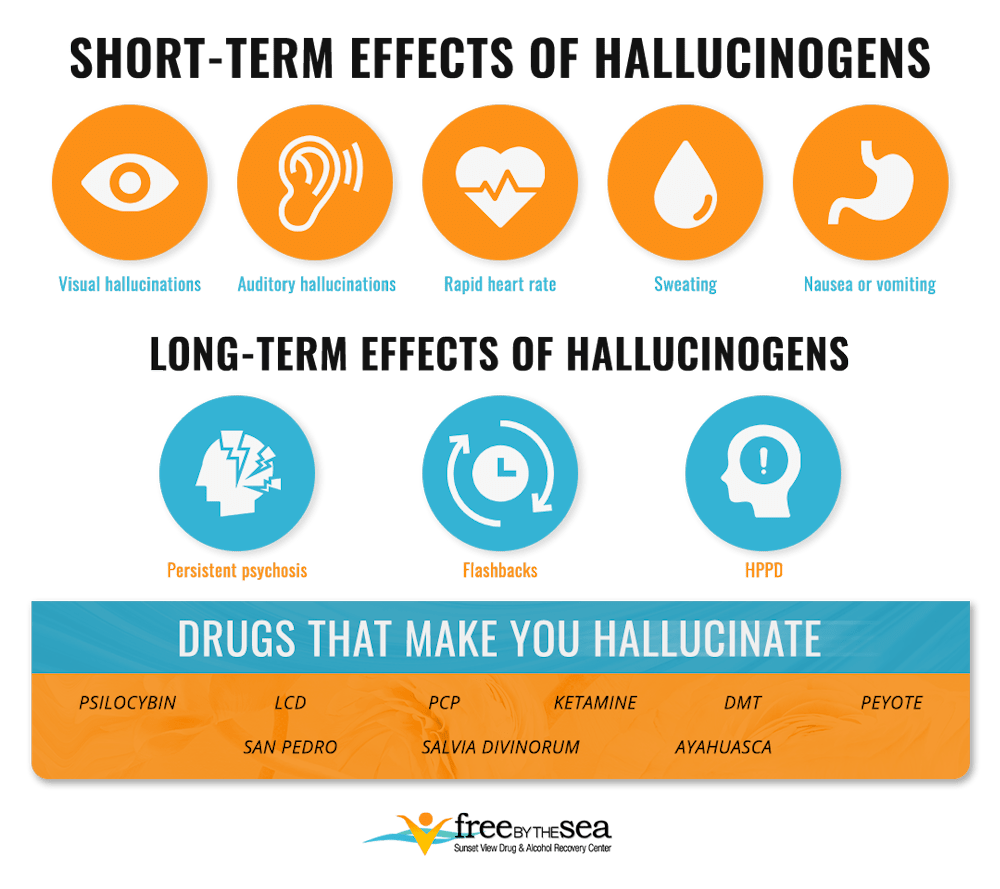
RISKS AND EFFECTS OF HALLUCINOGENS

Pollan’s subject is partly about mushroom drug derivatives, like psilocybin and psilocin, that have hallucinogenic effects. But he also reviews the history of LSD which is a semi-synthetic compound accidentally discovered by a chemist named Albert Hofmann in 1938. LSD is derived from ergot, a type of fungus that grows on rye and other grains.

Albert Hofmann (1906-2008, chemist who synthesized, ingested and studied the effects of LSD.)

Pollan recalls the history of hallucinogenic drugs that evolved from ancient native rituals to public experimentation. Today, medical analysis and treatment with hallucinogenic drugs is being recommended. The revised belief of hallucinogens as a scourge of society is reborn to a level of medical and social acceptance.

One who has lived a long life in the 20th and now 21st century recalls Pollan’s rollercoaster history. Pollan falls on the side of acceptance of the hallucinogenic experience as an aid to society. His reported revisionist belief begins at the age of 60 when he tries a hallucinogenic drug and begins a study of its history. One is somewhat skeptical of Pollan’s objectivity because he is in the business of making a living from writing.

Pollan features several experts in the field of psychedelic research. He refers to Roland Griffiths (upper left corner) now deceased, neuroscientist at Johns Hopkins University who conducted studies on psilocybin’s effect on consciousness and mental health. He meets with Paul Stamets (lower left corner), a mycologist who is a fungi guru who explains where psilocybin mushrooms can be found, how they can be identified, while selling hallucinatory mushrooms to become a wealthy entrepreneur. He writes about James Fadiman (right), a psychologist and researcher who conducted hallucinogenic microdosing experiments on patients to show their potential benefits.

Pollan’s history persuasively argues the benefits of hallucinogenic drugs. However, a bad trip can kill you. On the other hand, Pollan notes recent research shows hallucinogenic drugs have alleviated anxiety, depression, PTSD, addiction, and the fear of dying. He notes psychedelics disrupt the brain’s default modes that negatively affect human behavior.

A listener/reader comes away from Pollan’s book with a feeling that there is as much at risk as reward in experimenting with hallucinogens without the aid of professionals.

THINKING

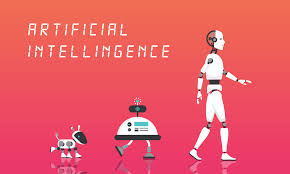
A.I. will continue to grow as an immense gatherer of information. Will it ever think? Can, should, or will future prediction and political policy be based only on knowledge of the past?

Books of Interest
 Website: chetyarbrough.blog

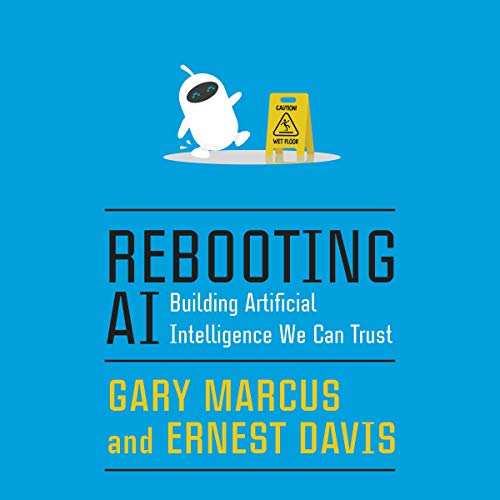
Rebooting AI (Building Artificial Intelligence We Can Trust)

By: Gary Marcus and Ernest Davis

Narrated By: Kaleo Griffith

These two academics explain much of the public’s misunderstanding of the current benefit and threat of Artificial Intelligence.

Marcus and Davis note that A.I. cannot read and does not think but only repeats what it is programmed to report.

They are not suggesting A.I. is useless but that its present capabilities are much more limited than what the public believes. In terms of product search and economic benefit to retailers, A.I. is a gold mine. But A.I.’s ability to safely move human beings in self-driving cars, free humanity from manual labor, or predict cures for the diseases of humanity are far into the future. A.I. is only a just-born baby.

Self-driving cars, robot servants, and cures for medical maladies remain works in process for Artificial Intelligence.

Marcus and Davis note A.I. usefulness remains fully dependent on human reasoning. It is a tool for recall of documented information and repetitive work. A.I. is not sentient or capable of reasoning based on the information in its memory. Because of a lack of reasoning capability, answers to questions are based on whatever information has been fed to an A.I. entity. It does not use reason to answer inquiry but only recites responses to questions from programmed information in its memory. If sources of programmed information are in conflict, the answers one receives from A.I. may be right, wrong, conflicted, or unresponsive. You can as easily get an answer from A.I. that is wrong as one that is right because it is only repeating what it has gathered from the past.

What Marcus and Davis show is how important it is that questions asked of Microsoft’s Copilot, ChatGPT, Watson, or some other A.I. platform be phrased carefully.

The value of A.I. is that it can help one recall pertinent information only if questions are precisely worded. This is a valuable supplement to human memory, but it is not a reasoned or infallible resource.

Marcus and Davis explain “Deep Learning” is not a substitute for human reasoning, but it is a supplement for more precise recorded information.

Even with multilayered neural networks, like deep learning which attempt to mimic human reasoning by patterning of raw data, can be wrong or confused. One is reminded of the Socratic belief of “I know something that I know nothing.” Truth is always hidden within a search for meaning, i.e., a gathering of information

The true potential of A.I. is in its continued consumption of all sources of information to respond to queries based on a comprehensive base of information. The idea of an A.I. that can read, hear, and collate all the information in the world is at once frightening and thrilling.

The risk is the loss of human freedom. The reward is the power of understanding. However, the authors explain there are many complications for A.I. to usefully capitalize on all the information in the world. Information has to be understood in the context of its contradictions, its ethical consequence, information bias, and the inherent unpredictability of human behavior. Even with knowledge of all information in the world, decisions based on A.I. do not ensure the future of humanity? Should humanity trust A.I. to recommend what is in the best interest of humanity based on past knowledge?

Markus and Davis argue A.I. is not, does not, and will not think.

A.I. will continue to grow as an immense gatherer of information. Will it ever think? Can, should, or will future prediction and political policy be based only on knowledge of the past?

HUMAN HOPE

Migration is the movement of people to new areas of the world for work, better living conditions, and safety. In that process the world economy is strengthened. .

Books of Interest
 Website: chetyarbrough.blog

The Shortest History of Migration

By: Ian Goldin

Narrated By: Julian Elfer

Ian Andrew Goldin (South African born professor at the University of Oxford, specializes in globalization and development.)

Professor Goldin has written a history of migration that reminds one of the well-known phrases attributed to Socrates: “I know that I know nothing”. Goldin is born in South Africa to a Lithuanian father who fled his home country to escape political and social upheaval in Europe during the early 20th century. In retrospect, that migration saved the future of the Goldin’s from Stalinist suppression after WWII. It is ironic that Ian Goldin is raised in South Africa where white suppression of native South Africans was common. “The Shortest History of Migration” is no apologia, but it is a forthright history of the ubiquity of world migration.

Migration is an essential characteristic of civilization believed to have begun in Africa.

The obvious irony of human origin is the darker skin tone of our first ancestors who had higher levels of skin melanin to protect them from the harsh effects of the sun. Humanity began as a species of a black ancestor, an estimated 6 to 7 million years ago.

Neanderthal precursor of human beings.

Goldin implies humans moved from Africa to explore the world. They may have left to escape the harshness of their existence or because of the nature of species’ curiosity. Their change in environment led to changes in their physiognomy (facial features and expressions) caused by the evolutionary nature of life and the exigencies of environment. The point is that migration has been a part of history since the beginning of life on earth.

What may be forgotten by some is that migration was largely unregulated until WWI according to Goldin.

That seems largely true except the United States passed the Naturalization Act of 1790 that established rules for citizenship and an Immigration Act of 1891 that created the U.S. Bureau of Immigration; both of which implied regulation. Nevertheless, the fundamental point is that migration has been a part of society from the beginning of human life.

WWI generated many new laws and policies about migration.

Wartime measures required passports and border crossing cards to manage migration. National security increased scrutiny of immigrants. Broader societal and political concerns about migration spread across the world. Migration became more complicated.
Goldin argues the benefit of migration is misunderstood and misrepresented by leaders like Donald Trump.

Goldin suggests the economic impact of Trump’s anti-migrant beliefs and policies will undermine both the world and American economies. In 2023, an estimated 18% of the economic output of the American economy came from migration. The two industries most impacted are agriculture and construction but many immigrants work in caregiving and medical professions, all of which will be impacted by labor shortages. Goldin notes that migrants working in other countries send money back to their home countries that amount to more revenue than is provided by tourism and foreign aid. Many, if not most, economists would argue migration is a cornerstone of economic growth and stability. Trump’s false statements about migrant criminality are overblown and unsupported by economic statistics that show migrants contributed an estimated $25.7 billion in 2022 to the Social Security system in taxes that benefit aged American citizens (like myself).

Trump policies will not return American to the manufacturing prosperity of the twentieth century but to a possible depression like that of the 1930s or, at the very least, a recession like that of 2007-2009.

Migration is the movement of people to new areas of the world for work, better living conditions, and safety. In that process the world economy is strengthened.

HUMAN

What is the value of high IQ? If everyone was smarter, would they be happier? It seems the only real value of genetics is in the prevention of known diseases, not in improvement of IQs or creation of a perfect human being (whatever that is).

Books of Interest
 Website: chetyarbrough.blog

The Social Genome: The New Science of Nature and Nurture

By: Dalton Conley

Narrated By: Christopher Douyard

Dalton Clark Conley (Author, Princeton University professor, American sociologist.)

Dalton Conley offers a complex explanation of why one child intellectually and financially excels while others are left behind. The “Social Genome” is an attempt to explain the complexity and inadequacy of genetic research. Not too surprisingly, there seems a correlation between wealth and intellectual development, but its relationship includes familial and environmental nurturing in ways that are too complex for today’s science to measure.

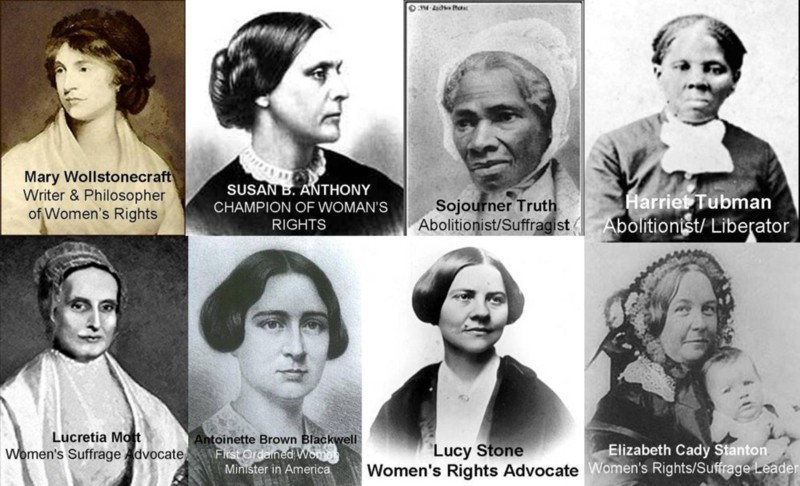
FAMOUS WOMEN IN HISTORY (Many women are as intellectually strong and mentally tough as men, e.g.  Cleopatra, Sojourner Truth, Indira Gandhi, Golda Meir, Benazir Bhutto, Malala Yousafzai, and others.)

Dalton argues both genetics and environment shape human intellect and economic success. However, science’s current knowledge of genetic and environmental impact is not clearly understood in a way to aid human development. The current limitations of science make it impossible to determine the precise genetic and environmental factors that shape human development. Dalton offers many examples of how genetics and environment are relevant to human development, but neither are precisely measurable nor manageable.

The idea of clearly understanding the genetic and environmental causes of who humans become is a bit frightening.

Even if it were possible to achieve precise measurement of genetic and environmental influences, should that knowledge be used to create designer human beings?

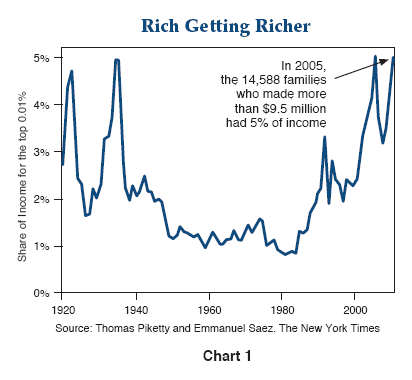
Piketty argues that the income gap widens after World War II.  He estimates 60% of 2010’s wealth is held by less than 1% of the population. 

Dalton does believe there is a correlation between economic well-being and IQ, but the correlation is affected by genetic inheritance. Dalton concludes economic well-being is a positive factor in IQ improvement. That raises questions about how one can improve the economic well-being of a society to improve IQ. Dalton infers there is no one size fits all solution for IQ improvement. Nurture and nature are too intimately intertwined to know how IQ of a society can be improved. A conclusion one may draw is that environmental and societal factors like human nutrition, general education and improved equal opportunity can mitigate IQ diminishment. Whether one should modify human genomes is a step too far.

In many ways, this is a frustrating book to listen to or read.

If all people looked more alike than different would there be less conflict in the world? No, but being of one race or another makes a difference in one’s opportunities in the world. What is the value of high IQ? If everyone was smarter, would they be happier? It seems the only real value of genetics is in the prevention of known diseases, not in improvement of IQs or creation of a perfect human being (whatever that is).

WAR

The only hope for Ukraine is a change in Russia’s leadership as a result of Putin’s foolish effort to return Russia to its past. It is the same effort and mistake Trump is making in trying to return America to the 20th century.

Books of Interest
 Website: chetyarbrough.blog

The Evil Hours: A Biography of Post-Traumatic Stress Disorder

By: David J. Morris

Narrated By: Mike Chamberlain

David J. Morris (Author, former Marine, reporter in Iraq, received Navy-Marine Corps Commendation Medal, M.A. from San Diego State University and the University of California, Irvine.)

In listening to “The Evil Hours”, the refrain “War, what is it good for, ABSOLUTLY NOTHING” from Edwin Starr’s song comes to mind. Ukraine’s and America’s current political position in ending the war are irreconcilable. Anyone who has read this blog knows I am not a fan of President Trump but his position on the war is sadly correct. It is sad because it is only Ukranian people who will suffer, not we who are isolated from the European continent.

Having recently visited the Baltics, and hearing of their experience under Stalin from a family we had dinner with makes one understand how horrible Trump’s decision will be for Ukraine’s citizens.

Trump’s decision is a Hobson’s choice because there seems no alternative. The potential for nuclear war is a threat from Putin who has an ego like Trump’s that cannot be assuaged. Putin appears not to be deterred by his followers or the Russian citizens.

What is left is the domination of a portion of Ukraine that will be forced to live under a dictatorship.

Hearing from Baltic citizens of how horrible their lives were under Stalin; one’s heart goes out to Ukrainian citizens who will have to live under Putin. Putin and Russia will pay a high price for their occupation because of citizen opposition that will take many forms. Though there is no comfort to the Ukranian people, Russia’s occupation will eventually end. The cost of Russia’s invasion of Ukraine has been high. It will be a reminder of the folly of unjust invasion and dictatorial control of an independent people.

America’s foolish Vietnam’ belief in a domino theory of Vietnam was wrong, just as the belief that Russia’s success in Ukraine will lead to further Russian expansion.

The relevance of “The Evil Hours” is the stress Ukrainians will face with Russian occupation. One hopes Russian occupation will not take as long as it did for the Baltic countries to regain independence.

PTSD is shown as the horrible consequence of internecine conflict that will continue after Russia’s occupation.

The only hope for Ukraine is a change in Russia’s leadership as a result of Putin’s foolish effort to return Russia to its past. It is the same effort and mistake Trump is making in trying to return America to the 20th century.

PAST & PRESENT

Only with education and understanding of the past can society or the individual change their future.

Books of Interest
 Website: chetyarbrough.blog

Cowboy Apocalypse (Religion and the Myth of the Vigilante Messiah)

By: Rachel Wagner

Narrated by: Dina Pearlman

Rachel Wagner (Author, professor of religion and philosophy at Ithaca College in Ithaca New York.)

Rachel Wagner has written a highly personal book about American gun culture that will resonate with some and appall others. As an academic philosopher and professor of religion, Wagner analyzes gun violence and sexism and how belief in “might makes right” is deeply ingrained in American character.

There are so many stories of death and injury from gun violence in America that one becomes numbed by Wagner’s apocalyptic story.

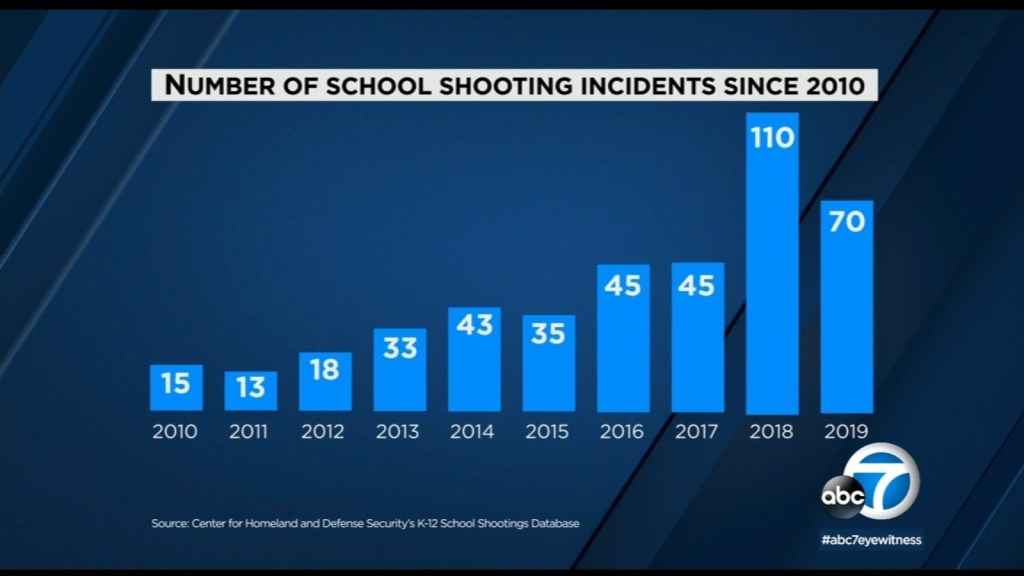
We were living in Las Vegas when 59 people were killed, and 527 were injured by one gunman in a hotel room less than 3 miles from our home. When one looks at statistics of children murdered in school rooms since 2010, a solution for gun violence should be urgent, but it appears not.

Rise in school shootings between 2010 and 2o19.

Wagner argues gun violence in the U.S. is viewed by much of the public as a belief in the myth of the “good guy with a gun” that is embedded in the history of America and reinforced by fictional stories, books, television, and the movies. She argues detective fiction like “The Big Sleep”, TV series like “Have Gun Will Travel”, and movies like “Die Hard” have lone heroes who defeat dastardly villains.

Think Alan Ladd in “Shane” or John Wayne in any of his westerns, and one believes gun-toting man-gods keep the world safe.

Wagner shows how malleable society is and why the gun lobby is rewarded and sustained by the myth of the “good guy with a gun”. Wagner argues gun-toting Americans have become gods in their own mind. What they really are is examples to potential killers of school children and unsuspecting tourists.

Wagner believes American gun obsession has wheedled its way into a religious narrative based on Christian apocalypticism and romanticization of American history. She notes the myths of armed vigilantes who are seen as saviors who can reset society when it goes astray. This myth seeps into American cultural shibboleths of white supremacy and patriarchal dominance that pervade video games, movies, and novels.

Wagner argues sexual and racial inequality are exacerbated by America’s gun culture. Wagner notes an experience in her personal life and her education in religion show how “might makes right” has been, and still is, a danger to society.

Wagner argues America needs to look in the mirror and quit glorifying firearms and vigilante justice. She suggests the January 6th attack on the capitol shows how widespread belief in vigilante justice is in America.

January 6, 2021, insurrection when a mob of supporters of then-President Trump stormed the U.S. Capitol.

The philosophical and religious beliefs of the author are made clear in her final chapters. Only with education and understanding of the past can society or the individual change their future.

MODERATION

Unless homelessness is addressed with affordable housing, America’s future looks bleak. A land of have and have-nots will grow to crush American prosperity.

Books of Interest
 Website: chetyarbrough.blog

Abundance 

By: Ezra Klein, Derek Thompson

Narrated by: The Authors

These two young Americans offer an insightful view of politics and American government in the 21st century.

Klein or Thompson could have voted for either Trump or Harris in America’s last election. Their book argues American government is both a boon and bane for citizen “Abundance” in the 21st century. They note America has contradictory economic policies that have created great abundance among Americans while exacerbating inequality. Evidence for their opinion is growing homelessness, an immigration crisis, loss of manufacturing jobs, and government’s failure to creatively adjust public policies to provide solutions.

Those who have shared in the abundance of America have voted for candidates to preserve their privileges.

The authors note homelessness is a function of affordable housing that is denied by government policies that regulate zoning and construction requirements. Government policies make affordable housing too costly to build and impossible to locate because of zoning restrictions. The number of people living on the street is a self-inflicted American tragedy. Some of the homeless are young, some are old, some have mental or physical problems, and others are victims of drugs or their own weaknesses. What they have in common is unaffordable housing.

Historically, immigration has been a great boon to American economic growth.

Klien and Thompson note restrictive immigration policies have created obstacles for workers needed for manufacturing in key industries like agriculture, auto industry assembly, housing construction, and clean energy infrastructure. Rather than wasting money on building walls and deporting workers, the authors advocate immigration reform that meets the needs of American business. One can imply the authors meaning is that to “Make America Great Again” requires immigrants willing to work in agricultural and manufacturing jobs. The end of the baby boom requires help from immigrants to meet the needs of increased manufacturing and construction in the United States.

Some believe what Trump is doing is good for the American economy in the long run.

The criticism is that in the short run, the economy may collapse. Tariffs being used as a ham-fisted way of negotiating fair international trade is a fool’s errand. America needs labor and material in the short run to achieve equal and greater prosperity than it had in the 1970s. Added manufacturing will aid American prosperity, but it will be surpassed in the long run by automation. It is the automation race America needs to win or compete with to remain a world leader. Competing in that race depends on education, and scientific research. The irony is that Trump is firing government employees who have responsibility for public education, research, and funding that have been the engines of America’s prosperity.

The government employees discharged by the Trump administration to solely reduce costs is short sighted.

In the 1980s, 60% of basic research in the U.S. was funded by the government. In 2022 that funding dropped to 40%. Advances in semiconductors, global positions systems, biotechnology, and aeronautics were government-funded discoveries in the 1980s. American government-funded scientific research gave America the internet, GPS technology, mass production of penicillin, Space exploration, human genome project discoveries, and renewable energy innovations. The Department of Health and Human Services has lost 20,000 employees, the Department of Education 1,300, the National Oceanic and Atmospheric Administration 800, and the National Institutes of Health 1,200. One wonders how many of these employees may have been on the edge of scientific discoveries that could change the world.

The truth of “Abundance” is that America has caused many negative ecological impacts and aggravated the gap between rich and poor.

Klein and Thompson have written a provocative book. However, the truth of “Abundance” in America has caused many negative ecological impacts and aggravated the gap between rich and poor. Looking only to abundance does not address either social inequality or the environment. The NIMBY (not in my back yard) resistance to affordable housing aggravates inequality and increases homelessness. Unquestionably, higher density housing impacts the environment.

Klein and Thompson fail to address the increased power of corporations in America.

The 2010 Citizens United v. Federal Election Commission gave corporations the power to spend unlimited amounts of money on political campaigns. The influence of corporations on elections has disproportionate power in the election of government policy makers. That decision by the Court is a distortion of one person, one voter’s influence on public policy.

Aristotle emphasized the importance of “All things in moderation”. NIMBY communities must open their minds and hearts to homelessness and moderate their resistance to neighborhood accommodation. Government agencies must supervise and service higher density housing impacts wherever they are built and after they are completed.

Unless homelessness is addressed with affordable housing, America’s future looks bleak. A land of have and have-nots will grow to crush American prosperity.

LIFE’S LOTTERY

The randomness of life and what we make of it is the most important theme of Weston’s insightful memoir about being “Alive”.

Books of Interest
 Website: chetyarbrough.blog

Alive (The Richness and Brevity of Existence)

By: Gabriel Weston

Narrated By: Gabriel Weston

Gabriel Weston (Author, English surgeon, television presenter.)

Gabriel Weston’s “Alive” is an intimate, blunt, and enlightening explanation of her experience as a woman, surgeon, mother, and member of the human race. For some, Weston’s story contains more information than one is prepared to take.

It begins with a self-effacing assessment of her early education in liberal arts where she achieved an MA in English. However, she decides to go to medical school in London where she qualifies as a physician in 2000. Her very personal memoir explains a great deal about being educated as a physician but more about being a woman.

Some reader/listeners will be put off by Weston’s blunt explanation of the human body. However, some will find much of what she writes as revelatory.

Weston explains what it means to be human and a woman who becomes a mother of twins at the age of forty, with two younger children.

It is hard to imagine a younger person who is uninterested in science, technology, engineering, or math, who receives an MA in English, would be interested in becoming a surgeon.

However, Weston chooses to become a doctor and graduates from a London medical school in 2000. She briefly explains her journey in “Alive” by reflecting on her classes in body dissection to explain the details of the human body and differences in sexual anatomy. Some will choose to leave her story, but others (if they stick with it) will be enlightened and surprised by her observations and opinions.

Weston notes the equivalent of the male penis is a woman’s clitoris. This is an interesting observation that most would be unlikely to publicly discuss or write about.

Presumably, Weston is making this point to show there is a great deal of similarity between men and women. However, she notes a significant difference. Menstruation is a sluffing process where the uterus sheds a layer of bedding material that exits the body through the vagina, i.e., something unique to women. The purpose of menstruation is to prepare the body for possible pregnancy by providing a thickening to the uterus that supports fertilization. That thickening is removed (sluffed off) approximately once per month. As is often noted, only women give birth, a singular difference between the sexes.

Weston goes on to explain her experience of birthing twins.

The two girls come late in her adult life. They are delivered in a caesarian operation. Children are born in amniotic sacs. This is likely a surprise to most men because birth of a baby is thought of as a delivery with a squirming body through the birth canal rather than a body within an amniotic sac. However, Weston notes the second twin is delivered within its amniotic sac which suggests she is a fraternal, rather than identical twin.

Syria’s use of nerve gas to murder their own citizens.

Weston’s story moderates in future chapters with notes about nerve gases used by governments to suffocate their own people as well as perceived foreign enemies. The point she makes is that oxygen deprivation in the 21st century and beyond is increasing with rising pollution on earth. She notes oxygen deprivation is the same suffocation caused when governments used lethal gases to kill their own citizens as perceived enemies. The obvious inference is today’s denial of earth’s environmental degradation risks the lives of all oxygen dependent lives.

Weston is an example of a working mother who succeeds in England despite the world’s history of misogyny.

Some women become a success despite the many obstacles they face. Weston symbolizes human grit and determination in the face of sexual inequality of opportunity but, as a human being, she is subject to the physical limitations of every life. She mentions during the course of her story a heart murmur that is caused by a defective heart valve. The last chapters of her book explain Weston is on a transplant list.

The randomness of life and what we make of it is the most important theme of Weston’s insightful memoir about being “Alive”.

CHINA

Harmony and pragmatism undoubtedly remain important characteristics of Chinese society. Time will tell whether societal harmony can be maintained by an increasingly authoritarian leader.

Books of Interest
 Website: chetyarbrough.blog

The Chinese Looking Glass (The most illuminating book yet written on China and her enigmatic people.)

By: Dennis Bloodworth

Dennis Bloodworth (1919-2005) Author, journalist, British writer at The Observer, first British journalist allowed to visit China in 1955.

“The Chinese Looking Glass” is a whirlwind journey across the vast history of China by the first British writer allowed to visit China in 1955. It is a primer for a general understanding of China that was originally published in 1966 and updated in 1980. The author’s marriage to Liang Ching Ping adds credibility to his view of Chinese culture.

One reads Bloodworth’s book and is somewhat overwhelmed by its breadth. So many generations of Chinese culture are too much to cover in a 400+page book.

The author manages to give a broad understanding of a Chinese worldview that is shaped by Confucian and Taoist history, a collective identity that often conflicts with the Western culture of individualism. He notes Chinese traditions are based on filial piety (meaning duties, respect and devotion of children to their parents). Bloodworth notes, through many generations of Chinese culture, behavior and decision-making there is a focus on social harmony. Both Confucianism and Taoism play significant roles in shaping Chinese society.

Bloodworth notes Confucianism and Taoism shape Chinese society.

Piety, respect for hierarchy, education, and a focus on societal harmony were philosophical foundations of Chinese governance. Piety led governance toward strict rules and centralized authority. Historical figures like Confucius, Laozi, and Sun Tzu influenced Chinese culture and thought. The spiritual tradition of Buddhism reinforced the teaching of these cultural influencers. Buddhism emphasizes the suffering of life is caused by desire, and attachment. Buddhist teaching is that desire and attachment must be replaced by understanding and rejection of both through meditation and mindfulness.

Because democracy focuses on individual rights and freedoms, the ideals of collective harmony, hierarchical structure, and centralize authority make communism a better fit for Chinese culture.

Mao Zedong (1893-1976)

Mao unified China after decades of war and instability. Bloodworth suggests Mao Zedong had a nuanced impact on China.

However, Mao’s centralized power resulted in big economic mistakes like the famine of the Great Leap Forward that caused misleading food production reports meant to please the government when production was much less than what was needed to sustain life for Chinese citizens. With famine, the Cultural Revolution is unleashed, and China’s growth and stability were set back. Bloodworth had observed China’s governing always included pragmatism and adaptability to their drive for cultural harmony.

Though Bloodworth mentions Deng Xiaoping in the last chapters of his expanded edition of “The Chinese Looking Glass”, he does not foresee the opening of the Chinese economy and its rapid economic expansion.

The pragmatic realization that collectivization of farming led to misleading information about production compelled Deng to open agricultural production to a more market-driven incentive to preserve social stability. Deng was an authoritarian as is evidenced by his decision on the Tienanmen Square crises.

Though Bloodworth did not live to see the next iteration of China’s leadership, an element of recidivism enters with Xi’s control of the government.

Harmony and pragmatism undoubtedly remain important characteristics of Chinese society. Time will tell whether societal harmony can be maintained by an increasingly authoritarian leader.