HISTORICAL MEMORY

Like being a New Zealander, Americans are made of many cultures. That is an underlying theme of Hampton Sides interesting biography of Captain Cook.

Books of Interest
 Website: chetyarbrough.blog

The Wide Wide Sea (Imperial Ambition, First Contact and the Fateful Final Voyage of Captain James Cook)

AuthorHampton Sides

Narration by: Peter Noble

Hampton Sides (Author, American historian Yale graduate with a BA in history. As an editor, Sides has written many articles for national publications. He is awarded an honorary doctorate from Colorado College.)

Hampton Sides has written an interesting history of James Cook’s voyages with a focus on his final expedition to find a Northwest Passage. This is a slightly misleading statement because in the 18th century, a ship sailing from the Atlantic to the Pacific typically had to navigate around Cape Horn at the southern tip of South America. Explorers seeking a northern connection between the oceans attempted to reach a Northwest Passage, but the Arctic route was blocked by ice. Why would one think there was a northwest access from the Pacific if there was no passage from the Atlantic? Apparently, people believed the Atlantic side had been thoroughly searched without finding a passage, but the Pacific had been less explored and might have an unknown channel that would allow passage.

a simple world map highlighting the Atlantic and Pacific Oceans with clear labels and contrasting colors

Sides writes the story of an 18th century navigator who had sailed the globe twice and was contracted to find a Northwest route that would shorten the distance between Europe and the North American continent. Called out of retirement by the British Admiralty, James Cook set sail on his third and final voyage in 1776, a propitious year for the American colonies. Cook took command of the HMS Resolution, accompanied by one other vessel eventually commanded by Captain Charles Clerke on the HMS Discovery. (Both Clerke and Cook died on this voyage, i.e., Clerke from tuberculosis and Cook from a melee in the Pacific.) It is interesting to find that the vessels are loaded with animals as well as food provision for long voyages. Sides notes Cook dislikes the requirement of livestock because of the stink from their offal. Cook is a stickler for the cleanliness of his vessels and crew members. However, Cook recognizes livestock’s importance on long voyages for adequate food provision.

Before science showed lack of vitamin C caused scurvy, Cook required provisioning of fruit on his long voyages.

It is Cook’s observation of other mariners’ health experience that made Cook decide on food provisioning for his voyages. Sides writes Captain Cook only had a village-school education, but he had a practical maritime apprenticeship based on learning by doing as well as by observation of past sailings of other mariners.

The character of Cook is somewhat revealed in the history of an earlier voyage to New Zealand in 1773.

Sadly, Sides notes Cook’s personally written logs and correspondence are stoic with little insight to his emotions. He notes Cook’s stoicism is even more difficult to pierce because his younger wife destroyed Cook’s personal letters. Nevertheless, Cook’s stern character is illustrated by Sides’ details during his voyages. There is no doubt in a listener’s mind that Cook is a highly competent leader who brooked no opposition from his crew while exhibiting a nascent understanding of the importance of native cultures. Sides shows Cook to be a keen observer of different cultures and, for the most part, avoided criticism of other societies as long as they did not interfere with the Admiralty’s commissioned objectives.

A New Zealand Māori politician, Nanaia Mahuta, serving New Zealand in 2021.

The indigenous Māori live in New Zealand today. Cook’s two ships that visited New Zealand were the Resolution and Adventure. They became separated because of bad weather. The captain of the Adventure, Tobias Furneaux arrives in New Zealand after Cook had already departed. Furneaux dispatched 10 armed men to collect fruited plants for scurvy prevention. The 10 men did not return. In searching for the men, the search party found severed body parts being eaten by dogs. A tattooed hand revealed the remains as one of the 10 men. The 10 mariners had been killed in what is called a whāngai hau ritual which is an act of consuming an enemy’s spirit by eating their flesh. Because Cook had already left, the search party interrupted the ritual and recovered some of the remains. The cause of the 10 men’s killing is unknown but the incident shaped Māori–European relations. When Cook returned, he chose not to retaliate because he did not know what caused the killings and understood the acts of the Māori were a culturally influenced event, presumably caused by something the 10 men did that threatened the indigenous New Zealand tribe. Cook chose to respect the cultural beliefs of the tribe rather than seek a revenge urged by some of his crew.

New Zealand farmland.

Having personally visited New Zealand, one appreciates one of the most beautiful places in the world, but the story of the Māori Grass Cove incident is a shocking reminder of how much civilization has changed over the centuries. One of our guides belonged to the Māori tribe.

Sides explains Cook is commissioned by the Admiralty to settle a question of the existence of a presumed unknown southern continent in the Pacific that was tentatively identified as Terra Australis. Cook’s expedition found there was no great habitable continent to the south, but he crossed the Antarctic Circle many times. Massive ice fields kept Cook from the Antarctic mainland. Anyone who has visited Antarctica knows of the Drake passage and how rough the sea can be. Having visited Antarctica clearly shows year-round habitation would be like living on the moon, i.e. possible but highly inhospitable. Cook found no habitable continents in the south seas because there are none.

Kealakekua Bay in Hawaii.

Cook’s third expedition is the first European contact with Hawaii after passing through the Bering Strait on his way through the north Pacific. Ironically, in his last voyage, he is killed in Hawaii in 1779, one year after he returned to Hawaii. He had spent a year more searching for the passage when he returned to Hawaii on his way back to England. When Cook first landed on Hawaii, he and his crew were welcomed with open arms. Cook appears like a God to many Hawaiians. Cook’s steely personality is two edged in that it made him a great leader of men on long exploratory voyages, but he brooked no insubordinate behavior. When returning to Hawaii after a year of looking for the Northwest Passage, reception by the Hawaiians was less respectful. A boat is stolen by some Hawaiians when they were anchored at Kealakekua Bay. The stolen boat is a major diplomatic and military issue because it was an important piece of the ship’s survival. Sides notes theft is not uncommon in native Hawaiian culture. Cook’s response is to attempt capture of the chief of Hawaii and hold him hostage until the boat is returned. The Hawaiians resist. A fight breaks out and Cook is struck; he falls to the ground and is stabbed and beaten to death by the Hawaiians. Four marines were killed with 17 Hawaiians that died in the confrontation. Cook’s body is ritually dismembered as is the custom of the Hawaiian culture in respecting a high-ranking enemy.

a historical portrait-style image of Omai, the 18th-century Ra‘iātean man who traveled to England with Captain Cook, depicted in traditional Polynesian attire with dignified expression
A.I. Generated picture of what Omai may have looked like.

Sides’ story is more than a recounting of historical facts. He writes several chapters about a native of the Society Islands name Omai who became a celebrity in London. Cook had brought Omai to England after his second world voyage. Omai boards the ship on Cook’s third voyage to be returned to his homeland after having lived in London for two years. The Society Islands are an archipelago in the South Pacific Ocean made up of Tahiti and four other islands.

At first, one wonders why the story of Omai is included in Side’s book. One realizes the story of Captain Cook, in broad strokes, is well known but Omai reflects on how history is shaped by those who tell a story that often obscures the complexity of past events.

The story of Omai is obscured by the big picture of Captain Cook’s momentous voyages but Omai’s story shows how cultures are widely misunderstood because of those who tell the story. Omai’s cultural influences are lost because they are interpreted through the lens of a society that sees people of other cultures as noble savages or exotics, i. e., not based on their unique experience and culture. After Omai’s experience in London, he is no longer just a Tahitian. In returning to Omai’s culture, he is a different human being. He becomes an exotic in both societies. He dies only a few years after his return to his native country.

Many cultures have influenced what Americans have become.

One comes away from “The Wide Wide Sea” thinking of today’s immigration policy and the many who have come here to only be rejected for not being born in America. America has lost its historical memory. Many people who immigrated have added their cultures to society in many positive ways that have made America great. Our ignorance and actions that contradict that truth are appalling to many. Captain Cook recognized the murder and dismemberment of ten Englishmen by the Māori was terrible, but his response respected their culture. The Māori remain an important part of New Zealand culture just as American Indians are an important part of American culture. To arbitrarily reject immigrants without due process is unjustifiable in a country made great by many different cultures.

Like being a New Zealander, Americans are made of many cultures. That is an underlying theme of Hampton Sides interesting biography of Captain Cook.

LIFE’S MEANING

The story of McCandless’s life is that meaning in life comes from people and nature, not one or the other but both.


Books of Interest
 Website: chetyarbrough.blog

Into the Wild

AuthorJon Krakauer

Narration by: Philip Franklin

John Krakauer (Author, mountaineer, raised in Corvallis, Oregon.)

The main character in “Into the Wild”, tuned in and dropped out. His “tune in” is not to drugs but a wish to understand the meaning of life. Christopher Johnson McCandless chose, after graduating from Atlanta, Georgia’s Emory University, to live off the grid of society, i.e. particularly capitalist society. His degree is a BA in history and anthropology. McCandless chooses to drive around the country, working at dead-end jobs to sustain himself until he finds a place to live in a natural habitat, without the aid of society which he believes keeps him from understanding the meaning of life. He began a “walk about” from Georgia with a plan to explore survival in the frigid wilds of Alaska. McCandless kept a journal of his search for life’s meaning. His journal became the guiding source for Jon Krakauer’s book about McCandless’s brief life.

Christopher Johnson McCandless (1967-1992, died at the age of 24.)

The McCandless family picture with Christopher either before or after enrollment at Emory University.

McCandless came from a solidly middleclass family but rejected capitalism defined by the desire for money, power, and/or prestige. He obviously loved the outdoors and wished to explore the possibility of living off the land with whatever nature had to offer. McCandless rebels against capitalist beliefs when graduating from college. He begins a search for the meaning of life beyond the principles of a capitalist society. He sought understanding by experiencing the attractions and dangers of the American wilderness. McCandless wishes to be free of materialism, his familial relationships, and the conventions of a middleclass capitalist life.

(One wonders if McCandless’s story is part of today’s rising homelessness with people living in tents, sleeping in business doorways and on sidewalks of American cities? Are Americans becoming disillusioned with capitalism because the gap between rich and poor is rising and pushing the middleclass into poverty? Some argue the cost of living is climbing faster than the wages of employment.)

McCandless graduation form Emory University in Atlanta Georgia.

With a BA in history and anthropology, McCandless graduates from Emory in 1990 and leaves Atlanta, heading west. Rather than look for a job or extending his education, he donates his savings to charity, cuts off communication with his family, and journeys to the west in a 1982, B210, Datsun. He heads southwest, traveling to Alabama, Mississippi, Louisiana, Texas, and New Mexico. He spends some time in Arizona with odd jobs and becomes stranded when his Datsun is disabled by a flood. He hitchhikes to California via Las Vegas, goes through South Dakota with his determined destination being Alaska in 1992. Nearly two years have passed since graduating from Emory.

Map showing McCandless’s two years of travel from the East to the West, mid-West, and on to Alaska.

McCandless kept a journal of his travels. The author, John Krakauer, interviews some of the people McCandless meets and/or works for that are noted in his journey. All say he was a nice person and hard worker who dependably showed up for work. However, one employer noted he had to be told to take a shower and wear socks when he came to work at their fast-food restaurant. McCandless was obviously homeless and had no shower facilities in which to bathe. He reluctantly complied as best he could but soon left to find his way to Alaska.

Sample of McCandless’s journal when he called himself Alex Supertramp.

McCandless arrives in southern California. He meets an older (80 something) American named Ronald Franz, a leatherworker, who tries to convince McCandless to give up his wandering life. They become friends but McCandless leaves Franz without saying goodbye as he heads north. The importance of their relationship is shown in a letter sent to Franz by McCandless that explains his inner conflicts. McCandless explains his need for independence and the freedom it gives him to personally connect with himself. By abandoning materialism, wealth, and social expectations, McCandless believes it makes him free. The tension created by McCandless’s belief in social isolation versus human relationship is expressed in his letter to Franz. Being alone is no answer to the conflict one feels toward their family or those who are part of society. Part of one’s identity, belief in who they are, and belief in oneself is reinforced by other people, not in wilderness isolation. This is a lesson of life that McCandless refuses to see or understand. The well-known poet, John Donne, recognizes “No man is an island”. All humans are interconnected which is a truth McCandless refuses to see.

McCandless dies in a Fairbanks city Transit bus he used as a shelter in Alaska. John Krakauer speculates on the cause of death being inadvertent poisoning from eating potato seeds because of McCandless’s hunger, emaciation, and lack of nourishment. If there is meaning in life, McCandless search and isolation is in vain. The story of McCandless’s life is that meaning in life comes from people and nature, not one or the other but both.

MATRIMONY

In the book “A Marriage at Sea”, one wonders how a husband or wife would respond in a crisis. Who would take command and who would follow? Is it a matter of nature or nurture?

Books of Interest
 Website: chetyarbrough.blog

A Marriage at Sea (A True Story of Love, Obsession, and Shipwreck)

AuthorSophie Elmhirst

Narration by: Marisa Calin

Sophie Elmhirst (Author, British journalist who wrote the story of Maurice and Maralyn Bailey who survived 118 days on a life raft in 1973.)

Surprisingly, Elmhirst writes about marriage in telling the story of a shipwreck that left Maurice and Maralyn Bailey on a life raft in the Pacific Ocean for 118 days. The Baileys had been married for 9 and a half years when their yacht was struck by what is presumed to be a dying whale.

The Baileys.

The Baileys were a middle-class British couple who fell in love with an idea to buy a small yacht and sale the sea to visit the Galapagos islands and beyond, a fantasy both adopt. Maurice’s strict childhood had prepared him to master the technical skills of a seafarer, but Maralyn seems to have the determination to make their dream real. They sold all their possessions, including their home, and contracted with a boatbuilder in Southampton who began the long process of building a yacht for their voyage at sea.

Maralyn Bailey using a sextant on their sailboat.

They set sale in June 1972 in a 31-foot yacht named Auralyn. They crossed the Atlantic and reached Panama in February 1973 and headed for the Galapagos islands in the Pacific, expecting it to take ten days. At dawn on March 4, 1973, their vessel was struck by a whale in the Pacific Ocean. They were 300 miles from the Galapagos islands when their vessel sank. Water filled the hold, and they abandoned ship on a raft with a small dinghy they used to store supplies they gathered from their sinking boat.

Maralyn and Maurice on a rubber raft before their sea adventure.

On the one hand, the knowledge of Maurice’s navigation skill aided their eventual rescue, but it seems Maralyn’s will and determination saves their lives. Their slim provisions would only last for a few days before dehydration and starvation. To last for their 118 days adrift, they improvised. They caught and ate raw turtles, fish, and seabirds while collecting rainwater for their sustenance. They had no fishing hooks and had to bend safety pins. They had to make fishing line for the hooks from thread, cord, twine, or maybe the yacht’s emergency kit. Whatever they caught had to be killed, cleaned, and eaten raw.

Seven ships passed the Baileys who were lost at sea.

Seven ships passed the Baileys but did not see their raft and dinghy. Even though they were in the “Sea Lane”, it is easy to understand why they were missed. They had flares that did not ignite which made their being seen unlikely, particularly with the immense size of sea transport vessels. Their hope for rescue rose and fell with each vessel sighting. Their boat, the size of the ships, and the distance from sea-going vessels must have been too far for anyone on board to see them.

Vessel that found the Baileys.

It is a South Korean fishing boat that spots them. They had drifted over 1800 miles from the Galapagos Islands when they were rescued. Fortunately, the Bailey’s voyage is within the fishing routes of the Pacific. South Korean fishing boats would travel hundreds of miles from shore to catch tuna, billfish, mahi-mahi and other marketable fish. The South Korean boat was a deep-sea commercial fishing vessel. Its smaller size undoubtedly helped them see the Baileys.

The Bailey’s after their recovery from 117 days on the sea.

The Baileys were severely emaciated. Both had lost over 40 pounds. They could barely walk because of malnutrition and saltwater sores from skin irritation. It is hard to conceive of how exhausted they must have been. The Baileys were taken to Honolulu, Hawaii for medical care and recovery. Without doubt, the South Koreans saved the Baileys lives but it was a 1500-mile trip to Honolulu for the fishing vessel which would take 5 to 8 more days.

Sexual equality.

Elmhirst’s story suggests survival is largely because of Maralyn’s tough-mindedness and attention to her husband’s strengths and weaknesses.

In a marriage, one wonders how any husband and wife might respond in a crisis. Who would take command and who would follow in a crisis? Is it a matter of nature or nurture? In the case of the Bailey’s crisis, it appears Maralyn took command. The cost of that command is unknown, but parenthetically one notes Maralyn died at 61 while Maurice lived into his 80s.

Mother Emanuel

Dylan Roof is not South Carolina, and neither are the preachers who believe in the divinity and eternity of God. All people of the world are subject to the sins of living life.

Books of Interest
 Website: chetyarbrough.blog

Mother Emanuel (Two Centuries of Race, Resistance, and Forgiveness in One Charleston Church)

AuthorKevin Sack

Narration by: William DeMeritt

Kevin Sack (Author, American journalist, senior reporter for The New York Times who shared a Pulitzer Prize for National Reporting in 2001.)

South Carolina is the underlying subject of Mother Emanuel. It focuses on a State that shows the very best and worst of what it can mean to be born in America. South Carolina is the home of Americans who fought on the side of the confederacy in the Civil War. The confederates of the south did not believe in human equality but in the superiority of the white race and the rightness of slavery.

Mother Emanuel is an African Methodist Episcopal Church located at 110 Calhoun Street in Charleston, South Carolina.

Mother Emanuel was built in 1891 and has capacity to seat 2,500 congregates. The church is considered a symbol of Black autonomy and resistance to some South Carolinians. On June 17, 2015, the senior pastor of the church and 8 African American parishioners were shot by a white 21-year-old American name Dylann Storm Roof. Roof, when he came to the church service, is invited into a Bible study group. He sits in the study group for nearly an hour before drawing a 45-caliber Glock handgun to murder 9 people, including the pastor of the church. The author and journalist Kevin Sack explains Dylann Roof was not a dumb white American but a person of above average intelligence who believed Black Americans were an imminent danger to white Americans’ way of life. Roof intended to motivate a Black American uprising that could be crushed by an American white majority.

Dylan Roof (At the time of his trial.)

A listener/reader is unlikely to believe Sack is writing this book to suggest all white Americans, let alone South Carolinians, are like Dylann Roof. Sack is not suggesting all humans have equal capabilities but that all people are influenced by the environment in which they live, their genetic inheritance, and their psychological development. What the author shows is that one’s intelligence can as easily lead to horrific acts of violence, dishonesty, theft, and social hate as belief in the truth of human equality.

Reverend Eric Manning navigated multiple difficulties when he became the pastor of the church after the massacre.

As a church, Mother Emanuel has existed for well over 100 years. It has had many pastors who are subject to the same strengths and weaknesses of all human beings. Sack infers some pastors in Mother Emanuel’s long life have been seduced by the money, power, and prestige of their office while preaching belief in God. Sack infers every human being, including pastors, can be led astray in life. A few, like Dylan Roof, become corrupted by life for reasons that are incomprehensible to one who believes in something greater than themselves, whether that something is the moral, communal, or cosmic reality of human life, or a fervent belief in God and redemption.

Dylan Roof’s verdict for execution is appealed to the U.S. Supreme Court but is rejected. He remains on federal death row.

Dylan Roof is not South Carolina, and neither are the preachers who believe in the divinity and eternity of God. All people of the world are subject to the sins of living life. Roof is shown by Sack to be an unremorseful murderer of human beings for little other reason than the color of their skin. A lesson of life that the murders explain is that forgiveness is not for the sake of Roof’s peace of mind but a mindful reconciliation for those who lost their loved ones.

As of the writing of this book, Dylan roof remains in prison, without personal remorse and a remaining verdict that warrants execution.

Orwell & A.I.

In the pre-A.I. age, democratic socialism is unachievable, but A.I. may resurrect its potential. However, as Orwell noted, the risk is a “Brave New World” rather than a hoped-for democratic socialism.

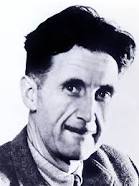
GEORGE ORWELL (Author, 1903-1950)

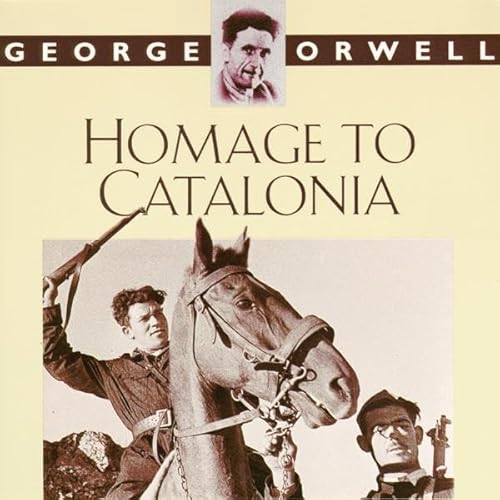
In Norm Chomsky’ ‘s and Nathan Schneider’s book, “On Anarchy”, George Orwell’s book “Homage to Catalonia” is called one of Chomsky’s favorite books. “On Anarchy” infers Orwell believed in anarchy because of his role in the war (1936-1939) against the Franco government. Though Orwell’s risk of life in Spain’s war is inconceivable to me, it seems prudent to listen to his story and point to the significant difference between what Chomsky and Schneider infer about Orwell’s belief in “…Anarchism” and what Orwell really wrote and believed. Though Orwell takes anarchism seriously as a political working-class movement, he believes it is impractical and that democratic socialism (with “1984” reservations) is what he believes could be the best form of government. The idea of abolishing all forms of coercive authority and hierarchy with a government anarchy is impractical because of the nature of human beings.

Francisco Franco with his soldiers in 1936.

Because of Orwell’s belief in democracy and equality he chooses to join the fight against Franco’s fascism. He joins the resistance at the age of 33 because of his belief in democratic socialism. He felt he needed to join the ideological struggle against Franco’s regime. It is a remarkable decision considering he is married, and relatively unknown. He is oddly driven by his moral belief in democracy and equality. Presumably, he entered the war to understand what it means to fight a war against a government he felt was immoral and totalitarian. Orwell served for approximately six months beginning in December 1936. He was shot in the throat and nearly died.

Anarchy and human nature.

It seems inconceivable that anarchism is a reasonable way of governing human nature. It is interesting to contrast what Orwell believes and what anarchists argue. This is particularly relevant in the 21st century because of the inevitable change in society that is occurring with artificial intelligence. A.I. has an immense potential for creating Orwell’s “Brave New World”. However, his writings reject the ideal of “Anarchy” espoused by Chomsky and Schneider because of its impracticality. Orwell shows that human nature contains both heroism and weakness tied to the material world. Even though human nature is basically decent, it is easily corrupted. That corruption makes humans hope and fear human decisions designed by consensus. It is not to say democratic socialism would be infallible, but it offers a structure for regulation of different governments at chosen intervals of time.

Human nature will not change. Human nature is a set of relatively stable psychological, biological, and social tendencies that are shared by all human beings. These tendencies shape how humans think, feel, and act even as culture and governance changes. Artificial intelligence will only intensify the strengths and weaknesses of human nature. The principles of anarchy in an A.I. world is frightening:

  • No centralized government, police, or standing armies.
  • Society organized through federations of communes, cooperatives, or councils.
  • Emphasis on direct democracy, mutual aid, and local autonomy.
  • Suspicion of any coercive authority — even democratic majorities.
  • Change often imagined as revolutionary, not incremental.

A more rational alternative to Anarchy is Democratic Socialism believed by Orwell and espoused by MLK.

  • The state remains, but becomes more egalitarian and accountable.
  • Markets may still exist, but are regulated or supplemented by public ownership.
  • Political parties and electoral competition are central.
  • Emphasis on universal programs: healthcare, education, housing, worker protections.
  • Change is gradual, through reforms, not revolution.

Differences of opinion.

There are obvious differences between Chomsky’s and Orwell’s beliefs. Both have social weaknesses. Human nature gets in the way of both forms of governance. Orwell seems to have recognized the weaknesses of his belief in democratic socialism in his writing of “Brave New World”. In contrast, Chomsky’s and Schneider’s pollyannish view of anarchy as “…a better form of government where power is decentralized and citizens can and should collectively manage their own affairs through direct democracy and cooperative organizations” is absurd. The difference is that Orwell foresees the dangers of his idea in “Brave New World” which anticipates something like A.I. that has the potential for society’s destruction. “On Anarchy” ignores the truth of human nature, “Brave New World” does not.

Franciso Franco (1936-1975, died in office.)

Orwell’s decision to join opposition to Franco’s dictatorship fails. Their right-wing beliefs in authoritarianism, anti-communism, and pro-Catholicism prevails. Spain’s 1930s opposition leaders (Manuel Azaña, Largo Caballero, and Juan Negrín) were pro-democracy with anti-fascist, socialists, communists, anarchists, trade unions, urban workers, and peasants who Orwell joined to support democratic socialism, not anarchy.

In the pre-A.I. age, democratic socialism is unachievable, but A.I. may resurrect its potential. However, as Orwell noted, the risk is a “Brave New World” rather than a hoped-for democratic socialism.

BOYS TO MEN

The most judgmental part of Szalay’s story is that a boy raised in wealth can be spoiled by drug addiction while a poor “go along to get along” boy may end up just as dissolute from sexual addiction.

Books of Interest
 Website: chetyarbrough.blog

FLESH (A Novel)

AuthorDavid Szalay

Narration by: Daniel Weyman

David Szalay (Canadian Author, winner of the Booker Prize in 2025 for “Flesh”.)

Every child is raised in different circumstances. The variables are legion ranging from genetics to economic environment to parenting and the experiences of life. David Szalay tells of a young boy growing to manhood. Every male will have some experience that relates to his primary character’s life. That explains the popularity and literary acclaim that “Flesh” achieves.

Szalay captures different pathways for “every boy’s” journey through the physical and mental anxieties of life.

The specific circumstances of the life for boys (and undoubtedly girls) show how complicated growth to adulthood can become. The father of one boy is a very wealthy businessman who has married a woman many years younger than him. They have a son named Thomas who has been raised in wealth and privilege. The second boy is, István, a poor Hungarian who lives a “go along to get along” life. This poor Hungarian grows to be a handsome man who is attractive to women because of his life experience and attitude about life and relationships.

Effects of inherited wealth.

István and a wealthy husband meet as a result of an attack by street thugs who beat the wealthy husband and nearly kill him. István happens to be passing by when the thugs are scared away by his sudden appearance. István calls 911 or its equivalent to get an ambulance. The wealthy husband is taken to a hospital and is grateful to István which he feels has saved his life. He offers István a job in his security firm as a protector of wealthy clients. István shows himself to be a very competent bodyguard. The wealthy husband decides to have him become his personal family guard and driver.

The wealthy husband’s much younger wife falls in love with the bodyguard and they become lovers.

The wealthy husband dies, and István marries the wife of her former wealthy husband. The son of the wealthy husband is destined for college when István marries the deceased husband’s wife. This college bound son will inherit all of the family wealth when he reaches the age of 25 based on a Trust that allows his mother and her new husband to use the Trust to make investments for the future until the son reaches 25. István becomes a land investor and developer with the wealth of the trust.

Human differences.

The table is set for comparison of two sons who are different with one raised in great wealth and another in the lower middleclass. A crisis occurs when an 80-million-dollar investment by István is needed from the trust that requires disclosure to the son who is to inherit the trust. This son raises enough public objection to the investment that it is not made, and the investment deal falls apart. To this reviewer, the dynamics of the genetic influence of two boys from different economic classes is the most insightful value of the novel.

The influence of genetics, wealth, and poverty.

One can judge from the life of István what influence genetics, wealth, and poverty may have had on the life of a boy growing to become a man. The author seems to have an opinion about boys raised by a family of wealth versus those raised by a family with a “go along to get along” belief in life. At the books end, one wonders if being born in wealth is as likely to make an adult male better or worse. István seems sympathetically written into life by the author. He is true to his character throughout the story, but his sexual life is a mess. Though he appears to be a resourceful, hardworking, and decent human being, he is led through life by his libido.

The most judgmental part of Szalay’s story is that a boy raised in wealth can be spoiled by drug addiction while a poor “go along to get along” boy may end up just as dissolute from sexual addiction.

INFIDELITY

“The Silent Patient” deserves its popularity. The ending is a surprise and offers a credible picture of how extreme human behavior comes from both nature and nurture.

Books of Interest
 Website: chetyarbrough.blog

THE SILENT PATIENT 

Author: Alex Michaelides

Narration by: Jack Hawkins & 1 more

Alex Michaelides (Author, British-Cypriot writer, won the Goodreads Choice Award for “The Silent Patient”, studied psychotherapy, and worked at a mental health clinic.)

Michaelides wrote a clever mystery about a 33-year-old wife named Alicia Berenson who is accused, convicted, and committed to an asylum for shooting her husband in the face with his own rifle. Alicia becomes “The Silent Patient”. She is arrested by the police with blood on her clothes in a non-speaking catatonic state. A psychotherapist, Theo Faber, is hired by the asylum and becomes interested in Alicia’s silence. On the one hand, it reminds him of his troubled childhood and a reaction to his wife’s infidelity in his own life. On the other, there is an undisclosed reason for his interest in Berenson’s silence and her judicial’ commitment to an asylum. “The Silent Patient” implies infidelity is in the nature of all human beings but that it can lead to violence and, in extraordinary circumstances, murder.

Michaelides infers infidelity is an inherent quality of all human beings.

Maybe infidelity is because of human nature’s intent to preserve itself but the consequences of, when experienced personally, can lead to mayhem. The primary characters of “The Silent Patient” are Alicia Berenson, a 33-year-old painter accused of murdering her husband–Theo Faber, a psychotherapist who tells the story of Alicia’s life–and Alicia’s husband who appears to love his wife but chooses to have a passionate extramarital affair. In the course of Theo’s story, he writes about infidelity of his own wife and his response to her betrayal.

Who shot Alicia’s husband?

The principle mysteries are revealed at the end of Michaelides’ book. Who murdered Alicia’s husband and how infidelity affects humanity are primary subjects of “The Silent Patient”. The cleverness of the story is in its twists and turns and the truth it reveals about human nature. We grow up to be adults from parents who create us while instilling all the contradictions of life that no child, who becomes an adult, escapes. Every human being and all societies are flawed. Societies and individuals pass on both the good and bad qualities of life to their children.

Coming to grips with infidelity is different for every child grown to adulthood.

A younger person who falls in love with another sometimes searches for someone to live with through the experiences of their future lives. Those who choose to be together bring their own life experiences to the relationship that may or may not be the same. It seems those life experiences that are similar are likely to preserve a relationship while those that are different cause conflicts. Michaelides shows how those conflicts, as well as the nature of human beings, can lead to destructive human behavior.

“The Silent Patient” deserves its popularity. The ending is a surprise and offers a credible picture of how extreme human behavior comes from both nature and nurture.

A WRITER’S LIFE

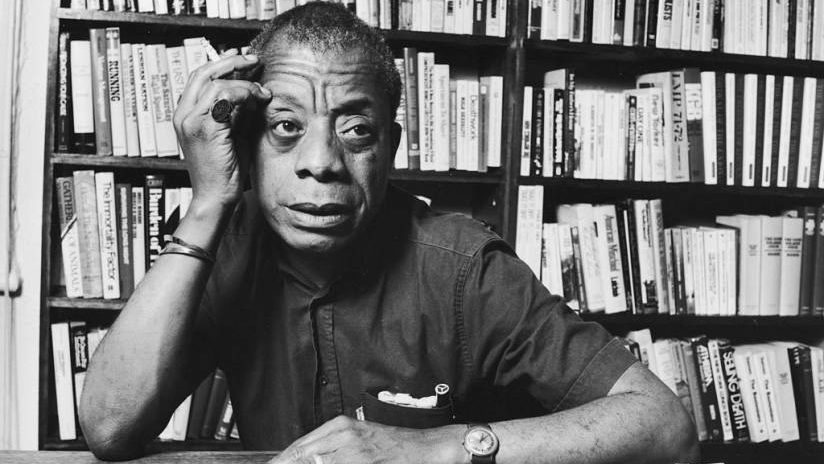
Bogg’s biography of James Baldwin shows human beings should not be judged by their racial identity or sexual orientation.

Books of Interest
 Website: chetyarbrough.blog

BALDWIN (A Love Story)

AuthorNicholas Boggs

Narration by: Ron Butler

Nicholas Boggs (Author, born in Washington D.C., a civil rights activist, raised in Cleveland as the son of a civil rights lawyer who was also a music teacher. Received a BA from Yale and PhD in English from Columbia University.)

Nicholas Boggs shows why his biography of James Baldwin is “A Love Story”. Baldwin’s difficult life as a young Black American raised in Harlem offers speculative insight to homosexuality and racism. Baldwin grew up with a stepfather he feared. His stepfather was a stern, authoritarian, and abusive man who worked as a Pentecostal preacher who “raised” James from the age of two or three. His stepfather is said to have beaten him, told Baldwin he was ugly and would never amount to anything. His stepfather died in 1943 when James Baldwin was 19 years old, James became caregiver for his mother and eight siblings.

Treavor Noah’s autobiography writes of his abusive stepfather.

As a voracious reader of books and early sexual liaisons, Baldwin leaves Harlem to go to Paris.

As a 24-year-old, Baldwin scrapes enough money together to travel to Paris where he grew to become a great writer, not just another Black American. Despite a stepfather who disliked white people, James grew to overcome physical and mental abuse through belief in God in his youth and belief in humanity as an adult.

In Paris, the 24-year-old Baldwin falls in love with a white 17-year-old youngster who influences his life with experiences that lead to his success as a writer. Lucian Happersberger and Baldwin become life-long friends.

Lucien Happersberger and James Baldwin in their youth.

Having lived in the household of a Pentecostal Preacher, James initially chose to become a preacher. But, at the age of 17, he left the pulpit and rejected belief in God. Boggs infers Baldwin’s pursuit of literature replaced his belief in God because Christianity sanctifies rather than condemns racism. He felt the church was limiting and dogmatic. His stepfather embodied a religion of fear and bitterness that his stepson would not accept.

The themes of “Go Tell It on the Mountain”, Baldwin’s first published book, is about faith, religion, sin, morality, race, racism, gender, patriarchy, and one’s search for identity.

“Go Tell It on the Mountain” is an autobiographical view of life and growth to manhood as a child raised in Harlem. It took ten years to write “…the Mountain”. It released him from the ghost of his stepfather’s cruelty and set the stage for his exploration of race, religion, sexuality, and personal identity.

Beaufort Delaney (Artist who befriended and became a mentor to James Baldwin.)

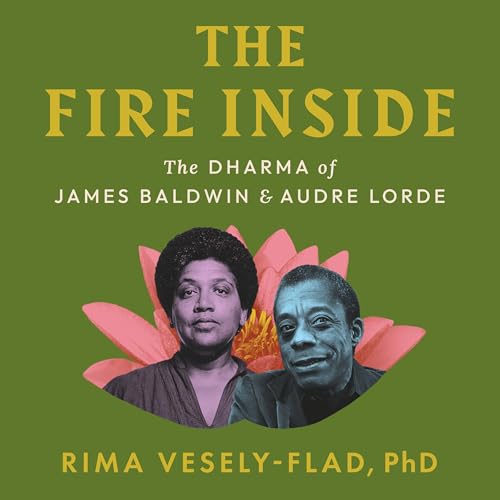
Boggs identifies four men that had the greatest influence on Baldwin’s life. His mentor becomes Beauford Delaney, a gay Black American painter he met when he was 16 years old. Delaney was 39 when he met Baldwin. Delaney became a major figure in American modernist painting and the Harlem Renaissance in the 1930s and 40s. He introduced Baldwin to life and encouraged him to become an artist. Delany’s homosexuality helped Baldwin deal with his race and sexual orientation. He helped Baldwin believe in himself and put him on a path toward becoming a literary artist. They were friends for forty years when Delaney died in 1979. Baldwin died 8 years later, acknowledging Delaney as his mentor and guide through his tumultuous life.

Lucien Happersberger (On the far left of James Baldwin.)

The success of “Go Tell It on the Mountain” confirmed Baldwin’s reputation as a writer. Baldwin found truth in the books he read and the life he began to live in Paris. At the age of 24, Baldwin left his family in Harlem to become a writer in Paris. In Paris he falls in love with Lucien Happersberger, a 17-year-old white bisexual who became more relevant to his life than the fire and brimstone of religion. Baldwin grew to believe in the underlying equality of all human beings regardless of the color of their skin or their sexual orientation. His journey to this understanding is what makes the biography the “…Love Story” of Baldwin’s life. Though Lucien and Baldwin remain lifelong friends, Lucien chooses to marry an actress in 1964 which ends Baldwin’s romantic relationship but not Lucien’s outsized influence on his life.

An ironic vignette in Boggs story is Baldwin meeting Richard Wright in America, and later in Paris. Wright’s published book “Native Son” made him famous. “Native Son” is published in the 1940s. The main character in Wright’s book is Bigger Thomas, an impoverished, unemployed, African American, 20-year-old living in a 1930’s Chicago ghetto.  He lives with his mother, sister, and brother in a rat infested one room tenement, owned by a wealthy family that is about to offer him a job. Though Baldwin admired Wright’s achievement, he felt “Native Son” identified Bigger Thomas (Wright’s main character) as a symbol of oppression rather than a fully realized human being. This is an interesting insight to what Baldwin does in “Go Tell It on the Mountain”. Baldwin introduces more complexity to the Black experience of life. I’m not sure either Boggs or Baldwin are offering a fair assessment of “Native Son” because Wright clearly shows the environment in which Bigger Thomas lives. Any human being raised in Bigger Thomas’s circumstance is likely to be emotionally challenged and unbalanced.

Richard Wright (Author of “Native Son”)

History shows a rift is created between Wright and Baldwin because of Baldwin’s criticism. To this reader/listener, both are great writers of what is wrong with white or any dominant sexually or racially dominant society.

Baldwin’s abusive domineering stepfather and submissive mother.

Boggs explains why Baldwin’s biography is “A Love Story”. The cruelty of his stepfather drove Baldwin away from belief in God to a love for humanity. One wonders what his stepfather’s cruelty may have had to do with Baldwin’s sexual orientation. The artist, Beaufort Delaney, offers a refuge to Baldwin from his stepfather’s cruelty and helps him reconcile to his sexual identity and a belief in all humans’ equal rights. Lucien helped Baldwin understand love, intimacy, and the equality of human beings. Lucien decides to marry an actress in 1964 but remains a lifelong friend to Baldwin.

Boggs’ biography of Baldwin shows sexual orientation is not, and should never be, a crime. One cannot know what makes a person homosexual, bisexual, asexual, or heterosexual. Bogg’s biography of James Baldwin shows human beings should not be judged by their racial identity or sexual orientation.

SOCIETY

The broad theme of Flournoy’s story implies being an identifiable minority means navigating social discrimination, gender difference, and physical violence in America.

Books of Interest
 Website: chetyarbrough.blog

THE WILDERNESS (A Novel)

Author: Angela Flournoy

Narration by: Angela Flournoy & 2 more

Angela Flournoy (Author, American writer won the First Novelist Award for “The Turner House” in 2015 and was shortlisted for the National Book Award for fiction.)

As a white person, “The Wilderness” offers a glimpse of what it is like to be a Black American woman in the prime of her life in today’s America. Flournoy creates a story of five adult Black women in their twenties in the years from 2000 though 2022. She reflects on their irreverent and tumultuous lives that show how friendships grow and fall apart between young Black Americans who are underestimated and face societal inequality. The friendships of these five women are a kind of bulwark against the experience of living in America as a racial minority.

American life.

Everyone faces challenges living in America, but friendship seems less important to white Americans because they are a majority of the population with assumed privilege that depends less on friendship than on economic opportunity. White American economic opportunity is taken for granted. A white listener/reader’s interest may make Flournoy’s story less interesting because it is singularly based on a minority. One might make the mistake of returning Flournoy’s story, rather than sticking with it, because it is different from its reader/listener’s life. Flournoy offers a view of life seen through the eyes of a person who lives as a minority in a white majority.

Friendship of women.

Desiree’s, Danielle’s, Monique’s, Nakia’s, and January’s stories are of 5 twenty something, well educated, Black American women and their lives through 20 years of friendship. Their friendship is a bulwark against the harshness of American life. Friendship is characterized as it is, i.e. not as smooth and unchanging but on again, off again, and renewable based on common experiences of being Black in America. Flournoy shows how these five friends balance their ambitions and relationships in a society that often gets in the way of their drive for economic success and/or happiness. When faced with discrimination, their friendships becomes an island of consolation. This island is not necessarily peaceful because of their different lives and personal circumstances, but it is a refuge from American discrimination.

Added to American police discrimination toward minorities is gender violence which is a problem for both white and Black American women.

Violence is endemic in America, but racism and inequality underlie greater vulnerability for Black Americans. Too many assumptions are made by police who racially profile Black Americans without justification. That profiling leads to unjustified police brutality based on the color of one’s skin. Sexual relationships may seem “ok” to an outside observer, but Flournoy shows it sometimes hides the reality of physical or psychological abuse between mated partners. January’s story is an example of coercion, instability, and harm that can occur in an intimate relationship.

The depth and horror of discrimination in American history.

The broad theme of Flournoy’s story implies being an identifiable minority means navigating social discrimination, gender difference, and physical violence in America. Flournoy’s opinion is that friendship is the bulwark upon which Black women protect themselves. The reality of Flournoy’s story is that social discrimination, gender difference, and violence exist in every country of the world. The way people deal with discrimination, gender difference, and violence ranges from adaptation, reluctant acceptance, or revolt. Her point is important, but her story is too long.

JUSTICE?

Putin has been indicted by the International Criminal Court for war crimes, unlawful deportation and transfer of Ukrainian children but has not yet faced trial. One suspects President Putin faces the same “slap of the hand” as Pinochet and will die of natural causes without being convicted for his crimes.

Books of Interest
 Website: chetyarbrough.blog

38 LONDRES STREET (on Impunity, Pinochet in England, and a Nazi in Patagonia)

Author: Phillip Sands

Narration by: Phillip Sands

Peter Sands (Author, Executive Director of the Global Fund to Fight Aids, Tuberculosis and Malaria, former CEO of Standard Chartered, known as a British Banker.)

Peter Sands book is interesting and a compelling history that would have been clearer if, at the beginning of his book, he had more precisely identified Augusto José Ramón Pinochet Ugarte’s atrocities in Chile. Those atrocities are detailed after one is nearly halfway through the book.

“38 Londres Street” is the address at which torture, illegal detentions and assassinations took place under the leadership of Pinochet. Sands explains 40,000 people were detained or tortured under Pinochet’s regime. 3,000 people were killed or disappeared during Pinochet’s reign. He ruled Chile for 17 years before being arrested in London when a Spanish judge issued a warrant for his arrest for genocide and terrorism. This was the first time a former head of state was charged for a crime by a universal jurisdiction.

Augusto Pinochet (born in 1915-died in 2006. As a military officer and politician, he instituted a military coup to become dictator of Chile from 1978 to 1990.)

Pinochet became Dictator of Chile when he overthrew President Salvador Allende in 1973.

Because of mining and trade interests in Chile by American and British corporations, along with distrust of Allende’s Socialist Party and Marxist beliefs, Allende was considered an enemy of America’s and Great Britain’s leadership. Allende was often labeled as a Communist because of nationalizing Chile’s copper mines, redistributing land, and increasing wages for less wealthy Chileans.

In truth, Allende rejected the idea of a one-party communist state while believing Chile should gradually become a Democracy. Both America and Great Britain supported Pinochet’s revolution because of their economic interest in trade with Chile and their opposition to his socialist beliefs. Declassified records show the CIA funded opposition parties to destabilize Allende’s government. Because Britain was a close ally of America and had economic interests in Chile, both Nixon and Edward Heath, the Prime Minister of Great Britain, supported Pinochet’s military junta. When Margaret Thatcher became Prime Minister, she also supported Pinochet’s government. In the atmosphere of the cold war, Pinochet’s rebellion seemed in the best interest of America’s and England’s leadership.

Walter Rauff was a Nazi commander during WWII who escaped justice for exterminating an estimated 100,000 people in gas vans. Rauff designed the vans for Hitler’s occupation of Poland, Russia, and Ukraine. The picture to the right is Rauff as he appeared in Chile as an employee of Pinochet’s government.

The reason for the Chilean coup is not what Phillip Sands is primarily interested in but, as an author and lawyer, he explains the significant change in jurisdictional law with Pinochet’s indictment. It set a precedent for a foreign country’s right to indict another country’s leadership that tortures, disappears, and kills its own citizens.

The most troubling part of his argument for the change in international law is that it seems ineffective when only viewed from the indictment of Pinochet. To find a leader chargeable for genocide is important, but Chile’s protection of death camp SS officers like Walther Rauff reminds one of Putin’s atrocities as President of Russia. Rauff was protected by Pinochet’ government despite his role in Nazi Germany. Sands notes that Rauff assisted Pinochet in Chile’s repressive activities at 38 Londres Street.

Rauff’s disguised ambulances used to gas Jewish citizens and others.

The last half of Sands’ book is about the extensive interviews and research he did on Rauff’s past life. Like Pinochet, Rauff escapes justice and dies of natural causes. However, Jewish Nazi hunters did track down Rauff with the intent of killing him. Sands explains they were unsuccessful despite having knocked on his door before being denied access by a woman who answered the knock.

Magistrate Baltasar Garzón (Former judge of Spain’s central criminal court that set the precedent for universal jurisdiction.)

The world owes Spain gratitude for embracing universal jurisdiction despite its failure to successfully hold Pinochet for his crimes against humanity. That precedent gives weight to the principle of international justice. Magistrate Baltasar Garzón used the Pinochet case to set the precedent that sovereignty does not shield perpetrators of torture and genocide to be free of indictment and its potential for punishment. Adolf Eichmann is brought to justice in 1961 and the survivors of the 2003 massacre in Bolivia were awarded $10 million in damages.

One’s thoughts go to Putin’s incarceration of Navalny, his ordered slaughter of Chechens and his aggressive war against Ukraine. Navalny exposed Putin’s corruption in state-owned companies owned by Kremlin elites, i.e. the same elites that support the war in Ukraine.

Will Putin escape the long arm of the law?

As a professor of international law, Sands gives listener/readers a view of the important precedent of universal jurisdiction with the successful arrest of Pinochet for crimes against humanity. The irony of Sands history of this precedent is that Pinochet is not convicted and returns to Chile in 2000. Pinochet dies in 2006 at age 91. Putin has been indicted by the International Criminal Court for war crimes, unlawful deportation and transfer of Ukrainian children but has not yet faced trial. One suspects President Putin faces the same “slap of the hand” as Pinochet and will die of natural causes without being convicted for his crimes.