GENDER MATTERS

All gender differences beyond women’s birth of children seem more culturally than naturally determined. Gender does matter but not because of inherent qualities but because of cultural influences.

Books of Interest
 Website: chetyarbrough.blog

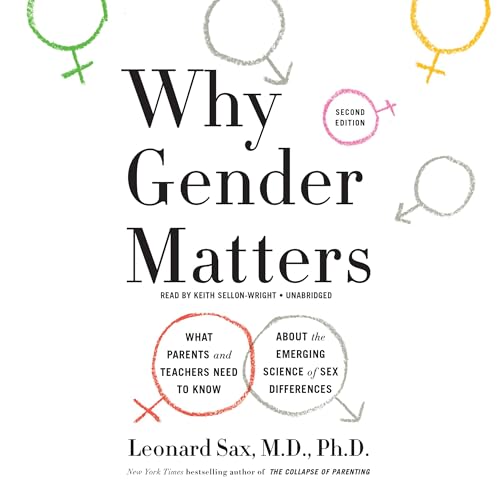
Why Gender Matters (What Parents and Teachers Need to Know About the Emerging Science of Sex Differences) 

Author: Leonard Sax MD PhD

Narrated By: Keith Sellon-Wright

Leonard Sax (Author, psychologist and family physician, graduate of MIT and the University of Pennsylvania.)

After listening to Sayaka Murata’s satire about gender differences and a future that minimizes the differences between males and females, one may wish to read/hear what a physician writes about gender and why difference matters. In listening/reading Doctor Sax’s book, this review is somewhat skeptical of his judgement about gender differences. Having been raised by a single parent, some of what he claims seems formulaic and based on weak evidence.

Gender differences.

Though Dr. Sax cites studies that support stereotypes of girls who are less inclined to pursue math and science, it seems impossible to separate acculturation from gender bias. One wonders if his opinion is not influenced by his own gender. As is true of all human judgements, we have a tendency to conflate correlation with causation.

Whether there is a direct relationship between two variables like gender and one’s potential in science or math may be culturally reinforced rather than intellectually adduced.

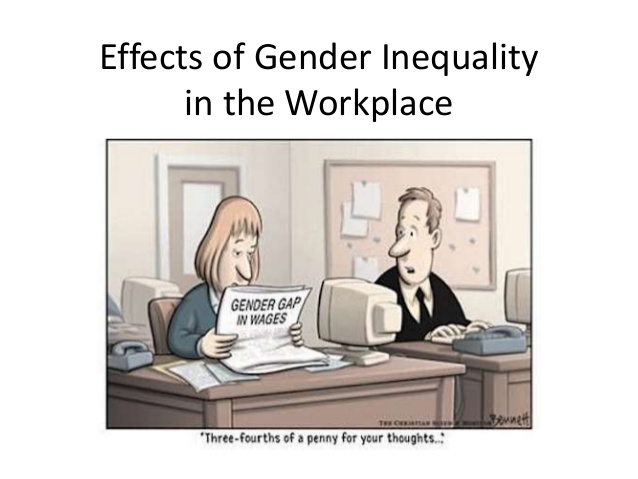
There may be some truth in gender difference based on women giving birth that naturally induces a more nurturing requirement for women than men. The fact that women bare children and traditionally take on the role of caregiving suggests a cultural as well as gender driven characteristic. Inequality of the sexes is well documented by numerous studies that show women are paid less for the same work done by men. Unequal pay has nothing to do with biology.

Gender difference.

It is economic and social circumstance that limits women’s potential. The question becomes whether a woman would run a business any differently than a man based on gender. One might believe women who have given birth may manage differently because of their experience as nurturers of early life. Why else, if education and intelligence are similar, would there be any difference between a woman or man who manages others?

Though most humans wish to be part of something greater than themselves, the shaming in this cell-phone age seems significantly more impactful on women than on men.

On the other hand, there are some observations about gender differences that seem true when one thinks about their own life experience. Though social acceptance is important to both sexes, it seems boys are less likely to be as stressed about not being part of the “in group” than girls. Though even that is challengeable in that males also have a desire to be a part of something greater than themselves.

On balance, this listener/readers’ opinion is that Doctor Sax’s explanation of innate gender difference is suspect with the caveat that women are different from men in that they give birth.

All gender differences beyond women’s birth of children seem more culturally than naturally determined. Gender does matter but not because of inherent qualities but because of cultural influences.

CAPITALIST DEMOCRACY

America’s current government may not be the criminal enterprise of Drew Hayes’ “Forging Hephaestus”, but it reflects on the worst characteristics of capitalist democracies.

Books of Interest
 Website: chetyarbrough.blog

Forging Hephaestus: Villains’ Code Series, Book 1 

Author: Drew Hayes

Narrated By: Amy Landon

Drew Hayes (Author, humorist writer who earned a BA in English from Texas Tech University.)

“Forging Hephaestus” is the beginning of a series of books that this critic is unlikely to complete. The first book, “Forging Hephaestus” sets the table for some interesting points about systems of power, identity, and morality that reminds one of government control and influence. However, Hayes is creating a secret guild of criminals’ intent on ruling the world of crime.

Drew’s story begins with the creation of a young woman that embodies the force of fire.

She is like the mythological god of fire though not appearing as someone who is male or has, as the Greek myth goes, any physical imperfection. One presumes the author is challenging the patriarchal truth of history that shows power, aggression, and ambition are not only masculine. Additionally, the choice of Hephestus as a woman makes one think about a person who exemplifies both creation and destruction, i.e., the birth and death of humanity.

If one thinks of Hayes’ story as a cynical allegory of government, rather than a criminal enterprise, it becomes more interesting to this reviewer.

What Drew describes as a Villains’ Guild is like a government elected by people who believe they are voting for someone who represents their interests. In reality, voters are voting for self-interested people who may or may not govern in voter’s best interest. At best, governments try to serve the public but are not gods of infallible understanding that can legislate what is always in the best interest of its citizens. Generally, governments control through compliance, not morality. Order is prized over justice and equity. That desire for order changes elected officials’ loyalty to those who are elected as much as to people who voted for them.

The guild that Hayes creates audits and enforces their criminal objectives with state surveillance and internal security.

State surveillance and internal security are the same tools used by government which are even more effective today than in the past because of technology. (A past trip to China after Xi had taken power shows how internet searches are restricted when one is in a Bejing’ hotel.) The paradox of surveillance and internal security is that no one is truly free whether they are a part of those who govern or are the governed. Human nature exploits the weak, the ethnic, and ill-informed. Government representatives are no more virtuous or venal than the citizens who elected them. That is why citizens become skeptical about the legitimacy of their government’s concern about common good.

Trump’s world view.

Listening/reading “Forging Hephaestus” is an apocryphal story to some who feel President Trump is the quintessential example of one who is more interested in himself and his family’s wealth than the people who voted for him. America’s current government may not be the criminal enterprise of Drew Hayes’ “Forging Hephaestus”, but it reflects on the worst characteristics of capitalist democracies.

GOTHIC TALE

The climax of “Modern Gothic” is where myth enters Moreno-Carcia’s story. The fundamental truths of colonization are revealed in her creative story while its denouement is an entertaining explosion of imagination.

Books of Interest
 Website: chetyarbrough.blog

Mexican Gothic

Author: Silvia Moreno-Garcia

Narrated By: Frankie Corzo

Silvia Moreno-Garcia (Author, Mexican/Canadian novelist, editor and publisher.)

Moreno-Garcia’s “Mexican Gothic” is a chilling story of colonization, eugenics, ecological contamination, mystical beliefs, and control of society by men. The author chooses the name of Doyle as an English family that exploits the Mexico’ silver mining industry in earlier centuries. A dynasty is created by generations of Doyle’s. They created a colonial manor called “High Place” from which to rule a crumbling empire. As colonizers they capitalize on Mexico’s silver deposits by exploiting native Mexicans’ land and labor to grow their mining operation. The wealth of local citizens is lost to the English foreigners who keep wages low to increase the wealth of the Doyle family.

Over generations, the Doyle men married local women that were related to each other. A common practice of royalty before the twentieth century.

They wished to maintain the genetic purity of the Doyle bloodline by having future Doyles marry genetic descendants of Mexican women that had been their wives. This is not greatly different than the experience of royal marriages in European cultures. The consequence of that marriage tradition is that recessive genetic mutations become more prominent in offspring. Children were more susceptible to diseases like cystic fibrosis and had higher incidents of developmental and cognitive disorders. This is one of many threads of meaning in “Mexican Gothic” because one of these descendants becomes a murderer of Doyle family members and the current Doyle generation seems socially dysfunctional. Added to that dysfunction is the Doyle family’s diminishing wealth.

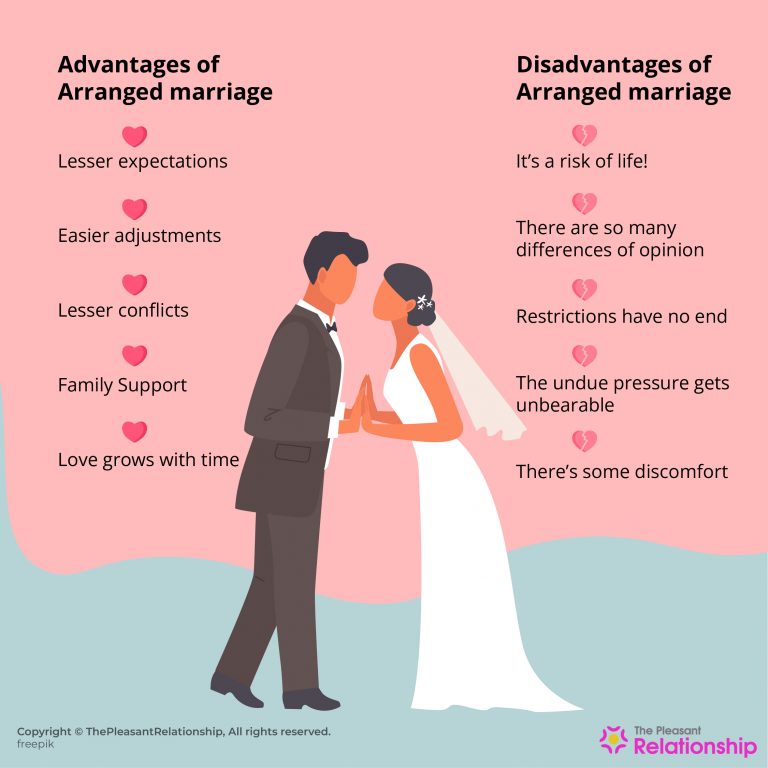
An arranged marriage is a lynch pin to the story.

The heroine, Noemi, is the daughter of a wealthy Mexican family. She is sent to investigate a letter that was received by her father from a young woman that marries a Doyle. She is a cousin of Noemi’s. The marriage is arranged in part because of her father, and he feels something is wrong and wants Noemi to visit the Doyle family to find what the mysterious letter means. Soon after Noemi arrives, she begins to have hallucinatory dreams. Listener/readers find the hallucinations are because of spores that are in the bedroom of the deteriorating Doyle house. A clever thread of meaning in Moreno-Garcia’s story is ecological contamination that comes from colonization. As one nation colonizes another, it inevitably brings different plants and animals that are not indigenous to the country they are colonizing. The author notes a fungus is growing in the Doyle household that may have come from the original colonizers.

The penultimate theme in “Modern Gothic” is the creation of myths that compound the horrific events that occur in the Doyle house.

From the history of murders in the Doyle household, to hallucinatory dreams, to incestuous relationships, to the gloom and doom of the story, to a myth about the age of the Doyle patriarch, Moreno-Garcia offers a climax to her story that vivifies reader/listener’s imagination. The climax of “Modern Gothic” is where myth enters Moreno-Carcia’s story. The fundamental truths of colonization are revealed in her creative story while its denouement is an entertaining explosion of imagination.

WHO ARE YOU?

Greene explains self-awareness of introversion or extroversion is key to understanding one’s social limitations and blind spots in being a constructive part of society.

Books of Interest
 Website: chetyarbrough.blog

The Laws of Human Nature

Author: Robert Greene

Narrated By: Paul Michael & 1 more

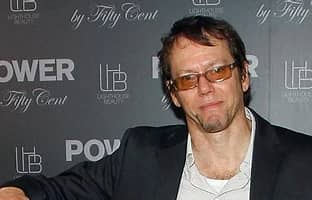
Robert Greene (Author, with several NYT’s bestsellers addressing human nature, graduated with a degree in classical studies.)

“The Laws of Human Nature” is a tour deforce of what one learns in life about being a good manager. The difference between a technically excellent employee and a manager is that the first has skill in doing things while the second has skill in managing those who do things. Occasionally, one can be both, but as the complexity of life increases, the likelihood becomes rarer. Human nature revolves around behavior and one’s psychological characteristics. Greene argues there are fundamental laws of human nature that can enlighten listener/readers about themselves and others.

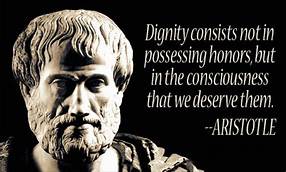
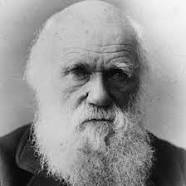
Aristotle’s, Hobbes’, Rousseau’s, and Darwin’s views of human nature have different perspectives. Aristotle believes human nature is teleological with a belief that we all have purpose that is revealed by reason and virtue. Hobbes believes humans are innately self-interested and capable of both good and bad behavior. Rousseau believes humans are inherently good but corrupted by society. Darwin believes humans evolve through natural selection and will do whatever is necessary to survive. Of the four perspectives, Aristotle seems the most idealistic while the other three account for human nature’s irrationality.

Greene suggests humans can be irrational, narcissistic, misleading, and sometimes repressive.

What one can draw from his book is how those characteristics exhibit and what one can do about it. The potential of irrationality exists in everyone. It can cause fear, envy, insecurity, and desire. Bias is at the heart of these emotions. He turns to ancient history to give the example of the war between Spartans and Greeks that may have been avoided if heightened emotions had not been aggravated by a plague in Greece and the death of Pericles who had a rational plan to avoid war. Greene suggests Augustus defeats Anthony to become ruler of Rome because of Anthony’s neglect of his duty as leader of Rome for the desire of the Egyptian Queen, Cleopatra. Greene notes irrationality is a universal characteristic of humanity. The anecdote is to calm one’s emotions, clearly understand what it is that you fear, and to mirror back that clear understanding to yourself and change your behavior.

One can see narcissism in themselves or others when one seeks admiration, overreacts to criticism, has no interest in others perspective, or manipulates others by ignoring or emotionally withdrawing attention.

Married people often do this with their significant other. Greene explains self-awareness, seeing others through their eyes, redirecting your energy to something more important, and being more disciplined can abate narcissism. He notes narcissism is not a flaw but a force that can be turned to good. The history of Oppenheimer, considered by some to be narcissistic, is noted as an example of someone who saw the big picture of life and the consequence of war. He came to understand something bigger than himself and successfully manages other scientists to create the first nuclear bomb. The contrary of a narcissist who could not see the big picture is the story of Howard Hughes who could not manage his father’s company or his entry into the film industry because he could not get things done through other people. He believed only he could handle the complexity of a film production and plane manufacturing company. No one could work under him because of his uncontrolled narcissism that interfered with others he hired to help him manage businesses bigger than one mind could control. His managers resigned because he would not allow them to do the job they were hired to do. Hughes failed as a movie producer and plane manufacturer because of his narcissism.

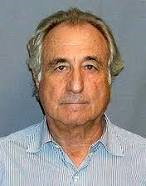
Bernie Madoff (Born 1938, died in Federal Medical Center in 2021)

History is festooned with misleading information by people who distort the truth in order to achieve their personal goals. Greene recalls the history of swindlers like Bernie Madoff that lied to his investors about investments that were Ponzi schemes that fed his investment company’s growth, not from honest investment in publicly traded stocks or business enterprises.

Stalin in Russia, is the penultimate example of a psychological characteristic of repression. One suspects the same is true of Putin. Even America’s President Trump could be characterized as a narcissist. He used federal power to investigate and punish political opponents. Trump politicized the civil service by conducting mass firings to replace employees that were loyal to his agenda. Justice Department’ independence has similarly been restructured. Trump suppresses dissent and free expression by cracking down on student protests, detained and deported not only illegal immigrants but U.S. citizens. He ended asylum protections and militarized crackdowns with the use of the National Guard and U.S. marines to aid ICE in deporting undocumented immigrants and quelling public opposition. All of these actions are examples of an increasingly repressive American President. There were similar arguments about Franklin Roosevelt in his early actions to rescue America from the pre-WWII’ depression.

Greene goes on to explore personality types that are a combination of extroversion and introversion characteristics.

He notes both characteristics have strengths and weaknesses. Extroverts generally have more social fluency, have a more charismatic presence and higher social visibility. They can also become subjects of envy or derision because of their high profile. Greene suggests they are more vulnerable to manipulation because their habits reveal too much about themselves. They become more susceptible to groupthink rather than individual judgement. On the other hand, introversion has equivalent but different strengths and weaknesses. Introverts have more control over themselves because they reveal less of themselves to others. They are naturally less likely to succumb to groupthink. On the other hand, they tend to misread socially valuable influences because of their isolated view of the world. They fail to offer their opinion because of fear of self-exposure and ridicule which diminishes their understanding of beneficial social norms.

Greene explains self-awareness of introversion or extroversion is key to understanding one’s social limitations and blind spots in being a constructive part of society. However, his analysis of “The Laws…” of human nature becomes tedious because it offers too many examples and views of biases and their anecdotes for most listener/readers to be patient enough to complete his book. Nevertheless, Greene’s first chapters are enlightening and worth one’s time.

EQUALITY

Discrimination is certainly based on the color of one’s skin but also on gender, ethnicity, and income inequality. Those nations that embrace equality of opportunity for all will be the leaders of the future in the age of technology

Books of Interest
 Website: chetyarbrough.blog

Caste (The Origins of Our Discontent)

Author: Isabel Wilkerson

Narrated By:  Robin Miles

Isabel Wilkerson (Author, American journalist, winner of the Pulitzer Prize in journalism in 1994 while serving as the Chicago Bureau Chief for the NYTimes.)

Isabel Wilkerson has written a provocative book about what she characterizes as a rigid social hierarchy in America that undermines the ideals of democracy. Wilkerson weaves her personal life and the history of black experience with the sociological failings in America’s treatment of race. She notes the past and present truth of white America’s unequal treatment of its citizens based on race. However, her characterization of America’s discrimination as a caste system and its comparison to India’s and Nazi Germany’s governments is hyperbolic. Nevertheless, it creates a sense of urgency for those who believe in the ideal of human equality. It is difficult, if not impossible, to compare other nation’s inequality with America’s effort and present-day failure to fulfill the ideals of democracy.

The timeliness of Wilkerson’s book seems appropriate in relation to the backward steps being taken by Donald Trump.

Some Americans feel threatened by demographic change that will make white citizens less than 50% of America’s population by 2045. In theory, no one should care if all people are treated equally. What history shows is that the ideals of equality have never been achieved in America or in any other country with a dominant race and/or ethnicity.

Trump’s effort to return America to its past is interpreted by some as a return to industrial production.

America’s return to industrialization is a false flag that will not make America Great. Reindustrialization and keeping America white is a fool’s errand based on demography and the age of technology. Trump’s desire for power, adulation, and loyalty have little to do with prejudice but everything to do with appealing to the worst fears of middle-class America. Trump is willing to use whatever dog whistle is required to satisfy his desire for power and prestige. He understands the fears of the middle class and where American power lays. Power and money are the driving forces of capitalism. Middle class American’s buying power has stagnated or fallen since the 1970s despite the increasing wealth of the top 10% of American citizens. The middle class of America is something Trump appealed to in his re-election for a second term because of their disproportionate loss of income and the rising wealth of America’s business leaders. The irony is that Trump is one of the beneficiaries of that income gap between the very rich and the working-class.

Income growth in America.

Income disparity trend in the U.S. through 2015.

Wilkerson is right in the sense that America’s real objective should be to ensure equality of all. She is arguing we should have a greater sense of urgency in achieving equality. Equal treatment for all is a formula that can maintain America’s position as an economic, military, and political hegemon. American industrial hegemony is yesterday’s goal. Technological advancement is today’s goal. To achieve today’s goals, equal treatment of all becomes essential in technology because intelligence, innovation, and persistence does not lie in any one race, sex, or creed.

America is class conscious but not in the same way as either India’s or Nazi Germany’s histories.

Wilkerson notes a caste system can be built around ethnicity, religion, language, or gender but race discrimination is what she has personally experienced and underlays much of her comparisons of American history with India and Nazi Germany. Equality of opportunity is key to continued growth of human beings and national economies in the age of technology. In the short term, one may see an autocratic country like China become an economic and military hegemon, but maintenance of that success is dependent on equality of opportunity for all, not just those in power.

One can sympathize with the author’s view of discrimination but her comparison of America to India and Nazi Germany misses too much of what unequal treatment in America is based upon.

Discrimination is certainly based on the color of one’s skin but also on gender, ethnicity, and income inequality. Those nations that embrace equality of opportunity for all will be the leaders of the future in the age of technology.

BRUTALITY

What is so troubling about Grandin’s history is what appears to be the nature of human beings whether royalist, capitalist, socialist, or communist.

Books of Interest
 Website: chetyarbrough.blog

America, América (A New History of the New World)

Author: Greg Grandin

Narrated By:  Holter Graham

Greg Grandin (Author, American historian, professor of history at Yale University.)

Before Professor Grandin, most Americans presumed the United States came from the traditions of the British empire. After reading/listening to America, América, one recognizes the powerful influence of the Spanish empire on the settlement of North America, the attitude of colonists toward minorities, the growth of slavery, and the deep entanglement of Spain in the broader Americas. America, América is a book that widens one’s understanding of the history of the United States.

When being reminded of the many atrocities of colonization and the decimated indigenous natives of the Americas, one is appalled by man’s inhumanity to man. Grandin begins his history of colonization with the Spanish empires’ expansion into the Americas long before the Mayflower expedition to America. Conquistadors set the table for the way what became Americans way to colonize the New England territory. Hernán Cortés and Francisco Pizarro led expeditions that decimated the Aztecs in Mexico and the Incas in Peru. Looking for wealth Spanish conquistadors murdered, raped, and pillaged Latin American native populations. The conquistadors exemplified what became the modus vivendi of British colonists in America. Indigenous peoples were forced to work for Spanish landlords, later supplemented by imported African slaves. The atrocities of Spain in the 16th century are repeated by English settlers in the 17th and later centuries. An estimated 80% of the indigenous people of the Americas perished from disease, forced labor, and ethnic cleansing by Spanish settlers–a grim reminder of American settlers did to indigenous natives in America.

What is so troubling about Grandin’s history is what appears to be the nature of human beings whether royalist, capitalist, socialist, or communist. America, América shows the founding of the United States is a repeat of Spain’s early colonization of the southern part of North America. The human race appears driven by the desire for money, power, and prestige in a system that begins with attack on indigenous peoples and repeats as a perceived advance of civilization. There is some truth in that perception but one realizes indigenous peoples are equally driven and commit human atrocities among themselves in pursuit of value, power, and, or prestige.

This book is returned before completion because of its length. Its history is enlightening but its length is too much for this dilettante.

RIGHT & WRONG

The story of “…Belle Lettres…” inelegantly reminds one of the effects of Trump on America’s reputation.

Books of Interest
 Website: chetyarbrough.blog

The Belles Lettres Papers (A Novel)

By: Charles Simmons

Narrated By:  Alex Hyde-White

Charles Paul Simmons (1924-2017, Author and former American editor for The New York Times Book Review, graduate of Columbia University in 1948.)

“The Belles Lettres Papers” is a fictional account about the destruction of an American book review company. Written by a person who worked as the editor for the NY Times Book Review gives credibility to its author. One wonders how the nationally famous paper felt about his book. Simmons writes a story of a magazine company that exclusively reviews new books that become literary successes, sometimes bestsellers, or dead or dying dust gatherers.

To this book critic, Simmons certainly seems to know what he is writing about but “The Belles Lettres Papers” falls into a dust gatherer category of books.

Book reading or listening is an educational, sometimes entertaining, experience. There are so many books written that it is impossible to know what to read or listen to without someone’s review of what has been newly or recently published. Of course, there are genres that a reader/listener will choose that influences their book choices. Even when one limits themselves to a genre, there are too many choices that require a way of limiting one’s choice.

Experience reveals “best seller” is not a consistently reliable way of choosing a book, but it is one of the most commonly used methods of selection.

What “…Belles Lettres…” reveals is the potential corruption that can inflate a books placement on a best seller list. Book review publications, like all business enterprises, have owners and employees that have various levels of honesty, capability, and ethical standards. What Simmons shows is how every business owner and employee is subject to the influence of money and power.

The potential weaknesses of humanity play out in every organization that provides service or material to the public.

Simmons shows how a fictional book review company has employees who are corrupted by the power of their positions and the money they make. The fictional company has a male business manager who thinks his female secretary wishes to have sex with him because of natural attraction. Ethically, no employee reporting to a manager they work for should have sexual relations with a direct report. This is particularly egregious in Simmon’s story because of sexual inequality that permeates society. As Lord Acton’s observation about power (power corrupts, absolute power corrupts absolutely), a person who has power over another is always at risk of self-delusion.

Simmons goes on to explain how undercompensating employees can corrupt an organization by incentivizing theft and other ways of undermining a company’s integrity.

Simmons addresses the incentive of owners or those in power of an organization to cut personnel employment to save money at the cost of product quality or service. America is experiencing that today with the actions of the Trump Administration in arbitrarily firing federal employees, regardless of what they do for American citizens.

In a last chapter, Simmons addresses the revisions that can occur in a company that decides on a wholesale turnover in employees.

The integrity of a company’s mission can be sorely challenged. In the case of “…Belle Lettres…” a decision for publication of salacious books replaces the company’s former studied reviews of good writers. The organization loses its reputation as a reviewer of high-quality publications.

Trump’s assessment of immigration.

The story of “…Belle Lettres…” inelegantly reminds one of the effects of Trump on America’s reputation as a supporter of western society by reducing foreign aid, undermining university independence, denying global warming, arbitrarily firing government employees, and expelling American immigrants.

ARROGANCE

A President who only sees government as a cost and the wealthy as the nation’s only benefactors, compounds America’s inability to solve the problems of poverty with eviction being a preeminent symptom.

Books of Interest
 Website: chetyarbrough.blog

Evicted (Poverty and Profit in the American City)

By: Matthew Desmond

Narrated By:  Dion Graham

Matthew Desmond (Author, sociologist and a Pulitzer Prize winner, Professor of Sociology at Princeton.)

Matthew Desmond has written about American poverty in “Evicted”. There are two types of poverty. One is a worker who is not making enough money to be anything more than poor. The second kind of poor is grinding poverty where one must choose between having food to eat or a roof over one’s head. One who is poor can live in America, may get an education, find a job, and get along in life. However, those with too little money to eat and have shelter–live lives of desperation. Desmond’s book is about the latter to show how American society is failing desperate citizens. Desmond interviews several poor Americans that offer a clear understanding of the difference between being poor in America and being desperately poor in America.

“Land of opportunity” believers argue there are jobs in America and those who choose to beg for food rather than work deserve their fate. The truth is that many jobs in America do not pay enough for those who have jobs to pay rent and feed their families. Housing is expensive and affordable housing is not being produced in large enough quantities to reduce the costs of housing. Affordable housing is hard to build because many homeowners resist having it built in their neighborhoods. When land is found, it is often too expensive for the builder to make a profit with low rents. The cost of construction is often higher than it needs to be because of high land prices, building code requirements, or rezoning needed to allow multifamily housing.

Education in America is not meeting the needs of its citizens.

School availability is not well enough managed to ensure education for all who live in America. Sex education and contraception are being discouraged in school, which is a foolish, self-destructive societal mistake. Healthcare is too expensive for many Americans with low incomes which compounds the health problems of the poor who cannot afford either medical service or treatment. Grinding poverty causes some to seek relief through drugs which increases medical problems and further aggravates inequality being fed by an illicit industry that is growing in America. Drug abuse kills Americans in many ways; not the least of which is addiction and poverty.

The history of American income inequality is burdened by forms of racism and sexual discrimination that do not treat people equally.

Jobs are changing with automation and outsourcing of goods produced by an international economy. American government has failed to create policies that help those who need more help. As one of the wealthiest nations in the world, America has been incapable of solving the spread of poverty among its citizens.

In reading/listening to Desmond’s research, it seems like there is an American conspiracy making one of the wealthiest countries in the world incapable of solving the housing, education, and employment problems of its citizens.

A President who only sees government as a cost and the wealthy as the nation’s only benefactors, compounds America’s inability to solve the problems of poverty with eviction being a preeminent symptom.

ABSOLUTION

History of the world has shown all forms of government are “equal opportunity” inhibitors, if not destroyers.

Books of Interest
 Website: chetyarbrough.blog

Secondhand Time (The Last of the Soviets)

By: Svetlana Alexievich

Narrated By: Amanda Carlin, Mark Bramhall, Cassandra Campbell & 8 more.

Svetlana Alexievich (Author, Belarusian investigative journalist, winner of the Nobel Prize in Literature in 2015.)

Svetlana Alexievich’s “Secondhand Time” is a remarkable and informative explanation of why Putin believes he is right and why many citizens of Russia seem to continue in their support of his administration.

Map of the former U.S.S.R.

Alexievich conducts a series of interviews with Russian citizens of different generations about the U.S.S.R. and its return to the world stage as a Russian nation. The narrators of her book recite those interviews to give listener/readers a complex and enlightening picture of Russian culture. The clash of communist and capitalist ideals is at the foundation of the interviews and the narrators dramatically told stories.

The Russian Soviet Army is the first to arrive in the Battle of Berlin on April 16, 1945. Their flag was hoisted on May 1, 1945.

The citizens of Russia are justifiably proud of their role in WWII that turned the tide of Germany’s war of aggression. (Of course, that is putting aside Stalin’s Machiavellian decision to join Hitler at the beginning of the war.) Some Russian soldiers who fought in that war were disgusted with what they feel was a betrayal by Mikhail Gorbachev of communist ideals for which they lived and died for in the 20th century.

The rejection of communist ideals for capitalism is viewed by some Russians as a tyranny of greed that lays waste to the poor and creates a class of haves and have-nots.

Some Russian veterans of WWII see the seduction of capitalism destroying the ideal of a classless society. Some citizens see the ideal of a government is to demand the wealth of life be spread equally according to individual need. To these believers, enforcement of communist ideals would eliminate private property and greed that would create a classless society. Some believed Stalin exemplified leadership that would achieve that ideal. The hardship of life during Stalin’s rule is considered by some as justified means for the achievement of the Marxist ideal of communism.

Statue of the “Circle of Life” in Norway.

Cultures may be different, but all human life is the same.

The underlying point of these interviews is to show Russian culture is not monolithic, just as culture is not in any nation. All cultures are filled with diversity. There is no singular cultural mind but a range of interests among many factions that establish a nation’s culture. The evidence of that is the contrast of Gorbachev and Putin in Russia and FDR and Trump in America. All four leaders led their countries but represent completely different cultural beliefs.

Conservatives, New York Governor Al Smith, Southern Democrats, and isolationists like Charles Beard opposed FDR in America. Putin and Trump have their cultural supporters in today’s national governments, but they also have their critics. The difference is that in Putin’s world, being killed or put in prison for opposition is culturally acceptable. In America, one is reminded of Trump’s deportation and imprisonment of migrants without due process.

The author’s interviews are not suggesting that either Russia or the West have good or bad governments but that every culture tests their leaders.

Many Russians, undoubtedly blame American Democracy for the dismantling of the U.S.S.R. Alexievich interviews Russians who believe the hardship that countries within the U.S.S.R. experienced were not the fault of Stalinist policies but the failure of citizens to live up to the ideals of communism. To anyone who has traveled to the Baltics, that opinion is founded on ignorance of the hostility expressed by citizens of the Baltics who were starved, displaced, jailed, and murdered during their occupation by Russia.

The other part of the story is the rise of the oligarchs in Russia as a result of the greed associated with capitalism.

The gap between rich and poor is accelerated in Russia just as it has been in America. Democracy does not have clean hands when it comes to equality of opportunity. Like the Jewish pogroms in Russia, America’s enslavement, murder, and discrimination of Blacks is proven history.

Siberian Exile during Stalin’s reign in Russia.

Alexievich draws from all sides of Russian beliefs. Those interviewed note the terrible conditions of those exiled to Siberia. Many Russians became disillusioned by the redistribution of wealth and privilege after Gorbachev and Yeltsin showed themselves to not be up to the task of leadership change. In fairness, one wonders who could have been up to the task when Russia had a long history of monarchal and tyrannical leadership?

A few Russians became immensely wealthy while the majority were somewhat better off but some struggled with the loss of State benefits and fewer jobs. The rising gap between rich and poor soured communist idealists. Even those who had been sent to Siberia by Stalin who toiled and suffered the experience of isolation, slave labor, and frigid weather felt they were no better off because of the loss of a socialist future.

The frightening truth of Alexievich’s book about the culture of Russia is that Putin may be absolved for his atrocities just as leaders of America have been absolved for their mistakes. History of the world has shown all forms of government are “equal opportunity” inhibitors, if not destroyers.

HUMAN HOPE

Migration is the movement of people to new areas of the world for work, better living conditions, and safety. In that process the world economy is strengthened. .

Books of Interest
 Website: chetyarbrough.blog

The Shortest History of Migration

By: Ian Goldin

Narrated By: Julian Elfer

Ian Andrew Goldin (South African born professor at the University of Oxford, specializes in globalization and development.)

Professor Goldin has written a history of migration that reminds one of the well-known phrases attributed to Socrates: “I know that I know nothing”. Goldin is born in South Africa to a Lithuanian father who fled his home country to escape political and social upheaval in Europe during the early 20th century. In retrospect, that migration saved the future of the Goldin’s from Stalinist suppression after WWII. It is ironic that Ian Goldin is raised in South Africa where white suppression of native South Africans was common. “The Shortest History of Migration” is no apologia, but it is a forthright history of the ubiquity of world migration.

Migration is an essential characteristic of civilization believed to have begun in Africa.

The obvious irony of human origin is the darker skin tone of our first ancestors who had higher levels of skin melanin to protect them from the harsh effects of the sun. Humanity began as a species of a black ancestor, an estimated 6 to 7 million years ago.

Neanderthal precursor of human beings.

Goldin implies humans moved from Africa to explore the world. They may have left to escape the harshness of their existence or because of the nature of species’ curiosity. Their change in environment led to changes in their physiognomy (facial features and expressions) caused by the evolutionary nature of life and the exigencies of environment. The point is that migration has been a part of history since the beginning of life on earth.

What may be forgotten by some is that migration was largely unregulated until WWI according to Goldin.

That seems largely true except the United States passed the Naturalization Act of 1790 that established rules for citizenship and an Immigration Act of 1891 that created the U.S. Bureau of Immigration; both of which implied regulation. Nevertheless, the fundamental point is that migration has been a part of society from the beginning of human life.
WWI generated many new laws and policies about migration.

Wartime measures required passports and border crossing cards to manage migration. National security increased scrutiny of immigrants. Broader societal and political concerns about migration spread across the world. Migration became more complicated.

Goldin argues the benefit of migration is misunderstood and misrepresented by leaders like Donald Trump.

Goldin suggests the economic impact of Trump’s anti-migrant beliefs and policies will undermine both the world and American economies. In 2023, an estimated 18% of the economic output of the American economy came from migration. The two industries most impacted are agriculture and construction but many immigrants work in caregiving and medical professions, all of which will be impacted by labor shortages. Goldin notes that migrants working in other countries send money back to their home countries that amount to more revenue than is provided by tourism and foreign aid. Many, if not most, economists would argue migration is a cornerstone of economic growth and stability. Trump’s false statements about migrant criminality are overblown and unsupported by economic statistics that show migrants contributed an estimated $25.7 billion in 2022 to the Social Security system in taxes that benefit aged American citizens (like myself).

Trump policies will not return American to the manufacturing prosperity of the twentieth century but to a possible depression like that of the 1930s or, at the very least, a recession like that of 2007-2009.

Migration is the movement of people to new areas of the world for work, better living conditions, and safety. In that process the world economy is strengthened.