FARMLAND

Historically, collectivization of land has failed even when those who are part of the collective are better off than they were when they had no land.

Books of Interest
 Website: chetyarbrough.blog

Land Power (Who Has It, Who Doesn’t, and How that Determines the Fate of Societies)

Author: Michael Albertus

Narrated By: Braden Wright

Michael Albertus (Author, professor at the University of Chicago in the Department of Political Science.)

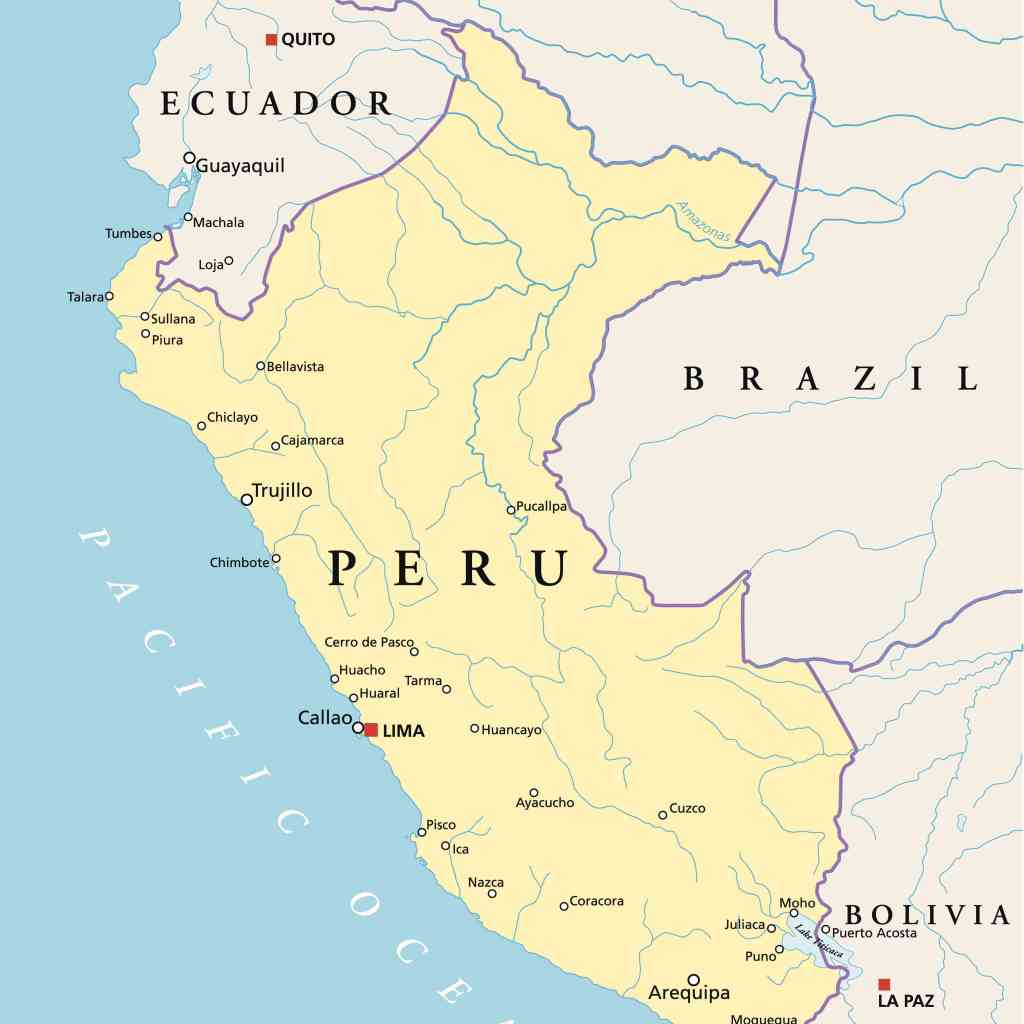
Michael Albertus develops a powerful argument for “Land Power”. Much of history and current events in relatively undeveloped countries are identified as proof of Albertus’s belief that “Land Power” is key not only to economic growth but to social improvement. He reflects on the history of Great Britain, France, and the United States while noting current affairs in developing countries like Peru, Columbia, and Bolivia support his argument.

The unfortunate truth of history is that indigenous populations, particularly in America and Great Britain, were displaced in order for “Land Power” to be the engine for economic prosperity and social change. In the case of America of course, it is the displacement of North American natives by English settlers who became Americans. In contrast Great Britain’s “Land Power” comes from a landed aristocracy and their subjugation of foreign cultures with autocratic control and rule of Asian and European countries. In France, Kings and an aristocratic government’s rejection by commoners in 1789 seem the motive force behind “Land Power” ascension.

For Peru, Columbia, and Bolivia Albertus infers examples of Britain, America, and France set a table for “Land Power” change by their governments. In my opinion, the age of technology has diminished “Land Power” importance in America, Great Britain, and France.

“Land Power” still carries weight in America, Great Britain, and France but in the tech age it seems the power of accumulated wealth has become more powerful than land. However, Albertus’s “Land Power” argument in regard to South American countries like Peru, Colombia, and Bolivia are compelling in regard to their economic and social improvement. Albertus notes private land ownership and recognition of women’s rights to own property, show that “Land Power” is a source of economic and social improvement in South America. He suggests countries like Mexico are being challenged by their failure to reform land ownership policies but today’s leaders in Peru, Columbia, and Bolivia have made significant land reform changes.

Albertus explains the major reform movement between 1969-1980 made by General Alvarado in Peru.

General Alvarado ordered nearly half of all private agricultural land be redistributed among Peruvian citizens. He dismantled large estates to empower peasant cooperatives. It has not been a perfect solution because it created an insurgent group called the Shining Path that pressed for a Maoist collective land reform for the redistributed Peruvian estates. Just as collective farms failed in China, they failed in Peru because common gains in collectives did not fairly reward performance. Collective farms distort the needs and results when a collective rather than a singular leader is responsible for performance of the collective. Nevertheless, the steps taken to dismantle half of private agricultural land, is considered by Albertus a step in the right direction because it incentivized many Peruvians who were living in poverty.
In Colombia, in 1966 through 1970 President Restrepo redistributed agricultural land to former agricultural laborers.

FARC (Revolutionary Armed Forces of Colombia) is organized in 1964 to offer peasant self-defense for actions soon to be taken by President Restrepo to reduce land ownership inequality. Between 2010 and 2018, President Santos negotiated with FARC to settle disputes between former landowners, and new farmers that benefited from land redistribution. There is still conflict because of FARC’s false belief in collective farming which has been proven a failure in other countries, but President Santos and his successors have created a path, though no solution, for reform through the hope for understanding and compromise. Albertus infers land reform is a work in progress, not a perfect solution.
Land reform in Bolivia spans 1953 and the early 2000s.

Presidents Estenssoro (1952-1956) and Evo Morales (2006-2019) worked on land reform along the same lines as Peru and Colombia. Large estates were broken up in 1953 and redistributed to peasants. Morales clarifies indigenous land rights but formalized communal ownership of redistributed land. This is another example of a work in progress because collectivization may be a step in redistributed land, but it has not proven to be a long-range benefit to a country’s citizens. It becomes too divisive and unrewarding for optimum performance and fair rewards for those who excel.

One who read/listens to Albertus’s insight to land reform believes his story has merit but his history is too optimistic when a little additional research shows land reform is a losing proposition when not fully supported by institutions that had implemented change.

History shows land collectivization when large landowners lose their land is a fool’s errand because it fails to reward those who excel as part owners of redistributed land. Human nature gets in the way. Those who work harder than others expect to have proportionate reward. Collective farming disincentivizes personal high performance. Historically, collectivization of land has failed even when those who are part of the collective are better off than they were when they had no land.

CAPITALIST DEMOCRACY

America’s current government may not be the criminal enterprise of Drew Hayes’ “Forging Hephaestus”, but it reflects on the worst characteristics of capitalist democracies.

Books of Interest
 Website: chetyarbrough.blog

Forging Hephaestus: Villains’ Code Series, Book 1 

Author: Drew Hayes

Narrated By: Amy Landon

Drew Hayes (Author, humorist writer who earned a BA in English from Texas Tech University.)

“Forging Hephaestus” is the beginning of a series of books that this critic is unlikely to complete. The first book, “Forging Hephaestus” sets the table for some interesting points about systems of power, identity, and morality that reminds one of government control and influence. However, Hayes is creating a secret guild of criminals’ intent on ruling the world of crime.

Drew’s story begins with the creation of a young woman that embodies the force of fire.

She is like the mythological god of fire though not appearing as someone who is male or has, as the Greek myth goes, any physical imperfection. One presumes the author is challenging the patriarchal truth of history that shows power, aggression, and ambition are not only masculine. Additionally, the choice of Hephestus as a woman makes one think about a person who exemplifies both creation and destruction, i.e., the birth and death of humanity.

If one thinks of Hayes’ story as a cynical allegory of government, rather than a criminal enterprise, it becomes more interesting to this reviewer.

What Drew describes as a Villains’ Guild is like a government elected by people who believe they are voting for someone who represents their interests. In reality, voters are voting for self-interested people who may or may not govern in voter’s best interest. At best, governments try to serve the public but are not gods of infallible understanding that can legislate what is always in the best interest of its citizens. Generally, governments control through compliance, not morality. Order is prized over justice and equity. That desire for order changes elected officials’ loyalty to those who are elected as much as to people who voted for them.

The guild that Hayes creates audits and enforces their criminal objectives with state surveillance and internal security.

State surveillance and internal security are the same tools used by government which are even more effective today than in the past because of technology. (A past trip to China after Xi had taken power shows how internet searches are restricted when one is in a Bejing’ hotel.) The paradox of surveillance and internal security is that no one is truly free whether they are a part of those who govern or are the governed. Human nature exploits the weak, the ethnic, and ill-informed. Government representatives are no more virtuous or venal than the citizens who elected them. That is why citizens become skeptical about the legitimacy of their government’s concern about common good.

Trump’s world view.

Listening/reading “Forging Hephaestus” is an apocryphal story to some who feel President Trump is the quintessential example of one who is more interested in himself and his family’s wealth than the people who voted for him. America’s current government may not be the criminal enterprise of Drew Hayes’ “Forging Hephaestus”, but it reflects on the worst characteristics of capitalist democracies.

WHO ARE YOU?

Greene explains self-awareness of introversion or extroversion is key to understanding one’s social limitations and blind spots in being a constructive part of society.

Books of Interest
 Website: chetyarbrough.blog

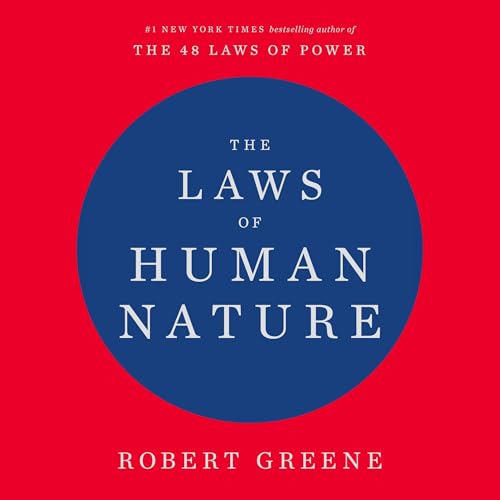
The Laws of Human Nature

Author: Robert Greene

Narrated By: Paul Michael & 1 more

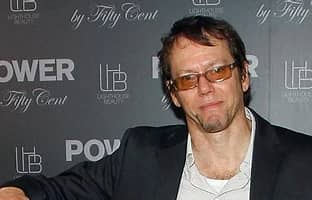
Robert Greene (Author, with several NYT’s bestsellers addressing human nature, graduated with a degree in classical studies.)

“The Laws of Human Nature” is a tour deforce of what one learns in life about being a good manager. The difference between a technically excellent employee and a manager is that the first has skill in doing things while the second has skill in managing those who do things. Occasionally, one can be both, but as the complexity of life increases, the likelihood becomes rarer. Human nature revolves around behavior and one’s psychological characteristics. Greene argues there are fundamental laws of human nature that can enlighten listener/readers about themselves and others.

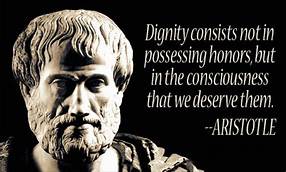
Aristotle’s, Hobbes’, Rousseau’s, and Darwin’s views of human nature have different perspectives. Aristotle believes human nature is teleological with a belief that we all have purpose that is revealed by reason and virtue. Hobbes believes humans are innately self-interested and capable of both good and bad behavior. Rousseau believes humans are inherently good but corrupted by society. Darwin believes humans evolve through natural selection and will do whatever is necessary to survive. Of the four perspectives, Aristotle seems the most idealistic while the other three account for human nature’s irrationality.

Greene suggests humans can be irrational, narcissistic, misleading, and sometimes repressive.

What one can draw from his book is how those characteristics exhibit and what one can do about it. The potential of irrationality exists in everyone. It can cause fear, envy, insecurity, and desire. Bias is at the heart of these emotions. He turns to ancient history to give the example of the war between Spartans and Greeks that may have been avoided if heightened emotions had not been aggravated by a plague in Greece and the death of Pericles who had a rational plan to avoid war. Greene suggests Augustus defeats Anthony to become ruler of Rome because of Anthony’s neglect of his duty as leader of Rome for the desire of the Egyptian Queen, Cleopatra. Greene notes irrationality is a universal characteristic of humanity. The anecdote is to calm one’s emotions, clearly understand what it is that you fear, and to mirror back that clear understanding to yourself and change your behavior.

One can see narcissism in themselves or others when one seeks admiration, overreacts to criticism, has no interest in others perspective, or manipulates others by ignoring or emotionally withdrawing attention.

Married people often do this with their significant other. Greene explains self-awareness, seeing others through their eyes, redirecting your energy to something more important, and being more disciplined can abate narcissism. He notes narcissism is not a flaw but a force that can be turned to good. The history of Oppenheimer, considered by some to be narcissistic, is noted as an example of someone who saw the big picture of life and the consequence of war. He came to understand something bigger than himself and successfully manages other scientists to create the first nuclear bomb. The contrary of a narcissist who could not see the big picture is the story of Howard Hughes who could not manage his father’s company or his entry into the film industry because he could not get things done through other people. He believed only he could handle the complexity of a film production and plane manufacturing company. No one could work under him because of his uncontrolled narcissism that interfered with others he hired to help him manage businesses bigger than one mind could control. His managers resigned because he would not allow them to do the job they were hired to do. Hughes failed as a movie producer and plane manufacturer because of his narcissism.

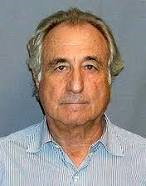
Bernie Madoff (Born 1938, died in Federal Medical Center in 2021)

History is festooned with misleading information by people who distort the truth in order to achieve their personal goals. Greene recalls the history of swindlers like Bernie Madoff that lied to his investors about investments that were Ponzi schemes that fed his investment company’s growth, not from honest investment in publicly traded stocks or business enterprises.

Stalin in Russia, is the penultimate example of a psychological characteristic of repression. One suspects the same is true of Putin. Even America’s President Trump could be characterized as a narcissist. He used federal power to investigate and punish political opponents. Trump politicized the civil service by conducting mass firings to replace employees that were loyal to his agenda. Justice Department’ independence has similarly been restructured. Trump suppresses dissent and free expression by cracking down on student protests, detained and deported not only illegal immigrants but U.S. citizens. He ended asylum protections and militarized crackdowns with the use of the National Guard and U.S. marines to aid ICE in deporting undocumented immigrants and quelling public opposition. All of these actions are examples of an increasingly repressive American President. There were similar arguments about Franklin Roosevelt in his early actions to rescue America from the pre-WWII’ depression.

Greene goes on to explore personality types that are a combination of extroversion and introversion characteristics.

He notes both characteristics have strengths and weaknesses. Extroverts generally have more social fluency, have a more charismatic presence and higher social visibility. They can also become subjects of envy or derision because of their high profile. Greene suggests they are more vulnerable to manipulation because their habits reveal too much about themselves. They become more susceptible to groupthink rather than individual judgement. On the other hand, introversion has equivalent but different strengths and weaknesses. Introverts have more control over themselves because they reveal less of themselves to others. They are naturally less likely to succumb to groupthink. On the other hand, they tend to misread socially valuable influences because of their isolated view of the world. They fail to offer their opinion because of fear of self-exposure and ridicule which diminishes their understanding of beneficial social norms.

Greene explains self-awareness of introversion or extroversion is key to understanding one’s social limitations and blind spots in being a constructive part of society. However, his analysis of “The Laws…” of human nature becomes tedious because it offers too many examples and views of biases and their anecdotes for most listener/readers to be patient enough to complete his book. Nevertheless, Greene’s first chapters are enlightening and worth one’s time.

ANARCHY

In reading/listening to Chomsky some will conclude he is wrong about there ever being a nation-state that will be successfully governed as an Anarchy because of the nature of human beings.

Books of Interest
 Website: chetyarbrough.blog

On Anarchisn 

Author: Noam Chomsky, Nathan Schneider

Narrated By: Eric Jason Martin

When one thinks of a political system called Anarchism, the first thing that comes to mind is a vision of rampant disorganization where there is no sense of direction or social cohesion.

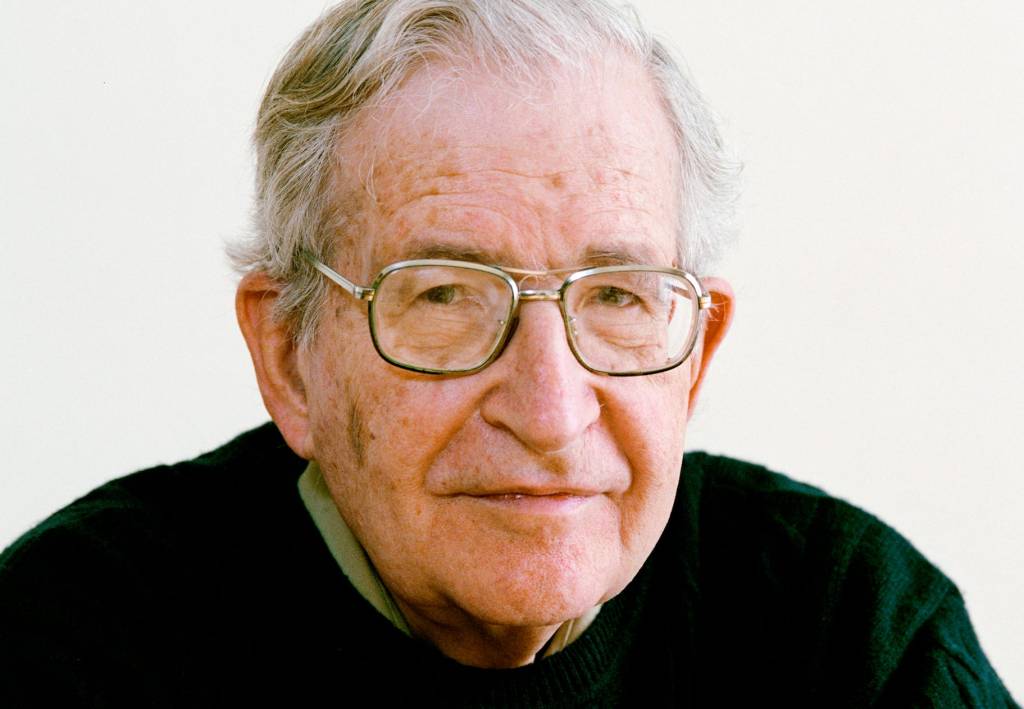
Noam Chomsky is a polarizing figure who is admired as an anti-capitalist and anti-imperialist who fiercely criticizes U.S. and Israeli foreign policy. He views Israel as a client state of the U.S. that relies on authoritarianism to manage their countries roles in the world. He notes America’s interventions in Vietnam, Central America, Iraq, and Afghanistan as evidence of America’s failure as a democracy. He views Israeli foreign policy in regard to Gaza as infected with hypocrisy and violence with a narrow view of territorial expansion. He feels both America and Israel are driven by strategic and economic interests, not by the idealism of democracy.

Chomsky is a fierce critic of capitalism and imperialism because both marginalize citizens’ freedom of thought and action.

Chomsky’s view is that anarcho-syndicalism is a better form of government where power is decentralized and citizens can and should collectively manage their own affairs through direct democracy and cooperative organizations. He argues for participatory democracy by voluntary associations that are freely formed into cooperative communities. There should be no centralized authority with all workplaces and production controlled by the workers themselves. He believes in libertarian socialism because he sees it as the most humane and rational extension of Enlightenment ideals in society. Any authority exercised by a government entity in a libertarian socialist country, in Chomsky’s opinion, is the most humane and rational extension of the ideals of the Enlightenment.

The Age of Enlightenment or sometimes called the Age of Reason was a movement in the late 17th century that extended into the 19th century.

It emphasized the power of reason, science, and individual liberty as the tools for the reform of society. The tools of reason, science, and liberty were believed to be the natural rights of humanity, and the possibility of improving society through education and reform based on science.

Francisco Franco (Spain’s dictator 1939-1975.)

Chomsky argues those tools were engaged by Spanish revolutionaries during Franco’s dictatorship in Spain. Chomsky notes workers took control of factories and farms in Catalonia and Aragon that were run collectively and democratically by workers. He believes voluntary cooperation thrived. He believes the anarchist movement grew through three generations based on education and considered organization of Spanish interest groups. However, Franco’s forces with the help of England, Germany, and Italy defeated the movement.

Republican factions fought against Franco’s government in the 1930s.

Chomsky believes revolutionaries against Franco were practical visionaries that showed how anarchy could be a legitimate and superior way of governing a nation.

Surprisingly, there are several examples besides Spain’s revolution that were collectivist organizations that could be classified as anarchies. From 1918-1921, the free territory of Ukraine was led by Nestor Makhno during Russia’s Civil War. It was ended by Russian communism after its ascension in 1917. Modern communes were set up in Mexico’s Zapatista territories with autonomous zones that had collective farming and indigenous self-rule. Of course, in ancient times there were hunter-gatherer societies that shared norms, and governance through consensus decision-making and resource sharing. However, there is a history of atrocity, failure, and disruption by governing bodies that have tried Anarchy. Spain’s effort fell apart in 1939. Freetown Christiania in Denmark, in a neighborhood in Copenhagen has struggled with Anarchy since 1971. A number of legal battles have been fought over commercial ownership and control. By some measures, the kibbutz movement in Israel has been successful. However, even Chomsky notes friction comes within kibbutz communities over disagreement with elected leaders. Research shows that some kibbutzim are privatizing and paying differential wages for communal services. Collectivism is becoming harder to maintain.

Chomsky is considered by some to be the most important intellectual alive today. He is highly respected for theories on the understanding of language based on modern cognitive science.

Chomsky has shaped how we think of human capabilities. He is famous for his dissents which are naturally about government control and media manipulation. He was against the Vietnam war and opposed Israeli occupation because of his libertarian socialism, a form of anarchy or a collective that is purely democratically determined. He is reported to be an excellent lecturer and capable of going toe to toe with experts in linguistics, philosophy, political science, and education. His opinions have global reach with translations in many languages.

In reading/listening to Chomsky some will conclude he is wrong about there ever being a nation-state that will be successfully governed as an Anarchy because of the nature of human beings. Whether one believes in Hobbes’ view of selfish humans, Rousseau’s belief in people being corrupted by society, Kant’s belief in rationality, or Sartre’s belief in human choices and actions, there will always be dominant personalities who will victimize those whom they commune. Human nature as defined by Hobbes, Rousseau, Kant, Sartre, and other brilliant philosophers infer there will always be miscreate leaders that will destroy egalitarianism, the foundational principle of anarchy. Human nature, as it exists today, is unlikely to change.

WITTGENSTEIN

Wittgenstein’s philosophical belief is that words matter. To Wittenstein, words are not just sounds and symbols–they are the scaffolding of humanity’s shared reality and continuing search for truth.

Books of Interest
 Website: chetyarbrough.blog

Wittgenstein 

Author: Hans Sluga

Narrated By: Ken Maxon

Hans Sluga (Author, Professor Emeritus of Philosophy at U of C.)

Ludwig Wittgenstein (1889-1951, considered by some as one of the greatest philosophers of the twentieth century)

This is a difficult introduction to the philosophy of Ludwig Wittgenstein. One is unsure of whether it is difficult because of the author’s explanation or the abstruse nature of Wittgenstein’s writing. Sluga notes there is an early Wittgenstein philosophy and a later Wittgenstein philosophy. There is the 1921 “Tractatus Logico-Philosophicus” published in 1921 and a later “Philosophical Investigations” published in 1953.

In both publications, Wittgenstein’s philosophy is about language and its use to explain reality. The 1921 publication argues what can be said clearly can be said by all and when it cannot be said clearly the speaker should be silent. In 1953, Wittgenstein argues reality only has meaning as language is used to describe it.

The difficulty of grasping Wittgenstein’s later philosophy is knowing whether what one says about reality is true or false.

Wittgenstein notes problems arise when language is pushed beyond its utility for understanding. Wittgenstein implies there are realities that cannot be meaningfully described by language. He is redefining philosophy as a matter of understanding how language works rather than understanding some objectively understood reality.

If language is the source of reality, how can one know what is true or false based on how one’s language explains it?

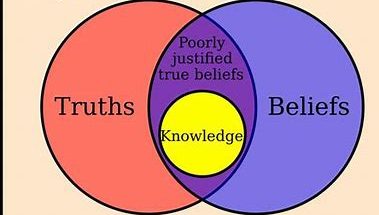
The argument is that Wittgenstein is saying there is no reality except that which one can identify through language. Reality and truth exist but it is defined by public, practical, and embedded use of one’s common language. Truth is based on precise language broadly accepted by those who use language to explain reality. The difficulty of that idea is in fundamental science that changes because of newly discovered knowledge.

This later philosophical belief of Wittgenstein’s means truth is no longer absolute but contextual based on words used to describe it through science, law, and ethics of the time in which it is explained.

Wittgenstein’s philosophy is troubling. What is to keep humans from one country creating language that suggests they are a superior species and can destroy cultures other than their own? Wittgenstein’s answer is that languages are not hierarchical so words of another culture or nation have equal weight. His meaning is that reality is based on all public languages, not a private nationalist language. He writes “Philosophy is a battle against the bewitchment of our intelligence by means of language”. Further, he notes a singular culture cannot weaponize words because words are a universal medium for understanding reality.

Wittgenstein’s philosophical belief is that words matter. To Wittenstein, words are not just sounds and symbols–they are the scaffolding of humanity’s shared reality and continuing search for truth.

THEORY & TRUTH

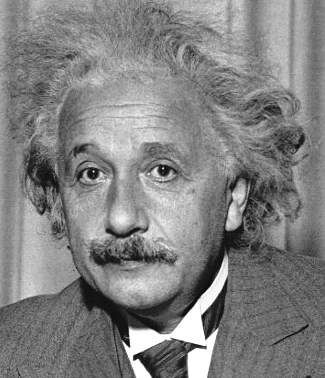
Without a doubt, Einstein was the premier scientist of the 20th century just as Newton was of the 17th. Though their characters were quite different, their thoughts and contributions to the physics of life on earth and in the universe remain world changing.

Books of Interest
 Website: chetyarbrough.blog

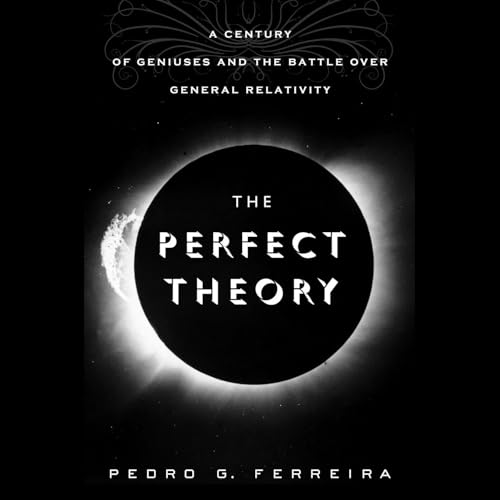
The Perfect Theory (A Century of Geniuses and the Battle over General Relativity)

Author: Pedro G. Ferreira

Narrated By:  Sean Runnette

Pedro Ferreira (Anglo-Portuguese cosmologist, professor at the University of Oxford with expertise as theoretical cosmologist and astrophysicist.)

“The Perfect Theory” is a history of physics that revolves around Albert Einstein’s brilliant discoveries in the early 20th century. Einstein believed in general relativity that included gravity and acceleration which he argued is caused by the curvature of spacetime. Einstein implies the equality of mass and energy is a precursor to the proof of general relativity. Ferreira argues that post twentieth century physics’ theories have only contrasted and expanded Einstein’s first discovery of the equivalence of energy and mass, which is a part of a “…Perfect Theory”. Einstein’s theory seems perfect in the sense that it is a foundational theory from which most discoveries about physics have been based. This seems hyperbolic with the experimental proof of Quantum Dynamics (a science theory describing the behavior of particles at atomic and subatomic scales), but the idea of a Quantum world seems only a tentative expansion, rather than refutation of Einstein’s “…Perfect Theory”.

What Ferreira shows is how Einstein‘s general theory of relativity shaped modern theories of cosmology.

Though Einstein believed the universe was an eternal existence, that never expanded or contracted, he had to create a cosmological constant to make that theory work. He began moving away from that belief in the 1930s. Edwin Hubble’s theory of an expanding universe led to the “Big Bang Theory” that turned what Einstein suggested was a vindication of his discomfort with the idea of arbitrarily devising a cosmological constant to make his vision of the universe work. (Interestingly, Einstein remained skeptical of the Big Bang model of the universe’s creation when its expansion was proven.) Edwin Hubble proved through observation and calculation that the universe was expanding rather than static. Later science discovery of “dark energy” is thought to be the engine for expansion which ironically revives the theory of Einstein’s cosmological constant.

Edwin Hubble (1889-1953, American astronomer.)

John Wheeler and Roger Penrose in the 1960s confirmed the existence of black holes based on Einstein’s concept of regions of the universe that would have such strong gravity pull that nothing could escape its attractive force. The belief that nothing could escape was challenged by Stephen Hawking who argued that black holes emit radiation and eventually evaporate. Nevertheless, it is Einstein’s early work that initiated further investigation and theory modification.

Einstein predicted gravitational waves that were not confirmed until 2015 by LIGO’s (Laser Interferometer Gravitational-Wave Observatory) detection. Einstein had predicted gravitational wave existence in 1916 but was uncertain whether they were physically real or just mathematical affects based on his thought experiments about massive accelerating objects, like orbiting planets.

LIGO (Located @ Hanford in the Tri-Cities of Richland, Kennewick, and Pasco in Washington State.)

Ferreira’s book explains how important Einstein’s legacy is in today’s understanding of the Universe, its creation, and possible future.

The most significant curve ball thrown at Einstein’s “…Perfect Theory” of the universe is Quantum Mechanics. Though he grudgingly acknowledged the experimental proof of Quantum Entanglement, he remained skeptical of quantum mechanics and its philosophical implications. The proven predictions of quantum mechanics shake the foundation of what Einstein believed about the universe. Quantum mechanics suggests the universe’s existence, whether it began with a Big Bang or not, is a matter of probability, not predictable certainty. Einstein’s theories were based on a belief in a clockwork universe–where cause and effect would explain everything about the physics of existence.

Though Einstein did not believe in a personal God, he believed in order, harmony, and rationality in a world that has a cause for every effect.

Twenty first century physics’ research owes more to Einstein than any other scientist in history. It is not that Einstein was or is infallible, but his theories are the foundation of physics research. His idea of a static universe may have been wrong, but the story of dark energy makes one wonder if his cosmological constant might have been right. Einstein was skeptical of the Big Bang theory as the origin of the universe despite it being the belief of most scientists today. Though he resisted quantum mechanics unpredictability, he acknowledged its experimental proofs with the caveat that there is an undiscovered law that will return predictability to the physics’ world. What Pedro Ferreira credibly argues is that Albert Einstein provided “The Perfect Theory” to explore truth and falsehood of the physics of the universe.

Without a doubt, Einstein was the premier scientist of the 20th century just as Newton was of the 17th. Though their characters were quite different, their thoughts and contributions to the physics of life on earth and in the universe remain world changing.

HUMAN LIFE

What we see today is not reality, but our minds’ interpretation of the material world. It seems that everything in the world is process, e.g., gravity, or time relativity, or quantum unpredictability.

Books of Interest
 Website: chetyarbrough.blog

Brain Myths Exploded (Lessons from Neuroscience)

Lecturer: Indre Viskontas

By:  The Great Courses

Indre Viskontas (Ph.D. in cognitive neuroscience from UCLA, performed at Cafe Royal Opera in San Francisco, studies neural basis of memory and creativity, Lecturer at USF.)

Dr. Indre Viskontas offers interesting facts and theories about the brain in her Great Courses lectures. Her educational and musical accomplishments are remarkable examples of brain’ flexibility, human intelligence, and life-long potential. Her lectures show cognitive improvement may occur throughout one’s life while recalling incidents of brain damage and discoveries of science experiments that reveal how the brain works.

Viskontas suggests the belief that humans use only 10% of their brain is a myth.

The brain is made of eight distinctive structures which are interconnected and work together for our thoughts, feelings, and movements. A network of neurons sends electrical and chemical signals between parts of the brain that generate human thought and action; some of which are automatic and others cognitively reasoned. Viskontas explains how interconnections allow continued mental and physical functioning even when a part of the brain is damaged. Experiment and human accident have proven that the brain can adapt to loss of normal thought and action by retraining healthy parts of the brain. Retraining the brain can improve lost function. This may not return the perfect function of an undamaged brain, but it will improve function.

Viskontas explains human memory is a reconstructive process with varying degrees of accuracy.

There are people who have nearly perfect recall of their past. However, experiment has shown that even those few who can recall their personal history in detail are affected by emotion that distorts its accuracy. Furthermore, Viskontas explains personal history’ memory is limited to personal experience rather than any measurement of IQ. Of course, there are a few people who are said to have eidetic memories that can recall images with precision. They have so-called “photographic memories”, but IQ is based on problem-solving abilities that, at best, would be enhanced by a photographic memory. It is the application of recalled information to problem solving abilities that make one a genius like John von Neumann and Nikol Tesla who were alleged to have eidetic memories.

The risk is that “eyewitness” accounts can be influenced and totally wrong.

Scientific experiment has proven memory is a reconstructive process. With DNA analysis, a number of convicted murderers have been found innocent despite many eyewitnesses that identified them at scenes of crime. One is reminded of the gorilla experiment where eyewitnesses are distracted when a gorilla is sitting in a chair just as a human action scene is created in the same room. They do not see the gorilla and are surprised when it is pointed out to them later.

In the era of quantum computing, the concept of reality is evolving at a rate that boggles the mind.

The idea of a probabilistic rather than concrete reality reminds one of the differences between the science of Newton and Einstein. Newton thought of things as concrete reality. Einstein takes steps toward relativity with less emphasis on the concreteness of reality. What we see today is not reality, but our minds’ interpretation of the material world. It seems that everything in the world is process, e.g., gravity, or time relativity, or quantum unpredictability. Life and human beings may only be a pile of atoms in an atomic process of birth, life, death, and whatever comes after death.

As human beings grow older, new things take longer to learn but Viskontas explains it is commitment that makes a difference in learning something new.

Taking piano lessons as an older adult, deciding to become an opera singer after graduating from college as a neuroscientist, or reading/listening to books about science when you are not educated as a scientist takes more time as you get older, slower, and less inquisitive. Dr. Viskcontas’ lectures infer it is never too late to learn something new. It just takes longer for it to become a part of who you are.

GOVERNMENT

The inference of “Plato and the Tyrant” is that all forms of government are like the parable of the cave in “The Republic”, i.e., people only see shadows of life’s truth.

Books of Interest
 Website: chetyarbrough.blog

Plato and the Tyrant (The Fall of Greece’s Dynasty and the Making of a Philosophic Masterpiece)

Author: James Romm

Narrated By:  Paul Woodson

James Romm (Author, Professor of Classics at Bard College, specializes in ancient Greek and Roman culture and civilization.)

James Romm reviews Plato’s personal correspondence that offers an interesting perspective on “The Republic” as a critique of Dionysius the Elder’s tyrannic rule of the island nation of Syracuse, Sicily, and southern Italy. (Syracuse is a Mediterranean island 620 miles off the coast of Greece.) Some believe there are 13 private letters written by Plato with the most famous and debated letter being number 7. Romm’s book is about these private letters and what they reveal about Plato’s character.

Excerpt of the 7th letter to Dionisius the Elder:

Holding these right views, Dion persuaded Dionysius to summon me; and he himself also sent a request that I should by all means come with all speed, before that [327e] any others13 should encounter Dionysius and turn him aside to some way of life other than the best. And these were the terms—long though they are to repeat—in which his request was couched: ” What opportunities (he asked) are we to wait for that could be better than those that have now been presented by a stroke of divine good fortune?” And he dwelt in detail on the extent of the empire [328a] in Italy and Sicily and his own power therein, and the youth of Dionysius, mentioning also how great a desire he had for philosophy and education, and he spoke of his own nephews14 and connections, and how they would be not only easily converted themselves to the doctrines and the life I always taught, but also most useful in helping to influence Dionysius; so that now, if ever (he concluded), all our hopes will be fulfilled of seeing the same persons at once philosophers and rulers of mighty States. [328b]

By these and a vast number of other like arguments Dion kept exhorting me; but as regards my own opinion, I was afraid how matters would turn out so far as the young people were concerned—for the desires of such as they change quickly, and frequently in a contrary direction; although, as regards Dion’s own character, I knew that it was stable by nature and already sufficiently mature. Wherefore as I pondered the matter and was in doubt whether I should make the journey and take his advice, or what, I ultimately inclined to the view that if we were ever to attempt to realize our theories [328c] concerning laws and government, now was the time to undertake it; for should I succeed in convincing one single person sufficiently I should have brought to pass all manner of good. Holding this view and in this spirit of adventure it was that I set out from home,—not in the spirit which some have supposed, but dreading self-reproach most of all, lest haply I should seem to myself to be utterly and absolutely nothing more than a mere voice and never to undertake willingly any action, and now to be in danger of proving false, in the first15 instance, to my friendship [328d] and association with Dion, when he is actually involved in no little danger. Suppose, then, that some evil fate should befall him, or that he should be banished by Dionysius and his other foes and then come to us as an exile and question us in these words—“O Plato, I come to you as an exile not to beg for foot-soldiers, nor because I lack horse-soldiers to ward off mine enemies, but to beg for arguments and persuasion, whereby you above all, as I know, are able to convert young men to what is good and just and thereby to bring them always into a state of mutual friendliness [328e] and comradeship. And it is because you have left me destitute of these that I have now quitted Syracuse and come hither. My condition, however, casts a lesser reproach on you; but as for Philosophy, which you are always belauding, and saying that she is treated with ignominy by the rest of mankind, surely, so far as it depends on you, she too is now betrayed [329a] as well as I. Now if we had happened to be living at Megara,16 you would no doubt have come to assist me in the cause for which I summoned you, on pain of deeming yourself of all men the most base; and now, forsooth, do you imagine that when you plead in excuse the length of the journey and the great strain of the voyage and of the labor involved you can possibly be acquitted of the charge of cowardice? Far from it, indeed.”

Dionysius the Elder ruled for 35 years and is succeeded by his son, Dionysius the Younger. Dionysius is characterized as a combative, brutal, and authoritarian leader. Plato visited Syracuse many times with the desire to ameliorate the Elder’s style of leadership. Plato’s effort results in the Elder’s selling him into slavery, presumably because of political differences and the Elder’s tyrannical power.

Plato (428/423 BC to 348/347 BC, died near 80 years of age.)

Soon after being sold into slavery by Dionysius the Elder, Plato is rescued by Anniceris who bought Plato out of slavery. Anniceris (aka Annikeris), a wealthy Greek philosopher, apparently recognized Plato’s brilliance. Plato goes on to create his famous academy in Athens. Though the Elder successfully controlled Syracuse and much of Italy during his tyrannic rule, his son, Dionysius II, used similar but less effective tyrannical rule and was eventually defeated. Plato tried to convince Dionysius II of his errors in leadership but fails and is compelled to flee house arrest to return to Athens. (Romm suggests Plato loved Dionysius II in more than a platonic way but was unable to change his tyrannical rule.)

Plato’s ideal republic envisioned a just society led by philosopher-kings. These rulers would rule based on collective good rather than personal gain.

This ideal republic would be built on wisdom, justice, and a strict class structure where there would be rulers, soldiers, and workers. Of course, the weakness in this ideal is human nature. Whether ancient or modern culture, as Lord Acton notes in 1887–power corrupts, absolute power corrupts absolutely. People do not naturally fall into specific classes. Human beings are individually and differently self-interested which ensures conflict. That is why both communism, capitalism, and its socialist leanings work inefficiently in ways that unjustly create haves and have-nots.

At the heart of all known forms of government is power.

There are good and bad leaders in history. The good are those who shaped nations, inspired movements, and changed the course of civilization for the better. The bad are the tyrants, the incompetents, and the cruel. Both the good and bad can be found in the histories of every form of government rule. One can argue Alexander the Great, Napoleon Bonaparte, Abraham Lincoln, and Queen Elizabeth I led forms of government that changed the course of civilization for the better. By the same token, one can argue Dionysius the Elder and Hitler changed the course of civilization in the opposite direction. The common denominator for constructive and destructive leadership is power. The type of government makes little difference. Every form of government has human leaders which may lead in ways contrary to the best interest of those they rule.

Plato’s Republic, Adam Smith’s “…Wealth of Nations”, and Adolph Hitlers’ “Mein Kamph” are ideas directed toward the exercise of power.

“Plato and the Tyrant” offers a perspective that makes one think about the history of Plato and government but does not offer anything new.

Romm’s evaluation of Plato’s “Republic” is a retelling of an ideal form of government that cannot exist because of the nature of human beings and the caves in which we live.

The private letters of Plato reveal little new about the consequences of rule by democracies, monarchies, oligarchies, dictatorships, theocracies, or anarchies. The inference of “Plato and the Tyrant” is that all forms of government are like the parable of the cave in “The Republic”, i.e., people only see shadows of life’s truth. Governance will only improve when people crawl out of the cave to see the truth of life.

AGI

Humans will learn to use and adapt to Artificial General Intelligence in the same way it has adapted to belief in a Supreme Being, the Age of Reason, the industrial revolution, and other cultural upheavals.

Books of Interest
 Website: chetyarbrough.blog

How to Think About AI (A Guide for the Perplexed)

By: Richard Susskind

Narrated By:  Richard Susskind

Richard Susskind (Author, British IT adviser to law firms and governments, earned an LL.B degree in Law from the University of Glasgow in 1983, and has a PhD. in philosophy from Columbia University.)

Richard Susskind is another historian of Artificial Intelligence. He extends the history of AI to what is called AGI. He has an opinion about the next generation of AI called Artificial General Intelligence. AGI (Artificial General Intelligence) is a future discipline suggesting AI will continue to evolve to perform any intellectual task that a human can.

These men were the foundation of what became Artificial Intelligence. AI was officially founded in 1956 at a Dartmouth Conference attended by John McCarthy, Marvin Minsky, Nathaniel Rochester, and Claude Shannon. Conceptually, AI came from Alan Turing’s work before and during WWII when he created the Turing machine that cracked the German secret code.

McCarthy and Minsky were computer and cognitive scientists, Rochester was an engineer and became an architect for IBM’s first computer, Shannon (an engineer) and Turing were both mathematicians with an interest in cryptography and its application to code breaking.

Though not mentioned by Susskind, two women, Ada Lovelace and Grace Hopper played roles in early computer creation (Lovelace as an algorithm creator for Charles Babbage in the 19th century, and Hopper as a computer scientist that translated human-readable code into machine language for the Navy).

Susskind’s history takes listener/readers to the next generation of AI with Artificial General Intelligence (AGI).

Susskind recounts the history of AI’s ups and downs. As noted in earlier book reviews, AI’s potential became known during WWII but went into hibernation after the war. Early computers lacked processing capability to support complex AI models. The American federal government cut back on computer research for a time because of unrealistic expectations that seemed unachievable because of processing limitations. AI research failed to deliver practical applications.

The invention of transistors in the late 1940’s and 50s and microprocessors in the 1970s reinvigorated AI.

Transistor and microprocessor inventions addressed the processing limitations of earlier computers. John Bardeen, Walter Brattain, and William Shockley working for Bell Laboratories were instrumental in the invention of transistors and microprocessors. Their inventions replaced bulky vacuum tubes and miniaturized more efficient electronic devices. In the 1970s Marcian “Ted” Hoff, Federico Faggin, and Stanley Mazor, who worked for Intel, integrated computing functions onto single chips that revolutionized computing. The world rediscovered the potential of AI with these improvements in power. McCarthy and Minsky refine AI concepts and methodologies.

With the help of others like Geoffrey Hinton and Yann LeCun, the foundation for modern AI is reinvigorated with deep learning, image recognition, and processing that improves probabilistic reasoning. Human decision-making is accelerated in AI. Susskind suggests a blurred line is created between human and machine control of the future with the creation of Artificial General Intelligence (AGI).

With AGI, there is the potential for loss of human control of the future.

Societal goals may be unduly influenced by machine learning that creates unsafe objectives for humanity. The pace of change in society would accelerate with AGI which may not allow time for human regulation or adaptation. AGI may accumulate biases drawn from observations of life and history that conflict with fundamental human values. If AGI grows to become a conscious entity, whatever “conscious” is, it presumably could become primarily interested in its own existence which may conflict with human survival.

Like history’s growth of agricultural development, religion, humanist enlightenment, the industrial revolution, and technology, AGI has become an unstoppable cultural force.

Susskind argues for regulation of AGI. Is Artificial General Intelligence any different than other world changing cultural forces? Yes and no. It is different because AGI has wider implications. AGI reshapes or may replace human intelligence. One possible solution noted by Ray Kurzweil is the melding of AI and human intelligence to make survival a common goal. Kurzweil suggests humans should go with the flow of AGI, just like it did with agriculture, religion, humanism, and industrialization.

Susskind suggests restricting AGI’s ability to act autonomously with shut-off mechanisms or accessibility restrictions on human cultural customs. He also suggests programming AGI to have ethical constraints that align with human values and a rule of “do no harm”, like the Hippocratic oath of doctors for their patients.

In the last chapters of Susskind’s book, several theories of human existence are identified. Maybe the world and the human experience of it are only creations of the mind, not nature’s reality. What we see, feel, touch, and do are in a “Matrix” of ones and zeros and that AGI is just what humans think they see, not what it is. Susskind speculates on the growth of virtual reality developed by technology companies becoming human’s only reality.

AI and AGI are threats to humanity, but the threat is in the hands of human beings. As the difference between virtual reality and what is real becomes more unclear, it will be used by human beings who could accidentally, or with prejudice or craziness, destroy humanity. The same might be said of nuclear war which is also in the hands of human beings. A.I. and A.G.I. are not the threat. Conscious human beings are the threat.

Humans will learn to use and adapt to Artificial General Intelligence in the same way it has adapted to belief in a Supreme Being, the Age of Reason, the industrial revolution, and other cultural upheavals. However, if science gives consciousness (whatever that is) to A.I., all bets are off. The end of humanity may be in that beginning.

RISK/REWARD

AI is only a tool of human beings and will be misused by some leaders in the same way Atom bombs, starvation, disease, climate, and other maladies have harmed the sentient world. AI is more of an opportunity than threat to society.

Books of Interest
 Website: chetyarbrough.blog

A Brief History of Artificial Intelligence (What It Is, Where We Are, and Where We Are Going)

By: Michael Wooldridge

Narrated By: Glen McCready

Michael Wooldridge (Author, British professor of Computer Science, Senior Research Fellow at Hertford College University of Oxford.)

Wooldridge served as the President of the International Joint Conference in Artificial Intelligence from 2015-17, and President of the European Association for AI from 2014-16. He received a number of A.I. related service awards in his career.

Alan Turing (1912-1954, Mathematician, computer scientist, cryptanalyst, philosopher, and theoretical biologist.)

Wooldridge’s history of A.I. begins with Alan Turing who has the honorific title of “father of theoretical computer science and artificial intelligence”. Turing is best known for breaking the German Enigma code in WWII with the development of an automatic computing engine. He went on to develop the Turing test that evaluated a machine’s ability to provide answers to questions that exhibited human-like behavior. Sadly, he is equally well known for being a publicly persecuted homosexual who committed suicide in 1954. He was 41 years old at the time of his death.

Wooldridge explains A.I. has had a roller-coaster history of highs and lows with new highs in this century.

Breaking the Enigma code is widely acknowledged as a game changer in WWII. Enigma’s code breaking shortened the war and provided strategic advantage to the Allied powers. However, Wooldridge notes computer utility declined in the 70s and 80s because applications relied on laborious programming rules that introduced biases, ethical concerns, and prediction errors. Expectations of A.I.’s predictability seemed exaggerated.

The idea of a neuronal connection system was thought of in 1943 by Warren McCulloch and Walter L Pitts.

In 1958, Frank Rosenblatt developed “Perception”, a program based on McCulloch and Pitt’s idea that made computers capable of learning. However, this was a cumbersome programming process that failed to give consistent results. After the 80s, machine learning became more usefully predictive with Geoffrey Hinton’s devel0pment of backpropagation, i.e., the use of an algorithm to check on programming errors with corrections that improved A.I. predictions. Hinton went on to develop a neural network in 1986 that worked like the synapse structure of the brain but with much fewer connections. A limited neural network for computers led to a capability for reading text and collating information.

Geoffrey Hinton (the “Godfather of AI” won the 2018 Turing Award.)

Then, in 2006 Hinton developed a Deep Belief Network that led to deep learning with a type of a generative neural network. Neural networks offered more connections that improved computer memory with image recognition, speech processing, and natural language understanding. In the 2000s, Google acquired a deep learning company that could crawl and index the internet. Fact-based decision-making, and the accumulation of data, paved the way for better A.I. utility and predictive capability.

Face recognition capability.

What seems lost in this history is the fact that all of these innovations were created by human cognition and creation.

Many highly educated and inventive people like Elon Musk, Stephen Hawking, Bill Gates, Geoffrey Hinton, and Yuval Harari believe the risks of AI are a threat to humanity. Musk calls AI a big existential threat and compares it to summoning a demon. Hawking felt Ai could evolve beyond human control. Gates expressed concern about job displacement that would have long-term negative consequences with ethical implications that would harm society. Hinton believed AI would outthink humans and pose unforeseen risks. Harari believed AI would manipulate human behavior and reshape global power structures and undermine governments.

All fears about AI have some basis for concern.

However, how good a job has society done throughout history without AI? AI is only a tool of human beings and will be misused by some leaders in the same way atom bombs, starvation, disease, climate, and other maladies have harmed the sentient world. AI is more of an opportunity than threat to society.