The Seminole Indian leaders, Osceola and Abraham, formed an alliance for multiracial freedom that remains the goal of all rational human beings. They failed and only became free in death.
Books of Interest Website: chetyarbrough.blog
The Free and the Dead
Author: Jamie Holmes (The Untold Story of the Black Seminole Chief, the Indigenous Rebel, and America’s Forgotten War.)
Narration by: David Sadzin & 1 more
Jamie Holmes (Author, writer for the NYT, The New Yorker, The Atlantic, and Slate. Served in the Peace Corps after receiving a degree from New York University and went on to Columbia to receive a Master of International Affairs.)
“The Free and the Dead” is a book that shows how little this reader/listener knows about slavery and Black history. “The Free and the Dead” is a history of Black slaves in Florida who were descendants of Spanish Florida that became a refuge for enslaved Africans fleeing the English colonies between the 1600s and 1700s. Spain offers asylum and freedom to runaways who could reach Florida in the early days of America.
Some former slaves joined the Seminole Indian confederation to become leaders and translators of Indian languages for early settlers of what became American territory. Holmes reveals some of the cultural blending between Seminole and African descendants who had escaped colonial slavery. Separate villages of these culturally blended descendants gained relative freedom in the U.S. South by becoming fierce fighters for Seminole Indian freedom in the Seminole Wars between 1817 and 1858.
Today’s Indian Reservations.
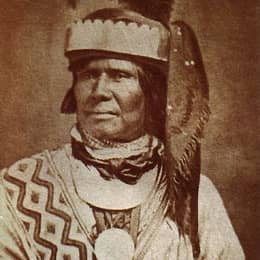
As most Americans know, the Indian wars were lost and the Seminoles like all Indian tribes were moved around the country to reservations that changed with subsequent Presidents’ and American military’ orders. Holmes reveals some of this early history in “The Free and the Dead”. The most famous Black Seminole leader was Abraham who became a co-leader with Osceola, an indigenous Seminole Indian who resisted U.S. policies.
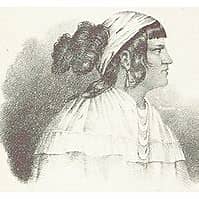
Abraham (A prominent Black Seminole leader in the 19th century.)
Abraham became a Black Seminole chief. He was a former slave who became an influential military leader of the Seminoles. He spoke English, Spanish, and the Creek Indian languages which made him an important intermediary in negotiating with white settlers. Abraham worked with major Seminole war leaders in negotiating agreements between white settlers and Seminole tribes. This twist in the history of American slavery and Osceola’s and Abraham’s alliance make Holmes’ story insightful.
Osceola, leader of the Seminole Indians in Florida in the Second Seminole War.
Slavery today seems as prevalent as it was years ago. America’s Declaration of Independence says, “all men are created equal”. Ironically, it seems neither men nor women seem to qualify.
The Seminole Indian leaders, Osceola and Abraham, formed an alliance for multiracial freedom that remains the goal of all rational human beings. They failed and only became free in death. Abraham seems to have died in old age while Osceola is captured and dies in prison.
Until equality of opportunity is somehow politically assured, human nature will always victimize those who are different.
Books of Interest Website: chetyarbrough.blog
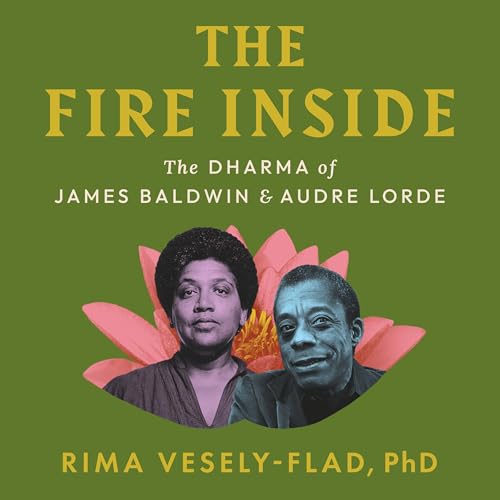
The Fire Inside (The Dharma of James Baldwin and Audre Lorde)
Author: Rima Vesely-Flad Ph.D.
Narration by: Heni Zoutomou
Rima Vesely-Flad (Author, Buddhist and Black History scholar with a Ph.D. in Social Ethics.)
The premise of Vesely-Flad’s book is somewhat misleading because its cover highlights James Baldwin and Audre Lorde while much of the text is a biography of Rima Vesely-Flad. “The Fire Inside” does address beliefs of James Baldwin and Audre Lorde but it is the dimension of black life in America that is the book’s subject. A large part of the story is the author’s life as a woman born to a white mother and black father. Vesely-Flad explains her grandparents were offended by their granddaughter’s birth because of her having a Black father.
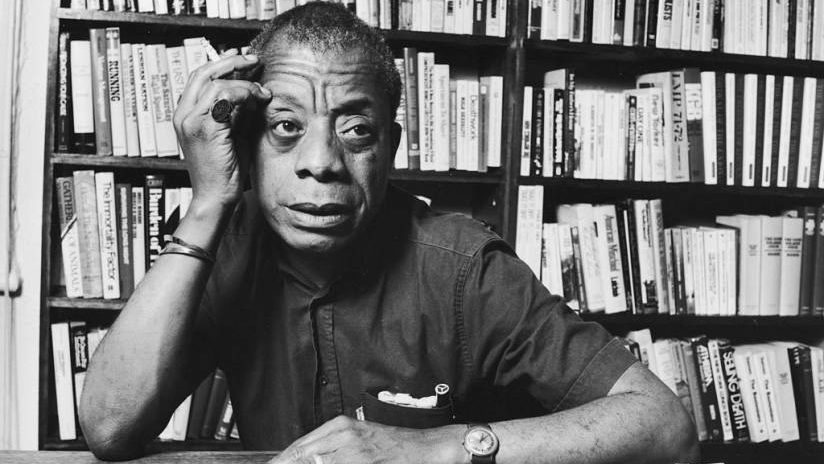
The beliefs and fame of James Baldwin are reported in many books written about him and by him. Audre Lorde and Vesely-Flad, on the other hand, are not well known to the general public. Lorde’ and Vesely-Flad’ stories are gender versions of Baldwin’s story.
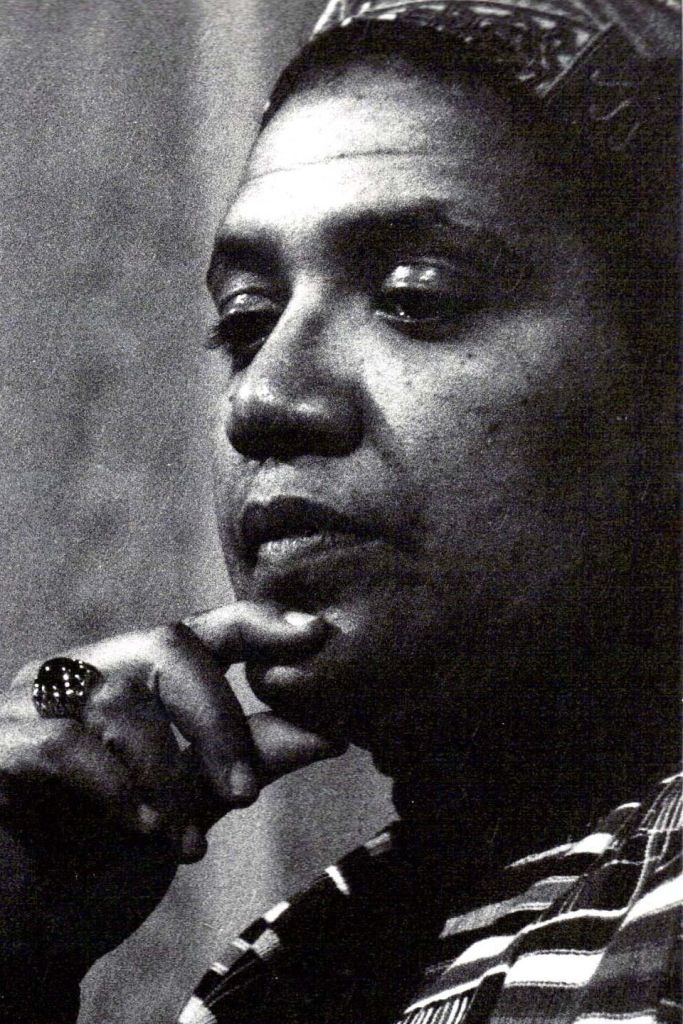
Audre Lorde (American writer, professor, philosopher, feminist, poet, and civil rights activist.)
Ms. Lorde was born in 1934 to Caribbean immigrant parents from Grenada. She became a poet who wrote about racism, structural oppression, sexism, and sexual orientation. A book of her poems was first published in 1968, and she became a National Book Award winner in 1988. She was an active participant in the women’s movement, civil rights, and LGBTQ liberation. A famous line which became a rallying cry Lorde created is “Your silence will not protect you”. Her beliefs are about the majority of people in America and their power. She argues–the American white majority should confront the truth of who they are, and how society represses those who are non-white. This is the theme that fits the reputations of Baldwin and Vesely-Flad in “The Fire Inside”.
“Go Tell It on the Mountain” is an autobiographical view of life and growth to manhood as a Black child raised in Harlem. It took ten years to write but became Baldwin’s most famous book. It released Baldwin from the ghost of his stepfather’s cruelty and set the stage for his exploration of race, religion, sexuality, and personal identity.
As a bibliophile, one is drawn to “The Fire Inside” because of the picture of Baldwin on its cover. Many who have read Baldwin’s work are drawn to this book because of his fame and writing about American racism. The stories of the author’ and Lorde’s lives reinforce much of what one has read in Baldwin’s books.
The author of “The Fire Inside” follows and considers herself a Buddhist. Neither Baldwin nor Lorde were Buddhists, but Vesely-Flad argues they followed many Buddhist beliefs by confronting and clarifying suffering in America. They exposed the illusions of ego, fear, and domination which are goals of Buddhism. Like Buddhists, the author argues Baldwin and Lorde insisted on liberation of the personal, political, and spiritual beliefs of the individual.
Vesely-Flad explains both Baldwin and Lorde are gay. Black Americans who believe in their right to be as they are should not be challenged by the political, spiritual, and religious beliefs of society. The point they make is that one’s inner life is their own. As long as one is not using anger, discrimination, or power to oppress others, they have an equal right to their personal life, liberty, and opportunity.
Vesely-Flad’s idealization of life and liberty exists nowhere in the world because of human nature. One is drawn to religions like Christianity, Protestantism, and some would argue Buddhism, but in practice we all remain trapped by human nature and become discriminatory. Vesely-Flad’s story of her life and experience have the same social ugliness that is known of Baldwin’s and Lorde’s lives. Until equality of opportunity is somehow politically assured, human nature will always victimize those who are different.
As a reviewer of “The Great Deformation”, I am personally repelled by Stockman’s analysis but choose to rely on professional economists’ opinion, more than a politician/businessman who had a role in tanking the American economy.
Books of Interest Website: chetyarbrough.blog
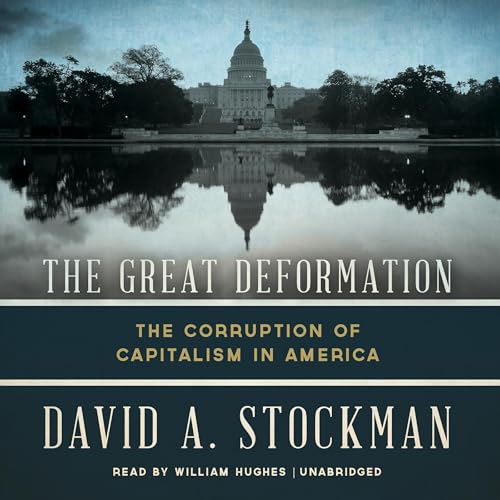
The Great Deformation (The Corruption of Capitalism in America)
Author: David Stockman
Narration by: Willaim Hughes
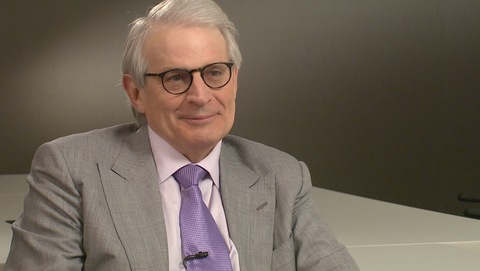
David Stockman (Author, American politician, businessman, and former Director of the Office of Management and Budget for the Reagan Administration.)
David Stockman has written a troubling book about the American economy. Despite his having been an elected representative of Congress and a former Director of the Office of Management and Budget (OMB) in the Reagan administration, he argues the fiscal responsibility of America’s government has corrupted “…Capitalism in America”. This is a surprising comment from a former Republican congressman with Republican ties who is a graduate of theological studies, not economics, from Harvard.
Stockton is not educated as an economist. He derides Reagan for profligate spending while having been Reagan’s OMB Director. He feels qualified to argue the crises of 2008 was badly managed because it did not allow the market to allow bankruptcy of major corporations in America. Stockton suggests AIG (American International Group) and the major banking conglomerates of America that have bad debt on their books should file for bankruptcy if they cannot meet their financial obligations without a government bailout. Of course, this is the road not taken so no one can know whether Stockton is right or wrong.
GEORGE W. BUSH (43RD PRESIDENT OF THE U.S.)BARACK OBAMA (44TH PRESIDENT OF THE U.S.)
Though the harm done to many Americans by the solution of the Bush’ and Obama’ administrations is fresh in most American’s minds, one cannot help but be skeptical of Stockton’s opinion. If bankruptcy had been allowed by those companies that could not meet their debt obligations, would American capitalism and its economy have been any better? How many Americans would have been harmed by those bankruptcies? The loss of jobs from bankruptcy would have been immense. Consider the number of people with no income who would be unable to pay their bills. What would happen to their ways of life? Would America’s government stand by and allow them to become homeless and hungry? Today’s homelessness suggests America’s government might stand by and do nothing.
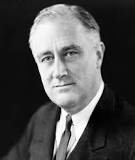
Franklin Roosevelt shows America’s government can finance a solution for crisis through public works that would bring America back to prosperity. Is that different than bailing out employers of the American public to sustain family incomes from a potential financial melt-down. Are the ideals of capitalist greed worth continued impoverishment of the poor?
Stockton’s solution is to cut the defense budget, reduce Social Security, Medicare, and Medicaid and let the public fend for itself. Stockton argues to have corporate subsidies and tax expenditures reduced with deep cuts in domestic discretionary spending. He goes on to support binding spending caps, no new tax cuts without an equal offset in expenditures, no bail outs with a belief that nothing is too big to fail, a reversal of Trumps 2017 tax cuts, a balanced budget, no long-term deficit financing, no permanent emergency spending, and a smaller federal footprint on the economy. These seem easy solutions for one who is financially secure but draconian for those who have been unable to grasp the economic opportunities of American capitalism.
More people will die from inability to receive medical care, more will go hungry and suffer from malnutrition, and homelessness. Stockman believes the current system is unsustainable. Let’s accept that point but victimizing and creating more homeless and poorer Americans only cheapens democratic capitalism.
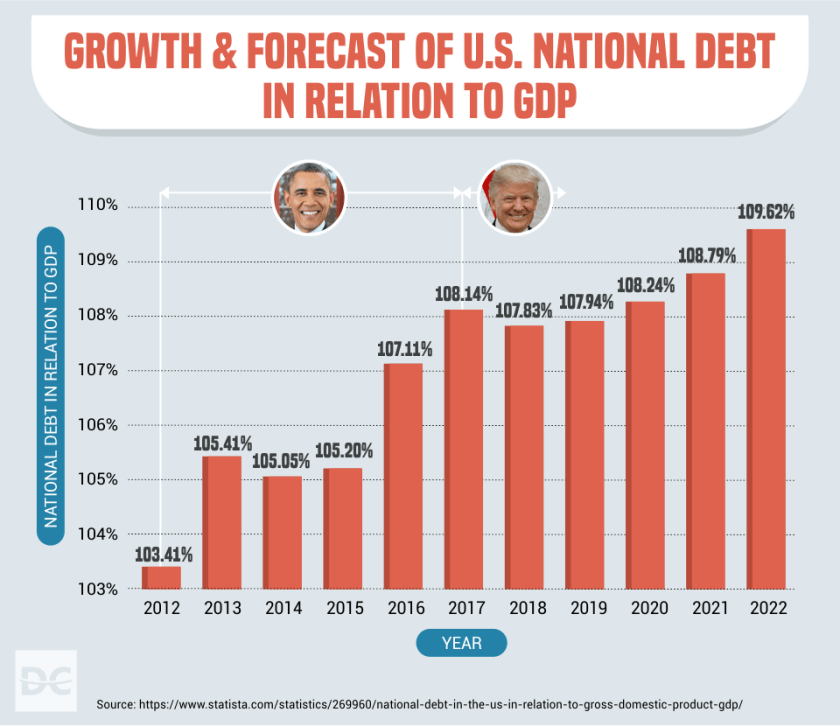
Stockman is right in explaining the U.S. debt increase is unsustainable.
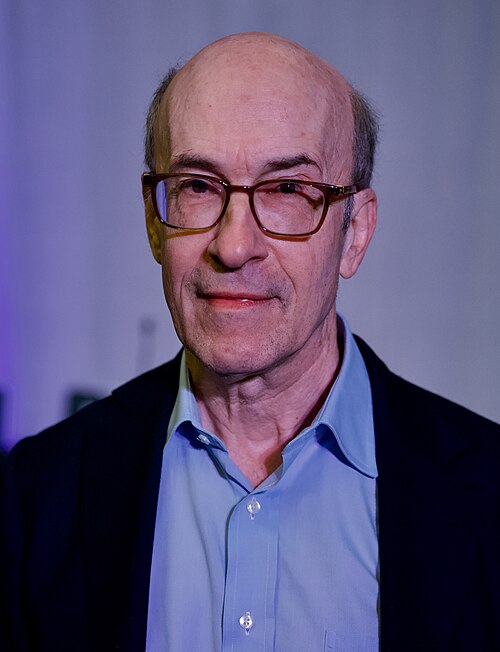
Interest costs are creating extraordinary pressure as a line-item cost for America’s budget. Reform is immensely difficult because of political differences of opinion. According to most economists with education as economists, Stockman’s observations are true, but most economists do not believe that truth will lead to a sudden market collapse. The majority of economist suggest Stockman’s explanation of long-term fiscal challenges can be ameliorated to avoid a wide market collapse. Though Kenneth Rogoff, Carmen Reinhart, and Olivier Blanchard agree with Stockman’s diagnosis, they do not think his doom scenario is likely. Jason Furman, Douglas Elmendorf, and Ben Bernanke do not believe a bond-market revolt will crater government financing. Though all agree government debt is unsustainable, interest costs are rising too fast, and political discord is a problem. These “educated economists” believe entitlements can be gradually reformed, and a sudden collapse of the economy will be abated.
Carmen ReinhartBen BernankeDoug ElmendorfKenneth Rogoff
In general, most economists recognize America cannot continue to increase its debt but most economist believe the U.S. will adjust its economic policy to avoid collapse. As a reviewer of “The Great Deformation”, I am personally repelled by Stockman’s analysis but choose to rely on professional economists’ opinion, more than a politician/businessman who had a role in tanking the American economy.
“Power tends to corrupt, and absolute power corrupts absolutely”. President Trump exemplifies that truth.
Books of Interest Website: chetyarbrough.blog
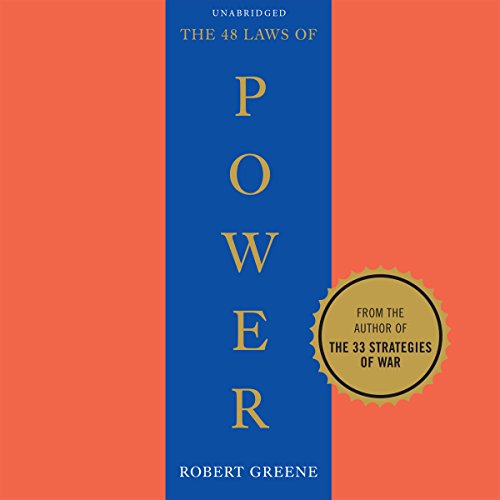
48 Laws of Power
Author: Robert Greene
Narration by: Richard Poe
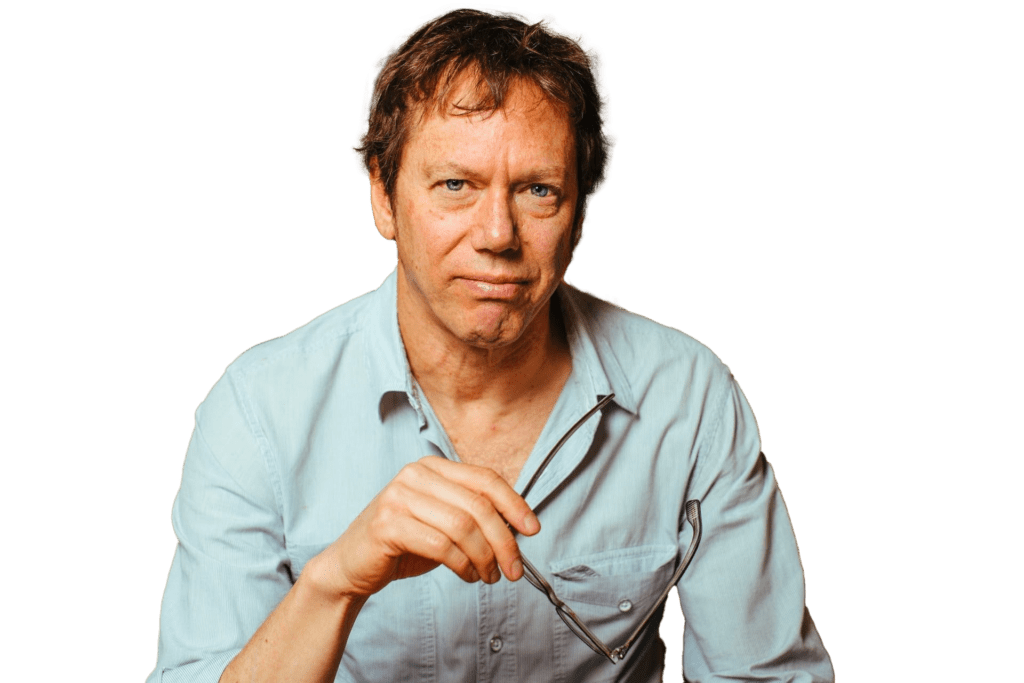
Robert Greene (American author, wrote seven international bestsellers, received his degree from University of Wisconsin-Madison in classical studies.)
This is a long book that shows a breadth of understanding about the history of power. How power and influence is acquired and wielded by human beings. Power and influence ranges from idealism to pragmatism to nihilism. In some sense, the “48 Laws of Power” is a study of emperors, courtiers, generals, con artists, and others who acquired power over others in history. What Greene reflects on is the social and human art of gaining and wielding power over other human beings. Whether one is low or high in the hierarchy of humanity, the general key to having power according to Greene is “never outshine superiors” but “always court attention that gains either respect, influence, or control of others”.
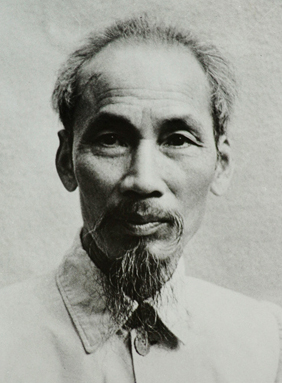
STALIN MAO ZEDONG (1893-1976)ING FATHER OF PEOPLE’S REPUBLIC OF CHINA)Kim Jong-un (CURRENT -DEAR LEADER-OF NORTH KOREA)
Greene brilliantly summarizes many characteristics of leaders in history to support his fundamental beliefs about power. He suggests all humans are primarily self-interested. One may disagree with that belief as a universal truth because there are many examples of social cooperation to achieve a common good or a stable system of governance. However, there is always a prime mover, a powerful person behind the scenes who drives the effort to succeed or fail.
Greene argues power is the result of interpersonal relationships. There is a great deal of truth in Greene’s analysis of power but from an institutional or organizational point of view, power is spread among departments’ leaders who report to a single leader. This is not to contradict Greene’s examples of interpersonal power but to temper belief that all power rests with one wielder of power. There is a great deal more to power than individual human manipulation. Organizations of the modern world are built around individual departments with singular powers beyond singular organizational leaders.
American Capital.
To give an example: regardless of who is President of the United States, there are Constitutional and legal systems that constrain his/her power. The bureaucracy of governance operates within rules set by law and precedent. In the case of business enterprise, shareholders, boards, and regulatory frameworks diminish the power of its executives. Further, even in the marketplace of business, capital limitation, supply chains, national platforms like Google, Amazon, and credit card companies have major influences on power exercised by any singular entity. Power in every human organization is also influenced by religions, social myths, and societal norms.
In this increasingly interconnected world, power has become impersonal, sometimes structural and emergent in ways that are non-intentional but significantly more powerful than one individual.
The weakness of the “48 Laws of Power” is that it fails to address institutionalized power that multiplies the power of individuals. A leader of a government or corporation works within a framework of historically developed departments that have their own powers and influences on public and private functions. The dynamics of power Greene explains apply within departments of government and corporations that go beyond the power of one leader.
This often leads to unintended consequences. ICE and Trump’s power are a current example of unintended consequence because of the murder of two Minneapolis American citizens who demonstrated against the President’s immigration policy. One doubts that the President of the United States wishes for the murder of American citizens who disagree with his immigration policies. However, power of the individual still matters as is demonstrated by today’s American President. Greene precisely explains how one person gains power over another despite a modern world that complicates individual power.
ICE murder of American citizens in Minneapolis who are protesting Trump immigration policy.
President Trump demonstrates his power over education, government employment, health and human services, birth control, and immigration policy. However, both good and bad government policy is magnified by Departments of Government that report to the President, i.e., bad policy coming from a President’s power is only made worse through implementation by subordinates who create their own power structures.
It is not that Greene’s analysis of power is wrong but that it applies to individual relationships without addressing distortions of power exercised by departments of business and government that have developed their own hierarchies of power.
One doubts any President of the United States who orders elimination of illegal immigration wishes to have ICE agents murder American citizens. This is not to absolve President Trump but to suggest the ICE employees on the ground bare the weight of two unjustified murders in Minneapolis.
Greene’s explanation of power is spot on, but it is about every person’s rise to power, not the reality of one leader’s power. Organizations are made up of many other managers using the same laws of power as their presumed superior. The end result is a level of unintended consequence. Or as Lord Acton noted: “Power tends to corrupt, and absolute power corrupts absolutely”. President Trump exemplifies that truth.
Democratic socialism is a great ideal but offers no solution for the flaws of human nature. The slim hope for Orwell’s democratic socialism is “The Ministry of Truth” which ironically is its greatest danger.
Books of Interest Website: chetyarbrough.blog
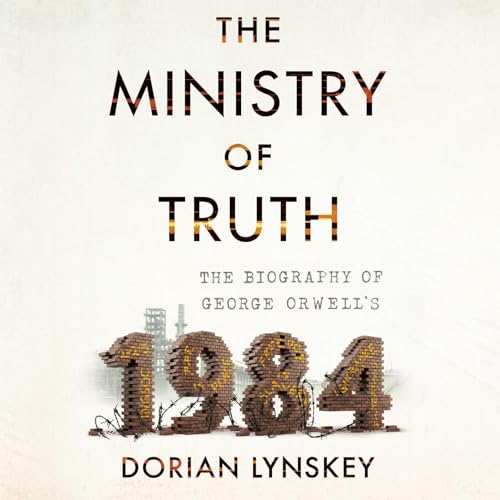
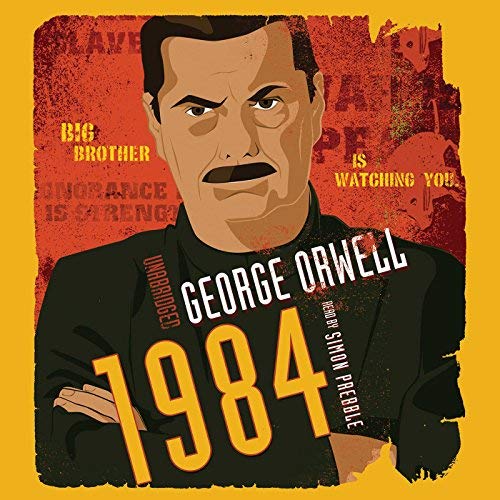
The Ministry of Truth (The Biography of George Orwell’s 1984)
Author: Dorian Lynskey
Narration by: Andrew Wincott
Dorian Lynskey (Author, journalist, based in London)
Dorian Lynskey has written an informative biography of George Orwell’s most well-known book, “1984″. Orwell, a 6’ 3” political activist and theorist, shakes the foundations of communism and democracy. He argues both systems of government fail their citizens. Orwell argues the power of the few in communism and rising authoritarianism in capitalist democracy create an environment of inequality that victimizes the powerless and poor of society.
Orwell believes government run by the few is seduced by personal interests. Lynskey argues that Edward Bellamy influenced Orwell by showing how the utopian visions of all governments, however well‑intentioned, become authoritarian when they demand total social conformity. From that insight, Orwell writes “1984”
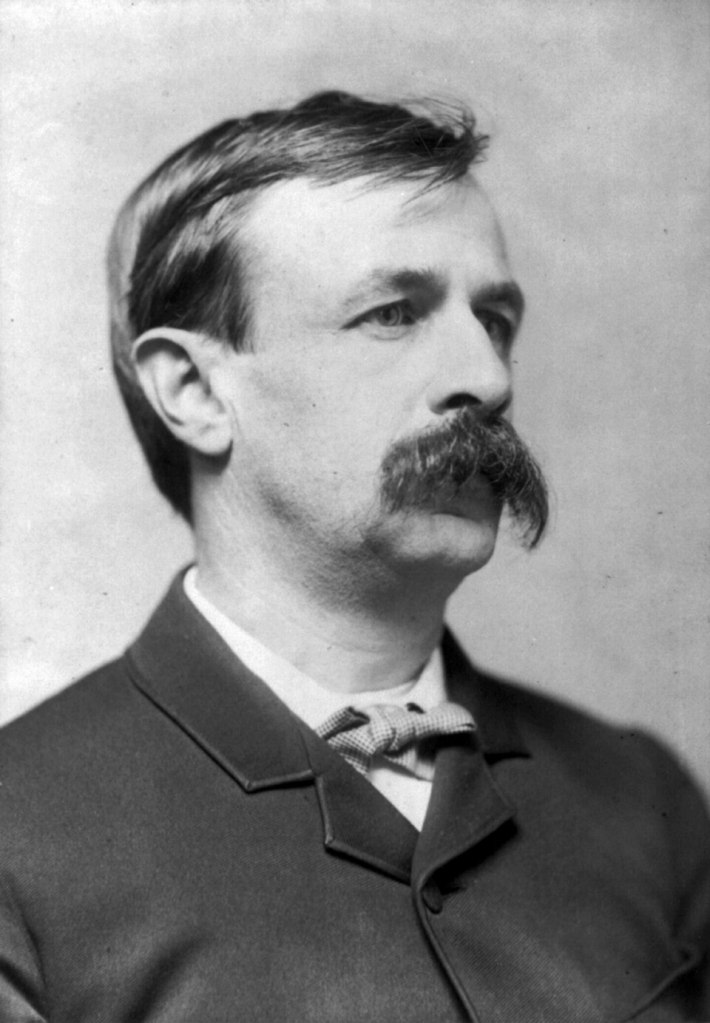
Edward Bellamy (American author, journalist and political activist, died at the age of 48 in 1898.)
Orwell’s “1984” becomes more relevant and threatening today because of artificial intelligence. The potential of A.I. for thought manipulation by purveyors of misinformation, and its surveillance capabilities threaten societal norms.
Lynskey argues that 1984 is relevant today because the forces of communism and democracy manipulate truth, are authoritarian, and define language in ways that harm society. Lynskey’s view isn’t that we live in Orwell’s world, but that we live in a world where Orwell’s insights may help us understand what is happening around us.
George Orwell (1903-1950, died at age 46.)
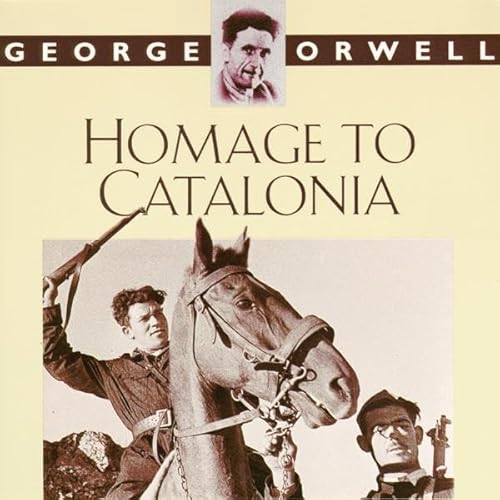
Orwell pillories the Soviet Union and communism in his satirical book “Animal Farm” which he wrote between 1943 and 1944. He had experienced Stalinist-like repression in the Spanish Civil War. Those who have travelled to the Baltics and listened to families that lived under Stalin’s reign over their countries will understand Orwell’s view of communism. Pigs in Animal Farm are Stalin’s apparatchiks that become the ruling class in Animal Farm, just as they did in the Baltics. They claim leadership, privileges and exempt themselves from labor. As “…Farm” leaders they squeal propaganda, censor activists that resist their piggish control and manipulate language to exploit the working class of the farm. The pigs lie among themselves by believing sacrifice of everyone is necessary for the “greater good” while the pigs feed on farming production and others grow hungry.
“1984” does not directly attack democracy but it reveals its weaknesses, illusions, and vulnerabilities.
“1984” is written near the end of Orwell’s life and becomes his most successful publication. He shows how democracies can sleepwalk into authoritarianism. Some would argue that is happening today in the guise of immigration policies that deny basic rights guaranteed by the Constitution. Agencies designed to serve America are being dismantled by today’s government. The idea of “it can’t happen here” is happening here. Propaganda and misinformation distort what is actually happening across America. Many Americans are becoming complicit with the rhetoric of a punitive federal government.
The rhetoric of misdeeds.
Lynskey explains “1984” is relevant today because the struggle over truth, language, surveillance, and authoritarian thinking has intensified, making Orwell’s warnings seem like a toolkit for understanding the present.
Orwell went to Morocco primarily for his health—specifically to recover from severe lung problems that are later recognized as tuberculosis. Morocco was a cheap place to live with a warmer climate that eased his respiratory illness. He left Morocco in 1939 and returned to Britain during WWII. After the war, he spent his last years (1946-1949) writing “1984” in Jura, Scottland. He died in London on January 21, 1950.
Lynskey explains Orwell, like Martin Luther King, believed in socialist democracy.
What is missing in “The Ministry of Truth” is an Orwellian solution to capitalist greed in western culture. Human nature interferes with the ideal of socialist democracy. “The Ministry of Truth” shows how prescient Orwell is about the ills of government but discounts the dark side of today’s democracies, i.e., namely capitalism. The underlying weakness of capitalism is the consequence of a permanent underclass because of economic inequality. Lynskey notes Orwell rejects capitalism because of its flaws, but socialist democracy is no answer because of human nature. Orwell seems to acknowledge that material life with capitalism is better, more freedom is inherent, but less perfect. However, socialist democracy offers no solution to that part of human nature that is human greed. He criticizes democracy without offering any alternative.
The ubiquitous internet and iPhone are not foreseen by Orwell.
The internet is a medium for “alternative facts” that can as easily offer lies as truth. When power speaks with “alternative facts” truth is lost and the public is misled. Society is diminished. Democratic socialism is a great ideal but offers no solution for the flaws of human nature.
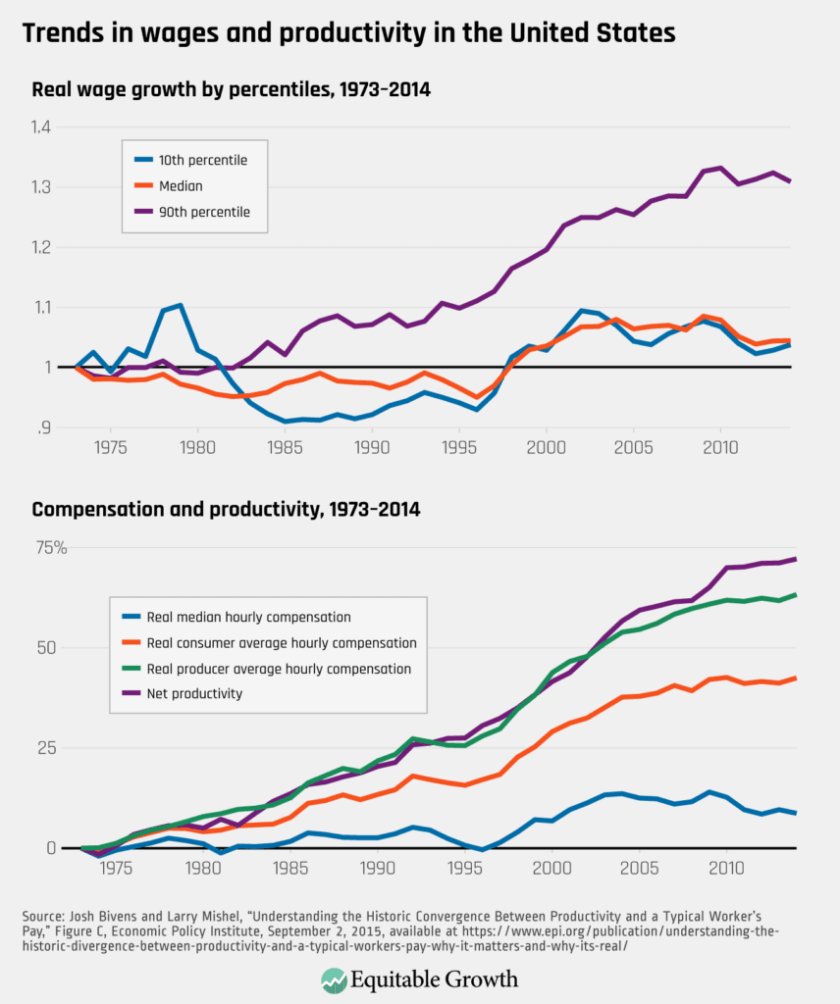
Inequality in America.
The slim hope for Orwell’s democratic socialism is “The Ministry of Truth” which ironically is its greatest danger. A “…Ministry if Truth”, with the potential of A.I., can aid or destroy democratic socialism by focusing on concrete recommendations to mitigate inequality. On the other hand, A.I. in the hands of an unchecked tyrant can increase inequality.
Like all world changing inventions and discoveries, iPhone came with costs ranging from children’ and adults’ addiction, to rare minerals depletion, to environmental pollution. The long-term effect of iPhones has changed the world with unexpected, often unforeseen, consequences.
Books of Interest Website: chetyarbrough.blog
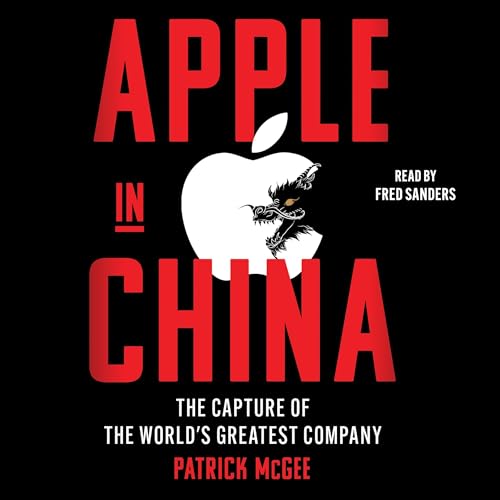
The One Device (The Secret History of the iPhone)
Author: Brian Merchant
Narration by: Tristan Morris
Brian Merchant (Author, American technology journalist, writes for The New York Times, Wired, Slate, The Atlantic, and the Guardian.)
Brian Merchant works around the tech world but never quite in it. His understanding of today’s technology has made him a popular writer for national news outlets. Never having been employed by a tech company, his analysis of iPhone history, the role of Jobs, and the history of its development is as an outsider to the process of invention. As a writer about technology, there is a level of objectivity but also reservation about an outsider’s details. Merchant reports what others tell of iPhone’s history rather than as a person being there as a part of its development.
Merchant’s investigation explains the iPhone’s creation is a messy human process entailing the dangers of mining, involvement of other companies and individuals, patent questions, and labor struggles. The impact of the iPhone’s invention is world changing. In a fundamental way, Merchant discounts the mythology of iPhone’s invention by one person or company. There were decades of prior invention before the iPhone became more than an idea, let alone a world changing device.
The mining industry and assembly line development were in place before the raw material and labor that would be needed for iPhone development. Merchant suggests Apple became the central orchestrator rather than singular inventor of the iPhone. Merchant argues the iPhone is a synthesis of decades of technological improvement, unnamed engineers, labor and organizations of miners and factory workers, and innovations needed to produce Apple’s revolutionary product.
Genius and invention go hand in hand. However, Merchant explains in the early 20th century, much of the technology that became a part of the iPhone’s foundation were already invented. He notes touchscreens, voice recognition tools, motion tracking, and early iterations of what became Artificial Intelligence had already been discovered. Merchant’s intent is not to diminish the genius of Apple, Jobs, or its employees but to show the public that every extraordinary human invention has precursors and essential earlier discoveries. It took Apple’s leadership and employees to integrate the many technologies that had been discovered earlier to create what has become a handheld window to the world. Merchant explains no great inventions are created out of thin air. He suggests every invention of the present is dependent on thought, labor, experience, and invention of the past.
Merchant discounts the idea of the “lone genius” because every genius depends on insight and events of the past to correlate what she/he invents in the present. The iPhone unifies decades of technological progress. The iPhones’ invention reorganizes global behavior, creates a new economic and industrial model, and gives the world a pocket supercomputer. The geniuses of Apple earned their reputations, but they relied on discoveries of the past.
Thinking of Curie, Einstein, Newton, and other giants of science, one wonders how Merchant’s belief about genius is valid. He would argue the brilliance of Curie, Einstein, and Newton are built on prior knowledge, their predecessors, and the tools of their time. Their genius is in connecting past knowledge and discovery of others with the present. Their genius is dependent on predecessors. Merchant is not diminishing Jobs’ or Apple’s genius, but their breakthroughs could only come from groundwork established by others.
INDUSTRIAL POLLUTION ON A BAD DAY IN BEJING,, CHINA
Like all world changing inventions and discoveries, iPhone came with costs ranging from children’ and adults’ addiction, to rare minerals depletion, to environmental pollution. The long-term effect of iPhones has changed the world with unexpected, often unforeseen, consequences.
A surveillance society is a choice that can be made with careful deliberation or by helter-skelter judgement to return manufacturing to America without clearly understanding its impact on American society. That is the underlying importance of Beckert’s history of capitalism.
Books of Interest Website: chetyarbrough.blog
Capitalism (A Global History)
Author: Sven Beckert
Narration by: Soneela Nankani & 3 more
Sven Beckert (Author, Professor of History at Harvard, graduated from Columbia with a PhD in History.)
Professor Beckert defines capitalism as an economic form of privately owned capital reinvested in an effort to produce more capital. In defining capitalism in that way, Beckert suggests capitalism reaches back to 1000 CE, long before some who argue it came into being in 18th century England. Beckert argues the Italian city-states, like Venice, Genoa, and Florence, are the origin of capitalism. That is when accumulated wealth is invested in long-distance trade networks, early banks, and trade by wealthy Italian families. Beckert’s point is that England simply expanded what had begun hundreds of years earlier with trade investment by wealthy Italian families.
Economic theories.
Becker briefly compares many economic theories like capitalism, Marxism, Keynesianism, and Polanyian theories which he calls institutional economics. All bare the flaws of human nature. His economic history is about the addition of slavery to capitalism in the late 15th through 18th centuries. Beckert notes Portugal, Spain, Britain, France, and the Netherlands strengthened their capitalist economies. They were able to secure cheap, controllable labor, expand production, and increase profits with slavery.
Beckert explains the monumental changes and expansion that occurs with England’s adoption of early capitalism. As early as the 17th century, Beckert notes England revolutionizes capitalism in good and morally corrupt ways. Nation-state power combines with private capital to create a massive capitalist influencer around the world. With the dominance of British naval power, colonialism expands, slavery becomes part of international trade, and capitalist monopolies grow to dominate economies. England’s industrial revolution with mechanized production, factory labor, and capital accumulation is able to expand market influence and hugely improve their countries infrastructure and legal protections. Creating patent laws raises potential for monopolization of some market goods.
For several reasons, slavery declines during the later years of industrialization. However, Beckert notes its immorality is not the primary reason.
Free labor became more efficient for capital accumulation. The enslaved became discontented with their role as cheap labor. By the 19th century, slavery became politically and legally incompatible with capitalism. Capitalists began to understand how they could gain more wealth by indenturing rather than enslaving workers, offering sharecropping, or leasing convicts. Capitalists found they could get cheaper labor through contracts with prisons, or sharing of income than slave ownership by being more flexible with the political and physical environment in which labor worked. Slavery faded because capitalists found new ways to reduce costs of labor. At the same time, slave revolts were escalating, the U.S. Civil War is being fought, policing of slavery became too expensive, and investors felt their investments would be at risk in company’s dependent on slave labor. Morality had little to do with abolishing slavery in Beckert’s opinion.
Beckert shows how capitalism systematically expands investment of private capital. Capital is put to work rather than hoarded and consumed by a singular family, political entity, or economic system. Capitalism provides a potential for moving beyond slave-based economies, though racial discrimination remains a work in progress. Beckert notes capitalism is different from other economic systems because it invests private capital that theoretically moderates the need for nation-state’ capital investment in the health, and welfare of a nation’s citizens.
The interesting judgement made by Beckert is that capitalism’s foundation was initially based on slavery, colonialism, and state violence.
The violence of which he writes is based on several factors, i.e., historical slavery, territorial seizure, nation-backed monopolies, worker mistreatment or suppression, and global coercion with military backing. Beckert seems to admit no major historical economic system is free of violence. It seems every economic system is imperfect. Violence appears a fundamental part of human nature in all presently known economic systems.
In the mid to late twentieth century, Beckert notes how manufacturing becomes a global rather than local capitalist activity.
This reorganization creates global inequalities that America is late to understand and adjust to in their capitalist economy. The financial and investment industry of America benefited by becoming world investors, but the local economy fails to remain competitive with the production capabilities of other countries. To become competitive seems an unreasonable expectation for America because of the cost of labor. Trump’s belief appears to be that the solution is to force a return of manufacturing to America. To do that, the rich seem to ignore the fact that to be competitive manufacturing has to have its costs reduced. Where will that reduction come from? Reducing labor costs creates a downward spiral in the families dependent on income from labor. Can America capture a larger part of raw materials for manufacturing to offset higher costs of labor? That is conceivable but it will require a more focused American investment in raw materials that other nations are equally interested in capturing.
AI is a tool of human beings and will be misused by some leaders in the same way atom bombs, starvation, disease, climate, and other maladies have harmed the sentient world.
A capitalist’ economy’s violence has multiple drivers but A.I. has the potential of early detection of conflict hotspots, better predictive policing, more efficient allocation of material resources, and improved mental-health triage and intervention. A.I. is not a perfect answer to human nature’s flaws or the reestablishment of manufacturing in America. There is the downside of the surveillance society pictured by George Orwell.
A surveillance society is a choice that can be made with careful deliberation or by helter-skelter judgement to return manufacturing to America without clearly understanding its impact on American society. That is the underlying importance of Beckert’s history of capitalism.
The story of Israel Keyes’ crimes, his eventual capture, and the trial of a United Health CEO killer make one realize how today’s surveillance technology is important, even in a relatively free society.
Books of Interest Website: chetyarbrough.blog
American Predator (The Hunt for the Most Meticulous Serial Killer of the 21st Century)
Author: Maureen Callahan
Narration by: Amy Landon
Maureen Callahan (Author, journalist, columnist with a BA from the School of Visual Arts in New York City.)
This is a chilling history of a serial killer named Israel Keyes who lived in Alaska with his girlfriend and daughter. Callahan gathered facts from FBI files, interviews with investigators, court records and conversations with people who knew Keyes. Callahan begins with the story of an 18-year-old girl working at a coffee drive up as its sole occupant and worker. Ms. Samantha Koenig is stabbed to death the morning after she is abducted but her body is preserved by Keyes for days after her death. The cold of Alaska keeps the body from decomposing for an estimated two weeks in which it is kept in one of Keyes’ two sheds. Keyes then sinks her remains under the ice of an Alaskan lake.
Samatha Konig’s gruesome death leads to the capture of Israel Keyes.
When Keyes is captured, Callahan notes there were three primary interrogators. Jolene Goeden (an FBI investigator in the Anchorage, Alaska Division), Assistant U.S. Attorney Frank Russo, and FBI Agent Jeff Bell. Their interrogations reveal Keyes travels, his “kill kits”, victims of his demented mind, his final confessions, and the details of his reported murders. The actual number of his murders will never be known because of the many missing and unsolved disappearances in the United States. Surveillance of his mode of transportation led to his arrest in Texas and an eventual confession to three murders. It is estimated that there were at least eleven murders but in the opinion of the author, it could be many more.
Keyes created “kill kits”, hidden packages with tools, money, and weapons that could be unburied in his many travels across the United States. His travels around America from Alaska, south, east, and west seems to have given him license to kill.
The three murders that were directly tied to Keyes were Samantha Koenig (age 18) and a married couple named Currie (Bill age 49 and Lorraine age 55). Keynes admits raping all three. The concrete evidence of these three murders, independent of what Keyes admitted to the FBI, were his possession of Samatha’s cell phone, debit card, pictures he had taken of her, details about the murder of the Curries, and DNA evidence found on Koenig’s body when recovered from a nearby lake. In the case of the Curries which he also admitted killing, the facts of the murder were explained with a detail of one who could only have been the murderer, and finally corroboration of his rental car mileage which showed he could have been there at the time of the murders. Keyes refused to offer details of other murders of at least 11 people that could not be documented well enough for American law to prove guilt beyond a doubt.
Israel Keyes (1978-2012, Keyes is the son of a family of 10 children raised in the states of California and Washington. He is found to be a serial killer, bank robber, burglar, arsonist, and kidnapper who is believed to have killed 11 people between 2001 and 2012.)
Keyes is a fanatically controlling person, militarily trained, athletic, and intelligent. Keyes lost his control of life when he is put in prison. That loss of control appears to lead him to commit suicide with a razor blade and garrote to ensure death by his own hand, a last act of his need for control. Callahan notes Keyes lived with two women during his life with a daughter born from his first relationship. Naturally, their lives are hidden from the public based on Keyes’ horrible and despicable crimes.
The story of Israel Keyes’ crimes, his eventual capture, and the trial of a United Health CEO killer make one realize how today’s surveillance technology is important, even in a relatively free society. Admittedly, surveillance can be taken to an extreme when used to control human behavior as shown in China, Russia, and North Korea. Israel Keyes would still be murdering and raping men and women without American surveillance that eventually leads to his arrest and conviction.
America’s system of justice is not perfect. It can be abused in ways that today’s President is showing. All human beings are flawed. Like Presidents of the United States, surveillance can be a curse or a blessing. Too much power, like too much surveillance, is a danger to society.
The boon and bane of a brilliant mind is that it can correlate facts with causes to reveal the mysteries of the universe but also the demons of false correlation and belief.
Books of Interest Website: chetyarbrough.blog
The Best Minds (A Story of Friendship, Madness, and the Tragedy of Good Intentions)
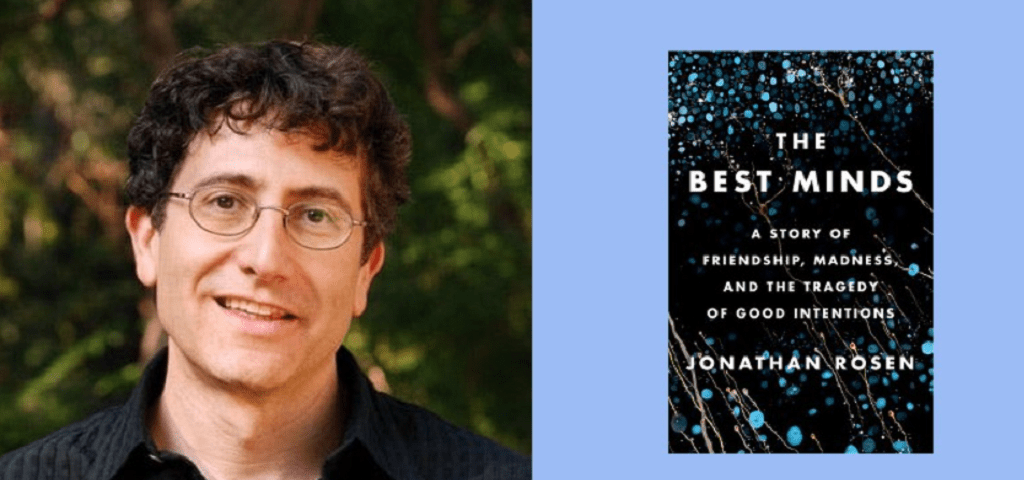
Author: Jonathan Rosen
Narration by: Jonathan Rosen
Jonathan Rosen (Author, Yale graduate, writes for The Jewish Daily Forward, and the Free Press.)
As a person who has lived through the same generation as Jonathan Rosen, his story is interesting partly because it tells what it is like to be born a Jew in America. In many ways, one finds life as a Jew is no different than it is for any American. Most Americans are born into a family that cares for them and influences who they become as adults. Children are born with innate abilities that are either cultivated or ignored by their parents. Some parents are too busy with their own lives to offer care a child may benefit from with more attention. It appears Jonathan Rosen is born into a family that cultivates his abilities despite their busy lives. One wonders if that is a matter of ethnic tradition or inherent nature. One suspects it is a little of both.
In “The Best Minds”, an important part of being raised a Jew is education that encourages and reinforces Jewish identity through rituals like the bar mitzva.
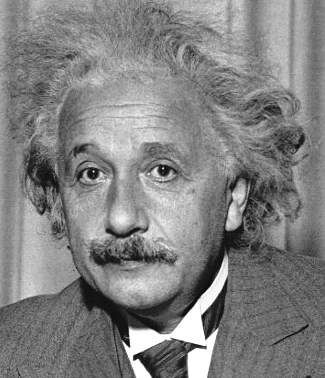
The bar mitzva and bat mitzva (for girls) is a coming-of-age ceremony at age 13 (sometimes 12 for girls) where a Jewish child memorizes and recites passages from the Torah. On the one hand it reinforces one’s identity with a particular ethnicity. On the other, it is one of many exercises of memory that reinforces one’s ability to succeed academically. Much of one’s success as an accomplished adult is recall of information whether a doctor, lawyer, or merchant chief. From a young age, memorization is an important skill for Jewish children. One wonders how much tradition has to do with the brilliance of Einstein, Oppenheimer, Salk and so many other Jews of the world. This is not to suggest being raised in a Jewish family is not as traumatic and unpredictable as any child born but to recognize ethnic customs make a difference in children’s lives. The great contributions to science and art by Jews makes one wish they might live life over again with more positively ritualized cultivation.
Michael Laudor (Yale graduate, subject of “The Best Minds)
However, there is much more to Rosen’s story. His life is intertwined with the life of Michael Laudor, a close childhood friend who is raised in a similar environment and recognized as a prodigy. However, Lauder succumbs to schizophrenia. This is not to suggest Jews or any ethnicity is prone to psychological imbalance. Psychiatric imbalance is not defined by ethnicity but exists as a potential for every human being. One doubts there is any defense against psychological abnormality whether Jew, gentile, or other.
Laudor and Rosen as childhood friends.
Laudor and Rosen were close friends. Rosen recognizes his friend has a superior mind, i.e., one of “The Best Minds” of Rosen’s high school’ years. Rosen struggles to understand what happened to his childhood friend. Both Rosen and Laudor are accepted at Yale. Laudor chooses law as his course of study. Rosen goes on to California to get a PhD in literature. Their dual biographies make Rosen’s story impactful. Rosen explains how intelligence, ambition, and success can be destroyed by mental illness.
Yale University in New Haven, Connecticut.
Laudor is a wunderkind who performs at a level far beyond his age group. He graduates from Yale and decides wealth is a goal to be achieved. He is hired by an investment consulting firm which offers him an opportunity to become super-rich. Rosen infers Laudor succeeds. From the outside, Laudor appears to be highly successful, but he becomes dissatisfied with his life and quits the firm that hired him. Rosen stays in touch with Laudor and writes “The Best Minds” to reveal what he thinks he knows about what happened to his childhood friend. The beginning of Laudor’s imbalance appears to Rosen when Laudor explains he is being followed, monitored and targeted by unknown malefactors. Before that conversation, the erratic behavior of Rosen’s friend seemed like a matter of burnout from his high-flying experience as an investment consultant. The intensity of Laudor’s paranoia makes Rosen believe something more serious is at the root of his friend’s behavior.
Rosen stays in touch with Laudor–talking to him about what is going on in his life. He tries to get Laudor to see the falseness of his delusions without triggering defensiveness. Rosen avoids contradicting Laudor by trying to be supportive and encouraging him to seek help. On the one hand one wonders what more could Rosen do. How else could he intervene in Laudor’s spiral into what is later diagnosed as schizophrenia? A reader/listener wonders what they would or could have done.
Michael Laudor murders his fiancée, Carrie Costello, in 1998. She is pregnant at the time of her death.
Laudor had grown to believe his girlfriend had become a part of a conspiracy to harm him and that he needed to defend himself despite her trying to care for him. His brilliant mind manufactured a false reality. His delusion leads to the fatal stabbing of Ms. Costello. After the homicide, Laudor calls 911. He is arrested and transferred to a psychiatric facility and later found guilty by reason of insanity. He died in 2022 at the age of 56 in a New York State psychiatric hospital, never recovering from severe schizophrenia.
“The Best Minds” is Rosen’s effort to understand how genius and madness can be intertwined. The boon and bane of a brilliant mind is that it can correlate facts with causes to reveal the mysteries of the universe but also the demons of false correlation and belief. Correlation is not causation without objective and repeatable experimental proof.
The question one asks oneself after finishing Rosen’s book is what one can do differently to keep someone from losing their way in life whether he/she is a genius or not?
“The God of Small Things” is a revealing and disturbing telling of the human condition.
Books of Interest Website: chetyarbrough.blog
The God of Small Things
Author: Arundhati Roy
Narration by: Sneha Mathan
Arundhati Roy (Author, Booker Prize for Fiction awarded in 1997 for “The God of Small Things”.)
Arundhati Roy gained fame with “The God of Small Things” because of its originality. It is in the big and small things of colonialism and culture that expose the flaws of all societies. “The God of Small Things’ is a criticism of the world in which we live. Roy creates a fictional story that helps one understand the emotional, social, and political failings of India that are, in reality, repeated in societies throughout the world.
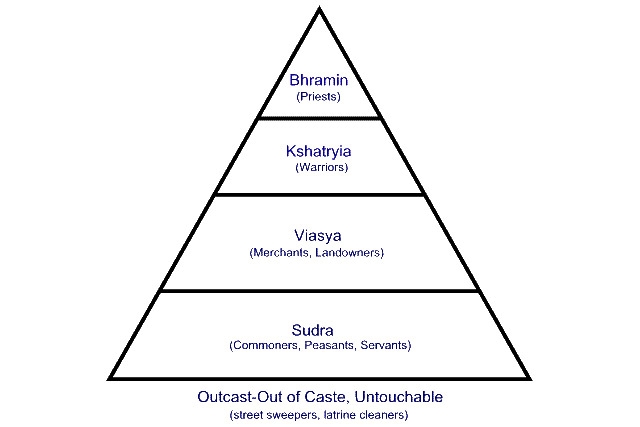
Rather than disrupting the caste system of India, Britain created an Anglophile elite that competed and supported Brahman aristocracy.
In some ways, British colonialism reshaped India’s culture. Britain’s colonization of India created a level of class superiority that hardens the administrative functions of India’s government. That hardening became an integral part of Indian culture. The English language became a symbol of superiority. Schools, courts, and government offices emulated British customs that copied systems of hierarchy, and labor control that continued after the British abandoned colonialist control of India. In visiting India, British influence is seen in country estates that travelers stay in when they ride trains from the north to the south.
The more encompassing truth of Roy’s observations is that the flaws in India’s society exist in all societies.
Ammu, one of Roy’s main characters, is a Syrian Christian woman who marries a man from a lower caste. Her husband comes from the so-called “Untouchable” caste. He turns out to be a brutal abuser of his wife and is eventually divorced by Ammu, but she continues to suffer from discrimination for her religious belief and her breaking of the caste taboos of India.
Roy’s characters like Baby Kochamma, a young woman obsessed with English manners and Catholic respectability is mocked by others in her community. Having an Oxford education became a badge of status with Englishness at the top of the hierarchy of Indian culture. Roy’s novel is set in the 1960s. A moral code of sexual guilt, fear of sin, belief in purity, and policing of desire are exemplified by India’s women who are influenced by catholic proselytizing. In today’s India, the most endemic religion is Hinduism. Rules of marriage, the norms of purity, the stigma of divorce, and association of sin with female desire are tied to Hindu social beliefs. As a Catholic, Baby Kochamma has the additional burden of believing in a minority religion which exacerbates her isolation.
Caste system’s endurance in India is undoubtedly reinforced today by the Prime Minister of India, Narendra Modi and its President, Droupadi Murmu, who are Hindu adherents. Though Roy shows there is little theological hostility between Catholic and Hindu influences, there are inherent tensions between these two religions. Roy infers caste system is reinforced by Hindu beliefs while Catholicism is less concerned about caste than morality or guilt. The irony is that Catholicism rejects caste in theory while accepting it as a part of India’s culture. The two religions compete while reinforcing similar authoritarian beliefs on India’s citizens.
A point made by Roy is that societal, religious, and political dysfunction is not limited to India. Dysfunction exists in all nations.
When Roy’s character Ammu succumbs to the sexual desire of a male, she is criticized more for the caste difference than the sin of entering into an intimate relationship that ultimately falls apart with the abuse of her husband. The physical abuse compounds her violation of Hindu’ caste belief. The fact is that Ammu divorces her husband because he is an abusive alcoholic, not because of caste difference.
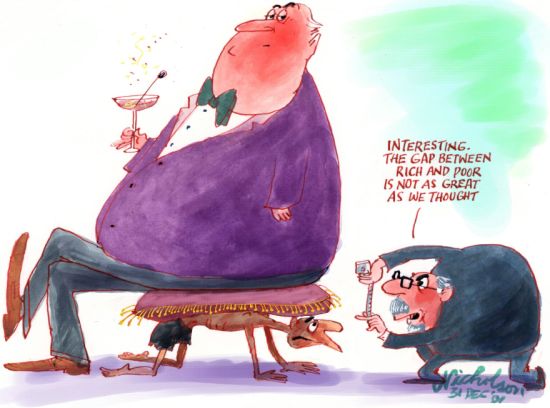
Roy shows India is a microcosm of the world, weighted down with sexism and discriminatory inequality that grows from ignorance, and societal dysfunction which often turns into human violence within and between societies and nations that can engulf the world.
“The God of Small Things” is a revealing and disturbing telling of the human condition.





















































 REVIEWS AND VIEWS OF LIFE