“This is Your Brain on Parasites” is a bad book title but McAuliffe has written an interesting book about physical and mental health, and the treatments being researched in the 21st century.
Books of Interest Website: chetyarbrough.blog
This is Your Brain on Parasites (How Tiny Creatures Manipulate Our Behavior) and Shape Society
By: Kathleen McAuliffe
Narrated By: Nicol Zanzarella
Kathleen McAuliffe (Author, science journalist who has published in The New York Times, The Atlantic, and Smithsonian. Received an M.A. in natural science from Trinty College Dublin.)
Kathleen McAuliffe apprises the public of the importance of personal health along with a somewhat bizarrely titled book “This is Your Brain on Parasites”. McAuliffe’s book is about the science of health and its maintenance. The idea of a parasite in one’s brain seems unworthy of a book because of the creepy implication of possession. However, McAuliffe refers to a physician and several research scientists that have found evidence of brain parasites that effect animal and human behavior.
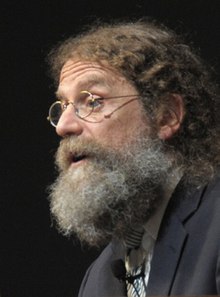
Dr. Robert Sapolsky, a neuroscientist and professor at Stanford studied what is called a Toxoplasma gondii parasite. It forms cysts in brain tissue that are shown to affect human behavior. People who have developed the cysts have shown symptoms of risk-taking behavior, and mental dysfunction like schizophrenia.
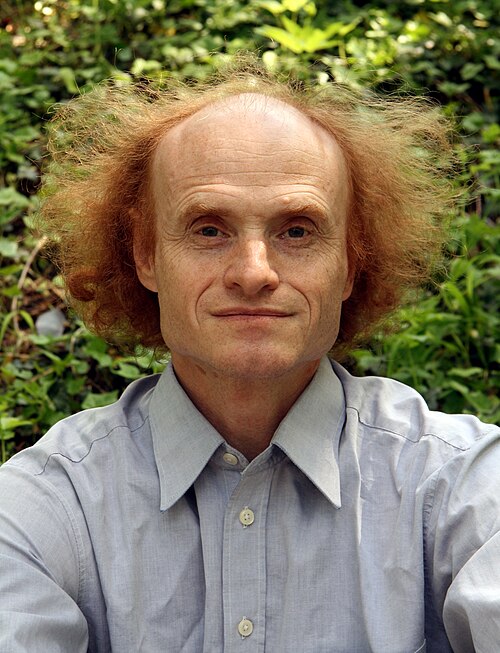
Dr. Jaroslav Flegr is a parasitologist, evolutionary biologist and professor of biology at the Faculty of Science, and professor at Charles University in Prague.
McAuliffe meets with a Czech scientist, Dr. Jaroslav Flegr, who conducted research showing the Toxoplasma gondii parasite in cat feces can infect the brain of a human being. The author meets other American research scientists that show how parasites infect animal brains whose behavior is affected in ways that are not natural to their species. A parasite being the source of a diseased brain has implications for treating mentally dysfunctional patients that may have a parasitic infection.
What McAuliffe’s book implies is the importance of washing one’s hands when handling pets, or their fecal material.
“This is Your Brain…” reminds one of the importance of hygiene when replenishing a bird feeder or filling an animal feeding trough to avoid possible parasites.
As most know, Kennedy is not a believer in vaccination despite a growing measles epidemic and the proof that vaccination works. McAuliffe does believe there are circumstances where a child crawling across the floor of a clean house gathers some immunity naturally but that un-common pathogens require uncommon vaccination.
Two other subjects mentioned by McAuliffe is natural and science made vaccinations and the benefits they provide humanity. This is a particularly timely suggestion considering Trump’s appointment of Robert F. Kennedy Jr. (a confessed anti-vaxxer) as the Secretary of Health and Human Services.
McAuliffe notes how research is showing how certain microbes can remove calories from food and how certain drugs can reduce hunger among overweight patients. She reflects on the intersection of microbiology and human health.
Another interesting examination by McAuliffe is the science research being done on gut microbiomes, a community of microorganisms in human digestive systems.
The research on microbiomes has resulted in effective weight loss drugs that have become popular medications for people struggling with weight gain.
“This is Your Brain on Parasites” is a bad book title but McAuliffe has written an interesting book about physical and mental health, and the treatments being researched in the 21st century.
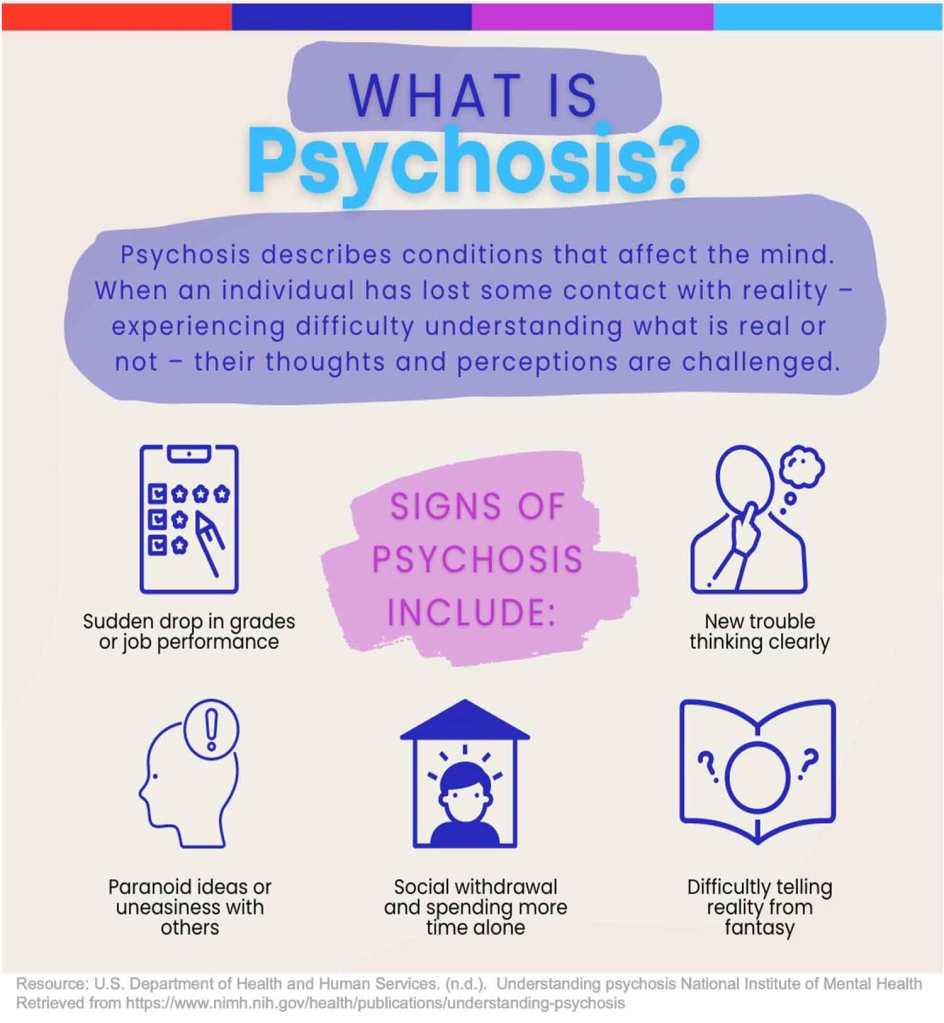
The imagination of Han Kang gives reader/listener’s an explanation of how a human being can become psychotic. Kang’s characters show how psychosis comes from many sources, a major one of which is family relationship.
Books of Interest Website: chetyarbrough.blog
The Vegetarian
By: Han Kang
Narrated by: Deborah Smith, Janet Song, Stephen Park
Han Kang (Author, South Korean writer, awarded the International Booker Prize for fiction in 2016 and the Nobel Prize in Literature in 2024.)
A listener/reader may be tempted to put this book aside with the thought that it is a titillating pornographic tale that is not worthy of one’s time. However, after an hour or two, one realizes this is a journey for something difficult to describe.
In Kang’s fictional story, two sisters are raised by the same parents. One is the older of the two and becomes a successful small business owner with a video artist husband; the other is a housewife who lives with a husband that seems to neither love nor respect her. Both marriages fail but for different but interlocking reasons.
The younger sister becomes a vegetarian later in her married life. She explains her vegetarianism is based on a dream she has about something that is not clearly defined. One gathers the dream has something to do with the source of meat that involves the killing of animals while vegetarian food comes from nature’s abundance. The husband reluctantly goes along with the change but becomes more and more unhappy in his life with the younger sister. The unhappiness grows to something greater when his wife begins to complain about how her meat-eating husband’ smells. The breaking point comes when the husband asks his wife’s mother, father, and sister-in-law to convince his wife to abandon vegetarianism and begin adding meat to her diet. At dinner in their house, the father forcefully demands his daughter to eat meat. She refuses and the conflict becomes violent. Her father pries her mouth open and shoves meat into her mouth. The daughter rebels and cuts her wrist with a knife in an act of defiance. Her brother-in-law grasps the younger daughter who is profusely bleeding and rushes her to the hospital.
The brother-in-law that rushed to save the vegetarian is a video artist.
The main characters of the story and the substance of their conflict is now made clear to the listener/reader. The next portentous development is the older sister’s husband (a video artist) begins to fantasize about the younger sister whom he had rushed to the hospital. His fantasy grows to the point of asking the younger daughter to pose nude for an art video he wishes to create. She agrees. A listener/reader begins to understand the younger sister is slipping into a psychosis. Her brother-in-law paints her nude body with flowers that make her feel that she is becoming part of nature, i.e., something growing like the vegetarian diet upon which she relies. The brother-in-law’s sexual desire becomes more aroused by the video and his relationship with the younger sister.
The deepening psychosis of the younger daughter grows when the brother-in-law hires a nude male model to be a part of a new video.
The male model resists but agrees to pose with her but refuses to go beyond allowing flowers being painted on his nude body and a video of the two without clothes but with painted bodies. The brother-in-law’s sexual fantasy grows from this experience but is disappointed in the male actor who refuses to have sex with the sister-in-law while the video is being filmed. The male actor did not want to be viewed as a porn star.
The brother-in-law’s fantasy leads to the sister-in-law’s agreement to have sex with him on film as long as he allows her to paint flowers on his body that are similar to what he had painted on her body. They become sexually entwined at the sister-in-law’s house. The older sister discovers them in their sexual rendezvous where the video is being produced.
The younger sister has crossed a barrier between sanity and insanity. It is not a matter of remorse for the sexual relationship but from a reinforcement of her obsessive need for being a vegetarian as an integral part of nature. She refuses her humanity. She has crossed the Rubicon between sanity and insanity. She refuses to eat anything and only wishes to drink water to feed her growth as a plant. Both her husband and the husband of the older sister-in-law essentially drop out of Kang’s story. The older sister’s husband does not forgive her husband for his sexual transgression and the younger sister’s husband never loved the vegetarian in the first place.
This amazing book, “The Vegetarian”, offers a vivid portrayal of a human beings’ descent into psychosis.
The imagination of Han Kang gives reader/listener’s an explanation of how a human being can become psychotic. Kang’s characters show how psychosis comes from many sources, a major one of which is family relationship.
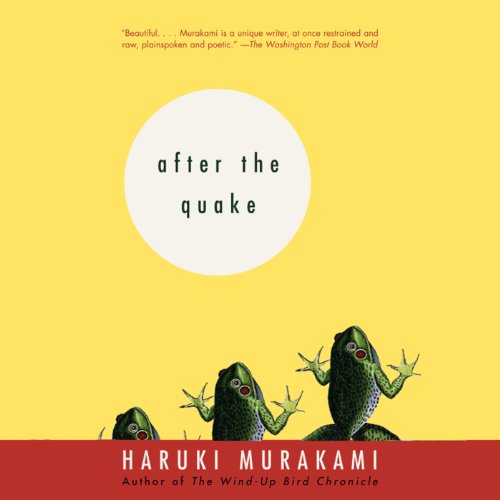
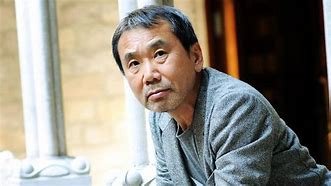
Murakami is one of the great writers of modern times. In “after the quake”, Murakami reduces the great and horrid loss of the many to the feelings of the “one”
Books of Interest Website: chetyarbrough.blog
“after the quake”
By: Haruki Murakami
Narrated By: Rupert Degas, Teresa Gallagher, Adam Sims
Haruki Murakami offers a series of short stories in “after the quake” that remind one of the frailties of human beings. Humans lie, steal, cheat and war against each in ways that exceed natural disasters. Murakami’s short stories are funny, sad, and insightful views of humanity that show we often foment our own disasters.
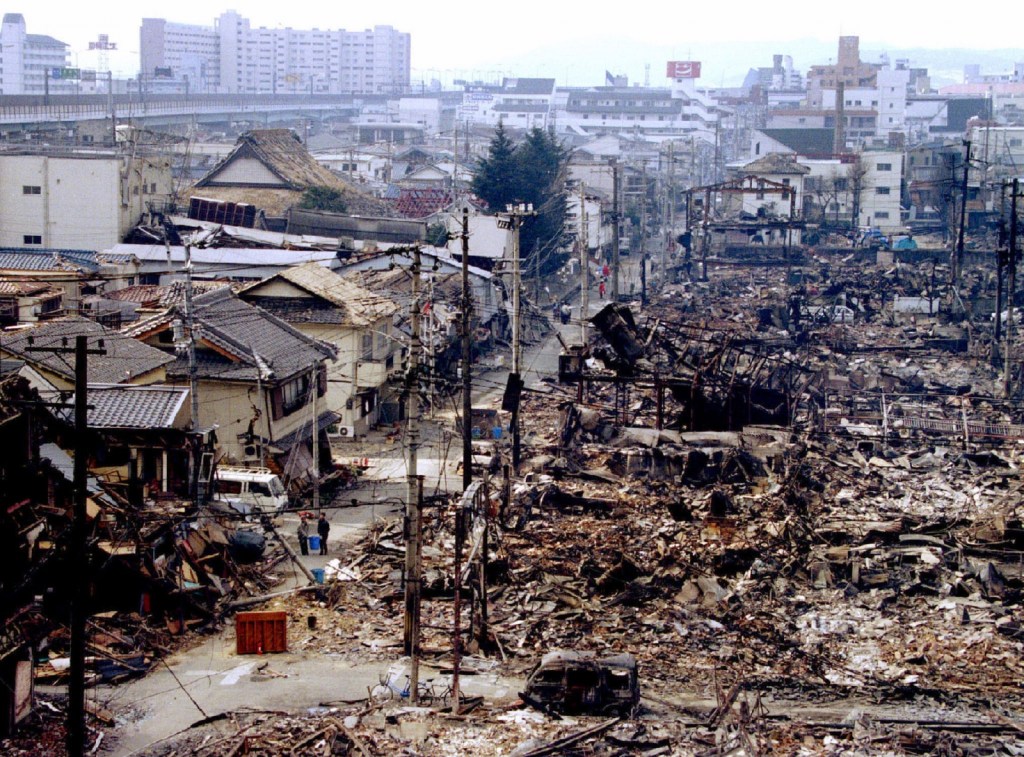
Each short story revolves around the social implications of the Kobe’ earthquake. Murakami cleverly weaves his stories to reflect on events that change one’s direction in life. The events can be as great as an earthquake, a war, or a singular lost love. The first is nature’s way; the second and third are humans’ way.
Human relationships are as unpredictable and destructive as natural disasters. The human’ Lushan rebellion in 8th century China is estimated to have killed 13 million people, the Mongol invasion in the 13th and 14th century 20 to 60 million, the Taiping rebellion in mid-19th century China 20-30 million, and two world wars in the 20th century at 83-107 million. This is without noting China’s famine that killed millions because of Mao’s mistakes in the Great Leap Forward, Stalin’s repression in Russia, and today’s wars in Ukraine and Gaza. Natural disasters are horrendous events, but human nature has murdered more than earthquakes, floods, volcanoes, and other natural disasters.
The cataclysmic events of nature affect the many, but Murakami shows scale means nothing in respect to the effect it has on the “one”. He cleverly shows how singular events can overwhelm one relationship as portentously as natural or man-made disasters can overwhelm all relationships.
Murakami is one of the great writers of modern times. In “after the quake”, Murakami reduces the great and horrid loss of the many to the feelings of the “one”. His stories show that a personal loss of an imaginary friend or a real love is as catastrophic to the one as a natural disaster or war is to the many.
One wonders if Abdulrazak Gurnah is proffering an opinion about race relations in the world or just leaving a lifeline for those disappointed by relationship failures.
Books of Interest Website: chetyarbrough.blog
Admiring Silence
By: Abdulerazak Gurnah
Narrated By: Unnamed person from Zanzibar
Abdulerazak Gurnah (Author, Tanzanian-born British novelist and academic, moved to the UK in 1960.)
A little context for “Admiring Silence” will help understand Abdulerazak Gurnah’s interesting and troubling story. Gurnah received the Nobel Prize in Literature in 2021. “Admiring Silence” is the latest book published by Gurnah in 2020. He had written four earlier books: Memory of Departure (1987), Paradise (1994), By the Sea (2001), and Desertion (2005).
“Admiring Silence” is not a biography but an interesting story about a long-term relationship of a Black emigrant and a white woman who meet in Zanzibar (an island archipelago off the coast of Tanzania) and move to London. The two had met in a Zanzibar’ restaurant where they both worked. The Black emigrant leaves his native country with his restaurant mate.
Gurnah describes the two as lovers who are struggling restaurant workers who wish to improve their lives through higher education. An opportunity to attend a university leads the two to decide to emigrate to London because of their similar academic ambition. The two are enrolled at a university and both become teachers in England. Gurnah sets a table for understanding what life is like for an unwed mixed-race couple in mid-twentieth century England.
Their life together is complicated by the birth of a daughter and the father’s decision to visit his homeland when he is in his forties.
No one in Zanzibar knows he has a teenage daughter with an unmarried white woman he lives with in England. His mother wishes to fix him up with a future Black Muslim wife. The interest one has grows with the circumstances of Gurnah’s imaginative story.
What is it like to be in a racially mixed marriage in 1960s England?
How does a mixed-race child feel about her life in a predominantly white country?
What does a Black family think about their son having a mixed-race family?
Having lived together for 20 years and had a child, why haven’t they married?
How does the relationship between different races affect the feelings of a couple that chooses not to marry but have a child born to them?
Is Gurnah’s story representative enough to give one the answers?
The first question is largely unanswered. The last question is impossible to answer but the other four imply Gurnah’s opinion. Marriage is always a work in progress whether it is of a mixed-race couple or not. However, there is a distinction based on race when it comes to a man’s and woman’s personal relationship because of the dimension of racism. Every couple chooses to work through differences and become more or less committed to staying together but two people of different races face discrimination associated with racism, unequal treatment, and economic inequality existing in a country’s dominant racial profile.
Gurnah does not address how a mixed-race child deals with life in a predominantly white country, but one can imagine it depends in part on how distinctive a difference is in the color of their skin in relation to the dominate racial profile.
In terms of the daughter’s relationship with her parents, one presumes it is likely the same parent/child conflicts of all families. Some fathers are more distant than others just as some mothers range from helicopter to equally distant parents.
That these two lovers who have been together for so long without getting married, after their daughter is born, seems like a flashing yellow light, a cautionary notice of something is about to change.
When the father’s mother writes from Zanzibar to have him visit after being away for so long, flashes a yellow light that eventually turns red. He returns for a visit to Zanzibar at the encouragement of his partner. The partner’s encouragement seems disingenuous, i.e. more like a desire for a relationship break than a supportive gesture. The last chapters confirm that suspicion. A break-up occurs soon after the father returns. There is a brief father/daughter reconciliation, but the daughter also decides to separate from her father.
An interesting point is made by Gurnah about a Muslim Black person leaving a poverty-stricken country of his birth to a country of wealth and a different culture.
It is the wish of his Zanzibar’ family for the father to return to help with the disarray and economic disparity of his home country; as well as marry a local Black Muslim girl who wishes to become a doctor. The presumption is that if one leaves their poor country to become prosperous in a wealthy country, they have some magical power to help their poverty-stricken home-countries. It is of little concern to the family about his committed relationship to another but more about what his life is like in his newly adopted country and what he can offer to his homeland from what he has learned. The Muslim girl the mother wishes him to marry is twenty years old. Her son is in his 40s. Tt appears the primary reason for such a marriage is to help the young woman become a doctor. In the end, the son recognizes this is not practical but clearly understandable considering the poverty in Zanzibar.
Gurnah cleverly injects a conversation with a Nigerian Muslim woman on his plane ride back to London before his white lover’s rejection of their relationship.
The Nigerian woman has been divorced from her English husband for several years. It was an emotionally difficult divorce for her. A mix-up on a missing passport allows the father to find contact information for the divorcee. One wonders if Gurnah is proffering an opinion about race relations in the world or just leaving a lifeline for those disappointed by relationship failures.
Today, some look at the American government with concern. Are we at a tipping point in America?
Books of Interest Website: chetyarbrough.
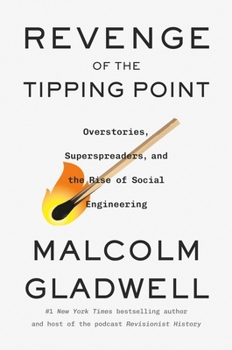
Revenge of the Tipping Point (Overstories, Superspreaders, and the Rise of Social Engineering)
By: Malcolm Gladwell
Narrated By: Malcolm Gladwell
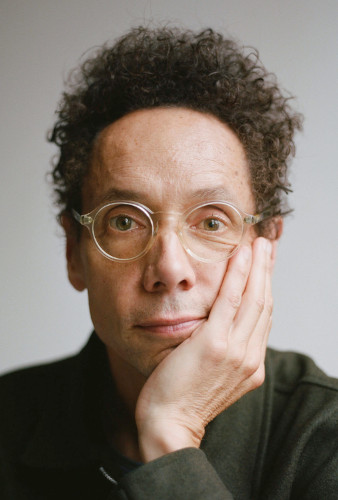
Malcolm Gladwell (Canadian Author, journalist, public speaker, staff writer for The New Yorker.)
Malcolm Gladwell returns to the subject of “…Tipping Point” that originally explored how small actions or events can trigger significant changes in society. “Revenge of the Tipping Point” provides several stories of tipping points that have had vengeful consequences for society.
One of the most consequential tipping point stories is about America’s attempt to engineer social equality.
America is struggling with social diversity. Gladwell infers social diversity is a great strength in American society. However, our government and domestic leaders have legislated discrimination, fought wars, murdered innocents, and promoted ethnic separation throughout its history as a nation. Despite our most famous statement of American value, i.e. “E pluribus unum” (Out of many, one), America has failed.
The value of social diversity is it allows Americans to achieve great things despite inequality that exists in America.
Gladwell tells the story of a community in Florida that prides itself on being an exemplar of American society because of its strong educational values, cultural pride, community support, and economic mobility. The people who live in this community focus on preserving and celebrating their ethnic heritage, traditions, and identity. They assemble an island of cultural sameness that overtly and covertly resists change. Those who are not of the right ethnic heritage or race who may have the same drive for high educational achievement, community participation, and relative wealth are not welcome. The tipping point revenge Gladwell notes is in the stress this community places on its children to excel academically and conform to expectation. Gladwell notes student suicides are disproportionately high because of the social pressure children feel to conform. The social pressure for conformity and educational expectation overwhelms some who live in the community. Some parents choose to send their children outside the community school system to allay the social pressure they feel.
Gladwell notes the 2023 Supreme Court rejection of college acceptance based on diversity. The Court denies the right of colleges to recruit students based on ethnicity or race.
On the face of it, that seems an unfair decision but Gladwell notes that the schools being challenged on their diversity policies refuse to explain how they determine who should be admitted based on a percentage figure of fair representation. Gladwell notes the primary criteria for college selection has little to do with a drive for diversity but are based on revenue producing university sports programs and donor money. Minority preference admissions are based on income potential for the university, not social diversity.
The Supreme Court ruling does not preclude consideration of an applicant’s personal life experience, but Gladwell notes it nevertheless has nothing to do with a drive for equality or diversity.
Unfortunately, the Supreme Court decision may cause a reevaluation of outreach to minorities who have been denied equal opportunity for personal success. Gladwell’s ironic point is that American diversity in the pre-Supreme Court decision was never based on creating diversity but on raising money for university foundations.
Gladwell explains the drug crises is more of an American problem than for most other nations of the world.
One asks oneself, what makes America the center of opioid addiction and death.
From the greed of drug dealers, medicine manufacturers and doctors who prescribe opioids, America has the highest opioid deaths in the world. Though Estonia has the highest opioid death’s per capita because of its smaller population, the manufacturers and doctor-prescribed synthetic opioids have greatly increased American’s deaths. Purdue Pharma aggressively marketed OxyContin with the owners, the Sackler family, reaching a multibillion-dollar settlement. Many doctors like Dr. Hsiu-Ying Tseng and Dr. Nelson Onaro have been prosecuted for overprescribing opioids or running “pill mills” that provided opioids to the public.
Gladwell suggests it is the superspreaders, worldwide legal and illegal manufacturers and sellers of opioids, and incompetent/greedy medical prescribers as tipping point causes of America’s addiction crises. However, he argues there are environmental and systemic societal factors that create a receptive user base in America. Economic stability is unattainable for many Americans because of economic, racial, and ethnic differences. He argues small actions and decisions lead to widespread consequences. Every human being has a tipping point based on their experience in the world. The ideals of America conflict with its reality. The pain of that realization leads some to relief through drugs, a step-by-step addiction that can lead to death.
Berlin Memorial to the Holocaust.
There are other tipping points Gladwell explains. One that resonates with my life experience is the ignorance many have of the history of the world. Some would argue, Americans became aware of the Holocaust after the end of the war in 1945. However, Gladwell argues most Americans remained ignorant of its reality until 1978 following the release of the NBC miniseries “Holocaust”. Until then, Gladwell argues there was little broad cultural understanding of its atrocity. Having graduated from high school in 1965, much of what Gladwell notes about ignorance of the Holocaust rings loudly and clearly.
I doubt that many were completely ignorant of the Holocaust, but its brutal reality was not taught in the high school I attended in the 60s. Having visited Auschwitz and viewed its gas chamber, piles of discarded shoes and clothes, and pictures of murdered human beings, the truth and guilt that one feels for being a part of humanity is overwhelming.
We have an FBI director that wants to have men and women of the agency coordinate training with the UFC (Ultimate Fighting Championship), headquartered in Las Vegas. We have a President who publicly chastises Ukraine’s President and suggests they caused Russia’s invasion of their country. We have a President that insists America is being taken advantage of by lower cost production of product of other countries and that tariffs are a way to balance the American budget. We have a Palestinian protester at Columbia University who is arrested for social disruption. The head of the Department of Health Services orders lie detector tests for employees to find any leaks about the current Administration’s actions.
Tariffs have historically been found to damage America’s economy. Is the FBI a military force that needs to be schooled in hand-to-hand combat? One need only read Adam Smith about free trade to understand the fallacy of Tariffs. Have we forgotten the invasions of Austria and Poland by Germany at the beginnings of WWII? Is free speech a crime because of tents that disrupt college life? Should we use lie detector tests to determine the loyalty of employees?
Are these incidents a tipping point for American Democracy to turn into something different and demonstrably less than the founding principles of American government?
Ideally, public good and ethics will be taught in advance of the melding of technology and government, i.e., not after mistakes are made. However, history suggests humans will blunder down the road of experience with A.I., making mistakes, and trying to correct them after they occur.
Books of Interest Website: chetyarbrough.
The Technological Republic (Hard Power, Soft Belief, and the Future of the West)
By: Alexander C. Karp and Nicholas W. Zamiska
Narrated By: Nicholas W. Zamiska
Alex Karp (Founder of software firm Palantir Technologies)Nicholas Zamiska (CEO Palantir Technolgies
The authors are the founder and operations manager of the American software company, Palantir Technolgies. Palantir has been hired by the U. S. Department of Defense, the Intelligence Community, agencies of NATO countries, and Western corporations to provide analytic platforms for defense analysis, healthcare, finance, and manufacturing.
They believe artificial intelligence research and development has lost its way.
They argue Silicon Valley has lost focus on what is important for survival of society and Western values. They suggest A.I. should be focusing on serving humanity in ways that responsibly regulate nuclear weapons and protect society from existential risks like climate change, pandemics, asteroid collisions, etc., that threaten human extinction. The authors provide a powerful criticism of technology and its national purpose.
Karp and Zamiska argue that technology is focusing on consumerism rather nuclear annihilation or existential risk.
By focusing on convenience and entertainment for financial success, fundamental problems like the threat of nuclear war, homelessness, inequality, and climate change are ignored or relegated to the trash heap of history. (“Trash heap of history” is the belief that what happens, happens and society can do nothing about it.) The west has become complacent with short-term focus on profit and consumer demand. The authors argue that the greater good is no longer thought of as an important societal goal. The primary goal is making money that enriches creators and company owners by making purchases more convenient to and for consumers.
Aldous Huxley (English writer and philosopher, 1894-1963, author of “Brave New World”.)
Their argument is there should be more collaboration between tech and government. Historically, government is only as good as the information it has to make societal decisions. A computer program can be programmed with false information like the error of weapons of mass destruction that led to an invasion of Iraq that was a bad decision. The domino theory input that led to the Vietnam war; so, on and so on. There is also the threat of an elected President that uses the power of technology to do the wrong thing because of his/her incompetence. There is the risk of government gathering personal information and using it to cross the line into a “Brave New World” where innovation, free thought, and independent action are discouraged or legislated against so people can be sent to jail for breaking the law?
Possibly, melding technology with government is an answer, but it is a chicken and egg concern. Education about public good and ethical practices should begin as soon as the egg cracks, not after hatchlings are already old enough to work. Phrases that come to mind are “What’s done is done” or “The die is cast”.
The authors argue the West needs to up-its-game if it wishes to create a peaceful and prosperous future for a society that is founded on the ideal of human freedom.
Without future generations creating policies based on ethical purpose for the public good, one infers western culture will spiral into individual isolation and self-interest that diminishes western culture and ideals.
Ideally, public good and ethics will be taught in advance of the melding of technology and government, i.e., not after mistakes are made. However, history suggests humans will blunder down the road of experience with A.I., making mistakes, and trying to correct them after they occur.
Tara Westover’s trials are distressing for a listener/reader of her memoir, but all children are born into a struggle to find their own identity. “Educated” is evidence of Tara’s escape from prejudice and ignorance. It is an encouraging story of recovery with an education she acquires from a lived life.
Books of Interest Website: chetyarbrough.blog
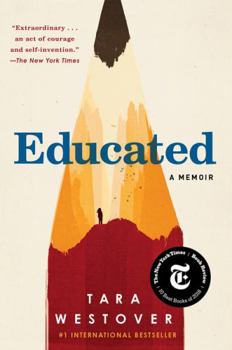
Educated (A Memoir)
By: Tara Westover
Narrated By: Julia Whelan
Tara Westover (Author, memoirist, essayist and historian.)
“Educated” is a memoir of Tara Westover’s childhood in America. Her story is personal but universal. Some children are born in caring and nurturing families, all are subject to parents’ strengths and weaknesses. Tara reflects on the life of her family with a father, mother, and siblings raised in a family with a survivalist father who has strong religious beliefs and antigovernment views of life. He raises his sons and a daughter with a wife who conforms to his wishes and a mother-in-law who believes he is wrong about public education and the value of extreme beliefs in independence.
Tara Westover reminds listener/readers that every culture in the world is blessed and cursed by diversity.
Westover’s father would be called an American “antigovernment extremist” and “survivalist”. He does not believe in institutions of government or public services and argues all forms of regulation outside the family distort the natural state of society. He believes it is necessary to hoard food, fuel, and human necessities to assure self-sufficiency in the event of natural disasters or government-imposed laws.
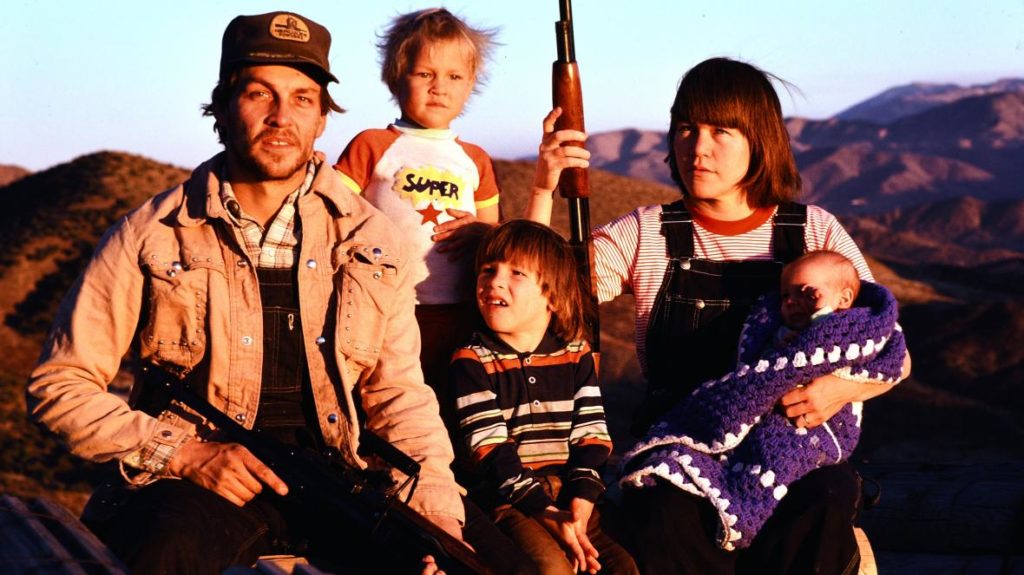
The Weaver Family Tragedy in August 1992 is an important symbol to Tara’s father.
Randy Weaver held antigovernment and white separatist views. His wife and son were killed by FBI agents on Ruby Ridge. A settlement of $3.1 million for wrongful deaths is awarded Weaver on August 15, 1995.
The Westover father grooms his children to support the family in a scrap metal business that evolves into a contracting company. As the children of the family mature, some leave while the father expands the family business with employment of outsiders. As Tara matures, she reluctantly becomes a worker in the family business to earn enough money to go to college. As Westover writes her story one wonders if her father will be the cause of the next Weaver Family Tragedy.
Westover shows how work and American life is not a fairy tale but for most a struggle for survival just as it is in every culture.
Desire has no limits. Freedom allows one to cope with life and, in some cases, exceed its limitations. Some cultures offer more freedom than others. Whether raised in America or somewhere else, one’s education comes from the culture in which they live. The circumstances of family are a part of a child’s education, but formal education varies within and between nations. Most nations have some form of public education, but education occurs whether publicly or privately pursued. The Westover family, in their children’s grade school and high school years rely on their mother’s home schooling.
The Westover’ family is neither a “Leave it to Beaver”, “My Three Sons”, or TV produced fantasy.
It is a reflection of a family dealing with the hardship of life in America that is sustained by a culture of independence and self-determination. Every child is impacted by the family in which they are raised. Whether government supported education or not, every child becomes an educated adult in different ways. Some like Tara Westover grow to adulthood with an education that comes from self-determination and grit despite her father’s influence and her sibling’s erratic behavior toward her.
Children do not choose their parents. Every child grows to adulthood in their own way.
There is always some level of care and nurturing in every family. The level of care they receive varies but ultimately it is how they deal with the circumstances in which they live that determines who they become. Two nearly fatal car accidents for Tara’s family and her near ejection from her family at age 16 seem to make her stronger. Her ability to write this memoir is a tribute to her determination to live a fulfilling life. The genetics of life have magnified and fortified the Westover children’s successes and failures in life.
Breaking free of prejudice and ignorance, whether one is formally educated or un-schooled, is difficult.
Prejudice is difficult because it is founded on emotional blindness shared by fellow travelers. Ignorance is founded on refusal of facts and knowledge of history. Two of the Westover sons and Tara seem to break the cycle. The first boy to leave the nest is on his way to Purdue after graduating from BYU. The second boy is believed by his father to be a genius and given license by his father to apply to BYU. One wonders whether the second boy will escape the curse of prejudice and ignorance of his remarkable family. Tara Westover’s trials are distressing for a listener/reader of her memoir, but all children are born into a struggle to find their own identity. “Educated” is evidence of Tara’s escape from prejudice and ignorance. It is an encouraging story of recovery with an education she acquires from a lived life.
Dr. Gawande’s fundamental point in “Being Mortal” is to provide the elderly or medically challenged the help to live based on a person’s dignity, purpose for living, and as much autonomy as their conditions allow.
Books of Interest Website: chetyarbrough.blog
Being Mortal: Medicine and What Matters in the End
One who has been fortunate enough to have lived long will appreciate Doctor Atul Gawande’s explanation and experience with people of a certain age and the terminally ill of any age. He explains “…What Matters in the End” when one is nearing death is quality of life, not survival that matters.
Quality of life is defined by Gawande as dignity, purpose, and autonomy in one’s last days.
When one is nearing the end of their life, Dr. Gawande has found in his many surgical procedures and interviews that those who have time left to them can be helped by others who assist them as best they can to achieve dignity, purpose, and autonomy. As a physician, Gawande asks what a dying person’s fears are to know what might be done to help them work through those fears. Gawande explains the trade-offs from what care an older person or terminal patient may be given to achieve what is most important to them in their remaining life.
Whether healthy or unhealthy, rational people realize death is part of life.
What “Being Mortal” explains is that the aged or medically challenged wish for as much independence as can be provided by their care. Desired independence is the gold standard for the remaining days or years of one’s life. Whether old or young, healthy or ill, the thought of incontinence, mental confusion, medical or physical limitation makes one fear loss of independence. Each of these maladies can be remedied by family members or properly organized assisted living facilities. Of course, the rub is in the cost of that assistance.
When a family member can no longer be cared for by family members, the medically or age challenged are left with two choices. One is to be institutionalized. The other is to die.
What Gawande explains is that the first alternative can be better and the second is dependent upon family research, financial commitment, religious beliefs, and States’ laws. Gawande notes his choice in the case of his physician-father is a family commitment to offer care as needed with the goal of giving as much autonomy as his aged father can handle. That is a laudable commitment but not what many struggling American families have time or willingness to do.
America has institutionalized elder and medically challenged people’s care to reduce the burden on families.
Gawande recounts the history of institutionalized care in the United States. From family aid to hospitalization to assisted living to hospice to State sanctioned euthanasia, care has evolved for the elderly and medically challenged. What Dr. Gawande explains is that any of these ways of caring must offer dignity, purpose, and as much autonomy as possible to the dying and terminally ill.
Every family has its care limitations, either temporal or financial (sometimes both).
Gawande shows research and preparation is needed to help families adjust to the physical and mental care of a significant other who is too old or too sick to take care of themselves. If a family cannot provide the dignity, purpose, and an appropriate level of autonomy to an aged or ill loved one than the job becomes the work of finding an institutional facility that can. This is where the tire hits the road because there is a cost for that service. Gawande notes there are institutions that can offer the services that are needed but family research and investigation is required.
Once an acceptable care facility is found, the next task is finding how it can be financed.
Gawande does not address cost but infers there are care facilities that are affordable. Dr. Gawande’s fundamental point in “Being Mortal” is to provide the elderly or medically challenged the help to live based on a person’s dignity, purpose for living, and as much autonomy as their conditions allow.
Márquez offers a vivid picture of Colombia’s twentieth century culture in “One Hundred Years of Solitude” but to this reviewer his failure to address Colombia’s lucrative cultural and world’ damaging drug industry is disappointing.
Books of Interest Website: chetyarbrough.blog
One Hundred Years of Solitude
By: Gabriel García Márquez
Narrated By: John Lee
Gabriel García Márquez,(Author, Colombian writer and journalist.)
“One Hundred Years of Solitude” is a fictional representation of the early history and 20th century modernization of Colombia. Those who are not particularly interested in Colombia’s history will listen/read Gabriel García Márquez’sstory because of the author’s skillful storytelling and the intimacies of Colombian culture, its political turmoil, violence during a civil war, and its consequent growth as a modern nation. In some ways it is like the story of America.
Márquez begins his book with the founding of Macondo, a fictional name for a village during the colonial period when the Spanish settled Colombia. Beginning as a small town, Macondo grows to become a city. Macondo represents the journey from isolation as a small town to a city that becomes a part of a vibrant South American country.
Macondo, a fictional village in Colombia.
The modernization of Colombia is addressed with the arrival of the railroad in Macondo that illustrates industrialization and the advance of Colombia’s economy. Macondo becomes a banana producing community that wrestles with the consequences of a civil war, unionization, and a growing economy. The brutality of industrialization is exemplified by the Colombian army’s killing of striking banana plantation workers in 1928. Of course, this is not unlike America’s 1932 Detroit’ Ford manufacturing plant killing of four workers by security guards and the Michigan police.
Colombia’s 50-year long civil war.
Colombia’s growth as a nation evolves with a mid-twentieth century civil war between liberals and conservatives. Márquez creates characters representing both sides of the civil war and their personal, as well as military lives. As is true of all wars, many innocents, as well as participant citizens, are indiscriminately and violently killed. Undoubtedly, a part of what makes the author’s story appealing to listener/readers is the sexuality of his characters. Sex in the novel ranges from close relatives’ intimacy to older women seductions of young men and young men’s seductions of both older and younger women, some of which are incestuous.
Colombian drug cartels are not addressed in Márquez’s story.
Márquez offers a vivid picture of Colombia’s twentieth century culture in “One Hundred Years of Solitude” but to this reviewer his failure to address Colombia’s lucrative cultural and world’ damaging drug industry is disappointing.
On the other hand, what author would want to take the risk of reporting on an industry noted for murdering those who expose its workings?
Extending Harari’s idea of biophysics research and algo-rhythmic programming suggests a potential for immense changes in society. A singularity that melds A.I. with human brain function and algo-rhythmic programming may be tomorrow’s world revolution. Of course, that capability cuts both ways, i.e., for the good and bad of society.
Books of Interest Website: chetyarbrough.blog
Homo Deus (A Brief History of Tomorrow)
By: Uval Noah Harari
Narrated By: Derek Perkins
Yuval Noah Harari (Author, Israeli medievalist, military historian, science writer.)
By any measure, Yuval Noah Harari is a well-educated and insightful person who will offend some and enlighten others with his opinion about religion, spirituality, the nature of human beings, and the future. He implies the Bible is a book of fiction that is historically proven to have been written by different authors with contradictions that only interpreters can reconcile as God’s work.
“Homo Deus” is a spiritual book suggesting humanity is on its own and has a chance to survive the future but only through the ability of human understanding and effort.
To Harari, the greatest threats to society are national leaders who believe in God, heaven and eternal life who discount human existence and use of science to improve human life on earth. The irony of Harari’s belief is that humanist leaders are the only hope for human life’ survival.
Harari argues science, free enterprise, and the growth of knowledge offer the best hope for the future of human life.
Neither capitalism nor communism are a guarantee of survival because of the increasing potential for error as human beings become more God-like. Advances in engineering, artificial intelligence, and biotechnology may replace the happenstance of human birth. The value of free enterprise is evident in the agricultural, industrial, and technological revolutions of history. However, as science improves the understanding of the mind and body of human beings, the technology of biogenetics offers hope for the future while running the risk of biological error with unforeseen consequences.
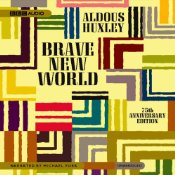
Harari’s book is the brave new world written about by Shakespeare in the 17th century and reimagined by Aldous Huxley in his 1932 dystopian novel “Brave New World”.
On the one hand, Shakespeare offers a positive spin as his character, Miranda, sees people from outside her experience and says “How beauteous mankind is! O Brave! That has such people in’t”. While Huxley notes a future society that becomes conformist and lacks individuality and human emotion. Which way society will turn is unknown.
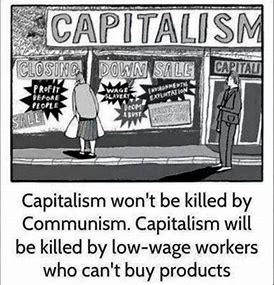
The conformist demands of collective ownership of property and means of production by communism impede creativity. Capitalism is more creative and dynamic. However, capitalist incentive raises the specter of human nature that only sees financial gain without any concern for environmental or human cost. On balance, capitalism appears more likely to accelerate technology because communism more often follows than changes scientific direction.
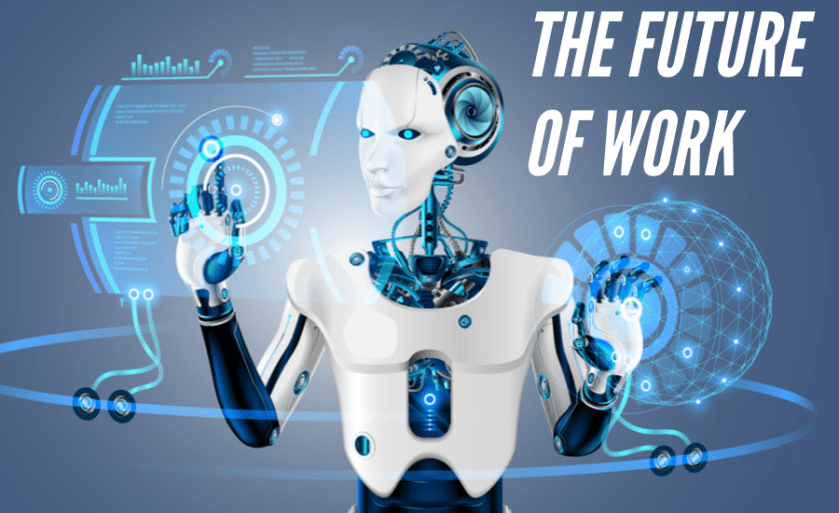
Some think A.I. will lead the world to greater knowledge and prosperity while others believe it will destroy human life. A sceptic might suggest both views are wrong because A.I. is only a tool for recalling knowledge of the past to help humans make better decisions for the future. The real risk, as it has always been, is human leadership.
Harari believes, like Nietzsche, that God is dead because belief in God is losing its power and significance in the modern world.
Though many still believe in God, it seems more people are viewing God as a myth. The Pew Research Center reports a median of 45% of people across 34 countries still believe in God. However, the variation is wide with Brazil saying 70% believe while in Japan the percentage is only 20%. Harari implies belief in God is in decline.
Harari explains biophysics illustrates that human thought is algorithmic. He argues our thoughts, decisions, and behaviors can be understood to be a result of patterns created in human brains that are pre-determined. There is no “free-will” in Harari’s opinion. This is not to suggest aberrant behavior does not exist, but that human thought and action is determined by our experientially defined brain in the same way a computer is programmed. Experience from birth to adulthood is just part of a mind’s programming.
Harari implies understanding of brain function will change the world as massively as the Agricultural, Industrial, and technological revolutions.
Harari goes on to suggest humans have never been singular beings, but a multitude of beings split into two brains that mix and match their biogenetic and biochemical programming to think and act in pre-determined ways. Experiments have shown that the way the left half of a human brain sees and compels action is different than how the right brain sees and compels action. Each half thinks and acts independently while negotiating a concerted action when both halves are functioning normally. That negotiation between the two brain halves results in an algorithm for action based on the biochemical nature of the brain. The way two halves of the brain interact multiply the person we are or will become.
Extending Harari’s idea of biophysics research and algo-rhythmic programming suggests a potential for immense changes in society. A singularity that melds A.I. with human brain function and algo-rhythmic programming may be tomorrow’s world revolution. Of course, that capability cuts both ways, i.e., for the good and bad of society. Interestingly, Harari paints a grim picture of the future based on an A.I. revolution.














































 REVIEWS AND VIEWS OF LIFE