HOMELESSNESS

The United States is the 7th richest nation in the world on a per capita basis. Why is homelessness a growing problem in outwardly prosperous American cities?

Books of Interest
 Website: chetyarbrough.blog

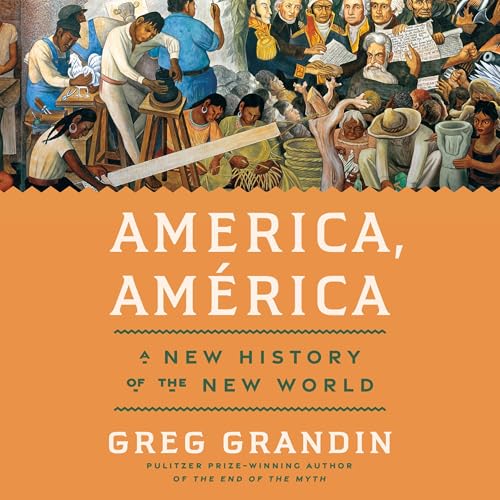
Seeking Shelter (A Working Mother, Her Children and a Story of Homelessness in America)

By: Jeff Hobbes

Narrated By: Julia Whelan

Jeff Hobbes (Author, graduate of Yale with a BA in English language and literature.)

Homelessness can be seen in most large cities of the world. In personal travels to what look like prosperous cities like Vilnius, Lithuania, Hong Kong, China, and even Scandanavian countries, homelessness exists. However, the scope of homelessness does not compare to what is seen on the streets of Las Vegas, NV. and Seattle, WA, two larger American cities considered prosperous and growing. In 2024, there were an estimated 7,928 homeless in Clark County (the Las Vegas area) and 16,385 in King County (the Seattle area). Walking around these two cities, let alone reading or listening to the news, suggests those numbers are grossly undercounting the homeless. The United States is the 7th richest nation in the world on a per capita basis. Why is homelessness a growing problem in outwardly prosperous American cities?

Trump followers would argue homelessness is because of illegal immigration and laziness.

The real reasons are decades of underbuilding in major American cities, high cost of existing inventory, regulatory barriers for affordable housing, economic inequality, an attitude of “not in my back yard”, investment conglomerates that capture housing for rent, and the decline of federally funded affordable housing.

Jeff Hobbes brings all of these reasons for homelessness to light with the plight of working mothers and their children who are moving from one area of California to another because they cannot afford a place to live, school their children, and feed their family.

Hobbes’ example is of a family on the road with savings of $4,000 in a search for a job, a school for her children, and a place to live that they can afford. What is abundantly clear in Hobbes’ book is women hold broken families together more often than men. Misogyny is a reinforced truth in the world. Men spread their seed, begat children, and leave. Women take on the burden of the world’s future.

Homeless single parents with children to care for must often leave their children alone while seeking work to pay for the basic needs of life.

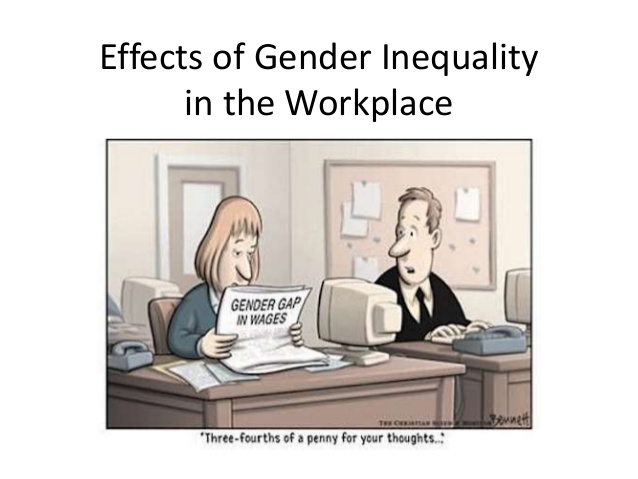
A woman faces greater obstacles than a homeless man because of unequal opportunities ranging from income for work to their presumed and assumed responsibility for children’s care. The general public often presumes they have their own lives to live and have no responsibility for others who have made foolish decisions in their lives. However, a rational person knows children are the future of the world. A child left on his/her own have diminishing opportunities for success without parental support. A child of a homeless single parent’s support is compromised when that single parent has to work to earn enough for the family to have a home and food to eat.

Having the personal experience of being raised by a single parent with an older brother, Hobbes’ history of a mother, on her own, fairly explains how difficult it is to avoid homelessness while looking for work and caring for her children.

The price paid for homelessness on the emotional and intellectual ability of a mother and her children is immeasurable. The cost to society is partly explained by Jeff Hobbes’ in “Seeking Shelter”. California’s system of caring for the homeless is encouraging but undoubtedly inadequate based on what one reads in the press.

Listening to the stories of homeless families is a harsh lesson for those who have escaped poverty and think if they can do it, why can’t every American do it?

Failure to address homelessness is a societal flaw. Whatever its cause, homelessness makes every citizen of prosperous nations guilty of neglect.

VIRTUE

Today is a time for Americans to look at their motivations to act in ways that diminish human flourishing and happiness. They need to decide whether they are choosing to be evil and act out of malice to do evil things.

Books of Interest
 Website: chetyarbrough.blog

Open Socrates (The Case for a Philosophical Life)

By: Agnes Callard

Narrated By: Agnes Callard

Agnes Callard (Author, American philosopher, associate professor of philosophy at the University of Chicago.)

“Open Socrates” is not an easy listen but offers insight to the philosophy of Socrates as perceived by a tenured Philosophy professor at the University of Chicago.One of Socrates famous sayings is “Οἶδα τι οὐδὲν οἶδα”, “I know something that I know nothing”. The daunting meaning of the phrase is explained by Callard as something that is found through conversational engagement with others. Socrates believed what truth there is in the world is revealed through public engagement which is difficult for introverts because we fear having our ignorance exposed.

Callard notes that Socrates is an interrogator who elicits others to understand the meaning of human life.

There is a human desire to have meaning in our lives, but we don’t know where to begin or what questions to ask. Callard notes how Tolstoy is contemplating suicide despite his great fame and success as a writer because he does not believe there is any meaning to his life. Callard argues Socrates would say Tolstoy fails to ask questions in conversation with others that would offer the answer he seeks. As a listener/reader one might understand Tolstoy’s reluctance to ask others for their opinion because it exposes his vulnerability. Collard argues one must be willing to admit their errors to get to meaningful conversations with others about what they are discussing. However, few have the strength of character to expose themselves in a way that will continue further conversation.

Collard is preparing listeners for an understanding of the Socratic method, a cooperative dialogue, i.e. asking and answering questions to make one think about underlying assumptions and ideas to uncover inconsistencies to try to discover truth.

One wonders in this exercise, if Socrates is pursuing understanding or building a case to undermine human understanding. The result of a dialog with Socrates seems at best a pursuit of knowledge without finding a definitive answer. At times it seems the Socratic method only reveals the truth of human ignorance.

Collard notes that sophists as reflected in the Platonic and Aristotelian writings about Socrates were often incensed by the Socratic method because Socrates’ interrogations often made them look ignorant and uninformed. However, Socrates offers some definitions of important human characteristics like virtue and knowledge that are as relevant today as they were in ancient times.

Socrates defines virtue as a form of knowledge of right and wrong and those that use that knowledge will act virtuously.

Collard notes Alcibiades who lived in the time of Socrates. He was relentlessly interrogated by Socrates in an effort to elicit a better understanding of himself as Alcibiades, a politician and leader. Alcibiades made many political enemies because of shifting allegiances and political actions. He betrayed Athens in their fight with Sparta. After the fall of Athens, he is considered a threat to its new rulers.

Alcibiades (450BC-404BC, died at age 45 or 46, Athenian statesman and general.)

Alcibiades is known for his ambition, desire for power, and hedonistic lifestyle. He came into conflict with Socrates over belief in the values of wisdom and virtue. Though Alcibiades is noted in Plato’s “Symposium” to have admired and respected, Socrates, Collard notes he fundamentally disagreed with much of what Socrates reveals to him as his lack of wisdom and virtue. Alcibiades lacked self-discipline and moral integrity.

Socrates defines good as that which brings about human flourishing and happiness for one to live a fulfilling life.

Socrates argues evil is based on ignorance that compels human beings to act out of malice to do evil things.

Today is a time for Americans to look at their motivations to act in ways that diminish human flourishing and happiness. They need to decide whether they are choosing to be evil and act out of malice to do evil things.

MICROCOSM

Islands are a microcosm of the world environment and a perfect example of what is wrong with the ecology and economics of the world.

Books of Interest
 Website: chetyarbrough.blog

Dark Laboratory

By: Tao Leigh Goffe 

Narrated By: Tao Leigh Goffe

Tao Leigh Goffe (Author, PhD from Yale, award-winning writer, theorist, and interdisciplinary artist, raised between the UK and New York City with a UK citizenship.)

Goffe has written a book about the complexity of discrimination and global warming with the risks they entail for humanity. She offers a sociological and environmental perspective.

Goffe’s book is an introduction to what she envisions as “The Dark Laboratory” to address inequality and global warming.

Puerto Rico

Stories of mongooses and marijuana confuse the clarity of Goffe’s subject. She addresses immersive technologies like virtual reality (VR) and augmented reality (AR) to help people understand the impacts of climate change and inequality. The hope is that books like hers and education of the public will change human behavior. She writes of a mongoose introduction to Puerto Rico which becomes an invasive species. She also writes of colonial exploitation of island natives who plant, harvest, sell, and distribute legalized marijuana.

The analogies she chooses are marginally relevant, but they are a distraction. The fundamental points of unintended consequences of an invasive species on the environment and colonial enslavement can be more impactfully explained with concrete evidence of ecological damage and employment inequality in native lives.

The introduction of the author’s book is disappointingly vague, but Goffe’s life experience, her advanced education and perspective are shaming and anxiety producing. The shaming and anxiety come from knowing that being white gives one advantage in life. That advantage has admittedly been squandered by human inequality and pursuit of wealth and power at the expense of the environment.

Listener/readers are introduced to slang for minorities by Goffe that are not widely known.

Commonly known and despicable derogatory names are wetback, chink, gook, redskin, and the “N-word” for people who do not appear white. However, Goffe notes names like maroon and eleven-o’clock minorities are less known. A maroon is a member of a community of runaway enslaved Africans in Jamaica. An Eleven-O’clock minority is someone who is considered an incomplete person because he/she is 1 hour short of 12.

The earth’s environment is in crises while many foolishly diminish human equality while ignorantly pursuing self-interests. The irony and incongruity of environmental destruction and inequality is that we are all in the same boat, living on spaceship earth. Goffe’s point is that society chooses to despoil earth for ephemeral profit while causing global warming and discriminating against minorities only because people are different. The “Dark Laboratory” is about the world climate crises and race relations.

Puerto Rico is a petri dish of Goffe’s “Dark Laboratory”. It shows how earth’s environment is being destroyed and how neglect of human equality has impoverished native island cultures.

Goffe argues (and hopes) with the help of storytelling (education) about human equality, technological innovation, and ecological care, the world can become a sustainable haven for humanity. However, Goffe takes two digressions that confuse, if not diminish, the importance of environmental degradation and human inequality.

Goff shows how islands are a microcosm of the world environment and a perfect example of what is wrong with the ecology and economics of the world.

COLOMBIA

Márquez offers a vivid picture of Colombia’s twentieth century culture in “One Hundred Years of Solitude” but to this reviewer his failure to address Colombia’s lucrative cultural and world’ damaging drug industry is disappointing.

Books of Interest
 Website: chetyarbrough.blog

One Hundred Years of Solitude

By: Gabriel García Márquez 

Narrated By: John Lee

Gabriel García Márquez, (Author, Colombian writer and journalist.)

“One Hundred Years of Solitude” is a fictional representation of the early history and 20th century modernization of Colombia. Those who are not particularly interested in Colombia’s history will listen/read Gabriel García Márquez’s story because of the author’s skillful storytelling and the intimacies of Colombian culture, its political turmoil, violence during a civil war, and its consequent growth as a modern nation. In some ways it is like the story of America.

Márquez begins his book with the founding of Macondo, a fictional name for a village during the colonial period when the Spanish settled Colombia. Beginning as a small town, Macondo grows to become a city. Macondo represents the journey from isolation as a small town to a city that becomes a part of a vibrant South American country.

Macondo, a fictional village in Colombia.

The modernization of Colombia is addressed with the arrival of the railroad in Macondo that illustrates industrialization and the advance of Colombia’s economy. Macondo becomes a banana producing community that wrestles with the consequences of a civil war, unionization, and a growing economy. The brutality of industrialization is exemplified by the Colombian army’s killing of striking banana plantation workers in 1928. Of course, this is not unlike America’s 1932 Detroit’ Ford manufacturing plant killing of four workers by security guards and the Michigan police.

Colombia’s 50-year long civil war.

Colombia’s growth as a nation evolves with a mid-twentieth century civil war between liberals and conservatives. Márquez creates characters representing both sides of the civil war and their personal, as well as military lives. As is true of all wars, many innocents, as well as participant citizens, are indiscriminately and violently killed. Undoubtedly, a part of what makes the author’s story appealing to listener/readers is the sexuality of his characters. Sex in the novel ranges from close relatives’ intimacy to older women seductions of young men and young men’s seductions of both older and younger women, some of which are incestuous.

Colombian drug cartels are not addressed in Márquez’s story.

Márquez offers a vivid picture of Colombia’s twentieth century culture in “One Hundred Years of Solitude” but to this reviewer his failure to address Colombia’s lucrative cultural and world’ damaging drug industry is disappointing.

On the other hand, what author would want to take the risk of reporting on an industry noted for murdering those who expose its workings?

AI REGULATION

As Suleyman and Bhaskar infer, ignoring the threat of AI because of the difficulty of regulation is no reason to abandon the effort.

Books of Interest
 Website: chetyarbrough.blog

The Coming Wave

By: Mustafa Suleyman with Michael Bhaskar

Narrated By: Mustafa Suleyman

This is a startling book about AI because it is written by an AI entrepreneur who is the founder and former head of applied AI at DeepMind. He is also the CEO of Microsoft AI. What the authors argue is not understood by many who discount the threat of AI. They explain AI can collate information that creates societal solutions, as well as threats, that are beyond the thought and reasoning ability of human beings.

“The Coming Wave” is startling because it is written by two authors who have an intimate understanding of the science of AI.

They argue it is critically important for AI research and development to be internationally regulated with the same seriousness that accompanied the research and use of the atom bomb.

Those who have read this blog know the perspective of this writer is that AI, whether it has greater risk than the atom bomb or not is a tool, not a controller, of humanity. The AI’ threat example given by Suleyman and Bhaskar is that AI has the potential for invention of a genetic modification that could as easily destroy as improve humanity. Recognizing AI’s danger is commendable but like the atom bomb, there will always be a threat of miscreant nations or radicals that have the use of a nuclear device or AI to initiate Armagedón. Obviously, if AI is the threat they suggest, there needs to be an antidote. The last chapters of “The Coming Wave” offer their solution. The authors suggest a 10-step program to regulate or ameliorate the threat of AI’s misuse.

Like alcoholism and nuclear bomb deterrence, Suleyman’s program will be as effective as those who choose to follow the rules.

There are no simple solutions for regulation of AI and as history shows neither Alcoholics Anonymous (AA) nor the Treaty on the Prohibition of Nuclear Weapons (TPNW) has been completely successful.

Suleyman suggests the first step in regulating AI begins with creating safeguards for the vast LLM capabilities of Artificial Intelligence.

This will require the hiring of technicians to monitor and adjust incorrect or misleading information accumulated and distributed by AI users. The concern of many will be the restriction on “freedom of speech”. Additionally, two concerns are the cost of such a bureaucracy and who monitors the monitors. Who draws the line between fact and fiction? When does information deletion become a distortion of fact? This bureaucracy will be responsible for auditing AI models to understand what their capabilities are and what limitations they have.

A second step is to slow the process of AI development by controlling the sale and distribution of the hardware components of AI to provide more time for reviewing new development impacts.

With lucrative incentives for new AI capabilities in a capitalist system there is likely to be a lot of resistance by aggressive entrepreneurs, free-trade and free-speech believers. Leaders in authoritarian countries will be equally incensed by interference in their right to rule.

Transparency is a critical part of the vetting process for AI development.

Suleyman suggests critics need to be involved in new developments to balance greed and power against utilitarian value. There has to be an ethical examination of AI that goes beyond profitability for individuals or control by governments. The bureaucracies for development, review, and regulation should be designed to adapt, reform, and implement regulations to manage AI technologies responsibly. These regulations should be established through global treaties and alliances among all nations of the world.

Suleyman acknowledges this is a big ask and notes there will be many failures in getting cooperation or adherence to AI regulation.

That is and was true of nuclear armament and so far, there has been no use of nuclear weapons to attack other countries. The authors note there will be failures in trying to institute these guidelines but with the help of public awareness and grassroots support, there is hope for the greater good that can come from AI.

As Suleyman and Bhaskar infer, ignoring the threat of AI because of the difficulty of regulation is no reason to abandon the effort.

DYING

One may ask oneself is hospice the only humane thing to do for a dying parent. If a parent is able to make a rational decision about continuation of life, would he/she choose to be treated in a hospice or choose to end life on their own terms?

Books of Interest
 Website: chetyarbrough.blog

Dying

By: Cory Taylor (A Memoir)

Narrated By: Larissa Gallagher

Cory Taylor (Australian author, died at age 61 on July 15, 2016, born in 1955.)

Dying: A Memoir author Cory Taylor passes away, aged 61 | The Australian

Cory Taylor confronts the complicated question of what to do when a person knows they are nearing the end of their life. Taylor is diagnosed with terminal brain cancer in 2005. Living with that diagnosis, Taylor recounts her life, religious beliefs, and a commemoration of her family relationships. She thinks of what her life means to herself and others. She waivers between living with her physical and mental deterioration or volitionally ending her life.

Taylor, though raised in a Christian household, identifies herself as agnostic.

In the 20th century, it is estimated that 200 to 240 million people identify themselves as atheists or agnostics. In 2013, that number increased to 450 to 500 million, about seven percent of the world population. Taylor chooses medically assisted death.

Having personally experienced a parent’s death and a parent’s physical and mental deterioration, a listener/reader will either condemn or condone a choice of assisted death.

Those with strong religious beliefs are likely to blame a person for killing themselves, while those who are agnostic or atheist are likely to have a different opinion. To some, life is hardship that is a human being’s obligation to either suffer or grow from, with conscious awareness of death’s inevitability. The fundamental question is–does one have the right to choose whether to live or die?

Seeing a parent’s life deteriorate despite the care of an attentive family member is heartbreaking.

Image result for hospice

An example is a son whose mother is dutifully cared for by her husband but recognizes the husband is too aged to handle the mother’s incapacities. What should a son or extended family do? There are hospice alternatives for the mother, but should she have a voice in deciding how she is to be treated? The husband realizes, a care facility is the only practical alternative for her needed care. The son or daughter is married and is consumed by their employment and making a living for their own career and family. The mother may or may not be able to express her opinion. The table is set for institutionalization.

The mother’s response may be to curl up in her new bed, refuse to eat and waste away in the eyes of a loving husband and a career consumed son or daughter.

One may ask oneself is hospice the only humane thing to do for a dying parent. If a parent is able to make a rational decision about continuation of life, would he/she choose to be treated in a hospice or choose to end life on their own terms?

AUTHORITARIANISM

Whether an idealist or humanist, the historical truth is that rising authoritarians believe power is all that matters. Today, the world seems at the threshold of authoritarianism.
Books of Interest
 Website: chetyarbrough.blog

Bronshtein in the Bronx 

By: Robert Littell

Narrated By: Adam Grupper

Image result for robert littell

Robert Littell (American author, former journalist in France.)

Robert Littell researches and imagines the 10 days of Leon Trotsky’s visit to New York City in 1917, just before the Russian revolution. His story offers humanizing and demeaning aspects of Trotsky’s personal and political life as a revolutionary.

Lev Davidovich Bronstein aka Leon Trotsky (1879-1940, Russian revolutionary, politician, political theorist, revolutionary military leader.)

Image result for leon trotsky

Littell explains Trotsky travels with his two young sons and a female companion (the mother of their two boys) to New York. His first wife is exiled in Siberia for helping him spread leaflets about terrible factory conditions in Czarist Russia. Trotsky escaped to England while leaving his first wife and their two young girls in Siberia. (Trotsky divorces his first wife and marries the woman that Littel calls his airplane companion, either before or after the trip to New York. This is not made clear in Littell’s story.)

Trotsky in New York, 1917 | Kenneth Ackerman

Littell explains Trotsky is a kind of celebrity in New York because of his association with socialist beliefs and his involvement in the failed 1905 Russian Revolution.

Trotsky is in his early twenties when he arrives in New York. Littell characterizes Trotsky as a libertine by introducing a female reporter in New York who becomes his lover. Littell reinforces that libertinism at the end of his story by suggesting Trotsky and Frida Kahlo had an affair while his second wife and he were exiled in Mexico.

Aside from Trotsky’s picadilloes, Littell shows how committed Trotsky was to his belief in Marxism and the plight of the working poor.

Trotsky gave several speeches that appealed to New York laborers and their families. An interesting sidelight is appended to Littell’s story when a Jewish industrialist meets with Trotsky after the 1917 revolution in Russia. Naturally, Trotsky is anxious to return to support Lenin and the Bolsheviks in the revolution. However, Trotsky is broke and doesn’t have the money to return to Russia. The industrialist offers an envelope with the money needed for the trip. Neither the industrialist nor Trotsky are believers in the Jewish faith but believe in the power of socialism and its benefit to society.

The political point being made by Littell is that the ideal of communism supersedes religious beliefs.

Trotsky is Jewish but not a believer in God. He is a political idealist. Littell notes Trotsky becomes a military leader in the communist movement. Littell infers Trotsky’s idealism gets in the way of humanism when he orders one in ten prisoners be shot for their opposition to the communist revolution. This is undoubtedly an apocryphal story but a way of explaining how a committed idealist can become a murderous tyrant.

Littell ends his story with a brief and somewhat inaccurate history of the Trotsky’ children. The two girls with his first wife died before they were 30. Zinada had mental health issues and died by suicide in 1933. Nina died at age 26 without any detailed information about her cause of death.

Rather than two boys noted in Littell’s story of the trip to New York, one was a girl named Zinaida. Zinaida, like her half-sister, died by suicide at age 32. Lev, born in 1906, is believed to have been poisoned by Stalinist agents in 1938. As some know, Trotsky was murdered by Stalin’s agents in Mexico City. In contrast to his children, Trotsky, the political idealist, is murdered as an exile at the age of 60. All-in-all, a tragic family history.

Whether an idealist or humanist, the historical truth is that rising authoritarians believe power is all that matters. Today, the world seems at the threshold of authoritarianism.

RELATIONSHIP

Like Proust, Niall Williams draws one into his story to make one think about their past as a child, young adult, and parent.

Books of Interest
 Website: chetyarbrough.blog

Time of the Child (A Novel)

By: Niall Williams

Narrated By: Dermot Crowley

Image result for niall williams

Niall Williams (Irish Author, writer of novels, plays, and non-fiction.)

“Time of the Child” is a story of an Irish family in 1962 that lives in Faha, Ireland, a fictional town created by Niall Williams in his novel. It is a wonderfully written story about family relationship. It is written from the perspective of a parent with a marriageable age daughter. “Time of the Child” particularly resonates with those of a certain age who remember their parents, their life as a child, their adult marriage or marriages, and the child or children they have raised.

Marcel Proust (1871-1922, died at age 51, French novelist, literary critic, and essayist.)

Like Marcel Proust’s “Remembrance of Things Past”, a listener/reader of Williams’ story looks back at their experience as a child, an adolescent, an adult, and for some, a parent. Williams’ focus is on a 70-year-old father, who is the only doctor in Faha. His wife has died. He has a marriageable daughter who handles household duties and assists him in his practice. The doctor is an introverted, somewhat anti-social, person who laconically addresses his patients and acquaintances with reserved attention and respect. This is a person some would interpret as standoffish but pleasant enough as an important part of their community.

After the death of his wife, the doctor goes about his work as he has in the past.

He visits many of his patients at their homes. Some are elderly and nearing the end of their lives. Their maladies range from minor injuries, to strokes, or advancing dementia. Faha has an extended care facility for the elderly that cannot be taken care of by their families anymore, but it has a reputation as a house of death. Many families refuse to use it and cope with the demise of their parents or older family members on their own. The doctor makes house calls to attend some of these families, though little can be done for those who are beyond the help of medication and treatment.

One of these families with a dying parent has a young son near the age of the doctor’s daughter.

The young man is going to America but has shown an interest in the doctor’s daughter which is noted by the doctor as reciprocated interest. The young man leaves for America without overtly addressing his interest in the doctor’s daughter. The doctor recognizes the importance of the young man’s departure to his daughter and decides to send a letter to America advising the young man he should come to see his mother before her nearing death.

Like Proust, Williams draws one into his story that makes one think about their past as a child, young adult, and parent.

One wishes they had a father like the doctor, i.e. a father who understood more than he explained and acted in ways to make other people’s and their children’s lives better. At the same time, Williams’ idyllic picture reminds one of the faults of their parents when they were children, the harshness of their own lives, and the failures they have made in raising their own children. This does not make Willaims’ story less enjoyable to reader/listeners. It makes one recognize their parents did the best they could do, and hope that mistakes they made raising their own children will be overcome.

LIFE’S STRUGGLE

Akbar is showing everyone’s life is a struggle. Self-understanding, acceptance of who you are, and not feeling sorry for yourself can make you whole. Death may set you free, but the struggles of life are a better alternative.

Books of Interest
 Website: chetyarbrough.blog

Martyr!

By: Kaveh Akbar

Narrated By: Arian Moayed

Kaveh Akbar (Author, Iranian American poet, novelist, and editor.)

“Martyr!” is a book that is difficult for a prudish American to read but Akbar writes a story that resonates with one who has suffered from addiction, loss of parental guidance, and the exigencies of American life. Akbar’s main character is Cyrus Shams, a poet and writer, who believes he lost his mother in a 1988 plane crash caused by the American Navy when the USS Vincennes fired two surface-to-air missiles at a passenger plane that was mistakenly identified as an F-14 fighter jet.

(The Vincennes’ mistake occurred during the Iran-Iraq War that began in 1980. The USS Vincennes was deployed to the Persian Gulf to protect oil tankers. Prior to the Vincennes commander’s decision to fire the missiles, there were several skirmishes with Iranian vessels. )

Image result for The vincennes mistake

The commander’s catastrophic mistake occurs in an atmosphere of military conflict. The commander is removed from his command but remains in the military until he retires in 1991.

US-Iran conflict: US shot down Iran Air Flight 655 in 1988 | Daily Telegraph

The Vincennes incident resulted in a $61.8 million settlement to the families of the victims in 1996.

Because Akbar’s main character is the son of one of the passengers of the plane, he receives a financial settlement for the death of his mother. As he grows to become a man, he becomes addicted to drugs, cigarettes, and alcohol, has affairs with both men and women, but decides to kick his addictions. In the process of gaining sobriety, he becomes acquainted with a successful woman painter. After her death, he finds the woman was his mother. She had switched identities with the Iranian woman that was on the plane. Her reasons for abandoning her son are unclear but in a chance meeting at one of her art exhibitions, her son strikes an acquaintance with her. She knows he is her son but chooses not to disclose her story. The son is enamored by her art and seeks her out during the following years of her life. She dies and the son is told by the art exhibitor that the artist he admired was his mother.

Everyone searches for meaning in life.

All who have lived through childhood and maturity know living life is a struggle. Whether rich or poor, personal struggle either breaks you or makes you. The end result is mixed. Cyrus Shams is an addict that chooses to become sober, to become a poet and writer, to honor his mother’s life while making his way as a first generation Iranian American. Akbar is showing everyone’s life is a struggle. Self-understanding, acceptance of who you are, and not feeling sorry for yourself can make you whole. Death may set you free, but the struggles of life are a better alternative.

MARRIAGE AND MATURITY

The encompassing meaning of Homer’s “Odyssey” is the maturing of a son and marriage commitment of a husband and wife.

Books of Interest
 Website: chetyarbrough.blog

The Odyssey of Homer

By: The Great Courses

Lectures By: Elizabeth Vandiver

Elizabeth Vandiver (American classical scholar, Professor of Latin and Classics at Whitman College.)

Professor Vandiver offers an insightful review of Homer’s “Odyssey” in her “…Great Courses” lectures. Each chapter of the “Odyssey” reminds listeners of Homer’s literary skill and his masterful story of Ulyssess’s return to Pennelope and their son, Telemachus, after the Trojan war. Homer’s epic is divided into 24 books, each of which tell of the trials of Ulysses (aka Odysseus) when returning to his Greek Island kingdom of Ithaca after the Trojan War.

The Trojan War is believed to have taken place between the 12th and 13th centuries BCE.

The Trojan War Finally Explained

It is said to have been caused by the Trojans when Paris (the son of the King and Queen of Troy) abducts and marries Helen of Troy, the wife of Menelaus (the Greek king of Sparta). When Paris is killed by Achilles, Helen is returned to Menelaus. Ulysses’ return to his Kingdom in Ithaca is the story of the “Odyssey”. The return takes ten years because of his companions eating of lotus flowers that make them forget their home and stay on an island where the flowers grow, his capture by Polyphemus (a one-eyed monster), an errant wind that blows him off course, giants who attack is fleet of ships and destroy all of them except one, a sorceress (Circe) who turns his crew into pigs, a trip to the Underworld to get guidance from Tiresias on how he may return to his kingdom, an island of Sirens who lure sailors to their death, an attack by Scylla and Charybdis (a six-headed monster), his men’s defiance of the sun god who told them not to eat his cattle, and finally, Calypso (a nymph who keeps Odysseus captive on her island for seven years of conjugal ambition).

Ulysses by Alfred Lord Tennyson | Ulysses poem, Ulysses, Poems

Each of Ulysses’ delays are entertainments to reader/listeners of the “Odyssey”. The encompassing meaning of the story is the maturing of a son and the marriage commitment of a husband and wife. Telemachus is twenty years old but has not grown into a man who takes responsibility for his life. Penelope is a wife who has remained true to a husband who has been lost to her during the period of the Trojan war and Ulysess’s unknown fate after his success in ending the war. Because Ulysses has not returned for ten long years after the end of the war, there are 108 suitors for Penelope’s hand in marriage. The suitors are from noble families of Ithaca and surrounding islands who have taken over Odysseus’ palace, consuming its wealth and resources while courting Penelope.

As the son of a great warrior, Telemachus fails to grow into a man that would take responsibility for ejecting disrespectful suitors in his family’s palace.

As the story progresses, and Ulysses returns to Ithaca, Telemachus becomes an ally to his returning father in a plan to kill the 108 suitors. Telemachus takes responsibility for hiding the palace weapons so the suitors would only have weapons they might have brought with them. Though Telemachus fails in his effort to hide the weapons, he takes responsibility for his error in not having successfully kept them from the suitors. Homer’s message is that Telemachus has become a man by showing valor as an ally to his father and a man who takes responsibility for his decisions.

Penelope’s commitment to marriage is illustrated by her many years of waiting for a husband who may be lost. She denies all her suitors because of the possibility of her husband’s return. In a similar vein, reunion with her husband is evidence of a man who loves his wife in the face of a temptation by a beautiful and alluring nymph who offers him immortality if he would stay with her.

Ulysses shows a commitment to marriage by returning to his wife despite their many years of separation, the offer of immortality, and his defense of a marriage between a fellow Greek King (Menelaus) and his wife, Helen of Troy. The Trojan war was an attack on marriage, for which Ulysses risked his and his army’s lives.

Vandiver ends her lecture by noting the German archaeologist and businessman, Heinrich Schliemann, discovered the ancient city of Troy in Turkey.

Vandiver notes Schliemann had a controversial reputation because of his destructive method of excavation and suspicious handling of artifacts. However, Schliemann significantly contributed to the study of archaeology and the understanding of ancient civilizations.